Thursday’s Column: Captain’s Blog

Carl Pollard


If he was nervous, it was clear that the king’s palace guards couldn’t tell. They checked his left thigh for a weapon, and when they were satisfied they allowed Ehud to enter the throne room chamber. Ehud is just steps away from going down in history as the man who delivered the Israelites from the Moabite oppression. If he can pull this off, he and his people will enjoy eighty years of peace. It was a big job, and if you know this account, it was a big in more than one way. Hanging from his right side, unknown to anyone but him, is an eighteen inch double-sided sword. It was a weapon made for stabbing, and Ehud planned to use it for it’s created purpose. The guards stationed outside the chamber open the door for him. The room is filled with servants and more armed security, but this is probably not the first thing to catch your eye. There, in the middle of the room on the throne sat an extremely obese man. He’s been the ruling power over God’s people for eighteen years now and as king, he clearly took advantage the royal food supply. His name was Eglon. He, along with the sons of Ammon and Amalek, defeated the Israelites and then claimed the city of palm trees, Jericho.
Ironically, the palm tree was considered a symbol of peace and victory. Many years later, people would lay the branches of these trees down before Jesus the Nazareth as He enters Jerusalem. It seems reasonable to assume that Eglon was glad when he saw Ehud walk towards him. After all, Ehud was the man in charge of gathering Israel’s tribute and delivering it to him. With these funds, the king was free to continue living his life of gluttony and leisure. However, this time God was about to give a gift to the Israelites— Eglon’s life.
Ehud begins to look for the perfect opportunity to kill the king. He says to Eglon, “I have a secret message for you.” At this, Eglon clears the room. Now it’s just Ehud and the king. They’re alone in Eglon’s roof chamber. Ehud continues, “It’s from God.” This is out of the ordinary, and the king seems to have some level of respect for Jehovah, because he then stands up. I would imagine, a man of his size didn’t usually make a habit of standing unless it was absolutely necessary. Ehud pulls from his right thigh the hidden sword and quickly thrusts it into Eglon’s belly. The fat closes over the blade, and his insides spill out. Ehud locks the door and makes his escape. The guards assume Eglon is relieving himself in the coolness of his roof chamber. They wait until the point of embarrassment before opening the door, only to find their king dead. Ehud manages to rally the Israelite troops— slaying ten thousand mighty Moabites. Peace fell on the land for the next eighty years until the children of Israel once again fell away from God.
This account is found in Judges 3, and it’s an interesting, perhaps disgusting account, of how God delivered His people. Believe it or not, there are a few takeaways for us today. Sometimes Christianity involves bravery on our part. God was with Ehud, and He’s still with us today. Even so, humans still face very real fears. Whether you’re asked to lead a prayer in worship, or you’re thinking about talking with those in your social circles about Christ, or making an uncomfortable hospital visit, faithful service requires courage. It’s always been that way. Another lesson we can learn from this account is that God strengthens our faith by testing that faith. Just look at how zealously Ehud conquers the strong and valiant Moabites after Eglon’s death. When we can witness how God has worked in our past, it can build our faith in God’s ability to assist us in the future. If God is for us, who can be against us? Absolutely nobody.


Someone once said, “Excuses are tools of the incompetent, and those who specialize in them seldom go far.” Ben Franklin is quoted saying, “He that is good for making excuses is seldom good for anything else.”
Jeremiah had a complete list of excuses ready when God called on him to be a prophet to the people of Israel. Many times the excuses of Jeremiah become ours when we are called on to proclaim God’s Word to this world. We see that with every excuse Jeremiah made, God gave promises in return.
First, Jeremiah said, “the task ahead is difficult.” Jeremiah 1:5 says, ““Before I formed you in the womb I knew you, And before you were born I consecrated you; I have appointed you a prophet to the nations.” This is God speaking to Jeremiah, and notice what He says, “I have appointed you a prophet to the nations.” The task ahead is difficult, so Jeremiah gives off a list of excuses for why he isn’t the one for this job. God gives a promise for Jeremiah’s excuses. He says, “before I formed you in the womb I knew you.” God knew that Jeremiah was the one for the job, even if Jeremiah didn’t think so.
Second, Jeremiah said, “I don’t have the talent.” Jeremiah 1:6 says, “Then I said, “Alas, Lord God! Behold, I do not know how to speak, because I am a youth.” Many times people blame their cowardice on a lack of talent. They say that it isn’t natural to them, that there are others more suited for the job. But God knows Jeremiah and the great good he can accomplish. In Jeremiah 1:9, God promises that He would put His words in Jeremiah’s mouth.
As Christians today we have these same promises for our worries and excuses. Let’s not blame our cowardice on a lack of talent or the difficulty of the task. That isn’t a good excuse to God. Nothing is. He has promised that He will be with us, and we have HIS Word to teach to others. Let’s trust in that.

Neal Pollard
A lonely soul was crying out
For someone to direct
Their mind to know the will of God
But I chose to deflect.
An edgy soul was acting out
Intimidating and coarse
Yet they were searching for the truth
I recoiled with too little remorse.
A hopeful soul was reaching out
And attended our worship service
But I was busy, too much to do
To connect, plus I was nervous.
A hurting soul, in time of loss
Crossed my path today
I felt so bad that he was grieved
But still I hurried on my way.
A lost soul was needing Christ
She is destined for eternity
I was busy, nervous, no zeal for her
Guess I was too caught up in me
The next soul that I come upon
Lord, may I try with zeal
To share your grace and teach your Word
And your matchless love reveal.

Neal Pollard
Some time ago, I wrote, “I passed by a skunk and a snake, fighting tooth and nail. I didn’t stop and pet either or take sides. I got out of there as fast as I could.” That was metaphorical rather than actual, though I’ve had encounters with each animal individually. My point had to do with some of the “fights” that regularly occur on social media about some of the most unnecessary causes.
The common ground of these posts and articles are their extremely polarizing effect, drawing a multitude of allies and opponents. So often, they relate to matters that, of themselves, will not effect a single person’s eternity (though the poor stewardship of time, emphasis, tone, and attitude might imperil more than a few).
I have been tempted to weigh in on probably a thousand of these spats and civil wars, but I do not. It’s not that I do not have decided views on nearly all the debates. Instead, I try to project myself into the future. Will it expand my influence for Christ for good? What will my comment add to the spirit of brotherly love, magnanimity, unity, and church growth? Will I truly be helping struggling souls? Will it elevate the view of Jesus’ bride in the eyes of the lost, the weak, and the wayward?
After reflecting, the answer is always the same. I cannot answer that for my interjecting brethren. Nor am I one to avoid preaching or personally discussing matters because they may be unpopular or alienating. However, because social media is more impersonal and lacking in the interpersonal dynamics of face-to-face interaction, we run a much greater risk of being misunderstood.
Today, controversy can be created in real time. As a good friend of mine put it, “Everybody has a megaphone now.” What really requires courage is stepping out from behind a computer or phone and personally interacting with someone we disagree with in civil, loving discourse. It may not foster page views, mass reactions, and reams of online comments, but in the end it may reach more hearts and minds.
In our current culture, dividing people into camps against each other is incredibly easy. But is it wise? Is it right (Proverbs 6:19b)?

Neal Pollard
About nine months ago, a man walked into our building a day after being immersed into Christ. He had been searching diligently for the truth, a man whose hunger for the Bible caused him to study his Bible for hours every day (including on audio at his job as a metal fabricator). He continues those habits today.
A man whose life is as interesting as his name–Roberto Yrey–has been a blessing to us at Bear Valley. One of the reasons I’ve grown to love him so much was on full display last night. Each Wednesday, a different man delivers a 90-second devotional talk. Last night, Roberto spoke. Don’t misunderstand. He writes devotions, short sermons, and articles all the time in order to articulate his understanding of a Bible chapter or topic he has been studying. He changed his mind multiple times before settling on the one he delivered last night. If you were there, you know that Roberto was nervous. He has told several of us how difficult public speaking is for him. His only previous public speaking opportunity was a Scripture reading during a devotional back during the holidays.
What he chose to speak about last night so aptly reveals a mindset that makes him so endearing. His message was that you don’t have to know everything to study with someone. Don’t be afraid to tell someone, “I don’t know.” It’s OK if you don’t know or understand everything. He encouraged us, “Say, I don’t know but let me ask someone who might know. Or let’s fellowship and find the answer.” But his message was to not let the fear of not knowing keep you from talking to someone about the Bible.
I admire the fact that Roberto had the courage, as a babe in Christ, to speak to a room full of people some of whom have been preachers and teachers for decades, teachers in our Bible school for many years, and are mature, seasoned Christians. But I admire him even more for practicing what he was preaching. In our midst last night were two visitors–Estevan (there for the first time) and Sean (who’s become a regular attender with Roberto for several months). He had the courage to invite them. Today, we baptized Sean into Christ for the forgiveness of his sins. A young Christian has already brought a friend to Jesus. All it took was the courage to try, to do what anyone can do who is moved by simple, trusting faith to just do what God has told us to do. I don’t know about you, but Roberto’s example helps me have the courage to try harder!

Scott Phillips
My girls recently modified the game of Slug Bug in order to make it more exciting and faster-paced. A couple of months ago, with the whole family in the car, we were introduced to it when we heard the words “gocery bag in a bush” shouted three times in rapid succession followed by “wow! three in a row” from one of the other girls.
The modification was simple. Instead of calling out VW Beetles, we all began to call out grocery bags that were snagged up in a bush alongside the road. We would also accept “tree.” A grocery bag caught in a tree was also acceptable. Turns out, “Grocery Bag In A Bush” is much more exciting and fun than Slug Bug. Tons more action! I’ve never seen so many grocery bags in my life! And you should hear the squeals and laughter when one was spotted so far up in a tree that we all knew that it wasn’t coming down until the tree did.
Good times.
I’ve thought about Grocery Bag In A Bush many times since that day, and have made many observations about it. I’d like to share three of them.
Observation #1
The grocery bags have always been, and will always be, there. I just never “saw” them before. I don’t recall seeing a single slug bug while playing Grocery Bag In A Bush, even though they were probably there.
Conclusion #1
I will see that which I look for. Matthew 7:7-8 says, “Ask, and it will be given to you; seek, and you will find; knock and it will be opened to you. For everyone who asks receives, and he who seeks finds, and to him who knocks it will be opened.”
Observation #2
Grocery Bags don’t belong in a bush or a tree. It’s not what they were created for, but somehow they have found themselves hopelessly ensnared. They will most likely remain ensnared until someone cares enough to pick them up, or a violent storm rips them away from the unreachable limb where they are trapped. And if no one stops and picks them up, they will most likely drift away until they find themselves ensnared in another bush.
Conclusion #2
While we may excel at “stopping to say hello” when a brother is in the way, we should not let the business of “rolling our gospel chariots along” keep us from our responsibility to the lost to “stop and pick them up”.
Observation #3
We all financially support a vast army of sanitation workers through taxes and fees. We even personally pay for these services out of pocket so that they will come by our house each week to take our trash, and grocery bags, to where they belong. And yet, the grocery bags are everywhere.
Conclusion #3
Christianity cannot be outsoursed. It’s not enough to pay for, or support others, to do the work for us. This world is not our home, but it becomes a more beautiful place when each of us can see those around us who are ensnared in sin, and gently help them get to where they belong.
Feel free to make your own observations from this parable. It’s not perfect, and I’m certainly not equating those trapped in sin with trash. But before we start asking God to provide us with more opportunities, we might first ask ourselves if we are really in the game. Because once you know what to look for, the opportunities are everywhere.

[Scott Phillips serves as a deacon at the Bear Valley church of Christ. He and Tammi have a son and 7 daughters!]
Neal Pollard
Most preachers know the unpleasant burden of having to preach on difficult subjects. There are some who, whether they find it unpleasant or not, are unpleasant in their demeanor and fully ready to frequently preach on moral, doctrinal, ethical, and other sin-related issues. However, it is distasteful business to most men who stand before congregations or sit before individuals to preach and teach the Word. What are reasons why we may be tempted not to teach truth?
1) Fear of repercussions. This is not said with cynicism or judgement of men’s motives and hearts, but for most of us there is usually fear of unwelcome consequences from preaching on a difficult subject. We do not want to offend people or their sensitivities. We do not want to cross people of influence who might encourage criticism or discontent against us personally. We do not want to see angry or hurt faces.
2) An overreaction to issue-oriented preachers. Most of us can think of a preacher or preachers who seemingly cannot stand before an audience without mounting their familiar hobby horse. Some have a stable of such stallions and a field of such fillies. Because we do not want to be that guy, we may be tempted to avoid difficult, thorny subjects.
3) Not being fully convinced that it’s truth themselves. I am convinced there are preachers who do not believe the truth on certain subjects, but they know the leadership or some in the membership do. So, they avoid preaching those subjects. If questioned on this, they can point to their lessons and defend themselves by saying they have not advocated error on a particular matter. Further investigation would reveal their silence on the matter altogether.
4) An assumption that people already know the truth on a subject. Without proper vigilance and attention to balanced preaching and teaching, this is inevitable. Especially if many in the audience grew up in the church and older members remember certain subjects being regularly addressed in their lifetime, they may not feel a sense of urgency that such subjects be periodically visited. We can raise an entire generation, assuming they believe what we came to believe through studying and hearing these matters preached. This assumption is both faulty and false.
Ephesians 4:15 and Colossians 4:6 are beacons and guides that determine how we preach. Acts 20:27 guides us as to what we preach. Fear is not an excuse for omitting certain subjects from our sermon repertoires (cf. Rev. 21:8). An overreaction that causes us to avoid all controversial, “hard” sermons is in itself an extreme (cf. Josh. 1:7). One not convinced about truth owes it to themselves and their hearers to stop preaching until they get that resolved (cf. Jas. 3:1). Assuming people know and understand the truth on a subject can make us poor stewards of the high charge we have as preachers and teachers (cf. 1 Cor. 9:16). Let us be transparently kind, caring, and concerned for people when we stand before them to teach and preach. Yet, let us have a righteous boldness and unwavering trust in the Lord to declare the whole truth so as to please Him.

Neal Pollard
They fought a fight of sacrifice
On land, by air, and sea
Privation, starvation, an awful price
To guard our liberty
Some were cut down in prime of life
Others came home with scars
They faced great fears and perilous strife
For country, for stars and bars
We owe a debt of gratitude
We never could repay
May we have a humble attitude
This aptly named Memorial Day
And looking backward to a different nation
One more ancient, but still existent
We are humbled by their proclamation
Of their allegiance most persistent
They gave their lives in spiritual war
Fighting the wily adversary
Faithful unto death, this sanctified score
Wore their armor, though the battle was scary
We walk behind these noble groups
One in nation, the other in doctrine
Our lives should be changed by these gallant troops
We should be better because of this squadron
Each reminds us that freedom is not cheap
Each shows us the greatness of service
If fidelity is sown, then great honor we reap
Cowardice would do them both disservice
May we step forward, the church of our Lord
While these freedoms remain to us all
And share Christ boldly, with vigor restored
And answer our Chief Commander’s call!

[Disclaimer: I mention specific names, knowing that I cannot possibly know every story and detail. These are included to encourage. God saw it all and will reward accordingly!]
Neal Pollard
I loved the Bear Valley church of Christ before yesterday, but I love her even more this morning! Thank you for loving the Lord and souls enough to do what you did. Now, let’s keep doing it.

Neal Pollard
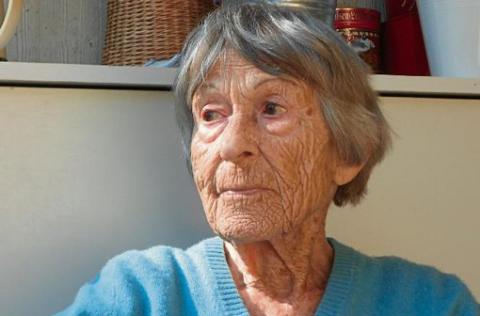
On the one hand, Brunhilde Pomsel says she knew nothing but on the other says she saw the “ranting, rowdy man,” the “raging midget” that her boss, Joseph Goebbels, could become. Though usually sophisticated and elegant, if arrogant, he was the propaganda minister for Hitler’s Nazi regime, culpable in the murder of millions of Jews and other Nazi targets, and she was his secretary. She’s 105-years-old and is the star of a documentary film, A German Life, set to be released soon (The Guardian, Kate Connelly, 8/15/16, “Joseph Goebbels’ 105-Year-Old Secretary: No One Believes Me Now, But I Knew Nothing”). One of her most poignant comments was this: ““Those people nowadays who say they would have stood up against the Nazis – I believe they are sincere in meaning that, but believe me, most of them wouldn’t have.”
After the rise of the Nazi party, “the whole country was as if under a kind of a spell…”
Her point, even if uttered in rationalization, is pretty poignant. It’s so easy to look back on horrific actions like those perpetrated by the Nazi machine and say we’d die fighting it. But, the rank and file of the German people in the 1930s and 1940s were “normal” people. I’m sure it would have been possible for someone like Brunhilde to keep herself in a bubble from the truth, but I’m not sure it exonerates her. I’ve read too many books about so many who secretly and openly defied the evil of that fascist government to protect the innocent, especially the Jewish people.
One of history’s hardest challenges has been to go against the flow of culture and society. Scripture reveals some of those struggles, like faced by Daniel, Shadrach, Meshach, and Abednego. Imagine facing the “rage and anger” of a ruthless king who demanded you to sin, and saying, “O Nebuchadnezzar, we do not need to give you an answer concerning this matter. If it be so, our God whom we serve is able to deliver us from the furnace of blazing fire; and He will deliver us out of your hand, O king. But even if He does not, let it be known to you, O king, that we are not going to serve your gods or worship the golden image that you have set up” (Dan. 3:17-18). Then imagine seeing him “filled with wrath, and his facial expression” being “altered” toward you. While the event was transformational for the king, they still needed the courage to be distinct in their times.
It is frightening to think of how our country has changed in such a relatively brief period of time. As morality erodes and attitudes toward God and the Bible change for the worse, we have opportunities to stand. The ruling powers may not seem as evil as Nazism does in the rearview mirror, but their hostility toward Christianity is becoming clearer. While we remain the respective, obedient citizens Scripture commands us to be (Rom. 13; 1 Pet. 2), let us be willing to stand with the likes of Peter and John and always say, “We must obey God rather than men” (Acts 5:29).

Neal Pollard
There is an old episode of Father Knows Best where Bud, the Andersons’ son, has a glowing write up in the local newspaper for his star performance as his High School’s placekicker. Success goes to his head, leading Bud to break the team’s training rules and stay out past 9:00 P.M. His father finds out and urges him to tell his coach. Bud begrudgingly does so, and he becomes convinced that his doing the right thing and being honest would lead the coach to let him off with a warning or look the other way. When he’s told he cannot play that week because of his violation, he sulks and even blames his dad for giving him bad advice. Eventually, Bud takes ownership of his misdeed, has a more humble attitude toward his importance, and even appreciates the decisions of his dad and coach to help him excel as a person more than a player.
Perhaps personal ethics have eroded to the point that many find such advice and subsequent actions preposterous and wrongheaded. The lesson was that actions have consequences and that honesty should be practiced, not for reward but simply because it is right to do so. Trustworthiness and responsibility are the fruits of integrity and uprightness.
These principles, though unstated in that old television show, are thoroughly biblical in nature. Broadly, the Bible praises those of upright heart (Ps. 7:10; 64:10). Psalm 15 says those who walk uprightly, work righteousness, and speaks truth in his heart (2). It is often more difficult to do the right thing than the easier thing, but the path of least resistance does not usually lead us in the right direction. We made each of our boys read Alex Harris’ Do Hard Things: A Teenage Rebellion Against Low Expectations. An overarching principle is that your choices should not be made based on what’s most convenient or least demanding. Character is built when we have the courage of God’s convictions and do what is right, whatever it may seem to cost us in the short-term. Ultimately, we will be better for it and so will the people in our lives!
Neal Pollard
I was more than a little amused to read one of the latest offerings at the offbeat online food site “Munchies” (munchies.vice.com). While it seems to be having fun with the overkill-reporting of all movements millennial, they give hard data to support the idea that those in the age range of 18-34 are forsaking fast-food chains and sit-down restaurants in deference to convenience stores with their nachos, taquitos and slurpies. This data is being interpreted as a reflection on their tendency to impulse buy or be lured in by novelty.
Having at least two children who would fit the broad definition of “millennials,” I am always trying to figure out how this demographic ticks. It seems that every news story featuring them, as a generation, casts them as fickle, rebellious, self-serving, or disconnected from the rest of society. While they have inherited some broken systems (educationally, economically, religiously, etc.) and, as such, may naturally feel some distrust and disdain for those responsible, stereotypes and broad brushes are usually faulty.
When I view Christian millennials, having spoken with a great many of them over the past few years, I see a group intent on doing great things for Christ. They don’t want to hear plans for helping the poor and needy; they want to organize and supply manpower for doing it. They want more than Bible classes and sermons on soul-winning; they want to see their “role models” doing it and involving them in it. They don’t want to simply accept our word for it on why we do what we do in worship and doctrine; they want well-thought-out explanations and demonstrations of book, chapter, and verse.
Today’s millennials are on the frontline of a battlefield more daunting than any living generation before them. The prince of this world has attempted to brainwash and indoctrinate them with his lies. The institutions of our culture actively seek to redefine right and wrong for them.
So many of the Christian millennials I know are eager to serve as soldiers in the Lord’s Army. They may disparage some of the “established” forms not founded upon the Rock, but the kind of faith they are developing and must grow will be anything but “convenient.” They may have to pay a higher price for holding onto their faith than any of us did at their age. May we have the wisdom and take the time to mentor, encourage, love, and assist them in influencing a world so rapidly changing. They can do it, and we must help. God certainly will (cf. Rom. 8:37-39)!

(video by Wes Autrey)
Neal Pollard
I cannot imagine anyone present yesterday morning to witness Janice Lee baptized into Christ could have failed to be touched at a very deep level. J.J. and Lila Brennan had been studying the Bible with Janice, and she came to the conclusion that she needed to be baptized for the forgiveness of her sins. So, she came to the front after my sermon and made that desire known.
She was in a wheelchair because she suffers left side paralysis as the result of a stroke. She is also on oxygen. Several ladies and a few of us men took special measures to help her into the baptistery. She could walk, slowly, gingerly, and with much difficulty. The ladies helped her up the stairs, while we stood in the water to receive her and help her the rest of the way. Each step was tenuous and required the utmost effort on her part. Once she was finally in the baptistery, we carefully lowered her under the water and brought her back up. Very quickly, her deeply felt emotions gently bubbled to the surface. She softly cried, recalling difficult things from her past, and she said, “I forgive those who’ve sinned against me.” The joy and peace on her face is something impossible to adequately describe.
What did this new sister in Christ demonstrate yesterday? Resolve! Afterward, I found out not only that she had to deal with the consequences of the stroke, but she is afraid of water. Yet, she saw the need of her soul as preeminent over any obstacle she might have cited. The constant need of oxygen, the paralysis, and the phobia were outweighed by the Lord’s command. Her faith was so strong that they were not insurmountable barriers. She refused to let them be!
The difference at the Judgment, in part, will be that some will offer excuses for why they did not obey the Lord while others, through genuine, trusting faith, will not need to make excuse. They will stand before Christ, who will see His blood covering their transgressions. What does it take to go to heaven? A “no matter what” obedience!
Neal Pollard
Recently, I was corresponding with Arthur Ohanov, a gospel preacher in Donetsk, Ukraine, who served as my translator on a couple of mission trips to eastern Ukraine in the early 2000s. In part, he wrote me, “As I am typing this letter I hear bombing in our city, but God is good! We continue our ministry of reconciliation of sinners with their Father!” Brethren like Arthur are heroes, facing difficulties we can only imagine in America. Walking the streets of Kramatorsk, Slavyansk, and Slavyanagorsk back then, I could not fathom that war, carnage, and death could possibly come to that region in so few years.
Periodically, people talk about how the immorality and unbelief in our nation will bring devastation to this nation. While that is undoubtedly a possibility, which we can see even with God’s special nation in Old Testament times, that belongs to the sovereignty and justice of God. Yet, nations throughout the centuries rise up and testify that national peace can quickly and dramatically give way to war and destruction.
Today, we wake up to calm and peace. At the throne of God, we can (and should) humbly thank Him for this tremendous blessing. Each day that begins like this represents a golden opportunity for each of us. Wherever we go, we encounter people who are alienated from God and who are heading for eternal catastrophe. We should consider this peace more than a privilege. It is an obligation. While we have time, we must try to reach as many as possible.
The deacons at Bear Valley have been working for several months, planning and strategizing to enhance our vision for the lost in our area. Many of our members have been approached and asked for help as we try to prepare ourselves as a church to more effectively carry out the Great Commission. That will continue to expand. We really need to feel the urgency expressed by Christ, who said, “We must work the works of Him who sent Me as long as it is day; night is coming when no one can work” (John 9:4). “Night” may come by virtue of how swiftly our lives are lived on earth. It can also come at the hands of dramatic changes in our nation and communities. Because the future is wholly unforeseen, act while you can!

Neal Pollard
In December, 2003, Dave Young, Sr., Jim Dalton, Keith and Kim Kasarjian, Cy Stafford, Kathy and I all stopped for lunch at a picnic area in Tarangire National Park south of Arusha, Tanzania. We stood a short distance from our vehicles, and I prayed for the food. About midway through the prayer, a lion roared. The sound felt as if it went straight through us, and every eye popped open to see exactly where the big cat was. Afterward, Cy told us it could have been a mile away. The roar was so powerful, it felt like he was spitting (eating?) distance away from us.
Since then, every time I read about a particular conquest of Benaiah, one of David’s mighty men, I think back to that hot African day.
2 Samuel 23:20 so nonchalantly reports, “…He also went down and killed a lion in the middle of a pit on a snowy day.” Notice three things about this exploit. First, the foe was ferocious. It was a lion, one of nature’s fiercest predators. It is likely to be an aggressor when confronted by a man. Second, the field of battle was foreboding. Try to put yourself in Benaiah’s position. You are down in a pit facing the king of the jungle. It is very unlikely one can outrun a lion on flat ground in ideal circumstances, but where do you run down in a pit? Finally, the forecast was definitely a factor! What was the traction and footing like for David’s mighty man in this battle? Yet, the outcome, incredibly, was that Benaiah faced this foe and won!
Have you ever found yourself in a seemingly impossible circumstance? Maybe a powerful temptation, a chronic illness, a perpetual enemy, a prolonged financial crisis, a wayward loved one, or other thorn in the flesh or spirit? Maybe you felt like giving up. Maybe you have given up. I urge you to be a Benaiah, fighting valiantly adorned with the whole armor of God (Eph. 6:10ff). Realize that you do not fight alone, that God will aid you (1 Cor. 10:13) and lead you to victory every time (1 Jo. 5:4). Your lion, pit, or snowy day may be figurative, but that makes God’s aid no less likely. You keep fighting, and He will give you victory!

Neal Pollard
Earlier today, Ukrainian President Petro Poroshenko spoke to a joint-session of the United States Congress. It was an impassioned plea, from beginning to end, as he spoke in his broken English about the trials his people have endured for many months now. He gave poignant examples of brave men who were killed for their courageous stand against ruthless enemies. One of his imploring calls for help invoked our own past path as a nation and our pursuit of liberty. It was about then that he exclaimed, “Freedom is not a luxury. It is a necessity!”
Poroshenko was speaking not of the Ukrainians but of the Russian people, who he believed had been fed the idea that freedom is a luxury that they should not necessarily expect to enjoy. He rebutted such a view. We have such a hard time in our nation comprehending life in a land where freedom is such an elusive commodity. But, for those people, it is a daily battle!
In the spiritual sense, this stated idea is most true and important. Sin is a horrible dictator and master, brutalizing and bringing death to those who are under its power. Eternity is in the balance for us. Will we leave this life as free men and women or as slaves? What makes this so much more paramount is that it is harder to discern spiritual bondage than physical bondage. We may think ourselves perfectly free all while toiling in the chains of darkness!
Paul made his own impassioned plea to the saints at Galatia. He wrote them, “Stand fast therefore in the liberty with which Christ has made us free, and do not be entangled again with a yoke of bondage” (5:1). Can you imagine a nation or even an individual who had endured torture and seen loved ones murdered now enjoying the rights and privileges of freedom but volunteering to return to that former way of life? It is unthinkable, unless we speak in the spiritual sense. People continue to run toward and embrace the enslaver of souls. To any one, we would implore, “Freedom is not a luxury. It is a necessity!”
Neal Pollard
Perhaps you have seen YouTube or Vice News videos featuring Simon Ostrovsky’s behind the scenes reports of the escalating crisis in eastern Ukraine as well as earlier reports in Crimea. On April 21, at a police checkpoint in Sloviansk, Ostrovsky was detained and held in a squalid holding area for four days, beaten a couple of times, and interrogated by his captors. He has been released now and is seeking press credentials before considering reentering this city in Ukraine that has been the center of gun battles and alleged protestor deaths. While I am unsure of Ostrovsky’s political ideology and he does not appear to have deep religious convictions, I admire his courage and perseverance. He believes in the importance of media rights and the ability to give uncensored reports of happenings there and he is willing to risk and sacrifice on behalf of those convictions. The fact that he wants to remain in Ukraine and report on this ongoing, changing international situation is remarkable, a tribute to his fearlessness.
It is hard for us to imagine today what the early Christians went through to defend something greater even than national freedom and civil rights. Disciples of Christ were persecuted (cf. Acts 8:4; 2 Tim. 3:12; Heb. 10:34; Rev. 2:10) and even killed for serving Him (Acts 7:58-59). Yet, the courage they so often demonstrated in the face of such things is incredible! They sang in prison after being beaten (Acts 16:22ff). They rejoiced after they were flogged, “that they had been considered worthy to suffer shame for His name” (Acts 5:41). Paul, oft-recipient of physical persecution, wrote the Thessalonians, saying that their persecutions and afflictions were “a plain indication of God’s righteous judgment so that you will be considered worthy of the kingdom of God, for which indeed you are suffering” (2 Th. 1:5).
The mood and spirit in our country has certainly changed regarding faith in the Christ of the Bible. There could come a day when you and I might have to muster the courage to stand before those with the power to imprison, torture, or even kill us for standing up for Jesus. However, as the world’s mindset encroaches more and more into our lives and culture, we must maintain the courage to stand up for Him even when we must stand for the unpopular and even stand alone while doing it. It takes uncommon courage to remain distinct and loyal to our Lord, no matter what people say and do. Let us learn a lesson from Mr. Ostrovsky. Let us have the courage of our convictions and conquer the fears that might keep us from doing our “job” as Christians!

Neal Pollard
Sometimes the ones who cry for tolerance and acceptance can be most lacking in the qualities themselves. Surprisingly little has been said in outcry against the forced resignation of Mozilla CEO Brendan Eich on April 3, 2014. Eich not only co-founded Mozilla, he also invented the programming language Javascript (www.huffingtonpost.com). He had proven his professional aptitude to hold this position.
Before being forced out as CEO, Eich had stated in an interview with technology news service Cnet, “I don’t think it’s good for my integrity or Mozilla’s integrity to be pressured into changing a position. If Mozilla became more exclusive and required more litmus tests, I think that would be a mistake that would lead to a much smaller Mozilla, a much more fragmented Mozilla” (Foxnews.com). He also told them, “If Mozilla cannot continue to operate according to its principles of inclusiveness, where you can work on the mission no matter what your background or other beliefs, I think we’ll probably fail” (ibid.). He was referring to his widely known opposition to same sex marriage and more specifically a $1000 donation to the campaign to support Proposition 8 in California back in 2008. This proposition, which over 7 million fellow-Californians voted for and which passed, was a state constitutional amendment to eliminate the rights of same-sex couples to marry. It was overturned by the Supreme Court last year.
It raises the question of what homosexual activists really want. Is it merely acceptance and validation or forced approval? If one can lose his job for stating a conviction against that lifestyle, does this suggest a move against the rights of anyone who wishes to articulate belief in the biblical view that homosexuality is a sin? Could this foreshadow a time when those in churches preaching against the practice of homosexuality could lose their property, freedom, or worse?
On November 9-10, 1938, German stormtroopers and non-Jewish civilians, under pretense of an assassination in Paris of a German diplomat by a Jew, led an organized effort against the Jews in an event that came to be known as Kritallnacht or “The Night Of Broken Glass.” The official United States Holocaust Memorial Museum writes,
The rioters destroyed hundreds of synagogues, many of them burned in full view of firefighters and the German public and looted more than 7,000 Jewish-owned businesses and other commercial establishments. Jewish cemeteries became a particular object of desecration in many regions. Almost 100 Jewish residents in Germany lost their lives in the violence. In the weeks that followed, the German government promulgated dozens of laws and decrees designed to deprive Jews of their property and of their means of livelihood even as the intensification of government persecution sought to force Jews from public life and force their emigration from the country (http://www.ushmm.org/learn/timeline-of-events/1933-1938/kristallnacht).
It has been said that in our supposed age of tolerance people have the right to say and do just about anything. Just about any fringe group can hold the most outlandish views and do so publicly. It is unacceptable to discriminate against one for almost any reason. However, the right to stand upon Christian principles, originating in Scripture, is eroding. To discriminate against Christian beliefs is growing in acceptance. That’s not meant as alarmism or as an expression of a martyr complex. But, reading the New Testament, we know that Christians faced persecution simply for believing and sharing God’s Word. May God ever give us the courage and willingness to stand upon the rock solid foundation of Scripture. No matter what.