BIG LESSONS FROM EGLON

Dale Pollard

 “Now Eglon was a very fat man” (Judges 3.17). 

 King Eglon of Moab shows up in Judges three as, perhaps, the biggest enemy of God’s people. After Israel turns away from the Lord, God allows Eglon to oppress them for eighteen long years. Though Eglon was a huge ruler, his story teaches us several bigger lessons. 

 First, Eglon reminds us that earthly power is temporary. He was a king with wealth, influence, and military strength, but his reign ended suddenly. No matter how powerful a person may seem, all human authority is ultimately subject to God’s will (Daniel 4:35). 

 Second, Eglon’s account shows the consequences of sin. Israel’s oppression under Moab was the result of their disobedience. While Eglon chose to act wickedly, his rise to power was also a reminder that turning away from God brings painful consequences. Sometimes those consequences are big. Very big. 

 Third, Eglon’s demise proves that God can and will deliver His people in unexpected ways. God raised up Ehud, an unlikely hero, to free Israel from that Moabite oppression. Never underestimate what God can accomplish through ordinary people who simply trust Him. You probably won’t stab an obese man, but God has a job for you all the same.

 Finally, Eglon’s story reminds us that pride and self-confidence offer no real security. He likely felt fat and happy in his private chamber, protected by servants and royal status, yet none of these could save him when God’s judgment came.  

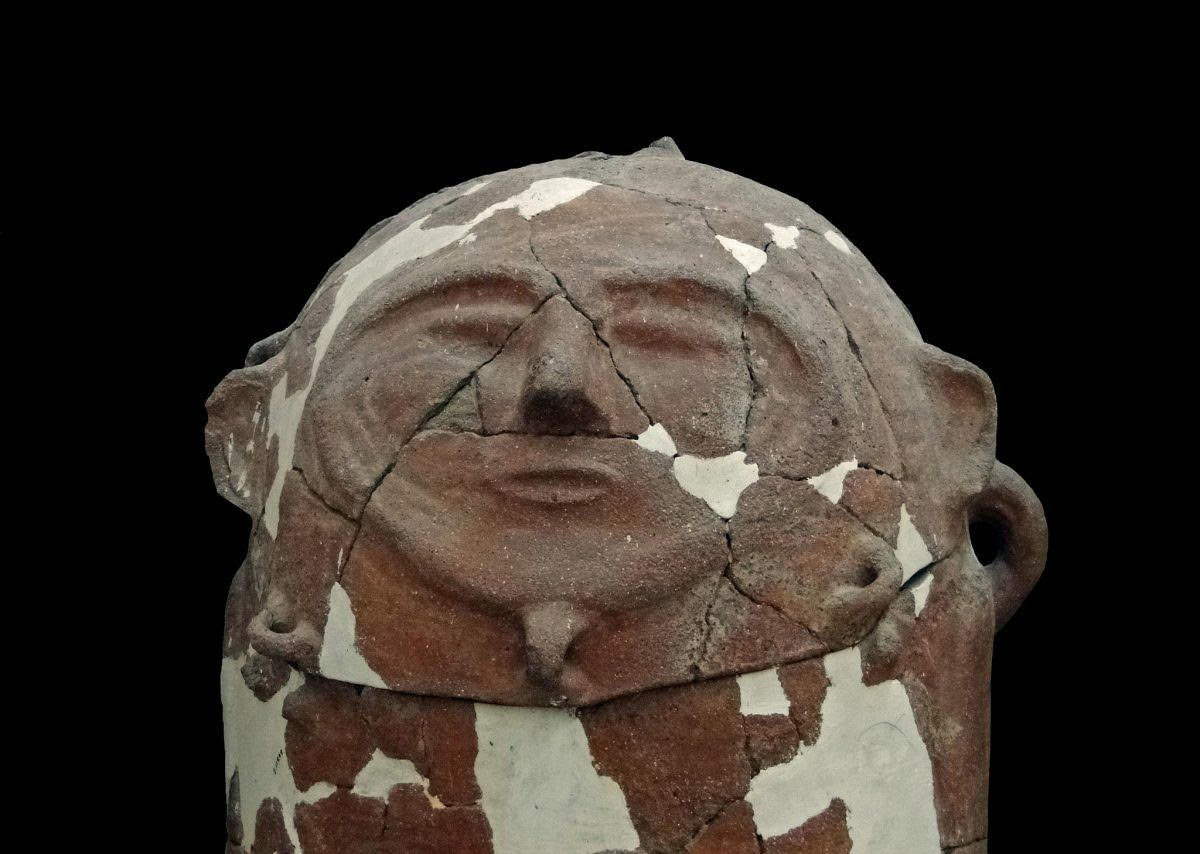
Moabite sarcophagus in Jordan Archaeological Museum in Amman, Jordan

Shamgar The Son Of Anath

Neal Pollard

The brief account Shamgar in Judges 3:31 is interesting and unique. Othniel had a famous family tie (Caleb). Ehud had a unique anatomical feature (he is pointed out as “left-handed”). Shamgar is known for his weapon of war (“an oxgoad”). Much more is said about the opposing rulers, the oppression, and the operation of the deliverance of the other four of Israel’s first five judges (Shamgar will be followed by Deborah and Gideon). None of the judges, including Tola, Jair, Ibzan, Elon, or Abdon, have so little said about them or their length of judging of the nation. This is what is said about him:

“After him (Ehud) was Shamgar the son of Anath, who killed 600 of the Philistines with an oxgoad, and he also saved Israel” (3:31). Add to that a line which Deborah includes in her song of victory: “In the days of Shamgar, son of Anath, in the days of Jael, the highways were abandoned, and travelers kept to the byways” (5:6). What can we learn and apply from this extremely brief record?

  • He was resourceful–He killed the Philistines with an oxgoad. Like men after him, Samson with the jawbone of a donkey (15:15-17), Adino with an unnamed weapon (2 Sam. 23:8), Eleazer with a sword (2 Sam. 23:10), and Abishai, with a spear (2 Sam. 23:18), Shamgar took what he had and used it for God. Solomon later writes, “Whatever your hand finds to do, do it with all your might…” (Ecc. 9:10). God once asked Moses, “What is that in your hand?” (Ex. 4:2). Take inventory of your resources–money, talents, temperament, personality, intelligence, etc. Are you using them for Him?
  • He was valiant–He killed 600 Philistines with an oxgoad. What incredible odds! He went toe to toe, hand to hand, with 600 different people and was victorious over them all. He walked away from that confrontation alive! Can you imagine? Reminding ourselves that God delivered Israel through the judges, God was behind this victory. But He did so through this man. It reminds us of a truth taught by Paul, “…If God is for us, who can be against us?” (Rom. 8:31). When we face spiritual foes, God’s enemies, we don’t use weapons of the flesh (2 Cor. 10:4). Yet, God guarantees the outcome. Through John, He says, “You are from God, little children, and have overcome them; because greater is He who is in you than he who is in the world” (1 Jn. 4:4). With God’s help and power, you can win victories in battles you have no business engaging in!
  • He was useful–Judges 3:31 says he saved Israel. Judges 5:6 says he did his work in adverse times, when the highways were abandoned and travelers kept to the byways. While he gets but a footnote in history, what a legacy! There was a problem and he worked with God to provide a solution. The idea of a judge is of a savior. God saved the people through Shamgar. He had the freedom of choice, and he chose to save the people. Galatians 6:10 urges us all, “So then, awhile we have opportunity, let us do good to all people, and especially to those who are of the household of the faith.” You are valuable to God, but you must use what you have while you can to do all you can for Him! Just like Shamgar did!

Tearing Lions And Toeing Lines

Tuesday’s Column: Dale Mail

image

Dale Pollard

He wore a name we know well but accomplished the will of a Name we know better. Samson the judge was the man who dropped a thousand Philistines with a jawbone while dropping the jaws of those who would read these accounts years later.
In Judges 13 through 16 we find the awesome, yet tragic life of the strongest man who ever walked the earth. From the moment of his miraculous conception to those dramatic moments between the pillars, he captivates our imagination. Some tend to idolize his prowess as a warrior and rebel, but the real lessons we can learn from Samson can be appreciated by everyone. What if a mortal human could act in place of God? While impossible, let’s just humor this thought. In a way we get a glimpse of how miserable life would be if we didn’t serve a righteous Lord. When Samson lost his temper, became annoyed, bored, or defiant he would always choose to act in his own self interest. He was empowered by a God he didn’t serve and that is seen time and again in these three chapters. His final act of killing over three thousand Philistines who mocked him in their pagan temple were slain out of revenge (Judges 16:28) and hatred. His eyes had been gauged out and he is led by a servant through a crowd of people who were not even supposed to be living in the same land as the Israelites (Numbers 31:17). In other words, the Philistines were a hole dug by God’s children in the first place. Samson was a tool in God’s hand to relieve His people from the oppression of these ruthless “fish people.”

I’m sure you know many of the accounts from the life of Samson so here are a few things that God intended for us to learn from him.

1. God is infinitely more powerful than His creation (including Samson) and is infinitely more loving and patient than His creation. If Samson had the power of God, his own humanity would provoke him to destroy anyone who irritated or upset him. How many times has God forgiven us and then placed those sins out of His sight? Too many times to count, I’d imagine.
2. God can use the self-seeking people in the world to accomplish His own will. He never lost control of Samson and God hasn’t lost control in the world today.
3. Nothing could make us serve God, even if He paid us a supernatural visit (see Jesus). Samson’s abilities were given to him by the Lord, and yet that wasn’t enough to convince him to dedicate his life to Him. Consider Solomon that was given wisdom in a miraculous way— yet still fell. In the end it comes down to the individual heart, the desire, and the determination to commit ourselves to His service.
4. God’s desire to protect His people is great and His methods are creative. The Israelites could have never dreamed that their savior would be a man like Samson. They were plagued by a race of wicked warriors, but God used one man to turn the tables. When we look at our country today we may think there’s no way that things could be different but let’s not forget how powerful and how creative God is. It doesn’t matter whether or not WE can see a path forward when God has proven that He is more than capable and willing to see us through.

You could ponder over the life of Samson and come up with more great lessons to build your faith. Why not read through Judges 13-16 to remind yourself of God’s control in this world? As a bonus, you’d be treating yourself to one of the most fascinating sections in the Old Testament.


The Secret Message 

Tuesday’s Column: Dale Mail

83538761_557569434843824_1603081807199207424_n

Dale Pollard

If he was nervous, it was clear that the king’s palace guards couldn’t tell. They checked his left thigh for a weapon, and when they were satisfied they allowed Ehud to enter the throne room chamber. Ehud is just steps away from going down in history as the man who delivered the Israelites from the Moabite oppression. If he can pull this off, he and his people will enjoy eighty years of peace. It was a big job, and if you know this account, it was a big in more than one way. Hanging from his right side, unknown to anyone but him, is an eighteen inch double-sided sword. It was a weapon made for stabbing, and Ehud planned to use it for it’s created purpose. The guards stationed outside the chamber open the door for him. The room is filled with servants and more armed security, but this is probably not the first thing to catch your eye. There, in the middle of the room on the throne sat an extremely obese man. He’s been the ruling power over God’s people for eighteen years now and as king, he clearly took advantage the royal food supply. His name was Eglon. He, along with the sons of Ammon and Amalek, defeated the Israelites and then claimed the city of palm trees, Jericho.

Ironically, the palm tree was considered a symbol of peace and victory. Many years later, people would lay the branches of these trees down before Jesus the Nazareth as He enters Jerusalem. It seems reasonable to assume that Eglon was glad when he saw Ehud walk towards him. After all, Ehud was the man in charge of gathering Israel’s tribute and delivering it to him. With these funds, the king was free to continue living his life of gluttony and leisure. However, this time God was about to give a gift to the Israelites— Eglon’s life.

Ehud begins to look for the perfect opportunity to kill the king. He says to Eglon, “I have a secret message for you.” At this, Eglon clears the room. Now it’s just Ehud and the king. They’re alone in Eglon’s roof chamber. Ehud continues, “It’s from God.” This is out of the ordinary, and the king seems to have some level of respect for Jehovah, because he then stands up. I would imagine, a man of his size didn’t usually make a habit of standing unless it was absolutely necessary. Ehud pulls from his right thigh the hidden sword and quickly thrusts it into Eglon’s belly. The fat closes over the blade, and his insides spill out. Ehud locks the door and makes his escape. The guards assume Eglon is relieving himself in the coolness of his roof chamber. They wait until the point of embarrassment before opening the door, only to find their king dead. Ehud manages to rally the Israelite troops— slaying ten thousand mighty Moabites. Peace fell on the land for the next eighty years until the children of Israel once again fell away from God.

This account is found in Judges 3, and it’s an interesting, perhaps disgusting account, of how God delivered His people. Believe it or not, there are a few takeaways for us today. Sometimes Christianity involves bravery on our part. God was with Ehud, and He’s still with us today. Even so, humans still face very real fears. Whether you’re asked to lead a prayer in worship, or you’re thinking about talking with those in your social circles about Christ, or making an uncomfortable hospital visit, faithful service requires courage. It’s always been that way. Another lesson we can learn from this account is that God strengthens our faith by testing that faith. Just look at how zealously Ehud conquers the strong and valiant Moabites after Eglon’s death. When we can witness how God has worked in our past, it can build our faith in God’s ability to assist us in the future. If God is for us, who can be against us? Absolutely nobody. 

australia-trentham-trentham-falls-moody

Avoiding A Ride On An Ancient Cycle

Neal Pollard

It has been called “The Dark Ages Of The Old Testament.” During the period of the judges, there was moral, economic, social, political and religious decline. We often read that, during this time, the children of Israel did that which was evil in the sight of the Lord.

History keeps repeating itself in the book of Judges. The people do evil, God allows and oppressor to persecute them, the people turn back to God and plead for deliverance, and God raises up a deliverer to defeat the oppressor and deliver Israel. Here, we speak of the “cycle” of Judges: sin, servitude, sorrow, supplication, and salvation.

Their enemy invaders came from the East (Mesopotamia), the Southeast (Moab), the North (Canaan), the East (Midian and Ammon), and the Southwest (Philistia). It is interesting that Israel overcame Canaan in the militarily brilliant strategy orchestrated by God (Central Canaan—Josh. 7-8, Southern Canaan—Josh. 9-10, and then Northern Canaan—Josh. 11-12). As a result of Israel’s failure to utterly destroy the inhabitants of Canaan, the six oppressions came from the central, south, and north—each places where God had given them victory. What a reminder that when we don’t defeat the enemy, he will return! The enemy was sin!

Here is my summary of the book of Judges, as seen in Judges 2:16-19:

  • The rulers—“Judges”
  • The role—“Delivered”
  • The rescued—“Them” (Israel)
  • The rivals—“Those” (God’s enemies)
  • The ruination—“Plundered them” (oppression)
  • The refusal—“They did not listen to their judges”
  • The reveling—“Played the harlot after other gods”
  • The retreat—“Turned said quickly”
  • The right road—“In which their fathers had walked”
  • The role models—“Father, obeying the commands of the Lord”
  • The resolution—“They did not so”
  • The raising—“The Lord raised them up judges”
  • The relationship—“The Lord was with the judges”
  • The restoration—“Delivered them from the hand of their enemies”
  • The repentance—“The Lord was moved to pity” (KJV—“It repented the Lord because of their groanings…”)
  • The return—“When their judge died, they would turn back”
  • The retrogression—“Acted more corruptly than their fathers”
  • The resilience—“Didn’t abandon their practice or stubborn ways”

The judge was the savior of the people. Time and time again, the people put themselves in a position to need some serious rescue, and our long-suffering God was willing to soften His heart to their cries. Eventually, His patience ran out and even in this time period there were severe consequences. How often do we need the blood of Christ and the forgiveness of the Father? Often, we need forgiveness for the same sins repeatedly. We wonder how Israel could fall into the same traps, but we do well to identify and avoid them in our own times. We have the benefit of both Old and New Testament Scripture, and they would have only had the writings of Moses and Joshua when they lived. May we learn from these ancient lessons (cf. 1 Cor. 10:11) and stay off that ancient cycle.

bicycle_two_1886