Wasting Away

Carl Pollard

“So we do not lose heart. Though our outer self is wasting away, our inner self is being renewed day by day…as we look not to the things that are seen but to the things that are unseen.” 2 Cor. 4:16-18

That opening line says a lot, “we do not lose heart.” Paul isn’t writing from an easy place. Earlier in the chapter he talks about being afflicted, perplexed, persecuted, struck down. He has suffered constantly for Christ. 

Then he says something honest: “our outer self is wasting away.” That’s real life. Bodies wear down. Energy fades. Life gets heavy. Ministry gets exhausting. We don’t have to pretend everything’s fine. 

But he doesn’t stop there: “our inner self is being renewed day by day.” While one part of you is declining, another part can be growing stronger. But this renewal isn’t automatic, it’s tied to where your focus is and who you’re trusting. You can be physically worn out and spiritually stable at the same time.

Paul calls his suffering “light momentary affliction.” That sounds almost out of place until you remember what he went through, beatings, prison, constant pressure. So why call it “light”? Because he’s comparing it to “an eternal weight of glory.” When eternity is in view, even heavy things take on a different scale.

Then he explains the key, “as we look not to the things that are seen but to the things that are unseen.” That’s a shift in perspective. Most people live anchored to what they can see, their circumstances, problems, and outcomes. Paul says you’ve got to train your focus somewhere else.

The seen things are temporary. That job stress, that health issue, that tension at home, it’s real, but it’s not lasting. The unseen things, God’s promises, His presence, eternity, those are what endure! 

That’s what keeps us from losing heart. Not pretending life’s easy, but remembering it’s not ultimate.

And so, we don’t quit just because it’s heavy. You don’t measure everything by what’s right in front of you. You keep going because you know there’s more than what you can see. The question is simply what we are fixing our eyes on. Because whatever we focus on will shape whether we give up or keep going.


Books by the Pollards

A Tiny Spark Snail Mail Club (Kathy Pollard)

“Staying Faithful Through The Storm”

Eli Watson

A few years ago, a ship was caught in a violent storm at sea.  Waves crashed over the sides, the wind howled, and the crew fought just to stay afloat.  Passengers were panicking—some crying, others praying—convinced they weren’t going to make it.  But in the middle of all that chaos… there was one little boy.  He wasn’t panicking. He wasn’t crying.  He just sat there—completely calm. Someone finally asked him,   “Why aren’t you afraid? Don’t you see what’s happening?”  The boy looked at them and said,  “My dad is the captain… and he’s not worried.”  

The truth is, every one of us will face storms—moments when life feels out of control, when fear creeps in, and when we don’t understand what God is doing.  The real question isn’t if storms will come.  The question is: Will we have faith when they do?

Peter faced this exact moment when his faith was tested (Matthew 14:22–33). In the middle of raging water, Jesus called him out, and Peter stepped onto the water.   But when he shifted his focus to the storm, he began to sink.  Faith doesn’t mean having no fear—  it means stepping out despite fear.  

Most people don’t abandon their faith all at once.  It usually happens slowly—  when discouragement builds, prayers seem unanswered, and doing the right thing feels unnoticed.  So what keeps a Christian faithful when life gets cloudy?  The storm reveals where your focus is.

Paul gives us a powerful example of endurance.  In Acts 27, he was shipwrecked, surrounded by people who had lost hope.  But Paul stayed grounded in faith.  

Galatians 6:9 reminds us:  “Do not grow weary in doing good, for in due season we will reap, if we do not give up.”  Even the faithful get tired.  Doing the right thing can feel unnoticed or unrewarded—but God sees it.  “In due season” means in His timing—not ours.  

And God has never failed to come through.  The problem usually isn’t that we don’t know what’s right—  it’s that we grow impatient or tired of doing it.

Hebrews 12:1–2 gives us two key ideas:  “Run with endurance” —  The Christian life isn’t a sprint; it’s a marathon.  Trying to rely on your own strength leads to burnout.  

“Looking to Jesus” —  

Endurance comes from focusing on Christ, not circumstances.  When we rely on ourselves, we run out of strength.  But God never runs out.  Mark 4:35–41 shows another storm.  Jesus was in the boat, asleep, while the disciples panicked.  They woke Him in fear, and He responded:  “Why are you so afraid? How is it that you have no faith?”  

The storm didn’t mean God wasn’t with them—  it meant they were focused on the what instead of the who.  Because when the who is God, the what doesn’t matter.  Storms don’t mean God is absent.  True faith is trusting Him—even when He seems silent.

When storms feel overwhelming, ask yourself three questions:

1. Am I praying like I used to?  

   Am I using the connection I have with the Father, or trying to handle everything alone?

2. Am I serving fully?  

   Am I allowing God to use the gifts He’s given me—or taking them for granted?

3. Am I pursuing holiness with urgency?  

   Am I living like my faith truly matters?

Because most of the time, faith doesn’t fail in a dramatic moment—  

it fades through quiet neglect.

But we can continue with hope.   1 Corinthians 15:58 reminds us that our labor is not in vain.  God sees quiet faithfulness.  He sees your unseen sacrifices.  He sees when you keep going, even when you’re tired.  And He gives strength to those who keep their eyes on Him.  The Christian life isn’t about never getting tired—  it’s about refusing to quit.

(We’re grateful to Eli for a great, heartfelt lesson on staying faithful even in our storms.)

Books by the Pollards

A Tiny Spark Snail Mail Club (Kathy Pollard)

He Survived Four Shipwrecks, Then He Died

Neal Pollard

Many stories have been written about Violet Jessop, a ship stewardess who survived the sinking of the Titanic and the Brittanic. But fewer know about someone who survived twice as many sinkings, including the two survived by Jessop. Arthur Priest, a stoker for the steam-powered ships, survived two major collisions and four shipwrecks. The Asturias was in a collision on its maiden voyage in 1908 and the Olympic survived a collision in 1911. Then, Priest survived the Titanic in 1912, the Alcantra in 1916, the Brittanic in 1916, and the Donegal in 1917. Two of the ships were luxury liners, one was a hospital ship, and the other was an armed merchant cruiser. For the latter, Priest was awarded the Mercantile Marine Ribbon by the British for service in World War I. He sustained a serious head injury on the Donegal, returning to his home in Southampton, England. 

As remarkable as all these survival stories are, Arthur Priest died of pneumonia with his wife Anna by his side in Southampton. He was 50 years old. There is very little information about what he did with a life spared four times from the depths of the sea. We don’t know if he was a religious man, much less a Christian. We don’t know much beyond the fact that he was unsinkable at sea.

Reading about Priest, I thought about a different kind of priest (cf. 1 Pet. 2:5,9) the New Testament tells us about. He wrote, “three times I was shipwrecked, a night and a day I have spent in the deep” (2 Cor. 11:25). We know what this man did with his life, which was cut short in service to an infinitely greater King than the one who was on the throne in Arthur’s lifetime. He was in a war of far more lasting consequence (2 Cor. 10:4-5), and he was decorated for his service in a far more dramatic way (2 Tim. 4:6-8).

The likelihood that you and I will survive even one shipwreck is small. But, like Priest and Paul, we will ultimately die unless the Lord returns first. Even if our lives are not filled with dramatic tales of rescue and unlikely survival, we can leave a legacy of faith and fervor in service to our King (1 Tim. 6:15). We can share Paul’s victory, crowned with the victorious on that last day (Rev. 2:10). 

Doing Hard Things Harder

Did you see where a Polish man made history by becoming the first person to ski down Mount Everest in Nepal without using an oxygen tank? On September 27, 2025, 37-year-old Andrzej Bargiel stood at almost 30,000 above sea level (nearly six miles high!) and began his descent following…

Neal Pollard

Doing Hard Things Harder

Neal Pollard

Did you see where a Polish man made history by becoming the first person to ski down Mount Everest in Nepal without using an oxygen tank? On September 27, 2025, 37-year-old Andrzej Bargiel stood at almost 30,000 above sea level (nearly six miles high!) and began his descent following “16 grueling hours moving through the death zone (above 8,000 m) without bottled oxygen. After only a brief moment on the top of the world, he clipped into his skis and dropped into his historic descent, racing the setting sun” (usatoday.com). No ropes or ladders, only skis! This was his third attempt, and this time was the charm. Not surprisingly, his sports partner was Red Bull!

He defied internal and external dangers aplenty, but his goal was so important that he ran every risk. He did something close to seemingly impossible! He took a risk to have his name remembered in the record books of man.

Writing from prison, Paul writes about what he was willing to do “for the sake of Christ” (Phil. 3:7). He says, “I have counted as loss whatever things were gain to me” (8). “I have suffered the loss of all things” (8). “I press on so that I may lay hold of that for which also I was laid hold of by Christ Jesus” (12). “I press on toward the mark” (14). These were hard things!

He was put in a disadvantageous position for Jesus. He “suffer the loss of something which [he] had previously possessed, with the implication that the loss involves considerable hardship or suffering” (Louw-Nida, 565). He “moved rapidly and decisively toward an objective” (BDAG, 254), namely the goal of “the prize of the upward call of God in Christ Jesus” (14). 

He was willing to let go of human accolades and achievements (Phil. 3:4-7). He wanted something more and better. He was willing to stretch himself to the limit to achieve this goal. And he did it at full tilt!

What do you want more than anything in the world? What high and lofty goals do you have? You can pour your energy into some physical, financial, intellectual, or cultural feat, but make sure that your devote your greatest effort into something that will bode well for eternity. Pursue heavenly goals with gusto and maximum effort! You may not be in the annals of this world, but you will surely make Heaven’s Hall of Fame! 

The Cleveland Spiders

The Cleveland team was dreadful. It showed on the field and in the stands, where they drew an average of 199 fans after their first 16 home games. Only 6,088 fans watched them play that year, an average of 145 diehards per home game. They were so bad, they decided to play most of their games on the road.

Neal Pollard

Inexplicably, I remain a Colorado Rockies fan when many of my Denver-area friends have abandoned ship with this historically bad baseball team. The Rockies are last in total pitching and fielding (defense) and seventh-worst in hitting. That means they can’t pitch, hit, or field. They go into the All-Star game 22-74, on pace to join some dubious, infamous company. In the “modern era” (since 1901), there was the 1916 Philadelphia A’s who won 36 and lost 117. The 1935 Boston Braves and 1962 New York Mets were almost as bad. Closer to the present, you’d have to include the 2003 Detroit Tigers (43-119) and the 2024 Chicago White Sox (41-121). But, the symbol and epitome of terrible baseball has to be the 1899 Cleveland Spiders. They finished that season 20-134! But, their hard luck was more of a business decision.

The 1898 team boasted Hall of Famers Cy Young, Jesse Burkett, and Bobby Wallace, but the owners, who also owned the St. Louis Browns, felt that a good team would draw more fans in Missouri than Ohio. So, they depleted the Spider roster and stocked the Browns roster. The Cleveland team was dreadful. It showed on the field and in the stands, where they drew an average of 199 fans after their first 16 home games. Only 6,088 fans watched them play that year, an average of 145 diehards per home game. They were so bad, they decided to play most of their games on the road. To commemorate the centennial “celebration” of Clevelands wandering exiles, J. Thomas Hetrick memorialized them in his 1999 book, Misfits! Baseball’s Worst Team Ever. Apparently, the Spanish-American war, a failed effort to clean up bad language on the field, and “too many games” (expanding to 154; today, it’s 162) had already cut into fan attendance, but watching a “sideshow” like the Cleveland Spiders led to a disastrous end to a once-proud, championship-caliber franchise.

To fail in athletics may lead to a less than desirable footnote in sports history. To fail in academics and economics can create a legacy that stains one’s family name. But, in just about every arena, failure need not affect one’s spiritual standing. Think of biblical underdogs that had little chance of success, if God was not factored in. Why, all of Israel were sitting ducks against the Canaanites without God (Deut. 7:24; Josh. 21:44)! David looked like no match for Goliath (1 Sam. 17:33)! Hezekiah and lowly Judah, on paper, were no match for Sennacherib and the Assyrians (Isa. 37:14-20)! Even the early church seemed overwhelmed in their objectives and mismatched in their mission (1 Cor. 1:26-29)!

How do we explain this? How can we seem to lack the talent, resources, exposure, and influence of the world, and yet still be described as over-comers (John 16:33), conquerors (Rom. 8:37), victors (1 Cor. 15:57), and greater (1 John 4:4) than the world? Perhaps this helps. The final tally has not been recorded, and it will not be in this life! Evaluation day will surprise the whole world, when we stand before The Judge (Mat. 7:13-14, 21-23; Rev. 20:11-15). God’s not going to reward the most accomplished by earthly measurements. Our eternal success or failure will be tied to our response to the One who defeated death and the devil (Heb. 2:14-15). If we trusted and obeyed Him and His blood covers our sins, we will go to heaven even if we don’t have a nickel to our name, a well-defined skill in our toolbox, a diploma or degree on our wall, or a celebrity in our family tree. Maybe others deem you a “loser,” but if you are a “winner” with God that’s the record you want to have!

The Importance Of Grip Strength

Studies show that one of the most reliable indicators of longevity is a person’s grip strength. It is a great way to measure overall muscle conditioning, which is an indicator of overall nutrition, physical activity, and “disease profile.”

Neal Pollard

Studies show that one of the most reliable indicators of longevity is a person’s grip strength. It is a great way to measure overall muscle conditioning, which is an indicator of overall nutrition, physical activity, and “disease profile.” Muscle mass helps one fight the wear and tear of aging, and studies increasingly show that grip strength is a good “proxy” for a lot of other areas of a person’s health picture (source).

New Testament writers speak figuratively of the importance of a strong grip. Paul tells Thessalonica to “keep a strong grip on the teaching we passed on to you both in person and in letter” (2 Th. 2:15, NLT). The word “grip” (“hold on to,” NAS) means to “retain in the hand, to seize” (Louw-Nida, 220). This word translated “hold” or “hold fast to” is found frequently in the gospels in a literal sense, often translated as “seize,” “arrest,” and “take hold of,” but also figuratively as “observing” something with zeal. John uses it with the seven churches of Asia to urge them to “hold fast” to their faith (Rev. 2:1, 13,14,15,25; 3:11). Twice, the Hebrews writer uses this word as a way of expressing endurance and faithfulness (4:14; 6:18). In other words, strengthen your grip!

There are a lot of ways to assess your spiritual grip strength:

  • Devotional time with God
  • Acts of service for others
  • Church attendance
  • Involvement in the church’s works
  • The bearing of the fruit of the Spirit
  • Godly and righteous speech
  • A Christlike attitude and spirit
  • Boldness to share Christ with others
  • The ability to resist gossip
  • Faithfulness in trials and hardships
  • Resistance to peer pressure
  • Focus on the needs of others

Of course, there are countless other measurements. But these are broad and representative of spiritual endurance. They challenge us to avoid being weak in faith, allowing ourselves to let go of Christ and the reward He has promised to those who hold on!

They say that grip strength for the hand can be measured and improved by squeezing a tennis ball at maximum strength for up to 30 seconds. Who hasn’t owned one of those hand grippers? For spiritual strength, search for ways like those listed above to hold to God’s unchanging hand!

Never Give Up!

Jermie Emmanuel

If you like fishing, you know it can be fun; and overwhelming sometimes.

 One  day I was just sitting at home and one of my friends invited me over to go fishing with them,  so I packed my gears and went. On that day I did not catch anything, not even a little fish. On the second I got invited over to go fishing but still I did not catch any fish. On the third day I got invited again so I packed  my gear and went and I caught a big fish! That third trip taught me something, to never give up.

Just like the story of Daniel as we read about in in (Daniel 6:10). He never gave up. He prayed to God three time a day and he never stopped praying and God delivered him from the lion’s den.  

Or the story of Abraham, as we read about it in Romans 4:18-21. He never gave up. He kept believing he would have a son and trusted God. 

 We can also learn something from the story of Job as we read about it in James 5:11. Job didn’t give up when he was suffering. He kept waiting for God’s help.  

 Or as we read in Luke 8:40-48 about the bleeding woman. She didn’t give up trying to be healed. She came to Jesus and he healed her.

Or as we read it in John 17:4. Jesus didn’t give up on saving us!

So we shouldn’t give up either;  just because you are having a bad day or dealing with a life crisis that shouldn’t stop you or discourage you from praying to God. Leave you worries to God. You know that He will never leave you if you keep on seeking Him first. And stay courageous because there’s a happy ending and endless joy in God’s kingdom!

Do not give up!

(Jermie is a refugee originally from the Congo who came to the International Center in Bowling Green. He obeyed the gospel only a few months ago! He was invited by another new Christian and fellow refugee, Jonas Gwishi, who was invited by one of our young adults, Chase Johnson)

Endurance

Carl Pollard

“But above all, my brethren, do not swear, either by heaven or by earth or with any other oath; but your yes is to be yes, and your no, no, so that you may not fall under judgment” (James 5:12).

Keeping this verse in the context of what James has been talking about in chapter 5, 

If you agree to work for the rich, and then don’t, you have stopped being righteous. The rich have been dishonest (see the beginning of chapter 5). They are not letting their “yes be yes.” It would be tempting as a poor person who was being taken advantage of to make the same decision. 

Often when we are tempted to compromise our character we do it for someone else. These Christians who were being mistreated most likely had families, a spouse and children who needed to eat. Can’t we compromise to help our family? If our integrity goes out the window in suffering, what does that say about our faith in God? Do we truly believe that He will reward the upright? But it’s easy to see how tempting it would be to stoop to their employer’s level. 

If they are dishonest, why should we be any different? 

This is how the world thinks. Someone cuts you off in traffic you need to get even. 

Your spouse insults you, you give one right back. It is human nature to try and repay evil for evil. 

Verse 12 says, “do not swear either by heaven or by earth or with any other oath.” 

Matthew 5:34-36, Jesus in His sermon on the mount says, “But I say to you, Do not take an oath at all, either by heaven, for it is the throne of God, or by the earth, for it is his footstool, or by Jerusalem, for it is the city of the great King. And do not take an oath by your head, for you cannot make one hair white or black.” 

To understand this section we need to recognize that the Jews had “Lesser” and “Greater” oaths. It was their way of making a commitment while leaving a way out if you needed one. If you swore by Jerusalem you were basically saying yes, but there’s a 40 percent chance I mean “no.” Jesus tells the Jews that no matter what kind of oath you make, God will hold you accountable. There is no greater or lesser oath. There is only yes or no. Applying this to James five, and these christians are being told to just wait on God. 

He will make it right in the end. The dishonest employers will be dealt with; just hold on and stay faithful. 

It won’t end well for these rich men. So don’t do something you will later regret because the Judge is near. God didn’t save Lazarus from his poverty on earth. The reward came after his life was over. We need to realize that James is not saying to not make oaths in general. In fact, Jesus and Paul both made oaths (Matt. 26:63; 1 Thes. 5:27; 2 Cor. 1:23). The point is not to make an oath that you knowingly might break. That’s like making plans to go out to eat with your spouse, knowing that you’ll make up an excuse to get out of it later. 

In suffering, we can be tempted to lose our integrity in order to try and save ourselves. 

When we face trials, we must keep our integrity. That is when it is needed most. 

“Let your yes be yes and your no, no so that you will not fall under judgement.” Remain righteous, have wisdom enough to stay the course until the very end.

“Trust The Process”

Monday’s Column: Neal At The Cross

Neal Pollard

In the lead up to the College Football Playoff National Championship, I have read a few articles about tonight’s game. More than once, the players and coaches have talked about the need to “trust the process.” That idea applies to the entire program, to the season, to preparing for every game including this last one, to both sides of the ball, down to the individual player’s preparation for this game. “The process” is comprised of every fundamental principle intended to bring about the highest success. There will be trying moments and setbacks, even failures. But when the tendency to doubt is the greatest, it is then that you most need to “trust the process.”

They say that athletics are a metaphor for life. The inspired apostle Paul thought so. Long before Nick Saban or Kirby Smart and their players used the mantra, the first-century native of Tarsus was teaching the idea in the Bible. Here is how he put it, “Share in suffering as a good soldier of Christ Jesus. No soldier gets entangled in civilian pursuits, since his aim is to please the one who enlisted him. An athlete is not crowned unless he competes according to the rules. It is the hard-working farmer who ought to have the first share of the crops” (2 Tim. 2:3-6). No, he does not say, “Trust the process.” He gives it instead: Endure, focus, follow the rules, and work hard. Just as coaches use metaphors, making comparisons to chopping wood, flying the plane, rowing the boat, etc., Paul refers to the soldier, the athlete, and the farmer to illustrate principles in the process of living the Christian life.

Our goal is the enjoy ultimate success. The Bible defines that as overcoming the world (Jn. 16:33; 1 Jn. 4:4; 5:4; Re. 2:7,11,17, etc.). There are times this is very difficult, but at all times we must “trust the process.” Trust the process…

  • When you are encountering various trials (Js. 1:2ff). 
  • When you are aiming at church growth (Acts 2:42-47).
  • When you are combatting temptation (Js. 4:7-8).
  • When you are offended or have offended (Mt. 5:23-24; 18:15-17).
  • When you are trying to win back a fallen brother (Gal. 6:1-2). 
  • When you are seeking to follow Jesus (Lk. 9:23-26).
  • When you are working on your marriage (Eph. 5:22-33).
  • When you are running the marathon of childrearing (Eph. 6:1-4; Dt. 6:4-9).
  • When you are building your relationship with God (Ps. 1; Col. 3:1ff).
  • When you are shepherding the flock (1 Pt. 5:1-4; Acts 20:28).
  • When you are dealing with prosperity (1 Ti. 6:17-19) or poverty (Js. 1:9-12).
  • When you are struggling with sins of the tongue (Js. 3:1-12).
  • When you are wondering if it’s worth it to keep going (2 Tim. 4:1-8).
  • When you are being persecuted for your faith or for no good reason at all (Mt. 5:38-48).

In other words, whatever our specific struggle, problem, difficulty, or trial, God has given us a proven process. How many, through the ages, have overcome and won simply because they trusted it? As a loyal, long-suffering fan of the guys in red and black, I am hoping their overall process ends a 41-year drought. If it doesn’t, life will go on. As you follow Jesus, I am hoping that by trusting the process found throughout Scripture you win the crown of eternal life (Js. 1:12). When all is said and done, that is all that matters! 

What I am hoping, not predicting.

It’s Not Too Far Away  

Tuesday’s Column: Dale Mail

image

Dale Pollard

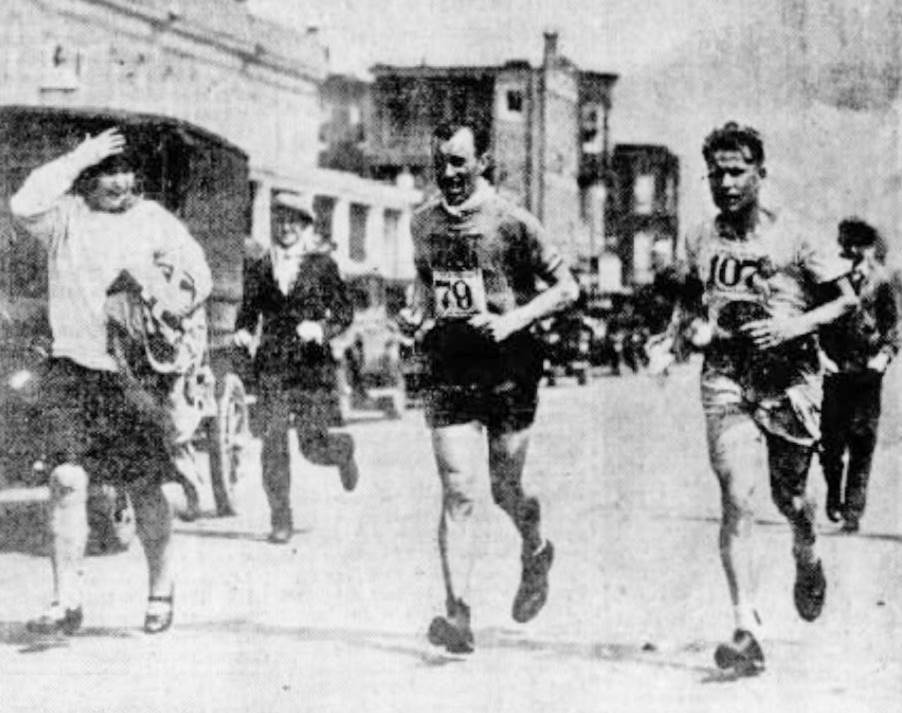
The farthest anybody has ever run on foot happened back in 1929. A trans-continental race was set from New York to California and it spanned 3,653 miles in total. It’s difficult to imagine that anybody would be willing to sign up for this race but there were. The winning place went to a man named Johnny Salo and he accomplished something spectacular and historic in just 79 days. 

In 1 Peter 2.11-12 the Christian is compared to a “sojourner” and that paints a picture of someone temporarily staying, but always on the move. Many other passages, like James 1.12, 2 Timothy 4.7, Galatians 5, and 2 Corinthians 9, all reference the race of life. 

It’s been noted that the race is one of endurance and not a sprint. While few people will ever cover the amount of physical ground that Johnny Salo did, there are many faithful Christians who have shown themselves to have incredible endurance of a different kind. Through trials, heartbreak, and severe loss there are Christians who hold fast to their faith and push on. They inspire us to keep going when the going gets tough, and we should encourage these spiritual athletes to look towards the finish line— it’s not too far away. 

Never Give Up

Thursday’s Column: Captain’s Blog

carl-pic

Carl Pollard

I ran across an illustration on Facebook the other day that went like this:

“During a BRUTAL study at Harvard in the 1950s, Dr. Curt Richter placed rats in a pool of water to test how long they could tread water. On average they’d give up and sink after 15 minutes. But right before they gave up due to exhaustion, the researchers would pluck them out, dry them off, let them rest for a few minutes – and put them back in for a second round.
In this second try – how long do you think they lasted? Remember – they had just swam until failure only a few short minutes ago…How long do you think? Another 15 minutes? 10 minutes? 5 minutes? 60 hours! These rats swam for another 60 hours before they gave up. The conclusion drawn was that since the rats BELIEVED that they would eventually be rescued, they could push their bodies way past what they previously thought impossible.
If hope can cause exhausted rats to swim for that long, what could a belief in yourself and your abilities, do for you?”

While this illustration was made to show the value of believing in yourself, as Christians it’s more than just a belief in yourself!  How much more could we endure if we hoped in the Almighty God?

As a Christian, remember what you’re capable of. Remember why you’re here. Remember the hope that is placed within us. Never give up. When you face ridicule for the godly choices you make, don’t give up. When you start to lose zeal and the fire begins to die. Don’t let it go out.
When life seems overwhelming and you’re drowning in stress, don’t quit. When health issues plague your body, don’t give up. Never give out, never give in, and NEVER give up. Remember the cross, remember the hope, remember the eternal home that will soon replace this temporary dwelling.

As a wise fish once said in a cartoon movie, “just keep swimming.” And we are given a beautiful reason why. In Philippians 3, Paul gives every Christian our motivation. Our reason why we should never give up. We stay motivated by pressing on (14).
What lies ahead? The goal, the prize, the upward call of God in Christ Jesus.
We press on by holding fast (16). Once you’ve got it, don’t let go. Look to those who have set the example (17).
Imitate the mindset of Paul and ignoring the enemies of the Cross. Paul pleads to them with tears (18). Don’t get distracted and don’t follow the wrong example. Finally we never give up by letting go (20). Let go of this world and what ties you to it. Our true home is in heaven.

We can find motivation and comfort in recognizing what we can accomplish and endure through Christ.

Life Illustrated 

Tuesday’s Column: Dale Mail

DaleandJanelledirectorypic

Dale Pollard

Contentment In Life 

As a young boy I can clearly remember the feelings I had in school. I was ready to be done with text books, math, science, and all the other trials and tribulations that I felt were too much for me to bear. I longed for the day when I could set my own bedtime, go where I wanted to go, spend money on whatever I wanted, and be looked at as an adult. I wish there was still a once-hated nap time scheduled in my daily life. My life, like many others, consisted of school and play, yet I looked forward to a future life that my young heart deemed better. It’s not better and it’s not worse— rather I’m just faced with new challenges that come with a new stage in life. We look forward to the future, and there’s nothing wrong with that as long as we are content with the present. Older couples will often state how fast the time has gone! Parents will look back on the years that flew by and always seem to ask the question, “Where did the time go?” Every hour was sixty seconds, every day was twenty four hours, and every year was a full three hundred and sixty five days. Our bodies run down, our hair turns gray, and our problems don’t end– they just differ from chapter to chapter. We are all living a vapor of a life, then off to eternity! When the dust settles over our caskets, when friends and family leave the cemetery, when they move on with their lives, what is left behind is our legacy and the impact we made. If life is a vapor and eternity is endless, our focus should be on the latter.

Endurance In Life 

Wilbur Wright was playing ice hockey as a young man when one of the players struck him in the mouth with his hockey stick. Wilbur Wright, who was known for being outgoing and articulate, had plans to teach at Yale college. The complications with his injury made him give up that dream and go into a depression. The man that gave him the injury was known as the neighborhood bully, and it is speculated that he did this to Wilbur on purpose. That bully later on became addicted to cocaine and eventually he was discovered to be a mass murderer. He killed sixteen people after reading the book Dr. Jekyll and Mr. Hyde because he related to Mr. Hyde. Wilbur, despite an unfair and unplanned accident, went on to invent the first motorized airplane and change the world forever. Bad things happen to good people, but we have a choice on how we respond and what we chose to do next.

The Last Blink 

God created the world in 6 days. 144 hours. 8,640 minutes. 518,400 seconds. But He’ll come back and end it all in the blink of an eye. Just like that time is gone and everybody is sent into eternity. Though it’s a figure of speech, the average human can blink in 3/10ths of a second. God made “the blink” that quick so you could close your eye quickly enough to protect it from debris, bright bright light, and to illustrate for us the way He’ll return.

800px-orville_wilbur_wright
Wilbur Wright (right)

The Lord’s Endurance

Thursday’s Column: Captain’s Blog

IMG_0806

Carl Pollard

Some people may not know this, but I’m not much of a runner. In fact, I’m not a runner at all, period. This is because my endurance is terrible. I once tried to go on a run to the kitchen, and I gave up right outside my door. Very much unlike me, Serge Girard, a French ultra runner, has run 14,031 miles in just under a year! To break that down, that’s 1,169 miles run in a month or 39 miles a day! This ultra runner has incredible endurance, and we could even say it’s almost superhuman. Serge Girard has amazing endurance, but it is nothing at all compared to the endurance of God.

Psalm 111 is a beautiful description of how God “Endures Forever.” I’d like to suggest that by reading this Psalm we see that the LORD endures forever. In this Psalm we see three aspects of the LORD’S endurance.

The Lord Has Endurance Through His Righteousness (vs. 3). The Psalmist sets the stage to this psalm by using the Hebrew word for “Hallelujah,” then says, “I will give thanks to the LORD with all my heart.” When the writer of this psalm says “with all my heart” this seems to imply he is coming with every intention of giving his all to the LORD.

Applying this to our ourselves, when we come together to worship God are we there with the full intentions to worship God? Or do we just put half-hearted effort into worship? Verse two says, “Great are the works of the LORD; they are studied by all who delight in them.” If we as Christians truly delight in the Lord, then we should be studying the works of the God!

Verse three reveals the first quality of the Lord’s endurance. “Splendid and majestic is His work, and His righteousness endures forever.” As One who was unerringly faithful to His covenant with Israel, God constantly executes justice on behalf of His people. In the bringing of Israel out of Egypt, His works declare His righteousness. This impeccable character of His nature does not and will not ever change. Keeping this verse in mind when we are going through difficulties in our lives should cause great comfort. We know that the God who delivered Israel from slavery listens to us when we pray, and He is always there for us.

The Lord Has Endurance Through His Precepts (vs. 7-8). The writer says, “The works of His hands are truth and justice; All His precepts are sure. They are upheld forever and ever; they are performed in truth and uprightness.” This word “precepts” literally means “things God has appointed.” Applying this to the time when this was written, this is talking about the Law given to Israel on Mount Sinai. But applying this to us as Christians today, God never wavers in His promises. He is unfailing just as He was when He wrote the Law on Mount Sinai. What we should focus on is this idea of “forever and ever.” It is hard for us as humans to put this into perspective because we can’t seem to wrap our heads around this idea of someone having no beginning or end. But that is how the Psalmist describes the precepts of the Lord. They will never fail.  As Christians we can take comfort in knowing that the God that we serve is the same yesterday, today, and tomorrow! We don’t have to worry that God will change His mind on how we get to Heaven or what is and what is not a sin. Unlike us imperfect humans, God will forever be the same.

The Lord Has Endurance Through His Praise (10). He says, “The fear of the Lord is the beginning of wisdom; a good understanding have all those who do His commandments; His praise endures forever.” The Lord not only deserves to be praised forever, but He receives it. Whether it’s from His creation, or through us, the Lord’s praise endures forever!

If we keep these aspects in mind as we go throughout our daily lives, we may realize that we aren’t always living the way we should. We must ask ourselves, “Are we praising God with our Lives?”

3244_1152072760143_2041966_n
Taken on Carl’s safari to the Ngorogoro Crater, 2009.


Spiritual Olympics

Neal Pollard

Well, as the Olympics pervade our attention and national and individual stories of overcoming odds and working hard to achieve greatness make the news over the coming weeks, I want to remind you that Scripture, in many places, encourages us as we are writing our stories which will someday be known by all. Paul, especially, draws on imagery that would have described the Greek Games that were popular in his time. They had been played for hundreds of years by the time of the first century.

  • We run a race that’s winnable, competitive, won by discipline, meaningful, purposeful, but also losable (1 Cor. 9:24-27).
  • We vie for that which requires forgetting the past, pressing in the present, and reaching for the prospective prize (Phil. 3:12-14).
  • We flex our discipline for godliness by exercising our godliness to help us here and hereafter (1 Tim. 4:7-8).
  • We must compete according to the rules (2 Tim. 2:5).
  • We can fight a good fight, finish the course, and keep the faith, and if we do we will be honored by the greatest giver of all (2 Tim. 4:7-8).

Your race may not be run in a huge stadium, be billed as an international event, be recorded in the history books of this life, or be seen all over TV and the internet, but the All-Seeing-Eye is watching. More people than you know are watching you run, both Christians and non-Christians. The stakes exceed that of these or any other earthly games and the reward is immeasurable! Best of all, whatever your physical shape, you can win this race! God is rooting for you!

gr-olympia-palaestra
The Palaestra 

ATTACKING THOSE WHO SAVE OTHERS

Neal Pollard

It’s an unconscionable thought! Who would try to hurt and oppose those dedicated to saving lives? Places like Afghanistan seem more than a world away from us, where this week a yet-to-be-identified terrorist group conducted a suicide attack in Jalalabad that killed two and injured 14. While that sadly is a relatively small and minor attack in this war-torn region, it was the target that was so outrageously newsworthy. It was perpetrated against the international Save The Children organization. Volunteers and workers were there to provide aid and assistance to that society’s most vulnerable members, and they were attacked. How does this happen?

In Matthew 23:35 (cf. Luke 11:51), Jesus condemns the Pharisees as the murderers of God’s godly men from Abel to Zechariah. Essentially, Jesus was presenting a roll call of the righteous who were attacked because of their faithfulness. In one of Stephen’s final moments, he preached, “Which one of the prophets did your fathers not persecute? They killed those who had previously announced the coming of the Righteous One, whose betrayers and murderers you have now become” (Acts 7:52). Both Old and New Testaments reveal the Maker’s messengers who were attacked while trying to save others. The proverbial response of the hearers was to “shoot the messenger” (cf. Heb. 11:36-38).

Growing up a preacher’s kid, I saw my dad encounter some who attacked the messenger. Dad has always been a model of courage for me, willing to teach and preach even unpopular, but needed, subjects. Consequently, he endured both frontal and sneak attacks. Everyone who has sought to declare “the whole purpose of God” (Acts 20:27) has some appreciation for Paul’s warning that some “will not endure sound doctrine; but wanting to have their ears tickled, they will accumulate for themselves teachers in accordance to their own desires, and will turn away their ears from the truth and will turn aside to myths” (2 Tim. 4:3-4).

How one responds to such attacks is crucial! In the words to Timothy, Paul contrasts the attacker with the faithful proclaimer. He says, “But you, be sober in all things, endure hardship, do the work of an evangelist, fulfill your ministry” (2 Tim. 4:5). We’re taught “patient enduring” (2 Cor. 1:6; 2 Tim. 2:24), “not returning evil for evil or insult for insult” (1 Pet. 3:9), “bless those who persecute you; bless and do not curse” (Rom. 12:14; cf. 12:17-21), and “do not resist an evil person; but whoever slaps you on your right cheek, turn the other to him also” (Mat. 5:39).

As eternal aid workers, we operate by a different, higher set of rules (2 Cor. 10:4). We entrust ourselves to the One who will give us ultimate victory. Meanwhile, we cannot give up our cause—no matter what the threat or danger. Like Jesus, let us keep entrusting ourselves to Him who judges righteously (1 Pet. 2:23)!

8ad7fee4-9d99-4e89-b63f-286645809597_cx0_cy12_cw0_w1023_r1_s

Working Together To Survive The Hunt

Neal Pollard

1 Peter 5:8 calls the devil a roaring lion prowling around seeking someone to devour. It is obvious that Peter’s readers would have seen or at least heard about these kings of the jungle for the analogy to make sense and be practical.  Lions lurk, longing for lunch.

In the savannas of East Africa, their meal of choice is usually either the wildebeest or zebra. Despite this, these two animals continue to graze and migrate together. In fact, because they are chief prey of the lion (and other big cats), they need to stick together. Various observers and experts give different explanations for why. Zebras have great farsightedness and the wildebeests have excellent peripheral vision, but each are poor at seeing what the other sees well. Others explain that wildebeests have mouths better suited for short grass while zebras’ are made for the long grass that grow intermittently together on the plains. Still others point to the zebras superior memories, recalling the safety routes of the previous year, and the wildebeests uncanny ability to find water even when such is scarce. Probably, it is the combination of these facts that cause the symbiotic relationship between these two large mammals. They do not all survive, but the vast majority do. The reason is because they utilize their own abilities but also because they rely on the abilities of others.

In a letter where Peter is addressing a people who were at times spiritual prey, he does more than use the simba simile. He urges Christians to stick together and look out for one another. He calls for sincere, fervent, from the heart love for one another (1:22; 4:8). He urges complaint-free hospitality toward one another (4:9). He commands serving one another (4:10). He teaches there to be mutual humility displayed toward one another (5:5). He ends the letter exhorting an affectionate, loving greeting of one another (5:14). As much as anything, this is a recognition of mutual dependence.

If we understand that we are not at home in this world (2:11) and are living and longing for the inheritance in heaven (1:4), we should come to understand our mutual need of each other. That does not just mean looking for others’ help, but also giving it. This is by God’s design. Notice, for example, the proactive protection we provide each other by being “harmonious, sympathetic, brotherly, kindhearted, and humble in spirit; not returning evil for evil or insult for insult, but giving a blessing instead…” (3:8-9a). Right before the lion passage, Peter talks about different groups looking out for and helping each other (5:1-6).

Any of us, through suffering, temptation, doubt, or some other factor, could drift away from the safety and security of the fold. Let us be more than mindful of each other. Let us depend on each other to survive the hunt and make it to eternal safety.  I will face the lion many times in this life, and I depend on you to help me survive.

DSCN0368

Almost And Armistice Day

Neal Pollard

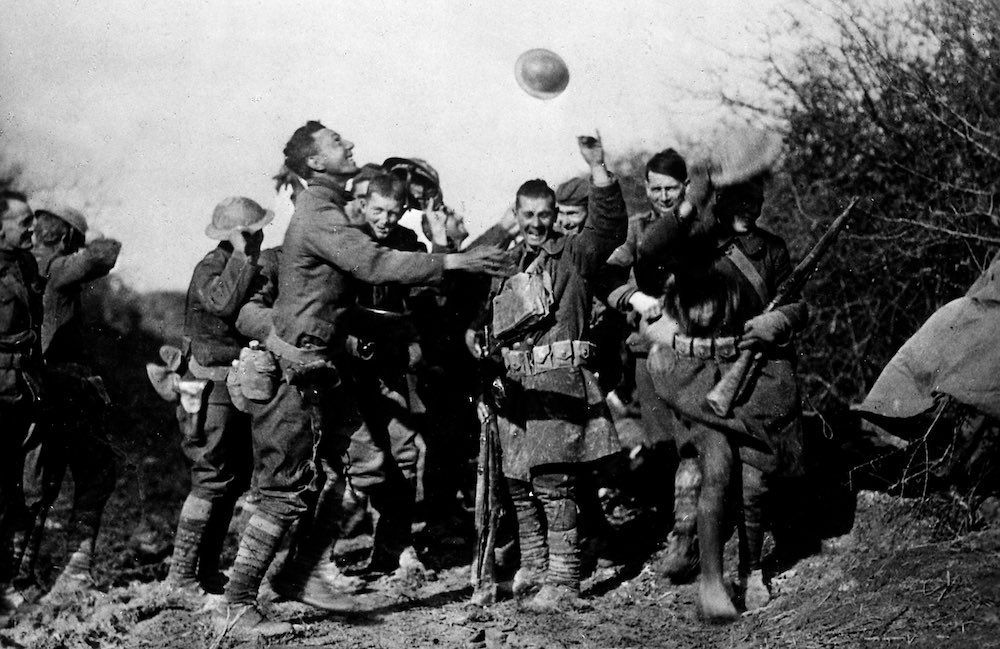
War historians have given notice to it. It is a tragic subplot to a war tragic beyond most all comparison. World War I was a senseless, repeated exercise in the mass killing of young men from around the globe. This went on from August, 1914, up to the cease fire ordered for the eleventh month, the eleventh day, and the eleventh hour of 1918. Offensives on especially the western front meant men from several nations either were ordered to attack or were put in the position to defend against them. Men from many nations woke up on 11/11/18, but as casualties of war never saw the end of that day. People were celebrating the end of the war in Paris, Berlin, London, Washington, and elsewhere while men, most having heard the rumor about the armistice, fought on and died. George Edwin Allison died at 9:30 AM, the last official British casualty. Augustin Trebuchon, a message runner, was killed by a single shot at 10:50 AM, the last French casualty. George Lawrence Price was the last official Canadian casualty, dying at 10:58 AM. The last American to die was Henry Gunter, who if he understood German would have heard the machine gunners of that nation plead for his division to stop their offensive. His time of death was 10:59, and divisional records indicate, “Almost as he (Gunter) fell, the gunfire fell away and an appalling silence prevailed.” If possible, one story is even more tragic. While historians cannot be absolutely certain, they believe the last casualty of this tragic war was a German officer named Tomas. Allegedly, he told Americans approaching a house that he and his men occupied that they could have the house since the war was over. No one had told the Americans who, not trusting the officer, shot him as he walked toward them right after 11:00 AM. Official records indicate over 10,000 dead, wounded, and missing men on the last day of World War I. Historians have found letters, interviewed fellow soldiers of these unfortunate men, and through such correspondence give chilling insights. These men were optimistic. Many felt charmed to have cheated death, some of them veterans whose service had spanned the entire length of a war that exacted staggering, daily death tolls. Others had a strong sense of foreboding, a fatalistic resignation that somehow, despite the cheerful optimism of comrades, they would not survive the day (much historical information gleaned from www.historylearningsite.co.uk).


It is extremely difficult to read this legacy from World War I of men doing their duty to the end, to come so close to escaping the clutches of death, only to be felled in the final hours. Armistice Day and the ending of World War I are the roots of one of our greatest National Holidays and observances, Veterans Day. We honor those living and dead who fought to keep us free from tyranny and evil. Even in that first world war, where war prosecution is much questioned and debated, mothers, fathers, family and friends are beholden to the men and women who risked everything to defend our beloved country.
With that in mind, please allow me to draw this spiritual parallel. How tragic for a child of God to follow for so much of the way only to fall away later in life (2 Peter 2:20-22). How tragic for one to come so close to the cross of Calvary and salvation, only to die short of that goal (cf. Mark 10:22). Jesus spoke of one not far from the Kingdom (Mark 12:34). Agrippa was “almost persuaded” (Acts 26:28). Only eternity and the Judgment Day will reveal the stories of those battling with themselves on the battlefield of Ephesians six, maybe close to obedience, who died outside of Christ. What a tragedy for anyone to die lost. Especially tragic are the examples of those who knew the truth, were convicted about it, but who died without having resolved the greatest problem known to man.
We honor the soldiers who fought and died, even in the “11th hour.” We pray for the souls who are living but will die, who have yet to come to the Captain of the Lord of hosts.

http3a2f2fa-amz-mshcdn-com2fwp-content2fuploads2f20142f112farmistice-14

WE ARE RACING UP A MOUNTAIN

Neal Pollard
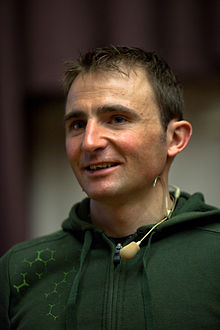
Ueli Steck was the world’s greatest free-soloist climbing. He was routinely snatching up new records in the part of the sport of mountain climbing that is most dangerous. It was not unusual for him to attempt dangerous routes without ropes and other safety gear. The Swiss alpinist was, as you would imagine, about as fit as a human being can be, and he attempted what most cannot (and would not). He was described by friends and fellow competitors as focused, deliberate, and thoughtful. He did not climb for the beauty of the nature around him–which he often only briefly glimpsed. No, he was a mountain marathoner. Speed climbing, as it is considered, was something Steck wanted to apply to higher mountains in the Himalayas–the final frontier for mountain climbers. He did, setting several records in the loftiest part of the world. The 2015 National Geographic Adventurer of the Year died earlier this year doing a climb on one of the western routes up Mount Everest, without supplemental oxygen, falling 1,000 meters during an early morning climb.

While you and I would not consider ourselves world class athletes, we are in a race (cf. 1 Cor. 9:26; Phil. 2:16; 2 Tim. 4:7). How often does it seem not only like a steep race course, but a perilous one, too? Many times, it will seem tempting to simply give up the trek toward heaven. What it takes for us to succeed comes right out of Steck’s “playbook”–focus, deliberation, and thoughtfulness. It is easy to forget why we are climbing. Or, we fail to properly plan or execute our plans. Or, maybe we just do not think about what the purpose of our rapid climb up this mountain is. We are not climbing for earthly recognition or monetary reward. Of course, we are not going solo, either. We have each other for support. Even when we feel alone in our meteoric ascent, we will safely and triumphantly summit as we rely on our Savior! God has given us the tools, resources, and make up to endure exceedingly difficult and complicated turns in the course upon which we find ourselves. Time is going by so quickly, but the way does not get less steep or challenging. Let us keep our resolve to race up the mountain until we get there and not put ourselves into a position to fall! We can, like others before us (Heb. 12:1), succeed!

220px-ueli_steck
Photo of the late Euli Steak

WE WILL WEAR A CROWN

Neal Pollard

Miss Colombia, Ariadna Gutiérrez Arevalo, wore the crown of Miss Universe for a couple of minutes, before Steve Harvey came out and sheepishly admitted that he accidentally mixed things up. She was actually first-runner-up to Miss Philippines.  Though I don’t get pageants at all, I understand human nature. In a sequence of awkward moments now blowing up social media, none is worse than the seemingly endless time before the crown is finally removed the head of a tearful Arevalo. She was confused, disappointed, and totally embarrassed. While these moments will live on in infamy, they will fade into insignificance soon enough.

Scripture illustrates the culmination of a faithful Christian life with the giving of a crown. Several New Testament writers speak of this crown, a prize or reward given to those who have turned in an outstanding performance. The New Testament extends this hope, that there is not just a crown for one contestant but for all who successfully compete and complete the most grueling obstacle course of all—life. Notice a few facts about this crown:

  • It’s Faithful (Jas. 1:12; Rev. 2:10). The one who faithfully handles his or her trials will receive the crown of life. We can be assured that it won’t be snatched from us because “the Lord has promised [it] to those who love Him” (Jas. 1:12). Jesus says, “Be faithful until death, and I will give you the crown of life” (Rev. 2:10). As great as the promises of God is the assurance that a faithful life will be followed by a faithful crown.
  • It’s Future (2 Tim. 4:8). We will not be crowned in this life but after successfully completing the Christian life. Paul was confident that the Lord would make no mistake in handing out this crown. He says that the Lord, the righteous Judge will award it to all who love His appearing on that Day of Judgment. At the end of the contest, the crown will be placed upon the heads of the winners!
  • It’s Fadeless (1 Pet. 5:4). Specifically, this promise is made to the church’s shepherds who faithfully execute their task. Peter calls it “the unfading crown of glory.” Some have argued this is a passage teaching degrees of reward, but whose heavenly crown will tarnish? Instead, here is another tribute to the fact that we will have a reward and recognition that never loses its luster.

The 2015 Miss Universe finale has been dubbed “cringeworthy.” What a deflating turn of events for a person who actually had the crown of victory snatched from her head!  Aren’t you thankful that, as we face eternity, we have a perfect Judge who will get it right in every case. Once we are crowned, He won’t take it back! Let’s keeping competing and complete the contest the culminates with the crown.

oops

Fickleness

Neal Pollard

Here is my estimation of Peyton Manning’s few seasons in Denver so far: “Football fans frenetic for a famous flinger fawned over his fabulous finesse. A few festive, favorable football seasons fashioned full fondness for this fabled figure. Following his foot foibles and flawed, flat functioning, fickle followers flung their festering frustration field-ward, filling the field with foulness. Finally, this furtive footballer fell from fame, fun, and fondness from these fanatics. Forsooth, feelings fade, flag, and falter in fast fashion.”  That’s probably not completely fair, but it was a fun foray for me. Somebody stop me!

I will say this about human tendency—we are quick to crown our heroes and often quicker to dethrone them.  Janet Jackson captured the collective psyche of humanity with her song, “What Have You Done For Me Lately?” No one is safe or immune from the clutches of people’s capricious whims.

No one has ever been treated in greater fair-weathered fashion than Jesus Christ. On Sunday, He entered the city of Jerusalem to a welcome from a multitude of people crying, “Blessed is He who comes in the name of the Lord! Hosanna in the highest!” (Mat. 21:9). The whole city was “moved” by Him (Mat. 21:10). By Friday, the multitudes were crying and crying louder, “Let Him be crucified!” (Mat. 27:22,24). Same Man. Same city. Certainly some of the same people. Polar opposite sentiment in just five days time. Their excited plea changed from crown Him to kill Him. Adoration was overrun by anger. How baffling!

Looking back, we can be filled with such indignation. Yet, when we look at our own lives, does our estimation of Jesus change with the events we endure in life? How do we feel toward Him in good times? Desperate times? When we struggle? When we are afraid? When we’re disappointed or betrayed? When we fail? When we’re lonely or loved?  Some live life on a spiritual roller coaster, vacillating between devotion and denial. The slightest trigger can change our tune from “How I love You!” to “How could You?!”

Faithful endurance must be our rudder. We can develop the mindset of the beleaguered Job, who cried, “Though He slay me, I will hope in Him” (Job 13:15).  How it must please God to see steady, unwavering devotion from His saints, determined to stick with Him through thick and thin. Let’s be grateful that He does that for us! “It is a trustworthy statement: For if we died with Him, we will also live with Him; If we endure, we will also reign with Him; If we deny Him, He also will deny us; If we are faithless, He remains faithful, for He cannot deny Himself” (2 Tim. 2:11-13).