The Benefits Of Finding Ourselves In Scripture

Neal Pollard

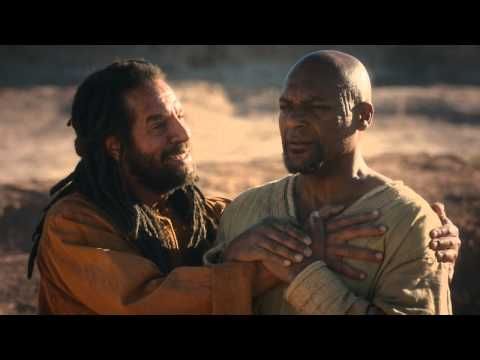
Given his job, the Ethiopian of Acts 8 was one of that country’s most important people. Yet, he was more than important. He was very religious, apparently a proselyte (convert) to the Jewish faith. He didn’t restrict his religion to the assemblies. He read his Bible even when he was going about his secular tasks (Acts 8:28). Though he could not enter the assembly of the Lord (Deut. 23:1), he made the long and grueling trip from northern Africa to Palestine and was returning home. Many of us are familiar with the Old Testament passage he was reading when Philip joined him in his chariot. Reading Acts 8:32-33, we recognize the place as Isaiah 53:7-8. The Eunuch was trying to find out about who Isaiah wrote about, “of himself or of some other man” (Acts 8:34). Philip preached Jesus to him and he became a Christian (Acts 8:35-39).

Those are essentially the facts. Yet, I wonder how coincidental it was that the Eunuch was reading from that part of Old Testament scripture. This African official likely had a scroll containing the entire prophecy of Isaiah, which was not divided into the individual chapters like they are today. It would seem that the context in which Isaiah 53 occurs would be of particular interest to this man. Flip forward a few chapters to Isaiah 56. Isaiah is telling foreigners and eunuchs not to look down on themselves (3-5).

This official of Candace was very likely not some hopeless non-Jew looking for a crumb from the Jews’ table. He had the great hope and promise of Scripture. Perhaps this portion of Isaiah was of particular motivation and inspiration to him. For Philip to explain that the time of that prophecy had now been fulfilled, that access to this promise was now available, certainly led the Eunuch to urgently respond and enthusiastically react. Jesus was the One referenced in Isaiah 53, but he (the Eunuch) was the one referenced in Isaiah 56. No, not just him, but all like him–one from the “all nations” of Isaiah 56:7 who could reap the benefits brought by the “Sin-bearing Servant” of Isaiah 53 and the one who would “sprinkle many nations” (52:15).

I hope that you read your Bible with the same hunger and expectation. Perhaps there are portions that bring you greater hope and expectation, that speak with greater poignancy to your life’s circumstances. The Bible is a book filled with wonderful, relevant promises. Trust them. Let them bear you along through the rough spots of life. God designed the Bible to be a book of hope and inspiration, but it cannot do us any good unless and until we consult it! Find yourself in the Bible!

8ca1271b91f7acccd098a3db98a1689e-bible

Homesick


Neal Pollard

This time of year our minds go back
To days gone by, down memory’s track
Of laughter, stories, food and walks
Singing, sharing family history and talks

Some who once were in our clannish stable
Have left our banquets for the heavenly table
Childhood recollections may be larger than life
And death or loss may cut like the proverbial knife

Football played on the lawn or watched on the screen
Presents opened and distant relatives seen
For the blessed, much spiritual guidance and contemplation
And talk of our hope and our common anticipation

Do you miss those times of hearth or home?
Or revel in its prospect, when kids and kin soon will come?
Are you in the company of those Scripture upholds?
Those who desire a better country, with streets of clear gold?

Who are longing for a room in the Father’s house?
To bask in the Light that no tears can ever douse?
To stroll the banks by the gentle River Of Life,
A place of happiness, joy, peace, but no strife.

A place full of family, both known or which we meet
Of those we met in Scripture or those who made our lives sweet?
Are you longing for something far better than here,
Where sight replaces faith, where peace tramples fear?

Is your life centered around new heavens, new earth
Where righteousness dwells, only those of the new birth?
Do you long for what happens after being put in the ground
The home of the soul where eternity is found?

Let’s long for and live for that heavenly land
Where we’ll see God’s dear face and hold Jesus’ hand.

15134633_10154142971300922_7849930186330223016_n
Thanksgiving 1994, at Gary and Brenda Pollard’s house (baby is Gary)

A Lonely, Lonely Man

Neal Pollard

My sons and I often say that we don’t really want to know much about our favorite singers. It seems that there’s always immorality and stories of their ungodliness. That’s as true of many of the rock, country, and easy listening singers from decades ago as those making music today. Despite my having grown up in the south, today I was able to do something I’ve never gotten the opportunity to do. Kathy and I toured Graceland with our gracious hosts, Barry and Celicia Grider. We enjoyed ourselves. This tour tended to glamorize and sanitize his life and career. Elvis Presley enjoyed a meteoric rise to stardom, and he was a global icon. He made more money than he could spend, though his lavish collections of furniture, cars, instruments, clothes, and the like shows that he tried. Despite his love of gospel music and religious roots, there were the affairs, drugs, and fast living that likely contributed to his premature death at age 42. His daughter, Lisa Marie Presley, who remembers him reading often, “He had stacks next to his bed. He read all the time…Always of a spiritual nature. Always looking. Always searching for something” (from a placard in the mansion). Gospel preacher, C.W. Bradley, preached his funeral thanks to the connection of Elvis’ stepmother. But there is no evidence that his search led him to obey and live the truth, and there’s evidence to the contrary.  He once sang a song where he said, “It’s a lonely man who wanders all around, It’s a lonely man who roams from town to town.  Searching, always searching

for something he can’t find, hoping, always hoping that someday fate will be kind.”

Billions never achieve the fame or wealth of Elvis, but live their lives on a similar quest. They live, always searching for something they can’t find. Solomon spends so much time, with access to wisdom, wealth, wine, and women. He found, in his grand experiment, that these did not fill the void. Instead, the answer was to “fear God and keep His commandments” (Ecc. 12:13). This beautiful hope is shared by Jesus in the greatest sermon ever preached. He teaches, “Ask, and it will be given to you; seek, and you will find; knock, and it will be opened to you. For everyone who asks receives, and he who seeks finds, and to him who knocks it will be opened” (Mat. 7:7-8).  These things are written to keep mankind from duplicating the future search for purpose and meaning. It has been revealed. Let’s look in the only place where loneliness is vanquished—in the presence of God!

23519311_10214099401337193_6063397463412721560_n

SEARCHING FOR THAT SLIPPERY SERENITY

Neal Pollard

It was painful to watch my Georgia Bulldogs pulverized by the Auburn Tigers (my fellow Bronco fans can easily relate this year). Yet, later that Saturday evening, I found myself smiling and even cheering for a familiar face who was calmly embracing a signature win against college football’s number three team, Notre Dame. Level-headed. Even-keel. Happy. None of those words quite captured the way I wanted to describe Miami’s head coach, Mark Richt (former general of my beloved Dawgs). It was Dan Walken (USA Today, 11/13/17, 1C,6C) who found the one I was searching my mind for: “serene.” He is peaceful, placid, poised, and phlegmatic. But, as Walken points out, it’s not because the Hurricanes have ascended to number two in the Coaches and Press polls. He has been that all along, even the day he was fired at Georgia (his .740 winning percentage, 145-51, is the highest in college history for any coach ever to be fired). He was criticized for not being able to win the big game—which he still hasn’t. Second to that, the fan base was agitated that he was too concerned about his off-season mission work. There’s such an interesting story about how Richt came to faith, and how deeply his faith drives his life. Walken’s article mentions nothing of that, but few people who know about Richt fail to know how profoundly religion effects his life. It is, unquestionably, what drives his come-what-may serenity.

What characteristic best describes me? I know several I’d like for it to be, but, ultimately, I don’t get to describe myself. The people who know me or know about me get to do that. While the word “serene” is not found in most English translations, it is a biblical concept. 91 times, the New Testament uses a word (εἰρήνη—eirene) that is usually translated “peace.” Luke 11:21 has “undisturbed” (NASB). It can describe harmony between governments or in personal relationships, but it also describes a state of well-being within. In fact, that’s usually the way New Testament writers use it. Jesus says He offers a peace superior to what the world can give (John 14:27). A mind set on the Spirit is life and peace (Rom. 8:6). The God of hope can fill you with peace in believing (Rom. 15:13). This peace passes all comprehension and guards your heart and mind (Phil. 4:7). It can rule your heart (Col. 3:15). It can be yours in every circumstance (2 Thes. 3:16). Repeatedly, Scripture promises peace to the disciple of Christ.

But our world continually scrambles to find it, much less maintain it. It seeks to achieve peace through alcohol and drugs, firearms, money and things, achievement and success, and other earthly things to plug that void. If at our core we do not fill ourselves with the peace of God, we will find ourselves futilely searching and never finding tranquility and undisturbed calm. Richt was able to smile and be joyful at the press conference that centered around his dismissal. You and I can embrace joy and steadiness in the darkest, most painful, moments of life. We never want false hope or empty peace. But a life directed and submissive to the pure, unadulterated Word and will of God leads to unshakable peace. No matter what comes our way!

Would people say I am serene? What about you?

mark_richt_university_of_miami

The Rasputin Rule

Neal Pollard

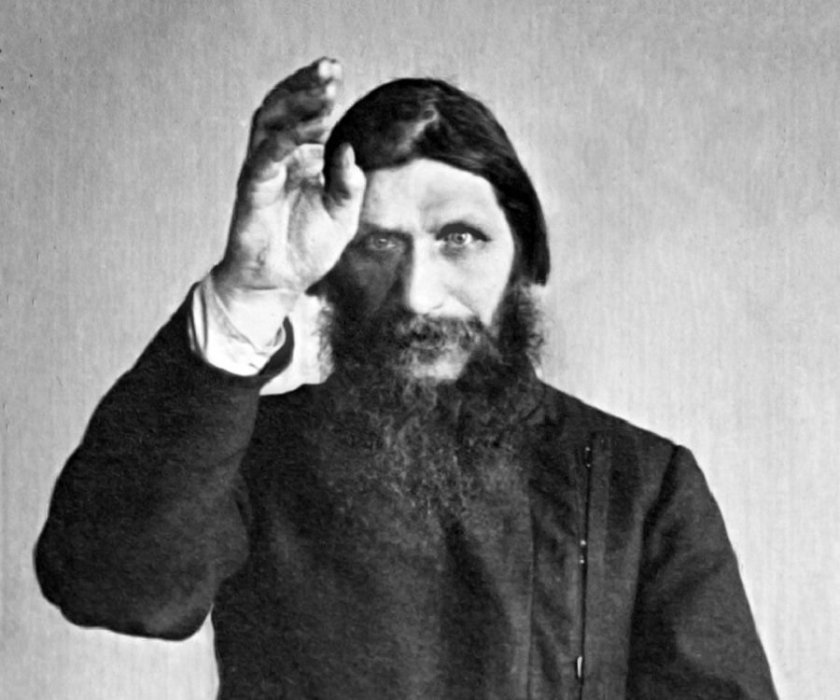
Very little good can be said of Gregory Rasputin. Robert Goldston, in The Russian Revolution, writes that he “was, like his father before him, essentially a rowdy peasant. He soon developed a reputation in his hometown as a horse thief, drunkard, seducer of young girls, and general good for nothing. He had no education and remained largely illiterate all his life. His one apparent attribute was great physical strength. He was a coarse-featured man with a heavy black beard and strangely piercing eye” (82). Because times in Russia circa 1905 were desperate and grim, a rascal like Rasputin could rise. He went to Saint Petersburg, weaseled his way up the ranks of nobility, and eventually rose to become the most intimate advisor of Czar Nicolas II and especially the superstitious Czarina Alix. Many historians believe that, in the fateful, final years of the Romanov dynasty, Rasputin was the unofficial, yet undisputed, ruler of Russia.

He was grossly immoral and unscrupulous. At his words, jobs and even lives were spared or taken. Though he had abandoned his wife and children, Rasputin made his way as a self-professed prophet and “holy beggar.” The Czarina, in all her correspondence, simply called Rasputin “the Friend.” The royal family implicitly trusted Rasputin. Rasputin, in turn, urged the royal family to rule by absolute despotism. Many thought Rasputin to possess powers of hypnotism and the ability to do magic. Giving him the control of hundreds of millions of peoples’ lives, the Czar contributed to his own murder and that of the entire royal family in the revolution of 1917. For Rasputin’s part, he was murdered in 1914 by a small group of conspiring nobles who lured him to one of their houses and shot him repeatedly after poisoned food and wine did not do the trick.

The most amazing part of this story involves the irony of it all. A ne’er-do-well essentially becomes head of the largest country in the world. A grossly immoral man is viewed as a “holy man.” The head of a dynasty that had lasted hundreds of years put all its trust and hope in such a one. What incredible folly!

However, the majority of humanity has done the same thing from time immemorial. The prince of darkness, the king of ne’er-do-well, is their spiritual advisor. As foolish as it is, people stake their eternal destiny on his wholly corrupt guidance. They risk it all, mesmerized by his wiles. Consequently, they are duped into calling “evil good and good evil…who are wise in their own eyes and clever in their own sight” (Isa. 5:20-21). Yet, it is not a revolution but The Judgment that will undo them. They stand to lose more than physical life; they will lose their souls (Mat. 10:28). Beware of the pied piper of souls! Be careful who you make your spiritual counselor. It matters!

grigori-rasputin-4

The Religious Freedom Rally For Jack Phillips

Neal Pollard

It was my privilege to be in attendance at the “Religious Freedom Rally for Jack Phillips,” held on the campus of Colorado Christian University in Lakewood, Colorado. If you do not know, Jack Phillips is the owner of Masterpiece Cake Shop, a business he opened and has operated since 1993. Because he refused to decorate a cake for a same sex couple, Phillips was sued. His case has gone through the various court systems and will be heard before the United States Supreme Court on December 5, 2017.

While the Event Center where it was held was not packed and overflowing, there were hundreds present. I met and walked in with a young man and woman from Sweden, who came to the United States primarily to cover this event for a Christian Magazine in their country. The rally’s speakers included the head of Catholic Charities, the managing director of Jewish values, a state senator, a congressman, part of Phillips’ legal team, university officials, Barronelle Stutzman (the owner of Arlene’s Flowers in Richland, Washington, who was sued by Robert Ingersoll because she refused, out of conscience, to make a floral arrangement for the same-sex wedding of Ingersoll and Curt Freed), and others.  There were many poignant moments and memorable quotes. A team member from the Alliance Defending Freedom, representing Phillips, said, “America did not give us freedom of religion. Freedom of religion gave us America.” Mrs. Stutzman still does not know if her case will be heard by the SCOTUS, and she stands to lose everything financially. Yet, she was gentle, meek, and soft-spoken, though obviously full of conviction. The tone was cordial and respectful, from every speaker to everyone in attendance. The rabbi, Yaakov Menken, said, after talking about ancient, longstanding forms of “political correctness,” that “what is new and profoundly disturbing is the use of civil rights to trample civil rights.” Last of all, Jack himself spoke. It was understated, almost matter-of-fact. He spoke eloquently and simply about the importance of our being able to act in accordance with consciences shaped by Scripture. Everyone spoke of the importance of believing and behaving in accordance with convictions that are dear because they are true.

Today was a stark reminder of the reality of forces who are actively assaulting faith in God and His Word. These are willing to do whatever they can to prevent us from doing what God has commanded us to do—share the pure, unaltered will of the One who gave us life and saved us from our sins. They are not bound by biblical ethics, so they will deceive, distort, manipulate, bully, attack, suppress, and fight divine truth. We are bound by a higher law, but truth, kindness, mercy, and love, as taught by God, will prevail. If not now, if not under our government and institutions, then undeniably at the very end of all things. Don’t lose heart. Whatever else you may lose at the hands of those described by Jesus in Matthew 5:44ff, some things cannot be taken away from us! Hold onto to those things.

Screen Shot 2017-11-08 at 1.37.31 PM

Religious Freedom Rally For Jack Phillips

Why Is The World Asking “Why?”

Neal Pollard

Today, everyone is hurting. Whether because of gun or knife violence or vehicular homicide, groups of people in our nation and other parts of the world are being torn from time and prematurely vaulted into eternity. We weep and mourn for the loss. We consider the enormous grief and heartache multiplied many families face from California to Florida, Connecticut to Texas, Colorado to Tennessee, Virginia to Nevada (and many other places).  Those whose voices we hear the most through all of this, like the national and local media, seem fixated on learning the perpetrator’s motive each time it occurs. Experts and analysts look at religious ideology or mental health issues. It seems as if they believe that if they can determine the motive, that will solve the violent epidemic that has disturbed the peace of so many people in our society. The danger of oversimplifying any specific tragedy notwithstanding, there are some right answers the world will have a difficult time embracing but that get us so much closer to resolving this plaguing problem. Why are these horrific crimes occurring?

  • The world has rejected God. Romans 1:28 says, “ And just as they did not see fit to acknowledge God any longer, God gave them over to a depraved mind, to do those things which are not proper….” “Not proper” seems benign to us in the way we use the phrase in English (bad table manners, having your shirt untucked, etc.). Kittel says, “Paul has in mind what is offensive even to natural human judgment. The decision against God leads to a complete loss of moral sensitivity, the unleashing of unnatural vices, and hence the type of conduct that even healthy pagans regard as improper” (386). Paul tells us this improper conduct includes “all unrighteousness, wickedness, greed, evil; full of envy, murder, strife” and other things we see in these current tragedies (29, cf. 30-31). Read the context to appreciate the rotten fruit of such thinking.
  • The world has redefined sin. A worldview or value system is built bit by bit, choice by choice. Paul writes, “Do not be deceived, God is not mocked; for whatever a man sows, this he will also reap. For the one who sows to his own flesh will from the flesh reap corruption, but the one who sows to the Spirit will from the Spirit reap eternal life” (Gal. 6:7-8). If we devalue human life through sinful practices like abortion or euthanasia, we plant destructive seed. If we glorify violence or imbibe in sins like pornography that objectify human beings, we plant desensitizing seed. Long ago, Isaiah warned, “Woe to those who call evil good, and good evil; Who substitute darkness for light and light for darkness; Who substitute bitter for sweet and sweet for bitter!” (5:20). Such leads to weeds which choke out spiritual fruit.
  • The world has rebelled against biblical counsel. The absolute truth of Scripture is lost in the shuffle of worldly values. Jesus says, “Treat others the same way you want them to treat you” (Luke 6:31). He says, “Love your enemies and pray for those who persecute you” (Mat. 5:44). Paul echoes, “Do not be overcome by evil, but overcome evil with good” (Rom. 12:21). He also writes, “Do nothing from selfishness or empty conceit, but with humility of mind regard one another as more important than yourselves; do not merely look out for your own personal interests, but also for the interests of others” (Phil. 2:3-4). The Bible urges us to be kind, unselfish, compassionate, and helpful through precepts and examples. The world has ignored the ethics of Scripture in preference of humanistic philosophy.
  • The world has replaced God with self as lord. What is the ultimate consequence of denying God the place that rightfully belongs only to Him? Isaiah referred to a worldly nation, saying, “I have spread out My hands all day long to a rebellious people, Who walk in the way which is not good, following their own thoughts” (65:2). Repeatedly, Scripture decries the folly of crowning ourselves king and dethroning God (Jer. 10:23; Prov. 14:12; 16:25).  When a society writes its own rules or tries to live life on its own terms, it charts a path for heartache and disaster. How concisely Solomon says this, that “Righteousness exalts a nation, but sin is a disgrace (shame, reproach) to any people” (Prov. 14:34). When whatever a person says, wants, or believes is what goes, ultimately nothing is out of bounds for him or her.

Brethren, in this frightening, dark, and uncertain atmosphere, a world which “lies in the power of the evil one” (1 John 5:19), we must share what we know! John says, “We know that we are of God…and we know that the Son of God has come, and has given us understanding so that we may know Him who is true; and we are in Him who is true, in His Son Jesus Christ. This is the true God and eternal life” (5:19a, 20). We have security, confidence, understanding, and hope, all because of God and His Son. Take courage and share that with everyone you can! It’s the only hope the world has!

kcmkjjb5i

Audience Analysis

Neal Pollard

People, in talking about public speaking, will sometimes speak of “audience analysis.” What they mean is that you need to know your audience or you run the risk of being irrelevant, disconnected, and even possibly offensive. You may assume too much of them or sell them way short. Neither extreme is effective.

A wonderful sign for any congregation is the presence of especially non-Christian visitors, especially those from our community. Hopefully, we are doing something right when these visitors make repeat visits to our assemblies. However, too often, I fear that we have not done sufficient “worship neighbor analysis” or, equally, “Bible class neighbor” analysis. I recently was in a class when a teacher made a remark about how poorly a specific religious group scored on a Bible comprehension quiz. The remark itself was poignant and effective, but the cackling laughter from a few near the front of the class was easily heard throughout the classroom. I’m sure it was heard by two students sitting near them whose background is in that religious group. One is a brand new Christian and the other is a non-Christian visiting with him. Not only was the members’ reaction unnecessary, it displayed a lack of awareness of who else was present.

At times, we select songs from a century when “thees” and “thous” were commonplace and whose vocabulary was drastically different from how we speak today (“guerdon,” “cassia,” “pinion,” “dross,” and “hoary”). Even songs I have long been fond of read in ways that seem almost foreign to us today. Preparation for worship leadership should include a cognizance of how new Christians, young people, non-Christians, and the like will process or even if they can process such.

Specifically biblical or theological terms which we know people like our neighbors, coworkers, and classmates do not understand should not be uttered undefined. Making assumptions in an age marked by a growing lack of biblical literacy can undermine our effectiveness. It can make the most relevant message of all seem irrelevant and incomprehensible.

Of course, most fundamentally, one of the most unforgivable sins in the eyes of the typical visitor is to be ignored or made to feel invisible. We may hesitate to engage someone because we lack awareness of their “status” (visitor or member). Instead of risking embarrassment, scorn, or an expenditure of time, we walk past them or speak to someone we know we know. Perhaps, in believing that true seekers find, we let ourselves off the hook despite Jesus’ call for us to sympathetically consider others (Lk. 6:31; 1 Pet. 3:8).  Common sense should move us to see that we can attract or detract, depending on how we react.

Spiritual maturity will steer us to be mature, kind, patient, and self-aware. Basic thoughtfulness will help us prepare, speak, and act in ways that make us magnets for the Messiah rather than repellant from the Redeemer. The effort will be appreciated and, I truly believe, rewarded. If we need to, let’s break out of our bubbles of isolation and seek to see things through the eyes of others—especially “the little” (Mat. 10:42; 18:6-14) and “the least” (Mat. 25:40).

4aee607aa23e1943b2f475b58974c89f-bulletin-board-church

“It’s Meant To Be”

Neal Pollard

Sometimes a person wants so desperately to do something that they rationalize their decision to do so by crediting God with “sending a sign” or by concluding that “it’s meant to be.” In an age where God communicates to man, neither by voice nor directly through His Spirit but by His Word, this can prove dangerous thinking. The dilemma often is when we pray for something having multiple choices or outcomes, and then we have to make a decision. Most of us have been in this position. We want God’s will to be done, and we cannot be 100% sure we did the right or best thing at the time.

The danger comes in confusing our own will with God’s will. We can be certain that we are making the wrong decision if what we seek to do is blatantly unwise or clearly in violation of what Scripture says. Congregations have claimed Spirit-guidance for unauthorized changes in worship or their women’s roles within the church, and they have even claimed feeling God’s working among them or receiving a sign indicating God led them to such innovation. Men and women have dissolved their marriages, having blamed God for the move by saying they felt, or were even led to the conclusion, that such a move (and subsequent involvement in a new relationship) was His will. This simply cannot stand the test of scrutiny.

A famous example of the folly of such thinking comes from Nazi Germany in the 1930s. In 1938-39, Hitler brilliantly and bloodlessly divided his enemies through economic and political strategy. On September 1, 1939, Hitler’s troops occupied Poland and took it over. Incidentally, that day was the anniversary of one of their biggest military victories. On September 1, 1870, they overran Sedan in a day of war and strategy that long stood as a symbol of Germany’s military might. Throughout Germany, the populous lined up behind Hitler, optimistically concluding that a new world order led by Germany–no matter how achieved–“was meant to be.” Hindsight now shows how mistaken a notion this was. On May 2, 1945, Hitler committed suicide. the next day at 2:41 A.M. in a Reims’ schoolhouse, General Gustav Jody signed Germany’s unconditional surrender…five years, eight months, and two days after the occupation of Poland. Of course, world supremacy by a country led by a murderous madman was not “meant to be” nor was it “divine guidance.” Yet, many Germans in the late ’30s and early ’40’s thought so (For more information, follow this link.

Let us be careful not to confuse what we want with what God wants. May we never transpose selfish desires with divine guidance. Otherwise, we may stand to lose more than our nation and freedom (cf. Prov. 14:12). By shaping our mind and hearts through faithful, unprejudiced Bible study and constant prayer, we will be in a better position to recognize–when faced with tough choices–which one better glorifies God and achieves His purpose in this world.

image-111620-860_poster_16x9-ykjv-111620
Polish citizens being overrun on the day Germany occupied in 1939.

Are You A Bread Squeezer?

Neal Pollard

Samuel Feldman may hold the distinction as the most famous bread vandal in history.

He did $8,000 worth of damage to bread and cookies throughout the Bucks County, Pennsylvania, area. He was going around “poking, pinching, and squeezing” bags of bread and packages of cookies. Finally, one store, suspecting Feldman, put him under surveillance and caught him three times in the act. He is charged with two counts of criminal mischief. Two years of aggravation and loss, caused by an idle person with a mean streak (from Reuters News Story, 9/23/00).

There is always at least one bread-squeezer in any group. The church may even sometimes harbor a few bread-squeezers, too. These are the sore tails, nitpickers, storm clouds who live to rain on others’ parades, those who seem to enjoy causing friction and irritating others, those who hold petty grudges, and general pot-stirrers. They are the busybodies (2 Th. 3:11; 1 Tim. 5:13). Solomon calls one a worthless and wicked person “who spreads strife” (Pr. 6:14; cf. 19–“who spreads strife among brothers”). Paul laments lovers of controversy because they provoke “envy, strife, abusive language, evil suspicions, and constant friction” (1 Tim. 6:4-5).

These bread-squeezers flatten a congregation’s moral, squeeze the worst side out of others, and pick and poke at everyone from the church’s leaders to any other Christian whose name passes between their cross-hairs. They taint the productivity, good will, good deeds, attitude, and joy of a congregation. They brighten entire rooms just by making an exit.

Are you a bread-squeezer? How do you reply when asked, “How are you?” How well do you speak of other Christians? Are you moody? Do you lash out at others when you feel you have been wronged? Do you give the cold shoulder? Do you not speak to others, only to complain that others are unfriendly because they didn’t approach you first? Do you wear your feelings on your sleeves? Are you the type that prefers the role of critic, since there are plenty of others to be the “cheerleader”? If so, then you are a bread-squeezer!

A bread-squeezer is as needed in a congregation as Feldman was needed in Bucks County! He was entirely destructive and he caused others to pay for his bad behavior. Barnabas wasn’t a bread-squeezer (Acts 4:36). Neither was Judas and Silas (Acts 15:32). Certainly, Jesus wasn’t! The church is always in need of more encouraging, uplifting, positive, happy, and contented members. Don’t squeeze the bread!

fistglob


Proud Of My Father 

Dale Pollard

I was cleaning out the basement and found a box of old photos. You know the kind of photos I’m talking about. Cheesy, dated, and awkward family photos. There was a reason we had them hidden in the darkest corner of our house. They weren’t worthy to be put on display, but they were also too precious to merely throw away. As I flipped through them, I stumbled across some ancient photos of my dad. In one picture he had an afro and this corny smile on his face. In another picture, my dad was standing by an old pickup truck wearing a long and baggy cut-off T- shirt. He had 80’s frame glasses on with large lenses, and a truckers hat that barely sat on his head.

To most people, those were embarrassing pictures. To most people, those were things that I should hang my head in shame over. But you know, all I felt was pride. I was so proud of who I came from, and as weird as he looked, I sat there defending his fashion choices in my mind. I’m proud to be the grandson of a preacher and the son of a preacher. But, there is nothing that fills me with more pride than the fact that I am a child of God.

There are so many reasons that I’m proud of that fact, but here is the main reason… because He loves me more than I deserve. Our sins put Christ on the cross. It was my sin problem that made Jesus cry out in agony, “My God, My God, why have You forsaken me?” (Matt. 27:46). When we commit sin, we are participating in the very thing that Christ came to die for. And yet, despite all of that, my God loves me. My Father has still taken me in. He has shown unconditional love, a love stronger than any mortal could show. My Heavenly Father has offered salvation, the forgiveness of sins, and a hope of eternal glory.

I’m proud to be a child of God.

Dale is the associate minister of the Forrest Park church of Christ in Valdosta, Georgia. 

12994291_1083102885061776_4387252032365377566_n1910258_48188995921_7802_n10509496_10152319491430922_7847742518867276869_n

P.A.I.N.

Neal Pollard

Problems aren’t inherently negative.  Will you remember that? The middle-aged man with the persistent pain goes to the doctor, who discovers the malignant mass and gets him to the surgeon. The man’s life is saved by pain. The teenage Christian girl who endures the hurt of breaking up with the boy who is ungodly but who she loves feels pain. Eventually, though, as she raises her four children and enjoys marriage with a strong Christian man, she thanks God for that former pain. Illustrations of this point are endless.

How do you view your pain? By human nature, we tend to view suffering as the very worst thing that could happen to us. The anxiety of the medical test, the chronic disease that impacts every portion of our day and life, the permanent loss of a loved one through whatever events, or a rift in the family all can seem unbearable.

Will you remember that, as with the physical body and the emotional makeup, pain in our spiritual lives can have a positive benefit? We can learn from the painful thing. Pain can cause us to grow. Pain can serve as a spiritual refinery. After all, problems aren’t inherently negative. It is how we respond to the problems that makes all the difference. If we give up due to the problems we face, it’s devastating. If we sin in response to our pain, we fail and inflict damage on ourselves and others. If we blame God, we are in danger of allowing our pain to conquer us.

Despite those possibilities, though, none of these things have to occur. The encouraging thing is that how we respond to our problems is fully under our own control. We can be the example, in our suffering, that leads a lost soul to Christ or an erring Christian back home. We can be the role models others remember when they go down the road of trouble. We can bring glory to God by faithfully enduring such things.

Problems aren’t inherently negativeThank God for this.

photo-1-1479523346089

Keeping Our Thoughts On The Lord During The Lord’s Supper

Neal Pollard

“Three babies are crying across the auditorium… Somebody dropped a songbook… Everybody has a cough today… Oh, good… brother So ‘N So sure prayers nice prayers… My big toe sure is bother me… I think I forgot to write out the check for the giving again… Better do… Wow! Are we done already?”

That scenario probably happens in many a mind more frequently than we care to admit. The greatest memorial of all time can also provide one of the greatest mountains to climb– concentration and distraction. The Lord’s Supper is a congregational activity, but it is participated in by individuals. What does it take to maintain concentration on the significance of this feast?

Examination. See 1 Corinthians 11:28. We should examine our state of mind, taking care to dwell on Christ’s suffering sacrifice, His triumphant resurrection, our debt to Him, the depth of heaven’s love shown in this sacrifice, and the joyful hope we have through His act. We should examine our lives and see where we can live better and eliminate sin–checking our motives, morals, and mindset. Self-examination should mark this time.

Forgetting. We should forget the daily, mundane affairs of life. We are focusing on something of much greater and eternal significance. Other things should be shut out of the mind. This is the Lord’s time.

Fellowship. We take the Supper with every other saint present. This is a special moment of fellowship (Acts 2:42). In a sense, we are also taking it with all our brothers and sisters throughout the world. The communion provides a bond of fellowship that has special meaning and ties together all baptized believers in fellowship with Christ.

One. We commemorate the Lord in the one body according to the instructions of the one Spirit with the one hope that Christ’s atonement saves us and gives us access to the Father. We honor that one Lord and follow the one faith in obedience to the will of the one God. the Supper unites us with God as well as each other (Eph. 4:4-6).

Remembrance. The Lord’s Supper is a time to reflect on the cross with its manifold significance. Until He comes again, the Lord’s Supper is an appointed, weekly, and mental trip back to His death (1 Cor. 11:26). One remembers, with the help of the gospel writers, the body wounded on the tree and the saving blood flowing from the body of God in the flesh.

Thanksgiving. The Lord’s Supper is a time for deep appreciation and gratitude. Because He suffered, we can have peace. Because He died, we can have eternal life. Because He arose, we can rise from sin to newness of life.

Paul had to remind Corinth that the Lord’s Supper was not just another meal (1 Cor. 11:20-34). Modern Christians, too, need always to keep that fact in mind when we lose focus and concentration or forget why we’re partaking. What we need, despite the distractions, is EFFORT! May the Lord’s Supper never grow old for any of us!

communion

Armchair Elders

Neal Pollard

He shouts at his TV with a mouthful of Cheetos. “I can’t believe you! Four receivers downfield and you throw it behind the line of scrimmage to a man who’s double covered! You’re pathetic. Must be nice to get millions of dollars to make awful decisions. Where do I sign?” After several additional one-sided conversations with the TV, Mr. Potato (first name: “Couch,” aka “Armchair Arnie”) dusts crumbs off his potbelly with those trademark orange fingertips and limps into the kitchen, stiff from sitting three hours, to get another snack before the second half of the NFL doubleheader.

Water cooler wide receivers. La-Z boy linebackers. The game’s true experts do not prowl the sidelines with headsets, nor do they actually suit up, strap on, and sweat it out. The guys with all the answers are the ones who would crumble with fear if placed on the same field with the athletes they so roundly criticize for bungling with the ball.

I have observed that the same temptation can occasionally strike some with regard to elders. Whether it be their judgment or painstaking decisions, their handling of a member’s problems or needs, or their overall “job performance,” elders get taken to task more often than they realize by pew chair presbyters. They may criticize elders for what they did or for their failure to act, for being too strict or too lenient, for showing favoritism or trying to please everyone, for being too conservative or too liberal–all with the regard to a single action taken or decision made.

There is a striking similarity to the “armchair quarterbacking” done by unfit, unqualified spectators at sporting events. Those who can’t are apt to criticize those that can and do. It is far easier to question and condemn the actions taken by elders without the benefit (and angst) of wrangling with problems and decisions oneself. How we can eloquently outline the plan of action we would take absent the pressure and responsibility of being in the position.

Let’s pray more for our elders and pass judgment less! Let’s support them with might, not scrutinize them under a microscope. They need our cooperation and submission (Heb. 13:17). They could do with less backbiting and murmuring (cf. 1 Co. 10:10).

That’s not to say that elders are beyond reproach and rebuke (1 Tim. 5:20). Occasionally, an elder or eldership may be deserving of question–particularly in the area of doctrine or their personal qualification. As a longtime Falcons fan, I had to endure the likes of Scott Hunter, Pat Sullivan, and June Jones! They were terrible quarterbacks, though much better than I could ever have been. Elders will answer directly to Christ for their shepherding of the local flock. We, as embers, will also answer for how we cooperated with and supported them. Let’s all resolve to get out of the chair and join them on the field (cf. John 4:35)!

sedentary

A Family, A Fraternity, And A Fellowship

Neal Pollard

A little over a week ago, my son Dale called me to tell me one of his elders gave him tickets for the Georgia-Missouri football game. He asked if I could swing coming. Thanks to a generous travel voucher from American Airlines, I was able to go on short notice on their nickel. The best part of this trip was getting to see one of my adult children for a couple of days. We made the most of those moments, and that game between the hedges was not a disappointment. Though Dale had watched games with me on TV, he was not the diehard fan I have been since 1979. We made the drive from Valdosta to Athens. Once on campus, he got his first glimpse into “Dawg Nation.” By the time we left the game, he was hooked. Georgia has another diehard fan. What did the trick? Perhaps the camaraderie between people who otherwise would not come into contact with each other. There was the shared lingo, shared knowledge, shared passion, and even shared clothing color schemes. There were traditions to partake in. People were excited for every play and intensely interested in the outcome. That was infectious! It was an unforgettable experience we plan to duplicate in the future.

As I look back on that great memory, I got to thinking about an infinitely stronger bond I have. Even regarding this game, I think about the part they played. I’m talking about the Lord’s church and the Christians who make it up. There was Doug Jones, the elder who gave us the tickets. There was Wes Hazel, who let Dale borrow his car so he didn’t have to pick me up from the airport or carry me around on the back of his motorcycle. There were Lance and Susan Leavens, who opened their home to allow Dale and me to take a nap before I caught a flight back to Denver yesterday morning and Dale drove back to Valdosta. While I was in Georgia, Kathy was in Texas doing a ladies day, and Carl was experiencing major trouble with his truck, an overwhelming, generous response from literally dozens of Christians helped make it possible for our youngest to resolve that heart-sinking trouble.

All too frequently, I see people who major in pointing out the perceived problems and seeming shortcomings of the saints. To listen to them, we do nothing right and even do those things from sinister motives. As a preacher’s kid who’s lived a life of a full-time preacher for more than a quarter century, I am far from naive. The church, without exception, is comprised of flawed, faulty, and finite folks. I have been extremely disappointed in the actions of church members, from the leadership to the membership. I have tearfully witnessed Christians abandon the church for the world, breaking many hearts in the process. But, the church is special. It is unique, from the doctrinal standpoint, dedicated to speaking where the Bible speaks and being silent where it is silent and seeking to replicate New Testament Christianity.

In addition to that, there is the common bond we share. What a fellowship! What a family! What a fraternity! You read it when you open up the New Testament. As importantly, you experience it today when you open your heart and life to all the others who make up this special group. We’re incurably imperfect. We should strive to be more patient and gracious. But, God’s people are the greatest in the world! Thank God for that blessing today and every day.

22540060_10155051132935922_8341247926958187048_n

If Today Was My Last Day On Earth (Poem)

Neal Pollard

[NEAL’S NOTE: This poem was from the conclusion to the sermon I preached on this subject from Psalm 90]

If today was my last day and tomorrow found me gone
How would life be different, if that unknown somehow was known

Would I be a better person, would I live a better life
How much would I feed resentment, envy, bitterness and strife?

How would I choose to live, and what would be my emphasis
Being a blessing or a burden, full of service or selfishness?

Where would God be in my life, what place would He occupy,
If today was my last day, and before tomorrow I would die.

If today was my last day, and second chances all were through
And I stood before my judge and my eternal fate I knew

I would mourn and fall before Him, if I had not done what’s right
If I had chosen self and sin, if I had chosen eternal night.

But there’s no reason for apprehension, I can die w/head held high
If I die to self & live to Him, it won’t matter when I die.

The Ambition Of A Burmese Python In The Everglades

Neal Pollard

No, I have not gone geographically goofy!

It’ll take more than a sack lunch to go from Florida to southern Asia, but because some pet owners have deposited their no-longer-wanted pythons into the Everglade Swamp there have arisen some interesting ecological dilemmas. The most spectacular one I have seen had pictorial documentation to prove itself. There, in the black and white of the newspaper, was a Burmese python that had burst in its attempt to swallow…an alligator!

What about you? Do you have big goals and dreams? Where do you see yourself this time next year? By retirement time? In eternity? What tangible things are you “biting off” to make those goals reality? Do you have soul-winning and other spiritual goals? Would you like to be a “lighthouse Christian” whose example motivates many to be like Jesus?

How big are you thinking? How big can you think?

Remember that Paul included Christ in the equation (Phil. 4:13), so he was ready to take on the biggest challenges. He evangelized the then-known world (Col. 1:23). He stood before the leaders of the greatest nation on earth, men like Festus, Felix, Agrippa, and ultimately Caesar, and he preached Jesus to them (Acts 24-28; Phil. 4:22; Luke 21:12). He traveled perilous seas, enduring multiple harsh treatment (see 2 Cor. 11), and credible history says he was beheaded for his Lord. Paul, through God’s strength, felt he could change the world with Christ’s saving grace. Even though his wonderful ambition put him in the same ultimate position of that dislocated constrictor, what a memorable way to go. Unlike the snake’s, Paul’s efforts yielded everlasting benefits.

What are you ready to do for Christ? How far are you willing to go? What have you done to get started?

Maybe we shouldn’t apply the cliche, “Don’t bite off more than you can chew,” to Christian aspirations. In fact, chomp away!

maxresdefault

It Didn’t Go Like He Planned

Neal Pollard

G. Gordon Liddy once related a bazaar story about a man, jilted by his girlfriend. Apparently, he tried to commit suicide in front of his rival (the girl’s new boyfriend). He pointed the pistol at his chin, pulled the trigger, and fully intended to die. However, the bullet somehow ricocheted off his teeth and fatally struck the other fellow. Intending to “end it all,” the young man was charged with manslaughter, third-degree murder, kidnapping, and assault.

That was not in his script. He had not planned it to go like that. He was going to show his counterpart, his girlfriend, and the rest of the world that his emotional wounds were so great that he was going to engineer his final exit strategy. How remarkably foolish!

How often, though less dramatically, does this occur? In words or actions, we tell others, “I’ll show you! You’ll be sorry!” With such haste and waste, we rashly do something we live to regret. We put our souls in jeopardy to get even with actions or words we perceive  offensive and injurious to us.

Solomon warned, “He that is slow to wrath is of great understanding, but he that is hasty of spirit exalts folly” (Prov. 14:29). When we act without weighing the consequences, we rue the choice we make. Appropriately, the wise man again said, “Do not be hasty in word or impulsive in thought to bring up a matter in the presence of God. For God is in heaven and you are on the earth; therefore let your words be few” (Ecc. 5:2).

Spiteful actions are futile and sinful (Psa. 10:14; Luke 18:32). “Get even-ism” is a sickness and a symptom of worldliness. It disregards Christ’s mandate for God’s children to turn the other cheek (Luke 6:29). It is written, “If you have been foolish in exalting yourself
Or if you have plotted evil, put your hand on your mouth” (Prov. 30:32). If everyone practiced this sage advice, fewer would overreact and more would overcome.

Think before you speak. Consider the consequences of rash decisions (remember Jephthah?). Avoid the tragedy of thoughtlessness. The failure to control our lives results in a punishment far outweighing a jail sentence.

Consider the words of this poem, written anonymously.

“Boys, flying kites, haul in their white-winged birds,
But you can’t do that when you’re flying words.
Thoughts unexpressed may sometimes drop back dead,
But naught can kill them when they’ve once been said.”

1

Encourage!

Neal Pollard

Steven Covey has said, “Treat a man as he is and he will remain as he is. Treat a man as he can and should be and he will become as he can and should be.” There is great wisdom and truth in that. Encouragement requires unselfishness and thoughtfulness. It requires our looking at the other person and empathizing with their circumstances. It requires a genuine love, care, and concern. The interesting thing is that it does not have to cost anything, take much time, or demand a lot of energy. But, oh the benefit it gives to one who greatly needs it!

Such vital people as Joshua (1:38), David (1 Sam. 23:16), Hezekiah (2 Kings 19), the priests during Josiah’s reign (2 Chron. 35:2), the sons of Israel who returned from exile (Ezra 6:22), Darius the Mede (Dan. 11:1), the Christians in Syrian Antioch (Acts 11:23; 15:32), the brethren at Philippi (Acts 16:40), and Paul (Acts 18:27) are recorded in the Bible as having received it. Judges, kings, priests, children of God, Christians, apostles, and even those who were not in a covenant relationship with God all needed and benefited from receiving encouragement. That tells me that everyone I meet could use whatever encouragement I can give.

So, what can I do to encourage the people I encounter today?

  • Express genuine gratitude to someone for something he or she specifically does or demonstrates.
  • Pay someone an unexpected compliment.
  • Tell someone’s superior how much you appreciate their work, service, etc.
  • Do a task or favor for someone who seems stressed or depressed.
  • Look someone in the eye and sincerely ask them how they are doing.
  • Pay attention to one who may ordinarily labor anonymously (parking attendant, security officer, door greeter, janitor, etc.).
  • Show interest in a co-worker or employee who seems lonely, discouraged, or is new.
  • Write a kind note to someone else at church (for extra credit, let it be someone you do not know well), to a preacher you may or may not know who you appreciate, or to an acquaintance from your town or neighborhood.
  • Smile and wave at a little child or an elderly person you come across.

Challenge yourself to find additional ways and people you can encourage. Make it more than a daily dare. Make it an every day effort. You cannot know the full, positive impact you will have and the social, emotional, and even spiritual revolution you can begin in your home, your congregation, and your community. Maybe you, too, can earn a nickname like Barnabas had, and be known as a Son or Daughter of Encouragement (cf. Acts 4:36)! Have you given someone a shot of Vitamin E today? What are you waiting for?

encouragement-600x340


Almost And Armistice Day

Neal Pollard

War historians have given notice to it. It is a tragic subplot to a war tragic beyond most all comparison. World War I was a senseless, repeated exercise in the mass killing of young men from around the globe. This went on from August, 1914, up to the cease fire ordered for the eleventh month, the eleventh day, and the eleventh hour of 1918. Offensives on especially the western front meant men from several nations either were ordered to attack or were put in the position to defend against them. Men from many nations woke up on 11/11/18, but as casualties of war never saw the end of that day. People were celebrating the end of the war in Paris, Berlin, London, Washington, and elsewhere while men, most having heard the rumor about the armistice, fought on and died. George Edwin Allison died at 9:30 AM, the last official British casualty. Augustin Trebuchon, a message runner, was killed by a single shot at 10:50 AM, the last French casualty. George Lawrence Price was the last official Canadian casualty, dying at 10:58 AM. The last American to die was Henry Gunter, who if he understood German would have heard the machine gunners of that nation plead for his division to stop their offensive. His time of death was 10:59, and divisional records indicate, “Almost as he (Gunter) fell, the gunfire fell away and an appalling silence prevailed.” If possible, one story is even more tragic. While historians cannot be absolutely certain, they believe the last casualty of this tragic war was a German officer named Tomas. Allegedly, he told Americans approaching a house that he and his men occupied that they could have the house since the war was over. No one had told the Americans who, not trusting the officer, shot him as he walked toward them right after 11:00 AM. Official records indicate over 10,000 dead, wounded, and missing men on the last day of World War I. Historians have found letters, interviewed fellow soldiers of these unfortunate men, and through such correspondence give chilling insights. These men were optimistic. Many felt charmed to have cheated death, some of them veterans whose service had spanned the entire length of a war that exacted staggering, daily death tolls. Others had a strong sense of foreboding, a fatalistic resignation that somehow, despite the cheerful optimism of comrades, they would not survive the day (much historical information gleaned from www.historylearningsite.co.uk).


It is extremely difficult to read this legacy from World War I of men doing their duty to the end, to come so close to escaping the clutches of death, only to be felled in the final hours. Armistice Day and the ending of World War I are the roots of one of our greatest National Holidays and observances, Veterans Day. We honor those living and dead who fought to keep us free from tyranny and evil. Even in that first world war, where war prosecution is much questioned and debated, mothers, fathers, family and friends are beholden to the men and women who risked everything to defend our beloved country.
With that in mind, please allow me to draw this spiritual parallel. How tragic for a child of God to follow for so much of the way only to fall away later in life (2 Peter 2:20-22). How tragic for one to come so close to the cross of Calvary and salvation, only to die short of that goal (cf. Mark 10:22). Jesus spoke of one not far from the Kingdom (Mark 12:34). Agrippa was “almost persuaded” (Acts 26:28). Only eternity and the Judgment Day will reveal the stories of those battling with themselves on the battlefield of Ephesians six, maybe close to obedience, who died outside of Christ. What a tragedy for anyone to die lost. Especially tragic are the examples of those who knew the truth, were convicted about it, but who died without having resolved the greatest problem known to man.
We honor the soldiers who fought and died, even in the “11th hour.” We pray for the souls who are living but will die, who have yet to come to the Captain of the Lord of hosts.

http3a2f2fa-amz-mshcdn-com2fwp-content2fuploads2f20142f112farmistice-14