Would Jesus Scrub Grape Juice Stains?

Neal Pollard

Bob Russell tells the story of Dwight Day, a UPS pilot who had come back to church after many years away. Russell walked into the auditorium one day to catch Day scrubbing grape juice stains off the pews. This pilot was an important man with sufficient money to hire someone to do the job, but there he was scrubbing. He “wasn’t too important to clean the pews” (When God Builds A Church, 178).

Who visits the elderly members in the nursing home? Who participates in the workday? Who takes the poor, ill member to a doctor’s appointment? Who prepares the communion? Who teaches the cradle roll class? Who grades the correspondence courses? Who gives a lift to someone who needs a ride to church? Who does the many “invisible,” thankless tasks that must be done for the church to grow and meet its many responsibilities? The servant!

The serving Christian is not necessarily the one-talent, lower-class, uneducated person ill-equipped to do something more “sophisticated” and “important.” These are the kinds of things anyone can do, but only the servant does them. Lest we consider such tasks too menial and such people meaningless, we reflect on John 13. That chapter records the all-knowing, all-powerful Creator of the universe (you can’t one-up that) pouring water into a basin, washing the disciples’ feet and drying them with a towel he had put around Himself (v. 5). They had to have been baffled, this group who had been jockeying for a seat on His left and right hand in the vision of Kingdom greatness they had imagined (cf. Mat. 20:21). What were they thinking as Jesus tells them, “Do you know what I have done to you? You call Me Teacher and Lord; and you are right, for so I am. If I then, the Lord and the Teacher, washed your feet, you also ought to wash one another’s feet. For I gave you an example that you also should do as I did to you. Truly, truly, I say to you, a slave is not greater than his master, nor is one who is sent greater than the one who sent him. If you know these things, you are blessed if you do them.” (12b-17).

This was a gut-punch to them and to so many of us. We can be more interested in getting the good seat than stooping to wash the dirty foot (or scrub the grape juice-stained pew). But we will miss the heavenly definition of spiritual greatness unless we lower ourselves. Jesus told the Sons of Thunder and their mother to remove the worldly gauging of greatness out of their thinking (Mat. 20:25-28). Perhaps He’d have that conversation with you and me, too. May God grant us the humility to see the opportunities and serve as stain scrubbers and every other, similar task that allows Him to use us for His glory. If that spirit permeates a congregation, it will turn the whole world upside down (cf. Acts 17:6)!


broom_sponge_and_towel

Petrified!

Neal Pollard

Perhaps you have seen the incredible collections of petrified wood in some of our National Parks or Monuments, or maybe you have seen individual examples in any number of other places. A geology site briefly explains how material becomes petrified:

Petrified wood is a fossil. It forms when plant material is buried by sediment and protected from decay by oxygen and organisms. Then, groundwater rich in dissolved solids flows through the sediment replacing the original plant material with silica, calcite, pyrite or another inorganic material such as opal. The result is a fossil of the original woody material that often exhibits preserved details of the bark, wood and cellular structures (geology.com/stories/13/petrified-wood).

There are a few interesting aspects to this process—the burial, the protection, the replacement, and the resulting appearance.

Twice in the gospel of Mark, the writer uses a term to describe the condition of His disciples’ hearts. In Mark six, they have seen him feed the 5,000 men and immediately thereafter they are in the boat in a strong wind when Jesus came walking on the water. They were troubled and fearful, amazed and marveling “for they had not gained any insight from the incident of the loaves, but their heart was hardened” (52). Ironically, the second incident happened in a boat following Jesus feeding thousands of people again. They misunderstand Jesus’ warning about the leaven of the religious leaders, and Jesus laments, “Is your heart still hardened?” (8:17).

BDAG defines this word, πωρόω, in this way: “To cause someone to have difficulty in understanding or comprehending, harden, petrify, make dull, obtuse, blind, close the mind” (900).  The truth was buried from their understanding, their preexisting, preset points of view blocking its penetration, and the result was their missing the important point. The truth couldn’t get through to their petrified hearts.

Why do we fail to understand basic, vital Bible truths, like the essential nature of baptism, the abrogation of the Law Of Moses (including the Ten Commandments), the emotionally difficult teaching of Jesus about marriage, divorce, and remarriage in Matthew 19, God’s law regarding sexual purity, and the like? Why do we struggle with worry, fear, and doubt? Why do we lack the courage to boldly share Jesus with the lost? Often, the answer to each of these and similar questions is the same as why the disciples feared and faltered.

We should pray for our hearts to stay soft, receptive, and moldable to Jesus. We cannot let our ignorance, resistance, or outside influences to harden our hearts. In fact, that very prospect should make us, well, petrified!

petrifiedwood

Revive Me #19–Turn Your Regrets Around

Kathy Pollard's avatarLife and Favor (Job 10:12)

Revive Me, Week 19–A Year of Growing Stronger in the Lord

Turn Your Regrets Around

We will be celebrating our youngest son’s graduation from high school next week.  For the past several weeks I’ve been fighting a slight panic, a nagging feeling that I’ve left some things undone and untaught.  How did this moment get here so quickly?  How have I run out of time already?

I shared these thoughts with Kathy Petrillo last night, a wise mother who is a few years ahead of me.  She promptly said, “There’s still time.”  I blinked, and then I smiled.  Of course!  Thank you, Kathy Petrillo!

There’s still time.  We’re not promised a tomorrow (James 4:14) but we have today.

I imagine we all have some regrets.  It’s encouraging to read about individuals in the Bible who surely had regrets but still continued to serve God to the best of their ability.  David…

View original post 287 more words

What It Takes To Grow The Church In Our Culture

Neal Pollard

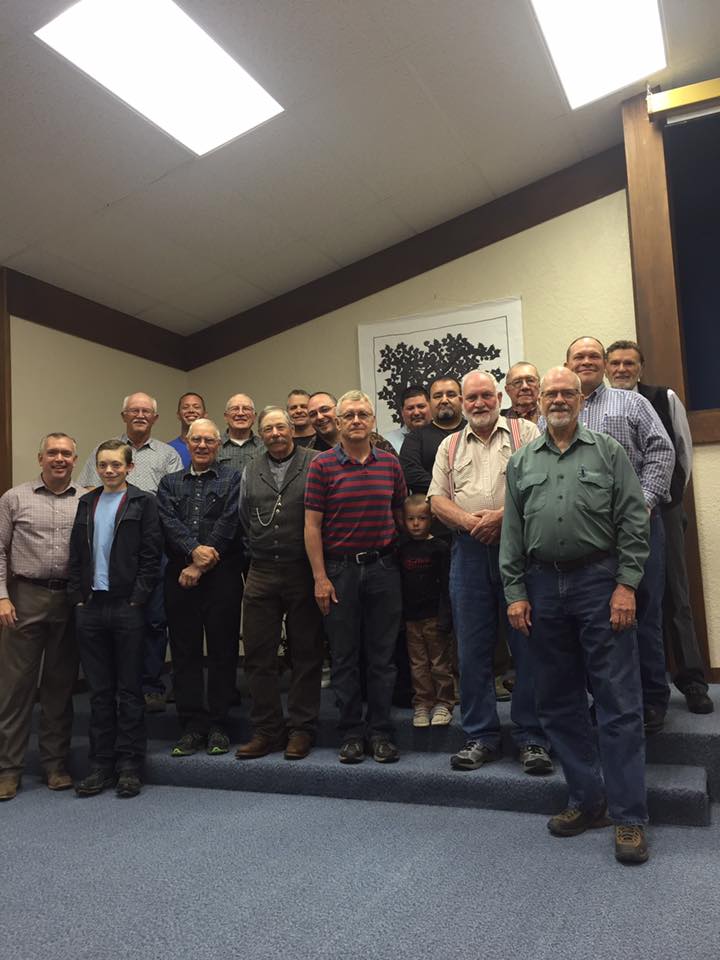
It was such a treat to be among the hearty, faithful Christian men of central Wyoming and the Bighorn Basin. By Bible-belt comparison, they come from small congregations. But their passion and desire to grow the church is humongous. Near the end of their men’s retreat, they divided into groups to discuss the obstacles to growth and suggestions for growth. What they came up with was incredibly insightful, helpful to especially anyone living in the current, western culture.

Among the obstacles they listed were:

  • Lack of commitment
  • Fear
  • Political correctness
  • Biblical ignorance
  • Sin
  • Apathy/indifference
  • Misplaced priorities
  • Lack of adequate leadership

For those in Alabama, Oklahoma, and California who would say, “Those are our obstacles!”, isn’t it interesting how common our struggle is.  The same factors are holding back our growth all over the nation.

Yet, I love the suggestions they came up with. I think they are key to tapping into our growth potential throughout the country and, to a great extent, throughout the world. They suggested the following:

  • Increase fellowship—The key to growth is being in each others’ lives more
  • Emphasize and empower Bible study—There can be no spiritual or numerical growth without growing our knowledge and understanding of God’s Word
  • Think outside the box—Staying faithful to truth, get out of method ruts and overcome fear of rejecting a different, scriptural method just because it is new
  • Challenge greater application of biblical truth—Every class and sermon must have a viable “so what”
  • Be intentional in our relationships—Realize that our jobs, community involvements, friendships, etc., are means to an end rather than an end of themselves. They all exist as opportunities to evangelize.

Our brethren in the deep south, the north, the Atlantic region, the upper midwest, the southwest, the far west, the northwest, and, in short, any recognizable region of the country share a desire to be relevant and meaningful in our communities. We want to honor Christ and grow His body. But it will take measurable steps. It won’t happen incidentally! We must act on our hopes and desires. We must personally engage ourselves in enacting these suggestions daily! In so doing, we’ll not only avoid being part of the problem but we’ll be part of the solution.

13118907_10153650222335922_7374883366678402046_n

Not Enough Room On A Short Pew

Neal Pollard

I witnessed something beautiful last night. A young man responded to the invitation and I was amazed by an outpouring of love and support shown by so many of his spiritual family. At least a dozen people, young men and young women as well as older men and women, came forward, too. They were not responding to the invitation to confess sin, but responding to this young man’s response. But there was room for about five on that short pew.  The rest of them either stood nearby or sat on adjoining pews.  They just wanted to be there for their friend and brother.

I could not help but think about what a beautiful display of family that was!  This young man was hurting and struggling. It takes a lot of courage to admit wrong, to ask for help, and to do so publicly. It is obvious that this congregation has concluded that no one should ever have to do that alone.

It is not the only way to do this, but it is definitely one way to bear one another’s burdens (Gal. 6:2), encourage and build up one another (1 Th. 5:11), provide edification according to the need of the moment (cf. Eph. 4:29), to bear the weaknesses of those without strength (Rom. 15:1), and to strengthen the hands that are weak and the knees that are feeble (Heb. 12:12). Think about what occurs with such an overwhelming outpouring of comfort! It tells the one who has come forward that they are special, important, and that they matter. It treats their problem(s) as most serious. It makes a statement about how they are seen, as a vital member of the body.

What would happen if every time anyone—a middle-aged man, an elderly widow, a struggling divorcee, a new member, a deacon, elder, or preacher, a teen, or any other sub-classification—publicly responded, they were met with such encouragement and consolation? Wouldn’t we be reflecting the heart of the Prodigal Son’s father in Luke 15, who ran to meet the boy who’d come home? Please consider this the next time someone publicly responds. Don’t worry what others may think of you. The one who responded didn’t worry about it.  Don’t stop to ask what it might look like. That broken man, woman, boy, or girl didn’t. If we’re going to err, let’s err on the side of charity and not severity! The church should ever seek ways to create a culture of compassion!

Remember the words of Paul: “So, as those who have been chosen of God, holy and beloved, put on a heart of compassion, kindness, humility, gentleness and patience; bearing with one another, and forgiving each other, whoever has a complaint against anyone; just as the Lord forgave you, so also should you” (Col. 3:12-13).

DCIM100MEDIA

Tychicus: Trustworthy Transporter

Neal Pollard

Have you ever paid close attention to the ends of especially the epistles? There are a variety of otherwise obscure Bible characters who make their cameos as if in passing. Tychicus is one such early Christian. You find him referenced five times in Holy Writ. He is numbered among the missionaries in Asia (Acts 20:4). Whether or not he preached or taught, he was acting on Kingdom business. In Ephesians 6:21, Paul sends him to Ephesus to make Paul’s conditions and circumstances known to them. He did the same thing for the Colossians (4:7). Paul tells Timothy, very simply, that he sent Tychicus to Ephesus (2 Tim. 4:7). Paul contemplated sending Tychicus to Titus on Crete (Tit. 3:12). Paul obviously considered Tychicus a reliable resource for help.

Have you considered the fact that all of us are carriers of something? What are you carrying?

  • Bitterness and resentment?
  • Gossip and talebearing?
  • Negativity and pessimism?
  • Filthy, foul, and offensive speech?
  • Dishonest, deceptive words?
  • A different gospel?
  • Harsh, railing verbiage?

Or…?

  • Gentle, kind words?
  • Faithful counsel?
  • Positive, joyful speech?
  • Encouragement?
  • Thoughtful, considerate messages?
  • Meek efforts to restore a fallen soul?
  • Courageous, lovingly spoken truth?

What would others entrust you with? Would they trust you? That should convict us, shouldn’t it? What traits are we developing?  Let’s be concerned about that, recognizing that God needs trustworthy transporters today!

el_greco_-_apostle_st_paul_-_wga10603

Mind Your Biscuits

Neal Pollard

A church marquee read, “If we could mind our biscuits, life would be gravy.” As somebody who loves to make biscuits, I appreciate the sentiment. Only a few ingredients–self-rising flour, shortening, and milk (sweet and/or butter). A simple, consistent temperature (I prefer 450 degrees). The time is pretty precise–10-13 minutes. The rack placement is fairly straightforward and there are only a few slots to choose from anyway. But biscuits are still burned. Why? Typically, it’s because we’re distracted. Maybe we’re multi-tasking. Maybe we get caught on another errand, out of the kitchen.  Sometimes, only the smell or maybe the smoke alarm jolts them back to the biscuit business at hand.

What does it mean? Why would a church put it on their sign?  Obviously, it is not a cooking tip! However, it is sage advice for our interpersonal relationships.

When gossip is being dispensed, do you walk (run!) away? Do you show the gossiper that you disapprove (cf. Prov. 25:23)? Or does it distract, amuse, and pique your interest? Be careful about your biscuits!

When it comes to your spouse, do you work on being content, engaged, and fulfilled in that God-ordained relationship? Do you work on wooing them and keeping them won? Or do your eyes, heart, and mind drift toward another’s? Be careful about your biscuits (Prov. 6:26-29)!

When there are church problems, do you feel the need to make your contribution, taking sides, or even fueling the fire? Be careful that the fire you are fueling doesn’t burn your own biscuits (1 Cor. 1:10; Psa. 133; Prov. 16:28; 17:9; etc.).

When it comes to how others raise their kids, are you a ready, open fount of wisdom which you are eager to spill on the public square? Do you have the answer regardless of whether you’ve even heard the question? Be careful about your own biscuits!

There’s nothing like the satisfaction of pulling out those huge, cathead biscuits with just the right color of light brown on top. When you peel the top off of it, it’s flaky but light. It certainly beats blackened, burned, inedible and charred carbs that are unfit for consumption. Not even good gravy can cover that problem!  Let’s be careful to examine ourselves (2 Cor. 13:5)!  This pleases the Lord (cf. Mat. 7:1ff).

biscuits-and-gravy


Jeremiah, The Persecuted Preacher

Neal Pollard

It was hard being a preacher in Jeremiah’s day. As thanks for his work, the weeping prophet endured the following:

  • He was led as a lamb to the slaughter (11:18ff)
  • His brethren dealt treacherously w/him (12:6)
  • He was confronted by false prophets (14:13)
  • His brethren cursed him (15:10)
  • He was hit, put in stocks and condemned (20:1ff)
  • His heart was broken (23:9)
  • He was seized and threatened w/death (26:8,24)
  • His teaching was opposed (28,29)
  • He was put in prison (32:2,3)
  • He was pursued (36:26)
  • He was beaten and imprisoned (37:15)
  • He was thrown into the dungeon (38:6)
  • He was bound in chains (40:1)
  • He was falsely accused (43:2)
  • He was taken to Egypt (43:6,7)

Remember, God called him to this work. Jeremiah was doing nothing wrong in his ministry; in fact, all of those things that happened to him came in “the line of duty.” The people, on the whole, never changed for the better after all the effort Jeremiah put forth in his ministry. Jeremiah never speaks of his work as enjoyable or rewarding, but it was essential and vital. Some estimate that his ministry spanned more than six decades! Whatever we call him, we do not use adjectives like “weak” or “wimpy.”

The life of preaching is a wonderful work. The preacher works with the best people in the world fulfilling the most profound purpose possible while working, ultimately, for the best Employer there is. The retirement plan is unbeatable! Helping people connect with salvation and helping the saved better connect with their Savior is extremely fulfilling. But, if there are job hazards (the minority of brethren who are difficult to deal with, sporadic job insecurity, being misunderstood, being subjected or having your family subjected to closer scrutiny, etc.), there is a reminder from Hilkiah’s son from Anathoth. Out of our own devotion to God, we will stay at it through thick and thin. Jeremiah wrote, “I have become a laughingstock all day long; Everyone mocks me. For each time I speak, I cry aloud; I proclaim violence and destruction, because for me the word of the Lord has resulted in reproach and derision all day long” (20:7-8). This man thought about quitting, but he couldn’t! He says, “But if I say, ‘I will not remember Him or speak anymore in His name,’ then in my heart it becomes like a burning fire shut up in my bones;

and I am weary of holding it in, and I cannot endure it” (9). I have watched my father, who has preached the gospel 53 years, have some “Jeremiah moments.” I have known so many gospel preachers who have walked in that prophet’s sandals. I have even experienced a few of the lighter trials Jeremiah records as happening to him.  But Jeremiah and his modern counterparts whom I have watched serve him faithfully provide a sterling example to me of what the man of God who preaches “looks like.” He’s tough, but tender-hearted. He’s loyal and loving. He’s gritty, but gracious. He’s courageous, yet caring. He will be fallible, but he must be faithful.

Preaching is, in my opinion, the best work in the world. For whatever bumps unique to the preacher traveling the narrow way, there are ten times the blessings. To my fellow friends in this fantastic fraternity, keep the tenacity of the tearful teacher of Judah! Stoke the fire in your bones (cf. 2 Tim. 1:6).

Dad in '64 an '16
My dad preaching in Artesia, MS, in 1964 (left) and preaching in Andrews, NC, in 2016 (right). 

THE PATIENCE OF A FARMER 

Neal Pollard

James uses a variety of examples throughout his short epistle. In James 5:7-8, he writes, “Therefore be patient, brethren, until the coming of the Lord. The farmer waits for the precious produce of the soil, being patient about it, until it gets the early and late rains. You too be patient; strengthen your hearts, for the coming of the Lord is near.” As we analyze these verses, we see at least three things.

Patience instructed.  It’s interesting that James is urging us to be patient with each other as fellow Christians. Just read the rest of the chapter and it reads like an instruction manual for dealing with the internal problems we can have as a congregation of God’s people. This patience has a duration—until the coming of the Lord. Stay patient as long as you live or until Christ comes again, whichever comes first.

Patience illustrated. Patience is illustrated by the farmer. Notice:

  • The farmer waits. Patience almost always involves waiting. Delayed gratification without the delay is something completely different. Sometimes waiting is necessary and it helps us develop character, if we let it.  We have to fight that part of human nature that makes us impatient. These brethren in verse seven were being mistreated by rich, unfair brethren, and it apparently was hard on them to wait for justice to be served. But James says, “You just need to wait. God will ultimately make things right.” That is sage counsel for us in so many areas of life, to “hang on and let God work in His time.”
  • The farmer waits for the harvest. When you put seed in the ground, you’re still a long way from harvest. Different crops take a different amount of time to come to fruition. Different conditions, like weather, effect the time of harvest. But harvest is always the goal. Why do you keep planting seed, the seed of Scripture in the fields of evangelism or the seed of service in others’ lives or the seed of spiritual fruit in sometimes infertile fields? Because harvest time is coming and the Lord will sort things out then (Mat. 13:30, 39).
  • The farmer waits for what brings harvest. There are necessary conditions. James mentions the early and latter rains. In Palestine, farmers counted on the autumn and spring rains. Both were essential. There are going to be necessary conditions throughout our Christian lives. In the short-term and long-term, we will endure and experience things that help get us to harvest.  See the blessings and the challenges of life as necessities which can help us go to heaven.

Patience imitated. James says, “You also be patient.” He says for Christians to be like those farmers.  How? “Establish your hearts.” James focuses on the heart throughout this short epistle. Deception (1:26), jealousy and selfish ambition (3:14), impurity (4:8), and worldly pleasure (5:5) fattened and sickened their hearts. James is still working on their hearts at the end and connects patience with spiritual heart health.  Why? “The coming of the Lord is at hand.” The harvest idea is wonderful for those who are prepared, but if we allow our hearts to stray and lose patience, the Lord’s coming won’t be a joyful occasion for us. Be ready for harvest by being patient whatever adversity arises.

If you are struggling with patience, look at the farmer. Both my grandfathers farmed, my mom’s dad for a living. They had to persevere. There are bumper crops and there are droughts. You keep farming whatever the conditions. Let’s approach the most important harvest with the same determination!

ueberladewagen_jha

Facts Deduced About Baptism From The Eunuch

Neal Pollard

The book of Acts is wonderful for teaching the history of the church as well as providing examples of how people became Christians. From the first gospel sermon (Acts 2), baptism is central and essential to God’s plan of salvation. The emphasis is even found through facts implied from these statements and examples. Consider some facts deduced about baptism from the conversion of the Ethiopian eunuch.

  • First, baptism is part of preaching Jesus. In Acts 8:35, Philip began with the eunuch from the passage the eunuch had been reading (Isaiah 53), and “he preached Jesus to him.” Consequently, the eunuch, when they came past a body of water, said, “Look! Water! What prevents me from being baptized?” Why would this man ask such a question unless preaching Jesus included preaching the necessity of baptism?
  • Second, baptism is part of believing (Acts 8:37). Philip ties his request for baptism to the essentiality of faith preceding baptism. The eunuch confesses belief “that Jesus Christ is the Son of God.” Jesus had sent His disciples with this understanding, that “he who has believed and is baptized shall be saved” (Mark 16:16a).
  • Third, baptism involves urgency (Acts 8:38). The eunuch ordered the chariot to stop. Why? Why not wait until he was back in Africa? Why not wait until Philip collected several others and then have a baptismal service for them all at once? When the Eunuch saw water, for some reason he wanted to submit to baptism right then and there.
  • Fourth, baptism involves immersion (Acts 8:39). We primarily know this because the word “baptism” means “strictly dip, immerse in water (Friberg & Miller, 87). However, the fact that Philip and the eunuch both went down into the water indicates that baptism must involve more than sprinkling or even pouring. This man  (and Philip) went to the trouble of getting wet by going down into the water.
  • Fifth, baptism produces rejoicing (Acts 8:39). The first evidence of joy comes after the eunuch comes up out of the water, not when Philip preached Jesus or when the eunuch confessed belief in Jesus. There was something important and necessary about the act of baptism.

Despite a religious world filled with groups who resist, argue against, and deny the importance of baptism, that one example (and there are several others–Acts 2:36-47; 8:12-13; 9:18+22:16; 16:15; 16:30-33; etc.) leaves no doubt about the indispensable part baptism plays in God’s plan to redeem humanity. Thank God for this conversion example in Acts 8. May our hearts be open to accept what the Word says to us (Luke 8:15).

13055587_1079852015371168_1598737744818493967_n
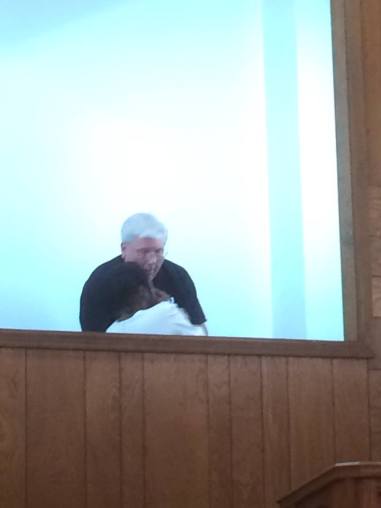
Megan Meeks was baptized this past Thursday, 4/21/16, in Denver, CO. The plan has not changed since Acts 8.

Tools In God’s Toolbox

Neal Pollard

Romans 6:13 tells us our body is an instrument, and we choose to use it for righteousness or unrighteousness. The Greek word translated “instrument” there means “tool or weapon.” What kind of tool or weapon are you? Are you an instrument God holds in His hand to do His will?

  • Are you a battering ram? The ancients would use a log or some other hard object to break down a wall or door. Have we filled our hearts with the Word to the degree that we can, speaking the truth in love (Eph. 4:15), break down barriers keeping the honest-hearted from God?
  • Are you a crowbar? Crowbars pry objects apart. There are things we should separate from our thinking and lifestyle. Are we trying to pull away from worldliness (Js. 4:4)?
  • Are you a chisel? This is a tool that does meticulous, detailed work. Its blade carves or cuts hard materials. Do we have the tenacity and trust needed to use God’s Word and benefit from His providence to remake our lives into the image of Christ (cf. 2 Co. 3:18)?
  • Are you a level? We live in not only a dishonest world but also a corrupt world. So many call good evil and evil good (Isa. 5:20). Can people find in us a reliable standard of right and wrong, as we reflect the principles of God’s Word? Levels are used to determine whether something is true and as it ought to be.
  • Are you a plane? The plane smooths rough surfaces by repetitiously moving back and forth across the surface. All four Gospels (Mat. 3:3; Mk. 1:3; Lk. 3:4; Jn. 1:23) speak of John the immerser’s work as making ready the path of the Lord, making His paths straight. We are not forerunners of Jesus; we follow in His steps (1 Pe. 2:21). As we do follow Him, we are going to forge a path safe for others to follow (1 Co. 11:1).
  • Are you a magnet? A magnet is an object that draws and holds another object disposed toward such attraction. Magnets can be used as tools themselves, but they are often made a part of other tools, such as hammers and screwdrivers. By living like Jesus, you will draw people to Him.

Paul also referred to “tools” or “weapons” when talking to the Corinthians. He mentions “armor of righteousness” and “weapons of our warfare” (same word). In both cases, the tools or weapons are spiritual and figurative, yet with them we can help shape and build up those around us. Be a tool in God’s toolbox!

toolbox_226362564


What Are You Consuming?

Neal Pollard

A 17-year-old girl had a stomach ache so bad that she had to go to the hospital. She had lost her appetite, she could barely walk, and doctors for three years had simply given her pain medicine for her inexplicable abdominal issues. The girl’s family had paid over $7000 in medical tests to determine the root cause. The emergency visit, with two CT scans, finally revealed that the massive “tumor” inside her was actually hair—which had formed into a massive hairball. It was her own hair, which she had been compulsively eating for years. The next doctor visit will be for counseling to see if she suffers from trichotillomania (compulsively pulling out one’s own hair) and trichophagia (eating it) (via opposingviews.com).

Apparently, no one ever saw her doing this. It took time for the problem to grow and develop. Yet, there were symptoms that steadily worsened and became more apparent. It was a problem that required help to solve. It is a problem that will require continued efforts to overcome.

This young lady graphically illustrates a pervasive spiritual problem.  Solomon wrote, “Keep your heart with all diligence, for out of it springs the issues of life” (Prov. 4:23). Jesus illustrates this principle speaking of normal, digestible food (not hair) as not defiling a person but rather that which comes from within a person defiling that one. He says that such things as evil thoughts, sexual sins, sinful attitudes, and sins of the tongue “proceed from within and defile the man” (Mark 7:23).

No one may see us engage in it. It may take time for the symptoms to show up in our lives, but they will eventually show up in such things as our attitudes, speech, dress, and conduct. It will not go away by itself without efforts on our part to get rid of it and to stay free from it. Whether we perceive the pain of the problem or not, it is doing damage to us and we must take steps to remove it from our lives.

What are you consuming? Is it consuming you? Get help. Get rid of it. Get over it. The Great Physician stands ready to help, if you will go to Him!

pierre_auguste_renoir_-_portrait_de_julie_manet

Five Facts About A Faithless People

Neal Pollard

The percentage of Americans who identify as atheists doubled from 2007 to 2014 (Michael Lipka, Pew Research Center). But that hardly tells the whole story. Our culture is drowning in a political correctness that stigmatizes Christian Values and that makes nearly any public stand or statement regarding what Scripture says about such things as homosexuality, objective truth, the sanctity of life, and creation a point of fierce contention and object of greatest scorn. A moral erosion and slippery slope has been in motion for several generations that has brought us to our current position. The Bible foresaw such decline as comes when a people turn their backs on God (cf. Prov. 14:34). In discussing the universal problem of sin, Paul points out five facts about a faithless people (Rom. 1:18-32):

  • Faithlessness ignites God’s fury (18). Wrathfulness is as much a part of God’s nature as graciousness. In fact, we appreciate grace so much because God gives it when we deserve His wrath. Paul says the object of His wrath is all ungodliness and unrighteousness. The unrighteous behavior Paul specifies is “men who suppress the truth in unrighteousness.” They don’t live the truth and they don’t want the truth to be told. Paul ends the section by pointing these out as those who practice ungodliness and heartily approve of those who do the same (32). It is clear that those who remain faithless are “sinners in the hands of an angry God.”
  • Faithlessness ignores the facts (19-20). Paul says that faithlessness is not due to an absence of facts, but a willful ignorance of them. He says that even the faithless can see God as they look inside themselves and outside themselves at the creation. It takes a deliberate effort to arrive at a position of unbelief. So much has to be continuously ignored.
  • Faithlessness includes futility (21). Faithlessness is built upon a flimsy foundation. It’s the slab of speculation. The faithless spend their lives running from the facts in favor of a worldview that makes no sense, gives no purpose, and instills no hope.
  • Faithlessness involves folly (22-23). It’s not just empty, it’s foolish. Paul’s words here are akin to David’s words in Psalm 14:1 and 53:1, that “the fool has said in his heart, ‘There is no God.’” Paul describes intelligent people who have made the most fundamentally foolish decision of all. They exchange faith in an infallible God for faith in fallible man.
  • Faithlessness instigates a fall (24-32). Paul pictures how a person arrives at wholesale immorality. One must first turn from God and run the other way. Then, God lets them go to find out what lies at the end of that broad way. He gives them over in the lusts of their hearts to impurity (24), He gives them over to degrading passions (26), and He gives them over to a depraved mind (28). The lusts led to the wrong object of worship and submission. The passions led to unnatural desires. The depraved minds led to every imaginable behavior, a long list of actions that have in common the fact that they lead to spiritual death. It encompasses both the perpetrators and those who validate them and tell them it’s OK to do them.

Why does Paul mention these faithless ones? It is proof of divine inspiration, because although this was written 2000 years ago it perfectly describes the current culture. But, there is a more important reason for Paul to write this. This horrible condition has a remedy. The theme of Romans is contained in the four verses prior to this section. The gospel has the power to save us from this. The solution is faith. Faith saves (1:16) and it gives life (1:17). The world is being swallowed by spiritual darkness, but God’s light is brighter. We who have faith have the light. We must share it. When we do, we help people have the most important possible commodity: faith!

birth_of_all_hope_by_mr_morph-d62i5un

The Demeanor Of A Disciple


Neal Pollard

Jesus had taught them about money (Luke 16), causing weak, new Christians to stumble (Luke 17), the coming of the church and the end of the world (Luke 17), and prayer (Luke 18). Now, He continues to teach but shifts His focus to attitude and outlook. In doing so, He leaves a pattern for the kind of perspective we should have if we are truly a follower of Jesus.

  • There is a pride to swallow (Luke 18:9-14). Jesus tells a parable about a Pharisee and a tax collector. Both were in the temple. Both were praying. Both were addressing God. But, the prayer was different, the attitude was different, and the result was different. Jesus’ point in the parable is clear:  Instead of justifying ourselves and looking down on others, we need to keep our eyes open to the fact of our sinfulness. This will keep us from sinful pride and will keep us humble
  • There is a purity to seek (Luke 18:15-17). Jesus presents children as our example. We should receive the kingdom like them or we’ll be rejected. Children are innocent, receptive, trusting, and want to please—that’s got to be us, too!
  • There is a possession to seize (Luke 18:18-22). The rich young ruler seems exemplary. He came to Jesus (18), wanted Jesus to teach him (18), was respectful of Jesus (18), and was a moral person (20-21). But he knew he had a problem. Jesus knew he had a problem. His ultimate reaction was rejection. Do we ever let “stuff” keep us from spiritual health, from taking hold of the only thing that ultimately matters?
  • There is a principle to see (Luke 18:23-27). The Bible gives us a catalog of individuals who maintained deep spirituality while having deep pockets (cf. Abraham, Barzillai, Joseph of Arimathea, Barnabas, etc.). But Jesus makes a strong point that it’s exceedingly difficult for the rich (i.e., Americans) to enter heaven. Can the rich be saved? Yes! How? By having a proper attitude toward riches.
  • There is a prize to share (Luke 18:28-30). Jesus promises you cannot give up more than you will get by following Jesus. He promises reaping now and eternal life in the age to come. He’s saying it pays in the most important ways to follow Jesus.
  • There is a prophesy to satisfy (Luke 18:31-34). Jesus goes from telling His disciples what they stood to gain to talking about what He was going to lose for their sakes and ours. It is a thorough (31), costly (32-33), hopeful (33b), and hidden (34) fulfillment. Fulfilled prophesy is a vital way of proving Jesus as God’s Son. After the resurrection, they get it (Luke 24:44-47). Do we?
  • There is a pauper to serve (Luke 18:35-43). We end the chapter reading about Bartimaeus. He was in physical, financial, and spiritual need. But Jesus takes time to interact with him and gives us an example. Discipleship means ministering to the needy.

They had a strange contest in Deerfield Beach, Florida. The prize was a python worth $850. How did they determine the winner? They had a roach and worm-eating contest. Edward Archibald was among 20 to 30 contestants. He won, but soon after the contest ended, he fell ill and started to regurgitate. Eventually, he fell to the ground and was rushed by ambulance to a nearby hospital where he was pronounced dead. The cause of death was choking from arthropod body parts stuck in his airway. Archibald entered the contest to win the python and sell it for a profit. It was foolish and costly.  What are we trying so hard to get on this earth and what are we doing to get it? Jesus urges a proper outlook, one that is essential for His disciples. May we embrace that and act accordingly.

16418889391_2ce83876cf

A Literal Appeal For “Help”

Neal Pollard

In an interview given at her home, Ann Rodgers appears a bit eccentric but a wonder to behold. The 72-year-old woman survived 9 days in an Arizona desert by eating plants and drinking pond water. She was driving to Phoenix via a remote stretch of back country road on the White River Indian Reservation when she got lost and subsequently ran out of gas. Thus began a series of efforts, building signal fires to draw the attention of rescuers or the forest service. She got lost while climbing a series of ridges trying to get cell signal. She and her dog faced gloomy odds, but she kept trying. She went missing on March 31st. On April 3rd, she used sticks and rocks to spell out “help.” To further draw attention to it, she found an antelope skull nearby and placed it with her message (via nbcnews.com). Since moving out west, I have learned that people frequently get lost in the vast stretches of deserts and mountains. I cannot find statistics for how many people get lost or how many are found alive or dead in the United States, but each incident is obviously traumatic for those involved. Can’t you imagine how desperately and completely those who realize their lostness long to be saved?

Wherever you go today, the vast majority of the people you encounter are going to be wandering through this world lost in the most profound way. Without rescue, they are heading for a fate infinitely worse than physical death. “Lost” is the way Jesus, the Good Shepherd, describes those not right with God. While He uses the word that way in three of the four gospels (Mat. 10:6; 18:11; Luke 19:10; John 18:9), it is the parables of Luke 15 that most vividly speak in these terms. The first parable, that of the lost sheep, draws on the search and rescue metaphor (Luke 15:4). That’s how Jesus likens the situation with one outside of God’s redemption.

Be watching for signs from the lost. They often send signals, if we are looking in the right places. Whether personal problems, major life changes (like marriage or having children), those new to the area, or those demonstrating an open mind, they may be just like the Ethiopian Eunuch and hoping for someone to guide them (Acts 8:30-31). Jesus has us here to conduct search and rescue missions. May we have our eyes peeled and keep ourselves equipped to rescue the lost. They are out there everywhere.

331de06200000578-0-image-a-37_1460507569810

That’s The Church For You!

Neal Pollard

  • Where you can build relationships with some of finest, most enjoyable people on earth.
  • Where the world gets smaller and mutual connections are usually a conversation away.
  • Where God’s Word is honored and imperfect people try to follow it.
  • Where Christ is at the heart of every idea, program, and plan, but also every class period and worship assembly.
  • Where you connect with people throughout the week, from thoughts and prayers to cards, calls, messages, and visits.
  • Where hope is always vibrant whatever in the world is happening, where joy is always possible however gloomy the forecast.
  • Where there’s always room for more members to be added to the family.
  • Where young and old, rich and poor, educated and uneducated blend together in a harmony that cannot be found anywhere else on earth.
  • Where we literally get a foretaste of glory divine.
  • Where you feel a part of something so truly profound in purpose and exciting in destiny that sometimes you have to pinch yourself to make sure it’s real. And it is.
  • Where you have clarity and grounding in the midst of chaos and confusion.
  • Where you have heritage and history, but just as much hope and hankering.
  • Where truth is honored, and the way, though difficult, is clear.

A couple of closing caveats. No, I do not think the church, from the human side, is perfect. We have our foibles, fragility, and faults, but our foundation is flawless. No, the church is not a place, it is a people. “Where” indicates that the church, as a body, is a place where I can fit, belong, and function. No, this is not a Pollyanna-like, rose-colored glasses view of the church that glosses over or is ignorant of times when God’s people do not behave like they ought. But, when too often the diatribe is “what’s wrong with the church” and the mantra is, with negative and sarcastic spin, “that’s the church for you,” maybe it’s time we take a moment to count some of the blessings and perks of membership in the institution bought with the life and blood of Jesus (Acts 20:28). Obviously, there are other items to be added to the list. Feel free to do so! Generously.

IMG_2894
At the end of morning worship at the Katy, TX, church of Christ, 4/10/16.

“He Shot Me”


Neal Pollard

I want to preface this story by saying that, of all my siblings, I probably got away with more than the other two combined.  However, on at least one occasion, I was punished for something I did not do.  My brother was about four years old, and he, some neighborhood buddies, and I were playing war.  Brent had a toy Kentucky rifle, while I was toting my new, unloaded Daisy B-B gun.  Perhaps my parents had worried that at nine years old I was too young for such a potent weapon, but they allowed me to own it.  In the heat of battle, Brent and I converged around the corners of our house.  I aimed and fired.  He fell down to play dead for the obligatory “five Mississippis,” but he fell on the sight of that Kentucky rifle.  This led to perhaps the quickest peace treaty in the history of boys playing war.  Brent had a nasty gash under his eye and very nearly did permanent damage to himself.  When Dad and Mom asked what happened, he said, “Neal shot me!” You, Brent, and I know what he meant, but seeing things from their point of view they concluded I had fired a B-B that produced the gaping wound.  These were the last moments between my Daisy and me.  Soon it was a mangled heap of metal.  Dad felt terrible when he understood what Brent meant.

Before you wag your head in disbelief at how this was handled, consider a few facts.  The Sunday before, another buddy and I had been putting Easter eggs on the chain link fence at our property line for target practice.  We did pretty well, though we were oblivious to the fact that we were putting small dings in my buddy’s stepfather’s new 1979 customized Chevy van.  It was another thirty feet beyond the eggs.  I escaped any punishment for that one.  Dad had shown me how to safely use the gun, but I had my own ideas.  The target practice example was my worst but not my only.  I was destined for a date with a demolished Daisy.  My track record caught up to me.

Paul deals with “track records” and character with his son in the faith.  He had been teaching Timothy about how to deal with sin in the latter part of 1 Timothy five.  Public sinners were to be rebuked publicly (20).  Yet, dealing with others’ sins was to be done prudently to avoid sharing responsibility in their sins (22).  The rebuking one was to keep himself free from sin (22b).  Then, Paul ends by writing, “Some men’s sins are clearly evident, preceding them to judgment, but those of some men follow later. Likewise, the good works of some are clearly evident, and those that are otherwise cannot be hidden” (24-25, NKJ).  In context, Paul is guiding Timothy in the investigating of those who would serve as elders.  Prudence and deliberation, in looking into their character, was vital.  Jumping to conclusions too quickly, whether too charitably or too severely, was unwise.  To help Timothy, Paul emphasizes that character often becomes apparent after sufficient examination.

By way of broader application, isn’t the same true of all of us.  As Jesus once put it, “Yet wisdom is vindicated by all her children” (Luke 7:35, NASU).   John and Jesus had been wrongly rejected by the Jews, but time and fruit would eventually exonerate the character of each.  That is, those converted through their work would prove the rightness of their teaching.  This would require the test of time and sufficient proving grounds.

Is one preaching for fame, glory, wealth, or power?  Look long and hard, with a good and discerning heart.  You will often see.  Is an elder serving through selfish ambition, to wield power, or out of materialistic greed?  It often comes to the surface.  Why are we Christians?  Why do we serve God?  It so often comes to light in this life.  Yet, whether it does in this life or not, it will ultimately.  Let us strive to keep watch over our hearts (cf. Mark 7:20-23).  Let us constantly purify our motives (cf. Eph. 6:5-8).  Remember that character will be tested.  Strive to do what is right even when you are not seen by others, and character will usually be apparent.

copper2

We Sure Love Baptisms!

Neal Pollard

There are some things about social media that are extremely irritating—click baiting, pot-stirring, fight-picking, self-pitying, and the like. But there are a great many positives in that medium, too. Of all of them, I believe that posts of baptisms have to be my favorite. I do not appear to be alone in that estimation.  Judging from post reactions and comments, a great many others do as well. We love it when there are pictures. We love the “back story.” We love knowing that our friends, neighbors, co-workers, and family members have good, honest hearts softened by the power of Divine Revelation. We love knowing they have a clean slate and a fresh start, and are poised to begin their walk on Narrow Road.

All of this leads me to several random observations:

  • True good news needs no hype, trumping, manufacturing, or baiting.
  • It is New Testament thinking to rejoice at such good news (Acts 8:39; 15:3).
  • What a confirmation the obedience of others to the gospel is to our own decision to do so.
  • It restores our faith in the potential of humanity and the power of the gospel (Rom. 1:16; Heb. 4:12).
  • It builds our confidence in the Bible to see people imitate the examples of the New Testament, doing what they did the way they did it (Mark 16:16; Acts 2:38; 8:13, 38; 9:18; 10:48; 16:14-15; 31-33; 22:16; Rom. 6:3-4; Gal. 3:26-27; Eph. 5:26; Col. 2:12; Titus 3:5; 1 Pet. 3:18-21).
  • The average Christian wants what is best for others, which is just one reason Christians are the best people on earth.
  • We want good news to travel fast, far and wide.
  • We know it pleases the Lord when a person comes to Him in obedient faith (see Luke 15).

There are doubtless many more observations we could make, but these are enough for me to thank God for His people and those who daily make the decision to become His people. It builds my faith and hope in my fellow human beings and my trust in heaven’s plan of salvation.  Thank you for finding joy in the right and best things! And let’s keep striving to perpetuate that joy through leading souls to the Savior.

12924440_10207948347340678_5218772026345282016_n
“Debbie” being baptized into Christ during a gospel meeting with Keith Mosher in Sylvester, GA, this week (photo credit: Jason Willis)

How Could He Not Take That Shot?

Neal Pollard

His coach, Jay Wright, and teammates expected and wanted him to take the last shot in the 2016 NCAA basketball championship game. The senior point guard had intentions of doing so, too, but at almost the literal last second he turned and delivered a short pass to Junior Kris Jenkins who sank a three-pointer just before the final buzzer. It was the game-winning shot, lifting Villanova over North Carolina for the Pennsylvania school’s first championship since their legendary victory in 1985. Ryan Arcidiacono, who grew up 20 miles from campus and constantly dreamed of hitting a game-winning shot for the championship, will be remembered, as much as Jenkins, for delivering one of the most exciting games in college basketball history—Jenkins for his beautiful shot and Arcidiacono for his unselfish pass.

For those who know coach Wright’s philosophy, this turn of events is absolutely no surprise. Google “Jay Wright unselfish” and a multitude of articles come up talking about how the coach drills the idea of putting everybody else above yourself from the time kids enter his program. Players earn his trust and confidence by proving themselves converts to his selfless style of play. It is heartwarming to see such values being instilled in impressionable young people.

The local church must adopt the philosophy of its leader, Christ. He modeled it (Ph. 2:5-11) and mandated His followers do the same (Ph. 2:3-4). An atmosphere of unselfishness cultivates spiritual and numerical growth, just as selfishness inhibits such growth. Selfless service is most often bypassed by the world, though most deeply appreciate seeing demonstrations of it. Deference to others is a mark of distinctiveness that must be found in disciples. The better we do this, the brighter the light of Christ can shine through us!

1024px-2005_1104hoopsmania0005

What God Does Not Expect Of Elders

Neal Pollard

Sermons preached on the qualifications of elders often, rightly, emphasize the importance of selecting men who qualify to serve. In the Lord’s church,  covetous, inhospitable, intemperate, cold, imprudent, biblically ignorant, pugnacious, and newly-converted men (among others) have been appointed to that important work who should not have been. That hurts the local church! Many times it has been said that “bad elders” are worse than “no elders.”

Harboring unfair expectations of men who would serve as elders is another hurtful trend that occasionally surfaces. A hypercritical spirit is a quality of human nature, though a quality the spiritually-minded ought to fight to personally eliminate. Let us briefly consider what God does not expect of elders.

  • More Than The Qualifications Specify. Gut feelings, intuitions, and hunches might work well when hunting, fishing, or making March Madness picks, but there is no call for them in selecting men to serve as elders. God does not need our help, tacking on additional requirements for an elder than He felt the need to supply for us. Adding to the Word of God carries a stiff penalty (cf. Rev. 22:18); therefore, our scrutiny of a man’s fitness to serve needs to stop where the Bible’s does.
  • Sinless Perfection. He expects maturity (1 Tim. 3:6), ability (Ti. 1:9), and stability (1 Ti. 3:4-5), but not impeccability (the Latin origin of this word means “not to sin”)! If so, no man could ever conceivably qualify to serve. Gnat-straining can keep a qualified man from serving as surely as camel-swallowing can allow an unqualified man to sit as watchman. With a 1000-tooth-comb, some would inspect the minutia of his life and his family’s. Those searching for flaws, who look hard enough, will always find things. Yet, such findings do not necessarily prove anything except his humanity and fallibility (cf. Rom. 3:10,23).
  • To Neglect Their Own Families. It is unfair to expect a man, as elder, to always place the needs of the congregation over those of his own family. Too many wives and children have been deprived of husbands and fathers due to disproportionate expectations of time, resources, and attention placed upon elders by members. Elders need the full cooperation and understanding of their families, while elders are obligated by God to supply the needs of their families (cf. 1 Tim. 3:4-5,7). Elders (and their families) are entitled to vacations and nights at home together. Elders will answer for not only their service as elders (Heb. 13:17; 1 Pe. 5:4) but also their influence and leadership in the home (1 Tim. 3:4-5; 1 Co. 11:3; Eph. 6:1-4).
  • To Be The “Complaint-Receiving Committee.” It is impossible but that complaints will come, but woe unto him (or her) through whom they constantly come. Murmuring and complaining got Israel into trouble (cf. 1 Co. 10:10), and members who find it impossible to speak to elders without doing such may find themselves in the same predicament. How many times has an elder heard you say something positive about another member, a successful program, or their efforts on your behalf? How many of your complaints have they fielded? Elders will answer for our souls. Let us find ways and opportunities to encourage, praise, and support them. Complain whenever you must, but compliment whenever you can.

Did you realize members have qualifications to meet with regard to the elders?

  • Love and appreciate them (1 Th. 5:12-13)
  • Honor them (1 Ti. 5:17)
  • Do not recklessly accuse them (1 Ti. 5:19)
  • Obey and submit to them (He. 13:17)

As we examine who would serve as elders, let us not forget to examine ourselves (2 Co. 13:5). How spiritually fit are we? Jesus’ words about beams and specks apply to our relationship with elders, too (cf. Mt. 7:3-5). Let us have high expectations of elders, but let us have only those expectations God has!

screen-shot-2013-03-14-at-1-01-53-pm