
Shamgar The Son Of Anath

Neal Pollard

The brief account Shamgar in Judges 3:31 is interesting and unique. Othniel had a famous family tie (Caleb). Ehud had a unique anatomical feature (he is pointed out as “left-handed”). Shamgar is known for his weapon of war (“an oxgoad”). Much more is said about the opposing rulers, the oppression, and the operation of the deliverance of the other four of Israel’s first five judges (Shamgar will be followed by Deborah and Gideon). None of the judges, including Tola, Jair, Ibzan, Elon, or Abdon, have so little said about them or their length of judging of the nation. This is what is said about him:

“After him (Ehud) was Shamgar the son of Anath, who killed 600 of the Philistines with an oxgoad, and he also saved Israel” (3:31). Add to that a line which Deborah includes in her song of victory: “In the days of Shamgar, son of Anath, in the days of Jael, the highways were abandoned, and travelers kept to the byways” (5:6). What can we learn and apply from this extremely brief record?

  • He was resourceful–He killed the Philistines with an oxgoad. Like men after him, Samson with the jawbone of a donkey (15:15-17), Adino with an unnamed weapon (2 Sam. 23:8), Eleazer with a sword (2 Sam. 23:10), and Abishai, with a spear (2 Sam. 23:18), Shamgar took what he had and used it for God. Solomon later writes, “Whatever your hand finds to do, do it with all your might…” (Ecc. 9:10). God once asked Moses, “What is that in your hand?” (Ex. 4:2). Take inventory of your resources–money, talents, temperament, personality, intelligence, etc. Are you using them for Him?
  • He was valiant–He killed 600 Philistines with an oxgoad. What incredible odds! He went toe to toe, hand to hand, with 600 different people and was victorious over them all. He walked away from that confrontation alive! Can you imagine? Reminding ourselves that God delivered Israel through the judges, God was behind this victory. But He did so through this man. It reminds us of a truth taught by Paul, “…If God is for us, who can be against us?” (Rom. 8:31). When we face spiritual foes, God’s enemies, we don’t use weapons of the flesh (2 Cor. 10:4). Yet, God guarantees the outcome. Through John, He says, “You are from God, little children, and have overcome them; because greater is He who is in you than he who is in the world” (1 Jn. 4:4). With God’s help and power, you can win victories in battles you have no business engaging in!
  • He was useful–Judges 3:31 says he saved Israel. Judges 5:6 says he did his work in adverse times, when the highways were abandoned and travelers kept to the byways. While he gets but a footnote in history, what a legacy! There was a problem and he worked with God to provide a solution. The idea of a judge is of a savior. God saved the people through Shamgar. He had the freedom of choice, and he chose to save the people. Galatians 6:10 urges us all, “So then, awhile we have opportunity, let us do good to all people, and especially to those who are of the household of the faith.” You are valuable to God, but you must use what you have while you can to do all you can for Him! Just like Shamgar did!

A Notch On A Wrench And A Stigma For The Savior

Neal Pollard

Tim Gean has a 5/8 wrench that belonged to his dad, who is now deceased. He and his dad overhauled several cars together. His father owned that wrench for decades. Tim had his hands on that wrench countless times through the years. Several times, Tim was in a garage with his dad and his dad’s brother. They would sometimes argue over to whom a tool belonged. Finally, Tim’s dad decided to resolve this problem. He put a notch on his wrench. If you saw it in a yard sale, you would ask why that notch was there. But, Tim knows. It identified it as clearly belonging to his father.

Did you know that what was true of Tim’s father’s wrench is true of you and me? It certainly was true of the apostle Paul, who wrote, “From now on let no one cause trouble for me, for I bear on my body the brand-marks of Jesus” (Gal. 6:17). “Brand-marks” is from the Greek word “stigma,” “to undergo experiences which mark one as the slave of some master” (Louw-Nida 808). Arndt, Danker, and Bauer adds, “Paul is most likely alluding to the wounds and scars which he received in the service of Jesus” (945). Whether literal, physical persecution or some other sort of experience that comes which serving Jesus, people should be able to look at us and know that we have been with Jesus (Acts 4:13). 

Christians are sanctified people, people who give personal dedication to the interests of God (BDAG 10). Using the analogy of slavery, Paul writes, “But now having been freed from sin and enslaved to God, you derive your benefit, resulting in sanctification, and the outcome, eternal life” (Rom. 6:22). When we surrender our lives and will to Him, having been baptized into His Son (Rom. 6:1-6), we become “a people for God’s own possession” (1 Pet. 2:9). From that point forward, we have a new purpose. We are “proclaim the excellencies of Him who has called you out of darkness into His marvelous light” (1 Pet. 2:9).  We bear His mark, and others will know we belong to Him. What a source of joy and pride, to know that we are the Father’s and He uses us to accomplish His purpose!

roea20a_productimage_primaryimage_400

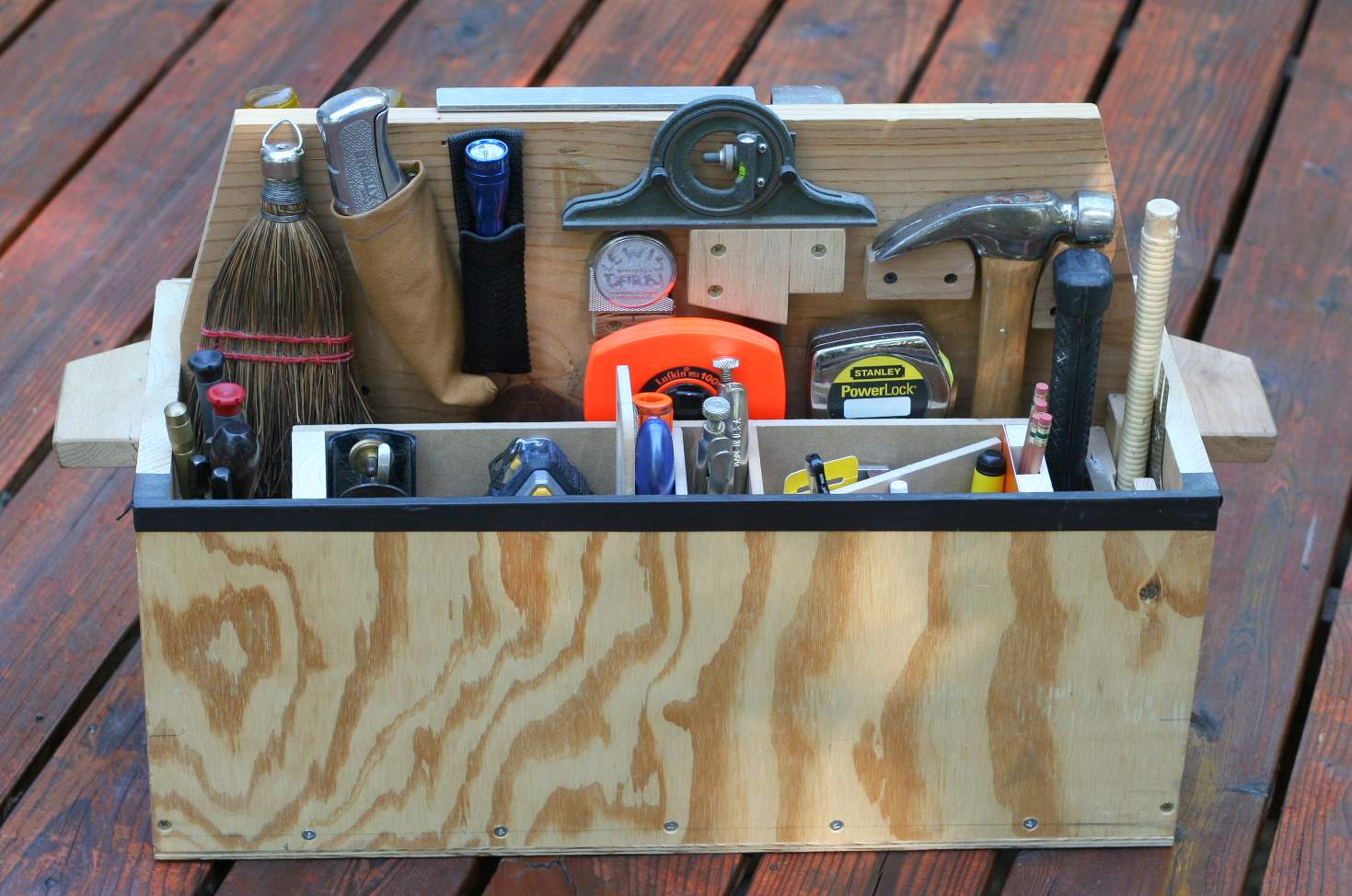
Tools In God’s Toolbox

Neal Pollard

Romans 6:13 tells us our body is an instrument, and we choose to use it for righteousness or unrighteousness. The Greek word translated “instrument” there means “tool or weapon.” What kind of tool or weapon are you? Are you an instrument God holds in His hand to do His will?

  • Are you a battering ram? The ancients would use a log or some other hard object to break down a wall or door. Have we filled our hearts with the Word to the degree that we can, speaking the truth in love (Eph. 4:15), break down barriers keeping the honest-hearted from God?
  • Are you a crowbar? Crowbars pry objects apart. There are things we should separate from our thinking and lifestyle. Are we trying to pull away from worldliness (Js. 4:4)?
  • Are you a chisel? This is a tool that does meticulous, detailed work. Its blade carves or cuts hard materials. Do we have the tenacity and trust needed to use God’s Word and benefit from His providence to remake our lives into the image of Christ (cf. 2 Co. 3:18)?
  • Are you a level? We live in not only a dishonest world but also a corrupt world. So many call good evil and evil good (Isa. 5:20). Can people find in us a reliable standard of right and wrong, as we reflect the principles of God’s Word? Levels are used to determine whether something is true and as it ought to be.
  • Are you a plane? The plane smooths rough surfaces by repetitiously moving back and forth across the surface. All four Gospels (Mat. 3:3; Mk. 1:3; Lk. 3:4; Jn. 1:23) speak of John the immerser’s work as making ready the path of the Lord, making His paths straight. We are not forerunners of Jesus; we follow in His steps (1 Pe. 2:21). As we do follow Him, we are going to forge a path safe for others to follow (1 Co. 11:1).
  • Are you a magnet? A magnet is an object that draws and holds another object disposed toward such attraction. Magnets can be used as tools themselves, but they are often made a part of other tools, such as hammers and screwdrivers. By living like Jesus, you will draw people to Him.

Paul also referred to “tools” or “weapons” when talking to the Corinthians. He mentions “armor of righteousness” and “weapons of our warfare” (same word). In both cases, the tools or weapons are spiritual and figurative, yet with them we can help shape and build up those around us. Be a tool in God’s toolbox!

toolbox_226362564