NO SMILE RULE!


Neal Pollard

“Stop smiling!”  DMV photographers in Virginia, Arkansas, Nevada, and Indiana are among the states requiring grin-free pictures on residents’ drivers licenses.  Apparently, face-recognition software is thrown off by curled up kissers.  The objective is to curtail fraudulent drivers licenses.  So, by rule, there will be no smiling when the photographer says “cheese.”

Like you, I know a great many people who need no such rule–whether at a DMV or any one of a million other locations.  They are perpetually miserable, and their faces show it.  Incredibly, too many of those I know like this claim to be Christians.  They sport their sour dispositions and spread thunder clouds and downpours wherever they go.  To borrow Paul’s words on more than one occasion, “My brethren, these things ought not so to be.”

“Happiness” is synonymous with “Christianity.”  The Christian’s life is far from  problem-, stress-, or trouble-free, but the greatest problem (sin) is solved, the greatest stress (earthly concerns) is benign, and the greatest trouble (death) is surmountable.  People hurt us, betray us, offend us, and undermine us, but we are heaven bound!    We can be happy because “if God is for us, who can be against us?” (Rom. 8:31).  Isn’t it hard to obey commands like “be thankful” (Col. 3:15), “rejoice in the Lord always” (Phil. 4:4), “rejoice and be exceedingly glad” (Matt. 5:12; Luke’s account says, “Rejoice in that day and leap for joy”–6:23), or similar injunctions with a sour face and a permanent frown?

Matthew Hite was eight years old when he took his first missionary trip to Tanzania.  While there, he made up a little game he called “Sweet And Sour.”  He would smile at all the pedestrians walking down the road.  If they smiled, he counted it as a “sweet.”  If they scowled or simply failed to smile, he counted it as a “sour.”  Almost everyone of the impoverished people of that nation were “sweets.”  Are you a “sweet” or a “sour”?  If you are a Christian, remember that God has not imposed a “no smile rule” on you.  If anything, He’s done the opposite!

4605621230_89213e53b8_z

“Satan Wants You”

Neal Pollard

Mike Vestal was speaking to preachers at this year’s Polishing The Pulpit in Sevierville, Tennessee, on the subject of discouragement. One of his many poignant points was that Satan would dearly love to get to the preacher. He made the striking statement, “Satan wants you!”  This is true of more than the preacher. He is ever after every faithful Christian.  Do you remember that shortly before His crucifixion, Jesus warned an overconfident Peter, “Simon, Simon, behold, Satan has demanded permission to sift you like wheat” (Luke 22:31)? It is sobering to contemplate his ravenous yearning for us (cf. 1 Pet. 5:8)!

Consider that Satan wants your:

  • Soul
  • Influence
  • Effectiveness
  • Energy
  • Money
  • Stages of life (youth, prime, golden years)
  • Heart
  • Family (spouse, children, parents)
  • Passion
  • Time
  • Worship
  • Body
  • Speech
  • Confidence
  • Assurance
  • Attention

When we break down the totality of his voracious appetite for each of us individually, we can see just how viciously and actively he is pursuing us. He can work through the more obvious avenues like sexual immorality, unrighteous conduct, and overt worldliness. He is as content with more subtle channels like attitude, strife, grudge bearing, dishonesty, greed, and gossip. The Bible makes it clear that as long as he can make headway into the heart and life, he’ll take it.

The thrilling news is that he cannot make us or take us without our permission. Furthermore, Jesus empowers us to prevail through His sacrifice and resources. Hebrews 2:14 shows us that Jesus rendered him powerless against the children of God.

The greatest news of all is that God wants you! He has gone to the greatest lengths to prove it. If we will give our lives to Him, it does not matter what the Devil attempts. He will fail!  Resist him with the power of God (1 Pet. 5:9; Jas. 4:7-8) and he will flee from you! Just don’t let your guard down! Keep your faith up!

5602666514_64b59ec5c1_m


What Would YOU Do?

Neal Pollard

On the one hand, Brunhilde Pomsel says she knew nothing but on the other says she saw the “ranting, rowdy man,” the “raging midget” that her boss, Joseph Goebbels, could become. Though usually sophisticated and elegant, if arrogant, he was the propaganda minister for Hitler’s Nazi regime, culpable in the murder of millions of Jews and other Nazi targets, and she was his secretary. She’s 105-years-old and is the star of a documentary film, A German Life, set to be released soon (The Guardian, Kate Connelly, 8/15/16, “Joseph Goebbels’ 105-Year-Old Secretary: No One Believes Me Now, But I Knew Nothing”). One of her most poignant comments was this:  ““Those people nowadays who say they would have stood up against the Nazis – I believe they are sincere in meaning that, but believe me, most of them wouldn’t have.”

After the rise of the Nazi party, “the whole country was as if under a kind of a spell…”

Her point, even if uttered in rationalization, is pretty poignant. It’s so easy to look back on horrific actions like those perpetrated by the Nazi machine and say we’d die fighting it. But, the rank and file of the German people in the 1930s and 1940s were “normal” people. I’m sure it would have been possible for someone like Brunhilde to keep herself in a bubble from the truth, but I’m not sure it exonerates her. I’ve read too many books about so many who secretly and openly defied the evil of that fascist government to protect the innocent, especially the Jewish people.

One of history’s hardest challenges has been to go against the flow of culture and society. Scripture reveals some of those struggles, like faced by Daniel, Shadrach, Meshach, and Abednego. Imagine facing the “rage and anger” of a ruthless king who demanded you to sin, and saying, “O Nebuchadnezzar, we do not need to give you an answer concerning this matter. If it be so, our God whom we serve is able to deliver us from the furnace of blazing fire; and He will deliver us out of your hand, O king. But even if He does not, let it be known to you, O king, that we are not going to serve your gods or worship the golden image that you have set up” (Dan. 3:17-18). Then imagine seeing him “filled with wrath, and his facial expression” being “altered” toward you. While the event was transformational for the king, they still needed the courage to be distinct in their times.

It is frightening to think of how our country has changed in such a relatively brief period of time. As morality erodes and attitudes toward God and the Bible change for the worse, we have opportunities to stand. The ruling powers may not seem as evil as Nazism does in the rearview mirror, but their hostility toward Christianity is becoming clearer. While we remain the respective, obedient citizens Scripture commands us to be (Rom. 13; 1 Pet. 2), let us be willing to stand with the likes of Peter and John and always say, “We must obey God rather than men” (Acts 5:29).

brunhilde20pomsel20color

COMING TOGETHER

Neal Pollard
For twelve years, I lived in the eye of Civil War History. Not only were many battles fought in almost every community neighboring Mechanicsville, Virginia (our home), but two were fought at Cold Harbor. While living there, I became an avid relic hunter–a type of amateur archaeologist digging for buttons, bullets, and buckles. Thanks to Dave Young, Sr., and Dave Young, Jr., who “pulled” me into this hobby, I got to see history up close and personally. It was fascinating, in one sense, to stand on the very ground where such history-shaping events occurred. In another way, the very activity was a sobering reminder of the tragedy that divided a nation. It even divided households, with brother fighting against brother.

It has often been reported that after that awful war, when Jefferson Davis of the Confederacy and Ulysses Grant of the Union died, their widows, Varina Davis and Julia Grant, settled near each other and became the closest of friends (Atlas Obscura). What a remarkable story of how two people, from opposite sides, came together! Their husbands were philosophically and militarily opposed to one another, but their spouses overcame those hindrances.

I never cease to be amazed at the differences that are overcome in Christ. On foreign mission trips, we may go to places where our governments are antagonistic to one another and find our common bond in Christ. Race, culture, education, and finance are all surmountable barriers in Christ. Ephesians 2:16 reveals how Jew and Gentile were reconciled by Christ’s cross in the church. God intended the church to be the place where people, despite their diversities, can all submit to Christ’s authority and be one. Yes, even yankees and southerners. Even easterners and westerners. Even college grads and grade school drop outs. Paul also wrote, “For by one Spirit we were ALL baptized into one body–whether Jews or Greeks, whether slaves or free–and have ALL been made to drink into one Spirit. For in fact the body is not one member but many” (1 Cor. 12:13-14). In a world that tries to draw us apart and divide us, politically, ethnically, and regionally, Christ wants us coming together! Through the church, we can.

image

Each One Will Bear His Own Load

Neal Pollard

Ulm Minster, a Lutheran church building in southern Germany, is the tallest church building in the world, has the tallest steeple in the world, and is the 4th tallest structure built before 1900. Construction began in the 1300s and was finished in 1890. The masonry building is thought to be the tallest load-bearing brick or masonry building in the world. That means that each brick supports its own weight (Wells, Matthew. Skyscrapers: Structure and Design, King: London, 2005. p. 8).

In Galatians 6, Paul urges Christians to reach out, gently and introspectively, to help a fallen brother (1). We do so because it is the fulfillment of Christ’s law to help each other (2). None of us is above this (3). But at the same time, we have personal accountability (4) and responsibility (5). The example, in context, is financial support of the Word rather than fleshly indulgence (6ff). But a fair application of this principle extends to the need we each have to pull our own weight. Just as I need to help others in need, I need to realize my need to stand on my own two feet. What are some areas where the individual Christian must bear his own load?

  • Involvement in the work of the church. 1 Corinthians 12 tells us every member plays a vital part to the overall function of the body. I cannot just be a pew-sitter. I must be at work. When I hear announcements about needs or opportunities, I should not console myself thinking that others will do it. Let them do their part. I must do mine.
  • Financial contribution to the church. Being in a generous, giving church is no substitute for my personal obligation. The command is to “each one of you” (1 Cor. 16:2; 2 Cor. 9:6-7).
  • Personal relationship with God. A godly spouse, parent, or child is a wonderful asset in our lives, but none are a substitute for my own faith and intimacy in the relationship with God. No one can say my prayers, read my Bible reading, or walk my walk with the Lord.
  • Battling temptation.  Temptation is common to all men and escape is available to every man, but none can do the escaping for me (cf. 1 Cor. 10:13). I can draw strength from others and receive prayers from others and confess to others, but it is ultimately a battle I must win, with God’s help, in the trenches of my own life.
  • Being an encouragement to those in need. The exhortation to “therefore encourage one another and build up one another” (1 Th. 5:11) is very personal. The uplift I give is uniquely mine and no one can give this in the way that I can.
  • Visiting those who are sick, in prison, and the like. Matthew 25:31-46 puts the individual in the Judgment before Christ. That means I will answer for whether or not I did this, whether preachers, elders, deacons, or others did.
  • Meeting benevolent needs. The same passage challenges me in meeting the physical needs of those around me. Paul makes it personal, too, in Galatians 6:10.
  • Loving the brotherhood, with each individual brother and sister. This is to be the trademark trait of a disciple of Christ (John 13:34-35). And, it is individual (cf. 2 Th. 1:3). As I measure how I treat, talk about, and think about the spiritual family, am I bearing my load?

Pink Floyd was pessimistic when they said, “All we are is just another brick in the wall.” But, there is such an exciting prospect when we consider that we make up that holy temple to the Lord (Eph. 2:19-22). When all of us, as individuals, bear our part of the load, more and more growth and expansion is possible! Help each other, but do your own part. It’s the way Christ wants it.

ulmer_mc3bcnster-westfassade

Hazards of Firefighting

Neal Pollard

343 on 9/11/2001 in New York City. 86 in 1910 across Washington, Idaho and Montana. 29 in 1933 in Los Angeles. 27 in April, 1947, in Texas City, Texas. 21 on December 22, 1910, in Chicago. 19 on June 30, 2013, near Yarnell, Arizona (Firefighter Tragedies).  Those are the deadliest incidents for firefighters in American history, in number of fatalities. Firefighting is deadly, if heroic, business. Those answering the call know that each response, however simple or innocuous it may seem, masks many dangers. Firefighting is hazardous business.

The same is certainly true in the firefighting business Jesus calls us to perform. The Bible clearly indicates that the fire prepared for the devil and his angels will be eternally shared by those who know not God and do not obey His gospel (Mat. 25:41ff; 2 Th. 1:8-9). As Christians, then, we are God’s firefighters (Jude 23). We should do this job out of a sincere concern and love for souls and a desire to be working for and serving the One who rescued us from so great a death (2 Co. 1:10). But, by stepping into that arena, we should realize the risks and dangers involved.

  • We can be ill-equipped.  Firefighters can’t hope to do their work with old, shoddy, or faulty equipment. The best equipment available is ineffective when not put into use. In our spiritual battle, we know that our “equipment” (2 Tim. 3:17) is perfect for every situation. But, we have to know it (2 Ti. 2:15). We also need to know how to use it. We need to make sure our approach to people is not shoddy or faulty (cf. Gal. 6:1). To be boisterous or bullying with God’s Word not only further harms the one in danger, but also endangers us!
  • We can get too close to the fire. Firefighters can be the victim of their proximity to the conflagration. It’s often difficult to judge how close is too close, but it is an ever-present hazard. In our spiritual firefighting, we can get too close to the fire through compromising God’s Word, conforming to the world, committing sins of attitude, morality, ethics, or the like in our outreach. We must avoid behaving in a worldly way when trying to help save those out in the world. In trying to help a struggling soul, we can sin with our tongues or gossip about the one whose troubles we’ve been made aware of.
  • We can ignore the dangers. It’s true in firefighting as in all professions that one may occasionally choose not to practice what he has been trained to know, see and think. In the heat of the moment, one may not focus on certain warning signs. Buildings collapse, air runs out, black draft areas are entered and serious results follow. Spiritually, we must be careful in how we go about this “business.” Going alone when we need another with us, trying to help someone when we are too emotionally invested, or responding out of hurt and anger instead of “cooling off” are all ways we can ignore the dangers we might face.

Let us be aware of the risks we take in reaching out to those who are in spiritual danger, but let us be eager to respond to the need. Despite the ever-present risks firefighters take, they still are faithful and dedicated to the job. God needs us on the front line, too. May we simply factor in the perils of firefighting, then do it!

ap525541180459

CONSECRATING THE PRIESTS

Neal Pollard

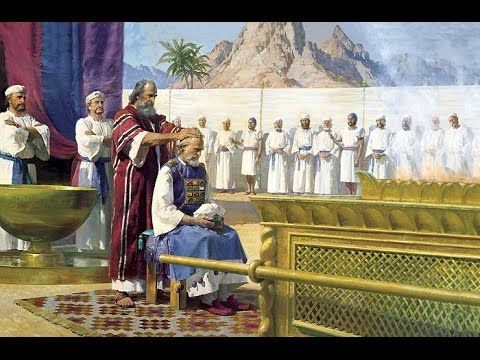
An interesting ceremony occurs in Leviticus 8:4-11. Moses summons Aaron and his sons into the doorway of the tabernacle and consecrated them. This action consisted of four distinct things.

  • A command (4-5)—“This is the thing which the Lord has commanded to do”
  • A washing (6)—“Moses…washed them with water”
  • Specific clothing (7-9)—tunic, sash, robe, ephod, breastpiece, turban, and the golden plate
  • Anointing and sprinkling (10-11)—anointing the tabernacle with oil and sprinkled the oil on the altar and all its contents

For those of us in 21st Century America who are millennia removed from this ancient ceremony of the Jewish people, those actions are about as foreign as any that we might consider.  But, they all worked together as part of a process of “consecration.” Yet, the idea is timeless, that of being regarded as holy because of having been devoted to the Lord.

The New Testament tells Christians that we are “priests” (1 Pet. 2:5,9; Rev. 1:6). Aaron and his family engaged in religious ritual and ceremony as well as representing people to God. While our function includes the latter, “proclaiming the excellencies of Him who has called [us] out of darkness into His marvelous light” (1 Pet. 2:9), we have also been set apart to engage in religious actions for God (1 Pet. 2:5). Romans 12:1 tells us we offer up our bodies as living and holy sacrifices. Our lives are to be dedicated to Him, set apart for His use.

But the process of becoming a priest is just like the process mentioned there in Leviticus 8, if only in a spiritual sense. We are commanded to become priests (cf. 1 Pet. 1:22ff; 3:21). Our induction into this job requires a washing (Rev. 1:6; cf. Acts 22:16). We are given “special clothing” (1 Pet. 3:3; 5:5; cf. Gal. 3:27). The New Testament speaks of this in terms of “anointing” and “sprinkling” (1 Pet. 1:12). When we came into Christ, we entered a life of significance and importance. We were accepting a grand, sobering job. We have been made holy by the blood of Christ, special and dear to God. At the same time, we are set apart for God’s use. One is an undeserved blessing. The other is an unsurpassed responsibility. Let us be grateful for Jesus’ gift that made this priesthood available to us, then let us embrace the monumental task of representing Him to the world and showing the world about Him through our very lives!

hqdefault

Christian, Who Are You?

Neal Pollard

  • You Are An Insurance Agent—Life (Philippians 2:16), Health (cf. 1 Peter 2:24), and Fire (2 Peter 3:9-10).
  • You Are A Tour Guide (1 Peter 2:9; Acts 8:31).
  • You Are A Soldier (Ephesians 6:10ff; 2 Timothy 2:1-3).
  • You Are A Slave (Romans 6:17).
  • You Are A Firefighter (Jude 23).
  • You Are An Ambassador (2 Corinthians 5:20).
  • You Are A Priest (Revelation 1:6).
  • You Are A Conductor (2 Corinthians 2:14; 9:11).
  • You Are A Day Laborer (John 9:4; cf. Matthew 20:1ff).
  • You Are A Farmer (2 Timothy 2:6; Luke 8:5).
  • You Are A Fisherman (Matthew 4:19).
  • You Are A Gem Distributor (Colossians 1:27).
  • You Are A Taste Tester (Colossians 4:6; Hebrews 5:14).
  • You Are Royalty (Revelation 1:5-6).
  • You Are A Student (2 Timothy 2:15).
  • You Are A Body-Builder (Ephesians 4:16).
  • You Are A Restorer (James 5:19-20; Galatians 6:1).
  • You Are A Physician’s Assistant (Hebrews 12:12-13; cf. Mark 2:17).
  • You Are A Standard-Bearer (Philippians 3:16; 2 Timothy 1:13).
  • You Are A Builder (1 Corinthians 3:10).
  • You Are A Judge (John 7:24; 1 Corinthians 6:2).
  • You Are A Nutritionist (1 Timothy 4:6).
  • You Are A Maintenance Worker (Phlippians 2:2; Titus 3:8,14, KJV).
  • You Are A Cleaner (2 Timothy 2:21; James 4:8).
  • You Are A Runner (1 Corinthians 9:24; Galatians 2:2; 5:7; etc.).
  • You Are A Boxer (1 Corinthians 9:26).

I’d be amazed if I did not leave out several of our job titles and descriptions. Suffice it to say that there is plenty of work for all of us to do. The next time we find ourselves figuratively twiddling our spiritual thumbs, wondering how we can be involved, let’s draw from the exhaustive inventory of tasks the Lord has left us!  Remember, “Whatever you do, do your work heartily, as for the Lord rather than for men” (Col. 3:23).

laborer

Daniel And Susan Bakeman

Neal Pollard

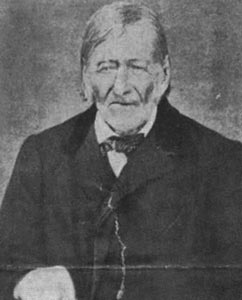
In the annals of American history there is a remarkable story you may not know.  Daniel Bakeman was born on October 9, 1759.  He married Susan Brewer on August 29, 1772, though not yet a teenager.  Soon thereafter, he joined the American army during the Revolutionary War.  Not only did he survive the war, he lived almost another 100 years.  When he died on April 5, 1869, he was most likely the last surviving veteran of the war that made us a country.  He lived about four years after the end of the Civil War.  As remarkable as that distinction is, he also was part of another world record that still stands to this day.  His marriage to Susan lasted until September 10, 1863, when she passed away.  That means the Bakemans were married for 91 years and 12 days!

I cannot find anything about the details of that marriage, though they left many descendants who carry, through various spellings of the family name, the names Bachman, Beckman, Bakeman, Bateman, and even Baker (genealogytrails.com).  Various archives indicate that Mr. Bakeman was spry and humorous to the end and that Mrs. Bakeman exhibited needlework she had done without the aid of glasses when she was 102.  They lived and died in a town called Freedom, and Mr. Wakeman holds the distinction of having voted in every election from Washington to Grant!

As remarkable as his military distinction is, his marriage distinction deserves higher honor.  He fought in and survived a war that lasted less than ten years.  He endured hardships, who knows how many ups and downs, and undoubtedly some trying marital moments en route to almost a century of marital bliss.  They were together to the end, an exaggerated example of commitment and highest love.

You will almost certainly fail to break the Bakemans’ record for length of marriage, but you might exceed what they enjoyed for depth and breadth.  What are you doing to build upon the highest love for your spouse?  What daily investments are you making?  Your marriage will be remembered by those who know you.  How it will be remembered is something over which you exert full control.  Make it a legacy of lasting love!

IMG_3673

Unmistaken Identity

Neal Pollard

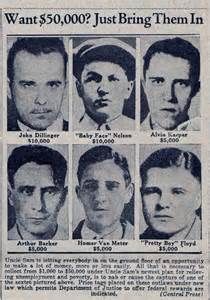
They both had a mole next to one eye and a scar on the left wrist. They lived 54 miles apart, one in Brookville and the other in Mooresville, Indiana. It was said they were practically identical twins. For notorious bank robber John Dillinger, that was no problem. But, for upstanding Ralph Alsman, it was a nightmare. Alsman was arrested 17 times and shot 11 times. When arrested, though he was always released, he had to undergo stressful interrogations in which he had to prove he wasn’t Dillinger. Only when the real Dillinger was gunned down in 1934 did the unbelievable saga end for the hapless Alsman (information taken from The Pittsburgh Press, 6/18/34, p. 11). Can you imagine having to look over your shoulder everywhere you went just because you looked like someone else—a really bad someone else?

The thought occurs to me as I read that harrowing account, based on my attitude, speech, and actions, “Who or what would people mistake me for?” As I live out my life before the world, waiting in lines or in traffic, when under pressure at work, as people mistreat or frustrate me, judging from my relationships, my ethics, and my morality, would people say that I strongly resemble Jesus? He is supposed to be living in me (Gal. 2:20). It has been the case that bystanders have recognized people as having been with Jesus (Acts 4:13). Of course, Scripture does not at all emphasize the physical appearance of Jesus (Isaiah 53:2), but Paul speaks of bearing the marks of Jesus (Gal. 6:17). While his “marks” were literal stripes from a tormentor’s whip, there are unmistakeable traits of Jesus that we, too, can and must bear.

I have so much need and room for improvement in my spiritual life.  Every day, I want to look more like Jesus. I want people to see Him when they look at me. If they do, He will be pleased and they just might be saved. Let’s work on our appearance! It may mean eternal life for somebody in our life.

588ee71ddf6914b974d4e69f24c6b8c8

When “Help” Is Actually “Harm”

Neal Pollard

Rob Heusevelet and his son came upon a bison calf in Yellowstone National Park that was shivering in the cold. They were afraid for the health and survival of the animal, so they put it into their SUV and drove it to a ranger station in the park. A witness who took a picture of the calf in the car said, “They were demanding to speak with a ranger. They were seriously worried that the calf was freezing and dying” (NPR). Ironically, their “intervention” ultimately cost the animal his life. His mother and the rest of the family rejected him because of the contact with people, and, isolated and alone, the baby bison had to be eventually euthanized. This act of ignorance was more than foolish; it was fatal!

Good intentions are fine enough, as long as they are built on the right foundation. A 12th-century French mystic and Catholic monk, Bernard of Clairvaux, is often credited with a saying antecedent to our modern aphorism, “The road to hell is paved with good intentions” (Ammer, The American Heritage of Idioms, np).  We appreciate the meaning of the proverb. No matter how well-meaning our motivation, how we act from it have consequences and they matter.  The Bible shows us those whose motivation was unimpeachable, but whose resulting actions were tragic. There was Jephthah’s rash vow (Judges 11:30ff). There were so many examples provided by Peter’s impetuousness. There was Paul’s persecution of the church, motivated by religious fervor (Acts 26:9). These are examples enough to show that simply intending to do right is not enough.

Today, we can do much harm in trying to help. Consider three specific ways that are common, though critical.

  • Making the gospel plan of salvation or gospel requirements broader, easier, or different than what Scripture teaches. We do not want to offend or hurt feelings. We do not want to face rejection. We do not want to seem arrogant. Paul calls such “scratching itching ears” (Acts 4:3-4). There is only one way (John 14:6; Gal. 1:6-9).
  • Offering false hope or peace. This is often done at funerals for the non-Christian or unfaithful Christian. We should always be comforting and gentle, but we cannot swing to the other extreme and tell anyone living (or on behalf of the dead) that they are “right” when they are not. We do them no service, and we do disservice to our own souls.
  • Pretending like nothing is wrong when a loved one (relative, friend, Christian family member) is living in sin. Sometimes, we act as though time equals repentance. We gradually accept and embrace one whose deeds are in rebellion to God. We may even never have the nerve to imitate the great spirit of Nathan and tell the guilty, “You are the man!” (2 Sam. 12:7). But such pretense cannot change divine facts!

Paul preaches the imperative of proper motivation (cf. Phil. 1:15-17). Jesus stresses the value of a good heart (Luke 8:15). Neither of these is a substitute for the grave duty we face as Christians to not do harm as we seek to do good. It is not an either-or proposition. It is both-and.

cikpk3rwuaab97a
Photo Credit: Karen Olsen Richardson

GoFindMe

Neal Pollard

San Diego entrepreneurs Brad Damphousse and Andy Ballester started GoFundMe “as a way to help individuals and small charities raise money for good causes” (WSJ). Most people have heard of this “crowdfunding site” and have even contributed. MacMillan and Tan report, “Its members now raise about $100 million in donations per month.” But, Forbes Magazine revealed how some have used such sites for the ridiculous, including Zach Brown who raised $55,492 from 6,911 backers to make potato salad (Forbes). I have seen some pretty audacious, if not questionable, uses of such sites to fund events and circumstances.

But I’d like to alert you to an infinitely greater need that people all around you every day have. They have surmounted a debt they cannot possibly repay. Their circumstances are desperate, far beyond eviction, lawsuits, or bankruptcy.  A billion people giving all their material resources could not satisfy that debt. Despite this, I have never seen even one of them advertise, beg, or solicit help to resolve their circumstance. In an incredible turn of events, it is incumbent upon you and me to find them and offer them aid. They usually cannot identify the need, much less articulate it. But you and I know their need, and the expectation falls squarely upon our shoulders to meet it.

If they were to put it into words, they would say, “Go find me!” How could we turn a callous heart away from such a desperate need? May we muster the courage and heart to, in the words of the old quartet hymn, “go out and win, rescue from sin, day’s almost done, low sinks the sun. Souls are crying, men are dying, win the lost at any cost.”

Consider these passages, too:

Micah 6:6-8
1 Peter 1:18-19
Luke 15
Matthew 28:18-20; Mark 16:15-16; Luke 24:46-49

donate-654328_960_720

What Kind Of Church Do We Want To Be?

Neal Pollard

V–ictorious? Faith is the victory that overcomes the world (1 Jn. 5:4). No coach hopes to win without first planning and architecting. The blueprints have already been put in place (Rom. 6:17), but we must work the plans to be a success in God’s eyes!

I–nvolved? Do we want to merely keep house and meet together each week? That is not New Testament Christianity (cf. Acts 2:46). They took Christianity out of the church building’s doors. They were tangibly involved in doing God’s work. Will be be?

S–erving? This is a self-serving world. Many seem intent to climb over whoever is in their way to the top. Jesus’ religion runs contrary to that (John 13:12-17), and He calls us to follow His example. A serving church is a living, thriving, arriving, surviving church.

I–mpactful? Do our neighbors know who we are? What about the surrounding communities? What about the farthest reaches of our world? Don’t you want to be part of a church putting a Christ-sized impression on those around us?

O–bedient? We have one authority (Col. 3:16-17; John 14:1-6; Acts 4:12). There are potential masters, but only one will lead us to heaven. A church that steps outside His “lines” will become eternally out of bounds. Those intent on obeying Him will be saved (Heb. 5:9).

N–urturing? Don’t we want to be part of a people with an infinitely more profound purpose than that found by the patrons and workers portrayed in the old sitcom Cheers? We want everyone to know our name and be glad that we came, but we should also want a place where we can grow in every right, positive way. This must be a church that cares about all, whatever our age, background, interests, income, or education!

A–ble?  Do we want to focus on our liabilities or, through Christ, our limitless resources? We have so much to do, but we’ve been given so much to do it. Don’t we want to be part of a “can do” church, doing with our might what our hands find to do?

R–eaping? If we are a working church, we will see results. They will come through baptisms, programs of work, outreaches, visitation, stronger fellowship, missionary success, and much, much more. As my good friend, Cy Stafford, says, “What God controls, grows.” The law of sowing and reaping is positive, too (Gal. 6:8).

Y–earning? A church that is alive and growing is full of holy desire, enthusiasm, and a confidence that we can do all things through the Christ alive within us (Phil. 4:13). Our greatest desires will be to do spiritual things to the glory of God.

How does a church become a visionary church? We must be intentional! What do we intend to do?  With God’s help, that is up to us!

12642872_1029468160409554_6928711640322573340_n

Why Travel The Road Less Taken?

Neal Pollard

Gunnar Garfors is the youngest “hobby traveler” to have visited every country in the world. He’s written a book about it, entitled 198: How I Ran Out Of Countries. I have not read the book, but his website offers a very interesting article on The 25 Least Visited Countries in the Whole Wide World. Guess which one is least visited. He tells us, statistically, it is Nauru, a Pacific island country with no capital and no armed forces. It is 8.1 square miles in size, having only 10,000 inhabitants. They have the world’s highest level of type 2 diabetes and the highest obesity rate in the world (97% of men and 93% of women are overweight or obese). It has no seaport and no daily news publications. Perhaps some or all of these factors lead this country to be most frequently avoided by travelers, but somebody has to own that distinction (read more here: Independent UK, BBC, and Gunnar Garfors).  Perhaps none of these facts inspire you to work to help Nauru lose its notorious tourism distinction.

Robert Frost wrote his famous poem about the two roads which diverged in a yellow wood. He took the one less traveled by, and that made all the difference.  It appears he may have actually stood before such a fork, but he used the experience to speak metaphorically. We can all appreciate this figurative choice. We must choose a path in life, and the one we choose does make all the difference!

Jesus uses such a metaphor to describe the way of life we choose on this earth. He says, “Enter through the narrow gate; for the gate is wide and the way is broad that leads to destruction, and there are many who enter through it. For the gate is small and the way is narrow that leads to life, and there are few who find it” (Mat. 7:13-14). In this familiar passage, He gives us multiple reasons why we should take His way.

  • Its aim (“leads to life”).
  • Its alternative (“leads to destruction”).
  • Its autonomy (it is a road each one chooses to “enter through”; it is not arbitrarily chosen for us).
  • Its assumption (one must choose between these two, and no other, ways).
  • Its accessibility (it can be “entered” and “found”).
  • Its attainability (Jesus says “few” find it and not “none” find it).
  • Its associability (one is not absolutely alone, for there are “few” rather than “none”).

Jesus compares our brief time on this earth with a road trip. We are not fated to stay on the broad way, but we are not unconditionally guaranteed a spot on the narrow road. As Frost surveyed the two paths and made his choice, so must we. Jesus says we make this decision daily (cf. Lk. 9:23). And our choices determine which path we are traveling. Be deliberate and prepared for this arduous journey that terminates all too quickly. The right choice is the one less taken and most avoided, but take it anyway!

2784284196_2d950420d6_b
That’s the whole country of Nauru

The REAL Terry Symansky Can’t Stand Up

Neal Pollard

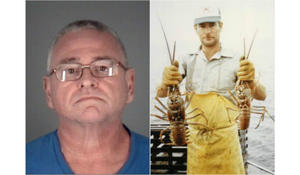
There is a famous line from the longstanding game show, To Tell The Truth, that is so apropos here. On the show three people would all claim to be someone and make their pitch to “prove” it, then at the end the host would ask, “Will the real __________ please stand up?” Recently, a real-life version of this game surfaced in Pasco County, Florida, regarding a seemingly harmless man with a normal life in Zephyr Hills. He was a husband, father, landlord, pilot, and upstanding citizen, and he carried off the ruse for over 20 years! But the real Terry Symansky drowned in 1991.

Richard Hoagland, who had once boarded with Terry’s dad in Palm Beach, Florida, learned of Terry’s death, stole the death certificate to get his birth certificate from Ohio, which he used to obtain an Alabama’s driver’s license in order to obtain a Florida’s driver’s license! He also married Mary Hossler Hickman in 1995, with whom he has a teenage son. Meanwhile, back in Indiana, Hoagland has a wife and four children whom he abandoned with a story that the FBI was after him for embezzling millions of dollars (The Washington Post, “He Left A Family And Started A New One Using A Dead Man’s Identity, Police Say,” Peter Holley, 7/24/16). Think of the carnage for at least three families: the real Symanskys, the fake, Florida Symanskys, and the Indiana Hoaglands. Untangling this mess will not be easy, all because a man decided to try and be someone he obviously wasn’t. A professor who studies identity theft summed it up rightly, saying, “It will all catch up with you” (Holley).

Sure, this is outrageous and despicable. But, have we stopped to consider that something far worse than this happens, spiritually, more times than can be counted? Whenever a Christian behaves one way among the saints but another way away from that fellowship and environment, a similar phenomenon unfolds. Some would be blown away to learn that their co-worker, fellow team parent, neighbor, classmate, and the like, is actually a Christian. Were they to see them participating in worship, they would be baffled, using God’s name in a reverent, respectful way. To know that they, perhaps, were a church leader would be beyond the pale. In this way, it can be quite easy to assume an identity. All it requires is keeping “Group A” (the church) separated, as much as possible, from “Group B” (worldly associations). But, persisting in such a life will, sooner or later, catch up with the perpetrator (cf. 1 Tim. 5:24).

God sent Jeremiah to stand at the “front door” of the “church building” (so to speak) and tell the people entering for worship, “‘Hear the word of the Lord, all you of Judah, who enter by these gates to worship the Lord!’” Thus says the Lord of hosts, the God of Israel, “Amend your ways and your deeds, and I will let you dwell in this place” (7:2-3). He specifies, “Will you steal, murder, and commit adultery and swear falsely, and offer sacrifices to Baal and walk after other gods that you have not known, then come and stand before Me in this house, which is called by My name, and say, ‘We are delivered!’—that you may do all these abominations? Has this house, which is called by My name, become a den of robbers in your sight? Behold, I, even I, have seen it,’ declares the Lord” (7:9-11).  They thought a day of worship substituted for six days of ungodly living, but the last word is most chilling. God says, “I, even I, have seen it.” Whoever else we may fool with a double-life, we cannot fool God.

Integrity requires honesty and strong, moral character. There must be genuineness, wherever we are and whoever we are with. May God help us to be the genuine article, all the time.

richard-hoagland-terry-symansky
Hoagland (L) and Symansky (R)

The Appointment We Cannot Escape

Neal Pollard

William T. Turner was captain of the Lusitania when it was torpedoed by a german U-boat in May, 1915. He was one of the few officers saved (Montreal Gazette, 6/24/33, obituary). The Atlantic writes in an article that Turner was “relieving captain” of the SS Ivernia when it was torpedoed by a German U-boat on New Year’s Day, 1917, and he once again survived (James Gould, 5/7/15). Turner was a man renowned for heroics and not a coward, which makes a captain surviving the sinking of two ships all the more incredible. But in 1933, after three, bed-ridden months, Turner succumbed to intestinal cancer (Gazette).

A few years ago, I wrote about Roy Sullivan, the park ranger who had survived seven lightning strikes (Preacher Pollard Blog). What an incredible tale of survival, but Sullivan insured his own mortality when he committed suicide in 1983 (ibid.). The man was incredible, but not invincible.

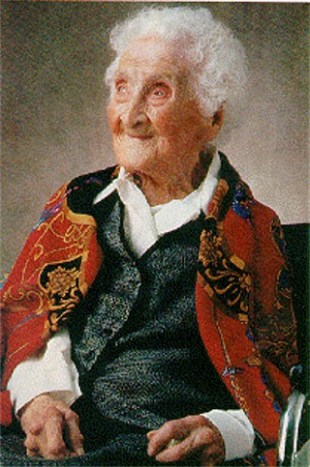
Jeanne Louise Calment is thought to be the world’s longest living person in modern times. She was born in 1875 in France, met Vincent Van Gogh as a young teenager, but eventually died in a nursing home in 1997, 122 years old! She took up fencing at 85, rode a bicycle until she was 100, ate two pounds of chocolate each week and quit smoking at 119 (http://anson.ucdavis.edu/~wang/calment.html). Back in the antediluvian period, in a purer world closer to creation, several lived over 900 years. But in each case, scripture punctuates their earthly existence by saying, “…and he died” (Gen. 5:5).

I have been involved in so many funerals as a preacher, from the first I assisted with Gary Hampton in Gainesville, Alabama, in 1992, until as recently as a couple of weeks ago. What strikes me as much as anything, whether in preparation for it visiting with the family or during slide shows during the service, is watching the progression of life unfolded in photos. Usually they are arranged chronologically, so that the fresh faces of the baby becomes the look of vitality found in children and young adults gives way to the robust strength of early to middle adulthood. Signs of aging subtly appear as the photos fade in and out, the added pounds or gray hairs or the advent of wrinkles. Pictures eventually show frailty and signs of physical deterioration. Then, one in attendance simply needs to gaze at the casket, if present, to see that this once fresh, new physical life does not go on forever.

The writer of Hebrews speaks in hopeful, positive terms to Christians as he proclaims the superiority and potency of Jesus, our great High Priest. At the cross, He offered His own life to “put away sin by the sacrifice of Himself” (9:26). Having a human body, Jesus was destined for death “inasmuch as it appointed for men to die once…” (9:27). Death is unavoidable, but it does not have to be unhinging. Death is followed by judgment, but that day can be the day of salvation realized and eager anticipation (9:28). What happens on the other side of death depends on what we do with Jesus on this side of it.  Whatever we decide, we will make the appointment Turner, Sullivan, Calment, Adam, and billions of others have already made. We must decide if we will meet it prepared.

jeanne_calment_1895

jeanne-calments-quotes-7
Jeanne later in life

DIVIDING OVER POLITICS

Neal Pollard

“Rancor” is synonymous with hostility, bitterness, spite, and vitriol. In Ephesians 4:31, Paul warns the Christian against “bitterness and wrath and anger and clamor and slander [and] malice.” While it didn’t seem possible that this election cycle could produce more heat and saber-rattling than the last couple, it has already exceeded it. It is almost painful to watch the cable news networks, but we should expect the world to behave like the world. Yet, when I see brethren so vehemently defending their candidate and excoriating those who disagree with them, I am truly disheartened. Social media continues to pour gasoline on this already potent fire.

I try to imagine the apostles and early Christians, were they to have such an outlet, tying into one another and beating their chest as they debated each other over the merits of Claudius over Nero, devoting so much time arguing their points about which candidate would better favor the cause of Christianity.  Inspired writers had every opportunity to show such a participation and bias, but they are conspicuously silent. While I do not agree with the extreme that David Lipscomb took in his book On Civil Government, can we not, if we are not careful, veer toward the other extreme through blind allegiance to rulers who, when dispassionately and objectively viewed, honor and demonstrate evil over godliness? Whether it is foul language, deceit and dishonesty, and glorifying sexual immorality (a la Playboy!) or lying, pro-abortion, and criminal behavior, I am baffled as to why a Christian should get so invested in one candidate or exorcised at the other.  May we never prioritize America over our dear brotherhood or our heavenly goal. We gauge that priority by our thoughts, speech, attitude, and actions regardless of what we claim.

As a husband and father for whom the prospect of grandchildren may not be many years hence, I grasp with such personal investment the gravity of this year’s election and the current world situation. Yet, I can let the fear of that eclipse the infinitely bigger picture. What a glorious day it would be if we could steer our consuming passion toward Jesus and the mission He left us!

You may have a decided leaning toward the Republican or Democratic offering in this year’s election. Given this year’s choice, I don’t believe you can cling to either without your hands being very dirty. That being said, may we all be prayerful and imminently restrained in our interchange especially with our brethren and before the eyes of the world. Our unity in truth, our common mission, and our Christian example are eternally more important than politics. Period!

detail-of-american-flag-11279635008nzaN

Misguided Malice

Neal Pollard

I served the Livingston Police Department in Sumter County, Alabama, as a reserve officer for two years. I had a uniform and a badge, though the service I rendered was as chaplain.  The relationship between law enforcement and citizens there was very positive, but I remember talking with officers about the media bias and agenda of liberal politicians they witnessed locally and nationally. This was nearly a quarter century ago, long before the advent of social media and nearly omnipresent camera phones and videos which can be deceptive both for what they show and what they do not. In light of baffling events in Dallas, Texas, and Baton Rouge, Louisiana, in the last few weeks, as well as the inane calls to defund police, it is hard not to think that huge numbers of people have been duped by political rhetoric and a thoughtless mob mentality. While no profession can be completely free of corrupt individuals (who should be found out and prosecuted with full vigor), the existence of law enforcement and peace officers is a vital cog in the wheel of civilization and order in society. Eliminating these agencies is tantamount to removing a fence keeping a pack of bloodthirsty pit bulls from a neighboring playground full of children.

It is a characteristic of worldliness to disdain authority.  The Christian’s attitude and response is to be different. To Christians living in a world with not a fraction of the liberties we enjoy in society today, Paul instructed, “Every person is to be in subjection to the governing authorities. For there is no authority except from God, and those which exist are established by God. Therefore whoever resists authority has opposed the ordinance of God; and they who have opposed will receive condemnation upon themselves. For rulers are not a cause of fear for good behavior, but for evil. Do you want to have no fear of authority? Do what is good and you will have praise from the same; for it is a minister of God to you for good. But if you do what is evil, be afraid; for it does not bear the sword for nothing; for it is a minister of God, an avenger who brings wrath on the one who practices evil. Therefore it is necessary to be in subjection, not only because of wrath, but also for conscience’ sake” (Rom. 13:1-5). There are sobering, inescapable truths here which should be revered by those who are servants of God. God is mentioned five times in these verses, and He is intrinsically tied to earthly authorities. They are from God (1), established by God (1), an ordinance of God (2), and ministers of God (4).

In 2 Timothy 3, Paul tells us the earmarks of difficult times. So many of these traits are evidenced in the growing anarchy of the present day—revilers, unloving, irreconcilable, without self-control, brutal, haters of good, treacherous, and reckless (1-4).  In addition to such attitudes and actions being sinful, they are too often misguided. Police are symbols of law and order, and they are easy targets for those who commit or are effected by lawlessness. It seems that more of our passion and animus should be directed toward criminals and less toward our crime stoppers.

Let us take to heart Peter’s counsel to persecuted Christians and “submit [ourselves] for the Lord’s sake to every human institution, whether to a king as the one in authority, or to governors as sent by him for the punishment of evildoers and the praise of those who do right. For such is the will of God that by doing right [we] may silence the ignorance of foolish men” (1 Pet. 2:13-15). If we can rationalize and argue away this Bible truth, why can we not do the same with any other timeless principle of Scripture? May God help us all to hold tightly to the Light of the Bible, that the world may see how it should respond in this troublesome world.

1185791_10151610389890922_1576500141_n

Peace, Perfect Peace

(Sunday’s church bulletin article)

Neal Pollard

Yesterday, yet another terrorist attack rocked the world. Last week, five uniformed officers sworn to enforce the law and protect citizens, were gunned down by a disturbed individual. Through social media and more traditional media, we have a pipeline to distribute fear and uncertainty as we take it all in. The people we see and talk to daily give growing indication that they don’t know what to think, feel, or do. What a golden opportunity for you and me to give them what they desperately need!

Jesus was telling His disciples that He would soon be leaving them. That was disturbing news for them. So, Jesus gives assurances to them. He tells them the Father was going to send the Holy Spirit to help them. Then, He says, “Peace I leave with you; My peace I give to you; not as the world gives do I give to you. Do not let your heart be troubled, nor let it be fearful” (John 14:27). Let us consider what we possess and are in a position to share.

  • This peace is delivered—“I leave with you”; “I give to you”
  • This peace is divine—“My peace”
  • This peace is distinct—“Not as the world gives”
  • This peace is durable—Prevents us from being “troubled” and “fearful”

These qualities are vital in a world which is ever-changing and increasingly unstable. The world has no anchor or foundation that can adequately address one’s disturbance and distress.  Yet, we have Christ. What He offers the world cannot take away!  Let the vilest do their worst and we can still have peace.

How could Stephen maintain such calm as his killers were literally taking his life? Peace, perfect peace! How could the early Christians relentlessly share Jesus even as they were being scattered from their homes? Peace, perfect peace! How could the New Testament church thrive amidst persecution? Peace, perfect peace!

So, what about us today? It appears that terror and violence are on the rise. Dark clouds seem to be gathering to threaten comfort, calm, and physical and economic security. We would never welcome such a circumstance, but we can certainly weather it! How? Peace, perfect peace!

Consider the lyrics of a few verses of Edward Bickersteth’s beautiful hymn:  “Peace, perfect peace, in this dark world of sin? The blood of Jesus whispers peace within. Peace, perfect peace, our future all unknown? Jesus we know, and He is on the throne. It is enough: earth’s struggles soon shall cease, And Jesus calls us to Heav’n’s perfect peace.” Do you have this peace?

landscape-192985_960_720

Characteristics of Hope

Neal Pollard

An epistle centering around the superiority of Christi as our all-sufficient One would certainly be expected to contain a message of hope. While some had apparently given up Jesus as their hope (6:4-6), the writer of Hebrews had a higher estimation of those to whom he writes. for one thing, they had a legacy of good works and brotherly love and benevolence (6:10). His desire was that they would continue to stay strong. In expressing this, the writer suggests hope as an integral tool to keep them hanging onto their faith in Christ. In these final ten verses of Hebrews six, he mentions three qualities of hope that would help them–and will help us–hang onto our hope in Christ no matter what.

This hope is durable (11). Look at the language he uses. This hope was tied to an assurance that would endure “until the end.” It was a hope that would lead them to “inherit the promises” (12), just as Abraham’s hope in God led him to his inheritance (13-17). God desires to show us, as heirs of the promise through Christ, His unchanging purpose (17), so He guarantees that promise through an oath build upon the foundation of Himself. Hope which is guaranteed by the very nature and character of God is hope that will outlast anything! Nations rise and fall. Presidents serve only one or two terms. Supreme court justices, at most, can serve only a lifetime. Our hope transcends time.

This hope is tangible (18). These Christians needed to count on a refuge in difficult times (see 12:4), and we desire the same thing in our lives! Knowing that God is so trustworthy, we are encouraged to “take hold of hope” that is found only in Christ. To say that we can take hold of hope and that it is set before us means that it has substance. In a world where nothing seems certain, evidence from scripture, nature, order and design of the universe, and so much more allows us, by faith, to grab this hope. He had already told them to hold onto that hope in Christ earlier in the letter (3:6) and to encourage this response he points them to scripture (cf. 3:7-11; Psa. 95:7-11). Scripture helps us see the solid hope we have in Jesus.

This hope is stable (19). It is an anchor. Anchors keep a vessel from drifting, an appropriate illustration since the Christians were tempted to drift from Christ (2:1). By maintaining their hope, they could anticipate three blessings: (1) sureness, (2) steadfastness, and (3) the service of the sacrificial Savior (19-20). All three of these descriptions of this Almighty anchor underline the security found in keeping ourselves anchored in Christ. Those who keep Jesus as their hope are able to weather the most horrific storms of life!

As Christians, we may find ourselves ready to abandon Jesus as our hope. So many things attempt to pull us from Him. Let us draw encouragement from this inspired writer, as surely these first Christians did, and rejoice in these changeless characteristics of hope!

anchor_england_-_scan01