“GM”

Neal Pollard

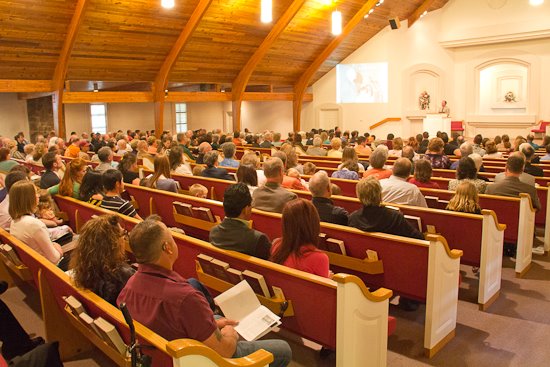
I make a notation “GM” along with the date and place on the paper copy of my sermons to indicate that I preached that sermon in a gospel meeting. It is one of my homemade preacher shorthand notations. Growing up a “PK” (“preacher’s kid,” of course), I’ve got a lot of GM memories. I would not trade anything for them, especially the indelible imprint they made on me in shaping the adult I have become. Let me encourage you to bring your children and yourselves to our gospel meetings for what they will mean to your faith and for the part of you they will forever become. To me, the GM of gospel meeting stands for a few other things, too.

Great Memories. When James Watkins held a meeting for us in 1984 in Franklin, Ga., I led singing that Sunday night. I was 14, and this participation was a big deal to me. I led, “Hallelujah, Praise Jehovah” and in verse three mistakenly bellowed out, “All ye fruitless trees and cedars.” Once when the air conditioner was out, we opened the side doors on either side of the pulpit for relief in that muggy July, west Georgia heat. This was an open invitation for the horse fly that landed on the calf of my leg during the chorus of “the song before our opening prayer,” which bit mercilessly until I could swat it during said prayer (which was by no means a quiet slap).

I remember attending a meeting in Carrollton, Georgia, and being jolted by Bobby Duncan’s dramatic cries of “the boy is home!” in his powerful telling of the story of the prodigal son. I remember, though, I was no more than 5 or 6, the smell of hay and watching members set up a portable baptistery for a tent meeting my dad preached in Aragon, Ga. I remember the family car rides when we rode to others’ meetings. I remember the baptisms, restorations, preaching, and fellowship so much a part of these special times.

Giant Men. Through this venue I first became acquainted with men who became my heroes: Frank Chesser, Perry Cotham, Howard Swann, James Watkins, Bobby Duncan, Truman Cobb, Franklin Camp, Winfred Clark, Wendell Winkler, Glen Posey, Ken Thomas, V.P. Black and others. I remember playing basketball with Ken Thomas, who had to play in his socks and still took us all to school (he also demolished me in a game of “punt, pass, and kick”). I recall having me heart stirred and being convicted of sin by the penetrating preaching of Frank Chesser.

I vividly recall being amazed by Perry Cotham, who seemed to me even three decades ago to be a very old preacher (I saw him preach in California when he was in his late 90s). I will never forget being touched by Franklin Camp’s tender heart as he told the story of Christ’s crucifixion. I was wowed by J.J. Turner’s ability to turn a phrase. There was the time when I walked by James Watkins’ hotel room and saw him diligently studying his Bible in the middle of the afternoon. These men were spiritual giants to me.

Gospel Message. Even as a child, I learned so much from the sermons I heard. I saw things in a new way because every preacher has his own unique style, history of study, and method of delivery. I was challenged by the Bible-centered approach these men faithfully took. I got my first glimpse at sermon organization, taking crude notes and main points from sermonic masterpieces. Meeting after meeting, year after year turned my heart and mind more and more to the Bible. Even then, I saw, at least to a juvenile degree, the effectiveness of this method of evangelism and edification.

Give your children, your mate, your non-Christian friends and neighbors, and yourself the pleasure of experiencing these unparalleled joys. The Godhead and the heavenly host pay particular interest to each service of every gospel meeting. Let us join them there and grow from hearing anew the wonderful story of love. It will stay with you for a lifetime.

dad-gallery-042407

Would Jesus Scrub Grape Juice Stains?

Neal Pollard

Bob Russell tells the story of Dwight Day, a UPS pilot who had come back to church after many years away. Russell walked into the auditorium one day to catch Day scrubbing grape juice stains off the pews. This pilot was an important man with sufficient money to hire someone to do the job, but there he was scrubbing. He “wasn’t too important to clean the pews” (When God Builds A Church, 178).

Who visits the elderly members in the nursing home? Who participates in the workday? Who takes the poor, ill member to a doctor’s appointment? Who prepares the communion? Who teaches the cradle roll class? Who grades the correspondence courses? Who gives a lift to someone who needs a ride to church? Who does the many “invisible,” thankless tasks that must be done for the church to grow and meet its many responsibilities? The servant!

The serving Christian is not necessarily the one-talent, lower-class, uneducated person ill-equipped to do something more “sophisticated” and “important.” These are the kinds of things anyone can do, but only the servant does them. Lest we consider such tasks too menial and such people meaningless, we reflect on John 13. That chapter records the all-knowing, all-powerful Creator of the universe (you can’t one-up that) pouring water into a basin, washing the disciples’ feet and drying them with a towel he had put around Himself (v. 5). They had to have been baffled, this group who had been jockeying for a seat on His left and right hand in the vision of Kingdom greatness they had imagined (cf. Mat. 20:21). What were they thinking as Jesus tells them, “Do you know what I have done to you? You call Me Teacher and Lord; and you are right, for so I am. If I then, the Lord and the Teacher, washed your feet, you also ought to wash one another’s feet. For I gave you an example that you also should do as I did to you. Truly, truly, I say to you, a slave is not greater than his master, nor is one who is sent greater than the one who sent him. If you know these things, you are blessed if you do them.” (12b-17).

This was a gut-punch to them and to so many of us. We can be more interested in getting the good seat than stooping to wash the dirty foot (or scrub the grape juice-stained pew). But we will miss the heavenly definition of spiritual greatness unless we lower ourselves. Jesus told the Sons of Thunder and their mother to remove the worldly gauging of greatness out of their thinking (Mat. 20:25-28). Perhaps He’d have that conversation with you and me, too. May God grant us the humility to see the opportunities and serve as stain scrubbers and every other, similar task that allows Him to use us for His glory. If that spirit permeates a congregation, it will turn the whole world upside down (cf. Acts 17:6)!

broom_sponge_and_towel

That’s The Church For You!

Neal Pollard

  • Where you can build relationships with some of finest, most enjoyable people on earth.
  • Where the world gets smaller and mutual connections are usually a conversation away.
  • Where God’s Word is honored and imperfect people try to follow it.
  • Where Christ is at the heart of every idea, program, and plan, but also every class period and worship assembly.
  • Where you connect with people throughout the week, from thoughts and prayers to cards, calls, messages, and visits.
  • Where hope is always vibrant whatever in the world is happening, where joy is always possible however gloomy the forecast.
  • Where there’s always room for more members to be added to the family.
  • Where young and old, rich and poor, educated and uneducated blend together in a harmony that cannot be found anywhere else on earth.
  • Where we literally get a foretaste of glory divine.
  • Where you feel a part of something so truly profound in purpose and exciting in destiny that sometimes you have to pinch yourself to make sure it’s real. And it is.
  • Where you have clarity and grounding in the midst of chaos and confusion.
  • Where you have heritage and history, but just as much hope and hankering.
  • Where truth is honored, and the way, though difficult, is clear.

A couple of closing caveats. No, I do not think the church, from the human side, is perfect. We have our foibles, fragility, and faults, but our foundation is flawless. No, the church is not a place, it is a people. “Where” indicates that the church, as a body, is a place where I can fit, belong, and function. No, this is not a Pollyanna-like, rose-colored glasses view of the church that glosses over or is ignorant of times when God’s people do not behave like they ought. But, when too often the diatribe is “what’s wrong with the church” and the mantra is, with negative and sarcastic spin, “that’s the church for you,” maybe it’s time we take a moment to count some of the blessings and perks of membership in the institution bought with the life and blood of Jesus (Acts 20:28). Obviously, there are other items to be added to the list. Feel free to do so! Generously.

IMG_2894
At the end of morning worship at the Katy, TX, church of Christ, 4/10/16.

We Sure Love Baptisms!

Neal Pollard

There are some things about social media that are extremely irritating—click baiting, pot-stirring, fight-picking, self-pitying, and the like. But there are a great many positives in that medium, too. Of all of them, I believe that posts of baptisms have to be my favorite. I do not appear to be alone in that estimation.  Judging from post reactions and comments, a great many others do as well. We love it when there are pictures. We love the “back story.” We love knowing that our friends, neighbors, co-workers, and family members have good, honest hearts softened by the power of Divine Revelation. We love knowing they have a clean slate and a fresh start, and are poised to begin their walk on Narrow Road.

All of this leads me to several random observations:

  • True good news needs no hype, trumping, manufacturing, or baiting.
  • It is New Testament thinking to rejoice at such good news (Acts 8:39; 15:3).
  • What a confirmation the obedience of others to the gospel is to our own decision to do so.
  • It restores our faith in the potential of humanity and the power of the gospel (Rom. 1:16; Heb. 4:12).
  • It builds our confidence in the Bible to see people imitate the examples of the New Testament, doing what they did the way they did it (Mark 16:16; Acts 2:38; 8:13, 38; 9:18; 10:48; 16:14-15; 31-33; 22:16; Rom. 6:3-4; Gal. 3:26-27; Eph. 5:26; Col. 2:12; Titus 3:5; 1 Pet. 3:18-21).
  • The average Christian wants what is best for others, which is just one reason Christians are the best people on earth.
  • We want good news to travel fast, far and wide.
  • We know it pleases the Lord when a person comes to Him in obedient faith (see Luke 15).

There are doubtless many more observations we could make, but these are enough for me to thank God for His people and those who daily make the decision to become His people. It builds my faith and hope in my fellow human beings and my trust in heaven’s plan of salvation.  Thank you for finding joy in the right and best things! And let’s keep striving to perpetuate that joy through leading souls to the Savior.

12924440_10207948347340678_5218772026345282016_n
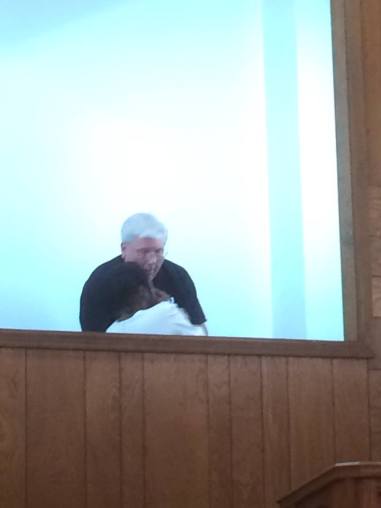
“Debbie” being baptized into Christ during a gospel meeting with Keith Mosher in Sylvester, GA, this week (photo credit: Jason Willis)

How Could He Not Take That Shot?

Neal Pollard

His coach, Jay Wright, and teammates expected and wanted him to take the last shot in the 2016 NCAA basketball championship game. The senior point guard had intentions of doing so, too, but at almost the literal last second he turned and delivered a short pass to Junior Kris Jenkins who sank a three-pointer just before the final buzzer. It was the game-winning shot, lifting Villanova over North Carolina for the Pennsylvania school’s first championship since their legendary victory in 1985. Ryan Arcidiacono, who grew up 20 miles from campus and constantly dreamed of hitting a game-winning shot for the championship, will be remembered, as much as Jenkins, for delivering one of the most exciting games in college basketball history—Jenkins for his beautiful shot and Arcidiacono for his unselfish pass.

For those who know coach Wright’s philosophy, this turn of events is absolutely no surprise. Google “Jay Wright unselfish” and a multitude of articles come up talking about how the coach drills the idea of putting everybody else above yourself from the time kids enter his program. Players earn his trust and confidence by proving themselves converts to his selfless style of play. It is heartwarming to see such values being instilled in impressionable young people.

The local church must adopt the philosophy of its leader, Christ. He modeled it (Ph. 2:5-11) and mandated His followers do the same (Ph. 2:3-4). An atmosphere of unselfishness cultivates spiritual and numerical growth, just as selfishness inhibits such growth. Selfless service is most often bypassed by the world, though most deeply appreciate seeing demonstrations of it. Deference to others is a mark of distinctiveness that must be found in disciples. The better we do this, the brighter the light of Christ can shine through us!

1024px-2005_1104hoopsmania0005

What “We” Do To Achieve Spiritual Success

Neal Pollard

It is an unmistakable emphasis in the book of Nehemiah. The word “we” appears 38 times in 30 of the book’s 406 verses! Working together was the continuous mindset of Judah. They knew such a mentality would ensure success (2:20).

Teamwork accomplishes much more than individual performance! If a ball team has only one “star player,” the defense wins by shutting down the one performer. If the work of the church is carried on by only one or a select few, the devil has a better chance of shutting it down. Everyone must get invested! Success hinges on it. Notice where cooperation in the local church brings spiritual success.

When we build (4:6). Not church buildings, but relationships, knowledge, and commitment. A church has never grown on the back of massive, modern facilities. But, God wants us to build up His church (1 Th. 5:11). The more visits and calls each member makes, the better we build. The more encouragement and assistance we provide, the better we build. More Christians doing more for the Lord produce spiritual success in the church.

When we pray (4:9). Facing trouble and uncertainty, God’s people came together to pray. This is reminiscent of the prayer meeting in the home of John Mark’s mother, “where many were gathered together and were praying” (Acts 12:12). What a success that was! At least 3000 or so were devoting themselves to prayer at the Jerusalem church (Acts 2:42). Preachers, teachers, and missionaries are made bold, the sick and hurting are made hopeful, those in danger, travelers, and those confused are made calm by the prayer of the saints. That is vital to spiritual success!

When we carry on (4:21). Churches encounter setbacks and suffer defeats. Willful sinners going out from among us (1 Jn. 2:19), plans or programs that fizzle or die, disorderly members (2 Th. 3:6), false teachers (1 Pe. 2:1), apathetic members (John 15:5-6), the death or loss of a church leader, or general discouragement can tempt us to give up in our labors (cf. Gal. 6:9). We need each other to spur ourselves on in completing the important works that will glorify God. It is not how many defeats a church suffers, but how well a church, no matter how many “losses,” overcomes them.

When we give (5:12; 10:37). Two interesting instances of giving are recorded in the book of Nehemiah: (1) Giving to restore what was rightfully God’s (5:12), and (2) giving the manner that God rightfully expects (10:37). Church members who will spend generously on dinner and a movie but who give the Savior of their souls comparative pocket change, like Zaccheus, need to repent by restoring what rightfully belongs to God (Luke 19:8). Churches that give by faith and sacrifice are always stronger for it, if their living matches their giving. God wants to be “first” (10:37; Mat. 6:33), and that applies to our giving.

Certainly, many other elements are needed to help a church achieve spiritual success for God. But, Nehemiah and his brethren found success by working together. That spirit of unity will help us, as a church, to go forward and do things necessary for us to continue to be a great church! Let’s grow together!

2176418_02575c1b

HOW CAN WE ENSURE THE CHURCH WILL NOT GROW?

Neal Pollard

  • Talk Up Big Plans And Follow Through With Inactivity. This will build frustration and discouragement. Satanfears not the plan, but rather the working of it.
  • Make No Plans For The Future: Just Accept The Status Quo.  Just hope that the future will take care of itself. Buy into the “is/ought” fallacy: “The way it is is the way it ought to be.”
  • Do Not Practice Church Discipline. Let the disorderly walk unchecked in ungodliness. Let all members see how nonchalantly bad or grossly negligent behavior is treated.
  • Under-appreciate The Leadership. Do not pray for the elders, actively seek to help them, encourage them, express appreciation for them, submit to their authority (Heb. 13:7,17), or respect them. Just expect them to be without flaw or feelings.
  • Do Not Actively Enlist. Allow a small nucleus of folks to do the brunt of the work. Leave the majority of the members in the dark as to how and where to be involved. Ignore the fact that people must be personally invested to be faithful.
  • Pressure Or Allow The Pulpit To Be Form Over Substance. Make sure the preached message is soothing and non-offensive, fostering comfort and expecting little to nothing. Have the pulpit heavy on the social and light on Scripture.
  • Get Into The “Change Extremes”: “Nothing Is Sacred” Or “Nothing Is Changeable.”  Departing from the left or right will kill the church, whether its identity or effectiveness. Buy into every new fad that comes along or suspect and oppose any change which may scripturally improve the life and work of the church.
  • Make Personal Preferences And Opinions Binding. Equate personal discomfort with doctrinal sin. Take presumptuous positions, supposing there is biblical foundation without finding such. Allow the nay-saying of one or two thwart effective, soul-winning, and needed programs.
  • Have No Follow-up Program For New Christians. Let them make their own way to heaven after the water of baptism dries. Have no Bible study follow-up, fellowship mechanism, or other effort to integrate and educate these spiritual babes.
  • Maintain An Unchallenging Budget. Do not risk offending non-sacrificial members. Make plans by sight, not by faith. Do not make ambitious financial goals as a congregation.
  • Be Distant And Unloving With One Another. Confine association and fellowship to the building, and that in passing. Stay out of each others’ homes. Do not visit. Do not build friendships with those of like faith. Do not be involved in one another’s lives.
  • Take “Christ” Out Of Christianity. Be secular and worldly. Fail to be distinctive to a world desperately seeking something different from itself.
  • Ignore The Small And Voiceless. Be it children, elderly members, or the sick and shut-in, let them fall through the cracks of inattention. Treat singles, new Christians, and weak, struggling members as second-class citizens of the Kingdom.

It is easy to arrange things in the local congregation so that the church fails to grow. But, the Lord wants His body to grow. The early church grew (Acts 6:1,7; 9:31). A growing church reflects a church on fire for the Lord’s mission (Mat. 28:18ff) and in focus with the Lord’s desire (2 Pet. 3:9). May we overcome these church-shrinking tendencies and build a great church!

2908804_1b43e842

Ignoring The Symptoms

Neal Pollard

“What is that smell in the kitchen sink?” “Ah, honey, I’ll look at it, uh, soon.” “When?” “Uh…soon.” “It’s been like this for six month now, honey…honey, are you listening to me? Agh! Look, the drain is bubbling…”

“Mr. Smith, when did you first notice the mole discoloring and becoming asymmetrical?” “Well, um, I think it was last fall.” “Why did you wait a year to get this checked out? I’m pretty sure it’s cancer. To be straight with you, Mr. Smith, I don’t know how this will turn out for you.”

“Brother Jones, have you noticed that sister Blue is acting withdrawn?” “Yea, she lost her job last month and her children are grown and gone.” “Brother Jones, I’ve noticed that she’s recently stopped coming on Sunday nights.” “Yea, Brother Jackson, we need to go visit her this week.” “I know. We’ve been saying that…every week.” “Well, we’ll get there.”

May I suggest that none of these three scenarios is likely to turn out pleasantly? Yet, damage and expense to our material things, or even the loss of physical life to a dreaded disease, are not as devastating or frightening as the loss of a soul. The tragedy is that there are normally symptoms that accompany apostasy (i.e., turning away from the Lord). It is not enough to see the symptoms. We must respond in a timely manner.

One symptom is a decrease in faithful attendance. When individuals who would not miss a service choose to do something else, an alarm has been sounded. Something is replacing their dedication and commitment to Christ. When it is odd or noteworthy that someone is missing services, we need to respond with a card, call, or visit. Somehow, let them know they are missed. Do not lay this solely at the doorstep of preachers and elders. These folks need to be inundated with our concern. Run the risk of offending them. Why should they get offended at genuine brotherly love?

Another symptom is a decrease in reliability in doing church work. The tasks they once did and were counted on to do they no longer do with consistency. Maybe they felt unappreciated or overly burdened. Maybe they needed relief or at least a break. Or, maybe spiritual struggles and worldly concerns have overwhelmed them. Whatever explains the cause, respond to the effect. Tell them how important and special they are. Praise their work. Help them. Encourage them.

Yet another symptom is a change in behavior and withdrawal. This is perhaps the most common precursor and symptom in a spiritual struggle. Distancing themselves from the rest of the church family, a loss of enthusiasm for the church, worship, and/or its programs, and a change in personality within the congregation are all telling signs something isn’t right. We are taught that individuals in a marriage are constantly changing. Those same individuals fill our pews and participate in the church’s work. Let us never take each other for granted or ignore this symptom.

Ultimately, it is not the church’s responsibility to stand for an individual in the judgment (2 Cor. 5:10). Yet, we have a mutual responsibility to each other (1 Pet. 3:8). To borrow from the medical analogy above, when one member of the body hurts, we should all respond to help him or her (1 Cor. 12:26). Please do not be blind to the symptoms of those around you. Ask them how you can help. Do not let them spiritually die because of our neglect.

maxresdefault

“Truly In Vain Is Salvation Hoped For From…”


  • A politician or political party.
  • Wall Street.
  • Military might.
  • Our net worth or economic savvy.
  • Government programs.
  • The second amendment.
  • Popularity and fame.
  • The worship of nature.
  • Exercise and fitness.
  • The appeal of our good looks.
  • Walls.
  • The importance of our occupation or position.
  • Our national identity.
  • The Supreme Court.
  • Ethnicity and race.
  • Science and technology.
  • Any religious figure besides Jesus Christ (even those claiming to represent Him).
  • Family members and friends.

In Jeremiah 3:23, the prophet writes, “Truly in vain is salvation hoped for from the hills, and from the multitude of mountains: truly in the Lord our God is the salvation of Israel.” Jeremiah’s brethren put all their eggs in the wrong baskets. They neglected to see where true hope was found and where saving faith was to be put. Their misguided trust led to their downfall. It cannot be otherwise in any generation, including our own.

We may never say we put our trust in anything besides God, but “the proof is in the pudding.” We demonstrate what’s first and foremost to us every day, in word and deed. Ultimate deliverance from our greatest trials, struggles, and challenges comes from only one source. Jeremiah succinctly identifies it.  Is that what you are trusting? If so, let’s make sure everyone who knows us knows that!

—Neal Pollard

11800435_10153091791310922_2631856048550949852_n

What The Israelites Lost Besides Canaan

Neal Pollard

If you were to ask the typical Bible student what the consequences of Israel’s following the foolish counsel of the ten negative spies, you might hear talk of the wilderness wandering or the fact that God denied them the Promised Land. This was truly, from a physical standpoint, the most visible result of their faithlessness. Yet, looking closer, the Israel of that generation lost much more. They teach us today what not to do in doing the Lord’s work.

–They lost proper perspective. Who did Israel send to Canaan? Every tribe sent a “leader among them” (Num. 13:2; lit., “An exalted one; a king of sheik; captain; chief”). Also, who was Israel? They were not a people chosen of God because they were the biggest, strongest, or fiercest nation, but because God loved them (Deu. 7:7)! But, when Israel goes into Canaan, they walk by sight (Num. 13:28,32) rather than faith. They saw the giants, not the God who made them. They saw themselves as grasshoppers (Num. 13:33), not God’s people! They saw by fear and not by faith.

So often, today, we set our aim too low because our perspective is skewed. We launch out as far as we can see and go no farther. This hamstrings our budgets, our goals for evangelism, and the extent of our involvement in needed works. If we focus solely on ourselves, we become latter day followers of the Israel described in Numbers 13.

They lost sight of their purpose. Why had they left Egypt? At the bush, God told Moses (Exo. 3:8,17), and Moses, between the Red Sea and Mount Sinai, told Israel (Exo. 13:5). From the days right after their exodus from Egypt, Israel knew she was journeying toward Canaan. Certainly, she was prone to get sidetracked, as when Aaron led the calf-building project (Exo. 32) and when the people periodically, bitterly complained (Exo. 15-17). But, they ultimately plodded up to the precipice of the Promised Land. They camped at the corner of Canaan. This was where they were going. What happened? A few challenges, formidable as they might have seemed, derailed them. Rather than occupy the land God promised them, “They said to one another, ‘Let us appoint a leader and return to Egypt'” (Num. 14:4). How exasperated with them God must have been!

Do we get like that today? Our purpose for being on this earth, to win souls (Mat. 28:19), help our brethren get to heaven (Jas. 5:19-20), help people in need of it (Jas. 1:27), and save ourselves (Acts 2:40), can get lost in the shuffle of career success, material gain, worldly acceptance, and even the material rather than the spiritual concerns within the local work of the church. Why are we here?! That determines where we go from here!

They lost the sense of their identity. They were God’s special people. He had covenant with them and they with Him (Exo. 24). They were God’s children. Exodus 6:7 captures succinctly God’s sentiment toward Israel, where God says, “And I will take you to me for a people, and I will be to you a God.” Nobody could defeat them. Nobody stood a chance before them. They were the hands and feet of God on the earth. No army stood a chance against them. They could have recalled Egypt as “Exhibit A” of this (Exo.. 15:4; Heb. 11:20). Instead, when they looked in the mirror of fear, they saw themselves as grasshoppers.

Christians are God’s people. We are the Lord’s army (Eph. 6). Can you think of fighting for a more powerful ruler? We are the body of Christ (1 Cor. 12; Col. 1:18). Can you think of a healthier, stronger organism? We are branches of His vine, and the Father’s the farmer (John 15). No drought, pest, or conditions can keep us from being weighed down with fruit for Him! Yet, we have got to conquer the cricket concept if we want God to be pleased with us!

We are able to do more for the Lord, and we are able to do it better. But, this requires our enthusiastic, wholehearted participation in the work of the church. Don’t let the giants of time, apathy, inaction, and distraction turn you back. Through Christ we can do all the things He’s already commanded us to do! On to the milk and honey!

elah_valley_below_adullam

The Same Minute From Many Perspectives

Neal Pollard

A visitor comes to worship services for the first time. This person is searching for meaning, purpose, and answers, perplexed and troubled by life and wanting to know the way. The services have already started, and the visitor slips into the first vacant seat available. This one is intrigued and engaged by what has gone on, benefiting from the preaching, appreciating the singing, and eventually standing with everyone else for a final, uplifting prayer. The visitor has experienced enough to consider returning. The prayer concludes, and the visitor, with everyone else, begins to head for the aisle.

So much, good or bad, can happen in these next 60 seconds.

  • The visitor, not knowing a soul, either stands or slowly walks out of the auditorium, hoping for a friendly face, a smile, or words of kindness and encouragement.
  • The family seated next to the visitor have wrestled their baby throughout services. Exhausted and flustered, they hurry past the visitor never making eye contact.
  • Several members, each on an important “mission,” walk past the visitor to talk to that person or do that thing that, if they don’t hurry, they’ll forget or miss.
  • The visitor does make it to the preacher, shaking his hand and thanking him “for the service.” While standing with the preacher, the visitor notices a handful of those who are apparently members warmly greeting the preacher but feeling the full force of being treated as if invisible by them. These folks are good folks, but they just aren’t observant (or accustomed to being “on the lookout” for visitors).
  • Moving past the preacher, the visitor encounters the eye contact of a few people who politely smile or even say hello. These good people wonder if this is a member, someone they should know, and, afraid to offend this one, do not follow up with conversation.
  • The visitor walks past a shy member, one who would like to greet the visitor but who is afraid of being embarrassed in some way.
  • As the visitor departs, ignored by and large and concluding that while the services were unique and intriguing the people were cold and unfriendly, God looks down from heaven. He has seen that last minute unfold. He knows the tagline under this church’s bulletin masthead asserts that this is the friendliest church in town. He watches members who know one another and are comfortable with each other laughing and talking together, wanting to be together, but are oblivious to the precious opportunity embodied in that visitor. God sees that visitor as a soul precious enough to give His Son for, an impressionable person reached or rejected by the reception (or lack thereof) made by His people. He knows this visiting one has heard truth and experienced worship in spirit and truth, but that this one also believes that the participants are exclusive and disinterested.
  • The devil has to be delighted that this visitor leaves dejected and resentful, determined not to visit that unfriendly congregation again.

Though I would like to say that the scenario above is far-fetched and purely fictional, it is one I have seen play out repeatedly over a quarter-century as a preacher.  Our efforts (or lack thereof) to engage and show interest in those who visit our assemblies is our only opportunity to make the first impression redeemed, soul-conscious Christians should make. We must never assume that it’s others’ job to or that others are doing the job of making our visitors feel appreciated and welcomed. What if every Christian present would take every opportunity presented to make every visitor feel as though they’ve “come home” when they come to our services? Will you consider what you do with your first minute after the last “amen”? Who knows the eternal difference it will make, especially with some soul searching for the Savior?

5624179647_50a421d605_o_d

Live Beyond Yourself


Neal Pollard

“Two little lines I heard one day,
Traveling along life’s busy way;
Bringing conviction to my heart,
And from my mind would not depart;
Only one life, ’twill soon be past,
Only what’s done for Christ will last.”

The first stanza of the powerful, convicting poem by C.T. Studd has been the seeming anthem of one of God’s great, 21st Century spiritual warriors, Cy Stafford. I first met Cy around 2000, and his balanced, measured information and guidance helped us identify and deal with a false teacher in East Africa. His interest and concern were for the Christians, new and more seasoned, who might be impacted by this man’s influence.  That godly zeal for God’s people was an indicator of the mind of a missionary, minister, and mentor of men.  The subsequent years have shown me what a true leader and visionary, with God’s help and to God’s glory, can accomplish. Cy is not larger than life, gregarious, charming per se, or glossy in any way. He is steady, focused, and determined.  He has helped change the world by equipping men and women to reach the world. Alongside so many missionaries and Christians indigenous to East Africa, Cy has steadily worked to grow the church and its influence where some of the earth’s poorest and humblest people live.  He often has spoken of the window of opportunity that daily shrinks and he has worked with an urgency to do what he can to make sure everyone has the opportunity to hear the gospel at least once.

Cy and Stephanie have made countless sacrifices of time, comfort, safety, and security because their mission was far broader than themselves. While some in ministry appear motivated by self-interest, self-promotion, and self-absorption, the Staffords have valiantly sought to put the spotlight foremost on Christ and then upon others’ needs.  On whatever day each exchanges the cross for the starry crown, their legacy will have been that of living beyond themselves.   What a convicting challenge to each of us to engage in thoughtful self-examination! What is my agenda? What is my aim? What is my aspiration?

“Give me Father, a purpose deep,
In joy or sorrow Thy word to keep;
Faithful and true what e’er the strife,
Pleasing Thee in my daily life;
Only one life, ’twill soon be past,
Only what’s done for Christ will last.”

Hebrews 11 speaks of great Old Testament heroes of faith who lived and died as those with a “desire” for “a better country, that is, a heavenly one…” (16). These same ones are called “strangers and exiles on the earth” (13), whose sight was set much higher than self. The whole of the New Testament reveals that a heart set on heaven will reside in one who also has his eyes on others (cf. Phil. 2:3-4). All too rarely do we receive such vivid examples of individuals who have so fully committed themselves to the Great Commission, who challenge us to imitate them in living beyond self. Cy is one of the best examples of this I will ever know.

“Only one life, yes only one,
Now let me say,”Thy will be done”;
And when at last I’ll hear the call,
I know I’ll say “twas worth it all”;
Only one life,’twill soon be past,
Only what’s done for Christ will last. “

God, give us more Christians like Cy Stafford! Let that begin with me.

cy and stephanie

CHURCH GROWTH STARTERS

Neal Pollard

  • Offer “medical missions” benevolent campaign in the neighborhood, utilizing the talents of members with medical expertise.
  • Have a worship leadership training class.
  • Incorporate periodic explanations about the purpose and biblical foundation for the acts of worship and the invitation during the worship services.
  • Have an elder/deacon intensive training class.
  • Host community Bible studies in various homes on a regular basis, inviting friends, co-workers, neighbors, unchurched family, etc.
  • Have a benevolent financial planning and strategies seminar, utilizing the talents of members with accounting and other finance-related skills and backgrounds.
  • Have a “special events Sunday,” where a special contribution is taken to fund evangelistic events for the year.
  • Host a website, which you advertise to the community, soliciting religious questions they have on their minds (for an example of this, see 12questions.net—hosted by the Mount Juliet church of Christ).
  • Utilize deacons to identify the talents of new members and new Christians, and then look for ways to leverage them.
  • Start a “come back home” campaign to retrieve erring and fallen away members.
  • Create a bumper sticker that identifies the congregation concisely and in a way that would draw community interest. The Palm Beach Lakes congregation has seen several baptisms from such an effort (pblcoc.org).
  • Make the church website current, interactive, and informative, not just about churches of Christ as a whole but what makes the local church relevant to people’s needs.
  • Give the teens an evangelistic project (teen gospel meeting, teen visitation program, feeding the homeless, etc.).
  • Incorporate as many members as possible in grading Bible correspondence courses (for students both foreign and domestic).
  • Plan, publicize, and promote a Sunday for every member in the directory to be present for worship, then use that day to present the plan and work of the church.
  • Train and use members to “carry” visitors from the parking lot to the dinner table, adopting visitors and helping them find classes and seats in the auditorium as well as connecting them to other members.
  • Keep your eyes peeled for new faces, stepping out of your comfort zone to meet and greet them. Be prepared to follow up and help them meet others, too.
  • Pray about ways you can be more involved in the work of the church and ask the leadership for ways you can be put to work.
  • Make a list of members and visitors that you can influence and encourage, then utilize it.

Things That Get The Church Excited

Neal Pollard

I grew up in the church, and something I learned long ago is that the majority of God’s people want to serve and please the Lord. There are sin problems we fight, doctrinal confusions we must confront, personality issues that arise, and distractions that sidetrack us far too often, but many times we fail to recognize and acknowledge that, with proper direction, a great many Christians are ready to mobilize and be about our Father’s business.  While the elders, deacons, and preachers have been frequently meeting together for the last couple of years to plan and organize the work here at Bear Valley, we have discovered so many positive things about each other. We are closer to each other and more excited about the church’s work.  We care more about the lost and the saved, and we are eager to prove it and spread that attitude congregation-wide.  As we have met and excitement has continued to build, I have been reminded of some basic, vital things that creates such an environment.  Here are three needed things I believe that still get the Lord’s people excited.

Purpose.  Have you ever heard a sermon on the church’s work and purpose? Of course! And bulletin and periodical articles, Bible classes, and gospel meetings and seminars. We talk a lot about purpose, but when you take tangible steps to accomplish the saving of souls, non-Christian and Christian souls, and meeting genuine needs you get excited knowing that you are partnering with God to do His will on this earth. Often, you have to measure progress in baby steps, but when you can look over an increment of time and see progress, it is absolutely exciting!  When Barnabas worked with Antioch, he “encouraged them all that with purpose of heart they should continue with the Lord” (Acts 11:23).  Purpose of heart still encourages the church!

Unity.  I’m not talking cheap union that is built upon nebulous, conviction-less coexistence, but unity built solidly upon the bedrock of truth!  That kind of unity is forged by having the difficult discussions, teaching the whole counsel, and striving together to fulfill the will of God.  When you couple doctrinal conviction with the aforementioned purpose, the net result is a unity that excites!  Joining with others who have the faith to take God at His word emboldens and propels you forward to do great things, right things, that glorify Him.  The inspired David point this out, saying, “Behold how good and how pleasant it is for brethren to dwell together in unity!” (Ps. 133:1).  Tell me that is not exciting!

Leadership. Who sets the pace in articulating purpose and urging unity? Leaders! We know who leaders are. They are the ones leading.  They know where they are going and how to get us there, too.  We hear their voice and are eager to follow.  We are not willing to blindly follow those who are not right behind the Chief Shepherd, but those who are, in word and deed, we are willing to follow even through thickets and brambles. We trust them. We believe in them.  In fact, “We esteem them very highly in love for their work’s sake” (1 Th. 5:13).  God has designed elders to be those “senior leaders,” and He expects us all to be growing our spiritual influence and example.  It’s exciting to be a part of a church full of people conscientious about their influence!

I’m not unrealistic or purely idealistic.  I know that the Devil is unhappy with the church who is actively working to fulfill God’s purpose, being united in truth, and possessed of church leaders who have Christ as their pattern. We can let selfish ambition and improper motivation undermine the Lord’s will.  But, let’s not be unmindful of how great the work is and how great our opportunity to partner together with Christ and Christians to do it. It’s exciting!

IMG_1778

HOW TO MAKE GOD SICK

Neal Pollard

When speaking of God’s attributions and actions, the Bible often resorts to a literary device called anthropomorphism (where human characteristics or behaviors are attributed to God—“the hand of God,” “the eyes of the Lord,” etc.).  But, there is one personification that’s absolutely terrifying.  Jesus utilizes it in describing the spiritual condition of Laodicea. He says, “I know your works, that you are neither cold nor hot. I could wish you were cold or hot. So then, because you are lukewarm, and neither cold nor hot, I will vomit you out of My mouth” (Rev. 3:15-16). Some translations, knowing “vomit” is felt to be too strong and graphic to the sensitivities of some readers, have gone the more antiseptic route by translating it “spit.”  But the Greeks had a word for the phrase “spit out” (you find that word translated in John 9:6, Mark 7:33, and Mark 8:23).

It has been said that what makes God sick often is what makes our culture tick. When you look at the Laodiceans, they were guilty of the following:

  • Indifferent to mission (Rev. 3:15-16).
  • Incorrect in self-analysis (Rev. 3:17).
  • Insensitive to need (Rev. 3:17).
  • Impenitent (Rev. 3:19).

Certainly, the world is blind to God’s purpose for their lives, is numb to its true spiritual condition, and is deaf to the biblical plea to repent and depend on God and His will. But these words are directed to Christians as a warning to us.  Our mission is to engage in the work He has us on earth to do, which is not to accumulate wealth, indulge in fleshly pleasures, and pursue the honor and praise of this world. Our need for God’s strength and help every step of the way must drive us to depend on Him and repent of a lack of zeal for and involvement in the work He has called us to do as Christians.

When we get so wrapped up in this world that we ignore His mission, when we get so conditioned to rely on our assets and attributes that we ignore His power, and when we get so hard-hearted that we ignore His grace and forgiveness, we make God sick.  No matter how you look at that, the very thought is just chilling! He loves us, pleads with us, and wants to reward us (Rev. 3:19-22). But that requires us to live differently from those ancient Laodiceans. We must let Scripture properly diagnose our spiritual condition or it will make God sick.

Baptized Boys And Bible Class

Neal Pollard

1 Timothy 2:11-14 clearly states, “A woman must quietly receive instruction with entire submissiveness. But I do not allow a woman to teach or exercise authority over a man, but to remain quiet. For it was Adam who was first created, and then Eve. 14 And it was not Adam who was deceived, but the woman being deceived, fell into transgression.” Herein, God through Paul limits the role of woman in the work and corporate function of the church. Therefore, she is not to have authority over the man–in whatever circumstance that applies (be it Bible class, worship, matters of organization, i.e., deacons, elders, preachers, etc., or in the home). The loud voices of feminism notwithstanding, God has clearly spoken. This matter is not cultural. It is a principle that goes all the way back to Eden.

However, an unfortunate conclusion drawn by some based on this text (and others, like 1 Corinthians 11:3 or 14:34, for example) is that a Christian woman cannot teach a baptized boy in a Bible class. There are several reasons why this conclusion is flawed.

First, it misses who is in included in 1 Timothy 2:12. The Greek word translated “man” is the verse specially means “man, husband, sir.” All males are not under consideration. The Greek has words for child, including “infant” or “half-grown child” (Mat. 2:21), “child,” “son” or “daughter” (Mat. 10:21), and “young man” (Mat. 17:18). None of those words is used in 1 Timothy 2:12. The Holy Spirit chose the specific word meaning “adult man.”  Boys eleven or twelve are not men!

Next, none practice this conviction in the home. If we believed 1 Timothy 2:12 taught that baptized boys were men, then we should also teach that their mothers can no longer instruct, admonish, or “be over” them as parents. If that adolescent son invites another baptized boy to spend the night, can this Christian mother “have authority” over the visiting boy? If this woman can teach her son the Bible at home, why can she not teach him in a Bible classroom at the building? In this case, what makes it wrong in the classroom would make it wrong at home. If not, why not?

Then, a baptized boy is nowhere else considered a man. He is not considered such to the military, the corporate world, at home, at school, to the DMV, or anywhere else. His status has changed in that, if he is truly accountable, he has gone from lost to saved. However, the water no more makes a boy a man than it makes a woman a man.

It is not sinful to personally hold the conviction that a Christian woman should not teach a baptized boy. It is not wrong for the elders, in their judgment, to have men teaching Bible classes where there are any baptized boys. Yet, we had better be careful not to bind an opinion as truth. When boys reach their teenage years and undergo the process of changing into men, it is wise to place Christian men over them in the classroom. At some point, he matures to the point of manhood and 1 Timothy 2:11-12 would forbid a woman to teach him. Yet, having a woman teach a baptized, prepubescent boy in a Bible class is not “questionable” or “unsafe.” He is still a boy in the classroom, just as he is anywhere outside of it.

In An Average Assembly, You’ll Find…

Neal Pollard

  • Brand new Christians
  • Young parents
  • The unemployed
  • Spiritual leaders
  • Those struggling with worldliness
  • Someone diagnosed with a serious condition
  • Strugglers with addiction
  • Couples with marital troubles
  • Those with loved ones no longer faithful to Christ
  • Widows/widowers
  • Someone who has been deeply hurt or betrayed
  • Those in serious financial debt
  • Those who are the only Christians in their family
  • Someone facing an enormous life change
  • Some who are experiencing great successes and good news
  • Empty nesters
  • Retirees
  • Community and business leaders
  • Those who grew up in the church
  • Expectant parents
  • Racial minorities
  • The highly educated
  • Extroverts
  • Introverts
  • The emotionally fragile
  • Singles
  • Divorcees
  • Those bearing burdening secrets
  • People brimming with optimism
  • Nurturers
  • Takers
  • Critics
  • Encouragers
  • The easily distracted
  • Those forced to attend
  • Hard working servants
  • The dutiful
  • The physically and mentally challenged
  • Daily Bible students
  • Non-Christians
  • Those who need to make serious spiritual changes
  • The lonely
  • Those without formal education
  • Smilers
  • Scowlers
  • The impatient
  • Notetakers
  • Probably 10,000 other “subcategories”

But, do you know what’s so amazing?  God knew that His single volume, the Bible, could reach into the hearts and lives of everyone of them through a single medium.  He calls it preaching (1 Cor. 1:18-25).  It worked 2000 years ago.  It works today.  What an awesome God to meet us right where we live through a message and means that fills our every longing.

The Word Is “Relationship”

Neal Pollard

Soon, we’ll have lived in our current home for two years.  We are enjoying the house, the location, the neighborhood, and most of the neighbors. However, one that lives pretty nearby has proven less than pleasant.  His wife is an officer in our neighborhood HOA, and each month’s newsletter is a new posting of the hierarchy’s “95 theses.”  Hardly anyone can keep from committing at least one infraction—certainly not us.  They’ve had very little communication with us except when the husband complained that our compost pile was too close to the fence (on the other side of which were his garbage cans).  Recently, while seeking our permission to re-paint their house, he took the opportunity to inspect the state of cleanliness of our garage.  I share his desire that we keep our homes and yards in good shape, as property values are riding on our collective interest in such.  The problem for them is that they have spurned our efforts at a relationship and they have done nothing to create one themselves.  Thus, we tolerate and peacefully co-exist.  But, there is no relationship.

Have you thought about how vital relationships are to our lives?  Think about how ineffective we are with people without them.  At best, we are mere associates. At worst, we become antagonists.  Think of how vital the entity of relationship is to:

  • Marriage (1 Pet. 3:7).
  • Parenting (Deu. 6:1ff).
  • A congregation (1 Th. 5:11).
  • Shepherding (John 10:4-5).
  • Church discipline (2 Cor. 2:6-8).
  • Restoring the erring (Gal. 6:1-2).
  • Preaching (2 Tim. 2:24-26; 4:2).
  • Church works (Eph. 4:16).
  • Deacons’ work (Acts 6:7).
  • Soul-winning (Col. 4:2-6).
  • Friendship (Prov. 18:24b).

Taking the time to build rapport may be mentally and emotionally exhausting at times.  The best of relationships will have their downs as well as their ups.  But God created us social beings not meant for isolation (Gen. 2:18).  Joel O’Steen is shallow and superficial in his “preaching,” but tens of thousands of people are drawn to him because they find him relatable. His message is deadly, but his method is engaging.  Some who consider themselves the staunchest “defenders of the faith” are virtual porcupines with their quills primed to stick those in their proximity.  Surely those of us striving to follow New Testament Christianity can strive to build relationships while we steadfastly teach and follow the truth.  How much more effective will we be as we conquer this principle every day?

Do You Love Your Country?

Neal Pollard

Are you one who looks back with affection,
Reminiscing about days of yore?
Waving flags and praying for protection,
For your nation from shore to shore.
There are songs and celebrations sweet
Speeches that rouse the emotion
Fierce loyalty for the land beneath your feet
That inspires a most patriotic notion

But what about the better land beyond,
The place you can truly call your own?
Is that yearning great, is that hope fond,
To live in the land of the Risen Son?
If so, are you packing and preparing
For the journey that will reach beyond time?
Down here do you feel alien and wayfaring?
Is citizenship there of importance most prime?

Join a people most ancient whose love was great
For a better, a heavenly country
Who felt like exiles here, were the object of hate
By earthly counterparts who put their scorn bluntly
Fix your eyes on a grand immigration
Made possible by the Great Emancipator
Make sure you’re a member of the holy nation
And your eternal home will be infinitely greater.

Ft. McHenry (Maryland)

Should We Let The Devil Make The Rules Of Engagement?

Neal Pollard

Thanks to the hospitality of my good friend, Jason Jackson, I had the opportunity to visit beautiful AT&T Park in San Francisco, witnessing a rarity (a Rockies win) against his beloved Giants.  It was LGBT Night at the old ballpark, an annual sponsorship of “SF Pride.” It was also the day of the historic Supreme Court decision mandating the recognition of same-sex marriage in all 50 states. The crowd was enthusiastic about that event in Washington, D.C., cheering when it was proclaimed over the P.A.  The videoboard featured gay and lesbian couples for its “kiss cam.”  While San Francisco is renowned for its “sexual progressiveness,” the city of Denver has earned a reputation for similar liberality of thought regarding homosexuality. In a growing number of places in our nation and especially among those under a certain age, there is welcoming, sanctioning language for homosexuality and vehement intolerance for the least word of condemnation of the behavior as sinfulness.  Even among those professing to be Christians, there is a changing posture in how or if it is dealt with.  Understanding that no sin is worse than any other, that it is not right to display an ungodly attitude in addressing any sin, and that there should not be an inordinate amount of time, attention, and energy given to any sin to the exclusion of the other, I wonder if even some of our Christian brothers and sisters have become unwitting pawns of the prince of this world regarding this matter.  The devil is at war against the Word and will of God, and he is at war against anyone loyal to such (Rom. 13:12; 2 Cor. 10:3-6; Eph. 6:10ff; etc.).  He wants his cause, the ultimate end of which is the spiritual destruction of all men, to succeed, and he wants the cause of Christ to be overthrown.  We know that his mission will ultimately fail, with there being those who are welcomed by our Lord to heaven (1 Cor. 15:24; Mat. 25:34-39). Yet, most will follow him to everlasting punishment and destruction (Mat. 25:41-46).  He has the bulk of the resources and influence of this world, as he almost always has had in every generation. He has powerfully allies and mouthpieces from Washington to Hollywood and most media and education outlets in between.

  • Who is behind the idea that we are not loving the sinner when we speak of homosexuality as sin?
  • Who would have us believe that we are mean-spirited or unrighteous if we use terms like “unnatural” (Rom. 1:26), “exceedingly grave sin” (Gen. 18:20), “ungodly” (2 Pet. 2:6), “gross immorality” and “going after strange flesh” (Jude 7) to describe homosexual behavior?
  • Who would sell us on the idea that loving the homosexual means keeping quiet about their practice of it, failing to warn them to repent (Ezek. 33:8)?
  • Who would seek to equate a behavioral choice (1 Cor. 6:9) with one’s race or skin color (Acts 17:26; Acts 10:34-35)?

What happened in our nation’s highest court last Friday may have been necessary to shake the church out of its general lethargy and indifference regarding evangelism.  What happened there will ultimately be overruled in the highest court there is (Mat. 25:31ff).  What happened there should not become our obsession, but neither are we wrong to take note of how this is a significant societal erosion.  Jesus implies how intolerable it would be for Sodom and Gomorrah at the Judgment (Mat. 10:15). The Lord overthrew them in “in His anger and in His wrath” (Deut. 29:23). Homosexuality is not the only sin there is nor is it the chief sin, but may we not be intimidated away from calling it what it is—“sin.”