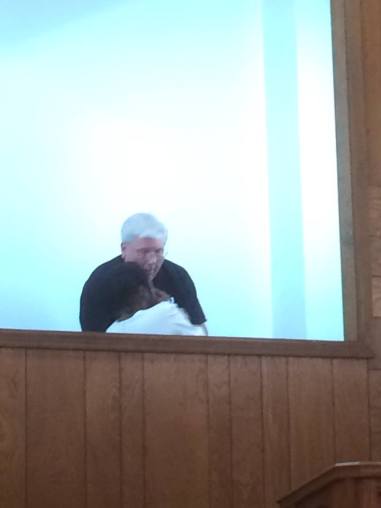
That’s The Church For You!

Neal Pollard

  • Where you can build relationships with some of finest, most enjoyable people on earth.
  • Where the world gets smaller and mutual connections are usually a conversation away.
  • Where God’s Word is honored and imperfect people try to follow it.
  • Where Christ is at the heart of every idea, program, and plan, but also every class period and worship assembly.
  • Where you connect with people throughout the week, from thoughts and prayers to cards, calls, messages, and visits.
  • Where hope is always vibrant whatever in the world is happening, where joy is always possible however gloomy the forecast.
  • Where there’s always room for more members to be added to the family.
  • Where young and old, rich and poor, educated and uneducated blend together in a harmony that cannot be found anywhere else on earth.
  • Where we literally get a foretaste of glory divine.
  • Where you feel a part of something so truly profound in purpose and exciting in destiny that sometimes you have to pinch yourself to make sure it’s real. And it is.
  • Where you have clarity and grounding in the midst of chaos and confusion.
  • Where you have heritage and history, but just as much hope and hankering.
  • Where truth is honored, and the way, though difficult, is clear.

A couple of closing caveats. No, I do not think the church, from the human side, is perfect. We have our foibles, fragility, and faults, but our foundation is flawless. No, the church is not a place, it is a people. “Where” indicates that the church, as a body, is a place where I can fit, belong, and function. No, this is not a Pollyanna-like, rose-colored glasses view of the church that glosses over or is ignorant of times when God’s people do not behave like they ought. But, when too often the diatribe is “what’s wrong with the church” and the mantra is, with negative and sarcastic spin, “that’s the church for you,” maybe it’s time we take a moment to count some of the blessings and perks of membership in the institution bought with the life and blood of Jesus (Acts 20:28). Obviously, there are other items to be added to the list. Feel free to do so! Generously.

IMG_2894
At the end of morning worship at the Katy, TX, church of Christ, 4/10/16.

“He Shot Me”


Neal Pollard

I want to preface this story by saying that, of all my siblings, I probably got away with more than the other two combined.  However, on at least one occasion, I was punished for something I did not do.  My brother was about four years old, and he, some neighborhood buddies, and I were playing war.  Brent had a toy Kentucky rifle, while I was toting my new, unloaded Daisy B-B gun.  Perhaps my parents had worried that at nine years old I was too young for such a potent weapon, but they allowed me to own it.  In the heat of battle, Brent and I converged around the corners of our house.  I aimed and fired.  He fell down to play dead for the obligatory “five Mississippis,” but he fell on the sight of that Kentucky rifle.  This led to perhaps the quickest peace treaty in the history of boys playing war.  Brent had a nasty gash under his eye and very nearly did permanent damage to himself.  When Dad and Mom asked what happened, he said, “Neal shot me!” You, Brent, and I know what he meant, but seeing things from their point of view they concluded I had fired a B-B that produced the gaping wound.  These were the last moments between my Daisy and me.  Soon it was a mangled heap of metal.  Dad felt terrible when he understood what Brent meant.

Before you wag your head in disbelief at how this was handled, consider a few facts.  The Sunday before, another buddy and I had been putting Easter eggs on the chain link fence at our property line for target practice.  We did pretty well, though we were oblivious to the fact that we were putting small dings in my buddy’s stepfather’s new 1979 customized Chevy van.  It was another thirty feet beyond the eggs.  I escaped any punishment for that one.  Dad had shown me how to safely use the gun, but I had my own ideas.  The target practice example was my worst but not my only.  I was destined for a date with a demolished Daisy.  My track record caught up to me.

Paul deals with “track records” and character with his son in the faith.  He had been teaching Timothy about how to deal with sin in the latter part of 1 Timothy five.  Public sinners were to be rebuked publicly (20).  Yet, dealing with others’ sins was to be done prudently to avoid sharing responsibility in their sins (22).  The rebuking one was to keep himself free from sin (22b).  Then, Paul ends by writing, “Some men’s sins are clearly evident, preceding them to judgment, but those of some men follow later. Likewise, the good works of some are clearly evident, and those that are otherwise cannot be hidden” (24-25, NKJ).  In context, Paul is guiding Timothy in the investigating of those who would serve as elders.  Prudence and deliberation, in looking into their character, was vital.  Jumping to conclusions too quickly, whether too charitably or too severely, was unwise.  To help Timothy, Paul emphasizes that character often becomes apparent after sufficient examination.

By way of broader application, isn’t the same true of all of us.  As Jesus once put it, “Yet wisdom is vindicated by all her children” (Luke 7:35, NASU).   John and Jesus had been wrongly rejected by the Jews, but time and fruit would eventually exonerate the character of each.  That is, those converted through their work would prove the rightness of their teaching.  This would require the test of time and sufficient proving grounds.

Is one preaching for fame, glory, wealth, or power?  Look long and hard, with a good and discerning heart.  You will often see.  Is an elder serving through selfish ambition, to wield power, or out of materialistic greed?  It often comes to the surface.  Why are we Christians?  Why do we serve God?  It so often comes to light in this life.  Yet, whether it does in this life or not, it will ultimately.  Let us strive to keep watch over our hearts (cf. Mark 7:20-23).  Let us constantly purify our motives (cf. Eph. 6:5-8).  Remember that character will be tested.  Strive to do what is right even when you are not seen by others, and character will usually be apparent.

copper2

We Sure Love Baptisms!

Neal Pollard

There are some things about social media that are extremely irritating—click baiting, pot-stirring, fight-picking, self-pitying, and the like. But there are a great many positives in that medium, too. Of all of them, I believe that posts of baptisms have to be my favorite. I do not appear to be alone in that estimation.  Judging from post reactions and comments, a great many others do as well. We love it when there are pictures. We love the “back story.” We love knowing that our friends, neighbors, co-workers, and family members have good, honest hearts softened by the power of Divine Revelation. We love knowing they have a clean slate and a fresh start, and are poised to begin their walk on Narrow Road.

All of this leads me to several random observations:

  • True good news needs no hype, trumping, manufacturing, or baiting.
  • It is New Testament thinking to rejoice at such good news (Acts 8:39; 15:3).
  • What a confirmation the obedience of others to the gospel is to our own decision to do so.
  • It restores our faith in the potential of humanity and the power of the gospel (Rom. 1:16; Heb. 4:12).
  • It builds our confidence in the Bible to see people imitate the examples of the New Testament, doing what they did the way they did it (Mark 16:16; Acts 2:38; 8:13, 38; 9:18; 10:48; 16:14-15; 31-33; 22:16; Rom. 6:3-4; Gal. 3:26-27; Eph. 5:26; Col. 2:12; Titus 3:5; 1 Pet. 3:18-21).
  • The average Christian wants what is best for others, which is just one reason Christians are the best people on earth.
  • We want good news to travel fast, far and wide.
  • We know it pleases the Lord when a person comes to Him in obedient faith (see Luke 15).

There are doubtless many more observations we could make, but these are enough for me to thank God for His people and those who daily make the decision to become His people. It builds my faith and hope in my fellow human beings and my trust in heaven’s plan of salvation.  Thank you for finding joy in the right and best things! And let’s keep striving to perpetuate that joy through leading souls to the Savior.

12924440_10207948347340678_5218772026345282016_n
“Debbie” being baptized into Christ during a gospel meeting with Keith Mosher in Sylvester, GA, this week (photo credit: Jason Willis)

How Could He Not Take That Shot?

Neal Pollard

His coach, Jay Wright, and teammates expected and wanted him to take the last shot in the 2016 NCAA basketball championship game. The senior point guard had intentions of doing so, too, but at almost the literal last second he turned and delivered a short pass to Junior Kris Jenkins who sank a three-pointer just before the final buzzer. It was the game-winning shot, lifting Villanova over North Carolina for the Pennsylvania school’s first championship since their legendary victory in 1985. Ryan Arcidiacono, who grew up 20 miles from campus and constantly dreamed of hitting a game-winning shot for the championship, will be remembered, as much as Jenkins, for delivering one of the most exciting games in college basketball history—Jenkins for his beautiful shot and Arcidiacono for his unselfish pass.

For those who know coach Wright’s philosophy, this turn of events is absolutely no surprise. Google “Jay Wright unselfish” and a multitude of articles come up talking about how the coach drills the idea of putting everybody else above yourself from the time kids enter his program. Players earn his trust and confidence by proving themselves converts to his selfless style of play. It is heartwarming to see such values being instilled in impressionable young people.

The local church must adopt the philosophy of its leader, Christ. He modeled it (Ph. 2:5-11) and mandated His followers do the same (Ph. 2:3-4). An atmosphere of unselfishness cultivates spiritual and numerical growth, just as selfishness inhibits such growth. Selfless service is most often bypassed by the world, though most deeply appreciate seeing demonstrations of it. Deference to others is a mark of distinctiveness that must be found in disciples. The better we do this, the brighter the light of Christ can shine through us!

1024px-2005_1104hoopsmania0005

What God Does Not Expect Of Elders

Neal Pollard

Sermons preached on the qualifications of elders often, rightly, emphasize the importance of selecting men who qualify to serve. In the Lord’s church,  covetous, inhospitable, intemperate, cold, imprudent, biblically ignorant, pugnacious, and newly-converted men (among others) have been appointed to that important work who should not have been. That hurts the local church! Many times it has been said that “bad elders” are worse than “no elders.”

Harboring unfair expectations of men who would serve as elders is another hurtful trend that occasionally surfaces. A hypercritical spirit is a quality of human nature, though a quality the spiritually-minded ought to fight to personally eliminate. Let us briefly consider what God does not expect of elders.

  • More Than The Qualifications Specify. Gut feelings, intuitions, and hunches might work well when hunting, fishing, or making March Madness picks, but there is no call for them in selecting men to serve as elders. God does not need our help, tacking on additional requirements for an elder than He felt the need to supply for us. Adding to the Word of God carries a stiff penalty (cf. Rev. 22:18); therefore, our scrutiny of a man’s fitness to serve needs to stop where the Bible’s does.
  • Sinless Perfection. He expects maturity (1 Tim. 3:6), ability (Ti. 1:9), and stability (1 Ti. 3:4-5), but not impeccability (the Latin origin of this word means “not to sin”)! If so, no man could ever conceivably qualify to serve. Gnat-straining can keep a qualified man from serving as surely as camel-swallowing can allow an unqualified man to sit as watchman. With a 1000-tooth-comb, some would inspect the minutia of his life and his family’s. Those searching for flaws, who look hard enough, will always find things. Yet, such findings do not necessarily prove anything except his humanity and fallibility (cf. Rom. 3:10,23).
  • To Neglect Their Own Families. It is unfair to expect a man, as elder, to always place the needs of the congregation over those of his own family. Too many wives and children have been deprived of husbands and fathers due to disproportionate expectations of time, resources, and attention placed upon elders by members. Elders need the full cooperation and understanding of their families, while elders are obligated by God to supply the needs of their families (cf. 1 Tim. 3:4-5,7). Elders (and their families) are entitled to vacations and nights at home together. Elders will answer for not only their service as elders (Heb. 13:17; 1 Pe. 5:4) but also their influence and leadership in the home (1 Tim. 3:4-5; 1 Co. 11:3; Eph. 6:1-4).
  • To Be The “Complaint-Receiving Committee.” It is impossible but that complaints will come, but woe unto him (or her) through whom they constantly come. Murmuring and complaining got Israel into trouble (cf. 1 Co. 10:10), and members who find it impossible to speak to elders without doing such may find themselves in the same predicament. How many times has an elder heard you say something positive about another member, a successful program, or their efforts on your behalf? How many of your complaints have they fielded? Elders will answer for our souls. Let us find ways and opportunities to encourage, praise, and support them. Complain whenever you must, but compliment whenever you can.

Did you realize members have qualifications to meet with regard to the elders?

  • Love and appreciate them (1 Th. 5:12-13)
  • Honor them (1 Ti. 5:17)
  • Do not recklessly accuse them (1 Ti. 5:19)
  • Obey and submit to them (He. 13:17)

As we examine who would serve as elders, let us not forget to examine ourselves (2 Co. 13:5). How spiritually fit are we? Jesus’ words about beams and specks apply to our relationship with elders, too (cf. Mt. 7:3-5). Let us have high expectations of elders, but let us have only those expectations God has!

screen-shot-2013-03-14-at-1-01-53-pm

Devil Anse: A Sinner Redeemed?

devil-anseNeal Pollard

I just finished reading best-selling author Lisa Alther’s book, Blood Feud: The Hatfields & The McCoys, The Epic Story of Murder & Vengeance. It chronicles the often-confusing causes and effects, crimes and consequences between these two families. While it was neither the longest-standing nor bloodiest feud of its kind in 19th-Century America, it, probably thanks to T.C. Crawford’s stereotyping, contemporary book about the hillbilly feud, is by far the most famous. Alther, related by an ancestor’s marriage to the McCoys, includes a great many fascinating facts concerning the feud and its aftermath. None interested me more than something she mentions several times throughout the book. Long after the feud, an elderly Devil Anse Hatfield, the patriarch of the Hatfield side of the fight, was baptized by Dyke Garrett, a former Civil War chaplain, and Devil “went on to found a Church of Christ congregation in West Virginia” (142; cf. Hatfield and Spence, Tale of the Devil, 97).  I do know that a member of the church where I preached in Virginia, transplanted from West Virginia, was a direct descendent of Devil Anse, but I did not know about his baptism.

The Christian Chronicle did a feature on this in 2012, authored by Bobby Ross, Jr.  Ross interviewed Doug Foster, church historian at Abilene Christian University, who seemed doubtful that the Hatfields were anything other than primitive Baptists. However, Foster confirmed that Garrett was a member of the church of Christ. A genealogical site managed by Charles Douglass Brown echoes Alther’s report that Hatfield helped establish a church of Christ in an unspecified West Virginia location (https://www.geni.com/people/William-Anderson-Devil-Anse-Hatfield/6000000006903464087). A man taught by Alexander Campbell, Alexander M. Lunsford, is said to have converted Dyke Garrett in the 1870s. “Garrett began his ministry near Crooked Creek in Logan County on December 14, 1878” (http://blueridgecountry.com/blogging/hatfields-mccoys-revisited-blog/hatfields-and-mccoys-revisited-week-4religion/). One year soon thereafter there were nearly 100 conversions in Logan and Boone Counties, and growth continued to occur in the area built on the foundation of their work (ibid.).

All of this lends credence to the multiple reports that Hatfield, goad of so many McCoy murders, responded to the gospel call about a decade before his death. How sincere he was at the time or how faithful he was thereafter is difficult to tell. But, if he was, there is truth to Ms. Alther’s tongue-in-cheek designation of Hatfield as “a sinner redeemed” (p. 171). What Scripture makes clear is, that a sinner who sincerely turns from sin and obeys from the heart (cf. Rom. 6:17) follows Paul’s example. The apostle wrote, “Yet for this reason I found mercy, so that in me as the foremost, Jesus Christ might demonstrate His perfect patience as an example for those who would believe in Him for eternal life” (1 Tim. 1:16). If so, what a redeeming end to a tragic, tragic tale. Certainly, whatever our past, obedience to the gospel brings triumph where there was once tragedy! “Thanks be to God for His indescribable gift!” (2 Cor. 9:15).

The Difference Between Unity And Union

Neal Pollard

When I was a little boy, I heard my dad contrast these two ideas, union and unity, with an interesting illustration.  He said, “You can tie two cats’ tails together and hang them over a clothes line. You may have union, but you do not have unity.”  Recently, political pundits have been making a somewhat similar contrast concerning the European Union. They are bound together economically, socially, and geographically, but there is at times a lack of unity.  These ties have not led to effective communication and information sharing in dealing with terrorist threats. Distrust, the ambitions of individual EU countries, and autonomous business dealings with nations outside its union all contribute to an uneasy synthesis between themselves.

There is great misunderstanding in the religious world and, at times, in the Lord’s church about what biblical unity is.  While there are those who believe that unity demands agreement on matters that ultimately are not established and determined in Scripture (how/if Bible classes are divided, whether to extend an invitation after a sermon, whether or not to meet on Sunday night, order of worship services—i.e., Lord’s Supper or sermon first, etc.), there are many others who believe that unity is possible where union is really what is attempted.

Scripture is the basis of unity! Jesus defined the oneness He wanted His followers to have as reflective of the unity He shares with the Father (John 17:20-21). Through His inspired writer, Paul, He emphasizes the importance of unity, saying that we are to “be diligent to preserve the unity of the Spirit in the bond of peace” (Eph. 4:3). Unity is clearly defined as existing within a diligence to preserve the truth of “one body…one spirit…one hope…one Lord, one faith, one baptism…one God and Father of all…” (Eph. 4:4-6). The New Testament tells us in specific terms what’s involved in each of these. Attempting to be tied and bound to those who reject or attempt to change what Scripture says about these is not biblical unity. It amounts to tying together what’s incompatible and incongruous. That’s just inconceivable!

2000px-eu_member_states_and_candidate_countries_map-svg

Googling Church

Neal Pollard

Despite Seth Stephens-Davidowitz’s fall, 2015, pessimistic forecast in the “Sunday Review” column of the New York Times, where he perhaps wistfully reports Google searches for God down 15% in the first half of this decade and presents data showing Kim Kardashian as at least 10 times more popular than Jesus (if such is gauged by Google searches)(“Googling For God,” 9/15/15), a front-page “USA Snapshot” from last weekend’s USA Today’s front page reveals a different statistic. Google Trends, which has been tracking searches since 2004, says that Google queries for the word “church” peak at Easter and spiked last year at 68% (3/25-3/27, 1A). Looking at Google.com/trends, searches for church in the last seven days spiked in too many categories to list but included “church service” (110% rise), “mass-church” (100%), “churches near me” (90%), and “Catholic Church (near me)” (both 100%).  Good friends of mine who are devout Catholics have referred to such querists and Easter or Christmas-only attendees as “C&Es” (Christmas and Easter), “CEOs (Christmas-Easter Only),” “Chreasters” (Christmas and Easter Christians) and “Submarine Christians” (because they only surface a few times per year). I’m not picking on Catholics, but singling them out since they see the biggest attendance spike and put special emphasis on those holidays as “holy days” with heightened importance over other days of the year.  Protestant denominations experience something similar if on a smaller scale. Many congregations of churches of Christ can attest to a rise in visitors on certain days, whether Easter, Mother’s Day, or Christmas.

While I strongly disapprove of the unpalatable, but predictable, gigging and gauging of those provocateurs with “in your face,” polarizing statements and ensuing debates praising and condemning these religious holidays, I am hard pressed to ignore the hard and anecdotal data. More people come to church services, including our church services, on these days.  While I have preached on the resurrection at Easter and the birth of Christ when Christmas fell on a Sunday (and cannot see how such is wrong) and while I have also preached “educational” sermons about the origin of these holidays and how we celebrate these great truths each Sunday and each day (which I believe is also legitimate), there is a matter of greater importance we must consider.

Yesterday morning, Bear Valley had a big crowd that included several visitors. Mark Hanstein preached on the work of elders. Nothing was said to highlight or downplay the resurrection. There were no awkward speeches about the origin of the Easter holiday and no pageantry to pander to guests. The worship, from the singing to the supplications and the Supper to the sermon and the sacrificing of the salary, was uplifting and encouraging.  As usual.

Every time we assemble to praise God and encourage our fellow Christians, we need to be sensitive to the fact that we are blessed with visitors. If we want to impact and reach those who “come into all the building,” on “special” or “ordinary” days, we need to prove it by doing everything we can to connect with them and take the conversation further. As you warmly greet them and find out more about them, ask them what brought them to church, what questions they might have, what their lunch plans are, if they are members of the church of Christ, and what you might do to be of service to them. Be genuinely interested and prove it with your words, facial expressions, and body language.

Did you know that the top church related search trends include “the church” (up 100%), “Christ church” (up 30%) and “church of Christ” (up 20% and the seventh most popular church related search), according to Google.com/trends? Who knows exactly what that means? But I can tell you what it means when a non-Christian visitor comes to one of our services. They are searching for something bigger than themselves. The real question is, “Are we searching for them?”

google search

What We Know About Recently Uncovered Ancient Viking Treasure

Neal Pollard

BBC reports that Historic Environment Scotland, Treasure Trove Unit, and the Queen’s and Lord Treasurer’s Remembrance’s conservation team have discovered an ancient Viking pot full of treasure, including six silver Anglo-Saxon disc brooches, a silver brooch from Ireland, Byzantine silk, a gold ingot, and gold and crystal objects wrapped in cloth bundles (read article here). The objects date from the 8th or 9th Century. The article goes on to tell us what the discover cannot tell us, at least without years of further research and theorizing. Stuart Campbell of the Treasure Trove Unit says, “”The complexity of the material in the hoard raises more questions than it answers, and like all the best archaeology, this find doesn’t give any easy answers. Questions about the motivations and cultural identity of the individuals who buried it will occupy scholars and researchers for years to come” (ibid.).

While we do not know whether the owner of this pot was a Christian or was more interested in laying up treasure in heaven, we do know that he (or she) was laying up treasure on this earth. We also know that this treasure did not continue to benefit the owner following his or her demise. The photographs released with the find also show that the objects have been worn and decayed with time.  It seems like a fitting illustration of what Jesus taught.

In the Sermon on the Mount, he wrote, “Do not store up for yourselves treasures on earth, where moth and rust destroy, and where thieves break in and steal. But store up for yourselves treasures in heaven, where neither moth nor rust destroys, and where thieves do not break in or steal; for where your treasure is, there your heart will be also” (Mat. 6:19-21).  He doesn’t condemn saving or even making money. He does continue to warn that one inevitably chooses God or money as master (Mat. 6:24). This find in Dumfries and Galloway, Scotland, reminds us of the ultimate futility in laying up treasures on the earth.  What’s held and hoarded isn’t stored in heaven, but it does reflect what’s in the heart. Later, Paul urges Timothy to teach the need to fix the hope on God rather than riches (1 Tim. 6:17).

It would be great to find out that this was the church treasury of a congregation of God’s people being taken and used to help the poor or preach the gospel or the personal portfolio of a person who put his riches to good use in the kingdom. It’s not statistically probable, but it’s possible. What I do know is that there is a Perfect, Heavenly Accountant who knows what we treasure most. May our legacy be that we “seek first the kingdom of God and His righteousness” (Mat. 6:33).

88913064_vesselwithlidremoved

Not All Peace Is The Same!

Neal Pollard

“Peace” is a geopolitical term associated with such terms as talks, treaties, accords, and the like. It’s the political antithesis of war. Of course, the term is co-opted by a wide variety of people in society, but so often peace is a misunderstood concept.  Or, people turn to the wrong source for peace.

The primary New Testament word for peace means “a set of favorable circumstances involving tranquility” or “to be without trouble, to have no worries, or to sit down in one’s heart” (Louw-Nida). BDAG defines it as harmony in relationships, a state of concord, and state of well-being. But, what is sometimes asserted as peace is not necessarily peace as God defines it.

There is false peace (1 Th. 5:3).  Paul addresses the words of those characterized as “in darkness” (4-6), lacking sobriety (7-9), as offerers of peace and safety in the face of destruction. These people are not after the right kind of peace and Paul implies they are “destined for wrath” and condemnation (9).  People who want peace on their own terms, living sinful lifestyles in rebellion against the will of God, advocate false peace. Whether or not they achieve some measure of that in this life, they are not destined to enjoy it eternally.

There is forged peace (1 Th. 5:13). Paul teaches that peace and harmony between people is something that must be worked toward. He tells the Christians to “live in peace with one another,” and then he proceeds to tell them how this is done. It includes submitting to the church’s leadership (12-13), and it calls for church leadership to give the church family whatever is needed from admonition to encouragement (14) and to lead the congregation to pursue peace and follow their example (cf. 15-22).  The kind of harmony and unity God wants is not accidental or incidental. It is the product of diligence and determination.

There is the Father’s peace (1 Th. 5:23).  Paul begins both epistles to the Thessalonians by tying together true peace and the Heavenly Father. Here he writes, “Now may the God of peace Himself sanctify you entirely; and may your spirit and soul and body be preserved complete, without blame at the coming of our Lord Jesus Christ.”  God’s peace is comprehensive, complete, and conquering. It strengthens one now and saves one at Christ’s second coming. Contrast this peace with the peace offers. Jesus does. He tells His disciples, “Peace I leave with you; My peace I give to you; not as the world gives do I give to you. Do not let your heart be troubled, nor let it be fearful” (John 14:27).

Right now, people have a growing desire for peace. There are turning in many directions for it. Ultimately, it won’t be found in the White House, the military, on Wall Street, or from within our own resources apart from the Father. Let us strive to forge peace between ourselves as His people, and model and offer it to a lost world desperately desiring it.

17855697235_165fcec995_o_d

I Don’t Want To Know!

Neal Pollard

Too often, it’s a great disappointment to learn about the personal lives of politicians, athletes, musicians, actors and actresses, and other professional entertainers. Their public persona and abilities may attract, inspire, and move us, but the aforementioned details are all too sordid. What might look wholesome on closer examination has a very seedy side.  Perhaps this says as much about any of us who place them on a pedestal, but that doesn’t lessen the chagrin.

Hypocrisy is something that can occur among “normal” people like Christians, too. Sadly, we can appear to be one thing around those of “like, precious faith” but have a different side that we show away from them. This is a spiritual malady that can afflict anyone, preachers, elders, deacons, and their families included. It can have such a devastating effect. To think that our poor example could cause a new, a weak, or any other Christian to stumble and fall should fill us with dread.  The precious influence we build by our talents and positions must never be squandered by defects of character or even bowing to pressures in specific circumstances.

Peter preached the first and second recorded gospel sermons. He was an apostle and one of Jesus’ closest friends on earth. Yet, Paul recalls an occasion where Peter succumbed to his flesh and sinned in a way that hurt his influence. In Galatians 2:11-14, Paul says,

But when Cephas came to Antioch, I opposed him to his face,
because he stood condemned. For prior to the coming of certain
men from James, he used to eat with the Gentiles; but when they
came, he began to withdraw and hold himself aloof, fearing the
party of the circumcision.  The rest of the Jews joined him in hypocrisy,
with the result that even Barnabas was carried away by their hypocrisy.
But when I saw that they were not straightforward about the truth of the
gospel, I said to Cephas in the presence of all, “If you, being a Jew, live
like the Gentiles and not like the Jews, how is it that you compel
the Gentiles to live like Jews?

Peter was driven by fear and favoritism. His action was devastating, dragging even “the son of encouragement” to follow his discouraging behavior. Thankfully, Paul loved Peter (and the Lord) enough to challenge the hypocrisy.

Friends, none of us will ever be perfect. We’re continually susceptible to sinful words and deeds. But let us guard against secret, double, or insincere lives knowing that such can totally destroy the faith of those who look to us to show them what Christlikeness looks like. In other words, let us be what we tell others that we are and that they should be. Consistency and integrity are some of the Lord’s most potent tools in our lives to bring others to Him.  Take care of His tools!

SONY DSC

The Shepherd Of The Sheep

Neal Pollard

“That grass is greener,” so he thought,
The sheep who wandered from the fold
Watching carefully the shepherd caught
The wanderer, so soon in the overseer’s hold.

The roaring waters so dangerously near
Forms a hazard for the trembling herd
But the herdsmen is wise, his vision is clear
With his guidance their safety is assured.

Surveying the cliffs or helping them rest
His vigilance is timely and needful,
For the sheep he labors to give them the best
For their well-being the shepherd is heedful.

The Lord chose imagery, graphic and vivid
To illustrate how His church should function
Lackadaisical leadership leaves Him livid
He urges them have compassionate compunction.

Watchful shepherds who tend with care
Are assets in the heavenly realm
Who carry, calm, who steer and spare
Who are willing to assume the helm

Stewards for the Great Shepherd of the soul,
They lead as they point out the way
And help us keep our sight on the heavenly goal
And prepare us for the Great Judgment Day!

shepherd-489292_960_720

Are We Trampling Upon Romans 14:19?

Neal Pollard

Paul’s words in Romans 14:19 seem to have fallen upon hard times, often among those who are in a position of greater trust and influence. In that particular verse, the apostle is drawing a conclusion about his instructions to Christians, saying, “So then we pursue the things which make for peace and the building up of one another.” We are living at a time where not only is peace not pursued, but strife and division are what are being chased.  We can expect the godless world to be inflammatory, provocative, and disrespectful. We should not expect the precious children of God to interact with each other in this way. Especially through this written medium, here in the information age, we often feel free to make statements we should reasonably expect will upset and divide one another and other onlookers. We may feign shock when the inevitable, virtual fist-fight breaks out, but a few moments of deliberation about the matter would have easily anticipated (and, prayerfully, avoided) it. These words of Paul’s are to presumably mature Christians, sensitive to one who may be “weak” (1) but one who is certainly a “brother” (10). Often, we fixate on the subject matter—“eating meat” or “observing a day”—and on which brother (strong or weak) we are. Those are the illustrations. Beneath the issues, there are timeless principles we must strive to follow.

  • None of us lives for himself, and not one dies for himself (7).  This is the principle of INFLUENCE.
  • We will all stand before the judgment seat of God (10,12). This is the principle of ACCOUNTABILITY.
  • Do not destroy… him for whom Christ died (15b). This is the principle of BROTHERLY LOVE.
  • The kingdom of God is…righteousness and joy and peace in the Holy Spirit (17). This is the principle of SPIRITUALITY.
  • He who in this way serves Christ is acceptable to God and approved by men (18). This is the principle of RIGHTEOUSNESS.
  • Do not tear down the work of God (20). This is the principle of WISDOM.

There are further observations we could make from this context, but these are enough to give us pause to consider (a) what we choose to say which might inflame the sensitivities of others and (b) how we interact with each other in discussing any matter.  What do we hope to gain that we would risk something so precious and valuable to God as a brother or sister in Christ? Do we wish to bring out the best or worst in others.  Let us take care not to slaughter kindness, consideration, gentleness, and brotherly love on the altar of things “which give rise to speculation rather than furthering the administration of God which is by faith” (1 Tim. 1:4) or “worldly and empty chatter” (1 Tim. 6:20).

kindness-boys-on-path

What Is Your Trajectory?

Neal Pollard

The New Oxford Online Dictionary defines trajectory as “the path followed by a projectile flying or an object moving under the action of given forces” (n/p). The term is used of everything from ammunition to astronomy, but in its figurative sense can be used to speak of the law of sowing and reaping or cause and effect.  There appears to be three elements to this definition: the path, the object, and the action of given forces. Apply this to a person’s life and the discussion becomes eternally serious.

  • The path: Jesus teaches that there are really only two paths to take, “the broad way” and “the narrow way” (Mat. 7:13-14).  Some have given no thought as to which road they are taking. Others convince themselves they are on the narrow way when an honest, objective look reveals it to be the other way. Some change roads, for good or bad. However, we cannot successfully argue that we are not on a path leading somewhere, whether the destination is “destruction” or “life.”
  • The object: Friend, the object (projectile) in this path of trajectory is the individual. It is you and me. We are moving closer to eternity every day and to some eternal destination. God created a never-dying soul within us (Mat. 25:46; Ec. 12:7). As it was with the rich man and Lazarus (Lk. 16:19-31), we will lift up our eyes in either Abraham’s bosom or in torment. That soul was precious enough to God to pay the highest price to ransom it (John 3:16), but we may choose to give it away by allowing the trajectory of our life to miss the intended target (cf. Mat. 16:26).
  • The action of given forces: We are not helpless regarding this, but force implies pressure, resistance, and influence. The decisions we make, the people we allow to have prominence, our choices, what we prioritize, and what values we establish become the forces moving us to the destination. It’s not what we say is important, what we know is right, or what we intend to do. It is seen in our attitudes, words, and actions.

The earlier we figure this out, the sooner we will make it our aim to do everything we can to head in the only right direction. We can change paths, but the longer we are aimed the wrong target the harder we make it on ourselves to change course. This is true with finance, physical health, occupation, marriage and family, but nowhere are the stakes as high than as concerns our eternal destiny. Let’s give thought to the trajectory of our lives and be sure that where we are heading is where we really want to go.

2000px-parabolic_trajectory-svg

The Convictions Of The Lost

Neal Pollard

The lost are convicted, too. Don’t let anybody say they’re not. Some of the strongest-held beliefs, some of the most fully-persuaded minds, and some of the most determined hearts are attached to lost individuals. Even in the Bible, one finds the deepest rooted convictions in the heart of the lost sinner. If one wants to find a people wholly dedicated, he should take a trip into Noah’s world (see Gen. 6:5). If one wants to find a people completely set in a given pursuit, he should visit with King Solomon about the sons of men (Ecc. 8:11).

We should abhor rather than admire the lifestyle of the lost. This statement, if it has ever been true, applies to the people who spread themselves around Pilate’s judgment seat. Grounded in their hatred and jealousy of Jesus, the chief priests, the elders, and the persuaded multitude had as their singular focus the destruction of Jesus. They wanted Him gone, and any way they could do it they were willing to try. The rulers of the people had tried to ridicule, embarrass, trap, frustrate, tempt and discourage Him, but they had failed. One would think that, after three years of trying, they would have given up on their task. But, they were convicted.

The mob who finally “got rid of Jesus” (actually, they fulfilled God’s eternal plan for their and our salvation, and they did not foresee the resurrection) was a crowd we could learn a few lessons.

THEY WERE UNITED (Mat. 27:22). Pilate asked them what he should do with Jesus. All of them said, “Let Him be crucified.” No dissension is recorded by Matthew. Together, they forced a governor to submit to their wishes. How unfortunately that they were united to do evil.

When the righteous are united under the proper standard (Eph. 4:13), “how good and how pleasant it is…” (Psa. 133:1). Think of the untold good Christ’s disciples can do under the banner of brotherly love (Heb. 13:1), outdone only by our love, devotion and obedience to the Lord (Heb. 5:9).

THEY WERE DECISIVE (Mat. 27:21,22). There were no long committee meetings. There were no endless business meetings. They did not vacillate in this moment of decision. Pilate knew who they wanted crucified and who they wanted released. Though iniquitous, their decision was most expedient for their stated goal.

The Lord’s church in most places does an adequate job of planning its local work. Alas, in some cases, their best laid plans get lost somewhere between the forming and fulfilling. No congregation wants to rashly enter any endeavor–whether it be picking up support of an extra missionary or the execution of a needed program or plan. Yet, at times, the church can be overcautious and ponderous in discharging their responsibilities. Surely God was thrilled at the decisive way the disciples in the early church mobilized, spread the gospel, and reached the lost. The book of Acts is the model of decisiveness for today’s church.

THEY ACCEPTED RESPONSIBILITY (Mat. 27:25). Pilate wanted to know who was going to take moral responsibility for killing the just Jesus (24). Seemingly without hesitation, “All the people…said, His blood be on us, and on our children.” They collectively pointed the finger of guilt at themselves. Later, when Peter’s Pentecost preaching pricked their hearts, in a different way they took responsibility for this heinous acts (Acts 2:36-37).

Every person must take responsibility for his actions. Everyone must reap what he, individually, has sown (Gal. 6:7-8). In the congregational setting, the eldership must accept responsibility for what goes on among its members. When congregations individually begin to accept responsibility for themselves, theretofore avoided subjects will again be addressed courageously and frequently by the pulpit, eldership, and classroom.

We do not admire those responsible for slaying the sinless Savior. They were callous-hearted wretches darkened by the night of sin. However, they teach us the power of a united people ready and eager to stand accountable for what they decided to do. Churches will grow who follow God’s blueprint for His kingdom with enthusiasm and conviction. Let us maintain our convictions in “well doing” (Gal. 6:9).

thecrowdatcrucifixion

“It’s All About Me”

Neal Pollard

“It’s all about me.” I would see that saying on a car tag frame nearly every day. Is that really the message we need? Aren’t we self-centered enough, as it is? Truly, the man who lives only for himself runs a very small business. What a bankrupt business it is, at that.

According to the Bible, it’s hardly about the individual at all. In fact, the Lord makes a strong point of it to call our attention to others. Paul says, “Do not merely look out for your own personal interests, but also for the interests of others” (Phil. 2:4). “Selfish ambition” is condemned in Scripture (Phil. 1:17; Gal. 5:20). In fact, James says, “For where envying and strife (literally, “selfish ambition”) is, there is confusion and every evil work” (Js. 3:17).

That is both provable and measurable. Abortion is a horrid, evil practice–the most literal way one could shed innocent blood (cf. Prov. 6:17). What is at the heart of the commission of every such abomination–whether one pleads inconvenience or hardship or any other reason given? Self-interest is. Selfishness is putting self above others, in this case taking another human life to protect selfish interest.

Adultery is a contemptible crime, ripping families apart and giving what may be the most intimate heartbreak a human is capable of experiencing. What compels someone to lie to God and others (breaking vows and covering indiscretions)? What drives one to fill physical and emotional wants in ways that fly in the face of God’s written will? Selfishness does! For that matter, selfishness drives every sexual sin, every departure from God’s design and structure for sexual needs and fulfillment (cf. pornography, homosexuality, fornication, etc.).

Every New Testament writer roundly renounces false teaching (Matthew–7:15; Mark–13:22; Luke–Acts 13:6; Paul–Galatians 2:4; Peter–2 Peter 2:1; John–1 John 4:1; Jude–Jude 4ff; James–2:14ff). Untold millions of people will lose their souls because of false doctrine. Hell will be populated with followers of false teachers (cf. Mat. 7:21-23) and the teachers themselves (cf. Jas. 3:1). The New Testament gives insight into some common motivations that drive men and women to teach false doctrine. The motives are so often selfish. Jude says of them, “Woe to them! For they have gone the way of Cain, and for pay they have rushed headlong into the error of Balaam, and perished in the rebellion of Korah” (11). Greediness propels fold to “practice every kind of impurity” (Eph. 4:19). What is the problem? Often, it is unmixed, shameless selfishness.

I will never make it to heaven if my attitude is that “it’s all about me.” It is not all about me. It is all about Him. It is about Jesus–serving Him, obeying Him, and imitating Him. It is about the lost–loving them, teaching them, and winning them. It is about the church–helping it, strengthening it, and supporting it. Selfishness is unattractive, but common. Remember, the one who lives for self alone usually dies the same way.

2091438688_2b123c90c3_z

What “We” Do To Achieve Spiritual Success

Neal Pollard

It is an unmistakable emphasis in the book of Nehemiah. The word “we” appears 38 times in 30 of the book’s 406 verses! Working together was the continuous mindset of Judah. They knew such a mentality would ensure success (2:20).

Teamwork accomplishes much more than individual performance! If a ball team has only one “star player,” the defense wins by shutting down the one performer. If the work of the church is carried on by only one or a select few, the devil has a better chance of shutting it down. Everyone must get invested! Success hinges on it. Notice where cooperation in the local church brings spiritual success.

When we build (4:6). Not church buildings, but relationships, knowledge, and commitment. A church has never grown on the back of massive, modern facilities. But, God wants us to build up His church (1 Th. 5:11). The more visits and calls each member makes, the better we build. The more encouragement and assistance we provide, the better we build. More Christians doing more for the Lord produce spiritual success in the church.

When we pray (4:9). Facing trouble and uncertainty, God’s people came together to pray. This is reminiscent of the prayer meeting in the home of John Mark’s mother, “where many were gathered together and were praying” (Acts 12:12). What a success that was! At least 3000 or so were devoting themselves to prayer at the Jerusalem church (Acts 2:42). Preachers, teachers, and missionaries are made bold, the sick and hurting are made hopeful, those in danger, travelers, and those confused are made calm by the prayer of the saints. That is vital to spiritual success!

When we carry on (4:21). Churches encounter setbacks and suffer defeats. Willful sinners going out from among us (1 Jn. 2:19), plans or programs that fizzle or die, disorderly members (2 Th. 3:6), false teachers (1 Pe. 2:1), apathetic members (John 15:5-6), the death or loss of a church leader, or general discouragement can tempt us to give up in our labors (cf. Gal. 6:9). We need each other to spur ourselves on in completing the important works that will glorify God. It is not how many defeats a church suffers, but how well a church, no matter how many “losses,” overcomes them.

When we give (5:12; 10:37). Two interesting instances of giving are recorded in the book of Nehemiah: (1) Giving to restore what was rightfully God’s (5:12), and (2) giving the manner that God rightfully expects (10:37). Church members who will spend generously on dinner and a movie but who give the Savior of their souls comparative pocket change, like Zaccheus, need to repent by restoring what rightfully belongs to God (Luke 19:8). Churches that give by faith and sacrifice are always stronger for it, if their living matches their giving. God wants to be “first” (10:37; Mat. 6:33), and that applies to our giving.

Certainly, many other elements are needed to help a church achieve spiritual success for God. But, Nehemiah and his brethren found success by working together. That spirit of unity will help us, as a church, to go forward and do things necessary for us to continue to be a great church! Let’s grow together!

2176418_02575c1b

HOW CAN WE ENSURE THE CHURCH WILL NOT GROW?

Neal Pollard

  • Talk Up Big Plans And Follow Through With Inactivity. This will build frustration and discouragement. Satanfears not the plan, but rather the working of it.
  • Make No Plans For The Future: Just Accept The Status Quo.  Just hope that the future will take care of itself. Buy into the “is/ought” fallacy: “The way it is is the way it ought to be.”
  • Do Not Practice Church Discipline. Let the disorderly walk unchecked in ungodliness. Let all members see how nonchalantly bad or grossly negligent behavior is treated.
  • Under-appreciate The Leadership. Do not pray for the elders, actively seek to help them, encourage them, express appreciation for them, submit to their authority (Heb. 13:7,17), or respect them. Just expect them to be without flaw or feelings.
  • Do Not Actively Enlist. Allow a small nucleus of folks to do the brunt of the work. Leave the majority of the members in the dark as to how and where to be involved. Ignore the fact that people must be personally invested to be faithful.
  • Pressure Or Allow The Pulpit To Be Form Over Substance. Make sure the preached message is soothing and non-offensive, fostering comfort and expecting little to nothing. Have the pulpit heavy on the social and light on Scripture.
  • Get Into The “Change Extremes”: “Nothing Is Sacred” Or “Nothing Is Changeable.”  Departing from the left or right will kill the church, whether its identity or effectiveness. Buy into every new fad that comes along or suspect and oppose any change which may scripturally improve the life and work of the church.
  • Make Personal Preferences And Opinions Binding. Equate personal discomfort with doctrinal sin. Take presumptuous positions, supposing there is biblical foundation without finding such. Allow the nay-saying of one or two thwart effective, soul-winning, and needed programs.
  • Have No Follow-up Program For New Christians. Let them make their own way to heaven after the water of baptism dries. Have no Bible study follow-up, fellowship mechanism, or other effort to integrate and educate these spiritual babes.
  • Maintain An Unchallenging Budget. Do not risk offending non-sacrificial members. Make plans by sight, not by faith. Do not make ambitious financial goals as a congregation.
  • Be Distant And Unloving With One Another. Confine association and fellowship to the building, and that in passing. Stay out of each others’ homes. Do not visit. Do not build friendships with those of like faith. Do not be involved in one another’s lives.
  • Take “Christ” Out Of Christianity. Be secular and worldly. Fail to be distinctive to a world desperately seeking something different from itself.
  • Ignore The Small And Voiceless. Be it children, elderly members, or the sick and shut-in, let them fall through the cracks of inattention. Treat singles, new Christians, and weak, struggling members as second-class citizens of the Kingdom.

It is easy to arrange things in the local congregation so that the church fails to grow. But, the Lord wants His body to grow. The early church grew (Acts 6:1,7; 9:31). A growing church reflects a church on fire for the Lord’s mission (Mat. 28:18ff) and in focus with the Lord’s desire (2 Pet. 3:9). May we overcome these church-shrinking tendencies and build a great church!

2908804_1b43e842

Ignoring The Symptoms

Neal Pollard

“What is that smell in the kitchen sink?” “Ah, honey, I’ll look at it, uh, soon.” “When?” “Uh…soon.” “It’s been like this for six month now, honey…honey, are you listening to me? Agh! Look, the drain is bubbling…”

“Mr. Smith, when did you first notice the mole discoloring and becoming asymmetrical?” “Well, um, I think it was last fall.” “Why did you wait a year to get this checked out? I’m pretty sure it’s cancer. To be straight with you, Mr. Smith, I don’t know how this will turn out for you.”

“Brother Jones, have you noticed that sister Blue is acting withdrawn?” “Yea, she lost her job last month and her children are grown and gone.” “Brother Jones, I’ve noticed that she’s recently stopped coming on Sunday nights.” “Yea, Brother Jackson, we need to go visit her this week.” “I know. We’ve been saying that…every week.” “Well, we’ll get there.”

May I suggest that none of these three scenarios is likely to turn out pleasantly? Yet, damage and expense to our material things, or even the loss of physical life to a dreaded disease, are not as devastating or frightening as the loss of a soul. The tragedy is that there are normally symptoms that accompany apostasy (i.e., turning away from the Lord). It is not enough to see the symptoms. We must respond in a timely manner.

One symptom is a decrease in faithful attendance. When individuals who would not miss a service choose to do something else, an alarm has been sounded. Something is replacing their dedication and commitment to Christ. When it is odd or noteworthy that someone is missing services, we need to respond with a card, call, or visit. Somehow, let them know they are missed. Do not lay this solely at the doorstep of preachers and elders. These folks need to be inundated with our concern. Run the risk of offending them. Why should they get offended at genuine brotherly love?

Another symptom is a decrease in reliability in doing church work. The tasks they once did and were counted on to do they no longer do with consistency. Maybe they felt unappreciated or overly burdened. Maybe they needed relief or at least a break. Or, maybe spiritual struggles and worldly concerns have overwhelmed them. Whatever explains the cause, respond to the effect. Tell them how important and special they are. Praise their work. Help them. Encourage them.

Yet another symptom is a change in behavior and withdrawal. This is perhaps the most common precursor and symptom in a spiritual struggle. Distancing themselves from the rest of the church family, a loss of enthusiasm for the church, worship, and/or its programs, and a change in personality within the congregation are all telling signs something isn’t right. We are taught that individuals in a marriage are constantly changing. Those same individuals fill our pews and participate in the church’s work. Let us never take each other for granted or ignore this symptom.

Ultimately, it is not the church’s responsibility to stand for an individual in the judgment (2 Cor. 5:10). Yet, we have a mutual responsibility to each other (1 Pet. 3:8). To borrow from the medical analogy above, when one member of the body hurts, we should all respond to help him or her (1 Cor. 12:26). Please do not be blind to the symptoms of those around you. Ask them how you can help. Do not let them spiritually die because of our neglect.

maxresdefault

“Truly In Vain Is Salvation Hoped For From…”


  • A politician or political party.
  • Wall Street.
  • Military might.
  • Our net worth or economic savvy.
  • Government programs.
  • The second amendment.
  • Popularity and fame.
  • The worship of nature.
  • Exercise and fitness.
  • The appeal of our good looks.
  • Walls.
  • The importance of our occupation or position.
  • Our national identity.
  • The Supreme Court.
  • Ethnicity and race.
  • Science and technology.
  • Any religious figure besides Jesus Christ (even those claiming to represent Him).
  • Family members and friends.

In Jeremiah 3:23, the prophet writes, “Truly in vain is salvation hoped for from the hills, and from the multitude of mountains: truly in the Lord our God is the salvation of Israel.” Jeremiah’s brethren put all their eggs in the wrong baskets. They neglected to see where true hope was found and where saving faith was to be put. Their misguided trust led to their downfall. It cannot be otherwise in any generation, including our own.

We may never say we put our trust in anything besides God, but “the proof is in the pudding.” We demonstrate what’s first and foremost to us every day, in word and deed. Ultimate deliverance from our greatest trials, struggles, and challenges comes from only one source. Jeremiah succinctly identifies it.  Is that what you are trusting? If so, let’s make sure everyone who knows us knows that!

—Neal Pollard

11800435_10153091791310922_2631856048550949852_n