Is Our Savior Sleeping? 

Tuesday’s Column: Dale Mail

Daleheadshot

Dale Pollard

Have you ever been afraid of your imagination? At times that fear can be so convincing that you truly believe that the worst case scenario is somehow inevitable. Try and make that opening question relevant to your life. Think about a specific event or experience where you were afraid of something that never came to fruition. The grip of anxiety can be debilitating as you wait for your medical test results to come in. You agonize over the poor quality of life you might have if there is ever an unexpected economic collapse. Your hairline might rapidly recede as you stress over the outcome of the war our nation is still involved in, and do I even need to mention the new global pandemic? You’re robbed of sleep as you imagine the potential horrible outcomes that may never happen. These things may never happen because the Lord could come. They may never happen because whatever you’re afraid of— it’s simply worse in your own mind. It may never happen because God has proven Himself to be one who calms the storm instead of letting you perish.

I believe we would all benefit from recalling those occasions in our past where fear proved unnecessary and we worked ourselves up for nothing! If the fear in your life has a big appetite and it’s devouring all your time and peace, maybe it’s time to feed something else. Sitting Bull once said, “Inside of me there are two dogs. One is mean and evil and the other is good. They fight each other all the time. When asked which one wins I answer, ‘the one I feed the most.’” How vividly this illustrates a daily struggle for so many. Fear and faith will scrap with one another until we decide which one will win. Do you think our faith would emerge victorious every day if we could physically witness God’s power, but in a miraculous way? If my own eyes could witness Jesus bring the dead back from the grave, cast out a demon, or walk on stormy waters, then I would never worry again. Or would I? Seeing Jesus perform miracles never made anyone perfect. His disciples were far from perfect and they stood feet from the Savior while He did things only God could do.

On one occasion, which was hinted at earlier, Jesus calms the storm after being abruptly awakened by His terrified followers (Mark 4). There are some details about this account that will help us feed our faith when fear threatens to win the day.

First, our cries to God, even in the desperate times, are heard. The disciples exclaim, “Don’t you care that we’re about to die?” Following this fearful plea, Jesus will demonstrate a fraction of His awesome power. After all, what is calming a stormy sea to the One who spoke every drop of water into existence?

Second, excessive fear of anything in this world is a foolish mistake. God is bigger and greater than our worries.

Third, God is not asleep. It may seem like He is when we don’t feel optimistic about the future, but it’s when we recognize that He’s the only answer to our peace that He will calm our storm. 

IMG_4740

THE POWER OF HOPE

Monday’s Column: Neal at the Cross

pollard

Neal Pollard

Have you been struggling with some feelings of hopelessness lately? Whenever we have a hard time seeing the end in sight or we face uncertainty or are exposed to fears and anxieties, it can undermine our determination to have hope. Yet, over a hundred times in Scripture, God points us to the hope His children have through Him and His promises. We have such a resource because of the rock-solid expectation He provides. Whatever may happen to us this week, this month, or this year, the Christian can look forward with confidence at the fulfillment of what God through Christ promises us. And Scripture says it so many ways:

–Hope does not disappoint (Romans 5:5)
–Hope helps us persevere with eagerness (Romans 8:24-25)
–Hope causes rejoicing (Romans 12:12)
–Hope fills you with all joy and peace in believing (Romans 15:13)
–Hope is an abiding quality, alongside such elite qualities as faith and love (1 Corinthians 13:13)
–Hope enables deliverance (2 Corinthians 1:10)
–There is one, unconquerable hope (Ephesians 1:18; 4:4)
–Hope is tied to earnest expectation and boldness (2 Corinthians 3:12; Philippians 1:20)
–Hope is connected to steadfastness (Colossians 1:23; 1 Thessalonians 1:3)
–Hope offsets grief (1 Thessalonians 4:13)
–Hope tunes our hearts to look for Jesus’ appearing (1 Timothy 4:10; Titus 2:13)
–Hope encourages the pursuit of our eternal life (Titus 1:2; 3:7)
–Hope anchors the soul (Hebrews 6:19)
–Hope helps us draw near to God (Hebrews 7:19)
–Hope is tied to endurance (Hebrews 10:23)
–Hope is instrumental to faith (Hebrews 11:1)
–Hope prepares for eternity (Colossians 1:5; 1 Peter 1:3,13)
–Hope helps give a defense (1 Peter 3:15)
–Hope purifies (1 John 3:3)

Remember this:

“How blessed is he whose help is the God of Jacob, Whose hope is in the Lord his God” (Psalm 146:5).
“The hope of the righteous is gladness…” (Proverbs 10:28).
“The Lord is my portion,” says my soul, “Therefore I have hope in Him” (Lamentations 3:24).
“Christ Jesus…is our hope” (1 Timothy 1:1). 

You will face nothing today or ever that is too destructive, terrifying, or powerful to offset this hope! That doesn’t mean be rash, reckless, or rebellious. It does mean be faith-filled, optimistic, and courageous! Are your faith and hope in God (1 Peter 1:21)?  

91282223_10221605336700886_5506081862256164864_n-1

Why Do We Sigh?

Friday’s Column: Supplemental Strength

brent 2020

Brent Pollard

 I was watching a program from Japan in which the protagonist sighed. We can relate to sighing. I know I may find myself sighing quite a bit. (One researcher noted we all sigh about every 5 minutes. 1) In this program, however, another person, walking by, cautioned the protagonist not to sigh since that allowed happiness to escape. Later, I observed another Japanese show where the same idea was expressed. I know the Japanese have proverbs and idioms, but I’ve yet to locate the source for that expression. I presume it’s a cultural thing since it’s the only context in which I’ve seen it expressed.

 Why do we sigh?   A sigh serves as a reset, both physically and mentally, for the body. 2 As such, it’s an important biological function. Yet, we likewise tend to sigh when we’re frustrated. In fact, that seems to be when we become aware of our sighs. For this reason, most people interpret sighing with negative emotions. 3 If I sighed while we’re having a “vigorous discussion,” you might conclude I’m angry with or didn’t like you. However, the heated exchange might have simply stressed me, triggering a sigh to release the pent-up anxiety.

Despite being commanded to be “anxious for nothing” (Philippians 4.6), we’ve already observed people do sigh. Obviously, if we sigh every 5 minutes, our sighs cannot always be about anxiety. Yet, it remains amazing God provided for a means of regulating excess anxiety through that rush of relaxation one receives by sighing. This, is of course, in addition to the inconceivable peace received from prayer (Philippians 4.6-7). It may be that with one’s sigh, he is refocused upon his task. Thus, a burden is momentarily laid aside so one can get a better grasp of it to carry it further to the goal.

Jesus told us not to worry, but He also said each day has enough trouble of its own (Matthew 6.33-34). One should try to practice mindfulness in connection with his faith. Since we do notice our sighs of frustration and anxiety more often, we ought to allow our sigh to signal us concerning our stress and take the appropriate measures to resolve it. If a sigh is prompted by a person, either you forbear (tolerate—NASB) them in love (Ephesians 4.2), or you talk to them about the troubling matter privately (Matthew 18.15-17; Acts 18.24-28).  If a sigh is because we feel we’re a failure, let us remember the sufficiency of God’s grace (2 Corinthians 12.9). By walking in the Light, we have the continuous cleansing of Jesus’ blood (1 John 1.7). And if someone we’ve tried to reach with the Gospel frustrates us, after we’ve delivered ourselves of bloodguilt (Ezekiel 3.17-19), let us recall the sad truth that only a few find the narrow way (Matthew 7.13-14). Our sigh may be a sign that it is time to knock the sand from our sandals and move on (Luke 9.5).

Yes, rather than serving to remind him of something negative, a Christian’s sigh might also serve as an opportunity, an opportunity to reset his faith.


References

1 Heid, Markham. “3 Reasons You Sigh So Much.” Prevention, Hearst Magazine Media, Inc, 11 June 2019, www.prevention.com/health/a20508517/why-you-sigh-so-much/.

2 Lewis, Jordan Gaines. “Why Do We Sigh?” Psychology Today, Sussex Publishers, LLC., 10 Apr. 2013, www.psychologytoday.com/us/blog/brain-babble/201304/why-do-we-sigh.

3 ibid

53267075_10156153405380922_4144800791061856256_o

Longing For Hope

Thursday’s Column: Captain’s Blog

IMG_0806

Carl Pollard

We’ve spent three weeks looking at a few areas where the world is desperate. They long for guidance, purpose and finally, hope (1 Pt. 5:10).
We have abused this word. We say things like, “I hope there’s some food at the house” or, “I hope the weather is nice tomorrow,” and “I hope my team wins the super bowl.” The hope that’s mentioned is scripture has a completely different definition.
The word in Romans 15:13, for example, is the Greek word “elpis. “Now may the God of hope fill you with all joy and peace in believing, so that you will abound in hope by the power of the Holy Spirit.” This word is defined as, “looking forward to something with confidence” (BDAG 319).  It is an expectation that we have as Christian. We have hope because we call God our Father.
The world does not and because of this they have nothing to hope in. If they look forward to anything it’s pay day or the weekend or vacations. Every one of these come to an end and once again they are left with no hope.
Don’t get me wrong, we look forward to these things too. And there’s nothing wrong with that, but this isn’t what we look forward to solely. We know that there is more to life than vacation.
1 Peter 5:10 is an incredible verse that describes the hope we have. It says, “After you have suffered for a little while, the God of all grace, who called you to His eternal glory in Christ, will Himself perfect, confirm, strengthen and establish you.”
This is true hope. This is the God of the universe Himself that will do this for each one of his children. We may not see it every day, but the world is lost and desperate. We have what they need. They’re desperate for guidance because they’re lost. They’re desperate for purpose because they have none. They’re desperate for Hope because the world offers nothing to those who are struggling.
God has entrusted us with the answers to life, so what are we doing with this knowledge?
66510003_10156443547920922_292784965630820352_o

The Secret Message 

Tuesday’s Column: Dale Mail

83538761_557569434843824_1603081807199207424_n

Dale Pollard

If he was nervous, it was clear that the king’s palace guards couldn’t tell. They checked his left thigh for a weapon, and when they were satisfied they allowed Ehud to enter the throne room chamber. Ehud is just steps away from going down in history as the man who delivered the Israelites from the Moabite oppression. If he can pull this off, he and his people will enjoy eighty years of peace. It was a big job, and if you know this account, it was a big in more than one way. Hanging from his right side, unknown to anyone but him, is an eighteen inch double-sided sword. It was a weapon made for stabbing, and Ehud planned to use it for it’s created purpose. The guards stationed outside the chamber open the door for him. The room is filled with servants and more armed security, but this is probably not the first thing to catch your eye. There, in the middle of the room on the throne sat an extremely obese man. He’s been the ruling power over God’s people for eighteen years now and as king, he clearly took advantage the royal food supply. His name was Eglon. He, along with the sons of Ammon and Amalek, defeated the Israelites and then claimed the city of palm trees, Jericho.

Ironically, the palm tree was considered a symbol of peace and victory. Many years later, people would lay the branches of these trees down before Jesus the Nazareth as He enters Jerusalem. It seems reasonable to assume that Eglon was glad when he saw Ehud walk towards him. After all, Ehud was the man in charge of gathering Israel’s tribute and delivering it to him. With these funds, the king was free to continue living his life of gluttony and leisure. However, this time God was about to give a gift to the Israelites— Eglon’s life.

Ehud begins to look for the perfect opportunity to kill the king. He says to Eglon, “I have a secret message for you.” At this, Eglon clears the room. Now it’s just Ehud and the king. They’re alone in Eglon’s roof chamber. Ehud continues, “It’s from God.” This is out of the ordinary, and the king seems to have some level of respect for Jehovah, because he then stands up. I would imagine, a man of his size didn’t usually make a habit of standing unless it was absolutely necessary. Ehud pulls from his right thigh the hidden sword and quickly thrusts it into Eglon’s belly. The fat closes over the blade, and his insides spill out. Ehud locks the door and makes his escape. The guards assume Eglon is relieving himself in the coolness of his roof chamber. They wait until the point of embarrassment before opening the door, only to find their king dead. Ehud manages to rally the Israelite troops— slaying ten thousand mighty Moabites. Peace fell on the land for the next eighty years until the children of Israel once again fell away from God.

This account is found in Judges 3, and it’s an interesting, perhaps disgusting account, of how God delivered His people. Believe it or not, there are a few takeaways for us today. Sometimes Christianity involves bravery on our part. God was with Ehud, and He’s still with us today. Even so, humans still face very real fears. Whether you’re asked to lead a prayer in worship, or you’re thinking about talking with those in your social circles about Christ, or making an uncomfortable hospital visit, faithful service requires courage. It’s always been that way. Another lesson we can learn from this account is that God strengthens our faith by testing that faith. Just look at how zealously Ehud conquers the strong and valiant Moabites after Eglon’s death. When we can witness how God has worked in our past, it can build our faith in God’s ability to assist us in the future. If God is for us, who can be against us? Absolutely nobody. 

australia-trentham-trentham-falls-moody

The Art of Excuses (Jeremiah 1)

Thursday’s Column: Captain’s Blog

IMG_0806

Carl Pollard

Someone once said, “Excuses are tools of the incompetent, and those who specialize in them seldom go far.” Ben Franklin is quoted saying, “He that is good for making excuses is seldom good for anything else.” 

Jeremiah had a complete list of excuses ready when God called on him to be a prophet to the people of Israel. Many times the excuses of Jeremiah become ours when we are called on to proclaim God’s Word to this world. We see that with every excuse Jeremiah made, God gave promises in return. 

First, Jeremiah said, “the task ahead is difficult.” Jeremiah 1:5 says, ““Before I formed you in the womb I knew you, And before you were born I consecrated you; I have appointed you a prophet to the nations.” This is God speaking to Jeremiah, and notice what He says, “I have appointed you a prophet to the nations.” The task ahead is difficult, so Jeremiah gives off a list of excuses for why he isn’t the one for this job. God gives a promise for Jeremiah’s excuses. He says, “before I formed you in the womb I knew you.” God knew that Jeremiah was the one for the job, even if Jeremiah didn’t think so. 

Second, Jeremiah said, “I don’t have the talent.” Jeremiah 1:6 says, “Then I said, “Alas, Lord God! Behold, I do not know how to speak, because I am a youth.” Many times people blame their cowardice on a lack of talent. They say that it isn’t natural to them, that there are others more suited for the job. But God knows Jeremiah and the great good he can accomplish. In Jeremiah 1:9, God promises that He would put His words in Jeremiah’s mouth.  

As Christians today we have these same promises for our worries and excuses. Let’s not blame our cowardice on a lack of talent or the difficulty of the task. That isn’t a good excuse to God. Nothing is. He has promised that He will be with us, and we have HIS Word to teach to others. Let’s trust in that. 

36409255_10155649438010922_3078108464388505600_n

My God Is So Big

Tuesday’s Column: Dale Mail

IMG_1381

Dale Pollard

My problems are so big, my worries so mighty, there’s nothing my anxieties can’t do. Wait, that’s not how that song goes. It’s been said that the there are more stars in the known universe than all of the sand on earth combined. That being said, in just one grain of sand there are more atoms than all of the stars. That’s pretty amazing. Our planet is but a speck in the grandeur of space. Countless stars, planets, galaxies, lightyears and somehow God is well aware of the happenings of people.

Have you stood on the mountain tops? Have you observed the power of the oceans as the waves crash on the shore? Has your heart almost stopped after the vibrating sensation of a thunder clap resinates in your chest? The might of the Creator is everywhere in the world around us and at times it just demands to be noticed.

1 Kings 19:11-13 is a section of scripture that is mysterious and fascinating. The Lord of hosts is about to show Himself to a depressed and exhausted Elijah, but in a way that he would never forget. “The Lord said, ‘go out on the mountain in the presence of the Lord, for the Lord is about to pass by.’ Then a great and powerful wind tore the mountains apart and shattered the rocks before the Lord, but the Lord was not in the wind. After the wind there was an earthquake, but the Lord was not in the earthquake. After the earthquake came a fire, but the Lord was not in the fire. And after the fire came a gentle whisper. When Elijah heard it, he pulled his cloak over his face and went out to stand at the mouth of the cave. Then the voice said, ‘what are you doing here Elijah?’” In the hush of Horeb, Elijah seeks to avoid the troubles of his world. The acoustics of the mountainous area along with the time spent in silence must have made the shattering rocks, raging fire, splitting hills, and rumbling earth all but deafening and definitely a terrifying display of divine power. Then in sharp contrast, a still whisper comes. This gentleness, no doubt, is the reason Elijah decides to cautiously emerge from his hiding place. God is teaching His worn-out servant a lesson that holds true for us today.

The fact is, there is no more God, His wisdom, power, and presence in an earthquake than there is in the sweet breath of a blooming flower. The quiet ticking of a wrist watch reveals just as much intelligence and purpose as does the striking of a clock tower’s bell. One may walk out into an open field at night and stare up into the vast sky, lit up with numerous twinkling stars and declare, “I’ve found God!” But God is no more in the sky than He is in the blades of grass flattened beneath your feet. The question came to Elijah from that still voice, “What are you doing here?” To the prophet, his problems were too great and too large and his solution was to run and hide. God, in a magnificent way, is trying to remind Elijah of his place. Our place in life is not to take matters into our own hands or solve life’s many difficulties on our own. The answer is not to run away, but to walk humbly with our awesome God. He is strong enough to lift our burdens, wise enough to counsel us, patient enough to allow us to learn, and loving enough to constantly forgive. My God is so big, so strong, and so mighty, there’s nothing my God cannot do— for you, too. 

28661198_10215059820467071_276448063235616888_n
A view from Mt. Carmel (Israel)

Lessons From Adversity: An Introduction

Friday’s Column: Supplemental Strength

brent 2020
Brent is a 1998 graduate of Faulkner Univ. He’s done full-time ministry  in AL, TN, VA, and NC.

Brent Pollard

Without delving into the minutiae of my medical history, suffice it to say I’ve been through a lot. Consequently, I could not accomplish all I hoped and dreamed to do in life. If you were to ask others about my legacy, you might well hear expressions of admiration about how I deal with adversity. Had I the righteousness of Job and could imagine my plight the consequence of a conversation between God and the adversary, in which God allowed the latter to test me, then I might find a little bit of solace in the thought. Stripping away the complimentary aspect of those words, though, people are telling me I suffer well. Nevertheless, I suppose it permits me a small measure of wisdom, rooted in Scripture, I can share with others.

Jesus calls us to complete submission. As gracious as His invitation is (Matthew 11:28-30), it requires acceptance of a yoke. Though ours is not an agrarian society, we remain familiar with a yoke’s purpose. Yokes enable control over beasts of burden. Agriculturally-engaged animals experience harm, despite benevolent masters, only when fighting the guidance of said masters. (Consider Jesus’ words to Saul on the road to Damascus about kicking against the goads in Acts 9:5; 26:14.)

How many realize that with acceptance of a celestial yoke, one agrees to give up any pretense of control he had over his life? I am not referring to self-control, in which we govern our passions. We should discipline our bodies (1 Corinthians 9:27). Yet, we’ve been told it is hubris to make plans with disregard to Divine will (James 4:13-15). Hence, Robert Burns’ maxim: “The best-laid plans of mice and men often go awry.” There are too many factors beyond our purview to speak confidently of anything aside from that established in God’s word. Sadly, because of false confidence, it takes only tragedy to remind us of reality.

How then should we act? Obviously, we cannot be like the Thessalonians who seemingly gave up on life as they awaited the perceived imminent return of Christ. There are responsibilities that are ours alone. For example, a man must work to eat (2 Thessalonians 3:10-12). Outside of what is our concern alone, though, everything falls to the Will of God. Even the politics over which we too often become preoccupied is a matter of God’s will for the nations of the earth (Daniel 2:21; Acts 1:6-7; Romans 13:1). And what of life’s length? Barring our Lord’s return, we even have an upcoming appointment with death we cannot change (Hebrews 9:27). These truths drive home Solomon’s inspired observation:

“The conclusion, when all has been heard, is: fear God and keep His commandments, because this applies to every person. For God will bring every act to judgment, everything which is hidden, whether it is good or evil.” Ecclesiastes 12:13-14 NASB)

Thus, despite how glib it may sound, lesson one is: “Let go and let God.”

683_37247640921_7739_n
A picture of my family in 1990 (Brent, far left). 

WHY DO YOU BELIEVE?

Wednesday’s Column: Third’s Words

10423661_10207901451272315_9069631728203375436_n

Gary Pollard III

I believe that God exists. I believe that He communicated with His creation by direct contact, messengers, and a series of ancient texts. I believe that He wants His human creation to be with Him after they die. I believe that He expects those who claim to be His to act within the guidelines He set in those ancient texts. I believe that there is life after death and that where we go depends on whether or not we follow this God.

Why do I believe this, though? What reason do I have to believe in something I cannot experience with my senses? I was not there thousands of years ago when the prophets and Hebrews talked to God. I was not there when God came among men and taught. I was not there when the Spirit-inspired authors of the original texts delivered their writings to the early church. The ancient texts translated into English sometimes do not effectively communicate the emotion of the words and concepts in the original language. So why do I believe these things? Why do you believe these things?

Think about this carefully.  From Genesis to Revelation the message is clear; God wants His people to exist with Him after time is destroyed. This message was communicated to an impossible variety of people, sometimes separated by hundreds of years, thousands of miles, culture, kingdom, race, and language. There are tens of thousands of manuscripts of these ancient texts in many, many different languages. There are some 25,000 New Testament manuscripts or fragments that are separated by about a thousand years, at least 8 different languages, hundreds (if not thousands) of miles of geography, and many different cultures. Yet, they are at least 95% accurate to each other. The remaining 5% do not contain a single contradiction; rather, they are spelling errors, slips of the pen, writing on the wrong line, or minor variances (“God said” vs. “He said” or “and” vs. “but”).

Of the rich libraries we have of ancient literature, none can hold even the dimmest candle to the profound accuracy and unity of the scriptures. They could not have been produced by man alone. There had to be Someone not confined by time supervising each person as they wrote. Keep in mind, these ancient cultures did not have the advantage of modern communication. They were almost totally isolated from each other and would have known little of the others’ existence, much less what they experienced or wrote from God. Our Bible has supernatural origins and its contents reveal the nature of our Creator. What I believe comes from this book because I know it is God’s message to mankind. I encourage those who have not already done so to do an in-depth study of the origin of scripture. It is one of the most faith-building studies anyone could undertake. When you know with certainty that what you are reading contains the actual thoughts and desires of God, it bolsters your faith in ways I could not begin to adequately describe.

764px-uncial_0220_rom-4.23-5.3
Uncial 220 (fragment of Romans 4:23-5:3)

Youth In Action 

Thursday’s Column: Captain’s Blog

img_0806-e1577969955736.jpg
Carl preaches for the Hebron church of Christ, Grant, AL

Carl Pollard

One of the first verses that we tend to think of when it comes to youth being active in their faith is I Timothy 4:12. Most teens have heard, “Let no one look down on your youthfulness” at some point in their lives. What about the second half of the verse? In I Timothy, Paul had been instructing Timothy on how to deal with men like Alexander and Hymenaeus. These men had been blaspheming and teaching false doctrine. Paul clearly states that the goal of their instruction should be love from a pure heart, a good conscience and a sincere faith (1:5).

Skipping down to chapter 4, Paul tells Timothy that no one should look down on him because of his age. Timothy is charged to teach the gospel and handle the men that have been teaching false doctrine. To do so, he can’t let others’ views of him cause him to stop doing his job. When Paul says “youthfulness,” the original text uses a word that could be ascribed to someone as old as 30. Paul’s main point is that in “speech, conduct, love, faith and purity, show yourself an example of those who believe.” This is what Timothy should have been doing. Forget your age, forget what other men are saying, and LIVE as an example. Paul wanted Timothy to be a “tupos” or “type” that men could follow. Timothy could do nothing about his age, so his effectiveness was to be rooted in his example.

So, young Christians today, what can we do to be an example? There are five ways that we can do this.

First, your speech. This is external. People can hear the way you talk in your everyday life; Make sure it is blameless and pure. Don’t give someone a reason to reject you because of how you speak in your private life.

Second, your conduct. Once again this is external. Having proper conduct is vital if people are to see you as something more than just a youth. Be a man/woman of God whether you’re being watched or not.

Third, in love. This is more internal than external. This love is an agape love,  sacrifice for others at the expense of your own good. This also goes back to 1:5 and “love from a pure heart.”

Fourth, in faith. This is also internal. Work on your own faith. Build your own relationship with God.

Finally, in purity. Be pure in your relationships and in your life when no one else is around. Do these things as “an example (type) to those who believe.”

Paul continues on in verses 4:13ff to discuss other ways he can be an example: giving attention to the public reading of scripture, exhorting and teaching, and using his spiritual gift he had been given by the Holy Spirit. Paul wanted Timothy to be a living example. When these men were looking down on him for his age, Paul didn’t tell him to focus on his experience, but on the source. Focus on your own spiritual life, your own personal reading of God’s Word, your own prayer life. Don’t blame others or use them as an excuse. Be an example they can respect and follow. Show them what a true Christian looks like.

Timothy had a hard job on his hands; he was facing false teachers and blasphemers that were tearing apart the church. He had to work and be the proper influence for the Christians there at Ephesus. As teens today, you also have a hard task ahead of you. Many in the church think that you don’t need to be working yet. God says otherwise. You can and should be an example for others to see. Each one of you have your own group of friends that only you can influence. So, be the example. In your speech, in your conduct, in your love, your faith and your purity. Show them the truth, and never neglect your own Christianity

Making Sense Of Grace

Wednesday’s Column: “Third’s Words”

10423661_10207901451272315_9069631728203375436_n

Gary Pollard III

Grace is a touchy subject. As with many other words commonly used in religious circles, it has potential to be misused or misunderstood. My hope is that this brief study on grace will shed some light on a confusing subject.

First, grace is possible for all men to have (Titus 2.11). It has been clearly displayed and advertised to everyone. The word “appeared” in that passage is epiphane, which means “to make an appearance.” No one is exempt from grace if they follow the right steps to receive it!

Second, grace keeps us in good standing with God if we are walking in the light (I John 1.7,8). In Acts 2.47, chairo (pronounced ky-roe) is translated “favor.” In Luke 6.32-34 Jesus uses it in a very interesting way. He says, “If you only love those who love you back, what credit is that to you?” Credit is charis, the word for grace.

So what is grace? What does it mean to you and me? If we are walking in the Light – trying our very best to follow God’s commands and allowing our faith to be the driving force of our lives – God takes care of our sin problem. When we slip up and make a mistake, God removes it from our record. This does NOT mean that we can sin all we want and God will just overlook it (see Romans 6.1,2). It does, however, mean that God is not waiting to strike us out of the book of life the moment we make a mistake.

Grace is what happens when God wants to do good for mankind. Luke 6.35 says, “Love your enemies, and do good, loan to others without expecting anything back; and your reward will be great, and you will be sons of the Most High; for He Himself is kind to ungrateful and evil men.” The word kind in the bolded phrase is charis: grace. It does not mean the same thing for evil men that it does for the Christian, but it does help us to get a better sense of what this word means.

God is rooting for His children (Christians). He WANTS us to get through this life and die in Him (Psalm 116;15). He isn’t our accuser waiting for us to slip up so He can condemn us. He helps us along the way, He shows good will to us, and He gives us His grace so that we can spend an eternity with Him as long as we are walking in the Light.

THE HEART OF JONAH

TUESDAY COLUMN: “DALE MAIL”

IMG_1381.jpeg

Dale Pollard

The book of Jonah is a unique book in the Old Testament. Unlike other prophetic books, God chooses to focus on the prophet himself rather than the message being preached by him. While many lessons can be pulled from this four chapter book, there’s one in particular that we can all benefit from hearing from time to time. That lesson is that in order for true change to occur in our lives there must be a genuine transformation of the heart.

The book begins with God’s call to Jonah to preach to the wicked people of Nineveh and then closes with God’s response to Jonah’s anger at the penitent hearts of the Ninevites. Between these two divine speeches you read about the prophet’s incredible experience in the belly of a great fish. Many artist’s have painted pictures of Jonah desperately trying to keep his head above the waves while a terrifying monster breeches the surface with its mouth wide open preparing to swallow him. While this may be the image that comes to mind, Jonah gives us an interesting detail in his prayer. He recalls how the waters closed over him and he eventually reaches the sea floor where he is helplessly tangled in the weeds. While the murky waters cloud his vision his fate seemed very clear. Jonah admits that he called out to the Lord provoked by his great distress and this mental plea was a desperate attempt to preserve his life. God answers this cry by sending him a slippery savior. Jonah, while known to be a little on the dramatic side, will later recall how it was in the moment when his life was fainting away that he “remembered the Lord.” God saved a blatantly rebellious man who in no way deserved that salvation but He also allowed Jonah to reach great depths and come face to face with his own spiritual reality. Jonah was a long way from God, but not geographically.

Before Jonah became soaked by the stormy seas, he was soaked in a sin problem that had taken root in his heart. God allowed Jonah to physically experience rock bottom so that he could acknowledge some spiritual issues that distanced him from God. While Jonah may have desired to run from God, he came to the conclusion that being away from God was not the relief he thought it would be.

As traumatic as this event was, Jonah seems to emerge from the belly of the fish with lingering spiritual issues. Though he preaches to the city of Nineveh, there is still anger and hatred dominating his heart. The last chapter gives us a glimpse of this as he directs this anger towards the very God that saved him. In order for true change to occur, there must be a genuine change of heart. While low points can help us examine our heart health for a moment, relentless determination to live life differently is the key to success. A hopeful reminder for anyone who may find themselves in the depths of sin, there is no place too dark where God is not able to hear your prayers. 

Why Is A Generation Leaving Religion?

Neal Pollard

Pew Research Center recently revealed that “Four in ten millennials (those, according to this source, currently between 23 and 38) now say they are religiously unaffiliated”(fivethirtyeight.com). The data seems to indicate that “today’s younger generations may be leaving religion for good” (ibid.). A contemporary study put out by the American Enterprise Institute reveals at least three reasons why: (1) They didn’t have strong religious ties growing up, (2) Their spouses are more likely to be nonreligious, and (3) They feel religious institutions are not relevant for shaping the morality and religion (or nonreligion) of their children. Parental example, dating choices, and biblical literacy and faith, then, are major drivers in this discussion. 

Those polled revealed their thinking. A majority felt that religious people are less tolerant of others, less informed or even intelligent than their secular counterparts, and less necessary for shaping their family’s moral viewpoints. At least, reading this one study and the authors’ interpretation, it seems that leaving church is a deliberate lifestyle choice of people who at least sometimes are encouraged out the door by poor examples of faith. 

Notice the startling closing paragraph of the article, which states,

Of course, millennials’ religious trajectory isn’t set in stone — they may yet become more religious as they age. But it’s easier to return to something familiar later in life than to try something completely new. And if millennials don’t return to religion and instead begin raising a new generation with no religious background, the gulf between religious and secular America may grow even deeper (“Millennials Are Leaving Religion And Not Coming Back,” 12/12/19, Cox, Daniel, and Amelia Thompson-DeVeaux). 

I found it important to share those findings for these reasons:

  • It is a matter of crisis. People abandoning God’s Word and will is foreboding (Judges 2:10ff; 2 Timothy 3:1ff; 4:3-4; 2 Peter 3:3ff). It is happening, and it must matter to us. It does to God. 
  • It is a matter of correction. The home can change course if it is on the broad way. Individual Christians can improve their ethics and morality in public (Ephesians 4:25ff). Soul-conscious Christians can make the most of our opportunities to share Jesus in Christlike fashion (2 Timothy 2:24-26). We must change what we can change. 
  • It is a matter of consequence. A culture does not get where ours currently is as the result of sincere devotion to Christ and His Word. Hosea 4:6 is incredibly relevant. The law of sowing and reaping is immutable, for good and bad (Galatians 6:7-8). Whatever we exalt as guide is leading us somewhere.
  • It is a matter of courage. The only way I can see for this to change is for you and me to not just believe something or hold a conviction. The early Christians didn’t confine their faith to the holy huddles of the assemblies. They stood up for Jesus every day and every way. 

Two of my three sons are millennials and the third is only a couple of years too young to qualify. This is, largely, their generation. They and their faithful Christian peers are faced with reaching them, and they need our help. Talk to them and have honest conversation about how to raise your effectiveness together in stopping and reversing this exodus. This is not about preserving a comfortable lifestyle, which is threatened by sin (Proverbs 14:34). This is about preserving souls, which will face Jesus some day (Matthew 25:31ff). 

Walking Away

Where Is Your Faith?

Neal Pollard.

How many household conversations begin, “Where is my?” Women leave purses in restaurants, men leave their wallets in the other pants pocket, and kids are apt to leave just about anything anywhere. How many vacations begin with the family wondering where some vital item is, fearing that it is sitting at home and not packed in the suitcases?

The disciples had just heard Jesus deliver some powerful lessons (Luke 8:10- 21) and now they were heading across the lake from Galilee to the country of the Gerasenes. En route, while Jesus slept, a fierce windstorm descends and rocks their little boat. In a panic, they awaken Jesus, pleading, “Master, Master, we are perishing!” (Luke 8:24). Jesus calms the storm and subsequently their fears, but He admonishes them, “Where is your faith?” (Luke 8:26).

That is a fair question. They had just heard the Master teacher doing His usual, masterful job (Luke 7:22-28, 31-36; etc.) and seen Him do some incredible miracles (Luke 7:1-10; 11-15; etc.). Between disembarking and the present distress, where did their faith go? The question Jesus asked His disciples is a fair question for each of us today. “Where is your faith?”

IS IT LOST (Luke 18:1ff)? Jesus positively teaches a parable about this in His story about the widow and the unjust judge. The woman was persistent and the judge, who feared neither God nor man, granted her petition due to her tenacious pursuit. Jesus makes application by asking, “When the Son of Man comes, will He really find faith on the earth?” (Luke 18:8). It is possible for any one of us to lose our faith. The parable of the sower and the soils shows that people can lose their faith as a consequence of both good times and bad times (cf. Luke 8:11ff). It is equally tragic to see people lose their faith just a few steps into their spiritual journey, several miles down the road, or especially near the end of the road!

 IS IT HIDDEN (Luke 8:16)? Jesus demonstrates how ludicrous a view hidden faith is from heaven’s vantage point by illustrating it this way: “No one, when he has lit a lamp, covers it with a vessel or puts it under a bed” (Luke 8:16a). His point is that light is not doing its job when it is covered, and our faith is not doing its job when it is covered. There will be many settings throughout life when being a Christian and standing up for the Lord will not be popular, admired, or congratulated. What will we do with our faith in such circumstances?

IS IT MISPLACED (Luke 18:9ff)? Everybody puts their trust in someone or some thing. The Bible says that people trust in their own power and might (Psalm 44:6), their wealth and riches (Psalm 49:6), their national leaders (Psalm 146:3), their own hearts (Proverbs 28:26), their idols (Isaiah 42:17), mankind (Jeremiah 17:5), their own achievements (Jeremiah 48:7), or their physical beauty (Ezekiel 16:15). Many of these attributes can serve us in properly placing our faith in God, but far too many are resting all they are or hope to be on those rather than God. In Luke 18:9, Jesus speaks a parable in warning against those who “trust in themselves.” Despite a culture that preaches the preeminent idea of “believing in yourself,” God makes that subservient to trusting in Him.

IS IT VISIBLE (Luke 7:9)? A centurion whose servant was dying was humble, devoted and perceptive in his approach to Jesus, pleading with Him to heal that dear one for him. Jesus marveled aloud, “I have not found such great faith, even in Israel!” The Centurion did not have to wear a badge or button that said, “I believe in the Lord.” People are watching us every day, our speech, decisions, attitudes, actions, and reactions. While it is nice when someone asks, “Are you a Christian?,” how much better for them not to have to ask?

So, “Where is your faith?”

60602590_10157475706779824_6496018119713095680_o
The 2019 Bear Valley Bible Institute graduating class

THERE IS A PATTERN OF TEACHING

Neal Pollard

The Bible claims to hold the answer to your greatest problem. Not only that, but it helps you to identify what that problem is which you may or may not even know about. In Romans 6:16-18, Paul talks about a “form of teaching” given to those at Rome. 

Paul writes this powerful epistle to emphasize that salvation is by faith and not by works of law, but faith in what? One might say, “Faith in Jesus,” and Paul makes that point repeated in Romans (3:22; 3:26, for example). But how do we have faith in Jesus? He says, “So faith comes from hearing, and hearing by the word of Christ” (10:17). 

Elsewhere, Paul reminds us that there is “one faith” (Eph. 4:5), so a purely subjective faith (what we think we should believe) is not the faith commanded in Scripture. So, we’re looking a t a faith produced by reading, learning, and following God’s Word.

No wonder, then, that Paul emphasizes the importance of obedience in this text. Does God want you and me and everyone else to obey the same thing? Or can you pick what you want to obey while I pick what I want to obey and everyone else do the same? Paul talks about an objective standard of teaching that is for everyone, everywhere, for all time. Look closer at what he says in this brief passage of Scripture and what it means for us today.

THE FACT OF THE PATTERN (Rom. 6:17)

Paul talks about a form, a kind, class, or thing that suggests a model or pattern (BDAG 1020). It is the word used in the Greek Old Testament in Exodus 25:40 and quoted by Stephen (Acts 7:44). Translators chose the word form (“standard,” ESV, or “pattern,” NIV) in this verse. 

For those who pour concrete, you use “form boards” to cause it to conform to their shape in width, length, and height. Without some way to hold the concrete, what a waste of time and money! The concrete would be totally useless. It’s the same concept for those who bake and use cake moulds, muffin pans and cookie cutters. If you put dough or mix into a round pan, you don’t expect a rectangular finished product. 

Paul talks about a teaching that conforms to a certain form or pattern, having definite, identifiable structure. So, the Romans received teaching that was meant to produce the same result in every case. A growing number of people look at the Bible as basically shapeless and formless. They reject the idea of pattern theology, the very thing Paul appeals to in Romans 6:17. The alternative to there being a pattern for salvation, worship, church leadership and organization, sexuality, morality, gender roles, and all teaching is that we have no pattern.

Without a standard to appeal to, how do we determine right and wrong? Historically, when humanity rejects an absolute standard, we choose what we think is right and wrong (cf. Jud. 17:6). This is a fatal way to live (Prov. 16:25), and it destroys societies (Prov. 14:34). But everyone is going to appeal to something as the final say and authority, even if it’s only self. There is a “standard of sound words” (2 Tim. 1:13). It must be retained and it carries with it the authority of Christ Jesus.

THE FRUIT OF THE PATTERN (Rom. 6:17-18)

Since there is a pattern of teaching, what are the consequences? Paul implies that we must obey it and commit to it, just as the Romans did. The end result of such obedience is that we become slaves to the right master. Everyone will inevitably be enslaved, whether to sin or righteousness. This pattern shows us the right choice to make. We’re not just talking about information, but rather information which leads one to do something and become something. 

THE FREEDOM OF THE PATTERN (Rom. 6:18)

Ironically, those who reject the idea of pattern theology claim that such unfairly restricts and inhibits us. But, Paul draws a different conclusion. Obeying the form of teaching and committing themselves to it led them to be free from sin. Sin brings spiritual death (5:12), condemnation (5:16), enslavement (6:6), and deception (7:11). If we understand the true nature of sin (which biblical teaching defines), we will want to be free from the burden of it.  The form of teaching shows us how to do that. Anyone who wants freedom from sin can have it, but anyone who wants freedom from sin must follow the pattern. 

Obeying Christ’s teaching is not legalism. It is faith in His power, but also submission to His will. There is truth. We can know it (John 8:32). We must obey it (Rom. 6:17). It will free us (John 8:32)! 

fh07may_pourc_01-2

LANDMINES IN RESOLVING CONFLICT

Neal Pollard

“I.” The late Wendell Winkler once said that beneath most marital conflict is basic selfishness. “What about my needs?” “What have you done for me?” “I am not happy, fulfilled, etc.”  The Bible warns of the destructive nature of selfishness (Luke 9:23; Eph. 4:22,24; Phil. 2:3; 2 Tim. 3:2)! One of the most frequent casualties of selfishness is marital happiness. 

“You.” This is really the other side of the conflict coin that blows up progress and growth in relationships. If selfishness is blind to the needs and concerns of the other person, blame and deflection is the total denial of guilt or shared responsibility. “You don’t treat me right.” “Why don’t you pull your weight?” “You are not enough of ‘X’ or too much of ‘Y’!” Accusation, which puts one’s mate on the defensive, is a poor framework for resolving conflict. The very first couple played the blame game, to no avail and with no success. 

“They.” A mirage is “something that appears real or possible but is not in fact so.” We usually think of a mirage in the desert, an optical illusion created by extreme conditions. How often do married couples in conflict see marital mirages? A couple is hurting, and as they look across the burning sand they see “perfect couples” and “perfect marriages.” We are not helping ourselves by comparing ourselves to what is not what it appears anyway (cf. 2 Cor. 10:12). Every marriage is comprised of flawed, sinful people who are constantly faced with overcoming. Whatever you think you see in other couples “is not in fact so.”

“God.” Now, hear me well. God is the answer to all conflict, if we consult Him. Yet, when we blame God or let conflict affect our faith, then our attitude toward God can become a major landmine preventing resolution. “God doesn’t care.” “God isn’t listening to my cries and prayers.” “Where is God when I need Him?” Trials are going to test our faith, but be careful not to give God credit for blame that rests upon us and our spouses. 

The good news is that “I,” “you,” “they,” and “God” can all play a fruitful role in resolving conflict. When “I” am humble and honest and focus on my role and responsibility, good will result. When “you” are treasured, valued, and sincerely loved, things will start looking up. When “they” are reasonably treated as role-models and inspiration, it can be helpful. When “God” is totally trusted and obeyed, there is no insurmountable problem! I wish marriage had no saboteurs or hazards, but the best of them do. Let’s work to avoid triggering them, trusting that God’s pattern for everything, including marriage, gives us the best shot at success. 

blast

“Immediately”

Neal Pollard

The astute reader of the book of Mark finds the word 40 times in 39 verses (the Greek word most often translated “immediately” in Mark is actually found 44 times). It is a key word found consistently throughout the gospel but especially in the first six chapters. Usually, the word is used to quantify the time between Jesus performing a miracle and it taking effect. The point seems to be to show the power and Divine nature of Jesus. It is also a thread that runs throughout the book to highlight key thoughts and main ideas in this second book of the New Testament. The word is used to highlight the Father’s affirmation of Christ following His baptism (1:10), Jesus’ journey into the wilderness to triumph over the Devil’s temptations (1:12), the disciples’ decision to leave their occupation to follow Jesus (1:18,20), Jesus’ entering the synagogue to show unparalleled authority and power (1:21), the news and fame that followed Christ’s teaching and healing (1:28), and the immediate response of the one healed by Jesus–the first of many uses of the word “immediately” to highlight such (1:29-30). The proof for Jesus’ identity was immediate. The effect of Jesus’ miracles was immediate. The impact of Jesus’ miracles and teachings on friend and foe was immediate. Mark’s use of this word seems to indicate how overwhelming and unmistakable the proof of Jesus was.

This is not to say that one should rashly decide about the Lord. The book of Mark is part of God’s way to convince man about who Jesus is. Take the time to read it and learn of Him. Like the other three gospels, Mark contains the miracles, teaching, claims, and events in Christ’s life at the end of which one must ultimately make a decision concerning who He is. Remember, though, “He who believes and is baptized will be saved; but he who does not believe will be condemned” (Mark 16:16). Weigh the evidence, and then decide. Follow the example of so many in the book of Mark and let the power and person of Jesus have an immediate impact on your life and your soul.

15843359028_6e6cbd3894_b

The Courage To Try

Neal Pollard

About nine months ago, a man walked into our building a day after being immersed into Christ. He had been searching diligently for the truth, a man whose hunger for the Bible caused him to study his Bible for hours every day (including on audio at his job as a metal fabricator). He continues those habits today.

A man whose life is as interesting as his name–Roberto Yrey–has been a blessing to us at Bear Valley.  One of the reasons I’ve grown to love him so much was on full display last night. Each Wednesday, a different man delivers a 90-second devotional talk. Last night, Roberto spoke. Don’t misunderstand. He writes devotions, short sermons, and articles all the time in order to articulate his understanding of a Bible chapter or topic he has been studying. He changed his mind multiple times before settling on the one he delivered last night. If you were there, you know that Roberto was nervous. He has told several of us how difficult public speaking is for him. His only previous public speaking opportunity was a Scripture reading during a devotional back during the holidays.

What he chose to speak about last night so aptly reveals a mindset that makes him so endearing. His message was that you don’t have to know everything to study with someone. Don’t be afraid to tell someone, “I don’t know.” It’s OK if you don’t know or understand everything. He encouraged us, “Say, I don’t know but let me ask someone who might know. Or let’s fellowship and find the answer.”  But his message was to not let the fear of not knowing keep you from talking to someone about the Bible.

I admire the fact that Roberto had the courage, as a babe in Christ, to speak to a room full of people some of whom have been preachers and teachers for decades, teachers in our Bible school for many years, and are mature, seasoned Christians. But I admire him even more for practicing what he was preaching. In our midst last night were two visitors–Estevan (there for the first time) and Sean (who’s become a regular attender with Roberto for several months). He had the courage to invite them. Today, we baptized Sean into Christ for the forgiveness of his sins. A young Christian has already brought a friend to Jesus. All it took was the courage to try, to do what anyone can do who is moved by simple, trusting faith to just do what God has told us to do. I don’t know about you, but Roberto’s example helps me have the courage to try harder!


6EDBBE5E-E7F1-45A2-A97C-7BDFAFAE2790
(L) Sean being baptized today by Allen Javellana, who studied with him. (R) Roberto preaching at Bear Valley last night.

Deathbed Repentance?

Neal Pollard

“From the stirrups to the ground,
Mercy I asked for, mercy I found”
That is a distorted view of grace,
Which seeks God only in death’s face.

It cheapens that which cost Him much,
To use Him only as a deathbed crutch.
Unlike the seeker at his eleventh hour,
Who sincerely reaches for His saving power,

The hardened sinner who in last resort
Hedges his bets for some eternal life support.
So many never reach a deathbed sound in mind,
Or care for His will ’til their death warrant’s signed.

While God is long-suffering, wanting all to be saved,
The majority spend their lives to sin’s power enslaved
They only think heaven when earth’s living is through,
But an afterthought gesture will just not do.

Scripture says “come now,” not “wait til tomorrow,”
So many delayed to their own regret and sorrow.
Instead of relegating God to a last-ditch recourse,
Submit to Him now, you He’ll publicly endorse.

Deathbed repentance is not found in His Word,
No matter what men from their wisdom you’ve heard.
Obey from the heart what His doctrine requires,
Let His word be your truth, let all others be liars.

thinkstockphotos-sb10069454g-001

ATTACKING THOSE WHO SAVE OTHERS

Neal Pollard

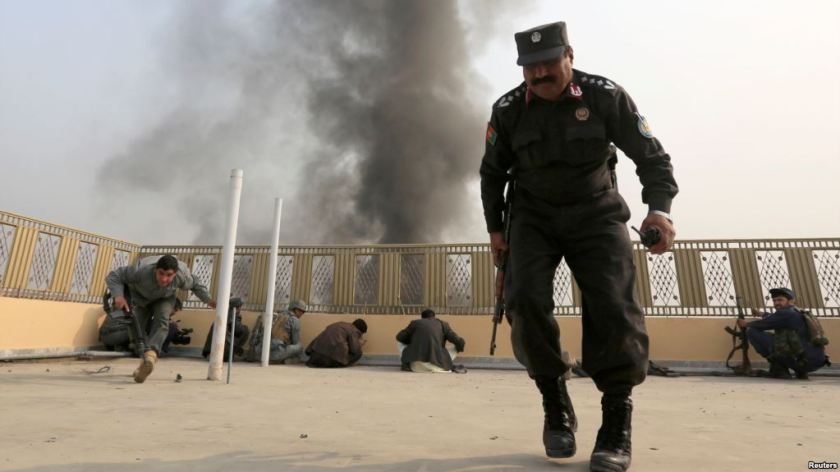
It’s an unconscionable thought! Who would try to hurt and oppose those dedicated to saving lives? Places like Afghanistan seem more than a world away from us, where this week a yet-to-be-identified terrorist group conducted a suicide attack in Jalalabad that killed two and injured 14. While that sadly is a relatively small and minor attack in this war-torn region, it was the target that was so outrageously newsworthy. It was perpetrated against the international Save The Children organization. Volunteers and workers were there to provide aid and assistance to that society’s most vulnerable members, and they were attacked. How does this happen?

In Matthew 23:35 (cf. Luke 11:51), Jesus condemns the Pharisees as the murderers of God’s godly men from Abel to Zechariah. Essentially, Jesus was presenting a roll call of the righteous who were attacked because of their faithfulness. In one of Stephen’s final moments, he preached, “Which one of the prophets did your fathers not persecute? They killed those who had previously announced the coming of the Righteous One, whose betrayers and murderers you have now become” (Acts 7:52). Both Old and New Testaments reveal the Maker’s messengers who were attacked while trying to save others. The proverbial response of the hearers was to “shoot the messenger” (cf. Heb. 11:36-38).

Growing up a preacher’s kid, I saw my dad encounter some who attacked the messenger. Dad has always been a model of courage for me, willing to teach and preach even unpopular, but needed, subjects. Consequently, he endured both frontal and sneak attacks. Everyone who has sought to declare “the whole purpose of God” (Acts 20:27) has some appreciation for Paul’s warning that some “will not endure sound doctrine; but wanting to have their ears tickled, they will accumulate for themselves teachers in accordance to their own desires, and will turn away their ears from the truth and will turn aside to myths” (2 Tim. 4:3-4).

How one responds to such attacks is crucial! In the words to Timothy, Paul contrasts the attacker with the faithful proclaimer. He says, “But you, be sober in all things, endure hardship, do the work of an evangelist, fulfill your ministry” (2 Tim. 4:5). We’re taught “patient enduring” (2 Cor. 1:6; 2 Tim. 2:24), “not returning evil for evil or insult for insult” (1 Pet. 3:9), “bless those who persecute you; bless and do not curse” (Rom. 12:14; cf. 12:17-21), and “do not resist an evil person; but whoever slaps you on your right cheek, turn the other to him also” (Mat. 5:39).

As eternal aid workers, we operate by a different, higher set of rules (2 Cor. 10:4). We entrust ourselves to the One who will give us ultimate victory. Meanwhile, we cannot give up our cause—no matter what the threat or danger. Like Jesus, let us keep entrusting ourselves to Him who judges righteously (1 Pet. 2:23)!

8ad7fee4-9d99-4e89-b63f-286645809597_cx0_cy12_cw0_w1023_r1_s