Wisdom Calls, Can You Hear?

Friday’s Column: Brent’s Bent


Brent Pollard

Last week we noted that one has two reliable sources of wisdom: God and one’s parents. However, we might alter this slightly to include the adjective “godly” to describe our parents. If one’s parents are not godly, then they cannot offer much in the way of wisdom. Everything else is a tertiary source of wisdom. This truth invites harmful consequences for the one listening to the wrong source of wisdom. Solomon warns that sinners seek to seduce you with their words (Proverbs 1.10-19). 

But what do we mean by “sinner”? We have in mind those who habitually sin, not just those who have yet to enter a covenant relationship with God. In other words, these individuals make no pretense of doing good or being righteous. Solomon’s example seems extreme to us since we have a blood-thirsty gang willing to kill to plunder others’ property. How could anyone be seduced into committing an act God hates (Proverbs 6.16-19)? Unfortunately, it is not as difficult as you might think. 

Adolph Hitler remains an easy illustrative target because he is so infamous. However, during an economic depression, Hitler rose to power, promising a return to prosperity. Hitler convinced the Germans that only the Jews stood between them and their restoration. Hitler was charismatic, and he had helpers like Joseph Goebbels, able to package his message for easy consumption. How many otherwise “good” Germans turned a blind eye to atrocities committed under the pretense of creating the thousand-year reign of the Third Reich?  

When Patton discovered the atrocities committed at Buchenwald, he brought the locals into the concentration camp to see what had happened there. Some still feigned ignorance, but one eyewitness at the time declared that one could smell death in the air even outside the camp. “Death” has an unmistakable smell. Visitors to the concentration camps of Europe have told me that the scent lingers today. It is inconceivable that they didn’t know that something nefarious happened behind the locked gates of Buchenwald.   

I’ve watched enough documentaries to note how many older Germans living during that time say that Hitler had them under a spell. And some of the Hitler youth have struggled to adjust to the post-war world. But today, it is common for Germans to refer to the events of the Second World War as the liberation of Germany by the Allied Forces. In other words, contemporary Germans see the period of Nazi rule as an occupation even though the citizenry widely supported Hitler at that time. 

But what of a “softer” despotism? We have U.S. politicians parroting the Marxist ideology of redistribution. (“From each according to his ability, to each according to his needs.”) And younger generations are quick to point out the disparity between the salary of the CEO and the employee, even though the CEO may have blood and sweat equity invested in his business and that no job would exist for the employer without him. And there is this disconnect between those desiring that we plunder the “rich” and redistribute to the “poor” and the “foot soldiers” willing to “Occupy Wall Street.” The latter may be ready to commit violence to achieve revolutionary goals, but those sympathetic are likewise content to stay silent as the rabble fights. Lest we forget, the failed economic ideology of Karl Marx has never worked anywhere it has been tried. Furthermore, it has given us men like Josef Stalin and Mao Zedong, who have killed far more of their citizens than even Hitler did of the Jews.  

It is much easier to follow a multitude to do evil than we care to admit. Thus, Moses warned against such (Exodus 23.2). It is a matter of companionship. As Paul warns, if we surround ourselves with evil people, it will corrupt our good morals (1 Corinthians 15.33). On the other hand, if we tolerate the presence of evil, we will discover its shared nature with yeast that permeates the dough into which one introduces it (1 Corinthians 5.6). This cascading effect is one of the reasons a church must practice discipline when needed (1 Corinthians 5.1ff).  

Lady Wisdom’s call stands in stark contrast (Proverbs 1.20-33). But, like the effort required to enter the narrow way (Matthew 7.13-14), one must be determined to hear her voice over the noisy crowds (1.21). Lady Wisdom is especially desirous to grab the attention of three groups: simpletons, mockers, and fools. Simpleton sounds derogatory but means that one is gullible. Aren’t the gullible especially vulnerable to the misinformation supplied by the tertiary sources of earthly wisdom? Indeed. And it is not necessarily a matter of ignorance, but lack of experience making them simpletons.  

Mockers, also called scoffers, are those flouting God’s authority. As with the simpleton, this does not mean one is stupid. Instead, a mocker chooses to be such by his disposition. Like the pharaoh to whom Moses spoke, mockers ask, “Who is God that I should hear His voice?” (Exodus 5.2) Finally, we have the fool. As we have said previously, “fool” has nothing to do with intellectual capacity. A biblical fool is a morally deficient person despising wisdom and discipline. Thus, the fool is “happier” living without the intrusive “advice” of a Creator God. 

But as Lady Wisdom warns, her unheard pleas will become a calamity for those refusing her counsel. And on that day, not only will she not be an advocate at one’s side, but she will join the chorus of laughter at their downfall (1.26). Lady Wisdom sounds cruel, but truthfully, she is just a strict teacher. She knows that one eats the fruit of his own way (1.31, cf. Galatians 6.7-8). Thus, she leaves you to your own devices. And the isolation one feels when facing the consequences of his actions is not even abated by the knowledge that God’s grace is available to forgive. The fallen one wishes he could call on Lady Wisdom but realizes that all she can tell him now is, “I tried to tell you.” 

David illustrates this feeling of loneliness in facing the consequences well in Psalm 51. Do you recall his misery? He could feel the separation between himself and God. He cried out to God to restore the joy of his salvation (Psalm 51.12). As recompense, David would then teach others (Psalm 51.13). We might add that bargaining is a noted process of grief. David was grieving. It mattered not that David knew God could forgive him because he still felt that loneliness that began when Nathan pointed the finger at him and said, “You are the man!” (2 Samuel 12.7). Lady Wisdom was absent from David. Even if present, all she could have done was remind him of what he had done wrong. 

Today, Lady Wisdom still calls. Can you hear her? You may have to strain to listen to her over the world’s noise. But do not spurn her invitation lest you share the fate of the simpleton, mocker, and fool. Instead, hear her offer of security and peace of mind (1.33) and accept her counsel.   

Will He Marvel At Me?

Thursday’s Column: Captain’s Blog

Carl Pollard

What is faith? According to the world, faith is seen as a blind trust. It is belief in something regardless of a lack of proof. Many believe that as Christians we are called to have a blind faith. But this is simply not the case. 

The word for faith in scripture is “pistis” and it is defined as “that which evokes trust.” This is trust that is formed from an objective basis. It is a confidence in the proof that has been revealed in scripture. The biblical definition is far from this idea of a blind faith. 

We know what faith is, but what does it look like practically? Faith is holding on to God through tragedy and loss. Faith is knowing that no matter what sickness or trial we go through, God is still in control. Faith is persevering through life with a confidence and hope in our eternal home. 

Faith impacts every aspect of life and that’s why we should always strive to grow our faith. 

There is a need for greater faith. We can grow our faith by looking to those who Jesus commended for their great faith. 

Throughout Jesus’ ministry he encountered several people that showed great faith. There are only two occurrences in scripture where Jesus “marveled.” One is Mark 6:7, where Jesus marveled at their unbelief (lack of faith).  The other is Luke 7:9, where Jesus marvels at the Centurion’s great faith. With our faith we have the ability to cause Jesus to Marvel. The question is, will Jesus marvel at our belief or our unbelief?

creative common via PxHere

2 Peter (Part One)

Thursday’s Column: Third’s Words

Gary Pollard

I’ll be repeating the book of II Peter in present-day terminology. It’s not a true translation of the book, as I am not qualified to do so. It will be based on an exegetical study of the book and will lean heavily on the SBL and UBS Greek New Testaments, as well as comparisons with other translations (ESV, NASB, NIV, ERV, NLT). My goal is to reflect the text accurately, and to highlight the intent of the author using concepts and vocabulary in common use today. 

This is not an essentially literal translation, and should be read as something of a commentary. 

Introduction

This is from Simon Peter. I’m a dedicated follower of Jesus Christ and one of his apostles. I’m writing to everyone who has a faith that’s just as valuable as ours. Your faith is just as valuable because it also came from the perfection of our God and rescuer Jesus Christ. My wish for you is that you enjoy grace and peace because you know God and Jesus, our master. 

JesusHelpedYouEscape

We have everything we need to be alive and live a morally good life thanks to him. His power made that possible! We have everything we need because of our relationship with him. He called us to his family because he is amazing and perfect. He’s made some incredible promises to us. Those promises were designed to give us access to his nature. We have access because we’ve escaped a worldly lifestyle characterized by unhealthy desires. Since we’ve escaped, make sure you back your faith with moral goodness. Once you have moral goodness, expand your knowledge of God. That knowledge should lead to self-control. Self-control should lead to endurance. Endurance should lead to godliness. Godliness should lead to good relationships with each other, which should lead to love. If you are growing in these areas, you can’t be described as useless or unproductive in your relationship with our master, Jesus Christ. If you don’t have these qualities, you’re blind or shortsighted because you’ve forgotten that your record was cleared. 

Putting In Money Or Putting In More?

Monday’s Column: Neal At The Cross

Neal Pollard

TODAY’S ARTICLE IS REPRODUCED FROM YESTERDAY’S LEHMAN LEARNER. I EMAIL AN EXPOSITORY STUDY OF A SECTION OF A BIBLE BOOK EACH MORNING. YOU CAN SUBSCRIBE AT “LEHMANOFFICECOC@GMAIL.COM.”

S.J. Friesen, in a book edited by Susan R. Holman entitled Wealth and Poverty in Early Church and Society. Holy Cross Studies in Patristic Theology and History (2008), reveals at least seven categories or classes in imperial Rome. This would have certainly applied to Jesus’ day. From top to bottom, they were:

  • Imperial elites (0.04% of society)
  • Regional or provincial elites (1%)
  • Municipal elites (1.76%)
  • Moderate surplus resources (7% estimated)
  • Stable near subsistence level with reasonable hope of remaining above the minimum level to sustain life (22% estimated)
  • At subsistence level and often below minimum level to sustain life (40%)
  • Below subsistence level (28%) (p. 19-20)

In that lowest category were included beggars, the disabled, unskilled day laborers, prisoners, and unattached widows. 

So the woman we meet in Mark 12:41-44 was on the bottom rung of society. Typically, every day was a fight for survival and full of uncertainty about meeting the basic needs of life. She had no advocates, champions, and could have been the target of unscrupulous men if she had a house or anything her husband had left her. Just before Jesus calls attention to the widow in our text, He had condemned the scribes for at least five offenses. The fourth was that they “devour widows’ houses” (40), for which “they will receive the greater condemnation” (40). Was the widow in these verses one of their victims?

What we know is that she enters the alms area of the temple in the court of women carrying “two small copper coins, which make a penny” (42). He makes no judgment on the contributions made by the wealthy, but holds up the woman as a contrast to the scribes and any who practiced pretentious religion.

She gives unpretentiously. She does not draw attention to herself. She quietly slips in the two coins. It is because Jesus is omniscient and observant that He is aware of her gift. She did not make any announcements or ask for any prayer requests, that God help her since she was giving everything to God. It was an assuming moment in time that might have passed unnoticed but for Jesus. 

She gives sacrificially. Many rich people put in large sums (41), yet Jesus says they contributed out of their abundance (44). However much they gave, they could continue their lifestyle at the same rate and pace as before their gift. But she “put in everything she had, all she had to live on” (44). The Macedonians were great givers, who “according to their ability, and beyond their ability gave of their own accord” (2 Cor. 8:3). As incredible as that is, this poor widow gave more. Only Jesus could exceed her gift (cf. 2 Cor. 8:9). 

She gives abundantly. Jesus signifies this by saying she gave more than the rich that day (43). It was not a competition to her, a cause for swelling pride. We will suggest her motive in a moment, but the consequence of her gift was that it was unmatched generosity. Those whose giving cost them something know the fulness of heart and the favor of God this woman must have felt. What a challenge!

She gives trustingly. Mark does not tell us this. In fact, neither does Luke (21:1-4). But what other conclusion can we draw? She gave God all she had to live on. Do we suppose that she left the temple, curled up in a ball, and died of starvation and exposure? Is that how God has ever responded to those who give in faith? Has anyone ever out-given God? That does not mean that God moved her up a rung or two in society because of her gift. That is a very materialistic way to view this account. Instead, the way she gave was inseparably joined to the way she lived. She gave with reckless abandon, left only with a confidence that God would be her protector. Had she heard that day or at some point the words of the psalmist, “How blessed is he whose help is the God of Jacob, Whose hope is in the Lord his God, Who made heaven and earth, The sea and all that is in them; Who keeps faith forever; Who executes justice for the oppressed; Who gives food to the hungry. The Lord sets the prisoners free. The Lord opens the eyes of the blind; The Lord raises up those who are bowed down; The Lord loves the righteous; The Lord protects the strangers; He supports the fatherless and the widow, But He thwarts the way of the wicked” (146:5-9)? She seemed to know the source of her help and hope, her administrator of justice, provisions, and support. She gave accordingly.

Next Sunday, we will make an offering as part of our worship. Across 2,000 years, Jesus holds up this widow to challenge us. Will we give like her, unpretentiously, sacrificially, abundantly, and trustingly? If we do, will He cause us to suffer? That is the mental battleground upon which we all stand. May He help us successfully fight that battle. 

The Vale Of Bandits

Tuesday’s Column: Dale Mail

Dale Pollard

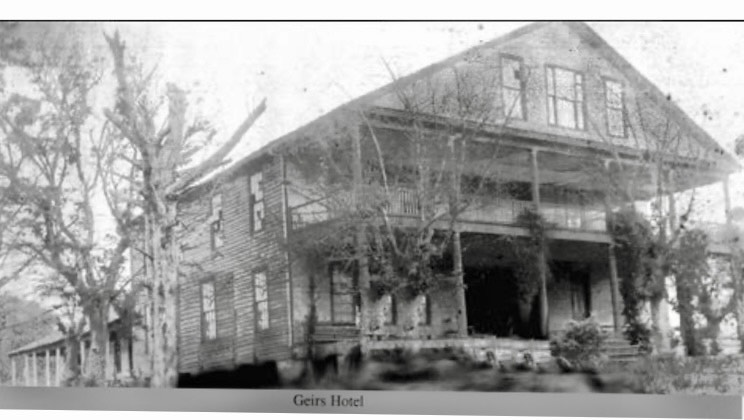
The Valhermoso Springs Resort was a gathering place for those seeking treatment from the famous Sulphur and mineral springs. The three springs were even used by the Indians for the same reason— adding yet another vale of mystery to the area. Despite being a place that attracted visitors from all around the world, including European and French royalty, there are only three low quality images of the place. Walking through the dense brush and stepping over toppled stones can give one the impression that this spot is determined to keep its secrets

In the upper room there was a dancing hall with slat boards covered in tile. During the civil war, confederate soldiers were hidden by Mrs. Geirs who was a hot-blooded rebel sympathizer. 

One of many legends surrounding this resort is that of the visit of famous outlaw Jesse James. It’s rumored that a man matching the description of Jesse rode in one night from Huntsville after robbing a bank. He wore two leather bags slung over his shoulder as he dismounted his horse. At some point, it’s unclear how he was discovered, but the law came knocking on the resort’s front door. Jesse’s stealth and cunning kept him alive during the bloody guerrilla skirmishes of the civil war, and they would help him escape the clutches of justice time and again. Legend says he left the hotel in a hurry— without his two leather bags. Did Jesse James stash his stolen goods in a cave or bury it? There’s not even hard evidence that the outlaw made a stop at the tavern, or even robbed a bank in Huntsville. 

In Numbers 13 there are twelve spies who go into the land of Canaan for forty days. Their goal was to make observations that would help them conquer it as well as bring back reports about the kind of land it was. Upon their return only Joshua and Caleb are willing to take on the giant challenges that they’ll need to overcome in order to claim Canaan. Sadly, the message that the people chose to believe was that the giants were even bigger than God. What evidence did they have? Not a shred. God had proven His might and power throughout their time in the wilderness. He’s the one who directed the children toward Canaan in the first place! The fear in the crowd and the report of ten cowardly spies was contagious. 

If we’re not careful, we might end up believing what’s not based in fact, too. We might be tempted to believe that Christians are a weak minority who can’t do a thing to change the culture. We might be tempted to believe that nobody is interested in spiritual things anymore. We might begin to believe that the world is bigger and stronger than the God who spoke the world into existence. Of course, this is simply not true. 

Relics found by Dale and Carl on the site of Valhermoso Springs Resort

The Wandering Albatross

Tuesday’s Column: Dale Mail

Dale Pollard

Did you know? 

  1. The wandering Albatross is the biggest flying creature on earth today. 
  2. It’s lifespan can be over 60 years. 
  3. They can go years without ever touching the ground. 

Did you know? 

Many people today haven’t decided that God is the answer to the void we have in our lives. For this reason, James will give us the following instructions to help us in our prayer lives. 

He writes, 

“But when you ask, you must believe and not doubt, because the one who doubts is like a wave of the sea, blown and tossed by the wind.” James 1.6 

God wants His children to trust Him, and He is ready to reward the evidence of our trust in Him. 

The Evidence 

We show God our faith in Him in two major ways based on this verse and its original context. 

  1. God’s where we go when we need wisdom (verse 5). 
  2. We’ve decided and are convinced that God is the answer by praying to Him without doubting His ability to aid us. 

Unlike the albatross that wanders for years without touching the ground, we’re not commanded to drift through the air without landing. We’re expected seek out the truth, land, and stay there. 

Maybe you’ve wandered off and you’re starting to see the signs. Signs like constant panic, unrest, anxiety, and feeling a loss of control. These can all point to a spiritual problem that you’re no longer grounded.

 God is always the answer and we can prove to Him that we believe this truth by letting Him take the lead. 

via Pixabay

3 Reasons Vacation Bible School Is Worth It!

Tuesday’s Column: Dale Mail

Dale Pollard

This time of the year congregations are planning and preparing for another Vacation Bible School. When and why was this summer tradition started? It seems that even those who aren’t “church goers” still share childhood memories with those of us in the religious world. Across America kids will soon be drinking kool-aid and making Noah’s ark out of Popsicle sticks. They’ll also make memories that will stick with them for their whole lives.

The Hazy History 

 As much as this week means to many of us, one might assume the history to be well documented. However, who started the first VBS and when— is still debated. Some claim it all began in 1870, while others place the date closer to the 1920s. So the “when”’proves to be a little fuzzy, but the “why” seems constant. A thread that can be traced through many a VBS origin story is the reason it’s done. It was always designed with our children’s spiritual growth in mind. The goal was always to provide them wholesome entertainment while at the same time, introducing them to God and the Bible. 

So with that in mind… 

Here are 3 reasons why VBS is a worth the effort: 

  1. Youthful brains need this week. Studies done by Psych INFO, ERIC, MEDLINE, and Google Scholar as well as the University of Virginia library, all seem to agree that kids from 12-18 years old are the most impressionable. Meaning, the things they are taught and their experiences in these years will often impact their worldview for the rest of their lives. Any program within the church that’s geared towards teaching young people about Jesus can only have a positive influence on them. That window is relatively short so it’s crucial that parents do all they can to set them up for spiritual success. 
  2. Church families need this week. VBS takes a lot of work and it’s the kind of work that brings the church together. It’s mainly about the kids, but it’s not all about the kids. This is a time where members have an opportunity to bond and grow closer through the planning and preparation. Work days, crafts, skits, staff/teacher curriculum, decorating, T-shirt’s, and advertising all take teamwork. Team work is good work for good teams. 
  3. Adults need this week. The happiest among us are typically the children. With all of that work, the sweat, tears, and time that’s shoveled into this event— the payoff is the sound of an auditorium filled with energy and excitement. It’s good for adults to spend a week listening to the sound of voices singing loudly and unashamed. It’s good for the teachers and the chaperones to act and look a little ridiculous. There’s value in letting kids see us trade the khakis and neckties for face paint and costumes because it will send a message. To be a christian doesn’t mean to be serious, stoic, or stern— all the time. Those of us who have been members of the church for sometime know this to be true, but children who’s parents don’t think or speak highly of Christianity now have a chance to experience something to the contrary. 

While there might be mixed feelings about VBS within the church, there’s no denying it’s potential to effectively introduce Jesus to the young and young at heart. 

A picture of a Wyoming VBS from several decades ago.

The Commands Of Scripture

Thursday’s Column: Captain’s Blog

Carl Pollard

In Romans 12:9-21, Paul reveals to us what a true Christian looks like. He gives a list of actions we should always strive to accomplish. This list is totally different from the message we hear from the world. The apostle tells us that as true Christians we: 

  • Have genuine love 
  • Hate evil 
  • Hold on to what is good 
  • Love one another 
  • Outdo each other in showing honor
  • Have zeal
  • Have a Fervent spirit 
  • Serve the Lord 
  • Rejoice in hope
  • Are patient in tribulation 
  • Pray constantly
  • Contribute to the Saints 
  • Are hospitable 
  • Bless our persecutors 
  • Do not curse our enemies 
  • Rejoice with those who rejoice 
  • Weep with those who weep 
  • Live in harmony 
  • Aren’t haughty 
  • Associate with the lowly 
  • Don’t think too much of ourselves
  • Don’t repay evil with evil 
  • Do what is honorable in the sight of everyone 
  • Live peaceable 
  • Don’t take revenge 
  • Care for our enemies 
  • Don’t let evil overcome us
  • Overcome evil with good

That’s a whole lot to remember. But if we love God, we will try our best to follow these commands. Christianity is practical because it gives us the best life on this earth and the one to come. 

We know what’s truly important. We have a purpose and we know how we are to act, speak and think. We know why we’re here on earth and we know where we are going if we are faithful to God’s word. This list in Romans 12 gives us practical tips on how to handle the situations that come up in life. We have the key to a happy, meaningful, and fulfilling life. We follow the Bible because it is practical. It contains wisdom and knowledge that is found nowhere else on earth. It provides a map to salvation and it gives us the answers to life’s problems. 

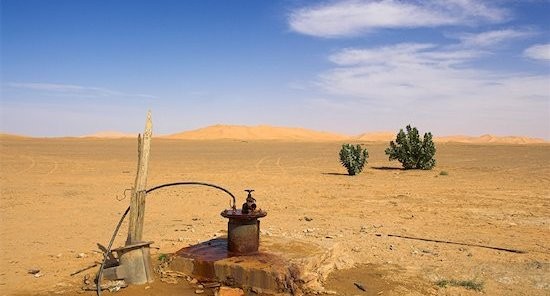
The story is told of an old man who was wandering in the desert looking for water. He approached an old shack and on the porch area he found a water pump. 

Next to the water pump he saw a one gallon jug. A note on the jug said, “Use all the water to prime the pump.” The man’s instincts said to drink the water and not trust the pump. Nevertheless he poured the water into the pump and began pumping until an abundance of cool water came to the top. The Bible is like the note on that water jug. Sometimes the instructions contained in the Bible do not make sense to us, but it is always right. The commands given to us from God are practical. He knows what is best for His own creation. They help us in our decisions, and they teach us how to act and think. We can have confidence in knowing that our lives are based on the perfect commands of Scripture. 

What Motivates Us To Share Christ

Monday’s Column: Neal At The Cross

Neal Pollard

If we will ever share Christ with anyone, it will be the product of some motivator. It may be romantic love, if we are trying to win a potential mate. It could be a sense of Christian duty. It might be a profound sense of love and gratitude for our own salvation. Bible writers are often trying to guide us to appreciate the value of being motivated to share the good news. That is what Paul does in 2 Corinthians 5. Paul, who has been defending the work he and his fellow-laborers have been doing as servants of Christ, moves to the broader consideration of what should move us to share Him with others. Motivation is key to involvement. Often, when I see the importance of my personal involvement in spreading Christ to others, it will touch my heart and open my lips.  What motives should move us?

THE TERROR OF THE LORD (11)

This actually connects back to verse 10. There’s a great day coming, and all of us will be judged. If one is unprepared for that day, he or she should rightfully feel terrified. Knowing the terror facing those not ready to face Jesus, we persuade men. 

PERSONAL INTEGRITY (12-13)

Paul saw his involvement in reaching souls as a matter of personal integrity and honor. These spiritual servants shared Christ for God and for them (13). Soul-winning is our responsibility, and we should realize our character is at stake. 

THE LOVE OF CHRIST (14-16)

One of the most important and transforming truths is that Christ loves everyone. In fact, Paul says “the love of Christ controls us” (14). He proved that love by dying for all so that all could be reconciled (see 17-19). All are dead outside of Christ, but He can make men spiritually alive. That love for us and them should move us. 

THE TRANSFORMING POWER OF RECONCILIATION (17-19)

Anyone in Christ is a new creation (17). He reconciled us to Himself, and then gave us the ministry of reconciliation (18). He entrusted us with the message of reconciliation (19). We are offering people the ability to restore their relationship with God. Think of the peace, relief, and joy we can bring into people’s lives by offering them the hope of Christ!

OUR RESPONSIBILITY AS AMBASSADORS OF CHRIST (20)

God has given us the job of representing Him to men. He makes His appeal through us. We implore others on behalf of Christ to be reconciled. That doesn’t make us important, but it does mean our job could not be more important!

THE FACT THAT WE ARE MADE RIGHTEOUS IN HIM (21)

Christ is our substitute sacrifice, as He is for the people we need to reach. He makes us righteous through Himself. Knowing that God looks at a saved soul and sees purity and righteousness is powerful! That’s what He sees when He looks at us, covered in Christ. It’s what He sees when He looks at everyone covered in Christ. I want for others what I myself have been given!

This isn’t the totality of our motivation, but if this was an exhaustive list it would be enough! Suffice it to say that I don’t lack reasons for sharing my faith. The reasons are diverse, but each is significant by itself. Let’s pray for wisdom, courage, and tenderness of heart to be God’s voice and hands in reconciling the world to Him. 

1 Peter 1– Hope’s Value

Wednesday’s Column: Third’s Words

Gary Pollard

For the next several weeks, I’ll be repeating the book of I Peter in present-day terminology. It’s not a true translation of the book, as I am not qualified to do so. It will be based on an exegetical study of the book and will lean heavily on the SBL and UBS Greek New Testaments, as well as comparisons with other translations (ESV, NASB, NIV, ERV, NLT). My goal is to reflect the text accurately, and to highlight the intent of the author using concepts and vocabulary in common use today. 

This is not an essentially literal translation, and should be read as something of a commentary. 

I Peter I – Hope’s Value

The prophets who told us about this rescue were very curious about it. They investigated and obsessed over the identity and timing of the rescuer Christ’s Spirit was telling them about. He told the prophets that he would suffer at first, but would gain everything after. He told the prophets that their writings were for people in the future, not for them. You are those people in the future! Through God’s influence, people told you about our hope for rescue. By the way, even angels are deeply interested in the hope you have right now! 

Since you have this hope for rescue, don’t ever let it go. Everything you do must be influenced by this hope. Make sure you’re mentally preparing yourself for spiritual combat. Make sure you have self-control going into this. We’ll be rescued when we see Jesus, so hang on tight to hope. 

Don’t go back to your old lives. You had those old, unhealthy desires before you knew any better. Instead, you must live like God wants you to. Jesus did! God’s word said, “You have to be morally pure, just like I am.” You know that God will judge everyone without bias. Live like you know this, and let that give you a healthy dose of fear. He didn’t use an unstable asset like money to secure your rescue. He used the most valuable thing in existence: his own flawless blood. 

Jesus’ plan was in motion before we were even created! He recently made his appearance just for us. Because of him, we believe in God, who brought Jesus back to life and gave him recognition and power. We believe in him. We have hope because of God. 

Fragment containing 1 Peter 1:23–2:5 on Papyrus 125 (3rd/4th century).

Patience!

Friday’s Column: Learning From Lehman

Steve Candela

How many of you have ever sat at a red light in traffic only to realize when that light turns green there’s still no place to go… and then before you get through the intersection the light turns red again. Frustration at its finest.

Who has ever been seated to eat somewhere and it takes over 15 minutes for a waiter or waitress just to come take your drink order? I can feel my blood pressure rising just thinking about it!

I can’t be the only one who has ever lost my cool with my kids or other family members. Sometimes what seems to be for no apparent reason at all? Hopefully you’ve taken the time to at least realize you reacted poorly and made your apologies.

I’d like to share with you my struggle with being a patient man. How I always need to consciously work on it, what works for me, what doesn’t work for me, and maybe open your eyes to the reality of what true Christian patience looks like.

My wife, Rebecca, always tells me, “Don’t ever ask God for patience, or else He’ll give you something to be patient about.” I can see that. To a certain point, I believe it too. But let’s take a second look at it in James 1:2-8.

“Consider it all joy, my brethren, when you encounter various trials, knowing that the testing of your faith produces endurance. And let endurance have its perfect result, so that you may be perfect and complete, lacking in nothing.” So let’s look at this. I have faith. My faith can be tested.

This doesn’t mean I’ve lost faith, just that I’m being tested for how strong my faith is.

“But if any of you lacks wisdom, let him ask of God, who gives to all generously and without reproach, and it will be given to him.” – Here I see my struggle with patience as the wisdom aspect. Maybe I’m not feeling wise. Maybe I’m having trouble figuring out this patience thing you all speak of. Is it wrong of me to at least let God know, hey I’m struggling with this… No! Absolutely not. Philippians 4:6 says, “Be anxious for nothing, but in everything by prayer and supplication with thanksgiving let your requests be made known to God.”

Let me be clear, I’m not disagreeing with my wife. I would never do that honey… I’m simply saying that asking God for patience and asking God for grace and understanding while I figure out what I need to change in my life to be more patient, are two completely different things. Verse 6 says,

“But he must ask in faith without any doubting, for the one who doubts is like the surf of the sea, driven and tossed by the wind. For that man ought not to expect that he will receive anything from the Lord, being a double-minded man, unstable in all his ways.”

So we have some ground rules here. James tells us, “you must ask in faith. You cannot doubt God. For if you have any doubt, any doubt at all you can expect to receive nothing.”

Maybe my best course of action does not stem from asking God for help. What I have done and learned to do lately is called connecting the dots. If I am unhappy, frustrated and struggling to find joy at home, I ask myself why? Where did that come from? There doesn’t seem to be anything that my family is doing wrong. Sure, dishes pile up in the sink,kids room is not picked up, laundry room is overflowing… Those things happen, they’ve happened before and it didn’t bother me that much in the past. Maybe all those little things just seem like big things now because something else is bothering me, but what? What’s changed? Connecting the dots for me almost always leads back to work. A bad run I’ve been on, problems with co-workers, added duties and responsibilities to an already stressful job. I have had to learn to be more aware of my stressors. I’ve had to do a hard reset on what I bring home vs what I leave at work. Most of all I’ve had to remember to lean on Jesus.

“Come to me, all who are weary and heavy laden, and I will give you rest. Take my Yoke upon you and learn from me, for I am gentle and humble in heart, and you will find rest for your souls” (Matthew 11:28-29).

“Therefore humble yourselves under the mighty hand of God, that he may exalt you at the proper time, casting all your anxiety on Him because he cares for you” (1 Peter 5:6-7).

Learn to lean on Jesus. Learn to do it early. Learn to do it often. I urge you to join a private Bible study. Find an elder, find a deacon, or find a friend and ask them to study the Bible with you. Studying the word of God is the biggest stress reliever I have ever found. I am so grateful for those that have taken the time to study with me.

If you are not a Christian, you have a choice. Don’t wait. Learning to be a disciple takes time. But making the decision to desire discipleship takes no time at all. Be baptized into Christ Jesus and rest easy knowing your soul is in safe hands.

If you are a Christian, perhaps you’ve let your anxiety, stress or impatience get in the way of being a solid Christian, a rock star husband or wife, a nurturing mother or father, or a fierce friend. We are here to help you, guide you or pray for you. Do not be weary, whatever you may need.

Finding Refuge

Friday’s Column: Brent’s Bent 

Brent Pollard

There are days when one must turn off the news and go to the prayer closet. Current events sometimes make us uneasy, and the “if-it-bleeds-it-leads” type of yellow journalism permeates the twenty-four-hour news cycle. And while I sit here and write, the big story is the Russian invasion of Ukraine. Putin’s pretense is that Ukraine is committing genocide against the “ethnic Russians” living in Ukraine. There has been no evidence produced supporting this claim, of course, but there is evidence that pro-Russian militants have committed crimes, some violent, within Ukraine. 

In 2014, for example, Pro-Russian militants seized the building housing the Bear Valley Bible Institute of Ukraine in Horlivka. Armed men gave the brethren of the congregation assembling in the same building as the Central church of Christ three hours to remove those contents from the building the members wanted. Thankfully, no one was injured.1 But as I think of the location of the current branch of the Bear Valley Bible Institute of Ukraine2, about 50 miles southwest of Kyiv, I cannot help but be concerned for my Christian brethren impacted by the specter of war in Ukraine. After all, Russia has already bombed the Ukrainian capital.  

Then there are the less important factors than human life that produce potential anxiety. For example, what is going to happen to the price of petroleum? Authorities say it is going up. WSB in Atlanta reported that “experts” believe that the sanctions placed on Russia will cause gas prices to increase to a national average of $4 a gallon by March or April.3 Higher gas prices lead to higher transportation costs, which causes the costs of goods to increase. In a country already hit by the highest inflation in 40 years, we might view such painful side effects from trying to rein Putin as too much. 

Plus, one wonders if we now hear the renewed drumbeats of global war. Some pundits lay the blame for this at the feet of the current U.S. President, whom they claim looks weak to foreign leaders. Thus, neither Putin nor Xi Jinping may refrain from acting upon imperial ambitions. Ukraine is one thing, but what if Putin desires to reconstitute the former Soviet Union? Eventually, that would mean that Putin would invade a NATO country. We would be obliged by treaty to intervene.  

Meanwhile, soon after Putin invaded Ukraine, nine Chinese fighter jets violated Taiwan’s airspace.4 This is not the first Chinese incursion into Taiwanese airspace, but the timing is unsettling. China still believes that Taiwan belongs to China. Since 1954, we have been in a bilateral treaty with Taiwan.5 Therefore, if China invades Taiwan, we would be obliged to respond to China’s actions. Granted, we are assuming that the United States will keep the word that it has given to its treaty partners. Possibly, our leaders may try to do so economically rather than placing boots on the ground.  

During this time, when the waters of the sea roar and foam and the mountains shake, it is marvelous to know that God is our refuge. This truth is the assurance the sons of Korah provide in Psalm 46. Commentators believe the author wrote the psalm when the Moabites, Ammonites, and Edomites moved to attack the kingdom of Judah (cf. 2 Chronicles 20.1ff). King Jehosophat prayed for God’s intervention, and God replied by confusing Judah’s enemies. Those enemies ended up killing one another. When Jehosophat rose to face them as God commanded, he found every one of them dead. Thus, God was Judah’s refuge. 

Turning our attention once more to Psalm 46, we note three quick points. First, God is our place of refuge when everything around us seems insecure (1-3). Thus, we are told not to fear (2). When we look at the boisterous sea rather than our Lord, we will quickly sink as Peter when he joined Jesus walking on the Sea of Galilee (Matthew 14.30). Therefore, we must increase our faith (Matthew 14.31). So, there is no reason to feel insecure when the God of peace is with us (Romans 15.33). 

Second, God provides us with a walled city (i.e., stronghold) secured by a flowing river of life  (4-7). There is debate whether this is a picture of Heaven. Indeed, Heaven has its River of Life. But it was a tactic of siege warfare to cut a walled city off from food and water sources. One such siege by Sennacherib led Hezekiah to construct a tunnel to bring water to Jerusalem (2 Kings 20.20; 2 Chronicles 32). Despite Sennacherib’s bravado, Hezekiah knew that his people would not cry out from thirst. Providence would spare them. Martin Luther, reading Psalm 46.7, was moved to pen the hymn “Ein Feste Burg ist Unser Gott” (“A Mighty Fortress Is Our God”). Yes, we find in God that bulwark that is never failing.  

Third, God will provide us with what man cannot (8-11). Sometimes we try and solve things on our own. When we feel exasperated, we might even look to our fellow man for answers. It seems that we look around everywhere but to where we should. To this practice, God tells us, “Stop!” The NASB1995 renders it, “Cease striving and know that I am God” (46.10). God will be exalted! And indeed, we see His mighty works that attest to His great power. The sons of Korah tell us in conclusion that God is with us. 

Our world feels like a crazy place now. I recently commented that it feels more like 1938 than 2022. In 1938, Adolph Hitler annexed Austria to reabsorb the “ethnic Germans.” In the United States, Americans were still struggling to overcome the Great Depression. So, current events do seem comparable. But, by God’s help, we survived that turbulent time, and we will also live through an uncertain future. God is in control, and He tells us that He will provide us with refuge. So, we must cease our striving and enter it.  

Sources Cited 

1                     Tryggestad, Erik. “Church Building Seized (Updated).” The Christian Chronicle, The Christian Chronicle, 25 May 2014, christianchronicle.org/pro-russian-militants-seize-church-of-christ-building-in-eastern-ukraine-during-sunday-worship/

2                    “Ukraine.” Bear Valley Bible Institute, Bear Valley Bible Institute of Denver , www.wetrainpreachers.com/ukraine.  

3                    “Experts Say to Expect Gas to Hit at Least $4 a Gallon over Ukraine Invasion.” WSB, Cox Media Group, 25 Feb. 2022,www.wsbtv.com/video/local-video/experts-say-expect-gas-hit-least-4-gallon-over-ukraine-invasion/9fa41005-9f2f-400e-a20f-5ce2a25d2b75/

4                    Olson, Wyatt. “Chinese Fighter Jets Sortie into Taiwan’s Air Zone on Heels of Ukraine Invasion.” Stars and Stripes, Stars and Stripes, 24 Feb. 2022, www.stripes.com/theaters/asia_pacific/2022-02-24/taiwan-fighter-jets-airspace-chinese-aircraft-ukraine-russia-5134525.html

5                    Ward, Alvin. “67 Countries the U.S. Is Obliged to Go to War For.” Mental Floss, Mental Floss, 7 Feb. 2015,www.mentalfloss.com/article/65816/67-countries-us-obliged-go-war

TRUTH: FROM CONFUSED TO CONVICTED

Tuesday’s Column: Dale Mail

blond man with goatee smiling at camera with blazer on
Dale Pollard

If you were to flip on the TV and watch a news channel, it can quickly become frustrating. Channels like CNN will often say something entirely different than FOX or vice versa. What’s actually true? Who can we trust? What should we believe? 

Just when your mind begins to become convinced of one thing, you hear or see something that changes your thinking once again. This creates the skeptic, the double-thinker, and the cynic. 

Since a variety of propaganda will always be pushed and those personal agendas will always be hidden, it’s more comforting than ever to read and soak in pure unadulterated truth. So, here are some of those truths we can count on that our found in the Bible. 

  1. God is real and His message to mankind can only be found in every inspired word written in the scripture (2 Tim. 3:16-17). 
  2. The scriptures teach mankind the means by which we are saved and added to His church. God adds us through our action- based belief, repentance, and immersion (Acts 2:42ff, Titus 1:5-11). 
  3. Christians must live faithfully and in accordance to His instructions (1 Peter 1:15). 
  4. The faithful can only truly worship by following the pattern which is demonstrated by the 1st-century church and Apostolic examples (1 Tim. 2:8-15). 
  5. The Bible teaches that one day everyone will walk through the door that leads out into eternity. Whether or not we are lost or saved as we pass through that door will be the determining factor that dictates where our final destination will be (Rev. 20.12).
  6. It’s our Christian duty to ensure that others are aware of this spiritual reality (Matt. 25:46, Ecc. 12:7, 1 Jn. 1:7). 
  7. God can’t lie and every word He wrote is true (Ti. 1:2; Ps. 119:160). 
  8. It’s our responsibility to study His message because it’s the only thing that matters. 

These truths will never change. They are a constant you can count on and we’ve only scratched the surface. It’s crucial that every follower of Christ is convicted and well versed in His Word. This is where and how we find peace and direction. The Bible is the only source that we can rely on  100% and that’s something that’s increasingly hard to find today. 

Can These Dry Bones Live Again?

Tuesday’s Column: Dale Mail 

blond man with goatee smiling at camera with blazer on
Dale Pollard

Six hundred years before Christ would make His providential appearance, a righteous man finds himself in captivity. While exiled, Ezekiel was able to witness the spirit of God in a very intimate way (Ezekiel 1). Even so, he was still living under the thumb of the Babylonians like every other Israelite with him. While under these unideal circumstances though, he is privileged to see awe inspiring visions from God. Have you ever paid attention to the eerie sensations described throughout this book? In Ezekiel 1:4, the prophet feels a great and stormy wind on the bank of the river Chebar. The wind brings with it a massive cloud with fire flashing around it and a substance like glowing metal in the center of it. The wings of the creatures he saw (verse 24) made sounds like that of roaring waters. The voice of the Almighty was like the sound of a great army camp. What sights he was able to see! This great connection to God didn’t take away his pain or sorrow, though.

Chapter 19 is one long lament as Ezekiel cries over his hard-hearted Israelite brothers. Why won’t they listen to him? Even after Ezekiel performs some radical visual illustrations like eating his bread over dung and laying on his side for an entire year, they won’t respond to the “invitation.” How frustrating is that, preachers? God never abandons His faithful servant but His confused prophet is still left to wonder what God is going to do about the mess which makes up his reality. A familiar feeling for many faithful Christians today.  

Never underestimate the hand of the Almighty. This truthful statement can be pulled from Ezekiel 37, when the prophet is taken up and then placed in the middle of a dark valley. Ezekiel is surrounded on all sides by heaps of dry human bones and he’s probably wondering why in the world God has taken him to such a place. The text answers the question by asking a question. God speaks to Ezekiel and says, “Can these dry bones live again?” What an odd thing to ask. However, Ezekiel responds, “Only you know, oh Lord.”

It’s always when we’re deep in the valleys of life that we’re forced to answer the difficult questions about God’s abilities. When we’re surrounded by darkness, the question we have to ask is, “Does God have the power to see me through this?” If you remember, Ezekiel has become frustrated with the fact that Israel just won’t listen to him or Him. He’s lost hope in their ability to change— they’re just too far gone. However, God demonstrates to His prophet in a dramatic way that NOTHING is impossible for Him. 

He doesn’t bring the bones to life in the blink of an eye, but we know He could have. Instead, He allows Ezekiel to hear those bones rattle and to hear the sounds of fibers and flesh sticking together. He wanted to leave an impression on Ezekiel to demonstrate the might of the Almighty. Ezekiel had no idea how those bones came to life, but he knew one thing for certain. God did it. You may not understand why God has allowed you to enter your valley, but you can be certain that He has the power to see you through. You are standing on your two feet because God has given you the strength to do so. God has promised His faithful servants a heavenly light at the end of our tunnels and whatever God says— He will always accomplish (Ezekiel 37:14). 

The Location Of Salvation

Thursday’s Column: Captain’s Blog

Carl Pollard

Most people can think of a specific location that brings them joy. It could be a vacation destination, a certain getaway spot, or a favorite city or park. It’s a location that is filled with memories and good times. We find ourselves dreaming about those places when we are loaded down with life. What we wouldn’t give to be relaxing on that beach, away from all the work and responsibilities. What is it about these places that causes us to long to be there? It’s the thought of being somewhere that’s free of care and worry. 
In scripture, salvation is often described as being found in a very specific location. The Bible records numerous examples of when God saved His people in a specific location. The Passover in Exodus 12 is an example of this. If the people wanted to keep their firstborn children, they were to spread blood on the doorposts of their homes. By doing this, the death angel would pass over the houses with blood on them. There are several other examples of salvation being in a specific location such as Noah’s ark in Genesis 6-9 and Rahab’s home in Joshua 2.
If salvation was found on the ark and in Rahab’s home, where is it now? Scripture teaches us that the church Christ died to establish is the place of safety today. 

The plan: a new covenant (Mark 14:24)
–The purpose: save the souls that are added to the body (Rom. 8:1-3) 
–The promise: eternal life (1 Jn. 5:11) 

The Old Testament examples mentioned all contained specific instructions: Build the ark out of gopher wood, pick a certain amount of animals, and tie a scarlet rope to the window. These specific locations brought salvation but only through obedience to God and His plan. 
What specific instructions do we have today? The contents of the New Testament explain in perfect detail how we can be added to God’s location of salvation. The ark saved Noah and His family from destruction, the scarlet rope tied to the window of Rahab’s home saved her and her family, and baptism (Acts 2:38; 1 Pt. 3:21) will save anyone and everyone that wishes to be added to the church. 

5 Buckets For Life

Tuesday’s Column: Dale Mail

blond man with goatee smiling at camera with blazer on
Dale Pollard

We would all like to improve in many ways, but many of us are also well aware of the flaws we feel are holding us back. Those shortcomings tend to get in the way, slow us down, or even prevent us from achieving the quality of life that we desire. While there is plenty of room for improvement in my life, I have found that there is a simple way to clearly envision where I am currently, and also plan for where I would like to be in the future. 

It’s true that our burdens often come from our blessings. For example, the blessing of having a car may result in the burden of expensive bills that follow a mechanical issue. 

I believe that there are five major buckets of blessings that we all must give our time and attention to. They are the five categories that, if purposefully tended, help our lives to be wonderful. On the other hand, if neglected, we find ourselves in a head-spinning spiral of worry and anxiety. 

These buckets are: 

  1. Faith 
  2. Mental maturity 
  3. Physical health 
  4. Relationships 
  5. Work 

If one of those buckets isn’t filled with the proper content, the effects, I’m sure you’re aware, are negative. If these crucial categories are filled correctly, our quality of life will only improve. 

God is the Creator of life itself which makes Him the leading authority on the subject. Consider how He can help you in each of the five areas listed here.

Faith 

By denying self, our focus is diverted away from our negative self absorption. Putting God and others first can give you a better, fresh, and positive perspective. 

Acts 20:35

Mental maturity 

When we seek to understand our own minds and what makes us tick, we’ll be able to identify where these negative thoughts and reactions originate. 

Philippians 4:8

Physical health 

Poor health habits like fast-food diets, lack of physical exercise, and sleep deprivation only make dealing with stress all the more difficult. God designed your body to function properly when properly taken care of. 

Luke 1:37 

Relationships 

Every relationship, whether in marriage, friendship, family, coworkers, or the church, all have one thing in common—they were made by God. Thankfully, God wrote a book to help us understand who we are to be to each individual that make up those groups. 

Romans 12:16

Work 

God built us to work— He expects us to. Some choose to be lazy, and they suffer. Others choose to constantly work to the neglect of the four other areas mentioned. There must be a balance, and God knows that. 

Psalm 128:2 

While there’s a lot more to be said concerning these five categories, I hope this simplifies things and helps refocus on what really matters. 

Hopefully, looking at life through His divine lens is a reminder of Who we should turn to for everything. He has given us the ultimate assurance— and He is willing to give us the ultimate assistance. 

When The Storms Of Life Are Raging

Monday’s Column: Neal At The Cross

Neal Pollard

Jesus, the master teacher (Luke 8:1-21), shows His humanity as He fell asleep as the disciples sailed across the Sea of Galilee (23). Assuming the boat to be large enough to transport at least 13 people and provide Jesus room to repose, it makes the situation more impressive when “a fierce gale of wind descended on the lake, and they began to be swamped and to be in danger” (23). We know that at least four of the men in that boat made their living negotiating these waters as fishermen, and we would guess they had seen their share of storms. But this one was apparently exceptional. They woke Jesus up in a panic, exclaiming, “Master, Master, we are perishing!” (24). 

When Kathy and I were young newlyweds, we worked with the church in Livingston, Alabama. Our best song leader was a man who grew up close friends of Gus Nichols’ children. His name was Selman Falls, and his repertoire of songs was vast. He taught us the song, “He Will Hide Me,” written by Mary Servoss in 1878. The first verse says, “When the storms of life are raging, tempests wild on sea and land, I will seek a place of refuge, in the shadow of God’s hand.” Few metaphors seem more fitting than to call our trials and difficulties “storms.” I confess that more than one of these has led me to panic and to pray, “Master, Master, I am perishing!” Our trials disturb our peace, rock our world, and threaten our stability. 

Will you notice how Jesus handled this? First, He acted. Then, He admonished. He did not lecture while waves crashed and water encroached. He took care of the problem. But, then He said, “Where is your faith?” Luke mentions no sober self-reflection on the part of the disciples. Instead, they marveled. They responded, in fear and amazement, “Who then is this, that He commands even the winds and the water, and they obey Him?” (25). Storms are opportunities for us to ask, then answer, such an identity question. It’s the right question. Not, why did this storm come? Why me? But, Who then is this? Who is the master of the maelstrom? Who is the commander of the crushing confusion? 

Chances are great that several of you are in the midst of some kind of storm. The boat is rocking, the winds are howling, and the prospects are not promising. What will you do? More importantly, what will you allow Him to do? He still stills storms! 

Business on 31W bypass, relatively close to our church building

What Are You Prepared To Do?

Friday’s Column: Brent’s Bent

brent-portrait

Brent Pollard

In Brian De Palma’s The Untouchables (1987), loosely based on historical events, Elliot Ness must stop gangster Al Capone. Ness, portrayed by Kevin Costner, is recruiting capable men to help him accomplish his task. One of the men he selects is an Irish beat cop, Jimmy Malone. Malone, played by Sean Connery, asks Ness what he is prepared to do to stop Al Capone. Ness replies he is willing to do anything within the law. However, Malone reminds him that Capone doesn’t play by those rules, implying that Ness will have to dirty his hands to bring Capone to justice. Sadly, one of Capone’s cronies mortally wounds Malone later in the movie. As he lay dying, he again asks Ness what he is prepared to do. Malone’s death finally causes Ness to take his gloves off and give Capone a hard fight. 

Obviously, our devotional thoughts are just as loosely based on The Untouchables as the said movie was on the actual events occurring during Prohibition. Thus, I am primarily focusing on Malone’s question of what one is prepared to do. This question strikes me as pertinent to two parables spoken by Jesus to His disciples in Matthew 13.44-45. There are seven parables in Matthew 13, but Jesus gave only four of those to the assembled masses. The remaining three he spoke to the disciples alone. Of those three parables, two deal with people making an incredible discovery and the lengths they go to secure it. The Pearl of Great Price and the Hidden Treasure is parables requiring sacrifice from those wishing to obtain what Jesus equates to the kingdom of heaven. 

Wait a minute. Are these not disciples to whom He addresses these parables? Yes. So, have they not already found the treasure, having decided to follow Jesus? Indeed, they have. However, there remains something even they must do. Even though they have acknowledged that there is something special about Jesus, that He is the Messiah, there is still a price to be paid. If they wish to complete their faithfulness, they must be willing to forfeit all to secure God’s precious promises. In the case of some, this knowledge came because of a diligent search. For the others, they had chanced upon the Messiah. Regardless of the circumstances, though, both groups had to surrender everything to receive the kingdom.  

Recalling Matthew’s original audience, we note Matthew’s message is Jesus is the Messiah. Thus, he wrote primarily for the benefit of the Jews looking for the Messiah. They had to recognize that Jesus of Nazareth was He about whom the prophets had spoken, even Moses. Yet, they had to do more than mentally assent to Jesus’ identity. The believer’s conviction would cause them even to forfeit their former spiritual wealth obtained under the Law of Moses since God’s kingdom is invaluable in comparison. Elsewhere in Matthew’s Gospel, Jesus tells those who would follow Him that they had to remove all stumbling blocks from obedience, even if that were a foot or an eye (Matthew 18.7-9). Jesus was using this language figuratively, of course, as He was not advocating self-mutilation. But the message is the same as that of the Pearl of Great Price and the Hidden Treasure. You must remove absolutely everything coming between you and the acquisition of the kingdom of heaven without prejudice.  

That is a sober message for those of us reading Matthew’s Gospel today. We may have satisfied ourselves with the knowledge that we have grasped the identity of Christ. Perhaps, we have even taken steps to become Christians. We are His disciples. But even to us, Jesus asks, “What are you prepared to do?” If the answer is not the equivalent of forfeiting all for the sake of the kingdom, then we have not yet done enough. As those to whom the Hebrews’ writer wrote, “You have not yet resisted to the point of shedding blood in your striving against sin” (Hebrews 12.4 NASB1995). The implication, of course, is Christians elsewhere in the first century were shedding their blood for their faith. Hence, the road taken by the recipients of the Hebrews letter was calmer in comparison. Thus, as I read those parables of the Pearl of Great Price and the Hidden Treasure, I must ask myself if I likewise will give my all to receive the kingdom of heaven. So then, when the situation calls for it, I must do whatever it takes to receive the kingdom of heaven. Only then will I have obtained the Pearl of Great Price and the Hidden Treasure.      

I Hope You Read This

Thursday’s Column: Captain’s Blog

img_0806-e1578582831473

Carl Pollard

We have abused this word. We say things like, “I hope there’s some food at the house” or, “I hope the weather is nice tomorrow,” and “I hope my team wins the Super Bowl.” The hope that’s mentioned in scripture has a completely different definition. 
 
The word in Romans 15:13, for example, is the Greek word “elpis. “Now may the God of hope fill you with all joy and peace in believing, so that you will abound in hope by the power of the Holy Spirit.” This word is defined as, “Looking forward to something with confidence” (BDAG 319).  It is an expectation that we have as Christians. We have hope because we call God our Father. 
 
The world does not have that relationship and because of this they have nothing to hope in. If they look forward to anything it’s pay day, or the weekend, or vacations. Every one of these come to an end and once again they are left with no hope. 
 
Don’t get me wrong, we look forward to these things too. And there’s nothing wrong with that, but this isn’t what we look forward to solely. We know that there is more to life than vacation. 
 
1 Peter 5:10 is an incredible verse that describes the hope we have. It says, “After you have suffered for a little while, the God of all grace, who called you to His eternal glory in Christ, will Himself perfect, confirm, strengthen and establish you.” 
 
This is true hope. It is the God of the universe Himself that will do this for each one of his children. We may not see it every day, but the world is lost and desperate. We have what they need. They’re desperate for guidance because they’re lost. They’re desperate for purpose because they have none. They’re desperate for Hope because the world offers nothing to those who are struggling. 
 
God has entrusted us with the answers to life, so what are we doing with this knowledge?

Fears Are Funny

Tuesday Column: Dale Mail

image-e1601983688162

Dale Pollard

Do you remember what any of your childhood fears were? Maybe you never really grew out of those fears.  I can remember a number of phobias I had as a child but one of them was not arachnophobia. In fact, me and my younger brother would collect spiders from the backyard and put them all in a container in our bedroom. At night we would put a flashlight behind a clear cage and watch all the spiders make their webs— occasionally fight each other. I don’t believe mom ever discovered this little secret. For some reason as I grew older (more mature) I developed a fear of spiders, despite having played with them often as a young kid.

Fears can be funny like that. They can come from bad experiences or just somewhere in the back of our minds. There’s a lot of fear in the world today!

One of my favorite psalms in the Bible is Psalm 46. We read about what seems to be those worst case scenarios, but God still reigns over all. What if the earth gives way? What if the mountains are thrown into the sea? What if the wrong man becomes our new president? What if this virus never goes away? Even so, we have no reason to fear. God is bigger than our fears. We serve a Being with that much power and it should fill us with courage. What are you afraid of?