What Would Our Slogan Be?

Neal Pollard

A Bear Valley member gave me a mailer she received from a new, area denomination.  The oversized postcard, in attractive colors (the background of which looks to be a paint palette), leads with the header, “Messy Grace.” The subtitle reads, “It’s okay to not be okay.” The brief message beneath says, “God loves you. God cares for you. God wants a relationship with you. NO MATTER WHAT!”  Now, there is a lot of truth in that message, if we don’t necessarily care for some of the jargon. Could it leave a wrong impression? Yes, if the message does not include the response we need to make to His amazing grace. We cannot stay messy, if that means willful sin. But we will all continue to have our messes, even after coming to Him.

But, the mailer itself, with the self-appointed slogan, is what got me to thinking. If our visitors got to write our slogan, what would it be? For some places I’ve visited, it could be the following: “Don’t Sit On My Pew!”, “Race You To The Restaurants!”, “Visitors? What Visitors?”, “Joy Is For Liberals”, or “Are You Ready To Rumble?”  If the Lord wrote our slogan, what would it be?  For some congregations He diagnosed, it was also less than flattering: “We’ve Left Our First Love” (Rev. 2:5), “We’re Following False Teachers” (Rev. 2:14-16), “We Tolerate Immorality” (Rev. 2:20ff), “We Look Alive, But We’re Really Dead” (Rev. 3:1), and “We Think We’re Something Great, But We’re In Really Bad Shape” (Rev. 3:15ff).

Here at Bear Valley, there are several potential slogans I would hope represent who we are and what we are trying to convey by the way we act when we’re together on Sunday and Wednesday as well as our interaction at other times. Here are some good options:

  • “We Love One Another” (John 13:35).
  • “We Walk In Truth” (3 John 4).
  • “We Continue In His Word” (John 8:31).
  • “We Bear One Another’s Burdens” (Gal. 6:2).
  • “We Like Being Together” (Acts 2:42ff).
  • “We Look For Our Lost Sheep” (Luke 15:4).
  • “We Know Who The Enemy Is” (Eph. 6:11).
  • “We’re Not Conformed But Transformed” (Rom. 12:2).
  • “We Put Others Before Self” (Phil. 2:3-4).
  • “We Act Toward Others As If Doing For Christ” (Mat. 25:40).

The thing is, we are going to have a general character and emphasis as a congregation. Whatever we prioritize and do, that’s what it is. It’s not what we say, sing, or “sloganize.” To see it in print is sobering. May we collectively strive to earn a reputation that reveres our Master, reflects our mission, and renews our minds.

1akxyz

TO THOSE WHO DIVIDE BRETHREN

Neal Pollard

—“A perverse man spreads strife, and a slanderer separates intimate friends” (Prov. 16:28).
—“A worthless person, a wicked man is one who…spreads strife” (Prov. 6:12,14).
—“There are six things which the LORD hates, yes, seven which are an abomination to Him: …one who spreads strife among brothers” (Prov. 6:16,19).
—“Hatred stirs up strife, but love covers all transgressions” (Prov. 10:12).
—“Though his hatred covers itself with guile, his wickedness will be revealed before the assembly” (Prov. 26:26).
—“Keeping away from strife is an honor for a man, but any fool will quarrel” (Prov. 20:3).
—“Through insolence comes nothing but strife, but wisdom is with those who receive counsel” (Prov. 13:10).
—“The beginning of strife is like letting out water, So abandon the quarrel before it breaks out” (Prov. 17:14).
—“He who loves transgression loves strife…” (Prov. 17:19a).
—“Like charcoal to hot embers and wood to fire, So is a contentious man to kindle strife” (Prov. 26:21).
—“An arrogant man stirs up strife, But he who trusts in the Lord will prosper” (Prov. 28:25).

Suffice it to say, the Lord has not been silent on the matter. Our age is marked by the manufacturing and fanning the flames of controversy, endless argument, and divisive issues. Men seem to take pride in starting strife and stirring the pot. When we share the gospel, in gentleness (2 Tim. 2:24) and love (Eph. 4:15), it can still be met with devastating disagreement and vehement vituperation. But, thanks to mediums like social media, some among us have seized the platform to spread division where they could as easily work to promote love and unity among brethren.  I cannot presume heart or motives, but the fruit has been to start brotherhood brawls and to stratify schisms. It is worrisome that while we manufacture outrage on politics, race, law enforcement, “guilt by association,” nitpicking the church, or constantly bringing up the latest “what’s wrong with the church” scenario, 151,600 people die around the world every day (via http://www.ecology.com/birth-death-rates/)! Most of that number will have traveled the broad way that leads to destruction. Surely we can redirect our passion and conviction away from divisive diversions and do our part to stem the tide of such an eternal tragedy!

Meanwhile, we can resolve to see people, not skin color, God’s sovereignty, not party affiliation or uniform, the local church’s autonomy, not an opportunity to be a busybody, and with every other, similar scenario, not major in the minors. Jesus condemned the Pharisees for neglecting the weightier provisions of the law, justice, mercy and faithfulness while scrupulously focusing on matters comparatively minor (Mat. 23:23).  We have a brief time to use our talents and influence on this earth. Will our cause be social justice, brotherhood policing, or political activism, or will it be building up the kingdom through evangelism, edification, and benevolence? May God grant us all the wisdom to “not work for the food which perishes, but for the food which endures to eternal life…” (John 6:27). Be a builder, not a basher!

arguing-1296392_960_720

Hazards of Firefighting

Neal Pollard

343 on 9/11/2001 in New York City. 86 in 1910 across Washington, Idaho and Montana. 29 in 1933 in Los Angeles. 27 in April, 1947, in Texas City, Texas. 21 on December 22, 1910, in Chicago. 19 on June 30, 2013, near Yarnell, Arizona (Firefighter Tragedies).  Those are the deadliest incidents for firefighters in American history, in number of fatalities. Firefighting is deadly, if heroic, business. Those answering the call know that each response, however simple or innocuous it may seem, masks many dangers. Firefighting is hazardous business.

The same is certainly true in the firefighting business Jesus calls us to perform. The Bible clearly indicates that the fire prepared for the devil and his angels will be eternally shared by those who know not God and do not obey His gospel (Mat. 25:41ff; 2 Th. 1:8-9). As Christians, then, we are God’s firefighters (Jude 23). We should do this job out of a sincere concern and love for souls and a desire to be working for and serving the One who rescued us from so great a death (2 Co. 1:10). But, by stepping into that arena, we should realize the risks and dangers involved.

  • We can be ill-equipped.  Firefighters can’t hope to do their work with old, shoddy, or faulty equipment. The best equipment available is ineffective when not put into use. In our spiritual battle, we know that our “equipment” (2 Tim. 3:17) is perfect for every situation. But, we have to know it (2 Ti. 2:15). We also need to know how to use it. We need to make sure our approach to people is not shoddy or faulty (cf. Gal. 6:1). To be boisterous or bullying with God’s Word not only further harms the one in danger, but also endangers us!
  • We can get too close to the fire. Firefighters can be the victim of their proximity to the conflagration. It’s often difficult to judge how close is too close, but it is an ever-present hazard. In our spiritual firefighting, we can get too close to the fire through compromising God’s Word, conforming to the world, committing sins of attitude, morality, ethics, or the like in our outreach. We must avoid behaving in a worldly way when trying to help save those out in the world. In trying to help a struggling soul, we can sin with our tongues or gossip about the one whose troubles we’ve been made aware of.
  • We can ignore the dangers. It’s true in firefighting as in all professions that one may occasionally choose not to practice what he has been trained to know, see and think. In the heat of the moment, one may not focus on certain warning signs. Buildings collapse, air runs out, black draft areas are entered and serious results follow. Spiritually, we must be careful in how we go about this “business.” Going alone when we need another with us, trying to help someone when we are too emotionally invested, or responding out of hurt and anger instead of “cooling off” are all ways we can ignore the dangers we might face.

Let us be aware of the risks we take in reaching out to those who are in spiritual danger, but let us be eager to respond to the need. Despite the ever-present risks firefighters take, they still are faithful and dedicated to the job. God needs us on the front line, too. May we simply factor in the perils of firefighting, then do it!

ap525541180459

When “Help” Is Actually “Harm”

Neal Pollard

Rob Heusevelet and his son came upon a bison calf in Yellowstone National Park that was shivering in the cold. They were afraid for the health and survival of the animal, so they put it into their SUV and drove it to a ranger station in the park. A witness who took a picture of the calf in the car said, “They were demanding to speak with a ranger. They were seriously worried that the calf was freezing and dying” (NPR). Ironically, their “intervention” ultimately cost the animal his life. His mother and the rest of the family rejected him because of the contact with people, and, isolated and alone, the baby bison had to be eventually euthanized. This act of ignorance was more than foolish; it was fatal!

Good intentions are fine enough, as long as they are built on the right foundation. A 12th-century French mystic and Catholic monk, Bernard of Clairvaux, is often credited with a saying antecedent to our modern aphorism, “The road to hell is paved with good intentions” (Ammer, The American Heritage of Idioms, np).  We appreciate the meaning of the proverb. No matter how well-meaning our motivation, how we act from it have consequences and they matter.  The Bible shows us those whose motivation was unimpeachable, but whose resulting actions were tragic. There was Jephthah’s rash vow (Judges 11:30ff). There were so many examples provided by Peter’s impetuousness. There was Paul’s persecution of the church, motivated by religious fervor (Acts 26:9). These are examples enough to show that simply intending to do right is not enough.

Today, we can do much harm in trying to help. Consider three specific ways that are common, though critical.

  • Making the gospel plan of salvation or gospel requirements broader, easier, or different than what Scripture teaches. We do not want to offend or hurt feelings. We do not want to face rejection. We do not want to seem arrogant. Paul calls such “scratching itching ears” (Acts 4:3-4). There is only one way (John 14:6; Gal. 1:6-9).
  • Offering false hope or peace. This is often done at funerals for the non-Christian or unfaithful Christian. We should always be comforting and gentle, but we cannot swing to the other extreme and tell anyone living (or on behalf of the dead) that they are “right” when they are not. We do them no service, and we do disservice to our own souls.
  • Pretending like nothing is wrong when a loved one (relative, friend, Christian family member) is living in sin. Sometimes, we act as though time equals repentance. We gradually accept and embrace one whose deeds are in rebellion to God. We may even never have the nerve to imitate the great spirit of Nathan and tell the guilty, “You are the man!” (2 Sam. 12:7). But such pretense cannot change divine facts!

Paul preaches the imperative of proper motivation (cf. Phil. 1:15-17). Jesus stresses the value of a good heart (Luke 8:15). Neither of these is a substitute for the grave duty we face as Christians to not do harm as we seek to do good. It is not an either-or proposition. It is both-and.

cikpk3rwuaab97a
Photo Credit: Karen Olsen Richardson

GoFindMe

Neal Pollard

San Diego entrepreneurs Brad Damphousse and Andy Ballester started GoFundMe “as a way to help individuals and small charities raise money for good causes” (WSJ). Most people have heard of this “crowdfunding site” and have even contributed. MacMillan and Tan report, “Its members now raise about $100 million in donations per month.” But, Forbes Magazine revealed how some have used such sites for the ridiculous, including Zach Brown who raised $55,492 from 6,911 backers to make potato salad (Forbes). I have seen some pretty audacious, if not questionable, uses of such sites to fund events and circumstances.

But I’d like to alert you to an infinitely greater need that people all around you every day have. They have surmounted a debt they cannot possibly repay. Their circumstances are desperate, far beyond eviction, lawsuits, or bankruptcy.  A billion people giving all their material resources could not satisfy that debt. Despite this, I have never seen even one of them advertise, beg, or solicit help to resolve their circumstance. In an incredible turn of events, it is incumbent upon you and me to find them and offer them aid. They usually cannot identify the need, much less articulate it. But you and I know their need, and the expectation falls squarely upon our shoulders to meet it.

If they were to put it into words, they would say, “Go find me!” How could we turn a callous heart away from such a desperate need? May we muster the courage and heart to, in the words of the old quartet hymn, “go out and win, rescue from sin, day’s almost done, low sinks the sun. Souls are crying, men are dying, win the lost at any cost.”

Consider these passages, too:

Micah 6:6-8
1 Peter 1:18-19
Luke 15
Matthew 28:18-20; Mark 16:15-16; Luke 24:46-49

donate-654328_960_720

DO WE HAVE CONFUSING MENU TERMS?

Neal Pollard

Open Table, a company that facilitates reservations at better restaurants, sent a quiz today to test my familiarity with some of the more sophisticated menu terms one encounters. I made 40%, and at least a few of my right answers were lucky guesses. Truly, I’ve never heard of “okonomiyaki,” “Harissa,” “gochujang,” or “crudo.” These and others were foreign words, in the literal and culinary sense. Certainly, chefs, maitre d’s, refined diners, and the otherwise alimentary literate folks know these terms, but most of us are proud to differentiate between la fork and la spoon. We also do not like to be made to feel less than intelligent by the more informed foodie.

The more we try to be soul-conscious and truly sensitive to the visitors who attend our services, the more thoughtfully we should consider especially the terms we use and even take for granted. We’ve used them so long that maybe we assume everybody knows them.  But, these visitors may be sitting there, despite their intelligence and capability, feeling ignorant or uninitiated as we pepper them with “expediency,” “hermeneutics,” “extend the invitation,” “conversion,” “denominational,” “redemption,” and other terms that require the context of our learned church culture. Other terms, not at all hard to define, are terms that mean something specific to us but that mean something else to those without our “background”: sin, salvation, repentance, worship, born again, holy, works, grace, etc.  On many occasions, I’ve looked at some of the lyrics in our songbook and have found, especially in older songs where words have inevitably changed or fallen into disuse, we press on without defining or explaining these words to our youth, new Christians, or non-Christian attendees. “Could my zeal no respite know?”  “His garment too were in cassia dipped?” “Heavenly portals loud with hosannas ring?” Many, many more examples of such lines could be produced!

My point is not to be critical. There is no way we can define every word a visitor or newcomer may encounter in our worship services, but we do have so many who do not have our grasp of our unique terms. We have a serious obligation to them (cf. 1 Cor. 14:22-25). If we took some time to define the words of our songs, sermons, and even prayers, we would be helping those several groups who may not “get” it otherwise—teens and pre-teens, some of our young adults, a lot of our first-generation Christians, new converts, and those valuable visitors who may be termed “unchurched.” It will help the rest of us, too, to break down our rote and memorized sentences and think about what some of those “ten-cent” theological terms really mean. God desires worship that involves our heart (cf. John 4:24), and clear comprehension is a key to achieving that. May we deliberate on this when we assemble together this Lord’s Day!

OLYMPUS DIGITAL CAMERA
Who knows what this is?

PREVENTING A POST-ANTIBIOTIC APOCALYPSE

Neal Pollard

Economist Jim O’Neill had readied a report about drug-resistant infections, “bacteria and other microbes that have become impervious to antibiotics” (The Atlantic, Ed Yong, 5/19/16). O’Neill’s prognostication is grim and macabre. On our current trajectory, 10 million will die every year by the year 2050 and that doesn’t include those undergoing procedures only safe because of antibiotics (surgeries, transplants, and chemotherapy, for example). No doubt, this report is no fodder for a bedtime story, but it is not without suggestions of what can be done to prevent such an ominous occurrence. O’Neill gives a nice, round ten suggestions to avert this potential “plague” on humanity.  They include: improve sanitation, a global surveillance network, a public-awareness campaign, better diagnostic tools, avoid unnecessary use of antibiotics in agriculture, promote effective alternatives, improve incentives for workers, rewards those working on the problem, adequately fund those working, and build a global coalition (ibid.). All in all, this seems like a practical, workable solution.

I read this in light of the global epidemic you and I are engaged in to fight together. It is the most dangerous threat any of us will face and it will be with us, if the world continues, in 2050 and beyond. What I find interesting is that many of O’Neill’s suggestions for fighting these microbes are the marching orders God has given us to fight our plaguing antagonist—sin.  Holiness, unity, improved evangelism, Bible study, avoid unnecessary fights, example, focusing more on eternity, better giving, and increased mission efforts all factor in saving more souls! It’s a system that will work locally, nationally, and globally.

Frankly, we don’t know that O’Neill’s prediction will come to pass. But, the Bible tells us in no uncertain terms that “it is appointed unto men once to die, and then the Judgment” (Heb. 9:27). The majority will be lost (cf. Mat. 7:13-14)! God is counting on us, Christians, stemming that tide as much as possible (Mark 16:15-16).  Every individual you and I reach with the gospel is one less who will succumb to this eternally fatal threat!

novamoxin_antibiotic

What It Takes To Grow The Church In Our Culture

Neal Pollard

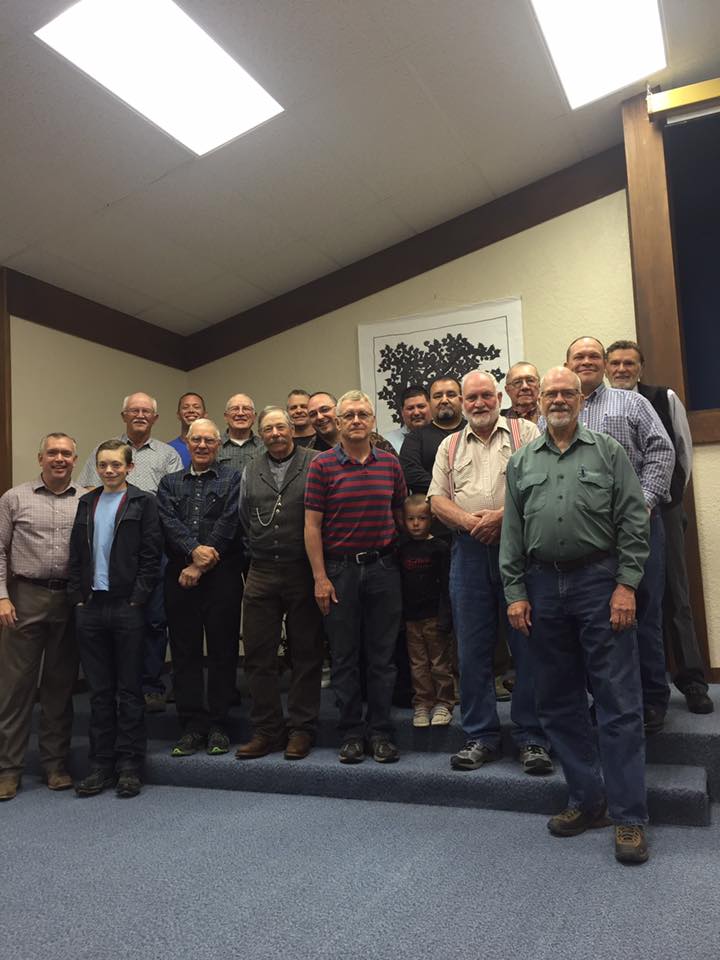
It was such a treat to be among the hearty, faithful Christian men of central Wyoming and the Bighorn Basin. By Bible-belt comparison, they come from small congregations. But their passion and desire to grow the church is humongous. Near the end of their men’s retreat, they divided into groups to discuss the obstacles to growth and suggestions for growth. What they came up with was incredibly insightful, helpful to especially anyone living in the current, western culture.

Among the obstacles they listed were:

  • Lack of commitment
  • Fear
  • Political correctness
  • Biblical ignorance
  • Sin
  • Apathy/indifference
  • Misplaced priorities
  • Lack of adequate leadership

For those in Alabama, Oklahoma, and California who would say, “Those are our obstacles!”, isn’t it interesting how common our struggle is.  The same factors are holding back our growth all over the nation.

Yet, I love the suggestions they came up with. I think they are key to tapping into our growth potential throughout the country and, to a great extent, throughout the world. They suggested the following:

  • Increase fellowship—The key to growth is being in each others’ lives more
  • Emphasize and empower Bible study—There can be no spiritual or numerical growth without growing our knowledge and understanding of God’s Word
  • Think outside the box—Staying faithful to truth, get out of method ruts and overcome fear of rejecting a different, scriptural method just because it is new
  • Challenge greater application of biblical truth—Every class and sermon must have a viable “so what”
  • Be intentional in our relationships—Realize that our jobs, community involvements, friendships, etc., are means to an end rather than an end of themselves. They all exist as opportunities to evangelize.

Our brethren in the deep south, the north, the Atlantic region, the upper midwest, the southwest, the far west, the northwest, and, in short, any recognizable region of the country share a desire to be relevant and meaningful in our communities. We want to honor Christ and grow His body. But it will take measurable steps. It won’t happen incidentally! We must act on our hopes and desires. We must personally engage ourselves in enacting these suggestions daily! In so doing, we’ll not only avoid being part of the problem but we’ll be part of the solution.

13118907_10153650222335922_7374883366678402046_n

A Literal Appeal For “Help”

Neal Pollard

In an interview given at her home, Ann Rodgers appears a bit eccentric but a wonder to behold. The 72-year-old woman survived 9 days in an Arizona desert by eating plants and drinking pond water. She was driving to Phoenix via a remote stretch of back country road on the White River Indian Reservation when she got lost and subsequently ran out of gas. Thus began a series of efforts, building signal fires to draw the attention of rescuers or the forest service. She got lost while climbing a series of ridges trying to get cell signal. She and her dog faced gloomy odds, but she kept trying. She went missing on March 31st. On April 3rd, she used sticks and rocks to spell out “help.” To further draw attention to it, she found an antelope skull nearby and placed it with her message (via nbcnews.com). Since moving out west, I have learned that people frequently get lost in the vast stretches of deserts and mountains. I cannot find statistics for how many people get lost or how many are found alive or dead in the United States, but each incident is obviously traumatic for those involved. Can’t you imagine how desperately and completely those who realize their lostness long to be saved?

Wherever you go today, the vast majority of the people you encounter are going to be wandering through this world lost in the most profound way. Without rescue, they are heading for a fate infinitely worse than physical death. “Lost” is the way Jesus, the Good Shepherd, describes those not right with God. While He uses the word that way in three of the four gospels (Mat. 10:6; 18:11; Luke 19:10; John 18:9), it is the parables of Luke 15 that most vividly speak in these terms. The first parable, that of the lost sheep, draws on the search and rescue metaphor (Luke 15:4). That’s how Jesus likens the situation with one outside of God’s redemption.

Be watching for signs from the lost. They often send signals, if we are looking in the right places. Whether personal problems, major life changes (like marriage or having children), those new to the area, or those demonstrating an open mind, they may be just like the Ethiopian Eunuch and hoping for someone to guide them (Acts 8:30-31). Jesus has us here to conduct search and rescue missions. May we have our eyes peeled and keep ourselves equipped to rescue the lost. They are out there everywhere.

331de06200000578-0-image-a-37_1460507569810

That’s The Church For You!

Neal Pollard

  • Where you can build relationships with some of finest, most enjoyable people on earth.
  • Where the world gets smaller and mutual connections are usually a conversation away.
  • Where God’s Word is honored and imperfect people try to follow it.
  • Where Christ is at the heart of every idea, program, and plan, but also every class period and worship assembly.
  • Where you connect with people throughout the week, from thoughts and prayers to cards, calls, messages, and visits.
  • Where hope is always vibrant whatever in the world is happening, where joy is always possible however gloomy the forecast.
  • Where there’s always room for more members to be added to the family.
  • Where young and old, rich and poor, educated and uneducated blend together in a harmony that cannot be found anywhere else on earth.
  • Where we literally get a foretaste of glory divine.
  • Where you feel a part of something so truly profound in purpose and exciting in destiny that sometimes you have to pinch yourself to make sure it’s real. And it is.
  • Where you have clarity and grounding in the midst of chaos and confusion.
  • Where you have heritage and history, but just as much hope and hankering.
  • Where truth is honored, and the way, though difficult, is clear.

A couple of closing caveats. No, I do not think the church, from the human side, is perfect. We have our foibles, fragility, and faults, but our foundation is flawless. No, the church is not a place, it is a people. “Where” indicates that the church, as a body, is a place where I can fit, belong, and function. No, this is not a Pollyanna-like, rose-colored glasses view of the church that glosses over or is ignorant of times when God’s people do not behave like they ought. But, when too often the diatribe is “what’s wrong with the church” and the mantra is, with negative and sarcastic spin, “that’s the church for you,” maybe it’s time we take a moment to count some of the blessings and perks of membership in the institution bought with the life and blood of Jesus (Acts 20:28). Obviously, there are other items to be added to the list. Feel free to do so! Generously.

IMG_2894
At the end of morning worship at the Katy, TX, church of Christ, 4/10/16.

Live Beyond Yourself


Neal Pollard

“Two little lines I heard one day,
Traveling along life’s busy way;
Bringing conviction to my heart,
And from my mind would not depart;
Only one life, ’twill soon be past,
Only what’s done for Christ will last.”

The first stanza of the powerful, convicting poem by C.T. Studd has been the seeming anthem of one of God’s great, 21st Century spiritual warriors, Cy Stafford. I first met Cy around 2000, and his balanced, measured information and guidance helped us identify and deal with a false teacher in East Africa. His interest and concern were for the Christians, new and more seasoned, who might be impacted by this man’s influence.  That godly zeal for God’s people was an indicator of the mind of a missionary, minister, and mentor of men.  The subsequent years have shown me what a true leader and visionary, with God’s help and to God’s glory, can accomplish. Cy is not larger than life, gregarious, charming per se, or glossy in any way. He is steady, focused, and determined.  He has helped change the world by equipping men and women to reach the world. Alongside so many missionaries and Christians indigenous to East Africa, Cy has steadily worked to grow the church and its influence where some of the earth’s poorest and humblest people live.  He often has spoken of the window of opportunity that daily shrinks and he has worked with an urgency to do what he can to make sure everyone has the opportunity to hear the gospel at least once.

Cy and Stephanie have made countless sacrifices of time, comfort, safety, and security because their mission was far broader than themselves. While some in ministry appear motivated by self-interest, self-promotion, and self-absorption, the Staffords have valiantly sought to put the spotlight foremost on Christ and then upon others’ needs.  On whatever day each exchanges the cross for the starry crown, their legacy will have been that of living beyond themselves.   What a convicting challenge to each of us to engage in thoughtful self-examination! What is my agenda? What is my aim? What is my aspiration?

“Give me Father, a purpose deep,
In joy or sorrow Thy word to keep;
Faithful and true what e’er the strife,
Pleasing Thee in my daily life;
Only one life, ’twill soon be past,
Only what’s done for Christ will last.”

Hebrews 11 speaks of great Old Testament heroes of faith who lived and died as those with a “desire” for “a better country, that is, a heavenly one…” (16). These same ones are called “strangers and exiles on the earth” (13), whose sight was set much higher than self. The whole of the New Testament reveals that a heart set on heaven will reside in one who also has his eyes on others (cf. Phil. 2:3-4). All too rarely do we receive such vivid examples of individuals who have so fully committed themselves to the Great Commission, who challenge us to imitate them in living beyond self. Cy is one of the best examples of this I will ever know.

“Only one life, yes only one,
Now let me say,”Thy will be done”;
And when at last I’ll hear the call,
I know I’ll say “twas worth it all”;
Only one life,’twill soon be past,
Only what’s done for Christ will last. “

God, give us more Christians like Cy Stafford! Let that begin with me.

cy and stephanie

CHURCH GROWTH STARTERS

Neal Pollard

  • Offer “medical missions” benevolent campaign in the neighborhood, utilizing the talents of members with medical expertise.
  • Have a worship leadership training class.
  • Incorporate periodic explanations about the purpose and biblical foundation for the acts of worship and the invitation during the worship services.
  • Have an elder/deacon intensive training class.
  • Host community Bible studies in various homes on a regular basis, inviting friends, co-workers, neighbors, unchurched family, etc.
  • Have a benevolent financial planning and strategies seminar, utilizing the talents of members with accounting and other finance-related skills and backgrounds.
  • Have a “special events Sunday,” where a special contribution is taken to fund evangelistic events for the year.
  • Host a website, which you advertise to the community, soliciting religious questions they have on their minds (for an example of this, see 12questions.net—hosted by the Mount Juliet church of Christ).
  • Utilize deacons to identify the talents of new members and new Christians, and then look for ways to leverage them.
  • Start a “come back home” campaign to retrieve erring and fallen away members.
  • Create a bumper sticker that identifies the congregation concisely and in a way that would draw community interest. The Palm Beach Lakes congregation has seen several baptisms from such an effort (pblcoc.org).
  • Make the church website current, interactive, and informative, not just about churches of Christ as a whole but what makes the local church relevant to people’s needs.
  • Give the teens an evangelistic project (teen gospel meeting, teen visitation program, feeding the homeless, etc.).
  • Incorporate as many members as possible in grading Bible correspondence courses (for students both foreign and domestic).
  • Plan, publicize, and promote a Sunday for every member in the directory to be present for worship, then use that day to present the plan and work of the church.
  • Train and use members to “carry” visitors from the parking lot to the dinner table, adopting visitors and helping them find classes and seats in the auditorium as well as connecting them to other members.
  • Keep your eyes peeled for new faces, stepping out of your comfort zone to meet and greet them. Be prepared to follow up and help them meet others, too.
  • Pray about ways you can be more involved in the work of the church and ask the leadership for ways you can be put to work.
  • Make a list of members and visitors that you can influence and encourage, then utilize it.

Launch Out Into The Deep

Neal Pollard

When Jesus met Peter, it may have seemed like an ordinary day to the Galilean fisherman. Simon Peter and his partners had just spent a long night fishing with no results.  You can imagine they were irritated and frustrated, maybe even feeling sorry for themselves. Then, Jesus commandeered Simon’s boat and used it to teach. This presumably would have been Peter’s first impression of Christ, though we do not know how closely he was paying attention to the Lord.  In Luke 5:4, Jesus stops preaching to the crowd and addresses Peter. He says, “Launch out into the deep and let down your nets for a catch.” Jesus has ulterior motives, but the command is for Peter to literally cast his nets to try to make a literal catch of fish. Immediately, though, Peter is exposed to something far greater than anything earthly or material. Notice how this account illustrates the call of scripture in which Christ tells us, like Peter to launch out into the deep in faith to do great things for Him.

Launch out into the deep…even if, despite great effort, you have failed in the past (Luke 5:5). Simon explained that he and his associates had struck out overnight. Jesus was telling him not to worry about the past. He tells us the same things today. If you have failed in trying to do right or have succeeded in doing wrong, don’t give up hope. Launch out again!

Launch out into the deep…at the prompting of God’s Word (Luke 5:5). Simon was willing. What a great character trait. He tells Jesus, “Nevertheless at Your word I will let down the net.” Simon says, “I value and respect your word enough to try again where I failed in the past.” Do we trust God’s promises and revere God’s commands enough to keep trying and biting off big things for the Lord?

Launch out into the deep…and involve others with you (Luke 5:7). Of course, with the Lord’s help, Simon became a success. In fact, the disciple knew immediately that he was not big enough to tackle his opportunities alone. He got his partners involved. In the Lord’s church today, each of us as Christians are partners and associates together with Christ (2 Cor. 5:18-6:1). Launching out into the deep requires involving as many as possible, for the task is so great and too much for one alone.

Launch out into the deep…and astonishing things can happen (Luke 5:9-11). First, the catch of fish is astonishing to them. Then, Jesus’ commissioning of them is astonishing (to turn from fish to men). Finally, their response is astonishing. They get to land, leave their boats and all they have, and follow Jesus. Eventually, they change the entire world! Launch out into the deep.  Who knows what you can do through Christ (cf. Phil. 4:13), but it will be astonishingly amazing.

Obviously, this was about men and not about fish.  Jesus was not interested in making them rich fishermen in Galilee.  He was looking to enrich the people of Galilee and far beyond through these fishermen. All it took was for some men who believed in God’s power to launch out into the deep.

The Lightning March

Neal Pollard

It was unusual for foot soldiers to play a major role in the Middle Ages. Harold II of England’s 7000 infantrymen were an exception. He marched them from London to York, about 216 miles, in a week. The rate of the march was 30 miles per day for an entire week!  “A sustained rate of thirty miles per day for seven days was in most circumstances unheard of. A sustained twenty miles per day would have been considered extraordinary.”  The army moved faster than news of its approach. This helped turn the Battle of Stamford Bride in 1066, known as “Harold’s Lightning March”  (Hackett, Jeremiah.  World Eras, Vol. 4: Medieval Europe, 814-1350, p. 128). What seems lost to history is how Harold motivated such rapid movement.  To build such resolve and determination in so many people, in unified purpose, must speak to Harold’s leadership ability.

All of us are marching with rapid pace toward the end of life and eternity.  Hasn’t it been going by so quickly?  It truly is a “lightning march.”  At the end of the march, will we have won the battle?  The church of every generation, and not just individuals, are making this march.  What impression are we leaving on the world around us, what battles of significance will have been won?  Think of the first-century church.  They “turned the world upside down” (Acts 17:6).  They “preached to every creature under heaven” (Col. 1:23).  They permeated their immediate communities, surrounding communities, and the remotest communities (cf. Acts 1:8-11).  Think of those brave, sacrificial Christians during the 19th Century who rallied together around the principle of restoring New Testament Christianity.  With a great reverence for the pattern of Scripture, they sought to imitate the faith and practice of that first-century church.  In their wake was growth and influence.

In both cases, profound as their influence was, they rapidly left the scenes of time.  Their influence remained, but succeeding generations of the Lord’s Army—for whatever reasons—slowed their pace considerably.  We may glorify the church of the 1950s, at one time known as the fastest growing religious group in our country.  But most of them have gone and those who remain have grown slower in their pace. What about the church of the early 21st Century?  How will we be remembered?  Never forget that, in part, this is influenced by what you and I are doing as soldiers under the Lord’s direction.  We could not want for better guidance and a better Commander.  We should have ample motivation.  It is high time we pick up the pace!  Victory awaits (1 Cor. 15:54-58).

Protect Yourself


Neal Pollard

Helmets, seat belts, bullet proof vests, insurance, handguns, and home security systems are all means we use to protect ourselves.  The adage, “an ounce of prevention is worth a pound of cure,” has proven itself worthy time and time again.  We want our homes, families, and health preserved, shielded from potential danger.  What about our inward selves?

It’s possible for us to become a spiritual casualty.  We can fall away.  Peter urges us as Christians to take the necessary steps to protect ourselves in 1 Peter 2:11-12.  One is negative and the other is positive, but both are necessary!

Abstain from fleshly lusts (11)!

We must do this because of who we are (“pilgrims and strangers”).  We must realize where we’re from and where our home is (cf. Heb. 11:13-16).  In a moral and spiritual sense, we have a higher law.  We don’t see right and wrong, fair and unfair, the way the world does.  Our ethics, morals, and our principles are derived from God rather than men (Acts 5:29).

We must do this because of what they are (“fleshly lusts”).  Peter is addressing base physical desires, things like he discusses in 1 Peter 4:3.  These are things the world engages in that can do physical damage, but they certainly lead us away from God.  They are morally wrong in God’s eyes and are destructive desires.  God knows there are things that harm us, hurt our influence, and are hated by His holy heart.

We must do this because of what they do to you (“wage war against your soul”).  Just as desiring the sincere milk of the word (2:1-2) gives you a taste for God’s kindness, satisfying fleshly lusts will destroy your soul.

What a valuable guidelines God gives us as we evaluate an activity, a means of entertainment, who to befriend, an indugence—whatever it is.  We should ask, “Where is this thing or person leading me, toward God or away from Him?”  Instead of debating our Christian liberty or looking for loopholes to pursue something we crave or desire, we would do well to analyze it through the prism of Peter’s petition in verse 11.

Keep your behavior excellent (12)!

Moral and holy behavior does more than just protect our souls.  It reaches others.  You are being watched on the job, at school, and everywhere you go.  More people are guided by your influence than you realize.  How many measure right and wrong by your example?  They may not the Bible, but they know you.  By your wise and righteous conduct, who knows how many you may lead to Christ?  Ultimately, there will be people who stand on the Lord’s right hand at the judgment because you led them there by excellent behavior.  So many people are looking for the purpose and meaning of life, and as Christians we know what it is. As we consistently live it out before them, they will want to know more about that way.

Reaching Out Without Caving In

Neal Pollard

What could we do as the people of God to reach out into our community with the gospel in such a way as to remove as many barriers as possible while striving to remain first-century in character and characteristics? Here are some ideas that come to my mind:

  • Give thought to changing the auditorium seating arrangement where we can face more of one another.
  • Sustain an emphasis, via Bible class, email communication, leadership, the pulpit, etc., on drawing as many members as possible into creating an atmosphere of friendliness when we assemble. For example, never look past or fail to engage a visitor.  Build a culture of friendliness.
  • Investigate ways to incorporate psalms, hymns, and spiritual songs that are not exclusively or primarily nostalgic favorites of members from 100-200 years ago.  That may mean we learn new songs (visitors are often trying to learn each and every one we’re singing, so it can be done).
  • Be careful about attaching an over-importance on suits and ties or dresses, or conveying that such are criteria to determine reverence or holiness.
  • Consider fellowship activities that allow small groups to get to know one another better and activities that get us away from the church building.
  • Make sure that we keep current with technology, from an attractive, updated website to that technology which is used within the assembly to any printed literature or brochures.
  • Seek to organize the program of work where all our activities and functions, if possible, are tied to a soul-centered, evangelistic purpose.  Approach every work seeking to make it more evangelistic.
  • Eliminate strafing, caustic, and otherwise thoughtless comments made in Bible classrooms that are de facto attacks on unbelievers or even those in religious errors or denominations.  Blanket statements or attacks on their intelligence or integrity do nothing but lower ours.
  • Thoughtfully, gently, and periodically give explanation for why we do what we do in worship (i.e., the frequency of the Lord’s Supper, extending the invitation, the reason for singing a capella, etc.).
  • Don’t drag out announcements.  Find multi-media ways to “get the word out” about prayer requests, announcements, and upcoming events.

I understand that the worship assemblies in the first-century were primarily geared toward members and not visitors.  Yet, thinking about these things and having such discussions are fruitful because: (1) We are blessed by visitors, often a great many of them, (2) Many of these suggestions will greatly aid new Christians, (3) We have an obligation to reach out to the young as well as the old, and many of these things are central to the world as they know it.  We must remain faithful and obedient to God’s eternal truth, but we must keep discerning eyes regarding what’s truth and tradition and what cannot change and what can and often should change.

DETERMINED TO GET OUT THE NEWS

Neal Pollard

I spoke with our newspaper deliveryman this morning, and he had some story to tell.  He summarized his experience as the longest 15 hours of his life.  He got stuck once and had been towed twice.  He delivers his newspapers in a 2014 Toyota Camry, a front-wheel drive vehicle fighting against 10-12 inches of snow in a thousand cul-de-sacs.  Surprisingly cheerful, he was plodding on until finishing his task—delivering The Denver Post to every customer on his route.  That, my friend, is dedication!

As a former subscriber to the Rocky Mountain News and current subscriber to the Post, I cannot describe his product as “good news.”  With the internet competing, the newspaper is far from the exclusive or timeliest source of news.  That notwithstanding, this man is determined to get out the news.

The gospel is, by definition, “good news.”  Without a doubt, it is the most important and timeliest news of all time and eternity.  Every person needs to be exposed to it as it contains information that will impact where they will spend their forever.  God has given the job to you and me and every Christian in this nation and around the globe. Every day, we see people and relate to people on their everlasting journey.  They may or may not be oblivious to their need, but we are well aware of it.

Are we determined to get out the news?  The first century church was.  In bad times (Acts 8:4) or in good times (Acts 2:47), the news went near and far.  Paul described it as news which had reached every creature under heaven (Col. 1:23).  Christ commissioned that the news be spread to that extent (Lk. 24:44ff).  The challenge is great today, with over seven billion people on the earth.  But we have more resources than they did, and there are more of us, too.  The difference, then, may be the level of our determination.  Until we are determined to let nothing stop us from getting out the news, darkness will eclipse light and our challenge will grow.  Let’s let nothing stop us from sharing the great salvation of Jesus to everyone we meet.

Act While You Can!

Neal Pollard

Recently, I was corresponding with Arthur Ohanov, a gospel preacher in Donetsk, Ukraine, who served as my translator on a couple of mission trips to eastern Ukraine in the early 2000s.  In part, he wrote me, “As I am typing this letter I hear bombing in our city, but God is good! We continue our ministry of reconciliation of sinners with their Father!”  Brethren like Arthur are heroes, facing difficulties we can only imagine in America.  Walking the streets of Kramatorsk, Slavyansk, and Slavyanagorsk back then, I could not fathom that war, carnage, and death could possibly come to that region in so few years.

Periodically, people talk about how the immorality and unbelief in our nation will bring devastation to this nation.  While that is undoubtedly a possibility, which we can see even with God’s special nation in Old Testament times, that belongs to the sovereignty and justice of God.  Yet, nations throughout the centuries rise up and testify that national peace can quickly and dramatically give way to war and destruction.

Today, we wake up to calm and peace.  At the throne of God, we can (and should) humbly thank Him for this tremendous blessing.  Each day that begins like this represents a golden opportunity for each of us.  Wherever we go, we encounter people who are alienated from God and who are heading for eternal catastrophe.  We should consider this peace more than a privilege.  It is an obligation.  While we have time, we must try to reach as many as possible.

The deacons at Bear Valley have been working for several months, planning and strategizing to enhance our vision for the lost in our area.  Many of our members have been approached and asked for help as we try to prepare ourselves as a church to more effectively carry out the Great Commission.  That will continue to expand. We really need to feel the urgency expressed by Christ, who said, “We must work the works of Him who sent Me as long as it is day; night is coming when no one can work” (John 9:4).  “Night” may come by virtue of how swiftly our lives are lived on earth.  It can also come at the hands of dramatic changes in our nation and communities. Because the future is wholly unforeseen, act while you can!

“Lysychansk 16” by Ліонкінг – Own work. Licensed under CC BY-SA

“What’s Wrong With The Church…”

Neal Pollard

The blogosphere is getting pretty rife with posts about how the church is inept in method or impure in motive on just about everything, from good works to evangelism to preaching to leadership to cultural relevance. It appears that we (the church) have a skewed perspective of the past, we are doing practically nothing now (at least nothing right), and we have a doomed future.  We have no clue how to reach millennials or keep converts (not that anyone’s winning anyone).  We’re losing our young people. We’re full of hypocrites. We have no vision or it’s the wrong vision.  We’re at once too legalistic while too soft on sin and uncommitted in discipleship.

Do such posts draw an elevated number of hits or similar attention?  Do they gratuitously spark or provoke strong emotions from readers?  Do they make good tabloid journalism?

The church faces enormous challenges that require greater service, dedication, faithfulness, and sacrifice.  Being full of sinners, we’re imperfect and have plenty of room for improvement.  I guess my question is what the objective of this “Negative Nelly” approach is.  To better motivate and encourage growth? Or is it to beat down, create guilt, or demonstrate some sort of superiority by the “pundit”? Is it a spiritual approach or does it look more like the world than we might like to admit? May we never be like the ostrich, head buried in the sand and ignorant of reality around us.  Yet, as Christians, may we exemplify a joy and positivity borne of following Jesus.

Because of sin, things have always been bleak–including when He walked the earth.  Yet, rather than lament a falling sky, He came to make a positive difference in this world.  His followers’ writings were rich with words like “hope,” “grace,” “heaven,” “faith,” “unity,” “forgiveness,” and “peace.”

What if we made more suggestions and used less sarcasm? What if we concentrated more on our own example and less on everyone else’s errors? What if we balanced our hand-wringing about what’s wrong with the church with hand-raising about what’s right with it? What if?

Why These Are Exciting Times

Neal Pollard

I am filled with a tremendous sense of optimism that is not generated by politics, current events, the media, the economy, or any other worldly thing.  Neither am I fueled by some Pollyanna spirit.  Yet, I cannot shake this swelling tide of hope that fills me on a daily basis.  It is a hope for what the church and its members can be in the face of the growing challenges we face in this culture and around the world.  Why are these such exciting times?

The darkness is allowing the light to shine brighter!  Sadly, moral, ethic, philosophical, and civil behavior is eroding.  The messages being sent by those in power and authority are increasing anti-biblical.  Those who have lived for any length of time have witnessed a pretty dramatic shift in thinking and behavior.  This is reflected in so many things from language on the job and on “the street” to what is allowed and promulgated in TV and movies to the blatant lifestyle choices of the rank and file.  What all this means is that as Christians we can, by leading “a quiet life in all godliness and dignity” (1 Ti. 2:2; cf. 1 Th. 4:11), shine the light of Christ (cf. Mat. 5:14-16).  As we share Christ with those in our circle of influence, we can countermand the marching orders of the “world forces of this darkness” (Eph. 6:12).  That, brothers and sisters, is exciting!

People are earnestly searching! I read with interest the studies about exiting millennials, new world orders (not just conspiracy theories, but fundamental shifts in worldviews), spirituality over organized religion, and the like. For all of that, down where we live day by day on our jobs, at school, in our neighborhoods, and our community and civic activities, people are longing for meaning and purpose in their lives.  Yes, they can be confused and misguided.  Yes, they have broken and messed up lives.  Yes, this produces a great challenge to churches as we are intentional and outwardly focused.  But, we have not seen a day in any of our lifetimes where biblical ignorance and, thus, directionlessness has been greater.  Remember what Jeremiah said: “I know, O Lord, that a man’s way is not in himself, nor is it in a man who walks to direct his steps” (10:23).  There are many who would say with the Ethiopian nobleman, “How can I (understand, NP), unless someone guides me?” (Acts 8:31).

The church is ripe for revival! It seems that the tale most churches with whom I have contact tell boils down to larger numbers, greater involvement, and younger members occurred in the past! Thus, panic, pessimism, and perplexity lace the private conversations and public addresses of the pulpits, the pastors, and the pews. Perhaps it is time for congregations to consider moving from the defensive to the offensive. I don’t know that individual Christians have ever been more impressed with the dire urgency of evangelizing than right now. I believe the conviction and dedication of our Christian soldiers is palpable.  With bolder leadership, concerted efforts, and a faith-filled plan of action, I believe the church as a whole is poised for growth.  This will require a change of priority, focus, and commitment, but I believe that we are more than ready for it.  We are eager for it!

But, time is short!  Paul is right.  “The night is far spent, the day is at hand. Therefore let us cast off the works of darkness, and let us put on the armor of light” (Rom. 13:12).  If ever the mantra, carpe diem, has applied, it is right now!  May our anthem become, “Rise up, O men of God!”