DEALING WITH STRESS

Neal Pollard

A few years ago, the American Psychological Association named Denver the city with the most stressed out people in America. 75% of Denver residents are too stressed out about job and money, with half of Denverites saying their stress had significantly increased over the past year. Doctors and researchers have long connected a variety of health problems to stress, including high blood pressure and high cholesterol. The Harris Interactive polling group conducted this survey on behalf of the APA. Maybe the high stress levels are why so many Denver-area folks have such high octane workout routines, to counteract all of this.

In response, the Colorado Psychological Association provided some tips for coping with stress: (1) Set limits, (2) Tap into your support system, (3) Make one health-related commitment (cut back on caffeine, exercise, get more sleep, etc), (4) Strive for a positive outlook, and (5) Seek additional help. These tips are wise and useful, and especially is this true when we consider a “spiritual twist” on them. While I have found living in this area to be peaceful and enjoyable, I also know that life in America in general is stressful. There are so many uncertainties and that alone is a stressor.

Christians are best-equipped to deal with stress. Matthew 6:33 helps us properly prioritize so that we have a spiritual basis to determine what needs to be eliminated and what is more valuable. Further, we have the greatest support system possible through the church (cf. Rom. 12:15; 1 Thess. 5:11; Eph. 4:13-16; Heb. 13:1; etc.). Living the Christian life properly is a prime way to a healthier lifestyle, so long as we remember such principles as are found in 1 Timothy 4:8, Proverbs 23:2, and 1 Corinthians 6:19-20 (I’d recommend your reading those). Who has a more positive outlook than one who can say, “For me to live is Christ and to die is gain” (Phil. 1:21-24). That is essentially saying, “I’ve got it great, and it will only get better.” Finally, there is no better help than that which we have available in Christ. Having the help of heaven to cope with life’s uncertainties is the greatest stress-buster there is.

Whether you live in Denver or even Small Town U.S.A., you are not immune from potential stress. Yet, wherever you live, if you are a Christian you have the best coping tools imaginable. Being in Christ eliminates many of the worries so many face. May we not take this for granted. Even more, let us not neglect to take advantage of the peace found only in Jesus (cf. John 14:27).


help-teen-stress

Misguided

Neal Pollard

Reading from Acts 14 this morning, I noticed some things about the people of Lystra. This city, located today near Konya, Turkey, was along an important, ancient road traveled by Paul and Barnabas on the first missionary journey. The multitude of people there are obviously believers in the mythological gods of their day, believing the traveling preachers to be incarnate forms of Hermes and Zeus. As the missionaries do their best to dispel this notion, managing their extreme adoration, Jews that had been dogging the steps of God’s men very quickly persuade the men to reject them. Maybe minutes after worshipping Paul, the folks of Lystra stone him and leave him for dead. They helped make disciples there (v. 23), but most of the citizens must have remained in spiritual darkness. Their fervor and conviction are unquestionable, but their lack of knowledge and understanding is unmistakable.

The unfortunate incident that prevented our visit to the Temple Mount of Jerusalem last week involved people shrouded in spiritual darkness. Their ardent devotion to their beliefs is incredible, but throughout the world has resulted in violence and killing. There are no signs that radical extremists of their ilk are backing away from such methods, as incident after incident continue to prove.

Yet, we can observe billions of people today who are misguided. They are not guided by God’s divine revelation. They are either self-guided and guided by the philosophies and worldviews of people who promote what conflicts with His Word. Our challenge is to try and reach their hearts, much as Barnabas and Paul did in the synagogues and streets of Asia Minor and Syria on their journey together.  We encounter those whose minds are darkened by the godless lies of our western culture. We meet those influenced by the error of world religions or corrupted forms of Christianity. We also come across those who are on the hunt for truth, who are ripe for discipleship if we will take the time and have the courage to invest in them. The oppressing may be waiting, but so also are the searching. May we not let the former keep us from the latter. Take courage and, like those first-century faithfuls, guide them to Christ.

19989298_10154812791490922_6437841928736015135_n
A view toward Jerusalem’s “Old City”, where Judaism, Catholicism, and Islam are actively practiced today. 

Pilgrims And Strangers

Neal Pollard

The two Sundays Kathy and I spent in Israel were with the church in Nazareth, about two hours north of where we are staying near Jerusalem. An interesting fact in a nation where an overwhelming majority of citizens are either Jews, the largest group, or Muslims, still a significant, but smaller group, is that there is a fairly small number of those professing to be Christians. The congregation in Nazareth, which has around 40 members, is comprised almost entirely of Arab people. As I spoke with one of the men yesterday, he said something that will stay with me a long time. He talked about how Arab Christians are viewed by their fellow-citizens. If Jews sees him standing beside a Muslim, they think he’s a Muslim. As most Arabs in Israel are Muslim, that seems logical. They see him as a potential threat and enemy. But, Arabs who find out he’s a Christian, and there are so many ways to readily see he’s not a Muslim–clothing, customs, etc.–see him as infidel or even a traitor. His remarks were in response to the sermon I preached from 1 Peter 2:21-25 on how Jesus handled persecution. He says that the Arabic Christians can tend to feel like people without a country.

Now, while you and I do not share the unique circumstance of Arab Christians in Israel, there is a similarity we see from earlier in 1 Peter 2. Peter tells Christians, “ Beloved, I urge you as aliens and strangers to abstain from fleshly lusts which wage war against the soul. Keep your behavior excellent among the Gentiles, so that in the thing in which they slander you as evildoers, they may because of your good deeds, as they observe them, glorify God in the day of visitation” (11-12). We’re going to “look” different, abstaining from fleshly lusts. We’re going to “act” different, keeping our behavior excellent doing good deeds. Whether we physically look like the people who observe us or we look different from them, our Christianity will be noticeable and observable. That’s not the same as doing your works in order to be seen of men (Mat. 23:5). Instead, living the Christian life–no matter what–will inevitably catch the attention of the people around us. 

I’m grateful for the object lesson I received. Pray for our Arab brethren, men and women in a spiritual sense who are “without a country.” Pray for our brethren in places where their faith in Christ is scorned and more overtly persecuted. Pray for us, that we will be salt and light which stands out and stands up for Jesus in our daily places where darkness persists.

19990219_10154823106870922_5613897177568887225_n
John and Carla learning a few Arabic words and phrases from the local Christians.

THE HUMAN CHAIN AND SALVATION

Neal Pollard

Incredibly, nine people in one family were in serious danger of drowning as they were swept into a riptide in Panama City Beach, Florida. It started with some little boys, but soon included would-be rescuers that included their mother and some other relatives. All of them were floundering in about 15 feet of water. The USA Today story seems to indicate that Jessica Simmons and her family thought of the idea of creating a human chain out to the imperiled family and towing them back to shore. About 80 people “started a football field-sized human chain to help bring them back to shore” (Mary Bowerman, 7/11/17, online ed.). The mother, Roberta Ursrey, summed it up well when she said, “I owe my life and my family’s life to them. Without them, we wouldn’t be here” (ibid.).

What a great story! It reveals the possibility of unity for profound purpose. It shows the power of working together. It says something about the best part of the human heart. It also illustrates the power of rescue and salvation.

The Bible makes it clear that God is the one who saves (Titus 2:11). His Word is His power to save (Romans 1:16). His divine plan is the means of salvation (Acts 16:30-31; Romans 10:9-10,13; Ephesians 2:8; 1 Peter 3:21). But, the Bible makes it just as clear that He does His saving through the preaching, teaching, influence, and efforts of His people, sharing the good news with those who are languishing in the waters of iniquity. That’s suggested in “The Great Commission” (Matthew 28:18-20; Mark 16:15-16; Luke 24:46-47). It’s demonstrated in the constant efforts of New Testament Christians, taking the message of Christ with them throughout the world to those lost in sin (cf. Acts).

Think of the church as the God-given human chain, reaching out to the struggling, needy soul. They are drowning in sin and in desperate need of help. Unreached, they will drown (see the imagery of 1 Timothy 6:9). God wants you and me, as those who ourselves have been saved, to join hands and help others who need to be helped onto the shores of safety! We cannot delay! We must act while there’s time. Lives—souls!—depend on it.

mjxbw1M3

Wisdom Is Vindicated By All Her Children

Neal Pollard

Jesus said, “wisdom is vindicated by all her children” (Luke 7:35). He said this in response to the hypercriticism and unrighteous judgment of those who condemned both John the Baptist and Him. They said John was too conservative and Jesus was too liberal. They hacked at the methods and message of both, without justification or legitimacy. They were libelous name-callers, but Jesus simply responded with a proverb. What a good one! It’s a needed one today, especially in the face of those who sit and snipe at the works of others. For those who get gun shy at the prospect of such snipers, please remember Jesus’ words and Jesus’ reward for those who keep at the good work.  This principle applies to:

  • Elders and preachers
  • Missionaries
  • Worship leaders
  • Young parents
  • Bible teachers
  • Deacons and ministry leaders
  • Christian Colleges and schools of preaching
  • Soul winners
  • Youth ministers
  • Lectureship and workshop directors
  • Church program organizers
  • Christians in the workplace
  • Teenagers
  • Students in their various schools
  • Camp directors
  • Writers and authors
  • Publishers

There are undoubtedly other categories of people who fall under the purview of Jesus’ saying, but they share the burden of having their works criticized by naysayers, ne’er-do-wells, nitpickers, and needlers. In Luke 7, Jesus took the magnifying glass and turned it on the critics. We can take heart this idea: “If you address as Father the One who impartially judges according to each one’s work, conduct yourselves in fear during the time of your stay on earth” (1 Pet. 1:17). We have a responsibility to conduct ourselves righteously, but we can rest in the confidence that we will be judged impartially by the perfect, righteous Judge. Let us commend our efforts to His eyes. He will get it perfectly right!

sophia2band2bher2bchildren2b-2brussian2bstate2bmuseum

A Wonderful Savior!

Neal Pollard

Since I was a boy, “A Wonderful Savior” has been one of my favorite hymns. A multitude of reasons are cited in this beautiful song, all of which builds my adoration for the Lamb of God! Let me suggest three reasons why I think Jesus is a wonderful Savior.

He has a wonderful nature. Jesus is Divine and eternal. He possesses all the traits of Deity without qualification or limitation (Col. 2:9). That means He has the power to save “to the uttermost” (Heb. 7:25). Not only does He, as God, have the power, but He has the love (1 John 4:8). He has not only the power and the will, but also the desire.

He demonstrated wonderful love. Again, what could drive the perfect God to die for woeful, sinful, and wicked man? There was nothing in us deserving of love, so this says everything about Him and nothing about us. He loves me because HE is wonderful (Gal. 2:20; Eph. 5:25; cf. Rev. 3:9).

He has opened wonderful doors of opportunity. Paul loved using this terminology. He told Corinth in two letters about the Lord opening such doors for him (1 Cor. 16:9; 2 Cor. 2:12). He told the church at Colosse (4:3). He reported as much to the church at Antioch at the end of the first missionary journey (Acts 14:27). We cannot separate these opportunities from the Savior. Who do we seek to promote? What is our message? Who is the object of hope? He opens doors because of who He is. The Godhead, when we pray and seek His will, opens the doors through divine providence. How enriching and rewarding when we step through those wonderful doors!

Fanny J. Crosby had in mind the event up on Mt. Sinai when Moses received the ten commandments and the Lord descended in a cloud and stood with Moses there. It is a beautiful picture of a God who condescends to lowly man. That’s what Jesus did! He lowered Himself for us (Phil. 2:5ff). Thank God for such a Savior as we have!

blesed-assurance


No Time For Worship!

Neal Pollard

According to Stephen Eckstein, Davy Crockett was among those who began a journey from north Alabama bound for the “promised land” of Texas in 1835. This group, who wanted to settle in that locale despite the drum beats of revolution and ongoing fighting with Mexico, was comprised mostly of members of the church of Christ. Crockett traveled with them as far as Memphis, Tennessee, but grew impatient of the delays. The group stopped to rest and worship each Sunday, and they became known as the “church on horseback and wheels.” So, on the other side of the Mississippi River, Crockett and 60 other volunteers rushed ahead of the group shouting “hurrah for Texas!” (History of the churches of Christ in Texas, 9). That group, sans Crockett and his cohorts, established the first Texas congregation of the Lord’s church on January, 17, 1836, at Ft. Clark, Texas, known today as Clarksville (ibid.).

48 days after the group’s arrival at Ft. Clark, Crockett was among 188 who died defending the Alamo in San Antonio, 412 miles south of Ft. Clark. While this is probably something lost to history, I wonder if Crockett’s personal history would have been different if he had stayed with the “church on horseback and wheels.” There is no indication that he was a part of the services or influenced by them or the members. Already a man of renown in politics and frontier settlement, he was also renowned for being full of himself. He and the rest of the Tennesseans who left the church members volunteered for six months of duty with the provisional government of Texas on January 14, 1836. He arrived at the Alamo on February 8th (Hardin, Stephen L., Texian Iliad, 117).

Crockett’s interests seemed mostly political and economic, which made him no different from most of his contemporaries. Yet, life might have been different for Crockett had he stayed with the group of Christians. He would not likely be the legend his death at the Alamo made him, but might His name have been in the Lamb’s book of life?

We find ourselves rushing headlong toward our life’s goals. In that rush, what time and place are we giving to our Lord and to His people? The world bestows no honor and glory on faithful service to Christ, but the Christ will bestow honor and glory beyond what the world can give or comprehend to all who take the time to honor Him. May our greatest desire be to win His recognition through lives of faithful obedience.

1916541_174815860921_4621141_n
Mansil Matthews, doctor, teacher and and preacher, who established the first church of Christ in Texas in 1836 at Ft. Clark, TX (with the group known as the “church on horseback and wheels.”

“He sends forth springs in the valleys; They flow between the mountains”

Neal Pollard

This statement in Psalm 104:10 is spoken literally of God’s physical provision for His creatures. But, have you ever thought about how that is true for you and me when we find ourselves in the valleys of life? In between the mountaintops of successes and happy days, we can find ourselves seemingly down in the valley of the shadow of death (cf. 23:4). I am so thankful that in those moments that might seem dry and thirsty, God sends forth springs in the valleys of life. Whatever creates the valley for us, it can seem like a deep place hard to climb out of. How does God send forth spiritual and emotional springs for us, even in the valleys of life?

  • The church is a spring in the valleys of life. Other Christians lifting and encouraging us can be the medicine we need to take the next step through the valley. No wonder the church is such an expression of God’s wisdom (Eph. 3:10-11).
  • Prayer is a spring in the valleys of life. Pouring out our hearts to a God who understands us and knows our situation perfectly strengthens us.
  • Our family can be a spring in the valleys of life. Those of us who have Christian parents, siblings, children, and other relatives have a double blessing, family twice over. They can be the support and encouragement we need to keep moving.
  • Spiritual blessings are a spring in the valleys of life. Ephesians 1:3 says in a general way what the rest of the New Testament enumerates in a specific way. God is blessing us in so many ways because we are in His Son. Never do we appreciate that more than when we struggle.
  • The Bible is a spring in the valleys of life. There is wisdom and insight on every page, guidance for our journey. God has revealed the road map to help us traverse the narrow way to heaven. The narrow way will not keep us from traveling through valleys, and often it has valleys the broad way does not.
  • Faith or trust is a spring in the valleys of life. Like Paul, who often camped in the valleys of life, “I know whom I have believed and I am convinced that He is able to guard what I have entrusted to Him until that day” (2 Tim. 1:12). My eyes may be wet with tears in the valley, but my eyes of faith see with crystal clarity.
  • Hope is a spring in the valleys of life. It anchors the soul (Heb. 6:18-19), but it also helps lift us up. Because I face the future with confidence, no setback will keep me discouraged but so long. Tomorrow will be a brighter day!
  • Christian service is a spring in the valleys of life. Maybe nothing leads me through the valley any more than finding a fellow sojourner to help out of their valleys. When I focus outside of myself on other strugglers, I soon forget my unpleasant experience.

Many years ago, I heard Franklin Camp talk about the valleys of his life and how he overcame. His young daughter accidentally burned to death in a brush fire. He faced other huge losses in life, but brother Camp through it all was a man who had his eyes fixed on the ultimate mountaintop experience. In the valleys of life, let us look for the springs God sends. They will refresh, renew, and relieve us until our journey is complete.

valley-springs-lodging

A Proverb To Ponder

Neal Pollard

Now, not all our attenders are members,
And not all our members are attenders,
But if all our attenders were members,
And all our members were attenders

THEN…

We’d have more trouble menders,
More gospel defenders,
And more true soul-winners!

BUT…

We’d have fewer people offenders,
Fewer spiritual hinderers,
And fewer religious pretenders!

SO…

Let us all render a more tender surrender
To the Commander of a love full of splendor!
As we meander on this earth full of sinners,
Let us engender a life with the Lord at the center.

FEAR!

Gary Pollard III

Have you ever been terrified? I have: I’ve been hit head-on at highway speed, been attacked by feral dogs on the Navajo reservations, and once had to eat kale.

Fear is a normal part of our life, and is sometimes an annoying reminder that we are vulnerable. Fear can save your life, or cause you to push yourself to overcome. Fear can also help you get to heaven.

The Bible talks about the fear of the Lord all throughout. The concept of fearing God is mentioned over 578 times in scripture! How do we fear the Lord? A very long time ago, a man named Jonathan Edwards preached a sermon called “Sinners in the Hands of an Angry God.” The premise of his sermon is that we are all walking a frayed tightrope over the fires of Hell with God just waiting for us to trip up and be eternally lost. His sermon is extremely well-known (even today), but is not an accurate portrayal of God’s disposition toward us (I John 1.7). Our fear of God – literal fear – comes from knowing that He is our judge and creator. It stems from a sense of awe at who He is and what He can do.

We’re all told to fear the Lord, but how do we do that in 2017? When you’re about to do something that the back of your mind tells you is probably not a good idea, think about the power of God. Think about standing in judgment before Him and how He would view your decisions. Think about the fact that your very existence is due to Him – do you think He’s not aware?

God is love by nature (I John 4.7, 8), but God is also our righteous Judge (Romans 2.2). Let’s keep that in mind this week while we’re making our decisions.

fear460

My Hope For Youth

Neal Pollard
This week has reaffirmed a fundamental view I have about youth. It has been affirmed by what I see in  our youth group, but it is bolstered by what I have seen in so many young people this week. Hearing youthful voices singing whenever they found an opportunity, I thought about how hopeful I felt for the church’s future as these beautiful voices blended in heartfelt song. Our world is growing more vile and wicked each day, but I have bathed in a spiritual oasis this week. It led me to think about how much hope we rest on the future of the church, but how much we should.
My hope for our youth is that they will develop their own faith. Some of those youth I speak of were converted, but many more are the product of Christian homes and heritages that go back for generations. Apathy and indifference can infect our youth who go through motions they have been taught but which have not been internalized. As one in that latter category myself, I found that a challenge I faced as a youth. I want our youth to grow a conviction and belief system founded upon the rock solid nature of God and His Word.
My hope for our youth is that they will maintain their purity. The aforementioned world is bombarding all of us with insidious messages. On every hand, the devil tempts us to let go of holiness. With so many ways to “get in,” I pray our youth will lock the door of their heart when evil is on the stoop.
My hope for our youth is that they will have proper examples in us. How heavily this point hits home! So much of what we hope for our youth begins, continues and ends with our impact upon them. They will be, in large part, the product of our training, what we emphasize, value and show to be important, and what our passions and priorities are. They will have great difficulty rising above what we model before them!
I certainly hope so much more for them, but in all of this my hope is that whatever peril or persecution they must face in the years to come they will be faithful even to the point of physical death. But I believe in them! They have showed me so much now, and faith is built before the storms of life come.

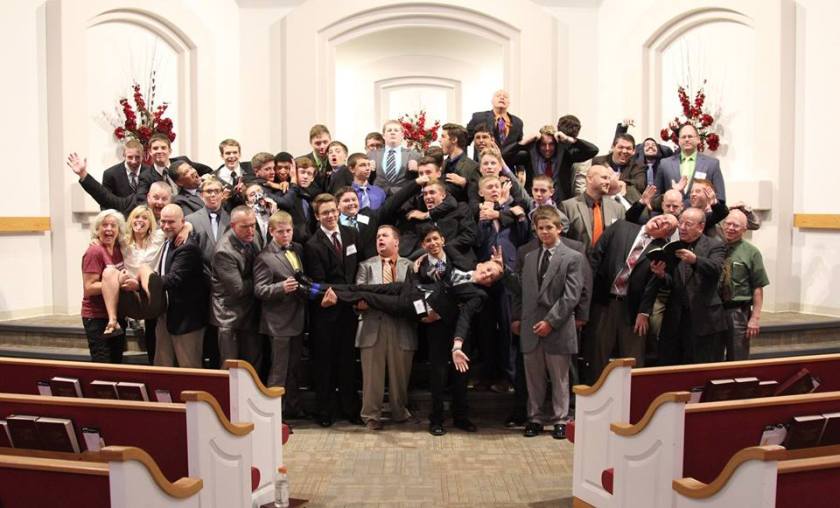
19224994_10154730412325922_1050303890532924516_n
2017 edition of the Denver Future Preachers Training Camp in a more serious moment

PREACHER FAN

Neal Pollard

Frankly, some preachers are or can be a pain! There are various reasons for this, but I would hasten to say that such are in the minority.  As I sit in our Future Preachers Training Camp listening to our teachers speak to the next generation of preachers, I am in admiration. Their passion, knowledge, experience, wisdom, and, knowing them, their character leave me in grateful awe. Others who have filled the pulpit or taught classes this week take their place alongside the others I mention.  Their work and life are incredibly noteworthy. While some would not use this word of them complimentarily, preachers are “special” men.

To go into this field of work requires some distinct traits:

  • A willingness to have your life on display
  • A desire to spend your life full-time in ministry
  • An understanding that some will not respect your occupation
  • A willingness to have people disagreeing with what you say, though you know it’s important
  • A humility to care and minister to others, even the difficult and unpleasant people
  • A willingness to enter a profession that may have an economic ceiling

The gospel preacher knows these and other circumstances may often exist, but he sees so many enriching aspects of the life of preaching. Soul-winning, serving, developing, aiding positive change, learning, and much more epitomize the fringe benefits available to a man who preaches the Word. Those wise enough to see this find these things more than sufficient to offset whatever perceived challenges accompany this life.

Watching tomorrow’s preachers absorbing, questioning, thinking, and working excites me. I’m thankful that they are able to find sound, qualified men to provide well-reasoned, Bible answers, but I’m as thankful they are interested and desirous of exploring this life. In a bad-news world, watching quality young men trying to stretch and grow themselves in leadership and preaching is some of the best possible news. Seeing works like preaching camps, schools of preaching, brotherhood activities featuring gospel preachers make me so thankful for men who dedicate themselves to this wonderful life. Please pray for every man who endeavors to aspire to and live this life. Each of us need God’s Word, wisdom, and strength to do this work adequately.

americana_wedding_the_preacher_2813852652429

We Can Only Share What We Know 

Neal Pollard

I found a treasure in a chest of drawers in my parents’ house this week. It was a Mother’s Day present I gave my mom when I was 8 years old. Actually, it was a project our third-grade teacher helped us put together. It was a recipe book concocted by us students without any adult assistance. The spelling and the recipes confirm this fact. My two recipes were “Peanut Butter ‘Crisbys’” and “Lemon Pie.” The first recipe was brief, but profound:

Put 3 C. rice crisbys in a bowl. Then
put 2 tablespoons peanut butter in.
4 C. Sugar.
Put in oven at 200 for 30 min.

The second recipe was more complex:

Put 4 eggs in the pan
Put 3 cups of lemon mix in
1 1/2 c. sugar
2 C. “flower”
Put in pan and cook for 1 hour at 200 degrees.

I assure you that nearly every recipe in this small book showed about as much culinary acuity. Why? We had been in the kitchen, but we had no concept about ratios, temperature, or baking times (or even if we used stovetop or oven). The result were “recipes” that would have been problematic to follow or eat.

What a challenge to me as I try to grow in grace and knowledge (2 Pet. 3:18)! I want to move beyond a childlike knowledge of Scripture and move on toward maturity (Heb. 5:11-6:1)! May I never be so lacking in knowledge that I cannot tell someone what to do to be saved, help someone know Christ, or speak about any matter pertaining to life and godliness (cf. 2 Pet. 1:3). May I have the humility to never “think more highly of” myself than I ought to think (Rom. 12:3). Otherwise, I may look naive or ignorant when asserting my expertise in a matter where I need considerable growth.  I must bring the same humility to such complex subjects as marriage and parenting, as well as Christian living. That is not to say that I should not grow to the point where I cannot be helpful, but instead temper my advice and assertion with deference and cover it with lovingkindness and patience.  On multiple occasions, the younger me made this mistake. In fact, I am still prone to do so. It reminds me to grow what I know and be careful not to share what goes beyond that.

19105931_10154722729605922_8392782078943308885_n

Coarse Discourse

Neal Pollard

Is it just me or are we much more open about using profanity in ordinary discourse? Our sitting president has exhibited an unprecedented amount of “curse words” in the public square, even if transcripts of historic documents reveal that a great many of the last several presidents have used language salty enough to make sailors blush. Hollywood reactors to the president have seemingly been trying to “trump” his salacious speech and have, in many cases, upped the ante in indecent language. Recent news story include Bette Midler, congresswoman Kamala Harris, and Kirsten Hillibrand (aka “Senator Potty Mouth,” via The Daily Mail) using shocking words that the thoroughly secular media acknowledges as inappropriate and indecent—at least measured by cultural norms and moors.

I have to admit being thoroughly baffled by church members, even teachers and preachers, who adamantly argue that Scripture has nothing to say about such things. Implicitly, even explicitly, their point is that such speech is legitimate for a follower of Christ. While we must be careful not to make laws God does not make in His Word, neither can we be so reckless as to hurt Christ’s cause by encouraging the Christian to mimic the world’s behavior, speech, or attitudes without discernment. When godless media, non-believing coworkers, classmates, and cul-de-sac compadres, and others in society associate certain words with the rebellious, humanistic lifestyle, shouldn’t we take pause?

Is there room in Paul’s admonition to Ephesus (4:29; 5:4) and Colosse (4:6) or Jesus’ public discourse (Mat. 12:34ff) for the kind of words that so many in society still find shocking and inappropriate? Are the principles of godly influence (Luke 17:1), salt and light (Mat. 5:14-16), example (cf. 1 Tim. 4:12), and the like not enough to cause us to feel strongly about how we use our words with people? Do we feel like well-chosen swear, scatological, and smutty words are essential to successfully relate to and connect with the rougher elements of society in an effort to win them to Christ?

We can relate to and reach people without resorting to irreverent and indecorous words. We can keep pure in speech without becoming isolationists in society. It does not have to be an either-or proposition.  May we realize that what we say (and how we say it! See Gal. 5:20, Rom. 3:14, and Jas. 10, for example) will impact people like we do not realize and in ways that we do not realize. It extends well beyond just our speech, but our words paint a picture of us for the very people we should desperately want to reach for Jesus. Please, give thought to the power of your words (cf. Prov. 18:21).

597px-profanity-svg

THE POWER OF THE TONGUE

Neal Pollard

One of the leading stories in today’s news concerns a young woman, Michelle Carter, facing manslaughter charges for allegedly coercing her boyfriend, Conrad Roy, to commit suicide. He was 18 and she was 17. While at earlier points in their relationship she tried to dissuade his talk of suicide (he had attempted suicide before meeting her), by the end she was insistent and even steered him onto the subject of taking his own life. The night he succeeded in killing himself by carbon monoxide poisoning, she even urged him at one point to get back into the truck. The hundreds of text messages she wrote are disturbingly callous and malicious, and she faces 20 years in jail if convicted. Her words are at the heart of this case, and prosecutors say she is complicit in his death because of all that she said (The Washington Post online, 6/7/17, Kristine Phillips and Swati Sharma).

It is incredible to consider that this young woman used her words to so discourage and deflate another human being, to even actively push him to die. Yet, Scripture tells each of us that, spiritually, we all are exercising the power to either promote life or death through our words. Proverbs 18:21 tells us, “Death and life are in the power of the tongue.…”  This is why Paul urges us to give thought about the character and nature of our speech, saying, “Let your speech always be with grace, as though seasoned with salt, so that you will know how you should respond to each person” (Col. 4:6). Our speech can kill in many ways:

  • Vulgar, coarse speech that can encourage others to think of the unwholesome and sinful
  • Hypercritical speech that can deflate and discourage people’s good works
  • Gossipy speech that can cause people to be divided and distanced from undeserving victims
  • Dishonest speech that can lead people astray from the truth
  • Railing, sinfully angry speech that can be self-destructive to the speaker
  • Hypocritical speech that can cause people to be turned off by Christianity

We may be prone to excuse our words as harmless when in fact they can be a matter of spiritual life and death for ourselves or someone else. Our prayer should mirror that of the psalmist, who pleads, “Set a guard, O Lord, over my mouth; Keep watch over the door of my lips” (Psa. 141:3). We possess such power! Let us harness it and use it for life, not death (cf. Jas. 3:2-12).

maxresdefault

Surrounded By Hungry And Thirsty People

Neal Pollard

I was a child when I saw news coverage of the famine in Ethiopia, the mass starvation, the distended stomachs, and the deaths from malnourishment. I had never seen anything like this, and I was deeply saddened by the images on the screen. If you had asked me if I ever expected to see or know about anything more tragic than that, I would surely have said no. Now, decades later, I routinely see something much more tragic. I can observe it whenever I wish, though it’s not something that ever gets easier. Noah Icenhour, the fine, new associate minister at the Mabelvale church of Christ near Little Rock, Arkansas, shared a concept with me that he read from N.T. Wright about our culture. Describing why so many are swallowing foolish, harmful ideas, whether false religion, fleshly indulgence, materialism and greed, evolution, atheism, narcissism, or the like, he says that so many are consuming these things because they are so hungry and thirsty that to satisfy and slake these inner yearnings they are willing to consume even sources that are polluted.

We are surrounded by spiritually hungry and thirsty people. They long for purpose, meaning, and value, but so often they seek it subjectively. Or they go to an improper source to satisfy these. Consequently, they squander their precious lives pursuing the wrong things, a path that Jesus describes as one in which “the gate is wide and the way is broad that leads to destruction” (Mat. 7:13). Spoken or unspoken, they are crying out for proper direction. They want their lives to matter. While the majority (Mat. 7:14) will refuse the biblical answer, I am convinced that our society is full of people who are honestly searching. They would be open to hearing the Bible’s answers to these preeminently important questions of origination, motivation, and destination.

Today, wherever you find yourself and whatever else you are doing, will you have the compassion and concern enough to look for and seek to help the kind of person I’m talking about? Let’s pray for courage and wisdom, and walk through the open doors we find. In so doing, we will be aiding hungry and thirsty souls who will ultimately go somewhere to satiate their cravings. With us in their lives, they can find true bread (Jn. 6:35) and living water (Jn. 4:14). Such will lift them now and save them eternally! May our hearts be touched enough by their dire condition that we cannot help but help.

4999517191_5c02fcd58d_b

One Of The Hardest Biblical Positions To State

Neal Pollard

There are few statements or pronouncements that are clearer than Jesus’ words in Matthew 19:9, yet perhaps none, in our current culture, is more intimidating to state. Jesus contrasts His will on marriage, divorce, and remarriage with the already existent stance of the Law of Moses. He says, “Because of your hardness of heart Moses permitted you to divorce your wives; but from the beginning it has not been this way. And I say to you, whoever divorces his wife, except for immorality, and marries another woman commits adultery” (19:8-9).  From this brief response (the Pharisees ask the question, testing Him in verse three), we see:

  • The teaching transcends time and culture—“From the beginning…and I say to you”
  • The teaching transcends all other authority—“I say”
  • The teaching transcends only believers—“Whoever”
  • The teaching transcends the caveats and conditions men have tried to place on the matter of marriage, divorce, and remarriage (not the specific law with its exception).

Yet, despite the clarity of Jesus on the subject, in the spirit of Christ we want to always approach this with utmost compassion, patience, and tenderness. Souls are at stake. Often, children are involved. Emotions are inevitably involved. A cold, callous treatment of people’s lives will surely draw Divine disapproval. That’s why Jesus’ stated position on this matter is one of the hardest to take. But, that cannot mean that we refuse to stand with Him in His teaching. However, we should ask why it is so hard to stand where the Bible stands on this matter?

—Learned men have stated different positions from this.
—Divorce is so prevalent in our culture.
—All of us have family members who are in marriages that violate Matthew 19:9.
—Marriage involves one of mankind’s greatest drives and needs (cf. Gen. 2:18-25).
—Leadership in more and more congregations refuse to deal with marriage, divorce, and     remarriage in the classroom, pulpit, or the hands-on shepherding of the local church.
—Few of us relish the role of being “the bad guy” (the one who has to break heartbreaking news to husbands and wives).

I could lengthen the list of reasons, and you could add several to it, but if the list grew to hundreds of reasons, we have one sobering, gut-wrenching question to ask, “Do any of them nullify the strength of Jesus’ teaching?” If Matthew 19:9 were not in the Bible, fewer preachers would have lost jobs, fewer elders would have lost favor, and fewer churches would have seen members go to congregations accommodating their marriages. But, Jesus warned that His way was difficult (cf. Matt. 7:14). He tells aghast disciples that discipleship requires whatever sacrifice is necessary to follow Him (Matt. 19:10-12). That message must be shared lovingly, gently, and patiently. There can be no other way (cf. Eph. 4:15). The harsh, unkind, or mean-spirited will deal with the Judge of all (cf. 1 Pet. 4:5; 2 Tim. 4:1). However, what will be the case for those who neglect, change, or distort what Scripture says to accommodate people? Perhaps there’s no way to ask that question without evoking a visceral reaction from those who have reinterpreted Jesus’ words, but in light of eternity it must be asked. Balance looks for biblical truth in between unbiblical extremes. However unpleasant a position that may put us in, that is the place we must always humbly stand. But, the only enduring place to stand is on the rock solid foundation of Christ (cf. Mat. 7:24-27; 1 Co. 3:11). God give us loving, but courageous, hearts to stand there.

16026538371_0dfe26b678_b

Appreciating The Blessings In A Key Text

Neal Pollard

Joshua 21:43-45 is the key text in that book because at this point that Joshua can say that God gave everything that had been promised. With the settling of the land, the land promise made to Abraham was now fulfilled. Israel was not fully a nation after becoming a people and having law, but now they are. Notice the facets of God’s promise to them.

“So the Lord gave Israel all the land which He had sworn to give to their Fathers” (43). God gave them physical blessings. They owned and called home the land God promised their ancestors.

“The Lord gave them rest on every side” (44). He gave them emotional blessings. This was a long time in coming for these battle-weary warriors. The anxiety of being the underdog, of facing frightening foes, all of that (at least for now) was behind them.

“No one of all their enemies stood before them; the Lord gave all their enemies into their hand” (44). He gave them spiritual blessings. These idolaters and heathen people could not stand before them and the Lord dispossessed them, giving them into the hands of His chosen people.

No wonder this summary statement is made: “Not one of the good promises which the Lord had made to the house of Israel failed; all came to pass” (45). This was the God of Joshua. It’s also the God of us.

This text shows us how comprehensively God blessed the lives of His children. These verses speak of a material inheritance. Even if it is the choicest spot on the globe, it cannot compare to what God will give to His faithful. Let’s rejoice in the hope Peter shares, regarding the promise of His coming (2 Pet. 3:4). He writes, “But the day of the Lord will come like a thief, in which the heavens will pass away with a roar and the elements will be destroyed with intense heat, and the earth and its works will be burned up. Since all these things are to be destroyed in this way, what sort of people ought you to be in holy conduct and godliness, looking for and hastening the coming of the day of God, because of which the heavens will be destroyed by burning, and the elements will melt with intense heat! But according to His promise we are looking for new heavens and a new earth, in which righteousness dwells” (2 Pet. 3:10-14).

18664277_10155415084714198_6856619033011736779_n
The supposed “Garden of Gethsemane” (photo credit: Carla Moore)

Is There No Balm In Gilead?

Neal Pollard

Jeremiah asks that question rhetorically? It comes at the end of an oracle God gave this prophet to share with his people, Judah. He had asked if the people had turned to idolatry because God was not in Zion (Jer. 8:19). He then ends by saying, “Is there no balm in Gilead? Is there no physician there? Why then has not the health of the daughter of my people been restored?” (8:22). In context, the people were sin-sick, but the cure was available. It was not because God was unable to restore them that they were ailing, but because they refused to seek the cure.

Certainly, today’s society mirrors this attitude of Jeremiah’s contemporaries, but this, in context, was spoken to those who had been healed in the past. These were God’s people. Now, they were spiritually sick and not getting better. The logical question is the one Jeremiah asked—“Why not?” When we are sick with sinful habits, lifestyles, attitudes, and speech, why don’t we turn to God for the cure?

  • Sometimes, we are oblivious to our symptoms.  Paul speaks of some who are “past feeling” (Eph. 4:19). We can become callous to our condition and rationalize it. As long as we persist in that state, it is as if there is no balm.
  • Sometimes, we look elsewhere for the cure. Judah had her idols, and so can we. People struggling with life turn to so many poor substitutes to numb, deaden, and try to eliminate the pain. Nothing can substitute for the Balm of Gilead (cf. Jer. 3:23).
  • Sometimes, we feel ourselves to be a hopeless case. As we struggle with our temptations and sins, we can get to the point where we feel we’ve gone too far or been too often to reverse the problem. This is not God’s message. He provides hope to every one who will come to Him for help (Heb. 6:9-12).
  • Sometimes, we underestimate God’s power. Jeremiah’s predecessor, Isaiah, shares God’s message regarding this, saying, “The Lord’s hand is not so short that it cannot save” (59:1). Jeremiah would echo this idea, writing, “Ah Lord God! Behold, You have made the heavens and the earth by Your great power and by Your outstretched arm! Nothing is too difficult for You” (32:17; keep reading in context for more beautiful truth along this line). Though we should know better, sometimes we forget God’s power to save.
  • Sometimes, we neglect our support system. God gave the church as a hospital where all of us, sick with sin, can not only receive healing from Him but help each other. In a sense, we’re a leper colony that has found the One who will keep us from dying. But we need each other for help to survive this spiritual sickness (Gal. 6:1-2).
  • Sometimes, we don’t avail ourselves of God’s medicine. How tragic to die from spiritual disease when God has the means to heal us. We have His Word as a divine prescription. We have prayer. We have the confidence of faith. We have the trust in His providence. He has armed us sufficiently with the cure, if we accept it (cf. Luke 5:31).

While they await the cure for cancer, cystic fibrosis, ALS, multiple sclerosis, and the like, our greatest illness has already been remedied. This illness carries with it the greatest repercussions. We cannot neglect the cure. But if we spiritually die, it will not be because there is no balm and no Physician. It will be because we would not come to Him for healing. May we not let this be the reason.

hqdefault

“Act Like You Like One Another”

Neal Pollard

Someone tasked with taking a picture of a couple or small group will coach them to stand closer together, maybe adding, “Act like you like one another.” They will typically chuckle and comply. How many moms have exhorted their squabbling children with a similar phrase?

A quick perusal of social media, with its all-too-often divisive rhetoric and pejorative comments, must frequently draw the same desire from the God of heaven. Whenever He sees His children at each other’s throats, complete with nasty put-downs, sarcasm, and venomous invectives, can we envision Him pleased? Regardless of whether one is motivated by defending the faith or some dearly-cherished viewpoint, he or she does not have to drown responses in hateful, provocative words. But, it happens many times over on a daily basis. For those of us who have non-Christian or new-Christian friends with privy to such comments from professed, mature Christians, we have to wonder if, contemptuously, they chide, “Act like you like one another.” More than that, Scripture convicts us on such a count.

  • “Since you have in obedience to the truth purified your souls for a sincere love of the brethren, fervently love one another from the heart” (1 Pet. 1:22; cf. 4:8).
  •  “To sum up, all of you be harmonious, sympathetic, brotherly, kindhearted, and humble in spirit; not returning evil for evil or insult for insult, but giving a blessing instead; for you were called for the very purpose that you might inherit a blessing” (1 Pet. 3:8-9).
  • “So, as those who have been chosen of God, holy and beloved, put on a heart of compassion, kindness, humility, gentleness and patience; bearing with one another, and forgiving each other, whoever has a complaint against anyone; just as the Lord forgave you, so also should you. Beyond all these things put on love, which is the perfect bond of unity” (Col. 3:12-14).
  • “Let love be without hypocrisy. Abhor what is evil; cling to what is good. Be devoted to one another in brotherly love; give preference to one another in honor” (Rom. 12:9-10).
  • “But no one can tame the tongue; it is a restless evil and full of deadly poison. With it we bless our Lord and Father, and with it we curse men, who have been made in the likeness of God; from the same mouth come both blessing and cursing. My brethren, these things ought not to be this way” (Jas. 3:8-10).
  • “If someone says, ‘I love God,’ and hates his brother, he is a liar; for the one who does not love his brother whom he has seen, cannot love God whom he has not seen. And this commandment we have from Him, that the one who loves God should love his brother also” (1 John 4:20-21).
  • “A new commandment I give to you, that you love one another, even as I have loved you, that you also love one another. By this all men will know that you are My disciples, if you have love for one another” (John 13:34-35).

The noble pursuit of defending the faith and protecting the purity of doctrine can get lost or totally nullified when the most casual observer of our words cannot find the love or detect the genuine concern in the midst of the biting, devouring, caustic quips and one-liners. How we need to pause and be introspective. “Every man’s way is right in his own eyes” (Prov. 21:2a; cf. 16:2). I can easily rationalize and convince myself of my own unrighteousness, as easily as the adulterer, the one in religious error, the drunkard, and the like can do with their iniquity. Why not, as we sift through the complicated maze of “interpersonal dynamics,” deal with each other patiently, giving the benefit of the doubt wherever possible, letting lovingkindness lead the way? We are not compromising divine truth, relinquishing a scriptural position, or shying away from sharing God’s Word when we make the effort to act like we like one another. We are submitting to the ethical blueprint commanded in Scripture (see above). “Let all that you do be done in love” (1 Cor. 16:4).

squabbling-brothers