BARRIERS TO COMMUNICATION

Neal Pollard

I was asked by a preacher from Texas to go and provide emotional support to a family of brand new Christians he reached with the gospel. In a tragic circumstance, the matriarch of this family was in the hospital Sunday morning to have a gallstone removed and doctors accidentally severed the hepatic portal vein going into her liver. This led to multi-organ shutdown that ultimately ended her life. In this atmosphere of unanticipated emotional pain and suffering, family had gathered from all over the country to see her before doctors removed the lines keeping her alive. I was unable to communicate very much comfort or support because most of them spoke no English and I speak virtually no Spanish. I sat in the waiting room with them throughout the afternoon, watching their anguish but having little more than smiles and sympathetic looks to offer. The matriarch’s granddaughter spoke good English, but it was hard to expect her to continually provide translation as she struggled with her own grief. Hopefully, they knew I cared and will allow the church to provide further encouragement. Thankfully, we have several members who do speak Spanish fluently who could help in ways I cannot.

As I was driving home and thinking about the best way to quickly learn Spanish, I had another humbling thought. How many opportunities do I pass up with people with whom my communication barrier is not language? There are some other, more sinister barriers that can keep us from speaking up for Christ in situations He is counting on us to take advantage of. There is fear—fear of rejection, opposition, or being ostracized. There is apathy—failure to consider or care about the eternal destination of the souls of those we encounter. There is selfishness—as we are so absorbed in our own pursuits that we do not open our hearts to the lost in our lives. There is sin—the presence of personal lifestyle issues for us that render us ineffective as sharers of the gospel message. These and other matters are much more frequently the roadblocks that keep us from reaching out to the people we encounter.

It will help us, I believe, to remind ourselves daily that this world is not our home and that every person is heading to an eternity that swiftly comes. We must have the courage to share with people how to prepare for that, to understand the great love God has for them and His desire to save them. We must keep the conviction strong that Jesus is the only way to salvation and that His applied blood is their only hope for such. We must care about people, enough to pray for boldness and wisdom, enough to walk through our open doors, and enough to share the good news with them. People are at the heart of our purpose as Christians. Let’s serve them by sharing the good news whenever, wherever, and however we can.

language-barriers-in-training

A Lot Happens In 25 Years!

Neal Pollard

Today is Kathy’s and my Silver Anniversary. The day we got married, the president was the first George Bush. Johnny Carson was hosting the Tonight Show (his final show was on our wedding night). Gas was barely over a dollar per gallon. We lived in a sleepy, west Alabama town (the thought of living in either Virginia or Colorado and traveling overseas was nearly as unthinkable as the internet). In some ways, of course, it seems like longer ago than 25 years, but in others it seems like yesterday.  But, you learn a lot along the way—some lessons coming easy but others more difficult.  In 25 years of marriage, here are a few things you learn.

  • You inevitably face some huge tests. There’s pain, tears, and fears, but, with God’s help, they are tests you can pass. While there can be abiding happiness, it does not come without adversity.
  • The road takes unanticipated turns. You are glad you cannot see the future, but that it comes to you only one day at a time. Taken all in all, you would not change the journey.
  • You must guard your heart and your life. The devil does not want couples to stay married, happily or otherwise. You can be drawn away (Jas. 1:13-15), and others can attempt to lure you away from your mate (Prov. 5:15-23). The hearts of married people can become polluted as easily as anyone else’s (Mark 7:21-23). You must guard your heart at all times (Prov. 4:23).
  • Trust is sexy. Untrustworthy behavior, deception, lying, broken promises, etc., is so damaging to a relationship. However, a spouse with a trustworthy character helps create a climate of peace, security, and confidence. This translates to attractiveness. We want those we feel close to. Distrust prevents intimacy.
  • The journey truly grows sweeter. With every change and new phase, there are challenges, losses, and adjustments. But the cumulative intimacy, the battle scars, the moments and memories, the happy days, the sweet surprises, and the rest combine to make an exciting, satisfying journey. Knowing a person better and deeper day after day makes life better, and brings poignancy to the heavenly insight, “It is not good for the man to be alone, I will make him a helper suitable for him” (Gen. 2:18; cf. 1 Cor. 11:8-12).
  • The little things are big things. Opening a door, an arm around the shoulder, unloading the dishwasher, love notes, flowers, putting lids up and down, noticing changes in hairstyles and nail polish, appreciating a meal, cleaning up after yourself, and similar “little things” can promote or undermine the overall quality of married life. Life is made up mostly of “little things.”
  • Of all your common interests, nothing compares to serving Christ together. Actions and activities done in service to Him contain better super glue than any hobby, vacation, life event, or mutual interest. Whether hospitality, evangelism, mission work, devotions and worship, Bible study, and such, these shore up the marital foundation and form an incredible, common bond.

Every day requires more practice, persistence, and prayer. Both of us are constantly changing and, hopefully, growing. It’s vital to stay in tune and in touch. But, I count Kathy as the greatest blessing after my soul’s salvation. I shudder to think where I might be without her and thank God that she has been by my side for a quarter of a century. My fervent prayer is that God will continue to bless my days with her heart, mind, and the rest of her and continue to bless my life through her as He has since I met her in August of 1990. My desire is to do my best to reciprocate these very things for her. May He grant me the ability to do so. Happy Anniversary to my favorite writer, my Sweet Pea, my Kathy!

18619895_10212448133896539_5898216597976843404_n
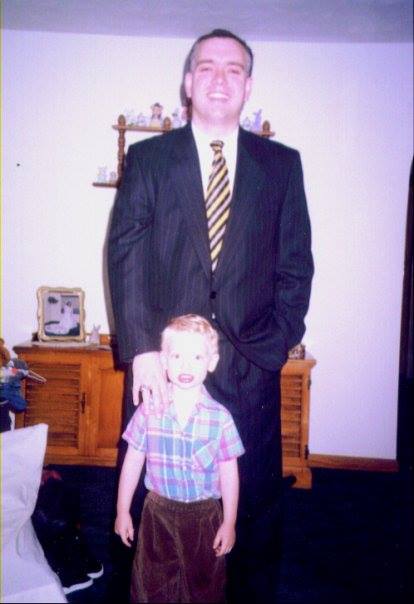
My dad was one year older than I am today in this picture (taken 5/22/92). 

A Tribute To My Dear Friend

for Johnson Kell (June 29, 1919-May 11, 2017)

A Loving Son, A Model Citizen, And A Friend Thru Thick And Thin,
A Gentleman’s Gentleman, An Encourager To Stranger And To Kin,
An Elder, A Father, A Grandfather, A Brother, A Mentor, Too
Devoted Husband, Ideal Employee, A Christian Through And Through

Sportsman, Conversationalist, Good Humored And Engaging,
Gentle And Calm, Level-Headed, Not Hypocritical Or Enraging.
He Loved Life Fully, But Fully Lived His Life For The Christ He Loved,
While Here Below, Until The End, He Lived For Life Above

We Want To Honor This Gentle Man From Imboden, Arkansas,
Who Honored The Humble Carpenter Who Brought A Higher Law–
A Law Which Johnson Lived So Well For Almost A Century Of Time
Who Rests Forever Comforted With Him In His Home Sublime

18423682_10154630449640922_4588753119353781997_n

What Dreams Do For Us?

Neal Pollard

According to Numbers 13:30, dreams:

  • Cause us to act—“Let us go”
  • Cause us to see urgency—“Let us go up at once”
  • Create faith within us—“Let us go up at once for we are well able”

45 years later, Caleb, who spoke in that passage, says, “I want the place where the giants live, the sons of Anak” (Josh. 14:12). He had a dream, but one man having the dream didn’t make the difference. 602,448 of his fellow soldiers died. 1000s and 1000s of women died because they didn’t share the dream.

I believe that churches need to dream big and have faith that those hopes and desires that please God and glorify Him will be accomplished. But there may be pitfalls along the way, any one of which may keep us from doing great things. In Caleb’s day, there were the obstacles of intimidation (31-33; 14:2-3), opposition—walled cities (28), enemies (29), imagination—borrowed trouble and irrational fear (32-33; 14:3), defeatism (31), and unbelief (14:11). Today, if we’ll let him, Satan will provide a way to disobey what God wants us to do. When we do, the consequences are grave (cf. 32-33). There will always be excuses for why we shouldn’t work at doing the Lord’s will. But God gives us large dreams and objectives. The Promised Land, with all its blessings, was from God and by God. God opens so many doors of opportunity to us. He wants us to take advantage of these opportunities and fulfill His objectives for us. He’s shown that He gives more opportunities to those who work with the ones already given. Remember the parable of the talents (Mat. 25:21,28-29). The greatest limit on our ability to fulfill those challenges and dreams is us (Eph. 3:20). Remember, God wants us to keep growing and doing more good for His glory (Phil. 4:19), and if God be for us, who can be against us (Rom. 8:31)?

MOM’S STEWARDSHIP OF CHILDREN

Neal Pollard
Feeding schedules, diaper changes, and runaway toddlers seem to consume a mother’s world for what seems like forever.  It may seem like an eternal duty, but those days very quickly pass.  What you learn in each new stage of your children’s development is that God gives you grace and strength to meet the challenges that accompany it.  Sleepless nights, drained energy, and unfinished housework discourage you.  Unappreciative, uncooperative children at times confront you.  Unsympathetic, clueless husbands may (though surely only rarely) irritate you.  But, you, ma’am, are doing important, yea, eternal work!

You hold more than a baby in your arms.  You lead more than a toddler or small child by the hand.  You mold and shape more than a child’s mind, social skills, and heart.  You, dear lady, are influencing this world and eternity.  As you rise to the challenges and succeed in keeping Christ in the center of your children’s hearts, you are partnering with God.  He can help you cope with the temporary trauma, the short-lived chagrin, and fleeting frustrations of motherhood.  God designed the home, and as such He designed it as a place where mother’s touch and influence would settle deep into the hearts and lives of those eternal souls you helped bring into existence.  You can dedicate them to God like Hannah did Samuel (1 Sam. 2:28).  You can sacrifice for them like Samson’s mother did for him (Jud. 13:13-14).  You can treasure the things about your children in your heart as Mary did about Jesus (Lk. 2:19).

In the meantime, while you are coping with the daily frustrations of motherhood, remember the words of Jan Dunlap:

Help me remember, when I feel it’s a chore,
The time will come when I’ll hold baby no more,
Asleep on my chest, the crib refused, the blanket,
the pacifier, gone unused.

What better place is there to lay baby’s head
Than against my heart, my arms her bed?

For children grow up and leave us behind
With only memories left to remind us
Of midnight walking and predawn rocking,
Of sweet, crying babies unable to sleep.

So, keep me patient and keep me awake
While I cradle this dear child,
And don’t let me begrudge another long night
With this baby, my darling, my joy, my delight.

The trials of motherhood are a relative moment.  The lessons you leave them last beyond a lifetime.  Thank you for willingly, lovingly, and righteously pursuing this important facet of God’s work on earth!
10509496_10152319491430922_7847742518867276869_n

Tuesday, 4:35 P.M.

Neal Pollard

He sat, reclining, sleeping as I drove
This man of 21 I was helping to move
Though manlike now his features, as he rested
By memories and reflections I was bested.

It could not be that that little boy was grown
How had these moments come and quickly gone?
I’d held this colicky baby just a day or two before
And watched just yesterday a child of three or four.

Some things still have not changed as years have fled
His daredevil ways, no path he fears to tread
His happy-go-lucky outlook, positive frame of mind
His heart of gold, his way of treating everyone so kind

I watched him sleep, assured whatever his test
He’d go to God for help, as he’s always faced the rest
A humble man who knows on God he must depend
Who’s willing to go wherever He may send.

I felt a little sad I’d soon be engaged in goodbye-ing,
Anticipating there might even be a little crying,
But something that kept me comforted and steady,
Was knowing that my son had made himself ready.

Ready for the challenges, ready to learn and grow,
Ready to preach and serve and teach and show
Jesus to the saints and sinners he’d soon meet
And stay, like Mary, at the Savior’s feet.

Dear God, I thank you for those times so dear,
They passed by almost as fast as they did appear
I gave him back to You when he first was born,
I give him again, full-hearted, not forlorn.

Please watch over Him as he ministers to others,
To the lost, the stranger, the sisters and the brothers,
May he keep You close through every hill and vale,
So no foe or fear or faithless fiend can prevail.

17904356_494472184276799_2956975484685722053_n
Dale with me in April, 1999, in Hurricane, WV, in the home of Jesse McKenzie (who passed from this life last Friday).

Meeting The Needs Of Newcomers

Neal Pollard

It has been said that visitors make up their mind about a church in the first ten minutes of their visit. Before they’ll even discern the doctrine we teach or form an impression about the distinctiveness of our worship, they’ve already decided. If you will walk through the first ten minutes of each time you come to services, you can discern the needs visitors have when they “enter” (cf. 1 Cor. 14:23-24) our midst. Consider these needs.

  • Where to park. Designating visitor parking and having members park as far from the main entrance is thoughtfulness. Having a greeter or greeters in the parking lot who can make contact quickly and facilitate with friendliness makes a positive impression.
  • Where the restrooms are. Good hospitality ought to drive us to be thoughtful and even proactive (i.e., when greeting, point out the nearest facilities). Along with this is showing them where the nursery is. If they have infants, toddlers, or small children, they are likely to have needs during their time in attendance.
  • Where to sit. An obvious practical help here is not to crowd the seats at the rear of the auditorium. It’s less awkward to be seated without parading past rows and rows of people. If there’s a full crowd, have designated personnel, pleasant, friendly, and considerate, to help them find a seat. Never, ever, never have a designated pew! “Pew-itis” is a disease that should be eradicated from every congregation.
  • What to expect. This is something worship leaders can do, explaining periodically why we do what we do in a “user-friendly” (as opposed to browbeating) way. Door greeters and those at a welcome center can help, as can visitor packets that cogently explain things. Such packets can include not just activities we do, but a map of where we do them.
  • How to find out more. Have a “new member orientation class” or a “Church 101” class available for those who are “seeking.” It can include an annual church calendar of events, ministries, church leadership (complete with pictures and bios), ways to be involved, and the like to orient newcomers.

At first, it may seem hard to identify book, chapter, and verse for the foregoing suggestions. But consider these principles. There’s the Golden Rule (Mat. 7:12; Luke 6:31). There’s the principle of the Law of Moses, which says, “The stranger who resides with you shall be to you as the native among you, and you shall love him as yourself, for you were aliens in the land of Egypt; I am the Lord your God” (Lev. 19:34). Colossians 4:5 urges wisdom with outsiders, making the most of the opportunity. Being Christians, we should be ever increasing in the mentality that puts others before self (Phil. 2:3-4). How do we best serve Jesus? By serving others, including our visitors and newcomers.

Singing Hymns in Church

My Heroes Have Always Been Preachers

Neal Pollard

I got to walk through the Aigne-Marne World War I American Cemetery east of Paris, France, in the Spring of 2006. It was dedicated in 1923 by an army general who said, “Now and then, a veteran will come here to live again the brave days of that distant June. Our countrymen will come here in hours of depression and even of failure, and take new courage from this shrine of great deeds.” 100 years later, memories have faded and fewer go there for inspiration. But soldiers, as well as policemen, firefighters, and doctors, are role models of bravery, sacrifice, and commitment that make great heroes.

My heroes have always been preachers, and I appreciate the depth of understanding I’ve gained from them. I’ve been motivated to live closer to Christ because of their preaching. Earthly memorials fade with time, but the value of good Bible teaching only grows with the passing of time. We must always measure what every preacher says by the Word of God and never blindly accept something just because someone we admire is the speaker (cf. Acts 17:11). But with that in mind, you can learn so much from older gospel preachers.

LISTEN TO THEIR SERMONS. Many old audio sermons are available online. Try wsoj.net, thepreachersvault.podbean.com, schwegler.us, housetohouse.com, pioneerpreachers.com, and therestorationmovement.com. There, you’ll find sermons of preachers who were much older when I was a boy and teenager, like V.P. Black, Franklin Camp, Roy Lanier, Sr., Bobby Duncan, and Wendell Winkler. There are also sermons from men who died before many of us were born, like N.B. Hardeman, B.C. Goodpasture, G.C. Brewer, and Marshall Keeble. These men were from a time when the church was experiencing incredible growth and when gospel preaching emphasized Bible doctrines and fundamentals. It’s a glimpse into church history from the voices of men who helped make it. Some of them baptized thousands and established many congregations.

READ THEIR BOOKS. I do not refer just the preachers from another time period, but those today, too. Those who have put much study into a topic of Bible book can bless you life and relationship with God. Read church history biographies, topical studies, sermon books, debate books, and the like.

HEAR THEM LIVE. I just ordered a set of DVDs from the 1988 Faulkner University lectureship. Though I was there live as an 18-year-old freshman, I am looking forward to reliving those wonderful days. I heard Franklin Camp, Hugo McCord, Leroy Brownlow, George DeHoff, Winfred Clark, Rex Turner, Sr., and others. My parents carried us to gospel meetings where I got to hear great preachers who have long since died. We still have that opportunity today through gospel meetings, workshops, seminars, and lectureships. We need to value this treasure in “earthen vessels” (2 Cor. 4:7).

SPEND TIME WITH THEM. I have directed Future Preachers Training Camp since 2007. One of my goals for these teen boys is to allow them to see preachers out of the pulpit. Their teachers and counselors are mostly preachers. The campers find out we like sports, video games, listen to some of the same music, and go through many of the same kinds of things. We are ordinary men who sincerely care about them. Many preachers are interested in what’s going on in your life.

I feel I could have done many other things in life, but if I had it to do over again, I’d still be a preacher. That’s thanks in large part to the preachers I’ve known in my life. Take time to get to know preachers. It will encourage them, but it may just encourage you, too!

hqdefault
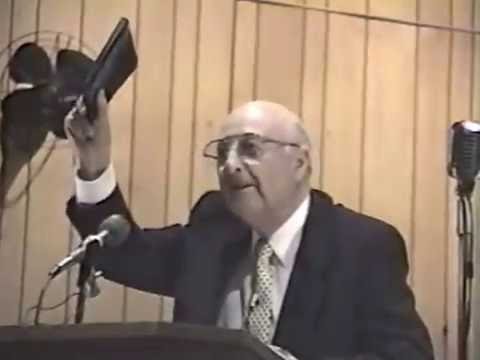
Perry Cotham in a 1989 debate in his “younger years” (77 years old). He was 101 when he died in 2013.

What To Expect When You Build 

Neal Pollard

The old saying, “The more things change, the more they stay the same,” seems applicable to time, place, and action. Though the rebuilding of the wall around Jerusalem in Nehemiah’s day stretches back 2500 years and occurred in a totally different culture about 7000 miles from here, it is amazing how what they faced and how they faced it is similar to our world and work right now. What can we learn from the physical building of Nehemiah to help in our spiritual building in the church today? Let’s look at Nehemiah four for the answers.

  • There will be opposition. Then, the opposition was from unbelievers who are introduced to us as those who “mocked and despised” (2:19). They will be driven by emotion (4:1,7). They will actively work to undermine and upset the work (4:8). They will actively work through verbal assault (4:2-3). They will succeed in striking fear in the hearts of some of God’s workers (4:11ff). If we can settle it in our hearts that the devil will never be satisfied until he defeats every faithful work for God, we will expect opposition to exist. The key is not to put the focus on the opposition.
  • There must be devotion. Nehemiah, who narrates much of this Bible book, shows us how you defeat opposition. You depend on God through prayer (4:4-5,8). You trust that God is at work in answer to prayer (4:15,20). You keep the focus on His power (4:14). If we can remind ourselves that “our [great and awesome] God will fight for us,” we can keep going through the most frustrating failures along the way.
  • There must be direction. Someone has to lead people to focus on God rather than His enemies. Nehemiah exemplifies godly leadership. As noted, he led the people to rely on God when doing His work. Notice that he also communicated to the leaders and workers (4:14). He reminded them of their motivation (4:14) and gave them a tangible plan (4:19-20). He also led by example (4:21-23), rolling up his sleeves along with the rest of the people. Such servant-leaders inspire and encourage success.
  • There must be action. Though their success ultimately came about because of God’s power, this did not nullify their need to work. They built because “the people had a mind to work” (4:6). The late Wendell Winkler was known to say, “Programs don’t work. People do!” Walk through Nehemiah four and observe the action verbs. You see them “each one to his work” (15), “carrying on the work” (16, 21), and “doing the work” (17). So it is today.

These were ordinary folks. They faced fear, doubt, and discouragement. They had limitations. But they “built the wall” (4:6). In other words, they succeeded in the task God gave them to do. We are not inferior to them in any way unless it is in execution. We have opposition. We can defeat it with proper devotion, direction, and action. The work God has given us in His church today must be done, but it can be done! Let’s do more than believe that. Let’s embody it!

New Horizons humanitarian assistance in Haiti

Is The Church Broken?

Neal Pollard

You hear comments in Bible classes that amount to what’s wrong with the church, what we’re doing wrong, what we’re not doing, and what it’s doing to us, our children, and the world. You read people’s minds through their social media rants, raves, and ramblings, and the bottom line message is that the church is inept, irrelevant, irresponsible, or, worse, insidious. To hear some tell it, the church is not only unhelpful, but actually hurtful.  I know that we can be prone to say things out of hurt, disappointment, anger, and bitterness, but the words themselves are no less potent even if influenced by such emotions.

Is the contention, as one Christian sister put it, that “the church is broken,” true? Another way to put that is, “Are elders, preachers, deacons, Bible class teachers, and every other Christian broken?” Perhaps we impersonalize it and overly-institutionalize it with a nameless, faceless designation of “church.” But the church is, as we were taught as children, “the people.” People who are prone to say the right thing at the wrong time, the wrong thing at the right time, and, sadly, the wrong thing at the wrong time. We disappoint, we mishandle, we poorly execute, we unfairly judge and criticize, and we simply blow it. That is definitely not an excuse or a permission slip for bad behavior. Yet, it is not likely to ever change.

Because the church is made up of sinners saved by grace, the church is broken. We who are quick to condemn the church as broken need to face that we ourselves, as those placed by Christ into that church when we were saved, are broken, too. Show me the perfect person who never mishandles a situation, never sins with tongue, attitude, or deed, and I’ll show you someone who will stand before Christ at the Judgment saved on the basis of their own merit and goodness. That won’t happen.

Let’s be reminded of what the church is.  It is the precious, beloved bride of Christ (Eph. 5:22-25; Rev. 19:7; 21:2). It is that institution purchased by His very life’s blood (Acts 20:28). It is that which was thought up by God from the eternity before time as is the expression of His manifold wisdom (Eph. 3:9-11). It is the place where Christ is glorified (Eph. 3:21; 5:27). It is the present the Son will present to His Father when time is no more (1 Cor. 15:24). It is that and truly so much more.

God designed the church. Reckless criticism of it is reckless criticism of Him. All of us should be determined to improve in every area of our spiritual lives, to be for others what we need to be, to conquer faults and sins in our lives. We should also extend to others the grace we intensely desire to receive when we stand before the King at the last day! Yes, the church is broken, but not in the sense that it cannot help, serve, minister, love, and encourage. Let each of us strive to be the church we want the church to be. Model and exemplify it. Emit the fragrance of Christ. That way, the broken church can help mend the broken lives that make it up.

broken_church_2c_areman_28_masud_abad_29_village_2c_azna_d8a7d8b2d986d8a7_d988db8cd8b1d8a7d986d987_d987d8a7db8c_daa9d984db8cd8b3d8a7db8c_d985d8b3d8b9

Singing With The Understanding: “Beneath The Cross Of Jesus”

Neal Pollard

Most of us have favorite songs and hymns. My favorite category of hymns is songs about the cross. I love the somber, dramatic feel of Beneath the Cross of Jesus, a hymn penned right after the close of the Civil War by Elizabeth C. Clephane and one set to the music we sing with it by Frederick Maker a dozen years later in 1881. The cross of Calvary is treated as a metaphor of protection for one in a wilderness. One might envision the wandering Israelites making their way to the Promised Land and apply that, figuratively, to our journey through this world of sin toward heaven. But the song will change scenes multiple times until, in the last verse, it is a most personal challenge to each of us to be faithful disciples of this crucified Lord.

The first verse introduces the foot of the cross as a shadow of a mighty rock where we find relief and a home to rest in from trials and difficulties while pilgrims in a weary land (the world). We might easily think of Israel’s exodus from Egypt. Some songbooks have a notation to define “fain,” a word used in the first line. It means “gladly.” I am happy to shelter behind Christ’s cross in adversities.

The second verse builds upon the metaphor of the first verse, then subtly shifts to an event from the book of Genesis. The cross is, again, a shelter and refuge. But, then, he shifts to an allusion to Jacob’s dream (Genesis 28:10ff). He has left his father’s house and his brother’s wrath and beds down near Haran. He lays down, using stones for a pillow, and falls asleep. Moses writes, “He had a dream, and behold, a ladder was set on the earth with its top reaching to heaven; and behold, the angels of God were ascending and descending on it.  And behold, the Lord stood above it and said, “I am the Lord, the God of your father Abraham and the God of Isaac; the land on which you lie, I will give it to you and to your descendants” (12-13). This is where God reaffirms the promise He had made to Jacob’s grandfather and father to make of them a great nation. It symbolized hope, reward, and heavenly assistance. The song writer says the cross is just like the ladder in Jacob’s dream, except that I ascend to heaven by way of the cross. Again, Clephane uses a poetic, if obscure word, in this verse: “trysting.” The word means “meeting.” At the cross, God’s perfect love and justice meet. His love is shown and His justice satisfied by Christ’s sacrifice.

The third verse becomes a straightforward look at a literal remembrance of the graphic, horrific suffering of Jesus on the cross. She focuses on what our reaction should be–a smitten heart, tears, and a proper conclusion. How great is His love! How unworthy I am that He would demonstrate it to me (cf. Romans 5:8).

The last verse is the challenge to respond to that sacrifice. We are to live in the shadow of the cross, daily reflecting upon it and letting it affect how we live. We are to ignore all else to focus on Him. Clephane seems to allude to Paul’s words in Galatians 6:14, if ever so subtly. Too, there’s a challenge to not be ashamed of Jesus and the cross, but reserve our shame only for the sin in our life that made the cross necessary.

It is beautifully and intricately woven. Despite some unfamiliar, even archaic, poetic words, it is powerfully written. What a great song to prepare our minds for the Lord’s Supper or to sing when our motives gets clouded and our priorities get muddled. May we take the time, when we sing it, to consider the truth it teaches and the challenge it contains.

shadow-205510_960_720

ARE YOU ON THE LIST?

Neal Pollard

I recently heard D.C. Brown, illustrating proper conduct, mention a list I’ve seen at times in my adult life. The list he mentioned was of people whose personal checks the cashier was not to take. The offenders apparently wrote “bad checks,” checks they did not have sufficient funds to cover. The names, as is typical, were bold and legible to the customer as well as the employee. Multiple purposes are achieved through such a list—warning, shaming, identifying, and the like. It is unlikely, but not impossible, that someone’s name might accidentally land on the list.

Throughout our lives, we may find ourselves looking to see if we are on this list or that. When I was in school, they would publish the honor roll list, depth charts in sports, casts for plays and who was chosen for what part, and those who were selected for the Beta Club or Honor Society. The advent of the internet has slowly replaced paper lists with electronic ones, but the concept is still intact.

The Bible talks about a “list.” It is a list every thinking and feeling person should yearn to have their name written on.  The setting is the great day of judgment, recorded by John in Revelation 20:11-15. Jesus is sitting in all His majesty on His throne. Everyone, great and small, stood before that throne. They were judged by God’s Word and what they did with it. In a sobering text, here is the climax: “And if anyone’s name was not found written in the book of life, he was throne into the lake of fire” (15). Jesus preached on earth that the majority of all people will not be on that list (Mat. 7:13-14). They will have neglected or rejected the will revealed in the Bible (cf. John 12:48). If never before that moment, at that threshold of eternity they will have never wanted anything like they will want to have their name on that list. But, then it will be too late. Now is the time to submit ourselves and our lives to that divine will and, by grace through faith, have our name written there.

Some lists we would wish to avoid in this life. The list, in Revelation 20:12, is not one of them. What a joy it will be to hear our name “when the roll is called up yonder”!

ahschool-roll-of-honor-list281947-9229

THE KIND OF LIFE WE SHOULD LIVE

Neal Pollard

Most of us are familiar with the intimate words spoken by Jesus to His followers in John 14:1-6. They were words of active comfort for a man who was imminently facing the worst suffering humanity could ever know. Yet, from those gentle words of guidance, we find a beacon to show us what kind of life it is possible for us to live—no matter what!

We can live a fearless life (John 14:1). Our hearts don’t have to be troubled. That doesn’t mean we won’t face fears and uncertainties. How can we avoid it? But we can let our fears be subjugated to our Father. We can trust the Bible’s promises and follow its guidance on this (cf. John 14:27; Phil. 4:7).

We can live a faith-filled life (John 14:1b). A “theocentric” (God-centered) point of view will influence our decision-making and daily living. We can have assurance and conviction (Heb. 11:1), but we must have a faith accompanied by works of obedience (Js. 2:20). All of us have lives centered around something that we make most important of all. There are many noble things that could fill in that blank—profession, family, friends, or the like. These may be part of our identity, but they should not define us. Our faith should define us.

We can live a focused life (John 14:2-4). Jesus urges His disciples to focus on at least three things:

  • Focus on the Father’s house (2). Long for heaven.
  • Focus on the Son’s coming (3). Anticipate His return. We know death is an appointment followed by the Judgment (Heb. 9:27).
  • Focus on God’s fellowship (4). Long to be where God is and to follow where He leads. Let that desire lead you to fellowship with Him and His saints publicly and privately in your personal devotional life.

We live in a world full of distractions—technology, appointments, hobbies, politics, and sports. Never let any of those things get your life out of focus.

We can live a follower’s life (John 14:6). We must believe that Jesus is the only way. We must shun the politically-correct notion that says there are many ways. We must live the exclusive way that Scripture teaches. We cannot serve God on our own terms. We must submit to His way and His truth, and we can enjoy the eternal life He offers.

Fame, fortune, fun, friendship, and such may draw and lure us. But none of those things will last. Jesus points to the kind of life we should live. May we be wise enough to listen.

blaine_mansion_during_renovation

Goose Hunting

Scott Philliips

A few years back I started goose hunting and I found out something very interesting about myself. I like it a lot! They are exciting to hunt, easy to harvest the meat, and they are delicious when I smoke them into jerky. Many of you probably don’t understand the challenge and excitement involved since most of the time you could just grab one off the street and throw it into your car. But out in the open, where it’s legal to shoot them, it can be a real challenge.

In order to get flying geese to come in for a landing close enough to shoot them, there are two basic tactics. One is decoys. Geese want to join up with other geese, and if they see some on the ground it tells them that it is probably a good area to feed and that it’s safe. In order to fool them, your decoys need to look real, and mine look real. Anytime I leave my spot and return, I spend an embarrassing amount of time sneaking up on my own decoys. The second thing you need is to sound like a goose. Your call needs to be authentic. It needs to get their attention to draw them into the kill zone.

Many of you have already connected the dots in my story. It’s so simple really. It’s a do-it-yourself lesson.  We need to be on guard as Christians so as not to be fooled or deceived by teaching that is not authentic, not the real deal. Teaching that may look and sound good, but will cost us our souls, can fool us.

But that’s not the lesson. I challenge myself and all of us to consider an even more sobering question. Have I become the decoy? Has looking and sounding like a Christian become enough for me? My calls are spot on. I can speak their language. My decoys look fantastic. They dutifully show up for every hunting trip. But they are not real, and they don’t move.

A real goose moves.
A real goose flies.
A real goose feeds.
A real goose is active all the time.
A real goose is busy being a real goose, all the time.

Read Matthew 25:34-36.

So are you, am I the real deal? It depends on what we do between “hunting trips.”

3387888544_9eae5ea589_b

[Originally from Scott’s “90 Seconds of Power” devotional at Bear Valley]

Do Brotherhood

Neal Pollard

Hayden Holland, who obeyed the gospel less than three years ago, taught his first Bible class last night at Teens in the Word. It was an excellent, hour-plus long study of the parallels between serving in the military and living the Christian life. In this very practical study, Hayden mentioned the Army’s concept of brotherhood. The fraternity and bond built by basic training and the structural philosophy of the armed forces creates this sense of brotherhood among soldiers.  Without fellowship, he said, disputes will pull soldiers apart. Throughout his lesson, Hayden urged us to “do brotherhood.” Brotherhood is a noun, meaning “the feeling of kinship with and closeness to a group of people or all people” (Dictionary, version 2.2.1, 2016). Peter uses the word in 1 Peter 2:17, a word, according to BDAG, meaning, “A group of fellow-believers, a fellowship” (19; cf. 1 Pet. 5:9—“brethren”). Hayden’s exhortation to us was to do what it takes to create that feeling and fellowship.  Saying we are brethren, even acknowledging and teaching what God says is necessary to become part of that brotherhood, is insufficient of itself.  There is something to be done!

He directed us to the seven values touted by the army—“loyalty, duty, respect, honor, integrity, courage, and selfless service”—as examples of how we can “do brotherhood” in the Lord’s Army (cf. Eph. 6:10ff). Doing brotherhood means taking time to listen to and help our brothers and sisters in Christ when they are struggling. It means spending time together, engaging in each others’ lives. It means being faithful to live out what we say we believe daily, in the world and in the absence of our church family, because we love them and don’t want to let them down. It means talking out our problems and disagreements. As we work to see ourselves as a part of something bigger than just ourselves, the effect is revolutionary. Non-Christians see the bond we have with our brethren and it draws them. Jesus told His disciples that this brotherly love would be their identifying mark to a searching world (John 13:34-35).

How often it has been observed that Christianity is more than a state of being; it requires a life of doing. The brotherhood consists of all those within the body of Christ. But, that “group” has to be maintained, sustained, and retained. Such requires action! My action and your action. Let’s be sure we are “doing” brotherhood!

17862689_10212031358357411_591145317067498345_n

“I Don’t Feel Good Enough”

Neal Pollard

How many times have you said that? You may project an air of confidence that would make it hard for anyone to think you felt that way or you may wear it on your sleeves. But, if honesty prevails, we’d all confess to wrestling with that thought. Daily! With Paul, facing the scope of our challenge, we exclaim, “And who is adequate for these things?” (2 Cor. 2:16). BDAG informs us that “adequate” means “sufficient in degree…large enough; pertaining to meeting a standard, fit…competent, qualified, able” (472). As Paul’s words are in the context of ministry, conscientious preachers who read that statement really get it. We’re fragile pottery entrusted with a perfect, eternal, and divine message (2 Cor. 4:7).  Oh, how we feel our own humanity as we preach the mind of God to others struggling with their humanity. We know our every weakness better than anyone else does.

Yet, the struggle I mention is not just the preacher’s burden. The best Christians I know live each day fully aware of their inadequacies and insecurities. No matter how many good works they do, how faithful in attendance and duty they are, or how actively they seek opportunities to serve God, they struggle at times. May I suggest that this is one of the biggest blessings of living the Christian life. No, we don’t want to live in a shroud of guilt. Not at all! But, consider what happens when we acknowledge our glaring insufficiencies.  We can see our utter dependency on God that much better.

Could Moses have really led the Israelites for 40 years on his own ingenuity and oratory? Could Jeremiah have really faced his audience on his own temerity? Could a renewed Peter have really preached that Pentecost sermon to Jesus’ killers on the merits of his own homiletic greatness? Could Paul have really transformed the first-century world on the foundation of his cosmopolitan experience and top-notch education from Gamaliel University?

Repeatedly, throughout His ministry, Jesus decries the Pharisaical tendency of trusting in self (Luke 16:5; 18:9). Ultimately, it’s a farce anyway. I may struggle with different weaknesses than you, but I still struggle. While that is never an excuse to give up and indulge in sin (cf. Rom. 6:1-2), it is a great, daily starting place to appreciate our need of God’s favor and friendship. We are not going to make it through this world on our own merits. As the beautiful old song suggests, “I need Thee, oh, I need Thee, every hour I need Thee….”

Here’s the beautiful thing that happens when we recognize our shortcomings and inabilities. We become an empty vessel that God can fill to accomplish His work. God will open doors of opportunity for us to do, by His might, what we could never have hoped to do without Him. Whether doors of service (teacher, elder, preacher, deacon, etc.), lives of holiness, or works of obedience, we will live in amazement of His power. Or, as Paul put it, “Now to Him who is able to do far more abundantly beyond all that we ask or think, according to the power that works within us, to Him be the glory in the church and in Christ Jesus to all generations forever and ever” (Eph. 3:20-21). Take heart, Christian! You’re not doing this alone. You can’t! But, what can God not do? That thought is exciting and thrilling. With that in mind, no mountain is too formidable. He’s got this!

pexels-photo-208151

Thick Skin And A Tender Heart

Neal Pollard

We live in the age of hypersensitivity, fragile feelings, and the easily offended. I’m convinced that this is often a worldly, self-centered response our forefathers would have hardly believed could be the serious behavior of adults.  Sadly, it can be found within the body of Christ and even from preachers. I’ve seen articles meant to remind our brothers and sisters that preachers are people, too, and it’s not nice to hurt our feelings. As a lifelong preacher’s kid, a preacher all of my adult life, and now the father of three preachers, I am acquainted with the daily, personal life of a preacher. Yes, we do live in a glass house. Yes, we will occasionally be criticized unfairly. Yes, we will be exposed to brethren who act like the world in their treatment of us. Yes, we will encounter and must endure a variety of hardships.

However, what a small price to pay for the greatest work in the world. Moreover, we would inevitably face pressure, opposition, and unfairness whatever profession we chose as we live in a fallen world filled with imperfect people (even among the redeemed). Further, whatever we face today would seem to pale to the travails and tribulations our preaching ancestors, Old Testament and New Testament, endured for sharing the good news.  Throughout time, in response to that, some have caved, others have callused, and still others have maintained cheer, courage, and compassion.

Especially with the resurgence of emphasis on such a mentality as “the art of manliness,” here is an area where God needs His proclaimers to act like men. What that will mean, in ministry, is maintaining thick skin. Don’t take everything personally. Don’t wear your feelings on your sleeves. Don’t always internalize, when someone who is hurting or struggling lashes out and you happen to walk into the crosshairs. Don’t be ready to cave and cry at every conflict and interpersonal “crisis.” Don’t fail to do self-analysis when these things happen.

Meanwhile, this toughness in the face of “job hazards” must be balanced with a tender heart. Such a heart will help you keep a sunny disposition, see people, their lives and souls, compassionately, maintain a desire to serve God and people, stay devoted to God as you minister, and keep your dependency upon Him strong. This is vital to our own spiritual preservation and growth.

I’m certainly not blind and naive. I could recount sufficient tales of travails suffered within my own family’s collective experience (I have several other family members who have been or are preachers, too). It’s how we view, share, and build on these that can make all the difference. Keep in mind that the great majority of our brothers and sisters will treat us well, often better than we deserve. If we are unjustly treated, our righteous reaction can serve to motivate others to imitate us in their mistreatment (see 1 Peter).  Preachers should be men who maintain hearts tenderized by the awesome power of God and precious promises of His Word.


Watching Godly Elders

Neal Pollard

We are blessed with seven wonderful elders here! They span in age from 48 to 81, are of varying backgrounds, personalities, and skillsets, but collectively they reflect God’s wisdom for a plurality of godly men shepherding the flock. With the magnitude of the work and workload here, I cannot help but stand in awe of the great job they are doing. To watch men like these, I’m reminded of the powerful good done by apt, able elders. Far from an exhaustive list, they:

  • Show Hospitality—They open their homes freely and frequently, getting to know the sheep.
  • Keep Track—They make it their business to account for the sheep, knowing they will give an account for each of them ultimately.
  • Cast Vision—They do not lead from the rear; they thoughtfully, decisively get out front and show the way.
  • Greet Visitors—They care about our members, but they are constantly focused of who’s new around here.
  • Contemplate Problems—In the spirit of Solomon, they are presented with and must decide often complex, hairy matters…in real time.
  • Faithfully Pray—Listen to men pray and you get a pretty good idea how practiced they are. These men are devoted to it.
  • Show Heart—They aren’t afraid to demonstrate their care, concern, and love. We see it in their passion, their tears, and their involvement.
  • Manage People—Sheep are also of differing temperaments, needs, problems, and levels of maturity. They deal with “all kinds.”
  • Consult God—How exciting to see overseers humbly searching for and submitting to a “Thus saith the Lord.”
  • Balance Time—They do all of this while being competent employees, conscientious family men, and character-filled Christians.
  • Set Direction—They are tone setters in a basic way; What they emphasis, we will make important. We hear their voice, in the assemblies, meetings, and private conversations.
  • Make Mistakes—Despite sometimes unreasonable expectations from some, they are terminally human and inevitably subject to imperfection.
  • Follow Jesus—They are good shepherds walking behind the Good Shepherd. They want to serve, please, and imitate Him. Ours do a fantastic job of that.

Have you seen what a great job these men are doing? Have you taken the time to stop and let them know? Many churches veer from the straight and narrow path because of ungodly elderships. Thank God for the shepherds at Bear Valley!

13239021_10153682591930922_3851531815462243933_n

Happiness Guaranteed!

Neal Pollard

Who wouldn’t find that appealing? Many years ago, Hugo McCord wrote a book entitled, “Happiness Guaranteed.” In it, he wrote, “Is happiness difficult? Yes, to those on the wrong road. Is it elusive? Yes, to those who want it without a price. But to the simple, plain folk of the earth, willing to walk God’s road, willing to pay God’s price, happiness is, like God, not far from every one of us.”  Many spend a lifetime in a desperate, elusive attempt to be happy. What if there was a formula for true happiness? I believe we find it in Psalm 37:23-26. This text tells us what we need to be happy.

We need a direction mapped by God (23). If we make life a self-guided tour, we can guarantee ourselves a life of misery. Even a Christian’s heartaches often stem from our trying to “go it alone” without His guidance. He guides us through the Word (Psa. 119:105,133). He knows everything at the deepest level of comprehension. He understands what kind of life will make us happy and miserable. David says life without God’s guidance is chaotic and disorderly. I read about an optometrist who examined an elderly patient and asked, “Can you read the fifth line of the chart?” “No.” “How about the fourth line?” “No.” “Hmm. Try the second line.” “No.” “Surely you can read the first line.” The old man said, “Truth is I’ve never learned to read.” Have we learned to read? Have we gotten into the regular habit of consulting God’s divine roadmap?

We need a delight in His way (23). In a matter of minutes, you can find out what a person enjoys in life. It could be sports, politics, travel, shopping, mechanic-ing, nature, reading, fishing, horseback riding, or stamp-collecting. Kept in proper place and priority, these can be good, healthy, and legitimate. But way too many people get their thrills in illegitimate ways. They enjoy the unwholesome, filthy, perverted and vulgar. To many, “The word of the Lord is unto them a reproach; they have no delight in it” (Jer. 6:10). Solomon adds, “A fool does not delight in understanding…” (Prov. 18:2a). God’s outline for living, when followed, leads to delight. Other ways are paved with the heartache of others who foolishly paved those same paths previously.

We need a dependence on God’s providential care (24-25). Seven times in the Psalms, the writer tells God, “The righteous trust in You” (5:11; 9:10; 17:7; 25:22; 31:19; 55:23; 56:3). Your faith can be built if you trust that God, even when things seem doubtful, will provide what is needed and what is best. Not just materially, but in times when spiritual decisions must be made (cf. Gen. 22:8; Rom. 4:18-21). When we place our future, fears and fortunes in God’s almighty hands, we find true happiness (1 Pet. 5:7). David challenges us to find a case of a true follower forsaken by God. Satan wants us to think God doesn’t care about us. That’s what he wanted Job’s problems to do to Job—make him turn against God. If you are suffering right now, be assured that God hasn’t left you.

We need a duty to others (26). Norman Vincent Peale said, “The way to happiness: Keep your heart free from hate, your mind from worry. Live simply, expect little, give much. Scatter sunshine, forget self, think of others. Try this for a week and you will be surprised” (The Power of Positive Thinking, 54). Psalm 37:26 mentions two responsibilities we, being richly blessed by God, have to others. The  first, mercy, should express itself through acts of kindness. The second, lending, shows generosity. God ties generosity to true conversion. We give our money, our time, our talents, our heart, and ourselves. Listen to the joyful words from those spend themselves serving others. They say, “We are unworthy slaves; we have done only that which we ought to have done” (Lk. 17:10).

We overcomplicate life with needless worry, harmful actions, and heavy burdens. So many people, from a financial, social, and physical perspective, have every reason to be happy but are miserable! The opposite of that is true, too. One may be drained of every resource but faith, but no one can rob them of their joy (Ps. 128:2; Pr. 3:18; 14:21; 29:18)!

91yglo5s5dl

It’s Not Business; It’s Personal

Neal Pollard

Some years ago, when our sons were all teenagers and they were given a cell phone, there were times when they failed to use those to communicate if they got to their destination or answer when we needed to reach them. While I never did it, I was tempted on more than one occasion to contact the cellular provider and suspend their service. Why? Was it because I thought it was wasted cost? No. It was because it reflected a lack of thoughtfulness and responsibility. It wasn’t business. It was personal.

Hebrews 10:25 is a sobering, New Testament passage. It addresses the Christian’s attitude toward the sacred assemblies of the church. What makes it sober is its contextual attachment to the eternal ramifications of abandoning those assemblies. God speaks of “no more sacrifice for sins,” “severer punishment,” “vengeance,” and “terrifying” (26-31) in connection with sinning willfully, of which forsaking the assemblies is a contextual example. But, why is God so exacting about this matter of our meeting together? In a nutshell, it is because these times, to God, are personal. The Bible is full of references to God’s desire to be worshipped and receive our worship. He is worthy. As Creator, He has the right. But, in this passage, it is personal in the sense that what He commands is so helpful to you and me.

Written on the foundation of the fact that our High Priest, Jesus, has given us access to God (19), the writer urges us to do three things: (1) Draw near (22), (2) Hold fast, and (3) Consider. It’s the third one I want to briefly notice:  “and let us consider how to stimulate one another to love and good deeds, not forsaking our own assembling together, as is the habit of some, but encouraging one another; and all the more as you see the day drawing near” (24-25).

There should be a personal connection. Notice how the writer reveals this. He says “us” and “our.” He says “one another” twice as well as “together.” Christianity is not a solitary condition. We must see ourselves in connection with the rest of the body. Assembling is about seeing ourselves as a vital piece of a more important whole. Forsaking the assemblies is, for whatever reason, selfish and self-centered. It is done blind to the needs of others.

There should be a personal submission. The command is “consider” followed by two participles that tell us how to obey the command: “not forsaking” and “encouraging” (more on that in a second). So, in a discussion about the whole group, there is a command each must strive to obey. As it is a command, ultimately this is as personal as God and the individual. I fail to consider my role, I fail in my relationship with God.

There should be a personal obligation. Each of us is obligated to stimulate and encourage everyone else. It’s not just those who publicly lead worship or teach class. The reclusive saint who dashes out before services are over has missed this. The clammed up Christian who never reaches out to fellow saints but is closed to others misses this. The discouraging and unloving brother and sister rebels against their duty. I should never be focused on how well others are stimulating and encouraging me. Instead, I should be so lost in my efforts to be a blessing to others that I have no or energy to evaluate how others are doing.

There should be a personal anticipation. This is more than social and emotional. It’s spiritual and eternal. Those other aspects are means to that end, but don’t miss the end. Be a blessing to others at “church services” “as you see the day drawing near” (25). Not Sunday. Keep reading. The Judgment Day. I need to remember that “here we do not have a lasting city, but we are seeking the city which is to come” (13:14). One of the best places to stay reminded of that is through our assemblies, as our activities in class and worship and our teaching and preaching keep us anchored to that ultimate reality. This world is not my home!

Christianity is not about the business of going through the motions, even doing right things. No, no! It is personal. May that truth permeate our attitudes toward not just God, but His children.

1024px-business_plate_green-svg