When it comes to the families that make up the church, what ties us together is a common bright future. While every family has its differences, one constant remains— the church. All strive to follow those guidelines laid out in scripture. Paul says in Philippians 1:6, “And I’m SURE of this, that He who began a good work in you will bring it to completion at the day of Jesus Christ.”
The writer speaks with assurance and that confidence is well-placed. From His-story we see that God always completes His projects. He never dreams, He creates. He decided to create the world and here it is. He decided to save the world, and here we are.
Paul also would write in Romans 7-8 that the flesh tends to get in the way of the spiritual. God is perfect, but we’re not. That’s what makes us a work in progress. Aren’t we thankful that God provides the solutions to “fix” us up?
We’re involved in a great work because there simply is no better work than what is being done by His church. That being said, many of us struggle with overcomplicating things. We try to make sense of our individual lives, and when we leave God out it all becomes a discouraging battle. Where’s the peace? Joy? Confidence? Maybe it was left behind when we left God’s path. Thankfully God came down to earth years ago to teach us everything we need to know. We see that in His interactions with people. Even His twelve original followers were an odd group.
Each had a diverse background. Some were Fishermen and some tax collectors.
Each one had a unique personality too! They ranged from timid to assertive.
Each one had spiritual battles from greed to crippling doubt.
Yet each one rallied under His leadership and were united through a common hope.
What’s changed? Not much.
The personalities, talents, backgrounds, and flaws mixed together create a unique blend that make up each one of us. Yet, here we are rallied under His leadership, united in common hope.
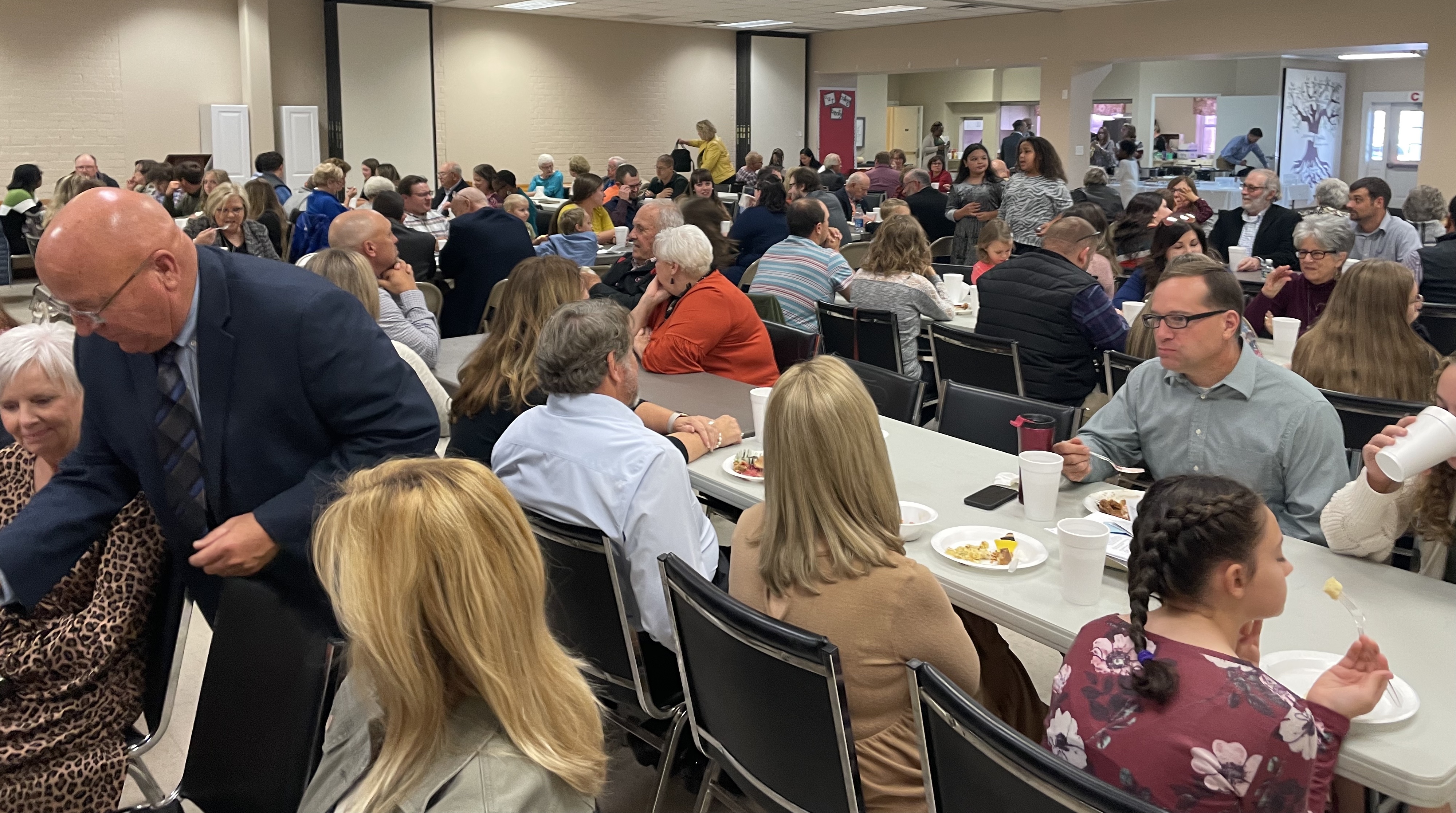
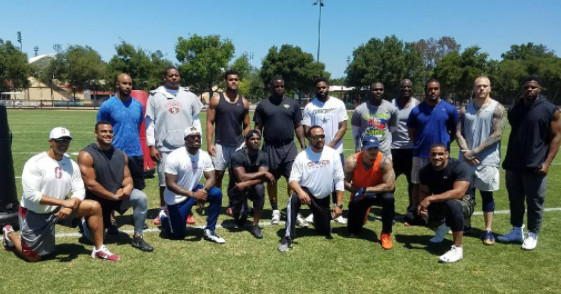
Members of the church in the Bowling Green area at an FCA fundraiser.
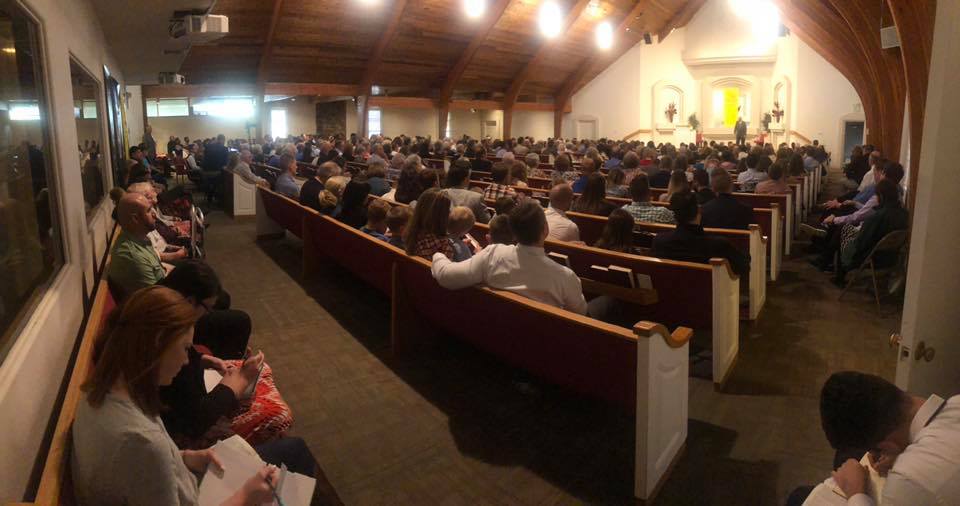
It was our largest crowd since before the Pandemic. It was a targeted effort to fill the building. The building was full! I asked several how many non-members were present and the most conservative answer was dozens, perhaps fifty. While we know that filling the pews is only one factor in encouraging people to follow Jesus (discipleship), it is a pretty fundamental and important one. Let me share a few exciting things I saw.
I saw the power of an invitation. The elders laid out a challenge to us to invite every non-member we could think of, coworkers, family members, friends, classmates, acquaintances, etc. That’s not revolutionary. Perhaps it was the sheer volume of invitations so many members issued. Such seeds were spread far and wide, and Sunday was an indication that some will come if asked. I am confident that many who were invited will come in the future, if we continue to ask. Philip invited Nathanael to “come and see” (John 1:46), and it changed Nathanael’s life! Andrew told his brother, Peter, “We have found the Christ” (John 1:41)! It changed not just Peter’s life, but the thousands of lives Peter eventually touched. Who knows the eternal impact made by all the invitations issued this weekend, but it shows that there’s still power in a simple invitation!
I saw the strength of teamwork. That was on display in so many ways. There was a huge team of people greeting those who entered our doors. Anticipating a lot of visitors, this was organized beyond the ordinary measure. It was exciting to see so many doing this, and it seemed to be infectious. Others joined in. It was evident in the efforts of multiple deacons and vision groups coordinating various works. It extended to members in the auditorium warmly welcoming unfamiliar faces and making our visitors feel at home. It continued on to the potluck after Bible class with the scores of people bringing an abundance of food, serving, assisting, and cleaning up. We were a finely-tuned machine of coordination. I could not help but think of Paul’s words, to Philippi (“make my joy complete by being of the same mind, maintaining the same love, united in spirit, intent on one purpose,” 2:2) and Colosse (“beyond all these things put on love, which is the perfect bond of unity,” 3:14). Sure, he had more in mind that one event on one day, but this is a key way such overall unity is built.
I saw the example of leadership. This began with the eldership. They not only challenged us to invite, they led the way. It’s not an exaggeration to suggest that the four of them invited hundreds of people by text, phone, and face-to-face. They invited friends, family, acquaintances, and strangers! True leadership shows the way! This included those who led in worship. There was forethought, effort, and coordination from the greeting to the announcements and every act of worship in between them. This involved the membership who enthusiastically engaged in the worship. It also takes in every one that helped people find bathrooms and classrooms. Leadership always breeds more leadership. The writer of Hebrews says, “Remember those who led you, who spoke the word of God to you; and considering the result of their conduct, imitate their faith” (13:7).
I saw the hope of tomorrow. The effects of the last 18-plus months have been deflating and demoralizing. We have lost members to Covid, physically and spiritually. It has derailed plans. It has distracted us. But Sunday showed that by faith in God and by following His plan, the best is yet to be! As we were reminded at the end of the day yesterday afternoon, we have worship every Sunday so let’s keep inviting. How many Bible studies will result from inviting others to church? How many future preachers, elders, deacons, soul-winners, and Bible class teachers are represented in those who walked through our doors yesterday, some for the first time ever? To some degree, we’ve got to be like Paul and say, “forgetting what lies behind and reaching forward to what lies ahead, I press on toward the goal for the prize of the upward call of God in Christ Jesus” (Phil. 3:13b-14).
There’s more to do! There’s more inviting to do. There’s more follow up to do. But I see more than a special event in what occurred on Sunday! I see a culture change and a purposed people. Think what God can do with that!
Ephesians 4 describes some spiritual gifts. Their purpose is to allow the church to function as it should. A properly functioning church spends eternity with God.A functional church is on the same page (one mind), has spiritual depth, and is workable (more on that in a bit).
Ephesians 4.12ff is about members’ roles. What are they for? Everyone serves to equip saints. Saints are people who have pledged allegiance to God.
We train for morally good works and become stronger through encouragement (12,16). We work toward a unified mindset, knowing Jesus, spiritual maturity, and we pursue the highest standard (Jesus) (13,14).
We work to avoid immaturity and gullibility (14). We pursue maturity until our mindset emulates Christ’s (15). He is described (multiple times) as the standard we have to imitate. There’s no room for spiritual laziness here.
Jesus causes growth spiritually, but only if we’ve become soil that can be worked. If our minds aren’t mature, we aren’t workable. Elders are spiritual farmers, our hearts are the soil. If we use Jesus as our standard, we are workable. If not, we’re spiritually dead.
So, what can we do individually? Make the church strong by pursuing unity, by having spiritual depth, and by being workable. If we work on those things we will spend forever with God.
“…Cared More About The Lost!” (But, when did I last invite someone to church or invite someone to study the Bible?)
“…Checked On The Sick And Shut In.” (But, when did I last make a call or visit to them?)
“…Was Friendly!” (But, do I talk to, welcome, and make feel at home visitors and more than my close circle of friends?)
“…Did A Better Job With The Singing.” (But, do I sing out, show enthusiasm, and participate with my whole heart?)
“…Invested More In The Youth.” (But, am I doing all I can to help them grow, from my attitude toward the church to my personal investment in them?)
“…Was Active!” (But, do I volunteer when help is needed, prioritizing it over the things of the world?)
“…Was Growing.” (But, how invested am I in being an ambassador for Christ, 2 Cor. 5:20?)
So often, we talk about “the church” in a passive, third-person way. We are critical of her leaders, her activities (or lack thereof), and her members as if we are detached observers. The picture of the early church was of individuals who were personally invested. We are overcome by the consumer mindset of the culture when we sit back and take shots at the perceived shortcomings of our local congregation. Look at the New Testament Christians. Barnabas didn’t fret about how stingy or discouraging the church was; He was generous and encouraging (Acts 4:36-37). Stephen didn’t express his frustration at the church’s lack of courage and conviction; He literally preached himself to death (Acts 6-7). Dorcas didn’t wring her hands at how uncaring and detached the church was; She continually did deeds of kindness and charity (Acts 9:36). They may have been extraordinary in their actions, but they were just “regular members of the church.” They were the church. They didn’t sit in judgment of her. Why? They were too busy working to build her up. When I am tempted to play armchair analyst, I should begin with my own faithfulness and involvement. There is so much the Lord expects me to do to help the church. My investment may cause others to be grateful and excited to be a part of the church! I can most influence me (2 Cor. 13:5)!
On January 20, 1961, in John F. Kennedy’s inaugural address, he uttered the famous line, “Ask not what your country can do for you–ask what you can do for your country.” Here is the very ending of the address: “With a good conscience our only sure reward, with history the final judge of our deeds, let us go forth to lead the land we love, asking His blessing and His help, but knowing that here on earth God’s work must truly be our own.” If that is true of a citizen’s mindset of a nation, how much more a Christian’s mindset in that holy nation, the church?
Ephesians 4 describes some spiritual gifts. Their purpose is to allow the church to function as it should. A properly functioning church spends eternity with God.
A functional church is on the same page (one mind), has spiritual depth, and is workable (more on that in a bit).
Ephesians 4.12ff is about members’ roles. What are they for? Everyone serves to equip saints. Saints are people who have pledged allegiance to God.
We train for morally good works and become stronger through encouragement (12,16). We work toward a unified mindset, knowing Jesus, spiritual maturity, and we pursue the highest standard (Jesus) (13,14).
We work to avoid immaturity and gullibility (14). We pursue maturity until our mindset emulates Christ’s (15). He’s described (multiple times) as the standard we have to have. There’s no room for spiritual laziness here.
Jesus causes growth spiritually, but only if we’ve become soil that can be worked. If our minds aren’t mature, we aren’t workable. Elders are spiritual farmers, our hearts are the soil. If we use Jesus as our standard, we are workable. If not, we’re spiritually dead.
So, what can we do individually? Make the church strong by pursuing unity, by having spiritual depth, and by being workable. If we work on those things we will spend forever with God.
When it comes to the families that make up the church, what ties us together is a common bright future. While every family has it’s differences, one constant remains— the church. All strive to follow those guidelines laid out in Scripture. Paul says in Philippians 1:6, “And I’m SURE of this, that He who began a good work in you will bring it to completion at the day of Jesus Christ.”
The writer speaks with assurance, and that confidence is well placed. From His-story we see that God always completes His projects. He never dreams, He creates. He decided to create the world and here it is. He decided to save the world, and here we are.
Paul also would write in Romans 7-8 that the flesh tends to get in the way of the spiritual. God is perfect, but we’re not. That’s what makes us a work in progress. Aren’t we thankful that God provides the solutions to “fix” us up?
We’re involved in a great work because there simply is no better work than what is being done by His church. That being said, many of us struggle with overcomplicating things. We try to make sense of our individual lives, and when we leave God out it all becomes a discouraging battle. Where’s the peace? Joy? Confidence? Maybe it was left behind when we left God’s path. Thankfully God came down to earth years ago to teach us everything we need to know. We see that in His interactions with people. Even His twelve original followers were an odd group.
Each had a diverse background. Some were Fishermen and some tax collectors.
Each one had a unique personality too! They ranged from timid to assertive.
Each one had spiritual battles from greed to crippling doubt.
Yet each one rallied under His leadership and were united through a common hope.
What’s changed? Not much.
The personalities, talents, backgrounds, and flaws mixed together create a unique blend that make up each one of us. Yet, here we are rallied under His leadership, united in common hope.
COVID19 may be a serious problem, but the real damage is the affect it has had on congregations who are tempted to just throw in the towel. These congregations are just hoping that next year will be a better one. It’s this mindset that makes some feel like God has somehow lost control over this year— is God smaller or weaker than the virus? Absolutely not.
Here are TEN creative congregations that have decided to adapt and overcome some of the challenges of 2020— and they’re working! Who’s to say it won’t work for your church family?
The Hebron church of Christ in Grant, Alabama, despite a smaller building, bought new microphone equipment so that they are able to have drive-in services and members are able to listen through their car radios. An un-intimidating way for visitors to be able to drive up and hear the gospel preached from the comfort of their own vehicles. Many other churches are also doing this, bringing people from the community to hear the gospel preached.
The Chase Park church in Huntsville, Alabama, has implemented the local police force to help people exit in and out of the building in an orderly fashion. This has developed a great relationship with the police officers who have shown interest in the church after meeting some of the loving members.
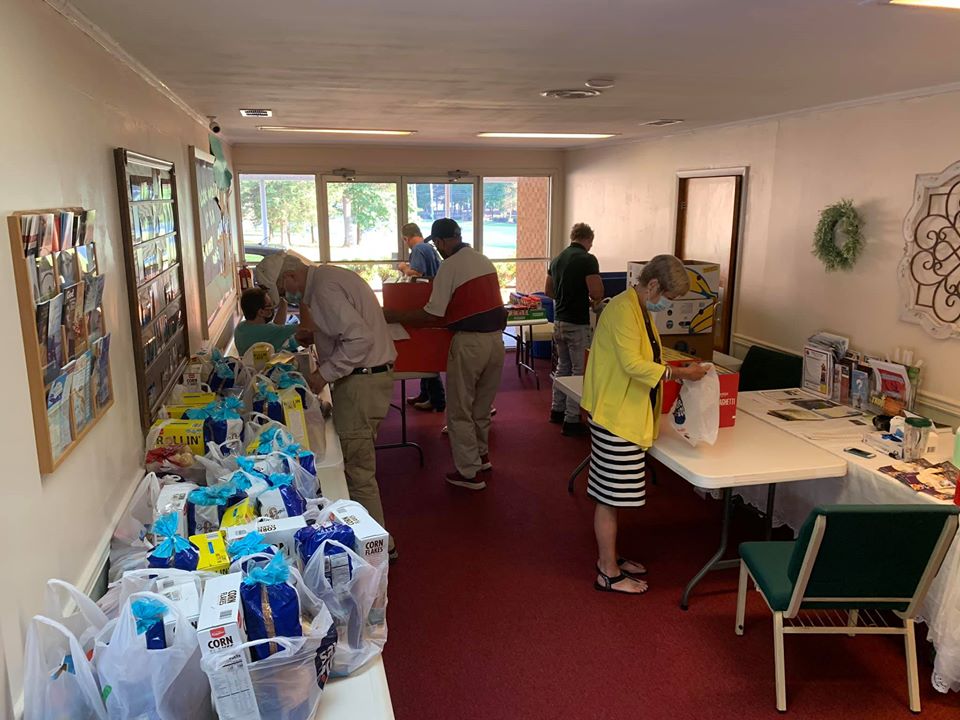
The Farley church in South Huntsville, Alabama, had a food drive for those in the community who have fallen on hard times. Gloves and masks were worn to load the groceries up in people’s cars. Some church pamphlets were given, emails and phone numbers were written down, along with any prayer requests they might have. It has resulted in several local contacts.
Many of the Lehman Avenue church members in Bowling Green, Kentucky, led by the elders, have been driving around every Sunday afternoon to visit shut-ins. They deliver bread, sing, and pray with them. It has made a great impact on the morale within the body there.
The Wisconsin Avenue church in Huron, South Dakota, have come up with a creative way to reach out to the community by building what they call a “Blessing Box” in front of the building. In this box the locals have access food and Bible study material.
The preacher of the LaFollete church, Ben Shafer, in Tennessee, has been producing daily devotional videos to help the members stay connected and in the Word. This is also being done by Bud Woodall, the preacher for the Northeast congregation in Albuquerque, New Mexico, Andy Miller, a minister for the Southern Hills church in Franklin, Tennessee, and in countless other congregations.
The hispanic minister, Chase Turner, at the Jackson Street church in Monroe, Louisiana, has discovered that posting videos/messages in Facebook groups that locals are a part of is a great way to get people interested in spiritual conversations. It has proven to be very effective!
Colt Mahana, who ministers at the Dahlonega church in Georgia, has started a daily college Bible study over Zoom. This daily study has made the college group there more engaged than they were before the pandemic.
Dr. Bob Turner had this to say about a church in Mannford Oklahoma: “I visited with several elders from numerous congregations over the last few months…I wanted to share what an eldership in Mannford, Oklahoma, has done over this period of time. While they do their classes over Facebook live, they have done additional things to help the congregation. First, they spend their Wednesday night time for prayer. Instead of teaching a class, they invited people from the community to submit prayer requests and they spend Wednesday evening praying for all the requests they receive. Second, they make special use of each holiday. For example, at Easter, since they could not host an Easter Egg hunt at the park with a potluck, the elders and wives stuffed eggs and the elders went to every home with children in the congregation and hide eggs for all the kids to have their own hunt at home. For Mother’s Day, they made a customized card and personally wrote a note and signed each card for every mother in the congregation. These are a few of the areas they have been creative to do and help members know they are cared for, thought about, and prayed over during this time. They have also emphasized that when they get back together, they want to do it right in order to make a good impression on anyone that might visit. They have constantly communicated with everyone in the congregation each week to make sure they have opportunity to share anything they might be dealing with.”
Chuck Ramseur is working with a congregation in Virginia Beach, Virginia. This church family set up the Marco Polo app and encouraged everyone to share anything and everything going on during the day in their lives. It has helped them stay connected daily. Another area they took up working on is helping with the Crisis Pregnancy Center (alternative for woman thinking about abortion).This ministry has been one of the best outreach programs for the church. They’ve also planned services in the park on Sundays when they could not meet in the building, but could meet with social distancing in an open area.
So, there’s the proof! God is bigger than COVID19.
Like the robin, daffodils are a harbinger of spring. They begin blooming in late winter and create anticipation for the pretty spring flowers following. We planted our place in Appalachia with daffodils nearly 30 years ago. Today, we get few flowers in places where we planted them. We do have healthy-looking, green blades but no blooms. By their nature, a single daffodil bulb becomes an entire colony of bulbs within a few years because it reproduces by dividing at the bulb. Once so many bulbs are packed into a small space, the plant cannot receive enough moisture or nutrients to produce the desired flower. So, on the one hand, it’s great because just a few daffodil bulbs can yield an entire daffodil garden in a few years. On the other hand, to keep daffodils flowering one must periodically dig up these new bulbs and space them out so conditions remain conducive to their overall health.
When we think about Jesus’ parable of the sower, we likely think of the various soils presented therein. We pray we find the good soil as we go to plant the seed but realize since few are finding the strait gate and narrow way (Matthew 7.13-14), most of our seed falls on the other three poor soils. Of those poor soils, Jesus highlighted a group in whom the seed never produces fruit since they become choked by thorns (Luke 8.14). These thorny-soiled hearts didn’t recognize how detrimental their thorns were since they took the form of the cares and riches of the world. In like manner, we don’t see the problems posed by a bunch of healthy-looking, green blades where our daffodils ought to be. We keep hoping they will put on blooms, bringing us the testimony of God’s wondrous creation. Yet, conditions underground won’t allow for that.
Might I suggest those possessing thorny-soiled hearts can have a similar problem as the daffodil? It may be they don’t just wither and die (i.e. fall away). It may be they are sitting on the pew, where we planted them, looking as if they hold promise, but never producing blooms. Why? It may be their fruit is being crowded out by conditions at their root. We see no prickly thorns gathered around them. Yet, there are cares and concerns on the inside choking out God’s Word all the same. It is confounding since they may even greet us with a smile on their faces while being inwardly consumed by such things as anxiety. If we do nothing, though, the results will be the same as if it were thorns.
It may be we need to lift these unproductive Christians to help them settle in a better environment conducive to their growth. We need to help them remove all the things choking their heart. We need to nurture them. Though we’re more considerate of the newborn in Christ, the overcrowding of the heart is a challenge potentially taking place even in the one who obeyed the Gospel years ago. Be your brother and sister’s keeper (Galatians 6.1; James 5.19-20). If you see a pretty green blade that never flowers, dig a little deeper. If one’s heart is being crowded out, help him find the space to bloom (Hebrews 3.13).
Yesterday morning, I learned how much of a sense of humor the Lehman Avenue church members have. I prefaced my sermon by sharing a great tip a fellow-preacher passed along to me last week. He told the folks at his new work, “Please introduce yourself by name until I greet you by name when I see you.” So, I decided to give an example, saying, “Every time you introduce yourself, say, ‘Hi, Neal, I’m Roger Johnson (if that is your name)…” Well, that helped me ferret out some of Lehman’s finest comedians. Did you know there are 15 or 20 Roger Johnsons here (except that the guy I thought was Roger introduced himself as “Frank Sinatra” after church). But, everyone was upstaged by young Kamdyn Depp. Kamdyn came up to me right before evening worship, promptly shaking my hand and saying, “Hello, my name is Roger Johnson.” She deadpanned it perfectly, and it took me a while to stop laughing.
Kamdyn may never know how much it meant to me that she did that. First, it meant she was listening to my sermon. Second, as I found out it was her own idea, it meant that I meant enough to her for her to take the time to come tease me (side note: my mom used to tell me that people only tease you if they like you). It told me she was thinking about me. Third, it meant she was willing to engage me. We don’t know each other very well yet (though last night was a great head start), but she took the initiative.
Much talk is made of being a friendly church and how important that is to church growth and evangelism. All of us should take a page from Kamdyn’s playbook. Pay attention to people. Care about them. Don’t be afraid to engage them. You may quickly forget your act, but the recipient won’t! We will have visitors at most of our assemblies. Your taking just a moment of time with someone might be the first seed that germinates in such a way that he or she ultimately is in heaven. It’s that big of a deal! So, go on up to that new person, smile, look them in the eye, and introduce yourself, but it’s probably best if you use your real name. Even if it isn’t Roger Johnson!
During our recent move from Colorado to Kentucky, I sifted through several boxes and shelves and found paper and digital photographs all the way from Kathy’s and my childhood to our sons when they were small. It’s incredible to witness the dramatic transformation they reveal. We’re still taking pictures, which will be snapshots we look back on in years to come.
As I try to get to know the Lehman Avenue congregation better, I have been given recent church directories. Did you know that we have directories going back to 1955? That one has no photographs in it. The first one that does have photos is from 1978. There are not many in that directory who still worship here today, though you will see entries with the last names Bruner, Daniel, Dickerson, Dunning, Ennis, Gilbert, Hunt, Nicks, Phelps, Raymer, Tabor, and no doubt others including those who may have a different last name today. Do you think the 1978 picture looks like the 2019 person? There are resemblances, but also changes.
That 1955 directory does give a snapshot of a different kind. In the forward is written the following:
“The purpose of this directory is three-fold: To give a brief history of the beginning, development and progress of the Lord’s church in Bowling Green; to perpetuate a list of charter members forming the Lehman Avenue congregation; and to better quaint the members of this local congregation with one another, in order that we may work together in the best way possible.”
I appreciate that the compilers of this directory went to the trouble to trace the history of the church’s establishment in Bowling Green. Eugenia Hayes’ research is included in this first edition. She says that Stone and the Campbells were here, helping to establish the church. The first congregation established here was in the mid-1840s, with six members meeting each Lord’s Day and eventually meeting in a house build on a property on College Street. When threatened by digression in the late 1800s, the church here was aided by such men as M.C. Kurfees from Louisville, Daniel Sommer from Indianapolis, and James Harding from Nashville. A building was built on Twelfth Street in 1899, and Lehman was established from this congregation in 1955. Roy J. Hearn was the first preacher.
From these “newborn” and “infant” photographs, we can trace our “development and progress.” More “snapshots” are being made constantly, and not just those which show up in the latest directories or on social media. In encouraging Timothy to embrace his ministry and gifts, Paul urged, “Take pains with these things; be absorbed in them, so that your progress will be evident to all. Pay close attention to yourself and to the teaching…” (1 Tim. 4:15-16a). “Take pains” means to improve by care or study, practice, cultivate…” (BDAG 627). “Be absorbed” is better translated “be in them” but conveys the idea of being involved in or devoted to (BDAG 284).”Progress” means “to change one’s state for the better by advancing and making progress” (Louw-Nida 154). “Pay close attention” means “to be mindful or especially observant” (BDAG 362). Put it all together. Improve, involve, and observe yourself in order to make progress.
When we sit for family portraits, we normally put on clothes we think will flatter us, we give attention to grooming, and we attempt to look our best. What Scripture calls for goes beyond just skin deep. God wants us to focus intently on our “inner man” so that, even as our outer man is decaying, we can “look better” to God each and every day (cf. 2 Cor. 4:16). Look at snapshots of your spiritual past. Look at yourself today. Progress? Regress? “No-gress”? Which is it? Take heart! There’s still time to make changes that will look good to God (and you), so that we can look back with gratitude and satisfaction that we took pains with our spiritual appearance! Strike a Christlike pose!
The early church grew (Acts 2:41; 5:14; 6:1,7; 9:31; 11:24). As we read of this growth explosion, we see the key role member involvement played. Christians were spreading the word (8:4), involved in each other’s lives and in the lives of the lost around them. This is such a simple concept, but churches not practicing it are not growing. What is involved in involvement?
I–“I” am the heart of involvement. I must resolve to be involved. I must do my part, for I will give an account for my level or lack of involvement (1 Cor. 3:8).
N–“Negativity” is the enemy of involvement. “I can’t help.” “It won’t do any good.” “I don’t like working with that person.” Listen closely. Involved Christians rather say “I can do” (Phil. 4:13) and “we are well able” (Num. 13:30).
V– “Visitation” is a part of involvement. Matthew 25:34-46 confirms it. Non-Christian visitors, sick, imprisoned, and needy folks need it. Those who do it are richly rewarded, and those who are recipients of it profoundly appreciate it.
O– “Obedience” is the cause of involvement. Faithful Christians believe the commands to make disciples (Mat. 28:19), build up brethren (Rom. 14:19), and meet needs (Js. 1:27).
L– “Love” is the motive of involvement. Paul says good deeds, without love, are profitless (1 Cor. 13:1-3). The counsel of Scripture is “by love serve one another” (Gal. 5:13).
V– “Victory” is the goal of involvement. By being involved, we help others win the victory (Js. 5:19-20), we help the cause of Christ advance, and we aid our own walk in the light that leads to eternal reward (1 Jn. 1:7).
E– “Everybody” is the scope of involvement. What able-bodied Christian is excluded from the work God has given the church? Once, a man did nothing and gave every excuse imaginable. We remember how that turned out (Mat. 25:28-30).
M– “More” is the adjective of involvement. That is, “more involved” and “more people involved.” Has there ever been a church with too many involved? God is able to do more than we ask or imagine (Eph. 3:20), and He wants to see us always trying to do more for Him!
E– “Evangelism” is the fruit of involvement. Active churches attract the curiosity of the community. Those involved in the church’s work naturally grow more spiritual-minded, and by this grow more bold in sharing the gospel.
N– “Now” is the time for involvement. What in our lives do we definitely know will change between now and the never-seen tomorrow (Prov. 27:1)? Let’s kill the excuses! Resurrect the enthusiasm! Start today!
T–“Teamwork” is the mindset of involvement. We’re to work together. No one man, no staff, no eldership, no group of deacons or others can or should do the work of an entire congregation. The local church is a team.
To become adequately involved, let’s ask three questions.
“What needs doing in this church?”
“Who needs help in doing it?”
“What can I do?”
Be an Isaiah, a child of God who enthusiastically says, “Here am I, send me” (Isa. 6:8)!
I’m not sure where the phrase, “handle with care,” originated. It’s usually reserved for advice regarding that which is fragile or even volatile. It really is applicable to those who visit our assemblies because of their value and importance. They came through the doors of our church building intentionally and with a purpose. Initially, we cannot know why or how sincere their purpose. That process of discovery could not be more important. Consider some reasons why we should handle every visitor with care:
Each has an eternal soul (cf. Mat. 25:46).
God could not love that visitor any more than He does (John 3:16; 1 Tim. 2:6).
God loves that visitor as much as He loves you and me (Acts 10:34-35).
That visitor is likely seeking spiritual guidance (cf. Mat. 7:7).
Each visitor is subjected to a first impression, being left by you and me.
That visitor is going to make judgments about the church, the Bible and Christ based on what he or she sees (or fails to see) from you and me.
The smallest gesture of kindness toward such a one could lead to the salvation of a soul.
We cannot know what anyone else is doing to make their first visit a good one.
Each one is being exposed to the Bible and to New Testament worship, and follow up can lead to further interest.
That soul is connected to many others, who might subsequently be reached (2 Tim. 2:2).
You and I are official ambassadors for Christ (2 Cor. 5:20).
The Golden Rule should prompt our warmth, helpfulness, and sensitivity (Luke 6:31).
We are each part of a team, trying to connect each of them with what only Christ can offer them (1 Cor. 12:18; John 14:6).
There is no guarantee that there will be a next time (Prov. 27:1).
Statistics tell us that most visitors find the churches they visit to be unfriendly toward “outsiders” (see, for example: Thom Rainer).
Loving others is commanded, and visitors are included in “others” (Rom. 13:9; Gal. 5:14; Jas. 2:8; etc.).
Visitors constitute perhaps the easiest inroad to developing interest in a Bible study, as such have reached out to us by attending.
Our excuses (“I’m shy,” “That’s not my job,” “I’m not good at it,” “I’m busy”) ring hollow when carefully examined.
We love the church and believe in its relevance and importance.
Each contact is a valuable way you and I can contribute service for our Servant-Savior (cf. John 13:12ff; Mat. 20:28).
The list is far from exhaustive. I am convinced that none of us neglects a visitor out of contempt or even indifference. Yet, it is good for you and I to encourage each other, to “stimulate one another to love and good deeds” especially as it pertains to assembly-related matters (Heb. 10:24-25). Wouldn’t it be exciting to be the friendliest church around, especially if our message and practice is faithful to God’s Word? What a powerful combination! Let’s help each other earn such a reputation, for reasons such as the above.
Yesterday afternoon, the Bear Valley eldership stood before us one by one to talk about their priorities both for themselves and for us. They distilled them into five simple words that describe five profound concepts: (1) Worship, (2) Communication, (3) Fellowship, (4) Accountability, and (5) Leadership. They told us that as the religious world is growing more homogenous in their worship style (a la community church model; rock concert-ish), distinctive New Testament worship has a chance to stand out even more. Yet, we need to always be improving our efforts in leadership and participation. They emphasized that communicating news, ideas, and needs is a process that will always need work and priority. No church ever arrives in this regard. They spoke of the importance of building a closer church family, knowing each other through age-related opportunities and entire congregation opportunities. This happens when we’re all together, in the classroom, and away from the building. They stressed the importance of holding one another accountable, for faithfulness, commitment, and support. Otherwise, there is no way to move from ideas to action. They told us that all of us exert leadership in some area. There is formalized leadership positions, as outlined in the New Testament (elders, deacons, preachers, teachers). But, inasmuch as we all have a sphere of influence (cf. Mat. 5:14-16), God expects us to lead. Throughout their entire presentation, they were specific about strategies aimed at helping us be successful. I appreciated the great challenge this was for us to work and grow. There were so many quotable sayings from their collective lesson, but the one that struck me most was made near the end. As we have adopted three planks of emphasis as a church, based on Acts 2:42-47 (praise—worship, participation—fellowship, and proclamation—evangelism), we were challenged to think: “I praise,” “I participate,” and “I proclaim.” It can be so easy for us to approve the church’s need to grow and improve in these areas or to expect the elders to do these things. But, no matter who we are, we can and must ask, “What can I do?” The key to being a great church is the willingness of every member to make personal application. It’s not, “What are they doing?,” “what are you doing?,” or even “what are we doing?” No! It must always primarily be, “What am I doing?” I’m thankful that our elders spoke with confidence and clarity about the fact that there is plenty of opportunity to be involved in making Bear Valley a strong, relevant church, a city set on a hill shining a light in spiritual darkness. Thank God for strong leadership, which encourages me to say, “Here am I, send me!” (cf. Isa. 6:8).
Once, I received a call from a woman who watched our TV program. She shared her religious background with me, including the fact that she was raised in a church of Christ. While she was baptized many years before, she committed fornication, became pregnant, and had a child out of wedlock. She said that she publicly repented, coming forward to ask forgiveness. While some forgave, one prominent member wouldn’t let her forget her past sins. Ultimately, she left that congregation and soon after left the Lord’s church altogether.
She joined a large denomination in the area in 1985. She gave some interesting reasons for joining them. Reflect upon them for a moment.
(1) She received personal visits from church members.
(2) She was warmly welcomed by many who greeted her when she attended the services.
(3) She was quickly put to use in the church’s works.
Very simple formula, wouldn’t you agree? Some fundamental needs were recognized by that religious group: Approach. Accept. Assimilate. While their doctrine was wrong in vital areas, their practical wisdom was on target! While she traded truth for error regarding their teaching, she sought but didn’t find among God’s people the very things many seek today. None of the things she sought were wrong.
In the church, the main emphasis should be serving rather than being served. But look at what she sought. She sought personal contact from concerned people. The denomination responded. She sought acceptance, not of sinful choices, but of herself—the sinner. She received that. She sought ways to be involved, ways to serve. She was given opportunities despite some physical handicaps that restricted her.
There is much to do, much more than is being done, though we are doing much. Some bare essentials that all of us can be doing is visiting our visitors, making visitors feel like honored guests, and finding ways to include those who become members in the work of the church.
We have opportunities every week that walk through our doors. Are we doing our part to make ourselves a warm and welcoming congregation? People will form lasting opinions about the Lord’s church by what we do to make them feel welcome. Each individual Christian is accountable for visiting (Mat. 25:34ff), accepting (Js. 2:1-13), and including (1 Th. 5:11). Let us glow with the warmth of Christ! Who knows who we will turn onto the narrow path or who we will help stay on it?
At various times when I was growing up, I called Hawkinsville, Rockmart, Cairo, Sylvester, Franklin, and Hinesville, Georgia, home. While my dad was once fired from a congregation for converting a black woman, race relations in those rural towns—at least among us children—were excellent. While High School was very cliquish (along a great many lines more significant than racial ones), many of us had close, great relationships across racial lines. Certainly, there were instances of prejudice—from every race toward every race—but it was not characteristic. Perhaps it was because we were not constantly obsessed with it. We just got along.
Are you getting sick of hearing politicians, the media, and even social media (including from some members of the church) fanning the flames of dissension on this topic? I am. From my imperfect observations, I see the following:
Less Productive:
Placing blame on any one side
Having our minds closed to discussion
Stereotyping and pigeon-holing
Guilt-tripping and manipulating
Living in the past rather than dealing with the present
Categorizing everyone on the basis of their skin color
Blaming or praising based on geographic or political boundaries
Cherry-picking historical incidents to validate one’s point of view or assertion
Thinking our personal experience is indicative of everyone else’s
More Productive:
Eradicating concepts like “predominantly white” or “predominantly black” congregations
Showing Christ-like love and acceptance to people who look and sound different from us
Showing hospitality and associating with people of every race and walk of life (publicly and privately)
Getting to the point where we don’t associate anyone with their race or ethnicity
Teaching our children to choose friends and spouses based on the content of their character rather than color of skin
Extending the “Golden Rule” to race relations like we should every other issue
Selecting preachers, deacons, elders, and other church leaders with no regard to anything so superficial as skin color
The Bible says that God made every race (ethnos—nation, culture) from one man (Acts 17:26). The Bible says the whole earth was populated from Noah’s three sons (Gen. 9:19). The Bible speaks of the “human race” (Jas. 3:7), and doesn’t emphasize a red, yellow, black, or white race. The Bible says that heaven will be populated by people of “every nation and all tribes and peoples and tongues” (Rev. 7:9). Let us make sure, especially as Christians, that we are not fanning the flames of division, animosity, controversy, and hatred by treating this important subject in a way that takes people’s eyes off of Jesus or the church’s true mission! Surely this will reach more people of every nation, tribe, people, and tongue.
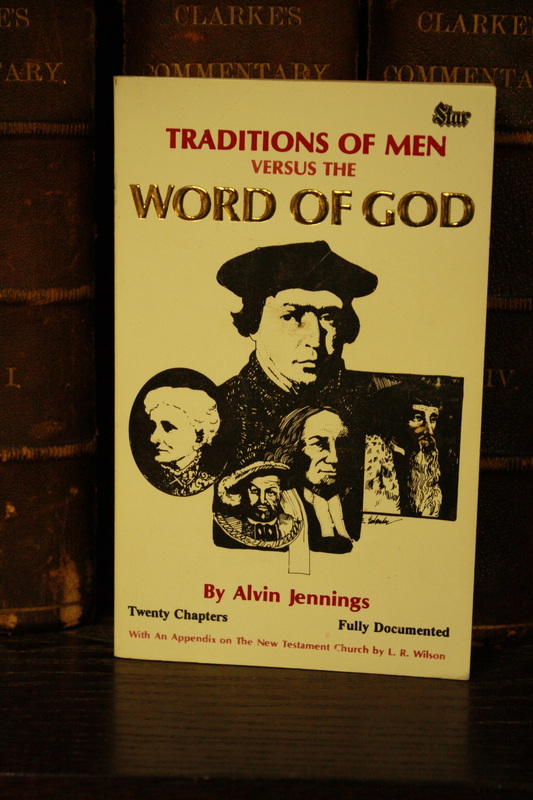
For as long as I have been preaching, I have had at least one copy of the Alvin Jennings’ book bearing the title above. The book was originally printed in 1972, but it has been reprinted several times. Jennings clarifies the way he uses the word “traditions” in his title. Rather than the sense of being a writing handed down from God (2 Th. 2:15; 3:6; 1 Co. 11:2), he used the word to refer to “religious laws and traditions originating from the minds of men and handed down orally and/or in printing from generation to generation” (iv.). He rightly points out that such traditions were condemned by Christ (Mat. 15:2-3,6; Mark 7:3,13; Col. 2:8; 1 Pet. 1:18; Gal. 1:14). Some of the problems with these traditions were that they got in the way of obedience to what God commanded, caused negligence regarding and the setting aside of God’s commands, enslaved one to something or someone other than Christ, and created a zeal that could lead to unhealthy consequences. The traditions Jennings examines substituted false, human ideas for clearly revealed, divine truth. Anything that binds where God has not bound or gives permission where God doesn’t permit must be rejected. It’s a tradeoff with the gravest consequences (cf. Rev. 22:18-19).
However, I hope that as we strive to follow the pattern for New Testament Christianity we will be careful about elevating any tradition to be on a par with Scripture. There are some traditions we may choose to observe (or not):
Offering an invitation after every sermon
Having worship leaders, including the preacher, wear suits and/or ties
Women wearing dresses to church services
Songs or songbooks reflecting a particular time period (whether old or new)
Mandating a specific Bible version be utilized in the public assemblies
Choosing to have an evening assembly
Replicating the format of the morning assembly (in lieu of using the time for class, for example)
A particular order of worship (including whether the Lord’s Supper precedes or follows the sermon)
Offering the Lord’s Supper on Sunday evening
Any practice or tradition that arises from expedience or the realm of judgment, but that is not specifically mandated in Scripture
The church finds itself at a crucial crossroads. Undoubtedly, there is nothing new under the sun, but we do find ourselves at a unique place in cultural history. Since we live in an argumentative, rancorous atmosphere fueled by everything from cable news to social media, we should be careful to maintain a spirit of love and kindness whenever we sort through matters like these. We should never cherish non-binding traditions more than we do people. Those of us who are older and presumably more mature should consider carefully where and when we might compromise regarding matters not tied down in Scripture. More than that, we should foster rather than fear an environment that allows for such discussions to occur—without animosity or distrust. This will mean spending much more time developing our relationships with one another on the local church level (across generations). The better we know each other and the more we grow our love for each other, the better equipped we should be to sort through such things. Coupled with serious Bible study, this will hopefully sharpen our ability to distinguish between traditions and truth. May we have the grace to listen to each other without prejudice or minds already made up. Instead or ridiculing or caricaturizing the church in demeaning ways, let all of us “put on a heart of compassion, kindness, humility, gentleness and patience;bearing with one another, and forgiving each other, whoever has a complaint against anyone…” (Col. 3:12-13a).
Last month, Von Miller gathered some of the NFL’s elite sack specialists at Stanford University for what he called a “pass rush summit.” The participates were star defensive players from around the league, with several different teams represented. Addressing concerns that each man was sharing his trade secrets, Miller replied that it was more like sharing the wealth. He said, ““A sack is a sack. I’m going to get sacks, they’re going to get sacks. You really can’t stop that. You really benefit more from really just sharing that knowledge and just trying to be the best players that you can possibly be” (Denver Post, Nicki Jhabvala, 6/29/17). Do you find that surprisingly magnanimous and unselfish? Yet, don’t you find it refreshingly classy and helpful?
When I think about the spiritual battle God calls us to, I often think about the outposts God has in towns and cities throughout our state, country, and world. These individual congregations of the Lord’s church are facing struggles with a formidable foe (cf. 2 Cor. 10:2-4; 1 Pet. 5:8-9; Eph. 6:10-17). God has endowed us with a mission and purpose, reaching those outside of Christ, showing charity and compassion to the world, and helping to strengthen those already in Christ. We seek to achieve this through various ideas, ministries, programs, efforts, and events. We bring in speakers, host activities, organize, and create. When we find ways to be productive and get results, we should be ready to help. When he hear of such things, we should be eager to hear. At times, we may inadvertently develop a sense of competition rather than a spirit of cooperation. But this ought not to be so.
What is our goal with every benevolent outreach, every evangelistic attempt, and every edifying work? Isn’t it to get more people to heaven, to shine the light of Christ into a world of ever-deepening darkness? Why do we host camps, have lectureships, train preachers, hold fellowship activities in homes and at the building, reach out to our homeless community, stock pantries, build a robust youth program, minister to young professionals, young families, and seniors, do evangelism training, have marriage seminars, worship leadership training, and the like?
What about works our brothers and sisters are doing all over the country? Polishing the Pulpit, Focal Point, Fishers of Men, Gospel Broadcasting Network (GBN), Truth.fm, Mission Printing, World Video Bible School, Bear Valley Bible Institute’s Extension Program, World English Institute, House to House, Heart to Heart, and many, many others are what our larger church family are doing to grow the church and build its strength. Yet, there’s much more that could be done by so many more of us, working together to accomplish the mission. But we must see ourselves as cooperators rather than competitors. Obviously, there can be impediments making this impossible in specific situations, but as we acknowledge that are we missing opportunities. Meanwhile, countless souls are rushing toward eternity. Let’s band together to find out how to more effectively reach more of them. That will mean more saved souls and more glory to God!
Incredibly, nine people in one family were in serious danger of drowning as they were swept into a riptide in Panama City Beach, Florida. It started with some little boys, but soon included would-be rescuers that included their mother and some other relatives. All of them were floundering in about 15 feet of water. The USA Today story seems to indicate that Jessica Simmons and her family thought of the idea of creating a human chain out to the imperiled family and towing them back to shore. About 80 people “started a football field-sized human chain to help bring them back to shore” (Mary Bowerman, 7/11/17, online ed.). The mother, Roberta Ursrey, summed it up well when she said, “I owe my life and my family’s life to them. Without them, we wouldn’t be here” (ibid.).
What a great story! It reveals the possibility of unity for profound purpose. It shows the power of working together. It says something about the best part of the human heart. It also illustrates the power of rescue and salvation.
The Bible makes it clear that God is the one who saves (Titus 2:11). His Word is His power to save (Romans 1:16). His divine plan is the means of salvation (Acts 16:30-31; Romans 10:9-10,13; Ephesians 2:8; 1 Peter 3:21). But, the Bible makes it just as clear that He does His saving through the preaching, teaching, influence, and efforts of His people, sharing the good news with those who are languishing in the waters of iniquity. That’s suggested in “The Great Commission” (Matthew 28:18-20; Mark 16:15-16; Luke 24:46-47). It’s demonstrated in the constant efforts of New Testament Christians, taking the message of Christ with them throughout the world to those lost in sin (cf. Acts).
Think of the church as the God-given human chain, reaching out to the struggling, needy soul. They are drowning in sin and in desperate need of help. Unreached, they will drown (see the imagery of 1 Timothy 6:9). God wants you and me, as those who ourselves have been saved, to join hands and help others who need to be helped onto the shores of safety! We cannot delay! We must act while there’s time. Lives—souls!—depend on it.
It has been said that visitors make up their mind about a church in the first ten minutes of their visit. Before they’ll even discern the doctrine we teach or form an impression about the distinctiveness of our worship, they’ve already decided. If you will walk through the first ten minutes of each time you come to services, you can discern the needs visitors have when they “enter” (cf. 1 Cor. 14:23-24) our midst. Consider these needs.
Where to park. Designating visitor parking and having members park as far from the main entrance is thoughtfulness. Having a greeter or greeters in the parking lot who can make contact quickly and facilitate with friendliness makes a positive impression.
Where the restrooms are. Good hospitality ought to drive us to be thoughtful and even proactive (i.e., when greeting, point out the nearest facilities). Along with this is showing them where the nursery is. If they have infants, toddlers, or small children, they are likely to have needs during their time in attendance.
Where to sit. An obvious practical help here is not to crowd the seats at the rear of the auditorium. It’s less awkward to be seated without parading past rows and rows of people. If there’s a full crowd, have designated personnel, pleasant, friendly, and considerate, to help them find a seat. Never, ever, never have a designated pew! “Pew-itis” is a disease that should be eradicated from every congregation.
What to expect. This is something worship leaders can do, explaining periodically why we do what we do in a “user-friendly” (as opposed to browbeating) way. Door greeters and those at a welcome center can help, as can visitor packets that cogently explain things. Such packets can include not just activities we do, but a map of where we do them.
How to find out more. Have a “new member orientation class” or a “Church 101” class available for those who are “seeking.” It can include an annual church calendar of events, ministries, church leadership (complete with pictures and bios), ways to be involved, and the like to orient newcomers.
At first, it may seem hard to identify book, chapter, and verse for the foregoing suggestions. But consider these principles. There’s the Golden Rule (Mat. 7:12; Luke 6:31). There’s the principle of the Law of Moses, which says, “The stranger who resides with you shall be to you as the native among you, and you shall love him as yourself, for you were aliens in the land of Egypt; I am the Lord your God” (Lev. 19:34). Colossians 4:5 urges wisdom with outsiders, making the most of the opportunity. Being Christians, we should be ever increasing in the mentality that puts others before self (Phil. 2:3-4). How do we best serve Jesus? By serving others, including our visitors and newcomers.
The old saying, “The more things change, the more they stay the same,” seems applicable to time, place, and action. Though the rebuilding of the wall around Jerusalem in Nehemiah’s day stretches back 2500 years and occurred in a totally different culture about 7000 miles from here, it is amazing how what they faced and how they faced it is similar to our world and work right now. What can we learn from the physical building of Nehemiah to help in our spiritual building in the church today? Let’s look at Nehemiah four for the answers.
There will be opposition. Then, the opposition was from unbelievers who are introduced to us as those who “mocked and despised” (2:19). They will be driven by emotion (4:1,7). They will actively work to undermine and upset the work (4:8). They will actively work through verbal assault (4:2-3). They will succeed in striking fear in the hearts of some of God’s workers (4:11ff). If we can settle it in our hearts that the devil will never be satisfied until he defeats every faithful work for God, we will expect opposition to exist. The key is not to put the focus on the opposition.
There must be devotion. Nehemiah, who narrates much of this Bible book, shows us how you defeat opposition. You depend on God through prayer (4:4-5,8). You trust that God is at work in answer to prayer (4:15,20). You keep the focus on His power (4:14). If we can remind ourselves that “our [great and awesome] God will fight for us,” we can keep going through the most frustrating failures along the way.
There must be direction. Someone has to lead people to focus on God rather than His enemies. Nehemiah exemplifies godly leadership. As noted, he led the people to rely on God when doing His work. Notice that he also communicated to the leaders and workers (4:14). He reminded them of their motivation (4:14) and gave them a tangible plan (4:19-20). He also led by example (4:21-23), rolling up his sleeves along with the rest of the people. Such servant-leaders inspire and encourage success.
There must be action. Though their success ultimately came about because of God’s power, this did not nullify their need to work. They built because “the people had a mind to work” (4:6). The late Wendell Winkler was known to say, “Programs don’t work. People do!” Walk through Nehemiah four and observe the action verbs. You see them “each one to his work” (15), “carrying on the work” (16, 21), and “doing the work” (17). So it is today.
These were ordinary folks. They faced fear, doubt, and discouragement. They had limitations. But they “built the wall” (4:6). In other words, they succeeded in the task God gave them to do. We are not inferior to them in any way unless it is in execution. We have opposition. We can defeat it with proper devotion, direction, and action. The work God has given us in His church today must be done, but it can be done! Let’s do more than believe that. Let’s embody it!





















 The Preacher Pollard Blog