VISITORS—HANDLE WITH CARE!

Neal Pollard

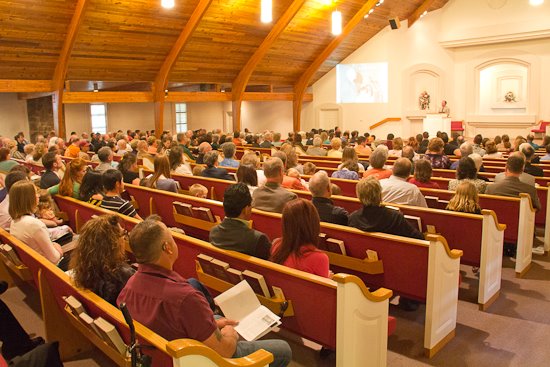
I’m not sure where the phrase, “handle with care,” originated. It’s usually reserved for advice regarding that which is fragile or even volatile. It really is applicable to those who visit our assemblies because of their value and importance. They came through the doors of our church building intentionally and with a purpose. Initially, we cannot know why or how sincere their purpose. That process of discovery could not be more important. Consider some reasons why we should handle every visitor with care:

  • Each has an eternal soul (cf. Mat. 25:46). 
  • God could not love that visitor any more than He does (John 3:16; 1 Tim. 2:6).
  • God loves that visitor as much as He loves you and me (Acts 10:34-35). 
  • That visitor is likely seeking spiritual guidance (cf. Mat. 7:7).
  • Each visitor is subjected to a first impression, being left by you and me.
  • That visitor is going to make judgments about the church, the Bible and Christ based on what he or she sees (or fails to see) from you and me.
  • The smallest gesture of kindness toward such a one could lead to the salvation of a soul.
  • We cannot know what anyone else is doing to make their first visit a good one.
  • Each one is being exposed to the Bible and to New Testament worship, and follow up can lead to further interest.
  • That soul is connected to many others, who might subsequently be reached (2 Tim. 2:2). 
  • You and I are official ambassadors for Christ (2 Cor. 5:20).
  • The Golden Rule should prompt our warmth, helpfulness, and sensitivity (Luke 6:31).
  • We are each part of a team, trying to connect each of them with what only Christ can offer them (1 Cor. 12:18; John 14:6).
  • There is no guarantee that there will be a next time (Prov. 27:1).
  • Statistics tell us that most visitors find the churches they visit to be unfriendly toward “outsiders” (see, for example: Thom Rainer).
  • Loving others is commanded, and visitors are included in “others” (Rom. 13:9; Gal. 5:14; Jas. 2:8; etc.).
  • Visitors constitute perhaps the easiest inroad to developing interest in a Bible study, as such have reached out to us by attending.
  • Our excuses (“I’m shy,” “That’s not my job,” “I’m not good at it,” “I’m busy”) ring hollow when carefully examined. 
  • We love the church and believe in its relevance and importance.
  • Each contact is a valuable way you and I can contribute service for our Servant-Savior (cf. John 13:12ff; Mat. 20:28).

The list is far from exhaustive. I am convinced that none of us neglects a visitor out of contempt or even indifference. Yet, it is good for you and I to encourage each other, to “stimulate one another to love and good deeds” especially as it pertains to assembly-related matters (Heb. 10:24-25). Wouldn’t it be exciting to be the friendliest church around, especially if our message and practice is faithful to God’s Word? What a powerful combination! Let’s help each other earn such a reputation, for reasons such as the above. 
fellowship201

“I Praise, I Participate, I Proclaim”

Neal Pollard

Yesterday afternoon, the Bear Valley eldership stood before us one by one to talk about their priorities both for themselves and for us. They distilled them into five simple words that describe five profound concepts: (1) Worship, (2) Communication, (3) Fellowship, (4) Accountability, and (5) Leadership. They told us that as the religious world is growing more homogenous in their worship style (a la community church model; rock concert-ish), distinctive New Testament worship has a chance to stand out even more. Yet, we need to always be improving our efforts in leadership and participation. They emphasized that communicating news, ideas, and needs is a process that will always need work and priority. No church ever arrives in this regard. They spoke of the importance of building a closer church family, knowing each other through age-related opportunities and entire congregation opportunities. This happens when we’re all together, in the classroom, and away from the building. They stressed the importance of holding one another accountable, for faithfulness, commitment, and support. Otherwise, there is no way to move from ideas to action. They told us that all of us exert leadership in some area. There is formalized leadership positions, as outlined in the New Testament (elders, deacons, preachers, teachers). But, inasmuch as we all have a sphere of influence (cf. Mat. 5:14-16), God expects us to lead. Throughout their entire presentation, they were specific about strategies aimed at helping us be successful. I appreciated the great challenge this was for us to work and grow. There were so many quotable sayings from their collective lesson, but the one that struck me most was made near the end. As we have adopted three planks of emphasis as a church, based on Acts 2:42-47 (praise—worship, participation—fellowship, and proclamation—evangelism), we were challenged to think: “I praise,” “I participate,” and “I proclaim.” It can be so easy for us to approve the church’s need to grow and improve in these areas or to expect the elders to do these things. But, no matter who we are, we can and must ask, “What can I do?” The key to being a great church is the willingness of every member to make personal application. It’s not, “What are they doing?,” “what are you doing?,” or even “what are we doing?” No! It must always primarily be, “What am I doing?” I’m thankful that our elders spoke with confidence and clarity about the fact that there is plenty of opportunity to be involved in making Bear Valley a strong, relevant church, a city set on a hill shining a light in spiritual darkness. Thank God for strong leadership, which encourages me to say, “Here am I, send me!” (cf. Isa. 6:8).

29513166_10155440294575922_8869656347900125980_n

Sharing Trade Secrets Or Sharing The Wealth?

Neal Pollard

Last month, Von Miller gathered some of the NFL’s elite sack specialists at Stanford University for what he called a “pass rush summit.” The participates were star defensive players from around the league, with several different teams represented. Addressing concerns that each man was sharing his trade secrets, Miller replied that it was more like sharing the wealth. He said, ““A sack is a sack. I’m going to get sacks, they’re going to get sacks. You really can’t stop that. You really benefit more from really just sharing that knowledge and just trying to be the best players that you can possibly be” (Denver Post, Nicki Jhabvala, 6/29/17). Do you find that surprisingly magnanimous and unselfish? Yet, don’t you find it refreshingly classy and helpful?

When I think about the spiritual battle God calls us to, I often think about the outposts God has in towns and cities throughout our state, country, and world. These individual congregations of the Lord’s church are facing struggles with a formidable foe (cf. 2 Cor. 10:2-4; 1 Pet. 5:8-9; Eph. 6:10-17). God has endowed us with a mission and purpose, reaching those outside of Christ, showing charity and compassion to the world, and helping to strengthen those already in Christ. We seek to achieve this through various ideas, ministries, programs, efforts, and events. We bring in speakers, host activities, organize, and create. When we find ways to be productive and get results, we should be ready to help. When he hear of such things, we should be eager to hear. At times, we may inadvertently develop a sense of competition rather than a spirit of cooperation. But this ought not to be so.

What is our goal with every benevolent outreach, every evangelistic attempt, and every edifying work? Isn’t it to get more people to heaven, to shine the light of Christ into a world of ever-deepening darkness? Why do we host camps, have lectureships, train preachers, hold fellowship activities in homes and at the building, reach out to our homeless community, stock pantries, build a robust youth program, minister to young professionals, young families, and seniors, do evangelism training, have marriage seminars, worship leadership training, and the like?

What about works our brothers and sisters are doing all over the country? Polishing the Pulpit, Focal Point, Fishers of Men, Gospel Broadcasting Network (GBN), Truth.fm, Mission Printing, World Video Bible School, Bear Valley Bible Institute’s Extension Program, World English Institute, House to House, Heart to Heart, and many, many others are what our larger church family are doing to grow the church and build its strength. Yet, there’s much more that could be done by so many more of us, working together to accomplish the mission. But we must see ourselves as cooperators rather than competitors. Obviously, there can be impediments making this impossible in specific situations, but as we acknowledge that are we missing opportunities. Meanwhile, countless souls are rushing toward eternity. Let’s band together to find out how to more effectively reach more of them. That will mean more saved souls and more glory to God!

Screen_Shot_2017_06_30_at_9.49.53_AM.png
Vanguard Sports photo of the Pass Rush Summit

Victories Of Our Friends And Family Day

[Disclaimer: I mention specific names, knowing that I cannot possibly know every story and detail. These are included to encourage. God saw it all and will reward accordingly!]

Neal Pollard

  • There was an air of excitement. We did not meet our numerical goal, but there was a noticeable buzz yesterday. So many new faces milling around and so much focus on that, from Bible class to worship to the sermon, just charged the atmosphere.
  • We were very deliberate and thoughtful about how we approached worship.  Thom Vaught and Michael Hite put together the “explanation slides” for the acts of worship (which would be great to use every Sunday, I think). Doug McNary did a masterful job planning the worship and each man shined in leading us. There appeared to be such enthusiastic participation. Thom’s elder remarks at the end were worth the price of admission!
  • Many of our members got out of their comfort zone to meet and greet visitors. This is a significant area where we need to grow, but where we have grown. While there will always be some who do not step outside the known, so many did!  Some were “pulled in.” Others did the pulling in (Mike Ripperton was almost like a traffic cop in the foyer!). A warm, loving church is merely reflecting the face of Jesus.
  • We got future commitments from invitees.  Many of us invited several people to come, but they did not come or even backed out. Madie Murphy had two friends back out yesterday morning, but one is coming next week and bringing her mother! The Parkers and Maria Thompson invited a wonderful young couple who are searching for a church home. Look for that to bear fruit! I believe we will see people show up in the weeks and months to come because of our Friend And Family Day.
  • We asked people to come to church. Dean Murphy called this the biggest victory of the day, 100 people asking people to come to church. That is who we all need to become if we are not already that. God saw your attempts and was pleased. And if you, like me, had to fight nerves and fears to invite friends, keep practicing! It gets easier with the effort.
  • We planted so much seed. I am convinced that efforts like these will pay off in many ways we do not anticipate. I have never seen an endeavor like yesterday fail to yield return visits, Bible studies, community impressions, and unseen impacts that yield souls won to Christ. What we did in inviting friends and family was right and pleasing to God! He will not let that work produce nothing.
  • There were great, individual victories. Many of us did have non-Christian visitors in the assembly. The Walkers had a neighbor there. Danielle Thompson had her husband there. Guy and Kathryn Lindsay had a guest. The Fleury guys were back. No doubt there were other individuals. Derek Rose tracks our visitors and says that our response was off the chart. But the day would have been worth it if the only success was Janice Edwards. She’s not been a member of the Lord’s church very long, but she had NINE family members come with her yesterday—four children, two in-laws, and three grandchildren!
  • We focused on our “3 P’s.” Our mantra is “devoted to getting it right, inside and out” from Acts 2:42-47. That involves praise (worship), participation (family/community), and proclamation (evangelism). The more we can remind ourselves of our purpose as a church, the more productive and successful we will be at accomplishing the Lord’s work to His glory.

I loved the Bear Valley church of Christ before yesterday, but I love her even more this morning! Thank you for loving the Lord and souls enough to do what you did. Now, let’s keep doing it.

17352047_1358574034165630_9157918034812969913_n


Are We A Friendly Congregation?

Neal Pollard

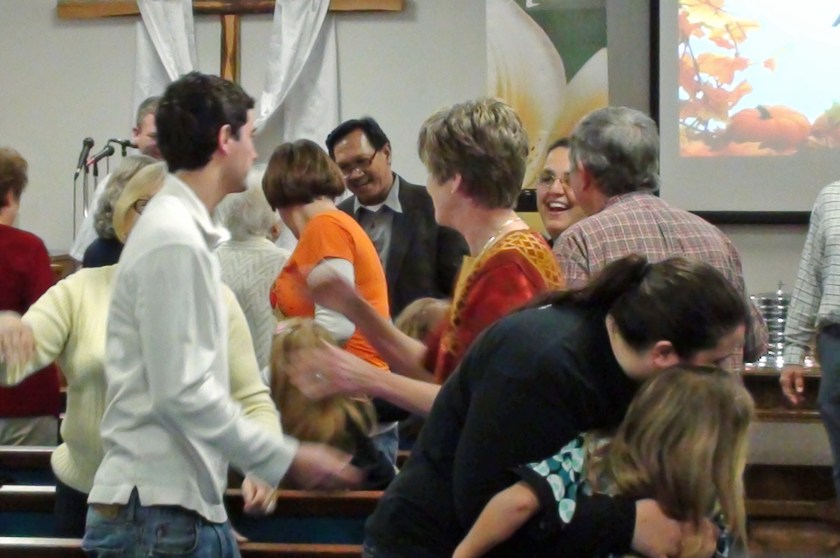
While we must be concerned with doing what we do in worship according to Christ’s expressed will, we must also be sure to reflect His love to strangers, newcomers, outsiders, and otherwise unfamiliar faces. It offends my sensitivities anytime I hear anyone complain that a church I love so much seems cold and unfriendly to them. However, when I see so many focused on one another or on no one or hear accounts of our visitors complaining that we are neither warm nor welcoming, that love motivates me to say something.  Please consider the following principles:

  • We must stop expecting that others will represent us in friendliness. Maybe we look at those seven or eight members of the congregation that “go after” our visitors and conclude that they are covering the bases for the rest of us. In a congregation our size, that is woefully inadequate. They cannot reach everybody, but even if they can their friendliness does not let us off the hook. Dear reader, the chances are great that I am challenging you!
  • We must not use our introverted nature as an excuse. It would be hard to get an accurate estimate, but it is probably fair to say that more of our members are introverted than extroverted. Yet, the introverts may mistakenly conclude that extroverts are merely doing what comes easy and natural to them. As a representative of the extrovert clan, may I suggest that reaching out and connecting with strangers and visitors requires effort. Everyone must make an effort!
  • We must avoid the thinking that the visitor bears responsibility to be friendly. Some visitors may be extroverted and resilient to connect with us, but we’re the hosts and they’re the guests. Think about how hard it is to come into an unfamiliar place where you know no one and reach out to them. This is our “home turf,” and we must always take the initiative!
  • We must practice the Golden Rule (Matthew 7:12). Again, put yourself in their shoes. Treat them how you’d want to be treated if in their place.
  • We must see ourselves as direct representatives of Jesus. 2 Corinthians 5:20 calls us just that. Treat visitors exactly like Jesus would. Seek them out and do everything within your power to let them know how glad you are they are here.
  • We must understand the eternal implications of being friendly to visitors. Wouldn’t it be awful if we contributed to seekers, new Christians, and the like being discouraged, even to the point of walking away from Christ and His truth? We cannot minimize the eternal impact, for good or ill, we make by how we do in this matter.
  • We must break out of our ruts and routines. What creatures of comfort we are! What I am talking about requires us getting uncomfortable and changing our current habits. Avoiding eye contact, walking past unfamiliar faces, withdrawing into ourselves, talking only to those who talk to us or those we feel comfortable with may be the niche we’ve carved for ourselves over a long period of time. Confront those well-established patterns and insist on breaking them.

I want our congregation to be known for preaching and teaching the truth, but I want far more for us. Another thing I want is for us to be the church that doesn’t just embrace and accept “our own,” but who is always making room for one more. I’d far rather risk creeping someone out by bombarding them with extreme warmth than to turn a cold shoulder to one who was trying to connect with God. Wouldn’t you?

animosity-clipart-shake_tnb


Preach Him!

Preach Him…

  • In spite of opposition.
  • When men sin.
  • When men hurt.
  • When the world is on the brink of disaster.
  • When all forsake you.
  • When the stakes are high.
  • When men don’t listen.
  • When anguish sweeps over your soul.
  • When it is not popular.
  • To all men…black…white…rich…poor…educated…uneducated…nice…hateful…friends….enemies…high…low…
  • When paid and when not paid.
  • When you have to stand alone.
  • When exhausted.
  • When it would be easier not to.
  • To those who listen…those who will not listen…with hearts open…with hearts closed
  • Till Jesus comes.
Preach him!   –Billy Lambert, 2016 Bear Valley Lectures
14358684_10153962700550922_5667401840173838167_n

What Kind Of Church Do We Want To Be?

Neal Pollard

V–ictorious? Faith is the victory that overcomes the world (1 Jn. 5:4). No coach hopes to win without first planning and architecting. The blueprints have already been put in place (Rom. 6:17), but we must work the plans to be a success in God’s eyes!

I–nvolved? Do we want to merely keep house and meet together each week? That is not New Testament Christianity (cf. Acts 2:46). They took Christianity out of the church building’s doors. They were tangibly involved in doing God’s work. Will be be?

S–erving? This is a self-serving world. Many seem intent to climb over whoever is in their way to the top. Jesus’ religion runs contrary to that (John 13:12-17), and He calls us to follow His example. A serving church is a living, thriving, arriving, surviving church.

I–mpactful? Do our neighbors know who we are? What about the surrounding communities? What about the farthest reaches of our world? Don’t you want to be part of a church putting a Christ-sized impression on those around us?

O–bedient? We have one authority (Col. 3:16-17; John 14:1-6; Acts 4:12). There are potential masters, but only one will lead us to heaven. A church that steps outside His “lines” will become eternally out of bounds. Those intent on obeying Him will be saved (Heb. 5:9).

N–urturing? Don’t we want to be part of a people with an infinitely more profound purpose than that found by the patrons and workers portrayed in the old sitcom Cheers? We want everyone to know our name and be glad that we came, but we should also want a place where we can grow in every right, positive way. This must be a church that cares about all, whatever our age, background, interests, income, or education!

A–ble?  Do we want to focus on our liabilities or, through Christ, our limitless resources? We have so much to do, but we’ve been given so much to do it. Don’t we want to be part of a “can do” church, doing with our might what our hands find to do?

R–eaping? If we are a working church, we will see results. They will come through baptisms, programs of work, outreaches, visitation, stronger fellowship, missionary success, and much, much more. As my good friend, Cy Stafford, says, “What God controls, grows.” The law of sowing and reaping is positive, too (Gal. 6:8).

Y–earning? A church that is alive and growing is full of holy desire, enthusiasm, and a confidence that we can do all things through the Christ alive within us (Phil. 4:13). Our greatest desires will be to do spiritual things to the glory of God.

How does a church become a visionary church? We must be intentional! What do we intend to do?  With God’s help, that is up to us!

12642872_1029468160409554_6928711640322573340_n

FACTS AND TRIVIA RELATED TO OUR LECTURESHIP

Neal Pollard

When the boys were younger, I would ask them questions about Old Testament characters as part of a quiz.  Included in that were questions about the Minor Prophets.  How well do you know the following without consulting your Bible (or Google)?

  • He wondered why God used a more wicked nation to punish his own nation.
  • He repeatedly talks about “that day” near the end of his book, referring to the day of Christ and the church.
  • He asked, “Will a man rob God?” and said, “God hates divorce.”
  • He wrote to condemn Nineveh and was a prophet of comfort for God’s people.
  • He said, “The just shall live by faith.”
  • He was the Minor Prophet who spoke the most about “the day of the Lord.”
  • His message was, “Rebuild the temple.”
  • He compared his nation to a person who touched an unclean body, who became unclean.
  • His book includes the “Shigionoth.”
  • He said, “The Lord is slow to anger and great in power, and will not at all acquit the wicked.”
  • He mentioned, “The Sun of Righteousness with healing in His wings.”
  • He saw a flying scroll.
  • He was the great-great grandson of Hezekiah.
  • He talked about putting wages in a bag with holes.
  • He talks about a Man whose name is “The BRANCH.”

All of these answers come from either the books of Nahum, Habakkuk, Zephaniah, Haggai, Zechariah, or Malachi.  This weekend will be more than about mere facts and information, though.  The message, principles, and application will enrich your heart and life because it is “a portion” of the Word of God. These prophets write at a significant time in Bible history, and the implications of much of their writing play out in the ministry of Christ and establishment of the church.  I hope you will come and be a part of our lectureship, if you can and for as much as you can. It will be a time of great growth and building up. Send me your answers and I’ll message you back with your “grade.” Happy test-taking!  See you here starting tomorrow night at 7 P.M.

A Mass Appeal To Help Us Reach A Worthy, Wonderful Goal!

50th anniversary

Melvin Otey’s lecture from the 2013 lectures. Stay tuned for details on 2014’s program!

A Runaway Ford

Neal Pollard

Toronto Mayor Rob Ford is eating up news headlines these days, from admitting “to smoking crack cocaine, buying illegal drugs, and driving after consuming alcohol” (Allison Martell, Reuters, 11/18/13).  His profanity-laced tirades, graphic sexual remarks, domestic incidents, and general godless behavior are all marquee letters on a sign that reads, “No self control here!”  His appearance, speech, and videotaped conduct are all primary witnesses to that end.  He appears to be one gigantic-sized scandal.  Though Toronto’s City Council has voted to transfer his power to the deputy mayor and otherwise curtail his ability to serve, Ford has utterly refused to resign. Mr. Ford seems like more of a symptom than a cause of debauchery and indulgence in western society however larger than life he demonstrates it.

Self-control is an oft-touted virtue set forth by God in His Word.  It was important enough to be a part of Paul’s three point outline to Felix (Acts 24:25), to be an important point in Paul’s counsel to Corinthians about godly marriage (1 Cor. 7:5,9), to be a “slice” of the fruit of the Spirit (Gal. 5:23) and to be one of the Christian virtues (2 Pet. 1:6).  Paul paints a grim picture to Timothy about spiritually-difficult times to come, talking about men who are “without self-control” (2 Tim. 3:3).  He says to avoid such men as these (2 Tim. 3:5).

What is so important about self-control?  It is impossible for one to submit to the Lord whose passions and desires are not under control.  Paul says, “Those who belong to Christ have crucified the flesh with its passions and desires” (Gal. 5:24).  An out-of-control person is out of harmony with His will.

One without self-control is prone to have a negative influence upon others, too.  For a Christian lacking self-control, there is the crisis of turning others off from Christianity.  There is the equally damaging effect of swaying impressionable people to follow out-of-control, sinful behavior.  Either way, a lack of self-control pushes other people further away from Christ.

Ford’s behavior has been described as repulsive, offensive, and flabbergasting.  Perhaps he is an uncomfortable, if exaggerated, picture of tendencies we all have in our own lives.  Hopefully, seeing how negative a picture a lack of self-control paints will motivate us to take care in this regard.


“SACKCLOTH UNDERNEATH”

sackclth


Neal Pollard
The first time I recall understanding the significance of the story in 2 Kings 6:30 was sitting in a class taught by Wendell Winkler. He called the lesson “Hidden Cares.” He told us to remember that sitting in the audience each week we preached would be any number of folks carrying around hidden cares. In over twenty years of full-time preaching, I become more aware of that every day. Recently reading about the woman in Mark five who had been suffering for twelve years, I was reminded of this as I thought about the faces of individuals I see all the time suffering in a variety of ways. While we usually know some of the burdens our brothers and sisters are bearing, there are still many others whose troubles are not as widely known.

Jehoram is no Old Testament hero, but is rather a wicked Israelite king. He does not make the cut for the Hebrews eleven list and he does not even behave properly regarding Elisha after the event mentioned in the verse above, but he does illustrate the many who walk around with hidden cares. The verse reads, “When the king heard the words of the woman, he tore his clothes-now he was passing by on the wall-and the people looked, and behold, he had sackcloth beneath on his body.”

The sackcloth was coarsely woven cloth, often made of goat’s hair. It was worn to show mourning and submission to God. No doubt, wearing one of these for any length of time would bring itching, irritation, and discomfort. The garment was apparently meant to reflect outwardly the feelings of the heart and affliction of the spirit of the wearer.

Whether we are preaching or teaching or simply dealing with one another, may we keep a few things in mind. At any given point, the person with whom we are dealing is likely wearing their own “hidden sackcloth.” We may not be able to tell this by looking at their facial expressions or through any verbal cues when we converse. Further, the hidden cares they carry may affect the way they respond to us. Let us not assume they are upset with us or that it is even about us at all. Finally, keep in mind that people cope with their hidden cares in different ways. It is no reflection on the quality of our friendship or relationship if they do not share it. Each of us must determine how, when, and with whom we disclose these things. Let us pray for family, church family, coworkers, neighbors, and others with whom we have relationship as they wear these unseen cares.

To those with sackcloth underneath, remember that God has made us family. There are those you can trust to help bear the burdens. Pray about this and then act. Let these cares refine your relationship with God and sharpen your focus on the place where there will be no such cares. Remember that God is gracious and will not give you more than you can bear. This may seem doubtful at times, but on the other side of the sorrow it will be clear.

No matter how “spiffily” or “slobbily” one is dressed, be aware that underneath may be that figurative sackcloth. May this drive us to be more compassionate and understanding in our dealings with one another.

THE UTTER INSUFFICIENCY OF THEORIES AND QUESTIONS AS THE “ANSWER”

Neal Pollard

As a teenager I once had a Bible class teacher who found it appealing, as a teaching style, to raise questions but give no answers. Some students thought it was cool to keep things theoretical.  It is interesting that his class never really arrived at absolute truth but stayed hypothetical.  I remember feeling frustrated that he raised doubt and uncertainty for some of my peers who might have entered the classroom sure and certain.  Who knew that his sort of “style” would become more popular here in the post-postmodern and emergent age?

It seems that some want in the realm of theology what no one would want in the worlds of auto mechanic-ing, accounting, real estate or medicine—theories and questions in lieu of ironclad, definitive answers. Yet, the realm of theology deals with something more important than automobiles, money, land, or physical health.  When it comes to God and the Bible, eternity is at stake depending on the answers given and the practice encouraged.

Before we allow some smug, condescending professor, preacher, or pundit to conclude that there are no conclusions or absolutely tout the non-existence of absolute truth, let us humbly ask, “On what basis should we reject the Bible’s authoritative position or exchange it for the point of view of the theorist or inquirer?”  Some religious leaders would like us to join them in “always learning and never able to come to the knowledge of the truth” (2 Tim. 3:7).  When the Bible contains a significant number of statements clearly defining right and wrong, we should be wary of those who seem intent to put question marks where God put periods and exclamation points.  That is not to say that there are not “some things hard to be understood” (2 Pet. 3:16), but let us be careful not to toss into that category what God has already explained.

Precious Fellowship!

Neal Pollard

Kathy and I were privileged to speak in Price, Utah, at the Carbon Emery lectureship.  This program affords brethren in that state a chance to be challenged by a specific topic while enjoying each others’ company.  Never has the saying been true for us that we were the ones blessed for the time spent.  Those in attendance were kind and complimentary, but we felt as though we saw something of what first-century Christianity must have been like.  Brothers and sisters from about a half-dozen of the state’s total of no more than 17 churches (including two tiny house churches comprised of 1 family each and at least one congregation whose membership is 7 people) came together to consider faithfulness as well as evangelism against great odds.

The Christians in Utah understand great odds.  Mormonism has a stranglehold throughout much of the state, even holding a decided financial and social advantage.  So, typically, the Lord’s church, if it exists in a community and owns a building, meets in small, modest meeting houses that may feel grateful to have two dozen people present.  The distance between most congregations, with the exception of Salt Lake City, is vast.  Yet, though some traveled several hours to attend these lectures, they seemed to savor each moment together with fellow-Christians.  Observing these brethren as they ate and visited together, I had the distinct sense that they cherished the likemindedness and common bond that truly drew them closely together 

I am not saying that this depth of treasuring one another is missing in parts of this country where the church is numerically strong, but I wonder if being shunned and rejected by the majority of the community does not actually strengthen the tie that binds.  As an “outsider,” made to feel very much a part of their spiritual family in the course of less than 48 hours, I left with a renewed gratitude for the relationships at my disposal with God’s people.  

Attending worship is chiefly about praising and honoring God.  Perhaps there is a level of duty associated with coming to various church functions and activities.  Yet, our time together holds great potential as spiritual glue to bond us closer to each other.  Does God want that?  He must.  Jesus taught the disciples, “By this shall all men know that you are My disciples, if you have love for one another” (John 13:35).


A Beautiful Tribute

Neal Pollard

Kathy and I attended the funeral of Mildred (Millie) King, Larry’s mom and relative to several Bear Valley members, this morning at the Loveland church of Christ.  Ron Lauterbach, the local preacher there, delivered a fine tribute to the godliness of this woman.  So many kind things were said by Ron as well as family members about her faithful Christian life.  It was all very inspiring.  However, the crowning moment of the service was her widower’s words in her honor.  Ron saved these words for last, and they were touching.  He spoke of his “sweetheart” of 62 years, reflecting on how she put Jesus Christ before anything and anyone else.  Then, he spoke about what a devoted mother and wife she was throughout these many decades.  It was touching to hear about this wife who dedicated her life to raising faithful children and standing faithfully behind and beside her man.  When the service was over, Kathy whispered to me, “I don’t know her, but I want to be just like her.”

Is there any better tribute that can be paid than a life lived well?  She served at times as a preacher’s wife, but mostly a school teacher’s wife.  She made many a meal and sent many a card to others.  Her service was very well attended, especially for a late Thursday morning.  All of this honored her, but nothing more than the ones closest to her lavishing such praise about her spiritual maturity and service.  And the one closest to her of all people, Leland King, spoke most tenderly, fondly, and cherishingly.  No praise outshines the genuine admiration and affection of one’s spouse, the person with the most intimate knowledge of that one.  This kind of legacy lives on, even after that one dies (cf. Heb. 11:4b).


The Value Of Self-Forgetfulness (Poem)

Neal Pollard

Imagine a garden of flowers

With a rose in its midst in full bloom

This one blossom feels that it towers

Over all others sharing its space and room

It’s sure that its pedals are most plush

No other more red in its hue

No stem greener, no rival more lush

It sought every admirer’s view.

One day the gardener visited the flowers

For a customer desired a bouquet

They’d shared the same sun and showers

Shared the same rich soil day by day.

But the proud flower stretched tall its red blooming

Puffed itself to its broadest dimension

But the man searched out ones unassuming

Their modesty drew his closest attention.

For the budding roses would bloom with more vim

In the care of the interested client

Trusting food, water, and housing to him

The posy proved itself quite reliant.

But the abandoned, proud rose surely wilted

His pedals dropped one by sad one

By each customer it felt painfully jilted

Til finally it was dead and gone.

The moral of the story conjures sadness

But its truth we ought never to hide

Fullness of self is pure madness

We hurt self most when we’re full of pride

Forget self, be more modest as you grow

Don’t seek glory and men’s adulation.

The Gardener sees all and surely does know

How to use us. Trust His perfect estimation.

What Playing With Fire Can Do To Married Couples

Neal Pollard

The video from a gas station surveillance camera shows the baffling details. 37-year-old Austin Dawkins was playing with a cigarette lighter and got too close to his gas tank as his 30-year-old wife, Jessica, stood beside him at his truck as he was pumping gas.  Flames flare up, Jessica runs away, and Austin lifts the gas nozzle from tank.  This sets his wife on fire, and she is seen running as the flames envelop her.  She received second and third degree burns to her legs, arms, back, and head.  Her husband was arrested and charged with reckless conduct, a misdemeanor.  If he has a conscience, the far greater penalty will be shame, guilt, and regret at what his careless conduct did to his wife (www.myfoxatlanta.com, 11/2/13).

The macabre moments caught on video, showing the woman on fire, are graphic.  No one can doubt the danger and seriousness of the situation.  Spiritually, men and women so often play with fire unable to physically see the consequences of their actions.  Whether allowing themselves to become romantically involved with someone other than their spouse or even courting temptation, they put themselves into a very precarious position.  In the very context of this moral problem, Solomon writes, “Can a man take fire in his bosom and his clothes not be burned? Or can a man walk on hot coals and his feet not be burned? So is the one who goes in to his neighbor’s wife; Whoever touches her will not go unpunished” (Prov. 6:27-29).  The Bible illustrates marital infidelity to playing with fire.

Perhaps one rationalizes indiscreet words, actions, or flirtations as harmless, innocent, and victimless.  Yet, nothing could be further from the truth.  The flames can spread beyond just the man and woman, doing harm to family, friends, and the church.  It can ravage so many lives and leave the perpetrators with an enormous load of guilt. How much better and wiser to see adultery for the dangerous entity it is and leave it alone (cf. Prov. 6:32-33)?

Should Obese Kids Get Candy?

Neal Pollard

The cynic surely believes this lady is feeding her urge for 15 minutes of fame or seeking an outlet for her social ideology.  The tenderhearted finds it cruel and unfeeling.  The overweight likely are offended.  The objective observer still must be shaking his or her head in disbelief. The Fargo, North Dakota, woman, who identifies herself only as Cheryl set off a firestorm when she called in to a local radio station declaring she was going to give those she deemed overweight children an “obese letter” in addition to candy this upcoming Halloween (Fox News Story).  We’ll see if she has the courage to go through with it, what with a national spotlight and all.  But, there is no doubt how she feels.

Are there some people to whom you would not give food or candy because of their size.  That seems unfair and pretty prejudiced behaviour, doesn’t it?  How cold and unfeeling does one have to be to be so arbitrary and callous?

But, do we ever do that in other ways?  As Christians, are we ever selective?  Do we ever discriminate in our evangelism, benevolence, fellowship, or other outreach?  Do we ever judge based on their skin color or ethnicity, their present morality or lack thereof, their seeming scamming or dishonesty as they hold the sign at the traffic light, or their plain clothes or less hygienic appearance even in our own assemblies?

At first, I thought this lady’s behavior incredulous.  Actually, I still do.  But, I am also filled with a conviction to do some introspection.  Do I do what she’s doing, but in different ways?  I shouldn’t.  After all, Paul writes that we should “not be haughty in mind, but associate with the lowly” (Rom. 12:16).  That’s what Jesus did, and the Pharisees and scribes judged Him for it (Luke 15:2).  James warns us not to have an attitude of personal favoritism because making distinctions between people makes us judges with evil motives (Jas. 2:1-5).  Isn’t that the heart of the matter, right there?  We are not judges but servants.  Our motivation is supplied to us by the Savior, and that is to save souls (cf. Jude 23). Whose souls? Who’s ever we can!


SINGAPORE SAYS NO TO ASHLEY MADISON

Neal Pollard

Ashley Madison, which markets itself as an extramarital dating service with the slogan “Life is short. Have an affair,” has used email campaigns and other advertising including a controversial Super Bowl Ad a few years ago.  While it is appalling that such a service could exist, it is more appalling that there are 20 million users worldwide!  Infidelity is ancient and adultery has always been all too common, but to try and legitimize and organize it seems a record low even in a world that has proven it can sink pretty low.

But there is a nation deserving of high praise and recognition.  Singapore is trying its best to keep Ashley Madison from coming to their state.

The London Telegraph reports Singapore’s earnest efforts to block the company.  This resistance includes those in some of the highest offices in the land, including their minister for social and family development.  Businesses are also standing up against what they see as a moral invasion.  In fact, a businessman known only as Mr. Tan, has led a popular Facebook protest against the company.  The page is called “Block Ashley Madison-Singapore” and, as of 1:00 PM Mountain Time on Monday, 10/28/13, the page 25,200 likes  and the telegraph reports that their petition has over 13,000 signers.  The Facebook posts include so many encouraging statements for marital fidelity and decrying adultery (Hannah Strange, 10/25/13, http://www.telegraph.co.uk).

While such organized efforts for biblical morality are too few, it is thrilling to see Singapore, known for its conservatism and strict social controls, banding together to uphold an institution created by God for one woman and one man for life.  While they are being reported as having a prudish reputation and sited as having a low, collective libido, Singaporeans serve as a global leader in honoring sexuality as God ordains it.  May their tribe increase!

Christians ought to earn the attention and spotlight of the world by honoring, in practice as well as word, fidelity in marriage.  God has made His view crystal clear and not just in the Ten Commandments.  The writer of Hebrews says, “Marriage is honorable among all, and the bed undefiled; but fornicators and adulterers God will judge” (13:4).  We should ever echo His truth on every matter, including His pattern for marriage and sexuality!

Only In God Is Rest

The governing hand of God

Traversing the universe wide

Can calm the wildest storms abroad

While standing by my side!

The discerning Eye in heavenly portals

Who watches all by day and night

Can see the trials of us mere mortals

Viewing His creatures with encompassing sight

The swelling heart of our Heavenly Monarch

Reigning with His powerful Arm

Will lead His children from the dark

And protect us from the threat of harm

Why would one search for any safety

In another port or fortress?

The Heavenly Father faithfully

Makes and offers and gives us rest!

“HAVING OUR ‘I’S’ ON THE DAY OF THE LORD”

Neal Pollard

The Thessalonians had a misunderstanding about the day of the Lord as it related to their dead loved ones.  Paul, moved by the Holy Spirit, set the record straight for these Christians.  As he helps them with their struggle, he gives the faithful great heavenly perspective to help them along.

  • INFORMATION–Paul helps them overcome ignorance concern- ing their dead loved ones and the Day of the Lord (13).  The information should alleviate suffering and instead bring hope.  So many are improperly informed about the Day of the Lord.  Information brings proper perspective.
  • INVITING–Our belief in the resurrection of Christ and the power involved in it to raise the dead in Him makes the prospect of the Day of the Lord more attractive (14-15).    What Paul says about that day for the living and the dead makes it something for which the spiritual mind should long.
  • INCREDIBLE–The description of the details of that day are amazing (16-17).  We can try and imagine it, but what we experience goes far beyond that.  Yet, these images do not frighten us.  They are an assurance to us.
  • INSPIRATIONAL–The net effect of Paul’s words in this paragraph is “comfort” (18).  Contemplating how that Day will be for the saved makes us long for it.  We are not living for here and now.  We live now for that endless Day!