What “We” Do To Achieve Spiritual Success

Neal Pollard

It is an unmistakable emphasis in the book of Nehemiah. The word “we” appears 38 times in 30 of the book’s 406 verses! Working together was the continuous mindset of Judah. They knew such a mentality would ensure success (2:20).

Teamwork accomplishes much more than individual performance! If a ball team has only one “star player,” the defense wins by shutting down the one performer. If the work of the church is carried on by only one or a select few, the devil has a better chance of shutting it down. Everyone must get invested! Success hinges on it. Notice where cooperation in the local church brings spiritual success.

When we build (4:6). Not church buildings, but relationships, knowledge, and commitment. A church has never grown on the back of massive, modern facilities. But, God wants us to build up His church (1 Th. 5:11). The more visits and calls each member makes, the better we build. The more encouragement and assistance we provide, the better we build. More Christians doing more for the Lord produce spiritual success in the church.

When we pray (4:9). Facing trouble and uncertainty, God’s people came together to pray. This is reminiscent of the prayer meeting in the home of John Mark’s mother, “where many were gathered together and were praying” (Acts 12:12). What a success that was! At least 3000 or so were devoting themselves to prayer at the Jerusalem church (Acts 2:42). Preachers, teachers, and missionaries are made bold, the sick and hurting are made hopeful, those in danger, travelers, and those confused are made calm by the prayer of the saints. That is vital to spiritual success!

When we carry on (4:21). Churches encounter setbacks and suffer defeats. Willful sinners going out from among us (1 Jn. 2:19), plans or programs that fizzle or die, disorderly members (2 Th. 3:6), false teachers (1 Pe. 2:1), apathetic members (John 15:5-6), the death or loss of a church leader, or general discouragement can tempt us to give up in our labors (cf. Gal. 6:9). We need each other to spur ourselves on in completing the important works that will glorify God. It is not how many defeats a church suffers, but how well a church, no matter how many “losses,” overcomes them.

When we give (5:12; 10:37). Two interesting instances of giving are recorded in the book of Nehemiah: (1) Giving to restore what was rightfully God’s (5:12), and (2) giving the manner that God rightfully expects (10:37). Church members who will spend generously on dinner and a movie but who give the Savior of their souls comparative pocket change, like Zaccheus, need to repent by restoring what rightfully belongs to God (Luke 19:8). Churches that give by faith and sacrifice are always stronger for it, if their living matches their giving. God wants to be “first” (10:37; Mat. 6:33), and that applies to our giving.

Certainly, many other elements are needed to help a church achieve spiritual success for God. But, Nehemiah and his brethren found success by working together. That spirit of unity will help us, as a church, to go forward and do things necessary for us to continue to be a great church! Let’s grow together!

2176418_02575c1b

HOW CAN WE ENSURE THE CHURCH WILL NOT GROW?

Neal Pollard

  • Talk Up Big Plans And Follow Through With Inactivity. This will build frustration and discouragement. Satanfears not the plan, but rather the working of it.
  • Make No Plans For The Future: Just Accept The Status Quo.  Just hope that the future will take care of itself. Buy into the “is/ought” fallacy: “The way it is is the way it ought to be.”
  • Do Not Practice Church Discipline. Let the disorderly walk unchecked in ungodliness. Let all members see how nonchalantly bad or grossly negligent behavior is treated.
  • Under-appreciate The Leadership. Do not pray for the elders, actively seek to help them, encourage them, express appreciation for them, submit to their authority (Heb. 13:7,17), or respect them. Just expect them to be without flaw or feelings.
  • Do Not Actively Enlist. Allow a small nucleus of folks to do the brunt of the work. Leave the majority of the members in the dark as to how and where to be involved. Ignore the fact that people must be personally invested to be faithful.
  • Pressure Or Allow The Pulpit To Be Form Over Substance. Make sure the preached message is soothing and non-offensive, fostering comfort and expecting little to nothing. Have the pulpit heavy on the social and light on Scripture.
  • Get Into The “Change Extremes”: “Nothing Is Sacred” Or “Nothing Is Changeable.”  Departing from the left or right will kill the church, whether its identity or effectiveness. Buy into every new fad that comes along or suspect and oppose any change which may scripturally improve the life and work of the church.
  • Make Personal Preferences And Opinions Binding. Equate personal discomfort with doctrinal sin. Take presumptuous positions, supposing there is biblical foundation without finding such. Allow the nay-saying of one or two thwart effective, soul-winning, and needed programs.
  • Have No Follow-up Program For New Christians. Let them make their own way to heaven after the water of baptism dries. Have no Bible study follow-up, fellowship mechanism, or other effort to integrate and educate these spiritual babes.
  • Maintain An Unchallenging Budget. Do not risk offending non-sacrificial members. Make plans by sight, not by faith. Do not make ambitious financial goals as a congregation.
  • Be Distant And Unloving With One Another. Confine association and fellowship to the building, and that in passing. Stay out of each others’ homes. Do not visit. Do not build friendships with those of like faith. Do not be involved in one another’s lives.
  • Take “Christ” Out Of Christianity. Be secular and worldly. Fail to be distinctive to a world desperately seeking something different from itself.
  • Ignore The Small And Voiceless. Be it children, elderly members, or the sick and shut-in, let them fall through the cracks of inattention. Treat singles, new Christians, and weak, struggling members as second-class citizens of the Kingdom.

It is easy to arrange things in the local congregation so that the church fails to grow. But, the Lord wants His body to grow. The early church grew (Acts 6:1,7; 9:31). A growing church reflects a church on fire for the Lord’s mission (Mat. 28:18ff) and in focus with the Lord’s desire (2 Pet. 3:9). May we overcome these church-shrinking tendencies and build a great church!

2908804_1b43e842

Ignoring The Symptoms

Neal Pollard

“What is that smell in the kitchen sink?” “Ah, honey, I’ll look at it, uh, soon.” “When?” “Uh…soon.” “It’s been like this for six month now, honey…honey, are you listening to me? Agh! Look, the drain is bubbling…”

“Mr. Smith, when did you first notice the mole discoloring and becoming asymmetrical?” “Well, um, I think it was last fall.” “Why did you wait a year to get this checked out? I’m pretty sure it’s cancer. To be straight with you, Mr. Smith, I don’t know how this will turn out for you.”

“Brother Jones, have you noticed that sister Blue is acting withdrawn?” “Yea, she lost her job last month and her children are grown and gone.” “Brother Jones, I’ve noticed that she’s recently stopped coming on Sunday nights.” “Yea, Brother Jackson, we need to go visit her this week.” “I know. We’ve been saying that…every week.” “Well, we’ll get there.”

May I suggest that none of these three scenarios is likely to turn out pleasantly? Yet, damage and expense to our material things, or even the loss of physical life to a dreaded disease, are not as devastating or frightening as the loss of a soul. The tragedy is that there are normally symptoms that accompany apostasy (i.e., turning away from the Lord). It is not enough to see the symptoms. We must respond in a timely manner.

One symptom is a decrease in faithful attendance. When individuals who would not miss a service choose to do something else, an alarm has been sounded. Something is replacing their dedication and commitment to Christ. When it is odd or noteworthy that someone is missing services, we need to respond with a card, call, or visit. Somehow, let them know they are missed. Do not lay this solely at the doorstep of preachers and elders. These folks need to be inundated with our concern. Run the risk of offending them. Why should they get offended at genuine brotherly love?

Another symptom is a decrease in reliability in doing church work. The tasks they once did and were counted on to do they no longer do with consistency. Maybe they felt unappreciated or overly burdened. Maybe they needed relief or at least a break. Or, maybe spiritual struggles and worldly concerns have overwhelmed them. Whatever explains the cause, respond to the effect. Tell them how important and special they are. Praise their work. Help them. Encourage them.

Yet another symptom is a change in behavior and withdrawal. This is perhaps the most common precursor and symptom in a spiritual struggle. Distancing themselves from the rest of the church family, a loss of enthusiasm for the church, worship, and/or its programs, and a change in personality within the congregation are all telling signs something isn’t right. We are taught that individuals in a marriage are constantly changing. Those same individuals fill our pews and participate in the church’s work. Let us never take each other for granted or ignore this symptom.

Ultimately, it is not the church’s responsibility to stand for an individual in the judgment (2 Cor. 5:10). Yet, we have a mutual responsibility to each other (1 Pet. 3:8). To borrow from the medical analogy above, when one member of the body hurts, we should all respond to help him or her (1 Cor. 12:26). Please do not be blind to the symptoms of those around you. Ask them how you can help. Do not let them spiritually die because of our neglect.

maxresdefault

“Truly In Vain Is Salvation Hoped For From…”


  • A politician or political party.
  • Wall Street.
  • Military might.
  • Our net worth or economic savvy.
  • Government programs.
  • The second amendment.
  • Popularity and fame.
  • The worship of nature.
  • Exercise and fitness.
  • The appeal of our good looks.
  • Walls.
  • The importance of our occupation or position.
  • Our national identity.
  • The Supreme Court.
  • Ethnicity and race.
  • Science and technology.
  • Any religious figure besides Jesus Christ (even those claiming to represent Him).
  • Family members and friends.

In Jeremiah 3:23, the prophet writes, “Truly in vain is salvation hoped for from the hills, and from the multitude of mountains: truly in the Lord our God is the salvation of Israel.” Jeremiah’s brethren put all their eggs in the wrong baskets. They neglected to see where true hope was found and where saving faith was to be put. Their misguided trust led to their downfall. It cannot be otherwise in any generation, including our own.

We may never say we put our trust in anything besides God, but “the proof is in the pudding.” We demonstrate what’s first and foremost to us every day, in word and deed. Ultimate deliverance from our greatest trials, struggles, and challenges comes from only one source. Jeremiah succinctly identifies it.  Is that what you are trusting? If so, let’s make sure everyone who knows us knows that!

—Neal Pollard

11800435_10153091791310922_2631856048550949852_n

What The Israelites Lost Besides Canaan

Neal Pollard

If you were to ask the typical Bible student what the consequences of Israel’s following the foolish counsel of the ten negative spies, you might hear talk of the wilderness wandering or the fact that God denied them the Promised Land. This was truly, from a physical standpoint, the most visible result of their faithlessness. Yet, looking closer, the Israel of that generation lost much more. They teach us today what not to do in doing the Lord’s work.

–They lost proper perspective. Who did Israel send to Canaan? Every tribe sent a “leader among them” (Num. 13:2; lit., “An exalted one; a king of sheik; captain; chief”). Also, who was Israel? They were not a people chosen of God because they were the biggest, strongest, or fiercest nation, but because God loved them (Deu. 7:7)! But, when Israel goes into Canaan, they walk by sight (Num. 13:28,32) rather than faith. They saw the giants, not the God who made them. They saw themselves as grasshoppers (Num. 13:33), not God’s people! They saw by fear and not by faith.

So often, today, we set our aim too low because our perspective is skewed. We launch out as far as we can see and go no farther. This hamstrings our budgets, our goals for evangelism, and the extent of our involvement in needed works. If we focus solely on ourselves, we become latter day followers of the Israel described in Numbers 13.

They lost sight of their purpose. Why had they left Egypt? At the bush, God told Moses (Exo. 3:8,17), and Moses, between the Red Sea and Mount Sinai, told Israel (Exo. 13:5). From the days right after their exodus from Egypt, Israel knew she was journeying toward Canaan. Certainly, she was prone to get sidetracked, as when Aaron led the calf-building project (Exo. 32) and when the people periodically, bitterly complained (Exo. 15-17). But, they ultimately plodded up to the precipice of the Promised Land. They camped at the corner of Canaan. This was where they were going. What happened? A few challenges, formidable as they might have seemed, derailed them. Rather than occupy the land God promised them, “They said to one another, ‘Let us appoint a leader and return to Egypt'” (Num. 14:4). How exasperated with them God must have been!

Do we get like that today? Our purpose for being on this earth, to win souls (Mat. 28:19), help our brethren get to heaven (Jas. 5:19-20), help people in need of it (Jas. 1:27), and save ourselves (Acts 2:40), can get lost in the shuffle of career success, material gain, worldly acceptance, and even the material rather than the spiritual concerns within the local work of the church. Why are we here?! That determines where we go from here!

They lost the sense of their identity. They were God’s special people. He had covenant with them and they with Him (Exo. 24). They were God’s children. Exodus 6:7 captures succinctly God’s sentiment toward Israel, where God says, “And I will take you to me for a people, and I will be to you a God.” Nobody could defeat them. Nobody stood a chance before them. They were the hands and feet of God on the earth. No army stood a chance against them. They could have recalled Egypt as “Exhibit A” of this (Exo.. 15:4; Heb. 11:20). Instead, when they looked in the mirror of fear, they saw themselves as grasshoppers.

Christians are God’s people. We are the Lord’s army (Eph. 6). Can you think of fighting for a more powerful ruler? We are the body of Christ (1 Cor. 12; Col. 1:18). Can you think of a healthier, stronger organism? We are branches of His vine, and the Father’s the farmer (John 15). No drought, pest, or conditions can keep us from being weighed down with fruit for Him! Yet, we have got to conquer the cricket concept if we want God to be pleased with us!

We are able to do more for the Lord, and we are able to do it better. But, this requires our enthusiastic, wholehearted participation in the work of the church. Don’t let the giants of time, apathy, inaction, and distraction turn you back. Through Christ we can do all the things He’s already commanded us to do! On to the milk and honey!

elah_valley_below_adullam

A Tale Of Two Crosses

Neal Pollard

“Tell us father, were you really there that day?

Did they make you take His burden the rest of the way?”

“Son, I stood in the crowd when I got my painful commission,

And they thrust it on me without asking my permission.

He was staggering and bloody and gripped by exhaustion

I was pressed into service, whether expediency or precaution.

The skull-shaped brow scowled back from a distance,

As I offered that Sufferer my lowly assistance

I was far from the lush valley that cradled my idyllic town

In the bustling, boisterous crowd full of heckles and frowns

Taking outside of Jerusalem this rough-hewn beam

Accompanied by His friends and more foes, what a curious team

Every step in the cacophony of the heckling hateful

When I got to the spot, I was wearily grateful

To cease my assignment and be through with this affront

But I stayed long enough to see men with a malice so blunt

Take the man I relieved and affix Him securely

To the implement I’d carried so slowly but surely

With frightening precision they attached Him with nails

To the cross which they lifted, oblivious to any wails

For the pain, sons, I know must have been unrelenting

As I watched this plain gentleman hang, with no champions dissenting.

No, the crowd with their clamors. bloodthirsty and wild

Made a contrast with this Man, His face loving and mild.

He hung for six hours, and during that ordeal,

Things happened that day, both incredible and surreal.

At the end, after the torture and the mockery were through,

He’d said, “Father, forgive these who know not what they do.”

Now He offered the Father Himself, His own spirit,

I wonder how many of the rabble there could hear it.”

Alexander and Rufus, the sons of this infamous servant

Had a father involved in a task he did, whether feckless or fervent.

We know him today, though we know not what became of the man.

Did it cause him to follow or, like Pilate, to wash his hands.

Was the Rufus of Romans Simon’s son, whom Paul adored?

Was Alexander the villain Paul scornfully deplored?

We won’t know on this earth just who all these men were,

Though we’d like a clear picture in place of the blur,

But we know on that morning, when we gained by Christ’s loss,

That this Simon of Cyrene carried Jesus’ cross.

Today we are called to assume a great load,

Not His cross, but ours, is the burden that’s bestowed.

The cross of self-denial, we must kill our self-rule

And be His, day by day, until our journey is through.

cross_in_sunset

THE PRISON OF “NOT”

Neal Pollard

Strayer University shared their video from the day they ran an ingenious experiment in New York City.  They put up a chalkboard on a busy street with this caption written at the top: “Write Your Biggest Regret.”  Scores of people wrote on the chalkboard.  Nearly every answer visible in the video included the word “not.” Interestingly, it was not confessions of sins of commission. Instead, it was about opportunities missed, dreams not pursued, and things they failed to do.

That exercise made me wonder how many are inmates in the prison of “not.”  While Strayer seemed more interested in highlighting regrets that were tied to career, that impacted quality of physical life, and the like, regret reigns in people’s hearts and has dominion over their spiritual and eternal lives, too.  Scripture shows us those challenged with the gospel message who ultimately refused to follow Christ. The rich young ruler was not willing to choose Christ over his stuff (Mat. 19:22). Many of the rulers believed in Him, but they put their stock in the approval of men rather than God (John 12:42-43). Felix trembled at truth, but ultimately turned away (Acts 24:25). His cohort, Agrippa, was nearly there but not quite (Acts 26:28).  Other examples can be found of those who came so far but would go no further.

How many people have been shown the way to eternal life and have acknowledged, to a point, that it is the way they should go? Yet, when push comes to shove, they refuse to leave the cell of self and confine themselves to the chains of a condemning choice. Before Christ, they will see their regrets realized in a rejection that cannot be remedied.

The incredible news is that they keys are in reach of this prison.  It was a running gag in the Andy Griffith show that particularly Barney would leave the keys on the peg of the Mayberry jail where the prisoners could reach the keys and let themselves out. Would you picture our spiritual circumstances this way? The Psalmist praises God for many reasons, including the fact that “the Lord sets the prisoners free” (146:7). In a Messianic passage, Isaiah writes of His mission to “proclaim liberty to captives and freedom to prisoners” (61:1; cf. Luke 4:18; 7:22; Mat. 11:5). He can emancipate lifelong slaves to sin (Heb. 2:15). He has left the keys where we can grab them, but we must want to be free and choose to be free.

This video ends with the participants taking an eraser and removing all the regrets from the board. One of them writes just two words in their place: “Clean slate.”  What an optimistic, hopeful, empowering difference that contrasting concept is. Regret can be replaced with resolve. Do you believe that is possible for your spiritual life? Don’t you think God wants you to experience that exhilarating hope? The proof is there at Golgotha and the sepulcher that could not keep His Son entombed. What He did there can provide you with a clean slate! Take possession of the freedom He came to give you!

Strayer video link: http://aplus.com/s/83d4dc91dee

paxp-deijewhat-is-your-biggest-regret-strayer-university-chalkboard-video-new-york-city-960x420

You Sure Do Have An Attitude!

Neal Pollard

Unavoidably, you do! And consider what hinges on what kind of attitude you have. Often, the difference in winning and losing is attitude. Happiness and sadness is a matter of attitude rather than circumstances. Failure and success is determined, many times, by what kind of attitude we have toward the task. Even one’s attractiveness and repulsiveness are, many times, gauged by his or her attitude in life.
You, the Christian, have an attitude! You can be a sour-faced, negative, paranoid, bitter, fearful, stressed out, unhappy, grouchy, withdrawn, depressed, whiny, angry, hypercritical, pessimistic, suspicious, and therefore poor specimen of a Christian. Or, you can be a hopeful, interested, enthusiastic, peace-filled, joyful, bright, forgiving, compassionate, holy, pure, winsome, righteous, smiling beacon of light in a world filled with tons of negative, disgruntled, and chronically unhappy people.
Since your sins are forgiven, your Lord and Master is unmatched, your life is blessed, and your future is exciting, isn’t it natural that you should have a good attitude? A good attitude can transform the people around you, positively impact your circumstances, win the hearts of rivals and enemies, transform your own inner trouble, and give pleasure to the God of heaven. You didn’t know you had that much influence, did you? But you do! Use it for good by wielding a good attitude.
Salvation to restore a sin-sick soul, forgiveness for a guilty heart, and acceptance from a loving God despite our unworthiness are often more unbelievable to folks than any physical feat to attain. If our attitude reflects the consequences of having received those things, we can appeal to untold others to achieve the same state of life by following our lead. So, how’s your attitude?
 48189464_3362a27dae_o_d

What Are You Living For?

Neal Pollard

A man had the good fortune and insight to take a chance with a credit card company in the Baltimore area several decades ago. He retired a wealthy, high ranking executive. In the course of his career, he put together a streak so impressive–35 years in which he never missed a day of work–that “Iron Man” Cal Ripken, Jr., wrote him a letter commending him for it. When he retired, the company gave him a classic car as well as many other lavish gifts. He had a great many benefits and perks, the admiration of peers and competitors, resort townhouses, and considerable wealth. But, one day very soon after he retired his life was dramatically changed after a visit to the doctor. He had an aggressive form of cancer. A few months later he was dead.

This is not a commentary on the morality or priorities of the man. I know nothing about either. His story points out that his well-laid plans and successful career could not forestall the inevitable end result common to every man.

It should also provoke a question. What are we living for? Is our identity tied to our career? Do we want to be known as the life of the party? Is it all about travel and adventure? Does life revolve around going to the river, campground, fishing hole, beach, or mountains? Is it sports, shopping, spending, or spirituality? Of necessity, all of us have a central focus. It is the thing that forms the bull’s eye we repeatedly find ourselves aiming at. Too many times, some thing becomes the thing in “first place” over Christianity. Colossians 1:18 reminds us Christ must come to have first place. When it comes to our jobs, Jesus must take first place. When it comes to our recreation, same thing. When it comes to relationships, He deserves primary position. Whatever we say or do, Jesus must be at the forefront.

He warns that we may invest in the wrong kind of treasure rather than the true riches (Mat. 6:19-21). He admonishes us to seek the kingdom first over “things” (Mat. 6:33). He warns against choosing family members over Himself (Mat. 10:37).

When life draws to a close, one will be confronted by the reality of what he or she made first place. Certainly, when we cross the sea of time to eternity, there will be no denying, rationalizing, debating, or arguing what our “bull’s eye” was. But, in our heart of hearts, don’t we all know what’s most important to us right now? It’s what occupies the greatest amount of our interest, time, energy, emotion, and effort. It is what we live for. When we die, will what we live for help us live eternally or be the cause of eternal death (cf. Rev. 21:8)? Let’s hear Paul’s encouragement to “set your affection on things above and not on things of the earth” (Col. 3:2).

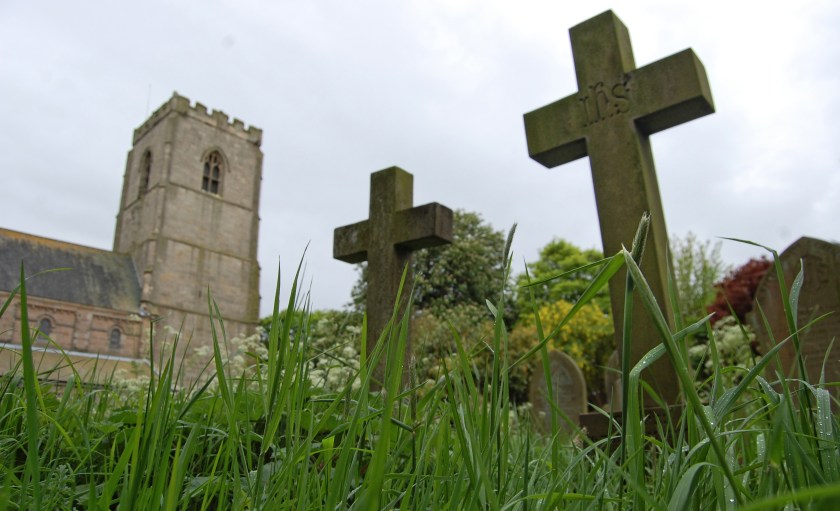
Spofforth Church Grounds

The Same Minute From Many Perspectives

Neal Pollard

A visitor comes to worship services for the first time. This person is searching for meaning, purpose, and answers, perplexed and troubled by life and wanting to know the way. The services have already started, and the visitor slips into the first vacant seat available. This one is intrigued and engaged by what has gone on, benefiting from the preaching, appreciating the singing, and eventually standing with everyone else for a final, uplifting prayer. The visitor has experienced enough to consider returning. The prayer concludes, and the visitor, with everyone else, begins to head for the aisle.

So much, good or bad, can happen in these next 60 seconds.

  • The visitor, not knowing a soul, either stands or slowly walks out of the auditorium, hoping for a friendly face, a smile, or words of kindness and encouragement.
  • The family seated next to the visitor have wrestled their baby throughout services. Exhausted and flustered, they hurry past the visitor never making eye contact.
  • Several members, each on an important “mission,” walk past the visitor to talk to that person or do that thing that, if they don’t hurry, they’ll forget or miss.
  • The visitor does make it to the preacher, shaking his hand and thanking him “for the service.” While standing with the preacher, the visitor notices a handful of those who are apparently members warmly greeting the preacher but feeling the full force of being treated as if invisible by them. These folks are good folks, but they just aren’t observant (or accustomed to being “on the lookout” for visitors).
  • Moving past the preacher, the visitor encounters the eye contact of a few people who politely smile or even say hello. These good people wonder if this is a member, someone they should know, and, afraid to offend this one, do not follow up with conversation.
  • The visitor walks past a shy member, one who would like to greet the visitor but who is afraid of being embarrassed in some way.
  • As the visitor departs, ignored by and large and concluding that while the services were unique and intriguing the people were cold and unfriendly, God looks down from heaven. He has seen that last minute unfold. He knows the tagline under this church’s bulletin masthead asserts that this is the friendliest church in town. He watches members who know one another and are comfortable with each other laughing and talking together, wanting to be together, but are oblivious to the precious opportunity embodied in that visitor. God sees that visitor as a soul precious enough to give His Son for, an impressionable person reached or rejected by the reception (or lack thereof) made by His people. He knows this visiting one has heard truth and experienced worship in spirit and truth, but that this one also believes that the participants are exclusive and disinterested.
  • The devil has to be delighted that this visitor leaves dejected and resentful, determined not to visit that unfriendly congregation again.

Though I would like to say that the scenario above is far-fetched and purely fictional, it is one I have seen play out repeatedly over a quarter-century as a preacher.  Our efforts (or lack thereof) to engage and show interest in those who visit our assemblies is our only opportunity to make the first impression redeemed, soul-conscious Christians should make. We must never assume that it’s others’ job to or that others are doing the job of making our visitors feel appreciated and welcomed. What if every Christian present would take every opportunity presented to make every visitor feel as though they’ve “come home” when they come to our services? Will you consider what you do with your first minute after the last “amen”? Who knows the eternal difference it will make, especially with some soul searching for the Savior?

5624179647_50a421d605_o_d

Can You Imagine Being $53 Million In Personal Debt?

Neal Pollard

USA Today’s Maria Puente is reporting music star Kanye West’s tweet where he writes, “I write this to you my brothers while still 53 million dollars in personal debt…Please pray we overcome…This is my true heart….” (USAToday.com).  Hearing that Facebook creator Mark Zuckerberg and wife Priscilla were going to give away some of their billions to philanthropic causes, West tweeted that he wanted to be a recipient of some of that charity.  Since most of us will probably not make a total of $53 million in our lifetimes, we have a hard time imagining how someone could accrue that amount in personal debt! Perhaps horrible investing, profligate lifestyle decisions, and the like might explain it, but the lack of restraint and wisdom seems appalling. How could one person be so foolish and wasteful? We wring our hands and shake our heads, maybe condescendingly.
Until we consider something.

In a spiritual sense, we all faced a debt infinitely greater. Jesus illustrates this in a parable regarding a slave who owed his master 10,000 talents (Mat. 18:23ff). Biola University business professor Philip Massey did some modern-day math equivalency with that figure and estimates in 21st Century dollars that debt would be $7.04 billion dollars, and according to the 2010 Forbes list of billionaires would need to be at least the 102nd most wealthy person on the entire planet just to be able to pay such a debt (chimes.biola.edu).  Jesus’ point in the parable is to show how utterly audacious it is not to forgive the relatively minuscule transgressions others commit against us in light of how great our spiritual debt is to God.  All the combined wealth of the world is not enough to pay for one sin (cf. Mic. 6:6-8; Mat. 16:26). Colossians 2:14 uses the term “debt” to describe our sin problem, but the same verse tells us that we had someone more powerful and capable than any earthly magnate or mogul to help us pay off our debt.  In fact, “having nailed it [the certificate of debt consisting of decrees against us] to the cross,” He provided payment sufficient for the sin debt of every single person in this world.

Can you imagine anyone refusing help who faced such an insurmountable obligation? Yet, the majority of this world has done and will continue to do so. By refusing to submit to the Lordship of Jesus, they continue to pile up their debt. When the Day of Accounting comes, they’ll stand bankrupt and unable to pay. The consequences will be eternal!

Without Christ, we all face a debt that cannot be sufficiently estimated.  We need His blood applied to our sins or our situations are hopeless! How Zuckerberg will respond is unclear. How Jesus will respond is ironclad! Reach out to Him.

kanye_west_at_the_2009_tribeca_film_festival-2_cropped

The Ankgor Wat Dinosaur

Neal Pollard

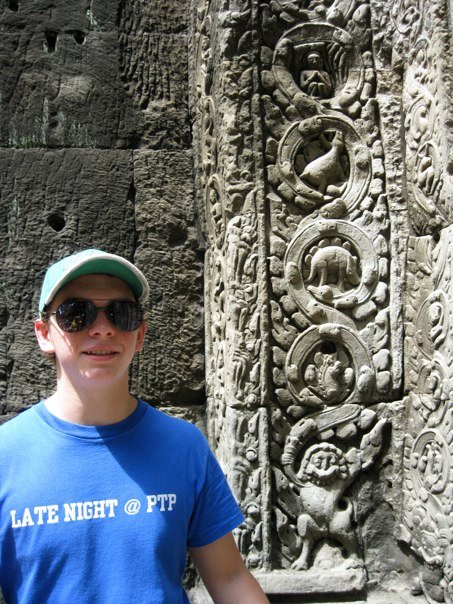
I have been to the Ankgor Wat temple complex, near Siem Reap, four times. It’s a fascinating tourist attraction, but there is one carving, among literally thousands, that stands out above the rest. It is found at Ta Prohm Temple. The temple was built between the late-1100s to early-1200s by King Jayavarman VII and dedicated to his mother. Today, it is “shrouded in dense jungle” and “fig, banyan, and kapok trees spread their gigantic roots over stones, probing walls and terraces” (tourismcambodia.com). “It took 79,365 people to maintain the temple including 18 great priests, 2,740 officials, 2,202 assistants, and 615 dancers” (ibid.). But it’s that stone carving that it most unforgettable.  One particular trip, which I made in 2009 with two elders, three deacons, and my oldest son, Gary, stands out in my mind.

I asked our guide, hired out by the Kazna Hotel in Siem Reap and of the Buddhist faith, what he thought this particular creature was. He said he had no idea what it was and added, “They must have had a really good imagination.”  The question such a response raises is, “How did they know to imagine that?!”

Well, a group from Canada was following close behind our group of seven from Denver, Colorado.  A son asked his father for an explanation of the carvings on the pillar, and dad replied with some authority, “Son, that was their version of a geological timetable.”  Of course, it begs the follow up, “How did 12th-Century Khmer people, well before Darwin and others planted their geological seeds, know of such a timetable?”  Furthermore, this “timetable” looks nothing like anything you will ever see in a textbook–a man above it and a monkey below it.  Based upon what fossil evidence did they create their carving?  There must have been hundreds of fellow “explorers” viewing these temple ruins with us in the few hours we were there.  Some of the fascinated people spoke in languages I cannot understand, but body language was pretty telling.  Others, Americans, British, Australians, and Canadians, all seemed to see that carving for what it most apparently was.  No one said, “That’s a rhino or pig.”  They called it a Stegosaurus.

How many other similar discoveries await reclamation from jungle vegetation, archaeological excavation, and geographic exploration?  In the different disciplines of science and history, man uncovers gems like Angkor Wat’s Ta Prohm from time to time.  Such clear, incontrovertible evidence from a time before our modern “war” between evolutionists and creationists begs to be examined with unprejudiced eyes.  While some may never change their mind regardless of how many items are offered into evidence, I believe that there are a great number of people out there who are honestly, objectively looking for truth.  The Stegosaurus at Ta Prohm near Siem Reap, Cambodia, might be the item that convinces many!

1937409_160820505921_3751983_n
Gary standing next to the column. Notice what/who else is in the carving with the Stegosaurus.

OPTIMISM

Neal Pollard

Joshua and Caleb were positively optimistic. They surveyed the situation and saw the taking of Canaan as a no-lose situation (cf. Num. 14:7-9). But have you stopped to consider what made them so optimistic? When the majority was cursed with a pessimistic spirit, these men saw looming victory.

They were optimistic about the land (7). They didn’t just refer to it as the land, but as a good land. They saw it not just as a “good land,” but an exceedingly good land. The Hebrew word translated “exceedingly” means “power and strength.” The idea is that it’s exceptional. It’s the same word used in Deuteronomy 6:5, that “you shall love the Lord your God with all….”  The word is a word with great depth and the word God used to describe His view of creation in Genesis 1:31, which was “very” good. A passion that strong can’t be faked or contrived! They saw such potential in Canaan.

They were optimistic about the labor (9). Their faith led them to the optimistic conclusion that the Canaanites were their prey and that those native people’s protection was removed from them. They repeatedly admonished Israel not to fear them. Someone has said, “Fear wants to give your present to your past so you don’t have a future.”

They were optimistic about the Lord (8). He was the heart of their optimism. Joshua and Caleb mention His name three times in encouraging the people to take possession. They say that the Lord is with them and is pleased with them. To act with the assertion that the Lord is on our side is the height of optimism. They weren’t fooling themselves. God had already said He’d be with them, and they could look into the past and see His assistance and provision.

We have the same reasons to see this life with the same level of optimism. We don’t have a physical territory to inherit, but we still have a heavenly inheritance. Hebrews 9:15 tells us it’s eternal. Our labor is different, but we still should be optimistic about the battle with the enemy (Heb. 2:14-15). We live in a different age, but we serve the unchanging God (Mal. 3:6). A.W. Tozer has said, “He is immutable, which means that He has never changed and can never change in any smallest measure. To change he would need to go from better to worse or from worse to better.  He cannot do either, for being perfect He cannot become more perfect, and if He were to become less perfect, He would be less than God.”  All of this should give us the fuel for optimism however dark or doubtful the situation seems!

7755365008_6b2c390a60_o

WHEN GOD PAID A VISIT TO ISRAEL

Neal Pollard

The Bible tells the beautiful story about the day God visited earth as a human being, coming as a baby by way of the virgin Mary (John 1:14). Because He came here, we can hope to go to His home (John 14:1-3). But one day, He’s going to pay another visit, a visit that will be welcomed by the saved but horrific for the lost (2 Thess. 1:7-10). But, there have been times when God has come in judgment of people on earth, and Amos’ day was one of them (3:14). The prophet wrote, “That in the day that I shall visit the transgressions of Israel upon him I will also visit the altars of Bethel; and the horns of the altar shall be cut off, and fall to the ground.”  Some versions have the word “punish” instead of “visit.” Punishment was the purpose or nature of the visit.  Why did God pay a visit to Israel?

  • Life had become very cheap (2:6). Two different classes of people were viewed cheaply by Israel—the righteous (spiritually rich) and the needy (physically poor).  This could refer to those who were innocent of crimes who were found guilty through bribery and corruption. Apparently, a ridiculously small amount was required to purchase the poor. Throughout the history of mankind, evil people have found ways to devalue human life (slavery, abortion, euthanasia, prostitution, pornography, etc.). When God pays a visit and sees such an attitude toward life, He is not pleased (cf. Prov. 6:16-17). I should ask, “Do my everyday dealings with others reflect my high regard for human life? Do I see others as pawns in my hand to be manipulated, as those I can take advantage of for my selfish gain, or as those who can meet my needs?” This applies to fellow-Christians, too. Do I value them or devalue them (cf. Phil. 2:1-4)?
  • There was immorality (2:7).  God did not hesitate to enter the bedroom when He paid a visit. It was God who created sexuality, and what He made was good. Since the fourth chapter of the Bible, people have tampered with His design. By the time God visits Israel in Amos’ day, the condition of things in this area of life was disgusting and perverse. It violated the Law of Moses (Lev. 18:8). But it also violated the laws of common decency. It was that way in New Testament times in the church of Corinth (1 Cor. 5:1). Woe unto the people who, when God visits, He finds full of immorality. God created human sexuality and He lays the ground rules for it (Heb. 13:4).
  • There was ingratitude (2:9-10). It’s not clear whether the feasts in Amos 2:8 were legitimate and therefore abused worship to Jehovah or if these were pagan practices to idols. We know there was drunkenness and probably fornication during the course of these festivities, whatever the intended object of worship. But the root of the problem was a failure to acknowledge God’s hand in their protection and deliverance. These people failed to give God the credit for their success. They had been so blessed by God, but they ignored Him. It’s the problem of the nine ungrateful lepers in Luke 17:11-19. They appealed directly to God, He healed them, then they forgot Him. I believe that in our land of plenty, we must guard against ingratitude and even a sense of entitlement. We have running water on demand, clean water, hot water, air conditioning, dental plans or at least dentists, clean hospitals with the world’s best doctors and nurses, no malaria, cholera, or typhoid epidemics, retirement plans, and more. But we’re the most ungrateful people on the planet. As a Christian, I have even more than that. Am I grateful for it?
  • They closed the mouths of the prophets (2:12). They had aready tempted the Nazarites to break their vows (11). They were hard at work on the prophets, too, trying to stop them. When God visits a people, He had better find faithful messengers. Later, in Ezekiel’s day, God was hard pressed to find them (cf. Ezek. 22:30). Paul warned about this (2 Tim. 4:3-4). Woe to the preacher who has a price, who markets his message to the highest bidders. A man who sells out to his paycheck and a people who love to have it so will neither one fare well when God pays a visit.

These weren’t the only things God saw when He paid Israel a visit. They were out of step with God (3:3). Their women lost their spirituality (4:1). They corrupted their worship (4:4). They were rebellious (4:6). They had divorced religion from righteous living (5:21). They were at ease at Zion when they should have grieved over it (6:1). At the judgment seat of Christ, many people’s works will go up in flames. We must be ready when Christ pays a visit.

Reflections At Middle Age

Neal Pollard

The first few decades we rush ahead
Wanting time to fly, but it creeps instead
Impatient to be older, sure that it’s our way
To freedom and happiness, where we’ll leisurely play.
Sure enough time goes rapidly by
Flashing so speedily, we watch it fly
Moments of grandeur, days that are grueling
Ordinary stretches our quick lives fueling
Soon the road in our rearview stretches much longer
Our foot on the brakes, though the pace is much stronger
The road out before us is sloped and quick,
We savor the present, future curves might make us sick.
But we know that this journey, so speedily taken
Will reach its destination, there’s no mistaking.
There’s still plenty of grand views on the side of this road
But we encounter new impediments and a heavier load
How could we go faster, as there are higher hills to climb?
Yet this road is so short and is hemmed in by time.
I praise God this journey is not a dead end,
I’m traveling to see my dear Savior and friend,
Who’s waiting my coming, however many more miles,
Where days are not counted, and tears become smiles.
That’s free of all calendars and increases in age,
And length of existence stretches one eternal page.
The law of averages says I’m about halfway through,
Or perhaps a bit farther, so here’s what I’ll do,
Make the most of each moment, helping others prepare
For a happy destination, showing how to get there.

180778_494356300921_2048026_n
Me on the right with my sister, Mendy, and friend, Zack Carter. About 1973.

FORGOTTEN FRUIT

Neal Pollard

Paul especially urges a particular quality that seems rarer these days. However, this is not a trait disappearing only with those in the world, but one that seems harder for us who claim to be disciples of Christ. He uses a word in Galatians 5:23, Ephesians 4:2, Colossians 3:12, and 1 Timothy 6:11, among others—James does, too (1:21; 3:13). The word, πραΰτης, means “gentleness of attitude and behavior, in contrast with harshness in one’s dealings with others” (Louw-Nida, Greek-English Lexicon, 1996, n. pag.). They suggest the word includes “always speaking softly to or not raising one’s voice” (ibid.). Another Lexicon, in defining the word, speaks to what may prevent one demonstrating gentleness, namely “…being overly impressed by a sense of one’s self-importance” (Arndt, Danker, et al, 2000, n. pag.). Yet, surely there are other impediments to our bearing the fruit of gentleness.

We struggle to be gentle, don’t we?

  • With our children’s weaknesses and mistakes.
  • When responding to our spouse, whether in impatience or aggravation.
  • With rude fellow-shoppers, incompetent cashiers, or pokey or inattentive drivers.
  • Being at odds with a brother or sister in Christ in a clash of personalities or purposes.
  • Having thoughtless or rude neighbors.
  • Engaging in a disagreement with a faceless, nominal acquaintance on social media.
  • Dealing with customer service, especially if we get an ESL representative.

This is just a sampling of situations which tempt us to abandon a gentle spirit. Aristotle called this quality “the middle standing between two extremes, getting angry without reason…and not getting angry at all” (Zhodiates, Dictionary, 2000, n. pag.). The New Testament does not tell the Christian that we cannot defend ourselves, protect our rights, or get what we pay for, for example. But, in addressing concerns, needs, and problems, how we do this makes all the difference.

For many of us, gentleness needs to be intentional. It doesn’t come naturally.  We need to pray about it, prepare ourselves for it, and practice it. Our passion needs to be harnessed. Our speech needs to be tempered. Just making the need for gentleness a conscious priority in our lives will greatly improve our performance, with family, friends, brethren, and strangers. It is a powerful tool to win hearts and shape lives, beginning with our own.

fruit-basket-396622_960_720

What’s So “Social” About It?

Neal Pollard

“Social” is an interesting word. It can be a noun, as in “church social,” referring to a gathering of people to socialize. Usually, it is an adjective–“social studies,” “social club,” “social butterfly,” or “social grace.” “Social” modifies another word to form a phrase normally found only in the restraints of religious discussion. The phrase is “social drinking.” Social drinking implies situations such as guests in the home, friends at a meal or bar, or business dinner or party where a typically smaller amount of alcohol is consumed than occasions where drunkenness is typical. Certainly, this is an emotional issue for some either adamantly for or against its practice. In the spirit of fools going where angels fear to tread, please allow me to consider with you a few questions about “social drinking.”

  • What constitutes the limit on social drinking? In other words, when does one cross the social line in social drinking? If one of the drinkers has two rather than one, is it still social drinking? Three rather than two? Four rather than three? When is it excessive? Who, of the other drinkers, is to be the judge of that? Often, there are those in the “social drinking” crowd who try not to miss a shot, glass, or refill. For all the sippers, there are guzzlers, too. What makes four wrong and one right?
  • What positive social messages does it send? Sophistication? Success? With social drinking, what is the Christian hoping to achieve? A soul-winning opportunity? A Christlike influence? A demonstration of the transformed life (cf. Rom. 12:1-2)? Or, is it simply a way of conforming, bowing to the social pressures of a worldly-minded culture? Is it ever simply a way to seek the acceptance, approval, and advancement of secular friends, co-workers, employees, and employers (Jas. 4:4)?
  • Are there negative social implications? What message does it send to non-Christians or new-Christians, to whom we would share scripture’s condemnation of drunkenness (Gal. 5:21; Eph. 5:18; 1 Th. 5:7-8). Furthermore, the landscape is continually changing. Social drinking, to teenage and college party-goers, stretches all the way to bald-faced drunkenness. It is not uncommon to hear stories of “social drinkers” dead of alcohol poisoning on frat-house floors. Can we envision a preacher gesturing carefully during his sermon with his shot of whiskey? Or an elder pleading with a wayward Christian to come home, laying down his beer long enough to pray with them? Or the church fellowship, with a deacon in charge of bartending?

Let us be careful endorsing something so fraught with potentially negative side-effects, socially as well as physically. Certainly, you will ultimately decide which side of the ledger social drinking falls on. But, consider this a loving plea. Be careful with the precious commodities you possess as God’s child–your influence, your example, your holiness, and your righteousness. “Each of us is to please his neighbor for his good, to his edification” (Rom. 15:2).

a_wee_glass_of_wine

Confident And Unafraid

Neal Pollard

Some are afraid of death because they’re uncertain of where they are going, but others are afraid of death because they are certain of where they are going! Paul was confident even in the face of death (2 Tim. 4:6-8). He could see his end coming but he embraced it. While it is possible to have a false hope and confidence about eternity (cf. Mat. 7:21-23), the faithful New Testament Christian should be confident and unafraid of death. By looking at the last words we have from Paul, we can learn from him how to face death. How could he be so confident even in the face of death?

He was going to face Jesus as judge (1). Our relationship with Christ makes the difference. If I don’t know Jesus and haven’t made Him Lord, I don’t want to face Him in the judgment. But if I’m in Christ, there are several reasons why I long to face Him there.

  • He understands us (Heb. 2:17-18; 4:15). Even before Christ came to earth, God was “mindful that we are but dust” (Psa. 103:14). When I stand before Christ, He will know what it was like to be me. He will have experienced temptation and be sympathetic and merciful.
  • He will be fair (2 Tim. 4:8—He’s the righteous judge). This means in accordance with what God requires. That means He won’t be more lenient than He’s promised, so I can’t expect to disobey His will in this life and hear Him say, “Claim your eternal inheritance in My Father’s house.” If I never obey the gospel, when I face Christ at the judgment He’ll be fair. If I obey the gospel but become unfaithful, when I face Him at the judgment He’ll be fair. But if I’ve tried to walk in His light, though I sometimes fell short, He’s going to be fair (1 Jn. 1:7-9). He knows I’ll be struggling with sin up until the day I die, but if He sees me struggling, He’s going to be fair. More than that, He’ll be merciful and faithful to atone for my sins!
  • He’s told us by what we’ll be judged (2 Tim. 4:2). It’s why we must faithfully present it in spirit and in truth “with great patience and instruction.” Jesus said His word will judge us in the last day (John 12:48).

I can face death confidently because it won’t be just any man judging me. Like you, I’ve had some people judge my actions and motives pretty harshly and unfairly. They may have thought they knew my heart or every fact, and they were ready and seemingly eager to pronounce me guilty. That’s not going to happen with Jesus! He’ll be consummately fair!

He spent his life doing good (5). This verse is the measuring stick of every gospel preacher, who asks, “Was my mind, endurance, work, and ministry as God wanted it to be?” No preacher wants to go through life and have these answers to be no. But in a broader sense, that’s a question every Christian needs to ask. Paul could look at his life with spiritual confidence (7). Three times, Paul, in essence, says, “I have” lived a faithful Christian life. You’ll remember that the first part of Paul’s life was spent not doing good, but from his conversion to his death he did good. Think about his missionary journeys in Acts. Think about all he went through for Christ that we read about in 2 Corinthians 11. What about the trials he mentions in Philippians 1? You may have a past you are ashamed of. Even as a Christian, you may have some regrets and things you wish you could change. But, if you’ve tried to walk in the light of Christ, you can face death and the judgment with blessed assurance.

He knew that he had a crown waiting (8). When we stop to think about death, it contains many variables that tend to make us anxious if not fearful. But Paul could look to death with the idea of its reward. The crown Paul speaks of is described in many ways in the New Testament:

  • It’s perfect (2 Tim. 4:8).
  • It’s permanent (1 Cor. 9:25).
  • It’s payment (Jas. 1:12).
  • It’s preeminent (1 Pet. 5:4).
  • It’s personal (Rev. 3:11).

But there’s not just one crown or a few crowns available. There’s one for “all who have loved his appearing.” If you sincerely desire it, you can receive it.

He knew that God would be with him (16-18). At the time he wrote, Paul knew betrayal and abandonment. Good friends had left him (10). At times, he had no one to stand with him. But he knew that One was always there (17). He was even confident of the future. Being delivered didn’t mean escaping physical death, but it meant rescue in the eternal sense.

You and I can live with the same blessed assurance of Paul. We’ll never go through anything alone (cf. Mat. 28:20). We may be pilgrims and strangers on earth (1 Pet. 2:11), but we aren’t one this journey by ourselves. The Lord will preserve and deliver us, as He did Paul.

I want to remain on this earth to enjoy family, friends, and brethren. I want to be as useful as I can be for as long as I can. But, like Paul, I can look forward to dying (cf. Phil. 1:21-24). We can be confident, even in the face of death!

leap_of_faith3

Live Beyond Yourself


Neal Pollard

“Two little lines I heard one day,
Traveling along life’s busy way;
Bringing conviction to my heart,
And from my mind would not depart;
Only one life, ’twill soon be past,
Only what’s done for Christ will last.”

The first stanza of the powerful, convicting poem by C.T. Studd has been the seeming anthem of one of God’s great, 21st Century spiritual warriors, Cy Stafford. I first met Cy around 2000, and his balanced, measured information and guidance helped us identify and deal with a false teacher in East Africa. His interest and concern were for the Christians, new and more seasoned, who might be impacted by this man’s influence.  That godly zeal for God’s people was an indicator of the mind of a missionary, minister, and mentor of men.  The subsequent years have shown me what a true leader and visionary, with God’s help and to God’s glory, can accomplish. Cy is not larger than life, gregarious, charming per se, or glossy in any way. He is steady, focused, and determined.  He has helped change the world by equipping men and women to reach the world. Alongside so many missionaries and Christians indigenous to East Africa, Cy has steadily worked to grow the church and its influence where some of the earth’s poorest and humblest people live.  He often has spoken of the window of opportunity that daily shrinks and he has worked with an urgency to do what he can to make sure everyone has the opportunity to hear the gospel at least once.

Cy and Stephanie have made countless sacrifices of time, comfort, safety, and security because their mission was far broader than themselves. While some in ministry appear motivated by self-interest, self-promotion, and self-absorption, the Staffords have valiantly sought to put the spotlight foremost on Christ and then upon others’ needs.  On whatever day each exchanges the cross for the starry crown, their legacy will have been that of living beyond themselves.   What a convicting challenge to each of us to engage in thoughtful self-examination! What is my agenda? What is my aim? What is my aspiration?

“Give me Father, a purpose deep,
In joy or sorrow Thy word to keep;
Faithful and true what e’er the strife,
Pleasing Thee in my daily life;
Only one life, ’twill soon be past,
Only what’s done for Christ will last.”

Hebrews 11 speaks of great Old Testament heroes of faith who lived and died as those with a “desire” for “a better country, that is, a heavenly one…” (16). These same ones are called “strangers and exiles on the earth” (13), whose sight was set much higher than self. The whole of the New Testament reveals that a heart set on heaven will reside in one who also has his eyes on others (cf. Phil. 2:3-4). All too rarely do we receive such vivid examples of individuals who have so fully committed themselves to the Great Commission, who challenge us to imitate them in living beyond self. Cy is one of the best examples of this I will ever know.

“Only one life, yes only one,
Now let me say,”Thy will be done”;
And when at last I’ll hear the call,
I know I’ll say “twas worth it all”;
Only one life,’twill soon be past,
Only what’s done for Christ will last. “

God, give us more Christians like Cy Stafford! Let that begin with me.

cy and stephanie

We Walk By Sight And Not By Faith

Neal Pollard

Yes, Paul does say it the other way in 2 Corinthians 5:7, and this isn’t an attempt to contradict the Holy Spirit there. His message, in that context, is trust in a Lord you can’t physically see rather than place your faith in what might be set up as an alternative to Him.  Evolutionists reject the idea of God because He cannot be quantified, measured, sampled, or empirically experienced. They walk by sight. Some give up the Christian life because they have a preference for the things of the flesh, things they can experience through their senses.

Some are putting their faith in the wrong things while failing to look in the right direction. Consider what God says in His Word about this.

Some things do not deserve our faith and trust:

  • Military might or weapons (Ps. 44:6)
  • Brute force or robbery (Ps. 62:10)
  • Government or nobility (Ps. 146:3)
  • Self-delusion (Jer. 7:4)
  • Sinful associates (Jer. 9:4)
  • Men and women who aren’t loyal to the Lord (Mic. 7:5)
  • Ourselves as opposed to God (2 Co. 1:9)
  • The uncertainty of riches (1 Ti. 6:17)

But, sometimes God urged us to “see”:

  • “Behold the Lamb of God” (Jn. 1:29)
  • We “look” for Jesus to come from Heaven some day (Ph. 3:20)
  • We are to be found “looking for the blessed hope and His glorious appearing” (Ti. 2:13)
  • We “see Jesus,” One who by God’s grace died for everyone (He. 2:9)
  • We “look” unto Jesus, the author and finisher of our faith (He. 12:2)
  • We are to “see to it” that we do not come short of God’s grace (He. 12:15)
  • We are to be found “looking for the coming of the day of God” (2 Pe. 3:12).

Obviously, this is a play on words. The only way to “see” the things God urges is “by faith.” And, as Paul writes, “Hope that is seen is not hope; for why does one also hope for what he sees?” (Ro. 8:24b).

The exhortation of the Bible is to “wake up” and think about what it is you put your trust in. Is it a good job? Is it a “perfect” relationship? Is it money? Is it pleasure? Is it things? Is it power and control? Is it family? Is it recreation? What is it? Is it the Bible? Is it Christ? Is it heaven? We should walk by spiritual sight, never by misguided faith!

eye-321961_960_720