Why Does God Allow Evil and Suffering? Answering the Loaded Question

Brent Pollard

Type it into any search engine, and the question appears predictably: if God exists, why does He permit pain? The skeptic asks it as a checkmate. The grieving parent whispers it through tears. The college sophomore hurls it like a stone. The believer wonders it himself in the small hours, when the house is quiet, and the news will not stop.

Yet this is a loaded question—one whose phrasing smuggles in conclusions before any response can be given. If we answer it as posed, we risk losing the conversation at the outset.

The Hidden Assumptions Behind the Challenge

Notice what the question quietly assumes. It assumes God must love as we do. It assumes good means avoiding all discomfort. It assumes that freedom and goodness go together, and that a loving Creator must protect His creatures from harm, as if wrapping them in cotton. The question has already decided what God must be before it asks whether He is.

Given this, the honest seeker should pause before answering too quickly. To engage well, he must instead reframe the prompt and unwrap its hidden parcels, one by one.

The Moral Standard Behind the Outrage

Press the skeptic for a moment. To call something evil, we must have a fixed measure of right and wrong. A bent stick can only be named bent because we know what a straight one looks like. Where does that straight stick come from?

If morality is shifting group opinion, then evil is only what most people dislike this decade. But if it is more written on the conscience itself, we have stumbled into the very God the question denies. Paul says those without the Law “show the work of the Law written in their hearts, their conscience bearing witness” (Romans 2.15). The protest against evil is an unwitting prayer.

Free Will and Its Frightful Cost

God did not make us machines. He made us in His image. We can love, but we can also refuse. A robot does not love. A puppet does not worship. True devotion needs the real chance of rebellion.

This is the high cost of being human. The freedom that lets a mother cradle her child also lets a tyrant order a massacre. The same tongue that sings can also slander. Without the risk of cruelty, there could be no real love. God, in His wisdom, judged a world with true sons and daughters to be worth the risk of true sin.

Suffering as the School of the Soul

Suffering is not an unexpected flaw in the divine plan. Scripture calls it a workshop where God shapes character. James says, “Consider it all joy, my brethren, when you encounter various trials, knowing that the testing of your faith produces endurance” (James 1.2-3).

A surgeon’s scalpel is terrible in an enemy’s hand but merciful in a healer’s. The same cut changes depending on who holds the blade. The question is not if we will bleed, but whose hands will hold us when we do. Paul promises, “God causes all things to work together for good to those who love God, to those who are called according to His purpose” (Romans 8.28). This is not just a verse for coffee mugs. It is a fortress for the soul.

The Serpent We Often Forget

Notice how often people debate as if Satan did not exist. The Word will not let us forget him. Jesus called him “a murderer from the beginning” and “the father of lies” (John 8.44).

Here is the dark whisper in many tragedies. He does not force; he flatters. He does not command; he hints. He coaxed Eve while in the garden. He coaxes us in the supermarket, the boardroom, and the bedroom. Every war begins in someone’s heart. Every malice is first a thought. The blood is human, but the poison behind it is ancient.

Yet Satan is not a rival god. He is a creature on a leash, allowed to snarl only within the boundaries God has set. In Job, he asks permission. He does not seize power. He is real, deadly, and on a chain.

The God Who Entered Our Suffering

Here, the Christian answer stands apart. God not only explains suffering from above. He comes down and bears it. The cross is not a footnote to the problem of evil. It is its center.

Peter writes, “He Himself bore our sins in His body on the cross, so that we might die to sin and live to righteousness; for by His wounds you were healed” (1 Peter 2.24). Think about that. The One who could end all suffering with a word chose to take it into His own flesh. He did not excuse Himself from the world He made. He entered it, suffered in it, died in it, and rose to redeem it.

A Conclusion Worth Standing On

The skeptic’s question does not destroy faith. It shows that we are not framing the conversation well. Suffering does not refute God’s existence, for even the idea of evil borrows from His moral light. His goodness endures pain, for He has given purpose to our wounds and faced worse than we ever will.

Until the day when “He will wipe away every tear from their eyes; and there will no longer be any death; there will no longer be mourning, or crying, or pain” (Revelation 21.4), we live by faith. It is not a faith that denies the dark, but a faith that sees Light moving through it. Lean on the One who is good, even when life is not.


The Truth Is Out There

Wednesday’s Column: Third’s Words


Gary Pollard

I believe that God exists. I believe that He communicated with His creation by direct contact, messengers, and a series of ancient texts. I believe that He wants His human creation to be with Him after they die. I believe that He expects those who claim to be His to act within the guidelines He set in those ancient texts. I believe that there is life after death and that where we go depends on whether or not we follow this God.

Why do I believe this, though? What reason do I have to believe in something I cannot experience with my senses? I was not there thousands of years ago when the prophets and Hebrews talked to God. I was not there when God came here to teach. I was not there when the authors of the original texts delivered their writings to the early church. The ancient texts translated into English sometimes do not effectively communicate the emotion of the words and concepts in the original language. So why do I believe these things? Why do you believe these things?

Think about this carefully. From Genesis to Revelation the message is clear: God wants His people to exist with Him after time is destroyed. This message was communicated to an impossible variety of people, sometimes separated by hundreds of years, thousands of miles, culture, kingdom, race, and language. There are tens of thousands of manuscripts of these ancient texts in many, many different languages. There are some 25,000 New Testament manuscripts or fragments that are separated by about a thousand years, at least 8 different languages, thousands of miles of geography, and many different cultures. Yet, they are at least 95% accurate to each other. The remaining 5% do not contain a single contradiction; rather, they are spelling errors, slips of the pen, writing on the wrong line, or minor variances (“God said” vs. “He said” or “and” vs. “but”).

Of the rich libraries we have of ancient literature, none can hold even the dimmest candle to the profound accuracy and unity of the scriptures. They could not have been produced by man alone. There had to be Someone not confined by time supervising each person as they wrote. Keep in mind, these ancient cultures did not have the advantage of modern communication. They were almost totally isolated from each other and would have known little of the others’ existence, much less what they experienced or wrote from God. Our Bible has supernatural origins and its contents reveal the nature of our Creator. What I believe comes from this book because I know it is God’s message to mankind. I encourage those who have not already done so to do an in-depth study of the origin of scripture. It is one of the most faith-building studies anyone could undertake. When you know with certainty that what you are reading contains the actual thoughts and desires of God, it bolsters your faith in ways I could not begin to adequately describe.

God Revealed (poem)

Neal Pollard

The mighty arm of creation, brooding or building
The hand that tipped the canopy, drowning sinners
The finger that stirred the languages, babblers yielding
The heart that made the heirs of Abram winners

The Majesty presented in a bush, resilient though burning
The Master who through plagues made Pharaoh submit
The Merciful One who longed for Israel’s returning
The Measuring Rod whose justice sin did not acquit.

The everlasting to everlasting, whose word’s a holy knife
Inhabitant of the heavens, swaddling Incarnate babe
Kindling Spirit, Father, Son, the way, truth and life
Perfect in character, with power the obedient to save.

Gatekeeper of heaven, consigner of the wicked to hell
Served by angels, ruler of the living and the dead
Spirit, love and light, divinest nature not one part frail
Eyes all-seeing, mind all-knowing, power unlimited.

Hope of the hopeless, joy for the tearful mourner
Source of strength for the heavy-laden soul
Lifter of the penitent fallen, all-glory adorner
Author of salvation who one day will call the judgment roll.

Since He is and is rewarder, let not one refuse His order!
If Satan’s power you’d have repealed, obey the God the word’s revealed!

IMG_1199

The Ankgor Wat Dinosaur

Neal Pollard

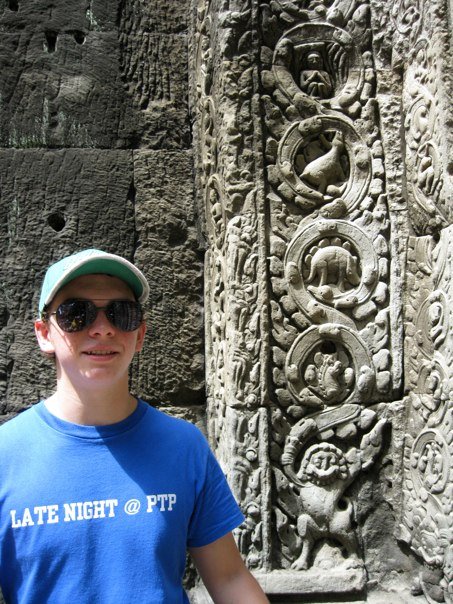
I have been to the Ankgor Wat temple complex, near Siem Reap, four times. It’s a fascinating tourist attraction, but there is one carving, among literally thousands, that stands out above the rest. It is found at Ta Prohm Temple. The temple was built between the late-1100s to early-1200s by King Jayavarman VII and dedicated to his mother. Today, it is “shrouded in dense jungle” and “fig, banyan, and kapok trees spread their gigantic roots over stones, probing walls and terraces” (tourismcambodia.com). “It took 79,365 people to maintain the temple including 18 great priests, 2,740 officials, 2,202 assistants, and 615 dancers” (ibid.). But it’s that stone carving that it most unforgettable.  One particular trip, which I made in 2009 with two elders, three deacons, and my oldest son, Gary, stands out in my mind.

I asked our guide, hired out by the Kazna Hotel in Siem Reap and of the Buddhist faith, what he thought this particular creature was. He said he had no idea what it was and added, “They must have had a really good imagination.”  The question such a response raises is, “How did they know to imagine that?!”

Well, a group from Canada was following close behind our group of seven from Denver, Colorado.  A son asked his father for an explanation of the carvings on the pillar, and dad replied with some authority, “Son, that was their version of a geological timetable.”  Of course, it begs the follow up, “How did 12th-Century Khmer people, well before Darwin and others planted their geological seeds, know of such a timetable?”  Furthermore, this “timetable” looks nothing like anything you will ever see in a textbook–a man above it and a monkey below it.  Based upon what fossil evidence did they create their carving?  There must have been hundreds of fellow “explorers” viewing these temple ruins with us in the few hours we were there.  Some of the fascinated people spoke in languages I cannot understand, but body language was pretty telling.  Others, Americans, British, Australians, and Canadians, all seemed to see that carving for what it most apparently was.  No one said, “That’s a rhino or pig.”  They called it a Stegosaurus.

How many other similar discoveries await reclamation from jungle vegetation, archaeological excavation, and geographic exploration?  In the different disciplines of science and history, man uncovers gems like Angkor Wat’s Ta Prohm from time to time.  Such clear, incontrovertible evidence from a time before our modern “war” between evolutionists and creationists begs to be examined with unprejudiced eyes.  While some may never change their mind regardless of how many items are offered into evidence, I believe that there are a great number of people out there who are honestly, objectively looking for truth.  The Stegosaurus at Ta Prohm near Siem Reap, Cambodia, might be the item that convinces many!

1937409_160820505921_3751983_n
Gary standing next to the column. Notice what/who else is in the carving with the Stegosaurus.

See The Living God (Poem)

Neal Pollard

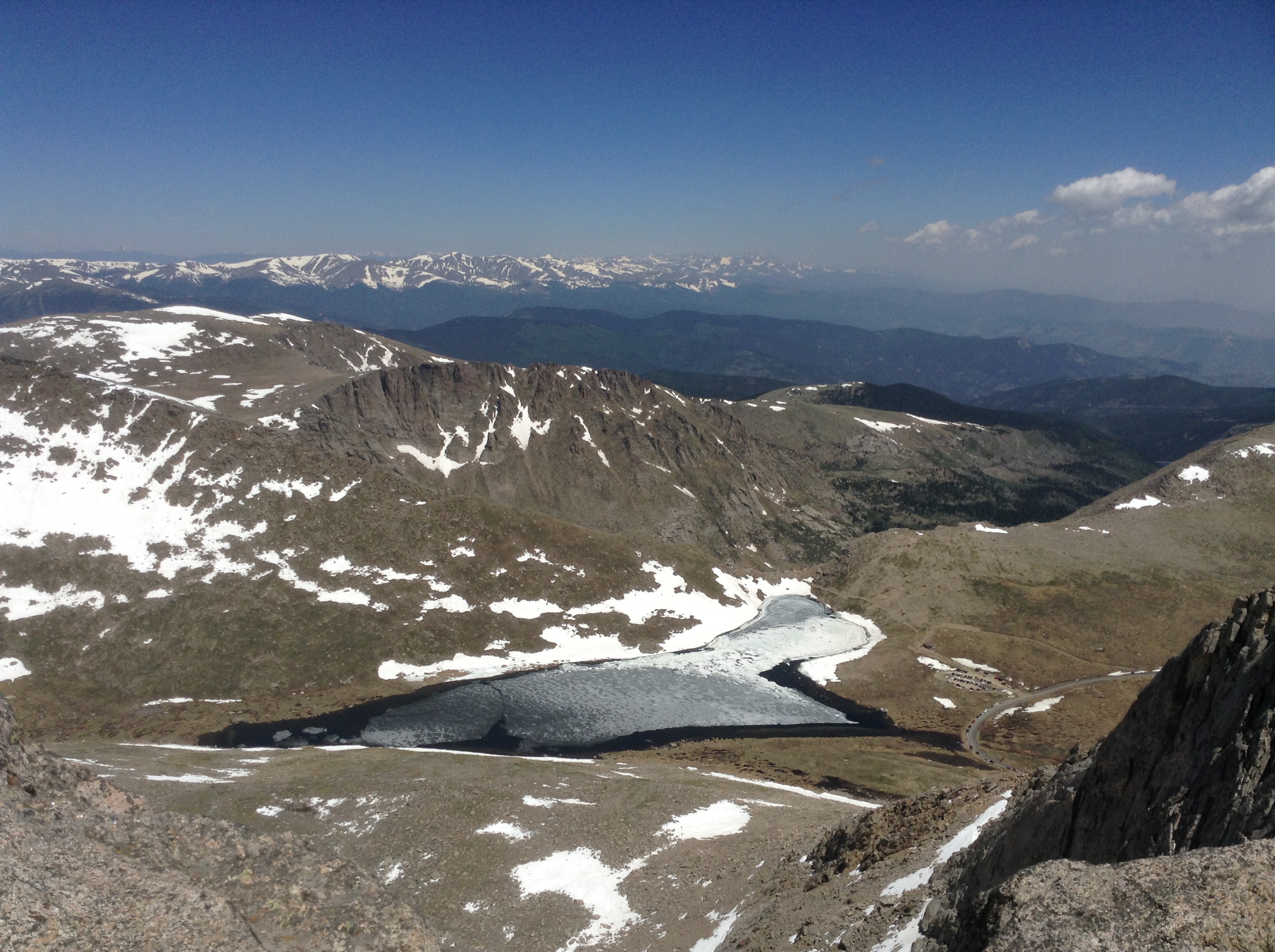
I cannot stop staring at the mountains and the skies

The beauty is so breathless, an endless feast for my eyes

I cannot look at all this and give credit to luck or chance

I’m a victor of the Creator, not a victim of circumstance.

The heavens preach this sermon, Our God He loves and lives

All nature shares the message, what joy and hope it gives

He’s up in heaven waiting until the day He’ll bring us home

For now He’s left us evidence, and we pray, “Lord Jesus, come.”

I cannot stop looking into my little baby’s eyes

I see his parents’ imprint when he laughs and when he cries

In awe my tears are welling as his face shows eternity

This little one God’s endless power shows to all who clearly see

You cannot look at people and fail to see the living God

Our design says a designer, to say “no God” is to play the fraud

He’s patiently waiting for more people to come to Him and live

What will you do with this moment?  Give what you have to give.

I cannot stop reading this Book that explains it all

My cause, my purpose, my destiny, His plan, His way, His call

It has proven to be perfect, it’s been tried and tried again.

It says there is an answer to my problem it calls sin.

The Bible shares the mind of God, it helps us find the way

It helps us understand His heart, and how to live today

It pierces our hearts so we’ll make room to put His will inside

How great our God to show us the path where we can walk at His side