Use The Resources Available To You

Neal Pollard

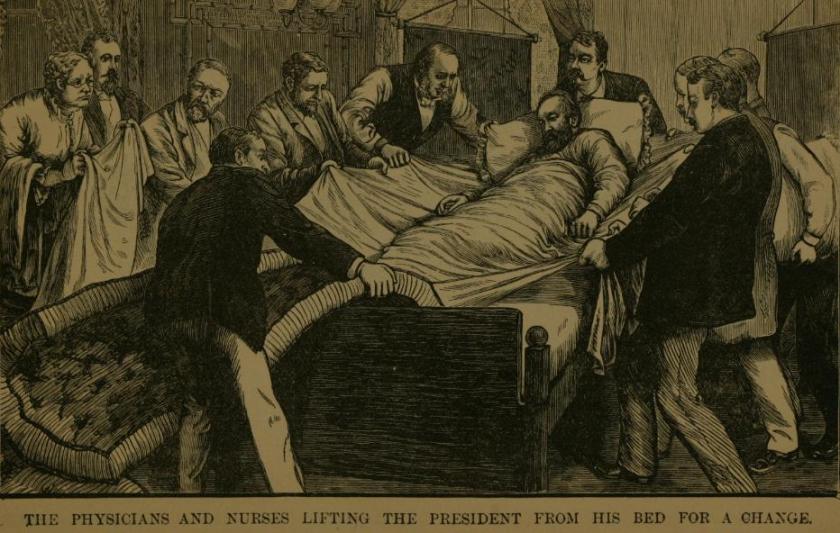
Judging from Candice Millard’s straightforward account of the assassination of James Garfield, there were two men responsible for his death. The more obvious villain was the shooter, Charles Guiteau, an unquestionably insane loner. The less obvious accomplice, judging from her words, was the man who seized control of Garfield’s care and appointed himself the president’s chief physician. The bullet that wounded the president would not have been fatal, but the medical attention he received afterward was. In fairness, a medical discovery already made in 1881 that could have helped Garfield was considered controversial and would not be generally embraced in America for a few more decades. Yet, Dr. Joseph Lister’s use of carbolic acid to sterilize surgical instruments and clean wounds had been in existence since the 1860s. The Englishman attended the Centennial Exhibition in Philadelphia in 1876, attempting to convince American doctors of its effectiveness. Alexander Graham Bell, whose telephone was discovered at that same exhibition, heard the news that Bliss could not find the bullet inside the president. The incredible inventor came up with the “induction balance”—a metal detecting machine. But Bliss waited too long to call Bell, and when he did he never allowed the inventor to check his left as well as his right side for the bullet. Bliss was sure it was on the right; an autopsy found it on the left. In court, Guiteau made the argument that the president died from malpractice rather than his attempt. While almost certainly true, Guiteau was still hung. Yet, most historians name Bliss as a proud, ignorant accomplice. Portrayed as a glory seeker, Bliss relied on his prowess and rejected several people and principles that could have prevented Garfield’s death (Millard, Destiny of the Republic: A Tale of Madness, Medicine, And The Murder of a President, Anchor: New York, 2011).

To be fair, it would have taken uncommon clarity and vision for Bliss to ignore the prevailing views of his colleagues and embrace Lister’s techniques and Bell’s invention, but he could have.

There will be people we encounter today, who appear to be in great health and no danger. Yet, the vast majority of them will face a fate infinitely more terrible than the one Garfield succumbed to. They will eventually die, unprepared for the eternity that will follow (Mat. 7:13-14). The most tragic part of this will be, if you and I are in their lives, that it will not have had to be this way. At least, we have the solution from the “Great Physician” and we should know how to administer it. God needs us to make use of the resources He’s made available to us—prayer, Bible knowledge, influence, personality, courage, love, and a sense of urgency (cf. Col. 4:2-6; 1 Pet. 3:15; Eph. 4:15; 2 Tim. 2:24-26; John 4:35; etc.). We can look within our congregations and see those who were reached in this way. We see others who are not far from the cure, but who need us to help them. How inexcusable is it to have the remedy but refuse to share it? May God help us use the resources we have available to us!
changing_garfields_bedclothes

Everyone Can “Do” Evangelism

Neal Pollard

  • Pray, specifically, about having opportunities to share your faith. Think about the people in the various places you spend your time and ask God for inroads with these individuals specifically. Pray for courage, wisdom, and your words (cf. Col. 4:2-6). Pray for their hearts. Pray to pick opportune times to approach them.
  • Cultivate your fields. Spend time thinking about who you have or can build a relationship with. That will be your area of greatest success. Be involved in their lives (see below). Work at growing the number of people you could share Christ with.
  • Develop genuine interest in the lives of the people in your life. Learn spouse’s and children’s names, occupation, interests, hobbies, and passions in their lives. Ask about those things. File away and remember those facts, as your specific recall with them will impress them with your sincerity and concern. How is trust won? Time and transparency.
  • Be able to speak openly and wisely about religion with them. That means picking your battles wisely. You will hear people spout misinformation and false ideas when religion is being discussed. Always maintain control and calm, being gentle in discussing religious matters (cf. 2 Tim. 2:24-26). If asked (and you eventually will be) about some specific, like salvation or church organization or what “denomination” you are a member of, be winsome and kind but courageous enough to give a biblical answer.
  • Work at working in your faith and the church into your conversations naturally. This may require prayer and thought, but practice turning your conversations with people toward the spiritual. Like anything, if you’ve not had practice, it may seem clunky and awkward initially but not ultimately. If something is going on at church that relates some way to what your friend is saying, bring it up matter of factly. If their issue or struggle concerns something you have come across in your recent Bible study, share the verse with them.
  • Be prepared to serve and help. So many of our co-workers, associates, neighbors, and other friends have messy lives. They are struggling and, without Christ, have no bearings on how to address their problems. As human beings, they inevitably struggle with the same things all people struggle with—relationships, family, finance, uncertainty, health, fear, etc.  Remind yourself that you are here, on earth, to serve (cf. Mat. 20:28; Gal. 5:13).
  • Watch yourself. Your example, especially under the pressures and fires of life, can make or break your evangelistic opportunities. Your temperament, reaction, attitude, and the like are a display case for the Lord or the world. Regularly remind yourself of this (Ti. 2:8; 1 Tim. 4:12; 1 Pet. 2:12).
  • Remember the mantra, “It’s not a matter of ‘who’ is right, but ‘what’ is right.” I received this counsel decades ago, as a young preacher, from David Sain. I have used it countless times in soul-winning circumstances. Truly, ultimately, all religious questions must be settled upon the foundation of Scripture. Feelings, opinions, what churches teach and practice, what religious leaders say, and such must be subjugated to what the Bible says. Those other standards may fail us. Scripture won’t!

Evangelism will always be intimidating because it ultimately calls for courage and conviction. Not every specific situation will be a success story, but if we can remind ourselves of our purpose on this earth and how much people need what we have learned we will act! And there will be success!

20939720692_87c24e71f4_b

What Would Our Slogan Be?

Neal Pollard

A Bear Valley member gave me a mailer she received from a new, area denomination.  The oversized postcard, in attractive colors (the background of which looks to be a paint palette), leads with the header, “Messy Grace.” The subtitle reads, “It’s okay to not be okay.” The brief message beneath says, “God loves you. God cares for you. God wants a relationship with you. NO MATTER WHAT!”  Now, there is a lot of truth in that message, if we don’t necessarily care for some of the jargon. Could it leave a wrong impression? Yes, if the message does not include the response we need to make to His amazing grace. We cannot stay messy, if that means willful sin. But we will all continue to have our messes, even after coming to Him.

But, the mailer itself, with the self-appointed slogan, is what got me to thinking. If our visitors got to write our slogan, what would it be? For some places I’ve visited, it could be the following: “Don’t Sit On My Pew!”, “Race You To The Restaurants!”, “Visitors? What Visitors?”, “Joy Is For Liberals”, or “Are You Ready To Rumble?”  If the Lord wrote our slogan, what would it be?  For some congregations He diagnosed, it was also less than flattering: “We’ve Left Our First Love” (Rev. 2:5), “We’re Following False Teachers” (Rev. 2:14-16), “We Tolerate Immorality” (Rev. 2:20ff), “We Look Alive, But We’re Really Dead” (Rev. 3:1), and “We Think We’re Something Great, But We’re In Really Bad Shape” (Rev. 3:15ff).

Here at Bear Valley, there are several potential slogans I would hope represent who we are and what we are trying to convey by the way we act when we’re together on Sunday and Wednesday as well as our interaction at other times. Here are some good options:

  • “We Love One Another” (John 13:35).
  • “We Walk In Truth” (3 John 4).
  • “We Continue In His Word” (John 8:31).
  • “We Bear One Another’s Burdens” (Gal. 6:2).
  • “We Like Being Together” (Acts 2:42ff).
  • “We Look For Our Lost Sheep” (Luke 15:4).
  • “We Know Who The Enemy Is” (Eph. 6:11).
  • “We’re Not Conformed But Transformed” (Rom. 12:2).
  • “We Put Others Before Self” (Phil. 2:3-4).
  • “We Act Toward Others As If Doing For Christ” (Mat. 25:40).

The thing is, we are going to have a general character and emphasis as a congregation. Whatever we prioritize and do, that’s what it is. It’s not what we say, sing, or “sloganize.” To see it in print is sobering. May we collectively strive to earn a reputation that reveres our Master, reflects our mission, and renews our minds.

1akxyz

Hazards of Firefighting

Neal Pollard

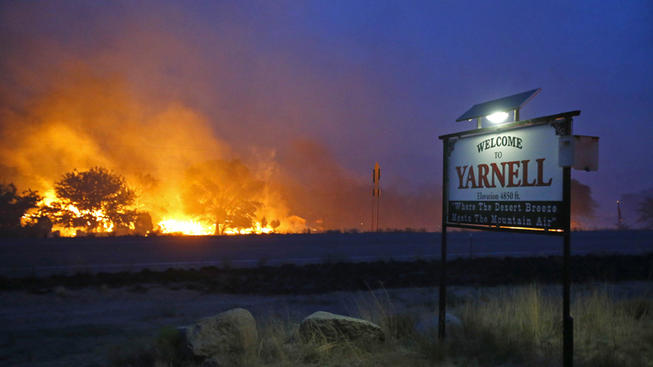
343 on 9/11/2001 in New York City. 86 in 1910 across Washington, Idaho and Montana. 29 in 1933 in Los Angeles. 27 in April, 1947, in Texas City, Texas. 21 on December 22, 1910, in Chicago. 19 on June 30, 2013, near Yarnell, Arizona (Firefighter Tragedies).  Those are the deadliest incidents for firefighters in American history, in number of fatalities. Firefighting is deadly, if heroic, business. Those answering the call know that each response, however simple or innocuous it may seem, masks many dangers. Firefighting is hazardous business.

The same is certainly true in the firefighting business Jesus calls us to perform. The Bible clearly indicates that the fire prepared for the devil and his angels will be eternally shared by those who know not God and do not obey His gospel (Mat. 25:41ff; 2 Th. 1:8-9). As Christians, then, we are God’s firefighters (Jude 23). We should do this job out of a sincere concern and love for souls and a desire to be working for and serving the One who rescued us from so great a death (2 Co. 1:10). But, by stepping into that arena, we should realize the risks and dangers involved.

  • We can be ill-equipped.  Firefighters can’t hope to do their work with old, shoddy, or faulty equipment. The best equipment available is ineffective when not put into use. In our spiritual battle, we know that our “equipment” (2 Tim. 3:17) is perfect for every situation. But, we have to know it (2 Ti. 2:15). We also need to know how to use it. We need to make sure our approach to people is not shoddy or faulty (cf. Gal. 6:1). To be boisterous or bullying with God’s Word not only further harms the one in danger, but also endangers us!
  • We can get too close to the fire. Firefighters can be the victim of their proximity to the conflagration. It’s often difficult to judge how close is too close, but it is an ever-present hazard. In our spiritual firefighting, we can get too close to the fire through compromising God’s Word, conforming to the world, committing sins of attitude, morality, ethics, or the like in our outreach. We must avoid behaving in a worldly way when trying to help save those out in the world. In trying to help a struggling soul, we can sin with our tongues or gossip about the one whose troubles we’ve been made aware of.
  • We can ignore the dangers. It’s true in firefighting as in all professions that one may occasionally choose not to practice what he has been trained to know, see and think. In the heat of the moment, one may not focus on certain warning signs. Buildings collapse, air runs out, black draft areas are entered and serious results follow. Spiritually, we must be careful in how we go about this “business.” Going alone when we need another with us, trying to help someone when we are too emotionally invested, or responding out of hurt and anger instead of “cooling off” are all ways we can ignore the dangers we might face.

Let us be aware of the risks we take in reaching out to those who are in spiritual danger, but let us be eager to respond to the need. Despite the ever-present risks firefighters take, they still are faithful and dedicated to the job. God needs us on the front line, too. May we simply factor in the perils of firefighting, then do it!

ap525541180459

GoFindMe

Neal Pollard

San Diego entrepreneurs Brad Damphousse and Andy Ballester started GoFundMe “as a way to help individuals and small charities raise money for good causes” (WSJ). Most people have heard of this “crowdfunding site” and have even contributed. MacMillan and Tan report, “Its members now raise about $100 million in donations per month.” But, Forbes Magazine revealed how some have used such sites for the ridiculous, including Zach Brown who raised $55,492 from 6,911 backers to make potato salad (Forbes). I have seen some pretty audacious, if not questionable, uses of such sites to fund events and circumstances.

But I’d like to alert you to an infinitely greater need that people all around you every day have. They have surmounted a debt they cannot possibly repay. Their circumstances are desperate, far beyond eviction, lawsuits, or bankruptcy.  A billion people giving all their material resources could not satisfy that debt. Despite this, I have never seen even one of them advertise, beg, or solicit help to resolve their circumstance. In an incredible turn of events, it is incumbent upon you and me to find them and offer them aid. They usually cannot identify the need, much less articulate it. But you and I know their need, and the expectation falls squarely upon our shoulders to meet it.

If they were to put it into words, they would say, “Go find me!” How could we turn a callous heart away from such a desperate need? May we muster the courage and heart to, in the words of the old quartet hymn, “go out and win, rescue from sin, day’s almost done, low sinks the sun. Souls are crying, men are dying, win the lost at any cost.”

Consider these passages, too:

Micah 6:6-8
1 Peter 1:18-19
Luke 15
Matthew 28:18-20; Mark 16:15-16; Luke 24:46-49

donate-654328_960_720

DIVIDING OVER POLITICS

Neal Pollard

“Rancor” is synonymous with hostility, bitterness, spite, and vitriol. In Ephesians 4:31, Paul warns the Christian against “bitterness and wrath and anger and clamor and slander [and] malice.” While it didn’t seem possible that this election cycle could produce more heat and saber-rattling than the last couple, it has already exceeded it. It is almost painful to watch the cable news networks, but we should expect the world to behave like the world. Yet, when I see brethren so vehemently defending their candidate and excoriating those who disagree with them, I am truly disheartened. Social media continues to pour gasoline on this already potent fire.

I try to imagine the apostles and early Christians, were they to have such an outlet, tying into one another and beating their chest as they debated each other over the merits of Claudius over Nero, devoting so much time arguing their points about which candidate would better favor the cause of Christianity.  Inspired writers had every opportunity to show such a participation and bias, but they are conspicuously silent. While I do not agree with the extreme that David Lipscomb took in his book On Civil Government, can we not, if we are not careful, veer toward the other extreme through blind allegiance to rulers who, when dispassionately and objectively viewed, honor and demonstrate evil over godliness? Whether it is foul language, deceit and dishonesty, and glorifying sexual immorality (a la Playboy!) or lying, pro-abortion, and criminal behavior, I am baffled as to why a Christian should get so invested in one candidate or exorcised at the other.  May we never prioritize America over our dear brotherhood or our heavenly goal. We gauge that priority by our thoughts, speech, attitude, and actions regardless of what we claim.

As a husband and father for whom the prospect of grandchildren may not be many years hence, I grasp with such personal investment the gravity of this year’s election and the current world situation. Yet, I can let the fear of that eclipse the infinitely bigger picture. What a glorious day it would be if we could steer our consuming passion toward Jesus and the mission He left us!

You may have a decided leaning toward the Republican or Democratic offering in this year’s election. Given this year’s choice, I don’t believe you can cling to either without your hands being very dirty. That being said, may we all be prayerful and imminently restrained in our interchange especially with our brethren and before the eyes of the world. Our unity in truth, our common mission, and our Christian example are eternally more important than politics. Period!

detail-of-american-flag-11279635008nzaN

DO WE HAVE CONFUSING MENU TERMS?

Neal Pollard

Open Table, a company that facilitates reservations at better restaurants, sent a quiz today to test my familiarity with some of the more sophisticated menu terms one encounters. I made 40%, and at least a few of my right answers were lucky guesses. Truly, I’ve never heard of “okonomiyaki,” “Harissa,” “gochujang,” or “crudo.” These and others were foreign words, in the literal and culinary sense. Certainly, chefs, maitre d’s, refined diners, and the otherwise alimentary literate folks know these terms, but most of us are proud to differentiate between la fork and la spoon. We also do not like to be made to feel less than intelligent by the more informed foodie.

The more we try to be soul-conscious and truly sensitive to the visitors who attend our services, the more thoughtfully we should consider especially the terms we use and even take for granted. We’ve used them so long that maybe we assume everybody knows them.  But, these visitors may be sitting there, despite their intelligence and capability, feeling ignorant or uninitiated as we pepper them with “expediency,” “hermeneutics,” “extend the invitation,” “conversion,” “denominational,” “redemption,” and other terms that require the context of our learned church culture. Other terms, not at all hard to define, are terms that mean something specific to us but that mean something else to those without our “background”: sin, salvation, repentance, worship, born again, holy, works, grace, etc.  On many occasions, I’ve looked at some of the lyrics in our songbook and have found, especially in older songs where words have inevitably changed or fallen into disuse, we press on without defining or explaining these words to our youth, new Christians, or non-Christian attendees. “Could my zeal no respite know?”  “His garment too were in cassia dipped?” “Heavenly portals loud with hosannas ring?” Many, many more examples of such lines could be produced!

My point is not to be critical. There is no way we can define every word a visitor or newcomer may encounter in our worship services, but we do have so many who do not have our grasp of our unique terms. We have a serious obligation to them (cf. 1 Cor. 14:22-25). If we took some time to define the words of our songs, sermons, and even prayers, we would be helping those several groups who may not “get” it otherwise—teens and pre-teens, some of our young adults, a lot of our first-generation Christians, new converts, and those valuable visitors who may be termed “unchurched.” It will help the rest of us, too, to break down our rote and memorized sentences and think about what some of those “ten-cent” theological terms really mean. God desires worship that involves our heart (cf. John 4:24), and clear comprehension is a key to achieving that. May we deliberate on this when we assemble together this Lord’s Day!

OLYMPUS DIGITAL CAMERA
Who knows what this is?

PREVENTING A POST-ANTIBIOTIC APOCALYPSE

Neal Pollard

Economist Jim O’Neill had readied a report about drug-resistant infections, “bacteria and other microbes that have become impervious to antibiotics” (The Atlantic, Ed Yong, 5/19/16). O’Neill’s prognostication is grim and macabre. On our current trajectory, 10 million will die every year by the year 2050 and that doesn’t include those undergoing procedures only safe because of antibiotics (surgeries, transplants, and chemotherapy, for example). No doubt, this report is no fodder for a bedtime story, but it is not without suggestions of what can be done to prevent such an ominous occurrence. O’Neill gives a nice, round ten suggestions to avert this potential “plague” on humanity.  They include: improve sanitation, a global surveillance network, a public-awareness campaign, better diagnostic tools, avoid unnecessary use of antibiotics in agriculture, promote effective alternatives, improve incentives for workers, rewards those working on the problem, adequately fund those working, and build a global coalition (ibid.). All in all, this seems like a practical, workable solution.

I read this in light of the global epidemic you and I are engaged in to fight together. It is the most dangerous threat any of us will face and it will be with us, if the world continues, in 2050 and beyond. What I find interesting is that many of O’Neill’s suggestions for fighting these microbes are the marching orders God has given us to fight our plaguing antagonist—sin.  Holiness, unity, improved evangelism, Bible study, avoid unnecessary fights, example, focusing more on eternity, better giving, and increased mission efforts all factor in saving more souls! It’s a system that will work locally, nationally, and globally.

Frankly, we don’t know that O’Neill’s prediction will come to pass. But, the Bible tells us in no uncertain terms that “it is appointed unto men once to die, and then the Judgment” (Heb. 9:27). The majority will be lost (cf. Mat. 7:13-14)! God is counting on us, Christians, stemming that tide as much as possible (Mark 16:15-16).  Every individual you and I reach with the gospel is one less who will succumb to this eternally fatal threat!

novamoxin_antibiotic

A Literal Appeal For “Help”

Neal Pollard

In an interview given at her home, Ann Rodgers appears a bit eccentric but a wonder to behold. The 72-year-old woman survived 9 days in an Arizona desert by eating plants and drinking pond water. She was driving to Phoenix via a remote stretch of back country road on the White River Indian Reservation when she got lost and subsequently ran out of gas. Thus began a series of efforts, building signal fires to draw the attention of rescuers or the forest service. She got lost while climbing a series of ridges trying to get cell signal. She and her dog faced gloomy odds, but she kept trying. She went missing on March 31st. On April 3rd, she used sticks and rocks to spell out “help.” To further draw attention to it, she found an antelope skull nearby and placed it with her message (via nbcnews.com). Since moving out west, I have learned that people frequently get lost in the vast stretches of deserts and mountains. I cannot find statistics for how many people get lost or how many are found alive or dead in the United States, but each incident is obviously traumatic for those involved. Can’t you imagine how desperately and completely those who realize their lostness long to be saved?

Wherever you go today, the vast majority of the people you encounter are going to be wandering through this world lost in the most profound way. Without rescue, they are heading for a fate infinitely worse than physical death. “Lost” is the way Jesus, the Good Shepherd, describes those not right with God. While He uses the word that way in three of the four gospels (Mat. 10:6; 18:11; Luke 19:10; John 18:9), it is the parables of Luke 15 that most vividly speak in these terms. The first parable, that of the lost sheep, draws on the search and rescue metaphor (Luke 15:4). That’s how Jesus likens the situation with one outside of God’s redemption.

Be watching for signs from the lost. They often send signals, if we are looking in the right places. Whether personal problems, major life changes (like marriage or having children), those new to the area, or those demonstrating an open mind, they may be just like the Ethiopian Eunuch and hoping for someone to guide them (Acts 8:30-31). Jesus has us here to conduct search and rescue missions. May we have our eyes peeled and keep ourselves equipped to rescue the lost. They are out there everywhere.

331de06200000578-0-image-a-37_1460507569810

Live Beyond Yourself


Neal Pollard

“Two little lines I heard one day,
Traveling along life’s busy way;
Bringing conviction to my heart,
And from my mind would not depart;
Only one life, ’twill soon be past,
Only what’s done for Christ will last.”

The first stanza of the powerful, convicting poem by C.T. Studd has been the seeming anthem of one of God’s great, 21st Century spiritual warriors, Cy Stafford. I first met Cy around 2000, and his balanced, measured information and guidance helped us identify and deal with a false teacher in East Africa. His interest and concern were for the Christians, new and more seasoned, who might be impacted by this man’s influence.  That godly zeal for God’s people was an indicator of the mind of a missionary, minister, and mentor of men.  The subsequent years have shown me what a true leader and visionary, with God’s help and to God’s glory, can accomplish. Cy is not larger than life, gregarious, charming per se, or glossy in any way. He is steady, focused, and determined.  He has helped change the world by equipping men and women to reach the world. Alongside so many missionaries and Christians indigenous to East Africa, Cy has steadily worked to grow the church and its influence where some of the earth’s poorest and humblest people live.  He often has spoken of the window of opportunity that daily shrinks and he has worked with an urgency to do what he can to make sure everyone has the opportunity to hear the gospel at least once.

Cy and Stephanie have made countless sacrifices of time, comfort, safety, and security because their mission was far broader than themselves. While some in ministry appear motivated by self-interest, self-promotion, and self-absorption, the Staffords have valiantly sought to put the spotlight foremost on Christ and then upon others’ needs.  On whatever day each exchanges the cross for the starry crown, their legacy will have been that of living beyond themselves.   What a convicting challenge to each of us to engage in thoughtful self-examination! What is my agenda? What is my aim? What is my aspiration?

“Give me Father, a purpose deep,
In joy or sorrow Thy word to keep;
Faithful and true what e’er the strife,
Pleasing Thee in my daily life;
Only one life, ’twill soon be past,
Only what’s done for Christ will last.”

Hebrews 11 speaks of great Old Testament heroes of faith who lived and died as those with a “desire” for “a better country, that is, a heavenly one…” (16). These same ones are called “strangers and exiles on the earth” (13), whose sight was set much higher than self. The whole of the New Testament reveals that a heart set on heaven will reside in one who also has his eyes on others (cf. Phil. 2:3-4). All too rarely do we receive such vivid examples of individuals who have so fully committed themselves to the Great Commission, who challenge us to imitate them in living beyond self. Cy is one of the best examples of this I will ever know.

“Only one life, yes only one,
Now let me say,”Thy will be done”;
And when at last I’ll hear the call,
I know I’ll say “twas worth it all”;
Only one life,’twill soon be past,
Only what’s done for Christ will last. “

God, give us more Christians like Cy Stafford! Let that begin with me.

cy and stephanie

CHURCH GROWTH STARTERS

Neal Pollard

  • Offer “medical missions” benevolent campaign in the neighborhood, utilizing the talents of members with medical expertise.
  • Have a worship leadership training class.
  • Incorporate periodic explanations about the purpose and biblical foundation for the acts of worship and the invitation during the worship services.
  • Have an elder/deacon intensive training class.
  • Host community Bible studies in various homes on a regular basis, inviting friends, co-workers, neighbors, unchurched family, etc.
  • Have a benevolent financial planning and strategies seminar, utilizing the talents of members with accounting and other finance-related skills and backgrounds.
  • Have a “special events Sunday,” where a special contribution is taken to fund evangelistic events for the year.
  • Host a website, which you advertise to the community, soliciting religious questions they have on their minds (for an example of this, see 12questions.net—hosted by the Mount Juliet church of Christ).
  • Utilize deacons to identify the talents of new members and new Christians, and then look for ways to leverage them.
  • Start a “come back home” campaign to retrieve erring and fallen away members.
  • Create a bumper sticker that identifies the congregation concisely and in a way that would draw community interest. The Palm Beach Lakes congregation has seen several baptisms from such an effort (pblcoc.org).
  • Make the church website current, interactive, and informative, not just about churches of Christ as a whole but what makes the local church relevant to people’s needs.
  • Give the teens an evangelistic project (teen gospel meeting, teen visitation program, feeding the homeless, etc.).
  • Incorporate as many members as possible in grading Bible correspondence courses (for students both foreign and domestic).
  • Plan, publicize, and promote a Sunday for every member in the directory to be present for worship, then use that day to present the plan and work of the church.
  • Train and use members to “carry” visitors from the parking lot to the dinner table, adopting visitors and helping them find classes and seats in the auditorium as well as connecting them to other members.
  • Keep your eyes peeled for new faces, stepping out of your comfort zone to meet and greet them. Be prepared to follow up and help them meet others, too.
  • Pray about ways you can be more involved in the work of the church and ask the leadership for ways you can be put to work.
  • Make a list of members and visitors that you can influence and encourage, then utilize it.

The Lightning March

Neal Pollard

It was unusual for foot soldiers to play a major role in the Middle Ages. Harold II of England’s 7000 infantrymen were an exception. He marched them from London to York, about 216 miles, in a week. The rate of the march was 30 miles per day for an entire week!  “A sustained rate of thirty miles per day for seven days was in most circumstances unheard of. A sustained twenty miles per day would have been considered extraordinary.”  The army moved faster than news of its approach. This helped turn the Battle of Stamford Bride in 1066, known as “Harold’s Lightning March”  (Hackett, Jeremiah.  World Eras, Vol. 4: Medieval Europe, 814-1350, p. 128). What seems lost to history is how Harold motivated such rapid movement.  To build such resolve and determination in so many people, in unified purpose, must speak to Harold’s leadership ability.

All of us are marching with rapid pace toward the end of life and eternity.  Hasn’t it been going by so quickly?  It truly is a “lightning march.”  At the end of the march, will we have won the battle?  The church of every generation, and not just individuals, are making this march.  What impression are we leaving on the world around us, what battles of significance will have been won?  Think of the first-century church.  They “turned the world upside down” (Acts 17:6).  They “preached to every creature under heaven” (Col. 1:23).  They permeated their immediate communities, surrounding communities, and the remotest communities (cf. Acts 1:8-11).  Think of those brave, sacrificial Christians during the 19th Century who rallied together around the principle of restoring New Testament Christianity.  With a great reverence for the pattern of Scripture, they sought to imitate the faith and practice of that first-century church.  In their wake was growth and influence.

In both cases, profound as their influence was, they rapidly left the scenes of time.  Their influence remained, but succeeding generations of the Lord’s Army—for whatever reasons—slowed their pace considerably.  We may glorify the church of the 1950s, at one time known as the fastest growing religious group in our country.  But most of them have gone and those who remain have grown slower in their pace. What about the church of the early 21st Century?  How will we be remembered?  Never forget that, in part, this is influenced by what you and I are doing as soldiers under the Lord’s direction.  We could not want for better guidance and a better Commander.  We should have ample motivation.  It is high time we pick up the pace!  Victory awaits (1 Cor. 15:54-58).

Diversions, Distractions, Or Deviations?

Neal Pollard

All the following are legitimate outlets, kept in proper perspective:

  • Social causes and needs.
  • Politics.
  • Sports, recreation, leisure and fitness.
  • Wholesome forms of entertainment.
  • Family events.
  • Social media.
  • Socializing and fellowship with fellow Christians.
  • Church buildings.
  • Addressing controversial issues and false teaching.
  • Material possessions.
  • Hobbies.

But our common struggle is allowing these to eclipse our purpose on this earth as Christians.  Interestingly, they all can be utilized as part of our mission, but none were ever meant to replace it.  These activities can easily hinder our faithfulness and usefulness to the cause.  Will you pray for me to keep seeking and saving the lost at the top of my “to do” list of life?  I will do the same for you, if you let me know.  Let’s pray for courage, focus, discernment, resolve, and encouragement to take the gospel as we go about each day.  This is what energized the church in its infancy (cf. Acts 8:4).  They had access to the same distractions and diversions we do, but they could not be diverted from the prime objective. Consequently, we read throughout Acts of their exponential, if unlikely, growth.  May we help each other imitate their spirit and service!

Reaching Out Without Caving In

Neal Pollard

What could we do as the people of God to reach out into our community with the gospel in such a way as to remove as many barriers as possible while striving to remain first-century in character and characteristics? Here are some ideas that come to my mind:

  • Give thought to changing the auditorium seating arrangement where we can face more of one another.
  • Sustain an emphasis, via Bible class, email communication, leadership, the pulpit, etc., on drawing as many members as possible into creating an atmosphere of friendliness when we assemble. For example, never look past or fail to engage a visitor.  Build a culture of friendliness.
  • Investigate ways to incorporate psalms, hymns, and spiritual songs that are not exclusively or primarily nostalgic favorites of members from 100-200 years ago.  That may mean we learn new songs (visitors are often trying to learn each and every one we’re singing, so it can be done).
  • Be careful about attaching an over-importance on suits and ties or dresses, or conveying that such are criteria to determine reverence or holiness.
  • Consider fellowship activities that allow small groups to get to know one another better and activities that get us away from the church building.
  • Make sure that we keep current with technology, from an attractive, updated website to that technology which is used within the assembly to any printed literature or brochures.
  • Seek to organize the program of work where all our activities and functions, if possible, are tied to a soul-centered, evangelistic purpose.  Approach every work seeking to make it more evangelistic.
  • Eliminate strafing, caustic, and otherwise thoughtless comments made in Bible classrooms that are de facto attacks on unbelievers or even those in religious errors or denominations.  Blanket statements or attacks on their intelligence or integrity do nothing but lower ours.
  • Thoughtfully, gently, and periodically give explanation for why we do what we do in worship (i.e., the frequency of the Lord’s Supper, extending the invitation, the reason for singing a capella, etc.).
  • Don’t drag out announcements.  Find multi-media ways to “get the word out” about prayer requests, announcements, and upcoming events.

I understand that the worship assemblies in the first-century were primarily geared toward members and not visitors.  Yet, thinking about these things and having such discussions are fruitful because: (1) We are blessed by visitors, often a great many of them, (2) Many of these suggestions will greatly aid new Christians, (3) We have an obligation to reach out to the young as well as the old, and many of these things are central to the world as they know it.  We must remain faithful and obedient to God’s eternal truth, but we must keep discerning eyes regarding what’s truth and tradition and what cannot change and what can and often should change.

DETERMINED TO GET OUT THE NEWS

Neal Pollard

I spoke with our newspaper deliveryman this morning, and he had some story to tell.  He summarized his experience as the longest 15 hours of his life.  He got stuck once and had been towed twice.  He delivers his newspapers in a 2014 Toyota Camry, a front-wheel drive vehicle fighting against 10-12 inches of snow in a thousand cul-de-sacs.  Surprisingly cheerful, he was plodding on until finishing his task—delivering The Denver Post to every customer on his route.  That, my friend, is dedication!

As a former subscriber to the Rocky Mountain News and current subscriber to the Post, I cannot describe his product as “good news.”  With the internet competing, the newspaper is far from the exclusive or timeliest source of news.  That notwithstanding, this man is determined to get out the news.

The gospel is, by definition, “good news.”  Without a doubt, it is the most important and timeliest news of all time and eternity.  Every person needs to be exposed to it as it contains information that will impact where they will spend their forever.  God has given the job to you and me and every Christian in this nation and around the globe. Every day, we see people and relate to people on their everlasting journey.  They may or may not be oblivious to their need, but we are well aware of it.

Are we determined to get out the news?  The first century church was.  In bad times (Acts 8:4) or in good times (Acts 2:47), the news went near and far.  Paul described it as news which had reached every creature under heaven (Col. 1:23).  Christ commissioned that the news be spread to that extent (Lk. 24:44ff).  The challenge is great today, with over seven billion people on the earth.  But we have more resources than they did, and there are more of us, too.  The difference, then, may be the level of our determination.  Until we are determined to let nothing stop us from getting out the news, darkness will eclipse light and our challenge will grow.  Let’s let nothing stop us from sharing the great salvation of Jesus to everyone we meet.

Act While You Can!

Neal Pollard

Recently, I was corresponding with Arthur Ohanov, a gospel preacher in Donetsk, Ukraine, who served as my translator on a couple of mission trips to eastern Ukraine in the early 2000s.  In part, he wrote me, “As I am typing this letter I hear bombing in our city, but God is good! We continue our ministry of reconciliation of sinners with their Father!”  Brethren like Arthur are heroes, facing difficulties we can only imagine in America.  Walking the streets of Kramatorsk, Slavyansk, and Slavyanagorsk back then, I could not fathom that war, carnage, and death could possibly come to that region in so few years.

Periodically, people talk about how the immorality and unbelief in our nation will bring devastation to this nation.  While that is undoubtedly a possibility, which we can see even with God’s special nation in Old Testament times, that belongs to the sovereignty and justice of God.  Yet, nations throughout the centuries rise up and testify that national peace can quickly and dramatically give way to war and destruction.

Today, we wake up to calm and peace.  At the throne of God, we can (and should) humbly thank Him for this tremendous blessing.  Each day that begins like this represents a golden opportunity for each of us.  Wherever we go, we encounter people who are alienated from God and who are heading for eternal catastrophe.  We should consider this peace more than a privilege.  It is an obligation.  While we have time, we must try to reach as many as possible.

The deacons at Bear Valley have been working for several months, planning and strategizing to enhance our vision for the lost in our area.  Many of our members have been approached and asked for help as we try to prepare ourselves as a church to more effectively carry out the Great Commission.  That will continue to expand. We really need to feel the urgency expressed by Christ, who said, “We must work the works of Him who sent Me as long as it is day; night is coming when no one can work” (John 9:4).  “Night” may come by virtue of how swiftly our lives are lived on earth.  It can also come at the hands of dramatic changes in our nation and communities. Because the future is wholly unforeseen, act while you can!

“Lysychansk 16” by Ліонкінг – Own work. Licensed under CC BY-SA

Tipping The Train Off Of A Trapped Man


Neal Pollard

Yesterday, a man slipped trying to board a subway train in Perth, Australia.  Closed-circuit footage shows him wedged up to his thigh as the train was filling with commuters.  First, a fellow-commuter beckons to the Transit Authority workers to stop the train from leaving.  Then, incredibly, dozens of commuters come together and tip the train over enough for the man to be freed.  The unnamed man was apparently unharmed and able to catch the next train, undoubtedly more cautious about where and how he stepped (AP story via USA Today, 8/6/14).

The story has rightly been called “heartwarming.”  It shows the compassion and empathy people can naturally and easily demonstrate. It also shows the power of people united for a common cause.  Doesn’t it also show the importance of each individual, doing his or her part, to effectively help?

The church is certainly made up of people with varying degrees and kinds of talents.  Some may be more visible and audible than others, but no one is unimportant.  My experience is that God’s people have an inclination to help and serve and often are just looking for a way to be involved.  Together, we can accomplish great good for the growth and strength of the kingdom.  Not one person is unimportant.

How many people are needed to reach a soul?  Paul writes that he planted and Apollos watered (1 Co. 3:6).  Think about it.  If a person visits our assemblies, one may greet them in the parking lot and another at the door.  One may help them find a seat and several more may greet them and converse with them.  Another may invite them to lunch.  Yet another may eventually ask them to study the Bible.  Another may conduct the study and still another baptize them.  Others may invite them into their home and conduct follow up studies.  There may be those who find where they can be involved and put them to work.  Eventually, that one dies in a saved condition.  Who was responsible for that?

How beautiful to think that God sees each of us as a vital cog in His eternal plan of salvation!  He had the church in His mind as part of His eternal purpose (Eph. 3:9-11).  No one can do everything, but each of us can do something.  Let us find out where we fit in and then start “pushing”!

FISHING FOR MEN

Neal Pollard

In July of 2001, Kjell Wilhelmsen was fishing for salmon on the Gaula River in Norway.  What he saw in the water took precedence.  It was Jens Ovesen, a 246 pound man, who had been swept away by a strong current.  Wilhelmsen had fished that river for a quarter-century, so he knew the movements of that current.  He ran across a bridge and waited for Ovesen to come his direction.  Then, with his homemade lure, Wilhelmsen caught the burly 60-year-old by his rubber waders on his first cast.  He “used every fishing trick he knew to reel the big man without breaking his light line” (via Associated Press, 7/29/01).

Whatever previous fishing stories Kjell had, this one topped them all.  How often does a fisherman catch a person?  Jesus calls for it.  He tells His disciples, “Follow Me, and I will make you fishers of men” (Mat. 4:19).  How does one succeed at such audacious angling?  Much like Wilhelmsen did.  Experience is a tremendous help.  Fishermen hone their skill by many trips and tries.  Knowing the waters is also crucial.  Fishermen must learn tides, currents, and trends.  Then, there is the effort and desire required.  Being willing to exert the energy, whatever it takes, in pursuit is essential.  What about landing the catch?  It’s one thing to get a bite, but another to land it.

God wants us fishing for men.  What will it take?  Practice.  Experience.  Knowledge.  Patience.  Desire.  Wisdom.  Endurance.  Jesus gave His disciples some early “man fishing” tips by example.  In Matthew 4, after calling Peter, Andrew, James, and John, He taught in their synagogues (where the fishing was done), proclaimed the gospel, showed interest in people, and helped them (23-24).  How much time are we spending at the “fishing hole,” fishing for men?

KATHERINE WEBB’S RISE TO FAME

Neal Pollard

Alabama was handling Notre Dame handily.  There was not much to notice on the field, so Brent Musburger observed the Tide signal-caller’s girlfriend in the stands, saying, “You quarterbacks, you get all the good-looking women.  What a beautiful woman.”  Kirk Herbstreit agreed, and the cameramen could not show her enough.  By now, many have heard that her Twitter followers jumped from 2,300 that morning to 96,000 by night’s end.  She’s a celebrity favorite, and she will appear in a reality show, perhaps on “Dancing With The Stars,” and the ever-lascivious Sports Illustrated Swimsuit edition this year (via http://www.ibtimes.com).  I mention this certainly not to endorse a woman whose prior greatest claim to fame, besides her attachment to A.J. McCarron, being finishing sixth in the Miss Alabama contest.  She epitomizes our culture’s obsession with sexuality and the body (Paul urges the godly woman to accentuate the inward, spiritual self in 1 Timothy 2:9-10).

My point in bringing her up is to show the power of the “right” word spoken at the “right” time.  Musburger had a national audience and he had something to talk about that was of interest to many of those listeners.  Certainly, Ms. Webb, as she assesses from a carnal standpoint, would consider herself a winner.

You and I have the most vital message the world could ever hear, the heart of which is the eternal salvation of the soul.  We may never have a forum like Mr. Musburger did on the night of the BCS National Championship, but we have daily opportunities to share this good news.  The Bible says, “Like apples of gold in settings of silver is a word spoken in right circumstances” (Prov. 25:11). A timely word is “delightful” (Prov. 15:23).  In the context of evangelism, Paul says, “Let your speech always be with grace, as though seasoned with salt, so that you will know how you should respond to each person” (Col. 4:6). Repeatedly, God conveys the power of the “right” word being spoken at the “right” time.

How can we do this?  Pray. Be discerning.  Open your eyes.  Have courage. Genuinely care about souls.  Keep Ephesians 4:15 dear.

Consider that what you are after is infinitely more noble than any earthly ambition.  Do well in this and heaven’s population will grow.  What is more, you add fruit to your own account and are in position to have the acclaim of heaven on the greatest day of notoriety and infamy that will ever be (Prov. 11:30; 1 Cor. 3:11ff).