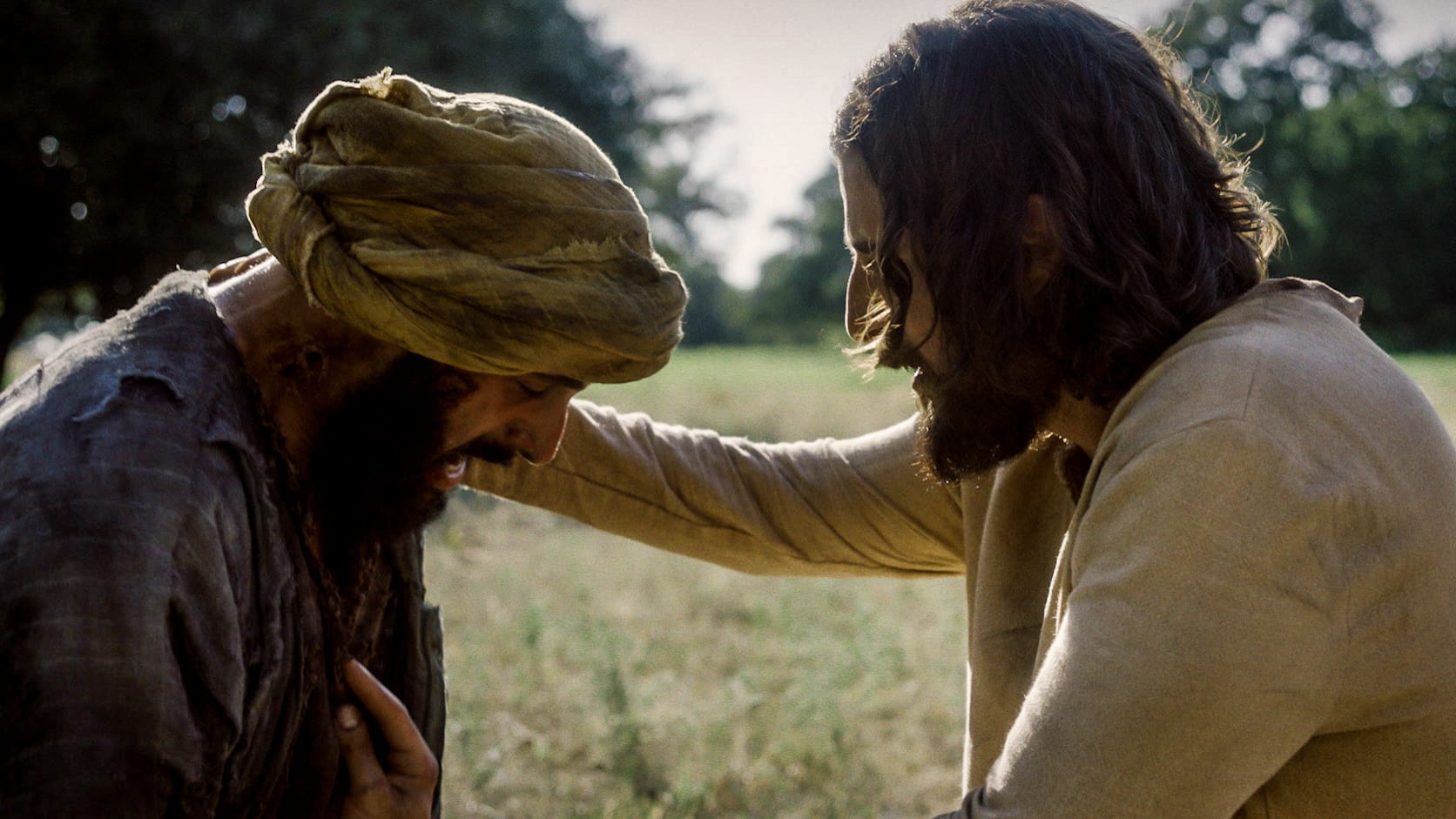
A GLIMPSE OF HOW JESUS DID MINISTRY (Luke 5:12-26)

NOTE: Brent had surgery today to have a tracheotomy put in place. He’s still very critical and today marks one month in the Trauma ICU at Erlanger’s Hospital in Chattanooga, TN. People from all over have been praying. Thank you! Please continue in prayer for him. I’m filling in for Carl today, who is filling in for Brent tomorrow. Here’s today’s “Preachers Pollard” blog post…

Thursday’s Column: Brent’s Biblical Bytes

Neal Pollard

I taught the course, The Preacher And His Work, at the Bear Valley Bible Institute for about a decade. At one point during those years, I reworked the curriculum and my approach was that God had one son, and He was a preacher (a famous quote from a 19th-Century Spurgeon sermon). Every one of us who serve formally as gospel preachers have the perfect model of a preacher in Jesus. But, thinking more broadly about the service (ministry) we have as Christians, He serves as an example for all of us. In this paragraph, we have the perfect microcosm of Jesus’ overall approach to service that can help us as we try to serve Him every day.

JESUS SERVED WITH HUMBLE WILLINGNESS (12-15). Jesus has just picked a small group of men to mentor (1-11), and what better way to start their training than by showing them how to respond to those in need? Of course, Jesus’ mission was broader than theirs or ours. He was proving Himself to be the Son of God by “miracles and wonders and signs which God performed through” Him (Acts 2:22). But the “how” of His approach is worthy of our imitation. A man in deplorable condition begs for His help, if He is willing, and Jesus says, “I am willing” (13). Then, He helps Him. But, Jesus is not wanting fame or acknowledgement. He even asks the healed leper not to tell anyone except the priest as he went and obeyed God’s commandment by making an offering for the cleansing according to the Law of Moses (14). Despite Jesus’ desire that this remain a secret, news inevitably spread! Jesus shows us a heart willing to help, but not wanting the credit. What an example! 

JESUS SUPPLEMENTED HIS SERVICE WITH SOLITUDE AND PRAYER (16). This is a remarkable, almost parenthetical statement. Between the leper and the paralytic, as well as others whose stories aren’t specifically shared by Luke, Jesus needed to “often slip away to the wilderness and pray” (16). This phrase is pregnant with meaning. He would go “often,” not occasionally. The perfect Son of God often needed the spiritual recharge He got from communion with God. How much more is that true of us? The word translated “slip away” conveys the idea of retreat or withdrawal, and implies going to a place and spending some time there (BDAG 1043). I wonder how someone doing such prolific and prominent work could manage to slip away, but it must have meant so much to Jesus that He insured that it happened. The more actively I serve Jesus, the more crucial time spent alone with God becomes! I do not want to be so focused on spiritual service that I neglect my own spiritual strength! 

JESUS STRENGTHENED HIS MESSAGE WITH SERVICE (17-26). The bulk of this parable is devoted to the healing of the paralytic, who is aided by the service of his friends. We’re familiar with this story, as friends filled with faith, lower the paralyzed man through a roof for Jesus to heal him. We may forget that the occasion that drew such a crowd was Jesus’ teaching people who had come from near and far, including teachers of the law. The service-opportunity, Jesus being asked to heal the paralytic, was in the middle of the teaching opportunity. Jesus amplified the power and truth of His message by His humble willingness to help. Jesus proves the authority of His work and message, as well as His power to forgive, by healing him. 

Notice how the people reacted (26). They were struck with astonishment. They glorified God. They were filled with fear. They left that day with an unforgettable impression. We understand that Jesus’ mission was unique. His purpose was greater than ours, proving Himself to be God in the flesh, endowed with miraculous powers, and doing all of it with perfect sinlessness. But, His mentality and His ethic is completely reproducible. God needs you and me actively serving Him before a lost and dying world. We have the power to help everyone with their greatest need, but we can support the message just as Jesus did. We can prove God’s love by our willing service. Let’s all do ministry like Jesus did, and we will impact the world just as He did.  

Have you watched “The Chosen”? Very touching series!

God Shows His Love

Thursday’s Column: Carlnormous Comments

tempImagehquiDk

Carl Pollard

As Christians we are called to love like God (John 13:34). If we are to love each other in the same way that God loved us we need to ask how God shows His love? People claim that there are generally five love languages that every person relates to: 

        • Words of Affirmation
        • Quality Time
        • Gift Giving
        • Acts of Service
        • Physical touch

Each one of us feels love in different ways. Your love language may be different than mine, and your spouse’s love language may not be the same as yours. God has shown His creation that He loves us by speaking and interacting with us using all five languages. 

Words of affirmation. When we use words of affirmation we think of phrases like: “You’re the only one for me baby” or “You mean so much to me” or even “Let’s go get Krispy Kreme.”  We use words of affirmation to show our love to our significant others. God has done the same for us. In showing His love God said to us, “For the mountains may depart and the hills be removed, but my steadfast love shall not depart from you” (Isa. 54:10). God uses words of affirmation and has told us that His love will never depart from us. Even when we deserted Him and chose to live a life of sin, God still kept His word. He loved us even when we were corrupted by sin (Rom. 5:8). Words of affirmation are a way to tell someone how you feel. God opened up to us through His word, and He revealed that He loves us more than we will ever be able to understand. 

Quality time. God desires nothing more than to spend quality time with His creation. In the beginning God spent quality time in the presence of Adam and Eve. He longs for this to be the case again in heaven. Sin ruined any chance of spending quality time with Him. But God showed that He loved us. And He looks forward to the day when He can dwell with His children for an eternity. 1 John 4:16 says, “So we have come to know and to believe the love that God has for us. God is love, and whoever abides in love abides in God, and God abides in him.” I can’t think of a better way to spend quality time with God than by having Him abide in me. He loves us and He desires to spend quality time with you and me.

Gift giving.  God has clearly expressed His love to us through gift giving by giving us someone that is invaluable. “God showed His love for us in that while we were still sinners, Christ died for us” (Rom. 5:8). Want to see God’s love? Look at what He has sacrificed for you. John 3:16 says, “For God so loved the world, that he gave his only Son, that whoever believes in him should not perish but have eternal life.” God expressed His love by giving a gift that has the power to eternally change our spiritual outcome. “For the wages of sin is death, but the free gift of God is eternal life in Christ Jesus our Lord” (Rom. 6:23). There is no denying that God has expressed His love to us through gifts. 

Acts of service. A person that feels loved through acts of service enjoys acts such as: cleaning out the garage, washing the car, doing the dishes, or folding the laundry. They feel loved because they recognize that their spouse cares enough about them to make their life easier. It’s love that is felt when a spouse sacrifices their time and energy to do something for you. God has shown His love to us through several different acts of service. Christ took on the sin of the world so that we wouldn’t be condemned by it. Christ illustrated this in the flesh when He washed the disciples’ feet (John 13). What does this say about God? It says that He loves you more than you love yourself. It says that the God of the universe is willing to place Himself below His own creation. It says that God’s love is so perfect and strong that He will grab a rag and wash the feet of imperfect men. There’s no denying that someone loves you when they are willing to humble themselves and serve you. This is exactly what God has done for us. 

 Physical touch. A person that feels loved through physical touch is looking for connection. They feel love when they are close to their spouse, they experience love through the physical side of their relationship. While God doesn’t physically touch us today to show His love, He has done it in the past. Mark 1:40ff, “And a leper came to him, imploring him, and kneeling said to him, “If you will, you can make me clean.” Moved with pity, he stretched out his hand and touched him and said to him, “I will; be clean.” And immediately the leprosy left him, and he was made clean.” Leprosy was a disease that immediately made you an outcast. If you had this disease you were considered unclean and you were forced to live in isolation from everyone else (Lev. 13:45-46). The leper was forced to live alone because this disease was spread through physical touch. This is what makes what Jesus did even more incredible. Jesus didn’t have to touch the leper, but He went above and beyond by physically touching him. God expressed His love through the physical touch of a compassionate Savior. 

We serve a God that has displayed His love to us perfectly. He has shown it to each one of us, and we will never deserve the love that He gives. Thank God for His love! 

The Christian Decision

Carl Pollard

Our family used to hike a lot when we lived in Colorado. There were many hikes that I went on that were straight up miserable. Ive always been the chunky kid, but the worst part about this was that I  was surrounded by a healthy and very active family.. This meant that on every hike I was the one in the back feeling like I was about to pass away. Hiking was never really something I was the best at. There are several times I remember thinking, “I’m not going to make it.” 

We used to hike a trail called “Moffit Tunnel” It was an 11 mile hike that ended with a summit path that gained 3000 feet of elevation in under half a mile. As you can imagine the path was practically vertical, and filled with rocks, mud, snow, and sadness. 

When I think of “a hard path” this is what comes to my mind. In Matthew 7:13-14, Jesus describes the way to salvation as a path that isn’t for the faint hearted; it’s for the dedicated Christian that is determined to reach eternal life. There’s no denying that the Christian life can be tough. It is filled with persecution, especially for those who aren’t as fortunate to have the freedoms we enjoy in America. The Christian life is tough because we will face persecution, but we are more likely to face rejection in our society today for standing up for some very unpopular teachings. If we are devoted to teaching and standing with God’s Word this means we must defend God’s view on homosexuality, marriage, divorce, and remarriage, baptism, sin, hell, and many more divisive topics. If we are devoted to walking the difficult path we must remain faithful in the rejection, hatred and persecution we will face. 

But the rejection and hate from the world isn’t the only thing hard about this path.

As Christians we are commanded to put ourselves to death. Matt. 10:37-39 say,  “Whoever loves father or mother more than me is not worthy of me, and whoever loves son or daughter more than me is not worthy of me. And whoever does not take his cross and follow me is not worthy of me. Whoever finds his life will lose it, and whoever loses his life for my sake will find it.”

Walking the difficult path means we have put ourselves to death. In doing so we are saying we love Christ more than our parents, our children and ourselves. In order to walk the difficult path we must be willing to take up our cross and follow Jesus. The cross is an instrument of death. The cross we pick up is the instrument of death that we have used to crucify ourselves on. Once we have taken up our cross we have made the decision to love Christ over anyone and everyone. We no longer serve ourselves because we have died to Christ. 

When we choose to walk the difficult path we are no longer living without purpose. We have a goal, a meaning for our lives. God uses us to spread His saving word to others. We have purpose in everything we do. We are here to encourage each other, to save souls, and to glorify God. One of humanity’s most asked question, “Why am I here?,”is answered by God. How we serve God will ultimately change someone else’s eternal destiny. We are given the true words of life that are able to save our most valuable possession, our souls. We also experience the blessing of having confidence in death. Death is scary. Why are so many scared of death? It’s the unknown, the end of our existence as we have known it. As Christians, when we choose to walk the difficult path, we are given the promise that when we face death we can be confident in knowing our soul is in the hands of almighty God. We know what is coming, and we can find hope in this. 

It was a hard climb, but what a payoff!

The Secret Message 

Tuesday’s Column: Dale Mail

83538761_557569434843824_1603081807199207424_n

Dale Pollard

If he was nervous, it was clear that the king’s palace guards couldn’t tell. They checked his left thigh for a weapon, and when they were satisfied they allowed Ehud to enter the throne room chamber. Ehud is just steps away from going down in history as the man who delivered the Israelites from the Moabite oppression. If he can pull this off, he and his people will enjoy eighty years of peace. It was a big job, and if you know this account, it was a big in more than one way. Hanging from his right side, unknown to anyone but him, is an eighteen inch double-sided sword. It was a weapon made for stabbing, and Ehud planned to use it for it’s created purpose. The guards stationed outside the chamber open the door for him. The room is filled with servants and more armed security, but this is probably not the first thing to catch your eye. There, in the middle of the room on the throne sat an extremely obese man. He’s been the ruling power over God’s people for eighteen years now and as king, he clearly took advantage the royal food supply. His name was Eglon. He, along with the sons of Ammon and Amalek, defeated the Israelites and then claimed the city of palm trees, Jericho.

Ironically, the palm tree was considered a symbol of peace and victory. Many years later, people would lay the branches of these trees down before Jesus the Nazareth as He enters Jerusalem. It seems reasonable to assume that Eglon was glad when he saw Ehud walk towards him. After all, Ehud was the man in charge of gathering Israel’s tribute and delivering it to him. With these funds, the king was free to continue living his life of gluttony and leisure. However, this time God was about to give a gift to the Israelites— Eglon’s life.

Ehud begins to look for the perfect opportunity to kill the king. He says to Eglon, “I have a secret message for you.” At this, Eglon clears the room. Now it’s just Ehud and the king. They’re alone in Eglon’s roof chamber. Ehud continues, “It’s from God.” This is out of the ordinary, and the king seems to have some level of respect for Jehovah, because he then stands up. I would imagine, a man of his size didn’t usually make a habit of standing unless it was absolutely necessary. Ehud pulls from his right thigh the hidden sword and quickly thrusts it into Eglon’s belly. The fat closes over the blade, and his insides spill out. Ehud locks the door and makes his escape. The guards assume Eglon is relieving himself in the coolness of his roof chamber. They wait until the point of embarrassment before opening the door, only to find their king dead. Ehud manages to rally the Israelite troops— slaying ten thousand mighty Moabites. Peace fell on the land for the next eighty years until the children of Israel once again fell away from God.

This account is found in Judges 3, and it’s an interesting, perhaps disgusting account, of how God delivered His people. Believe it or not, there are a few takeaways for us today. Sometimes Christianity involves bravery on our part. God was with Ehud, and He’s still with us today. Even so, humans still face very real fears. Whether you’re asked to lead a prayer in worship, or you’re thinking about talking with those in your social circles about Christ, or making an uncomfortable hospital visit, faithful service requires courage. It’s always been that way. Another lesson we can learn from this account is that God strengthens our faith by testing that faith. Just look at how zealously Ehud conquers the strong and valiant Moabites after Eglon’s death. When we can witness how God has worked in our past, it can build our faith in God’s ability to assist us in the future. If God is for us, who can be against us? Absolutely nobody. 

australia-trentham-trentham-falls-moody

The World Is Desperate (Part Two)

Thursday’s Column: Captain’s Blog

IMG_0806

Carl Pollard

Last week we looked at how the world is desperate for guidance. They look in every direction for someone or something to tell them what to do. Most of the time they look to themselves for guidance and that leaves many things unsolved. Psalm 119 tells us what our guide should be. God’s word is what tells us how to live, how to act, and how to react in every situation. The world is desperate not only for guidance, but also for purpose (2 Pt. 1:3-8).

As Christians we can confidently say that we have purpose. There’s a reason to everything we do; but what about the world? Why do they wake up every day? For most, they wake up to go to work, to make money, serve self, and go to sleep.

To illustrate this, imagine going to the store without a grocery list. Without a list you end up forgetting most of the stuff you needed in the first place. You come back home and realize you forgot the milk. Without a purpose in life humans are lost. We go day to day knowing that there’s something we’re missing, but we don’t know what it is.

In 2 Peter 1, Peter is writing to them to encourage these Christians to confirm their Christianity. To be confident in their calling. Starting in verse 3 he says this,

“His divine power has granted to us all things that pertain to life and godliness, through the knowledge of him who called us to his own glory and excellence, by which he has granted to us his precious and very great promises, so that through them you may become partakers of the divine nature, having escaped from the corruption that is in the world because of sinful desire. For this very reason, make every effort to supplement your faith with virtue, and virtue with knowledge, and knowledge with self-control, and self-control with steadfastness, and steadfastness with godliness, and godliness with brotherly affection, and brotherly affection with love. For if these qualities are yours and are increasing, they keep you from being ineffective or unfruitful in the knowledge of our Lord Jesus Christ.”

Because of God, we have a purpose in life. We have become partakers in eternal life. Because of this we must live a certain way. We have a goal. Peter gives us a list to build on: virtue, knowledge, self control, steadfastness, godliness, brotherly affection, and love. If we are seeking for a purpose to life, work on this list and the end result is a knowledge of Christ that leads to eternal life.

We have escaped the corruption of the world, and now we have purpose. Peter was one who struggled with his purpose at first, he was unsure of Christ’s plan when he was on earth, and he didn’t even want to be associated with Christ after he was lead away to be crucified. He denied Christ, but after this we see his commitment and purpose in the book of Acts. His purpose is exactly like ours, he went around proclaiming Jesus and baptizing in His name. Not sure what your purpose is? Just look at how Peter lived his life, how he was committed to serving God.

My first job I ever had was when I was 13 years old. I built fences for a member at the Bear Valley Church of Christ. And talk about having no idea what you’re doing. For the longest time I’d show up every morning and have to ask how to do everything. I didn’t know how to mix concrete, how deep a fence post hole had to be dug, how to install gate hinges. I was clueless. For the average person, this is how they feel without Christ. They’re unsure, they have no purpose. Our job is to show them what life is about. This life is about getting ready for the next that is to come. Without this, we have nothing.

The world is desperate for purpose, so let’s show them the Truth.

sunlight_over_picket_fence

I Am Not Irreplaceable 

Neal Pollard

It is said to have housed between 400,000 to 700,000 scrolls containing essentially everything that had been written up to its point in time. But the Royal Library of Alexandria, Egypt, was eventually destroyed. The first residential university, home to perhaps 2000 teachers and 10,000 students from the fifth to the 12th century in Nalanda, India, was destroyed by the Turks and never rebuilt.  In the heart of Germany was an opulent room, a thing of beauty so incredible some called it an eighth wonder of the world and said to be worth $142 million in today’s money. But the Nazis destroyed The Amber Room. The same can be said of Herod’s Temple, the first library of Japan, the first Byzantine encyclopedia, and countless other artifacts, buildings, and writings (via historyofinformation.com). 

How many considered these institutions and items that which would endure forever? Of course, Jesus warned that the things of this world cannot last (Mat. 6:19-20; cf. 2 Pet. 3:10ff). 

Most Christians understand that principle. We know material things cannot and will not last, being eventually effaced by the hands of time. But what about us? We rightly preach how the church needs us and that each of us fills a unique, needed position in the body of Christ (Eph. 4:16; 1 Cor. 12:18). As long as we have health and opportunity, we need to leverage our talents for the good of the Lord’s kingdom. Wherever we’re planted, preachers, elders, teachers, deacons, professors, directors, presidents, house parents, custodians, secretaries, counselors, etc., we need to give the Lord the best we can for as long as we can. 

But, no matter how effectively we are doing our work and what results we are seeing, we are not irreplaceable. What a horrible day it must have been for the church when Paul and Peter were martyred. Yet, the church continued its work (cf. Dan. 2:44). The same is true today. This will prevent any of us from feeling too big for our britches. It’s also a good reminder for the church itself, who may place too much importance on a single individual. Truly, some people leave big shoes and large holes to fill. But, it shall stand until Christ comes again. Perhaps one’s leaving a work (however that occurs) will force someone (or several someones) to step up and carry on the work. So much good can come from that!

Let’s do our best for as long as we can and trust that God can continue to work through men and women to continue his work after we no longer can!

16281785391_6dd2d073ae_b


Labor Day

(Bulletin Preview)

Neal Pollard

Tomorrow, most of us will be able to celebrate the Labor Day Holiday. That means, ironically, that most of us will have a day off from–well–labor. Schools and workplaces across the nation will shut their doors and many will be off for their last “summer vacation.” Friday, an anticipated 3 million passengers took to the friendly skies to enjoy the long weekend. We can either thank Peter McGuire or Matthew Maguire for being the mastermind of this holiday, both secretaries for New York labor unions who made significant efforts to recognize a day for American workers.

The U.S. Department of Labor has published a lot of useful information about this holiday, which it states was started as a “national tribute to the contributions workers have made to the strength, prosperity, and well-being of our country” (dol.gov). It was a local observance in the northeast at the height of the Industrial Age, though Oregon was the first state to pass statewide legislation to observe the holiday. That same year, 1887,  Colorado, Massachusetts, New Jersey, and New York followed suit. In 1894, Congress made it a legal holiday to be celebrated the first Monday of September. 

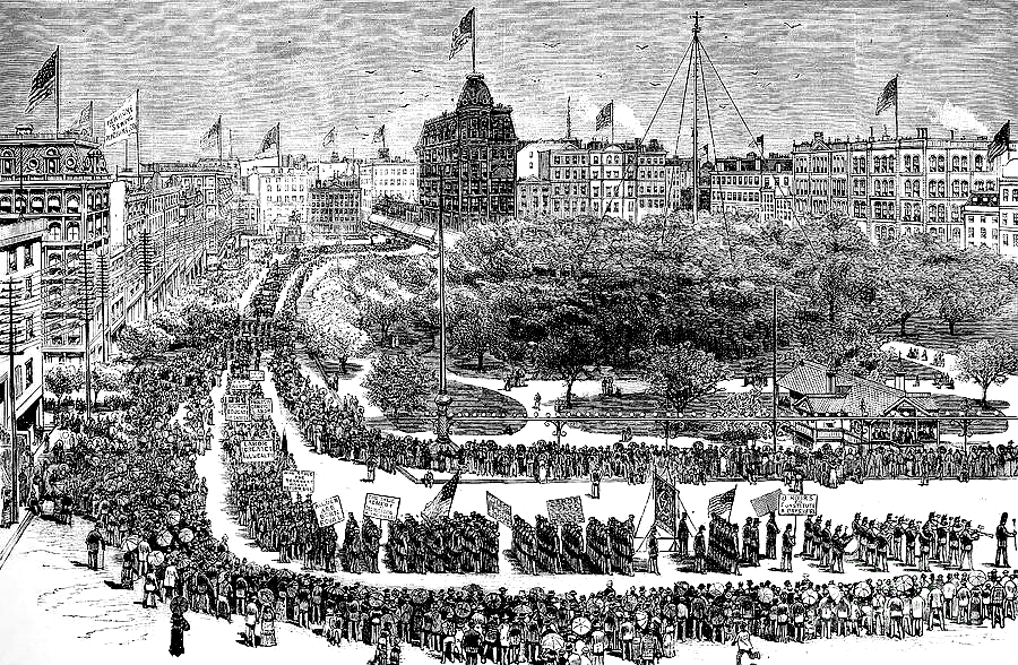
In the early days, there were picnics, street parades, speeches by prominent men and women, and “Labor Sunday” which was “dedicated to the spiritual and educational aspects of the labor movement” (ibid.). The first parade, in New York City in 1882, had up to 20,000 marchers as well as “Windows and roofs and even the lamp posts and awning frames…occupied by persons anxious to get a good view of the first parade in New York of workingmen of all trades united in one organization” (ibid.).

I find it interesting that we honor work with a day of rest and that the holiday itself has seen a shift in emphasis and expression. That’s neither a complaint or criticism. I intend to enjoy Labor Day with Kathy, taking the vacation day given to me in my working agreement. 

But, as we celebrate this national holiday, it’s fitting to recognize the hard work done by so many in this congregation. When you teach Bible classes, lead in worship, decorate bulletin boards, provide transportation to services, stock our pantry, do work on our facilities, engage in soul-winning efforts, practice hospitality, serve officially as church leaders (whether elders, deacons, or someone else tasked with some work), prepare the communion, clean the kitchen, organize the teacher’s work room, go on mission trips, make visits, handle church finances, coordinate worship, serve as ushers and greeters, host youth devotions, or the many, many other things you do, you are doing honored work. Jesus taught that greatness comes through service (Mat. 20:25-28; Jn. 13:12-17). New Testament writers honored those who work among us, Paul urging us not to “be weary in well doing” (Gal. 6:9) and to “always give yourselves fully to the work of the Lord” (1 Cor. 15:58, NIV). Often, Scripture speaks of the Godhead working. It instructs us to be “to the work.” Enjoy the holiday tomorrow. Yet, in the general, ongoing sense, “We must work the works of Him who sent Me as long as it is day; night is coming when no one can work” (Jn. 9:4). Labor on, brothers and sister!

labor_day_new_york_1882

“Just A Broken Guy…”

Neal Pollard

The chilling audio from Richard “Beebo” Russell reveals an internal conflict nobody, not family, friend, or co-workers, knew was going on. The 29 year old ground worker at Seattle-Tacoma International airport took a Horizon Air Dash-8 airplane on an unauthorized joy ride, complete with complicated aerial stunts before crashing into a remote island on Puget Sound. Before crashing, he spoke with air traffic controllers and pilots and confessed to the inner turmoil. The words used by loved ones to describe him range from “warm” and “compassionate” to “happy” and “regular” (Alex Horton, Washington Post, 8/13/18).  Of course, the behavior was irregular and bizarre, and it ended tragically for the young man as he fatally crashed the plane.

As we walk through this world, we meet and interact with people who may be projecting an outward appearance that is masking inward pain and trouble. It may lie behind their broad smile. That’s a disturbing thought, but what can we do? We cannot read their minds. There is no full-proof way to prevent every tragic action, but we may have more power than we think. Consider some things all of us can do with everyone in our lives.

Be kind. Look people in the eyes. Smile at them. Even if it slows you down from some important task, don’t overlook the people God puts in your path. Your helpful word might sink deeper into their spirit than you realize. Let’s be like the inhabitants of Malta, who showed Paul and his companions “extraordinary kindness” as they simply “kindled a fire and received” them all (Acts 28:2). We’re told as Christians to put on a “heart of kindness” (Col. 3:12). How will anyone know the proof of our kind hearts? We will display it.

Be concerned. We fear being nosy or busybodies. Don’t do that. But there is room for active concern. Such is more apt to listen than advise, to help and not gossip, and to do than to judge. People who are surrounded by those they know care for them have a better chance at emotional survival. Look at the example of Paul, pressured by the concern for congregations and intensely concerned for individuals led into sin (2 Cor. 11:28-29). The word Paul uses for his concern for individuals literally means “to cause to be on fire; burn” (BDAG, 899). It’s the word used to describe the heavens being on fire (2 Pet. 3:12). Paul was “inflamed with sympathy, ready to aid” (ibid.). That’s got to be us, too!

Be helpful. Our Christianity should be tangible, not theoretical. We must be attuned to needs and ready to help (cf. Titus 3:14). Let’s avoid empty words that lack the intent of action. Acts of service, doing for others, are powerful and penetrating. God tells us, “On the day of salvation I helped you” (2 Cor. 6:2; Isa. 49:8). A helper sees a need and meets it. Oh, the impression that can make on a weary struggler. 

Listen, for all we know, this young man was surrounded by people who were kind, concerned, and helpful. Ultimately, each of us is individually accountable for our actions (2 Cor. 5:10). But, our neighborhoods, cities, states, and nations will be a better place when Christians are active bearers of such faithful fruits. Treat everyone you see as the eternally-bound souls that they are! Help them. We know the One who mends the broken (cf. Ezek. 34:16). 

a6866107-2a6b-41a4-a91e-365513e5516c-seattle_plane

The Kindest Elder I’ve Ever Known

Neal Pollard

He was appointed an elder during the Reagan administration. At the very time he was appointed, the congregation was reaching the climax of a very traumatic incident. A man who was a charter attender, but not a member, when Bear Valley began meeting, he has seen every great work this congregation has dared to do, walked through its every valley, and he has done so with as even-keeled and unflustered way as I have ever known. I have heard him preach both here and abroad, watched him do short-term missions, make difficult shepherd visits, hug and encourage more people than I can remember, and seen his kindness and humor generously displayed. He was not usually the first to speak when elders conversed, but his insights have always been profound. He always did what he did with class and compassion.

I was crestfallen when I recently heard Maynard Woolley tell the eldership that he was ready to step aside as an elder after nearly 30 years of service. Only Harry Denewiler served more years in that role for the Bear Valley church of Christ. He stayed on a couple of years after five great men were appointed to this work in 2016, helping them to acclimate, learn, and grow under his, Ernie Barrett’s,  and Dave Chamberlin’s tutelage. A telling tribute to the breadth of his leadership was the collective, deeply respectful, regret that he was going to resign. Maynard is a man who one appreciates more and more the longer one works alongside him.  His faithful wife, Donna, has both encouraged him and endured, as an elder’s wife for so long, what not many women living have.

Some men impress with refined oratory, outspoken and charismatic ways, and larger-than-life personalities. Others live more understated ives, but their value cannot be overstated. Maynard Woolley is such a man. We will miss his formal oversight, but we look forward to his continued faithful service and loving example. Thank you, Maynard, for what you’ve done and for who you are.  Bear Valley bears the imprint of your bearing.

35328348_1752403114806253_5029729612142215168_n

“Killfies”

Neal Pollard

What do high cliff ledges, train tracks, animal game parks, bridges and buildings have in common? They are apparently popular sites for people to take selfies, and places, among others, where over 200 people have died in the last 5 years in pursuit of that “perfect selfie.” The Economic Times of India, a country leading the world in deaths by selfies, reports that 86 people in 2016 and 73 people in 2017 died in this tragic, needless way. Since 2014, 128 have died in the course of taking selfies in this densely populated nation. But other countries are getting involved in trying to stem the tide of such tragedies. Irish doctors reported, “The consequences of poorer spatial awareness and a focus on getting a good or daring photo has lead to multiple traumas” (Indulekha Aravind, 2/18/18).  There are people in Russia that have become celebrities because of their daring self-centered photos (ibid.). Nowhere social media has gone is there an exemption from this trend, including here in our country.

Because I do not have a background in psychology, I freely admit I could be wrong about this. But, could these extraordinary lengths to capture oneself in these kinds of photos be an act of desperation for acceptance, friendship, or even love? Could the yearning for admiration, congratulations, and adulation drive people to disregard all restraint and precaution? I’m not sure I know the answer to that. 

I do know that, as Henry David Thoreau said in 1854, “The mass of men lead lives of quiet desperation” (Walden, ch. 1, p. 8).  Perhaps these daring selfies are a symptom of that sensible observation. With selfies, we are able to project exactly the image or perception of ourselves that we want others to see of us. We don’t publish the unflattering nor do we want to show the boring. We want to be seen as valuable, relevant, and attractive. Why? Though we might lose our way in the process, human nature is to desire community and relationship (cf. Gen. 2:24). There are a great many destructive ways to do that, and being self-obsessed is certainly harmful.

It’s very interesting that God planned the church from eternity (Eph. 3:9-11) as a place and a way for us to focus on others. Paul wrote, “Do nothing from selfishness or empty conceit, but with humility of mind regard one another as more important than yourselves; do not merely look out for your own personal interests, but also for the interests of others” (Phil. 2:3-4). So much about being Jesus’ disciples gets us outside ourselves and into the lives of others—not just other Christians but people from every walk of life outside of Christ. He wants our energy, effort, and focus to be turned outward. It’s not so much about projection, but about service. Through that, God will be glorified and others can be satisfied. It seems that such is why God has us here!


male-tourist-taking-selfie-1503402700syg

Working Together To Survive The Hunt

Neal Pollard

1 Peter 5:8 calls the devil a roaring lion prowling around seeking someone to devour. It is obvious that Peter’s readers would have seen or at least heard about these kings of the jungle for the analogy to make sense and be practical.  Lions lurk, longing for lunch.

In the savannas of East Africa, their meal of choice is usually either the wildebeest or zebra. Despite this, these two animals continue to graze and migrate together. In fact, because they are chief prey of the lion (and other big cats), they need to stick together. Various observers and experts give different explanations for why. Zebras have great farsightedness and the wildebeests have excellent peripheral vision, but each are poor at seeing what the other sees well. Others explain that wildebeests have mouths better suited for short grass while zebras’ are made for the long grass that grow intermittently together on the plains. Still others point to the zebras superior memories, recalling the safety routes of the previous year, and the wildebeests uncanny ability to find water even when such is scarce. Probably, it is the combination of these facts that cause the symbiotic relationship between these two large mammals. They do not all survive, but the vast majority do. The reason is because they utilize their own abilities but also because they rely on the abilities of others.

In a letter where Peter is addressing a people who were at times spiritual prey, he does more than use the simba simile. He urges Christians to stick together and look out for one another. He calls for sincere, fervent, from the heart love for one another (1:22; 4:8). He urges complaint-free hospitality toward one another (4:9). He commands serving one another (4:10). He teaches there to be mutual humility displayed toward one another (5:5). He ends the letter exhorting an affectionate, loving greeting of one another (5:14). As much as anything, this is a recognition of mutual dependence.

If we understand that we are not at home in this world (2:11) and are living and longing for the inheritance in heaven (1:4), we should come to understand our mutual need of each other. That does not just mean looking for others’ help, but also giving it. This is by God’s design. Notice, for example, the proactive protection we provide each other by being “harmonious, sympathetic, brotherly, kindhearted, and humble in spirit; not returning evil for evil or insult for insult, but giving a blessing instead…” (3:8-9a). Right before the lion passage, Peter talks about different groups looking out for and helping each other (5:1-6).

Any of us, through suffering, temptation, doubt, or some other factor, could drift away from the safety and security of the fold. Let us be more than mindful of each other. Let us depend on each other to survive the hunt and make it to eternal safety.  I will face the lion many times in this life, and I depend on you to help me survive.

DSCN0368

Why Do You Serve?

Neal Pollard

Has a preacher ever been motivated by finance, popularity, or fame? Has an elder ever been motivated by power, influence, or notoriety? Has a Christian ever served in any way for notice, accolades, or to satisfy pride? In individual cases, it’s so hard to tell (ultimately, it’s impossible). But, knowing human nature, we would have to say motivation can be tainted and corrupted.

Paul says as much of preachers, that they preached Christ from envy, strife, and selfish ambition (Phil. 1:15,17). Greed propels some preachers (1 Th. 2:5; 2 Pet. 2:3,14). Woe to the preacher who falls into traps like those! He may do harm in this life, but it cannot compare to the ultimate harm he does to himself and others. Peter calls out elders who he says serve for sordid gain or on a power trip (1 Pet. 5:2-3). Woe to the elder who serve from such a base motive! He will not joyfully anticipate the appearing of the Chief Shepherd (cf. 1 Pet. 5:4)! Christians have been led by their appetites and an earthly mindset (Phil. 3:19). Woe to the Christian who serves God for selfish reasons. Such will not be able to successfully endure their spiritual race.

Sometimes, our words and actions betray our motives and intentions. So often, what gets in the way is self— self-service, self-will, self-interest, self-indulgence, self-importance, selfish ambition. It leaves a sour taste and sounds ugly when said. It is manifestly unattractive to even read the words. It is detestable when witnessed in others. But “self” is such an impediment to spiritual service.

I don’t know why anyone else is serving Jesus. But I need to be careful to examine myself. How terrible to let my speech and actions be the cause of anyone questioning what moves me to render any act or service. Let our goal be to live so selflessly that no one has legitimate cause to ask why we do what we do in God’s Kingdom. Paul contrasts Timothy with others, saying, “ For they all seek after their own interests, not those of Christ Jesus” (Phil. 2:21). Let’s be a Timothy, moved by a genuine concern for others (Phil. 2:20). That’s just what this cynical world needs to see!

waiterattable

But, They Were Certain!

Neal Pollard

Have you ever been absolutely sure about something, only to find out you were wrong? Maybe, it was the name of the band that sang your favorite song or the name of the third baseman on your favorite team when you were in elementary school. Sometimes, the stakes are higher and being wrong more costly than that.

Erik Larson’s book, Isaac’s Storm: A Man, A Time, and the Deadliest Hurricane in History, is about a man and an entire bureau’s certainty that cost probably 6,000 their lives. And because they were so certain that a hurricane could not strike Galveston, Texas, a lot of people made fatal choices based on their own certainty—they were certain of houses that would stand, trains and tracks that would get them to their destinations, and that the slope of the coast would deter tidal waves and storm surges. Yet, in September, 1900, on Saturday and Sunday, probably the worst hurricane in modern history struck the exposed, helpless booming Texas city.

Some have been so certain about spiritual matters, but were wrong. They have been certain about what to bring God to worship (Gen. 4:2-3), about how to be saved from death (2 Kings 5:11-12), and about how to carry out God’s command (1 Sam. 15:13ff).

In the Sermon on the Mount, Jesus speaks of some who seemed certain, but were certainly wrong. Depicting the Judgment scene, Jesus preaches, “Not everyone who says to Me, ‘Lord, Lord,’ will enter the kingdom of heaven, but he who does the will of My Father who is in heaven will enter. Many will say to Me on that day, ‘Lord, Lord, did we not prophesy in Your name, and in Your name cast out demons, and in Your name perform many miracles?’ And then I will declare to them, ‘I never knew you; depart from Me, you who practice lawlessness’” (Mat. 7:21-23). These folks will have done religious acts in Jesus’ name. They will haven been certain they were on the right path, but Jesus says they will have been mistaken. They will not have done the will of the Father.

How many people will this ultimately describe? They have confidence in a preacher, a teaching, a tradition, a feeling, or a belief. Sadly, they have not even questioned whether or not it might not be what the Bible says on the matter. Jesus ends His sermon by talking about storms. This storm is more powerful than the one Larson writes about. It determines destiny (Mat. 7:24-27). We must base our certainty on the Rock!

ursuline_academy_galveston
Ursuline Academy in Galveston, Texas, before the hurricane.

Service With A Smile

Neal Pollard

Jesus showed the greatness of service by washing the disciples’ feet (John 13:12-17). As they fought over who was the greatest, Jesus revealed that He came to serve and not to be served (Mat. 20:25-28). God refers to Him in the great prophesy about His suffering as “My Servant” (Isa. 52:13; 53:11). Why, then, are we more apt to jockey for prominence, position, power, and prestige? Is it not that, in such times, we’ve lost our focus and stopped “looking unto Jesus” (cf. Heb. 12:2)? What are some practical ways we can reflect Jesus through service? Consider the following as a pump-primer:

  • Write a note of encouragement
  • Pleasantly let a merging driver merge in front of you
  • Fervently pray for the good of someone who has been hurtful to you
  • Meet a widow(er) for lunch or coffee
  • Volunteer to babysit so a young couple can go on a date
  • Anonymously send a small amount of money or gift card to a college student, preacher student, or missionary
  • Visit a shut-in
  • Participate in a feeding the homeless event
  • Tell an elder you love and appreciate him
  • Pay for the meal of a young family who looks like they could use the help
  • Ask a neighbor if there is something you can be praying about on their behalf (and, if they’re willing, pray for that on the spot)
  • Text or email someone you know is in a stressful circumstance and express confidence in them
  • Take a small group to go sing for someone confined to a hospital or nursing home
  • Volunteer to work with small children to make a craft or baked good for the elderly
  • Police the bathrooms and pews at church and tidy up little messes you see
  • Make visitors to our assemblies feel welcome and help them find a class or a seat (with a pleasant smile)

There may be profound ways we can serve, but realize that any act of service may be far more profound than we think. We may not know in this life how a simple act opens a heart and opens a door of opportunity for Christ. Think like a servant and seek ways to serve! The greater others think you are, the greater your need to serve. But however much or little you think of yourself, think of others. Then, serve them!

2159516316_763603c0c9_z

A Footprint, A Fingerprint, And An Imprint

Neal Pollard

“What do you want to be when you grow up?” “What will they put on your headstone?” It’s the kind of fundamental questions that accompany us all along the road of life. We want to have significance, to serve purpose, and to matter.  Whether motivated by legacy or something larger than self, the thoughtful periodic evaluate the difference they are making to those whose lives they touch. Of all people, Christians should take that matter seriously.  Consider this.

You Are Leaving A Footprint. Your decisions are observed by friends, family, and even those who only know you incidentally or even not at all. You are a leader.  So many people will eventually wind up somewhere because of what you do with and in your life. Paul could say, “Be imitators of me, just as I also am of Christ” (1 Cor. 11:1). In the most dramatic facet of this fact, people will be led toward an eternal destination through your influence. You are leading people toward or away from heaven. It’s in your heart, attitude, words, priorities, conduct, and passions.  To a line of folks longer than you could imagine, you are yelling, “Follow me!” Ask yourself, “Where am I going?”

You Are Leaving A Fingerprint. You are touching people’s lives. Your hands are in a variety of endeavors—your occupational life, your social life, your personal life, and your spiritual life. You are a servant of something and someone. Paul says it’s inevitable (Rom. 6:16). Everyone works at something, even if it’s laziness. It’s a legacy of labor. Where will people remember that your hands were most often seen? Will your chief legacy be whatever your occupation was? Your civic service? Your material accumulation and notoriety? Your pursuit of pleasure? Or will it be your involvement in people’s lives and with people’s souls? Consider this challenge, to “strengthen the hands that are weak and the knees that are feeble” (Heb. 12:12). Your hands will find something to do (cf. Ecc. 9:9). Make it count for God.

You Are Leaving An Imprint. Isn’t it sobering to think that all of us are associated with some quality. When our name is brought up, something—either directly or indirectly—is attached to it. For some, it will be: “grouchy,” “gossipy,” “complaining,” “foul-mouthed,” “critical,” “selfish,” “dishonest,” “arrogant,” “icy,” and the like. Fair or not, such broad labels are typically made interaction by interaction. For others, it will be: “humble,” “sincere,” “encouraging,” “dependable,” “loving,” “joyful,” “godly,” “positive,” etc.  You may feel yourself plain and insignificant, but you will leave an indelible impression on others throughout your life.  Even the one talent man, who tried to bury his talent, had to give an account for it (Matt. 25:14-30).

Leadership, labor, and legacy. These are gifts given by God to us all. What a powerful opportunity, one that lies before us daily! The great news is that if we don’t like the footprints, fingerprints, and imprints we have left and are leaving behind, we can change course. My favorite version of A Christmas Carol (and the best version!) is the one starring George C. Scott. He captures the remarkable transformation of Ebenezer Scrooge, a malevolent miser who becomes a merry mirth-maker. Charles Dickens shows us that anyone is redeemable if they’ll genuinely and fervently change. Of course, the Bible beat him to that message (Rom. 12:2; Acts 3:19; etc.).  Our time here is so short. May we all have the wisdom to know what is most important and pursue it relentlessly.

george_c_scott_fixed

Christian, Who Are You?

Neal Pollard

  • You Are An Insurance Agent—Life (Philippians 2:16), Health (cf. 1 Peter 2:24), and Fire (2 Peter 3:9-10).
  • You Are A Tour Guide (1 Peter 2:9; Acts 8:31).
  • You Are A Soldier (Ephesians 6:10ff; 2 Timothy 2:1-3).
  • You Are A Slave (Romans 6:17).
  • You Are A Firefighter (Jude 23).
  • You Are An Ambassador (2 Corinthians 5:20).
  • You Are A Priest (Revelation 1:6).
  • You Are A Conductor (2 Corinthians 2:14; 9:11).
  • You Are A Day Laborer (John 9:4; cf. Matthew 20:1ff).
  • You Are A Farmer (2 Timothy 2:6; Luke 8:5).
  • You Are A Fisherman (Matthew 4:19).
  • You Are A Gem Distributor (Colossians 1:27).
  • You Are A Taste Tester (Colossians 4:6; Hebrews 5:14).
  • You Are Royalty (Revelation 1:5-6).
  • You Are A Student (2 Timothy 2:15).
  • You Are A Body-Builder (Ephesians 4:16).
  • You Are A Restorer (James 5:19-20; Galatians 6:1).
  • You Are A Physician’s Assistant (Hebrews 12:12-13; cf. Mark 2:17).
  • You Are A Standard-Bearer (Philippians 3:16; 2 Timothy 1:13).
  • You Are A Builder (1 Corinthians 3:10).
  • You Are A Judge (John 7:24; 1 Corinthians 6:2).
  • You Are A Nutritionist (1 Timothy 4:6).
  • You Are A Maintenance Worker (Phlippians 2:2; Titus 3:8,14, KJV).
  • You Are A Cleaner (2 Timothy 2:21; James 4:8).
  • You Are A Runner (1 Corinthians 9:24; Galatians 2:2; 5:7; etc.).
  • You Are A Boxer (1 Corinthians 9:26).

I’d be amazed if I did not leave out several of our job titles and descriptions. Suffice it to say that there is plenty of work for all of us to do. The next time we find ourselves figuratively twiddling our spiritual thumbs, wondering how we can be involved, let’s draw from the exhaustive inventory of tasks the Lord has left us!  Remember, “Whatever you do, do your work heartily, as for the Lord rather than for men” (Col. 3:23).

laborer

In Awe Of The Greatest Freedom


Neal Pollard

I once was without representation,
Not a citizen of that chosen nation,
Enslaved and oppressed,
Deprived of the best,
And discouraged by my lowly station,

But my freedom was bought at a price,
With the one ransom that would suffice,
Sweet liberty was bought,
And my freedom I sought,
When I opted for virtue instead of vice.

Independence is becoming and sweet,
It is found when I fall at His feet,
And make Him my Master,
I avoid pain and disaster,
He offers me victory for my defeat.

I celebrate privileged position,
Embrace His heavenly mission,
Knowing the blessings He gives,
Is because He still lives,
He hears the faithful disciple’s petition.

As we celebrate the blessings in this land,
Bestowed by a Providential hand,
Let us never forget,
That He paid our great debt,
He’s preparing what’s infinitely more grand.

Whatever may become of our dear country,
I pray that our eyes will always see,
That no earthly place is home,
We are strangers who will roam,
’Til we reach the Great City across the sea.

flag-468345_640

Would Jesus Scrub Grape Juice Stains?

Neal Pollard

Bob Russell tells the story of Dwight Day, a UPS pilot who had come back to church after many years away. Russell walked into the auditorium one day to catch Day scrubbing grape juice stains off the pews. This pilot was an important man with sufficient money to hire someone to do the job, but there he was scrubbing. He “wasn’t too important to clean the pews” (When God Builds A Church, 178).

Who visits the elderly members in the nursing home? Who participates in the workday? Who takes the poor, ill member to a doctor’s appointment? Who prepares the communion? Who teaches the cradle roll class? Who grades the correspondence courses? Who gives a lift to someone who needs a ride to church? Who does the many “invisible,” thankless tasks that must be done for the church to grow and meet its many responsibilities? The servant!

The serving Christian is not necessarily the one-talent, lower-class, uneducated person ill-equipped to do something more “sophisticated” and “important.” These are the kinds of things anyone can do, but only the servant does them. Lest we consider such tasks too menial and such people meaningless, we reflect on John 13. That chapter records the all-knowing, all-powerful Creator of the universe (you can’t one-up that) pouring water into a basin, washing the disciples’ feet and drying them with a towel he had put around Himself (v. 5). They had to have been baffled, this group who had been jockeying for a seat on His left and right hand in the vision of Kingdom greatness they had imagined (cf. Mat. 20:21). What were they thinking as Jesus tells them, “Do you know what I have done to you? You call Me Teacher and Lord; and you are right, for so I am. If I then, the Lord and the Teacher, washed your feet, you also ought to wash one another’s feet. For I gave you an example that you also should do as I did to you. Truly, truly, I say to you, a slave is not greater than his master, nor is one who is sent greater than the one who sent him. If you know these things, you are blessed if you do them.” (12b-17).

This was a gut-punch to them and to so many of us. We can be more interested in getting the good seat than stooping to wash the dirty foot (or scrub the grape juice-stained pew). But we will miss the heavenly definition of spiritual greatness unless we lower ourselves. Jesus told the Sons of Thunder and their mother to remove the worldly gauging of greatness out of their thinking (Mat. 20:25-28). Perhaps He’d have that conversation with you and me, too. May God grant us the humility to see the opportunities and serve as stain scrubbers and every other, similar task that allows Him to use us for His glory. If that spirit permeates a congregation, it will turn the whole world upside down (cf. Acts 17:6)!

broom_sponge_and_towel

Tools In God’s Toolbox

Neal Pollard

Romans 6:13 tells us our body is an instrument, and we choose to use it for righteousness or unrighteousness. The Greek word translated “instrument” there means “tool or weapon.” What kind of tool or weapon are you? Are you an instrument God holds in His hand to do His will?

  • Are you a battering ram? The ancients would use a log or some other hard object to break down a wall or door. Have we filled our hearts with the Word to the degree that we can, speaking the truth in love (Eph. 4:15), break down barriers keeping the honest-hearted from God?
  • Are you a crowbar? Crowbars pry objects apart. There are things we should separate from our thinking and lifestyle. Are we trying to pull away from worldliness (Js. 4:4)?
  • Are you a chisel? This is a tool that does meticulous, detailed work. Its blade carves or cuts hard materials. Do we have the tenacity and trust needed to use God’s Word and benefit from His providence to remake our lives into the image of Christ (cf. 2 Co. 3:18)?
  • Are you a level? We live in not only a dishonest world but also a corrupt world. So many call good evil and evil good (Isa. 5:20). Can people find in us a reliable standard of right and wrong, as we reflect the principles of God’s Word? Levels are used to determine whether something is true and as it ought to be.
  • Are you a plane? The plane smooths rough surfaces by repetitiously moving back and forth across the surface. All four Gospels (Mat. 3:3; Mk. 1:3; Lk. 3:4; Jn. 1:23) speak of John the immerser’s work as making ready the path of the Lord, making His paths straight. We are not forerunners of Jesus; we follow in His steps (1 Pe. 2:21). As we do follow Him, we are going to forge a path safe for others to follow (1 Co. 11:1).
  • Are you a magnet? A magnet is an object that draws and holds another object disposed toward such attraction. Magnets can be used as tools themselves, but they are often made a part of other tools, such as hammers and screwdrivers. By living like Jesus, you will draw people to Him.

Paul also referred to “tools” or “weapons” when talking to the Corinthians. He mentions “armor of righteousness” and “weapons of our warfare” (same word). In both cases, the tools or weapons are spiritual and figurative, yet with them we can help shape and build up those around us. Be a tool in God’s toolbox!

toolbox_226362564


THE PRISON OF “NOT”

Neal Pollard

Strayer University shared their video from the day they ran an ingenious experiment in New York City.  They put up a chalkboard on a busy street with this caption written at the top: “Write Your Biggest Regret.”  Scores of people wrote on the chalkboard.  Nearly every answer visible in the video included the word “not.” Interestingly, it was not confessions of sins of commission. Instead, it was about opportunities missed, dreams not pursued, and things they failed to do.

That exercise made me wonder how many are inmates in the prison of “not.”  While Strayer seemed more interested in highlighting regrets that were tied to career, that impacted quality of physical life, and the like, regret reigns in people’s hearts and has dominion over their spiritual and eternal lives, too.  Scripture shows us those challenged with the gospel message who ultimately refused to follow Christ. The rich young ruler was not willing to choose Christ over his stuff (Mat. 19:22). Many of the rulers believed in Him, but they put their stock in the approval of men rather than God (John 12:42-43). Felix trembled at truth, but ultimately turned away (Acts 24:25). His cohort, Agrippa, was nearly there but not quite (Acts 26:28).  Other examples can be found of those who came so far but would go no further.

How many people have been shown the way to eternal life and have acknowledged, to a point, that it is the way they should go? Yet, when push comes to shove, they refuse to leave the cell of self and confine themselves to the chains of a condemning choice. Before Christ, they will see their regrets realized in a rejection that cannot be remedied.

The incredible news is that they keys are in reach of this prison.  It was a running gag in the Andy Griffith show that particularly Barney would leave the keys on the peg of the Mayberry jail where the prisoners could reach the keys and let themselves out. Would you picture our spiritual circumstances this way? The Psalmist praises God for many reasons, including the fact that “the Lord sets the prisoners free” (146:7). In a Messianic passage, Isaiah writes of His mission to “proclaim liberty to captives and freedom to prisoners” (61:1; cf. Luke 4:18; 7:22; Mat. 11:5). He can emancipate lifelong slaves to sin (Heb. 2:15). He has left the keys where we can grab them, but we must want to be free and choose to be free.

This video ends with the participants taking an eraser and removing all the regrets from the board. One of them writes just two words in their place: “Clean slate.”  What an optimistic, hopeful, empowering difference that contrasting concept is. Regret can be replaced with resolve. Do you believe that is possible for your spiritual life? Don’t you think God wants you to experience that exhilarating hope? The proof is there at Golgotha and the sepulcher that could not keep His Son entombed. What He did there can provide you with a clean slate! Take possession of the freedom He came to give you!

Strayer video link: http://aplus.com/s/83d4dc91dee

paxp-deijewhat-is-your-biggest-regret-strayer-university-chalkboard-video-new-york-city-960x420