Solomon observed that there are different seasons of life and different seasons in life (Ecc. 3:1-8). Some can be construed as pleasant and happy, while others are less so. In our congregation right now, we have some people in seasons of sadness and grief, fear and uncertainty, while others are in a season of joy and success. Babies are being born, couples are getting married, and people are experiencing the joy of salvation while spouses and parents are being lost and loved ones are falling away.
There are also life’s seasons, as some are stepping into bigger roles while others are slowing down. Some are stretching while others are reluctantly having to step away. If I were writing this at any other time in any year, the names would change but the story would be strikingly similar. This rhythm of life is ongoing.
The one thing that must remain consistent through the mountain tops and deep valleys is what Solomon says at the end of his sermon. “The end of the matter; all has been heard. Fear God and keep his commandments, for this is the whole duty of man. For God will bring every deed into judgment, with every secret thing, whether good or evil” (Ecc. 12:13-14, ESV). It may be harder to praise when in pain and it may be easier to neglect serving when succeeding, but it is vital we do so!
It requires different disciplines when serving God in different seasons. It requires gratitude when life is going our way. It takes perseverance when life is decidedly difficult. In the places in between triumph and tragedy, it takes commitment to the pledge we made at our baptism to deny self and follow Him (Luke 9:23).
In the awkward growing pains of youth through the aches and pains of old age, we must honor our pledge of faithfulness. There is what God has done for us, from Calvary to the blessings of yesterday. There’s what He is doing to sustain and uphold us today (1 Cor. 1:8). Then, there are the promises built of the integrity of His perfect character concerning what He will do in all our tomorrows.
Wherever you are on the calendar of life, serve God! You will never regret “fearing God and keeping His commandments” in every season of life! “He has made everything beautiful in its time” (Ecc. 3:11).
It is easy for us to think that only the super-spiritual, seemingly-perfect can be effective, but the opposite is true. None of us is too spiritual or perfect, though we should always be striving to be better and do more for the One who gave everything to save us. Paul is continuing his discussion about the ministry he and his co-workers have. As he does, he speaks candidly about himself and them–the messengers. As Christians charged with carrying out the Great Commission, we should all put ourselves in his shoes and understand better who God uses in His service.
GOD USES PEOPLE OF INTEGRITY (1-4)
Character does not demand perfection, but it does require a conscience shaped by Scripture and a heart softened by it. This leads one to stay encouraged no matter what is encountered (1). It also leads to honesty and trustworthiness (2). We will conduct our lives righteously, and we will handle God’s Word faithfully. People can trust who we are and, thus, what we say. We may be rejected by the spiritually blind, but we won’t be a roadblock to their faith.
GOD USES PEOPLE OF HUMILITY (5-7)
Paul gives a helpful reminder. It’s not about us, it’s about Christ. He’s the source of light, glory, and power. We’re the plain, fragile pottery God uses to demonstrate His surpassing greatness.
GOD USES PEOPLE OF DURABILITY (8-12)
To be His servants, we have to weather storms. Those storms may be those we would avoid if we didn’t serve Him, but we understand the importance of our mission. We won’t let affliction, perplexities, persecution, and threats keep us from doing His work! God does not need spiritual sissies in His service. We draw our courage and strength from Him, and it causes Him to shine out through us!
GOD USES PEOPLE OF STABILITY (13-15)
What causes us to be stable? Faith! Because we are truly convicted of the truth, we cannot help but speak. We have faith in the reality of the resurrection, so we teach and share the message that brings grace to more and more people. This leads more people to give thanks to God and causes God to be glorified.
If I want to be a faithful servant of Jesus, I need to watch my personal conduct, lower myself, endure, and be trustworthy. That does not require perfection, but it does require dedication! But God depends on imperfect people like you and me! We cannot let Him down.
This past weekend, a group of us college students traveled to Sneedville, Tennessee, to do service work. Lauren Ritter and her home congregation have a long-standing relationship with the community of Sneedville and have done a lot of outreach over the years. At the young adult’s retreat, Lauren suggested a group of us could go do a project there. Sneedville is a poor community in Appalachia with low access to running water, employment, and education opportunities. Along with delivering groceries to local families, we took on a large project of building a wooden platform and placing a 500-gallon water tank on it to give a family access to water. I am very grateful to have been involved in the project, and have reflected on the experience a lot over the last several days.
If you would go ahead and turn your Bibles to Mark chapter 12, verse 28. In the verses before this, Jesus has been questioned by the Pharisees and Sadducees who were trying to trip him up and get him to make a mistake in his answers. In verse 28 they ask him another question. Starting in verse 28 it says, “And one of the scribes came up and heard them disputing with one another, and seeing that he answered them well, asked him, Which commandment is the most important of all? Jesus answered, The most important is, Hear O Israel: The Lord our God, the Lord is one. And you shall love the Lord your God with all your heart and with all your soul and with all your mind and with all your strength. The second is this: You shall love your neighbor as yourself. There is no other commandment greater than these.”
The first thing we have to figure out in these verses is, Who is our neighbor and how do we love them as ourselves? Well, Jesus gives us the answer in Luke 10. Jesus is talking to a lawyer who wants to know how to be saved. The lawyer already knows that he is supposed to love his neighbor as himself, but like a lot of us he isn’t sure who his neighbor is or how to love them that way. The lawyer asks in Luke 10 verse 29, “And who is my neighbor?” Jesus then responds by telling the parable of the good Samaritan, which most have us have heard plenty of times. While we have all heard this parable and know what it says, I’m not sure we really understand the significance of it. The person who helped the man was supposed to be an enemy of him. They were supposed to hate each other. They were completely different, yet the Samaritan was the one who chose to help. Jesus then asked the lawyer at the end of the parable, “Who was the neighbor to the man who fell among the robbers?” and the man understood that it was the Samaritan. The lawyer Jesus was talking to understood what exactly that parable meant and what he was supposed to do. But do we? Do we understand that our neighbor isn’t just our friends or people we go to church with, or people that look like us, or act like us, or people we think are cool? While those people are also our neighbors, the people Jesus focuses on are the people that are the most different from us. Just look at the people that Jesus talked to the most. The sinful woman in Luke chapter 7. He ate with tax collectors in Mark chapter 2. He touched the bleeding woman in Mark chapter 5. He drank water from the woman at the well in John chapter 4. These people were either completely different than him or hated by everyone else in the community. Yet these are the people that Jesus chose to be with. We tend to look down on people that are different than us, but Jesus says that loving them as ourselves is the second greatest command only behind loving God. When we learn to love like Jesus it opens our eyes to see people for who and what they really are: a soul that is precious to God. The good Samaritan helped the man not knowing anything about him, his past, his work history, his family situation, or if he would be receptive to the Gospel. If we learn to love people like this, it will change us.
While this past weekend was focused on providing for physical needs, we should never forget the greatest need of all is spiritual. Loving people with no strings attached and forming relationships eventually allows people to be receptive to what good news you have to offer. When they see you love them as you love yourself, they know you want what is best for them. Jesus told his disciples to go into all the world preaching the gospel. There are people all over the world and in our communities who have never had someone show love to them the way Jesus loves and to point them to Him. This weekend really opened my eyes to this. While these people look and live much differently than I do, their needs are no different than mine, and they are no less loved by God. Learning how to step outside our comfort zones and love and serve people will provide opportunities to share the gospel.
The finished product: installed water tank for the family in need
Paul made a statement in Galatians 6.17 that is worth considering. Inspired by the Holy Spirit, he declared, “From now on let no one cause me trouble, for I bear on my body the marks of Jesus” (ESV). This statement raises the question: was he speaking literally? Did his fearless preaching of Jesus Christ result in physical marks? Considering the hardships listed in 2 Corinthians 11—195 stripes from the Jews, beatings with rods, and being stoned in Lystra—it’s plausible that Paul bore physical scars from these experiences. It’s unlikely any of us bear such marks for Jesus.
However, Paul’s message delves deeper than the physical scars. His letter to the Galatians also defended against accusations of being a false apostle. Critics claimed he received his message from men, not from divine revelation. Paul countered this by pointing to his scars as evidence of his apostleship and dedication to God’s truth. Thus, his physical marks were not just scars but proof of his faithfulness and the truth he preached.
This proof leads to a reflective question: if someone examined your life closely, would they see the truth of God’s Word as clearly as they might see the physical scars on Paul? It’s a challenging thought. Paul encourages us to bear the marks of Jesus, the marks of truth, in our lives. Remember Jesus’ words in John 17:17, “Sanctify them in the truth; your word is truth” (ESV). God’s word, the Bible, calls us to bear its marks in our lives actively.
Bearing the marks of Jesus Christ means living in alignment with His teachings and principles, allowing His truth to permeate every aspect of our lives. This involves reflecting His love, grace, and forgiveness in our interactions and consistently seeking to grow in understanding and applying His Word. As we embody God’s truth, we become living testimonies of His transformative power and a beacon of hope to those around us.
In conclusion, the marks of Jesus Christ that Paul bore are a profound metaphor for Christian life. Whether physical scars from persecution or the spiritual imprints of living according to Christ’s teachings, these marks signify a life committed to the gospel. Paul’s dedication serves as a reminder of discipleship’s cost and divine truth’s strength. As followers of Christ today, we are challenged to bear our own marks through our actions and life choices, not necessarily through physical suffering but through a commitment to living out His teachings. Let us strive to make the gospel’s truth visible in our lives, serving as clear indicators of our faith and commitment to Jesus Christ, thereby honoring the legacy of apostles like Paul and contributing to the witness of God’s kingdom on earth.
Each Year towns and cities all over the country participate in New Year’s Eve parties and parades. One in particular is called the Tournament of Roses parade. Several years ago one of the floats that had entered in sputtered and died right in the middle of the parade. Turns out it was out of gas. The whole parade was held up until someone ran to get a can of gas. The amusing thing was this float belonged to the “Standard Oil Company.”
Despite its vast resources the float still ran out of gas. Even though Christians have access to almighty God, if we don’t dedicate our lives to Him, we will run out of Power.
It doesn’t matter who you know, it matters what you do. Someone once observed that a wasted life is really nothing more than a collection of wasted days. As God gives us life, each one of us starts the new year with the same number of opportunities—365—that we can choose to either use and invest in eternal things or allow to drift by without taking advantage of the gift we have been given.
The difference between those who succeed and those who fail is not found primarily in talent but in diligence and effort. And so the question we should constantly be asking ourselves is, “what are we doing with this new year?” Biblical Christianity requires growth. If who you are now (January 11th) is the same as you were last January, something must change!
God expects us to grow, and if we aren’t growing we have become complacent. So what will we do with this new year? We have the resources, we have the opportunities, so what’s stopping us?
I believe what happens to many of us is we don’t know where to start. We want to be better so we make a plan to read the Bible through in a year. Then we hit Leviticus and it goes out the window. We resolve to pray more and our lives get so busy we forget. We have got to better ourselves since we know it must be a priority, but what are some ways we can be better in 2024?
I’m glad you asked! Here are 6 ways to be better in 2024 from Philippians 4:1-9. Chapter four is where Paul brings everything to a point. Every example, every command, every prayer and request has been said in anticipation of this chapter. Paul desires nothing more than unity for this church at Philippi. He used Timothy, Epaphroditus, Christ, and himself as examples of humility and service because that is what it takes to be united as a body.
Paul gives us ways we can be better as individuals and as a church family:
Stand firm (1)
Work Together (2-3)
Be Joyful (4)
Learn To Be Gentle (5)
Pray More (6-7)
Control Your Thoughts (8-9)
Make this new year a time of growth as a Christian. Let’s be better!
It is beneficial for the health of the church to look at how we treat our teens and young people. For there to be growth and success, we need to look at what we expect of them. To put it bluntly, I believe that the church as a whole has very low expectations for teenagers. This can lead to several issues and ultimately their loss of faith.
If you are a baptized Christian you should have a role in the church. That is true regardless of age. If we don’t expect our young men and women to do anything, will they feel needed or essential? Will they learn to love the church? Will they feel like they’re a part of a family?
In every other aspect of their lives we have high expectations. Their grades in school, the college they go to, the sports they play. We emphasize work ethic and job performance. We want them to succeed and be successful in our society.
Our expectations are high and we want them to do well, which isn’t wrong, but why don’t we emphasise their spiritual health?
The church as a whole tends to treats teens like they’re toddlers. I think it’s time that we raise the bar for what we expect from our young people. So what are some ways that we can utilize teens in the church?
If they’re eligible, the young men should participate in worship. They can all visit the elderly. They can encourage the body. The teens at Bear Valley where I grew up were encouraged to go and talk to several people they didn’t usually speak with. Once a month we had a service organized and conducted by the young men.
Why is this important? Young people are leaving the church at an astounding rate.
They go off to college and their involvement in the church all but disappears. A study was conducted by Lifeway Ministries and over the course of 3 years they found that over 70 percent of young people fall away from the faith when they leave home.
So what’s happening? What can we do to change this?
Here’s four tips to help strengthen our young people:
1. Change Our View
We need to stop treating teens like they aren’t capable of serving the church.
2 Kings 15:2 says that Azariah became king of Judah at 16 years of age and did what was right in the eyes of God. In 2 Chronicles 26, Uzziah was made king of Judah and he did what was right in the eyes of God. And we read in verse 4 that he followed in his father’s footsteps. Teens are impacted by their parents. If a 16 year old can rule a nation and do what is right, our young people can serve in the church today. But we must change our view. They are not the church of tomorrow, they are Christians today.
2. Assign A Role
Show them that they are needed and valued. Teach them to serve others. Teens can assist other teachers, help younger children, write to the elderly and widows, help out in the worship services, write birthday cards and sympathy cards, and so much more! Teens desperately need to have a role in the church.
3. Teach Them Scripture
They can comprehend more than we think. Show them how to dig into the word. As the parents, pick a book of the Bible and read it together. Set aside time each day to talk about scripture. Read a section of scripture and ask them:
Who wrote the book?
Who was it written to?
When was it written?
What literary style was it written in?
What is the theme of the book, chapter, verse?
How can you apply it personally?
Timothy was taught the scriptures by his mother and grandmother and he went on to be a leader in the early church. In order to teach them the word, as parents we must know the word. Personal study is essential if we want our children to grow spiritually.
4. Make God Number One
The parents need to set the example. Choose worship over other activities. Make Christianity a priority.
This is by no means an exhaustive list, but it’s a start. One day the church will be made up the young people who looked up to us. Let’s be sure to give them the tools now to be successful, faithful, men and women for God.
We all need to come to ourselves in life so that we can make the right changes and do the things that God would have us to do. In Luke 15 we read about the prodigal son who went out and lived a life of sin and rebellion. But one day when he was away in a far country, the Bible says, “he came to himself” and then decided it was time to go home (Luke 15:17). Here are three times in life when I have come to myself and when you might need to do the same thing.
#1. Sobriety and turning from sin.
There was a time in my life when alcohol had a strong hold on me, and I was not living a sober and healthy life. I was allowing it to ruin me as a person and I had to come to myself and realize it was time to make a change. The Bible says whoever is led away with alcohol is not wise (Proverbs 20:1). I was being led away and nothing was going to change until I came to myself. We all sometimes notice sin in our lives, and we need to come to ourselves to repent and change it, Jesus said, “I tell you; but unless your repent, you will all likewise perish.” (Luke 13:3).
#2. Salvation
I came to a point when I recognized I needed God in my life and started to read and study the Bible. At that point I came to myself and realized that I was lost. I needed to be baptized into Jesus for the forgiveness of my sins as stated in Acts 2:38. I came to myself and made spiritual changes, and this is something everybody in the world needs to do.
#3. Service
After being baptized we need to find out where we can serve God and how we can be of use in his church. We need to come to ourselves and see how we can use our talents and abilities to serve in the church, help others, and glorify God. The Bible says, So, whether you eat or drink, or whatever you do, do all in the glory of God (1 Corinthians 10:31).
Be honest with yourself, find out what you can do, and then do it.
Imperfect people have been called by a perfect God. Our imperfection can hinder the church’s unity, contaminate our own faith, and corrupt our relationship with God as well as with each other. What steps can we take to make sure our humanity doesn’t pollute the unity of Christ’s body? In Romans 15 we find four tips that Paul gives us on how we can achieve unity in Christ.
We can find perfect unity in Christ if we:
Serve One Another
Accept Each Person (As Christ did)
Join Together in Glorifying God
Have the Same Mind
This unity in Christ leads to stronger relationships with each other. Our healthy relationships with each other can help us achieve our designed end. When we are unified in mind, our weaknesses and imperfections are minimized. If we want to accomplish the tasks that God has set before us, we must be unified as a church body–a body that is connected by a shared goal.
God in His infinite wisdom knew that we wouldn’t always get along, so He gave us His word to help us in our relationships with each other. We could never achieve unity if it wasn’t for God’s Word. It is the source of unity and wisdom.
God has always had a plan for His creation. He wants every person to be saved and have access to salvation. Whether it was through the Patriarchal Law, Mosaic Law, Moral Law, or the Christian dispensation, mankind has always had a means to be saved.
But the Jewish Christians didn’t agree with God’s decision to include the Gentiles.
Romans 15:8-12 explains why everyone has access to salvation. The Jews had a hard time letting go of their background. They didn’t see it as right to let Gentiles into the church. But Paul tells them they’re wrong. In fact, Paul uses writings the Jews were familiar with. He says,
“For I tell you that Christ became a servant to the circumcised to show God’s truthfulness, in order to confirm the promises given to the patriarchs, and in order that the Gentiles might glorify God for his mercy. As it is written, “Therefore I will praise you among the Gentiles, and sing to your name.” And again it is said, “Rejoice, O Gentiles, with his people.” And again, “Praise the Lord, all you Gentiles, and let all the peoples extol him.” And again Isaiah says, “The root of Jesse will come, even he who arises to rule the Gentiles; in him will the Gentiles hope.”
God’s plan from the beginning was to include the Gentiles. The early church was divided because the Jews had their own ideas about who could be a Christian and who could not. If we wish to have unity, we must recognize God’s plan. We must respect and follow God’s plan rather than our own. The problem with humans is that each person usually thinks his or her own ideas are the best. Every one of us has our own ideas. We have an opinion on just about every little thing.
So how do we get a church body that is filled with many different ideas and opinions to be unified? By following the plans of someone Who is greater than us. God’s plan is flawless and perfect. If we want to have unity in our relationships we must recognize God’s plan for His church. We should see God as the ultimate authority. We should submit to His plan understanding that He knows what is best for His creation.
The Jews Didn’t want to include the Gentiles because it wasn’t what THEY had in mind. Paul reminds them that it isn’t up to them to decide, and that God has ALWAYS longed for EVERY person to come to salvation.
Why is this important for us? I’ve never heard anyone in the church complain about Gentiles. So whats the application for us? We should be thankful that God wanted Gentiles in the church because thats exactly what we are. If God didn’t include the Gentiles, we would never be a part of the church.
These verses should move us to be grateful that God wanted us. They should also serve as a warning to obey God’s commands over our own. Unity in Christ is created when we recognize God’s plan.
Acts 20:22-24 says, “And now, behold, I am going to Jerusalem, constrained by the Spirit, not knowing what will happen to me there, except that the Holy Spirit testifies to me in every city that imprisonment and afflictions await me. But I do not account my life of any value nor as precious to myself, if only I may finish my course and the ministry that I received from the Lord Jesus, to testify to the gospel of the grace of God.”
From these verses we understand that the local preacher must learn to trust in the Lord to take care of them no matter what happens in their ministry. We read here of Paul and the affliction and imprisonment he faced in every city. Paul had his priorities in order, he did not wish to save his life, but to lose it for Christ (Matthew 10:39; Galatians 2:20). As a local preacher we may face trials in our ministries, but if there is a trust in the Lord to get you through, then there is always hope.
Notice that Paul says, “Not knowing what will happen to me there…” Another quality we must have as preachers is that we must fully rely on God. Even when we don’t know what will happen to us. Applying this practically, we should rely on God even when we don’t know where our next paycheck is coming from. We must rely on God when we travel overseas to foreign countries. Many in the world react harshly to Christianity and we may not know how they will receive us. Do we trust in God when the world hates us? How will the members of the congregation act when they see a man who puts that much trust in God? It will inspire them to do the same thing. Their trust in God will grow through our example.
There were times in Paul’s life when he had no idea what the outcome would be. Sometimes he did not even know whether or not he would die, but he kept on in the service of the Lord regardless of his circumstances. That is faith, and that is the kind of faith we need as ministers for the church in the 21st century. We serve a God that promises a great reward if we live a faithful life, so there is no reason why we shouldn’t trust in Him the way Paul did.
We also learn from verse 24 that the local preacher must put the Word of God first in life. By doing this, the most important piece of life is given the attention that it needs. Many ministries fail because of a lack of putting God’s Word first. We could never help a local church the way it should be helped without God’s Word. Also, ministers must not fret over the physical. Being so focused on what could happen, or what has happened could cause a train wreck for both the preacher and the congregation. Many ministers are focused on what people want to hear rather than what they need to hear. From reading the writings of Paul we can see that he preached and taught some very difficult topics. As preachers today we need to preach an unadulterated gospel. We should teach those hard topics. We should teach even when we may be the only one willing to stand by the scriptures.
A congregation must feel some growing pains in order to be strengthened. They need to hear the hard lessons and as preachers we need to be preaching to ourselves as well. When we study the Bible, we should be applying the lessons to our lives first. People will not listen to a preacher who is not living what he is preaching.
It is likely that after learning of the importance that both Jew and Gentile bring to the church, members of the cosmopolitan church in Rome began to wonder what role they should play individually within the church. As a result, Paul addresses this issue in Romans 12. It may be helpful for those of us living in the twenty-first century to think of it as deciding on a career path. First, we can consult a few available vocations within the church to predict our aptitude for it. Then, we can use these guidelines to figure out where we fit in the Body of Christ.
“Prophecy” is the first vocation Paul lists (Romans 12.6). The Greek word for “prophecy” means speaking God’s mind and counsel. Initially, this referred to the Holy Spirit’s inspiration to reveal God’s truth. Today, the closest thing to prophecy is preaching—expounding on God’s Word without direct inspiration. Of course, the Holy Spirit is still very much involved in this process, but today’s prophet finds His inspiration in the pages of Scripture.
The second option for church vocation, called “ministry” by the KJV, means “to serve” (Romans 12.7). This term refers to people who have been qualified and appointed to serve as deacons. However, the Holy Spirit also uses the word to describe the actions of non-office holders within the congregation. These devote themselves to serving their brethren. Paul uses this word in this context to highlight the devotion of Timothy and Phoebe (2 Timothy 4.5; Romans 16.1-2).
The third church vocation is “teacher” (Romans 12.7). The word “teach” means “to make another learn” when taken at face value. A more comprehensive range of applications is possible with this interpretation. For example, one can be Priscilla and do this privately, as she and her husband Aquila did for the ignorant Apollos (Acts 18.26). It can be an older woman mentoring a younger woman (Titus 2.4) or an appointed male leader of a Bible study (James 3.1).
A fourth possible church vocation is the “exhorter” (Romans 12.8). According to Joseph Henry Thayer, the Greek word for exhorting combines the ideas of exhorting, comforting, and encouraging. Barnabas is an excellent example of someone who publicly exhorted. In Acts 4.36, Luke says the apostles called him “Son of Encouragement.” The word “exhort” derives from the same root as one of the titles given to the Holy Spirit: the Paraclete or Comforter (John 14.16). Although this position is not a formal church office, it carries a certain air of importance in its association. What congregation does not need a bevy of Barnabases?
A fifth possible church vocation is limited to a select few, the role of “giver” (Romans 12.8). Giving in Greek refers to someone sharing their possessions with another. Only those who are financially well-off could take on this role. We cannot afford to be like the wealthy young ruler if God has blessed us with the ability to give. The rich young ruler was willing to do anything to be obedient, short of selling his possessions and donating the proceeds to the poor (Luke 18.22-23). His heart sank when he realized he would have to give up his possessions. When we give up control to God, we give up everything, including our money.
The sixth church vocation Paul lists is an official office within the local church: “leadership” (Romans 12.8). The term “leadership” refers to someone who protects, guards, and assists others. It has specific qualifications that Paul provides to the young preachers, Timothy and Titus, elsewhere (1 Timothy 3.1-7; Titus 1.5-9). However, younger men should be mindful of this as a role into which they can grow as they mature in the Lord. Not everyone, regardless of their willingness, can serve in church leadership. Once granted that grace, however, such men must be diligent in their service.
The seventh and final church vocation Paul gives in this short list is one that shows mercy (Romans 12.8). I could understand one feeling confused by this being a role one can fulfill, given that we must all be merciful (Matthew 5.7). To have mercy on or pity for another person is the meaning of the underlying Greek term from which we derive our English word “mercy.” However, when you dig to the root word, you discover the intimate connection between mercy and compassion. Joseph Henry Thayer translates the “mercy” in Romans 12.8 as “to succor the afflicted, to provide help to the wretched.” When Jesus looked out at the crowds, compassion often overtook Him (cf. Matthew 9.36). So, just as with the exhorter, the one showing mercy likewise assumes a role closely resembling one of the characteristics of God.
In Romans 12.3-8, Paul enumerates the various ways in which Christians can serve the church, illustrating the diversity of the body of Christ. How do we know which role (or roles) fit us well? Make the most of the numerous educational opportunities available in teaching, preaching, evangelism, etc. You can also “shadow” more seasoned brothers and sisters as they go about their daily routines. Even if you try something and realize you’re not good at it, you’ll gain insight into the work of others and their struggles.
Don’t be too nervous to try something new or give up after a couple of tries if it doesn’t work out. It’s possible that lack of experience, rather than talent, is to blame for setbacks. Instead, give your all in every way you can. We won’t know what we’re capable of until we put in the work. It’s possible that others would better grasp our relative strengths and limitations than we would. When we prioritize our own sense of worth and confidence over listening to and learning from those around us, we risk letting our pride get in the way. Also, younger Christians can gain a lot from listening to and following the counsel of their more seasoned counterparts.
In closing, let us be mindful of Peter’s words in 1 Peter 4.11: “…whoever serves is to do so as one who is serving by the strength which God supplies; so that in all things God may be glorified through Jesus Christ, to whom belongs the glory and dominion forever and ever” (NASB). There is much work to be done. The sooner we discern our role in the body of Christ, the better off the church will be.
Lived on the border of northern and southern kingdoms
The North was ruled by Jeroboam the 2nd who brought wealth and prosperity to the people
What Are His predictions?
Warning Israel, Judah, Benjamin and all nations of a coming destruction described as “the Day of the Lord.”
What Was His Purpose?
He about the oppression of the poor, sexual immorality, greed, and corrupt government In the Northern kingdom
The wealthy Israelites had become apathetic and spiritually lazy
SIMPLE CHAPTER BREAKDOWN
1-2 messages to the nations and Israel
3-6 poems expressing the message to leaders and people
7-9 God’s judgment is explained
SKY HIGH SNAPSHOTS
The 9 chapter book spends time circling the surrounding nations and pointing out their evil. He starts with the nations furthest away from the people and works his way closer to the target, the Northern tribes.
Amos expresses God’s anger towards Damascus, Gaza, Ammon, Moab, Edom, and even Judah
Finally, the primary audience is shocked to hear that they (Northern territory) are the source of God’s anger as well
Top 2 Practical Lessons From The Book
Our lives will also be lessons for future generations. When they look back they will either say,
“we ought to live as they did” or
“we ought not live as they did.”
PLUGGING IT IN
“WHAT DOES GOD NEED FROM US?”
God needs more fig tree farmers. He needs community preachers in the form of plumbers, school teachers, electricians, nurses, surveyors, dentists, accountants, mechanics, and engineers.
We need more preachers. It’s more common than it was, but there’s a great need for gospel preachers in the LORDs church. Amos spoke for God, but he was in the minority.
We need more elders. Great elders are rare. It’s been said and proven to be true, “The church will never outgrow the shadow of her leadership.”
We need more seriousness. Not more piety, not an immovable allegiance to man’s tradition, more people who take their God seriously.
Amos in a sentence:
“Service does not mean salvation if our service is not from the heart.”
Real faithfulness means worship that is holy— not habitual. He wants committed people, not costume parties. He wants our attention to be placed on our purity, not our performance.
The 19th-century Russian actor, Konstantin Stanislavski, famously said, “There are no small roles, only small actors.” The point is that we should do our very best no matter what our role is. Especially is that true in serving God.
Who carried the lame man to the gate where he was healed by James and John (Acts 3:2)?
What were the names of the four men who brought the paralytic to Jesus (Mark 2:3)?
Are we told who the young men were who carried out Ananias and Sapphira (Acts 5:6,10)?
Do we know who brought Paul to Athens and followed his command for Silas and Timothy to come to him there (Acts 17:14-15)?
What were the names of those in the household of Stephanas who, like him, devoted themselves for ministry to the saints (1 Cor. 16:15)?
The New Testament is full of statements about individuals whose households were baptized along with them: Cornelius (Acts 11:14), Lydia (Acts 16:15), the Philippian jailor (Acts 16:33), Crispus (Acts 18:8), Aristobulus (Rom. 16:10), Narcissus (Rom. 16:11), and Onesiphorus (2 Tim. 4:19). What contributions did they make to the congregations where they were members? How many will be in heaven because of these unnamed saints?
We may wonder what great works we might do to carve a spiritual legacy, whether in the local church or even beyond. Perhaps we feel that we toil in anonymity, unappreciated or overlooked. How many acts of service, kindness, generosity, and sacrifice never make the church bulletin or announcements? Let us take great comfort in the knowledge that God knows. He’s even writing it down (Rev. 20:12,15). As the writer of Hebrews told some unnamed saints, “God is not unjust so as to forget your work and the love which you have shown toward His name, in having ministered and in still ministering to the saints” (Heb. 6:10).
Never forget the encouraging poem of William Dunkerley.
Is your place a small place? Tend it with care! He set you there.
Is your place a large place? Guard it with care! He set you there.
Whatever your place, it is Not yours alone, but His Who set you there.
You are touching lives who may not think to tell you that you are. Your influence and example may be the difference in someone overcoming who might have been overcome. Your simple word or deed of kindness may be the fuel for another’s faith. Paul’s encouragement is weighty, when he says, “Let us not lose heart in doing good, for in due time we will reap if we do not grow weary. So then, while we have opportunity, let us do good to all people, and especially to those who are of the household of the faith” (Gal. 6:9-10). How insignificant is the lowliest private in the Lord’s Army, adorning His armor (Eph. 6:11)? There are no small tasks in His kingdom! Let us be “always abounding in the work of the Lord, knowing that [our] toil is not in vain in the Lord” (1 Cor. 15:58)!
The first miracle of Jesus is found in John chapter two. While many won’t give much thought to the servants in this account, let’s place the focus on them here.
John 2.1-11
“On the third day there was a wedding at Cana in Galilee, and the mother of Jesus was there. Jesus also was invited to the wedding with his disciples. When the wine ran out, the mother of Jesus said to him, “They have no wine.” And Jesus said to her, “Woman, what does this have to do with me? My hour has not yet come. His mother said to the servants, “Do whatever he tells you.
When Jesus refers to His mother as “woman” He was using a term of respect in that day and age. John writes that the hour of His death had not come because that is an underlying narrative of his book.
Continuing on,
“Now there were six stone water jars there for the Jewish rites of purification, each holding twenty or thirty gallons. Jesus said to the servants, “Fill the jars with water.”
Now, notice the response of the servants.
“So they filled themup to the brim.”
They never questioned why they should fill these jars with water. This was no simple task and it was no doubt a time consuming chore. The jars held anywhere from one hundred and twenty to one hundred and eighty gallons of water. They likely drew the water out of a well— one bucket at time.
Jesus then tells the servants,
“Now draw some out and take it to the master of the feast.”
Once again, notice the response of the servants.
“So they took it.”
The servants didn’t ask why they should draw the water out or even why they should take it to the master of the feast. They don’t seem to hesitate even though it could have been a humiliating experience to serve water to the head of the wedding feast. They just took it! They simply listened to what Jesus told them to do.
The servants and their unquestioning obedience is praiseworthy. As servants of Christ, we should do whatever He tells us. We shouldn’t do the bare minimum but we should, in a spiritual sense, fill our jars to the brim. We should live our lives completely dedicated to fulfilling His commands, even if it’s difficult or when it doesn’t make much sense to us.
Did you see the candy bar commercial where the tattoo artist was so into her chocolate that she accidentally inked the words “no regerts” onto the arm of the tough, bald guy? When somebody eats something with high calories but that is tasty or stays up too late at our house doing something fun, they might borrow that phrase. There may be some cost involved, but the point is that it was worth it.
Yet, there is really only one area where there can truly be no regrets. There is a word in the New Testament that means “experiencing remorse” (TDNT 589). With this word, there is “the sense that one wishes it could be undone, be very sorry” (BDAG 639). It is found five times and translated “regret,” “feel remorse,” and “change his mind.”
In the parable of the two sons, one was asked by his father to work in his vineyard. He answers, “I will not,” then “afterward he regretted it and went” (Mat. 21:29). In explaining the parable, Jesus rebukes the chief priests and the elders because they did not feel remorse (regret) for not believing the message of John the Baptist (Mat. 21:32).
In Matthew 27:3, Judas felt remorse about betraying Jesus. While he returned the 30 pieces of silver to the chief priests and elders, he did not return to Jesus like Peter did. He took his own life.
Paul at first felt regret for causing the Corinthians sorrow, but ultimately he did not regret it. Why? Because he helped them achieve “a repentance without regret” (2 Cor. 7:8,10).
The writer of Hebrews quotes Moses and Samuel to remind us that God “will not change His mind” (7:21). He is perfect and, unlike man, makes no mistake or misstep that he should change it.
These passages give us some great insight about how we can conduct our lives without regret. First, we will not regret serving our Father, even if it goes against the grain of what we prefer or desire. What we will regret is knowing He wants us to work in His vineyard but letting something, anything, to keep us from it. Alexander Graham Bell is credited with saying, “When one door closes another door opens; but we so often look so long and so regretfully upon the closed door, that we do not see the ones which open for us.” True regret is not seeking the open door of service.
Second, we will not regret the effort and self-denial involved in repentance. It will hurt and cause us sorrow, but it will produce an end we truly want if we are thinking as we should be. That was Paul’s message to Corinth and to us. We cannot let our remorse be so strong that it keeps us, like it kept Judas, from overcoming the overwhelming tendency of guilt which Satan will use to defeat us.
I don’t suppose any of us make it through this life without thoughts, words, and actions we regret. But, there is a difference between momentary regret and a regret you cannot overcome. Thankfully, God gives us the needed insight and encouragement to break free from the prison of regret. He calls us to a life of no regret. Let us live it!
Romans 12:1-2, “I appeal to you therefore, brothers, by the mercies of God, to present your bodies as a living sacrifice, holy and acceptable to God, which is your spiritual worship. Do not be conformed to this world, but be transformed by the renewal of your mind, that by testing you may discern what is the will of God, what is good and acceptable and perfect.”
As we enter chapter 12 the point is, “what are the practical implications of 1-11?” It is the start of a five chapter section on how we can put what Paul has said into action. In the first section of the book we learn that we all have sinned, but through faith we have received justification. This gift of justification should motivate us to faithful service.
Paul begins 12:1 by saying “I urge,” which is the powerful petition verb (parakaleo). It is always used by Paul to indicate a significant point.
Here it represents a transition from the doctrinal discussion to the practical. It also represents a key thought, that we must present ourselves to God as a “living sacrifice.” This is in contrast to the dead sacrifices of the Old Testament (slaying of innocent animals that wasn’t enough).
We must give to God while we are young, alive, and capable of service.
We must present ourselves to God as a living sacrifice that is Holy and acceptable. Holy means we are free from moral filth. Holy means that we are devoted to serving God. Holy means that we are an instrument of righteousness.
Then we come to verse 2 where Paul says, “Do not be conformed.” As Christians that are wanting to build our character we cannot let the world be our standard when it comes to:
Our morals (the way we act)
Philosophy (the way we think)
In context the way we dress and the way we worship.
Rather than being conformed to the world, we must “renew our minds.”
In intellect (change the way we reason, and think about things)
In emotion (Renew our state of mind, the way we respond to different circumstances)
In will power (have the strength to restrain our human impulses)
Have we found ourselves living without righteous thinking? We must renew our minds. When our gym membership runs out, we renew it. When our car insurance policy period is over, we renew it. When our thinking isn’t in line with God’s, we renew our minds.
Why do we sacrifice, and renew our minds? To prove/discern:
What the good will of God is
What the acceptable will of God is
What the perfect will of God is
And by discerning these things, we can be known as Christians who think righteously.
The United States of America has one of the most powerful militaries on earth. Its funding, equipment, and training are second to none. Most countries understand that head-on attacks against the US armed forces are impossible – even our greatest enemies have a healthy fear. That said, asymmetric warfare has thwarted even our great military. Hostile groups with long-obsolete, repurposed equipment have made decisive victory nearly impossible.
Their tactics often involve war crimes/crimes against humanity, so these groups serve as an illustration of a point and nothing more. They will answer to God for their crimes. The point is this: God often displays great power through insignificant, weak people.
God worked through Paul’s weakness to grow the church (II Cor 12.9). God saved the world as an impoverished person (Matt 8.20). God designated the poor to great faith and eternal life (Js 2.5). God included uneducated, blue-collar men in his group of closest followers (Acts 4.13). God considers service-oriented people to be the most important (Matt 20.26). God used Job as an example of endurance, proving his power when Job was at his lowest (1.9, 22).
All of us will face issues that are way beyond our power to handle. In those moments, remember that God does incredible things through insignificant people.
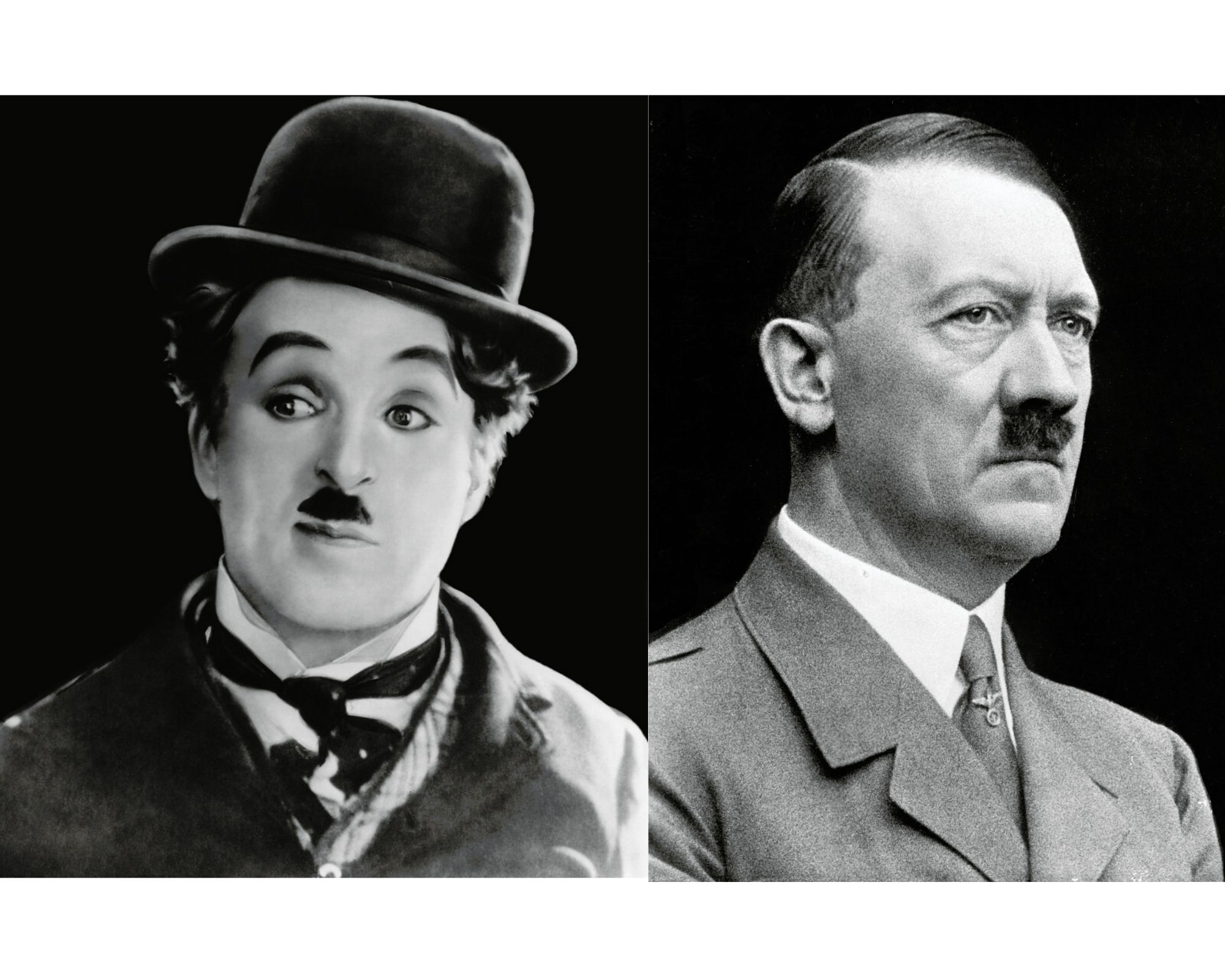
They were born within four days of each other, both on the European continent. Both adored their mothers and resented their drunken fathers. Both grew up knowing real poverty. Both were incredibly intense and ambitious. Both were mesmerizing performers who commanded crowds. Both sported the same, strange mustache and bore a striking resemblance.
One became a comedian who made people laugh. The other became a dictator responsible for the death of millions. Neither were moral giants, but each used their influence for very different ends.
It doesn’t matter where or when one is born. To a certain degree, we do not have to be defined by the home we grew up in. Being poor is not an automatic determiner of either success or failure. Our looks are a neutral commodity. Our talents and opportunities are a blank canvas we choose to decorate as we please.
The parable of the talents in Matthew 25:14-30 is a Divine reminder that we all take what God gives us and decide what we will do with it. Nothing is foreordained or forced upon us. We determine, both by action and inaction, to be a servant or slothful. What we must be aiming for is much greater and higher than earthly ambition, whether to be loved or feared by the world. Our purpose must be to be “a vessel for honorable use, set apart as holy, useful to the master of the house, ready for every good work” (2 Tim. 2:21). The good news is that where, when, and how you were born is a fact, but it does not have to define you. If we empty ourselves of ourselves and let Him fill us, He will define us!
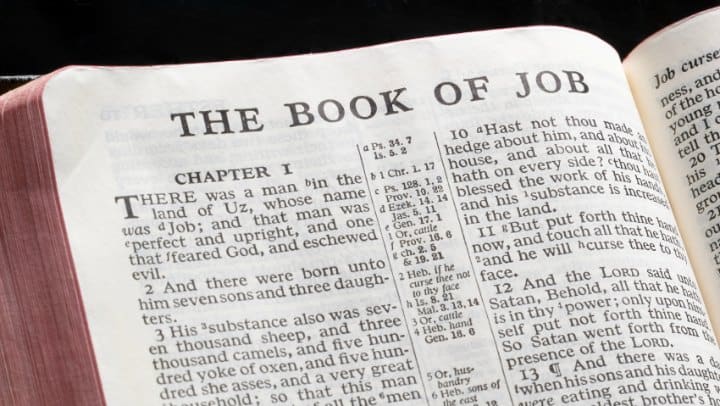
Recently at the suggestion of some teachers and podcasts I listen to, I took some time and in one setting read through whole books in the Bible. If you haven’t done this I would highly recommend it. Just read through the book not looking for anything or zeroing in on any specific point; just read through the book and let it teach you its main themes and allow it to speak for itself. One of the books I recently read through and want to briefly discuss is the book of JOB. We are very familiar with this book and story and can learn a lot of things from it including sufferings, patience, steadfastness, God’s perspectives, and others. However, I would like to share with you what really stood out and stayed with me as I read through the 42 chapters of this book. Job 1:8-9 says,
Then the Lord said to Satan “Have you considered My servant Job, that there is none like him on the earth, a blameless and upright man, one who fears God and shuns evil?” So, Satan answered the LORD and said, Does Job fear God for nothing?
Right there is the true question: “Will you fear and serve God for nothing.” It is not only a question that Satan asks the Lord referring to Job, but it is also for us today. Satan was assuming that Job would have a transactional relationship with God, that as long as he was doing what was righteous that Job would assume that he has earned his blessings or somehow God is obligated to bless him. Do we fall into this mindset that Satan is stating her is verse 9? Is it easy to fear and serve God while things are going good in our life or for fear of punishment? Do we have this transactional relationship that says I have done all these righteous X’s so I deserve these Y’s (blessings)? Would we serve God if everything (wealth, family, health) in an extremely short period of time was taken from us and we were in the situation Job found himself in? Satan is saying that taking comforts of this life away will push even the strongest to curse God to his face. Satan states this in Ch 1:11 and notice that as early as 2:9 Job’s wife actually uses the same language when she tells Job, “Do you still hold fast to your integrity? Curse God and die!”
Sometimes bad things happen because we make bad decisions and we must deal with those consequences. However, Job shows us that sometimes bad things happen outside of our decisions and we do not know all like our Creator GOD. God lays this out in his answer to Job out of the whirlwind in Chapters 38-42 basically stating that, “I created everything and have it all under My control, I AM GOD, even when you don’t realize it and so you must trust Me no matter what circumstances you find yourself in.” In chapter 42 we read exactly what Job did in response to God’s challenge to Job. Now as he repents and fears God he is in dust and ashes. This is the definition of serving God for nothing. Every worldly comfort had been taken from him and he had nothing, not even physical health, and nothing as of yet had been restored to him. But he through great tribulation feared God for nothing except he is God the creator and sustainer of everything.
We do need to serve God just because he is God and the creator of all things but the good news is we don’t serve him for nothing. Read Job 19:25: For I know that my Redeemer lives, and he shall stand at last on the earth; Just as we read Job and see his longing for a mediator between him and God, we now have that through Jesus. God gives us eternal life that can be found in Christ our mediator, not because we deserve it like a transactional agreement but because He is a benevolent, gracious and loving God.
Today’s article may be a little chaotic. It’s about something not well-defined or understood, and its solution is unknown to me. This article will hopefully serve as a target; it’d be good to have lots of Christian minds brainstorming solutions to this issue.
Just about everyone’s had THE virus. I’ve had it once for sure, maybe twice. It don’t mess around. I started developing symptoms after recovery that, apparently, quite a few people have developed. It’s commonly called Long Covid or PASC. Symptoms include fatigue, cognitive difficulties, decreased mobility, respiratory and cardiological issues, pain, malaise, and many others (psu.edu). You probably either know someone dealing with this now, or are dealing with it yourself.
Research is not super easy to get ahold of, and what I could find was either low-quality or not peer reviewed. Its existence isn’t really contested, but little is known about its prevalence. Best I could find was that about 43% of those who recover will experience Long Covid. Many haven’t recovered after almost two years!
My concern with this is its potential effect on faith. Things like driving at night, interacting with lots of people, spending time together outside of worship, church events, service projects, teaching/preaching/song leading, evangelism, etc. are part of our Christian life. While some of these can be difficult on a good day, they’re now practically impossible (or significantly more difficult) for people with Long Covid.
The church has always had members with chronic, debilitating diseases. Normally, our shut-ins are a very small percentage of overall membership. With Long Covid often compared to the effects of chemotherapy, this number is likely to grow significantly. If roughly half of our recovered members end up with these long-term effects, how do we address this?
Since it affects both young adults and senior citizens, how do we navigate its impact? What can members who now have Long Covid do to stay active in their churches? While living with a chronic health condition is no cake walk, those of us who do are at least mentally equipped to accept it. Members who enjoyed good health before Long Covid are struggling to adapt to this change.
At some point in the near-ish future, I hope to write an article with potential solutions. It will be geared toward those who’re experiencing major health issues for the first time. In the meantime, it wouldn’t hurt to do a lot of praying, planning, brainstorming, and creative problem solving. Nothing’s too big for God, and we’ll find a solution with his help.

















 The Preacher Pollard Blog