Making Sense Of Grace

Wednesday’s Column: “Third’s Words”

10423661_10207901451272315_9069631728203375436_n

Gary Pollard III

Grace is a touchy subject. As with many other words commonly used in religious circles, it has potential to be misused or misunderstood. My hope is that this brief study on grace will shed some light on a confusing subject.

First, grace is possible for all men to have (Titus 2.11). It has been clearly displayed and advertised to everyone. The word “appeared” in that passage is epiphane, which means “to make an appearance.” No one is exempt from grace if they follow the right steps to receive it!

Second, grace keeps us in good standing with God if we are walking in the light (I John 1.7,8). In Acts 2.47, chairo (pronounced ky-roe) is translated “favor.” In Luke 6.32-34 Jesus uses it in a very interesting way. He says, “If you only love those who love you back, what credit is that to you?” Credit is charis, the word for grace.

So what is grace? What does it mean to you and me? If we are walking in the Light – trying our very best to follow God’s commands and allowing our faith to be the driving force of our lives – God takes care of our sin problem. When we slip up and make a mistake, God removes it from our record. This does NOT mean that we can sin all we want and God will just overlook it (see Romans 6.1,2). It does, however, mean that God is not waiting to strike us out of the book of life the moment we make a mistake.

Grace is what happens when God wants to do good for mankind. Luke 6.35 says, “Love your enemies, and do good, loan to others without expecting anything back; and your reward will be great, and you will be sons of the Most High; for He Himself is kind to ungrateful and evil men.” The word kind in the bolded phrase is charis: grace. It does not mean the same thing for evil men that it does for the Christian, but it does help us to get a better sense of what this word means.

God is rooting for His children (Christians). He WANTS us to get through this life and die in Him (Psalm 116;15). He isn’t our accuser waiting for us to slip up so He can condemn us. He helps us along the way, He shows good will to us, and He gives us His grace so that we can spend an eternity with Him as long as we are walking in the Light.

Why Is A Generation Leaving Religion?

Neal Pollard

Pew Research Center recently revealed that “Four in ten millennials (those, according to this source, currently between 23 and 38) now say they are religiously unaffiliated”(fivethirtyeight.com). The data seems to indicate that “today’s younger generations may be leaving religion for good” (ibid.). A contemporary study put out by the American Enterprise Institute reveals at least three reasons why: (1) They didn’t have strong religious ties growing up, (2) Their spouses are more likely to be nonreligious, and (3) They feel religious institutions are not relevant for shaping the morality and religion (or nonreligion) of their children. Parental example, dating choices, and biblical literacy and faith, then, are major drivers in this discussion. 

Those polled revealed their thinking. A majority felt that religious people are less tolerant of others, less informed or even intelligent than their secular counterparts, and less necessary for shaping their family’s moral viewpoints. At least, reading this one study and the authors’ interpretation, it seems that leaving church is a deliberate lifestyle choice of people who at least sometimes are encouraged out the door by poor examples of faith. 

Notice the startling closing paragraph of the article, which states,

Of course, millennials’ religious trajectory isn’t set in stone — they may yet become more religious as they age. But it’s easier to return to something familiar later in life than to try something completely new. And if millennials don’t return to religion and instead begin raising a new generation with no religious background, the gulf between religious and secular America may grow even deeper (“Millennials Are Leaving Religion And Not Coming Back,” 12/12/19, Cox, Daniel, and Amelia Thompson-DeVeaux). 

I found it important to share those findings for these reasons:

  • It is a matter of crisis. People abandoning God’s Word and will is foreboding (Judges 2:10ff; 2 Timothy 3:1ff; 4:3-4; 2 Peter 3:3ff). It is happening, and it must matter to us. It does to God. 
  • It is a matter of correction. The home can change course if it is on the broad way. Individual Christians can improve their ethics and morality in public (Ephesians 4:25ff). Soul-conscious Christians can make the most of our opportunities to share Jesus in Christlike fashion (2 Timothy 2:24-26). We must change what we can change. 
  • It is a matter of consequence. A culture does not get where ours currently is as the result of sincere devotion to Christ and His Word. Hosea 4:6 is incredibly relevant. The law of sowing and reaping is immutable, for good and bad (Galatians 6:7-8). Whatever we exalt as guide is leading us somewhere.
  • It is a matter of courage. The only way I can see for this to change is for you and me to not just believe something or hold a conviction. The early Christians didn’t confine their faith to the holy huddles of the assemblies. They stood up for Jesus every day and every way. 

Two of my three sons are millennials and the third is only a couple of years too young to qualify. This is, largely, their generation. They and their faithful Christian peers are faced with reaching them, and they need our help. Talk to them and have honest conversation about how to raise your effectiveness together in stopping and reversing this exodus. This is not about preserving a comfortable lifestyle, which is threatened by sin (Proverbs 14:34). This is about preserving souls, which will face Jesus some day (Matthew 25:31ff). 

Walking Away

Where Is Your Faith?

Neal Pollard.

How many household conversations begin, “Where is my?” Women leave purses in restaurants, men leave their wallets in the other pants pocket, and kids are apt to leave just about anything anywhere. How many vacations begin with the family wondering where some vital item is, fearing that it is sitting at home and not packed in the suitcases?

The disciples had just heard Jesus deliver some powerful lessons (Luke 8:10- 21) and now they were heading across the lake from Galilee to the country of the Gerasenes. En route, while Jesus slept, a fierce windstorm descends and rocks their little boat. In a panic, they awaken Jesus, pleading, “Master, Master, we are perishing!” (Luke 8:24). Jesus calms the storm and subsequently their fears, but He admonishes them, “Where is your faith?” (Luke 8:26).

That is a fair question. They had just heard the Master teacher doing His usual, masterful job (Luke 7:22-28, 31-36; etc.) and seen Him do some incredible miracles (Luke 7:1-10; 11-15; etc.). Between disembarking and the present distress, where did their faith go? The question Jesus asked His disciples is a fair question for each of us today. “Where is your faith?”

IS IT LOST (Luke 18:1ff)? Jesus positively teaches a parable about this in His story about the widow and the unjust judge. The woman was persistent and the judge, who feared neither God nor man, granted her petition due to her tenacious pursuit. Jesus makes application by asking, “When the Son of Man comes, will He really find faith on the earth?” (Luke 18:8). It is possible for any one of us to lose our faith. The parable of the sower and the soils shows that people can lose their faith as a consequence of both good times and bad times (cf. Luke 8:11ff). It is equally tragic to see people lose their faith just a few steps into their spiritual journey, several miles down the road, or especially near the end of the road!

 IS IT HIDDEN (Luke 8:16)? Jesus demonstrates how ludicrous a view hidden faith is from heaven’s vantage point by illustrating it this way: “No one, when he has lit a lamp, covers it with a vessel or puts it under a bed” (Luke 8:16a). His point is that light is not doing its job when it is covered, and our faith is not doing its job when it is covered. There will be many settings throughout life when being a Christian and standing up for the Lord will not be popular, admired, or congratulated. What will we do with our faith in such circumstances?

IS IT MISPLACED (Luke 18:9ff)? Everybody puts their trust in someone or some thing. The Bible says that people trust in their own power and might (Psalm 44:6), their wealth and riches (Psalm 49:6), their national leaders (Psalm 146:3), their own hearts (Proverbs 28:26), their idols (Isaiah 42:17), mankind (Jeremiah 17:5), their own achievements (Jeremiah 48:7), or their physical beauty (Ezekiel 16:15). Many of these attributes can serve us in properly placing our faith in God, but far too many are resting all they are or hope to be on those rather than God. In Luke 18:9, Jesus speaks a parable in warning against those who “trust in themselves.” Despite a culture that preaches the preeminent idea of “believing in yourself,” God makes that subservient to trusting in Him.

IS IT VISIBLE (Luke 7:9)? A centurion whose servant was dying was humble, devoted and perceptive in his approach to Jesus, pleading with Him to heal that dear one for him. Jesus marveled aloud, “I have not found such great faith, even in Israel!” The Centurion did not have to wear a badge or button that said, “I believe in the Lord.” People are watching us every day, our speech, decisions, attitudes, actions, and reactions. While it is nice when someone asks, “Are you a Christian?,” how much better for them not to have to ask?

So, “Where is your faith?”

60602590_10157475706779824_6496018119713095680_o
The 2019 Bear Valley Bible Institute graduating class

THERE IS A PATTERN OF TEACHING

Neal Pollard

The Bible claims to hold the answer to your greatest problem. Not only that, but it helps you to identify what that problem is which you may or may not even know about. In Romans 6:16-18, Paul talks about a “form of teaching” given to those at Rome. 

Paul writes this powerful epistle to emphasize that salvation is by faith and not by works of law, but faith in what? One might say, “Faith in Jesus,” and Paul makes that point repeated in Romans (3:22; 3:26, for example). But how do we have faith in Jesus? He says, “So faith comes from hearing, and hearing by the word of Christ” (10:17). 

Elsewhere, Paul reminds us that there is “one faith” (Eph. 4:5), so a purely subjective faith (what we think we should believe) is not the faith commanded in Scripture. So, we’re looking a t a faith produced by reading, learning, and following God’s Word.

No wonder, then, that Paul emphasizes the importance of obedience in this text. Does God want you and me and everyone else to obey the same thing? Or can you pick what you want to obey while I pick what I want to obey and everyone else do the same? Paul talks about an objective standard of teaching that is for everyone, everywhere, for all time. Look closer at what he says in this brief passage of Scripture and what it means for us today.

THE FACT OF THE PATTERN (Rom. 6:17)

Paul talks about a form, a kind, class, or thing that suggests a model or pattern (BDAG 1020). It is the word used in the Greek Old Testament in Exodus 25:40 and quoted by Stephen (Acts 7:44). Translators chose the word form (“standard,” ESV, or “pattern,” NIV) in this verse. 

For those who pour concrete, you use “form boards” to cause it to conform to their shape in width, length, and height. Without some way to hold the concrete, what a waste of time and money! The concrete would be totally useless. It’s the same concept for those who bake and use cake moulds, muffin pans and cookie cutters. If you put dough or mix into a round pan, you don’t expect a rectangular finished product. 

Paul talks about a teaching that conforms to a certain form or pattern, having definite, identifiable structure. So, the Romans received teaching that was meant to produce the same result in every case. A growing number of people look at the Bible as basically shapeless and formless. They reject the idea of pattern theology, the very thing Paul appeals to in Romans 6:17. The alternative to there being a pattern for salvation, worship, church leadership and organization, sexuality, morality, gender roles, and all teaching is that we have no pattern.

Without a standard to appeal to, how do we determine right and wrong? Historically, when humanity rejects an absolute standard, we choose what we think is right and wrong (cf. Jud. 17:6). This is a fatal way to live (Prov. 16:25), and it destroys societies (Prov. 14:34). But everyone is going to appeal to something as the final say and authority, even if it’s only self. There is a “standard of sound words” (2 Tim. 1:13). It must be retained and it carries with it the authority of Christ Jesus.

THE FRUIT OF THE PATTERN (Rom. 6:17-18)

Since there is a pattern of teaching, what are the consequences? Paul implies that we must obey it and commit to it, just as the Romans did. The end result of such obedience is that we become slaves to the right master. Everyone will inevitably be enslaved, whether to sin or righteousness. This pattern shows us the right choice to make. We’re not just talking about information, but rather information which leads one to do something and become something. 

THE FREEDOM OF THE PATTERN (Rom. 6:18)

Ironically, those who reject the idea of pattern theology claim that such unfairly restricts and inhibits us. But, Paul draws a different conclusion. Obeying the form of teaching and committing themselves to it led them to be free from sin. Sin brings spiritual death (5:12), condemnation (5:16), enslavement (6:6), and deception (7:11). If we understand the true nature of sin (which biblical teaching defines), we will want to be free from the burden of it.  The form of teaching shows us how to do that. Anyone who wants freedom from sin can have it, but anyone who wants freedom from sin must follow the pattern. 

Obeying Christ’s teaching is not legalism. It is faith in His power, but also submission to His will. There is truth. We can know it (John 8:32). We must obey it (Rom. 6:17). It will free us (John 8:32)! 

fh07may_pourc_01-2

LANDMINES IN RESOLVING CONFLICT

Neal Pollard

“I.” The late Wendell Winkler once said that beneath most marital conflict is basic selfishness. “What about my needs?” “What have you done for me?” “I am not happy, fulfilled, etc.”  The Bible warns of the destructive nature of selfishness (Luke 9:23; Eph. 4:22,24; Phil. 2:3; 2 Tim. 3:2)! One of the most frequent casualties of selfishness is marital happiness. 

“You.” This is really the other side of the conflict coin that blows up progress and growth in relationships. If selfishness is blind to the needs and concerns of the other person, blame and deflection is the total denial of guilt or shared responsibility. “You don’t treat me right.” “Why don’t you pull your weight?” “You are not enough of ‘X’ or too much of ‘Y’!” Accusation, which puts one’s mate on the defensive, is a poor framework for resolving conflict. The very first couple played the blame game, to no avail and with no success. 

“They.” A mirage is “something that appears real or possible but is not in fact so.” We usually think of a mirage in the desert, an optical illusion created by extreme conditions. How often do married couples in conflict see marital mirages? A couple is hurting, and as they look across the burning sand they see “perfect couples” and “perfect marriages.” We are not helping ourselves by comparing ourselves to what is not what it appears anyway (cf. 2 Cor. 10:12). Every marriage is comprised of flawed, sinful people who are constantly faced with overcoming. Whatever you think you see in other couples “is not in fact so.”

“God.” Now, hear me well. God is the answer to all conflict, if we consult Him. Yet, when we blame God or let conflict affect our faith, then our attitude toward God can become a major landmine preventing resolution. “God doesn’t care.” “God isn’t listening to my cries and prayers.” “Where is God when I need Him?” Trials are going to test our faith, but be careful not to give God credit for blame that rests upon us and our spouses. 

The good news is that “I,” “you,” “they,” and “God” can all play a fruitful role in resolving conflict. When “I” am humble and honest and focus on my role and responsibility, good will result. When “you” are treasured, valued, and sincerely loved, things will start looking up. When “they” are reasonably treated as role-models and inspiration, it can be helpful. When “God” is totally trusted and obeyed, there is no insurmountable problem! I wish marriage had no saboteurs or hazards, but the best of them do. Let’s work to avoid triggering them, trusting that God’s pattern for everything, including marriage, gives us the best shot at success. 

blast

“Immediately”

Neal Pollard

The astute reader of the book of Mark finds the word 40 times in 39 verses (the Greek word most often translated “immediately” in Mark is actually found 44 times). It is a key word found consistently throughout the gospel but especially in the first six chapters. Usually, the word is used to quantify the time between Jesus performing a miracle and it taking effect. The point seems to be to show the power and Divine nature of Jesus. It is also a thread that runs throughout the book to highlight key thoughts and main ideas in this second book of the New Testament. The word is used to highlight the Father’s affirmation of Christ following His baptism (1:10), Jesus’ journey into the wilderness to triumph over the Devil’s temptations (1:12), the disciples’ decision to leave their occupation to follow Jesus (1:18,20), Jesus’ entering the synagogue to show unparalleled authority and power (1:21), the news and fame that followed Christ’s teaching and healing (1:28), and the immediate response of the one healed by Jesus–the first of many uses of the word “immediately” to highlight such (1:29-30). The proof for Jesus’ identity was immediate. The effect of Jesus’ miracles was immediate. The impact of Jesus’ miracles and teachings on friend and foe was immediate. Mark’s use of this word seems to indicate how overwhelming and unmistakable the proof of Jesus was.

This is not to say that one should rashly decide about the Lord. The book of Mark is part of God’s way to convince man about who Jesus is. Take the time to read it and learn of Him. Like the other three gospels, Mark contains the miracles, teaching, claims, and events in Christ’s life at the end of which one must ultimately make a decision concerning who He is. Remember, though, “He who believes and is baptized will be saved; but he who does not believe will be condemned” (Mark 16:16). Weigh the evidence, and then decide. Follow the example of so many in the book of Mark and let the power and person of Jesus have an immediate impact on your life and your soul.

15843359028_6e6cbd3894_b

The Courage To Try

Neal Pollard

About nine months ago, a man walked into our building a day after being immersed into Christ. He had been searching diligently for the truth, a man whose hunger for the Bible caused him to study his Bible for hours every day (including on audio at his job as a metal fabricator). He continues those habits today.

A man whose life is as interesting as his name–Roberto Yrey–has been a blessing to us at Bear Valley.  One of the reasons I’ve grown to love him so much was on full display last night. Each Wednesday, a different man delivers a 90-second devotional talk. Last night, Roberto spoke. Don’t misunderstand. He writes devotions, short sermons, and articles all the time in order to articulate his understanding of a Bible chapter or topic he has been studying. He changed his mind multiple times before settling on the one he delivered last night. If you were there, you know that Roberto was nervous. He has told several of us how difficult public speaking is for him. His only previous public speaking opportunity was a Scripture reading during a devotional back during the holidays.

What he chose to speak about last night so aptly reveals a mindset that makes him so endearing. His message was that you don’t have to know everything to study with someone. Don’t be afraid to tell someone, “I don’t know.” It’s OK if you don’t know or understand everything. He encouraged us, “Say, I don’t know but let me ask someone who might know. Or let’s fellowship and find the answer.”  But his message was to not let the fear of not knowing keep you from talking to someone about the Bible.

I admire the fact that Roberto had the courage, as a babe in Christ, to speak to a room full of people some of whom have been preachers and teachers for decades, teachers in our Bible school for many years, and are mature, seasoned Christians. But I admire him even more for practicing what he was preaching. In our midst last night were two visitors–Estevan (there for the first time) and Sean (who’s become a regular attender with Roberto for several months). He had the courage to invite them. Today, we baptized Sean into Christ for the forgiveness of his sins. A young Christian has already brought a friend to Jesus. All it took was the courage to try, to do what anyone can do who is moved by simple, trusting faith to just do what God has told us to do. I don’t know about you, but Roberto’s example helps me have the courage to try harder!


6EDBBE5E-E7F1-45A2-A97C-7BDFAFAE2790
(L) Sean being baptized today by Allen Javellana, who studied with him. (R) Roberto preaching at Bear Valley last night.

Deathbed Repentance?

Neal Pollard

“From the stirrups to the ground,
Mercy I asked for, mercy I found”
That is a distorted view of grace,
Which seeks God only in death’s face.

It cheapens that which cost Him much,
To use Him only as a deathbed crutch.
Unlike the seeker at his eleventh hour,
Who sincerely reaches for His saving power,

The hardened sinner who in last resort
Hedges his bets for some eternal life support.
So many never reach a deathbed sound in mind,
Or care for His will ’til their death warrant’s signed.

While God is long-suffering, wanting all to be saved,
The majority spend their lives to sin’s power enslaved
They only think heaven when earth’s living is through,
But an afterthought gesture will just not do.

Scripture says “come now,” not “wait til tomorrow,”
So many delayed to their own regret and sorrow.
Instead of relegating God to a last-ditch recourse,
Submit to Him now, you He’ll publicly endorse.

Deathbed repentance is not found in His Word,
No matter what men from their wisdom you’ve heard.
Obey from the heart what His doctrine requires,
Let His word be your truth, let all others be liars.

thinkstockphotos-sb10069454g-001

ATTACKING THOSE WHO SAVE OTHERS

Neal Pollard

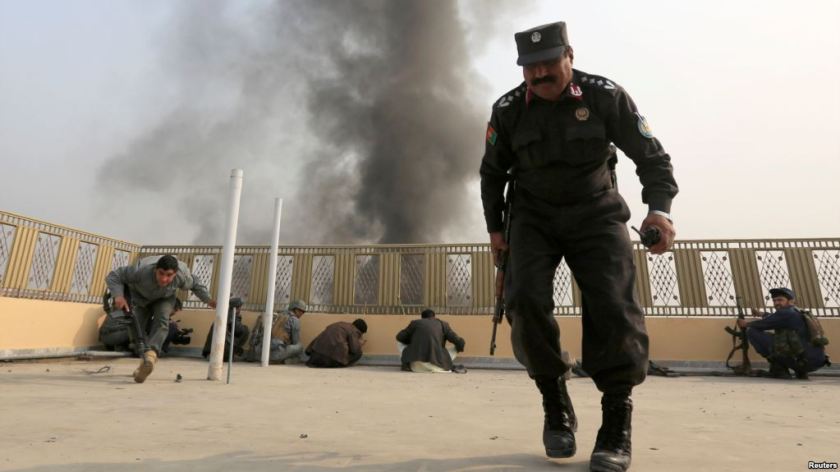
It’s an unconscionable thought! Who would try to hurt and oppose those dedicated to saving lives? Places like Afghanistan seem more than a world away from us, where this week a yet-to-be-identified terrorist group conducted a suicide attack in Jalalabad that killed two and injured 14. While that sadly is a relatively small and minor attack in this war-torn region, it was the target that was so outrageously newsworthy. It was perpetrated against the international Save The Children organization. Volunteers and workers were there to provide aid and assistance to that society’s most vulnerable members, and they were attacked. How does this happen?

In Matthew 23:35 (cf. Luke 11:51), Jesus condemns the Pharisees as the murderers of God’s godly men from Abel to Zechariah. Essentially, Jesus was presenting a roll call of the righteous who were attacked because of their faithfulness. In one of Stephen’s final moments, he preached, “Which one of the prophets did your fathers not persecute? They killed those who had previously announced the coming of the Righteous One, whose betrayers and murderers you have now become” (Acts 7:52). Both Old and New Testaments reveal the Maker’s messengers who were attacked while trying to save others. The proverbial response of the hearers was to “shoot the messenger” (cf. Heb. 11:36-38).

Growing up a preacher’s kid, I saw my dad encounter some who attacked the messenger. Dad has always been a model of courage for me, willing to teach and preach even unpopular, but needed, subjects. Consequently, he endured both frontal and sneak attacks. Everyone who has sought to declare “the whole purpose of God” (Acts 20:27) has some appreciation for Paul’s warning that some “will not endure sound doctrine; but wanting to have their ears tickled, they will accumulate for themselves teachers in accordance to their own desires, and will turn away their ears from the truth and will turn aside to myths” (2 Tim. 4:3-4).

How one responds to such attacks is crucial! In the words to Timothy, Paul contrasts the attacker with the faithful proclaimer. He says, “But you, be sober in all things, endure hardship, do the work of an evangelist, fulfill your ministry” (2 Tim. 4:5). We’re taught “patient enduring” (2 Cor. 1:6; 2 Tim. 2:24), “not returning evil for evil or insult for insult” (1 Pet. 3:9), “bless those who persecute you; bless and do not curse” (Rom. 12:14; cf. 12:17-21), and “do not resist an evil person; but whoever slaps you on your right cheek, turn the other to him also” (Mat. 5:39).

As eternal aid workers, we operate by a different, higher set of rules (2 Cor. 10:4). We entrust ourselves to the One who will give us ultimate victory. Meanwhile, we cannot give up our cause—no matter what the threat or danger. Like Jesus, let us keep entrusting ourselves to Him who judges righteously (1 Pet. 2:23)!

8ad7fee4-9d99-4e89-b63f-286645809597_cx0_cy12_cw0_w1023_r1_s

The Tender Tears Of The Timeworn Travelers

Neal Pollard

I suppose I have met more than a few elderly people, including some professing to be Christians, who could be described as “crusty,” “crotchety,” “contrary,” and “curmudgeonly.” These no doubt spent decades developing such a winning personality. But one of the greatest blessings I have received as a member of the church and minister of the gospel is my association and friendship with “senior saints.” Through the years, I have discussed with them the subject of worship. The most frequent topic of that is how precious that public time of communing is to them.

A godly widow recently told me she has spent the last two years focusing more intently on concentrating more on the song service, reflecting on the words and their meaning. Songs she has sung for decades, through this exercise, have become almost like new songs to her. Another older woman, married to an elder, talked about how she finds herself much more apt to be tearful in worship these days. She’s almost embarrassed at how emotional the experience of worship is making her. An elderly man who was a longtime elder and recently passed on to paradise, struggled to pray, sing, or publicly speak in worship without being choked with emotion. I could fill pages of writing about other godly Golden Agers who treasure assembling to worship God. Their hearts are full and their emotions engaged. Their voices may be softened and broken by age, but their spirits are stronger than ever.

When I think of these faithful, aged Christians, I am reminded of Paul’s words: “Therefore we do not lose heart, but though our outer man is decaying, yet our inner man is being renewed day by day. For momentary, light affliction is producing for us an eternal weight of glory far beyond all comparison, while we look not at the things which are seen, but at the things which are not seen; for the things which are seen are temporal, but the things which are not seen are eternal” (2 Cor. 4:16-18).  Sometimes, the elderly are made scapegoats of alleged “lifeless” or habitual, but heartless worship. No doubt, there are likely Christians in that age range who struggle with and even fall prey to such (as there is in every other age category). But on the whole, these Christians have walked longer with God, know Him better, and value Him more than their younger counterparts. They are closer on the journey to the Father’s house and are anxious to see His face.

We are heirs of a heartfelt heritage handed to us by these holy hoary heads. To our seasoned brothers and sisters, we thank you for showing us how to walk with and love God as years turns into decades and the shadow of the grave looms larger. As we narrow the gap between our age and yours, we want worship and life in Christ to grow more precious to us, too. Thank you for your trembling lips, your tear-stained cheeks, and your tender hearts. They look great on you!

elderly-parent-e1448857831624

Resolutions Reinforcements–#2

Neal Pollard

No matter what your goals and objectives are for 2018, the place to begin, work, and end is with God. I have heard it said, “How can we hope to do God’s work without God’s help?” Your resolutions may be seemingly insignificant or potentially life-changing. Regardless, He is “able to do far more abundantly beyond all that we ask or think, according to the power that works within us” (Eph. 3:20). Do you believe that? Assuming your goals and legitimate and Christ-honoring, doesn’t He care enough about you to help you succeed? Scripture devotes much time to the truth that He is a perfect Heavenly Father who loves His children (Mat. 5:45,48).

Pray specifically and include those resolutions in your daily prayers. Pray in faith, believing that God is able to help you succeed. Know through this that He is in control.  Pray submissively, understanding that God knows what is best for your life. You may believe that achieving some goal will be what you need, but God knows best. Trust Him to provide. Pray unselfishly. While goals may be very personal, they should be made with others and especially God’s will at the forefront. What we seek should be sought for His glory. Pray expectantly, believing that He will help and through Him you can do.

The Bible frequently shows us those who prayed to God through improbable and even seemingly impossible situations, and God provided. Think of Hannah, David, Hezekiah, Elijah, Elisha, Jesus, and Paul.  As you square up to face your resolutions, do so by looking–as much as you can–through those Heavenly Eyes. Remember: “Ah Lord God! Behold, You have made the heavens and the earth by Your great power and by Your outstretched arm! Nothing is too difficult for You” (Jer. 32:17).

prayer-hands

Accept Jesus As Your Personal Savior

Neal Pollard

The phrase is abused by those in denominations. With it, they suggest that such is the totality of one’s responsibility in order to receive salvation. It is synonymous with the idea of the “faith only” doctrine of Christendom. Yet, it is biblical to the core. Observe.

   “Accept.” Jesus says, “He who rejects Me…has one who judges him” (John 12:48). We accept Jesus when we humbly receive the implanted word (James 1:21). 1 Timothy 1:15 says, “It is a trustworthy statement, deserving full acceptance, that Christ Jesus came into the world to save sinners, among whom I am foremost of all.” We must accept Jesus’ will as well as the assertions He makes. The question is, “Have we fully accepted Jesus at the point of our belief in Him?” No! He commands us to repent (Luke 13:3-5) and be baptized (Mark 16:16). Refuse those commands and you have not accepted Jesus. Can we take only part of Him and be whole?

     “Accept Jesus as your…Savior.”  He came to this world for that purpose. Before Jesus’ birth, Joseph was told, “You shall call His name Jesus, for it is He who will save His people from their sins” (Matt. 1:21). Jesus is identified as the Savior throughout the epistles. 2 Timothy 1:5 and Titus 3:5 both say, “He saved us” by His mercy, purpose and grace. Salvation is the common need (Rom. 3:10,23) and there is no other way but Jesus to meet it (Acts 4:12). We cannot stop at accepting who Jesus is, but must further accept what Jesus has done.

“Accept Jesus as your Personal Savior.” The Bible teaches that Jesus’ redemptive work at Calvary was for the whole world (John 3:16; 1 John 2:2). Yet, will the whole world be saved? No! In fact, most will not be saved (Matt. 7:13-14). Even some religious folks will be lost (Matt. 7:21-23). Therefore, accepting Jesus must be done at the personal level! I must act upon the saving knowledge of Jesus. As I will be held personally accountable for my life (2 Cor. 5:10), I cannot blame my parents, children, friends, people at church, people in the world, or even my mate for my disobedience. In my own mind, I must accept what the Bible says about Jesus and do what Jesus says do. Nobody can do that for me (Rom. 10:9).

The baggage surrounding the phrase is most unfortunate. The facts, as presented here,  must be understood. It is not as our religious friends teach, who share that as the totality of our responsibility, and yet it is true that each of us–while we have breath in the body and the hope of heaven–must accept Jesus as our personal Savior!

By The Name of Jesus


THE DIFFERENCE BETWEEN MARTYRDOM AND A MARTYR COMPLEX

Neal Pollard

Will the day come when government attempts to shut down our Bible study and worship services? Looking back at history, particularly the books of Acts and Revelation, we know this can occur. Certainly, the current environment in our society reveals a trend toward greater intolerance of the biblical worldview. We are growing more secular and more sensual as a nation. Public symbols of Christian religion are disappearing from the public square, while public expressions of Christian religion have long since disappeared from public education. That said, we do not do service to Christ by manufacturing problems where they do not exist.

Isn’t it interesting that back when Christians were experiencing mistreatment, the Holy Spirit guided men and women to have a different attitude than that of a victim. From a prison cell he would never leave alive simply because he was preaching Christ, Paul sought to bolster a young preacher’s faith by saying, “God has not given us a spirit of fear, but of power and of love and of a sound mind. Therefore do not be ashamed of the testimony of the Lord, nor of me His prisoner, but share with me in the sufferings for the gospel according tot he power of God” (2 Tim. 1:7-8). When Peter and John were beaten for their faith, “They departed from the presence of the council, rejoicing that they were counted worthy to suffer shame for His name” (Acts 5:41). When they were mistreated and released earlier in this episode, the church gathered to worship and pray (Acts 4:24ff). Peter urged readiness (1 Pet. 3:15). John urged faithfulness (Rev. 2:10). Stephen showed endurance, boldness, and compassion as he became the first Christian martyr (Acts 6-7).

It is an incongruous idea to imagine the early Christians wasting precious time organizing email campaigns, seeking to draw sympathy from the media, picketing, and playing the victim. Instead, driven by their living hope (1 Pet. 1:3), they committed their lives to Jesus while they spent their days trying to spread the good news of Christ (Acts 8:4; Col. 1:23). Even as Christians were martyred (Stephen, James, those assaulted by Saul of Tarsus’ efforts, and those during the time of the book of Revelation and shortly thereafter), there is no hint of any of them roaming around with a martyr complex. Let us emulate their great example!

work-martyr

LOOKING IN THE WRONG PLACE FOR JESUS

Neal Pollard
Periodically, we read or hear of “sightings” that unbelievers have a field day with. I refer to “Jesus sightings,” people are claiming in such things as clouds, Cheetos, dental X-rays, cooking utensils, windows, walls, and trees. Wikipedia even has an entry for it (“Perceptions of religious imagery in natural phenomena”). People vehemently defend the idea that these are intentional, divinely sent images. Meanwhile, secular and agnostic witnesses to such claims gather up baby and bathwater together, using such superstitiousness to show how deluded those in Christendom really are. Yet, while responding to superstition in religion would be a fitting use of time, another thing comes to mind when hearing these sad stories. It is a reminder that people are looking for Jesus in all the wrong places.
They want some heavenly sign, some overwhelming feeling, some sensory sensation, and some sort of religious fireworks to create or validate their faith. While God has embedded plenty of these in the marvels of nature and creation, through the product of answered prayer that defies logic or explanation, and by the amazing process of transformation that occurs when people follow Christ, He calls on us to seek for Him in a much less electrifying and cataclysmic place.
When we pick up God’s Word and regularly, intently read, meditate, and study (cf. Psalm 1) it, we see Jesus come alive in powerful, sustaining ways! When we walk with the Lord each day, the resulting relationship built on His character and our trust in Him is powerful! When we actively serve Him and others and put into practice what He teaches us through the Bible, we see Jesus in a vivid way. Daily Christian living, the longer we practice it, brings Jesus into unmistakeable, clear focus. Maybe that is what these “seers” truly desire, and what they need is our help to truly find Him. Let us take that as a challenge and help people really “see Jesus” (cf. John 12:21; Heb. 2:9).

10391950_190406240921_3760525_n

“My Cat Unplugged My Alarm Clock”

Neal Pollard
A few years ago, the Baltimore Sun wrote an article about the outlandish excuses some people gave for not coming into work. To sample this pathetic pool, there was “my cat unplugged my alarm clock,” “I couldn’t find my shoes,” “my garage door is broken,” “my cat has hairballs,” and “my partner and I need to practice for the square-dancing contest in town today.” But, John Campanelli of the Cleveland Plain Dealer, relates perhaps the most classic excuse I have ever heard. It was related to him by Andrea Barnett, a human resources rep, whose MIA employee gave the excuse that he had been in jail. He had borrowed a friend’s car to get to work, which car was reported stolen by police. He said he was put in jail for possession of stolen property, a car he said had been used in a robbery. This caused the police to grill him about it, which kept him from calling in to work. He eventually convinced law enforcement of his innocence, thus earning his release. Incredible story! Incredibly untrue, Barnett found out when she called the sheriff’s office for whom that was a revelation. Runners up from Campanelli’s article include the man who was experiencing morning sickness due to his wife’s pregnancy or the guy who had to make an emergency visit to the dentist to remove dental floss that got lodged between his teeth getting ready that morning.

Excuses are not confined to employees. Students give excuses for late or incomplete assignments. Spouses and children give excuses to other family members for bad behavior or shortcomings. Leaders give excuses to followers, and followers give excuses to leaders. If we are honest, nearly all of us have been guilty of excuse-making. What we must guard against is perpetually making excuses for failing to do the will of God! Those who make any excuse to explain why they have not become a Christian will not successfully put them past the Lord on the great day of judgment (cf. Acts 17:30; 2 Th. 1:7-8; Jude 15). Christians who needed to publicly repent of a sinful lifestyle cannot expect to be successful standing before that same, perfect Judge (cf. Matt. 25:34-40).

Let us also strive to avoid flimsy excuses we give for lack of involvement or for failure to faithfully attend worship services. On the surface, these excuses may sound good to us. But, if we will step back and try to look at it from heaven’s perspective, it may sound less important and solid. Maybe we have not thought it through, that we are choosing things that are solely earthly, material, and temporary to the neglect of God’s will and purpose. We may need new and different excuses to cover our failures, but will they work in the end? God has placed us on this earth to accomplish His purpose, but if we fritter away our days and years on what will decay and dissolve to the indifference and disregard for heavenly matters what will we tell Him? Whatever we say, will it be less hollow or shallow than the excuses the fine workers of Baltimore and Cleveland gave? Rather than excuses, let us give God our best efforts. Instead of rationalizing why we cannot, let us realize why we can (cf. Phil. 4:13; 1 John 4:19).

alarm-clock-007

DEALING WITH STRESS

Neal Pollard

A few years ago, the American Psychological Association named Denver the city with the most stressed out people in America. 75% of Denver residents are too stressed out about job and money, with half of Denverites saying their stress had significantly increased over the past year. Doctors and researchers have long connected a variety of health problems to stress, including high blood pressure and high cholesterol. The Harris Interactive polling group conducted this survey on behalf of the APA. Maybe the high stress levels are why so many Denver-area folks have such high octane workout routines, to counteract all of this.

In response, the Colorado Psychological Association provided some tips for coping with stress: (1) Set limits, (2) Tap into your support system, (3) Make one health-related commitment (cut back on caffeine, exercise, get more sleep, etc), (4) Strive for a positive outlook, and (5) Seek additional help. These tips are wise and useful, and especially is this true when we consider a “spiritual twist” on them. While I have found living in this area to be peaceful and enjoyable, I also know that life in America in general is stressful. There are so many uncertainties and that alone is a stressor.

Christians are best-equipped to deal with stress. Matthew 6:33 helps us properly prioritize so that we have a spiritual basis to determine what needs to be eliminated and what is more valuable. Further, we have the greatest support system possible through the church (cf. Rom. 12:15; 1 Thess. 5:11; Eph. 4:13-16; Heb. 13:1; etc.). Living the Christian life properly is a prime way to a healthier lifestyle, so long as we remember such principles as are found in 1 Timothy 4:8, Proverbs 23:2, and 1 Corinthians 6:19-20 (I’d recommend your reading those). Who has a more positive outlook than one who can say, “For me to live is Christ and to die is gain” (Phil. 1:21-24). That is essentially saying, “I’ve got it great, and it will only get better.” Finally, there is no better help than that which we have available in Christ. Having the help of heaven to cope with life’s uncertainties is the greatest stress-buster there is.

Whether you live in Denver or even Small Town U.S.A., you are not immune from potential stress. Yet, wherever you live, if you are a Christian you have the best coping tools imaginable. Being in Christ eliminates many of the worries so many face. May we not take this for granted. Even more, let us not neglect to take advantage of the peace found only in Jesus (cf. John 14:27).

help-teen-stress

Pilgrims And Strangers

Neal Pollard

The two Sundays Kathy and I spent in Israel were with the church in Nazareth, about two hours north of where we are staying near Jerusalem. An interesting fact in a nation where an overwhelming majority of citizens are either Jews, the largest group, or Muslims, still a significant, but smaller group, is that there is a fairly small number of those professing to be Christians. The congregation in Nazareth, which has around 40 members, is comprised almost entirely of Arab people. As I spoke with one of the men yesterday, he said something that will stay with me a long time. He talked about how Arab Christians are viewed by their fellow-citizens. If Jews sees him standing beside a Muslim, they think he’s a Muslim. As most Arabs in Israel are Muslim, that seems logical. They see him as a potential threat and enemy. But, Arabs who find out he’s a Christian, and there are so many ways to readily see he’s not a Muslim–clothing, customs, etc.–see him as infidel or even a traitor. His remarks were in response to the sermon I preached from 1 Peter 2:21-25 on how Jesus handled persecution. He says that the Arabic Christians can tend to feel like people without a country.

Now, while you and I do not share the unique circumstance of Arab Christians in Israel, there is a similarity we see from earlier in 1 Peter 2. Peter tells Christians, “ Beloved, I urge you as aliens and strangers to abstain from fleshly lusts which wage war against the soul. Keep your behavior excellent among the Gentiles, so that in the thing in which they slander you as evildoers, they may because of your good deeds, as they observe them, glorify God in the day of visitation” (11-12). We’re going to “look” different, abstaining from fleshly lusts. We’re going to “act” different, keeping our behavior excellent doing good deeds. Whether we physically look like the people who observe us or we look different from them, our Christianity will be noticeable and observable. That’s not the same as doing your works in order to be seen of men (Mat. 23:5). Instead, living the Christian life–no matter what–will inevitably catch the attention of the people around us. 

I’m grateful for the object lesson I received. Pray for our Arab brethren, men and women in a spiritual sense who are “without a country.” Pray for our brethren in places where their faith in Christ is scorned and more overtly persecuted. Pray for us, that we will be salt and light which stands out and stands up for Jesus in our daily places where darkness persists.

19990219_10154823106870922_5613897177568887225_n
John and Carla learning a few Arabic words and phrases from the local Christians.

“He sends forth springs in the valleys; They flow between the mountains”

Neal Pollard

This statement in Psalm 104:10 is spoken literally of God’s physical provision for His creatures. But, have you ever thought about how that is true for you and me when we find ourselves in the valleys of life? In between the mountaintops of successes and happy days, we can find ourselves seemingly down in the valley of the shadow of death (cf. 23:4). I am so thankful that in those moments that might seem dry and thirsty, God sends forth springs in the valleys of life. Whatever creates the valley for us, it can seem like a deep place hard to climb out of. How does God send forth spiritual and emotional springs for us, even in the valleys of life?

  • The church is a spring in the valleys of life. Other Christians lifting and encouraging us can be the medicine we need to take the next step through the valley. No wonder the church is such an expression of God’s wisdom (Eph. 3:10-11).
  • Prayer is a spring in the valleys of life. Pouring out our hearts to a God who understands us and knows our situation perfectly strengthens us.
  • Our family can be a spring in the valleys of life. Those of us who have Christian parents, siblings, children, and other relatives have a double blessing, family twice over. They can be the support and encouragement we need to keep moving.
  • Spiritual blessings are a spring in the valleys of life. Ephesians 1:3 says in a general way what the rest of the New Testament enumerates in a specific way. God is blessing us in so many ways because we are in His Son. Never do we appreciate that more than when we struggle.
  • The Bible is a spring in the valleys of life. There is wisdom and insight on every page, guidance for our journey. God has revealed the road map to help us traverse the narrow way to heaven. The narrow way will not keep us from traveling through valleys, and often it has valleys the broad way does not.
  • Faith or trust is a spring in the valleys of life. Like Paul, who often camped in the valleys of life, “I know whom I have believed and I am convinced that He is able to guard what I have entrusted to Him until that day” (2 Tim. 1:12). My eyes may be wet with tears in the valley, but my eyes of faith see with crystal clarity.
  • Hope is a spring in the valleys of life. It anchors the soul (Heb. 6:18-19), but it also helps lift us up. Because I face the future with confidence, no setback will keep me discouraged but so long. Tomorrow will be a brighter day!
  • Christian service is a spring in the valleys of life. Maybe nothing leads me through the valley any more than finding a fellow sojourner to help out of their valleys. When I focus outside of myself on other strugglers, I soon forget my unpleasant experience.

Many years ago, I heard Franklin Camp talk about the valleys of his life and how he overcame. His young daughter accidentally burned to death in a brush fire. He faced other huge losses in life, but brother Camp through it all was a man who had his eyes fixed on the ultimate mountaintop experience. In the valleys of life, let us look for the springs God sends. They will refresh, renew, and relieve us until our journey is complete.

valley-springs-lodging

What To Expect When You Build 

Neal Pollard

The old saying, “The more things change, the more they stay the same,” seems applicable to time, place, and action. Though the rebuilding of the wall around Jerusalem in Nehemiah’s day stretches back 2500 years and occurred in a totally different culture about 7000 miles from here, it is amazing how what they faced and how they faced it is similar to our world and work right now. What can we learn from the physical building of Nehemiah to help in our spiritual building in the church today? Let’s look at Nehemiah four for the answers.

  • There will be opposition. Then, the opposition was from unbelievers who are introduced to us as those who “mocked and despised” (2:19). They will be driven by emotion (4:1,7). They will actively work to undermine and upset the work (4:8). They will actively work through verbal assault (4:2-3). They will succeed in striking fear in the hearts of some of God’s workers (4:11ff). If we can settle it in our hearts that the devil will never be satisfied until he defeats every faithful work for God, we will expect opposition to exist. The key is not to put the focus on the opposition.
  • There must be devotion. Nehemiah, who narrates much of this Bible book, shows us how you defeat opposition. You depend on God through prayer (4:4-5,8). You trust that God is at work in answer to prayer (4:15,20). You keep the focus on His power (4:14). If we can remind ourselves that “our [great and awesome] God will fight for us,” we can keep going through the most frustrating failures along the way.
  • There must be direction. Someone has to lead people to focus on God rather than His enemies. Nehemiah exemplifies godly leadership. As noted, he led the people to rely on God when doing His work. Notice that he also communicated to the leaders and workers (4:14). He reminded them of their motivation (4:14) and gave them a tangible plan (4:19-20). He also led by example (4:21-23), rolling up his sleeves along with the rest of the people. Such servant-leaders inspire and encourage success.
  • There must be action. Though their success ultimately came about because of God’s power, this did not nullify their need to work. They built because “the people had a mind to work” (4:6). The late Wendell Winkler was known to say, “Programs don’t work. People do!” Walk through Nehemiah four and observe the action verbs. You see them “each one to his work” (15), “carrying on the work” (16, 21), and “doing the work” (17). So it is today.

These were ordinary folks. They faced fear, doubt, and discouragement. They had limitations. But they “built the wall” (4:6). In other words, they succeeded in the task God gave them to do. We are not inferior to them in any way unless it is in execution. We have opposition. We can defeat it with proper devotion, direction, and action. The work God has given us in His church today must be done, but it can be done! Let’s do more than believe that. Let’s embody it!

New Horizons humanitarian assistance in Haiti

THE KIND OF LIFE WE SHOULD LIVE

Neal Pollard

Most of us are familiar with the intimate words spoken by Jesus to His followers in John 14:1-6. They were words of active comfort for a man who was imminently facing the worst suffering humanity could ever know. Yet, from those gentle words of guidance, we find a beacon to show us what kind of life it is possible for us to live—no matter what!

We can live a fearless life (John 14:1). Our hearts don’t have to be troubled. That doesn’t mean we won’t face fears and uncertainties. How can we avoid it? But we can let our fears be subjugated to our Father. We can trust the Bible’s promises and follow its guidance on this (cf. John 14:27; Phil. 4:7).

We can live a faith-filled life (John 14:1b). A “theocentric” (God-centered) point of view will influence our decision-making and daily living. We can have assurance and conviction (Heb. 11:1), but we must have a faith accompanied by works of obedience (Js. 2:20). All of us have lives centered around something that we make most important of all. There are many noble things that could fill in that blank—profession, family, friends, or the like. These may be part of our identity, but they should not define us. Our faith should define us.

We can live a focused life (John 14:2-4). Jesus urges His disciples to focus on at least three things:

  • Focus on the Father’s house (2). Long for heaven.
  • Focus on the Son’s coming (3). Anticipate His return. We know death is an appointment followed by the Judgment (Heb. 9:27).
  • Focus on God’s fellowship (4). Long to be where God is and to follow where He leads. Let that desire lead you to fellowship with Him and His saints publicly and privately in your personal devotional life.

We live in a world full of distractions—technology, appointments, hobbies, politics, and sports. Never let any of those things get your life out of focus.

We can live a follower’s life (John 14:6). We must believe that Jesus is the only way. We must shun the politically-correct notion that says there are many ways. We must live the exclusive way that Scripture teaches. We cannot serve God on our own terms. We must submit to His way and His truth, and we can enjoy the eternal life He offers.

Fame, fortune, fun, friendship, and such may draw and lure us. But none of those things will last. Jesus points to the kind of life we should live. May we be wise enough to listen.

blaine_mansion_during_renovation