Which Is Worse: Lawbreaking Or Lawmaking?


Neal Pollard

Scruples, proclivities, judgments, convictions,
“I would prefers” as well as “It’s betters”
Men put these on par with divinely revealed positions
Make laws they bind on others like fetters

Freedoms, liberties, rights, excesses,
“God’s grace” gives me license to sin,
Men loose themselves, and self-will professes,
“No matter how I live I’m still ‘in.'”

Perhaps all men lean to the left or the right
Are prone to rebel or restrict
But it’s darkness to be away from the light
Whichever direction one picks

These extremes are two sides of one penny
Only one way to correct either faulty course
Be sure it’s in Scripture, for way too many
Are self-led and don’t seek a heavenly source

No “thus saith the Lord,” no book, chapter, verse
That in context supports their position,
Instead, they labor under that ancient curse
Placed on binding and loosing, both are sedition!

Our task is most clear, to place ourselves under
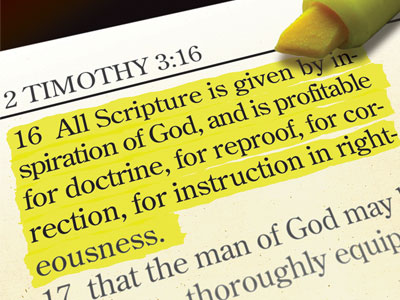
The Sovereign will God left in His Work of inspiration
Other ground is sand, leaves our souls all asunder
Such is to build on the only firm foundation!

Man walking and balancing on rope over precipice in mountains

Out-Cheered At Home

Neal Pollard

It’s hard to beat the weather and the views at the average Rockies baseball game. This past Tuesday, 29 Bear Valley guys converged on the upper deck overlooking first base as the “good guys” took on those world-champion Houston Astros. For the unfamiliar (or disinterested), the Astros are the defending Worlds Series champions. They’re very good this year. But, so are the Rockies. Whenever Colorado can sniff first place when August is in view makes it a “great” season, by their standards (spoken by a long-suffering fan). We came into that game having won 12 out of 16 games in July. Several of us got there early–for a game which would start an hour late due to bad weather–and the thing that struck us was how many orange shirts and jerseys there were. Again, for the uninitiated, those are Astro rather than Rocky colors. But, it wasn’t their apparel that stuck out. It was their boisterous, relentless cheering. As much as I like Colorado baseball, I get frustrated with how quiet the average fan in the stand is (perhaps they are lulled into a tranquil state by those rich sunsets and cool breezes. Opposing teams’ fans seem less affected. We were louder than usual, but they were louder than us.

“Home field advantage.” It’s supposed to mean something, but Tuesday night was a reminder that it can be taken away. These were committed fans. We saw Texas license plates in parking lots. No doubt, some arranged their travel to attend a game while visiting our fair state. Or, they’re locals whose allegiance is strong enough to brave the prospects of tens of thousands of people who oppose their point of view. They weren’t embarrassed or ashamed to proclaim their loyalty. They were eager.

We often sing, “This world is not my home.” Truly, Peter calls the Christian an alien and stranger (1 Pet. 2:11). Our citizenship is in heaven (Phil. 3:20). The Devil has control of this world and its domains (Eph. 2:2; 6:12; John 12:31; 1 Cor. 15:24; etc.), though Jesus will win in the end and He causes us to triumph now (2 Cor. 2:14; 1 John 4:4). 

We enter the daunting arena of the world clothed with Christ. He wants us to stand out and to be heard. No, not obnoxious, but He expects us to infiltrate it with His influence (Mat. 5:13-16). We won’t sway the crowd or determine the outcome, but we will make a difference if we show up, stand up, and speak up. The world will be aware of our presence, even if it disapproves. That’s not really the point is it–to have their approval? The point is to show our unswerving loyalty. We know that we are on the winning side! With humility but also boldness, we should make that known!

37756309_10155703074395922_7614667387320664064_n

What Does “Mean” Mean?

Neal Pollard

Does that question seem strange to you? Mean is a verb defined as “intend to convey, indicate, or refer to” (Apple Dictionary, Version 2.2.2). Postmodernism claims that there is no purely objective knowledge, truth, or norms. Therefore, meaning is what you make it mean. Several years ago, James Sire gave the framework for what we see in ever-increasing, ever-encroaching ways in our society when he wrote that the postmodernist believes “human beings make themselves who they are by the languages they construct about themselves” (181). He continues, “In postmodernism the self is indeed a slippery concept” (182). How does this play out? Science is what scientists say it is. History is what historians say it is. But, morality, law, and so many other pillars of society are influenced by this approach to truth and reality. Abortion, euthanasia, sexual ethics, gender issues, and the like are subject to what institutions and individuals determine about them. Even religion, down to New Testament Christianity, has felt the pervasive tentacles of this worldview. Where does this philosophical mindset end? What’s out of bounds, if truth is whatever you and I each say it is for ourselves? Ultimately, there can be no values, standards, or absolutes. And no one wants to live in a society where those are the “rules,” if you can call them that.  And no one can for long. It’s a system destined to collapse.

Winfried Corduan worse, “Relativism plays the role of Zorro in the world of knowledge. It stays in concealment for long periods of time only to suddenly appear at crucial moments, conquer the day, and go back into hiding” (37). In other words, we don’t want relativism on the operating table, when it’s a choice of saline or strychnine in the I.V. (i.e., “What’s ‘saline’ to you is ‘strychnine’ to me”). We don’t want it at our banking institution, when it’s a choice of debit or credit. We believe in absolutes…until we don’t. What’s right or wrong? Again, Corduan helps by defining truth as what corresponds to reality (39). We may have to explore, investigate, evaluate, and test, but we can ascertain it!

We don’t want to live in a world without a transcendent way to determine truth and meaning. We cannot. Meaning is meaningful! Amidst all the wild experimentation of our postmodern world, there is a trustworthy source of truth. It in internally cohesive and universally applicable. It has been successfully tried for thousands of years. But it makes expectations of us. It asks commitments of us. It involves sacrifice, self-denial, and submission. But it is right and it works! It is Divine Revelation. The Bible. May we have the courage to follow it and share it.

Works cited:

Corduan, Winfried. No Doubt About It: The Case For Christianity (Nashville: Broadman & Holman, 1997).
Sire, James W. The Universe Next Door: A Basic Worldview Catalog (Leicester: InterVarsity, 1997).

creativity-as-a-search-for-meaning

LANDMINES IN RESOLVING CONFLICT

Neal Pollard

“I.” The late Wendell Winkler once said that beneath most marital conflict is basic selfishness. “What about my needs?” “What have you done for me?” “I am not happy, fulfilled, etc.”  The Bible warns of the destructive nature of selfishness (Luke 9:23; Eph. 4:22,24; Phil. 2:3; 2 Tim. 3:2)! One of the most frequent casualties of selfishness is marital happiness. 

“You.” This is really the other side of the conflict coin that blows up progress and growth in relationships. If selfishness is blind to the needs and concerns of the other person, blame and deflection is the total denial of guilt or shared responsibility. “You don’t treat me right.” “Why don’t you pull your weight?” “You are not enough of ‘X’ or too much of ‘Y’!” Accusation, which puts one’s mate on the defensive, is a poor framework for resolving conflict. The very first couple played the blame game, to no avail and with no success. 

“They.” A mirage is “something that appears real or possible but is not in fact so.” We usually think of a mirage in the desert, an optical illusion created by extreme conditions. How often do married couples in conflict see marital mirages? A couple is hurting, and as they look across the burning sand they see “perfect couples” and “perfect marriages.” We are not helping ourselves by comparing ourselves to what is not what it appears anyway (cf. 2 Cor. 10:12). Every marriage is comprised of flawed, sinful people who are constantly faced with overcoming. Whatever you think you see in other couples “is not in fact so.”

“God.” Now, hear me well. God is the answer to all conflict, if we consult Him. Yet, when we blame God or let conflict affect our faith, then our attitude toward God can become a major landmine preventing resolution. “God doesn’t care.” “God isn’t listening to my cries and prayers.” “Where is God when I need Him?” Trials are going to test our faith, but be careful not to give God credit for blame that rests upon us and our spouses. 

The good news is that “I,” “you,” “they,” and “God” can all play a fruitful role in resolving conflict. When “I” am humble and honest and focus on my role and responsibility, good will result. When “you” are treasured, valued, and sincerely loved, things will start looking up. When “they” are reasonably treated as role-models and inspiration, it can be helpful. When “God” is totally trusted and obeyed, there is no insurmountable problem! I wish marriage had no saboteurs or hazards, but the best of them do. Let’s work to avoid triggering them, trusting that God’s pattern for everything, including marriage, gives us the best shot at success. 

blast

I Wish The Church…

Neal Pollard

  • Was more evangelistic
  • Had dynamic worship
  • Ministered to every age group
  • Encouraged people to become leaders
  • Was more visible in the community
  • Invested in the home
  • Provided more fellowship opportunities
  • Had a thriving education program
  • Had a passion for world missions
  • Was attentive to visitors
  • Cared more about X, Y, or Z
  • Spent more on X, Y, or Z

Through the years, these statements and similar ones have been made in some form or fashion. People want the church to do more and be more. Referring to her in that nebulous, generic way–“the church”–is a comfortable, broad stroke-painting way of making a sweeping indictment of an institution which can then be made a scapegoat of any religious problem that we feel plagues us.

What I must remember is that I am the church–at least I am a member of it (1 Cor. 12:27). I cannot exempt myself from her problems or duties. Am I evangelistic? Am I an enthusiastic, engaged worshipper? Do I reach out to all ages? Present in my community and home? Attentive to visitors? The church, which is a Divine creation (Eph. 3:9-11), depends on every member contributing in every way each can (Eph. 4:16). This encourages getting whole hands involved rather than using fingers to point at others. Could the church be doing more, reaching more, reflecting God more? Absolutely! I know this because I can be doing all those things more. Let’s each focus on what we can do to build a stronger church, in every way we possibly can! The Lord is counting on us.

The Kindest Elder I’ve Ever Known

Neal Pollard

He was appointed an elder during the Reagan administration. At the very time he was appointed, the congregation was reaching the climax of a very traumatic incident. A man who was a charter attender, but not a member, when Bear Valley began meeting, he has seen every great work this congregation has dared to do, walked through its every valley, and he has done so with as even-keeled and unflustered way as I have ever known. I have heard him preach both here and abroad, watched him do short-term missions, make difficult shepherd visits, hug and encourage more people than I can remember, and seen his kindness and humor generously displayed. He was not usually the first to speak when elders conversed, but his insights have always been profound. He always did what he did with class and compassion.

I was crestfallen when I recently heard Maynard Woolley tell the eldership that he was ready to step aside as an elder after nearly 30 years of service. Only Harry Denewiler served more years in that role for the Bear Valley church of Christ. He stayed on a couple of years after five great men were appointed to this work in 2016, helping them to acclimate, learn, and grow under his, Ernie Barrett’s,  and Dave Chamberlin’s tutelage. A telling tribute to the breadth of his leadership was the collective, deeply respectful, regret that he was going to resign. Maynard is a man who one appreciates more and more the longer one works alongside him.  His faithful wife, Donna, has both encouraged him and endured, as an elder’s wife for so long, what not many women living have.

Some men impress with refined oratory, outspoken and charismatic ways, and larger-than-life personalities. Others live more understated ives, but their value cannot be overstated. Maynard Woolley is such a man. We will miss his formal oversight, but we look forward to his continued faithful service and loving example. Thank you, Maynard, for what you’ve done and for who you are.  Bear Valley bears the imprint of your bearing.

35328348_1752403114806253_5029729612142215168_n

The Difference Between Current And Relevant

Neal Pollard

Relevant—Appropriate to the current time, period, or circumstances; of contemporary interest
Current—Belonging to the present time; happening or being used or done now

I think most of us would find the above definitions of these words to be satisfactory. In the context of the church, we are often concerned with both the matter of being current and relevant. The degree to which and the ways in which to achieve currentness may differ from congregation to congregation, but every congregation, to some degree, wishes to be current. It’s what drives members to arrive in automobiles, to paint and remodel the building, to use powerpoint for lessons and songs, have wifi access, a (hopefully) updated website, and the like. So long as the tool, idea, or method for being current is in harmony with Scripture, including proper stewardship as well as adhering to God’s pattern and authority, we should be as forward thinking as possible.

Relevance is, perhaps, a more subjective matter. With the maturing of each succeeding generation, we tend to obsess about whether or not our planning, actions, communication, and the like are sufficiently relevant to each generation. In other words, we might ask, “Are we relevant to millennials?” or “Will this resonate with iGens?” There are tools, ideas, and methods we should use to be “appropriate to the current time, period, or circumstances.” But, may we not lose sight of the fact that Scripture could not be more relevant, and it is never more relevant than when it is countercultural. The world’s ideas for how we should dress, talk, think, act, or respond to God may be the very definition of what’s current, but such is not relevant to God’s objective right and wrong on those specific matters. What we teach may be relevant to those areas of concern, but may seem old-fashioned or not what is being used or done now by the majority. 

We must emphasize that in our current circumstances, God’s Word, with its precepts and principles, is what is relevant! It’s what the world needs, and it’s what we each need. The church, so long as it boldly, lovingly declares those things, is the very essence of relevant. Let’s just let God’s Word and not the world define that for us. 

relevant


You Push That Way And I’ll Pull This Way

Neal Pollard

While it is true that each of us possesses unique abilities within the Lord’s body (Rom. 12; 1 Cor. 12), that fact bears closer scrutiny. God can use each of us, with our unique personalities, backgrounds, and experiences, to reach so many among the lost and to help so many among the saved. Yet, it is easy to lose sight of how we contribute to the health and growth of the congregation we are a part of. 

For example, the following should not be considered talents useful to the Lord’s cause:

  • Being gossips and busybodies (2 Th. 3:11; 1 Tim. 5:13).
  • Causing strife and being jealous (Rom. 13:13; 1 Cor. 3:3).
  • Judging your brother (Rom. 14:10; Jas. 4:11).
  • Returning evil for evil and insult for insult (1 Pet. 3:9). 
  • Being an obstacle or a stumbling block in a brother’s way (Rom. 14:13).
  • Speaking deceit (1 Pet. 3:10).
  • Giving the devil an opportunity (Eph. 4:27).
  • Keeping your leaders from doing their work with joy and not with grief (Heb. 13:17).

Certainly this is not an exhaustive list of ways we may misuse the stewardship of our speech and actions as members of the body of Christ. It can be so tempting, when we look at the church’s imperfections and people’s inevitable shortcomings. We have new Christians. All Christians have weaknesses. Those who lead and conduct the church’s work could inevitably do it better. 

What does the Lord want each of us to do as individual members of the Lord’s church? He calls for living in harmony in the Lord (Phil. 4:2). He wants us fitted, built, and held together (Eph. 2:21-22; 4:16). He wants us “being of the same mind, maintaining the same love, united in spirit, intent on one purpose” (Phil. 2:2). Practically speaking, this means getting behind the work of the local church, contributing to it and building it up. It means asking how we can help and throwing our energy into that. It means constructively helping when a work is lagging or in need of direction. It means lovingly, respectfully interacting with the other members of the body. 

Comedian Steve Harvey compared his rise to success with pulling a wagon uphill. He said that many people may hop on that wagon and contribute something, He said they all need to be doing something to help you get that wagon up the hill. He warned against those who get on the wagon and have no value (via OWN, 9/12/14). Perhaps you’ve found yourself pushing toward a spiritual objective, only to feel the resistance of someone working against you. This is frustrating! However, never find yourself opposing good, needed works through misuses of your resources in ways like those in the bulleted list above. In the worst case scenario, we may even find that in doing so we “may even be found fighting against God” (Acts 5:39). Let’s do all we can to help build up the body of Christ, prayerfully studying what that does and does not mean!

compromise-donkey

What Are We Saying About The Church?

Neal Pollard

Recently, in an excellent lesson about gossip, the teacher recounted an incident I, and many others, could echo from the background of our own experience either in ministry or our personal lives. A mother asked her wayward daughter why she no longer was a member of the church. Her convicting reply, “The way that you always talked about the church, why would I be?” The way this daughter heard her parents talk about the church, she concluded the church was full of hypocrisy, flaws, and inadequacy. She was simply modeling what she heard them say throughout the years.

I’m thankful for the sound counsel we received well before we had children. We were advised never to speak ill of the church in front of our children, to run down elders, deacons, preachers, and other members. Knowing Kathy, she would have done this intuitively. For me, it was extremely helpful with my impetuous nature. Even whispered words in the front seat of the car, going home from church, will inevitably be heard by the little ears in the back seat (the same is true of the dinner table and other times the family is together). We may be blowing off steam, we may not have deep vendettas against the object of our criticism and complaint, and we may soon forget what we’ve said, but impressionable ears and hearts may internalize the words and materialize the message with their deeds and lives. 

The attitude, relationship, and loyalty our children have toward the church is most shaped and determined, for good or ill, by our example as parents. What will help us speak well of the Lord’s church? 

  • Remember who conceived of it, from nature to organization to purpose, etc. (Eph. 3:9-11).
  • Remember whose it is (Mat. 16:18-19; Eph. 5:33).
  • Remember our mission to bring others into it and that our home is our primary mission field (Mat. 28:19).
  • Remember how Jesus feels about the church (1 Tim. 3:15; Eph. 5:25).
  • Remember that the church is the location of the saved and we should do all we can to help our children make up that number (Acts 2:47; 1 Cor. 12:13).
  • Remember all that the Bible says God seeks to accomplish through the church: growth (Eph. 4:16), His glory (Eph. 3:20-21), and His grace (2 Cor. 8:1), among so many other things.

We may struggle to see our family harbor grudges and hard feelings against the church. Many factors may contribute to that, but we should begin with ourselves. What are we saying about the Lord’s bride? What is our attitude toward her? I cannot imagine that anything is more impactful than that, and that is probably the thing we can most control! May our family remember that our theme song, concerning the church, is, “I love Thy kingdom, Lord!” Surely this will influence how they feel about her, too. 

3

Seeing God In Nature: Volcanos

Neal Pollard

As we received word of the volcanic eruption near Guatemala City, Guatemala, yesterday, where Bear Valley Bible Institute has had an extension school for several years, we were reminded of the omnipotence of God. The power God displays through nature and His creation reveal how such a powerful effect reveals an even more powerful cause. Volcanic activity for which there is no recorded history, like at Yellowstone, Deccan Plateau, and Santorini, stand alongside several we do know about. Perhaps Pompeii or Mt. Saint Helens is most infamous, but the Mount Tambora volcano in Indonesia has been called the most explosive and deadly for which there is historical recounting. Mount Tambora’s eruption began on April 5, 1815, and the mountain blew apart on the evening of April 10th. “The blast, pyroclastic flows, and tsunamis that followed killed at least 10,000 islanders and destroyed the homes of 35,000 more” (britannica.com). It went from being a mountain 14,000 feet high to being a caldera (a crater) 3.7 miles across. Its effects were intense and global. It shot megatons of material into the atmosphere, preventing so much sunlight from reaching the earth’s surface that 80,000 more Indonesians died from famine and disease. The earth’s average temperature was reduced over five degrees. Western Europe and eastern North America experienced heavy snow and killing frost in June, July, and August, causing “crop failures and starvation in those regions, and the year 1816 was called the ‘year without a summer’” (ibid.).

Volcanos are so awesome and powerful that they evoke a strong response from us. They illustrate several things of a spiritual nature. As noted above, they are demonstrations of an all-powerful God. So often, they erupt without specific warning. There may have been tremors and signs for years, but nothing out of the ordinary. Then, too rapidly for many to escape, the cataclysmic occurs. It is a testimony of good that comes from tragedy, too. The Department of Geosciences at Oregon State University reminds us that volcanic soil is very rich and conducive to a dramatic agricultural comeback following these geological events (volcano.oregonstate,edu). These events should help remind us of a truth Bible writers like Peter teach us, that “…the day of the Lord will come like a thief, in which the heavens will pass away with a roar and the elements will be destroyed with intense heat, and the earth and its works will be burned up. Since all these things are to be destroyed in this way, what sort of people ought you to be in holy conduct and godliness, looking for and hastening the coming of the day of God, because of which the heavens will be destroyed by burning, and the elements will melt with intense heat!” (2 Pet. 3:10-12). 

Please pray for our brethren in Guatemala and for the hearts of all men outside of Christ, that they might come to a saving knowledge of the truth before it is eternally too late. May the evidence gleaned from places like nature, including volcanic events, persuade mankind of the reality and power of God. So persuaded, perhaps their hearts will be open to learning more about Who this God is as we share the revelation of Him as found in His Word!

caldera_mt_tambora_sumbawa_indonesia
Mount Tambora caldera

Abraham Lincoln’s Memorandum Of August 23, 1864

Neal Pollard

Somehow, I was unaware of the existence of a document which Abraham Lincoln drafted and had endorsed by every member of his cabinet, though unseen by them, and which remained sealed until November 11, 1864. These were not only dark times for the nation, embroiled in civil war for over three years at that point, but gloomy for the war-weary north which could not end the conflict against the greatly outmanned but tactically superior south. Politicians and citizens were unhappy with the perceived lack of success and progress at such high cost—the death and disabling of so many of her sons in the prime of their lives.  Lincoln detected that popular sentiment was such that he would not be reelected. Thus, he drafted his memo, which read, 

This morning, as for some days past, it seems exceedingly probable the this
Administration will not be reelected. Then it will be my duty to so cooperate
with the President-elect as to save the Union between the election and the
inauguration: as he will have secured his election on such ground that he
cannot possibly save it afterward (Coolidge 139). 

Lincoln seemed to think that the north had had enough of this war and would rather sue for peace and allow our sea to shining sea to be two nations rather than continue with such devastating effects a war they could see no end to. He appears dedicated to whatever he could do to preserve unity.

Of course, several things changed the course of Lincoln’s fate in his bid for reelection that swept him decidedly into office for a second term. There was the north’s victorious show in The Battle of Atlanta, Fremont’s withdrawal from candidacy, the Democrats internal division between the Copperheads—eager to end the war now—and the War Democrats, and the fact that no electoral votes were counted from the Confederate States of America.  But, Lincoln could not see the future. He was preparing for what he saw as the worst.

There is a well-worn battle taking place in our world. It is not technically between two factions. It might be framed as Christianity versus other world religions. It could be cast as New Testament Christianity versus so many individual denominations. Yet, internally, there are multiple stressors to the biblical unity Christ prayed and died for, too (John 17:20-21). 

Christians are soldiers (Eph. 6:10ff), but our battle is not with flesh and blood (Eph. 6:12).  Our war and weapons are not “of the flesh” (2 Cor. 10:3-4). All the same, many have grown weary of fighting the good fight and not a few feel as though we are fighting in a losing cause. The restoration ideal of doing Bible things in Bible ways seems archaic and impossible to growing numbers of saints. Some fight with equal vigor to preserve traditions not rooted in Scripture, and unnecessarily harm the great cause. 

As we strive at all costs to be true to the pattern of New Testament Christianity, let us do so going to whatever lengths we can to maintain unity wherever possible. Not for a moment does that mean sacrificing truth or compromising even one “thus says the Lord.” But it does mean embracing a spirit of love and protectiveness for the precious Bride of Christ, the church. That involves loving and working with those who are the members of it. 

Ultimately, the Lord’s cause will prevail. His victory is as assured as every other divine promise. We must be striving on His side to share in that. For now, we cannot give up the fight! Let’s cooperate wherever and however we can, standing unitedly on the foundation of Christ and His will. The rest (which is most of it), we will leave to our Great Commander In Chief!

Works Cited:
Coolidge, Louis A. American Statesman Ulysses S. Grant (New York: Chelsea House, 1983).

blind-memo-recto-al0204

“Killfies”

Neal Pollard

What do high cliff ledges, train tracks, animal game parks, bridges and buildings have in common? They are apparently popular sites for people to take selfies, and places, among others, where over 200 people have died in the last 5 years in pursuit of that “perfect selfie.” The Economic Times of India, a country leading the world in deaths by selfies, reports that 86 people in 2016 and 73 people in 2017 died in this tragic, needless way. Since 2014, 128 have died in the course of taking selfies in this densely populated nation. But other countries are getting involved in trying to stem the tide of such tragedies. Irish doctors reported, “The consequences of poorer spatial awareness and a focus on getting a good or daring photo has lead to multiple traumas” (Indulekha Aravind, 2/18/18).  There are people in Russia that have become celebrities because of their daring self-centered photos (ibid.). Nowhere social media has gone is there an exemption from this trend, including here in our country.

Because I do not have a background in psychology, I freely admit I could be wrong about this. But, could these extraordinary lengths to capture oneself in these kinds of photos be an act of desperation for acceptance, friendship, or even love? Could the yearning for admiration, congratulations, and adulation drive people to disregard all restraint and precaution? I’m not sure I know the answer to that. 

I do know that, as Henry David Thoreau said in 1854, “The mass of men lead lives of quiet desperation” (Walden, ch. 1, p. 8).  Perhaps these daring selfies are a symptom of that sensible observation. With selfies, we are able to project exactly the image or perception of ourselves that we want others to see of us. We don’t publish the unflattering nor do we want to show the boring. We want to be seen as valuable, relevant, and attractive. Why? Though we might lose our way in the process, human nature is to desire community and relationship (cf. Gen. 2:24). There are a great many destructive ways to do that, and being self-obsessed is certainly harmful.

It’s very interesting that God planned the church from eternity (Eph. 3:9-11) as a place and a way for us to focus on others. Paul wrote, “Do nothing from selfishness or empty conceit, but with humility of mind regard one another as more important than yourselves; do not merely look out for your own personal interests, but also for the interests of others” (Phil. 2:3-4). So much about being Jesus’ disciples gets us outside ourselves and into the lives of others—not just other Christians but people from every walk of life outside of Christ. He wants our energy, effort, and focus to be turned outward. It’s not so much about projection, but about service. Through that, God will be glorified and others can be satisfied. It seems that such is why God has us here!


male-tourist-taking-selfie-1503402700syg

Avoiding Presumption In Evangelism

Neal Pollard

There are several sound, simple methods of teaching the gospel to the lost. As the teacher grows in ability to utilize these methods, his results will improve to God’s glory. The teacher also has as his or her textbook one fo the simplest to comprehend, though only the rare and exceptional student will fail to attain unto “the meat” of God’s Word after consistent, in-depth Bible study (Heb. 5:12-14).

The effort put forth by the student to understand may be great for some. The soul-winner must be aware of this and address it accordingly. Observe a few suggestions that might prove helpful.

  • Watch the student, trying to detect words or concepts that they might not comprehend.
  • Try to establish, from the beginning of the study, a free, comfortable line of communication.
  • When asked to explain words or concepts, avoid patronizing (thereby insulting) the student.
  • Reassure the student that all of us, to one degree or another, need help understanding words and concepts.
  • Be patient and empathetic and never cold and exasperated.

Making sure the prospective Christian understands and is in the flow of the study couldn’t be more important. Each student has a never dying soul that will be somewhere for eternity. As gently and compassionately as possible (2 Tim. 2:24026), be ready to explain and discuss words or questions from the Bible or study which may be giving them problems. Realize that each person comes from a different background and aptitude, not only religiously but also educationally. No doubt, the hearer has a great responsibility and accountability. Often, Jesus admonished, “Be careful how your hear” or “Be careful that you are not deceived” (Luke 8:18; 21:8; etc.). He was warning them to be keen listeners and discerners of biblical truth. Hearing itself is vital (Rom. 10:17), as without it faith can’t be produced. Yet, let us who would teach the lost work to present the simplicity of God’s saving plan and eliminate as many barriers to understanding as we can.

learning-styles_m

More Light Than Heat

Neal Pollard

In Shakespeare’s Hamlet, Polonius counsels his daughter, Ophelia, about Hamlet’s vows of love, saying, “When the blood burns, how prodigal the soul lends the tongue vows. These blazes, daughter, giving more light than heat, extinct in both even in their promise as it is a-making, you must not take for fire” (Act 1, Scene 3). Her point is that passionate desire causes a man to profusely promise anything in order to get what he wants, but it may lack substance and trustworthiness. It appears more promising than it really is. We’ve likely all witnessed and experienced this. What good is a fire if it doesn’t produce heat?

When it comes to discussing religious matters, things can get pretty heated. Unfortunately, as the temperature rises, solid conclusions are elusive because there is much more emotion than illumination. Inasmuch as God’s Word is to be a light and lamp (Ps. 119:105), these are times where all are benefited by more light than heat. Too often, instead of proving or disproving something, we resort to personal attacks on the other person, assert a position appealing to a variety of alleged proofs or rationales without benefit of a singular Scripture, or we’ll abuse, distort, and contort a passage to say what it does not mean. As battle lines are drawn and trenches are dug, the two sides become wider and more intensely apart while the matter under discussion fades into the background. 

Because the New Testament repeatedly commands unity (Eph. 4:1ff; 1 Cor. 1:10-13), we must “pursue the things which make for peace and the building up of one another” (Rom. 14:19). Are there tangible actions we can take to pursue more light than heat in these matters that distress our unity?

  • Genuinely listen. That doesn’t mean merely hear what the other is saying, but listen open-mindedly, seeking to understand what the other person is saying. Don’t presuppose or listen with prejudice. Truly, “He who gives an answer before he hears, It is folly and shame to him” (Prov. 18:13). 
  • Genuinely love. Love for God should be preeminent, but such love is not in opposition to brotherly love. In fact, they are intrinsically bound together (1 Jn. 4:20-21). While love does not mean compromising truth, it will prompt us to do what love requires (cf. 1 Cor. 13:4-8)—be patient, be kind, act becomingly, don’t be provoked, etc. 
  • Genuinely learn. Do we really know their view or merely think we do? This requires great self-examination and disciplined introspection. If we champion a position and have argued the matter before, we may think our fellow disputant believes what he or she does not actually believe. Preconceptions eclipse thoughtful interaction. We should ever be students, making sure we’ve not missed it. 
  • Genuinely long. Peace and unity will sometimes be impossible, but we shouldn’t let that be because we didn’t sincerely seek it. By lovingly seeing the other person as an eternal soul for whom Christ died (as well as any and all who would be influenced by the other person), surely we will strive to gently, civilly, and earnestly discuss the matter (cf. 2 Tim. 2:24-26). 

We live in divisive times. They are carnal times, full of “bitterness and wrath and clamor and slander…with all malice” (Eph. 4:31). We must remember that the “anger of man does not achieve the righteousness of God” (Jas. 1:20). What does? God’s Word (Jas. 1:18-25)! Too often, we’ll be locked in matters of truth and error and must uphold truth. But let’s be so careful to discern when that’s the case and always speak the truth in love (Eph. 4:15). Such will produce light rather than heat!

Burn Light Wood Heat Fire Red Burning Flame

“Good That Comes From Bad”

Neal Pollard

With a name like “Lamentations,” you know it isn’t a joke book. It’s not lighthearted or jovial. It’s the inspired record of Jeremiah’s tears and troubled spirit over the punishment of Judah for her idolatry and abandonment of God. It is graphic (see 2:20-21; 4:4-10; 5:11-14). Conditions became terrible for the nation (cf. 1:9-10). The book is filled with apocalyptic language and hyperbole (3:1-16).

In the middle of the prophesy, though, Jeremiah expresses the hopeful effect of all this calamity and reaping. The desired effect of captivity was three-fold, according to Lamentations 3:40. First, it was for self-examination–“Let us search out and examine our ways.” Second, it was for repentance–“and turn back to the Lord.” Finally, it was for spiritual development–“Let us lift our hearts and hands to God in heaven.”

When we sin or even are caught in some long-term transgression, there will very often be consequences. If we fail to overcome it, the consequences will be unending and most serious. Yet, if we “come to ourselves” (cf. Luke 15:17) and let go of what is keeping us from being right with God, it can have those same three positive impacts on us. It cause cause us to engage in proper self-examination. It will hopefully lead us to repent. Then, this paves the road for us to grow close to God through proper spiritual development.

The ideal is to avoid spiritually spiraling out of control or into some sin problem. Yet, if or when we do, let us remember Lamentations 3:40. Good can come from bad.

p19d8uriudal1tmv6ccoms1ace3

“Immediately”

Neal Pollard

The astute reader of the book of Mark finds the word 40 times in 39 verses (the Greek word most often translated “immediately” in Mark is actually found 44 times). It is a key word found consistently throughout the gospel but especially in the first six chapters. Usually, the word is used to quantify the time between Jesus performing a miracle and it taking effect. The point seems to be to show the power and Divine nature of Jesus. It is also a thread that runs throughout the book to highlight key thoughts and main ideas in this second book of the New Testament. The word is used to highlight the Father’s affirmation of Christ following His baptism (1:10), Jesus’ journey into the wilderness to triumph over the Devil’s temptations (1:12), the disciples’ decision to leave their occupation to follow Jesus (1:18,20), Jesus’ entering the synagogue to show unparalleled authority and power (1:21), the news and fame that followed Christ’s teaching and healing (1:28), and the immediate response of the one healed by Jesus–the first of many uses of the word “immediately” to highlight such (1:29-30). The proof for Jesus’ identity was immediate. The effect of Jesus’ miracles was immediate. The impact of Jesus’ miracles and teachings on friend and foe was immediate. Mark’s use of this word seems to indicate how overwhelming and unmistakable the proof of Jesus was.

This is not to say that one should rashly decide about the Lord. The book of Mark is part of God’s way to convince man about who Jesus is. Take the time to read it and learn of Him. Like the other three gospels, Mark contains the miracles, teaching, claims, and events in Christ’s life at the end of which one must ultimately make a decision concerning who He is. Remember, though, “He who believes and is baptized will be saved; but he who does not believe will be condemned” (Mark 16:16). Weigh the evidence, and then decide. Follow the example of so many in the book of Mark and let the power and person of Jesus have an immediate impact on your life and your soul.

15843359028_6e6cbd3894_b

Learning To Pray From A Man After God’s Own Heart

Neal Pollard

When the disciples asked Jesus to teach them to pray (Luke 11:1), they were asking the most qualified instructor. However, they had a good teacher from the background of their own heritage in David. The book of Psalms is at times a songbook and at other times a prayer journal. Numerous examples of David’s prayers are contained in this beautiful book of Old Testament poetry. In Psalm 141, for example, we have several characteristics of prayer from a man after God’s own heart (cf. Acts 13:22).

First, David’s prayer was urgent (Psalm 141:1). He writes, “Lord, I cry out to You; make haste to me!” David saw prayer, not as a last resort, but as a first retreat. Since David knew God was able to help, he wasted no time in bringing matters into God’s own hands.

Then, David’s prayer was intense (Psalm 141:1b). He continues, “Give ear to my voice when I cry out to You.” You will not hear rote memorization of prayers or lackadaisical lethargy in David’s prayer. David cried out to God. He is pleading with God. These are indicators of a fervent prayer life, which God includes as typical of righteous people of prayer (James 5:16).

Further, David’s prayer was sincere (Psalm 141:2). He treated his prayers as if they were actually offerings or sacrifices. He says, “Let my prayers be set before You as incense, the lifting up of my hands as the evening sacrifice.” He was willing to lay open his prayers to the All-Seeing eye for His scrutiny. The entirety of this psalm reflects no superficial piety or pretentiousness. David simply laid his heart before God.

David put obvious trust and hope in the power of prayer. He had confidence in God’s ability and he had cognizance of his own dependence upon God’s ability. Never wait to turn to prayer until the need is desperate. The man after God’s own heart made prayer a staple in his religious diet. So should we.

pray-2558490_960_720

Cure Them With Kindness!

Neal Pollard

A comedienne draws attention for being mean-spirited and cutting when roasting a White House press secretary recently. While cringe-worthy, it’s hardly an isolated incident. Nor is it confined to Washington politics, being seen across the spectrum of society. Civility has taken a beating in the current culture. Social media may be a breeding ground for insults, attacks, hostility, and animosity, but it’s hardly confined to just that forum.

Make no mistake, a lack of kindness is a hallmark of worldliness and unrighteousness. It is the antithesis of a quality God demands of the Christian. Ephesians 4:32 commands, “Be kind to one another….” The original word translated “kind” here is found seven times in the New Testament, and it is a divine quality. In fact, in six of the seven references, God demonstrates it. In Ephesians 4:32, it is to be exhibited by us in view of God’s having shown it to us through Christ. It means “pertaining to that which is pleasant or easy, with the implication of suitability” (Louw 246). It causes no discomfort, meets a high standard of value, is morally good and benevolent, and is beneficent (BDAG 1090). In common usage in New Testament times, the word, when referring to people, was synonymous with being decent, of good disposition, gentle, good-hearted, and morally upright (Kittel 1320). In other words, people in society could and did recognize its presence in people. Its absence is also, sadly, noteworthy. 

The old adage “kill them with kindness” might imply utilizing kindness to get an advantage or revenge on someone unkind, making us look good and them look bad. God calls for something more out of those of us striving to hold up the Light to a dark world. The world is sin-sick, and rude, coarse, hateful attitudes, words and actions are but a symptom of this. We have the medicine the world needs, even if it fails to see its need. Some will be drawn to it when they see it in us. 

Paul counsels Rome with inspired advice that will help us cure the rude, ugly, spiteful, and vicious behavior we often encounter. He says, “Never pay back evil for evil to anyone. Respect what is right in the sight of all men. If possible, so far as it depends on you, be at peace with all men. Never take your own revenge, beloved, but leave room for the wrath of God, for it is written, ‘Vengeance is Mine, I will repay,’ says the Lord. ‘But if your enemy is hungry, feed him, and if he is thirsty, give him a drink; for in so doing you will heap burning coals on his head.’ Do not be overcome by evil, but overcome evil with good” (Rom. 12:17-21). Look closely at what he says. Avoid the payback mentality. Go to great lengths to preserve peace. Leave revenge to God. Don’t stoop to the world’s level. 

This imitation of God with revolutionize the places where we practice this. The moral malignancy plaguing our world cries out for medicine, and we as Christians know where to access it. Let’s discipline ourselves to use it, even in the face of those spreading the spiritual sickness of spite. 

8717079909_141f57a7de

TRY THE CONTEXT!

Neal Pollard

“Big dummy!” That can be a derogatory statement or the description of a large mannequin. Context makes all the difference! So it is with matters of infinitely greater significance. So much religious error exists because of a failure to consider the context of biblical passages.

Our friends in religion who believe that Jesus is a created being rather than one of the three everlasting personalities of the Godhead defend their view with passages such as Colossians 1:15, which says, “He is the firstborn of all creation.” A further study of the use of the word “firstborn” shows that it is used literally (Heb. 11:28) and figuratively (Heb. 12:23) in the New Testament. Context determines the difference. What is it in Colossians 1:15? The context says that Jesus made everything that was made (16-17). Did He make Himself? No, He cannot both be literally, physically born and be the One who created “all things.” Logically, Paul is speaking in a figurative sense, that in His human nature Jesus is “at the head of His class.” He is first in order, preeminent among men (18). As a human, He is above us and first among all of us.

Others of our friends teach salvation by faith only. They appeal to a couple of passages to assert this idea. One passage is Acts 16:31, where the Philippian jailer is told, “Believe in the Lord Jesus, and you will be saved, you and your household.” This is given as proof positive that salvation comes at the point of faith. Another text cited, the “golden text of the Bible,” says, “For God so loved the world, that He gave His only begotten Son, that whosoever believes in Him should not perish, but have eternal life” (John 3:16). This statement is made as part of a conversation Jesus is having with Nicodemus.

In the case of the jailer, who saw the miraculous power of God in opening the jail doors and who asked what he must do to be saved, he is told to believe in Jesus. It is noteworthy to ask, “How much would the average Philippian jailer know about Jesus?” Thus, Luke adds the important detail that before we read of the man’s response, “They spoke the word of the Lord to him” (31). His response is found in verse 32, where he washes Paul and Silas’ wounds and is immediately baptized. This accords with the broader context of Acts, where believers are told to repent and be baptized for the forgiveness of their sins (2:38; 22:16).

In the case of Nicodemus’ instruction, Jesus’ makes the statement of John 3:16 in a certain context, too, a context that included talk of water (3:5) and an illustration from the book of Numbers. That illustration is very noteworthy for showing that more than belief is necessary for salvation. It concerns the serpents God sent upon the murmuring and complaining Israelites. Numbers 21:9 says, “So Moses made a bronze serpent, and put it on a pole; and so it was, if a serpent had bitten anyone, when he looked at the bronze serpent, he lived.” How did salvation come, simply by believing in God’s plan or by believing AND looking? Likewise, the broader context of scripture shows faith and works joined together. Israel did not earn the saving of their lives by looking any more than we earn salvation from sin by believing and being baptized. Yet, God makes it as essential to obey today as He did during the wilderness wandering. Context bears this out.

Let us never be “scripture isolationists,” those who peel a verse away from its context or who rest our confidence in doctrines that have been thus constructed. God saw to it that we would have His word and will preserved. How wise of us to make sure we properly study it in context!

8695269997_dfc20e7b8a_z

What Preachers Wished All Members Knew About Their Elders

Neal Pollard

While there are doubtless men who wear the name “elder” that do not meet the biblical qualifications, many of the church’s greatest heroes and biggest assets are her shepherds. I have been privileged to serve under a total of 21 elders in 26 years of full-time preaching, and what I am about to say applies to each of them. Part of their work is public and visible, but I dare say so much more of it is conducted before the eyes of only a few or one sheep or even at times only before the eyes of God. My experience with elders is that they are humble men and they will never tell you what I am about to tell you.  Here are a few things elders wish all members knew about them.

—Elders do…

  • Care.
  • See people at their messiest.
  • Sometimes get the brunt of the lashing out people do when in pain.
  • Always, always put people first.
  • Give generously of their time.
  • Agonize.
  • Hard things none of the rest of us can or will do.
  • Have insight into sensitive situations that others may not.
  • Have feet of clay.
  • Pray fervently for the needs and problems of the flock.
  • Desire to communicate to the church as much as they feel they can.
  • Want to have a relationship with every member.
  • Love God and seek to please Him above all else.

—Elders don’t…

  • Give up on sheep.
  • Defend themselves.
  • Do it for the glory.
  • Seek the praise of men.
  • Hold a grudge.
  • Play favorites or have double standards.
  • Read minds or judge motives.
  • Want to lose a single sheep.
  • Publicly share everything that’s on their plate or comes their way.
  • Want to lead God’s people away from Him and His will.

In an elders meeting last night, one of our shepherds was asked to read Hebrews 13:17. The elder chairing the meeting said, “This passage encourages me.” The elder who read said, “This passage frightens me!” As each of them discussed the sober meaning of that passage, I thought back to things I’d seen each of them do recently. It made me so thankful to serve under an eldership that takes their work seriously. Are they perfect men? Impossible! Are they God’s men? Absolutely! Please pray for the eternal work elders do in congregations around the world every day!

shepherd-and-sheep-e1446124496929