The Danger Of Being Swept Away

Neal Pollard

You may have heard that I was caught in a rip tide during Carl’s senior trip. We were at St. Pete’s Beach in the Tampa-area, swimming and playing in the water not far from a fishing pier. Somehow, I was pulled into a riptide and quickly pulled out toward the Gulf. The shore quickly grew distant and my subpar swimming abilities were tellingly useless. A couple of fishermen told me I was caught in it and my best hope was to try and move parallel to the waves and angle for a point about a half-mile up from where I was. That was a painfully slow process, and the water kept taking me where it wished.  I was on the other side of the pier, moving generally toward that point but still in the grips of the tide, when Dale swam out and helped pull me out of the current until I could finally get to shallower water and make my way back onto the beach. At the risk of sounding melodramatic, I believe Dale saved my life.

Only after this did I learn that, according to the CDC, there was an annual average of 3,536 fatal, unintentional drownings in the United States from 2005 to 2014. That’s about ten deaths per day. Nearly 80% of all people who die from drowning are male. A lack of swimming ability is the greatest risk factor in drowning, and 57% of all people, age 15 and over, who drown do so in “natural water settings” (like the ocean)(cdc.gov).  I also was reminded, from the Pandora playlist Dale piped through our van’s sound system, that he has an interesting sense of humor—playing “Under the Sea,” “The Ocean,” “High Tide, Low Tide,” “In Too Deep,” “Riptide,” “Drowing,” and “How To Save A Life” (plus a bunch more).

But I also have a different perspective toward some of the songs in our songbook:

  • “Soul you are drifting along on the tide, out on life’s ocean so boundless and wide…”
  • “Some poor fainting, struggle seaman, you may rescue, you may save…”
  • “Throw out the lifeline, someone is drifting away…”
  • “While on the sea hear the terrible roaring…”

As I look back, the currents were strong but the force was subtle. It did not take long for me to be moved away from the shore and taken away. Making the right efforts played a part in my staying afloat. Ultimately, however, I needed outside help to come back to shore.

The writer of Hebrews says, “For this reason we must pay much closer attention to what we have heard, so that we do not drift away from it” (2:1). A.T. Robertson says of the word “drift”: “Here the metaphor is that ‘of being swept along past the sure anchorage which is within reach’ (Westcott), a vivid picture of peril for all” (342). BDAG says it is an imagery of flowing water and means “be washed away” or “drift away” (770). The Greek Old Testament uses the word in Proverbs 3:21, where Solomon urges his son to not let wisdom “vanish from [his] sight.” The epistle’s nautical metaphor pictures vividly what can happen in our spiritual lives. We can  lose sight of where we are, and we may begin to struggle and start to succumb to the pull of the current. We must continue to make the effort to pull away and we should accept the attempts of those who seek to rescue us.

Spiritually, none of us want to become a casualty. We do not want to perish. May we realize that falling away from God is not usually sudden or dramatic. It is often subtle and gradual. Let’s pay much closer attention to what we have heard! It’s our lifeline.

13237839_10153686555335922_4716771003949535795_n

The Reality Of Jesus Christ

Johnson Kell

He was born of a virgin and when He was about thirty years of age He was baptized in the Jordan River by John the Baptist. And being full of the Holy Spirit He began His ministry walking the dusty roads of Judea, Samaria and Galilee, performing miracles and preaching the gospel. And He did go out carrying His own cross toward Calvary, and He did hang there for hours writhing in anguish and pain. And He did cry out, “My God, My God, why have You forsaken Me?” He did die there, shedding His blood for the sins of the world.

But there was a resurrection and He spent forty days with His apostles providing many proofs of a bodily resurrection–the tomb was found empty. And after forty days He spoke to them for the last time and as they watched intently He disappeared through the clouds on His way back to heaven. Some time later, when Stephen was being stoned to death, he cried out, “I see the heavens opened and the Son of man standing at the right hand of God.”

And so we have the assurance that our Savior is at His Father’s side making intercession for each one of us. And we can recall in the letter that the apostle Paul wrote to the Christians in Colosse, where he cried, “Christ in you the hope of glory!” So as we are born-again children, we, too, can say, “Christ in us the hope of glory!”

This was and this is the reality of Jesus Christ.

IMG_3446

The Eye Test

Neal Pollard

We covet those parking spaces close to the store, whether because we think we will save a little time or several steps by nabbing them.  Yet, we are in “competition” with others who are seeking the same spaces. No one rushes to the back of the parking lot to grab up those spots. But at a Costco in Canada recently, this vying turned violent as two middle-aged couples literally fought over a parking space. As in, it came to fisticuffs. As of this writing, police are still investigating and there may be fine details to be added to the story. Basically, however, as a YouTube video shot by a local realtor shows, anger over who should put their automobile in that space escalated to foul language, pushing, shoving, name-calling, and thrown punches. Four people who might otherwise be respectable, dignified contributors to society now share an infamy that may dog them for a long time. All because of a failure to conduct themselves properly in a public place.

We shake our heads at this animalistic behavior, but in our self-righteous sense of superiority we might do well to examine how exquisitely we execute our example before the eyes of the world. Consider some places where Christians can be oblivious to the watchful eyes of others:

  • Social media brawls, whether over matters clearly addressed in Scripture or matters of judgment and opinion.
  • Bible class discussions, where visitors, new Christians, and weak Christians might see the redeemed’s  inhumanity to the redeemed.
  • Public arenas, from the retailers to the restaurants and from the grocery store to the department store, where subpar (or even adequate) customer service evokes an unChristlike response from a disciple of Christ.
  • Arguments between spouses or parents and children, members of a “Christian home,” who resort to the tactics of their worldly counterparts as they wage war before such witnesses.
  • At ball fields, concerts, movie theaters, and the like, where something displeasing to us provokes an impatient, harsh, and retaliatory response that eclipses any view of Christ.

Certainly, these are just a few ways and places where we might forget ourselves and squash our precious influence by allowing the flesh to dominate our presumed spirituality. It is good for us to consider that those things cannot come out of us unless we are allowing improper things come into us. We must guard against the things that might creep in—“immorality, impurity, passion, evil desire, and greed, which amounts to idolatry” (Col. 3:5), “…enmities, strife, jealousy, outbursts of anger, disputes, dissensions, factions…” (Gal. 5:20, which are a bulk of the works of the flesh specifically identified by Paul), and more (cf. Mark 7:22-23, etc.).  We must work to control what comes out, harnessing the tongue (Jas. 3:2ff) and controlling the temper (cf. Eph. 4:26). We must strive to cultivate thoughts and feelings that, when expressed, build up and draw others to Christ (Col. 3:12-13; 1 Pet. 3:8-11; Gal. 5:22-23; etc.).

Like it or not, we’re hilltop cities and lighthouses (Mat. 5:14-16). Let us keep our behavior excellent among the “Gentiles,” as they observe our deeds, so that they will see Jesus at work in us (cf. 1 Pet. 2:12). Our attitudes, speech, and actions may not become a viral video, but we are still being watched. Let’s take care to display ourselves in a way that would not embarrass (or condemn) us were we to see it again, played by the Lord, at the Judgment Day.

cju0cyfw0aaufb9

THE LITTLE GRAVES THAT HAVE NO NAME

Neal Pollard

Lance Corporal Francis Ledwidge, a 26-year-old Irish soldier, was one of 10 million people killed in World War I.He died July 31, 1917, in Belgium. He was a poet, and he wrote the following before the war:

And now I’m drinking wine in France, the helpless child of circumstance.
Tomorrow will be loud for war, how will I be accounted for?
It is too late now to retrieve a fallen dream, too late to grieve
A name unmade, but not too late to thank the gods for what is great;
A keen-edged sword,a soldier’s heart, is greater than a poet’s art.
And greater than a poet’s fame a little grave that has no name.
(Gilbert, Martin. The First World War, Holt & Co., NY, 1994, 353).

Ledwidge sounds neither devout nor decent, but his last stanza rings loudly. This poor, fallen man glorifies the soldier, prolific even in anonymity. Glory rather than shame is to be memorialized in an unnamed grave.

Greater far than those whose spirits departed on plains and beaches of Europe or Asia or even Canaan during Joshua’s days are those who lost their lives in service to God. In the great memorial of Scripture they are mentioned, but without their names. One day, in heaven, their identities will be known as the Lord reads the names of those written in His Book of Life.

The writer of Hebrews speaks about many such unnamed heroes of the spiritual war that endures generation after generation. Among those are unnamed prophets of valor (Heb. 10:32-34). Unidentified women are remembered for their faith (35).

Following them, the writer holds up the generic others–children of God persecuted and even killed (10:36-38). Together they form that multitudinous throng of witnesses in Hebrews 12:1. Under centuries of dust, sand and silt lie their unmarked graves. God does not even reveal their names to the reader. But they sacrificed and persevered in hope of eternal life. They gained approval through their active faith (11:39). They stand as an example and a motivation for Christians today (12:1).

Throughout the world there are scores of Christians toiling in obscurity. For every big-name preacher and high-profile teacher and widely known missionary, thousands of godly mothers are training their children to follow Christ and running their homes with grace and virtue (Ti. 2:5; Pr. 31). Without recognition, elders are praying for, shepherding, defending and feeding lambs in places as far away as India and Africa and as close as Indiana and Alabama. Hidden from the watchful pens of our sharp-sighted editors and authors are saints, as soldiers, fighting Satan without ceremony or earthly commendation. One day their bodies will fail and fall into graves, known only to family and friends, but unmarked in the graveyard of brotherhood greats.

Too, in the church, day by day great things are done by saints that never make the bulletin, announcements, or bulletin boards. Masked by their modesty, they brighten many lives by walking in the light. The elders, preachers, or deacons may never know so much of what they do, but God sees and will reward them. When they lay their armor down, they may sleep in an unmarked plot in the cemetery of church history, but with God they will have greater fame than those who etched their mark in the annals of the world.

So, fight (1 Cor. 9:26)!

german_military_cemetery_normandy_1

Twenty-Four Blessings Of Being Married To A Godly Spouse

Neal Pollard
My dad performed the wedding ceremony for Kathy and me at the Manchester church of Christ in Georgia on May 22, 1992, which, as I’ve been reminded, was also the last show for Johnny Carson on The Tonight Show. It was also the day Bosnia and Herzegovina, Croatia and Slovenia joined the United Nations. But, all in all, it was a quiet, ordinary day in the world. For me, it was anything but ordinary! It was day one of a life that has been full of surprises, enjoyments, discoveries, and a full array of experiences. Certainly, there have been some lows but also many more highs. It has, in so many ways, been full of blessings. Anyone who marries a faithful Christian can anticipate so many blessings. Consider just a few:

  1. A companion who loves your soul.
  2. A mate who puts God above you.
  3. A spouse who will influence your children to love God.
  4. One who is bearing the fruit of the Spirit to live life with.
  5. One who stays connected to God faithfully, in Bible study and prayer.
  6. One with whom your most important activities revolve around Christ.
  7. A partner who gladly embraces her God-given role and place.
  8. A mate who holds you accountable to the role and place you should fill.
  9. One who is not chasing the world’s ideals, not being led by its values and expectations.
  10. A companion with whom your conversations constantly involve the spiritual.
  11. One who knows what good clean fun looks and feels like.
  12. One whose orientation is to serve and not to be served.
  13. A spouse who creates trust and confidence that sustains you even when you are apart.
  14. A consort who loves the body of Christ, the church, and who is interested in its members.
  15. One whose greatest beauty (and attractiveness) is to be found beneath the surface.
  16. A partner who will treat you with respect and dignity, not demeaning you or running you down.
  17. One who is more focused on pursuing your happiness than passively waiting for you to cause theirs.
  18. A spouse with whom your most fulfilling moments are spent serving your Lord.
  19. One who looks for opportunities to reach your neighbors and other associations for Christ.
  20. A mate whose emotions are most stirred by spiritual things.
  21. A lover who is exciting and alluring because of her faith and not in spite of such.
  22. One who forms goals with you, short-term and long-term, that point toward eternity and lead toward heaven.
  23. A help-meet you become more desirous of growing older with every day you are growing older.
  24. A partner you like more the more you know her because she’s being transformed more into the image of Christ each day.

What an enjoyable exercise, literally counting the blessings of a life lived with a faithful Christian mate. Please do not interpret this as a suggestion that marriage is trouble-free, challenge-free, conflict-free, and pain-free. It is none of these, but persevering through the troubles, challenges, conflicts, and pain can be one of the forces that strengthen our marriages. Let us build marriages that cause us to celebrate our anniversaries, having a deeper appreciation for the person God gave us to walk through this vail of tears with—a person with whom we can find enormous nuggets of fulfillment and genuine joy in even life’s darkest episodes. Have you let your mate know how much they mean to you? If not, why not stop whatever you are doing and tell them. Even better, show them! They are one of your choicest blessings!

1841_10153365202705922_7472942622346703449_n

PREVENTING A POST-ANTIBIOTIC APOCALYPSE

Neal Pollard

Economist Jim O’Neill had readied a report about drug-resistant infections, “bacteria and other microbes that have become impervious to antibiotics” (The Atlantic, Ed Yong, 5/19/16). O’Neill’s prognostication is grim and macabre. On our current trajectory, 10 million will die every year by the year 2050 and that doesn’t include those undergoing procedures only safe because of antibiotics (surgeries, transplants, and chemotherapy, for example). No doubt, this report is no fodder for a bedtime story, but it is not without suggestions of what can be done to prevent such an ominous occurrence. O’Neill gives a nice, round ten suggestions to avert this potential “plague” on humanity.  They include: improve sanitation, a global surveillance network, a public-awareness campaign, better diagnostic tools, avoid unnecessary use of antibiotics in agriculture, promote effective alternatives, improve incentives for workers, rewards those working on the problem, adequately fund those working, and build a global coalition (ibid.). All in all, this seems like a practical, workable solution.

I read this in light of the global epidemic you and I are engaged in to fight together. It is the most dangerous threat any of us will face and it will be with us, if the world continues, in 2050 and beyond. What I find interesting is that many of O’Neill’s suggestions for fighting these microbes are the marching orders God has given us to fight our plaguing antagonist—sin.  Holiness, unity, improved evangelism, Bible study, avoid unnecessary fights, example, focusing more on eternity, better giving, and increased mission efforts all factor in saving more souls! It’s a system that will work locally, nationally, and globally.

Frankly, we don’t know that O’Neill’s prediction will come to pass. But, the Bible tells us in no uncertain terms that “it is appointed unto men once to die, and then the Judgment” (Heb. 9:27). The majority will be lost (cf. Mat. 7:13-14)! God is counting on us, Christians, stemming that tide as much as possible (Mark 16:15-16).  Every individual you and I reach with the gospel is one less who will succumb to this eternally fatal threat!

novamoxin_antibiotic

The Logical Progression Of The Line

Neal Pollard

Suddenly, it has become imperative that bathroom concessions be made for those who are struggling with gender identity issues. The comprehensively consuming coverage it has garnered, the blistering backlash against any opposing of this baffling blurring of the lines, and the preeminent priority this has become for a problem pestering a puny percentage of the population is actually not surprising. At least, it should not be.

The premise behind “transgender rights” is the same as that behind gay rights, but also the “right” to choose abortion, the “right” to become sexually active before marriage, the “right” to divorce and remarry at will—as well as the “right” to commit adultery. Neither does this clamor for rights reserve itself to matters identified in scripture as sexual sins. The watchwords of our culture include “feel,” “want,” “choose,” and the variants of “I,” “me,” and “my.” Self has been enthroned and each call to express, practice, and flaunt each co-opted right is expected to be not just tolerated by everyone else, but wholly embraced by them.

If you think our society lost its collective mind overnight, you have not been paying attention. If you think that this sickening syndrome was born in the 21st Century, you are likewise mistaken. We are seeing the spoiled fruit of sinister seed planted by mankind in every generation since the first generation.  There is a moral ebb and flow in every civilization and generation, but the issue is ever-present. The majority succumb to the temptation to crown our desires and condemn the declarations of Deity.

It was an illuminating moment, looking at Mark 8:34-35 last night during Teens In The Word. Michael Hite pointed out a thread used by Mark that’s summed up in those two verses. Several times, Mark speaks of what individuals “want” or “desire.” Herodias wanted to kill John the Baptist (6:19). Her daughter wanted his head as payment for the dance which pleased Herod so much (6:25). Herod did not want to refuse her (6:26). People did whatever they wished with John the Baptist (9:13). Jesus speaks of those who desire to be first (9:35). James and John wanted a position of prominence (10:35). Jesus warns about those who desire greatness (10:43-44). But, if we desire to come after Jesus—to be His disciple—we must put self to death! This is a radical idea, one completely rejected by the world. Instead, the world says to keep moving the line to wherever you want it. You decide! You’re the boss. Discipleship acknowledges that God and His Word determine where the lines are drawn. We follow Jesus and stay behind His lines.

But Jesus does not ask us to do what He did not do to the greatest degree. Facing His imminent death on the cross, Jesus prayed in the garden, “Abba, Father, all things are possible for You. Take this cup away from Me; nevertheless, not what I will, but what you will” (14:36). All these words, variously translated “desire,” “want,” and “will” in Mark’s gospel, are from a single Greek word meaning “to desire to have or experience something; wish to have” (Louw-Nida, BDAG). Jesus followed His Father’s will and denied His own. In essence, He says to us in Mark 8:34-35, if you want My salvation, you must do the same thing. The world doesn’t get that, but we must! This life is not about getting everything we want. It’s about self-denial, murdering self-will, and following Jesus. It’s about staying within His lines when it comes to everything. That’s a message we must gently share with a world bent on a self-destructive, self-guided journey!

line-in-the-sand

Are You “Boiling Over” Or Just “All Wet”?

Neal Pollard

The word translated “zealous” is from the Greek word zero (Dzay-lo-o). It is found 17 times in the New Testament. It means to “burn with zeal; to be heated or to boil, whether with envy, hatred, anger, or to be zealous in the pursuit of good; to desire earnestly, to strive after, busy one’s self about” (Thayer 271). It is found in both the positive and negative sense:

  • Negatively–Acts 7:9; 17:5 (“became jealous”), 1 Corinthians 13:4 (“jealous”), Galatians 4:17 (“eagerly seek”), James 4:2 (“envious”)
  • Positively–1 Corinthians 12:31 (“earnestly desire”), 1 Corinthians 14:1,39 (“desire earnestly”), 2 Corinthians 11:2 (“jealous”–with a godly jealousy), Galatians 4:18 (“eagerly sought”–in a commendable manner), and Revelation 3:19 (“be zealous”).

(The object of the zeal and the attitude it describes
determines whether it is an acceptable emotion or not.)

We have all known people who are prone to boil over with jealousy and anger. They seethe. They grit their teeth. They explode! They are just like that unattended pot on the stove, and they usually leave an even bigger mess. They are proving that there is something underneath them leading to such “outbursts of anger” (Gal. 5:20).

We also know people who always seem enthusiastic about serving the Lord. They are effervescent. They have an infectious smile and positive attitude about almost everyone and everything. They are eager to serve and help. They go the extra mile. They seem genuinely thrilled to be able to engage in spiritual service, no matter what it is! Guess what? They are proving that there is something underneath them leading them to be “zealous of good works” (Ti. 2:14).

Both vessels, boiling over, impact the church. Both have influence. Yet, one is using his or her passion constructively, but Satan is using the other destructively. What lights your fire? Is there one underneath you? Let it be an earnest desire to build up the Kingdom! This is one instance where a “watched pot” needs to boil–boil over with enthusiasm for serving Christ!

water_at_boil

Allergic To Church?

Neal Pollard

A Christian lady asked her neighbor to attend a gospel meeting with her. The neighbor said neither “yes” nor “no.” He said that he and his wife could not attend church because of her allergies! Apparently, the perfumes of those attending so bothered her that she could not go to a house of worship. He conceded the awfulness of her situation, but he was confident God would overlook their lack of attendance.

This same sister, who knows and loves that couple, had bumped into her sneezy neighbor countless times in the grocery and department stores. The couple celebrated their 50th anniversary with a party they hosted in their home. Many guests attended, most of whom presumably “attended church” somewhere. The sister attended, too, and sorrowfully reported that almost every guest wore perfume. Fortunately, the neighbor survived the party.

Few excuses will outdo getting sick from church. Yet, some of the excuses we give are equally flimsy, if more trite. Truly, God will judge each individual for only He knows the heart and the circumstances (cf. Rom. 8:33-34; Heb. 4:12). As that is so, how often is He snubbed and insulted by Christians who willfully intend to miss the assemblies? What does He think of the chronic excuser, who attempts to justify “skipping church” with horribly poor rationale?

True Christians truly seek the Kingdom of God first (Mat. 6:33). Spiritually living Christians hunger for each opportunity to worship God and fellowship with other Christians (cf. Psa. 95:6; Mat. 5:6; Acts 12:12; etc.). Cross-centered saints do not look for “reasons” to miss worship and Bible study with other saints! It is incongruous to think of a spiritual-minded person (cf. 1 Pet. 2:5) battling with the decision (?) of whether or not to attend. May each of us develop the yearning of David and say, “I was glad when they said unto me, let us go into the house of the Lord” (Psa. 122:1).

article-2422779-1458af3c000005dc-752_306x423

Would Jesus Scrub Grape Juice Stains?

Neal Pollard

Bob Russell tells the story of Dwight Day, a UPS pilot who had come back to church after many years away. Russell walked into the auditorium one day to catch Day scrubbing grape juice stains off the pews. This pilot was an important man with sufficient money to hire someone to do the job, but there he was scrubbing. He “wasn’t too important to clean the pews” (When God Builds A Church, 178).

Who visits the elderly members in the nursing home? Who participates in the workday? Who takes the poor, ill member to a doctor’s appointment? Who prepares the communion? Who teaches the cradle roll class? Who grades the correspondence courses? Who gives a lift to someone who needs a ride to church? Who does the many “invisible,” thankless tasks that must be done for the church to grow and meet its many responsibilities? The servant!

The serving Christian is not necessarily the one-talent, lower-class, uneducated person ill-equipped to do something more “sophisticated” and “important.” These are the kinds of things anyone can do, but only the servant does them. Lest we consider such tasks too menial and such people meaningless, we reflect on John 13. That chapter records the all-knowing, all-powerful Creator of the universe (you can’t one-up that) pouring water into a basin, washing the disciples’ feet and drying them with a towel he had put around Himself (v. 5). They had to have been baffled, this group who had been jockeying for a seat on His left and right hand in the vision of Kingdom greatness they had imagined (cf. Mat. 20:21). What were they thinking as Jesus tells them, “Do you know what I have done to you? You call Me Teacher and Lord; and you are right, for so I am. If I then, the Lord and the Teacher, washed your feet, you also ought to wash one another’s feet. For I gave you an example that you also should do as I did to you. Truly, truly, I say to you, a slave is not greater than his master, nor is one who is sent greater than the one who sent him. If you know these things, you are blessed if you do them.” (12b-17).

This was a gut-punch to them and to so many of us. We can be more interested in getting the good seat than stooping to wash the dirty foot (or scrub the grape juice-stained pew). But we will miss the heavenly definition of spiritual greatness unless we lower ourselves. Jesus told the Sons of Thunder and their mother to remove the worldly gauging of greatness out of their thinking (Mat. 20:25-28). Perhaps He’d have that conversation with you and me, too. May God grant us the humility to see the opportunities and serve as stain scrubbers and every other, similar task that allows Him to use us for His glory. If that spirit permeates a congregation, it will turn the whole world upside down (cf. Acts 17:6)!

broom_sponge_and_towel

Petrified!

Neal Pollard

Perhaps you have seen the incredible collections of petrified wood in some of our National Parks or Monuments, or maybe you have seen individual examples in any number of other places. A geology site briefly explains how material becomes petrified:

Petrified wood is a fossil. It forms when plant material is buried by sediment and protected from decay by oxygen and organisms. Then, groundwater rich in dissolved solids flows through the sediment replacing the original plant material with silica, calcite, pyrite or another inorganic material such as opal. The result is a fossil of the original woody material that often exhibits preserved details of the bark, wood and cellular structures (geology.com/stories/13/petrified-wood).

There are a few interesting aspects to this process—the burial, the protection, the replacement, and the resulting appearance.

Twice in the gospel of Mark, the writer uses a term to describe the condition of His disciples’ hearts. In Mark six, they have seen him feed the 5,000 men and immediately thereafter they are in the boat in a strong wind when Jesus came walking on the water. They were troubled and fearful, amazed and marveling “for they had not gained any insight from the incident of the loaves, but their heart was hardened” (52). Ironically, the second incident happened in a boat following Jesus feeding thousands of people again. They misunderstand Jesus’ warning about the leaven of the religious leaders, and Jesus laments, “Is your heart still hardened?” (8:17).

BDAG defines this word, πωρόω, in this way: “To cause someone to have difficulty in understanding or comprehending, harden, petrify, make dull, obtuse, blind, close the mind” (900).  The truth was buried from their understanding, their preexisting, preset points of view blocking its penetration, and the result was their missing the important point. The truth couldn’t get through to their petrified hearts.

Why do we fail to understand basic, vital Bible truths, like the essential nature of baptism, the abrogation of the Law Of Moses (including the Ten Commandments), the emotionally difficult teaching of Jesus about marriage, divorce, and remarriage in Matthew 19, God’s law regarding sexual purity, and the like? Why do we struggle with worry, fear, and doubt? Why do we lack the courage to boldly share Jesus with the lost? Often, the answer to each of these and similar questions is the same as why the disciples feared and faltered.

We should pray for our hearts to stay soft, receptive, and moldable to Jesus. We cannot let our ignorance, resistance, or outside influences to harden our hearts. In fact, that very prospect should make us, well, petrified!

petrifiedwood

Revive Me #19–Turn Your Regrets Around

Kathy Pollard's avatarLife and Favor (Job 10:12)

Revive Me, Week 19–A Year of Growing Stronger in the Lord

Turn Your Regrets Around

We will be celebrating our youngest son’s graduation from high school next week.  For the past several weeks I’ve been fighting a slight panic, a nagging feeling that I’ve left some things undone and untaught.  How did this moment get here so quickly?  How have I run out of time already?

I shared these thoughts with Kathy Petrillo last night, a wise mother who is a few years ahead of me.  She promptly said, “There’s still time.”  I blinked, and then I smiled.  Of course!  Thank you, Kathy Petrillo!

There’s still time.  We’re not promised a tomorrow (James 4:14) but we have today.

I imagine we all have some regrets.  It’s encouraging to read about individuals in the Bible who surely had regrets but still continued to serve God to the best of their ability.  David…

View original post 287 more words

What It Takes To Grow The Church In Our Culture

Neal Pollard

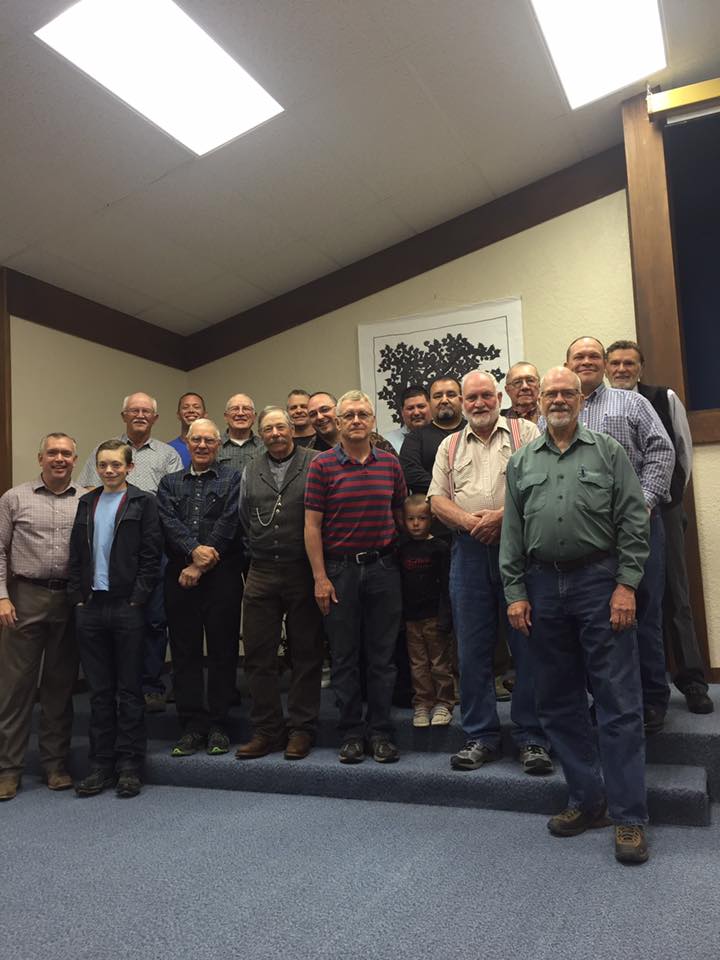
It was such a treat to be among the hearty, faithful Christian men of central Wyoming and the Bighorn Basin. By Bible-belt comparison, they come from small congregations. But their passion and desire to grow the church is humongous. Near the end of their men’s retreat, they divided into groups to discuss the obstacles to growth and suggestions for growth. What they came up with was incredibly insightful, helpful to especially anyone living in the current, western culture.

Among the obstacles they listed were:

  • Lack of commitment
  • Fear
  • Political correctness
  • Biblical ignorance
  • Sin
  • Apathy/indifference
  • Misplaced priorities
  • Lack of adequate leadership

For those in Alabama, Oklahoma, and California who would say, “Those are our obstacles!”, isn’t it interesting how common our struggle is.  The same factors are holding back our growth all over the nation.

Yet, I love the suggestions they came up with. I think they are key to tapping into our growth potential throughout the country and, to a great extent, throughout the world. They suggested the following:

  • Increase fellowship—The key to growth is being in each others’ lives more
  • Emphasize and empower Bible study—There can be no spiritual or numerical growth without growing our knowledge and understanding of God’s Word
  • Think outside the box—Staying faithful to truth, get out of method ruts and overcome fear of rejecting a different, scriptural method just because it is new
  • Challenge greater application of biblical truth—Every class and sermon must have a viable “so what”
  • Be intentional in our relationships—Realize that our jobs, community involvements, friendships, etc., are means to an end rather than an end of themselves. They all exist as opportunities to evangelize.

Our brethren in the deep south, the north, the Atlantic region, the upper midwest, the southwest, the far west, the northwest, and, in short, any recognizable region of the country share a desire to be relevant and meaningful in our communities. We want to honor Christ and grow His body. But it will take measurable steps. It won’t happen incidentally! We must act on our hopes and desires. We must personally engage ourselves in enacting these suggestions daily! In so doing, we’ll not only avoid being part of the problem but we’ll be part of the solution.

13118907_10153650222335922_7374883366678402046_n

Not Enough Room On A Short Pew

Neal Pollard

I witnessed something beautiful last night. A young man responded to the invitation and I was amazed by an outpouring of love and support shown by so many of his spiritual family. At least a dozen people, young men and young women as well as older men and women, came forward, too. They were not responding to the invitation to confess sin, but responding to this young man’s response. But there was room for about five on that short pew.  The rest of them either stood nearby or sat on adjoining pews.  They just wanted to be there for their friend and brother.

I could not help but think about what a beautiful display of family that was!  This young man was hurting and struggling. It takes a lot of courage to admit wrong, to ask for help, and to do so publicly. It is obvious that this congregation has concluded that no one should ever have to do that alone.

It is not the only way to do this, but it is definitely one way to bear one another’s burdens (Gal. 6:2), encourage and build up one another (1 Th. 5:11), provide edification according to the need of the moment (cf. Eph. 4:29), to bear the weaknesses of those without strength (Rom. 15:1), and to strengthen the hands that are weak and the knees that are feeble (Heb. 12:12). Think about what occurs with such an overwhelming outpouring of comfort! It tells the one who has come forward that they are special, important, and that they matter. It treats their problem(s) as most serious. It makes a statement about how they are seen, as a vital member of the body.

What would happen if every time anyone—a middle-aged man, an elderly widow, a struggling divorcee, a new member, a deacon, elder, or preacher, a teen, or any other sub-classification—publicly responded, they were met with such encouragement and consolation? Wouldn’t we be reflecting the heart of the Prodigal Son’s father in Luke 15, who ran to meet the boy who’d come home? Please consider this the next time someone publicly responds. Don’t worry what others may think of you. The one who responded didn’t worry about it.  Don’t stop to ask what it might look like. That broken man, woman, boy, or girl didn’t. If we’re going to err, let’s err on the side of charity and not severity! The church should ever seek ways to create a culture of compassion!

Remember the words of Paul: “So, as those who have been chosen of God, holy and beloved, put on a heart of compassion, kindness, humility, gentleness and patience; bearing with one another, and forgiving each other, whoever has a complaint against anyone; just as the Lord forgave you, so also should you” (Col. 3:12-13).

DCIM100MEDIA

Tychicus: Trustworthy Transporter

Neal Pollard

Have you ever paid close attention to the ends of especially the epistles? There are a variety of otherwise obscure Bible characters who make their cameos as if in passing. Tychicus is one such early Christian. You find him referenced five times in Holy Writ. He is numbered among the missionaries in Asia (Acts 20:4). Whether or not he preached or taught, he was acting on Kingdom business. In Ephesians 6:21, Paul sends him to Ephesus to make Paul’s conditions and circumstances known to them. He did the same thing for the Colossians (4:7). Paul tells Timothy, very simply, that he sent Tychicus to Ephesus (2 Tim. 4:7). Paul contemplated sending Tychicus to Titus on Crete (Tit. 3:12). Paul obviously considered Tychicus a reliable resource for help.

Have you considered the fact that all of us are carriers of something? What are you carrying?

  • Bitterness and resentment?
  • Gossip and talebearing?
  • Negativity and pessimism?
  • Filthy, foul, and offensive speech?
  • Dishonest, deceptive words?
  • A different gospel?
  • Harsh, railing verbiage?

Or…?

  • Gentle, kind words?
  • Faithful counsel?
  • Positive, joyful speech?
  • Encouragement?
  • Thoughtful, considerate messages?
  • Meek efforts to restore a fallen soul?
  • Courageous, lovingly spoken truth?

What would others entrust you with? Would they trust you? That should convict us, shouldn’t it? What traits are we developing?  Let’s be concerned about that, recognizing that God needs trustworthy transporters today!

el_greco_-_apostle_st_paul_-_wga10603

Mind Your Biscuits

Neal Pollard

A church marquee read, “If we could mind our biscuits, life would be gravy.” As somebody who loves to make biscuits, I appreciate the sentiment. Only a few ingredients–self-rising flour, shortening, and milk (sweet and/or butter). A simple, consistent temperature (I prefer 450 degrees). The time is pretty precise–10-13 minutes. The rack placement is fairly straightforward and there are only a few slots to choose from anyway. But biscuits are still burned. Why? Typically, it’s because we’re distracted. Maybe we’re multi-tasking. Maybe we get caught on another errand, out of the kitchen.  Sometimes, only the smell or maybe the smoke alarm jolts them back to the biscuit business at hand.

What does it mean? Why would a church put it on their sign?  Obviously, it is not a cooking tip! However, it is sage advice for our interpersonal relationships.

When gossip is being dispensed, do you walk (run!) away? Do you show the gossiper that you disapprove (cf. Prov. 25:23)? Or does it distract, amuse, and pique your interest? Be careful about your biscuits!

When it comes to your spouse, do you work on being content, engaged, and fulfilled in that God-ordained relationship? Do you work on wooing them and keeping them won? Or do your eyes, heart, and mind drift toward another’s? Be careful about your biscuits (Prov. 6:26-29)!

When there are church problems, do you feel the need to make your contribution, taking sides, or even fueling the fire? Be careful that the fire you are fueling doesn’t burn your own biscuits (1 Cor. 1:10; Psa. 133; Prov. 16:28; 17:9; etc.).

When it comes to how others raise their kids, are you a ready, open fount of wisdom which you are eager to spill on the public square? Do you have the answer regardless of whether you’ve even heard the question? Be careful about your own biscuits!

There’s nothing like the satisfaction of pulling out those huge, cathead biscuits with just the right color of light brown on top. When you peel the top off of it, it’s flaky but light. It certainly beats blackened, burned, inedible and charred carbs that are unfit for consumption. Not even good gravy can cover that problem!  Let’s be careful to examine ourselves (2 Cor. 13:5)!  This pleases the Lord (cf. Mat. 7:1ff).

biscuits-and-gravy


Jeremiah, The Persecuted Preacher

Neal Pollard

It was hard being a preacher in Jeremiah’s day. As thanks for his work, the weeping prophet endured the following:

  • He was led as a lamb to the slaughter (11:18ff)
  • His brethren dealt treacherously w/him (12:6)
  • He was confronted by false prophets (14:13)
  • His brethren cursed him (15:10)
  • He was hit, put in stocks and condemned (20:1ff)
  • His heart was broken (23:9)
  • He was seized and threatened w/death (26:8,24)
  • His teaching was opposed (28,29)
  • He was put in prison (32:2,3)
  • He was pursued (36:26)
  • He was beaten and imprisoned (37:15)
  • He was thrown into the dungeon (38:6)
  • He was bound in chains (40:1)
  • He was falsely accused (43:2)
  • He was taken to Egypt (43:6,7)

Remember, God called him to this work. Jeremiah was doing nothing wrong in his ministry; in fact, all of those things that happened to him came in “the line of duty.” The people, on the whole, never changed for the better after all the effort Jeremiah put forth in his ministry. Jeremiah never speaks of his work as enjoyable or rewarding, but it was essential and vital. Some estimate that his ministry spanned more than six decades! Whatever we call him, we do not use adjectives like “weak” or “wimpy.”

The life of preaching is a wonderful work. The preacher works with the best people in the world fulfilling the most profound purpose possible while working, ultimately, for the best Employer there is. The retirement plan is unbeatable! Helping people connect with salvation and helping the saved better connect with their Savior is extremely fulfilling. But, if there are job hazards (the minority of brethren who are difficult to deal with, sporadic job insecurity, being misunderstood, being subjected or having your family subjected to closer scrutiny, etc.), there is a reminder from Hilkiah’s son from Anathoth. Out of our own devotion to God, we will stay at it through thick and thin. Jeremiah wrote, “I have become a laughingstock all day long; Everyone mocks me. For each time I speak, I cry aloud; I proclaim violence and destruction, because for me the word of the Lord has resulted in reproach and derision all day long” (20:7-8). This man thought about quitting, but he couldn’t! He says, “But if I say, ‘I will not remember Him or speak anymore in His name,’ then in my heart it becomes like a burning fire shut up in my bones;

and I am weary of holding it in, and I cannot endure it” (9). I have watched my father, who has preached the gospel 53 years, have some “Jeremiah moments.” I have known so many gospel preachers who have walked in that prophet’s sandals. I have even experienced a few of the lighter trials Jeremiah records as happening to him.  But Jeremiah and his modern counterparts whom I have watched serve him faithfully provide a sterling example to me of what the man of God who preaches “looks like.” He’s tough, but tender-hearted. He’s loyal and loving. He’s gritty, but gracious. He’s courageous, yet caring. He will be fallible, but he must be faithful.

Preaching is, in my opinion, the best work in the world. For whatever bumps unique to the preacher traveling the narrow way, there are ten times the blessings. To my fellow friends in this fantastic fraternity, keep the tenacity of the tearful teacher of Judah! Stoke the fire in your bones (cf. 2 Tim. 1:6).

Dad in '64 an '16
My dad preaching in Artesia, MS, in 1964 (left) and preaching in Andrews, NC, in 2016 (right). 

THE PATIENCE OF A FARMER 

Neal Pollard

James uses a variety of examples throughout his short epistle. In James 5:7-8, he writes, “Therefore be patient, brethren, until the coming of the Lord. The farmer waits for the precious produce of the soil, being patient about it, until it gets the early and late rains. You too be patient; strengthen your hearts, for the coming of the Lord is near.” As we analyze these verses, we see at least three things.

Patience instructed.  It’s interesting that James is urging us to be patient with each other as fellow Christians. Just read the rest of the chapter and it reads like an instruction manual for dealing with the internal problems we can have as a congregation of God’s people. This patience has a duration—until the coming of the Lord. Stay patient as long as you live or until Christ comes again, whichever comes first.

Patience illustrated. Patience is illustrated by the farmer. Notice:

  • The farmer waits. Patience almost always involves waiting. Delayed gratification without the delay is something completely different. Sometimes waiting is necessary and it helps us develop character, if we let it.  We have to fight that part of human nature that makes us impatient. These brethren in verse seven were being mistreated by rich, unfair brethren, and it apparently was hard on them to wait for justice to be served. But James says, “You just need to wait. God will ultimately make things right.” That is sage counsel for us in so many areas of life, to “hang on and let God work in His time.”
  • The farmer waits for the harvest. When you put seed in the ground, you’re still a long way from harvest. Different crops take a different amount of time to come to fruition. Different conditions, like weather, effect the time of harvest. But harvest is always the goal. Why do you keep planting seed, the seed of Scripture in the fields of evangelism or the seed of service in others’ lives or the seed of spiritual fruit in sometimes infertile fields? Because harvest time is coming and the Lord will sort things out then (Mat. 13:30, 39).
  • The farmer waits for what brings harvest. There are necessary conditions. James mentions the early and latter rains. In Palestine, farmers counted on the autumn and spring rains. Both were essential. There are going to be necessary conditions throughout our Christian lives. In the short-term and long-term, we will endure and experience things that help get us to harvest.  See the blessings and the challenges of life as necessities which can help us go to heaven.

Patience imitated. James says, “You also be patient.” He says for Christians to be like those farmers.  How? “Establish your hearts.” James focuses on the heart throughout this short epistle. Deception (1:26), jealousy and selfish ambition (3:14), impurity (4:8), and worldly pleasure (5:5) fattened and sickened their hearts. James is still working on their hearts at the end and connects patience with spiritual heart health.  Why? “The coming of the Lord is at hand.” The harvest idea is wonderful for those who are prepared, but if we allow our hearts to stray and lose patience, the Lord’s coming won’t be a joyful occasion for us. Be ready for harvest by being patient whatever adversity arises.

If you are struggling with patience, look at the farmer. Both my grandfathers farmed, my mom’s dad for a living. They had to persevere. There are bumper crops and there are droughts. You keep farming whatever the conditions. Let’s approach the most important harvest with the same determination!

ueberladewagen_jha

Facts Deduced About Baptism From The Eunuch

Neal Pollard

The book of Acts is wonderful for teaching the history of the church as well as providing examples of how people became Christians. From the first gospel sermon (Acts 2), baptism is central and essential to God’s plan of salvation. The emphasis is even found through facts implied from these statements and examples. Consider some facts deduced about baptism from the conversion of the Ethiopian eunuch.

  • First, baptism is part of preaching Jesus. In Acts 8:35, Philip began with the eunuch from the passage the eunuch had been reading (Isaiah 53), and “he preached Jesus to him.” Consequently, the eunuch, when they came past a body of water, said, “Look! Water! What prevents me from being baptized?” Why would this man ask such a question unless preaching Jesus included preaching the necessity of baptism?
  • Second, baptism is part of believing (Acts 8:37). Philip ties his request for baptism to the essentiality of faith preceding baptism. The eunuch confesses belief “that Jesus Christ is the Son of God.” Jesus had sent His disciples with this understanding, that “he who has believed and is baptized shall be saved” (Mark 16:16a).
  • Third, baptism involves urgency (Acts 8:38). The eunuch ordered the chariot to stop. Why? Why not wait until he was back in Africa? Why not wait until Philip collected several others and then have a baptismal service for them all at once? When the Eunuch saw water, for some reason he wanted to submit to baptism right then and there.
  • Fourth, baptism involves immersion (Acts 8:39). We primarily know this because the word “baptism” means “strictly dip, immerse in water (Friberg & Miller, 87). However, the fact that Philip and the eunuch both went down into the water indicates that baptism must involve more than sprinkling or even pouring. This man  (and Philip) went to the trouble of getting wet by going down into the water.
  • Fifth, baptism produces rejoicing (Acts 8:39). The first evidence of joy comes after the eunuch comes up out of the water, not when Philip preached Jesus or when the eunuch confessed belief in Jesus. There was something important and necessary about the act of baptism.

Despite a religious world filled with groups who resist, argue against, and deny the importance of baptism, that one example (and there are several others–Acts 2:36-47; 8:12-13; 9:18+22:16; 16:15; 16:30-33; etc.) leaves no doubt about the indispensable part baptism plays in God’s plan to redeem humanity. Thank God for this conversion example in Acts 8. May our hearts be open to accept what the Word says to us (Luke 8:15).

13055587_1079852015371168_1598737744818493967_n
Megan Meeks was baptized this past Thursday, 4/21/16, in Denver, CO. The plan has not changed since Acts 8.

Tools In God’s Toolbox

Neal Pollard

Romans 6:13 tells us our body is an instrument, and we choose to use it for righteousness or unrighteousness. The Greek word translated “instrument” there means “tool or weapon.” What kind of tool or weapon are you? Are you an instrument God holds in His hand to do His will?

  • Are you a battering ram? The ancients would use a log or some other hard object to break down a wall or door. Have we filled our hearts with the Word to the degree that we can, speaking the truth in love (Eph. 4:15), break down barriers keeping the honest-hearted from God?
  • Are you a crowbar? Crowbars pry objects apart. There are things we should separate from our thinking and lifestyle. Are we trying to pull away from worldliness (Js. 4:4)?
  • Are you a chisel? This is a tool that does meticulous, detailed work. Its blade carves or cuts hard materials. Do we have the tenacity and trust needed to use God’s Word and benefit from His providence to remake our lives into the image of Christ (cf. 2 Co. 3:18)?
  • Are you a level? We live in not only a dishonest world but also a corrupt world. So many call good evil and evil good (Isa. 5:20). Can people find in us a reliable standard of right and wrong, as we reflect the principles of God’s Word? Levels are used to determine whether something is true and as it ought to be.
  • Are you a plane? The plane smooths rough surfaces by repetitiously moving back and forth across the surface. All four Gospels (Mat. 3:3; Mk. 1:3; Lk. 3:4; Jn. 1:23) speak of John the immerser’s work as making ready the path of the Lord, making His paths straight. We are not forerunners of Jesus; we follow in His steps (1 Pe. 2:21). As we do follow Him, we are going to forge a path safe for others to follow (1 Co. 11:1).
  • Are you a magnet? A magnet is an object that draws and holds another object disposed toward such attraction. Magnets can be used as tools themselves, but they are often made a part of other tools, such as hammers and screwdrivers. By living like Jesus, you will draw people to Him.

Paul also referred to “tools” or “weapons” when talking to the Corinthians. He mentions “armor of righteousness” and “weapons of our warfare” (same word). In both cases, the tools or weapons are spiritual and figurative, yet with them we can help shape and build up those around us. Be a tool in God’s toolbox!

toolbox_226362564