Who Is The Greatest?

Neal Pollard

  • The preacher who dazzles with his insight, personality, influence, popularity, or following?
  • The teacher who is the students’ favorite?
  • The member who is “balling” (making a lot of money and having a lot of success in business)?
  • The family with the biggest house and nicest automobiles?
  • The one with the best academic pedigree, with the proverbial alphabet soup behind their name?
  • The folks who are best known and most influential in our community?
  • The ones who are incredibly fit and attractive?
  • The greatest debater, philosopher, and reasoner we know?
  • The elder who is most successful in his career?
  • One who seems to combine a great many or even all of these attributes?

It could be one of these individuals, but despite and not because of the specifics just mentioned. But, we so easily fall into the trap that causes us to think that those criteria are what make one greatest.  Such can cause us to vest blind trust in them or put them in a higher place than is right. Worse, we can try to be motivated to define and promote ourselves as greatest through these means.

The tendency is so fundamental. Jesus warned against it in places like Matthew 20:25-28 and 23:12. His disciples, like James (4:6-10), Peter (1 Pet. 3:8; 5:5-6), Paul (2 Cor. 10:12-18), Jude (16), and the rest, at least implicitly, address the same trap. We all fight the desire to be seen so as to be admired. We may do so through our marriages, our children’s accomplishments, our economic status, our apparent importance, our having it all together, our professional prowess, or any other asset we feel responsible for having. If we use these things to place ourselves above and/or push others below, we are disqualifying ourselves for greatness in the only way that matters—God’s way. False modesty isn’t the answer, either.

We must look at ourselves as dependent creatures. It’s all His and without Him we’d have nothing!
We must look at ourselves as devoted stewards. It’s all His and He expects us to use it wisely, on His behalf!
We must look at ourselves as divine instruments. It’s all His and He works through us to do His will!
We must look at ourselves as dutiful slaves. It’s all His and so are we, living and serving at and for His pleasure!

The warning and disclaimer is that this transformation must happen at heart-level, rooting out thoughts and attitudes that, while fleshly, are so easy to embrace. If the weeds of pride aren’t dislodged from deep within, this effort will prove impossible. But, if it could not be done, God would not have spent so much time instructing us to live and walk by the Spirit rather than by the desires of the flesh and mind. It is the old song, “None of self and all of Thee.” To the degree we adorn that mindset and make that transformation, to that degree we will achieve greatness God’s way!
5122193

I Sin Against The Lord When I Don’t Pray For You

Neal Pollard

Jonathan Martindale punctuated an unforgettable worship service yesterday morning with one of the most thoughtful prayers I have ever been privileged to be a part of. What made it so effective was the people and issues he prayed about. This is not exhaustive, but here are some of the specific people he prayed for among his beautiful words.

  • Individuals in nursing homes that are facing the end of life (they believe they are prepared for eternity, but are not)
  • Individuals who are in college who are not being adequately equipped for the challenges and skepticism being thrown at them (both those who are fighting for their faith and those who have started to drift)
  • Individuals who are have been rocked by broken families
  • High Schoolers who are dealing with temptation
  • Junior high youth (trying to figure out who they are in life and those dealing with depression)
  • Elementary kids that have not made the decision to follow Christ yet but still need prayers to learn Christ correctly and led to that decision.
  • Those who are in the world who are perfectly content with where they are but still do not have Christ
  • Those who are good moral people but don’t have Christ
  • Those who are in the world and caught up with various vices (drinking, drug use, pornography)
  • Those who have fallen away (and our being visionary and courageous to help them)

That prayer reflected true thoughtfulness, contemplating those who are lost or drifting. While I’ve heard other prayers devoted to groups of people, I cannot remember one exactly like Jonathan’s.

It reminded me of Samuel’s words to Israel after the coronation of Saul. They had sinned against God by rejecting Him as their king. He assured them of God’s care, adding, “Far be it from me that I should sin against the Lord by ceasing to pray for you” (1 Sam. 12:23). It seems that, in principle, we can be guilty of sinning against God and our spiritual family by not praying for them. James encourages praying for one another when sin infiltrates our lives (Jas. 5:16). The church prayed for Peter (Acts 12:5). Paul wanted Thessalonica to pray for him (1 Th. 5:25; 2 Th. 3:1). So did the writer of Hebrews (13:18).  So often, Jesus and His inspired spokesmen urged His followers to carefully, considerately pray for each other.

Let’s take every opportunity to do that today. Sit down and make a list of people—especially those who may get overlooked. Then, pray for them. Be as specific as you can about them. Talk with them and find out what they need from us in prayer. What a hedge of protection we may be giving one another by taking the time to pray for each other. What a huge blessing we can be for one another through prayer!

littleboypraying-1

What Vision Is

Neal Pollard

It is the ability to see what a thing could be. A carpenter, looking at a tree, sees with a trained eye much more than others can see. With his expert shaping, appropriate tools, and seasoned patience, he can make out of that tree what was once only in his mind. The Lord needs people, from the leadership down, who look at the community, each other, their income, and their abilities and see what could be done. It takes no effort, emotion, or education to say, “It can’t be done!” That’s what is expected. Vision sees what could be.

It is the ability to not obsess over what a thing has been. Due respect is owed to the labors of the past, and due recognition is owed both its successes and failures. The past, however glorious, will have ample samples of both. Yet, the people, plans, and programs of today and tomorrow should not be shackled and chained exclusively to was has been. Vision is not always settling for being “has beens.” “Will be” is what Paul seemed more focused in pursuing (cf. Phil. 3:10-12). Biblical vision recognizes that doctrine cannot change, but methods, technology, tools, and people invariably do. Vision asks how people living in the present time can best reach people living in the present time and prepare them for an endless eternity.
It is the ability to trust in what God can make it be. No plan would succeed without God’s hand in it. I love the prayers where brethren plead, “Help us in the things that are right and defeat us in the things that are wrong.” Among the Bible’s heroes are those who factor God into the plans and say, “We are well able” (Caleb, Num. 13:30). “I can do all things” (Paul, Phil. 4:13), “There is nothing too hard…” (Jeremiah, Jer. 32:17), and “No good thing does He withhold” (the sons of Korah, Psa. 84:11). Our vision can be bold when “our” is God and us! Since God made the sky, the limit exceeds even that! Our giving, our ambitions, our goals, and our sights should be set to reflect our belief in that fact.
Where will we be this time next year? In five or ten years? Vision plays a role in that. Vision attempts to see the unseen, forget the past, and trust the One who holds past, present, and future in His all-powerful hand. With those truths factored in, let us dream big dreams!

glasses-928465_960_720

Wanting To Want To


Neal Pollard

Do you want your marriage to flourish and grow?
Do you want to read through the Bible this year?
Do you want to lead someone the Savior to know?
Do you want to live life without worry and fear?
Do you want to lose weight and be healthy and fit?
Do you want to attain to more financial discipline?
Do you want self-confidence, courage, and grit?
Do you want to get better at caring and listening?
Do you want a closer place near the heart of God?
Do you want to trust Him when trouble finds you?
Do you want to have heaven after earth you’ve trod?
Then it all must begin with you wanting to want to! —NP

Call it desire, motivation, or willpower.  Whatever you call it, it is central to succeeding at whatever your goals are. What does it take to become a Christian? Wanting to! What does it take to defeat the sin in your life? Wanting to! What does it take to break bad habits and repeated blown judgment calls? Wanting to! What does it take to be a stronger, more faithful Christian? Wanting to! That is not to minimize or ignore our dependence on God and the strength He provides. But He is not going to overwhelm or overtake our will and make us do or be something. He did not operate that way in the age of miracles.

What will be your motivation? There are so many potential incentives. There’s the love God has shown us (2 Cor. 5:14). There’s the fear of hell (Mat. 10:28). There’s the yearning for heaven (John 14:1-3). There’s the concern about how we influence other’s destiny (Mat. 5:14-16). There’s the love we have for God (1 Jn. 4:19). There’s the longing to be like Jesus (1 Jn. 3:2). For each of us, some motivations are more powerful than others. Whatever it takes to be more for God in this needy world, latch onto it and pursue it. You can do it because you won’t be doing it alone. God gave you the church, His Word, prayer, and a personal will to help arrive at the ultimate goal. Don’t let up. Don’t look back. Don’t lose hope. Want to want to!

img_4387
4 people have motivated me to run over the past 19 years: Kathy, Joe, Bob, and Wes. Today was a 6 miler in the snow when it felt like 4 degrees. 

The Best Thing To Do For The Body This Year

Neal Pollard

When it comes to caring for the physical body, I have a lot to learn. While I work out nearly day, my most developed muscle is the table one. I will be working to use that muscle far less this year. But judging from all the new faces in the gym this morning, there are a lot of people who are going to be exercising their bodies who haven’t been doing so—at least for the next few days or weeks.

When it comes to caring for the spiritual body of Christ, I have even more to learn. Helping the church grow, develop, and fulfill its purpose better is a challenge that grows more daunting with each new year as our culture changes, our own distractions mount, and our sight is so easily eclipsed by the influence of this world. With that in mind, there is something we can do for His body that will give it its best opportunity to please God.  It centers around what we do with the Bible, as a church.

We must have confidence that God’s Word will give us what we need to have to be what we need to be. Through such, we will be “nourished on the words of the faith and of the sound doctrine” (1 Tim. 4:6). It takes the Word to cause “the growth of the body for the building up of itself in love” (Eph. 4:16). Isn’t this what Paul is also saying to Colosse, when he urges them to hold fast to the head so that the body would grow “with a growth which is from God”? (Col. 2:19).  We cannot hope to strengthen and protect Christ’s spiritual body locally without consulting the training manual of the Great Physician.  Let’s make that specific and practical:

  • Preachers must lovingly preach even the difficult subjects (i.e., God’s law of marriage, divorce, and remarriage, the distinct plan of salvation, the undenominational, singular nature of the New Testament church, God’s sexual ethics, the role of men and women, God’s pattern of worship, personal purity, etc.) and be a living example of the believer as their ethic is driven by that Word.
  • Elders must shepherd guided by the infallible Word and not with personal favoritism, deciding solely on popularity or what the majority favors, bending to political correctness, fear of offending influential members, and the like.
  • Deacons must function in a way that shows discipline, dedication, devotion, and discretion which is shaped and guided by the New Testament pattern for their works.
  • Members must follow with love, esteem, and cooperation when their leaders urge them to follow God’s truth, even if it’s distasteful to us or challenges our comfort and complacency.
  • Individual Christians must discipline their hearts and minds to be open and submissive to what they encounter in Scripture rather than be defensive and rebellious.
  • Families must dedicate themselves to studying and honoring the Word at home, in their daily lives, to grow and mature in the Words of truth.
  • Each of us must see the mandate to save souls, repeated throughout the New Testament, as a personal responsibility for which God holds us all accountable.

Isn’t it exciting to think about how much stronger the body of Christ where we are might be this time next year? If each of us will allow God’s inspired word to be the beacon and guide of our lives, His body is going to be powerful, noticeable, and desirable. We will draw men to Christ. We will be the picture of spiritual health. As you make your resolutions, won’t you determine to let the Word of Christ richly dwell within you (Col. 3:16).

Working out

NOT JUST A PROBLEM FOR THOSE WHO FAVOR INSTRUMENTAL MUSIC

Neal Pollard

People who have rejected the teaching that singing in worship must be without the addition of mechanical instrumental music have appealed to culture, to the permission of silence, to aesthetics, to emotion, to tradition, to preference, and the like. As we examine Colossians 3 and Ephesians 5, seeing the imperatives in each place (“let the word of Christ richly dwell within you”—Col. 3:16; “be filled with the Spirit”—Eph. 5:18) and the participles that reveal how to obey the imperatives (Eph.: “speaking…singing…making melody…giving thanks”; Col.: “teaching…admonishing…singing”), we rightly say that God specifies what He wants and through such excludes what does not fall within these categories. No one will successfully build a case for Divine authorization or approval, and church history will have turned centuries of pages before it is even found introduced in Christian worship.

Having said that, we have at times failed to step back and look at some of our own attitudes toward the music portion of our worship that may reveal some deficiency in our musical offering to God. As a musical instrument may drown out, overshadow, or become the central feature of worship music, so may our own minds and attitudes. How?

  • Being distracted by the age of the song (it’s too old or too new)
  • Being distracted by the pitch of the song (it’s too high or too low)
  • Being distracted by the pace of the song (it’s too fast or too slow)
  • Being distracted by the notes of the song (the song leader is leading it wrong)
  • Being distracted by who the song leader is or his appearance
  • Being distracted by how many verses are sung (too many or too few)
  • Being distracted by the aesthetics of the song (thinking about how it sounds more than what it says)
  • Being distracted by our own ability (proud of how good we sound or so embarrassed at how we think we sound that we keep quiet or fail to speak, teach, etc.)
  • Being distracted by the person/people next to us (concerned about what they think of us rather than what the message of the song is)
  • Being distracted by our familiarity with a song (frustrated that we don’t know it or knowing it so well that we sing from memory without engaging the heart)
  • Being distracted by matters outside the song (people-watching, thinking of other things, etc.)

Though I’ve never heard it said, have we constructed a theology that believes the only sin in our worship in song is adding an instrument to it? If we refuse to sing, sing with improper attitude, sing without heart and mind engaged, and the like, do we believe we are OK since we did not add to what God authorized.

In Matthew 15:9, Jesus condemned the Pharisees and scribes for worshipping God in vain due to their “teaching as doctrines the commandments of men.” Context reveals the specifics of their wrongdoing. But that word vain means “pertaining to being without any result; to no avail” (Louw-Nida; “to no end,” BDAG). Review the examples of distraction above. Can those render worship in song with no result, avail, or end? Absolutely! Perhaps we need to emphasize within our own assemblies how equally necessary it is to be worshipping God “in spirit” as it is “in truth” (cf. John 4:24). The bottom line of this whole matter of church music is striving to please God in our worship. That is not limited to a single issue or somebody else’s issue. It is as individual and personal as each of our own relationship with God.

762px-gerald_hughes_cleveland_school_teacher_leads_the_lee_heights_community_church_cleveland_ohio_congregation_in_song_1960_16458543170

The Gift (POEM)

Neal Pollard


The manger scene was sweet and mild,
But it was only a part of the plan,
The gift was not given by the swaddling child,
It was paid by the blood of the Man.

His Bethlehem birth was a crucial cog,
Without which His death could not be
But the people who spit, the soldiers who flog
And the pagans who nailed Him did not see

That by God’s prescient sight they helped complete
A present He meant for all men,
Unwitting, unwilling, they led down that street
The Hero who paid for our sin.

The gift was not delivered when He said, “It is done,”
We are miserable if He yet lies in the tomb,
He rose on that Sunday, this victorious Son,
As He’d come from the virgin’s blessed womb.

The gift has been given, this great grace of God
And He asks every person to receive it.
Those who obediently respond with salvation are shod
What a gift it is for all who believe it.

The Religion Of Resolutions

Neal Pollard

Have you ever wondered about the origin of New Year’s resolutions? I have. If they are to be trusted, the folks at the History Channel denote the Babylonians, nearly 4,000 years ago, as the founder of such culture-wide determinations. It was as part of a 12-day religious festival known as Akitu. Later, at the prompting of none other than Julius Caesar, the Romans, again as a nod to a god—Janus, the two-faced god who looked backward and forward—observed the advent of a new year with the intent of improving areas of their lives in need of such. Sarah Pruitt, author of the piece, claims that Christians, since early times, have approached the new year to rededicate themselves to Christ. Pruitt seems to be indicting so many today who observe this holiday in a purely secular fashion, and wonders if such humanistic emphasis is why so many resolutions fail (source).

It is noteworthy that the history of making resolutions is so closely tied to religious devotion. Perhaps this is because we, as human beings, recognize our innate inadequacy. Paul, feeling it necessary to defend himself against unnamed critics of his work, wrote, “Such confidence we have through Christ toward God. Not that we are adequate in ourselves to consider anything as coming from ourselves, but our adequacy is from God, who also made us adequate as servants of a new covenant…” (2 Cor. 3:4-6a). Paul, so accomplished as a Christian, preacher, leader, mentor, missionary, and more, was always striving to do more for Jesus. He was not trying to earn God’s love and approval. Whether looking back at his successes or failures, Paul, in his love for his Lord, wanted to serve Him more effectively. He told Philippi that he pressed on (Phil. 3:12), “forgetting what lies behind and reaching forward to what lies ahead” (Phil. 3:13). He advised the conscientious Christian to follow his example (Phil. 3:15-16).

Christianity is not a religion of annual intention. It is the religious of daily determination (Luke 9:23). January 1 is an ideal time to reflect, review, and resolve, but is far from the only time.  In a significant sense, each new day for us involves a resolve within ourselves to deny self and dedicate to the Savior. As I have done every year of my adult life, I will again set out objectives and goals, physically, financially, and familial. Yet, the most important will involve my faith. As always, these will need review, not just in January, but throughout the year. In my prayers today, I prayed for every Christian who resolves to conquer a sin problem, reach a lost soul, be more active in their local congregation, and any other noble aim for the Master. If you make some such specific resolution and would honor me with the privilege of partnering with you in prayer about it, please email me (mrnealpollard@gmail.com) and let me know. Then, let me know how it goes and especially tell me about your success. May God bless each of us with the resolve to be more faithful in our relationship with Him.

o-new-years-resolutions-facebook

Dying Villages (And Dying Churches)

Neal Pollard

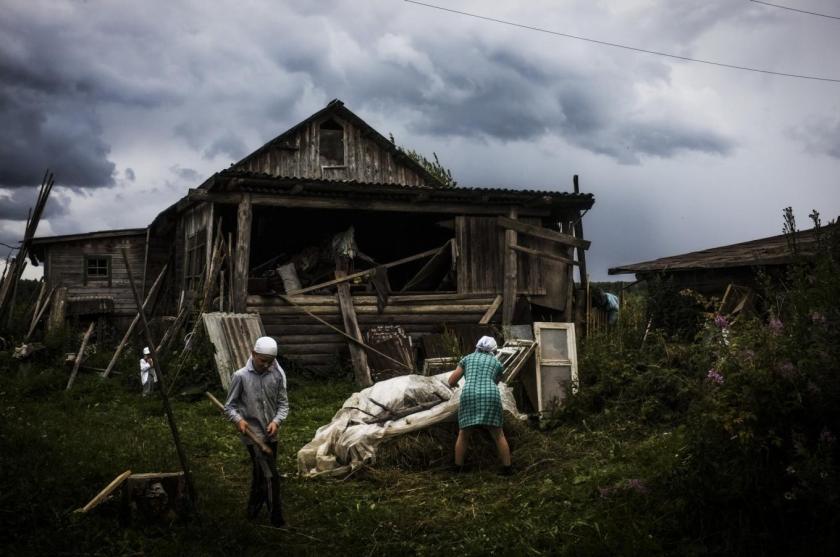
Liza Zhakova and Dima Zharov have written an extensive expose of a phenomenon I was totally unaware of—the depopulation of villages throughout the Kostroma region northeast of Moscow, Russia. 200 villages have been abandoned and 20,000 villages have faded away, a remarkable, mystifying fact for a vast region—it counts merely “660,000 residents for its 23,000 square miles” (source). Factors contributing to this include “low living standards, high unemployment, and a lack of housing and public services” (ibid.).  The ones who have remained are an odd assortment who either prefer isolation or cannot see another way.

Appreciation for salvation, the power of the gospel and the beautiful simplicity of the restoration plea, the exalted mission of the church, and much more should cause the church to spread and grow across the nation and throughout the world despite the opposition of the darkest forces against it. But, especially in America, the statistics show a decline in total number of members even as the nation’s population rises. Last Spring, Christian Chronicle reported that over 100,000 fewer souls were members of the church in 2015 than in 1990 (source). The United States’ net population increase over that period was 70 million (source). My experience in visiting churches in various parts of the country and in visiting with brethren from all over is that most churches are not experiencing growth. Some have seen an increase in attendance, almost always as the result of transfer from other congregations (over doctrinal issues, lack of resources and activities, or even churches that have to close their doors). But instances of churches that are taking the gospel into their communities and winning souls should, per the factors cited above, have us growing like wildfire.  In especially “mission fields” and rural areas, the church is often fighting for survival. My parents and brother, for example, work in a ministry called Carolina Outreach. Through their exposure to churches in the Carolinas, they witness and work with tiny congregations fighting to keep their doors open. They lack funds and workers to get the gospel to the souls in need of the truth in that part of this nation. I have spent over 20 years as a local preacher in states that are typically considered a mission field, outside of the traditional “Bible Belt” (i.e., Virginia and Colorado). In these and surrounding states, I have been saddened to hear about churches closing their doors or simply fighting just to “keep their doors open.”

As the Lord looks down at these shrinking parts of His glorious body, His heart must be breaking. Yet, He gave us the blueprint to address this problem and to reverse this trend when He gave us the New Testament. It is not more vibrant youth programs. These are wonderful and beneficial, but many of us faithful to Christ today grew up in small churches with virtually non-existent youth programs (including Kathy and me). It is not big, beautiful buildings. These can at times cause more problems than not. It is not extremism, whether to the right or the left. Building on the foundation of man is sand (Mat. 7:24-27). It is a resource available to everyone, in rural and urban areas, in depressed or booming economies, in north, south, east or west. In a word, it is “commitment.” The first commentary on the first church begins, “They were continually devoting themselves…” (Acts 2:42). Christianity meant everything to them in their daily lives. They were dedicated to seeking the lost, dedicated to helping each other, dedicated to following their Lord and Savior. They were dedicated in prosperous and perilous times. Their living hope was so strong (1 Pet. 1:3), they persisted even in dire persecution (see the rest of 1 Peter).

What a challenge this is to me. My dedication and commitment has room to grow. My complacency and apathy must decrease and His importance in my life must increase. If the church all over catches hold of this, the familiar phenomenon of “dying churches” will be a bad memory. May God grant us the strength and courage to reverse this tragic trend. May it begin with me!

zhakovazharovdesert-16

My Daily “To-Do” List

Neal Pollard

  1. Be Productive With Your Time (Eph. 5:16).
  2. Be Pure In Your Heart (Mat. 5:8).
  3. Be Proactive In Your Relationships (Eph. 5:21-6:4).
  4. Be Peaceable With Your Provokers (Rom. 12:17-21).
  5. Be Purposeful With Your Life (Rom. 8:28).
  6. Be Praiseful With Your God (Psa. 150).
  7. Be Pleasant In Your Demeanor (Prov. 16:24).
  8. Be Prayerful In Your Decisions (Phil. 4:6).
  9. Be Patient In Your Challenges (1 Th. 5:14; Psa. 37:7).
  10. Be Positive About Your Future (Phil. 1:20-21; 4:13).
  11. Be Persistent In Your Evangelistic Pursuit (1 Cor. 9:19-22; Mat. 28:19).
  12. Be Pitying Of The Downtrodden (Prov. 19:17).
  13. Be Picky About Your Associates (1 Cor. 15:33).
  14. Be Passionate About Your Spirituality (Rom. 12:11).
  15. Be Perseverant In Your Trials (2 Th. 1:4).
  16. Be Prospective In Your Opportunities (Gal. 6:10).
  17. Be Petrified Of Falling Away From God (Heb. 6:1-6; 10:26-31).
  18. Be Powerful In Your Faith (Luke 7:9; 2 Th. 1:3).
  19. Be Persistent In Your Study (2 Tim. 2:15).
  20. Be Penitent In Your Sins And Failures (2 Cor. 7:10; Acts 3:19).
  21. Be Plentiful In Your Gratitude (1 Th. 5:18).
  22. Be Permeating In Your Influence (Mat. 13:33-34).
  23. Be Profuse In Your Generosity (3 John 5; Prov. 11:25).
  24. Be Prolific In Humility (Mat. 23:12; 1 Pet. 5:5).
  25. Be Pining For Heaven (Heb. 11:16; Phil. 1:23).

to-do-list-tools

A Footprint, A Fingerprint, And An Imprint

Neal Pollard

“What do you want to be when you grow up?” “What will they put on your headstone?” It’s the kind of fundamental questions that accompany us all along the road of life. We want to have significance, to serve purpose, and to matter.  Whether motivated by legacy or something larger than self, the thoughtful periodic evaluate the difference they are making to those whose lives they touch. Of all people, Christians should take that matter seriously.  Consider this.

You Are Leaving A Footprint. Your decisions are observed by friends, family, and even those who only know you incidentally or even not at all. You are a leader.  So many people will eventually wind up somewhere because of what you do with and in your life. Paul could say, “Be imitators of me, just as I also am of Christ” (1 Cor. 11:1). In the most dramatic facet of this fact, people will be led toward an eternal destination through your influence. You are leading people toward or away from heaven. It’s in your heart, attitude, words, priorities, conduct, and passions.  To a line of folks longer than you could imagine, you are yelling, “Follow me!” Ask yourself, “Where am I going?”

You Are Leaving A Fingerprint. You are touching people’s lives. Your hands are in a variety of endeavors—your occupational life, your social life, your personal life, and your spiritual life. You are a servant of something and someone. Paul says it’s inevitable (Rom. 6:16). Everyone works at something, even if it’s laziness. It’s a legacy of labor. Where will people remember that your hands were most often seen? Will your chief legacy be whatever your occupation was? Your civic service? Your material accumulation and notoriety? Your pursuit of pleasure? Or will it be your involvement in people’s lives and with people’s souls? Consider this challenge, to “strengthen the hands that are weak and the knees that are feeble” (Heb. 12:12). Your hands will find something to do (cf. Ecc. 9:9). Make it count for God.

You Are Leaving An Imprint. Isn’t it sobering to think that all of us are associated with some quality. When our name is brought up, something—either directly or indirectly—is attached to it. For some, it will be: “grouchy,” “gossipy,” “complaining,” “foul-mouthed,” “critical,” “selfish,” “dishonest,” “arrogant,” “icy,” and the like. Fair or not, such broad labels are typically made interaction by interaction. For others, it will be: “humble,” “sincere,” “encouraging,” “dependable,” “loving,” “joyful,” “godly,” “positive,” etc.  You may feel yourself plain and insignificant, but you will leave an indelible impression on others throughout your life.  Even the one talent man, who tried to bury his talent, had to give an account for it (Matt. 25:14-30).

Leadership, labor, and legacy. These are gifts given by God to us all. What a powerful opportunity, one that lies before us daily! The great news is that if we don’t like the footprints, fingerprints, and imprints we have left and are leaving behind, we can change course. My favorite version of A Christmas Carol (and the best version!) is the one starring George C. Scott. He captures the remarkable transformation of Ebenezer Scrooge, a malevolent miser who becomes a merry mirth-maker. Charles Dickens shows us that anyone is redeemable if they’ll genuinely and fervently change. Of course, the Bible beat him to that message (Rom. 12:2; Acts 3:19; etc.).  Our time here is so short. May we all have the wisdom to know what is most important and pursue it relentlessly.

george_c_scott_fixed

The Holiday Blues

Neal Pollard

It is amazing how many people lose loved ones around the holidays. If you consider that there are about six weeks between Thanksgiving and New Year’s Day, you realize the statistical probability. But, for one who loses a mate, child, or parent, the situation is not remotely clinical. It is deeply personal. It hurts more because a season of great memories and happiness is upended by grief and loss. An ominous anniversary now wedges itself into “the most wonderful time of the year.” Our congregations are filled with people who are struggling with such dark days, and they find coping particularly hard. They don’t begrudge the festive mood of their friends and brethren, but they may often feel on the outside looking in at such mirth. Scripture urges us to “weep with those who weep” (Rom. 12:15) and to “bear one another’s burdens” (Gal. 6:2). What can we do to help despondent brothers and sisters?

  • Take note. Whenever someone’s loved one, especially a spouse, passes away, keep a record of that and send a card or otherwise let them know you know the significance of the day. What an overt expression of love and concern!
  • Go out of our way. Seek them out and actively console them. You’re not trying to dredge up emotion, but you are desiring to acknowledge it.
  • Go to God for them. Whether or not you tell them, include them and their grief specifically in your prayers. Or, better yet, take a moment and pray with them on the spot.
  • Lend an ear and shed a tear. They may want to talk about their memories, the funeral, the songs that they sang at the funeral, their traditions, or the like. Open your heart and feel for them. It is such good emotional medicine for them and you will be a good servant of Christ.
  • Bring them in. Invite them for a meal, visit them, or ask them to come along on an outing. Take them out to see Christmas lights. They may refuse your invitation, but they’ll know you wanted to help.
  • Put yourself in their shoes. Peter urged the Christians to be, among other things, “sympathetic, brotherly, kindhearted…” (1 Pet. 3:8). Part of our own personal spiritual growth should be to grow more aware of and concerned about the feelings of others. It is an active mental exercise, but seeking to think about how such a grieving one must feel helps us help them but also helps us.
  • Rope in others. We don’t usually encourage talking about people behind their backs, but this is a significant exception. Inform the potentially unsuspecting of such a difficult anniversary so others can join you in this ministry of consolation. This is a triumphant take on “misery loves company.” Their misery is mitigated by more caring family reaching out to comfort them.

We love our Christian family. We should be quick to express it in ways that can make such a difference. Look out into the congregation and find those hurting hearts. Of course, this is needful even if their loss was in May or August, too. But, minister to minds with these mental millstones. Help them carry their load. Such is an active imitation of our soothing Savior!

holiday-grief

THE VALUE OF REMEMBERING

Neal Pollard

I am not sure what the connection is, but some people tie a string around their finger to remember an important date or appointment.  Some people just write on their hand.  Others preserve it electronically.

What do we do to keep from forgetting what is important to us spiritually?  Peter writes in 2 Peter 1:12-13 that he was stirring them up by reminding them.  Studying God’s Word awakens our memory to things we may have forgotten, things we have not looked deeply into in the past, or brings something to our attention in a way it has not previously.  It is noteworthy that he was reminding them of something they already knew.  False teachers were trying to distract and deceive them from what they knew.

Bible study is good for us to keep from falling into the traps of false teaching. Many of us come to the Lord from religious groups that teach something different from the Bible about salvation, worship, the end of time, leadership, or the like.  Keep your Bible and your heart open to what you study, and you will keep reminding yourself of the joy and blessings of New Testament Christianity.

Later in the letter, Peter writes, “Beloved, I now write to you this second epistle (in both of which I stir up your pure minds by way of reminder), that you may be mindful of the words which were spoken before by the holy prophets, and of the commandments of us, the apostles of the Lord and Savior” (3:1-2).  That covers everything–the Old Testament and the New Testament.  It is also a reminder that if you live another 50 or 75 years, you will always need to study and remind yourself of what the Bible says on every subject.

If you have ever lost or forgotten something important that cost you in some way, you learned the value of remembering.  If you have ever been to a memorial or monument, you have benefited from that reflection.  If you want to grow in your faith and knowledge, be stirred up by being reminded of the important, spiritual things revealed in Scripture.

5065345783_b2c2cab1d3_b

Are We A Friendly Congregation?

Neal Pollard

While we must be concerned with doing what we do in worship according to Christ’s expressed will, we must also be sure to reflect His love to strangers, newcomers, outsiders, and otherwise unfamiliar faces. It offends my sensitivities anytime I hear anyone complain that a church I love so much seems cold and unfriendly to them. However, when I see so many focused on one another or on no one or hear accounts of our visitors complaining that we are neither warm nor welcoming, that love motivates me to say something.  Please consider the following principles:

  • We must stop expecting that others will represent us in friendliness. Maybe we look at those seven or eight members of the congregation that “go after” our visitors and conclude that they are covering the bases for the rest of us. In a congregation our size, that is woefully inadequate. They cannot reach everybody, but even if they can their friendliness does not let us off the hook. Dear reader, the chances are great that I am challenging you!
  • We must not use our introverted nature as an excuse. It would be hard to get an accurate estimate, but it is probably fair to say that more of our members are introverted than extroverted. Yet, the introverts may mistakenly conclude that extroverts are merely doing what comes easy and natural to them. As a representative of the extrovert clan, may I suggest that reaching out and connecting with strangers and visitors requires effort. Everyone must make an effort!
  • We must avoid the thinking that the visitor bears responsibility to be friendly. Some visitors may be extroverted and resilient to connect with us, but we’re the hosts and they’re the guests. Think about how hard it is to come into an unfamiliar place where you know no one and reach out to them. This is our “home turf,” and we must always take the initiative!
  • We must practice the Golden Rule (Matthew 7:12). Again, put yourself in their shoes. Treat them how you’d want to be treated if in their place.
  • We must see ourselves as direct representatives of Jesus. 2 Corinthians 5:20 calls us just that. Treat visitors exactly like Jesus would. Seek them out and do everything within your power to let them know how glad you are they are here.
  • We must understand the eternal implications of being friendly to visitors. Wouldn’t it be awful if we contributed to seekers, new Christians, and the like being discouraged, even to the point of walking away from Christ and His truth? We cannot minimize the eternal impact, for good or ill, we make by how we do in this matter.
  • We must break out of our ruts and routines. What creatures of comfort we are! What I am talking about requires us getting uncomfortable and changing our current habits. Avoiding eye contact, walking past unfamiliar faces, withdrawing into ourselves, talking only to those who talk to us or those we feel comfortable with may be the niche we’ve carved for ourselves over a long period of time. Confront those well-established patterns and insist on breaking them.

I want our congregation to be known for preaching and teaching the truth, but I want far more for us. Another thing I want is for us to be the church that doesn’t just embrace and accept “our own,” but who is always making room for one more. I’d far rather risk creeping someone out by bombarding them with extreme warmth than to turn a cold shoulder to one who was trying to connect with God. Wouldn’t you?

animosity-clipart-shake_tnb


WHERE ARE THE ELDERS?

Neal Pollard

  • At the hospital, attending a surgery
  • At home, hosting a family or families and getting closer to the sheep
  • Hosting and attending church activities
  • In private meetings with hurting, needy members
  • In meetings together, praying over and discussing the needs of the sheep
  • Spending time with their wives and children, nurturing that needed part of their lives
  • On their knees and in their Bibles, strengthening their walk with the Good Shepherd
  • Teaching our Bible classes, leading our worship, and even preaching as needed
  • On the job, exemplifying Christ before the world in a superlative way
  • Weeping with the weepers at funerals
  • Found among our graduates, parents of newborns, celebrating newlyweds, and other happy moments experienced within the flock
  • In Bible studies with non-Christians or Christians wrestling with some Bible matter
  • Looking for visitors and new faces in our assemblies
  • Working, sleeves rolled up, on workdays and other occasions where they can serve
  • Enjoying fellowship, their very actions reminding us they’re normal and one of us
  • Watching and listening carefully, especially at the teaching and preaching that is done, ensuring the spiritual food their sheep ingest is healthy and nourishing
  • Holding up the hand of faithful gospel preaching, having their hands help up by their preachers
  • Touching base with the deacons, encouraging and aiding their success in ministry
  • Attentive to little children, the elderly, the alone, and others that many might unintentionally overlook
  • Ensuring the unity of the Spirit in the bond of peace, rooting out divisiveness
  • On the phone and in the homes with erring sheep, striving to retrieve them and, sadly, if necessary, leading the flock to withdraw fellowship from the irretrievable
  • Setting the spiritual tone, emphasis, and direction of the flock

Our elders, like faithful elders everywhere, do a lot that is unseen by the majority.  It is hard to quantify the time and effort each of these godly men put into their work, but God sees it. What is more, God rewards it. My prayer is that righteous elders everywhere will take heart at what an inspired elder once wrote: “Therefore, I exhort the elders among you, as your fellow elder and witness of the sufferings of Christ, and a partaker also of the glory that is to be revealed, shepherd the flock of God among you, exercising oversight not under compulsion, but voluntarily, according to the will of God; and not for sordid gain, but with eagerness; nor yet as lording it over those allotted to your charge, but proving to be examples to the flock. And when the Chief Shepherd appears, you will receive the unfading crown of glory.”

13239021_10153682591930922_3851531815462243933_n
Bear Valley elders among our 2016 High School graduates

FOURTEEN SUGGESTIONS FOR BUILDING YOUR DEVOTIONAL LIFE

Neal Pollard

Maybe you have resolved repeatedly to become a better, more faithful Bible student, person of prayer, or simply one who truly desires to build a closer relationship with God. While a lot of that will be personal and peculiar to you as an individual, you may lack direction about how to get started or give yourself the best chance to succeed in that goal. Perhaps these few suggestions can prove helpful to strengthening your daily connection with your Creator.

  • Adjust your wake up time. 15 to 30 minutes head start will prove the most vital moments of your day.
  • Find a quiet, solitary place. Distraction can equal detraction.
  • Study and pray with pen and paper or computer nearby. This will aid specificity and memory.
  • Do not rush. Better a paragraph or chapter pored over than ten chapters glossed over.
  • Take advantage of the commute. Pray through it or play the Bible on audio, if you can.
  • Pick a book or topic of interest and drill down.  Pick it for its relevance to your weakness, need, ignorance, or curiosity. Drink it in deliberately and carefully.
  • Be specific and transparent in your prayers. In the solitude of prayer, drop all pretense, denial, and pride. He knows it all anyway.
  • Always seek application in the Bible text you are reading. This is not a history lesson or academic exercise. This is spiritual food, armor, and survival.
  • Create a list of ways you can enact the principles you read from Scripture. See yourself in the text of Scripture, and challenge yourself to think, say, do, and be what God desires of you.
  • Ask questions of the text. Don’t pass over what you don’t understand. Don’t skim the surface. Mine for meaning.
  • Build a prayer list. Challenge yourself and add people that many others may overlook in your local circle—widows, little children, new Christians, struggling folks, those facing an anniversary of loss, leadership, missionaries, non-Christians where you work and play, the poor, etc. This ever-expanding prayer list will bless lives in ways you won’t know here on earth.
  • Mean what you say. When you tell someone you’ll pray for them, have integrity. Make an honest effort (write it down, put it in your phone) and honor your word. Ask the people you encounter how you might pray for them, then do it.
  • Review. Revisit prayer lists or notes from Bible study periodically. Make it live on through reflection.
  • Pray for what to study and study prayer. You will find that these two spiritual strength-building exercises are interconnected. This is about relationship with God. Spare no exertion.

Consider these “jump starters.” You will come up with more and far better ways to help yourself to a closer walk with God. These days, we’re being pulled in every direction and most lead away from Him. You will have to be deliberate to swim against the tide. May God bless you as you let Him bless you through a vibrant devotional life!

bible-896220_960_720

Tora! Tora! Tora!

Neal Pollard

Today marks the 75th anniversary of the attack on Pearl Harbor, the event which drew our country into World War II. 2,343 men were killed, 1,143 were wounded, and 960 unaccounted for or missing. The Japanese chose Sunday to attack as it was the most relaxed day of the week for the servicemen. Many were still in their pajamas or having breakfast when the attack began at 7:55 that morning. Kermit Tyler, an Air Force lieutenant serving as the officer on duty that morning, told the radar operator not to worry about the large blip on the radar screen. He thought it was a flight of U.S. bombers coming from our mainland. Instead, it was the first wave of attackers. Captain Mitsuo Fuchida, the airstrike leader for the Japanese carrier force, could see that Pearl Harbor was totally unaware of the impending attack. He radioed back a coded message, repeating an abbreviated word three times—“to ra, to ra, to ra”—meaning “lightning strike.” The transmission began at 7:49, undetected by the soon-to-be victims of the attack that began a mere six minutes later (read more here).

Among so many significant facts, what we most remember about the attack on Pearl Harbor was how utterly surprising it was. No one stood vigil, considering the possibility of it. Like its later counterpart, “9/11,” and even natural catastrophes like Pompeii, the Galveston hurricane, the 2004 tsunami, or Mexico’s El Chicon volcano, serious and deadly events can occur without warning. With our most sophisticated technology and detection systems, we are without the ability to forewarn about the greatest surprise that will ever be.

Paul says that the resurrection of the dead of all time will occur “in a moment, in the twinkling of an eye” (1 Cor. 15:52). Paul and Peter both refer to “the day of the Lord” as that which will come “as a thief in the night” (1 Th. 5:2; 2 Pet. 3:10). Jesus warned that the day could be a disaster, a trap that comes on one “suddenly” (Luke 21:34). He taught that it will come at an hour unknown to everyone (Mark 13:32-33).

While it will surprise everyone, the coming of Christ will be a devastating event for the great majority of mankind. For them, it will infinitely exceed the loss of physical life. It will be an everlasting loss (Mat. 25:46; 2 Th. 1:9). Yet, God has made preparation eminently possible. He desires escape for everyone (2 Pet. 3:9). One can be prepared for that day and be saved from harm and for something inexpressibly superior. Those of us who have discovered the way of preparation must hold fast to it (cf. Heb. 3:6) and strive to share this vital information with as many as possible. The sudden coming of Christ need not be a defeat, but can instead be the harbinger of the greatest victory ever.  May Paul’s inspired exclamation be our song of victory: “Death is swallowed up in victory. O death, where is your victory? O death, where is your sting?” (1 Cor. 15:54b-55). Amen. Come, Lord Jesus (Rev. 22:20)!

burning_ships_at_pearl_harbor

Have You Heard Of Richard DeCosmis?

Neal Pollard

Have you ever found out something about a person you thought you knew, whether it be a secret talent, interesting background, or fascinating story from their past? Part of what makes life so interesting is that people have the endless ability to surprise us. Sometimes, however, we uncover remarkable examples of this.

Richard DeCosmis died in 2015. He had a 30-year-career as a police officer, but the man produced over 100 paintings and drawings the last quarter-century of his life. He apparently painted them in seclusion, “a self taught painter, a total outsider in the art world” (Marsha Froliak, heatst.com). He did not follow “any formal academic principle in painting,” but his works are increasingly being not only hailed as brilliant but “gaining traction in the art world.” There was a curated showing of 170 of his paintings in New York last month. His paintings are being sold in Connecticut, New York, and his native New Jersey. Perhaps he will come to be known as a great American painter. But, during his lifetime, he literally kept that considerable talent buried to all but his closest friends.

I am convinced that in our churches and on our pews are people full of untapped potential. We have great soul-winners, song writers, Bible class teachers, book writers, preachers, church leaders, church growers, encouragers, and more, and many of them don’t know it or are afraid to step out and show it. God gives to each of us abilities (1 Cor. 12:4-11; Rom. 12:3ff; Mat. 25:14ff). We can bury these and do nothing to grow and cultivate them, to our own everlasting reproach. We may not be have our mentors or encouragers to prod and prompt us, but we should all spend some time in personal reflection. We should ask, “What is it that He wants me to do and that I can do with I’ve been given to grow the kingdom?” Sitting next to you may be a person ultimately responsible for numberless many going to heaven. You know what, the person next to you may be sitting next to the same kind of person!

We are not seeking a spotlight or self-glorification. Yet, we have a limited time to make use of what God’s given us to do His work on earth. Who knows? We may even surprise ourselves by stepping out of our comfort zones and using our abilities to win the lost and help the saved! Let’s all work on growing our body of spiritual work! Eternity will tell the tale of it.

23203816283_03d11493f9_z

WikiLeaks (And God)

Jeff Wiant (guest baker)

Up until this past election cycle I had never even heard of WikiLeaks. Months and endless press later, I have become very familiar with this website. For those who may have been living under a rock for the past few months, WikiLeaks is a website that publishes secret information, news leaks, and classified media that they receive from anonymous sources for the world to see. Just looking on their page the other day, I discovered links that would allow me to read private emails from a presidential candidate and her associates, secret files about global surveillance, private emails between top employees at Sony Pictures, and I could have even watched a classified video.

Through all of this browsing it made me start to wonder. With hindsight being 20/20, would the ones who wrote these emails or committed these acts have written or done things differently if they knew that in the future they would be exposed and the whole world would be able to see and judge them because of these leaks?

More importantly, this also got me thinking further about myself. Do I have any secrets that I would fear if they ever got out? Do I ever have thoughts in my head that are impure and unfaithful? Do I allow myself to continue to have these thoughts because, after all, I’m keeping them to myself? After all, who’s going to know?

Allow me to answer that question for us all:  GOD KNOWS! Like WikiLeaks in our world, God can, and does, unearth all these dark spots in our personal lives. But whereas there are still plenty of classified files and incriminating private emails out there that haven’t been, and won’t ever be, exposed by WikiLeaks, God already knows EVERYTHING there is to know about us.

As it says in Psalm 139:1-4, “O Lord, You have searched me and known me. You know when I sit down and when I rise up; You understand my thought from afar. You scrutinize my path and my lying down, and are intimately acquainted with all my ways. Even before there is a word on my tongue, behold, O Lord, You know it all.” God knows everything we do on the outside and the inside. Having that realization is very intimidating.

For more evidence of this you can also look at Hebrews 4:12-13, which states, “For the word of God is living and active and sharper than any two-edged sword, and piercing as far as the division of soul and spirit, of both joints and marrow, and able to judge the thoughts and intentions of the heart. And there is no creature hidden from His sight, but all things are open and laid bare to the eyes of Him with whom we have to do.”

We will all be judged. Not just based on what our family, friends, and the rest of the world see, but based on the EVERYTHING that God sees. You can’t hide anything from God. Knowing this, are there changes we need to make in our lives? Are there things we need to do and think about differently?

The good news is that it’s never too late and God is a forgiving God. If we do sin, we need to confess these sins to God ask for forgiveness (1 John 1:9). I challenge you to live with the knowledge in the front of your mind that God is always watching and listening. There are no secrets with God and there is no misleading God. Live the life He requires and you will receive your eternal reward in Heaven.

“Finally, brethren, whatever is true, whatever is honorable, whatever is right, whatever is pure, whatever is lovely, whatever is of good repute, if there is any excellence and if anything is worthy of praise, dwell on these things” (Phil. 4:8).

jeff-wiant-2
Jeff (holding Dallas)

When You Hit An Elephant In Enid

Neal Pollard

No, not Enid, Kenya, or Enid, India. Enid, Oklahoma. On November 4, 2009, a Wednesday night, Bill and Deena Carpenter were returning to their home from church services. Driving down the highway in their SUV, Bill at only the last second saw the 4,500 pound animal standing in the middle of the road. He attempted to evade the pachyderm, but the eight foot Asian elephant was too big to miss. The good news is that neither the humans nor the elephant were seriously injured. The massive mammal had escaped earlier that day from a circus set up at a nearby fairgrounds. It seems to me that there are a few important reminders to consider from this bizarre incident.

IT IS A REMINDER THAT SOME THINGS ARE OUT OF PLACE. Enid is an unusual place to (literally) run into an elephant. Elephants just do not roam our countryside in America. Some things are incongruous and not just elephants running free in Oklahoma. Worldly Christians, aimless shepherds, inactive deacons, scriptureless preachers, warring brethren, and the like are more out of place than an elephant on the lam in Enid!

IT IS A REMINDER THAT SOME THINGS ARE TOTALLY UNEXPECTED. When is the last time your friend or loved one warned you to be on the lookout for elephants on the loose as you drove home? You just do not anticipate the need for such a warning. Some things cannot be foreseen, can they? How many of our trials and difficulties came with clear, sufficient warning? Certainly some do, but many more do not! Furthermore, what a reminder that the second coming of Christ will not come with signs or prescient warnings (1 Thess. 5:2; 2 Pet. 3:10; Matt. 24:35). The problems and adversities of this life often cannot be prepared for, but that coming, great, and unexpected day can and must be anticipated.

IT IS A REMINDER THAT EVEN THE BIGGEST ISSUES CAN BE MANAGEABLE. No doubt, Bill’s life flashed before his eyes. As he yelled “elephant” at the last second, he might have had time to think that this would be his last word. Mercifully, all parties escaped serious problems. What at first appeared catastrophic now makes for the story to end all dinner-party stories! How often do our looming problems seem overwhelming and utterly devastating only to pass like a storm with dark clouds and thunder but no damaging winds, rains, or hail? Too many times, we are so paralyzed by fear and worry over our personal challenges that we miss opportunities for spiritual growth and development (cf. 1 Pet. 5:7; 1 Cor. 10:13). We do not face a difficulty too hard for the Lord to handle.

No, you almost certainly will never hit an elephant driving down the highway this side of an African safari. Yet, you will be called to be salt and light in this world, a challenge that may make you awkwardly stand out at times. You will face the unexpected, both now and ultimately. You will also face supersized but surmountable issues in life. Do what you can to prepare, then leave the rest of it in the omnipotent hands of God!

10391950_188167515921_1482952_n