Burning on the Inside

Friday’s Column: Supplemental Strength

81121814_2462862270639428_5746232403106463744_n

Brent Pollard

Thanks to an autoimmune disease, I had an organ within my body constantly described as “friable” when I had cancer screening. Used in a medical context, friable means the tissue was easily irritated, making it more prone to inflammation. Perhaps you can deduce from the word “inflammation” its origin from a word denoting flames. Indeed, the Latin root for “inflame” is inflammare or “into flame.” Hence, a description of my organ’s tissue as something having the appearance of being burned with fire! Even now, I combat inflammation. In some respects, then, I am a man burning from within.

Obviously, that’s not good. I’ve sought to proactively do things to quell this inflammation within. I cut out sugar and reduced my carbohydrate intake. I’ve tried to keep myself stress-free. I have avoided the types of pollutants reported to cause inflammation. Even so, I’m still a man burning on the inside. As it turns out, sometimes current medical science just cannot figure out, in certain cases, why inflammation occurs.

This truth has caused some to look to unlikely places for the answers. For example, I’ve known some who looked to questionable sources of wisdom, such as the stars. One new-age acquaintance announced to me my problem stemmed from self-denial. Evidently, I’m not true to my fiery Moon sign but obey the urgings of my watery Sun sign. In other words, I quell my spirit.

Obviously, that’s not true. Firstly, self-denial is essential to becoming a disciple of Jesus Christ (Luke 9.23). We give God’s Kingdom and Righteousness primacy in our lives (Matthew 6.33). Being “true to myself” would mean giving in to my lusts and becoming a friend of the world (1 John 2.15-17).

Secondly, as Cassius told Brutus in Shakespeare’s Julius Caesar, “The fault, dear Brutus, is not in our stars, but in ourselves that we are underlings.” In other words, Cassius was telling Brutus that the stars destined nothing. All they needed to do was to decide not to follow Caesar. Through their strength of will, they could overcome him. Whether or not someone says the stars say this or not, that’s not why the inflammation within burns.

Recently, though, I stumbled across something of interest that you might find beneficial as well. It’s possible for shame to cause inflammation since it causes the body to release cytokines. 1 Researchers at UCLA detected these cytokines in a blood test after the subjects related a shameful experience. 2 Joseph Burgo, Ph.D. maintains a difference exists between guilt and shame in that the former relates to others while shame relates to self. 3 In other words, with guilt, you recognize you’ve done wrong, perhaps injuring another. With shame, though, you feel distressed because you’re conscious of what you’ve done.

Shame is what Father Adam and Mother Eve felt when the fruit of the tree of knowledge of good and evil opened their eyes. Yes, they recognized their guilt, but shame led them to hide from God, something impossible to do. Despite its negative implication, however, shame can elicit the godly sorrow Paul states leads to repentance (2 Corinthians 7.10-12).

Now, I’m not saying that if you burn from within as I do, that you’re needing to repent of some sin causing you shame. However, I do want you to realize that when you try to live with the shame of sin, you do more harm to yourself than you realize. Most importantly, you jeopardize your soul. Consequently, though, you may set yourself on fire within and sicken yourself by doing nothing to properly rid yourself of the shame that should help repentance.

I close with the words of John: “Now, little children, abide in Him, so that when He appears, we may have confidence and not shrink away from Him in shame at His coming.” (1 John 2.28 NASB).


My Sacrifice is Alive (Romans 12:1)

carl pic

Thursday’s Column: Captain’s Blog

Carl Pollard

“I appeal to you therefore, brothers, by the mercies of God, to present your bodies as a living sacrifice, holy and acceptable to God, which is your spiritual worship.” Romans‬ ‭12:1‬ is a verse that every Christian should keep in mind every day. It tells us how we are to conduct ourselves while we are on this earth.

There is a reason Paul refers to this sacrifice as living. In the Old Testament the Jewish peoples’ sacrifices always ended in death. It was a one time sacrifice that was concluded through the death of the animal. A living sacrifice is perhaps even harder than dying.

There is no clear end in sight. It is a day after day sacrifice on our part. Not a one time event. We are to live as a continual sacrifice for God. Rev. 2:10 says, “Do not fear what you are about to suffer. Behold, the devil is about to cast some of you into prison, so that you will be tested, and you will have tribulation for ten days. Be faithful until death, and I will give you the crown of life.” And In Matt. 24:13, “But the one who endures to the end, he will be saved.
A person who is a living sacrifice is one who endures, and is one who continues to sacrifice, even in trials.

So the question we must ask is, “What is this sacrifice?” If we give our money or time and it doesn’t affect us, was it really a sacrifice? Sacrifice is defined as, “giving up (something important or valued) for the sake of other considerations.”

Sacrificing ourselves to God implies that it actually takes effort on our part. Christianity that costs nothing accomplishes nothing. A chaplain was speaking to a soldier in the hospital and said, “You have lost an arm in the great cause.” The soldier replied, “I didn’t lose it—I gave it.”

Sacrifice can only occur if we have a change of mind. Paul would tell us that our motivation to sacrifice for God should come from a knowledge of our sin. And through the knowledge that they have been forgiven through Christ. Our sacrifice is willingly done because of the justification we have.

We are commanded to be living sacrifices and one of the struggles we may have is making our sacrifice an everyday occurrence. I know of a few people that think they can get by on a few sacrifices, but anyone can make a single sacrifice, the hard part is making it a part of our behavior. So are we living a life of sacrifice, or has our sacrifice already died?

As we go throughout this week we must ask, am I living a life of sacrifice for God?

Crane Flies

Wednesday’s Column: Third’s Words

Gary III

Gary Pollard

The Crane Fly is a misidentified and misunderstood creature. It looks like an enormous mosquito, so some will kill it for that reason. I often hear, “Don’t kill those, they eat mosquitos.” The crane fly is either killed for being a “mosquito” or protected based on misinformation about its eating habits. They do not have the anatomy to be predatory, according to Dr. Matthew Bertone with the NCSU Dept. of Entomology. They cannot bite humans, but they also can’t eat other mosquitos.

Some Christian liberties are like crane flies. We may understand that they are harmless in and of themselves (I Cor. 8; 10; Rom. 14.14), but we also understand that others may perceive them as being something they aren’t. To some, our Christian liberties are a mosquito: they see certain practices, lifestyles, clothing choices, consumptions, etc. as being sinful. Still others may see our Christian liberties as being hearty approval of some worldly behaviors, mistaking our enjoyment of this life (I Timothy 4.4) with godless living.

There is a middle ground. Flaunting our religious liberties is counterproductive and sinful (I Corinthians 8). Just because something is a gray area does not mean we should force other Christians to view it in black or white (Romans 14). On the other hand, it is every bit as wrong to condemn a Christian for enjoying a Christian liberty as it is to flaunt that liberty. Paul said, in the context of Christian liberties, “Who are you to judge the servant of another? To his own master he stands or falls; and he will stand, for the Lord is able to make him stand” (Romans 14.4).

So, what is that middle ground? There are, of course, the biblical principles of selflessness, courtesy, deference, discretion, confidence in our position on the matter (Romans 14.5, 20-23), etc. More often than not, though, we’re encouraged to simply avoid any Christian liberties because they may hurt others’ feelings. The middle ground is that we have a faith that is, “our own conviction before God. Happy is the man who does not condemn himself in what he approves” (Rom. 14.22).

Some liberties need not be flaunted but may still be enjoyed privately, if we can demonstrate to ourselves and to God that they do not violate His commands in any way. Some liberties should be kept private so as to avoid causing a brother or sister to stumble (Rom. 14.21). That word for stumble is proskopto, which means, “to strike against something, or to make contact with something in a bruising or violent manner” (BDAG). If what we’re practicing is offensive to others because we’ve made it far more obvious than it should be, we’ve messed up. If we’re doing our best to be discrete and courteous in practicing Christian liberties (which are gifts from God), we’re on the right track.

The best crane flies are the ones we can’t see. No one thinks a mosquito is in the room, and no one thinks a “skeeter-eater” is in the room, either. We can avoid a whole lot of heartburn, headache, and even potential sinning when we keep our Christian liberties private. Or, we could play it safe and, “Not eat meat or drink wine, or do anything by which your brother stumbles.” Whichever path we take, we can never go wrong with the Golden Rule: “So in everything, do to others what you would have them do to you, for this sums up the Law and the Prophets” (Matthew 7.12).

crane fly

Bitterness Illustrated 

Tuesday’s Column: Dale Mail

DaleandJanelledirectorypic

Dale Pollard

A doll given to a little girl becomes ill, and the girl instantly takes on the role as doctor. In her mind she decided the doll was sick, and in her mind she will decide when the doll will be healed. If only it were that easy when it comes to feelings of bitterness. Remember, no matter how long you nurse a grudge, it will never get better.
———————————————————
It takes a saltwater oyster anywhere from five to twenty years to create a pearl. The longer the pearl remains inside the oyster, the larger the pearl. Think about that. This creature will take a small grain of sand and transform it into a gorgeous pearl. Too often we can be guilty of doing the opposite. We take pearls and turn them into sand! Bitterness has a way of taking our beautiful lives and transforming them into something miserable.
———————————————————
It has been said that when a rattlesnake is cornered it can become so angry that it will actually bite itself. What a graphic illustration of what happens to the one who harbors hate against another. When we lash out we think we are hurting someone else— but in the end we’ve only poisoned ourselves.
In some cases it can be a challenging, But life is far sweeter when we learn to let go of bitterness!
•Ephesians 4:31-32
•Matthew 6:14-15
•Leviticus 19:18
rattlesnake_coiled_reptile_wildlife_venomous_pit_viper_rattle_nature-662138.jpg!d

“I Drive A Donkey”

Neal Pollard

There is an obscure Bible character that holds a great deal of fascination for me.  His name is Harbona(h) and his name only appears twice, both in connection with the account of Esther.  He is introduced in Esther 1:10 and plays a key role in this divine story of providence in Esther 7:9.  His name means “donkey driver.”  Granted, his name means more than that.  The Exhaustive Dictionary of Bible Names says his name means, “Warlike; martial; a destroyer. Ass driver; the anger of him who builds” (Cornwall and Smith 96).  Harbonah was the eunuch in Ahaseurus’ court who informed the king of Haman’s treachery, saying, “Behold indeed, the gallows standing at Haman’s house fifty cubits high, which Hanan made for Mordecai who spoke good on behalf of the king!”  Ahaseurus, true to form, wasted no time and said, “Hang him on it.”  Thus, ended the life of the man who tried to end the life of the Jews, through whom the Messiah of the world would eventually be born.  Thus, Harbonah has an important footnote in the beautiful unfolding of God’s providence in the life and book of Esther.  His name is favorably included in only sacred volume God ever moved men to write.  That’s a pretty good legacy for a man whose name means “donkey driver.”

All of us are probably curious, if uninformed, about what our name means.  I once learned that my middle name, by which as a “junior” I am called, Neal, means “champion.”  Lest I should be exalted above measure, my first name, Gary, means “hunting dog.”  My surname, Pollard, means “tree topper.”  Thus, taken together, I can be proud to know that my full name means “champion hunting dog tree topper.”  Solomon wrote about a good name, calling it better than it is more desired than great wealth (Prov. 22:1) and better than a good ointment (Ecc. 7:1).  Regardless of what your given name means, what means most and how your name will be remembered on the lips of others, good or bad, is determined by what you do on this earth as is associated with that name.  So even if your name is Rafe Bosephus McGillicutty, that name will be sweet on others’ lips if how you wear your name honors the Lord and promotes His cause.

We Must Grow Up 

Friday’s Column: Supplemental Strength

81121814_2462862270639428_5746232403106463744_n

Brent Pollard


Sometimes our television plays to an “empty room.” People are present; they just are not paying attention. I suppose you could say the television just serves to offer “background noise” on those occasions. Today, an action-type show played on a broadcast network. A childhood favorite was playing. Though I might be accused of “hassling the Hoff,” I noted, as an adult, the show I enjoyed as a child was replete with terrible acting from the show’s star and the supporting cast. The only character that retained an air of sophistication was the car voiced by William Daniels. Even with KITT, though, it wasn’t that “he” had great lines, but a great accent. 


I couldn’t help but think of Paul’s words to the brethren of Corinth. 


“When I was a child, I used to speak like a child, think like a child, reason like a child; when I became a man, I did away with childish things.” (1 Corinthians 13.11 NASB)


I will explain this verse in its context before I make application of it. In the immediate context of Paul’s discourse on spiritual gifts in 1 Corinthians 12-14, Paul was comparing their reliance on spiritual gifts such as tongue-speaking to being like a child. Love was the more excellent way (1 Corinthians 12.31ff). The spiritual gifts would pass away. Love would be what would guide the church after the miraculous age had passed. Rather than quibble over who had the best spiritual gift, they needed to grow up and be motivated by love. 


Within the context of the epistle, though, Paul’s words in our text serves as a reminder to Christians that a failure to mature as we should, signifies a childish mind (1 Corinthians 14.20).  Only in one’s desire to sin is such a childish disposition a positive, since it’s childlike innocence which epitomizes the ideal child of God (Matthew 18.3). Thus, we are innocent like children, but stay like adults in our thinking. 


This brings me back to Knight Rider. Why did the show make me cringe? I know some might accuse me of being quite capable of immaturity. Nevertheless, I am an adult now. I see things like plot holes. I can tell I am watching D-list actors. And the entire premise strains credulity. In the episode airing, Michael and KITT had gone to a South American country whose American advisor was imperiled by a coup begun during a volcanic eruption. They were responsible for safely extracting this advisor.  Naturally, they accomplished their task with little difficulty within the hour.


Now, let us bring it on home where it counts. How many Christians are easily swayed by the smooth words of a false teacher because he plays on those things appealing to an immature mind? How many base their convictions on how they feel instead of a “thus saith the Lord?” The Hebrews writer admonished his recipients to stop being milk-drinkers so that can tear into the solid food found in God’s Word (Hebrews 5.12-14).  That takes spending time in prayer and Bible study.


In closing, I remind you of what God said to Job when He finally granted the latter the audience he had requested: “Now gird up your loins like a man…” (Job 38.3; 40.7).  May we heed those words also and make those needed adjustments to become the Christian men and women God would have us be.
 

800px-knight_rider_replica_1x7a8004

Who Is God to Me? (Psa. 46:1-2)

Thursday’s Column: Captain’s Blog

IMG_0806

Carl Pollard

We are obsessed with our phones. A new study has found, that the heaviest smartphone users click, tap or swipe on their phone 5,427 times a day. Now that’s the top 10 percent of users, so we would expect it to be high, but even the average smartphone users still tap their phones almost half that many times a day. This means that some of us will touch our phones a couple million times a year (Adam Alter study).
The majority of the time we are on our phones is spent on social media. A place of fake relationships. We spend hours being “social” but this time spent never builds true relationships. The world is hungry for true and meaningful relationships. They waste hours online trying to get close to someone, but it always leaves them emptier than when they began.
As Christians we have a relationship with each other because of Christ, but even more, we have a relationship with God. The creator of this world. Let’s spend some time looking at this relationship we have with God. Who is God to me? Psalm 46 is a psalm of encouragement. The psalmist tells us to trust in God, to have hope in the relationship we have with Him, but this psalm also answers the question, Who Is God to Me?
He’s My Refuge/Strength. Verse one says, “God is our refuge and strength…” In my relationship with God, He’s my refuge. A place I can run to in times of need. He’s my strength, giving me more than I could ever have on my own.
Hafþór Júlíus Björnsson, a famous strongman, recently broke the world record deadlift pulling 1,104 pounds, breaking the previous record by 2 pounds. When I think of strong, this is what I think of. Lifting half a ton from the ground up to your waist, as mind boggling and impressive as this is, Hafþór still isn’t strong enough. None of us will ever have enough strength on our own. We may be physically strong, but spiritually God is the only one strong enough to help us walk the Christian walk.
The Hebrew word for refuge conveys the idea of a protective shelter (HALOT 571). God is a place of safety, a shelter that no one can break into. Thieves will break In and steal our possessions, but no one can ever take away our relationship with God. He’s our refuge, a place of safety. The word “strength” further builds onto the description of God. God is a strong refuge. And even more, He gives us that strength and refuge to help us in our walk. The strongest man is weak when compared to God. The most impenetrable of places pales in comparison to God. Who is God to me? He’s my strength and place of refuge.
He’s My Help. Verse one continues to say, “God is our refuge and strength, a very present help in trouble.” Trouble is something all of us will face. We run into opposition in almost every area of life.
“Good help is hard to find.” You’ll hear businessmen say this all the time. It’s a struggle that every restaurant, business, and church will run into. Who can we count on? We want people that are reliable. That’ll show up to work, get their job done, and be responsible. We need help. And the psalmist here tells us that God is our help.
God’s help is not hard to find. It is a help that is always there for us when we need it. Even more, God wants to help us. We all know people that when you ask for help, they’ll help you, but they really don’t want to. God wants to help his children, and that’s who God is to us.
He’s My Courage. Verse two says, “Therefore (because he is our refuge, strength, and help) we will not fear though the earth gives way, though the mountains be moved into the heart of the sea, though its waters roar and foam, though the mountains tremble at its swelling.” God is my courage because He helps me not fear what happens to me.
According to the DSM, specific phobias typically fall within five general categories: fears related to animals (spiders, dogs, insects), fears related to the natural environment (heights, thunder, darkness, fears related to blood, injury, or medical issues (injections, broken bones, falls), fears related to specific situations (flying, riding an elevator, driving), and other (choking, loud noises, drowning) (University of Pennsylvania study).
The world is full of fear. It is an ever present problem. I can’t stand heights and it all started when I had a nightmare where I was stuck by a belt loop at the top of the Eiffel Tower. Ever since I’ve been deathly afraid of heights.
My relationship with God gives me the choice to have courage instead of fear, hope instead of dread, joy instead of worry, and peace instead of anxiety. Though the earth gives way, though our world falls apart around us, we have courage instead of fear.
How does this help us? We need courage in so many areas: evangelism (we have a loving God to proclaim, but it isn’t always easy), confrontation (no one likes to call out a brother living in sin), family (courage to lead them to heaven, to make the hard calls), as a church (since we are called to live like Christ, we will make enemies), and Christian living (living righteously takes courage).
Who is God to Me? He’s my refuge, my strength, my help, and my courage. We spend hours each day on our phones, trying to be social or just wasting time. If our relationship with God was turned into a survey, how many times would we contact him? God wants a relationship with us, and sadly we tend to spend more time on social media than we do building our relationship with Him. Who is God to you? Is He your strength? Do you turn to him for help? Building and strengthening our relationship with God is the most important thing we will ever do.
8931592835_8c4ffe6396_b


The Angels’ Struggle (And Ours)

Wednesday’s Column: Third’s Words

Gary III

Gary Pollard

We sometimes have a tendency to give up when we mess up spiritually. We’ll think, “Guess I blew it, there’s no point in trying now.” Guilt or frustration over the difficulty of living for God and falling short is a powerful Achilles Heel of ours. Paul describes our struggle with sin as combat with self (Romans 7). 

A Christian who is fighting to follow God is still going to sin at some point. We sometimes allow the loss of that battle to drag us into a pattern of sinning solely because we’ve become discouraged that we even allowed that sin to happen. 

I’d like to point out that we aren’t alone in that struggle. Consider Job 38.7: angels – who do not need faith because they live in the presence of God – were up close and personal to the creation of our incredible universe. They watched in awe as God fabricated the stars. They heard those stars sing, which means that they were amazed by the sheer power and majesty of what we can only hear as obscure signals. They were right there! 

Some of those same angels were caught up in sin (II Peter 2.4ff; Jude 6-9). Satan currently has followers who were at one time up close and personal to the Power behind our existence (Romans 12.7ff; Matthew 25:41). 

If an angel, a being who does not serve God based on a mere belief in His existence, but because they were originally created for the sole purpose of carrying out His will, and who are eyewitnesses to His existence and unlimited power, can be tempted to the extent that they are willing to abandon the presence of God and forfeit ever seeing His face again, who are we to think that our struggle is that defeating? 

God does not have a salvation plan for angelic beings (II Peter 2.4). When they breach their boundaries, that’s it. The moment they act outside of God’s will is the moment they forfeit the presence of God for eternity. 

We are lower than angels on the creation totem pole (Psalm 8.5), yet we have Jesus as a mediator defending us before God (I John 2.1) and constantly making us sinless in God’s eyes when we’re doing our best to live for Him (I John 1.7). We have a gift that angels do not enjoy: we get extra chances. As long as we are willing to wage war with our sinful desires, as long as we are striving to be like Him, and as long as we are trying to incorporate the word of God into our lives, we have grace. 

We’re stepping out of the concrete and into conjecture, but there is at least some evidence that lust (Genesis 6; II Peter 2; Jude 6-9) and perhaps tragedy (Matthew 18.10) are enough to make an angel forfeit their home. Again, this is pure conjecture but it has, at the very least, some scriptural evidence to suggest legitimacy. 

When we sin, we need to take a step back and get some perspective. We must not brush off sin as being inconsequential, but we also must avoid allowing a mistake to send us into a dysfunctional pattern just because we think, “I’ve blown it, there’s no point in trying now” or, “This struggle is too great for me.” If angels aren’t immune, why on earth would we think that we are supposed to be? 

The beauty of Christianity is found in God’s grace. It is understandable, seeing how some have abused the subject, to want to avoid the topic altogether. How many, though, have found themselves trapped in sin because they did not understand or believe in the power of God’s continual forgiveness?

Understanding what we have when we make a concerted effort to follow God is of the highest importance. We will sin. If we say that we have no sin, we are liar and there is no truth in us (I John 1.8). When we do sin, let’s remember that not only can we have forgiveness if we’re walking in light, we’re not especially awful just because we find ourselves falling short. If even God’s angels can be tempted to the point of leaving His presence forever, so can we who have not seen His face. And let that cause us to seek His face with even more enthusiasm than before! 

I Corinthians 10.13

II Peter 3.9

573a4f4881b5ac289f8fd610e9755dcb

Life Illustrated 

Tuesday’s Column: Dale Mail

DaleandJanelledirectorypic

Dale Pollard

Contentment In Life 

As a young boy I can clearly remember the feelings I had in school. I was ready to be done with text books, math, science, and all the other trials and tribulations that I felt were too much for me to bear. I longed for the day when I could set my own bedtime, go where I wanted to go, spend money on whatever I wanted, and be looked at as an adult. I wish there was still a once-hated nap time scheduled in my daily life. My life, like many others, consisted of school and play, yet I looked forward to a future life that my young heart deemed better. It’s not better and it’s not worse— rather I’m just faced with new challenges that come with a new stage in life. We look forward to the future, and there’s nothing wrong with that as long as we are content with the present. Older couples will often state how fast the time has gone! Parents will look back on the years that flew by and always seem to ask the question, “Where did the time go?” Every hour was sixty seconds, every day was twenty four hours, and every year was a full three hundred and sixty five days. Our bodies run down, our hair turns gray, and our problems don’t end– they just differ from chapter to chapter. We are all living a vapor of a life, then off to eternity! When the dust settles over our caskets, when friends and family leave the cemetery, when they move on with their lives, what is left behind is our legacy and the impact we made. If life is a vapor and eternity is endless, our focus should be on the latter.

Endurance In Life 

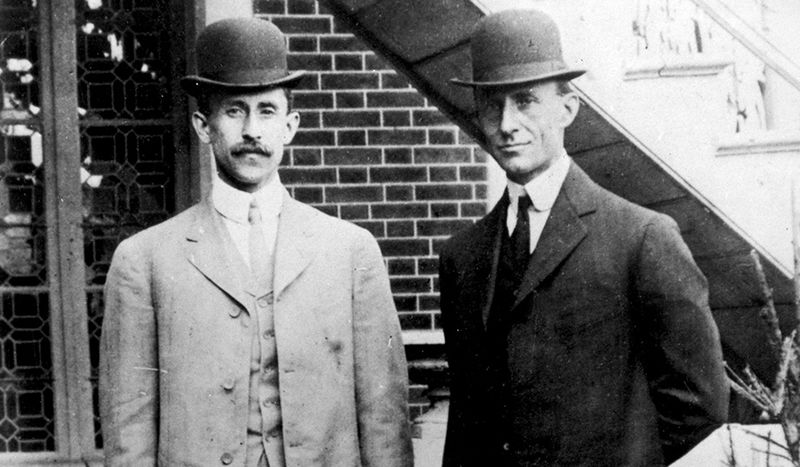
Wilbur Wright was playing ice hockey as a young man when one of the players struck him in the mouth with his hockey stick. Wilbur Wright, who was known for being outgoing and articulate, had plans to teach at Yale college. The complications with his injury made him give up that dream and go into a depression. The man that gave him the injury was known as the neighborhood bully, and it is speculated that he did this to Wilbur on purpose. That bully later on became addicted to cocaine and eventually he was discovered to be a mass murderer. He killed sixteen people after reading the book Dr. Jekyll and Mr. Hyde because he related to Mr. Hyde. Wilbur, despite an unfair and unplanned accident, went on to invent the first motorized airplane and change the world forever. Bad things happen to good people, but we have a choice on how we respond and what we chose to do next.

The Last Blink 

God created the world in 6 days. 144 hours. 8,640 minutes. 518,400 seconds. But He’ll come back and end it all in the blink of an eye. Just like that time is gone and everybody is sent into eternity. Though it’s a figure of speech, the average human can blink in 3/10ths of a second. God made “the blink” that quick so you could close your eye quickly enough to protect it from debris, bright bright light, and to illustrate for us the way He’ll return.

800px-orville_wilbur_wright
Wilbur Wright (right)

Some Beautiful ‘Truths About Race

Monday’s Column: Neal at the Cross

65093899_10156405640240922_1795016641457684480_o

Neal Pollard

I wonder if we’ll ever live in a world free of racial turmoil, tragedy, inequity, and bigotry. Whenever we make assumptions, blanket statements (or beliefs), or judgments about people based on something so literally superficial as skin color, we miss the deeper possibilities–love, relationship, and unity, just to name a few. One thing we can never legitimately do, when seeking to prop up racial prejudice, is to lean on the Bible to do so.

Scripture highlights the racial tensions that existed on both sides of the Jewish-Gentile divide in both testaments. Yet, instead of endorsing it, the Bible–especially through Christ–seeks to transcend and destroy it. Consider some beautiful truths it teaches about race.

–“He made from one man (literally, “from one”; some versions say “one blood” and others “one ancestor”) every nation of mankind to live on all the face of the earth…” (Acts 17:26). As many have put it, “We’re all related through Adam.” Malachi rhetorically asks, “Do we not all have one father?” (2:10). There is biological unity among the races.

–“Let us make man in Our image, according to Our likeness…” (Gen. 1:26). The Godhead declares this at the creation, when making that first man. Every person of every race shares this marvelous, identifying trait. No human should suffer an identity crisis, in the ultimate sense. We’re made in the image of God! There is existential unity among the races.

–With no qualifier, Scripture says “it is appointed for men to die once and after this comes judgment” (Heb. 9:27). There may be different genetic predispositions or conditions that strike each of the races of humanity, but this inevitable ending awaits us all. There is corporeal or physical unity among the races. 

–Among so many passages that relates a similar principle, Solomon writes, “A joyful heart makes a cheerful face, But when the heart is sad, the spirit is broken” (Prov. 15:13). Each individual has a particular makeup, whether we speak of extroverts or introverts, moodiness or even-temperedness, expressiveness or reservation, or the like, but all of us have an emotional makeup. There is emotional unity among the races. 

–“For all have sinned and fall short of the glory of God” (Rom. 3:23). Each one of us has unique struggles, weaknesses, and temptations. Ultimately, none of us escapes this reality. There is spiritual unity among the races. This extends to the fact that One man died for all sinners (2 Cor. 5:20). Then, beautifully, because of this, He places every obedient believer in Christ in one body (Eph. 2:16). As Paul declares, “There is neither Jew nor Greek, there is neither slave nor free man, there is [a]neither male nor female; for you are all one in Christ Jesus” (Gal. 3:28).

Men will try to stoke and foment division. The carnal will embrace and inflame such baseness as racial prejudice, with its fear, assumption, and blind ignorance. But let all who do so step away from the Bible and away from the cleansing blood of the Savior. For neither cover such sin! Instead, let us answer the call of Scripture to strive toward unity in every area God sets forth. 

24174316_10155156548665922_2149664945060573230_n
Tyler King studying the Bible with a truth seeker. 

Evil Never Sleeps

Friday’s Column: Supplemental Strength

81121814_2462862270639428_5746232403106463744_n

Brent Pollard

Have you ever heard the expression, “Evil never sleeps?” I tried finding the origin of this expression with those tools available to me. From my limited search, I believe the expression likely originates from Proverbs 4.16.

“For they cannot sleep unless they do evil; And they are robbed of sleep unless they make someone stumble.” (NASB)

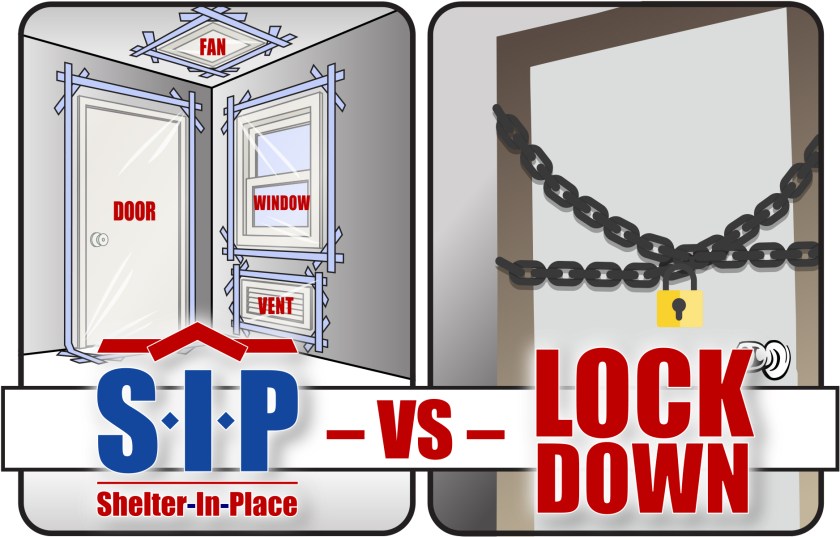
I have taken note of how this is true even during a pandemic.

The first thing striking me was my state still advertised its lottery. Are lottery tickets an essential item for which people should leave their house to buy?  I would think not. This soon became a moot point, though, since the state began advertising its existing lottery app one could use to buy lottery tickets online from the “safety” of their own home.  Evil never sleeps.

Second, I had seen the news reports of how pornography was profiting from the shutdown. As soon as people began sheltering in place, one purveyor of internet porn noted an immediate spike in visits to their site. India experienced a 95% rise in porn viewership. 1 Only South Korea, who did not shutdown as much of their country, did not see such a porn patronage spike. 2 When other businesses are shutdown, pornography has likewise become lucrative for women seeking employment during tough economic times. 3 Evil never sleeps.

Third, while being disappointed by the designation of religious assemblies as nonessential by government, I’ve noted that they have propped up vice as essential. For example, in Denver pot dispensaries and liquor stores were exempted from stay at home orders. 4 Meanwhile, churches have not been able to meet in their buildings, even with efforts to practice social distancing. On the weekend of April 12th, you may recall that Louisville, Kentucky, mayor, Greg Fischer, even criminalized “drive-in” church services. Fortunately, a judge overturned Fischer’s “edict.” 5 Evil never sleeps.

Fourth, the abortion industry remains alive and well during shutdown. While certain states successfully closed abortion clinics at the outset of the shutdown by stating such clinics offered only elective procedures, judges have overturned such decisions in favor of granting access to it. 6 So, we are currently living at a time when cancer screening is non-essential, but killing your unborn child is “necessary.” Yes, evil never sleeps.

Since evil never sleeps, what are we, as children of God, to do?

Be on guard (1 Peter 5.8). As we have shown, our enemy never sleeps. He is looking to devour us. Thus, we must keep up our alertness.

Redeem our time (Ephesians 5.16).  Given the uncertainty of our life, we must make the most of the opportunity God gives us to do His will. Even though COVID-19 is deadly, we note that the things taking a man’s life are far more numerous than viruses (cf. James 4.14).

Pray (1 Thessalonians 5.17). We must always maintain a prayerful heart. It is an avenue allowing us to “cast our cares” upon our Lord (1 Peter 5.7). It is likewise the only means whereby we can discover peace surpassing our ability to comprehend (Philippians 4.16-17).

Evil never sleeps, but we can avoid its darkness by remaining on the path shining as bright as day (Proverbs 4.14-15, 18), while devoting ourselves to doing our Lord’s will.

shelter in place

REFERENCES

1 Kannan, Saikiran. “Pornography Gets a Pandemic Boost, India Reports 95 per Cent Rise in Viewing.” India Today, Living Media India Limited, 11 Apr. 2020, www.indiatoday.in/news-analysis/story/pornography-gets-a-pandemic-boost-india-reports-95-per-cent-rise-in-viewing-1665940-2020-04-11.


2 Ibid.


3 Dorn, Sara. “Business Booming for Cam Girls amid Coronavirus Outbreak.” New York Post, NYP Holdings Inc., 16 Mar. 2020, nypost.com/2020/03/14/business-booming-for-cam-girls-amid-coronavirus-outbreak/.


4 Del Giudice, Vincent. “Denver Exempts Pot Shops, Liquor Stores from Stay-at-Home Order.” Bloomberg.com, Bloomberg L.P., 24 Mar. 2020, www.bloomberg.com/news/articles/2020-03-24/denver-exempts-pot-shops-liquor-stores-from-stay-at-home-order.


5 Lord, Shaquille. “District Judge Says City Can’t Stop Louisville Church from Holding Drive-in Easter Service.” WLKY, Hearst Television Inc., 12 Apr. 2020, www.wlky.com/article/district-judge-says-city-cant-stop-louisville-church-from-holding-drive-in-easter-service/32115835.


6 Tamburin, Adam. “Federal Court Tweaks Abortion Order, Still Allows Procedures during COVID-19 Pandemic.” The Tennessean, Tennessean.com, 27 Apr. 2020, www.tennessean.com/story/news/2020/04/27/court-tweaks-tennessee-abortion-order-procedures-still-allowed/3033007001/.

David’s Prayer In the Cave (Psalm 142)

Thursday’s Column: Captain’s Blog

carl pic

Carl Pollard

It was in one of the lowest points in his life that David finds himself hiding in a cave praying to God. He says, “With my voice I cry out to the Lord; with my voice I plead for mercy to the Lord” (Psa.‬ ‭142:1‬).

David describes the circumstances that have caused him to feel discouraged. He says in verse 4, “Look to the right and see: there is none who takes notice of me; no refuge remains to me; no one cares for my soul.”

How often do we find ourselves feeling this same way? It could be the people we work with that don’t see the value of our Christianity. It could be friends at school pushing us to break our Christian values. It could even be our own families that don’t care for our souls.

David felt the loneliness of desertion with his own son, he felt betrayal from Saul, and he even willfully separated himself from God when he went after Bathsheba.

Many times we find ourselves in the cave. It could be that outside circumstances have put us there, or we sinned and are feeling the consequences of those choices.
‭‭
Put yourself in his shoes, hiding in a dark, desolate and damp cave feeling alone and deserted by everyone. Everyone except God. David never lost sight of God, and he knew that God would answer his prayer.

When we find ourselves in the dark, feeling deserted and alone, don’t lose sight of God. He will never turn His back on a struggling Christian. He cares for your soul.

havo_20080520_nc481huku-3_dboyle

Tolerating Different Opinions

Wednesday’s Column: Third’s Words

20638721_440919206307154_5479040032968788217_n

Gary Pollard

Dale and I were recently talking about the marked differences in preference among gun owners, bikers, etc. He made the observation that those who are pro-fill-in-the-blank (revolvers vs magazine-fed, 1911 vs Glock, etc., cruisers vs sport bike, Chevy vs Ford, and so on) are often very enthusiastic about their preference and very hostile to what is the antithesis of their preference. 

To use the term in its purest and least twisted sense, there is very little tolerance concerning differences of opinion among those who are passionate about the same things. With motorcycles, those who enjoy cruisers might scoff at those who prefer sport bikes. “They’re more difficult to maintain, you can’t practically go long distances, they’re more dangerous…” Sport bikers might do the same, “Cruisers aren’t as fast or agile, they’re old man bikes, you lose so much power with a belt or shaft drive, they don’t look as cool…” We could go on forever, but if you have any interests where differences of opinion abound (which is just about any hobby or interest), you know what I’m talking about. 

We face the same things in the church. Culture influences our preferences in matters of opinion, and I don’t have to go into detail about those opinions or traditions. We’re aware of the range of preferences and the way we can be tempted to respond to opposing preferences. Of course, I’m not talking about doctrines that cannot and should never be altered, but of opinions and traditions that do not affect salvation. 

The same responses we observe in every other aspect of our lives – passionate support or passionate opposition – can sometimes be observed in the church. We exist in the world, but we are supposed to be different from the world. Matthew 5.43ff tells us that we should love our enemies. We sometimes treat those with different preferences in the church as enemies; the level of hostility that we (and I mean me, too) can show over those preferences proves this. Do we love them anyway? Are we praying for them? 

Matthew 5.46-48 points out (in principle) that if we’re only nice to those on “our side,” it means nothing. In fact, it’s wrong! Twice in this passage we are called to change and be different from everyone else. That is a salvation issue. 

The word “tolerance” has become perverted over the last generation or so, but we can’t forget that it does play a role in our faith. We must not tolerate false doctrine, but we must tolerate our differences in matters of opinion. This carries over to everything we’re passionate about! 

How we treat those who disagree with us will show others who we serve far more effectively than our professed beliefs will. Does our treatment of those with whom we disagree show that we are genuinely Christian, or does it serve as a perfect deterrent? This is up to us. As things slowly return to normal we can change the status quo in a very positive way – let’s make the best of it!

Sin Illustrated

Tuesday’s Column: Dale Mail

DaleandJanelledirectorypic

Dale Pollard

Who doesn’t love a good illustration? Over the next few weeks this column will have three of them— all geared around a singular topic. 

In the early days of flying men would attempt to soar into the skies like the birds by building wings made out feathers and jumping of towers, hills, and even cliffs. In 1507 John Damian strapped wings covered in chicken feathers to his back and leapt from the walls of Sterling Castle in Scotland. He ended up breaking his thigh and quickly blamed his failure on the fact that he used chicken feathers instead of eagle feathers (undiscoveredscotland.com). 

Many early attempts of flying ended in more serious injuries and even death. If they had a better understanding of the principles of flight they could have avoided their tragic endings. 

Millions of people today are plummeting to their spiritual deaths, and we have the knowledge they need. Nobody will achieve spiritual flight through the:

1. lust of the flesh
2. lust of the eyes
3. pride of life

If an apple has a hole in it, some would assume that a worm has eaten its way inside. But in reality there was a worm in the seed of the apple the whole time. And as the worm grew it ate its way out of the core. 

At first sin is easily hidden, but as it grows it shows itself through our actions. 

Julie Andrews in the Sound of Music would claim that one of her favorite things are snowflakes that stay on her nose and eyelashes. A small beautiful snowflake. Thousands of years ago a single snowflake fell from the skies. Then another, then another. Soon the snow turned to ice and the ice became so heavy that it broke off the glacier and fell into the sea. It began to float and drift until one night it struck a ship called the Titanic, killing 1500 people. 

When a sin problem begins to take hold, it may seem as harmless as single flake of snow. Overtime the sin proves to be more than some can handle, and they’re heading for disaster. 

“Sin will take you farther than you wanted to go, keep you longer than you intended to stay, and charge you more than you wanted to pay.” 

Hope In A Hopeless Situation

Monday’s Column: Neal at the Cross


IMG_1922

Neal Pollard

Nadezhda Khazina was born in Russia at the turn of the 20th Century. She met and married the famous poet, Osip Mandelstam, in Kiev, Ukraine, after the Russian Revolution and establishment of communism. The couple saw enough of that system of government to conclude it was destructive and harmful, so they railed against it as they had opportunity. Mandelstam had a wide audience through his poetry, and his 1934 epigram about Joseph Stalin was a work he called “his suicide note” and that has been described as his “sixteen line death sentence.” He was arrested, exiled, and died of exposure and neglect four years later. Nadezhda became even more active in crusading against the tactics used in the Soviet Union, then near the end of her life she wrote a two volume autobiography of her life and work: Hope Against Hope (1970) and Hope Abandoned (1974)(https://spartacus-educational.com/RUSkhazina.htm). What’s interesting is looking up the name “Nadezhda” or the more familiar form “Nadia”; the name means “hope.” In fact, Lois Fisher-Ruge wrote a book by that title in 1989.

Do you see the irony? Her name meant hope, but her life was full of hopes dashed and hopelessness in the midst of her struggle. But, she kept on working because of the hope she felt. 

Peter writes 1 Peter to Christians who were going to see some seemingly hopeless situations in their lives. Some of them lived in Bithynia, a region whose governor, Pliny, famously bragged to the emperor Trajan at the turn of the second century about his pogrom of executing professed Christians for their faith. This was just about half a century after Peter writes this epistle warning of persecution. 

Despite Peter’s warning about the testing of their faith in unfavorable circumstances, he frequently mentions not just the ultimate reward we see for faithfully serving Christ but also “hope.” Five times in the first three chapters, Peter mentions this hope. It’s a living hope caused by Christ’s resurrection (1:3), a complete hope (1:13), a hope in God (1:21; 3:5), and a reasonable hope (3:15). The world around them was hopeless; they lived without hope. They wanted to drag the Christians into that hopeless state, but Peter urges them to hold onto hope. 

Our hopes are tested by times like these, by a world full of sin and iniquity. It’s easy to restrict our focus to this earth and this life. Peter’s words are for us, too! Do not be hopeless! You have Christ. Only those in Him have legitimate hope! 

DCIM/101MEDIA/DJI_0254.JPG
Drone photo from Nick Dubree of our drive in service at our new property. 

Necessary, But Not Essential

Friday’s Column: Supplemental Strength

brent 2020

Brent Pollard

Has your job been deemed “essential” during our mitigation efforts against COVID-19? If not, you are likely either working from home or are facing a difficult financial situation as we await the reopening of our economy. Noting the choices made by certain people in positions of authority about essential and nonessential workers, however, makes this whole process of determination seem…capricious.

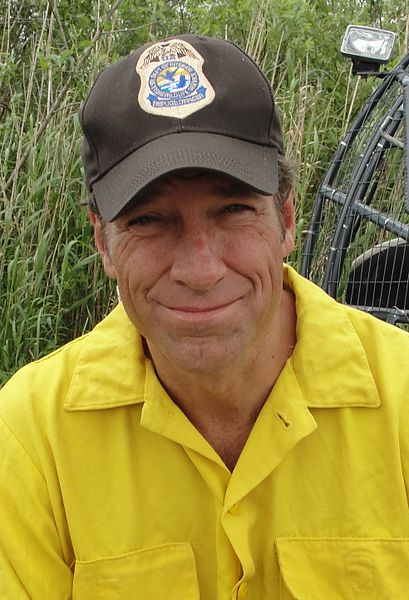
Mike Rowe, a man who made a name for himself doing the “dirty jobs” other people refused to do, stated his opinion was that there was no job that is nonessential. Appearing on a cable news program, he said, “Right now, there is this fascinating conversation going on on your network and all the networks, where we are making a distinction between essential workers and nonessential workers.” Rowe continued, “…there’s something tricky with the language going on here because, with regard to an economy, I don’t think there is any such thing as a nonessential worker.” 1

Rowe did admit that certain positions are greatly needed during a pandemic. Hence, we have greater need for a doctor now than a center fielder for a Major League Baseball team. “I just wanted to make the point that, when we talk about the economy, all work is essential,” Rowe stated. “Maybe it’s a distinction without too much of a difference, but in my mind, there is no such thing right now as a nonessential worker.” 2

Rowe makes a good point. For a healthy economy, every able-bodied person of age, must work. When person “A” earns a paycheck, he spends it in person “B’s” store. Person “B” can then provide for his own family. The property taxes person “B” pays allows person “C’s” child to go to school. In other words, the economy is something in which we all play a role, whether we appreciate our role within it or not. Yet, we see what happens when we purposely shut down a country to mitigate a virus. All the financial gains about which our country boasted for the last few years was wiped out in six weeks!

This isn’t a message about the economy or politics or Mike Rowe. It is rather about the harmful consequences we bring about by rashly judging what’s essential and nonessential without considering the bigger picture. When you have extra time, enter in the words, “baptism” along with “essential” and “necessary,” into your internet search engine of choice. I did. I found one page that proffered “101 Reasons Why Water Baptism is Not Necessary to be Saved.”

Fortunately, we have the book of Acts, also known as the “book of conversions.” Acts has many examples of people who, having heard the proclamation of the Gospel, submitted to baptism. It is a troublesome book for the one seeking to discount the necessity of baptism’s role in salvation. For this reason, such practitioners of a perverted gospel must say, “Baptism is an outward sign of an inward faith.” In other words, all these people were baptized to show their salvation rather than receive it.

Even if we only had the example of Paul’s conversion in the book of Acts, we would have enough reason to prove why baptism is not only necessary but essential. Paul was a man, made miserable by his newly acquired knowledge he was a sinner. He prayed fervently for three days. If one could “pray through” then Paul should have been able to have done so. And yet, when the preacher Ananias arrived, he saw the pathetic state that Paul was in and said, “Now why do you delay? Get up and be baptized, and wash away your sins, calling on His name” (Acts 22.16). Did Paul not realize he was saved and needed only to perform a ritual to confirm his salvation? If true, Paul was the most miserable Christian about whom we read in the pages of the New Testament during those three days he prayed and fasted.

We might make a tough judgment call because of a virus and shut down certain sectors of our economy since we believe them less essential during a health crisis. Ultimately, though, we realize even those deemed “nonessential” do play an important part in our economy, as Rowe suggested. We need them if we are going to climb up out of this trillion-dollar deficit hole this crisis has made us fall into.

Likewise, people may capriciously proclaim baptism nonessential. However, one wanting total restoration to the innocence lost in Eden must also know a demon’s faith (James 2.19) is not only insufficient to save but fatal (Mark 16.16).

References

1  Shiver, Phil. “’Dirty Jobs’ Star Mike Rowe: There’s No Such Thing as a ‘Nonessential Worker’.” The Blaze, Blaze Media LLC, 2 Apr. 2020, www.theblaze.com/news/mike-rowe-non-essential-worker.
ibid.

409px-ready_for_a_dirty_job_28cropped29

What It Means To Be A Christian

Thursday’s Column: Captain’s Blog

IMG_0806

Carl Pollard

The life of a true Christian is filled with change. We learn where we are weak and try to be better. It’s kind of like a never-ending home improvement project. There will always be areas of our spiritual walk with God that could be better. Because this is the case, many religious books, sermons and Gospel meetings are created around a theme that will help us to grow. In the Church there is a plethora of information to help us in our Christianity, but I want to focus on the basics and answer a vital question. What does it mean to be a Christian?
I want to answer this question with a passage in Scripture that we may not immediately think of. We may think of 1 Timothy 1:5 or 2 Peter 1:5-7, which are great verses, but I’d like to suggest that Jesus in Luke 18:15-17 gives us the bottom line of Christianity.
It reads, “Now they were bringing even infants to him that he might touch them. And when the disciples saw it, they rebuked them. But Jesus called them to him, saying, “Let the children come to me, and do not hinder them, for to such belongs the kingdom of God. Truly, I say to you, whoever does not receive the kingdom of God like a child shall not enter it.”
Jesus teaches the importance of humility. You want to enter the Kingdom of God? Have an attitude of humility. He uses the example of children, and Luke even uses the Greek word for infant. These are very young kids and babies that are being brought to Jesus. So He uses this as a moment to teach a valuable lesson.
Babies show their humility in their inability to provide for themselves. Every child that is born is completely dependent on its parents and has a wholehearted trust in them to provide what they need.
What does it mean to be a Christian? It means being humble enough to admit that we need God. It means we trust in God rather than our own “power.”
Humility plays an important role in every aspect of Christianity. It helps with showing love to others, it helps us subject ourselves to God’s Word, it helps us treat others the way we want to be treated, it helps us accept the hard topics that Scripture contains, and the list goes on and on.
Do you want to be a part of the Kingdom? Make humility an everyday practice. And that is what it means to be a Christian.
#MyToesHurt
11892209_10153120312215922_882787250566779690_n
Back before Carl was a giant. #littlebabycarl

God’s Spiritual Stimulus Plan

Wednesday’s Column: Third’s Words

Gary III

Gary Pollard

Many Americans have recently been recipients of a stimulus check. Quite a few have taken that and made some big purchases or padded a savings account or used it for much-needed relief. Whether or not this stimulus was an economically sound decision, most have seen it as a well-timed gift that – at least in the short term – has lessened some of the difficulties of this pandemic. It was designed to bring relief, and for many it has. 

We often look at salvation as something we received at baptism (which we did, I Pt. 3.21, Acts 2.38, Col. 2.12-14). We are grateful to have grace and a mediator for when we fall short as Christians, and this gift is not something we should ever take for granted. 

When we think about how we got salvation, though, we don’t always think about the enormous amount of preparation that went into it. The ability to have our sin problem erased (Colossians describes it as a certificate of debt with legal demands in 2.14) is no small gift. 

I Peter 1.10-12 says, “As to this salvation, the prophets who prophesied of the grace that would come to you made careful searches and inquiries, seeking to know what person or time the Spirit of Christ was indicating as He predicted the sufferings of Christ and the glories to follow. It was revealed to them that they were not serving themselves, but you, in these things which now have been announced to you through those who preached the gospel to you by the Holy Spirit sent from Heaven – things into which angels long to look.” 

Briefly, I’d look to look at how this passage brings out the enormous value of salvation. Firstly, ancient prophets were told that this salvation was for future generations. They wrote about this while living under a far more difficult system of godly living, knowing that they would not be beneficiaries of that salvation. 

Secondly, the early church benefited from the sacrifices and hardships of those who brought the message of salvation to them. It was valuable enough that those men were willing to assume that risk to give it to others. 

Thirdly, angels – who, like the early prophets, are not beneficiaries of this salvation – were extremely interested in salvation. 

If two of the groups mentioned here were not even beneficiaries but strongly desired to know more about it or recorded it for all time, what does that tell us about salvation’s value? Peter set up its value this way to encourage the early church to live holy lives. 

Knowing just how valuable our salvation is should push us to live like we appreciate it! Not only does it have enormous value as a gift, the One who gave it wants us to have it. With that in mind, let’s cultivate greater appreciation and godliness because of the awesome gift of salvation. And if we know anyone who could use it, let’s pass the good news on to them, too. 

49776934207_46b3afb190_b

The Curious Case Of The Caratinga Cow

Tuesday’s Column: Dale Mail

DaleandJanelledirectorypic

Dale Pollard


We know that tomorrow isn’t promised and we also understand that, unless God comes first, everyone will die one day. With that being said, I am almost 100% certain that nobody reading this will pass from this life after having a cow fall through your roof. The “steaks” just aren’t that high. While this is an unlikely way to die, it’s not an impossible way to go. In fact, this is exactly what happened to Joao Souza in 2013. A one-ton cow was grazing on the hills behind his home in Caratinga before it somehow found it’s way up on to his roof. An unknowing Souza was snoozing on his couch when suddenly his life was over. The asbestos-filled roof collapsed under the weight of the cow. Being done in by a bovine is not exactly a bodacious way to make that final transition, but the media had reported two more similar events of cows seemingly falling from the sky in this area just two years prior. Even though this event actually occurred, how ridiculous would it be for us to spend our days in fear— worrying that we will meet a similar fate? 

The last verse of Matthew six will tell you not to exert so much energy worrying about tomorrow. This passage has brought peace and comfort to many Christians throughout the years, but many of us still worry about our tomorrows. I guess if our tomorrows were actually ours to begin with, we may really have something to fear. The truth is, God owns the future. He doesn’t tell us not to worry about the things that are unlikely to happen, He simply tells us not to worry. God’s almighty hand still holds the world, and for the faithful believer this reality can set your mind to rest. I’m not sure what tomorrow brings. It’s possible that a cow could even come crashing through my roof and send me into eternity— but that’s alright. It’s not just alright because I could use a little more dairy in my diet, but it’s alright because a life in Christ comes with a secure future. It doesn’t matter what Fox News tells us when the Good News already told us everything we need to know. No matter what the day may bring nothing can change the fact that Jesus came, He died, and He definitely is alive, well, and active every day. Don’t worry about tomorrow. Let’s live our lives with joy and in the peace only He can provide. 

cow-2896329_960_720

    I hope this moos you and that you have an udderly fantastic day. If this beefed up your spiritual cow-fidence please share with someone else.  

Elders Who Shepherd

Monday’s Column: Neal at the Cross

IMG_1922

Neal Pollard

There was a problem with the shepherds of Ezekiel’s day. They tended to their own needs, but not the flock’s (34:2-3). There were tangible needs and problems, but these shepherds sinned by omission (34:4). The sheep were scattered and these shepherds did not work to get them back or save them from predators (34:5-6). Then, God through Ezekiel utters these harrowing words: “Behold, I am against the shepherds, and I will demand My sheep from them and make them cease from feeding sheep” (34:10). 

In the New Testament, Paul tells the elders of the church at Ephesus to “be on guard for yourselves and for all the flock, among which the Holy Spirit has made you overseers, to shepherd the church of God which He purchased with His own blood” (Acts 20:28). Guard the flock, watch over the flock, and shepherd the flock. What a weighty work! To be on guard means “to be in a continuous state of readiness to learn of any future danger, need, or error, and to respond appropriately” (Louw-Nida 332). An overseer has the responsibility of seeing to the spiritual safety and proper conduct first of themselves but also of those they watch over (Arndt 379). The idea of shepherding indicates care, concern, love, provision, relationship and intimacy, knowledge, and familiarity (see Kittel et al 902ff). These lexicographers who define what Bible words mean give insight into what elders are to be like as they do this crucial work. Isn’t it incredible and encouraging to see spiritual, albeit inevitably imperfect, men who “aspire to the office of overseer” (1 Tim. 3:1)?

Yesterday is a day I’ll never forget. We tagged along with three elders and their wives as they went around to 26 houses of members of our congregation. Exercising due caution under the current medical crisis, they nonetheless drove to see members young, old, and in-between. They visited with, sang to, and prayed for so many face to face, delivering Dana’s delicious baked goods. Seeing their enthusiasm to do this and watching the genuine joy on their faces as they served and ministered was a blessing that will stoke my spiritual fire for a long time to come. 

But, that’s just what I got to see. I’m not seeing the other times they’ve done this. I’m not there as they’re making so many phone calls to everyone. Over the weekend, they met together for several hours to strategize about a reopening and communication plan not just to get back to “normal” but to thrive and grow as we go into the future. Another of the elders has since spent hours piecing together that plan to provide clear communication to the church. 

All of them work full-time jobs and are hard workers. All of them have families to love and care for. All of them have hobbies and interests. But, all of them have Christ in the center of their hearts and lives. That last fact is what drives them to know about, care about, and reach out to the sheep. 

Thank God for the many churches who are being shepherded through unprecedented times like these by engaged, concerned, and involved shepherds. Church growth, doctrinal soundness, examples of Christ-centered living, and so much more depend on elders who shepherd. Will you take the names of your shepherds to the throne of God each day, imitate their faith, and assist them in their work? They are a vital part of God’s plan to touch and transform eternity! 

elders
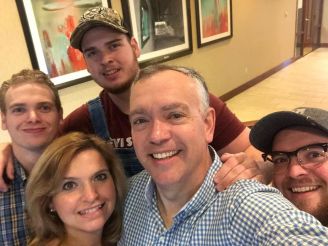
Only ten in this group picture!