My God Is So Big

Tuesday’s Column: Dale Mail

IMG_1381

Dale Pollard

My problems are so big, my worries so mighty, there’s nothing my anxieties can’t do. Wait, that’s not how that song goes. It’s been said that the there are more stars in the known universe than all of the sand on earth combined. That being said, in just one grain of sand there are more atoms than all of the stars. That’s pretty amazing. Our planet is but a speck in the grandeur of space. Countless stars, planets, galaxies, lightyears and somehow God is well aware of the happenings of people.

Have you stood on the mountain tops? Have you observed the power of the oceans as the waves crash on the shore? Has your heart almost stopped after the vibrating sensation of a thunder clap resinates in your chest? The might of the Creator is everywhere in the world around us and at times it just demands to be noticed.

1 Kings 19:11-13 is a section of scripture that is mysterious and fascinating. The Lord of hosts is about to show Himself to a depressed and exhausted Elijah, but in a way that he would never forget. “The Lord said, ‘go out on the mountain in the presence of the Lord, for the Lord is about to pass by.’ Then a great and powerful wind tore the mountains apart and shattered the rocks before the Lord, but the Lord was not in the wind. After the wind there was an earthquake, but the Lord was not in the earthquake. After the earthquake came a fire, but the Lord was not in the fire. And after the fire came a gentle whisper. When Elijah heard it, he pulled his cloak over his face and went out to stand at the mouth of the cave. Then the voice said, ‘what are you doing here Elijah?’” In the hush of Horeb, Elijah seeks to avoid the troubles of his world. The acoustics of the mountainous area along with the time spent in silence must have made the shattering rocks, raging fire, splitting hills, and rumbling earth all but deafening and definitely a terrifying display of divine power. Then in sharp contrast, a still whisper comes. This gentleness, no doubt, is the reason Elijah decides to cautiously emerge from his hiding place. God is teaching His worn-out servant a lesson that holds true for us today.

The fact is, there is no more God, His wisdom, power, and presence in an earthquake than there is in the sweet breath of a blooming flower. The quiet ticking of a wrist watch reveals just as much intelligence and purpose as does the striking of a clock tower’s bell. One may walk out into an open field at night and stare up into the vast sky, lit up with numerous twinkling stars and declare, “I’ve found God!” But God is no more in the sky than He is in the blades of grass flattened beneath your feet. The question came to Elijah from that still voice, “What are you doing here?” To the prophet, his problems were too great and too large and his solution was to run and hide. God, in a magnificent way, is trying to remind Elijah of his place. Our place in life is not to take matters into our own hands or solve life’s many difficulties on our own. The answer is not to run away, but to walk humbly with our awesome God. He is strong enough to lift our burdens, wise enough to counsel us, patient enough to allow us to learn, and loving enough to constantly forgive. My God is so big, so strong, and so mighty, there’s nothing my God cannot do— for you, too. 

28661198_10215059820467071_276448063235616888_n
A view from Mt. Carmel (Israel)

Is Peace Possible?

By Gary Pollard

Wednesday’s Column: Third’s Words

Peace conjures a number of different images in our minds; from hippies to nature’s beauty to inner calm to lack of anxiety. Nearly every group of people in the world craves peace as no rational human being wants to live in constant upheaval. We all want to have peace, but our world somehow is still getting worse and worse. Why is this? The prince of this world is not a being who desires peace (II Corinthians 4.4; Ephesians 2.2; John 12.31). His very existence is dedicated to bringing down anyone who believes in God (I Peter 5:8) and he has no care or concern for the fate or well-being of anyone on this earth. Total, lasting world peace will never be possible as long as time continues (see Romans 8.18-25: sin caused the earth to be subjected to futility).

Total, lasting world peace may not be possible in this life, but this does not mean the world cannot experience any peace at all. How can we experience peace in our lives?
Firstly, it has to come from us. The world will never act in a way that brings peace. Anytime the world wishes to better its conditions, it incites civil unrest in the form of riots, protests, and other not-very-peaceful behaviors. Christians, however, are called to be different. I Timothy 2.1ff tells us that praying to God on behalf of all men, for kings, and all who are in authority, will allow us to lead quiet and tranquil lives in all godliness and dignity. We can have peace by being obedient to government authorities – even if we do not agree with them politically – because God put them in place (Romans 13). If we want peace, we have to show that peace by how we live. Since man is naturally attracted to peace, our quiet, godly lives will draw others to Christ.
Secondly, even if our world is in chaos we can have inner peace. Philippians was written to break up a nasty fight between Euodia and Syntyche. To have the “peace beyond what we can understand,” they had to rejoice in the Lord, be reasonable, not be anxious, and reach out to God for their every need. The same applies to us today! Do we get our joy from God or from worldly pursuits? Are we worried about meeting personal needs or do we rely on God (see Phil. 4.19; Matt. 6.25)? Do we try to fix our own problems, relying on our own strength, or do we place them in God’s hands and work with His guidance and providence? The Christian life is not easy, nor is it always peaceful, but the inner peace that a faithful Christian experiences, knowing that his/her name is in the book of life and that nothing in this short life can disrupt God’s love for them makes every struggle in this life worth the pain.
If we want peace we have to be that peace. We have to live peaceful lives. We have to submit to governing authorities (as long as it is within the parameters of godliness). We have to be unified as a church. We have to look to God for all of our needs. We have to trust that He will take care of us, even if that isn’t in this life. If we can do these things, we will have peace.

Be Dependable!

Neal Pollard

One of the hamstrings of most every church is a lack of dependable Christians. When Christians do show themselves undependable, they contribute so much to a church—much frustration, disappointment, and friction. We should all be dependable. You probably know little about Shelemiah, Zadok, Pedaiah and Hanon.  Little is said about them. But listen to what is said.  They were placed in charge of the storehouses because “they were considered reliable” (Neh. 13:13).

What a glowing epitaph. One the other hand, David wrote of some wicked individuals, of whom he said, “There is nothing reliable in what they say” (Psa. 5:9). Too many otherwise good people are leaving such a reputation for themselves. In frustration, sometimes elders may join Solomon in asking, “Who can find a trustworthy man?” (Prov. 20:6). But, good news!  We can all be dependable.  Why?

First, we are ABLE. God blesses us with talents, time, and treasure. With them, we can (as good stewards) use our resources to God’s glory. If something hinders us from doing our duty, we can let others know and cover for us. But, whenever and wherever and however we can, we use ourselves as workers in the kingdom (Mat. 9:37).

Second, we are DEPENDENT. God pours blessings into our lives (Eph. 1:3; Js. 1:17). Without Him, we are nobody! Except God provided all our needs, we would be nowhere and have nothing. We are obligated, and our best efforts could never earn or repay God’s graciousness (Lk. 17:10). But, surely, appreciating His grace, we will be workmen (Eph. 2:8-10). When needs are made known by our elders or other church members—food or teachers or folks to visit or calls to make or new Christians to aid or missions to encourage or elderly, shut-ins to help—let us remember our dependence upon God and be dependable for those dependent folks around us.

Finally, you are thereby DEEPENED. When we do what we can in the kingdom, giving it our best, we are enriched and strengthened thereby. Our relationship with Christ is deepened, for we are imitating Him. Our appreciation for God’s blessings is deepened when we sacrifice and extend ourselves. Our faith is deepened by our interaction with those in need and by our participation in what needs doing. Our joy is deepened by being active and involved in the Lord’s work.

One song in our song book asks, “Can he depend on you?” If He has no hands but our hands to do His work today, shall we allow our hands to sit idle? Christianity is a commitment. It’s a wonderful commitment, but commitment nonetheless. Let us take it seriously and be a brother or sister upon whom our brethren and our God can rely!

800px-the_truesdell_bridge_collapse2c_view_from_the_south

God Is Always In Control

Neal Pollard

While the knowledge of my fear of snakes is widespread, some of the events of my past that hardened that horror as less so. A couple of years before moving to Colorado, we were hit by Hurricane Isabel. On our one acre lot, we had well over 100 trees. In fact, about 100 of them fell in that storm, which was the deadliest and costliest of the 2003 Atlantic hurricane season. Cleanup took months, as the storm shook up the environment in some notable ways. To me, the most disturbing was that it forced a great many copperhead snakes out of their dry dens and rocky hillsides down into neighborhoods like ours. In the course of several months of cutting and removing trees, we ran into about a dozen of these demonic creatures. 

On one occasion, a copperhead was near my foot. Also near my foot was a garden hoe, which I promptly dispatched for the purpose of eliminating this threat. To my utter dismay, the blade of the hoe, put to the head of the snake, sank into the rain-softened ground. Rather than killing the snake, it made it mad. At this point, I was in a quandary. Pushing the hoe harder was not causing further harm to the snake, but releasing the snake from the hoe felt like a bad option, too. For what seemed like a week, I continued to work the hoe on that copperhead until it was hurt badly enough for me to properly finish the job.

Have you ever been caught on the horns of a dilemma which seemed bigger than you? As you were in the throes of it, you prayed, pleaded, and petitioned God for help. You realized that without His help, you were in big trouble. It could have been regarding your health, finances, a relationship, a sin struggle, or big decision. Most of us become keenly aware of our need of God’s intervention in moments like those. Yet, it is a helpful reminder that even when life is not so scary or circumstances are less dramatic, God is still in control. Our prayers should reflect this. Our plans should be governed by it. Our priorities should show that we get that.

What will happen to our nation in time to come? What might the church face that scares and intimidates us? What could happen in our individual lives that fills us with dread? No matter what, trust that God is always in control. Take heart in this truth: “The Lord is my light and my salvation; Whom shall I fear? The Lord is the defense of my life; Whom shall I dread? When evildoers came upon me to devour my flesh, My adversaries and my enemies, they stumbled and fell. Though a host encamp against me, My heart will not fear; Though war arise against me, In spite of this I shall be confident” (Psalm 27:1-3). 

In other words, God is always in control!

13533881412553

ATTACKING THOSE WHO SAVE OTHERS

Neal Pollard

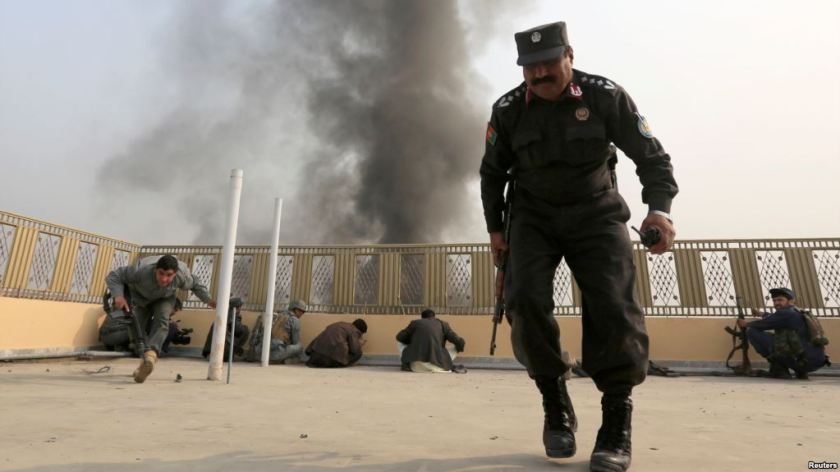
It’s an unconscionable thought! Who would try to hurt and oppose those dedicated to saving lives? Places like Afghanistan seem more than a world away from us, where this week a yet-to-be-identified terrorist group conducted a suicide attack in Jalalabad that killed two and injured 14. While that sadly is a relatively small and minor attack in this war-torn region, it was the target that was so outrageously newsworthy. It was perpetrated against the international Save The Children organization. Volunteers and workers were there to provide aid and assistance to that society’s most vulnerable members, and they were attacked. How does this happen?

In Matthew 23:35 (cf. Luke 11:51), Jesus condemns the Pharisees as the murderers of God’s godly men from Abel to Zechariah. Essentially, Jesus was presenting a roll call of the righteous who were attacked because of their faithfulness. In one of Stephen’s final moments, he preached, “Which one of the prophets did your fathers not persecute? They killed those who had previously announced the coming of the Righteous One, whose betrayers and murderers you have now become” (Acts 7:52). Both Old and New Testaments reveal the Maker’s messengers who were attacked while trying to save others. The proverbial response of the hearers was to “shoot the messenger” (cf. Heb. 11:36-38).

Growing up a preacher’s kid, I saw my dad encounter some who attacked the messenger. Dad has always been a model of courage for me, willing to teach and preach even unpopular, but needed, subjects. Consequently, he endured both frontal and sneak attacks. Everyone who has sought to declare “the whole purpose of God” (Acts 20:27) has some appreciation for Paul’s warning that some “will not endure sound doctrine; but wanting to have their ears tickled, they will accumulate for themselves teachers in accordance to their own desires, and will turn away their ears from the truth and will turn aside to myths” (2 Tim. 4:3-4).

How one responds to such attacks is crucial! In the words to Timothy, Paul contrasts the attacker with the faithful proclaimer. He says, “But you, be sober in all things, endure hardship, do the work of an evangelist, fulfill your ministry” (2 Tim. 4:5). We’re taught “patient enduring” (2 Cor. 1:6; 2 Tim. 2:24), “not returning evil for evil or insult for insult” (1 Pet. 3:9), “bless those who persecute you; bless and do not curse” (Rom. 12:14; cf. 12:17-21), and “do not resist an evil person; but whoever slaps you on your right cheek, turn the other to him also” (Mat. 5:39).

As eternal aid workers, we operate by a different, higher set of rules (2 Cor. 10:4). We entrust ourselves to the One who will give us ultimate victory. Meanwhile, we cannot give up our cause—no matter what the threat or danger. Like Jesus, let us keep entrusting ourselves to Him who judges righteously (1 Pet. 2:23)!

8ad7fee4-9d99-4e89-b63f-286645809597_cx0_cy12_cw0_w1023_r1_s

Resolutions Reinforcements–#2

Neal Pollard

No matter what your goals and objectives are for 2018, the place to begin, work, and end is with God. I have heard it said, “How can we hope to do God’s work without God’s help?” Your resolutions may be seemingly insignificant or potentially life-changing. Regardless, He is “able to do far more abundantly beyond all that we ask or think, according to the power that works within us” (Eph. 3:20). Do you believe that? Assuming your goals and legitimate and Christ-honoring, doesn’t He care enough about you to help you succeed? Scripture devotes much time to the truth that He is a perfect Heavenly Father who loves His children (Mat. 5:45,48).

Pray specifically and include those resolutions in your daily prayers. Pray in faith, believing that God is able to help you succeed. Know through this that He is in control.  Pray submissively, understanding that God knows what is best for your life. You may believe that achieving some goal will be what you need, but God knows best. Trust Him to provide. Pray unselfishly. While goals may be very personal, they should be made with others and especially God’s will at the forefront. What we seek should be sought for His glory. Pray expectantly, believing that He will help and through Him you can do.

The Bible frequently shows us those who prayed to God through improbable and even seemingly impossible situations, and God provided. Think of Hannah, David, Hezekiah, Elijah, Elisha, Jesus, and Paul.  As you square up to face your resolutions, do so by looking–as much as you can–through those Heavenly Eyes. Remember: “Ah Lord God! Behold, You have made the heavens and the earth by Your great power and by Your outstretched arm! Nothing is too difficult for You” (Jer. 32:17).

prayer-hands

It Will Work!

Neal Pollard

  • Planting gospel seed (cf. Luke 8:11) will result in people of all ages, backgrounds, and nations becoming Christians.
  • Overcoming evil with good (Rom. 12:17-21) will soften hard-hearted enemies.
  • Approaching a wayward brother or sister in lovingkindness (Gal. 6:1; Jas. 5:19-20) will bring some back to faithfulness.
  • Faithful attendance will stimulate to love and good deeds (Heb. 10:24-25).
  • Singing psalms, hymns, and spiritual songs from the heart and with purpose will help us and everyone else who is present (Eph. 5:19; Col. 3:16).
  • Spending time together and getting to know each other will make us closer to one another (Acts 2:44; 4:32).
  • Investing in a heartfelt relationship with God will lessen anxiety and increase peace and joy (John 14:27; Phil. 4:7).
  • If the church stays committed to souls and service, it will grow (Acts 6:1-7).
  • Speaking to (rather than about) those who we feel have offended us results in greater harmony and reconciliation (Matt. 18:15-17).
  • Culture is met mightily by transformed, sacrificial representatives for Christ (Rom. 12:1-2).
  • We will win more in the world if we are not trying to simply embrace and imitate it as it is (Jas. 4:4).
  • Emphasizing leadership will result in people rising up to lead (cf. Ti. 1:5-11; 1 Th. 5:12-13).
  • Homes united in dedication to putting Christ’s kingdom first will have a high rate of success in raising faithful children (Pr. 22:6; Eph. 6:1-4).
  • If we will consult Scripture for answers to our dilemmas, we’ll uncover the best solutions possible (Ps. 119:105).

In our search for relevance, effectiveness, and success in our present world, let’s not overthink it! Whatever the question, if it matters (2 Pet. 1:3), the Bible has the answer. It will work!

blueprint-964629_1920

LOOKING IN THE WRONG PLACE FOR JESUS

Neal Pollard
Periodically, we read or hear of “sightings” that unbelievers have a field day with. I refer to “Jesus sightings,” people are claiming in such things as clouds, Cheetos, dental X-rays, cooking utensils, windows, walls, and trees. Wikipedia even has an entry for it (“Perceptions of religious imagery in natural phenomena”). People vehemently defend the idea that these are intentional, divinely sent images. Meanwhile, secular and agnostic witnesses to such claims gather up baby and bathwater together, using such superstitiousness to show how deluded those in Christendom really are. Yet, while responding to superstition in religion would be a fitting use of time, another thing comes to mind when hearing these sad stories. It is a reminder that people are looking for Jesus in all the wrong places.
They want some heavenly sign, some overwhelming feeling, some sensory sensation, and some sort of religious fireworks to create or validate their faith. While God has embedded plenty of these in the marvels of nature and creation, through the product of answered prayer that defies logic or explanation, and by the amazing process of transformation that occurs when people follow Christ, He calls on us to seek for Him in a much less electrifying and cataclysmic place.
When we pick up God’s Word and regularly, intently read, meditate, and study (cf. Psalm 1) it, we see Jesus come alive in powerful, sustaining ways! When we walk with the Lord each day, the resulting relationship built on His character and our trust in Him is powerful! When we actively serve Him and others and put into practice what He teaches us through the Bible, we see Jesus in a vivid way. Daily Christian living, the longer we practice it, brings Jesus into unmistakeable, clear focus. Maybe that is what these “seers” truly desire, and what they need is our help to truly find Him. Let us take that as a challenge and help people really “see Jesus” (cf. John 12:21; Heb. 2:9).

10391950_190406240921_3760525_n

DEALING WITH STRESS

Neal Pollard

A few years ago, the American Psychological Association named Denver the city with the most stressed out people in America. 75% of Denver residents are too stressed out about job and money, with half of Denverites saying their stress had significantly increased over the past year. Doctors and researchers have long connected a variety of health problems to stress, including high blood pressure and high cholesterol. The Harris Interactive polling group conducted this survey on behalf of the APA. Maybe the high stress levels are why so many Denver-area folks have such high octane workout routines, to counteract all of this.

In response, the Colorado Psychological Association provided some tips for coping with stress: (1) Set limits, (2) Tap into your support system, (3) Make one health-related commitment (cut back on caffeine, exercise, get more sleep, etc), (4) Strive for a positive outlook, and (5) Seek additional help. These tips are wise and useful, and especially is this true when we consider a “spiritual twist” on them. While I have found living in this area to be peaceful and enjoyable, I also know that life in America in general is stressful. There are so many uncertainties and that alone is a stressor.

Christians are best-equipped to deal with stress. Matthew 6:33 helps us properly prioritize so that we have a spiritual basis to determine what needs to be eliminated and what is more valuable. Further, we have the greatest support system possible through the church (cf. Rom. 12:15; 1 Thess. 5:11; Eph. 4:13-16; Heb. 13:1; etc.). Living the Christian life properly is a prime way to a healthier lifestyle, so long as we remember such principles as are found in 1 Timothy 4:8, Proverbs 23:2, and 1 Corinthians 6:19-20 (I’d recommend your reading those). Who has a more positive outlook than one who can say, “For me to live is Christ and to die is gain” (Phil. 1:21-24). That is essentially saying, “I’ve got it great, and it will only get better.” Finally, there is no better help than that which we have available in Christ. Having the help of heaven to cope with life’s uncertainties is the greatest stress-buster there is.

Whether you live in Denver or even Small Town U.S.A., you are not immune from potential stress. Yet, wherever you live, if you are a Christian you have the best coping tools imaginable. Being in Christ eliminates many of the worries so many face. May we not take this for granted. Even more, let us not neglect to take advantage of the peace found only in Jesus (cf. John 14:27).

help-teen-stress

“He sends forth springs in the valleys; They flow between the mountains”

Neal Pollard

This statement in Psalm 104:10 is spoken literally of God’s physical provision for His creatures. But, have you ever thought about how that is true for you and me when we find ourselves in the valleys of life? In between the mountaintops of successes and happy days, we can find ourselves seemingly down in the valley of the shadow of death (cf. 23:4). I am so thankful that in those moments that might seem dry and thirsty, God sends forth springs in the valleys of life. Whatever creates the valley for us, it can seem like a deep place hard to climb out of. How does God send forth spiritual and emotional springs for us, even in the valleys of life?

  • The church is a spring in the valleys of life. Other Christians lifting and encouraging us can be the medicine we need to take the next step through the valley. No wonder the church is such an expression of God’s wisdom (Eph. 3:10-11).
  • Prayer is a spring in the valleys of life. Pouring out our hearts to a God who understands us and knows our situation perfectly strengthens us.
  • Our family can be a spring in the valleys of life. Those of us who have Christian parents, siblings, children, and other relatives have a double blessing, family twice over. They can be the support and encouragement we need to keep moving.
  • Spiritual blessings are a spring in the valleys of life. Ephesians 1:3 says in a general way what the rest of the New Testament enumerates in a specific way. God is blessing us in so many ways because we are in His Son. Never do we appreciate that more than when we struggle.
  • The Bible is a spring in the valleys of life. There is wisdom and insight on every page, guidance for our journey. God has revealed the road map to help us traverse the narrow way to heaven. The narrow way will not keep us from traveling through valleys, and often it has valleys the broad way does not.
  • Faith or trust is a spring in the valleys of life. Like Paul, who often camped in the valleys of life, “I know whom I have believed and I am convinced that He is able to guard what I have entrusted to Him until that day” (2 Tim. 1:12). My eyes may be wet with tears in the valley, but my eyes of faith see with crystal clarity.
  • Hope is a spring in the valleys of life. It anchors the soul (Heb. 6:18-19), but it also helps lift us up. Because I face the future with confidence, no setback will keep me discouraged but so long. Tomorrow will be a brighter day!
  • Christian service is a spring in the valleys of life. Maybe nothing leads me through the valley any more than finding a fellow sojourner to help out of their valleys. When I focus outside of myself on other strugglers, I soon forget my unpleasant experience.

Many years ago, I heard Franklin Camp talk about the valleys of his life and how he overcame. His young daughter accidentally burned to death in a brush fire. He faced other huge losses in life, but brother Camp through it all was a man who had his eyes fixed on the ultimate mountaintop experience. In the valleys of life, let us look for the springs God sends. They will refresh, renew, and relieve us until our journey is complete.

valley-springs-lodging

“I Don’t Feel Good Enough”

Neal Pollard

How many times have you said that? You may project an air of confidence that would make it hard for anyone to think you felt that way or you may wear it on your sleeves. But, if honesty prevails, we’d all confess to wrestling with that thought. Daily! With Paul, facing the scope of our challenge, we exclaim, “And who is adequate for these things?” (2 Cor. 2:16). BDAG informs us that “adequate” means “sufficient in degree…large enough; pertaining to meeting a standard, fit…competent, qualified, able” (472). As Paul’s words are in the context of ministry, conscientious preachers who read that statement really get it. We’re fragile pottery entrusted with a perfect, eternal, and divine message (2 Cor. 4:7).  Oh, how we feel our own humanity as we preach the mind of God to others struggling with their humanity. We know our every weakness better than anyone else does.

Yet, the struggle I mention is not just the preacher’s burden. The best Christians I know live each day fully aware of their inadequacies and insecurities. No matter how many good works they do, how faithful in attendance and duty they are, or how actively they seek opportunities to serve God, they struggle at times. May I suggest that this is one of the biggest blessings of living the Christian life. No, we don’t want to live in a shroud of guilt. Not at all! But, consider what happens when we acknowledge our glaring insufficiencies.  We can see our utter dependency on God that much better.

Could Moses have really led the Israelites for 40 years on his own ingenuity and oratory? Could Jeremiah have really faced his audience on his own temerity? Could a renewed Peter have really preached that Pentecost sermon to Jesus’ killers on the merits of his own homiletic greatness? Could Paul have really transformed the first-century world on the foundation of his cosmopolitan experience and top-notch education from Gamaliel University?

Repeatedly, throughout His ministry, Jesus decries the Pharisaical tendency of trusting in self (Luke 16:5; 18:9). Ultimately, it’s a farce anyway. I may struggle with different weaknesses than you, but I still struggle. While that is never an excuse to give up and indulge in sin (cf. Rom. 6:1-2), it is a great, daily starting place to appreciate our need of God’s favor and friendship. We are not going to make it through this world on our own merits. As the beautiful old song suggests, “I need Thee, oh, I need Thee, every hour I need Thee….”

Here’s the beautiful thing that happens when we recognize our shortcomings and inabilities. We become an empty vessel that God can fill to accomplish His work. God will open doors of opportunity for us to do, by His might, what we could never have hoped to do without Him. Whether doors of service (teacher, elder, preacher, deacon, etc.), lives of holiness, or works of obedience, we will live in amazement of His power. Or, as Paul put it, “Now to Him who is able to do far more abundantly beyond all that we ask or think, according to the power that works within us, to Him be the glory in the church and in Christ Jesus to all generations forever and ever” (Eph. 3:20-21). Take heart, Christian! You’re not doing this alone. You can’t! But, what can God not do? That thought is exciting and thrilling. With that in mind, no mountain is too formidable. He’s got this!

pexels-photo-208151

Expectation Versus Euthanasia

Neal Pollard

She was born the year after the Civil War. Her mother died when she was three. Her father dropped her and her newborn sister off at the home of the widow of an army friend. Unable to care for the girls, the widow ultimately transferred care to a sweet, religious couple in the community. The girls spent happy years through their school days, but the older sister came to suffer from rheumatoid arthritis as a teenager. It steadily grew worse until she could not walk. Their adopted parents died within months of each other, and the young women were poor and had little prospect of earning money for themselves. Before her affliction, she had developed aspirations as a concert pianist and shown great promise as a poet and writer. Arthritis robbed her on the musical dreams, but she flourished as a poet and hymn writer. Rather than seek relief from her pain through suicide, she channeled her suffering into beautiful writing that continues to comfort others as it did in her lifetime. Ravi Zacharias summarized her suffering, saying, “Her body was embarrassed by incontinence, weakened by cancer, and twisted and deformed by rheumatoid arthritis. She was incapacitated for so long that according to one eyewitness she needed seven or eight pillows around her body just to cushion the raw sores she suffered from being bedridden” (“The Cry For A Reason In Suffering,” np; other information from The Story of Annie Johnson Flint, Rowland Bingham). Her poetry and songs are not riddled with bitterness or even soul-wrenching questions of why. You’ll find titles like “The Grace Of God,” “Not Down, But Through,” “Rest, Tired Heart,” “Grace Sufficient,” “He Giveth More Grace,” “He’s Helping Me Now,” and on the hopeful, positive compositions flow.

We have only one of her hymns in our song book, and it is entitled, “The World’s Bible.” These familiar words include the lines, “Christ has no hands but our hands to do His work today, He has no feet but our feet to lead men in the way….” I appreciate the living testimony Ms. Flint was of the way one who believes in Christ ought to respond to the tragedies and difficulties that can strike in this fallen world. I pray that I will never be wracked by such suffering, but if I do I would want the world to see the spirit in me that so many saw in her. Her life was one of trust in God’s sufficiency and strength through the darkest moments of life.

Our state (Colorado) was one of a few that has passed physician-assisted, right to die legislation in the recent election cycle. Besides the ethical slippery slope of people, even doctors and patients, selecting when to end life, there is in such an effort a failure to see the intrinsic value of life as well as God’s sovereign right over His creation. Ms. Flint’s situation makes us cringe in discomfort at first blush, but we see the refined beauty of a trusting heart to impart profound comfort despite life’s harshest turns. To persecuted Christians, Peter offers this hope for all strugglers when he writes, “After you have suffered for a little while, the God of all grace, who called you to His eternal glory in Christ, will Himself perfect, confirm, strengthen and establish you” (1 Pet. 5:10; cf. 1 Pet. 1:6-7). Whatever the trial, we can choose life instead of death, trust in God rather than trust in our own thoughts. Let us live in triumphant expectation, no matter what we may have to endure for the moment (Rom. 8:38-39; Psa. 30:5).

flint_aj

Focus, Not Complacency 

Neal Pollard

Whether you are elated or despondent today, you face a serious danger as you absorb the reality of the election results. Prayer meetings for our nation transpired all around our country, even from brethren and friends in other nations. Individuals prayed fervently for God’s will to be done. What that will look like and what that will mean only time will reveal.  For many, relief replaces fear at the prospect of the “other side” winning. For others, disbelief and embarrassment, not to mention shock, have begun to roost.

One thing that has been emphasized in the days and weeks leading up to this historic election is that, no matter what, the church must step up and increase its militancy and evangelism. We must work and serve in bigger and greater ways. That has not changed. The kind of change and improvement this (and every) country needs most can only come from Christ. People of both (or neither) political parties still live in view of the Second Coming, the Judgment, and an eternal destination in either heaven or hell.

After warning about the futility of trusting in earthly governments, militaries, and the like, the Psalmist instructs, “Behold, the eye of the Lord is on those who fear Him, on those who hope for His lovingkindness, to deliver their soul from death and to keep them alive in famine. Our soul waits for the Lord; He is our help and our shield. For our heart rejoices in Him, because we trust in His holy name. Let Your lovingkindness, O Lord, be upon us, according as we have hoped in You” (Psa. 33:18-22). May that forever be the anthem of the people of God!

The only thing that is over is a political election. The church’s mission is as daunting, daring, and divinely-directed as it has ever been. However you view the national decision, please continue to see the heavenly vision. We are not here to make America great again, though most of us would desire that. We are here to help reconcile the world to Christ (2 Cor. 5:20; Mat. 28:18-20). I love the way my son, Dale, said it yesterday: “After the election, after the selection, I’m still thankful there was a resurrection that gives us direction.” That is the focus that must keep us oriented to our reason for being on this earth.

2000px-ballot_box_silhouette-svg

Some Powerful Promises

Neal Pollard

“You Will Have…”

—Treasure in heaven if you follow Jesus (Mat. 19:21; Mk. 10:21).
—Honor in the sight of all if you are humble (Lk. 14:10).
—Praise of rulers and authority if you do good (Rom. 13:3).
—An answer for the sinfully proud if you are persuaded about the Lord (2 Cor. 5:12).
—Brief tribulation if you are faithful, but then the crown of life (Rev. 2:10).

“You Will Be…”

—Judged in the way you judge (Mat. 7:2).
—Hated by all for Christ’s name (Mat. 10:22).
—Justified or condemned by your words (Mat. 12:37).
—Sons of the Most High by loving unconditionally (Lk. 6:35).
—Repaid for charitable kindness at the resurrection of the righteous (Lk. 14:14).
—Free indeed if freed by the Son (Jn. 8:36).
—Saved by faith in Christ (Ac. 16:31).
—Saved by confessing Christ (Rom. 10:9).
—Able to overcome any temptation (1 Co. 10:13).
—Enriched by being generous (2 Co. 9:11).
—Able to stand firm against the devil’s schemes if you put on the full armor of God (Eph. 6:11ff).
—A good servant of Christ Jesus by pointing out His Word (1 Tim. 4:6).
—Tested (Rev. 2:10).

“You Will Not…”

—Enter the kingdom of heaven without a righteousness surpassing the scribes and Pharisees (Mt. 5:20).
—Enter the kingdom of heaven without being converted like little children (Mt. 18:3).
—Carry out the desire of the flesh if you walk by the Spirit (Gal. 5:16).
—Grieve like the hopeless if you face the death of a faithful Christian (1 Th. 4:13).
—Grow weary and lose heart if you consider Jesus’ example of endurance (Heb. 12:3).

“You Will See…”

—Others faults more fairly when you look accurately at your own (Mt. 7:5).
—The Majesty and power of Jesus if you look with spiritual eyes (Mt. 26:64).
—The glory of God if you believe (Jn. 11:40).
—The King some day (Jn. 16:16-19).

“You Will Know…”

—Teachers by their fruits (Mt. 7:16,20).
—The emancipating truth (Jn. 8:32).
—The hope of God’s calling through faith in His revealed will (Eph. 1:18).
—How to respond to every man if you use gracious, well-seasoned speech (Col. 4:6).
—How to conduct yourself in the Lord’s church if you consult God’s Word (1 Tim. 3:15).

“You Will Receive…”

—All things you ask in prayer, believing (Mt. 21:22).
—If you ask in Christ’s name (Jn. 16:24).
—The gift of the Holy Spirit if you repent and are baptized for the remission of sins (Acts 2:38).
—The reward of the inheritance as the result of works of obedience (Col. 3:24).
—The unfading crown of glory if you are an elder who serves faithfully (1 Pet. 5:4).

In view of just a portion of God’s generosity, may we stand on the promises of God today and every day. One of the most thrilling statements of all Scripture is this: “He who promised is faithful” (Heb. 10:23). Whatever you are struggling with, claim this ironclad fact with its many implications! Holding onto it, surely you can handle any trial, temptation, or trouble you are facing.

pexels-photo-42379

“Truly In Vain Is Salvation Hoped For From…”


  • A politician or political party.
  • Wall Street.
  • Military might.
  • Our net worth or economic savvy.
  • Government programs.
  • The second amendment.
  • Popularity and fame.
  • The worship of nature.
  • Exercise and fitness.
  • The appeal of our good looks.
  • Walls.
  • The importance of our occupation or position.
  • Our national identity.
  • The Supreme Court.
  • Ethnicity and race.
  • Science and technology.
  • Any religious figure besides Jesus Christ (even those claiming to represent Him).
  • Family members and friends.

In Jeremiah 3:23, the prophet writes, “Truly in vain is salvation hoped for from the hills, and from the multitude of mountains: truly in the Lord our God is the salvation of Israel.” Jeremiah’s brethren put all their eggs in the wrong baskets. They neglected to see where true hope was found and where saving faith was to be put. Their misguided trust led to their downfall. It cannot be otherwise in any generation, including our own.

We may never say we put our trust in anything besides God, but “the proof is in the pudding.” We demonstrate what’s first and foremost to us every day, in word and deed. Ultimate deliverance from our greatest trials, struggles, and challenges comes from only one source. Jeremiah succinctly identifies it.  Is that what you are trusting? If so, let’s make sure everyone who knows us knows that!

—Neal Pollard

11800435_10153091791310922_2631856048550949852_n

What The Israelites Lost Besides Canaan

Neal Pollard

If you were to ask the typical Bible student what the consequences of Israel’s following the foolish counsel of the ten negative spies, you might hear talk of the wilderness wandering or the fact that God denied them the Promised Land. This was truly, from a physical standpoint, the most visible result of their faithlessness. Yet, looking closer, the Israel of that generation lost much more. They teach us today what not to do in doing the Lord’s work.

–They lost proper perspective. Who did Israel send to Canaan? Every tribe sent a “leader among them” (Num. 13:2; lit., “An exalted one; a king of sheik; captain; chief”). Also, who was Israel? They were not a people chosen of God because they were the biggest, strongest, or fiercest nation, but because God loved them (Deu. 7:7)! But, when Israel goes into Canaan, they walk by sight (Num. 13:28,32) rather than faith. They saw the giants, not the God who made them. They saw themselves as grasshoppers (Num. 13:33), not God’s people! They saw by fear and not by faith.

So often, today, we set our aim too low because our perspective is skewed. We launch out as far as we can see and go no farther. This hamstrings our budgets, our goals for evangelism, and the extent of our involvement in needed works. If we focus solely on ourselves, we become latter day followers of the Israel described in Numbers 13.

They lost sight of their purpose. Why had they left Egypt? At the bush, God told Moses (Exo. 3:8,17), and Moses, between the Red Sea and Mount Sinai, told Israel (Exo. 13:5). From the days right after their exodus from Egypt, Israel knew she was journeying toward Canaan. Certainly, she was prone to get sidetracked, as when Aaron led the calf-building project (Exo. 32) and when the people periodically, bitterly complained (Exo. 15-17). But, they ultimately plodded up to the precipice of the Promised Land. They camped at the corner of Canaan. This was where they were going. What happened? A few challenges, formidable as they might have seemed, derailed them. Rather than occupy the land God promised them, “They said to one another, ‘Let us appoint a leader and return to Egypt'” (Num. 14:4). How exasperated with them God must have been!

Do we get like that today? Our purpose for being on this earth, to win souls (Mat. 28:19), help our brethren get to heaven (Jas. 5:19-20), help people in need of it (Jas. 1:27), and save ourselves (Acts 2:40), can get lost in the shuffle of career success, material gain, worldly acceptance, and even the material rather than the spiritual concerns within the local work of the church. Why are we here?! That determines where we go from here!

They lost the sense of their identity. They were God’s special people. He had covenant with them and they with Him (Exo. 24). They were God’s children. Exodus 6:7 captures succinctly God’s sentiment toward Israel, where God says, “And I will take you to me for a people, and I will be to you a God.” Nobody could defeat them. Nobody stood a chance before them. They were the hands and feet of God on the earth. No army stood a chance against them. They could have recalled Egypt as “Exhibit A” of this (Exo.. 15:4; Heb. 11:20). Instead, when they looked in the mirror of fear, they saw themselves as grasshoppers.

Christians are God’s people. We are the Lord’s army (Eph. 6). Can you think of fighting for a more powerful ruler? We are the body of Christ (1 Cor. 12; Col. 1:18). Can you think of a healthier, stronger organism? We are branches of His vine, and the Father’s the farmer (John 15). No drought, pest, or conditions can keep us from being weighed down with fruit for Him! Yet, we have got to conquer the cricket concept if we want God to be pleased with us!

We are able to do more for the Lord, and we are able to do it better. But, this requires our enthusiastic, wholehearted participation in the work of the church. Don’t let the giants of time, apathy, inaction, and distraction turn you back. Through Christ we can do all the things He’s already commanded us to do! On to the milk and honey!

elah_valley_below_adullam

We Walk By Sight And Not By Faith

Neal Pollard

Yes, Paul does say it the other way in 2 Corinthians 5:7, and this isn’t an attempt to contradict the Holy Spirit there. His message, in that context, is trust in a Lord you can’t physically see rather than place your faith in what might be set up as an alternative to Him.  Evolutionists reject the idea of God because He cannot be quantified, measured, sampled, or empirically experienced. They walk by sight. Some give up the Christian life because they have a preference for the things of the flesh, things they can experience through their senses.

Some are putting their faith in the wrong things while failing to look in the right direction. Consider what God says in His Word about this.

Some things do not deserve our faith and trust:

  • Military might or weapons (Ps. 44:6)
  • Brute force or robbery (Ps. 62:10)
  • Government or nobility (Ps. 146:3)
  • Self-delusion (Jer. 7:4)
  • Sinful associates (Jer. 9:4)
  • Men and women who aren’t loyal to the Lord (Mic. 7:5)
  • Ourselves as opposed to God (2 Co. 1:9)
  • The uncertainty of riches (1 Ti. 6:17)

But, sometimes God urged us to “see”:

  • “Behold the Lamb of God” (Jn. 1:29)
  • We “look” for Jesus to come from Heaven some day (Ph. 3:20)
  • We are to be found “looking for the blessed hope and His glorious appearing” (Ti. 2:13)
  • We “see Jesus,” One who by God’s grace died for everyone (He. 2:9)
  • We “look” unto Jesus, the author and finisher of our faith (He. 12:2)
  • We are to “see to it” that we do not come short of God’s grace (He. 12:15)
  • We are to be found “looking for the coming of the day of God” (2 Pe. 3:12).

Obviously, this is a play on words. The only way to “see” the things God urges is “by faith.” And, as Paul writes, “Hope that is seen is not hope; for why does one also hope for what he sees?” (Ro. 8:24b).

The exhortation of the Bible is to “wake up” and think about what it is you put your trust in. Is it a good job? Is it a “perfect” relationship? Is it money? Is it pleasure? Is it things? Is it power and control? Is it family? Is it recreation? What is it? Is it the Bible? Is it Christ? Is it heaven? We should walk by spiritual sight, never by misguided faith!

eye-321961_960_720

We Could Use More Fear

Neal Pollard

Maybe you are like me and reach a threshold where you just don’t want to see any more alerts, the latest, in-depth reports about terrorism and senseless violence and murder, and warnings of looming threats. At some point, most of us reach a saturation point. Many wish to avoid the news altogether for its depressing gloom and despair. I don’t believe we need to manufacture or reinforce that kind of fear. There is plenty of that.

However, there is a significant sense, globally, nationally, locally, and personally, where needed fear is insufficient or absent.

  • Fear That Shows Itself In Service To God (Josh. 24:14).
  • Fear That Motivates Obedience (1 Sam. 11:7).
  • Fear That Opens Our Minds To His Blessings (1 Sam. 12:24).
  • Fear That Ushers Praise  To God (Ps. 22:23).
  • Fear That Brings Wisdom (Ps. 111:10).
  • Fear That Results In Trusting God (Ps. 115:11).
  • Fear That Gives Rise To Blessings (Ps. 115:13).
  • Fear That Causes Knowledge (Pr. 1:7).
  • Fear That Leads To Hating Evil (Pr. 8:13).
  • Fear That Produces Confidence (Pr. 14:26).
  • Fear That Yields Life (Pr. 14:27).
  • Fear That Prompts A Departure From Evil (Pr. 16:6).
  • Fear That Focuses Us On Our Purpose On Earth (Ec. 12:13).
  • Fear That Makes All Ultimately Well For The “Fearers” (Ec. 8:12).
  • Fear That Proves Us Followers Of The Mind Of Christ (Is. 11:2-3).
  • Fear That Precipitates Stability In Our Times (Is. 33:6).
  • Fear That Makes God Show Mercy (Jer. 26:19).
  • Fear That Helps The Church Grow (Acts 9:31).

(There are literally dozens of other passages that speak of the benefits of this godly fear)

A lack of godly, reverent fear of God generates more than deadly attacks on innocent, defenseless people all over the world; it leads to people’s callous, wanton ungodliness that causes mothers to slaughter their unborn children, that hardens people in lifestyles of sin, sexual immorality, rank atheism and moral bankruptcy. The kind of fear that the Bible urges in every genre of Bible literature (history, poetry, prophesy, gospels, and epistles) is the pathway not only to peace, security, and joy on this earth, but eternal peace, security, and joy!  History is rife with examples of what happens in the presence and absence of such fear in the lives of individuals and whole societies.

In practical terms, that starts with you and me demonstrating and declaring the urgent necessity of such fear. It may mean watching less TV or less scouring of internet reports on the latest security threats and investing in more devotional time building dependency upon God to help us through these perilous times. Refocus and retrain your heart regarding the object of your fear! It is truly the gateway to fighting the fears that appear to plague humanity’s souls at the current hour.

fear-isnt-that-whats-blocking-your-blessings

FAITH IN PEOPLE

Neal Pollard

There are some people with “trust issues.”  They are stuck in a negative frame of mind, believing the worst in others with little expectation that they will improve.  They may even castigate anyone who would encourage you to put faith in people.  Certainly, our greatest faith must always be in God.  He never fails, forsakes, or leaves us (Heb. 13:5-6), but people invariably do those things.  We cannot put more faith in people than God, listening to and following them when they contradict His will. That’s a false, wrong extreme, but so also is a cynicism that fundamentally, inherently distrusts people to do the right thing.  This does not mean that there are people in our lives who do not struggle with sin because we all do (Rom. 3:23).

Let me encourage you to have faith in God’s people. Why?

  • Jesus did.  He selected twelve men, salty fishermen, shady tax collectors, strident nationalists, and selfish materialists.  While the latter let Him down, the other eleven grew and accomplished much.  Jesus entrusted His mission to them (Mat. 28:18-20), having faith that they would accomplish it.  But, Jesus also had faith in others—the woman at the well, the woman caught in adultery, Zaccheus, Bartimaeus, Nicodemus, and so many others.  Some He put faith in failed Him and even left Him, but that did not ever stop Him from investing that faith in others.  Do you remember what He said to Peter after He had failed? “I have prayed for you, that your faith may not fail; and you, when once you have turned again, strengthen your brothers” (Luke 22:32; emph. mine).  That was faith in Peter!
  • It empowers others.  When somebody expresses faith in your ability to accomplish something, how do you respond?  When you are given responsibility with the explicit or tacit understanding that the giver believes in you, don’t you give it your all to live up to that trust?  2 Timothy 2:2 seems to imply this reaction is a natural consequence of being entrusted with something.
  • People live up (or down) to our expectations.  Have you ever had someone in your life who handled you this way:  “You’re no good!”; “You’ll never amount to anything!”; “You’re hopeless!”?  Maybe they don’t say it, but they convey it.  Preachers and teachers communicate the word through such a pessimistic prism. Leaders convey it in ways both spoken and unspoken.  Love “believes all things, hopes all things” (1 Cor. 13:7).
  • It brightens life.  Would you like to maintain a PMA (possible mental attitude)?  Never lose the ability to believe in others!  A glass half full approach is necessary to retaining an optimistic, hopeful way of life. I’m not saying to be delusional, but you can improve your own quality of life with a fundamental belief that most people, when they know what’s right, want to do what’s right.
  • It is biblical.   Paul had confidence in Philemon’s obedience (Phile. 1:21). He had confidence that Corinth would do the right thing (2 Cor. 2:3). He had confidence in Galatia’s doctrinal resilience (Gal. 5:10). He had confidence in Thessalonica’s continued faithfulness (2 Th. 3:4).  What an example, and oh how we should imitate him in this!

Teresa of Calcutta is often associated with certain verses found on the wall of her children’s home, even credited for authoring it. Kent Keith is the likely author.  In the composition, “Do It Anyway” (aka “The Paradoxical Commandments”), he notes that people will criticize and be petty.  He encourages doing good, loving, and serving anyway.  You can choose how you will spend your life, expecting the best or worst of others. May I urge you to have the most faith in God, but leave room for faith in people—especially God’s people! You will not regret it.

Take Not The Day For Granted (POEM)

Neal Pollard
Take not the day for granted,
Who knows what the morrow brings,
What present joy be recanted,
What shut the mouth that now sings.
Too often we long for tomorrow,
Assuring ourselves it will be perfect,
Dissatisfied with present perceived sorrow
Viewing only today’s every defect.
But right now, this moment, is precious
It holds a bright and unique treasure
For the one with wisdom who confesses
Trust in Him who blesses without measure
Yes, God gave us this day in His kindness
To use for His glory and pleasure
How tragic to be struck with a blindness
To how rare and how useful that treasure.
So many have not been gifted these hours
They’ve ceased their ability to live them
Who long for what now exceeds their powers
Whose light is put out, not just dim.
What are we doing with the present
To build a spectacular time ahead
To make others’ lives blessed, not just pleasant
To bring life to the spiritually dead
Take not the day for granted,
It was given to be managed astutely
Embrace it, don’t be disenchanted
Do your best with it, strive resolutely!