What It Takes To Follow Jesus

Monday’s Column: Neal At The Cross

Neal Pollard

Luke moves from a sample of Jesus’ teaching and work in the synagogues to His teaching and work among the common people in Luke 5:1-11. For the first time, in Luke five, we see individuals responding to His teaching by following Him. Though Luke only identifies one of the men at this point, the three other gospel writers mention that Simon Peter’s brother, Andrew, was also in that number. Matthew and Mark tell us that the men in the other boat were James and John. These four fishermen would soon “be catching men” (10). Luke seems to focus his attention on the reaction these men had to Jesus, His teaching, and the impact the miracle with the fish had on them. Their reaction to Jesus mirrors the reaction we need to have when called by His Word to follow Him.

DISCIPLESHIP REQUIRES EXPOSURE TO JESUS’ WORD (1-4).

Luke shows us Jesus teaching in close proximity to the fishermen, but gives no clear indication of how much or if they are listening to Him. He does show how compelling Jesus’ teaching is and how the people were listening (1). John tells us, though, that Andrew had already been listening to Jesus and was trying to persuade Simon to follow Him (1:40-42). Paul’s teaching that faith comes by hearing the word of Christ (Rom. 10:17) will be apparent in the lives of these followers, as Luke will demonstrate in this gospel and the book of Acts. We cannot follow one whose ideas, instruction, and incentives we do not know or believe. 

DISCIPLESHIP REQUIRES UNCONDITIONAL SUBMISSION (5-7).

This is not a one-time act. Submission is a process that must be practiced continually. But, no one can choose to follow who does not surrender his or her own will to Christ’s (cf. 9:23-26). Jesus, the carpenter, tells these fishermen how to fish. Despite their all-night total failure at their craft, they trust Jesus’ word. Simon says, “Master, we worked hard all night and caught nothing, but I will do as You say and let down the nets” (5). Success followed submission, something they would see in greater, more important ways as they continued to follow Him. Jesus asks us to do difficult and perplexing things. Our task is not to question, but simply to surrender. 

DISCIPLESHIP REQUIRES A HUMILITY TO SEE OUR SINFUL SELVES (8).

Simon will show traits which prove him to be a work in progress, from impetuousness to inconsistency. Yet, Jesus could see his heart and the inspired Luke sheds light on it, too. When Peter sees the power of His Lord, he says, “Go away from me Lord, for I am a sinful man!” (8). All of us will disappoint Jesus in our walk with Him, but He loves a heart that harbors no stubborn pride. This is the man Jesus will choose as a leader and spokesman, one who does not try to project perfection and superiority. So it is today (1 Pet. 5:5-6). 

DISCIPLESHIP REQUIRES PROPERLY CHANNELING EMOTION (9-10).

Exposure to Jesus left these fishermen “seized” (enclosed, completely taken hold of) with “amazement” (9). It made them “fear” (10). Others felt emotion like this who were exposed to Jesus’ power and preaching, and they audaciously reject Him (4:22-30; 8:26-39). These four men, amazed and afraid, will be prompted by this to make the life-changing (and life-giving) choice to follow Him. I have seen people in Bible studies and in their pew who realize the truth of the gospel, showing (and even telling of) remorse, dread, and anxiety over their lostness, but who just cannot make the decision to deny self and follow Jesus. I cannot think of a greater tragedy. In my own life, it is not simply enough to feel sorrow over my sin. I must allow this to move me to obedience (2 Cor. 7:9-11). 

DISCIPLESHIP REQUIRES RADICAL CHANGE (11).

Luke will record several positive examples of people whose encounter with Jesus is transformational! Think the sinful woman (7:36-50), the demoniac (8:26-39), the grateful leper (17:11-21), and Zaccheus (19:1-10). Some, though, were just not willing (18:18-27). Luke records multiple occasions where Jesus warns that discipleship requires radical change (cf. 9:57-62). Other writers will contrast it as putting off the old man and putting on the new man (Eph. 4:22-32; Col. 3:5-17; Heb. 12:1; 1 Pet. 2:1ff). Here, Luke simply relates how that they immediately left everything and followed Him. While that may not be a literal necessity today, we cannot hope to have eternal life while holding onto this life so much that we are not following His will. 

These men were about to see things they could not have imagined, experience highs and lows they did not know existed, and be given opportunities they could not have anticipated. It wasn’t going to be an easy life; in fact, it would demand everything they had. But it gave them something only Jesus could give them. This hasn’t changed. If we want what they received, we must do what they did! 

Will You Serve God For Nothing?

Saturday’s Column: Learning From Lehman

Dave Eubank

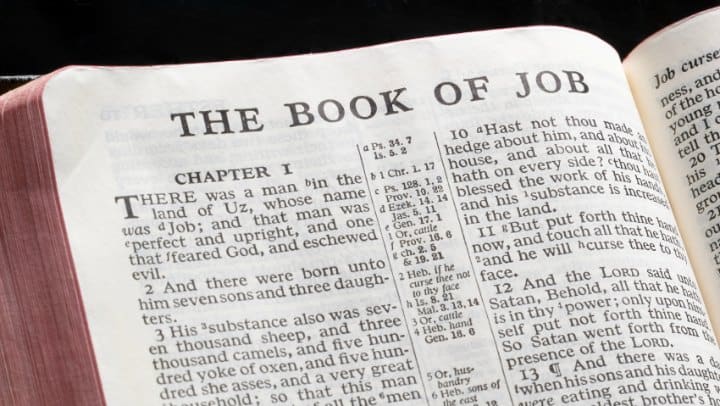
Recently at the suggestion of some teachers and podcasts I listen to, I took some time and in one setting read through whole books in the Bible. If you haven’t done this I would highly recommend it. Just read through the book not looking for anything or zeroing in on any specific point; just read through the book and let it teach you its main themes and allow it to speak for itself. One of the books I recently read through and want to briefly discuss is the book of JOB. We are very familiar with this book and story and can learn a lot of things from it including sufferings, patience, steadfastness, God’s perspectives, and others. However, I would like to share with you what really stood out and stayed with me as I read through the 42 chapters of this book. Job 1:8-9 says,

Then the Lord said to Satan “Have you considered My servant Job, that there is none like him on the earth, a blameless and upright man, one who fears God and shuns evil?” So, Satan answered the LORD and said, Does Job fear God for nothing?

Right there is the true question: “Will you fear and serve God for nothing.” It is not only a question that Satan asks the Lord referring to Job, but it is also for us today. Satan was assuming that Job would have a transactional relationship with God, that as long as he was doing what was righteous that Job would assume that he has earned his blessings or somehow God is obligated to bless him. Do we fall into this mindset that Satan is stating her is verse 9? Is it easy to fear and serve God while things are going good in our life or for fear of punishment? Do we have this transactional relationship that says I have done all these righteous X’s so I deserve these Y’s (blessings)? Would we serve God if everything (wealth, family, health) in an extremely short period of time was taken from us and we were in the situation Job found himself in? Satan is saying that taking comforts of this life away will push even the strongest to curse God to his face. Satan states this in Ch 1:11 and notice that as early as 2:9 Job’s wife actually uses the same language when she tells Job, “Do you still hold fast to your integrity? Curse God and die!”

Sometimes bad things happen because we make bad decisions and we must deal with those consequences. However, Job shows us that sometimes bad things happen outside of our decisions and we do not know all like our Creator GOD. God lays this out in his answer to Job out of the whirlwind in Chapters 38-42 basically stating that, “I created everything and have it all under My control, I AM GOD, even when you don’t realize it and so you must trust Me no matter what circumstances you find yourself in.” In chapter 42 we read exactly what Job did in response to God’s challenge to Job. Now as he repents and fears God he is in dust and ashes. This is the definition of serving God for nothing. Every worldly comfort had been taken from him and he had nothing, not even physical health, and nothing as of yet had been restored to him. But he through great tribulation feared God for nothing except he is God the creator and sustainer of everything.

We do need to serve God just because he is God and the creator of all things but the good news is we don’t serve him for nothing. Read Job 19:25: For I know that my Redeemer lives, and he shall stand at last on the earth; Just as we read Job and see his longing for a mediator between him and God, we now have that through Jesus. God gives us eternal life that can be found in Christ our mediator, not because we deserve it like a transactional agreement but because He is a benevolent, gracious and loving God.

TRUTH: FROM CONFUSED TO CONVICTED

Tuesday’s Column: Dale Mail

blond man with goatee smiling at camera with blazer on
Dale Pollard

If you were to flip on the TV and watch a news channel, it can quickly become frustrating. Channels like CNN will often say something entirely different than FOX or vice versa. What’s actually true? Who can we trust? What should we believe? 

Just when your mind begins to become convinced of one thing, you hear or see something that changes your thinking once again. This creates the skeptic, the double-thinker, and the cynic. 

Since a variety of propaganda will always be pushed and those personal agendas will always be hidden, it’s more comforting than ever to read and soak in pure unadulterated truth. So, here are some of those truths we can count on that our found in the Bible. 

  1. God is real and His message to mankind can only be found in every inspired word written in the scripture (2 Tim. 3:16-17). 
  2. The scriptures teach mankind the means by which we are saved and added to His church. God adds us through our action- based belief, repentance, and immersion (Acts 2:42ff, Titus 1:5-11). 
  3. Christians must live faithfully and in accordance to His instructions (1 Peter 1:15). 
  4. The faithful can only truly worship by following the pattern which is demonstrated by the 1st-century church and Apostolic examples (1 Tim. 2:8-15). 
  5. The Bible teaches that one day everyone will walk through the door that leads out into eternity. Whether or not we are lost or saved as we pass through that door will be the determining factor that dictates where our final destination will be (Rev. 20.12).
  6. It’s our Christian duty to ensure that others are aware of this spiritual reality (Matt. 25:46, Ecc. 12:7, 1 Jn. 1:7). 
  7. God can’t lie and every word He wrote is true (Ti. 1:2; Ps. 119:160). 
  8. It’s our responsibility to study His message because it’s the only thing that matters. 

These truths will never change. They are a constant you can count on and we’ve only scratched the surface. It’s crucial that every follower of Christ is convicted and well versed in His Word. This is where and how we find peace and direction. The Bible is the only source that we can rely on  100% and that’s something that’s increasingly hard to find today. 

Fears Are Funny

Tuesday Column: Dale Mail

image-e1601983688162

Dale Pollard

Do you remember what any of your childhood fears were? Maybe you never really grew out of those fears.  I can remember a number of phobias I had as a child but one of them was not arachnophobia. In fact, me and my younger brother would collect spiders from the backyard and put them all in a container in our bedroom. At night we would put a flashlight behind a clear cage and watch all the spiders make their webs— occasionally fight each other. I don’t believe mom ever discovered this little secret. For some reason as I grew older (more mature) I developed a fear of spiders, despite having played with them often as a young kid.

Fears can be funny like that. They can come from bad experiences or just somewhere in the back of our minds. There’s a lot of fear in the world today!

One of my favorite psalms in the Bible is Psalm 46. We read about what seems to be those worst case scenarios, but God still reigns over all. What if the earth gives way? What if the mountains are thrown into the sea? What if the wrong man becomes our new president? What if this virus never goes away? Even so, we have no reason to fear. God is bigger than our fears. We serve a Being with that much power and it should fill us with courage. What are you afraid of? 

“I Can’t Come To Church Because Of Covid”

(Tuesday Supplement. Note: I am well aware that there are those who are immunocompromised and cannot attend. This is not in any way meant to discourage or dishearten those in this condition. God knows and understands.)

Neal Pollard

Covid has touched nearly every family I know, including my own. It would be foolish to say that it is harmless. It has claimed nearly 5 million lives as of today. So, I have heard from many good, thoughtful people, this statement: “I can’t come to church because of Covid.” Please accept that with deep, genuine love, there are a few questions that need to be asked alongside of this.

Are we being consistent? Are we still going to the grocery store, the restaurants, the beauty shop, the office, the classroom, the gym, and the doctor? Chances are at least as great that we will contract Covid in one of those places as at church. People are not more clean or careful in those places. 

Are we properly prioritizing?  Perhaps we see the stores, the job, the school, and the medical as essential and necessary. Jesus puts our spiritual health and that of His body above all else (Mat. 6:33; 16:26). How could we conclude that any of these others are more important than His kingdom?

Are we considering others? Perhaps we console ourselves by saying that we’re getting what we need by watching Facebook, Vimeo, YouTube, or wherever services are live-streamed. But, worship and Bible class is not simply about our being fed. We must consider one another to stimulate unto love and good deeds (Heb. 10:24). That is said in connection with assembling together (Heb. 10:25), and how is this done by one who stays away from the assembly?

Are we weakening our spiritual strength? Is it getting easier to stay away or opt to just catch it on the phone, computer, or TV when we don’t feel like coming? Are we losing our desire to be with God’s people? Isolation has many effects, some more subtle than others.

Are we assessing our fears? Those who are waiting for Covid to go away will be waiting years or longer. This is a virus. Scientists doubt that it can be eradicated. It spreads too quickly. Perhaps it will be like Polio or smallpox, but how long will that be? Will we stay home for years? Meanwhile, where will be, spiritually, years from now if we have disconnected from our spiritual family? 

After 18 months, perhaps it is time to do some serious reevaluating? Instead of only allowing news outlets to be our guide, we need to balance that with careful study of God’s Word. Instead of considering just this life on earth, we should balance that by considering this life is for preparing for eternity. We need to be back together–all of us, now more than ever. 

Ascending Hearts And Hills

Monday’s Column: Neal At The Cross

pollard

Neal Pollard

Fifteen consecutive psalms (120-134) are so-called “Psalms of Ascent.” They were given this name because they were songs designated for the Israelites to sing on their way to worship in Jerusalem. Moses had instructed them at the giving of the Old Law, “For I will drive out nations before you and enlarge your borders, and no man shall covet your land when you go up three times a year to appear before the Lord your God” (Ex. 34:34). You can imagine how especially those who came a long distance to Jerusalem (it’s over 100 miles from Mt. Hermon and Beersheba, for example) might benefit from a reminder of why they were making this lengthy journey. As most would walk, this would help pass the time while preparing their minds. This is not a bad idea for us even on a 10 or 20 minute drive to the church building on Sunday morning. 

There is quite a bit of uneven terrain, mountains and valleys, in the area around Jerusalem, and the temple required a steep climb as there were three valleys surrounding Mount Zion and the temple complex. So, people coming from every direction would have to “go up to Jerusalem” (Zech. 14:17; John 2:13; 5:1). But, it was more than a physical ascent, this trip to the temple. It was more significantly a spiritual ascent, an effort to get closer to God. While we can and should draw near to God daily in our personal devotion, there is still great significance and benefit when we join each other in the presence of God to worship Him and fellowship with Him and each other (Heb. 10:24-25). Each time, this should be an ascent for us! 

Notice the repetitive use of “will” in Psalm 121. The word is used eight times in these eight verses. The word points to the future and indicates either anticipation or trust. The writer is confident, especially of what he expects God will do. Such assurance had to take his heart higher!

I WILL LIFT UP MY EYES TO HIM (1)

He starts with what he will do. The writer will look up to God, seeking help and strength. A heart ready to worship is one who sees things as they really are. I am spiritually destitute and needy, and I depend on God for everything. When that is my mindset, I am prepared to praise, thank, and petition Him!

GOD WILL HELP ME (1-2)

Whatever problems, distractions, struggles, and temptations are weighing me down and wearing me down, God will help me! His power is proven. Just look at the creation (2). He has not lost an ounce of strength from that moment to now.

GOD WILL NOT LET ME FALL (3)

The terrain around Jerusalem is often rocky and uneven. I suppose it is easy for anyone’s foot to slip on those roads up to the holy city. But, spiritually, it is a different matter. If I fall, it will not be God’s fault (John 10:27-29). If I hold to God’s unchanging hand, I will successfully complete my journey.

GOD WILL NOT FALL ASLEEP ON THE JOB (3-4)

Night and day, moment by moment, God is alert. He sees everything I do and everything that is done to me. How comforting to know that the All-seeing eye never droops or closes. He does not nod off, even for a moment. 

GOD WILL GUARD AND PROTECT ME (5-8)

Half of this psalm is devoted to this idea. God is not just passively involved, watching me. He is actively involved, keeping me (5,7), providing me shade (5-6), protecting me (7), and guarding me (8). Our God is not inanimate! He is involved! It is why we pray. It is why we trust in His providence. It is why we serve and obey Him. As we love to sing, “There is a God! He is alive. In Him we live and we survive.” The writer of Hebrews quotes three Old Testament passages (Deut. 31:6; Josh. 1:5; Psa. 118:6) to convey two promises: “Let your conduct be without covetousness; be content with such things as you have. For He Himself has said, “I will never leave you nor forsake you.”  So we may boldly say: “The Lord is my helper; I will not fear. What can man do to me?” (13:5-6). 

When you enter to worship, enter with the heart and faith of the righteous pilgrims on their way to the temple for one of the annual festivals. Come with your heart ready, and come with a heart full of faith and trust in the object of your worship. You will leave rejuvenated and resolved.

Fear And Anxiety

Saturday’s Column: Learning From Lehman

childress

Todd Childress

For the past 18 months, there have been many changes that we have had to get accustomed to- new guidelines and restrictions due to the Covid-19 pandemic .There are a lot of political issues and differences, a lot of immoral activities you see on the news. These topics I have just mentioned has given me anxiety over the past 18 months and I’m sure you can agree with me.

We all deal with anxieties, stress and fear:

–Loss of a loved one, rather that be family member or friend. The toughest situation I have ever dealt with so far in my life is losing my dad almost seven years ago to liver cancer. It was very tough to see him battling liver cancer and the toil it took on his body.
–Dealing with health issues of our own, spouse, child or other family members.
–Moving to a new area – Unfamiliar community, people, tough on the whole family
–Jobs can be stressful or give us anxiety – A lot of time at work I don’t like change.

THAT’S ENOUGH GLOOM AND DOOM – LETS LOOK AT SOME GOOD NEWS!

Psalms 34:19 reads, “Many are the afflictions of the righteous, but the Lord delivers him out of them all.”

Consider three promises you can believe for anxiety.  These are things that God tells us to do with our heart, mind, and eyes to combat our anxiety:

1. In Philippians, we learn what to do with our hearts when we are anxious. For you math lovers, like me, apostle Paul actually gives us a mathematical equation to tech us what to do with our hearts: “Be anxious for nothing, but in everything by prayer and supplication, with thanksgiving, let your requests be known to God; and the peace of God, which surpasses all understanding, will guard your hearts and minds through Christ Jesus” (Philippians 4:6-7). Did you catch the equation? Prayer + Supplication=Peace! God wants to hear all about our anxieties because he cares for us. Supplication means asking for something humbly. That something is peace. Because of our pride, we want to be in control of our own lives. To receive true peace, we must humbly go to God and release the control to him. The result of the equation is peace – when we have true peace from God, he protects you against temptations to be anxious.

2. In Isaiah, we learn what to do with our minds to receive God’s perfect peace. “You will keep him in perfect peace, whose mind is stayed on you, because he trusts in you” (Isaiah 26:3). It is difficult to keep our minds on Christ when we are going through trials here on Earth. Our minds want to focus on what we are going through. Anxiety is not of the Lord but from the Devil as a distraction to the work of kingdom. We worry about our lives and are blinded from the opportunities God is giving us to serve him. “Bring every thought into captivity to the obedience of Christ” (2 Corinthians 10:5). When you have anxious thoughts, surrender them to the only one who is ALWAYS in control of this ever-changing world.

3. We learn in Psalms what to do with our eyes when we are overwhelmed with our circumstances. “I will lift up my eyes to the hills-From where does my help come from? My help comes from the Lord, who made heaven and earth. He will not allow your foot to be moved. He who keeps you will not slumber” (Psalms 121:1-3).  By shifting your focus from your situation to the never changing promises of God, you begin to trust Him more. As you trust Him more, your anxiety begins to fade away because you realize how big God is in comparison to your troubles. God promises those who look to him that he will never forsake them and will never let them fall. You may stumble through struggles in life, but God will always be there to catch you if you keep your eyes on Him.

Always remember, whenever you are struggling with anxiety, align your heart, mind, and eyes with God. God promises to never leave you and he will provide you with peace-perfect peace.

“Discipline your thoughts to trust Me as I work my ways in your life. Pray about everything; then leave outcomes up to Me. Do not fear My will, for through it I accomplish what is best for you” (Jesus Calling – Enjoying Peace in His Presence , Sarah Young). We should always trust God and Jesus in whatever circumstance we are going through. Always go to him in prayer with what is on our hearts. God knows what is best for us and we should have nothing but absolute trust in Him!

Todd delivering this lesson at Lehman Avenue Wednesday night. Excellent!

THREE QUALITIES OF A FAITHFUL FOLLOWER

Monday’s Column: Neal At The Cross

preachingatPBL

Neal Pollard

Two parables and an incident in Luke 18:1-17 reveal three attributes Jesus is looking for in His disciples. As you read through these verses, ask yourself if you struggle with one or more of these. The examples Jesus holds up are all lowly characters–a defenseless widow, a sinful tax collector, and babies and little children. They were all either financially, spiritually, or physically dependent on others, yet these are the ones Jesus tells us to imitate. What are the qualities?

PERSISTENCE (1-8). The parable of the widow and the unjust judge is delivered to his listeners for a specific reason, “that at all times they ought to pray and not to lose heart” (1). A widow pleaded for legal protection from a judge who neither feared God or respected men (2). She wouldn’t stop coming to him and pleading her case until finally he relented and granted her request out of frustration and annoyance at her continual coming (3-5). Jesus’ point is that the perfect God will bring justice to His elect who faithfully pray to Him (7). He ties this persistence to faith (8). Jesus is giving us insight into God’s heart and desires. He wants to hear from us in prayer, and He is influenced by our prayers. Do we have faith in that? 

HUMILITY (9-14). Jesus launches into a second parable about prayer, to highlight another necessity in the practice of it. He focuses on an unlikely duo, a prominent religious leader and a contemptible tax collector. Both enter the temple, both for the purpose of prayer. Both prayers are recorded. Jesus evaluates them. The first prayer, uttered by the Pharisee, is self-directed (he prayed to himself), self-righteous (God, I thank You that I am not like other people: swindlers, unjust, adulterers, or even like this tax collector), and self-promoting (I fast twice a week; I pay tithes of all that I get). He shows no recognition of or need for God. He’s pretty self-satisfied. The second prayer, uttered by the tax collector, is selfless, self-indicting, and self-emptying. Jesus notes his hesitance (standing some distance away), abjection (even unwilling to lift up his eyes to heaven), emotion (beating his breast), and honesty (his entire prayer is, “God be merciful to me, the sinner”). Jesus’ analysis? The second man was the one who went home justified, not the first. Jesus’ point is explicit: “everyone who exalts himself will be humbled, but he who humbles himself will be exalted” (14). I may know more sophisticated ways to exhibit my pride and self-righteousness, but the response and result will be the same in heaven. Faithful followers humbly recognize their need of God’s favor. 

RECEPTIVITY (15-17). Parents were bringing their children to Jesus at this time so that He could touch them. We aren’t told why the disciples rebuke them for this, though it could be they were wrestled with pride of position or self-importance. Jesus corrects their course, telling them to let the children come to Him. In fact, He says, “Truly I say to you, whoever does not receive the kingdom of God like a child will not enter it at all” (17). He tells them that the kingdom of God belongs to those like these little children. How so? They were dependent on others (15). They were apparently willing (16). They were open (17). Certainly, this is a great exhortation to us as parents, to bring our children to Jesus in the impressionable years of life. But beyond that, there is an admonition to each of us to keep child-like faith and recognize our need to come to Jesus in order to have a place in God’s kingdom.

Often, we think that being in the kingdom is about us daring and doing great things for God. But, doesn’t it begin with our having the lowliness of heart to come to Him, persistent, humble, and receptive? These three qualities put the focus on His attractiveness, ability, and power. If we allow ourselves to be tools in His hand and recognize that it’s about Him and because of Him, then we’ll be faithful followers. 

FIGHTING HAGRITES AND OTHERS

Monday’s Column: Neal At The Cross

Neal Pollard

1 Chronicles 5 devotes a relatively large amount of space to an incident that happened during King Saul’s reign. It involved the sons of Reuben, the Gadites, and the half-tribe of Manasseh waging war with a people identified as “the Hagrites, Jehur, Naphish, and Nodab” (18-19). The contested area of land was east of the Jordan River in the territory allotted to the Israelites mentioned in verse 18.  At least some of the people they fought seem descended from Hagar and Ishmael. The focus was on the large land grab made by these Israelites in battle. They won this war in terms of spoil (21) and casualties (21-22). 

Today, we wage war of a very different type. New Testament writers describe it. It is not according to the flesh, but is intense nonetheless (2 Cor. 10:3-5). It is a fight of faith (1 Tim. 1:18). It is against world and spiritual forces necessitating our adorning spiritual armor of God (Eph. 6:10ff). We can feel overmatched and overwhelmed by this enemy. What can help us stay in the fight? There are four statements back in 1 Chronicles 5:18-22 that we can legitimately apply to our spiritual warfare today. Will you remember these?

You Will Be Helped (20).

The chronicler says this of the Israelites. “They were helped against them,” and it is implied in this verse that their help came from above. There is no way we could overcome the world (1 John 4:4; 5:4) without Divine help. God gives His help generously, gently, and graciously (Jas. 1:5). He tells us that all we need to do is ask (cf. Mat. 7:7). God’s help is THE difference-maker! 

Cry Out To God In The Battle (20).

If we are striving to be faithful, we will be in a battle. What can be done? These Israelites were helped because they cried out to God in the midst of the strife. I love how Paul says it to the Philippians: “Be anxious for nothing, but in everything by prayer and supplication with thanksgiving let your requests be made known to God. And the peace of God, which surpasses all comprehension, will guard your hearts and your minds in Christ Jesus” (4:6-7). Don’t neglect prayer in the thick of the fight. Paul follows up his description of our spiritual armor, urging “all prayer and petition…at all times” (Eph. 6:18).

God Answers Those Who Trust In Him (20).

To me, nothing is more beautiful to consider than an army bowed in prayer to God to help them. As a citizen of this nation, it is wonderful to consider our military filled with men and women doing that. But, the most beautiful picture of all has to be of God’s Holy Nation (1 Pet. 2:9) filled with spiritual warriors who so put their trust in God that they are constantly before His throne in prayerful petition. Revelation 8 describes in beautiful imagery how carefully and preciously He handles the prayers of the saints brought unto His throne. It is likened to sweet-smelling incense. God is a loving Father who is pleased when His children demonstrate trust in His leadership and guidance. The promise of Scripture is that those who trust in Him are delivered and are not disappointed (Ps. 22:4-5). 

Understand The War Is Of God (22).

We often sing, “The battle belongs to the Lord.” This passage tells us why the enemy was slain. “The war was of God.” The result was that they settled in their place until the exile, which was over 300 years later.  As great as that was, we stand to experience a far greater victory. God disapproves of unworthy battles–“foolish and ignorant speculations, knowing that they produce quarrels” (2 Tim. 2:23), “foolish controversies” that “are unprofitable and worthless” (Tit. 3:9), or quarrels and conflicts that are fueled by our giving into the sins of our flesh (Js. 4:1ff). Be careful not to be a foot soldier carrying out the agenda of the foe. But if we are on the Lord’s side, we can be assured that He will gain the victory and we’ll be fighting on the winning side. 

Maybe we wonder why God recorded events like this in Scripture. It certainly shows His mind, nature, and power. But it also helps us understand His point of view and His desire in our lives today. The church has “Hagrites” to face. You and I have our own “Hagrites” to battle. How they won is how we’ll win. May the song on our hearts and lips ever be, “Faith is the victory that overcomes the world!”

8 Reminders For The Restless Mind

Tuesday’s Column: Dale Mail

dalejanelle2021

Dale Pollard

  1. Don’t carry burdens that aren’t yours (Proverbs 3.5-6)
  2. Remember the extraordinary times that God has carved out a path where there was no path before (Isaiah 43.16-19) 
  3. Don’t forget, God can see what you can’t see (Proverbs 16.9) 
  4. Even if you stumble, God won’t let you stay down (Psalm 37.23-24) 
  5. God’s vision is bigger and better than yours (Jeremiah 33.3) 
  6. God hasn’t forgotten about you (Proverbs 20.24) 
  7. Remember to be very specific when praying to God (2 Samuel 5.19) 
  8. Always be sure your will is His will (James 4.15) 

If you’re struggling with the anxieties that can come from making life’s difficult decisions, read these verses. Perhaps they will give you some insight that help you to answer that crucial question, 

“How should I be praying about this?” 

Give it to God and rest up! 

“When you lie down you will not be afraid, when you lie down your sleep will be sweet.” 

Proverbs 3.24 

Panic Buying 

Friday’s Column: Brent’s Biblical Bytes

81121814_2462862270639428_5746232403106463744_n

Brent Pollard

Panic buying was in the news again following the Colonial Pipeline hack. People fearing a gasoline supply interruption bought up all the gasoline in many stations throughout the southeast and mid-Atlantic. You might also recall the panic buying of 2020 when the coronavirus pandemic inexplicably caused people to panic-buy toilet paper and paper towels. Why do people engage in this type of behavior? In a word, it is anxiety. Dr. Shahram Heshmat provides seven reasons people choose panic buying as the balm for uncertainty. I would like for us to consider those reasons in addition to the proper, Biblical response. 


  1. Emotions trump logic. People know they don’t need 100 rolls of toilet paper, but driven by fears of a possible shortage, their emotions convince them they would be “safer” buying enough to fill a shopping cart while it is available. Though we equate sobriety with abstention from intoxicants, it also highlights a watchful frame of mind. Paul counseled the brethren of Thessalonica to avoid spiritual stupor by remaining vigilant and sober (1 Thessalonians 5.6). Even if I know that there might be an upcoming shortage, my trust in God should prompt me to act rationally regarding the needs of others who likewise need to secure provisions for their own. Hence, all of us can get by with our typical toilet paper purchases.


  1. Fearful expectation. I anticipate the worst and become fearful before having a cause. Could it be that there will be a shortage of goods? Perhaps. If my compatriots and I hastily grab all of the items from a store’s shelf, then it becomes a self-fulfilling prophecy. Jesus told us to pray for our daily bread. Then, after reminding us of Providence, Jesus concluded this section of the Sermon on the Mount by saying: “So do not worry about tomorrow; for tomorrow will care for itself. Each day has enough trouble of its own” (Matthew 6.34 NASB1995). In other words, Jesus says to take things a day at a time. Tomorrow has its own set of concerns, and we can only deal with what is in front of us.


  1. & 4. The contagion of fear and herd mentality. Dr. Heshmat lists these as two of his seven reasons. The entwining of these ideas is such I will consider them together. Fear spreads like a virus. People sense fear in a group, believe there is justification for it, and follow the cues of others. God knew this about us when giving Moses instruction: “You shall not follow the masses in doing evil, nor shall you testify in a dispute so as to turn aside after a multitude in order to pervert justice” (Exodus 23.2 NASB1995). It doesn’t matter if “everyone is doing it” because we will give an accounting of ourselves before God (Romans 14.12). The incident of the Golden Calf illustrates how easy it is for us to get caught up in groupthink (cf. Exodus 32.1ff).


  1. & 6. Inability to deal with uncertainty and the desire to be in control. Once again, Dr. Heshmat deals with these separately, but I think they are related. Some people find it harder to deal with the unknown. Do you know someone who keeps watching the news or checking social media about a current event? Does it not seem to fuel their anxiety? Such a person likely keeps an eye open for which gas station has fuel or store has toilet paper. He convinces himself he is on top of things by swiftly grabbing up supply as it becomes available. But man is not in control due to the uncertainty of life (cf. James 4.13-15). There are things that we cannot know (Deuteronomy 29.29). We do best to trust the One Who will supply all our needs (Philippians 4.19).


  1. Misinformation. Dr. Heshmat explained how social media spread the misinformation about the toilet paper shortage. People in Japan thought there would be a toilet paper shortage because of what they had seen on social media. Given that we had a mad dash to buy toilet paper in the United States, it is apparent that the online rumors crossed the Pacific. The spread of false information is undoubtedly a hazard to having an interconnected world. It is interesting to note how Paul connects gossip (or being a busybody) to idleness. Paul tells Timothy that the church should not financially support young widows since their inactivity might encourage gossip (1 Timothy 5.11-15). Paul said that their undisciplined life led some in Thessalonica to act as busybodies (2 Thessalonians 3.11). In regards to such Thessalonians, Paul famously reminded that those unwilling to work should not eat (2 Thessalonians 3.10). Hence, if we enough time on our hands to entertain rumors, we may well be neglecting our Christian duty elsewhere.


Panic buying is a peculiar problem of modern man. However, it ultimately stems from anxiety, a commodity of which Christians are to be in short supply. Not only did Jesus tell us not to worry (Matthew 6.25ff), but Paul reminds us that prayer brings incomprehensible peace (Philippians 4.6-7). Let us avail ourselves of the precious promises of our Lord and cast our anxiety upon Him (1 Peter 5.7). 


Works Consulted 

Heshmat, Shahram. “7 Reasons for Panic-Buying Behavior.” Psychology Today, Sussex Publishers, 22 Mar. 2020, www.psychologytoday.com/us/blog/science-choice/202003/7-reasons-panic-buying-behavior


How To Avoid Worrying About Your Kids

Monday’s Column: Neal At The Cross

pollard

Neal Pollard

For those not on social media and connected either with Kathy or any of our three sons, Carl, our youngest (and Thursday’s blog writer), was in a serious motorcycle accident a little over a week ago. A large pickup truck tried to turn left onto the highway and Carl hit it going highway speed. Our concern was for both his immediate safety and longterm health. Add this to two sons unofficially assisting police in breaking up a local theft ring, a son tackling a shoplifter attempting to flee a store and interrupting a gang initiation beating, broken bones, ER trips, ICU stints for health issues, and that’s not to mention innumerable “close calls,” “near misses,” “close shaves,” and “narrow escapes.”  Of course, it’s not just health. What about their relationships? What about their jobs, careers, and financial futures? What about the country they are inheriting or the children God may bless them with? Most of all, what about their spiritual condition, their faith, and their relationship with Christ? With each new phase of life, we are left to numerous consider “what ifs.” For future empty-nesters, that does not decline or disappear when they leave home. If anything, it mounts. So, how does a Christian not worry about their children?

Philippians 4:6. Paul urges us to “be anxious for nothing.” That word for anxious depicts apprehension, being unduly concerned about possible danger or misfortune. We can drive ourselves crazy thinking of all the scary scenarios. Paul says instead to pray (speak to God and petition His help), supplicate (urgently request God to meet the need, suggesting begging and pleading), and express gratitude. Specifically articulate the help you seek from God. Won’t this just make things worse? Not at all. Instead, “the peace of God, which surpasses all comprehension, will guard your hearts and your minds in Christ Jesus” (7).

Luke 12:25-26. Luke records Jesus’ voluminous teaching on various material concerns. In the middle of it, Jesus shares a principle that applies to any number of matters. He teaches, “And which of you by worrying can add a single hour to his life’s span? If then you cannot do even a very little thing, why do you worry about other matters?” What a practical, sensible truth. What do we change by endless fretting and worrying? Does it change outcomes? Does the exercise of worry keep the bad and scary things from occurring? Does it override the freewill choices of our children or others? We are at one place at a time. God knows everything (30). “He who keeps you will not slumber…nor sleep” (Psa. 121:3-4). Trust that! 

Matthew 6:33. What Matthew records is close to parallel to the material in Luke 12, though the wording and setting are different. The counsel here is about prioritization. It’s hard to “let go and let God,” but that’s Jesus’ bottom-line guidance. Again, in context, He’s dealing with material things rather than our kids. But substituting the one concern for the other does not change the principle. We are well-served to practice “God-firstness” from as early as possible, before our children are born. We should strive to live by that principle throughout the years they are in our homes, trying to show it to them. Then, we must continue to live it out personally and exemplify it before them after they leave the home. God’s kingdom, His will, His righteousness, His goals, His Word comes first and foremost. Keeping focus on that, trust Him to take care of not only us but those whose lives we care about. Jesus sweetly consoles us, “So do not worry about tomorrow, for tomorrow will care for itself. Each day has enough trouble of its own” (34).

1 Peter 5:7. I love how Peter acknowledges that we all have anxiety. We’re all tempted (and all of us at least occasionally succumb to the temptation) to worry. Peter’s words are practical. Humbling yourself under God’s all-powerful hand, throw all your anxieties on Him. He is strong enough to carry it. Do you know what’s the best part? Not only can He do it, He wants to. Why? He cares for you! He’s your Father. “Care” here means concern and anxiousness. Our lives matter to Him. His heart is involved. We may not stop to think that all of us are His children. The difference is that this Father can see the future, is fully in control, will never be startled or surprised, and never lacks for what to say, how to react, and what to do. How foolish not to give Him the things we would obsess over, be consumed with, and eaten up by. 

I wish I could tell you I will never worry about Gary, Dale, and Carl again. Those who know them know what a tall task that is. I wish I could tell you that you will never worry about your precious children again. But, none of us should. We can make progress and get better if we’ll feed on the rich truths of passages like the ones we’ve visited briefly together today. Go back and read them again. Drink deeply of their comforting, helpful truths. They will help you trust Him more with whatever frightening prospects you face regarding your children’s lives. I don’t promise. He does! 


Saturday at Hebron church of Christ (where Carl, center, preaches). This was at Carl and Emily’s wedding shower. The boys had just returned from hunting wild hogs near Demopolis, AL. It never ends!

Sunday’s Bulletin Article: “F-E-A-R”

Neal Pollard

61482521_10156347607435922_101144894977867776_n

It will make congregations forsake God’s command to practice church discipline, especially in the age of Facebook and Instagram. It will disrupt, cancel, and in other ways impact congregational plans, faced with something that has killed .0004% of the world’s population. It will cause congregations to abandon the biblical position on any number of things that accommodates the cultural point of view. But, biblically speaking, what is particularly the fear of the devil, mankind, or things of this earth?

F-AITHLESS. You’ll find fear and faith contrasted in Scripture (Mat. 14:31; Mark 4:40; Heb. 11:23). Jesus rebukes a fear which hinders faith more than anyone. When we are driven by fear rather than faith, we confess that we believe in something more than we believe in God. Fear is completely understandable, something the Bible’s greatest heroes felt. But, they overcame their fear of men and even the devil by a greater faith in God’s power. The generation of Israel Moses led were the poster children of fear (Num. 14:9), yet what does the writer of Hebrews diagnose as the root cause of their punishment and rejection? “Unbelief” (3:19).

E-PIDEMIC. Have you noticed how quickly and widely fear spreads? The spies sent to Canaan came back afraid and they transmitted it to the whole nation almost immediately (Num. 13:31-33; 14:1ff). The devil has plenty of channels to transmit fear, from traditional to social media. But even pulpits, private meetings, and informal discussions can fan the flames of fear. Fear plays to our flesh, and the voice of fear travels at light speed. 

A-MPLIFYING. Have you ever suffered from economic, relationship, occupational, or spiritual problems? Lie still in your bed at night (or wake up in the middle of the night) and those fears grow exponentially. Like worry, fear is often greater than the problem. It’s why the devil finds it a useful tool in his warfare (cf. Rev. 2:10; 21:8–“cowardly” is the word “afraid” in Mark 4:40; 2 Tim. 1:7). The enemy looks bigger and scarier than it is, but giving in to fear can make it seem gigantic.

R-ASH. Jesus makes this clear during His earthly ministry. He says, “Do not fear those who kill the body but are unable to kill the soul; but rather fear Him who is able to destroy both soul and body in hell” (Mat. 10:28). The analogy is definitely disturbing. There are physical and spiritual entities out there with the power to take our lives. We can be so quick to respond to them by retreating or withdrawing. But if the fear of those things replaces or supplants the fear that belongs rightfully only to God, we are in big trouble. 

These, are fearful times! Who doesn’t wrestle with fear? It seems that Jesus did (Luke 22:44; Heb. 5:7). God understands we’ll struggle with fear (Psa. 103:14). But His lovingkindness and compassion are “on those who fear Him” (Psa. 103:11,13,17). There is more Kingdom work to do than ever! There are numerous obstacles, but let’s not get in our own way through fear! 

Where Few Dare Go 

Tuesday’s Column: Dale Mail

83538761_557569434843824_1603081807199207424_n

Dale Pollard

In the movie 20,000 Leagues Under The Sea there is a scene where one of the main characters finds himself on an island in the middle of the ocean. Suddenly he hears the faint sound of bongo drums in the distance and the sound becomes louder and closer. Out of the jungle a large group of cannibalistic natives appear, chasing this poor man across the beach. The hero escapes, but only by the skin of his teeth. That scene used to terrify me and an irrational fear of cannibals was instilled in me at a fragile age. In the 1830s when European explorers came to the Fiji islands they were horrified to discover the local practice of cannibalism. To me, the sake of exploration is not worth confronting that particular fear. 

We all fear something! The one who claims to be fearless is afraid to admit or confront their fear. Fear isn’t wrong, it’s natural. We’re supposed to have a healthy fear of the Lord (Job 28:28). Facing our fears is a noble thing, but it really only matters in a spiritual sense. 

A common phobia in our world today seems to be the fear of truth itself. Many Christians in the Lord’s church know family members and friends who have refused to listen to and act on the truth found in God’s Word. They’re afraid to give up the teachings taught to them by their families or the religious groups they grew up in. They’re afraid that the truth requires them to give up a sin they tightly hold on to and the sacrifice required to follow Christ. 

The gospel of John is all about truth. In it we learn that Jesus is the only way to salvation and heaven; that’s the truth (John 14:6, 17:17). We must teach through our actions, daily lives, and yes, by inviting them to look at this great truth in Bible study. Though confronting that truth might make some fearful, we must show others that it has the power to free and cleanse us from the guilt of our sins. 

36675494774_902e75615d_b

(Photo: Creative Commons, Flickr, James Vaughn)

“We Have Nothing to Offer but Fear Itself” 

Friday’s Column: Brent’s Biblical Bytes

81121814_2462862270639428_5746232403106463744_n

Brent Pollard

We have entered the vestibule of a new year. Upon reflection, one might realize how subjective the significance of this day is. Neil deGrasse Tyson likes to point this out annually. For example, in 2011, he tweeted: “January 1, 2011: Happy New Year to all –at this arbitrary spot in Earth’s orbit around the Sun.” (Tyson) Consider China. They may observe the Gregorian calendar to conduct global business, but they will not celebrate the new year until February 12, 2021. Why is there a discrepancy? The Chinese, like the Jews, have a lunar-based calendar. God may have created time as a construct in our material universe, but the only “clocks” He provided were the moon and the sun (Genesis 1.14-19), and it is easier to mark time by the moon since we watch it wax and wane. The sun may appear a little lower or higher in the sky, but it is always making its same east-west circuit.  

Even so, we choose January 1 as a special day to begin making necessary or desirable changes to our lives. I would hope that in an age of “fear porn,” the child of God will choose calm. I apologize if the use of that four-letter word is offensive. However, “fear porn” is an expression that has entered our vernacular. Oxford defines this specific usage of the word “porn” as follows: “[in combination or with modifier] Television programs, magazines, books, etc. that are regarded as emphasizing the sensuous or sensational aspects of a nonsexual subject and stimulating a compulsive interest in their audience.” (“Porn”)  Perhaps the definition provided by a user of the less-authoritative Urban Dictionary is more accessible.  “Mainstream Media content that deliberately and enticingly plays on people’s fears about disaster, disease, and death.” (Animalfarm1984) 

While addressing the Great Depression, Democrat Franklin Delano Rosevelt famously stated, “…the only thing we have to fear is fear itself.” Among others, Michael Reagan, speaking of his political opponents, has altered the maxim to be “the only thing we have to offer is fear itself.” (Reagan) I imagine there are those considering that indictment up to debate. However, it is not my point to assign blame to political parties or politicians. Many thrive on instilling fear regardless of political affiliation. As one writer for a pop-psychology magazine opined, fear is “the most powerful motivator of all.” (Wilson)    

I set out to recall a time in my life in which no Chicken Little was trying to scare me about something. I fail to remember a season when all was well with the world. In nearly a half-century of life, alarmists told me of the perils I face from nuclear war, a new ice age, a hole in the ozone layer, acid rain, killer bees, the deforestation of the Amazon region, the policies of Ronald Reagan, Y2K, global-warming-no-wait-let’s-call-it-climate-change-to-cover-all-our-bases, the policies of Barrack Obama, Ebola, the very existence of Donald Trump, the Illuminati, Globalists, Antifa, Black Lives Matter, COVID-19, and, now, Joe Biden’s socialist regime. Phew. Sadly, I have occasionally given such Chicken Littles a greater hearing than the assurances found in God’s Word.  

What was it that the inspired Apostle John said? “You are from God, little children, and have overcome them; because greater is He who is in you than he who is in the world” (1 John 4.4 NASB1995). Jesus created and now sustains creation (Colossians 1.16-17). It is He who will destroy it when the time comes (2 Peter 3.10). In the interim, as God promised Noah: “While the earth remains, seedtime and harvest, and cold and heat, and summer and winter, and day and night shall not cease (Genesis 8.22 NASB1995).” It may be that we figuratively see the writing on the wall as Belshazzar indeed did in Daniel 5, but even so, God will be our Rock. Even if the mountains crumble and fall into the sea, He is still our refuge (Psalm 46). It is OK to face uncertainty with apprehension like Habakkuk did as he awaited the impending Babylonian invasion (Habakkuk 3.2,16). Yet, like Habakkuk (and the Apostle Paul), we must bravely move forward, recognizing our dependence upon Providence (Habakkuk 3.17-19; Philippians 4.11-13). Regardless of what 2021 may hold, if you seek God and His Kingdom first, God has your back (Matthew 6.33)! 

Works Cited 

Tyson, Neil deGrasse (neiltyson). “January 1, 2011: Happy New Year to all –at this arbitrary spot in Earth’s orbit around the Sun.” 1 January 2011, 2:55 p.m. Tweet. 

“Porn: Definition of Porn by Oxford Dictionary on Lexico.com Also Meaning of Porn.” Lexico Dictionaries | English, Lexico Dictionaries,www.lexico.com/en/definition/porn

Animalfarm1984. “Fear Porn.” Urban Dictionary, Urban Dictionary, 26 June 2020, www.urbandictionary.com/define.php?term=Fear+Porn

Reagan, Michael. “Stories in the News – Ketchikan, Alaska – The Fear Peddlers.” Sitnews, Stories in the News, 15 May 2003, 4:25 p.m.,www.sitnews.net/Columnist/051503_reagan.html

Wilson, Robert. “The Most Powerful Motivator.” Psychology Today, Sussex Publishers, 23 Sept. 2009, www.psychologytoday.com/us/blog/the-main-ingredient/200909/the-most-powerful-motivator


God + Understanding = Joy

 Tuesday’s Column: Dale Mail

image

Dale Pollard

I wrote those words in the back of my Bible. It has helped me on several occasions to gather my wits and remember Who I serve. 

In America one of the most common fears is the fear of death. I’m sure it must be true all over the world. Some are afraid of the unknown as humans don’t fully comprehend everything about the physical process of death. 

While Solomon reminds us at the end of Ecclesiastes that we are to fear God, It never ceases to amaze me how an understanding of God eliminates so many of our earthly fears. 

It seems that fear is really an infant quality of the new Christian. It should be. We fear God’s wrath, power, and potential punishment, but with spiritual  growth comes the absence of fear.

 While uncertainty shrouds the details of our future day by day, the Christian can take comfort in knowing our eternal home with God can be certain. 

Timothy needed the reminder that the Lord has the ability to empower us when fear begins to creep in. Paul tells him, “For God has not given us a spirit of timidity, but one of power and love and a sound mind” 2 Timothy 1:7. 

I know that Timothy wasn’t the only one that needed to hear that. So many of us today, especially in these times, need to here those precious words of comfort. Whatever fears may be weighing you down today, may God’s Word give you the power, love, and sound mind that you need to face the day before you. 

“Childhood Fears”

TUESDAY’S COLUMN: “DALE MAIL”

Daleheadshot

Dale Pollard

Do you remember what your childhood fears were? Maybe you never really grew out of those fears. I can remember a number of phobias I had as a child, one of which was not arachnophobia. In fact, my younger brother and I would collect spiders from the backyard and put them all in a container in our bedroom. At night we would put a flashlight behind our clear cage and watch all the spiders make their webs— occasionally fighting each other. I don’t believe our mom ever discovered this little secret. For some reason, as I grew older (more mature) I developed a fear of spiders despite having played with them often as a young kid. Fears can be funny like that. They can come from bad experiences or just somewhere in the back of our minds.

There’s a lot of fear in the world today! One of my favorite psalms in the Bible is Psalm 46. We read about what seems to be the worst case scenarios, but God still reigns over all. What if the earth gives way? What if the mountains are thrown into the sea? What if the wrong man becomes our new president? What if this virus never goes away? Even so, we have no reason to fear. God is bigger than our fears. Know we serve a Being with that much power should fill us with courage. What are you afraid of?


“WHO’S IN CONTROL?”

Tuesday’s Column: Dale Mail

image

Dale Pollard

The employees complained that they couldn’t control the temperature in office buildings. A simple and effective solution was set in place by corporate when they secretly placed dummy thermostats in the work area. They were then able to give all  the unsuspecting workers the illusion that they were in control at last. 

Today there are many that believe they can control more than they really can in their lives. Some have even managed to give others the illusion that they have some kind of supernatural ability to change the nation and world. This entirely false reality takes place on the very planet held in the hands of the One who really has all the control. 

In the Old Testament we find that people thought a lot of David— once he proved his worth as a warrior. As he rose in fame he continued to bring positive change for God’s people but all along the way David understood that he was making a difference only because God allowed him to. 

So many are worried about controlling every aspect of their lives and the lives of others, but I’m thankful that I’m not in control. As a human, I’m prone to make mistakes— God knows that. He provides for His faithful exactly what we need. 

What is God’s will for your life? 

He wants you to recognize His power, His control, His compassion, and His desire for all to be saved. I hope that today this served as a simple reminder to let Jehovah take the lead and that we don’t actually want the control that we may think we do. 

Perspective


WEDNESDAY’S COLUMN: THIRD’S WORDS

Gary III

Gary Pollard

 
Owners of small dogs are familiar with how easily they can be made to bark. Small noises to us are great potential threats to them. A small ladder may be Mt. Everest to an ant, but is a way to reach the top of the pantry for us.
 
Our perspective drives our perception. A very large, very strong person likely does not feel threatened by anyone. A small, weak person may feel threatened by many.
 
Our problems in life seem massive. If we weigh them against the past, with its billions of lives and many cultures, our problems seem smaller. Compare them further to the infinite nature of God, and our problems are inconsequential.
 
James tells us that when we face difficulties in this life we must appeal to the One who has infinite wisdom and power, the God of the stars, the source of every good and perfect gift (1.5-8, 17). We ask Him for the ability to understand our trials. They refine us and make us mature and well-rounded. With that wisdom we can have perspective, seeing our massive trials as the small ladders they are.
 

Privacy Matters

Wednesday’s Column: Third’s Words

Gary III

Gary Pollard

Patients’ information in the US is protected by HIPAA. Specifically, “The Rule requires appropriate safeguards to protect the privacy of personal health information, and sets limits and conditions on the uses and disclosures that may be made of such information without patient authorization. The Rule also gives patients rights over their health information, including rights to examine and obtain a copy of their health records, and to request corrections” (hhs.gov).

We expect and demand that our privacy be protected when it comes to healthcare (and personal information in general). If that trust is breached, we may consider taking legal action against the trust breaker.

When it comes to our marriages, do we extend that same courtesy to our spouses? Or do we vent our frustrations about them to anyone who listens?

When it comes to personal information shared in confidence, do we extend that same courtesy to our Christian family? Or do we share that info with those in our personal circle?

When it comes to sensitive information we may have about someone in the church (or anywhere!), do we treat them with the same level of respect and discretion that we expect from those in the medical field or information technology fields? There are some exceptions to this principle (as common sense dictates), but we sometimes find ourselves sharing or listening to information we have no business sharing or consuming.

In short, if we expect this level of respect and discretion from the professional world, should we not do the same for those in God’s family?

“Whoever goes about slandering reveals secrets; therefore do not associate with a simple babbler” (Prov. 20:19, ESV).