What’s My Purpose?

Thursday’s Column: Carlnormous Comments

carl-pic

Carl Pollard

As humans we want our lives to have direction and meaning. We want to wake up and know what our goal is for the day. Having purpose is what keeps us from feeling like we are spinning in place, it gives us a reason to live. When our lives lack purpose, what does it look like?
 
There will be confusion. When we don’t have purpose our goal in life is unclear. We will ask questions like, “why am I here?” And “what have I accomplished?” A lack of purpose leads to confusion, a lack of clarity, and direction.
 
Without purpose there will also be doubt. We will find ourselves second guessing every decision. If there’s no purpose, then we will begin to doubt the choices we make.
 
A life without purpose contains uncertainty. As humans we want to know for sure that we are making the right call. When we make those important decisions we want to be confident that it was the right choice. If there is no purpose, we will have no ultimate goal to base our decisions on.
 
A life without purpose is a wasted life. So what is our purpose?
 
1 Peter 2:9, “But you are a chosen race, a royal priesthood, a holy nation, a people for his own possession, that you may proclaim the excellencies of him who called you out of darkness into his marvelous light.”
 
As Christians we are described as:
 
  • Chosen Race (God chose you to be part of something far bigger).
  • Royal Priesthood (we no longer have to be a Levite to gain access to God).
  • Holy Nation (set apart and useable by God).
  • Owned By God (a part of The Creator’s possessions).
 
Because we are chosen, royal, holy and owned by God, we have a purpose to fulfill. Peter tells us that our purpose is to proclaim the excellence of God, the one that called us out of darkness and into light (10).  
 
Our life now has a purpose. We have a calling that is greater than anything else we could set out to accomplish. We are a part of God’s plan.
 
He needs us to help Him. Our purpose in life is to help change the eternal outcome of those trapped in sin. We have meaning and direction.
 
We no longer have to worry about what we should be doing with our lives. God had told us our purpose, and we can find true happiness in serving God.

“Calm Thyself”


Wednesday’s Column: Third’s Words

It’s a jungle out there, so here’s some friendly reminders:

  1. We’re here for a short time, not a long time (James 4.14).
  2. God ultimately controls the outcome of November 3rd (Romans 13.1).
  3. This earth is fallen anyway and we’re looking forward to something way better (II Peter 3.10).
  4. We have more pressing matters to attend to (Ephesians 2.10; 4.11; Matthew 28.18ff).
  5. We’re ambassadors, not crusaders (II Corinthians 5.11ff).
  6. Mercy always trumps a condemning attitude (James 2.11ff). Contextually, this is about not showing favoritism based on appearance or status. A broader application concerning our attitude toward others in general is appropriate.
  7. Our attitudes may well be what condemns or saves a lost soul (Philippians in general, but specifically 2.5-11).
  8. Don’t be rude to people, but especially not to those in our spiritual family (Galatians 6).
  9. What we do about our beliefs speaks far more powerfully than what we say about our beliefs, and that can be amazing or especially harmful (James 2.18).
  10. Revelation 22.20!
p

I Am Not A Preacher

Tuesday’s Column: Dale Mail

image

Dale Pollard

We don’t know that much about the life of Christ between the ages of twelve and thirty, but many of us have this image of Jesus in our minds doing the work of a carpenter with His father, Joseph. 

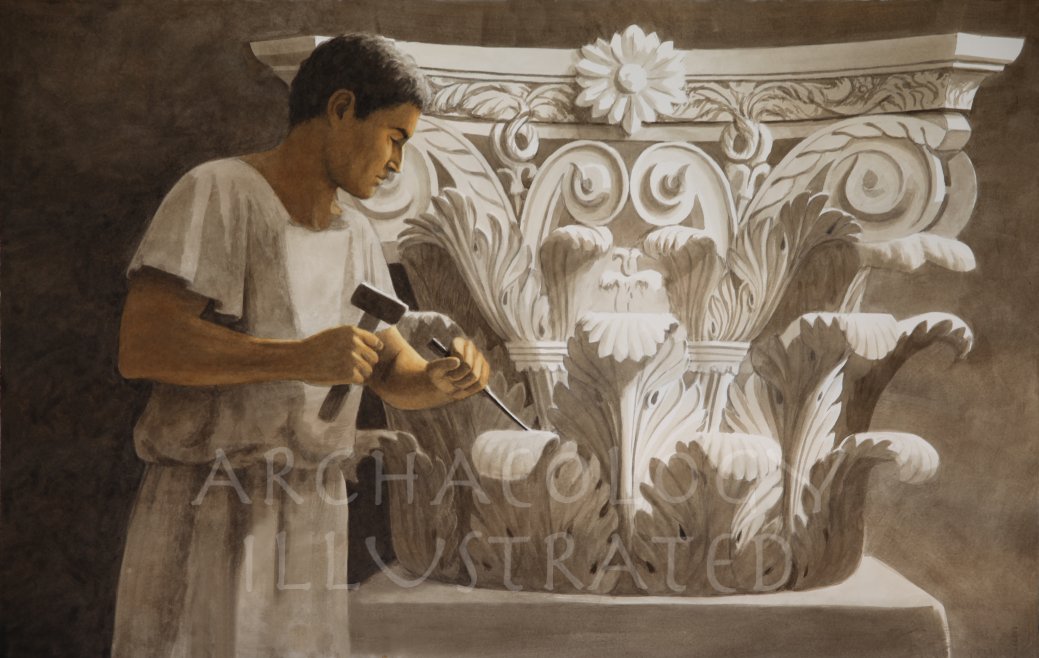
One Hebrew scholar, by the name of James Fleming, makes the argument the word “carpenter” in Mark 6:4 and Matthew 13:56, could actually be a bad translation of the Greek word “Tekton.” Fleming points out that the homes in Nazareth were largely made of Stone, not wood. We also know that the Herod at the time, Antipas, spent a great deal of energy making the city of Sepphoris (Zippori) his “Jewel of Galilee” by giving it a total makeover. This developing city was located only three miles away from the hometown of our Lord. 

There was a rock quarry half way between Nazareth and Sepphoris where Jospeh, and perhaps Jesus, could have spent their time cutting stones for the Herod’s great project. An undertaking of this size would have likely employed all the surrounding builders, including those in Nazareth. Of course, Jospeh and Jesus working as stonemasons is pure speculation.

 Scripture doesn’t give us a detailed account of Jesus’ childhood, but Luke 2:52 tells us that He, “…grew in favor with God and men.” This passage indicates that Jesus was well liked by those who knew Him growing up, but when you compare this verse with Matthew 13:57, that “favor with man” isn’t there anymore. Matthew records, “And they took offense at Him.”

 In both Matthew and Marks account of Jesus’ returning to His hometown, the locals ask the question, “Is this not the son of a carpenter?” After Christ is questioned, He doesn’t perform any great miracle for all to see, but He heals a few of their sick. He doesn’t try to argue with them, but He goes through the town teaching. The gospels don’t tell us exactly what He was teaching, but there’s a simple lesson here for all of us. 

Don’t be a carpenter. 

Jesus lost favor with many when He broke out of their social mold and when He did things they weren’t accepting of. People no longer liked Him when He also began teaching things they weren’t used to hearing. The identity of Jesus was not wrapped up in the job He was trained to do, He was and is much more than that. If you’re a follower of Christ, your identity is not your profession. 

Jesus is not the son of a carpenter, He’s the Son of God. He’s given us a new identity, and we should never cheapen who we are by seeing ourselves as doctors, engineers, truck drivers, preachers, teachers, butchers, bakers, and candlestick makers. We’re Christians. 

Even when He lost some positive popularity, Jesus looked for those who were willing to be healed and willing to hear. This is exactly what should be filling our time as well. Who do you know that needs to be spiritually healed by Jesus? Who do you know that needs to hear the wonderful soul-saving truth about the real Identity of Jesus? 

I’m a Christian— not a preacher. 

stone-mason-at-work-3572

A Big Blip

Dale Pollard

A family decided they didn’t want their little puppy anymore and for whatever reason they decided to dump this dog on the side of the road after tying it in a black plastic bag. At some point there was a woman who was driving down that road and she just happened to notice that something wasn’t right. When she discovered that there was a dog inside the bag she took it to a vet and then, eventually, to an adoption shelter. One day I decided to walk into the pet store to simply look around— and that’s when I saw him. Huddled in the back of his crate, a shaggy and skinny puppy with tan fur sat quietly, while it seemed every other dog in that store was madly barking. I opened the crate and he timidly came out— there was nothing I could do. This dog was mine. I named him “Bro” and to this day he continues to provide loyal companionship and plenty of laughs. The fact is, I’ve never been more attached to another animal and I’d never even think about giving him away. 

Solomon was a man determined to find the purpose of life. In Ecclesiastes we can read about these lavish experiments that he conducts all in the name of research. In the first two chapters he writes in a very depressing manner all the while Divine inspiration drives him toward the answer to life’s greatest question. He acknowledges the fact that everybody in every generation is just a small blip on earth’s timeline. The rich, poor, wise, and foolish all must embrace the same fate. They will all die and will eventually be forgotten. Solomon is concerned that everything, his wealth and kingdom, will be left to a fool after he’s gone, and that’s exactly what happened. Rehoboam, his son, proves to be an awful king and heaps destruction on God’s people. So, what’s the point? None of it matters. Well, without God nothing matters! The word most associated with this book is the word “vanity,” which means “useless or futile.” Without God, your life is worthless and it will amount to nothing. Solomon’s discovery of this unchanging truth will remain true throughout every age because it’s a truth that comes from the Creator of life. 

It’s unlikely that not a single person on earth values your life. Still, even if that were the case, because God’s hand guides you and touches all that you do, you have everything. My dog is not an expensive pure bred beauty, but to me there is no dog that could take his place. Apparently someone didn’t think too highly of him in the past, but that mangy thing lucked out and found the right owner. Who owns you? If money owns you, you’re getting left on the side of the road. If anything in the world owns you, you’re getting left behind. If God doesn’t own your life, you’ll never find purpose or lasting joy in this life— or the next. It could be that you feel like you’ve been placed in a trash bag and the world has mistreated you your entire life. Maybe that’s crushed your confidence and taken your sense of self worth, too. Though our lives are just a blip in the grand scheme of things, God can make your life a big blip by providing you with not only purpose, but with a love far too great to comprehend. The God of heaven has given us a mission and if we accept His invitation we’re going to make a lasting mark on this world— and enjoy lasting bliss in the world to come. 

Bro today

How To Be Worthy

Thursday’s Column: Captain’s Blog

IMG_0806

Carl Pollard

Nothing is worse than washing your hands only to find that there aren’t any more paper towels. A paper towel roll with no towels is completely worthless. You can’t dry your hands with the roll (trust me I’ve tried), and you’re left feeling grumpy as you wipe your hands on your clothes.
 
In Matthew 5:13, Jesus tells us that we “are the salt of the earth.” Why are we given this description? The Greek word for salt is “halas” and its definition will blow your mind…it means salt. Jesus is talking about literal salt, so why would He tell us that we are a high sodium white crystalline substance? Salt adds flavor, it preserves food, and in small amounts can fertilize land. The Christian is salt because we add flavor to the world in the form of the gospel. We are able to preserve people’s souls through Christ. We help people grow with the help of God’s Word. That’s our job. We are the salt of the earth.
 
But what happens if we lose our flavor? We become worthless. Salt loses flavor when it comes in contact with moisture. If we become exposed to the world and let it take away our Christianity, what are we good for? We can’t add flavor, preserve, or even be fit to throw on some dirt. A paper towel roll with no towels does nothing. It can no longer be used for the purpose it was made for. The Christian who doesn’t live for Christ is deserting their purpose, and God sees them as worthless.
 
What are we showing the world? Are we carrying out our duty as followers of Christ? Don’t let it be said of us that we have lost our flavor. Don’t let God look at our life and say it is worthless to Him.

Study The Bible!

Thursday’s Column: Third’s Words

Gary III

Gary Pollard

I doubt that many of us would question the importance of knowing our Bibles. We talk about this a lot as a church family! While some Christians may approach Bible study with the mentality of loading their theological guns with argument-ending ammunition, others consider it a duty of their Christianity.
Few of us would argue that the Bible is always simple and easy to understand. This life, our faith, and many questions we have about our day-to-day lives require answers far too complicated to get from a cursory study of scripture.
So why is it important to study our Bibles, and how can we do it effectively (that is, to walk away from Bible study with more knowledge and faith than when we entered it)? It is important to study the Bible because ignorance of what it says is a major underlying cause for any problem a church might face. Do we want unity? Study the Bible. Do we want peace among ourselves? Study the Bible. Do we want strong, faithful Christians? Study the Bible. Do we want godly attitudes? Study the Bible. Do we want wisdom to know when to practice righteous judgment and when to keep silent? Study the Bible! Effective Bible study – when practiced by the majority of a congregation – will effectively strengthen and grow that church. So how do we effectively study our Bibles?
First, have a purpose to your study. Winning an argument with a friend, coworker, acquaintance, or contact on social media is rarely a good reason to approach the word of God in study. It is too easy to allow our pride or ego to get in the way of honest truth-seeking. Instead, approach your study with purpose. Are you seeking to grow your faith in God? Study accordingly. Are you seeking to understand how to respond to something in your Christian walk? Study accordingly. Are you trying to cope with grief, tragedy, or frustration? Study the Psalms and the end of Job. Whenever you sit down to read, have a purpose.
Secondly, study like a scholar. There is a time and place for covering as much text as you can (like reading the Bible through in a year). However, this should not be our primary method of study. Spend time in a small section of scripture. Look for key words (words that repeat themselves in your section of study), ask questions of the text when something does not make sense, look for words like “therefore,” “but,” and phrases like, “I urge.” See how they fit into the context of your passage. Use multiple versions in your study to gain a better understanding of the “feel” of the passage. As much as you can, look to the original language for definitions or insights. If you have a smartphone, download an app called Logos Bible Software. It will give you access to tools that will help you understand the meaning of words in their original language, even if you cannot read Hebrew or Greek. Avoid commentaries if you can at all help it. They are often (though not always) platforms for the writer to voice an opinion and rarely explain the meaning of the text with accuracy.
Thirdly, study frequently. I recommend printing out the passage you are interested in studying and complete one printed section per day. This is arbitrary, of course, but will still help to create some consistency. Use colored pencils/pens/highlighters to make the text come alive and to aid in recognizing patterns.
Finally, share what you have found with your friends in the church! If you have a group of friends studying the same passage, find ways to share what you observed in the text in your daily bible reading. This not only creates accountability for reading daily, but will also grow your faith and knowledge when you understand that passage so very well!
If you take up Bible study like this, you will be amazed at how much closer you will grow to God and to your church family. If all of us approach study this seriously and with this much commitment, we will grow as a church family in unity, faith, knowledge, love, patience, grace, and wisdom.
child-reading-bible-bed-thumb

How TEN Creative Congregations Are Growing In 2020 

Tuesday’s Column: Dale Mail

DaleandJanelledirectorypic

Dale Pollard

COVID19 may be a serious problem, but the real damage is the affect it has had on congregations who are tempted to just throw in the towel. These congregations are just hoping that next year will be a better one. It’s this mindset that makes some feel like God has somehow lost control over this year— is God smaller or weaker than the virus? Absolutely not. 

Here are TEN creative congregations that have decided to adapt and overcome some of the challenges of 2020— and they’re working! Who’s to say it won’t work for your church family? 

  1. The Hebron church of Christ in Grant, Alabama, despite a smaller building, bought new microphone equipment so that they are able to have drive-in services and members are able to listen through their car radios. An un-intimidating way for visitors to be able to drive up and hear the gospel preached from the comfort of their own vehicles. Many other churches are also doing this, bringing people from the community to hear the gospel preached.
  2. The Chase Park church in Huntsville, Alabama, has implemented the local police force to help people exit in and out of the building in an orderly fashion. This has developed a great relationship with the police officers who have shown interest in the church after meeting some of the loving members. 
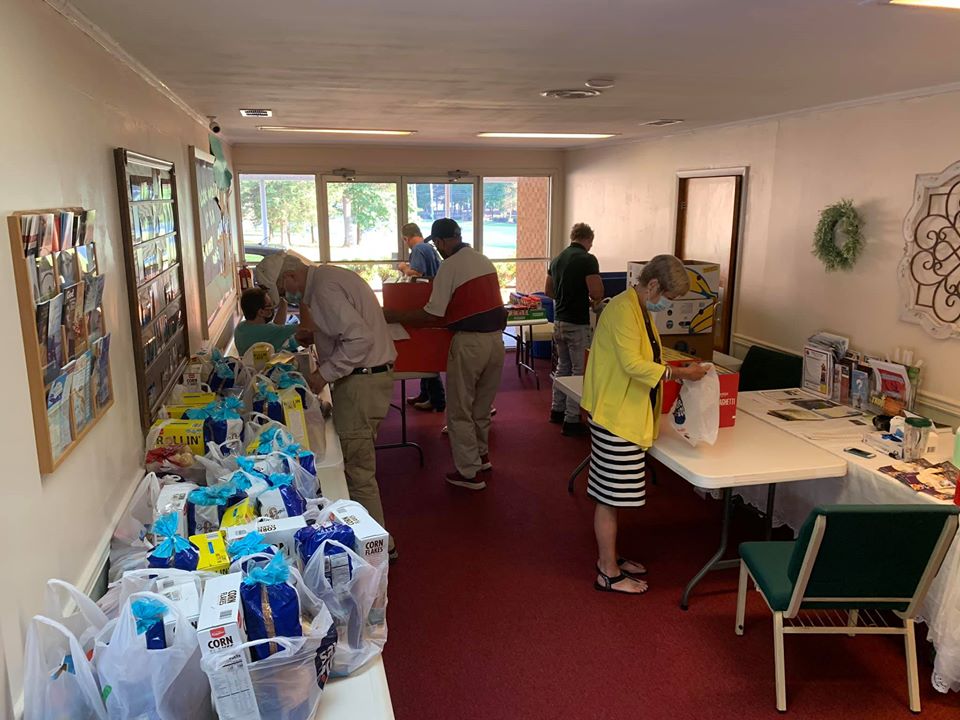
  3. The Farley church in South Huntsville, Alabama, had a food drive for those in the community who have fallen on hard times. Gloves and masks were worn to load the groceries up in people’s cars. Some church pamphlets were given, emails and phone numbers were written down, along with any prayer requests they might have. It has resulted in several local contacts. 
  4. Many of the Lehman Avenue church members in Bowling Green, Kentucky, led by the elders, have been driving around every Sunday afternoon to visit shut-ins. They deliver bread, sing, and pray with them. It has made a great impact on the morale within the body there. 
  5. The Wisconsin Avenue church in Huron, South Dakota, have come up with a creative way to reach out to the community by building what they call a “Blessing Box” in front of the building. In this box the locals have access food and Bible study material. 
  6. The preacher of the LaFollete church, Ben Shafer, in Tennessee, has been producing daily devotional videos to help the members stay connected and in the Word. This is also being done by Bud Woodall, the preacher for the Northeast congregation in Albuquerque, New Mexico, Andy Miller, a minister for the Southern Hills church in Franklin, Tennessee, and in countless other congregations.
  7. The hispanic minister, Chase Turner, at the Jackson Street church in Monroe, Louisiana, has discovered that posting videos/messages in Facebook groups that locals are a part of is a great way to get people interested in spiritual conversations. It has proven to be very effective! 
  8. Colt Mahana, who ministers at the Dahlonega church in Georgia, has started a daily college Bible study over Zoom. This daily study has made the college group there more engaged than they were before the pandemic. 
  9. Dr. Bob Turner had this to say about a church in Mannford Oklahoma: “I visited with several elders from numerous congregations over the last few months…I wanted to share what an eldership in Mannford, Oklahoma, has done over this period of time. While they do their classes over Facebook live, they have done additional things to help the congregation. First, they spend their Wednesday night time for prayer. Instead of teaching a class, they invited people from the community to submit prayer requests and they spend Wednesday evening praying for all the requests they receive. Second, they make special use of each holiday. For example, at Easter, since they could not host an Easter Egg hunt at the park with a potluck, the elders and wives stuffed eggs and the elders went to every home with children in the congregation and hide eggs for all the kids to have their own hunt at home. For Mother’s Day, they made a customized card and personally wrote a note and signed each card for every mother in the congregation. These are a few of the areas they have been creative to do and help members know they are cared for, thought about, and prayed over during this time. They have also emphasized that when they get back together, they want to do it right in order to make a good impression on anyone that might visit. They have constantly communicated with everyone in the congregation each week to make sure they have opportunity to share anything they might be dealing with.”
  10. Chuck Ramseur is working with a congregation in Virginia Beach, Virginia. This church family set up the Marco Polo app and encouraged everyone to share anything and everything going on during the day in their lives. It has helped them stay connected daily. Another area they took up working on is helping with the Crisis Pregnancy Center (alternative for woman thinking about abortion).This ministry has been one of the best outreach programs for the church. They’ve also planned services in the park on Sundays when they could not meet in the building, but could meet with social distancing in an open area.

So, there’s the proof! God is bigger than COVID19.

105950189_3248468518508147_1343333531772853091_o


Walk With Me Through The Crowd

Monday’s Column: Neal At The Cross

pollard

Neal Pollard

Walk with me through the crowd. At times, it will be frightening, heartbreaking, disgusting, even angering. Some are in masks. Some aren’t. You see far-left and far-right extremists, assaulting each other and maybe threatening you. Past the rioters, the protesters, the grief-stricken. You even see political activists posing as Christians spewing divisive rhetoric around–acting and reacting. There are racists of every color. Politicians. The lukewarm and apathetic. Some are jobless. Some homeless. Some wealthy and well-to-do. Many enjoy a comfortable lifestyle. They are from literally every walk of life. In many ways, this crowd is full of folks who are nothing alike or have little in common with others in it. But, in the way that counts most, they are so much alike.

You try to push through the enormous crowd full of the listless, the rudderless, the hopeless, the lonely, and the misunderstood. As you get back behind them, there’s the devil and his angels pouring over their playbook. He is the ruler of this world (John 12:31), unleashing the spiritual forces of wickedness (Eph. 6:12). There is a connection between this “prince of the power of the air” and “the spirit that is now working in the sons of disobedience” (Eph. 2:2). He wants us all distracted from what he’s trying to hide behind him. He’s pushing the crowd further away from it. But look. You see bands of faithful, committed disciples at the foot of a rough hewn cross. You join them there and look up at your Savior. It was worth the effort to swim through the crowd and see through the devil at God’s answer. He is hanging there for that enormous crowd, to help them escape the clutches and curse of darkness.  He offers light, love, grace, goodness, hope, forgiveness, reconciliation, and life. Contrast this with the carnage you have just sifted through.

Now, go back through that crowd and find someone else who needs Him, someone who realizes that for all the sin, evil, suffering, and problems they will not find the answers in that crowd. They certainly will not find it in the one who’s behind that crowd, inciting and inflaming it. Get them through the crowd to the cross (Mat. 7:13-14). Each one liberated from the crowd will be eternally grateful!

150624-A-TR629-023

Understanding “Gospel” In The Colossians Epistle

Wednesday’s Column: Third’s Word

Gary III

Gary Pollard

If you’re remotely religious, you’re familiar with the word “gospel.” It has a wide semantic range, describing everything from a genre of music (and a few sub-genres) to the trustworthiness of a statement (“gospel truth”) to an all-encompassing description of religious doctrine. 

The word literally means, “God’s good news to humans,” from εὐαγγέλιον. It is mostly about the life and times of Jesus and the spiritual rewards we have when we accept that hope and follow God’s plan of salvation. It is so common and familiar to many of us that we sometimes overlook its importance. 

We often hear about “spiritual blessings,” but the definitions we are given of them are sometimes (if not often) frustratingly ambiguous. Colossians 1:3-12 gives us a beautiful description of those blessings. One of them is the gospel! Here’s why: 

1. The Gospel is Hope

A phenomenon so common to my generation (it’s immortalized in more than a few memes) is the idea of existential crisis. We ask questions like, “What am I doing? Why am I here? What’s my purpose? Why am I working this dead-end job?” We don’t like to think of where we’ll be in 20 years because that’s downright depressing. Will it be more of the same? The crushing weight of a meaningless existence is at the forefront of so many minds. 

The good news we have is described in Colossians 1:5 as, “…the hope reserved for you in heaven…” That’s purpose! What kind of hope? What are we looking for? We have been given the means to live a life with purpose. It won’t be easy, but it guarantees a perfect existence after we’re gone. This hope for heaven is central to the gospel. 

2. The Gospel Makes Us Better People

Once the Colossian Christians changed their lives, were immersed, and changed their lifestyles, they had a great love for each other and all of the other Christians (1:4). We can be friendly to others (even complete strangers), but Christianity promotes unconditional love for others. The world tries to achieve this artificially, but Christianity accomplishes this through unity and self-sacrifice based on guidance from scripture. 

If we are as dedicated as we should be, it also gives us endurance and patience when we deal with difficulty (1:11, 12). Those who follow God’s will and are dedicated to serving Him are guaranteed a perfect and meaningful existence after this life (Colossians 1:5, 12). 

We are confronted with our own mortality more often than we’d like (especially today). This has a whole lot of people questioning their purpose and their destiny. Christianity offers the greatest gift ever given: purpose and destiny. God has told us how to have both of those things; we can live a meaningful life here, no matter how difficult, and we can have a perfect life there. If you are looking for meaning and purpose in this life, look no further than the gospel – it is how we can be pure here, living a purposeful life with perfect hope for the next. 

vault-1144249_960_720

The World Is Desperate (Part Two)

Thursday’s Column: Captain’s Blog

IMG_0806

Carl Pollard

Last week we looked at how the world is desperate for guidance. They look in every direction for someone or something to tell them what to do. Most of the time they look to themselves for guidance and that leaves many things unsolved. Psalm 119 tells us what our guide should be. God’s word is what tells us how to live, how to act, and how to react in every situation. The world is desperate not only for guidance, but also for purpose (2 Pt. 1:3-8).

As Christians we can confidently say that we have purpose. There’s a reason to everything we do; but what about the world? Why do they wake up every day? For most, they wake up to go to work, to make money, serve self, and go to sleep.

To illustrate this, imagine going to the store without a grocery list. Without a list you end up forgetting most of the stuff you needed in the first place. You come back home and realize you forgot the milk. Without a purpose in life humans are lost. We go day to day knowing that there’s something we’re missing, but we don’t know what it is.

In 2 Peter 1, Peter is writing to them to encourage these Christians to confirm their Christianity. To be confident in their calling. Starting in verse 3 he says this,

“His divine power has granted to us all things that pertain to life and godliness, through the knowledge of him who called us to his own glory and excellence, by which he has granted to us his precious and very great promises, so that through them you may become partakers of the divine nature, having escaped from the corruption that is in the world because of sinful desire. For this very reason, make every effort to supplement your faith with virtue, and virtue with knowledge, and knowledge with self-control, and self-control with steadfastness, and steadfastness with godliness, and godliness with brotherly affection, and brotherly affection with love. For if these qualities are yours and are increasing, they keep you from being ineffective or unfruitful in the knowledge of our Lord Jesus Christ.”

Because of God, we have a purpose in life. We have become partakers in eternal life. Because of this we must live a certain way. We have a goal. Peter gives us a list to build on: virtue, knowledge, self control, steadfastness, godliness, brotherly affection, and love. If we are seeking for a purpose to life, work on this list and the end result is a knowledge of Christ that leads to eternal life.

We have escaped the corruption of the world, and now we have purpose. Peter was one who struggled with his purpose at first, he was unsure of Christ’s plan when he was on earth, and he didn’t even want to be associated with Christ after he was lead away to be crucified. He denied Christ, but after this we see his commitment and purpose in the book of Acts. His purpose is exactly like ours, he went around proclaiming Jesus and baptizing in His name. Not sure what your purpose is? Just look at how Peter lived his life, how he was committed to serving God.

My first job I ever had was when I was 13 years old. I built fences for a member at the Bear Valley Church of Christ. And talk about having no idea what you’re doing. For the longest time I’d show up every morning and have to ask how to do everything. I didn’t know how to mix concrete, how deep a fence post hole had to be dug, how to install gate hinges. I was clueless. For the average person, this is how they feel without Christ. They’re unsure, they have no purpose. Our job is to show them what life is about. This life is about getting ready for the next that is to come. Without this, we have nothing.

The world is desperate for purpose, so let’s show them the Truth.

sunlight_over_picket_fence

It’s A “Miracle”?

Wednesday’s Column: Third’s Words

20638721_440919206307154_5479040032968788217_n

Gary Pollard

It is tempting to believe that an incredible recovery, acquisition of a needed job or asset, or escape from a major life issue is an example of the miraculous. In the religious world, a miracle is something a few believe can be invoked with prayer, a special religious service, or even a social media post (“pray that ______ will be healed by a miracle from God”).
Despite living in an age where notions of the supernatural are considered unscientific or are chalked up to circumstances we simply don’t understand yet, there is still much confusion surrounding the miraculous.
Miracles served a specific purpose both in the Old and New Testaments: they were designed to glorify God. Parting the Red Sea, striking a rock to get water, a talking donkey, an endless supply of oil and flour, the sun standing still, and all of the other miracles were – by design – impossible to perform without divine help. The Hebrew word for miracle meant “a sign or wonder” (Hebrew & Aramaic Lexicon of the Old Testament). Its purpose was to prove to the recipient that God was in control, was all powerful, was perfect, righteous, to be feared, and to be obeyed. Miracles were also used to prove that someone’s message was actually from God or that God was with them.
In the New Testament, miracles served to prove that Jesus was the Son of God and that the Apostles’ message was certainly from God. Water was turned into wine, the dead were raised, sicknesses were healed, people who were uneducated could suddenly speak multiple languages, predict the future, read someone’s mind, etc. The Greek word for miracle meant “a deed that exhibits the ability to function powerfully” (BDAG 263). These deeds were impossible to perform without God’s help, and they served a specific purpose: to prove that a message came from God, or to prove that a purpose originated with God.
While it certainly is a nice sentiment that an otherwise unlikely recovery or escape is an example of the miraculous, it’s important to remember that miracles served a specific purpose no longer relevant to our time. We no longer need miracles to prove our message comes from God because we have His complete and perfect word in scripture (I Corinthians 13).
Not having miracles in our world may be a downer to some, but we have this to look forward to: a place without sin for those who die faithful (II Peter 3.13). A place without death for those who die in Christ (Revelation 20.14). A place without sorrow for those who sleep in God after a lifelong battle in this sinful world (Revelation 21.4).
Miracles existed because this world is fallen (Romans 8). Their purpose was to demonstrate God’s power over Satan and sin in a world characterized by all that cannot coexist with goodness. Those who are living life in view of the next find hope and comfort in the miracle of Scripture, the miracle that will bring us home if we follow it.

66043362_10156431482270922_6278654536441659392_o
A view of the Valley of Aijalon, where God caused the sun to stand still. 

A Notch On A Wrench And A Stigma For The Savior

Neal Pollard

Tim Gean has a 5/8 wrench that belonged to his dad, who is now deceased. He and his dad overhauled several cars together. His father owned that wrench for decades. Tim had his hands on that wrench countless times through the years. Several times, Tim was in a garage with his dad and his dad’s brother. They would sometimes argue over to whom a tool belonged. Finally, Tim’s dad decided to resolve this problem. He put a notch on his wrench. If you saw it in a yard sale, you would ask why that notch was there. But, Tim knows. It identified it as clearly belonging to his father.

Did you know that what was true of Tim’s father’s wrench is true of you and me? It certainly was true of the apostle Paul, who wrote, “From now on let no one cause trouble for me, for I bear on my body the brand-marks of Jesus” (Gal. 6:17). “Brand-marks” is from the Greek word “stigma,” “to undergo experiences which mark one as the slave of some master” (Louw-Nida 808). Arndt, Danker, and Bauer adds, “Paul is most likely alluding to the wounds and scars which he received in the service of Jesus” (945). Whether literal, physical persecution or some other sort of experience that comes which serving Jesus, people should be able to look at us and know that we have been with Jesus (Acts 4:13). 

Christians are sanctified people, people who give personal dedication to the interests of God (BDAG 10). Using the analogy of slavery, Paul writes, “But now having been freed from sin and enslaved to God, you derive your benefit, resulting in sanctification, and the outcome, eternal life” (Rom. 6:22). When we surrender our lives and will to Him, having been baptized into His Son (Rom. 6:1-6), we become “a people for God’s own possession” (1 Pet. 2:9). From that point forward, we have a new purpose. We are “proclaim the excellencies of Him who has called you out of darkness into His marvelous light” (1 Pet. 2:9).  We bear His mark, and others will know we belong to Him. What a source of joy and pride, to know that we are the Father’s and He uses us to accomplish His purpose!

roea20a_productimage_primaryimage_400

Knowing What D.C. Stands For

Neal Pollard

Inasmuch as we don’t want laws or policies enacted that violate God’s Word and we want precious freedoms, especially religious ones, preserved and protected, we can really get into what is going on in Washington, from Capitol Hill to Pennsylvania Avenue. Many know that “D.C.” is an abbreviation for “District of Columbia,” an area of land created at about the time of our nation’s founding under the direct jurisdiction of the U.S. Congress that is not a state.

However, as politics has vied for sports and entertainment as an idol in our culture, it has become the source of unnecessary and even immoral strife between Christians. Blind support and allegiance for one major political party or the other can do more than make us inconsistent. It can make us a stumbling block. It seems to me that D.C. can stand for some dangerously different things.

Distracted Christians. Search high and low in your New Testaments, written during the time of the wicked, often unfair-to-Christians, Roman Empire.  The disciples were about the business of evangelism (Acts 8:4) and growing the church (Acts 6:7). Can the rumblings and drama from the nation’s capitol get us so transfixed that we cannot see past it or through it to our individual and collective mission as God’s people? He has us here to get people into the Kingdom of His dear Son (Col. 1:13). Everything else is secondary. 

Divided Churches. For as long as I’ve been preaching, I’ve seen politics come between brethren in the local church. Thankfully, it does not usually become significant enough to trouble the entire congregation but I have seen it do so. What’s more, I’ve seen brothers and sisters become so confrontational and flagrant about politics–especially through the relatively recent medium of social media–that it has been a stumbling block to new and weak Christians. Perhaps the political world in our country has never been so intensely divisive as it currently is, and what typically troubles the world troubles the church. But, when souls are negatively impacted, God will hold the offenders accountable. 

Devil’s Cauldron. Please don’t misunderstand. Politics, like money, is a neutral matter. But, like money, it can become the root of all sorts of evil (cf. 1 Tim. 6:10)–enmities, strife, outbursts of anger, disputes, dissensions, and factions (Gal. 5:20). Just prior to this list of activities that are the carrying out of the desires of the flesh (Gal. 5:16), Paul warns, “For the whole Law is fulfilled in one word, in the statement, ‘You shall love your neighbor as yourself.’ But if you bite and devour one another, take care that you are not consumed by one another” (Gal. 5:14-15). Who benefits when things like politics distract and divide Christians? It is not the lost, the church, or the Lord!

I can think of a least three godly, wonderful Christians who are public servants in political office and making a profound impact for good–Bill Reiboldt, Sheila Butt, and John DeBerry. They demonstrate that God’s people can devote themselves to politics without sacrificing their faith and example. For those of us “on the outside looking in,” in our love of country and freedom, may we never allow our attitude, words, or actions to betray our highest calling. The more effectively we reach lost souls, reflect the mind of Christ, and reveal the hope of the gospel, the better our nation (and world) will become. What will that make us? Disciples of Christ!

11168488_10153052239815922_846243704468580330_n
From my last trip to Washington, a few summers ago. 

I Just Can’t Share Their Bitterness

Neal Pollard

I write this as someone who has spent his entire life in a preacher’s home. I grew up a preacher’s kid, whose dad was fired twice (once for baptizing a black woman and later for standing against the “New Hermeneutic”). I have been a full-time preacher for nearly thirty years myself. Now, my sons are devoting their lives full-time to preaching. To an extent, our family’s lives have revolved around preaching. Have there been hurts, disappointments, and occasions of mistreatment? Certainly. Of course, plumbers, lawyers, accountants, engineers, and builders will tell you the same. But, we work with Christians, who should know better? That’s true, but they are still humans constantly struggling with the battle of self. 

My dad has always spoken of the value and blessing of the church, even when dealing with personal hurts. He loves the Lord and His church. As we grew up in the home, he taught us to have a high esteem for the precious bride of Christ. In college, I had one teacher who especially counseled us to look at the church–and the people who make it up–with hopeful, optimistic eyes. We generally find what we are looking for. If we are looking for injustices, offenses, and disappointments, we’ll see an endless supply of it whether we’re looking at elders, deacons, long-time members, or new or weak Christians. If we can view the foibles of others with patience, compassion, and empathy, we are likely to help each other grow and transform. We will definitely steer away from an “us versus them” mentality.

If you are in full-time ministry for any length of time, you will have some stories to tell. Some will be full of joy and excitement. Share these generously. They will encourage and edify. Some will be unbelievable, but not in a good way. Use wisdom and discretion about how, who and if you tell those. What are we hoping to accomplish by such sharing?

Preaching is not lucrative business. It’s not paradise on earth. It’s not easy and not everyone can (or should) do it. But, it’s the greatest work in the world! It constantly impacts eternity in seen and unseen ways, in a way that perhaps nothing else can match. There will be some lumps and bumps. Ask Paul (2 Cor. 11:23ff). But, listen to Paul, too. In prison, he wrote of rejoicing about preaching despite its various pitfalls (Phil. 1:14-24). Some seem bitter about how they have been treated in preaching, and I hope they can work through it. But, I love this life so much, and I just can’t share their bitterness!

IMG_6377
Our staff introducing themselves to the 2019 Future Preachers Training Campers

Speaking What Must Be Heard

Neal Pollard

In World War I, German intelligence was able to steal American plans at will. Tapping enemy lines was extremely easy, especially at night. Faced with such a dilemma, a regiment full of Choctaw Indians thought of a potential solution. The commander inquired into how many Choctaws knew their mother tongue. The men hesitated. The first English word some of them had learned was “soap.” In basic training, they were threatened with having their mouths washed out if caught speaking their native language. Now, their regimental leaders wanted them to speak it. The Choctaws were dispersed among the various divisions and attached to communications. From that point to the end of the war, all important orders were passed along in Choctaw. The Germans were stymied and finally caught off guard by the Americans’ war plans (from PBS’ American Experience: The Great War, Episode 3).

Today, our society does not want to hear us speak the message of Christ. Many find it offensive and restricting. They may even put great pressure on us to keep quiet. But, we cannot. These have been taken captive by the devil to do his will (2 Tim. 2:26). Especially when someone sees the spiritual crisis in his or her life, there will be a desperate desire for an answer. Where will they turn? If they have heard us speak of Christ and His way, they may need us to communicate the most important message ever spoken. Don’t keep quiet about Jesus, especially given the dire danger in this spiritual warfare (2 Cor. 10:3-5). God is counting on us to speak for Him, and so is a lost and dying world! Keep sharing Him.

hith-wwi-native-american-code-talkers-choctaw_code_talkers-800x701-2

I-N-V-O-L-V-E-M-E-N-T Equals Church Growth

Neal Pollard

The early church grew (Acts 2:41; 5:14; 6:1,7; 9:31; 11:24). As we read of this growth explosion, we see the key role member involvement played. Christians were spreading the word (8:4), involved in each other’s lives and in the lives of the lost around them. This is such a simple concept, but churches not practicing it are not growing. What is involved in involvement?

  • I–“I” am the heart of involvement. I must resolve to be involved. I must do my part, for I will give an account for my level or lack of involvement (1 Cor. 3:8).
  • N–“Negativity” is the enemy of involvement. “I can’t help.” “It won’t do any good.” “I don’t like working with that person.” Listen closely. Involved Christians rather say “I can do” (Phil. 4:13) and “we are well able” (Num. 13:30).
  • V– “Visitation” is a part of involvement. Matthew 25:34-46 confirms it. Non-Christian visitors, sick, imprisoned, and needy folks need it. Those who do it are richly rewarded, and those who are recipients of it profoundly appreciate it.
  • O– “Obedience” is the cause of involvement. Faithful Christians believe the commands to make disciples (Mat. 28:19), build up brethren (Rom. 14:19), and meet needs (Js. 1:27).
  • L– “Love” is the motive of involvement. Paul says good deeds, without love, are profitless (1 Cor. 13:1-3). The counsel of Scripture is “by love serve one another” (Gal. 5:13).
  • V– “Victory” is the goal of involvement. By being involved, we help others win the victory (Js. 5:19-20), we help the cause of Christ advance, and we aid our own walk in the light that leads to eternal reward (1 Jn. 1:7).
  • E– “Everybody” is the scope of involvement. What able-bodied Christian is excluded from the work God has given the church? Once, a man did nothing and gave every excuse imaginable. We remember how that turned out (Mat. 25:28-30).
  • M– “More” is the adjective of involvement. That is, “more involved” and “more people involved.” Has there ever been a church with too many involved? God is able to do more than we ask or imagine (Eph. 3:20), and He wants to see us always trying to do more for Him!
  • E– “Evangelism” is the fruit of involvement. Active churches attract the curiosity of the community. Those involved in the church’s work naturally grow more spiritual-minded, and by this grow more bold in sharing the gospel.
  • N– “Now” is the time for involvement. What in our lives do we definitely know will change between now and the never-seen tomorrow (Prov. 27:1)? Let’s kill the excuses! Resurrect the enthusiasm! Start today!
  • T–“Teamwork” is the mindset of involvement. We’re to work together. No one man, no staff, no eldership, no group of deacons or others can or should do the work of an entire congregation. The local church is a team.

To become adequately involved, let’s ask three questions.

“What needs doing in this church?”
“Who needs help in doing it?”
“What can I do?”

Be an Isaiah, a child of God who enthusiastically says, “Here am I, send me” (Isa. 6:8)!

41824748_10216815660249540_2034412809957146624_n

I Met A Soul Today (POEM)

Neal Pollard

A lonely soul was crying out
For someone to direct
Their mind to know the will of God
But I chose to deflect.

An edgy soul was acting out
Intimidating and coarse
Yet they were searching for the truth
I recoiled with too little remorse.

A hopeful soul was reaching out
And attended our worship service
But I was busy, too much to do
To connect, plus I was nervous.

A hurting soul, in time of loss
Crossed my path today
I felt so bad that he was grieved
But still I hurried on my way.

A lost soul was needing Christ
She is destined for eternity
I was busy, nervous, no zeal for her
Guess I was too caught up in me

The next soul that I come upon
Lord, may I try with zeal
To share your grace and teach your Word
And your matchless love reveal.

a20cold20day2015

Labor Day

(Bulletin Preview)

Neal Pollard

Tomorrow, most of us will be able to celebrate the Labor Day Holiday. That means, ironically, that most of us will have a day off from–well–labor. Schools and workplaces across the nation will shut their doors and many will be off for their last “summer vacation.” Friday, an anticipated 3 million passengers took to the friendly skies to enjoy the long weekend. We can either thank Peter McGuire or Matthew Maguire for being the mastermind of this holiday, both secretaries for New York labor unions who made significant efforts to recognize a day for American workers.

The U.S. Department of Labor has published a lot of useful information about this holiday, which it states was started as a “national tribute to the contributions workers have made to the strength, prosperity, and well-being of our country” (dol.gov). It was a local observance in the northeast at the height of the Industrial Age, though Oregon was the first state to pass statewide legislation to observe the holiday. That same year, 1887,  Colorado, Massachusetts, New Jersey, and New York followed suit. In 1894, Congress made it a legal holiday to be celebrated the first Monday of September. 

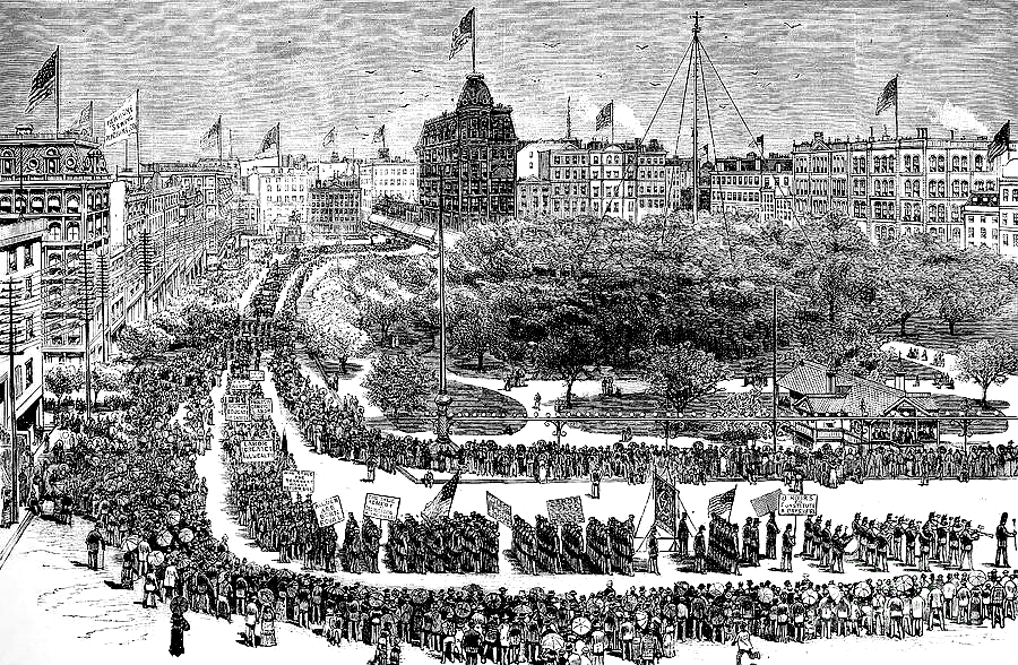
In the early days, there were picnics, street parades, speeches by prominent men and women, and “Labor Sunday” which was “dedicated to the spiritual and educational aspects of the labor movement” (ibid.). The first parade, in New York City in 1882, had up to 20,000 marchers as well as “Windows and roofs and even the lamp posts and awning frames…occupied by persons anxious to get a good view of the first parade in New York of workingmen of all trades united in one organization” (ibid.).

I find it interesting that we honor work with a day of rest and that the holiday itself has seen a shift in emphasis and expression. That’s neither a complaint or criticism. I intend to enjoy Labor Day with Kathy, taking the vacation day given to me in my working agreement. 

But, as we celebrate this national holiday, it’s fitting to recognize the hard work done by so many in this congregation. When you teach Bible classes, lead in worship, decorate bulletin boards, provide transportation to services, stock our pantry, do work on our facilities, engage in soul-winning efforts, practice hospitality, serve officially as church leaders (whether elders, deacons, or someone else tasked with some work), prepare the communion, clean the kitchen, organize the teacher’s work room, go on mission trips, make visits, handle church finances, coordinate worship, serve as ushers and greeters, host youth devotions, or the many, many other things you do, you are doing honored work. Jesus taught that greatness comes through service (Mat. 20:25-28; Jn. 13:12-17). New Testament writers honored those who work among us, Paul urging us not to “be weary in well doing” (Gal. 6:9) and to “always give yourselves fully to the work of the Lord” (1 Cor. 15:58, NIV). Often, Scripture speaks of the Godhead working. It instructs us to be “to the work.” Enjoy the holiday tomorrow. Yet, in the general, ongoing sense, “We must work the works of Him who sent Me as long as it is day; night is coming when no one can work” (Jn. 9:4). Labor on, brothers and sister!

labor_day_new_york_1882

What Does “Mean” Mean?

Neal Pollard

Does that question seem strange to you? Mean is a verb defined as “intend to convey, indicate, or refer to” (Apple Dictionary, Version 2.2.2). Postmodernism claims that there is no purely objective knowledge, truth, or norms. Therefore, meaning is what you make it mean. Several years ago, James Sire gave the framework for what we see in ever-increasing, ever-encroaching ways in our society when he wrote that the postmodernist believes “human beings make themselves who they are by the languages they construct about themselves” (181). He continues, “In postmodernism the self is indeed a slippery concept” (182). How does this play out? Science is what scientists say it is. History is what historians say it is. But, morality, law, and so many other pillars of society are influenced by this approach to truth and reality. Abortion, euthanasia, sexual ethics, gender issues, and the like are subject to what institutions and individuals determine about them. Even religion, down to New Testament Christianity, has felt the pervasive tentacles of this worldview. Where does this philosophical mindset end? What’s out of bounds, if truth is whatever you and I each say it is for ourselves? Ultimately, there can be no values, standards, or absolutes. And no one wants to live in a society where those are the “rules,” if you can call them that.  And no one can for long. It’s a system destined to collapse.

Winfried Corduan worse, “Relativism plays the role of Zorro in the world of knowledge. It stays in concealment for long periods of time only to suddenly appear at crucial moments, conquer the day, and go back into hiding” (37). In other words, we don’t want relativism on the operating table, when it’s a choice of saline or strychnine in the I.V. (i.e., “What’s ‘saline’ to you is ‘strychnine’ to me”). We don’t want it at our banking institution, when it’s a choice of debit or credit. We believe in absolutes…until we don’t. What’s right or wrong? Again, Corduan helps by defining truth as what corresponds to reality (39). We may have to explore, investigate, evaluate, and test, but we can ascertain it!

We don’t want to live in a world without a transcendent way to determine truth and meaning. We cannot. Meaning is meaningful! Amidst all the wild experimentation of our postmodern world, there is a trustworthy source of truth. It in internally cohesive and universally applicable. It has been successfully tried for thousands of years. But it makes expectations of us. It asks commitments of us. It involves sacrifice, self-denial, and submission. But it is right and it works! It is Divine Revelation. The Bible. May we have the courage to follow it and share it.

Works cited:

Corduan, Winfried. No Doubt About It: The Case For Christianity (Nashville: Broadman & Holman, 1997).
Sire, James W. The Universe Next Door: A Basic Worldview Catalog (Leicester: InterVarsity, 1997).

creativity-as-a-search-for-meaning

A Lonely, Lonely Man

Neal Pollard

My sons and I often say that we don’t really want to know much about our favorite singers. It seems that there’s always immorality and stories of their ungodliness. That’s as true of many of the rock, country, and easy listening singers from decades ago as those making music today. Despite my having grown up in the south, today I was able to do something I’ve never gotten the opportunity to do. Kathy and I toured Graceland with our gracious hosts, Barry and Celicia Grider. We enjoyed ourselves. This tour tended to glamorize and sanitize his life and career. Elvis Presley enjoyed a meteoric rise to stardom, and he was a global icon. He made more money than he could spend, though his lavish collections of furniture, cars, instruments, clothes, and the like shows that he tried. Despite his love of gospel music and religious roots, there were the affairs, drugs, and fast living that likely contributed to his premature death at age 42. His daughter, Lisa Marie Presley, who remembers him reading often, “He had stacks next to his bed. He read all the time…Always of a spiritual nature. Always looking. Always searching for something” (from a placard in the mansion). Gospel preacher, C.W. Bradley, preached his funeral thanks to the connection of Elvis’ stepmother. But there is no evidence that his search led him to obey and live the truth, and there’s evidence to the contrary.  He once sang a song where he said, “It’s a lonely man who wanders all around, It’s a lonely man who roams from town to town.  Searching, always searching

for something he can’t find, hoping, always hoping that someday fate will be kind.”

Billions never achieve the fame or wealth of Elvis, but live their lives on a similar quest. They live, always searching for something they can’t find. Solomon spends so much time, with access to wisdom, wealth, wine, and women. He found, in his grand experiment, that these did not fill the void. Instead, the answer was to “fear God and keep His commandments” (Ecc. 12:13). This beautiful hope is shared by Jesus in the greatest sermon ever preached. He teaches, “Ask, and it will be given to you; seek, and you will find; knock, and it will be opened to you. For everyone who asks receives, and he who seeks finds, and to him who knocks it will be opened” (Mat. 7:7-8).  These things are written to keep mankind from duplicating the future search for purpose and meaning. It has been revealed. Let’s look in the only place where loneliness is vanquished—in the presence of God!

23519311_10214099401337193_6063397463412721560_n