What Messages Are We Sending?

Friday’s Column: Brent’s Biblical Bytes

Brent Pollard

The website Live Science recently published an article about our attempts through the years to communicate with extraterrestrial life. The piece, written by Isobel Whitcomb, is entitled “What messages have we sent to aliens?” We think of World War II as ushering in the concept of “little green men” with reported citings of UFOs (i.e., foo fighters) during aerial combat over Europe and the Pacific. Indeed, in the postwar years, Hollywood began churning out science fiction flicks like The Day the Earth Stood Still in 1951.  

Yet, people were thinking of the possibility of life “out there” before the mid-twentieth century. You may recall that H.G. Wells wrote War of the Worlds in 1897. Whitcomb mentions that Austrian astronomer, Joseph Johann Von Littrow, conceived the idea of digging trenches in the Sahara Desert and filling it with kerosene to set ablaze to send a message to otherworldly observers. Von Littrow envisioned this plan which never saw fruition in the early nineteenth century! 

From this point, Whitcomb points out the progressively advanced plans made and executed by humanity as our technology advanced. In 1962, Soviet scientists directed radio waves at Venus containing “peace” in Morse code. Eventually, in the late 1970s, the United States sent out two spacecraft which they hoped would be discovered by extraterrestrials in interstellar space. Yes, governments have spent millions of dollars to be greeted only with silence. (Another Live Science article by Mindy Weisberger posits that aliens ignore us after observing us like animals in a zoo.)  

Rather than worrying about messages that will never receive a response, we ought to concern ourselves more with messages we send to terrestrial and celestial beings. As Edgar Guest famously reminds us, most people would rather see a sermon than hear one. Indeed, our lives are sending out a message to others.  

  • We are sending a message to our spouses. Do husbands, specifically, love their wives as Christ loves the church? (Ephesians 5.25) Have wives been encouraged to love their husbands? (Titus 2.4) Do the husband and wife recall that they are not to separate what God has joined? (Matthew 19.6)  
  • We are sending a message to our children. Children see whether mom and dad seek first the kingdom of God and His righteousness (Matthew 6.33). Are fathers bringing up their children in the discipline and instruction of the Lord (Ephesians 6.4)? Are mothers doing as Eunice and instilling a sincere faith in their children? (2 Timothy 1.5) 
     
  • We are sending a message to our neighbors. Do they see someone who strives to live peaceably with others to the extent to which it is possible? (Romans 12.17-19) Do they see someone following the “Golden Rule”? (Matthew 7.12) Do they know you love them as you love yourself? (Romans 13.9) 
     
  • We are sending a message to our enemies. Do they see someone who loves them despite being their enemy? (Matthew 5.44) Do they see one turning the other cheek to them? (Matthew 5.39-41) 
     
  • We are sending a message to the lost. Do the lost see one whose lack of self-discipline disqualifies the Gospel preached? (1 Corinthians 9.26-27). Do they see someone ashamed of the pure, unadulterated Gospel message? (Romans 1.16) 
     
  • We are sending a message to God. Our ways lay before the eyes of God, and He is watching all our paths (Proverbs 5.21). He will judge us according to even the secret things we have done (Ecclesiastes 12.14). Since God knows the heart, He knows who merely gives Him lip-service (Matthew 15.8-9). 

Yes, we are sending out messages. What messages are we sending? No, we don’t have to worry about miscommunication with the “Roswell Greys,” but we should concern ourselves with the message God and our fellow humans hear from us.  

Works Consulted: 

Whitcomb, Isobel. “What Messages Have We Sent to Aliens?” LiveScience, Future US, Inc, 20 Mar. 2021,www.livescience.com/messages-sent-to-aliens.html

Weisberger, Mindy. “Are Aliens Ignoring Us? Maybe We’re Already Their Captives in a ‘Galactic Zoo.’” LiveScience, Future US, Inc., 25 Mar. 2019, www.livescience.com/65063-meti-galactic-zoo-aliens.html.  

Further Reading: 

Janos, Adam. “Mysterious UFOs Seen by WWII Airman Still Unexplained.” History.com, A&E Television Networks, 15 Aug. 2018, www.history.com/news/wwii-ufos-allied-airmen-orange-lights-foo-fighters

I Want To Be Happy

Thursday’s Column: Carlnormous Comments

carl-pic

Carl Pollard

I was 16 years old and I remember thinking, I’ll be happy when I get a new phone. I was 17 years old and I told myself, I’ll be happy when I get my own vehicle. I was 18 and I remember thinking, I’ll be happy when I get a newer phone. I was 19 and I thought, I’ll be happy when I get a newer truck.

At 16 I got a new phone and I was happy, until I dropped it in a hotel toilet a month later. I was 17 and I got my own truck and I was happy, until the transmission went out on the way to school. I was 18 and I got a newer phone, and I was happy until I left it on the roof of my dads car as we drove home from church. I was 19 and I got a truck that was nicer than anything I could ever want. I was happy, until it broke down on an Indian reservation in Arizona.

I thought I knew what would make me happy. I chased after the physical possessions that I thought would bring me joy. The problem that I failed to see was that phones break and trucks aren’t always reliable. My happiness would run out when my stuff would break.

People are constantly searching for happiness. Why? Because they don’t know what will make them truly happy. It’s a daily experiment that never gives them the result they are looking for. There are millions of books, movies, articles, and lessons geared toward helping us find true happiness.

“How to be happy” is one of the most searched phrases on Google, second only to “how to lose weight.” We ask this question because we can’t find the answer. Solomon asked this question in Ecclesiastes. “Vanity of vanities. All is vanity says the preacher.” The wisest man in the world wanted happiness and looked at every possible solution. He looked to money, drinking, and women. Every time Solomon placed his happiness in these things, he was left feeling empty. He finally found the secret to life: “The end of the matter; all has been heard. Fear God and keep his commandments, for this is the whole duty of man” (Ecc. 12:13).

Every earthly option was tried, and none of them seemed to work. The bottom line is to fear God and keep His commandments. Why? Because God knows His creation. Do you struggle with finding happiness? Do you want nothing more than to be content? The answer isn’t found in the world. You won’t find true, lasting happiness in anything on this earth.

Happiness is found in our purpose as God’s chosen (1 Peter 2:9), in loving God (Deut. 6:5, Matt. 22:37-39), and in showing gratitude (Psa. 118:1; 136:1; 147:7).

The Silent Influence

Thursday’s Column: Carlnormous Comments

IMG_0806
Carl Pollard
 
I can still remember it like it was yesterday. It was a Friday morning and I came downstairs to see dad sitting where he always sat every single morning. He was in his lazy boy recliner drinking what was probably his third cup of coffee, wearing his fuzzy dad slippers and a pair of reading glasses. If I saw that combination, I knew what dad was doing.
 
Every morning he would get up early, grab his coffee, Bible, slippers and glasses, and sit in his lazy boy recliner. And every morning I would see him sitting there reading. When I look back and think about these instances, I now see just how powerful his actions were. He wouldn’t tell us what he was doing, he wouldn’t tell us to join him, he wouldn’t tell us why he was doing it. He would just grab his Bible and read.
 
When I think about influence this is what I think of. A committed man of God. Showing us by his actions how to grow our own relationship with The Father. The silent influence that I saw growing up has shown me the power of actions. Through his actions I saw what his priorities were. I saw what his focus was. I saw who he loved more than anyone else.
 
There’s nothing we should want more as Christians than to have this kind of influence on others. Not preaching at them day and night condemning them and cutting others down, but showing them by our actions what a relationship with God looks like. If we work on perfecting our faith and cultivating a genuine relationship with God, people WILL notice. For others to be affected by our influence we need to get three things straight: our priorities, our actions, and our speech.
 
When we think about winning souls, it’s best to start with our own before looking to others. If we can grow our faith and be fully invested in our relationship with God, people will notice and ultimately glorify God.
 
Matthew 5:13-16

“Nomophobia” 

Monday’s Column: Neal at the Cross

pollard

Neal Pollard

That’s not a typo for another popularly-used term.  It’s actually a “thing,” at least according to a 2010 study by the UK Post Office.  It is short for “no-mobile-phone phobia” (Tim Elmore, psychologytoday.com). There’s even a website called nomophobia.com, and they identify “the four fears of Nomophobia”—broken, lost, stolen, or useless smartphones. While that site operates “tongue in cheek,” there are a bevy of experts more than ready to talk about how this is an epidemic impacting especially youth in our culture.  University of Connecticut School of Medicine’s Dr. David Greenfield has done much work in this study. He points to the problem of a dysregulation of dopamine, “meaning that it motivates people to do things they think will be rewarded for doing” (clever, cutting, or flamboyant Tweets, posts, pics, etc.) and that it can foster people’s addiction to the internet and technology (Madeline Stone, businessinsider.com). Greenfield adds, “That feeling you’re going to miss something if you’re not constantly checking is an illusion — most parts of our lives are not relevant to our smartphones. What happens on our devices is not reflective of what happens in real life” (ibid.).  There are even digital detox programs, in the United States as well as other countries around the world.  Psychiatrist Dale Archer gives this advice, “Stop texting while you’re driving. Don’t take it into the bathroom with you. Have a rule not to use your phone when you’re with your friends. If you’re on a date, make a rule that you’ll both check your phone for a maximum of 5 minutes every 90 minutes. It’s all about setting simple rules that you can follow” (ibid.).

Amateur psychiatrists and specialists everywhere can quickly diagnose this condition in their spouses and significant others, their children, and their friends, but they may be myopic to their own inordinate practice (see every airport, doctor’s office, restaurant, etc.).  Addiction to, or at least habitual abuse of, smartphones and similar technology is simply the latest and a more obvious example of a long-standing human tendency.  Paul told Corinth, “All things are lawful for me, but not all things are profitable. All things are lawful for me, but I will not be mastered by anything” (1 Cor. 6:12). In context, Paul is beginning a discussion of the sin of fornication after having talked about Corinth’s generally sinful past from which they had been forgiven.  Paul’s desire was not to be “mastered” (ruled, reigned over, Louw 37.48) by anything.  He later writes about the self-mastery and discipline necessary to live the Christian life (1 Cor. 9:24-27).

Cell phones are just one possible impediment to this.  There are so many other possibilities we must keep aware of, things which can derail us from our purpose and focus in this life.  So many of them are fine in balance and moderation, but we can allow them to consume and even overtake us.  A fear of being without those things is only one of the attending problems.  Being ruled by anything or anyone other than Christ is the overriding concern.  We are all served well by looking carefully at the things in our lives and make sure we have no master other than Christ.

“Calm Thyself”


Wednesday’s Column: Third’s Words

It’s a jungle out there, so here’s some friendly reminders:

  1. We’re here for a short time, not a long time (James 4.14).
  2. God ultimately controls the outcome of November 3rd (Romans 13.1).
  3. This earth is fallen anyway and we’re looking forward to something way better (II Peter 3.10).
  4. We have more pressing matters to attend to (Ephesians 2.10; 4.11; Matthew 28.18ff).
  5. We’re ambassadors, not crusaders (II Corinthians 5.11ff).
  6. Mercy always trumps a condemning attitude (James 2.11ff). Contextually, this is about not showing favoritism based on appearance or status. A broader application concerning our attitude toward others in general is appropriate.
  7. Our attitudes may well be what condemns or saves a lost soul (Philippians in general, but specifically 2.5-11).
  8. Don’t be rude to people, but especially not to those in our spiritual family (Galatians 6).
  9. What we do about our beliefs speaks far more powerfully than what we say about our beliefs, and that can be amazing or especially harmful (James 2.18).
  10. Revelation 22.20!
p

Ten Thoughts Your Church Visitors Are Thinking 

Tuesday’s Column: Dale Mail

DaleandJanelledirectorypic

Dale Pollard

We’ve all had opinions and reactions in public that never made it from our brains to our mouths. Not all of these were positive, and perhaps that’s why they were never spoken.

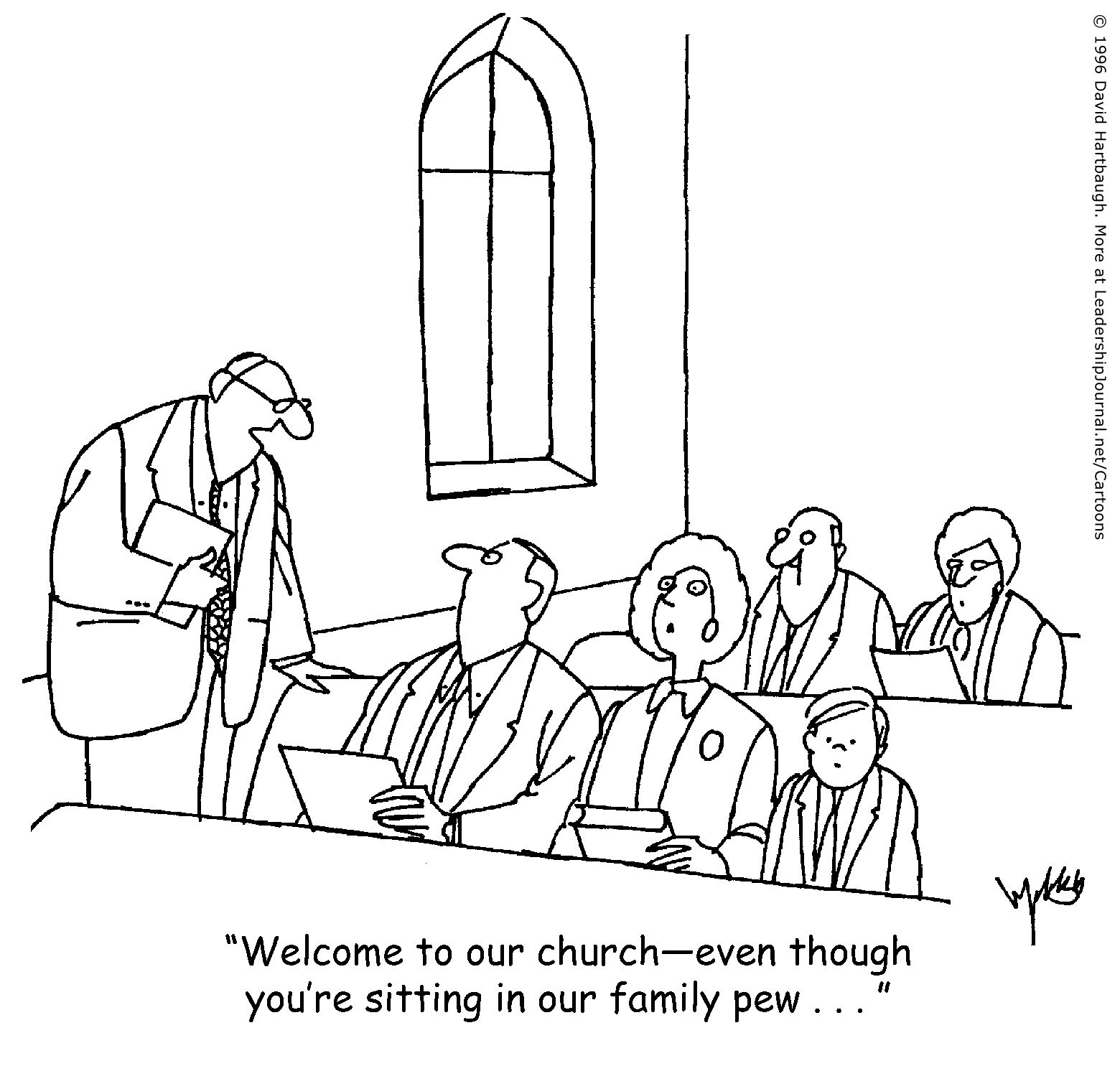
Have you ever wondered what visitors who come into our home congregation are thinking? What do they make of the worship service? How do they see the people who fill the building?

I’d like to dedicate this post to the young people I’ve had the opportunity to talk with and who have privately expressed their first impressions of the Lord’s church. These honest thoughts did not come from people who were trying to be disrespectful.

Here’s a list of TEN thoughts (some rephrased) that most visitors won’t openly say. 

  1. “I guess I came underdressed for this church.”
  2. “Why do you stand for some songs and not the others?”
  3. “Why are the communion plates gold?”
  4. “I didn’t understand the purpose of the invitation.”
  5. “Nobody smiled much until after the service.”
  6. “I’ve got too much baggage for you guys.”
  7. “I didn’t even know this church was here.”
  8. “How much money was I supposed to put inside the plate?”
  9. “It’s a nice congregation, but there’s not a lot of people my age.”
  10. “Sorry for bringing my drink into the sanctuary.”

While these comments and questions may seem negative, I’m thankful that they’ve given us their perspective. As His church, we should be thoughtful about who we are, and what we’re engaged in when we come together.

We’re either involved in offering our Father praise and worship, or we’re enjoying the sweet fellowship that we have in Christ. God is our life, God is the One who gives every blessing, and God is the one who saved us from ourselves. With this in mind—

Here’s a list of FIVE things we can do to let visitors know what we’re all about. 

  1. We should carry ourselves with an attitude that expresses our joy and thankfulness. They may not understand everything about the service or the practical aspects of our traditions, but they see a group of people who have been given the greatest gift ever given.
  2. Let’s not place too much emphasis on the location of worship, but the worship itself. There’s nothing holy about the “sanctuary” but there should be something holy about the acts being done and the people in the pews.
  3. Even though we may have been to worship countless times, we shouldn’t assume that everyone completely understands what’s going on. There should be an effort put into briefly explaining why we’re participating in each act of worship, as well as who it applies to. For example, visitors are not required to give. We shouldn’t assume they already know this.
  4. We’re all in need of Christ’s forgiveness, mercy, and grace. God is the God of second chances…and beyond! Do the visitors know this? We’ve all got varying amounts of baggage, but even a small pocketbook full of sin is enough to eternally condemn us.
  5. No matter how odd things may appear to a first time visitor, if we can show them the love of Christ, what was once strange to them— just might become beautifully familiar.

6899cbb17fb9c3e615b41ed38b068da4

An Evangelist For An Unworthy Gospel?

Friday’s Column: Supplemental Strength

brent 2020

Brent Pollard

I convinced my parents to watch a show I enjoyed with me. I doubt I converted them to watching the same kind of programs as I like but I was happy they enjoyed what we watched together. I was acting as an evangelist, wasn’t I? I told them about something that I felt fervently about, convinced them to look into it themselves, and then encouraged them to commit to following through with it. As I enjoyed the afterglow of the moment, I was hit by a realization. Why is it easy for us to tell others about a book or movie but not about the Gospel of Jesus Christ?

I suppose one answer is fear. If a friend thinks my movie suggestion is stupid, then he will just think I have bad taste in movies. At worst, he won’t ask me my opinion about movies again. The Gospel is different, though. We’re putting ourselves out there. What we present doesn’t just require the forfeiture of an hour and a half, but a lifelong commitment. What we fear is the loss of that companion since we feel as if we are requiring something great from them. The truth, however, is that it is not we who put forth the requirement. God does. We merely relay the information. Thus, regardless of a negative reaction, if we’ve spoken the truth in love (Ephesians 4.15) we’ve done what we are supposed to do in letting them hear what God requires of them (Ezekiel 3.17-19).

I suppose another answer is shame. I don’t fear what my friend thinks about my secular choices. However, I am reminded of the adage that one never publicly discuss religion and politics. Certainly, we have seen with the latter how divisive of a subject it can be. People unfriended me following the last Presidential election simply because they knew I supported the candidate for whom they didn’t vote! Imagine how that person will take the news that the cherished religion of his grandmother was not one that was true to the teaching of the New Testament? The Thessalonians felt their world had been turned upside down (Acts 17.5-8), and I am sure that my friend would feel the same way too.

Yet, that is not the truth, either. I have no power to condemn any grandmother to hell or grant her access to Heaven. God’s Word is truth (John 17.17). If the truth turns one’s world upside down, the fault lies within the worldview that was turned the wrong way, to begin with. As brother Keeble used to say to such a one bothered by the fate of grandmother, “If she had been taught what you’ve been taught, how do you suppose she would have reacted?” Just the fact that discussing religion in polite company is frowned upon is insufficient to dissuade the one genuinely loving his neighbor.

The next time you find yourself excitedly chattering on about something you’re zealous about to a friend, remember that it is possible to talk with them about Jesus that way as well. The only reason that we don’t is that we feel that we cannot. Love casts out fear (1 John 4.18). And if we deny Him before men, He will deny us before the Father (Matthew 10.32-33). Hobbies are great, but may we not find ourselves more energized by them than by the Living God.

pexels-photo-935944

The Mouse And The Cups 

Thursday’s Column: Dale Mail

83538761_557569434843824_1603081807199207424_n

Dale Pollard

In the pantry there’s a package of white foam cups. A small gray mouse struggles to carry a cup out into a man’s front yard one at a time. Just one cup and one each day. The man sticks to a normal routine. He goes to work early, and he comes home late. He watches TV, cooks a meal, tinkers on projects in the garage, and goes to bed. It’s mindless, it’s robotic, but day in and day out the cycle repeats itself. He leaves for work and the mouse drags yet another cup out onto his lawn. It isn’t until his yard is filled with foam cups that the man takes notice. What a mess! He walks through the yard and picks a few of them up. As he examines them he says, “What a waste. Perfectly good cups, now useless and dirty. We have a limited amount of foam cups in our package, and there’s a day when the mouse will grab the last one. We better put them to use. ”

If God came to you and gave you the chance to make a single request, what would you ask for? Our prayer lives are usually filled with our personal wants and needs. There are countless things that tug at different areas of our heart as we approach our Father, the Creator of the universe. He can do anything, He has all the power, and in one way or another we all desire some Divine intervention. I would like my family to be healthy and happy. I would like to live out the rest of my days with no more worries or anxieties. I would like the peace that comes with total financial stability. I wish my dog would live to be one hundred and five. I would like to be successful in everything I put my mind to.

There are five hundred wants in my heart, but what do I desire more than anything? The answer to that question is deeply connected to our spiritual life. What my heart chases after, where my time and energy goes, and even what I ask God for spreads my top priorities before me. David writes in Psalm 27:4, “One thing I ask of the Lord, this is what I seek. That I may dwell in the house of the Lord all the days of my life, to gaze upon his beauty and inquire in His temple.” David is known as the man after God’s own heart, simply because his heart was after God. David’s one desire was to form a deep and meaningful relationship with God. He understood what truly matters in this life. He even makes that his specific and singular request of the Lord. He puts his faith in action as he seeks that relationship with God. His life was built around this, and everything else is secondary to him. His seeking was that hopeful expectation— the effort he put in to this pursuit was a demonstration of that belief in God’s ability to grant him his one thing. David spent his time wisely. Almost every day that was granted to him he used as an opportunity to seek His Lord.

God is the Alpha the Omega, the beginning and the end. His eyes can see the very point in time in which He decided to create everything. He can also step back and look at His timeline and see the exact moment in which He will bring all things to an end. The Bible is a gift and glimpse into His mind. In it we can see the powerful beginning to the world we live in. We can see how God works in our present, and we can read about a grand event that will come when the days run out.

What is that one thing you want more than anything else? Don’t let the cups pile up in your yard. Let’s all use the time we have to pursue the only thing that matters.


racing-mouse-3499446_1280

God Reigns Over America In 2019

Neal Pollard

I do not mean to suggest that God is pleased with this nation today. Scripture would indicate that He is anything but happy with our immorality, materialism, and hypocrisy from the highest levels of government on down to the citizenry (cf. Prov. 14:34). From 2008-2016, He put Barak Obama in the White House. In 2016, He put Donald Trump there.  The very idea of both of these statements has managed to put a lot of people, including Christians, into a whipped up frenzy for the last decade-plus. But Scripture reminds us, “God reigns over the nations; God is seated on his holy throne” (Psalm 47:8).

In Romans 13, Paul reveals some startling, difficult truths:

  • The authorities that exist are established by God (1)
  • Resisting them is resisting God (2)
  • Governmental authority is a minister of God to you for good (4)
  • It is necessary to be in subjection to such (5)

It is disheartening to see so many good people of God sidetracked and distracted by the world of politics, especially in the fevered pitch of the activities currently ongoing. Without true insight into what’s really going on, from “deep state” to “abuse of power,” too many are up at verbal arms metaphorically going door to virtual door in search of a fight about all of this. Wherever we see ourselves on the political spectrum, as we face seeming corruption from both sides of the political aisle, we should ask ourselves a question. Why is this happening in our land today?

God reigns over the United States today. He is at work. Is all of this His means of refining or judging us? I do not purport to know with certainty.

Does God want us to spend our precious time debating politics, fighting our philosophical foes on it? Does He want us to hitch our precious influence to crusading for or against impeachment and its endless tributaries? Or does He want us redoubling our efforts to seek and save the lost, being salt and light in an unsavory, dark world?

God is going to settle the matters swirling in and around D.C. in accordance with His sovereignty. Meanwhile, we must keep our focus on the eternal souls of humanity helping to prepare them for the inevitable appointment before the King of kings and Lord of lords (Mat. 25:31-33; 1 Tim. 6;15). While we don’t know what He has in mind in these matters, we do know what He has in mind at the end of time. 

Bavaria Kings Power Germany Europe Jewelry Crown

They Saved $200, But What Did It Cost Them?

3108864732_09588a7913_b

Neal Pollard

I respectfully wade into Kentucky’s most hallowed sport (basketball) because of information passed along by some diehard Wildcat fans in the eastern part of the state. A brother shared with me that Pat Summitt almost became the university’s women’s basketball coach, but they refused to pay her moving expenses–calculated at about $200. Turns out, it was 1976 and the 24-year-old future Hall-of-fame women’s basketball coach was approached by the athletic brass from Lexington about her becoming their head coach. She was making $8900 at Tennessee, and Kentucky offered her $9000. She didn’t feel she could afford to move for a mere $100, so she asked for the extra expenses. Apparently, they refused and the rest is history. By the time she died (prematurely) at the age of 64 in 2016, Summitt was the winningest head coach in NCAA women’s basketball history with 1098 wins and eight national championships (via npr.org, kentuckysportsradio.com, and sbnation.com). 

Can you imagine the way that conversation may have gone, with someone in authority (who obviously, forever wished to remain unnamed) vetoing the offer because he didn’t want Kentucky paying those exorbitant moving expenses? Who knows? It may have been unanimous or perhaps unilateral, but someone changed the course of women’s college basketball history for what in 2019 dollars is $901.79. 

Do we ever suffer from the same kind of shortsightedness, as individuals and as churches? Have we ever said “no” to something because we were unwilling to count the cost? The matter may have involved the stewardship of money and material resources and the amount may have been proportionately bigger than $901.79, yet still discounted the aid of the One who owns it all. Have we ever failed to dare and do the very mission the Lord has us here to do because we counted the cost and felt it was more than we were willing to pay? Some will have never obeyed the gospel for this reason (Luke 9:57-62). Some will have never shared the gospel with a dear friend or family member for this reason (Matt. 10:37). Some will have never been more involved in the work of the church for this reason (Mark 8:34-36). Some will have never stood up for Christ in their daily lives for this reason (cf. 1 Peter).  Some will have never given generously of their livelihood for this reason (2 Cor. 8:1-8). The reason? The cost. 

We could focus on what we gain by self-sacrifice and sacrificial service. But let us also focus on what we lose by failing to give ourselves generously for His cause. It could be that our values are distorted and we are measuring the wrong way. Remember the words of Caleb Bradlee:

Count up the joys, and not the pains;
Think not of losses, but of gains;
Keep the clouds back; gaze at the sun;
Thus life will smoothly with you run.

Our gifts are more than all our blows,
And what is best we know God knows;
And He will send His blessings down,
Some veiled; but all will hide a crown.

If we could know the meaning grand
In tears that come by God’s command,
Then sweetly should we take the cross,
And count as gain what seems a loss.

But only let us wait and pray,
Then out of night will come the day;
And pearls long hid from human sight,
Will crown our brows with holy light.
(Via Library of Congress, 1888)

Dark Churches

Neal Pollard

I was intrigued by an article written by Janet Thompson of crosswalk.com. The eye-catching title asked, “Why Is The Church Going Dark?” She meant this literally. Her complaint was about the design of many auditoriums having dim lighting and being windowless, almost like a movie theatre or concert venue. She wondered if this was to reach a younger generation or to set a certain mood. 

While I prefer a well-lit room, there is a more significant concern. Jesus taught, “You are the light of the world. A city set on a hill cannot be hidden; nor does anyone light a lamp and put it under a basket, but on the lampstand, and it gives light to all who are in the house. Let your light shine before men in such a way that they may see your good works, and glorify your Father who is in heaven” (Mat. 5:14-16). His words have nothing to do with church building designs, LED lighting, or window sizes. Preaching to His disciples, Jesus wants us to know that those reflecting His light cannot be hidden, but shine in such a way that others will see our good works and glorify God. 

  • Dark churches are situated in neighborhoods that know nothing about them.
  • Dark churches are so indistinct that the world can see no difference between themselves and those churches. 
  • Dark churches have no vision or plan to fulfill God’s purpose for them.
  • Dark churches exist to assemble, but not much more.
  • Dark churches focus inwardly, but neither outwardly nor upwardly. 
  • Dark churches operate from fear and prefer the safe route, taking no risks and attempting only what they can produce.
  • Dark churches are disconnected from the Light of the world.

It is good for us to constantly challenge ourselves, when setting budgets, making plans, gauging our true priorities, or evaluating the leadership or the pulpit. Are we doing what will help us be “Light-Bearers” or what will cause us to be “Dark Churches”? What an important question! Our actions determine the answer. 

dark churches

Distracted And Delayed By Baggage

Neal Pollard

On May 7, Bill McGee wrote in a USA Today article about the crashed Aeroflot plane that killed 41 of the passengers onboard: “Reports from people on the plane indicate the evacuation may have been slowed by passengers grabbing their bags. Videos show passengers taking their carry-on bags with them as they exited the plane,” the AFA said in a statement. “We will never know if more lives could have been saved if the bags were left behind” (online edition, “Were lives lost at the cost of carry-ons in Aeroflot plane crash that killed 41?”).  It’s outrageous and unbelievable that people would care more for their luggage than human lives, but that appears to be the case.

In Luke 12:15, Jesus taught, “Take heed and beware of covetousness, for one’s life does not consist in the abundance of the things he possesses.” The NASB translates the first part of the verse, saying, “Beware, and be on your guard against every form of greed….” Watching video footage of those passengers making an emergency exit with carry-ons in hand is a rather graphic, unmistakeable illustration of Jesus’ point. Unfortunately, we can have a harder time seeing ourselves doing the same thing in the prioritization of our lives. We may be aghast at the thought that their seemingly greedy decision came at the expense of some people behind them being able to escape the flames, but Scripture teaches the devastating effect greed can have on our own lives and the lives of those we influence.

Paul teaches that such can be a “snare,” “harmful desires,” plunging men into “ruin and destruction” that pierces them “with many griefs” (1 Tim. 6:9-10). It’s interesting that Paul’s inspired counsel is to “flee from these things” (11). We should consider that an inordinate desire and pursuit of material things may hurt not only ourselves, but the people that come along behind us. That includes our children, grandchildren, and the other people who are guided by our influence and example. They are watching what we value most and what has our greatest attention and affection. We may not be caught on camera, but God sees it with perfect, all-seeing eyes. 

Let’s be careful not to allow this world to cloud our judgment, making the things of this world more important than souls or the will of the Lord. The stakes are higher than whether we exit an airplane alive. It’s about how we leave this world and enter the next one.

Screen Shot 2019-05-09 at 7.24.14 AM

Why I Attend Wednesday Night Church Services

Neal Pollard

  • I need the fellowship of Christian family in the middle of a week spent exposed to the world.
  • I draw strength from the teaching of God’s Word and the comments others make on the subject being studied.
  • Others need my encouragement and influence, and my presence can be so faith-building to them.
  • Bible class teachers have taken precious time to prepare and deliver their material.
  • I believe God is pleased with my making such a commitment and a sacrifice, though it’s so little compared to all that He has done for me.
  • It builds my interest in spiritual things.
  • I believe it helps contribute to the overall strength and influence of the local church.
  • It is an affirmation of the eldership’s wisdom to have such classes in the first place, where they seek to help give me spiritual food.
  • I live by the philosophy that I make time for what is most important and valuable.
  • My family is guided by my leadership and priorities.
  • I live in a nation that allows me to freely assemble to build and express my faith, and I do not want to take that for granted.
  • I have so many great memories of Wednesdays, and I continue to make them.
  • Though I have often arrived tired and frazzled, I have almost always left rejuvenated and rejoicing.
  • I want to.

What would you add?

IMG_6008

Lessons Learned At The Stadium

Neal Pollard

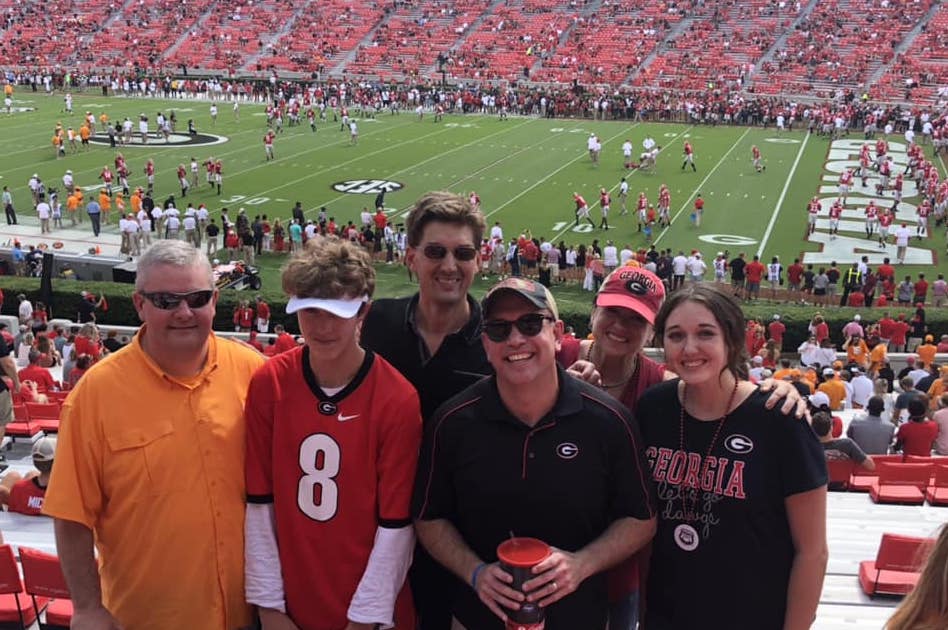
Corey Sawyers and I decided a few weeks back to go to the Georgia-Tennessee game at Sanford Stadium in Athens, Georgia, this past Saturday. Thanks to various reward programs and good deals, we were each able to do it all for less than a discount airfare. We were gone about 24, action-packed hours. We even were able to connect with the Shillidays, who had the same idea as us and made the trip from Colorado to Georgia. It was a lot of fun and we made some great memories. While there, especially in the several hours we were at the stadium, several things occurred to me that I would like to share.

  • People get emotionally invested and passionate about what they love.
  • Diverse individuals can unite around a common cause.
  • We sacrifice (time, inconvenience, effort, money, and voice) for what we truly care about.
  • We can be bold enough (vocally and visually) to let everyone know where we stand.
  • We may be too quick to forget past successes, but we’re also quick to forget past failures. 
  • With sufficient interest, we can endure discomfort (backless seats, extreme heat and humidity, and no elbow room).
  • We do not let lack of knowledge or understanding of a subject (like the rules and strategy of college football) to keep us from speaking up.
  • We tend to be proud of our history and heritage (coaches, players, broadcasters, past seasons), feeling a sense of connection or belonging through it.
  • Despite aforementioned unpleasantries and sacrifices, most remain willing to do it again in the future. 
  • We can quickly build a bond with likeminded people, even strangers, out of a common love.

It’s easy to see the comparisons and contrasts between our Saturday experience and trying to be a Christian in our world today. Obviously, I am not disparaging going to ballgames and having a good time. It’s great fun! But, it always reminds me of my need to exhibit greater commitment and zeal for the only thing that matters eternally. My prayer is that, in every way it can be measured, my heart, mind, soul, and strength will be most invested in loving the Lord, His church, and the lost. It also makes me aware of the vast potential in every person, properly directed, to seek first the Kingdom of God! How many, adequately exposed to God’s will and His offer of salvation, will wholeheartedly embrace and share it? Seemingly, the numbers are staggering! May we be enthusiastically about the Lord’s business. 

Bear Valley at Sanford Stadium
Bear Valley crew at Sanford Stadium shortly before kickoff.

If Today Was My Last Day On Earth (Poem)

Neal Pollard

[NEAL’S NOTE: This poem was from the conclusion to the sermon I preached on this subject from Psalm 90]

If today was my last day and tomorrow found me gone
How would life be different, if that unknown somehow was known

Would I be a better person, would I live a better life
How much would I feed resentment, envy, bitterness and strife?

How would I choose to live, and what would be my emphasis
Being a blessing or a burden, full of service or selfishness?

Where would God be in my life, what place would He occupy,
If today was my last day, and before tomorrow I would die.

If today was my last day, and second chances all were through
And I stood before my judge and my eternal fate I knew

I would mourn and fall before Him, if I had not done what’s right
If I had chosen self and sin, if I had chosen eternal night.

But there’s no reason for apprehension, I can die w/head held high
If I die to self & live to Him, it won’t matter when I die.

What To Do When Faced With A Sinking Ship

Neal Pollard

The ship is breaking apart. The timbers of civility. Crack! The planks of morality. Splinter!  The mast of critical thinking. Pop! As we hope to stay afloat, we cannot help but feel growing apprehension over the current state of our society. It’s not a matter of preserving or plastering over a past. It’s a matter of preserving peace in the present, but only if that means God’s people are serious about sharing the only possible remedy–Jesus! Yet, as it increasingly seems our country is ratcheted by prejudice, hatred, division, and rancor, we see the tranquility and calm from so many quarters threatened with the dark storms of violence and uncertainty.

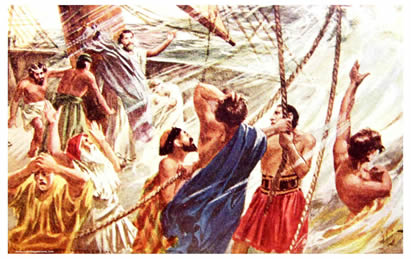
In Acts 27, Paul was with 275 other passengers on a boat bound for Rome from Caesarea, and its captain decided to test the Mediterranean Sea at a turbulent time. A violent storm, known as Euraquilo, caught the ship and ultimately battered it to pieces. It must have been an apprehensive time for the passengers and crew. Luke says the wind was violent, the ship was driven, the sun and moon didn’t appear for days, violently storm-tossed, they incurred damage and loss, and that all hope of their being saved was gradually abandoned. I cannot imagine the helpless, vulnerable feeling they must have felt. At least not literally.

It would be easy to let our national unrest and storminess tempt us to act irrationally (like some on Paul’s ship were tempted) or to give in to fear. But, Paul did five things we should do as we try to respond to the current turbulence.

  • He listened to God (Acts 27:23-24). Nobody else had a better or equal solution to their dire problem. The only way to be saved was to listen to God. Paul sought to persuade the people of this. In the ruckus and tumultuous noise, listen harder to God’s Word! It’s an anchor in stormy waters.
  • He believed God’s Word (Acts 27:25). It’s one thing to comprehend something, but quite another to put your trust in it. What God promised must have seemed quite far-fetched, that this way would save everyone. But, Paul didn’t waver. He said, “I believe God that it will turn out exactly as I have been told” (25). We are surrounded by people who need to witness our faith. As many as are persuaded will escape a shipwreck of faith (cf. 1 Tim. 1:19).
  • He encouraged hope (Acts 27:21-26). Despite the foolishness of their leaders, these people were given a message of hope. Paul says, “Keep up your courage!” (22,25). Despite the frightfulness of the moment, Paul offered a possible escape. Right now, you and I are uniquely positioned to give the only true hope available. It’s like an anchor for the soul, both sure and steadfast (Heb. 6:19)!
  • He warned the disobedient (Acts 27:31-32). There were those trying to break from God’s Word and will and do things another way. They were trying to take matters into their own hands. Paul spoke up against this! Such was defiance against the divine plan. What a message for us, who justify their sins rather than repent of them. We need to keep the message of righteousness, self-control, and the judgment to come before people (Acts 24:25).
  • He prayed faithfully (Acts 27:35). In this ordeal, Paul was a public example of prayer. Read every epistle of Paul’s and you’ll see his faithfulness in and dependency upon prayer. He appealed to the God he knew was the only hope for salvation. How much are we praying about the turmoil in our country (and world)? How much do those around us believe that we are dependent upon God?

Instead of focusing on the frightful winds currently blowing, let’s focus on the One who can calm the storm. Let’s get others to join us in that focus. Whatever happens to our nation, we must save as many souls as possible!

paul20in20storm


Caesar’s Citizen Headline: “The Jerusalem Church Splits Over Politics!”

Neal Pollard

Barak monitored the results of the latest Imperial policies out of Rome. And he hashed it and rehashed it with his brethren at the fellowship meals, on his job at the fish market, and definitely, with vehemence, within his inner circle of friends and family.  Elchanan came from a long line of zealots, and, although he had become a Christian several years before, his leanings and passion about the matter were well-known to anyone who spent any time with him. Michael, Zechariah, and Esther voiced their empathy for Elchanan’s position, while Gaius, Claudia, Junius, and Manius, ever loyal to the politics of their native homeland, aligned themselves with Barak. Unfortunately, they all also were Christians who worshipped together or in neighboring congregations around Jerusalem. They got so caught up in it that they marched, they protested, they pledged allegiance with oaths, they argued, and they held one another in contempt and suspicion. Meanwhile, Jews and Gentiles all around them lived and died without hearing the message of Jesus and the purpose He died to make available to them. They did not associate those early Christians with love. They had no clue about the heart of the gospel message, the good news they needed in the unstable times in which they lived. They failed to see distinctiveness and kindness. They saw a mirrored reflection of their unregenerate selves. Mired in the smallness of contemporary concern, the church at Jerusalem, distracted from their mission, never taught lost souls, devoted themselves to service, or lived lives that showed utmost trust in Jesus and His power to save and transform. Predictably, these small bands of disciples circled their chariots around themselves and hid their lights under their baskets.

That’s not quite the way Luke records it. Politics was a constant, headline news matter in the first century. There was volatility and polarization. With the theatre and stadiums, there were no shortages of entertainment diversions, too. But, reading the book of Acts, you find a quickly growing band of disciples reaching the thousands in number precisely because they stayed above the sensual fray of politics or any other ephemeral concerns. They understand what lasted and what wouldn’t. From the first verse that records their collective activity, they were “devoted” (Acts 2:42). Their devotion was powerfully, primarily, and passionately Jesus and His will.

It doesn’t matter that we’re 2000 years removed from that, or that our situation isn’t exactly parallel. Our mission hasn’t changed. Our primary focus must be the same as theirs. Ever wonder who benefits the most from our getting mired in the mud of these carnal things? It isn’t Jesus!

ancient_alexandria

Who Is The Greatest?

Neal Pollard

  • The preacher who dazzles with his insight, personality, influence, popularity, or following?
  • The teacher who is the students’ favorite?
  • The member who is “balling” (making a lot of money and having a lot of success in business)?
  • The family with the biggest house and nicest automobiles?
  • The one with the best academic pedigree, with the proverbial alphabet soup behind their name?
  • The folks who are best known and most influential in our community?
  • The ones who are incredibly fit and attractive?
  • The greatest debater, philosopher, and reasoner we know?
  • The elder who is most successful in his career?
  • One who seems to combine a great many or even all of these attributes?

It could be one of these individuals, but despite and not because of the specifics just mentioned. But, we so easily fall into the trap that causes us to think that those criteria are what make one greatest.  Such can cause us to vest blind trust in them or put them in a higher place than is right. Worse, we can try to be motivated to define and promote ourselves as greatest through these means.

The tendency is so fundamental. Jesus warned against it in places like Matthew 20:25-28 and 23:12. His disciples, like James (4:6-10), Peter (1 Pet. 3:8; 5:5-6), Paul (2 Cor. 10:12-18), Jude (16), and the rest, at least implicitly, address the same trap. We all fight the desire to be seen so as to be admired. We may do so through our marriages, our children’s accomplishments, our economic status, our apparent importance, our having it all together, our professional prowess, or any other asset we feel responsible for having. If we use these things to place ourselves above and/or push others below, we are disqualifying ourselves for greatness in the only way that matters—God’s way. False modesty isn’t the answer, either.

We must look at ourselves as dependent creatures. It’s all His and without Him we’d have nothing!
We must look at ourselves as devoted stewards. It’s all His and He expects us to use it wisely, on His behalf!
We must look at ourselves as divine instruments. It’s all His and He works through us to do His will!
We must look at ourselves as dutiful slaves. It’s all His and so are we, living and serving at and for His pleasure!

The warning and disclaimer is that this transformation must happen at heart-level, rooting out thoughts and attitudes that, while fleshly, are so easy to embrace. If the weeds of pride aren’t dislodged from deep within, this effort will prove impossible. But, if it could not be done, God would not have spent so much time instructing us to live and walk by the Spirit rather than by the desires of the flesh and mind. It is the old song, “None of self and all of Thee.” To the degree we adorn that mindset and make that transformation, to that degree we will achieve greatness God’s way!

5122193

My Daily “To-Do” List

Neal Pollard

  1. Be Productive With Your Time (Eph. 5:16).
  2. Be Pure In Your Heart (Mat. 5:8).
  3. Be Proactive In Your Relationships (Eph. 5:21-6:4).
  4. Be Peaceable With Your Provokers (Rom. 12:17-21).
  5. Be Purposeful With Your Life (Rom. 8:28).
  6. Be Praiseful With Your God (Psa. 150).
  7. Be Pleasant In Your Demeanor (Prov. 16:24).
  8. Be Prayerful In Your Decisions (Phil. 4:6).
  9. Be Patient In Your Challenges (1 Th. 5:14; Psa. 37:7).
  10. Be Positive About Your Future (Phil. 1:20-21; 4:13).
  11. Be Persistent In Your Evangelistic Pursuit (1 Cor. 9:19-22; Mat. 28:19).
  12. Be Pitying Of The Downtrodden (Prov. 19:17).
  13. Be Picky About Your Associates (1 Cor. 15:33).
  14. Be Passionate About Your Spirituality (Rom. 12:11).
  15. Be Perseverant In Your Trials (2 Th. 1:4).
  16. Be Prospective In Your Opportunities (Gal. 6:10).
  17. Be Petrified Of Falling Away From God (Heb. 6:1-6; 10:26-31).
  18. Be Powerful In Your Faith (Luke 7:9; 2 Th. 1:3).
  19. Be Persistent In Your Study (2 Tim. 2:15).
  20. Be Penitent In Your Sins And Failures (2 Cor. 7:10; Acts 3:19).
  21. Be Plentiful In Your Gratitude (1 Th. 5:18).
  22. Be Permeating In Your Influence (Mat. 13:33-34).
  23. Be Profuse In Your Generosity (3 John 5; Prov. 11:25).
  24. Be Prolific In Humility (Mat. 23:12; 1 Pet. 5:5).
  25. Be Pining For Heaven (Heb. 11:16; Phil. 1:23).

to-do-list-tools

What Would Our Slogan Be?

Neal Pollard

A Bear Valley member gave me a mailer she received from a new, area denomination.  The oversized postcard, in attractive colors (the background of which looks to be a paint palette), leads with the header, “Messy Grace.” The subtitle reads, “It’s okay to not be okay.” The brief message beneath says, “God loves you. God cares for you. God wants a relationship with you. NO MATTER WHAT!”  Now, there is a lot of truth in that message, if we don’t necessarily care for some of the jargon. Could it leave a wrong impression? Yes, if the message does not include the response we need to make to His amazing grace. We cannot stay messy, if that means willful sin. But we will all continue to have our messes, even after coming to Him.

But, the mailer itself, with the self-appointed slogan, is what got me to thinking. If our visitors got to write our slogan, what would it be? For some places I’ve visited, it could be the following: “Don’t Sit On My Pew!”, “Race You To The Restaurants!”, “Visitors? What Visitors?”, “Joy Is For Liberals”, or “Are You Ready To Rumble?”  If the Lord wrote our slogan, what would it be?  For some congregations He diagnosed, it was also less than flattering: “We’ve Left Our First Love” (Rev. 2:5), “We’re Following False Teachers” (Rev. 2:14-16), “We Tolerate Immorality” (Rev. 2:20ff), “We Look Alive, But We’re Really Dead” (Rev. 3:1), and “We Think We’re Something Great, But We’re In Really Bad Shape” (Rev. 3:15ff).

Here at Bear Valley, there are several potential slogans I would hope represent who we are and what we are trying to convey by the way we act when we’re together on Sunday and Wednesday as well as our interaction at other times. Here are some good options:

  • “We Love One Another” (John 13:35).
  • “We Walk In Truth” (3 John 4).
  • “We Continue In His Word” (John 8:31).
  • “We Bear One Another’s Burdens” (Gal. 6:2).
  • “We Like Being Together” (Acts 2:42ff).
  • “We Look For Our Lost Sheep” (Luke 15:4).
  • “We Know Who The Enemy Is” (Eph. 6:11).
  • “We’re Not Conformed But Transformed” (Rom. 12:2).
  • “We Put Others Before Self” (Phil. 2:3-4).
  • “We Act Toward Others As If Doing For Christ” (Mat. 25:40).

The thing is, we are going to have a general character and emphasis as a congregation. Whatever we prioritize and do, that’s what it is. It’s not what we say, sing, or “sloganize.” To see it in print is sobering. May we collectively strive to earn a reputation that reveres our Master, reflects our mission, and renews our minds.

1akxyz