“God’s Guidelines In Matters Of Judgment”

Monday’s Column: “Neal At The Cross”

pollard
Neal Pollard

In Romans 14, Paul emphasizes:

THREE FACTS ABOUT GOD

Even though Romans 14 is about the weak in faith and those who are stronger in faith, there is a decided emphasis on Deity–God’s acceptance (3), thanks to God (6), the judgment seat of God (10), praise to God (11), etc. The Lord is mentioned nine times while “Jesus” or “Christ” is mentioned several more times. Even when we have differences of opinions, we cannot forget about God’s presence and feelings. Another way to put any issue that would divide us is: “It’s all about God and not about us.” What are Paul’s three facts about God to help us here?

God Is Able To Make Our Brother Stand (4). Paul’s examples are about eating meat (3) and observing special days (5). Some did and some didn’t, and Paul says neither should judge the other’s Christianity on it for this reason. Each one is trying to please and follow the Lord the best they can (5-6). As long as they act from faith and not doubt on these judgment matters, they are not sinning (23).

God Is Lord Of All (9). We’ll be careful with each other’s convictions because we share the same Lord. We live for the Lord and die for the Lord; either way, we belong to the Lord (8). In all our political, social, and other earthly convictions, do we stop to remind ourselves abut this? We’re all on the same, level playing field as brethren, submitting to the same Lord. 

God Is Judge Of All (10-12). I don’t want to be my brother’s judge on anything, especially not things that are matters of judgment, opinion, and discretion. I’m also not qualified. If we get up at arms, let’s do so in defending God’s name and His authority. If we get worked up, let’s do so in seeking His glory and honor. 

THREE REMINDERS ABOUT THE CHURCH OF GOD

Jesus said His kingdom was not of this world (John 18:36). Christians are part of His kingdom first (Mat. 6:33), and it comes before politics, nation, race, etc. Romans 14 reveals three reminders about this kingdom. 

We Are Reminded That None Of Us Live Or Die To Ourselves (6-7). We are not an island to ourselves. What we do affects others. We’re keenly interested in how what we do affects others (cf. 1 Cor. 9:19-23). I consider how what I do affects you, and you are to do the same. That may come as a sacrifice to me, but I’m called to consider more than just me. 

We Are Reminded Of What The Kingdom Of God Is And Is Not (17). It’s easy for us to lose sight of our identity, mission, and work. If we forget who we are, why we’re here, or what we’re here to do, there’s trouble. At Rome, people were confused over what the kingdom of God was about. Paul says it is not about earthly stuff, stuff you can take or leave that is neither right nor wrong. The kingdom is righteousness, peace, and joy. Mastering this leads us to be acceptable to God and approved by men (18). By majoring in the majors and minoring in the minors, we’re most effective with God and men. 

We Are Reminded That We Pursue What Makes For Peace And Edification (19). I doubt the Lord was trying to make a bunch of doormats in Romans 14, but to think that way is to miss the point of following Jesus (cf. Mat. 20:25-28). We approach our personal convictions, and those of others, wanting harmony and preferring one another. 

THREE WARNINGS ABOUT THE PEOPLE OF GOD

Even as Paul emphasizes God’s supremacy and the church’s nature, he does not leave out how God wants us to treat each other over judgment matters.

Don’t Judge Each Other (13). We can redirect the energy it takes to try and read hearts and judge motives into trying to see through the eyes of others (1 Pet. 3:8-9). Peter gives a process. Be one, then you will see through others’ eyes, you’ll feel a sense of family, then you’ll be kind, humble, and so on. 

Don’t Destroy Each Other (15). Paul says don’t spiritually kill the brother Jesus died for. When we insist on our rights and our way, we are no longer walking in love. We’re supposed to be about building each other up. Disagreement can turn to resentment, and we start avoiding each other or being distant. Substitute “food” with “political party,” “pandemic issues,” “celebrating Christmas,” “new heavens and new earth,” “literal indwelling,” “representative indwelling,” and the like. The principle is unchanged. 

Don’t Tear Down God’s Work (20). The church may have more opportunities and open doors right now than at any time in our lifetime. Don’t think the devil isn’t bothered by that. He’d love for us to turn on each other. He’d love to see Christians dig deeper trenches of division. But of all people, God’s people should lead the way in genuine love, unity, compassion, and care. So, Paul says don’t tear down the work of God for the sake of things that won’t matter in eternity. Causing others to stumble is a problem because it can tear down God’s family. Follow your own convictions (22), but don’t equate them with God’s law!


When You’re Caught Dead To Rights

Monday’s Column: Neal At The Cross

pollard

Neal Pollard

In 1976, I was in first grade attending school in Barrackville, West Virginia, where my dad preached. One of my buddies was a black-haired kid named Carl. He got me in more trouble, wetting paper towels and throwing them on the bathroom ceiling in our school, exploring a filthy, condemned house across the street from the church building, and probably other acts of mischief I have chosen to repress. The worst Carl incident is probably still recalled in janitorial circles throughout the greater Fairmont area. Apparently, the school was replacing a lot of windows. There were sheets and sheets of panes of glass propped up against the school building. Carl, who looked a lot like Alfalfa from the Little Rascals, said he thought he could throw a pane of glass further than I could. The very suggestion made alarms go off in my head. This was wrong, dangerous, and I’m sure I threw in illegal. How I went from those thoughts to a sheet of glass- throwing-contest I honestly don’t remember. But I did and we did several times until an aforementioned janitor yelled at us to stop and stand still. I didn’t move but surprisingly Carl took off in a sprint. By the time the janitor made his way to my asphalt courtroom, I was feeling serious buyer’s remorse. I was arraigned and was told to report to the judge, better known as the principal, first thing in the morning.  I remember two things about that next day. One was that this is the only incident of my childhood that merited two spankings from my parents. The other was how gentle and kind the principal was. I later found out that the principal had told mom and dad that they would not make us pay for the broken glass.  I had no defense. Carl had hung me out to dry, but I forged my dastardly destiny the moment I cast my lots with that little rascal. I was at the mercy of one who could have made my life much harder, but he simply urged me to reform–the very thing I was eager to do. That was the last memory I have of Carl.

Have you ever been caught dead to rights–no excuse or mitigating circumstances (just plain guilty)? In John 8:1-11, there is a powerful lesson on forgiveness centering around a woman caught in adultery. We can look at this text from a variety of perspectives, but this very guilty woman was literally in the center of them all and at the heart of the text. Who was this woman to everyone present?

  • To all the people, she was an object of curiosity and possible amusement.
  • To one man, she was a sexual object to use.
  • To the scribes and Pharisees, she was a pawn for their use.
  • To the law of Moses, she was a sinner worthy of death.
  • But to Jesus, she was a person to defend, a soul to save, and a forgiven one to send.

This woman was viewed from every conceivable angle, from curious spectacle to sexual object, from contempt to compassion. The view that mattered most, Jesus’ vantage point, saw her not only for what she was but for what she could be. The example of her story helps us to appreciate that not only is sin bad, but it can be remedied. Jesus would say to every obedient one today what He told her. “Neither do I condemn you; go and sin no more.”

4409500248_d6dc2f6b48_b


The Asparamancer

Thursday’s Column: Captain’s Blog

IMG_0806

Carl Pollard

I came across an article with this title, “Fortune Teller uses asparagus to predict the future.” Of course, I clicked on it, and here’s what I learned:

Her name is Jemima Packington and she is known as the “Asparamancer.”
She throws asparagus in the air and then reads the patterns that have landed on the ground. So far she has correctly predicted Trump’s election, British soccer league losing the World Cup, and the spike in vegetable sales across the world.

But Jemima isn’t always correct. She once said about her wrong predictions, “I am usually about 70 percent accurate with my predictions. This is because not every asparagus is meant to be used for prophesying. I take what I do very seriously and this is especially important when it comes to picking the right asparagus” (ecr.co.za).

If only reading the future were as simple as throwing vegetables in the air, but unfortunately it’s not.

Matthew 24:36-39 says, “But of that day and hour no one knows, not even the angels of heaven, nor the Son, but the Father alone. For the coming of the Son of Man will be just like the days of Noah. For as in those days before the flood they were eating and drinking, marrying and giving in marriage, until the day that Noah entered the ark, and they did not understand until the flood came and took them all away; so will the coming of the Son of Man be.”
‭‭
As humans we cannot see the future, only God can. We won’t have a warning that will let us know when He is coming. So that begs the question, “How are you living?” It would be amazing to always have a clean house. if someone dropped by you can invite them in and know it looks fine. My mom hated inviting people over when our house was dirty. She’d clean for hours before even one of our friends would come over.

What kind of house do you have? When God comes back, will He find a dirty house? A life that was spent in vanity and on self-service? Or will He find a clean and orderly house, one that has been prepared and one that has lived a life of service to God? As we think about the future, may we never fail to ask ourselves, “How is my house?”

asparaguslady_trans_nvbqzqnjv4bqcca9bu0tuyhkzjzhtsjqzg57efzlvro-v_knyx87nok

99 44/100% Pure

Friday’s Column: Supplemental Strength

81121814_2462862270639428_5746232403106463744_n

Brent Pollard

When Harry Procter first marketed his Ivory soap in 1891, he used the simple slogan, “It floats!” Within a few years, however, he conceived of a new angle he could use to peddle Ivory to the masses. He decided to have an independent laboratory analyze his soap along with Castile soaps also available on the market in the 1890s. The laboratory’s conclusions were used by Procter to declare that Ivory was “99 44/100% Pure.” And that was Ivory’s new slogan. 1

 The problem with that slogan is that there was no standard for comparison. Who defined what “pure” meant? Was it the independent laboratory that Procter paid to do the analysis? That does not pass the smell test. If paid to find a particular result, are you going to maintain your integrity and admit that there was no litmus test for soap purity? Thus, when you look at a package of Ivory soap today with its vaunted claim of being “99 44/100% Pure,” remember that is a subjective statement based on a clever marketing ploy. In other words, Ivory is pure only because it proclaims itself to be so.

If we are not careful, we can be guilty of doing something similar spiritually. That is, we might puff ourselves up, stating we are superior to those around us when we have no objective basis for our statement. Jesus cautioned us against such behavior. He told us not to do things to be seen of men in His Sermon on the Mount (Matthew 6.1-6). He gave the parable of the Pharisee and the publican to caution us that we should not seek to justify ourselves by looking upon others with contempt (Luke 18.9-14). The sobering truth is that even when we have done everything commanded of us, we are to say, “We are unworthy slaves; we have done only that which we ought to have done” (Luke 17.10b NASB). Indeed, Jesus calls us to second-mile service (Matthew 5.41).

Regarding the final judgment, Jesus warned that there would be some who would stand before Him and laud those works (of their devising) they had done. His response for them will be, “I never knew you; depart from Me, you who practice lawlessness” (Matthew 7.23 NASB). It is not as if the desires of God are unknown. He has declared them to us. And this constitutes the criteria for our judgment (John 12.48). Indeed, we must do the will of the Father (Matthew 7.21). As such, we have an objective standard by which to compare our lives. Beyond that, we are to show mercy. We must walk in the same love as Christ had for us (Ephesians 5.1-2). That was a generous love putting our interests ahead of His own. In like manner, we must avoid allowing the abuse of our Christian liberty to cause another to stumble (1 Corinthians 8.9). Only when doing such, can we begin to say that our righteousness is not like filthy rags (Isaiah 64.6).

Fortunately, we do not have to guess whether we are living lives pleasing to Him. Hence, even if we cannot quantify our purity with an exact number like 99 44/100%, we can still rest assured that the blood of Jesus Christ has us thoroughly cleansed (1 John 1.7). In the interim, we plead with David, “Create in me a clean heart, O God, And renew a steadfast spirit within me.” (Psalm 51.10).

 Reference

1 “Ivory (Soap).” Wikipedia, Wikimedia Foundation, 10 June 2020, en.wikipedia.org/wiki/Ivory_(soap).

1800s_blue_ivory

Crane Flies

Wednesday’s Column: Third’s Words

Gary III

Gary Pollard

The Crane Fly is a misidentified and misunderstood creature. It looks like an enormous mosquito, so some will kill it for that reason. I often hear, “Don’t kill those, they eat mosquitos.” The crane fly is either killed for being a “mosquito” or protected based on misinformation about its eating habits. They do not have the anatomy to be predatory, according to Dr. Matthew Bertone with the NCSU Dept. of Entomology. They cannot bite humans, but they also can’t eat other mosquitos.

Some Christian liberties are like crane flies. We may understand that they are harmless in and of themselves (I Cor. 8; 10; Rom. 14.14), but we also understand that others may perceive them as being something they aren’t. To some, our Christian liberties are a mosquito: they see certain practices, lifestyles, clothing choices, consumptions, etc. as being sinful. Still others may see our Christian liberties as being hearty approval of some worldly behaviors, mistaking our enjoyment of this life (I Timothy 4.4) with godless living.

There is a middle ground. Flaunting our religious liberties is counterproductive and sinful (I Corinthians 8). Just because something is a gray area does not mean we should force other Christians to view it in black or white (Romans 14). On the other hand, it is every bit as wrong to condemn a Christian for enjoying a Christian liberty as it is to flaunt that liberty. Paul said, in the context of Christian liberties, “Who are you to judge the servant of another? To his own master he stands or falls; and he will stand, for the Lord is able to make him stand” (Romans 14.4).

So, what is that middle ground? There are, of course, the biblical principles of selflessness, courtesy, deference, discretion, confidence in our position on the matter (Romans 14.5, 20-23), etc. More often than not, though, we’re encouraged to simply avoid any Christian liberties because they may hurt others’ feelings. The middle ground is that we have a faith that is, “our own conviction before God. Happy is the man who does not condemn himself in what he approves” (Rom. 14.22).

Some liberties need not be flaunted but may still be enjoyed privately, if we can demonstrate to ourselves and to God that they do not violate His commands in any way. Some liberties should be kept private so as to avoid causing a brother or sister to stumble (Rom. 14.21). That word for stumble is proskopto, which means, “to strike against something, or to make contact with something in a bruising or violent manner” (BDAG). If what we’re practicing is offensive to others because we’ve made it far more obvious than it should be, we’ve messed up. If we’re doing our best to be discrete and courteous in practicing Christian liberties (which are gifts from God), we’re on the right track.

The best crane flies are the ones we can’t see. No one thinks a mosquito is in the room, and no one thinks a “skeeter-eater” is in the room, either. We can avoid a whole lot of heartburn, headache, and even potential sinning when we keep our Christian liberties private. Or, we could play it safe and, “Not eat meat or drink wine, or do anything by which your brother stumbles.” Whichever path we take, we can never go wrong with the Golden Rule: “So in everything, do to others what you would have them do to you, for this sums up the Law and the Prophets” (Matthew 7.12).

crane fly

“Who Will Bring Me Down To Earth?” God!

Monday’s Column: Neal At The Cross

65093899_10156405640240922_1795016641457684480_o

Neal Pollard

The shortest book of the Old Testament is dedicated to revealing the coming punishment of a nation which descended from Esau. Edom, also called Teman (for Esau’s grandson, Gen. 36:15),  faced “the day of the Lord” (a frequent Old Testament term meaning coming, divine punishment) along with all the nations. Well over a thousand years after Esau lived, his descendants betrayed God’s people, Judah, by helping the Babylonians loot Jerusalem during the time of the captivity and exile. God took notice and the book of Obadiah is proof that He planned to take action. 

While that is the background of Obadiah, it’s the way that Edom saw itself that has been imitated by many nations in subsequent times. One of the consequences of forgetting and denying God is that the most frequent substitute put on the throne of one’s heart is self. How sweet to embrace the thought that “blessed is the nation whose God is the Lord” (Psa. 33:12). What a contrast to the frequent lamentation in Scripture about nations who forget God (Psa. 106:21; Deu. 32:18; Jud. 3:7; Jer. 3:21; etc.). 

Is it possible for people today to imitate the mindset of the Edomites? If so, how does God feel about that? How will He respond to that? It seems that at the heart of this book, we find:

THE SOURCE OF THEIR SECURITY (3-9)

Obadiah says they are arrogant and put their trust in their hiding places and their lofty places. They thought they had built a pretty impregnable defense and impenetrable destiny. This earth and world provide no such guarantees. Jesus would call this building upon the sand (Mat. 7:26-27). What do I place my confidence in? The stock market? Material prosperity? Military might? Higher education? Recreation? Retirement? None of these things are inherently wrong, but they make poor foundations for our lives. 

THEIR SIN (10-14)

It appears that the three overarching problems God has with Edom is that they did nothing when their brother (the nation of Judah) was in need (10-11), they rejoiced over their brother’s misfortune (12), and they even participated in his suffering (13-14). When we list out the “worst sins” mankind commits, where do we place apathy? God puts it at the top of His list here. Sometimes we call them “sins of omission.” Edmund Burke wrote, “The only thing necessary for the triumph of evil is for good men to do nothing.” On Judgment Day, the Lord will place on His left hand those who saw the needs of others and didn’t meet them (Mat. 25:31-46). Obadiah depicts three stages of one spiritual cancer: indifference, gloating, and collusion. John’s sobering words are appropriate here, as he asks, “But whoever has the world’s goods, and sees his brother in need and closes his heart against him, how does the love of God abide in him?” (1 John 3:17). How helpful to see our brothers–those through Christ or Adam–as God sees them.

THEIR SENTENCE (15-20)

Nine times in five verses (10-14), Obadiah refers to “the day” God visited Judah for her sins. It was the day of their disaster, distress, destruction, and misfortune. Because of Edom’s sinful response described above, God had a day set aside for them, too. They would reap what they sowed (15-16). They would suffer (18). They would lose it all (17,19-20). The future looked bright for God’s faithful remnant (17-21), but not for those who had built their lives upon the sand. 

This book has application for our world, our country, for the church, and for each of us as individuals. Frequently, life will come along and shake our confidence. How we do on the other side of that distress depends on our foundation. That is a prayerful process. We can be fire or stubble (18). May we find the strength ascend Mount Zion and the kingdom (21; Heb. 12:22-29). 

petra-4945669_960_720
Petra: In the territory of ancient Edom

The Mouse And The Cups 

Thursday’s Column: Dale Mail

83538761_557569434843824_1603081807199207424_n

Dale Pollard

In the pantry there’s a package of white foam cups. A small gray mouse struggles to carry a cup out into a man’s front yard one at a time. Just one cup and one each day. The man sticks to a normal routine. He goes to work early, and he comes home late. He watches TV, cooks a meal, tinkers on projects in the garage, and goes to bed. It’s mindless, it’s robotic, but day in and day out the cycle repeats itself. He leaves for work and the mouse drags yet another cup out onto his lawn. It isn’t until his yard is filled with foam cups that the man takes notice. What a mess! He walks through the yard and picks a few of them up. As he examines them he says, “What a waste. Perfectly good cups, now useless and dirty. We have a limited amount of foam cups in our package, and there’s a day when the mouse will grab the last one. We better put them to use. ”

If God came to you and gave you the chance to make a single request, what would you ask for? Our prayer lives are usually filled with our personal wants and needs. There are countless things that tug at different areas of our heart as we approach our Father, the Creator of the universe. He can do anything, He has all the power, and in one way or another we all desire some Divine intervention. I would like my family to be healthy and happy. I would like to live out the rest of my days with no more worries or anxieties. I would like the peace that comes with total financial stability. I wish my dog would live to be one hundred and five. I would like to be successful in everything I put my mind to.

There are five hundred wants in my heart, but what do I desire more than anything? The answer to that question is deeply connected to our spiritual life. What my heart chases after, where my time and energy goes, and even what I ask God for spreads my top priorities before me. David writes in Psalm 27:4, “One thing I ask of the Lord, this is what I seek. That I may dwell in the house of the Lord all the days of my life, to gaze upon his beauty and inquire in His temple.” David is known as the man after God’s own heart, simply because his heart was after God. David’s one desire was to form a deep and meaningful relationship with God. He understood what truly matters in this life. He even makes that his specific and singular request of the Lord. He puts his faith in action as he seeks that relationship with God. His life was built around this, and everything else is secondary to him. His seeking was that hopeful expectation— the effort he put in to this pursuit was a demonstration of that belief in God’s ability to grant him his one thing. David spent his time wisely. Almost every day that was granted to him he used as an opportunity to seek His Lord.

God is the Alpha the Omega, the beginning and the end. His eyes can see the very point in time in which He decided to create everything. He can also step back and look at His timeline and see the exact moment in which He will bring all things to an end. The Bible is a gift and glimpse into His mind. In it we can see the powerful beginning to the world we live in. We can see how God works in our present, and we can read about a grand event that will come when the days run out.

What is that one thing you want more than anything else? Don’t let the cups pile up in your yard. Let’s all use the time we have to pursue the only thing that matters.


racing-mouse-3499446_1280

“Quit Yer Whinin'”

Wednesday’s Column: Third’s Words

20638721_440919206307154_5479040032968788217_n
Gary, with his wife Chelsea

Gary Pollard

I think we’ve all been in the uncomfortable position of witnessing a couple loudly arguing in public. Whether this is at a restaurant, the store, a gas station, or any other public place, it’s downright uncomfortable. Some thoughts going through our minds might be, “Where’s their self-awareness?” or, “They might need to see someone about those issues,” or, “Why here?” We definitely would not want to spend too much time with anyone whose conflict resolution abilities are so classless. Conflict in a relationship is unavoidable and, if handled properly, is vital to the health of a relationship. Poorly managed conflict, though, is sure to destroy it! 

Unfortunately, the world is seeing this more and more. Petty arguments between Christians over matters that have absolutely no bearing on our eternal destination are commonplace. Which Bible version is best? What will heaven be like? What should we wear to worship? Which college should one attend (“that college is liberal/conservative”)? Should we meet in a building or in homes? Should a Christian wear a head covering or not? Should a Christian celebrate certain holidays or not? Should a Christian carry a gun or not? Who should I vote for? 

These are topics I have seen debated in the ugliest possible ways in public forums, whether live or over social media. There is nothing wrong with disagreement handled in a godly way (Matthew 18.15-20). In fact, it can help grow the church because it often brings members closer together. However, when the argument is both non-essential to salvation and is handled unbiblically, it destroys the church. 

If I may be very blunt, this must stop. Our behavior is not only pushing the world away but generations of the church’s own members as well. When a Christian’s blocked list on social media is primarily members of his/her own spiritual family, we have reached concerning levels of dysfunction. I realize that this is not a pleasant article to read, but it is time for us to make a change. 

It is time to stop writing or sharing articles on inflammatory or controversial topics that have no bearing on our salvation. Religious keyboard warriors and trolls need to quit. People of authority and position must stop using their voice to divide and discourage the bride of Christ over non-essential matters (some examples are listed in the second paragraph). We will be held accountable for our words and influence over the body of Christ at judgment. 

When we inevitably find ourselves in disagreement with another Christian over a matter of opinion, we should either handle it privately and with patience and love, or let it go entirely (see Romans 14, I Corinthians 8, Matthew 18, Philippians 1.27, 2.1-5; 2.12, 2.14, 15; 3.17-19; 4.2). Being correct or winning an argument at the expense of peace is not worth losing our souls. This article is just as much for myself as it is for anyone reading this. It is for everyone. 

Around 156,000 people die every day (that’s about 56,000,000 people per year) and most them die outside of Christ. Our time is limited and our influence precious. Our words are among the most powerful tools and weapons ever created. Let us use them well, as they could very well influence someone’s eternal destination – or our own. 

A Passage I’ve Neglected To Apply To Myself

Neal Pollard

To be fair, there have been several passages I’ve neglected to apply to myself, but, given the time of year we are in, this is certainly one. Paul writes,

“One person regards one day above another, another regards every day alike. Each person must be fully convinced in his own mind. He who observes the day, observes it for the Lord, and he who eats, does so for the Lord, for he gives thanks to God; and he who eats not, for the Lord he does not eat, and gives thanks to God. For not one of us lives for himself, and not one dies for himself; for if we live, we live for the Lord, or if we die, we die for the Lord; therefore whether we live or die, we are the Lord’s. For to this end Christ died and lived again, that He might be Lord both of the dead and of the living. But you, why do you judge your brother? Or you again, why do you regard your brother with contempt? For we will all stand before the judgment seat of God” (Romans 14:5-10). 

When we encounter a passage in Scripture, we are well-served to consider its practical application for daily life.

According to this passage, an individual is permitted to regard one day above another and another may choose not to do so. How might that apply to us today? What if one personally regarded December 25th over, say, August 17th (which, while it’s National Custard Day and National Thrift Shop Day, was an attempt to pick an ordinary day on the calendar)? Is that wrong? 

According to this passage, one may elect to observe a day (or not) and eat certain foods (or not) “for the Lord.” If they observe and eat, they aren’t wrong and should not be judged. Remember what Paul says elsewhere: “Therefore no one is to act as your judge in regard to food or drink or in respect to a festival or a new moon or a Sabbath day—things which are a mere shadow of what is to come; but the substance belongs to Christ” (Col. 2:16-17). Is application restricted just to customs under the Old Law, or could someone today act as our judge regarding some or all of these things? Even in Colossians, Paul was dealing with more than Judaisers. 

According to this passage, we must consider our actions in light of how they impact each other. As a local church and even an entire brotherhood, we don’t act in isolation because we are part of one big spiritual family. It also means each member, every weak and strong Christian, should first apply this passage to himself/herself and not just project it onto others. It is a two-way street. If one wants to personally show homage to Christ on a specific day, should he or she be respected and left alone to do that? That seems a fair application of this text.

According to this passage, we must watch judging our brother in matters like these. Further, we must avoid seeing him with contempt. That’s a strong word, meaning “to show by one’s attitude or manner of treatment that an entity has no merit or worth, disdain” (BDAG 352). Jesus reserved a scathing parable of two men praying in the temple for some because “they trusted in themselves that they were righteous, and viewed others with contempt” (Luke 18:9). Every weak and strong Christian, along with the rest of humanity, “will all stand before the judgment seat of Christ.” That should temper my spirit and speech, especially in matters which upon fair investigation turn out to be matters of judgment.

When I was younger, I sadly admit that I passed judgment on Christians who sent me religiously-themed Christmas cards or put up a nativity scene in their yard. Any sign that they attached religious significance to this season I attributed to their being spiritually weak and inferior. In light of Romans 14, I believe I was wrong to do this. This was a personal liberty granted to them by God through Paul in that text. If, as I presumptuously assumed, I was their “stronger brother,” then I should not act as their judge in the matter. I should set an example of patience, compassion, and acceptance.

This passage does not authorize the church to observe Christmas or to conclude, as one wise brother put it, “If I can do it, we can do it.” Scripture is filled with condemnation for the church, in its worship and teaching, setting up what God set down and setting down what He set up. Paul, in Romans 14, is talking about an individual Christian engaging in a personal observance. In a mountain of doctrinal and moral crises, let’s be sure to put this in proper perspective. More than that, let’s be careful to avoid being in either the camp which looses where God has bound or which binds where God has given liberty. And let it begin with me.

nativitysilhouette1

Mbah Gotho, Methusaleh, And Mortality

Screen Shot 2019-09-30 at 11.21.58 AM
Neal Pollard

Incredibly, his residency card and his nation’s official documents, state his birthday as December 31, 1870 (The Guardian). For clarification, that was almost three weeks before Germany became an official nation, only five years after the end of the Civil War (reconstruction was just underway and Ulysses Grant was president), 28 years before the Spanish-American war, 33 years before the airplane was invented, 44 years before the start of World War I, and America was less than 100 years old. Mbah Gotho died in 2017, making him 146 years old at the time. The only reason it is questioned is because his native Indonesia did not begin recording births until 1900. Officials stand firm that it is accurate. Can you imagine? What was it like to live almost a century and a half? To see almost all of 15 decades? 

To put it in perspective, the ancient Methuselah lived almost seven times longer than Mbah. He died at almost 1,000 years old.  Genesis 5:27 faithfully records, “So all the days of Methuselah were nine hundred and sixty-nine years, and he died.” Methuselah was contemporary with Adam and Shem, a gap of over 1,600 years. In a day of pristine gene pools and a water canopy-covered atmosphere, everyone and every thing lived much longer. But God determined a general rule of thumb to which humanity has almost universally submitted, saying, “Then the Lord said, “My Spirit shall not strive with man forever, because he also is flesh; nevertheless his days shall be one hundred and twenty years” (Gen. 6:3). Thus, an Mbah Gotho is an almost singular oddity. The official oldest age in modern times was reached by Jeanne Calment, who was 122 when she succumbed in 1997. 

Average life expectancy throughout much of recorded time falls more closely in line with what Moses states, in Psalm 90:10, somewhere between 70-80 years of age. War, disease, famine, poverty, and the like sometimes curtail those numbers, but what is true of those who die at birth or who make it 122, 146, or even 969 years is that they do die. Hebrews 9:27 affirms the inevitability of it barring only the second coming of Christ in one’s lifetime (1 Cor. 15:52).

Most people make decisions as though they will live forever. People who know better put off obedience to the gospel, put other things before Christ in their priorities, serve sin, and neglect their reason for existence. While too many do this in ignorance, how tragic for the untold number who know how they ought to spend their lives but either deny or delay doing it. The moment of surrender will come. The body and spirit separate (Jas. 2:26). The body returns to dust and the spirit returns to God (Ecc. 12:7). At death, one’s eternal existence begins (Mat. 25:46). God gives one only the moments between birth and death to prepare for that existence, but He does not tell any of us how long that is. He simply tells us to be ready (Mat. 24:42,44). May we all get ready and stay ready for that day!

God Will Bring Every Act To Judgment

Neal Pollard

72% of Americans, age 13-24, view pornography frequently (55% of men 25 and older). Those numbers only drop to 41% and 23% of those professing to be Christians (Barna, July-August 2015, Barna Study Here).  So, perhaps this was inevitable. A few years ago, potentially millions of people started receiving a disturbing email from an anonymous source claiming to have hacked into their email and installed malware to discover their pornographic consumption. Experts say these hackers have just enough facts and information to frighten many of the recipients. They attempt to blackmail the recipients, demanding hundreds or even thousands of dollars in bitcoin. Otherwise, they promise to email proof of their readers’ perverse, clandestine interests to everyone in their contact list.

These hackers are relying on people’s fear of being found out, thinking that if even a tiny percentage of fearful folks pay the ransom it will make their spam to millions pay off. This hoax has probably raised the heart rate of many who consume pornography but felt like they were getting away with it. But the FBI say it is just that–a hoax.

God created man with a built-in sensitivity to our accountability. Many have a “certain fearful looking for of judgment” (Heb. 10:27). Some day, the secrets of men will be judged by God through Christ (Rom. 2:16). Solomon said, “For God will bring every act to judgment, everything which is hidden, whether it is good or evil” (Ecc. 12:14). But, “We must all appear before the judgment seat of Christ, so that each may be recompensed for his deeds in the body, according to what he was done, whether good or bad” (2 Cor. 5:10).

The good news is that no one has to be afraid of the judgment or having everything which is hidden shared with the whole world. “God our Savior desires all men to be saved and to come to the knowledge of the truth” (1 Tim. 2:3-4). Peter adds, “The Lord is not slow about His promise, as some count slowness, but is patient toward you, not wishing for any to perish but for all to come to repentance” (2 Pet. 3:9).

God wants our sins to be covered by the blood of His Son. Not just “big sins” (as we distinguish them), but every sin, great and small, that we struggle with! How great to face the judgment with those sins hidden from His perfect view.

003_porn

What You See Depends On How You Look

Neal Pollard

You get to choose, just like Jesus did (Mark 2:14) and the Good Samaritan did (Luke 10:33). When you look, who or what do you see? May I encourage us all to…

  • See people, not pigment.
  • See souls, not status.
  • See minds, not money.
  • See Christ, not color.
  • See relationship, not race.
  • See opportunity, not obstacle.
  • See hope, not hopelessness. 
  • See by faith, not by features.
  • See spiritually, not stereotypically. 
  • See empathetically, not exclusively.
  • See persons, not politics.
  • See biblically, not bigotedly.
  • See impartially, not impassively.
  • See lovingly, not loathingly.
  • See compassionately, not condescendingly.
  • See eternally, not externally.
  • See responsibility, not reactions.
  • See bridges, not bunkers.

The world tells us to see the things or in the ways represented on the right hand side of the comma. But the Word urges us to focus on the left hand side of it. Don’t let the world be your guide.

Are You Dogmatic?

Neal Pollard

Brett Petrillo, one of my co-workers at Bear Valley, showed me a word (in Colossians 2:20) I did not know was in the Bible. Actually, it’s in the Greek Bible, and the word is “δογματίζω  (dogmatizo). According to BDAG, it means “to put under obligation by rules or ordinances; obligate” (Arndt, et al, 254). Kittel adds that these are rules that seem to be right but are put forward as if “to establish a decree” or “to publish an edict” (Kittel, et al, 178). The shorter form, “dogma,” is found a few times and simply means a formal, governmental decree that may or may not be in accordance with God’s will (Lk. 2:1; Acts 17:7; Heb. 11:23; it’s also used of the Old Law in Eph. 2:15 and Col. 2:14, translated as “ordinances” or “decrees”). In Colossians 2:20, the longer, verb form is translated “submit yourselves to decrees” (NASB), “submit to regulations” (ESV), “subject to ordinances” (KJV), and “submit to (the world’s) rules” (NIV). 

It was dogmatic people asking these Christians to submit to their rules. Paul describes and defines the specific rules in the circumstances plaguing the Colossians. Some were acting as their judge regarding food, drink, festivals and days (16), adding fleshly (and, in some cases, heretical) requirements (18), and making rules which did not originate with Christ (21) that he describes as “the commandments and teachings of men” (22). Paul condemns such rule making (19,23). 

How does this teaching apply to us today? We are right to point out those who tell us we don’t have to obey things which God requires of us. Lessening God’s requirements in areas He holds us responsible for is spiritually fatal. This is replacing divine commands for human ordinances. 

Yet, we cannot miss the point that the other extreme is just as wrong. To make laws, regulations, and commands and bind them upon brethren is still to replace divine commands for human ordinances. This very context points out how God feels about this.

The Lord does not need our help. He knew what His will for us was, and we cannot improve upon that. We must make sure that we’re not pressing our opinion, preference, tradition, or judgment, saying that such is the more righteous, spiritual, or godly course of action. If it is a matter of divine indifference, we should never make it a test of fellowship. Those who decide differently from us are not “less sound” or somehow “suspect.” A humble effort to follow God’s revelation will truly make us “people of the book.” To obligate people to more than that is to be “dogmatic.”

dogmatic

The Rasputin Rule

Neal Pollard

Very little good can be said of Gregory Rasputin. Robert Goldston, in The Russian Revolution, writes that he “was, like his father before him, essentially a rowdy peasant. He soon developed a reputation in his hometown as a horse thief, drunkard, seducer of young girls, and general good for nothing. He had no education and remained largely illiterate all his life. His one apparent attribute was great physical strength. He was a coarse-featured man with a heavy black beard and strangely piercing eye” (82). Because times in Russia circa 1905 were desperate and grim, a rascal like Rasputin could rise. He went to Saint Petersburg, weaseled his way up the ranks of nobility, and eventually rose to become the most intimate advisor of Czar Nicolas II and especially the superstitious Czarina Alix. Many historians believe that, in the fateful, final years of the Romanov dynasty, Rasputin was the unofficial, yet undisputed, ruler of Russia.

He was grossly immoral and unscrupulous. At his words, jobs and even lives were spared or taken. Though he had abandoned his wife and children, Rasputin made his way as a self-professed prophet and “holy beggar.” The Czarina, in all her correspondence, simply called Rasputin “the Friend.” The royal family implicitly trusted Rasputin. Rasputin, in turn, urged the royal family to rule by absolute despotism. Many thought Rasputin to possess powers of hypnotism and the ability to do magic. Giving him the control of hundreds of millions of peoples’ lives, the Czar contributed to his own murder and that of the entire royal family in the revolution of 1917. For Rasputin’s part, he was murdered in 1914 by a small group of conspiring nobles who lured him to one of their houses and shot him repeatedly after poisoned food and wine did not do the trick.

The most amazing part of this story involves the irony of it all. A ne’er-do-well essentially becomes head of the largest country in the world. A grossly immoral man is viewed as a “holy man.” The head of a dynasty that had lasted hundreds of years put all its trust and hope in such a one. What incredible folly!

However, the majority of humanity has done the same thing from time immemorial. The prince of darkness, the king of ne’er-do-well, is their spiritual advisor. As foolish as it is, people stake their eternal destiny on his wholly corrupt guidance. They risk it all, mesmerized by his wiles. Consequently, they are duped into calling “evil good and good evil…who are wise in their own eyes and clever in their own sight” (Isa. 5:20-21). Yet, it is not a revolution but The Judgment that will undo them. They stand to lose more than physical life; they will lose their souls (Mat. 10:28). Beware of the pied piper of souls! Be careful who you make your spiritual counselor. It matters!

grigori-rasputin-4

Almost And Armistice Day

Neal Pollard

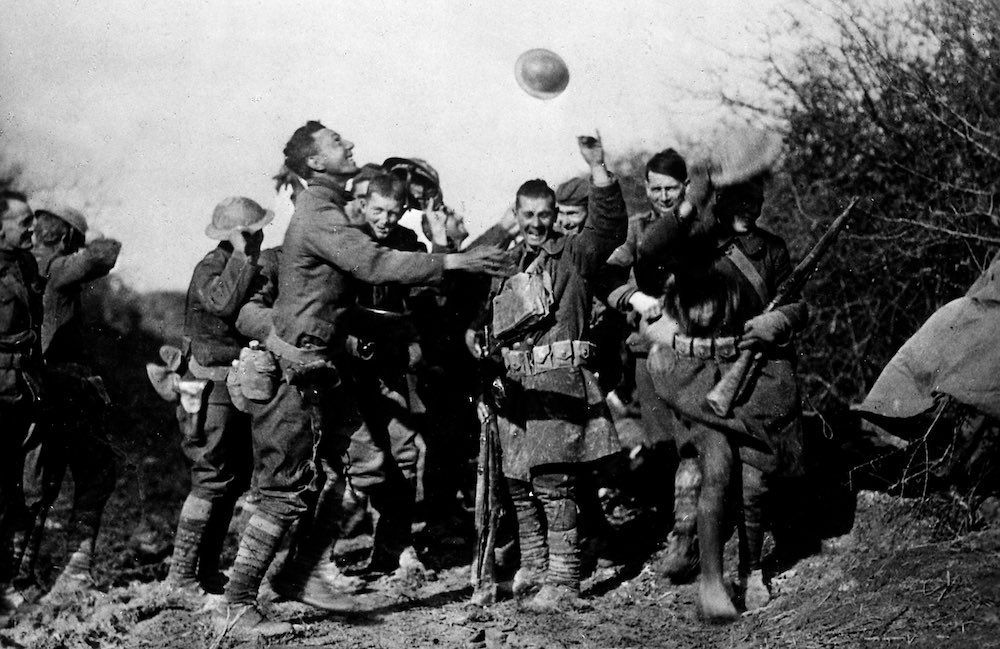
War historians have given notice to it. It is a tragic subplot to a war tragic beyond most all comparison. World War I was a senseless, repeated exercise in the mass killing of young men from around the globe. This went on from August, 1914, up to the cease fire ordered for the eleventh month, the eleventh day, and the eleventh hour of 1918. Offensives on especially the western front meant men from several nations either were ordered to attack or were put in the position to defend against them. Men from many nations woke up on 11/11/18, but as casualties of war never saw the end of that day. People were celebrating the end of the war in Paris, Berlin, London, Washington, and elsewhere while men, most having heard the rumor about the armistice, fought on and died. George Edwin Allison died at 9:30 AM, the last official British casualty. Augustin Trebuchon, a message runner, was killed by a single shot at 10:50 AM, the last French casualty. George Lawrence Price was the last official Canadian casualty, dying at 10:58 AM. The last American to die was Henry Gunter, who if he understood German would have heard the machine gunners of that nation plead for his division to stop their offensive. His time of death was 10:59, and divisional records indicate, “Almost as he (Gunter) fell, the gunfire fell away and an appalling silence prevailed.” If possible, one story is even more tragic. While historians cannot be absolutely certain, they believe the last casualty of this tragic war was a German officer named Tomas. Allegedly, he told Americans approaching a house that he and his men occupied that they could have the house since the war was over. No one had told the Americans who, not trusting the officer, shot him as he walked toward them right after 11:00 AM. Official records indicate over 10,000 dead, wounded, and missing men on the last day of World War I. Historians have found letters, interviewed fellow soldiers of these unfortunate men, and through such correspondence give chilling insights. These men were optimistic. Many felt charmed to have cheated death, some of them veterans whose service had spanned the entire length of a war that exacted staggering, daily death tolls. Others had a strong sense of foreboding, a fatalistic resignation that somehow, despite the cheerful optimism of comrades, they would not survive the day (much historical information gleaned from www.historylearningsite.co.uk).


It is extremely difficult to read this legacy from World War I of men doing their duty to the end, to come so close to escaping the clutches of death, only to be felled in the final hours. Armistice Day and the ending of World War I are the roots of one of our greatest National Holidays and observances, Veterans Day. We honor those living and dead who fought to keep us free from tyranny and evil. Even in that first world war, where war prosecution is much questioned and debated, mothers, fathers, family and friends are beholden to the men and women who risked everything to defend our beloved country.
With that in mind, please allow me to draw this spiritual parallel. How tragic for a child of God to follow for so much of the way only to fall away later in life (2 Peter 2:20-22). How tragic for one to come so close to the cross of Calvary and salvation, only to die short of that goal (cf. Mark 10:22). Jesus spoke of one not far from the Kingdom (Mark 12:34). Agrippa was “almost persuaded” (Acts 26:28). Only eternity and the Judgment Day will reveal the stories of those battling with themselves on the battlefield of Ephesians six, maybe close to obedience, who died outside of Christ. What a tragedy for anyone to die lost. Especially tragic are the examples of those who knew the truth, were convicted about it, but who died without having resolved the greatest problem known to man.
We honor the soldiers who fought and died, even in the “11th hour.” We pray for the souls who are living but will die, who have yet to come to the Captain of the Lord of hosts.

http3a2f2fa-amz-mshcdn-com2fwp-content2fuploads2f20142f112farmistice-14

EVERY NAME IMPORTANT

Neal Pollard

Today marks 16 years since the most infamous and iconic attack rocked our collective consciousness. Each year, there is a solemn ceremony conceived in such wisdom and executed with a poignancy that never abates. That is the reading of the names of those who died in the 911 Attacks in New York, Pennsylvania, and Washington, D.C. The soft music playing behind the readers accents the mood, punctuated by every reader mentioning the name of a family member they lost that fateful day. September 11th resonates with us so deeply because it was an attack on our country, but also because of the death of each and every individual who perished that day. Behind each name are family members, memories, joy and sorrow. Each person, in such a dramatic, untimely way, was taken from time into eternity. God loved and loves each one with an infinite, eternal love and wanted each one to be saved. Christ gave His life to provide salvation for each one. The Bible was written for the benefit of each one. The Lord’s church was meant to pursue and teach each one.

Though each individual is numbered among such a large group, around 3,000 of them, each one means more than the whole world (Mat. 16:26). This touching memorial is a tribute to the overall value of human life. It reminds us that we are surrounded by individuals all possessing an eternal soul.  Everyone you see today is heading toward eternity. Each one will either hear “well done” or “depart from me” (cf. Mat. 25:31ff). What is said about God’s attitude toward those victims specially remembered today is true of every person we meet and see today.

May we have our hearts stirred by the sobriety of that truth. May we never lose sight of our urgent responsibility to share the message of Christ with the people in our lives. As moving as the ceremony that occurs each year in New York City on September 11th, we really cannot imagine what the Day of Judgment will be like. Each person who ever lived, including you and me, will hear our name called (cf. 2 Cor. 5:10). As important as our own name is, every name is important. Let us pray that this realization will propel us to tell the best news of human history and help someone find the only way, truth, and life.

26687246253_33721e4ba2_b

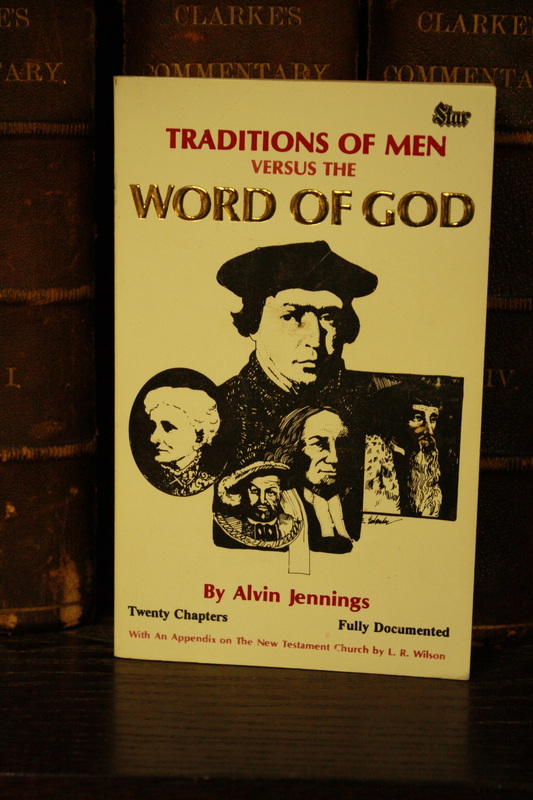
Traditions Of Men Versus The Word Of God

Neal Pollard

For as long as I have been preaching, I have had at least one copy of the Alvin Jennings’ book bearing the title above. The book was originally printed in 1972, but it has been reprinted several times. Jennings clarifies the way he uses the word “traditions” in his title. Rather than the sense of being a writing handed down from God (2 Th. 2:15; 3:6; 1 Co. 11:2), he used the word to refer to “religious laws and traditions originating from the minds of men and handed down orally and/or in printing from generation to generation” (iv.). He rightly points out that such traditions were condemned by Christ (Mat. 15:2-3,6; Mark 7:3,13; Col. 2:8; 1 Pet. 1:18; Gal. 1:14). Some of the problems with these traditions were that they got in the way of obedience to what God commanded, caused negligence regarding and the setting aside of God’s commands, enslaved one to something or someone other than Christ, and created a zeal that could lead to unhealthy consequences. The traditions Jennings examines substituted  false, human ideas for clearly revealed, divine truth. Anything that binds where God has not bound or gives permission where God doesn’t permit must be rejected. It’s a tradeoff with the gravest consequences (cf. Rev. 22:18-19).

However, I hope that as we strive to follow the pattern for New Testament Christianity we will be careful about elevating any tradition to be on a par with Scripture. There are some traditions we may choose to observe (or not):

  • Offering an invitation after every sermon
  • Having worship leaders, including the preacher, wear suits and/or ties
  • Women wearing dresses to church services
  • Songs or songbooks reflecting a particular time period (whether old or new)
  • Mandating a specific Bible version be utilized in the public assemblies
  • Choosing to have an evening assembly
  • Replicating the format of the morning assembly (in lieu of using the time for class, for example)
  • A particular order of worship (including whether the Lord’s Supper precedes or follows the sermon)
  • Offering the Lord’s Supper on Sunday evening
  • Any practice or tradition that arises from expedience or the realm of judgment, but that is not specifically mandated in Scripture

The church finds itself at a crucial crossroads. Undoubtedly, there is nothing new under the sun, but we do find ourselves at a unique place in cultural history. Since we live in an argumentative, rancorous atmosphere fueled by everything from cable news to social media, we should be careful to maintain a spirit of love and kindness whenever we sort through matters like these. We should never cherish non-binding traditions more than we do people. Those of us who are older and presumably more mature should consider carefully where and when we might compromise regarding matters not tied down in Scripture. More than that, we should foster rather than fear an environment that allows for such discussions to occur—without animosity or distrust. This will mean spending much more time developing our relationships with one another on the local church level (across generations). The better we know each other and the more we grow our love for each other, the better equipped we should be to sort through such things. Coupled with serious Bible study, this will hopefully sharpen our ability to distinguish between traditions and truth. May we have the grace to listen to each other without prejudice or minds already made up. Instead or ridiculing or caricaturizing the church in demeaning ways, let all of us “put on a heart of compassion, kindness, humility, gentleness and patience; bearing with one another, and forgiving each other, whoever has a complaint against anyone…” (Col. 3:12-13a). 

s702601590478870340_p115_i1_w533

Wisdom Is Vindicated By All Her Children

Neal Pollard

Jesus said, “wisdom is vindicated by all her children” (Luke 7:35). He said this in response to the hypercriticism and unrighteous judgment of those who condemned both John the Baptist and Him. They said John was too conservative and Jesus was too liberal. They hacked at the methods and message of both, without justification or legitimacy. They were libelous name-callers, but Jesus simply responded with a proverb. What a good one! It’s a needed one today, especially in the face of those who sit and snipe at the works of others. For those who get gun shy at the prospect of such snipers, please remember Jesus’ words and Jesus’ reward for those who keep at the good work.  This principle applies to:

  • Elders and preachers
  • Missionaries
  • Worship leaders
  • Young parents
  • Bible teachers
  • Deacons and ministry leaders
  • Christian Colleges and schools of preaching
  • Soul winners
  • Youth ministers
  • Lectureship and workshop directors
  • Church program organizers
  • Christians in the workplace
  • Teenagers
  • Students in their various schools
  • Camp directors
  • Writers and authors
  • Publishers

There are undoubtedly other categories of people who fall under the purview of Jesus’ saying, but they share the burden of having their works criticized by naysayers, ne’er-do-wells, nitpickers, and needlers. In Luke 7, Jesus took the magnifying glass and turned it on the critics. We can take heart this idea: “If you address as Father the One who impartially judges according to each one’s work, conduct yourselves in fear during the time of your stay on earth” (1 Pet. 1:17). We have a responsibility to conduct ourselves righteously, but we can rest in the confidence that we will be judged impartially by the perfect, righteous Judge. Let us commend our efforts to His eyes. He will get it perfectly right!

sophia2band2bher2bchildren2b-2brussian2bstate2bmuseum

ARE YOU ON THE LIST?

Neal Pollard

I recently heard D.C. Brown, illustrating proper conduct, mention a list I’ve seen at times in my adult life. The list he mentioned was of people whose personal checks the cashier was not to take. The offenders apparently wrote “bad checks,” checks they did not have sufficient funds to cover. The names, as is typical, were bold and legible to the customer as well as the employee. Multiple purposes are achieved through such a list—warning, shaming, identifying, and the like. It is unlikely, but not impossible, that someone’s name might accidentally land on the list.

Throughout our lives, we may find ourselves looking to see if we are on this list or that. When I was in school, they would publish the honor roll list, depth charts in sports, casts for plays and who was chosen for what part, and those who were selected for the Beta Club or Honor Society. The advent of the internet has slowly replaced paper lists with electronic ones, but the concept is still intact.

The Bible talks about a “list.” It is a list every thinking and feeling person should yearn to have their name written on.  The setting is the great day of judgment, recorded by John in Revelation 20:11-15. Jesus is sitting in all His majesty on His throne. Everyone, great and small, stood before that throne. They were judged by God’s Word and what they did with it. In a sobering text, here is the climax: “And if anyone’s name was not found written in the book of life, he was throne into the lake of fire” (15). Jesus preached on earth that the majority of all people will not be on that list (Mat. 7:13-14). They will have neglected or rejected the will revealed in the Bible (cf. John 12:48). If never before that moment, at that threshold of eternity they will have never wanted anything like they will want to have their name on that list. But, then it will be too late. Now is the time to submit ourselves and our lives to that divine will and, by grace through faith, have our name written there.

Some lists we would wish to avoid in this life. The list, in Revelation 20:12, is not one of them. What a joy it will be to hear our name “when the roll is called up yonder”!

ahschool-roll-of-honor-list281947-9229

THE KIND OF LIFE WE SHOULD LIVE

Neal Pollard

Most of us are familiar with the intimate words spoken by Jesus to His followers in John 14:1-6. They were words of active comfort for a man who was imminently facing the worst suffering humanity could ever know. Yet, from those gentle words of guidance, we find a beacon to show us what kind of life it is possible for us to live—no matter what!

We can live a fearless life (John 14:1). Our hearts don’t have to be troubled. That doesn’t mean we won’t face fears and uncertainties. How can we avoid it? But we can let our fears be subjugated to our Father. We can trust the Bible’s promises and follow its guidance on this (cf. John 14:27; Phil. 4:7).

We can live a faith-filled life (John 14:1b). A “theocentric” (God-centered) point of view will influence our decision-making and daily living. We can have assurance and conviction (Heb. 11:1), but we must have a faith accompanied by works of obedience (Js. 2:20). All of us have lives centered around something that we make most important of all. There are many noble things that could fill in that blank—profession, family, friends, or the like. These may be part of our identity, but they should not define us. Our faith should define us.

We can live a focused life (John 14:2-4). Jesus urges His disciples to focus on at least three things:

  • Focus on the Father’s house (2). Long for heaven.
  • Focus on the Son’s coming (3). Anticipate His return. We know death is an appointment followed by the Judgment (Heb. 9:27).
  • Focus on God’s fellowship (4). Long to be where God is and to follow where He leads. Let that desire lead you to fellowship with Him and His saints publicly and privately in your personal devotional life.

We live in a world full of distractions—technology, appointments, hobbies, politics, and sports. Never let any of those things get your life out of focus.

We can live a follower’s life (John 14:6). We must believe that Jesus is the only way. We must shun the politically-correct notion that says there are many ways. We must live the exclusive way that Scripture teaches. We cannot serve God on our own terms. We must submit to His way and His truth, and we can enjoy the eternal life He offers.

Fame, fortune, fun, friendship, and such may draw and lure us. But none of those things will last. Jesus points to the kind of life we should live. May we be wise enough to listen.

blaine_mansion_during_renovation