When To Answer A Fool

Carl Pollard

Proverbs 26:4-5 sounds confusing at first “Answer not a fool according to his folly, lest you be like him yourself. Answer a fool according to his folly, lest he be wise in his own eyes.” So which is it? Do we answer the fool, or do we stay quiet? 

The answer is…yes.

Solomon isn’t contradicting himself. He’s teaching wisdom. There are times when answering a foolish person only drags you down to their level. If someone is being dishonest, hateful, petty, or just looking for a fight, you don’t have to jump in the mud with them. Some people don’t want truth. They want attention and a reaction. They want to pull you into their foolishness so they can make you look foolish too.

That’s why verse 4 says don’t answer him “according to his folly.” Don’t adopt his attitude. Don’t mirror his sarcasm. Don’t match his anger. Don’t let his foolishness turn you into the same kind of person.

But verse 5 says there are also times when silence can be dangerous. If foolishness goes unanswered, the fool may become “wise in his own eyes.” He may think his argument is stronger than it is. Others may hear it and be influenced by it. A lie repeated confidently can sound convincing to people who don’t know better.

So sometimes wisdom says, “Leave it alone.”Other times wisdom says, “Say something.”

That’s what makes wisdom hard. It’s not just knowing the truth. It’s knowing when to speak, how to speak, and when to be quiet.

Jesus did both. Sometimes He answered His critics with brutal truth. Other times He stayed silent. He never let foolish people control Him. He didn’t answer every accusation, but He also didn’t allow falsehood to go unchallenged when souls were at stake.

That’s a lesson we need to learn quickly! Not every comment deserves a response. Not every argument needs your input. Not every foolish statement online needs you to become the defender of the universe. But there are moments when love for truth and concern for souls requires us to speak.

The key is the heart. Am I answering to help, or am I answering to win? Am I defending truth, or defending my pride? Am I speaking with wisdom, or just reacting? Proverbs 26:4-5 is basically saying, don’t become a fool to answer a fool. But don’t let foolishness stand when truth needs a voice.

Privacy Matters

Wednesday’s Column: Third’s Words

Gary III

Gary Pollard

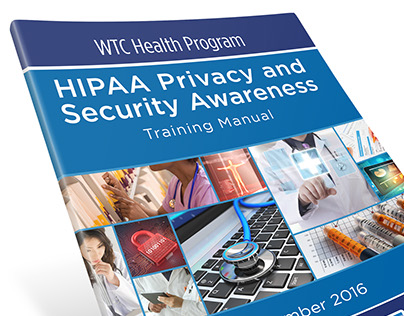
Patients’ information in the US is protected by HIPAA. Specifically, “The Rule requires appropriate safeguards to protect the privacy of personal health information, and sets limits and conditions on the uses and disclosures that may be made of such information without patient authorization. The Rule also gives patients rights over their health information, including rights to examine and obtain a copy of their health records, and to request corrections” (hhs.gov).

We expect and demand that our privacy be protected when it comes to healthcare (and personal information in general). If that trust is breached, we may consider taking legal action against the trust breaker.

When it comes to our marriages, do we extend that same courtesy to our spouses? Or do we vent our frustrations about them to anyone who listens?

When it comes to personal information shared in confidence, do we extend that same courtesy to our Christian family? Or do we share that info with those in our personal circle?

When it comes to sensitive information we may have about someone in the church (or anywhere!), do we treat them with the same level of respect and discretion that we expect from those in the medical field or information technology fields? There are some exceptions to this principle (as common sense dictates), but we sometimes find ourselves sharing or listening to information we have no business sharing or consuming.

In short, if we expect this level of respect and discretion from the professional world, should we not do the same for those in God’s family?

“Whoever goes about slandering reveals secrets; therefore do not associate with a simple babbler” (Prov. 20:19, ESV). 


“Quit Yer Whinin'”

Wednesday’s Column: Third’s Words

20638721_440919206307154_5479040032968788217_n
Gary, with his wife Chelsea

Gary Pollard

I think we’ve all been in the uncomfortable position of witnessing a couple loudly arguing in public. Whether this is at a restaurant, the store, a gas station, or any other public place, it’s downright uncomfortable. Some thoughts going through our minds might be, “Where’s their self-awareness?” or, “They might need to see someone about those issues,” or, “Why here?” We definitely would not want to spend too much time with anyone whose conflict resolution abilities are so classless. Conflict in a relationship is unavoidable and, if handled properly, is vital to the health of a relationship. Poorly managed conflict, though, is sure to destroy it! 

Unfortunately, the world is seeing this more and more. Petty arguments between Christians over matters that have absolutely no bearing on our eternal destination are commonplace. Which Bible version is best? What will heaven be like? What should we wear to worship? Which college should one attend (“that college is liberal/conservative”)? Should we meet in a building or in homes? Should a Christian wear a head covering or not? Should a Christian celebrate certain holidays or not? Should a Christian carry a gun or not? Who should I vote for? 

These are topics I have seen debated in the ugliest possible ways in public forums, whether live or over social media. There is nothing wrong with disagreement handled in a godly way (Matthew 18.15-20). In fact, it can help grow the church because it often brings members closer together. However, when the argument is both non-essential to salvation and is handled unbiblically, it destroys the church. 

If I may be very blunt, this must stop. Our behavior is not only pushing the world away but generations of the church’s own members as well. When a Christian’s blocked list on social media is primarily members of his/her own spiritual family, we have reached concerning levels of dysfunction. I realize that this is not a pleasant article to read, but it is time for us to make a change. 

It is time to stop writing or sharing articles on inflammatory or controversial topics that have no bearing on our salvation. Religious keyboard warriors and trolls need to quit. People of authority and position must stop using their voice to divide and discourage the bride of Christ over non-essential matters (some examples are listed in the second paragraph). We will be held accountable for our words and influence over the body of Christ at judgment. 

When we inevitably find ourselves in disagreement with another Christian over a matter of opinion, we should either handle it privately and with patience and love, or let it go entirely (see Romans 14, I Corinthians 8, Matthew 18, Philippians 1.27, 2.1-5; 2.12, 2.14, 15; 3.17-19; 4.2). Being correct or winning an argument at the expense of peace is not worth losing our souls. This article is just as much for myself as it is for anyone reading this. It is for everyone. 

Around 156,000 people die every day (that’s about 56,000,000 people per year) and most them die outside of Christ. Our time is limited and our influence precious. Our words are among the most powerful tools and weapons ever created. Let us use them well, as they could very well influence someone’s eternal destination – or our own.