HOW I SHOULD WEAR OUT MY KNEES

Neal Pollard

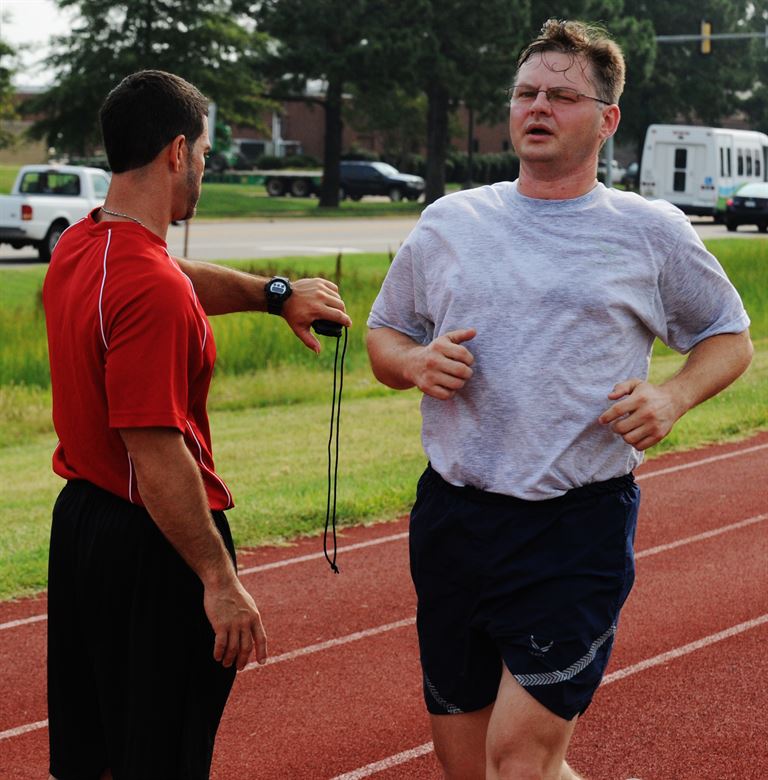
This past May, I began my twenty-second year of running. In that time, I’ve logged thousands of miles. At 49, I am happy to say that my knees are doing fine but time may change that. One of the risks of running, to listen to some, is wearing out places like knees and hips. But, I’m hoping I’m prolonging my life and helping vital organs through exercise.

Spiritually, I put my “knees” to the test, too. The challenge to protect my knees is a daily struggle that I confess I am still working on. I do not want to wear those knees out through:

  • “Knee-Jerk Reactions.” This one is hard for me. I’m prone to these when I’m subjected to frivolous or petty criticisms. I’m equally prone when I’m undisciplined enough to act impulsively through impatience or my own misunderstanding. When I fail to think through things, prayerfully and deliberately, I can unleash something that can be hard to unsay or undo. Usually, it means I have not studied, prayed, and reflected enough before spouting off. I can really wear my knees out that way. I benefit from principles like those found in Proverbs 15:2, 25:28, 26:4-5, and a multitude of similar passages. 
  • “Feeble Knees.” As a child of God whom He loves, I will undergo discipline at His omnipotent, but omni-benevolent hands. It can be unpleasant, but it is always beneficial (Heb. 12:11). But, when I’m in the midst of it, it can cause my knees to buckle. The writer of Hebrews follows up this discussion about divine discipline, saying, “Therefore, strengthen the hands that are weak and the knees that are feeble…” (12:12). When I’m tempted to give up, discouraged, worried, afraid, or lonely, I need to double up on my spiritual conditioning to strengthen those tested knees. I must trust God’s guidance and love, especially in adverse conditions.

So, then, how should I wear out those knees?

  • In prayer (Dan. 6:10; Acts 7:60; 21:5; Eph. 3:14). It’s not about the posture of the body, but of the heart. I can always be praying more (1 Th. 5:17). I can never pray enough. 
  • In worship (Psalm 95:6). Again, it’s not that I need to show off that posture in the assemblies or in my private devotions, but even the very definition of worship includes the idea, at least figuratively, of falling down before and prostrating oneself. It’s a big reason I try to never miss a single service of the church. I owe Him my all, and I love Him for all He is and has done. He wants me in the assembly, and I want to do what He wants. 
  • In submission to God’s will (Luke 22:42). When Jesus knelt to pray, He was also actively submitting to the Father’s will. He faced something dreadful and that He did not want to do, but His attitude was of total surrender to what God wanted. Oh, what a challenge to me! How often do I put my knees to the test by giving up what I want for what He wants. But, I must!

Paul says we’re running a race that we must win (1 Cor. 9:24-27). I’m going to need healthy knees to do that. That may mean wearing them out in ways like those just mentioned while avoiding behaviors like those mentioned before them. At times, spiritually, I’ve needed not knee replacement but a replacement of what I do with those knees. May I never forget to brace those knees with the resources God has given to me!

120709-f-xd389-042

“EVERYBODY WANTS TO BE A PART OF THE TEAM”

Neal Pollard

As I committed Georgia Bulldogs fan, I grimace to share this. But, Alabama head coach Nick Saban had a great quote in reaction to the student section leaving the Crimson Tide games early. I’ll quote the second part:

“If I asked that whole student section, do you want to be No. 1? Nobody would hold their hand up and say I want to be No. 4. They would all say No. 1. But are they willing to do everything to be No. 1? That’s another question. You can ask them that. I don’t know the answer” (via Saturday Football, Inc.).

With Alabama’s unprecedented success in the last decade, they’ve drawn the best High School players in the nation and they continue to develop them into seemingly unbeatable teams. Current students and those who have graduated for the last several years have just come to expect that on every given Saturday their team will win. They probably tell all their family and friends with swelling pride that they are part of Tide Nation, but for many of them game day has turned into a “ho hum” experience. Winning may not get old, but staying passionate about it must have gotten hard.

When the church is growing, making a difference and daring great things, it draws a lot of excitement. People are drawn to the active youth program, the decisive direction of sound leadership, vibrant worship, big plans, and ministries that meet pressing needs. There may be a tendency to tell everyone how great the congregation is without being very committed personally. We may show up on Sunday mornings, but not for Sunday and Wednesday nights. We may love all that is going on, but feel that affection from a distance instead of from in the midst with sleeves rolled up and hands busy helping. 

The early church was totally invested. The lot of them was “continually devoted…” (Acts 2:42). Their dedication was even measured “day by day” (Acts 2:46) and “every day” (Acts 5:42). In fact, Luke describes them as “of one heart and one soul” in their commitment (Acts 4:32). This contributed to even greater success, numerically and spiritually. Through this personal commitment, they “turned the world upside down” (Acts 17:6, ESV). 

I need to ask myself, “Am I willing to do everything to make the congregation I am a member of ‘number one’ in God’s eyes?” Will I do more occupy a pew for an hour? I know God wants me much more invested than that! There are visitors, shut-ins, sick, college students, teens, new Christians, erring Christians, non-members I can influence, and others who can be reached by members who see themselves as truly part of the team. Paul wrote, “We are to grow up in every way into him who is the head, into Christ, from whom the whole body, joined and held together by every joint with which it is equipped, when each part is working properly, makes the body grow so that it builds itself up in love” (Eph. 4:15-16). Let’s have every individual part working properly to build a great church to the glory of the great God who loves us and gave the very best for us!

nick_saban_jan_2018_1

SNAPSHOTS

Neal Pollard

During our recent move from Colorado to Kentucky, I sifted through several boxes and shelves and found paper and digital photographs all the way from Kathy’s and my childhood to our sons when they were small. It’s incredible to witness the dramatic transformation they reveal. We’re still taking pictures, which will be snapshots we look back on in years to come.

As I try to get to know the Lehman Avenue congregation better, I have been given recent church directories. Did you know that we have directories going back to 1955? That one has no photographs in it. The first one that does have photos is from 1978. There are not many in that directory who still worship here today, though you will see entries with the last names Bruner, Daniel, Dickerson, Dunning, Ennis, Gilbert, Hunt, Nicks, Phelps, Raymer, Tabor, and no doubt others including those who may have a different last name today. Do you think the 1978 picture looks like the 2019 person? There are resemblances, but also changes. 

That 1955 directory does give a snapshot of a different kind. In the forward is written the following: 

“The purpose of this directory is three-fold: To give a brief history of the beginning, development and progress of the Lord’s church in Bowling Green; to perpetuate a list of charter members forming the Lehman Avenue congregation; and to better quaint the members of this local congregation with one another, in order that we may work together in the best way possible.” 

I appreciate that the compilers of this directory went to the trouble to trace the history of the church’s establishment in Bowling Green. Eugenia Hayes’ research is included in this first edition. She says that Stone and the Campbells were here, helping to establish the church. The first congregation established here was in the mid-1840s, with six members meeting each Lord’s Day and eventually meeting in a house build on a property on College Street. When threatened by digression in the late 1800s, the church here was aided by such men as M.C. Kurfees from Louisville, Daniel Sommer from Indianapolis, and James Harding from Nashville. A building was built on Twelfth Street in 1899, and Lehman was established from this congregation in 1955. Roy J. Hearn was the first preacher. 

From these “newborn” and “infant” photographs, we can trace our “development and progress.” More “snapshots” are being made constantly, and not just those which show up in the latest directories or on social media. In encouraging Timothy to embrace his ministry and gifts, Paul urged, “Take pains with these things; be absorbed in them, so that your progress will be evident to all. Pay close attention to yourself and to the teaching…” (1 Tim. 4:15-16a). “Take pains” means to improve by care or study, practice, cultivate…” (BDAG 627). “Be absorbed” is better translated “be in them” but conveys the idea of being involved in or devoted to (BDAG 284).”Progress” means “to change one’s state for the better by advancing and making progress” (Louw-Nida 154). “Pay close attention” means “to be mindful or especially observant” (BDAG 362). Put it all together. Improve, involve, and observe yourself in order to make progress. 

When we sit for family portraits, we normally put on clothes we think will flatter us, we give attention to grooming, and we attempt to look our best. What Scripture calls for goes beyond just skin deep. God wants us to focus intently on our “inner man” so that, even as our outer man is decaying, we can “look better” to God each and every day (cf. 2 Cor. 4:16). Look at snapshots of your spiritual past. Look at yourself today. Progress? Regress? “No-gress”? Which is it? Take heart! There’s still time to make changes that will look good to God (and you), so that we can look back with gratitude and satisfaction that we took pains with our spiritual appearance! Strike a Christlike pose! 

IMG_0087

“One Will Go Forth”

Neal Pollard

In Matthew’s account of the birth of Jesus, the writer quotes the prophet Micah. This prophet, whose ministry was to both the northern and southern kingdoms (1:1), writes much to warn these divided kingdoms united in sin and rebellion against God. But, he also extends hope for the future. He speaks of One to come, who would come from the same little village the great king David called home (1 Sam. 16:4ff). This coming king would be characterized in several ways, which Micah writes about in Micah 5:

  • From an unlikely place (2)–This coming one would defy men’s expectations. 
  • From the Lord (2)–This coming one would be given from God. 
  • From the days of eternity (2)–This coming one would be God Himself
  • For the purpose of ruling (2)–This coming one would come with authority.
  • For the shepherding of His flock (4)–This coming one would come to lead men.
  • For our peace (5)–This coming one would come for our good. 
  • For deliverance (5-6)–This coming one would come for our salvation. 

As Jesus conducted His earthly ministry, His works and teaching fulfilled over 300 prophesies written down in every major division of the Old Testament books. But there are prophesies, like Micah 5:1-6, which He fulfilled simply by being born and pursuing His ministry. These aspects of His work had to be hopeful and comforting to those with hearts of faith who lived during that time. But, as we look back over two millennia, it still has relevance to us today.  He still defies our expectations, exceeding them. He still is God’s gift for us. He still bears the same nature. He still must be Lord of our lives. He still must be the leader of our lives. He still gives peace. He still delivers. 

As you count your blessings today, look beyond the earthly and material. If there are things going poorly for you right now, be reminded of the greatest blessing of all. Because God loves and cares for us, He sent One forth for us. He accomplished His work and now has returned to the Father’s right hand. At His appointed time, God will send Him forth to judge. Those who have embraced and followed Him will enjoy eternal deliverance. For that, be thankful!

29342598_10155419194005922_4642581449059336192_o

After Cuts Become Scars

Neal Pollard

David was broken and battered by sin. He would feel its effects from his public life to his private life for the rest of his life. In the aftermath of his actions with Bathsheba and the subsequent cover-up, the wounds of sin left visible scars. Nathan’s accusing words perhaps ringing in his ears, he sits down to pen by inspiration the haunting, but hopeful, 51st Psalm. We often dwell more on the first part, the multifaceted description of sin and the more beautiful pictures of forgiveness. But, to me, the most beautiful part of the psalm is when David starts using the word “then.”

Satan would love for sin to defeat us. He would like the guilt to overwhelm us, to keep us from the restoration David longs for here. David is speaking prospectively, asking for a clean heart, renewed spirit, spiritual fellowship, joy and sustenance from God. But, he asks for it for a purpose. In doing so, he shows us what God wants to do with us and for us after our “cuts” become “scars.”

After the cuts become scars…

REACH OUT TO THE LOST (Psalm 51:13). On the other side of repentance, David was anxious to help others reeling from their spiritual wounds. As we overcome through God’s help, we can be a tool in His hand to relate to and rescue others struggling just like we did. It would be far better to have never gone down the road of sin, but having truly come back we can understand the desperate, dark place transgressors are walking. 

BE A FAITHFUL WORSHIPPER (Psalm 51:14). David, the master musician, had lost his song in the far country. He yearned for joyful song. Worship loses its power and purity in our lives when we are living in darkness. We feel hypocritical and empty, just going through the motions. But, back in His glorious light, we can experience that lifted up feeling once more. David shows us the blessing of restoration, a spirit renewed to enjoy further renewal in faithful worship.

GIVE GOD SACRIFICES (Psalm 51:15-17). David mentions the sacrifice of praise, a broken spirit, a broken and a contrite heart. It is obvious, from context, that these sacrifices would reveal themselves in his service to God and to others. This is not merely guilt-driven service, an effort to make amends for the evil influence of his sin. Having been made whole, David has a clarity of purpose that appreciates better what God wants from him. We can be fruitful and useful to Him, scars and all. 

ACCEPT GOD’S DELIGHT (Psalm 51:18-19). How many times did David relive those moments from the rooftop to the prophet’s visit? How often did he wish he could just go back and undo it all? How long did he wrestle with accepting God’s forgiveness and wondering if God could take him back? He shows an appreciation for the prospect of God’s delight. He rightly feels responsible for others, and he wants to lead them to do what’s right. But, I love what he anticipates. He knows God will be delighted with the offering.  Did you know that? Did you know that God can delight in you again, when you bring him your sin-scarred life and offer your righteous sacrifices? He doesn’t want to discard you. He wants to delight in you!

It must have continued to be hard for David. He had reminders everywhere. He could not undo his past. But, he did the right thing. Having dealt with his past, he focused on the present and looked to the future. That’s what God wants us to do after our cuts become scars!

people-2566201_960_720

I FORGIVE YOU…

Neal Pollard

…But I won’t ever treat you the same
…But I will make sure you never forget it
…But I don’t think you should serve any more
…But I will keep my distance from you
…But I will tell others about your sin
…But I will make you feel like a pariah

The very word “forgive” means to dismiss or release something from one’s presence, to let go and send away and to release from moral obligation or consequence (BDAG, 156). That sounds very different from some of the substitute offerings mentioned above. Have we ever considered all the Lord has to say about our forgiving one another?

  • But if you do not forgive others, then your Father will not forgive your transgressions (Mt. 6:15).
  •  If your brother sins, go and show him his fault in private; if he listens to you, you have won your brother (Mt. 18:15). 
  • The moral of the parable of the man forgiven much who refused to forgive the one who owed him little: ” And his lord, moved with anger, handed him over to the torturers until he should repay all that was owed him. My heavenly Father will also do the same to you, if each of you does not forgive his brother from your heart” (Mt. 18:34-35).
  • Be on your guard! If your brother sins, rebuke him; and if he repents, forgive him. And if he sins against you seven times a day, and returns to you seven times, saying, ‘I repent,’ forgive him (Luke 17:3-4). 
  • Be kind to one another, tender-hearted, forgiving each other, just as God in Christ also has forgiven you (Eph. 4:32).
  • Bearing with one another, and forgiving each other, whoever has a complaint against anyone; just as the Lord forgave you, so also should you (Col. 3:13).

Perhaps in our zeal (or defensiveness) to remind the offender that their sin has consequences, we add to those consequences through choices we make in response to their repentance. A penitent sinner is already struggling with guilt and accepting God’s forgiveness. The last thing we should do is make it harder for them to overcome. When they do try to put their spiritual lives back together again, we should rejoice for them and help them any way we can. Whether their sin is known to only a few or to everyone, we must handle it the way the Lord teaches us to. Jesus teaches that we can be guilty of sin ourselves by mishandling the challenging discipline of forgiving. May He help us as we strive to do it. 

IMG_0002.jpg

God Will Bring Every Act To Judgment

Neal Pollard

72% of Americans, age 13-24, view pornography frequently (55% of men 25 and older). Those numbers only drop to 41% and 23% of those professing to be Christians (Barna, July-August 2015, Barna Study Here).  So, perhaps this was inevitable. A few years ago, potentially millions of people started receiving a disturbing email from an anonymous source claiming to have hacked into their email and installed malware to discover their pornographic consumption. Experts say these hackers have just enough facts and information to frighten many of the recipients. They attempt to blackmail the recipients, demanding hundreds or even thousands of dollars in bitcoin. Otherwise, they promise to email proof of their readers’ perverse, clandestine interests to everyone in their contact list.

These hackers are relying on people’s fear of being found out, thinking that if even a tiny percentage of fearful folks pay the ransom it will make their spam to millions pay off. This hoax has probably raised the heart rate of many who consume pornography but felt like they were getting away with it. But the FBI say it is just that–a hoax.

God created man with a built-in sensitivity to our accountability. Many have a “certain fearful looking for of judgment” (Heb. 10:27). Some day, the secrets of men will be judged by God through Christ (Rom. 2:16). Solomon said, “For God will bring every act to judgment, everything which is hidden, whether it is good or evil” (Ecc. 12:14). But, “We must all appear before the judgment seat of Christ, so that each may be recompensed for his deeds in the body, according to what he was done, whether good or bad” (2 Cor. 5:10).

The good news is that no one has to be afraid of the judgment or having everything which is hidden shared with the whole world. “God our Savior desires all men to be saved and to come to the knowledge of the truth” (1 Tim. 2:3-4). Peter adds, “The Lord is not slow about His promise, as some count slowness, but is patient toward you, not wishing for any to perish but for all to come to repentance” (2 Pet. 3:9).

God wants our sins to be covered by the blood of His Son. Not just “big sins” (as we distinguish them), but every sin, great and small, that we struggle with! How great to face the judgment with those sins hidden from His perfect view.

003_porn

“No One Supported Me, But All Deserted Me”

Neal Pollard

These are some of the last words written by one of the greatest men who ever lived. He wrote them while in prison, waiting to die for his faith. He has just spoken of people he trusted who had deserted him. He is lacking even the bare essentials. A man, knowing how difficult his life was, had done additional great harm to him. No wonder he would open this window into his suffering soul and let us all look inside. Despite all this, he was not bitter.

Have you ever felt mistreated, even felt like people were actively against you? Or perhaps felt like people you count on abandoned or neglected you when you needed them? Maybe you have suffered for your faith. It is tempting to become bitter, even to lash out against the church and God.  Paul is a great example of how to think when you feel unsupported and deserted by those you count on. After making that statement in 2 Timothy 4:16, he says some other things that can help us when we feel, at least in a small way, the way Paul felt. 

  • Focus On The Lord. He could see how the Lord had helped through his darkest hours in the past (17). But, as importantly, he had confidence that the Lord would help him through future trials (18). Despite his unfair treatment, he could still say, “To Him be the glory forever and ever. Amen.” When people hurt and disappoint you, look higher!
  • Find Your Higher Purpose. Incredibly, Paul could sift through these sorrows and see God at work to accomplish His will. He’s suffering, but he can see a greater good. He says that he endured these hurts “…so that through me the proclamation might be fully accomplished, and that all the Gentiles might hear.” Can you look for what God, who doesn’t cause suffering, can do to bring good even out of those times? We’re prone to feel sorry for ourselves when God may be showing us and others His power through these situations to save souls and help lives. 
  • Forgive.  Paul doesn’t hold a grudge. Concerning those who let him down and even hurt him, he could say, “May it not be counted against them” (16). Doesn’t that sound like a Savior who asked God to forgive His tormentors? What a mindset! We can nurse perceived offenses, but how much better to be magnanimous toward those who we feel failed us in our hour of trial?

If you’ve never felt unsupported and deserted, you probably will at some future time. The temptation will be great to let it become a spiritual problem for you. Why not remember Paul’s response when he was in his deepest valley? It’s the way up to the spiritual mountaintop. 

paul-in-chains


“BLESSED”

Neal Pollard

I’ve never known a day when I didn’t live in a “preacher’s home.” “Preacher’s homes” are very much like every other home–problems, inside jokes, traditions, hobbies and interests, sin, laughter–except the chosen profession of the father is to serve either full-time or part-time as a proclaimer of God’s Word. At times, the home I grew up in was made of figurative glass, meaning I was occasionally subjected to unfair favoritism and criticism.  Kathy, also a lifetime resident of a “preacher’s home,” knows that feeling, too. Then, we subjected our sons to the exact same thing!

Whenever we are asked about what it is like to live this unique life (and lifestyle), different words would be appropriate:

  • Challenging–There can be elevated expectations and unrealistic assumptions about the preacher’s personal life, marriage, parenting, and the like. What Shakespeare’s Jewish character says of his people in the “Merchant of Venice” applies: “If you prick us, do we not bleed? If you tickle us, do we not laugh?” Life’s pressures and temptations visit our homes, too. 
  • Lonely–Occasionally, we feel alone and stand alone because of the message we preach. Usually, it’s not others who make us feel this way, but an innate part of the life.
  • Ordinary–Most preachers probably love to hear church members and those in the community say, “You’re just an ordinary person with an ordinary life.” To be genuine and real is, in my view, a worthy aim. See the opening paragraph.

But, please understand that the most fitting, usual words used to describe the life in preaching are positive, superlative words and phrases–“important,” “exciting,” “fulfilling,” “full,” “rewarding,” “humbling,” “meaningful,”and “uplifting.” Yesterday, we said “so long” to one of God’s greatest churches as we prepare to move to work with another one. I asked Kathy to describe a one-word assessment that best described how she felt in light of the generous words and acts from our spiritual family throughout the day. She used words like “Overwhelmed,” “grateful,” and “touched.” But then, scanning her brilliant mind as if to find that perfect summary word (as she usually does), she simply said, “Blessed.” 

We’ve been blessed by a lifetime of living the “preacher life.” Blessed by 27 years of full-time preaching. Blessed by 13 years of preaching at Bear Valley. Blessed by the opportunity to preach in this “next chapter” of life at Lehman Avenue. Blessed, as cracked pots (2 Cor. 4:7), to be used by the Master Potter. Far from a perfect life, it is certainly a blessed life. 

67581222_10219204449320202_5103434738455019520_n
Thank you, Bear Valley, for your many acts of kindness–yesterday and for the entirety of our time with you in Colorado. We love you and will miss you!

From The Pollard Poetry Archives (III)

Two Prayers In The Temple
Neal Pollard

Up high and proud my boasts I declare
I brag and I crow with my head in the air
Til I look in the corner and see him down there
Why is that poor sinner locked up in despair?

I abstain from eating two days every week
I give money too freely, Thy thanks I now seek.
Why is that man crying, the tears stain his cheek
He’s beating his chest, must be some kind of trick.

Lord, I’m not like the swindler, the philanderer, the cheat,
Or even like that tax collector with whose prayer I compete,
I’m walking out now, Lord, my preening’s complete,
But I’ll see You here next time my boasts to repeat

While scarcely detected a man whispered his plea
His face to the floor, if not on one knee
All the sinner could say was, “Be merciful to me!”
And he left more justified than the proud Pharisee.
(Luke 18:9-14)

(prayJune 8, 1997)

What’s The Point?

Neal Pollard

Years ago, Wes Autrey sent me a copy of the “Idiot Report.” To this day, I still wonder why he thought of me as he read something with that title. I found all the entries hilarious, but one attributed to a Wichita probation officer was particularly funny. This august report said, “the stoplight on the corner buzzes when it’s safe to cross the street. I was crossing with one of my coworkers, who asked if I knew what the buzzer was for. I explained that it signals blind people when the light is red. Appalled, she responded, “What on earth are blind people doing driving?” Hopefully, you get where she missed the purpose of the corner buzzer. If not…

How many miss the point of Christianity? The decision to become a Christian is the best and most important decision this side of time. Living the Christian life is the best life to live. Worshipping the living God is a privilege that is awe-inspiring and of unsurpassed joy. Prayer is a lifeline without which none of us should feel equipped. Bible study with an eye toward applying its truths is vital to growing stronger and closer to God.

To go through life as a Christian filled with fear, sadness, anxiety, envy, anger, apathy or resentment really misses the point of what it means to be in Christ. That does not mean that we will automatically be immune from any of these feelings and attitudes. In fact, all of us will be confronted by them throughout life. But, if we spend a lifetime given in to these things, we have missed the point! Being in Christ means having the only true access to courage, happiness, trust, satisfaction, peace, zeal and acceptance that there is. We could go so many places in the New Testament which affirm this, but just look at Ephesians one. In Christ are the faithful saints (1:1), every spiritual blessing (1:3), election (1:4), grace (1:6), redemption (1:7), all-sufficiency (1:10), hope (1:12), the seal of the Holy Spirit (1:13), and strength (1:19-20). We have a forgotten past, a purposeful present, and a hopeful future in Christ!

The world’s values and thinking are backward (cf. Isa. 5:20). Do not fall prey to their convoluted way of thinking. We are Christians! We know why we are here and where we are going! That’s the point!

crosswalk-button-1

From The Pollard Poetry Archives (II)

The “Wishwewouldas”
Neal Pollard

In the place of “Wishwewoulda”
Lived a people who surely could ‘a
Reached the lost in their great land
But all the “let’s” got soundly canned!

There in impious “Wishwewoulda”
All those Christians surely should ‘a
They had the money, had the skill
But lacked the love, they lacked the will

Those Christian folk in “Wishwewoulda”
Failed to consider the eternal good ‘a
All those lost folks dyin’ in sin
They expected the outsiders to walk on in

In life, they said not, “Wish We Woulda”
Self was tops in the neighborhood ‘a
All those lost folks; But, then, a fearful thing
Those “do not” Christians each went before the King

He asked them, one by one, “Oh, why?
You let these opportunities just lie!
You get no crown, though you sure could have.”
Say they, “We won not one. We wish we would have.”
(December 15, 1996)

From The Pollard Poetry Archives (I)

“What Is Important?”
Neal Pollard
(11/10/96)

there is much this world crowns king
And before them all they fall
Mere trinkets and perishable things
Upon these they in foolish faith call.

Don’t they know how vainly they plead
Who stake their dear soul in the finite?
They don’t know that they cannot succeed
Without investing their all in The Light.

For far above treasures and pleasures
Lie important and life-changing values,
Like children and peace beyond measure
And love and the gospel’s Good News!

Distracted, discouraged, and drained?
Oh friend, here is what you must do–
Die to the world and the vain
And live for the Lord who loves you!


The Inevitable Standard

Neal Pollard

Everywhere, each generation tries to figure out the why and how of living. Most will not find the right path (Mat. 7:13-14). Almost all are convicted, even passionate, about the way they wish to live life. They may be fiery about politics, social issues, relationships, and even religious ideals, and to be consistent they must appeal to some ultimately, overarching authority that makes right right and wrong wrong whatever their point of view. Will it be feelings, friends, the majority, the minority, the church, family, a teacher, culture, or something else? The Bible claims to be the arbitrator by which all matters are judged. But if not the Bible, there has to be some universal absolutes with an adequate origin to compel people to follow it. Whether the issue is rape, murder, stealing, or similar norm that stands between order and chaos, there has to be adequate reason to submit to it. 

This inevitable standard helps us decide whether or not a Creator exists. If there is nothing (no One) greater, bigger, wiser, and stronger than us, why can’t we decide right and wrong as our whims determine? Why would we desire civilization and peace? Why would we wish good will or at least peaceful coexistence with each other?

The inevitable standard helps us decide which god (God) is to be followed. Do their alleged writings and teachings cohere and show consistency? Do they adequately answer the great questions of life?

The inevitable standard helps us decide whether or not Bible doctrines taught by men are consistent with and true to what the Bible actually teaches. How do we know how to worship, be saved from sins, what roles to play in life, what our purpose is, and how to reach a desirable destiny? The nonsensical claim that you have your truth and I have mine is unacceptable in every other discipline (building construction, medicine, physics, mathematics, etc.). Even falling back on “you have your interpretation and I have mine” is a dangerous slope since there are matters of life and godless ( Pet. 1:3). 

The inevitable standard helps us fulfill our roles in the home, the church, and the world. How should we live and how should we help our physical family, spiritual family, and communities live? It matters!

It may gall us to think we all must concede to a standard of right and wrong, of absolute truth. To say that all of us are accountable to the same standard may be construed as bigoted, small-minded, or narrow, but everything falls apart if each of us follows our own set of rules. Imagine an interstate where every driver followed whatever they thought they should and ignored whatever they felt they could or should. All of us are on the road of life heading somewhere. How will we get there? There is an inevitable standard, given by God to us through men He moved to write it down (2 Tim. 3:16-17). 

tape measure.jpg

Don’t Miss The Privilege Of Worship

Neal Pollard

Yesterday, John and Carla Moore, Kathy, and I worshipped with the church of Christ in Nazareth. We have been there a few times, but there was something extremely special about yesterday. In attendance was Wissam Al-Aethawi, an Iraqi and Muslim-born brother in Christ whom I first met at Polishing the Pulpit. What was so special is that this man, who explained that he has been a believer for 20 years and a New Testament Christian for 10 years, was able to worship in his native Arabic tongue for the first time ever. Can you imagine being a child of God for a decade before you ever had the opportunity to sing, pray, or hear preaching in the language you were born and raised to know? 

Every Lord’s Day, most of us have the privilege to worship God in our native tongue. In fact, such is probably an afterthought if a thought at all. I got the sense that brother Al-Aethawi would relish the idea of being able to worship in Arabic each week, and there’s no doubt he would not take it for granted. But do I appreciate that privilege? Does worshipping God mean so much to me that I prioritize it over everything else? When I am in attendance, do I pour my heart and soul into it? Do I let the words of the songs touch me, the prayers reach me, and the sermon change me? As I am able to stimulate the others to love and good deeds with words that come naturally to me, do I appreciate the blessing of fellowship felt before, during, and after worship?

What a shame if I let the glory of praising God seem so ordinary that I fail to treasure each service! What if we approached each time as if it was the first time we were able to worship God with the people of God ? What a difference it would make to the energy and passion of worship, if each of us did that. 

66271316_10156439099590922_7012873238573219840_n
Wissam presiding over the Lord’s Supper. 

Evangelism Effectively Executed (POEM)

Neal Pollard

We need to know the Bible, to study and apply,
And teach and share with others, their faith to solidify.
But often, before they’ll listen to a consonant or vowel,
They need to see us on our knees, with our basin and our towel.

For fine speech can lose its luster, and argument its shine
When its power in our own lives, is unseen and unapplied.
“I’d rather see a sermon than hear one any day,”
Is the common man’s mantra, as he’s searching for the way.

And a teacher whose compassion and listening ear is offered,
Will open up a heart before one single verse is proffered.
For the adage, often spouted, is a proverb we need to share,
People do not care how much you know til they know how much you care

The way to reach an eternal soul involves more than the mind,
And every servant of Jesus knows it takes service pure and kind.
Loving care that costs us in terms of money, effort, and time,
Will soften hearts made hard by worldly greed and grist and grime.

Dear Christian as you pray to God, “Lead me to some soul today,”
Keep your eyes peeled for a struggling, straggling soul astray,
Then be a neighbor, show him mercy, you just might be surprised,
When he listens to the truth of God you have actively exercised. 

towel-and-basin

Dark Churches

Neal Pollard

I was intrigued by an article written by Janet Thompson of crosswalk.com. The eye-catching title asked, “Why Is The Church Going Dark?” She meant this literally. Her complaint was about the design of many auditoriums having dim lighting and being windowless, almost like a movie theatre or concert venue. She wondered if this was to reach a younger generation or to set a certain mood. 

While I prefer a well-lit room, there is a more significant concern. Jesus taught, “You are the light of the world. A city set on a hill cannot be hidden; nor does anyone light a lamp and put it under a basket, but on the lampstand, and it gives light to all who are in the house. Let your light shine before men in such a way that they may see your good works, and glorify your Father who is in heaven” (Mat. 5:14-16). His words have nothing to do with church building designs, LED lighting, or window sizes. Preaching to His disciples, Jesus wants us to know that those reflecting His light cannot be hidden, but shine in such a way that others will see our good works and glorify God. 

  • Dark churches are situated in neighborhoods that know nothing about them.
  • Dark churches are so indistinct that the world can see no difference between themselves and those churches. 
  • Dark churches have no vision or plan to fulfill God’s purpose for them.
  • Dark churches exist to assemble, but not much more.
  • Dark churches focus inwardly, but neither outwardly nor upwardly. 
  • Dark churches operate from fear and prefer the safe route, taking no risks and attempting only what they can produce.
  • Dark churches are disconnected from the Light of the world.

It is good for us to constantly challenge ourselves, when setting budgets, making plans, gauging our true priorities, or evaluating the leadership or the pulpit. Are we doing what will help us be “Light-Bearers” or what will cause us to be “Dark Churches”? What an important question! Our actions determine the answer. 

dark churches

THE WORLD’S MOST IMPORTANT CHASE

Neal Pollard

It’s hard to believe that it was 25 years ago today that Orenthal James (O.J.) Simpson led Los Angeles police on a low-speed chase. The infamous white Bronco took off on the day he was supposed to turn himself into police, a suspect in the deaths of his wife Nicole and her friend Ron Goldman. The chase went on for 75 miles and two hours. The drama on this day in history led to the more infamous trial that ultimately led to Simpson’s acquittal. Despite what seemed a mountain of evidence against him, Simpson went free until, ironically, he was charged in an armed robbery case in 2008 that him imprisoned until two years ago (some facts via cbsnews.com). 

The Bible records several notable chases:

  • Laban and Jacob (Gen. 31:26)
  • Esau and Jacob (Gen. 32)
  • The Egyptians and the Israelites (Josh. 24:6). 
  • Barak and Sisera (Jud. 4:22). 
  • Asahel and Abner (2 Sam. 2:19). 
  • Saul and David (1 Sam. 23:25). 
  • Absalom and David (2 Sam. 16-17). 
  • Joab’s men and Sheba (2 Sam. 20). 
  • Benaiah and the lion (1 Chr. 11:22).

These pursuits were the result of military conflict, personal vendettas, and familial disputes, but they all were matters of life and death. Many other chases outside of the biblical record are famous, from the great locomotive chase of 1862 to the exploits of Lawrence of Arabia in the Middle East during World War I.  But, there is a chase with infinitely more at stake than any of the ones I’ve mentioned already. What is it?

Paul says, “But flee from these things, you man of God, and pursue righteousness, godliness, faith, love, perseverance and gentleness” (1 Tim. 6:11). Paul tells Timothy that so many people pursue material things, and their love for such is the cause of their own hurt and destruction. So, Paul encourages Timothy to run from those things and run after those qualities that lead to eternal life (6:12-13), preparation for the appearing of the Lord Jesus Christ (6:14), and storing up the treasure of a good foundation for the future and life indeed (6:19). All of us are either chasing the things of this world, which pierce us through with many sorrows, or the things of the world to come, where eternal life awaits those who pursue it. 

800px-1990_ford_bronco_front

I Just Can’t Share Their Bitterness

Neal Pollard

I write this as someone who has spent his entire life in a preacher’s home. I grew up a preacher’s kid, whose dad was fired twice (once for baptizing a black woman and later for standing against the “New Hermeneutic”). I have been a full-time preacher for nearly thirty years myself. Now, my sons are devoting their lives full-time to preaching. To an extent, our family’s lives have revolved around preaching. Have there been hurts, disappointments, and occasions of mistreatment? Certainly. Of course, plumbers, lawyers, accountants, engineers, and builders will tell you the same. But, we work with Christians, who should know better? That’s true, but they are still humans constantly struggling with the battle of self. 

My dad has always spoken of the value and blessing of the church, even when dealing with personal hurts. He loves the Lord and His church. As we grew up in the home, he taught us to have a high esteem for the precious bride of Christ. In college, I had one teacher who especially counseled us to look at the church–and the people who make it up–with hopeful, optimistic eyes. We generally find what we are looking for. If we are looking for injustices, offenses, and disappointments, we’ll see an endless supply of it whether we’re looking at elders, deacons, long-time members, or new or weak Christians. If we can view the foibles of others with patience, compassion, and empathy, we are likely to help each other grow and transform. We will definitely steer away from an “us versus them” mentality.

If you are in full-time ministry for any length of time, you will have some stories to tell. Some will be full of joy and excitement. Share these generously. They will encourage and edify. Some will be unbelievable, but not in a good way. Use wisdom and discretion about how, who and if you tell those. What are we hoping to accomplish by such sharing?

Preaching is not lucrative business. It’s not paradise on earth. It’s not easy and not everyone can (or should) do it. But, it’s the greatest work in the world! It constantly impacts eternity in seen and unseen ways, in a way that perhaps nothing else can match. There will be some lumps and bumps. Ask Paul (2 Cor. 11:23ff). But, listen to Paul, too. In prison, he wrote of rejoicing about preaching despite its various pitfalls (Phil. 1:14-24). Some seem bitter about how they have been treated in preaching, and I hope they can work through it. But, I love this life so much, and I just can’t share their bitterness!

IMG_6377
Our staff introducing themselves to the 2019 Future Preachers Training Campers

INSTRUCTIONS FOR PRIVATE OFFENSES

Neal Pollard

The Son of God gives specific instructions for what to do when a spiritual family member sins. Jesus clearly says, “If your brother sins, go and show him his fault in private; if he listens to you, you have won your brother. But if he does not listen to you, take one or two more with you, so that by the mouth of two or three witnesses every fact may be confirmed. If he refuses to listen to them, tell it to the church; and if he refuses to listen even to the church, let him be to you as a Gentile and a tax collector.” Notice the Divine pattern. 

  • Perpetration (15a)–“If you brother sins.” This is what initiates the situation.
  • Presentation (15b)–“Go and show him his fault in private.” Paul would teach this later (Gal. 6:1). Notice that this is to be done privately.
  • Aspiration (15c)–“If he listens to you, you have won your brother.” Ideally, this is where the matter should end.
  • Escalation (16-17)–Jesus tells one what to do if a sinner refuses to listen. Start by taking one or two. If that does not work, then tell it to the church.
  • Repudiation (18)–If all three of these approaches fail to win the sinner, then you reject them.

Tragically, we very often disobey Jesus’ instructions about this and fail to understand that rebelling against His commandment then makes us a sinner, too.  How often does it happen that a person, rather than dealing directly with the sinning brother, tells someone else? Then, that someone tells another. Soon, a whole group or even the whole church knows about the sin. Often, something that was private and even between just two people is made public by gossipers who continue to spread the matter. In some cases, those who hear and spread the matter never even speak to the offender. This prevents the sinner from being aware of who knows about it or being able to reconcile. It can even be the case that the sinner has repented and handled the matter with the original offender, but now others are brought into the matter after the fact. Those who have come to hear about the situation treat the sinner “as a Gentile and a tax collector,” without ever once speaking to them about it. Rifts form and relationships are affected. 

When we fail to do things God’s way, we will make matters worse. May we consider passages like Mark 7:21-23, where Jesus places “big” sins like “fornications, thefts, murders, adulteries, deeds of coveting and wickedness” alongside “little” sins like “deceit, sensuality, envy, slander, pride, and foolishness.” Jesus’ analysis is that “all” these things are “evil” and “defile the man.”

gossip-532012_640