Before You Type Or Talk Today


Neal Pollard

A pick, a poke, a controversy,
Hit and run, a verbal grenade,
We may see it as clever, though without mercy
And own it like an accolade

But are we making people think
When what and how we say it scars?
If it causes a stir, a strife, a stink
Instead of edifying it maligns and mars?

People should be thinking anyway
And what they think should be of good report
Let’s meditate on what we say
Not load up on sarcastic, sardonic retort.

The world already knows that tactic
And uses it at the drop of scarf and hat
It brightens no story, dresses up no didactic
But stokes the fire and escalates the spat

Here’s something requiring greater skill
You won’t find it in general practice
Restraint and kindness, grace and good will
Be a rose in a field of cactus.

When entering today the public sphere
And the marketplace of varied ideas
Let the Jesus in you shine bright and clear
So they can look at you and believe He is!

imageedit_39_6587200324-compressed

Service With A Smile

Neal Pollard

Jesus showed the greatness of service by washing the disciples’ feet (John 13:12-17). As they fought over who was the greatest, Jesus revealed that He came to serve and not to be served (Mat. 20:25-28). God refers to Him in the great prophesy about His suffering as “My Servant” (Isa. 52:13; 53:11). Why, then, are we more apt to jockey for prominence, position, power, and prestige? Is it not that, in such times, we’ve lost our focus and stopped “looking unto Jesus” (cf. Heb. 12:2)? What are some practical ways we can reflect Jesus through service? Consider the following as a pump-primer:

  • Write a note of encouragement
  • Pleasantly let a merging driver merge in front of you
  • Fervently pray for the good of someone who has been hurtful to you
  • Meet a widow(er) for lunch or coffee
  • Volunteer to babysit so a young couple can go on a date
  • Anonymously send a small amount of money or gift card to a college student, preacher student, or missionary
  • Visit a shut-in
  • Participate in a feeding the homeless event
  • Tell an elder you love and appreciate him
  • Pay for the meal of a young family who looks like they could use the help
  • Ask a neighbor if there is something you can be praying about on their behalf (and, if they’re willing, pray for that on the spot)
  • Text or email someone you know is in a stressful circumstance and express confidence in them
  • Take a small group to go sing for someone confined to a hospital or nursing home
  • Volunteer to work with small children to make a craft or baked good for the elderly
  • Police the bathrooms and pews at church and tidy up little messes you see
  • Make visitors to our assemblies feel welcome and help them find a class or a seat (with a pleasant smile)

There may be profound ways we can serve, but realize that any act of service may be far more profound than we think. We may not know in this life how a simple act opens a heart and opens a door of opportunity for Christ. Think like a servant and seek ways to serve! The greater others think you are, the greater your need to serve. But however much or little you think of yourself, think of others. Then, serve them!

2159516316_763603c0c9_z

Jane Roe/Norma McCorvey

Neal Pollard

She was used by pro-abortion and pro-life groups, but in fairness nobody outdid Norma McCorvey at trying to use others for personal advantage. Her effort to abort her third child, in Texas in 1970, was the case used to go to the Supreme Court. By the time the appeals process wound up in legalizing abortion at the federal level, her baby was almost three years old and in the home of adoptive parents. She was the product of neglect and horrible abuse, was promiscuous, bisexual—though mostly lesbian, and was known to try to make her way by hook or crook for most of her life. She tried to leverage her infamy into financial advantage or at least a living wage.

It’s wonderful to see that this tormented woman publicly changed her position regarding the right and sanctity of the unborn, but her home life and adult life symbolize the growing immorality stemming from a breakdown in the home. A father fairly well abandoned his role in the home. Alcohol and drugs complicated and clouded the decisions and thinking within the home. Sexual immorality created multiple problems. Sin was perpetuated from poor examples there (The Washington Post, Emily Langer, 2/18/17).

Pew Research found that 46% of “U.S. kids younger than 18 years of age are living in a home with two married heterosexual parents in their first marriage. This is a marked change from 1960, when 73% of children fit this description, and 1980, when 61% did” (Gretchen Livingston, 12/22/14). This is only part of the story. I know of several scripturally divorced and remarried couples, with blended families, who have raised righteous, believing children. But, the general breakdown of the home is at the heart of so many of society’s woes.

The foregoing is far from revelatory. Sermons, articles, and Bible classes have trumpeted it for years. What I see in our broken society is endless opportunity. It will require patience, time, and lots of love, but homes like the one McCorvey grew up in and the one she attempted herself are craving what only Christ can supply—fulfillment, joy, peace, and direction. That is where you and I come in. Let us remember what we’ve been told by God: “But you are a chosen race, a royal priesthood, a holy nation, a people for God’s own possession, so that you may proclaim the excellencies of Him who has called you out of darkness into His marvelous light” (1 Pet. 2:9). Let’s be shining!

2211858253_9a8fa45364_b

Managing Stress & Anxiety

Stay Calm…and read this great article!

Kathy Pollard's avatarLife and Favor (Job 10:12)

By Kathy Pollard

I wish I could title this post, “Getting Rid of Stress And Anxiety,” but I don’t think that’s very realistic.  With the exception of perhaps childhood, each new phase in life presents its own unique set of challenges.  Maybe you find yourself in one of the following situations:

  • New marriage, new baby, new home, new work.  While these are exciting and wonderful, they also call for stamina and courage and wisdom.
  • Long-term care of an aging parent.  In addition to the physical exhaustion is the emotional turmoil of seeing your loved one suffer.
  • School/ work load.  I know some students right now who are being stretched in more ways than they ever expected.  Perhaps you’re in the midst of a project or job requirement that’s been going on for so long you can’t remember your last decent night of sleep.
  • Poor health.  After months or years of…

View original post 937 more words

The Tactics Of The Tactful

Neal Pollard

“To ensure people listen to you, insult their race, politics, and intelligence. Be sarcastic. Be close-minded. Don’t attempt to hear what they have to say. Do not gently reason and certainly do not be patient and thoughtful. Courtesy should be thrown to the wind, along with assuming the best and thinking before speaking. Inflammatory statements are sure to win the hearts of people on the fence or on the other side of the issue from you. When they disagree or offer a dissenting view, really let them have it. Call them names, make baseless assumptions and accusations, and angrily dismiss them. Persuade them with harsh, rude, coarse, crude words and phrases, and even resort to cursing to strengthen your point.”

I don’t suppose I’ve ever seen anyone give the advice above, but an incredibly large number of people seem to have adopted those very tactics through social media to promote their own points of view and to attack those of others. Beyond the right and wrong of specific issues, there is the attitude and demeanor the Christian is to maintain. The late Wendell Winkler would often tell us “preacher boys” that “you can be right and still be wrong.” How sad to lose the moral high ground of an issue because we yield to the fleshly tendency to rip, tear, and insult “the other side.”

Scripture counsels this approach instead: “Be kind to one another, tender-hearted, forgiving each other” (Eph. 4:32); “The Lord’s bond-servant must not be quarrelsome, but be kind to all, able to teach, patient when wronged, with gentleness correcting those who are in opposition” (2 Tim. 2:24-25a); “Do not be overcome by evil, but overcome evil with good” (Rom. 12:21); “Let your speech always be with grace, as though seasoned with salt, so that you will know how you should respond to each person” (Col. 4:6); “A gentle answer turns away wrath, But a harsh word stirs up anger” (Prov. 15:1).

Oh, sure. People will rationalize their ugly, insulting speech through distorting the words and actions of Jesus, Paul, and others. People often rationalize their sin and disobedience. How many have done the same thing in the face of Scripture commanding baptism and teaching the singular nature of the church? But, make no mistake about it! Venomous, hateful, insulting speech is not the way of the faithful Christian.  The source of that is from a distinctly different direction!

Be convicted and courageous, but cloak it in Christlike kindness! In addition to being right, it will be far more successful. May our goal be to win hearts and souls and not just arguments!

636044778227119944-152056580_another20guy20yelling20at20his20computer

The Ever-Fixed Mark

Neal Pollard

This phrase is taken from Shakespeare’s Sonnet 116 to describe love. While it is an apt, poetic description of love, it also is the perfect modifier of God’s Word. If there is a word to describe the current culture, it is “change.” Our world is enamored with it, constantly changing its mind, its values, its standards of right and wrong, its worldview, and its priorities. Swept up in all of this are societal attitudes about so many things.

What was once right is now wrong. What was wrong is now right. And while not every instance of this is wrong, so many of them are the product of mankind pushing the envelope of previous norms and standards of decency. Let me cite some specific examples:

  • The definition of marriage
  • The definition of gender
  • Sexual mores
  • The sanctity and humanity of the unborn
  • The view of the inspiration and authority of Scripture
  • Male and female leadership roles
  • The move from monotheism to polytheism (one God to many Gods)
  • The existence of God and the deity of Jesus Christ
  • The ethics of honesty, hard work, and service

Our list could be much longer, but these representative items have all fallen victim to the world’s push for what it sees as greater freedom, satisfaction, and happiness. Those who rely on the Bible as their infallible guide already know how the story turns out for those who make themselves the standard. “I know, O Lord, that a man’s way is not in himself, nor is it in a man to direct his steps” (Jer. 10:23). More solemnly, Solomon says, “There is a way which seems right to a man, but its end is the way of death” (Prov. 16:25). In Paul’s day, suppressing, speculative, sensual, and subverting souls rejected God in deference to self-guidance with destructive results (Rom. 1:18ff). Thus it will always be when man builds upon the foundation of himself.

What happens with us, individually and collectively, when we build upon the rock of Scripture is survival in the severest tests (Mat. 7:24-25). When we see Scripture as something to change us rather than something subject to our changes, we have a sure standard by which to chart our lives. Antecedent societies have experienced the trauma of spiritual self-determination (cf. Prov. 14:34). In a world enamored with unrighteous change, may we determine to fix our gaze on the ever-fixed mark of Scripture!

harrows_bristle_board_bullseye

Help Them On Their Way!

Neal Pollard

As Paul nears the close of his short epistle to Titus, he urges, “Diligently help Zenas the lawyer and Apollos on their way so that nothing is lacking for them” (3:13). Whatever Paul had in mind, whether financial, transportation, lodging, emotional, or similar help, it is an interesting plea. It isn’t said, but is fair to infer, that “their way” involved spiritual business. Lange and others surmise that these were on Crete but wanting to head out on a missionary journey and that Titus must have been a man of financial means who could see to their provisions. Maybe, but let’s not miss the bigger principle. One Christian is told to help others along their way.

God’s great work is still going on today. Each of us has a role to play in advancing it, but we should not discount the importance of helping others on their way in this effort. We should do so thoroughly and thoughtfully. As we look within the local congregation, we should ask who we could help on their way.

  • Those who organize the Bible School program, as they look for teachers and helpers
  • Those who organize the worship services, as they seek those to lead it
  • Those who desire to engage in mission work, as they try to raise the necessary funds
  • Elders and deacons, who appeal for help in their respective works
  • Those who need a ride to the doctor
  • Those on our prayer list, as they have various needs we can carry to the throne of God
  • The homeless, imprisoned, and otherwise needy, as they represent Jesus (Mat. 25:35ff)
  • Our youth who would benefit from godly, spiritual leadership and mentoring
  • Young mothers who would be encouraged by sympathy and kindness as they strive to train their children in the assemblies
  • Those who organize workdays and need help from the rest of us
  • Those who have recently suffered a loss, as they struggle to retain balance and stability
  • A lost neighbor, co-worker, and family member who may be struggling to find the truth
  • Whoever I may have missed who needs you or me to be God’s hands and heart

Mary Barrett wrote, “Lend a hand to help a brother who is striving hard and true, don’t forget that in the valley there is someone needing you.” May we take that personally. Don’t discount what you might do to help a brother or sister on their way. What might we find, when we get to heaven, which came of taking that precious moment to supply what they needed in such a situation?

share-burden1

Lessons Learned From The “Hot Seat”

Neal Pollard

—Nobody wants it.
—It’s easier when you’re not on it.
—You don’t get used to it.
—You can’t handle it without God.
—It’s impossible to adequately prepare for it.
—You grow (faith, trust, divine dependency) by being on it.
—You don’t stay on it forever (in this life, anyway).
—You can think of an infinite number of people you think would be better suited for it.
—Your admiration grows for those who’ve spent much time on it.
—You greatly anticipate the time you are no longer on it.
—It’s a humbling experience.
—You think about what you should have done differently while on it.

crow

We Need More Kevin Tortorellas!

Neal Pollard

Let me preface this by saying I did not get to meet Kevin Tortorella. I know next to nothing about him. Here is what I do know. He reached out and brought Cy Stafford to Christ. Ultimately, as we heard from Cy’s funeral on Saturday, there are 500 churches that have been planted throughout a quarter century of service by Cy and Stephanie in east Africa. There may be literally thousands of people in heaven connected to the work God did through the Staffords in their time in Tanzania. It began in North Carolina, when Kevin taught Cy the gospel. He is not a full-time gospel preacher. All I know is that his courage and care has made a gigantic impact on the Kingdom, whoever else he ever tells the story of Jesus to.

That is the amazing thing about evangelism! God works through men, often even ordinary men, to do extraordinary things which change the world and grow the church. Whatever else we know about Andrew, he brought Peter to Christ and also left an indelible mark on church history. Paul tells us that all, in building on the foundation of Christ, who bring people to Jesus will bring those who will be tried with fire (1 Cor. 3:11-15). While there will be those who do not pass the test of fire, some are said to be gold, silver, and precious stones. It would seem that these are converts who not only pass the test but prove themselves of such great value. Who would question that Cy was a “gold conversion”?

You and I encounter various people throughout life who we have the power to influence. We may fear or hesitate to speak to them about Jesus. We may think it will do no good to speak to them. We may think they are not interested. We might even fail to realize how much they, through our influence and the influence of others, could amount to. But if we will look at the Peters and Cys that have come along in the history of the church, we will be encouraged to take that first step and have that conversation. Don’t worry about what comes next. Just step up. Be a soul-winner. Be a Kevin Tortorella!

148635_1351737054045_6900631_n
Kevin
16265880_10211385854540219_8443766096963464040_n
Cy

Producers Versus Consumers

Doug McNary

Allow me to take you back to the early 1930’s, when the U.S. economy was in the throws of the Great Depression. It was a time of record setting negative economic growth. Many Americans lost their means to sustain basic life functions. Many Americans lost all Hope.

At the time, President Herbert Hoover believed in the importance of the role of individuals in society and the economy.

He said, “Economic depression cannot be cured by legislative action or executive pronouncement. Economic wounds must be healed by the action of the cells of the economic body – the producers and consumers themselves.”

Now, let us fast forward to the church today. We find the church in a time of record setting negative growth. And according to a 2014 Pew Research Study, less than 27% of Millennials (defined as ages 18 to 35) regularly attend religious services. Yet, 67% say they believe in a heaven and 84% think there is a God. So, what does the mean?  

I think deep down inside, millennials believe there is a God, but worldly distractions and alternate priorities keep them from contemplating what that really means. A lack of understanding or knowledge of the truth translates into a lack of action. Their ignorance may lead to eternal demise.

So, let’s rewrite Hoover’s insight:

“Church growth cannot be cured by the action or pronouncement of church leaders. Church wounds must be healed by the actions of the members of the church body – the producers and consumers themselves.”

Church growth will not be achieved by elders, deacons or preachers alone. It must be cured by each of us also doing our part.

So I ask myself, “Am I a producer, or a consumer?”

In Matthew 5,  Jesus said,

“You are the light of the world. A city set on a hill cannot be hidden; nor does anyone light a lamp and put it under a basket, but on the lampstand, and it gives light to all who are in the house. Let your light shine before men in such a way that they may see your good works, and glorify your Father who is in heaven.”

Honestly, I have been a consumer long enough. I sit in my pew every worship service, I do my daily bible reading, and dwell on God’s word… I have been a faithful Christian, with a proverbial basket over my head.

I want to be a producer…

–Sharing, Caring, and Acting to make a difference for the Lord’s church.

I want to be a producer…

–Proclaiming to others the Truth found in the Bible.

I want to be a producer…

–Openly Praising the Lord, each and every day, in my words and actions.

I want to be a producer…

–Participating in the building up of the body of our church by being involved in the work of the church.

I can no longer be just a consumer, I want to be a producer… Finding creative ways to prick the heart of a lost soul, for the sake of Christ!

Now here is the challenge:

I want to do these things… But, will I?… And how about you?

My brothers and sisters, I pray that each one of us can get up out of our “consumer” pew and DO Something Each Day to help our Lord’s church grow! I pray that we can all become “producers” for Christ.

I leave you with this thought…

In one of my favorite movies, Shenandoah, Jimmy Stewart played the role of the father, Charlie Anderson. He sat at a campfire with his family as they were searching for his lost son. They were all about to give up hope when Charlie said: “If we don’t try, we don’t do. And if we don’t do, why are we here on this earth?”

Brothers and Sisters, if we truly love the Lord’s church, we must try, we must do!

nakedspur_trailer_3

Expectation Versus Euthanasia

Neal Pollard

She was born the year after the Civil War. Her mother died when she was three. Her father dropped her and her newborn sister off at the home of the widow of an army friend. Unable to care for the girls, the widow ultimately transferred care to a sweet, religious couple in the community. The girls spent happy years through their school days, but the older sister came to suffer from rheumatoid arthritis as a teenager. It steadily grew worse until she could not walk. Their adopted parents died within months of each other, and the young women were poor and had little prospect of earning money for themselves. Before her affliction, she had developed aspirations as a concert pianist and shown great promise as a poet and writer. Arthritis robbed her on the musical dreams, but she flourished as a poet and hymn writer. Rather than seek relief from her pain through suicide, she channeled her suffering into beautiful writing that continues to comfort others as it did in her lifetime. Ravi Zacharias summarized her suffering, saying, “Her body was embarrassed by incontinence, weakened by cancer, and twisted and deformed by rheumatoid arthritis. She was incapacitated for so long that according to one eyewitness she needed seven or eight pillows around her body just to cushion the raw sores she suffered from being bedridden” (“The Cry For A Reason In Suffering,” np; other information from The Story of Annie Johnson Flint, Rowland Bingham). Her poetry and songs are not riddled with bitterness or even soul-wrenching questions of why. You’ll find titles like “The Grace Of God,” “Not Down, But Through,” “Rest, Tired Heart,” “Grace Sufficient,” “He Giveth More Grace,” “He’s Helping Me Now,” and on the hopeful, positive compositions flow.

We have only one of her hymns in our song book, and it is entitled, “The World’s Bible.” These familiar words include the lines, “Christ has no hands but our hands to do His work today, He has no feet but our feet to lead men in the way….” I appreciate the living testimony Ms. Flint was of the way one who believes in Christ ought to respond to the tragedies and difficulties that can strike in this fallen world. I pray that I will never be wracked by such suffering, but if I do I would want the world to see the spirit in me that so many saw in her. Her life was one of trust in God’s sufficiency and strength through the darkest moments of life.

Our state (Colorado) was one of a few that has passed physician-assisted, right to die legislation in the recent election cycle. Besides the ethical slippery slope of people, even doctors and patients, selecting when to end life, there is in such an effort a failure to see the intrinsic value of life as well as God’s sovereign right over His creation. Ms. Flint’s situation makes us cringe in discomfort at first blush, but we see the refined beauty of a trusting heart to impart profound comfort despite life’s harshest turns. To persecuted Christians, Peter offers this hope for all strugglers when he writes, “After you have suffered for a little while, the God of all grace, who called you to His eternal glory in Christ, will Himself perfect, confirm, strengthen and establish you” (1 Pet. 5:10; cf. 1 Pet. 1:6-7). Whatever the trial, we can choose life instead of death, trust in God rather than trust in our own thoughts. Let us live in triumphant expectation, no matter what we may have to endure for the moment (Rom. 8:38-39; Psa. 30:5).

flint_aj

“Just Divorced”

Neal Pollard

My sweet daughter-in-law, Chelsea, was incensed about how cavalier a “California-based” couple were about their divorce. She sent me the link to the article and it’s hard to believe this is not “fake news” or an April Fool’s joke written on a December day. The BuzzFeed News article, written by Remy Smidt and entitled, “These Parents Threw A Lit ‘Divorce Party’ To Make Their Split Less Awkward,” and subtitled, “Eat, Drink, And Remarry,” features a couple, married more than 20 years. They have two daughters, 20 and 18, who helped them plan their party. There was catered food, drinking, dancing, a “divorce cake,” and a life-sized poster of them both that says “just divorced.” Judging from the many comments below the story, a great many find their idea novel, noble, and neat. The daughters seem happy for them, the couple are cordial and friendly, and all that is missing is a line like “they each, separately, lived happily ever after” (article here).

In Matthew 19:6 and Mark 10:9, Jesus taught, “What therefore God has joined together, let not man separate.” In that context, He gives an exception that allows one to divorce and remarry (fornication, Mat. 19:9). Yet, He is anything but lighthearted when He says it. The situation when such divorces occur is most grave. To God, marriage is a sacred, solemn vow that, as is often stated, requires “for better or worse, richer or poorer, sickness or health, until death…” For a myriad of reasons other than Jesus’ stated exception, a great many husbands and wives give up on their marriages. They may not be lighthearted and all smiles, as Michelle Mahoney, Jeff Becerra, Rylie and Emma were, but they have about as much regard for God’s design and intention for marriage as this interesting family.

Through the ups and downs, the give and take, the good times and bad times that are inevitable between a husband and wife throughout time, something beautiful can be built. It requires growth, maturity, unselfishness, compromise, and mutual submission, but as God is the founder of this wonderful institution He knows how we can be best served. His regard for marriage is such that He uses it to illustrate the bond between Christ and the church (Eph. 5:22-34). Our society may be enamored with a disposable approach to something God meant to be permanent but may we be devoted to the daily effort and blessing of something God put in place at the very beginning of time. As we do, we will be blessed for it!

just_divorced

Enmities

Neal Pollard

“Enmities” is a work of the flesh, found in Galatians 5:20. It’s something we may not quite understand. How do “enmities” arise and is this something you and I may fall prey to?

  • Enmities arise by holding a grudge.  In fact, it can be very difficult to know when you cross the line from the one to the other.  When you harbor feelings of resentment toward someone from an offense real or imagined, it will eventually grow into hostile feelings and possibly hostile acts.  The old law warns against bearing a grudge and even makes it antonymous (i.e., opposite) with love (Lev. 19:18).  The Lord tells us what to do when we have a problem with a brother or sister (Mat. 18:15ff).  If we do not follow this, to whom are we listening?
  • Enmities arise through prejudice.  Prejudice occurs on much more than the basis of the color of one’s skin or one’s ethnicity.  Prejudice is nothing more than a preformed opinion, one formed without all the facts but instead through “insufficient knowledge, irrational feelings, or inaccurate stereotypes” (Encarta Dictionary).  How often, based on how we think, feel, or believe another to be, do we work ourselves up against another and allow enmity to rule our hearts?
  • Enmities arise when the mind is set on the flesh (Rom. 8:7).  Paul is contrasting the Old Law with the gospel of Christ in this context, but he reveals a compelling principle.  When we fail to live spiritual lives, but instead make our decisions driven by our passions and fleshly inclinations, we open ourselves up to works like enmity.  Incidentally, this same bent will lead one further and further down the road of those ensuing works in Galatians 5.  Notice that this hostility is pointed toward God and His law (cf. Jas. 4:4), but it will impact our demeanor and attitude in all relationships.  This hostility plays out “in the flesh” (Rom. 8:8), the very activities and attitudes upon which Paul focuses in Galatians 5:19-21.

Are you and I immune from “enmities”?  We can strengthen ourselves against such
especially through the “antidote” of love in the fruit of the Spirit (Gal. 5:22).  Love actively seeks and strives for others’ good.  If we sincerely give our hearts to loving others, our brethren or the lost, we will have a harder time harboring hostility and hatred for them.  Maybe if we will take the time to know others better and try to get insight into their circumstances, struggles, and challenges, it will temper our feelings toward them.  It will certain demonstrate that we are led by the Spirit and not by the flesh!

2190903226_1be8b3766b_b

A NEW WAY TO HANDLE PRODIGAL SONS

Neal Pollard

Deuteronomy was apparently a favored Old Testament book for our Lord.  It was this last book of the Pentateuch Jesus quotes each time He is tempted by the Devil in the wilderness (Mt. 4:4,7,10).  His writing on discipline (Mt. 18:16) and divorce (Mt. 5:31; 19:7) draw on Moses’ writings in that book, too.  It is interesting, considering Christ’s propensity to reflect upon the book of Deuteronomy, to see the instructions given under the old law in dealing with prodigal sons:

If any man has a stubborn and rebellious son who will not obey his father
or his mother, and when they chastise him, he will not even listen to them,
then his father and mother shall seize him, and bring him out to the elders
of his city at the gateway of his hometown.  “They shall say to the elders of
his city, ‘This son of ours is stubborn and rebellious, he will not obey us, he
is a glutton and a drunkard.’ “Then all the men of his city shall stone him to
death; so you shall remove the evil from your midst, and all Israel will hear
of it and fear (Deut. 21:18-21).

Interestingly, these statements are found in the context of meting out inheritances to sons.  Notice, however, the way God chose to deal with profligate (i.e., wasteful and immoral) sons under the first covenant.  There seems to have been a perceived tie between rebellion toward parents and rebellion against God.  The worst case scenario for such a child was the death penalty, the men of the city hurling the rocks.

How shocking Jesus’ story might have been, seen in the context and in contrast to the law under which the Jews still served at the time!  As He so often did, Jesus points to a new way of divine dealing with mankind.  The Prodigal (i.e., wasteful) Son in Luke 15:11ff was certainly stubborn and rebellious, wanting free from the rule of his father.  Yet, the father allowed the son to depart.  The son lived in total dissipation and then longed to come home.  The homecoming he received from his father was totally unexpected.  He was joyfully, lovingly welcomed.  In fact, the hard-hearted, begrudging brother is depicted as having greater spiritual problems since he refused to follow the father’s lead.

We are all sinners (Rom. 3:23).  We all are in need of the Father’s grace and forgiveness.  We also are instructed, by the Father’s perfect example and the older brother’s wrongheaded response, about how to receive our prodigal brothers and sisters who want to come home!  Thank God that because of Christ, we have a new way to handle prodigals and to be handled as prodigals who come back to the Father!

774px-albert_anker_-_der_verlorene_sohn

Caesar’s Citizen Headline: “The Jerusalem Church Splits Over Politics!”

Neal Pollard

Barak monitored the results of the latest Imperial policies out of Rome. And he hashed it and rehashed it with his brethren at the fellowship meals, on his job at the fish market, and definitely, with vehemence, within his inner circle of friends and family.  Elchanan came from a long line of zealots, and, although he had become a Christian several years before, his leanings and passion about the matter were well-known to anyone who spent any time with him. Michael, Zechariah, and Esther voiced their empathy for Elchanan’s position, while Gaius, Claudia, Junius, and Manius, ever loyal to the politics of their native homeland, aligned themselves with Barak. Unfortunately, they all also were Christians who worshipped together or in neighboring congregations around Jerusalem. They got so caught up in it that they marched, they protested, they pledged allegiance with oaths, they argued, and they held one another in contempt and suspicion. Meanwhile, Jews and Gentiles all around them lived and died without hearing the message of Jesus and the purpose He died to make available to them. They did not associate those early Christians with love. They had no clue about the heart of the gospel message, the good news they needed in the unstable times in which they lived. They failed to see distinctiveness and kindness. They saw a mirrored reflection of their unregenerate selves. Mired in the smallness of contemporary concern, the church at Jerusalem, distracted from their mission, never taught lost souls, devoted themselves to service, or lived lives that showed utmost trust in Jesus and His power to save and transform. Predictably, these small bands of disciples circled their chariots around themselves and hid their lights under their baskets.

That’s not quite the way Luke records it. Politics was a constant, headline news matter in the first century. There was volatility and polarization. With the theatre and stadiums, there were no shortages of entertainment diversions, too. But, reading the book of Acts, you find a quickly growing band of disciples reaching the thousands in number precisely because they stayed above the sensual fray of politics or any other ephemeral concerns. They understand what lasted and what wouldn’t. From the first verse that records their collective activity, they were “devoted” (Acts 2:42). Their devotion was powerfully, primarily, and passionately Jesus and His will.

It doesn’t matter that we’re 2000 years removed from that, or that our situation isn’t exactly parallel. Our mission hasn’t changed. Our primary focus must be the same as theirs. Ever wonder who benefits the most from our getting mired in the mud of these carnal things? It isn’t Jesus!

ancient_alexandria

Living In The Wake Of The Ascension

Neal Pollard

Over 150 years ago, Anne Richter wrote, “We walked not with the chosen few who saw Thee from the earth ascend, who raised to heaven their wondering view, then low to earth all prostrate bend.”  Luke tells us of their threefold action after “He parted from them and was carried up into heaven.” They worshipped, greatly rejoiced, and continually praised God (Luke 24:52-53). They were transformed. In short order, they move from melancholy to merriment. The book of Acts shows us that this did more than lift their spirits. It redrew their focus. They were continually devoting themselves to prayer (Acts 1:14). They appoint a successor to Judas (Acts 1:15-26). Then, they went out and preached the gospel, starting a spiritual revolution that continues to this day (Acts 2ff).

As Richter wrote in her hymn, we did not see this with our physical eyes as those men did, “But we believe that human eyes behind that journey to the skies.” In fact, we order our whole lives by standing on that foundation of hope. We believe what the messengers told the apostles, that “this Jesus, who has been taken up from you into heaven, will come in just the same way as you have watched Him go into heaven” (Acts 1:11).

In our materialistic, secular, and fleshly world, where people pursue the physical and immediate, we truly do as Paul said we should. We keep seeking the things above (Col. 3:1-2). We are not literally looking up at the clouds and sky, but we figuratively do this. Prayer and worship are done with the knowledge that Jesus is at the right hand of God. We live in the earnest expectation that He is going to come just as He went. With all our being, we believe that in just one moment everything will be eternally changed with a trumpet sound and all the dead rising (1 Cor. 15:52). He will descend with an otherworldly shout, the voice of the archangel, and the trumpet of God (1 Th. 4:16).

What should this knowledge produce in you and me today? How should it change the course of this 24 hours and all the days that come after it? Let Peter, who was one of those present the day Jesus went back to heaven, tell us. Jesus “has caused us to be born again to a living hope…” (1 Pet. 1:3). You and I who live this side of Christ’s ascension anxiously await the moment the trials and troubles of this life are obliterated by eternal life and joy. If we embrace that truth, it will transform us the way it did the early disciples. The world will get turned upside down!

ascension-lafarge

Going Places (GUEST BAKER: Trent Woolley)

Trent Woolley

The other day I stumbled upon this rather innocuous quote – “Once a year, go someplace you’ve never been before” (Life’s Little Instruction Book).  Obviously, this quote is talking about travel, but I would like us to think of it as challenging ourselves to do things that we may have never done before. So, let’s take a look at some things that might help us, as a church, go places that we may have never been before:

  •   Volunteer to teach a class, or help teach a class, or help teach others how to teach a class
  •   Offer to pick-up someone who needs a ride to church
  •   Spend a month at the greeting table getting to know our visitors
  •   Prepare and present a 90 Seconds of Power
  •   Pray with an elder
  •   Commit to visit all the shut-ins this year
  •   Write a note of encouragement to all our members whose last name begins with R,
  •    or M, or C…
  •   Host a devotional for: the teens, the young professionals, the young families, the
    tweeners, the seniors
  •   Teach the congregation a new song, or an old song we don’t know
  •   Stand at one of the doors and greet everyone who comes in

    This is just a short list of some places we might have never been before, I’m sure
    there are other places that we all would like to try and go to.

    And if we start to think “I can’t do that”, let me remind us of what God tells us in Joshua 1:9: “Have I not commanded, you? Be strong and courageous. Do not be frightened, and do not be dismayed, for the LORD your God is with you wherever you go.”

night-camera-lens-map


THE CHRIST?ANS

Neal Pollard

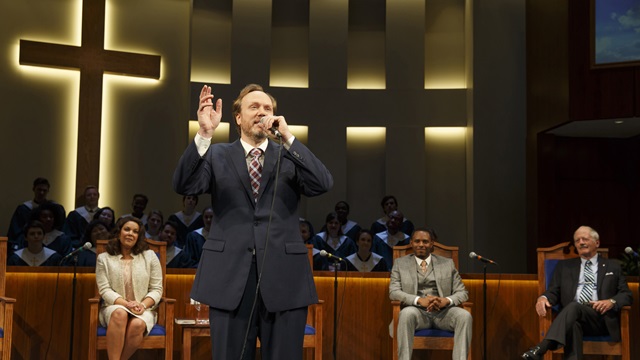
I’ve seen the play advertised locally. Lucas Hnath, a 36-year-old playwright, has a background in religion. His mother attended seminary and he even sat in her classes. The New Yorker reveals that there were expectations early on in his life for him to become a “pastor,” a choice he forewent for the arts instead (“Divine Intervention,” 9/7/15, Hilton Als). The play is about a megachurch preacher who has come to believe there is no hell and who believes God gave him this revelation. The result of his divulging this in a sermon is a church split, led by the assistant pastor who does believe in the reality of hell. While doctrine lays at the heart of the split, the play is said to focus on the personalities and behavior of various folks making up the church. Alissa Wilkinson, in a flamboyantly titled review, says this play resonates because “schisms, church splits, or at least disgruntled storming-outs are familiar to virtually everyone who stays in a church long enough to be committed to its life” (Christianity Today, 9/23/15). At least in advertising I’ve seen, the play title appears “The Christ?ans.” The idea is that, judging from their behavior, it is questionable whether or not they are truly Christians.

There are heartbreaking stories of congregations of the Lord’s church whose internal battles became known to the community and the brotherhood at large. Some have resulted from battles over doctrinal issues, whether regarding morality, fellowship, worship, leadership, or the like. Some have resulted from dueling strong personalities, jockeying for power, position, and prominence. Some have boiled down to squabbles about money. In all of them, tragically, Christ has been relegated to the corner and forced to be quiet while His “followers” duke it out.

While the implications over a doctrinal dispute and a personality power play are different, too often the predominant feature is a show of the flesh.

Many with a background in religion will be able to relate to the theme of the play because they have seen schisms in churches before. The world is a divided place, full of rancor, backstabbing, infighting, and unfair fighting. The church, particularly the church of the New Testament, must never exhibit such traits. Corinth set off such an alarm with Paul for this very reason. He urges no division to mar them (1 Cor. 1:10-13) and goes on to address both doctrine and attitudes in the letter. Philippi had two quarreling women straining the unity of that church (4:2) and Paul goes right to the heart and the mind.

We must strive to conduct ourselves with one another in a way that is always exemplary before the eyes of the community, the brotherhood, and the world. I thank God to work with a church that has been around so long and been through so much and who have weathered those storms by sticking together. Yet, too often, people have aired their dirty, unsightly laundry out on the clothesline of public purveyance. This soils the reputation of the Savior! That fact alone should horrify every child of God. May we always strive to be a beacon of light (Mat. 5:16), shining a spotlight on the Sinless Savior and not squabbling saints!

63611

Examining Our Positions

Neal Pollard

Hans Kaltenborn was an ardent admirer and defender of Adolf Hitler and the “new Germany” ushered in with the Nazi regime. Despite diplomatic warnings of assaults upon Americans, Kaltenborn, an influential American commentator for CBS and NBC and of German descent, dismissed it as flawed and skewed information gathering by biased personnel. About to return home to the states to speak against such reports and warnings, his family went to downtown Berlin to do some last minute shopping. While out, the family found themselves in the middle of one of the endless S.A. parades. When his family refused to offer the Nazi salute, his son was physically assaulted and injured. Finally, someone intervened and the incident ended with no further harm. However, the transformed Kaltenborn was apoplectic. He made a report with the American Consulate in Berlin, but no charges were filed. As Eric Larsen writes, “the senior Kaltenborn ‘could remember neither the name nor the number of the Party identification card of the culprit, and as no other clues which might be useful in the investigation could be found’” (In The Garden of Beasts, 164). Despite this, Kaltenborn was now of a different mind!

There are many ways in which life can do the same thing to us.  We may be dead certain about marriage when we are single, about childrearing “pre-kids,” about our career when still in the classroom, about home ownership when in our parents’ home, dorm room, or apartment, and so on. But, life so often has a way of rudely awakening us from some well-meaning beliefs.

Sometimes, this can happen to us in the all-important area of religion. As we stay in our Bibles and gain wisdom and experience life, we may reaffirm but also clarify and even change certain positions we have long held. This can certainly be a dangerous affair, and some have allowed life to change their positions from what is true to what is false (what Jesus says about marriage, divorce, and remarriage because of a family situation, unscriptural changes in worship because of children attending church who have adopted such, etc.). But few of us will go all the way through life without reconsidering especially some conscience or judgment matters.

There are also a great many of our friends who have been taught religious error on God’s plan of salvation, the singular, undenominational nature of the church, what God wants in worship, women’s role in church and worship leadership, and the list goes on. This can be such a difficult challenge for anyone, to revisit long-held and deeply-believed positions in light of what the Bible says.

For all of us, there must be an abiding humility that approaches scripture without the blinders of prejudices, preconceived notions, and influences like family, friends, church, and so on. That is uncomfortable, but essential—for all of us!  We may come to find that something we’ve clung to so tenaciously must be rejected or that something we rejected must be embraced. If we ever get to that place, may we have the kind of heart that puts the will of God above our own will. Without such, we cannot hope to make heaven our home.

7256698_134185460141
Hans Kaltenborn

Coping With Thorns

Neal Pollard

Satan is the accuser of the brethren (Rev. 12:10). He is the author of audacity, and he showed it first in Eden. He is at work today through temptation and suffering to try and dismantle our faith. He is a presence in our personal lives (1 Pet. 5:8). If there’s hurt, he’s happy. If there’s sin, he’s satisfied. He can’t force anyone to sin (Js. 1:13-15). He can’t make us fall away (John 10:28-29). But, he’s at work. Paul writes about something that has long mystified the Bible student, in 2 Corinthians 12:7-10. In that passage, we have:

  • The reality of the thorn (7)
  • The reproach of the thorn (7)
  • The reason for the thorn (7)
  • The result of the thorn (7)
  • The response to the thorn (8-10).

Paul reveals Satan’s involvement in that thorn. This troubles me. I have never asked for a thorn in the flesh and I have no reason to think Paul asked for his, but he got one anyway. What do you do when you have a thorn in the flesh? Consider at least three things Paul teaches us in this powerful passage.

No one is immune from thorns. Who’s talking in this text? The great apostle Paul, a man God gave revelations, who’s preaching across the world, converting so many, and achieving name recognition for the best of reasons. If you ever thought anybody would be sheltered for doing right, it would be him. But Paul says there was given to him a thorn in the flesh. That makes me uncomfortable. I need spiritual lessons about God and myself, as Paul and even Job, who Satan was allowed to buffet, did. If a great Old Testament patriarch and great New Testament preacher had thorns to deal with, I know I am not immune.

Sometimes, God lets the thorn stay. We may have to accept that our given affliction may never come to an end as long as we’re on this earth. A recurring or chronic illness, constant adversary, or irreversible limitation may not be removed. I wish I knew why God told Paul “no” and why he sometimes tells us “no” when we ask for our thorns to be removed. But, even if we keep the thorn, God’s grace is sufficient and He can use that very thing to accomplish good through us for the Kingdom. God uses thorns to supply us with humility and grace. If our thorn comes and stays rather than comes and goes, God will use it for our good and to accomplish good if we will properly view it.

Thorns are growth opportunities. If we remain faithful to God through our thorns, we will spiritually grow. Satan is rebuffed and defeated, as he was with Paul and Job. But, for every Paul and Job, how many have let affliction and adversity destroy their faith? We know God’s power eclipses Satan’s. But don’t underestimate this enemy (2 Cor. 2:11; 11:14; 12:7). One of Paul’s final points in the letter is about God’s great power (13:4). Paul was weakened by affliction, but he could endure because of faith. God is more powerful than Satan and Paul’s thorn is but one proof of it. Lyte wrote,

As woods, when shaken by the breeze, take deeper, firmer root,
As winter’s frosts but make the trees abound in summer fruit;
So every Heaven-sent pang and throe that Christian firmness tries,
But nerves us for our work below, and forms us for the skies.

Is it a trial or a blessing in disguise? Doesn’t it depend on how we view it and what we do with it? Satan wants to use afflictions to destroy us, but God is greater. He can transform our tragedies into triumphs. Trust Him through the thorns. The roses will appear!

d854897661b1aa845ddca7a690139563