No Answer

Friday’s Column: Supplemental Strength

81121814_2462862270639428_5746232403106463744_n

Brent Pollard

In December of 1971, the UK band, Electric Light Orchestra, released an eponymously titled album. In the United States, however, we know this album by a different name. Why is that? In the US, ELO released their music through United Artists Records. Someone from UAR had attempted to contact ELO’s manager to ascertain what the album’s title for its US release. Unable to reach him, the UAR representative had jotted down the words, “no answer.”

The misinterpretation of the message led to the unintentional titling of ELO’s first US release.  And so, in early 1972, Americans could buy the new British band’s first studio-recorded album,  No Answer1 This album mishap is an amusing example of miscommunication. When such miscommunication takes place in personal relationships, however, the results more often are destructive.

Relationships can be severed because some miscommunication led to an argument. Within such cases, the injured party failed to discern the message of the perceived injurer. Sadly, they don’t go to that person, and on some occasions they go to a third party, sympathetic to their interests. At this point, the one initially misunderstood has two people angry at him or her without cause. Perhaps, in response, this misunderstood person will likewise go to yet another party, someone understanding of his or her position in the matter. It is incredible to see how many people can quickly become embroiled in something that ultimately is only a misunderstanding between two people!

New Testament scripture addresses this problem and provides a solution. Unfortunately, it may be one of the most ignored precepts of Christian doctrine. Jesus Himself gave this precept as recorded in Matthew’s Gospel (Matthew 18.15-17). Whenever you feel that another party has done something injurious to you, you are to go to that individual privately to resolve the problem. If that person does not listen to you, then you are permitted to bring one or two others with you in another attempt to be reconciled to him or her. If that fails, then you have permission to bring the matter to the attention of the greater community. When the community (in this instance, the assembly or church) encourages that person to reconcile with the other party, and he or she refuses a third time, then one can sever that relationship formally. One does not break ties before the extension of three opportunities for reconciliation, however.

So, the next time someone says or does something that you do not understand, give them the benefit of the doubt. Go to the one you feel has offended you first. Do not gossip about the “offender” to another. Do what you can to fix the problem as soon as you can. No answer, on the other hand, is not an acceptable solution.

Screen Shot 2020-07-17 at 7.21.27 AM
A later ELO album (1977)

REFERENCE

1 Mikkelson, David. “Electric Light Orchestra’s No Answer.” Snopes.com, Snopes Media Group Inc., 19 Dec. 2012, www.snopes.com/fact-check/no-answer/.

Mind Your Thinking

Thursday’s Column: Captain’s Blog

IMG_0806
Carl Pollard

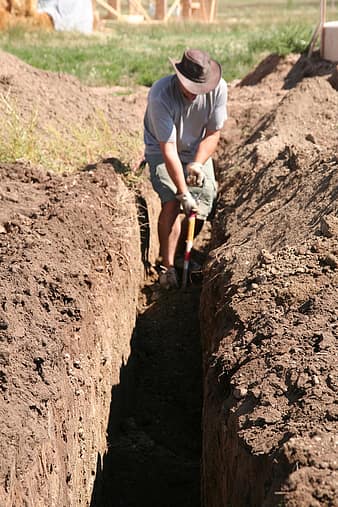
Growing up there were certain tasks that my parents would give me that I didn’t want to do. Washing the floorboards, weeding the garden, cutting vinyl siding, and digging holes with a post hole digger. These are just a few examples of what many of us would consider hard work.

I remember the hours working on these jobs, covered in sweat with blistered hands, and an all-around feeling of fatigue. There were a couple times in particular where I can remember my dad saying the classic phrase, “Son this is character building work.” And then he would tell a story about some hard job he had to do as a kid. Looking back, these jobs really did build character, but there’s more to it than just digging a hole and sweating.

You can be a hard worker, and still lack honesty, sincerity, and humility. Character building takes serious work and commitment. Luckily, God has given us His perfect word that tells us how we can grow our character.

If you’ve ever struggled with living out your faith, or with your commitment to Christ, working on growing our character will help you focus on what’s truly important in this life.

There are many different ways that we could go about building our character, and as we look to scripture a good place to start in this endeavor is by practicing righteous thinking. If we want to grow our character, we have to start changing the way that we think. Problem is, it’s a lot easier said than done. There are two different passages that tell us how we can practice righteous thinking.

Philippians 4:8: “Finally, brothers, whatever is true, whatever is honorable, whatever is just, whatever is pure, whatever is lovely, whatever is commendable, if there is any excellence, if there is anything worthy of praise, think about these things.” As Christians we can learn to dwell on righteousness by filling our mind with godly traits. If we are truly set on transforming our minds to think on righteousness, we have to replace worldly thinking with godly traits.

Romans 12:1-2: “I appeal to you therefore, brothers, by the mercies of God, to present your bodies as a living sacrifice, holy and acceptable to God, which is your reasonable service. Do not be conformed to this world, but be transformed by the renewal of your mind, that by testing you may discern what is the will of God, what is good and acceptable and perfect.” It’s possible to practice righteous thinking by renewing our mind with the will of God. We’re no longer looking to ourselves as master, but to God. By doing this our thinking changes. Our focus shifts from this world, and our minds will dwell on righteousness.

Do you want to be known as a person of character? The first change we must undergo is to start thinking righteously. Righteous thinking is no easy task. It takes work, and many times we fall short of this goal. Thankfully we serve a loving God that wants nothing more than for us to spend an eternity with Him in Heaven.

Question is, do we want this future enough to make the right decisions?

digging-man-work-working-sewage-plumbing-shovel-dig-trench-thumbnail

ROMANS 5:5 AND THE LOVE OF GOD

Wednesday’s Column: Third’s Words

Gary III

Gary Pollard

Romans 5.5 is a verse that I know I’ve read many times, but never paid attention to. 

It says, “and hope does not disappoint, because the love of God has been poured out in our hearts through the Holy Spirit who was given to us.” 

This whole section of Scripture is awesome, but this verse really caught my attention. How is the love of God poured into our hearts? How do we experience this? Is it a feeling or understanding? Are we given a sense of calm knowing we are saved? 

Context reveals that Jesus showed this love by dying for those who hated Him. God’s love is experienced through Jesus’ death (Romans 5.6, 8). So in that sense, we are able to access God through the sacrifice Jesus made with the Spirit who was given to us. 

However, it does seem that the love mentioned in verse five is something a little different. 

Firstly, it isn’t the only thing we have with God. We also have peace with God and grace (Romans 5.1, 2). The context of this chapter and much of the next is about the benefits of salvation. 

Secondly, the love of God seems to be pretty directly applied. The word “poured” in 5.5 is ἐκχέω (encheo), which means, “to cause to fully experience” (BDAG 312). It’s also a perfect passive verb, which means it was poured in the past and continues to be poured; God was the one doing the pouring. 

The destination of this love is our (that is, those who are saved) hearts. When we have been justified, and when we take pride in our trials because they develop endurance, proven character, and hope, God pours love into our hearts. 

Because of the multitude of “for”s and “therefore”s following this verse, I lean more towards the idea that this love is something we experience as a result of gaining rational confidence of our salvation through Christ. 

My goal in writing this article is not necessarily to explain Romans 5.5 – I do not pretend to know the answer – but to hopefully provoke thought and demonstrate the depth of scripture. I love these difficult passages, and hope that you will study them as well. 

pouring-water-on-glass-bowl

Maybe Nobody’s Right?

Tuesday’s Column: Dale Mail

DaleandJanelledirectorypic

Dale Pollard

Wasted potential is a terrible tragedy and this could not be more true when it comes to those who squander their potential in the church. Consider two common examples we find in many congregations today. There may be an older man who uses the respect, earned by his lengthy life experiences, as a platform to give strong opinions— disguised as gospel truth. Or, what about the young woman who has been labeled as a liberal? She has these new and fresh ideas, but many aren’t Divinely authorized in scripture.

Both of these individuals could not be any different, yet both have caused severe damage in their local church families. The older man clearly has a commanding presence. When he speaks, people will listen. What a gift! He could build up and strengthen the church in numerous ways— if he put his mind to it. He owns the power of persuasion, a talent others deeply desire. The young woman also has talent. She’s outspoken, energetic, and inspiring to many of her peers. She’s loving, gentle, and full of life. With so much to offer, how could she throw it all away by pushing her modern, but unbiblical views?

The elderly may argue that the problems we find in the church today are on account of young minds with liberal beliefs. The younger generation have become disenchanted with “church” because they believe it’s outdated, hypocritical, legalistic, and impossibly demanding. While there is truth to be found on both sides of the fence, it’s also true that talent is a tool that is often misused.

The elderly bring experience and wisdom. The young bring energy and enthusiasm— though I do acknowledge that these stereotypes may occasionally be seen in members of both groups. If there are thoughtless accusations, without thoughtful solutions, you end up with a congregation full of members fighting for the spoon which stirs the pot. A serious solution can only be scriptural. After all, God made people and He knows how to fix them.

Maybe we need to go back to those basic and foundational principles that we find in that thriving first century church. Despite adversity and an overwhelming hostile environment, they had Jesus’ power over the world (John 16:33). Since this is the case, may we never fool ourselves into believing the lie that the strange darkness of our time is too dark for The Light that is Christ. When this poison is digested, the devil smirks, and droves of people stumble into eternity unprepared all on account of a literal and tragically damning lie.

God has allowed us to discover hope, experience growth, and uncover a calming peace when simple Christianity is practiced. It’s this beautiful simplicity that makes God’s will a rewarding journey to seek and follow. The power of God can turn a struggling congregation into a thriving one, but there must be a radical transformation in the heart of each individual that makes up that Body. It’s radical, but it’s not complicated. It will take prayer, a reliance on God, courage to act, and a willful determination to follow Jesus wherever He goes (Luke 9:57-62).

So where do we begin? With a dedication to the understanding of Him, and those made in His image.

6016780468_67a298ed8e


Getting Our Kids Back In School

Monday’s Column: Neal At The Cross

pollard

Neal Pollard

The American Academy of Pediatrics, who most would not consider a politically-driven entity, shared their findings and concerns about children not being able to return to school this fall. Reasons they advocate for a return to the classroom include risk of social isolation, abuse, untreated mental health disorders, food insecurity, less physical activity, racial and social inequalities, and developing diseases. Then, there’s the academic reasons. There’s a great risk right now that they might catch and/or transmit Covid-19, but the AAP, along with so many others, is suggesting weighing that risk against these others (Dr. Sabina Bera, 7/10/20, “Why Pediatricians Are Pushing For Kids To Back To School In The Fall,” ABC News).  To do so, there would need to be changes to protect everyone involved–physical distancing, hand washing, face covering, altering how class changing is done, temperature checking, testing, and enhanced cleaning and disinfecting, etc. (healthychildren.org).  But our children’s future, their development, and their needs, make the unavoidable risks necessary.

The greatest need every child (and adult) has is spiritual. Within each child is a never-dying, eternal soul. They need to learn about and know about God’s Word. There is such benefit to getting back to sitting in a Bible classroom, with their friends, and having their faith built in God and Jesus, learning about the importance of the church, and being shown how to live lives that will please God. The case could be made that this must be prioritized over anything else (Mat. 6:33). While the same virus-related precautions must be observed, consider these reasons why we should give thought to getting our kids back in Bible school as soon as we can.

          • Children need teaching that is at their specific level. While Paul was making another point with this observation, children speak, think, and reason differently than adults (1 Cor. 13:11). They need more basic and simplified teaching about many biblical subjects, and the Bible school supplies this need.
          • Children need to form the good habit of being in the Bible classroom. There are trying moments with our little ones under the best of circumstances. They can be more trying when children have been out of the habit of sitting in class. Teachers and parents will probably need to remember that once classes resume.
          • Children need the stimulation that comes from each other’s presence and their teacher’s presence. While this happens at a different level for children, they are stimulated to love and good deeds through their assembling for classes (Heb. 10:24-25). Just watch how excited these little students often are at seeing each other. 
          • Children need their enthusiasm for the Bible stoked. Children’s classes are a formidable foundation for future faith. Our job in the church and in the home is to do whatever we can to increase their zeal for spiritual things. Perhaps no one outdoes a child for honestly and enthusiastically exclaiming, “I was glad when they said to me, ‘Let us go to the house of the LORD'” (Psa. 122:1). 

We cannot afford to be dismissive or reckless. We must be vigilant in physical precautions. Balanced with this, though, we must understand how essential the spiritual education of our children is! The home has the primary role in this, pandemic or not. But, the church is a frontline partner. Let’s pray that we will do all we can, when we can, to get back to serving in this role! They have no greater need!

67795979_10156877496168802_245996098714337280_n
Photo credit: Holly Dillingham

Spirituality Needs to Find Its Expression

Friday’s Column: Supplemental Strength

81121814_2462862270639428_5746232403106463744_n

Brent Pollard 

In the waning days of the last millennium, I happened to catch a program on public television about a dance competition held by Native Americans in rural Connecticut. If you are wondering why I still remember that show some 20 years later, it was because of the responses given by some of those interviewed. The dancers participating expressed the idea that their dance was an outward expression of their inward spirituality. The master of ceremonies echoed their sentiments as he explained spirituality needs to find expression. Ponder that last part with me for a moment; spirituality needs to find expression. Indeed.

I’m not suggesting that we incorporate carnal expressions of our spirituality in our worship of God, like dancing to a beating drum. Yet, if we are spiritual, shouldn’t there be an outward expression of it? Christians have a magnificent treasure stored within themselves (cf. 2 Corinthians 4.7). Sometimes, though, observation of Christians suggests otherwise. We who are blessed still covet for more. We who are given joy from within have sour attitudes. We allow ourselves to become filled with anxiety. Our brethren anger us, rather than receiving our love. Those without the church may think we are sad rather than happy. We who serve the One owning all withhold the bounty of that Providence and Wisdom of His Revelation from those needing it. We fail to be lights shining in a dark world as we are commanded (Matthew 5.14-16).

Yes, spirituality needs to find its expression. Can you recall the depth of emotion you felt when you first realized you were in love? You wanted to proclaim your love in loud tones to any who would listen. Do you remember the joy and zeal that was yours when you put on Christ in baptism? You wanted to proclaim the praises of Him Who had brought change to your life. Why don’t we allow our faith to find its expression today through the sharing of the Gospel? Why not do good to all, especially to those of the household of faith, as we have the opportunity? (Galatians 6.10) Lastly, let us worship God in spirit and truth without being begged to do so by elders, preachers, and Bible class teachers. If we do these things, no one will doubt the spirituality we claim to possess.

20121205-tribal-nations-audience

When My Love For Christ Grows Weak

Thursday’s Column: Captain’s Blog

carl pic

Carl Pollard

A problem that each one of us as Christians face at one time or another, a problem that has been around since the establishment of the church, is the problem of a weakened love for Christ. This problem results from family crisis, various diseases, the death of a loved one despite our fervent prayers and crying out to God, different forms of persecution, or watching as a respected Christians loses his faith in God.
As Christians we will experience problems that will cause our love for Christ to fail.
Our faith and love for Christ are tied together as one. If you lose your faith, love is weakened and vice versa. The song, “When My Love for Christ Grow Weak” says this, “See His anguish, see His faith, Love triumphant still in death.” Love can be restored and faith can be strengthened if we would just dwell on the sacrificial love of Christ.
Since love is strengthened by increasing our faith in Christ, notice Revelation 2. The church in Ephesus had done well in many areas. They were hard working, patient, upright (they hated evil), noble minded (tested the claims of false prophets), they knew how to deal with evil men, and rather than growing weary, they persevered and had endurance (3). But they had one major issue…their love for Christ had grown weak.
Verse 4 tells us they were living the life of a Christian, but totally devoid of love. The Ephesians were doing a lot of good things, but out of obligation and duty rather than being properly motivated by a love for Christ. While they appeared to be righteous on the surface, they had no relationship with God. They were going through the motions but it was all done without love.
Sadly this is a problem that many face in the church today. They experience hardship and lose their love. They continue to live as a Christian out of duty and because it’s the “right thing to do.” Since the Ephesians fell into the same rut that we too can sometimes struggle with, it’s beneficial for us to look at what they were told to do in order to restore their relationship with Christ.
The solution is threefold. So let’s notice what we must do “when our love for Christ grows weak.”
Remember where you came from (Rev. 2:5). When our love for Christ grows weak, what must we do? Remember why you made the decision to become a Christian. Remember where you came from. A life filled with sin. A life devoid of hope. A time when you couldn’t call God your father. Remember the blessings of baptism. The sin that was wiped away. The relationship that was established with God, through Christ. Remember what you felt the moment you came out of the waters of baptism. The joy and relief in knowing that God now calls you HIS child. “When my love to Christ grows weak, When for deeper faith I seek, Then in thought I go to thee, Garden of Gethsemane.” Remember what makes our Christianity a reality. Remember what it cost for God to forgive your sin.
Repent (Rev. 2:5).  Metanoeson means “to change ones mind.” I want you to picture yourself in your car, you’re headed to lunch with the perfect restaurant picked out. As you’re getting closer, your wife says, “I’d rather go to Chick Fil A. Step 1, your wife has changed her mind about where she wants to eat. And so…Step 2, you turn the car around, you change directions and head to Chick Fil A…making the right call to keep your wife happy. That, is repentance. “A change of mind that leads to a change of direction.” The Ephesians were told to first, remember where they came from, and then to repent. Change direction, go back to a time when they had both good deeds and a love for a christ. A change of mind, from heartless service to love filled devotion.
Return and “Do the things you did at first” (Rev. 2:5). When Our Love For Christ Grows Weak, return to the way we were living before sin ruined our relationship with God. We must confess (admit the wrong) to God, and to each other (James. 5:17). Acknowledge the presence of sin. And change, even if it costs us. Each one of us can remember the times where our Christianity was strong and growing, but since we are human, it’s easy to become:
 Complacent (feeling satisfied with where we are, with no motivation to grow or change). Depressed (with current circumstances or personal trials).
Distracted (by work, family, hobbies, friends).
Emotionless (feeling so overwhelmed with sin that we just give up, lose hope).
There’s a cure for each one of these problems. Remember Christ. Dwell on the love that God has for each one of us.
lovechristweak.001

Do You Focus On Your Strengths Or Weaknesses?

Wednesday’s Column: Third’s Words

Gary III

Gary Pollard

My wife, my parents, and I took a personality test tonight just for kicks. It was a simplified test, nothing too in-depth, but was very entertaining and insightful. There were two sections to the test: one with a row of strengths under four different personalities and another with a row of weaknesses for those same personality types. 

For all of us, it took quite a while to complete the strengths sections; it took probably less than a minute to complete the weaknesses section. It’s a lot easier to readily admit and focus on our flaws and faults than it is to honestly acknowledge our strengths. 

Maybe it’s because we’re hesitant to praise ourselves (this isn’t always a bad thing, but we tend to overdo it). Maybe it’s because it’s easier to see our glaring weaknesses than our helpful strengths. Weaknesses usually sound something like, “I am… ” or, “I have…” or, “I can’t…” or, “I’m not…” followed by a negative attribute. 

Focusing on our weaknesses is detrimental for two primary reasons. 

First, focusing on weakness restricts growth. Even when pointing out some major issues with the church at Philippi, Paul lays on the praise heavily before exposing flaws. When he wrote to Timothy to rebuke him (II Timothy) he made sure to point out his strengths, too. We have to be balanced as we look to improve ourselves. We can acknowledge the presence of a weakness, but focusing on it will likely destroy any effort we make to grow past it. 

Secondly, focusing on our weaknesses can be selfish. We can place a disproportionate emphasis on ourselves when we criticize self or lean on weakness as a crutch/excuse. It can also be selfish because while we’re overanalyzing and criticizing ourselves, we can easily overlook growth opportunities. 

Strengths allow us to do for others. Focusing on what we can do and we are good at doing empowers us to help others. Obsessing over our weaknesses can make us too internally focused; capitalizing on our strong points allows us to focus more on other people. 

When we do a mental self-checkup to see where we can improve, let’s focus more on how we can use our strengths to help others and less on how flawed we are. Of course we’re flawed – but we can also do a lot of good for others and we have the blood of Jesus to keep us pure (I John 1.7). As a wise man once told me, “If you focus on your strengths, your weaknesses will take care of themselves.” 

nine_temperaments

PRAYER: A PRACTICAL GUIDE

TLC is coming August 1, 2020

Tuesday’s Column: Dale Mail

DaleandJanelledirectorypic

Dale Pollard

PRAYER: What Is it? Why do it? How do I do it?

Some pray the way they heard others pray in worship growing up while others look for a prayer on the internet. A few pray the way their parents taught them to pray, and still others just kind of make it up as they go along. Over time it develops into a well-known string of words that we can call upon in case of emergency. It’s the prepackaged prayer that we’re comfortable praying when we’re called upon to lead one publicly or “bless” the food. Tragically, this can be an insight into a weak prayer life. This is what Jesus wants us to know about communicating with God— and how we can do it effectively. 

Three Facts About Prayer 

1.Through Jesus we must pray  (I Tim. 2:5)

2. Through Jesus we learn to pray (Matt. 6:5-13)

3. Through Jesus we are able to pray (Heb. 4:16) 

Three Fruitless Prayers  (Matthew 6)

  1. Prayers to glorify ourselves— when they should be Focused On The Spiritual  (v.5)
  2. Prayers for the gaze of others— when they should be said Fervently In Secret  (v.6)
  3. Prayers full of gab— when there must be Forethought and Sincerity  (v.7)

Five Ways To Pray Effectively (According to Jesus) 

“Pray then like this…” 

1. With Reverence 

a. “Our Father” — His authority over ours. 

b.“In Heaven” — His dwelling place is above ours.

c.“Hallowed be your Name” — His holiness needs to be apparent to us. 

2. Seeking Righteousness 

a. “Your Kingdom come” — So I must be righteous 

b. “Your will be done” — In order for me to be righteous 

c. “On earth as it is in heaven” — If heaven is to be my future, I must make        righteousness a part of my present. 

3. Acknowledging Our Reliance 

a. “Give us this day” — Each day and each moment, a moment God allowed to exist.

b. “Daily bread” — It’s all through Him we move and exist.  

4. In Repentance

a. “forgive our debts” — What do I need forgiven?

b. “As we forgive our debtors” — What do I need to forgive? 

5. With Recognition 

a. “Lead us not into temptation” — God knows the way around what tempts us. 

b. “Deliver us from evil” — God has the power to deliver us, but we should recognize                                that we must follow if He is to lead. 

Six Things To Offer Up, And What You’ll Get

  1. Give Him your praise – He’ll show you why He deserves your praise. 
  2. Give Him your heart – He’ll heal and purify it. 
  3. Give Him your schedule – He’ll organize it for you. He will reveal our most important priorities.  
  4. Give Him your attention – He’ll help you focus. 
  5. Give Him your plans – He’ll perfect them. Any plan God touches becomes holy.  
  6. Give Him your life – He’ll give life eternal.  

3985490626_4ece1bf58a_z

Lord, Help Me Remove The High Places

Monday’s Column: Neal At The Cross

pollard

Neal Pollard

They are mentioned throughout the Old Testament, pagan shrines Israel and Judah put up typically to worship idols. Moses warns about them as early as Leviticus (26:30) and Numbers (22:41). This was the unrighteous practice of the Canaanites (Numbers 33:52), but it was adopted early and often by God’s people. Solomon appears to be the first king to lead the people into this, part of the evil influence of his pagan wives (1 Kings 11:7).  It would become one of the reasons the northern kingdom is destroyed and the southern kingdom is taken into captivity (Psalm 78:58). It seems that this was one of the harder vices for God’s people to remove, even when times were at a relatively spiritual high. During the righteous reigns of Joash (2 Kings 12:3), Amaziah (2 Kings 14:4), Uzziah (2 Kings 15:4), Jotham (2 Kings 15:35), and others, this was an exception to their righteous rule.  Occasionally, a king was thorough enough to remove these (2 Chronicles 14:3), but soon they were rebuilt and the people went right back to using them.  Calvin explains that it was through these high places  “that the service of God would be perverted and contaminated, unless they were regulated in every part of it by the Divine Word” (Commentary on the Book of Psalms, Vol. 3, Logos). 

God had a place to be worshipped and a way to be worshipped. The high place was a concession or accommodation that became a stumbling block to the people’s spiritual health. The temptation arose through it to change the object of worship and to see the high place as a convenient substitute for the tabernacle and the temple. But, the worst of all religious practices ultimately occurred there (Jeremiah 19:5). Only in Josiah’s reign, just a few decades before Babylonian Captivity, were they finally destroyed (2 Kings 23:4-20). 

Is it possible for me to construct my own high place, a shrine or altar to something that becomes a hindrance to serving God faithfully? It might be a vice, a habit, or a secret sin, something I retreat to as an indulgence or allow myself to participate in. It might be an attitude, disposition, or character trait that is the exception to my spiritual rule. It might be an unhealthy relationship or person I allow to unduly sway me. I might say, “It’s just this one thing or area of my life. What’s the big deal?” 

Maybe that’s how the Israelites looked at the high places. But, nothing can be allowed to occupy mental and spiritual space that belongs only to God. I cannot rationale or compartmentalize something as my self-made exception to God’s rule. Sin grows and expands when it is not dealt with and rooted out. I must regularly examine myself (2 Corinthians 13:5) to make sure only Christ is seated upon the throne of my heart. Jesus challenges me, “You shall love the Lord your God with all your heart, and with all your soul, and with all your mind” (Matthew 22:37, emphasis mine). I must be vigilant to take that challenge most seriously! 

ruins_in_negev_desert_israe

Trail Magic

Friday’s Column: Supplemental Strength

81121814_2462862270639428_5746232403106463744_n

Brent Pollard

My dad has discovered YouTube. He had been using the service to watch streaming worship services during the height of the coronavirus lockdown; he has since noted its potential entertainment value. One of his favorite channels is one that plays classic country music from the 1950s and 1960s. Recently, however, he has been watching the videos of hikers along the Appalachian, Pacific Crest, and Continental Divide Trails. I use to enjoy hiking in my healthier days, so I have sat down to watch more than one of these videos with him. I have never even contemplated doing a thru-hike of one of the previously mentioned 1,000 mile plus trails, but have admired those who have completed them. As I watched one video of a hiker who undertook the Appalachian Trail to conquer his depression, I heard him use an unfamiliar term: “trail magic.” In another video, a young woman from Opelika, Alabama, used the words in regards to her trek along the Pacific Crest Trail. Curiosity compelled me to look that phrase up. The phenomenon originated on the Appalachian Trail but has since popped up along the other lengthy trails as well.

 The Appalachian Trail Conservancy defines trail magic as follows:

“1) Finding what you need most when you least expect it. 2) Experiencing something rare, extraordinary, or inspiring in nature. 3) Encountering unexpected acts of generosity, that restore one’s faith in humanity.” 1

As the videos demonstrated, trail magic presented itself in a cooler of cold drinks left at a taxing point in the trail. Or maybe a veteran thru-hiker set up a tent at a spot along the pathway to feed the hikers who came through. It could also be a person volunteering to provide a wearied hiker a ride to his or her nightly lodging when the trail came close to a town offering a hostel or hotel serving hikers. Thru-hikers have no reason to expect that any of these things will happen to them as they make their journey even though it happens enough to warrant a name (i.e., trail magic). That is why it is so appreciated.

 When I read that, my mind immediately associated aspects of this phenomenon to what those of us who are Christians call “providence.” How often have we found something unexpected in our life, typically at the most opportune time, that screams “God” to us? In other words, a sudden something that points to God’s hand at work in our lives. No, providence is not a miracle, since it does not circumvent the laws of nature to occur. It works within the established framework around us, making it even more amazing since it can require God’s forethought rather than just a momentary expression of His unlimited power. Yet, it is as appreciated by us as any miracle would be since it satisfies our momentary need, whether remission from cancer or unexpected inflow of funds when presented with a financial crisis.

 This characteristic of God has earned Him a unique name first applied by father Abraham, Jehovah-Jireh. Do you recall the reason Abraham called God by that name? God had asked him to offer his only son as a sacrifice. This son was the promised one for whom he had long waited. Yet, Abraham complied. When his son, Isaac, noticing a missing sacrifice, asked his father about it, he replied, “God will provide for Himself the lamb for the burnt offering, my son” (Genesis 22.8 NASB). After nearly sacrificing his son, an angel stopped Abraham, and Abraham noted a ram with its head stuck in a nearby thicket. Abraham offered the ram as a sacrifice in place of his son and called the location “Jehovah-Jireh,” meaning “The Lord will provide.”

 Our path to Heaven is strait and narrow (Matthew 7.13-14). It is, therefore, most welcome that as we make our way through this life that we encounter this celestial trail magic. Let us never fail to thank our God since He is also Jehovah-Jireh.

 REFERENCES

1 Bruffey, Daniel. “Trail Magic.” Appalachian Trail Conservancy, The Appalachian Trail Conservancy, appalachiantrail.org/explore/hike-the-a-t/thru-hiking/trail-magic/.

Screen Shot 2020-07-03 at 7.09.01 AM

Study The Bible!

Thursday’s Column: Third’s Words

Gary III

Gary Pollard

I doubt that many of us would question the importance of knowing our Bibles. We talk about this a lot as a church family! While some Christians may approach Bible study with the mentality of loading their theological guns with argument-ending ammunition, others consider it a duty of their Christianity.
Few of us would argue that the Bible is always simple and easy to understand. This life, our faith, and many questions we have about our day-to-day lives require answers far too complicated to get from a cursory study of scripture.
So why is it important to study our Bibles, and how can we do it effectively (that is, to walk away from Bible study with more knowledge and faith than when we entered it)? It is important to study the Bible because ignorance of what it says is a major underlying cause for any problem a church might face. Do we want unity? Study the Bible. Do we want peace among ourselves? Study the Bible. Do we want strong, faithful Christians? Study the Bible. Do we want godly attitudes? Study the Bible. Do we want wisdom to know when to practice righteous judgment and when to keep silent? Study the Bible! Effective Bible study – when practiced by the majority of a congregation – will effectively strengthen and grow that church. So how do we effectively study our Bibles?
First, have a purpose to your study. Winning an argument with a friend, coworker, acquaintance, or contact on social media is rarely a good reason to approach the word of God in study. It is too easy to allow our pride or ego to get in the way of honest truth-seeking. Instead, approach your study with purpose. Are you seeking to grow your faith in God? Study accordingly. Are you seeking to understand how to respond to something in your Christian walk? Study accordingly. Are you trying to cope with grief, tragedy, or frustration? Study the Psalms and the end of Job. Whenever you sit down to read, have a purpose.
Secondly, study like a scholar. There is a time and place for covering as much text as you can (like reading the Bible through in a year). However, this should not be our primary method of study. Spend time in a small section of scripture. Look for key words (words that repeat themselves in your section of study), ask questions of the text when something does not make sense, look for words like “therefore,” “but,” and phrases like, “I urge.” See how they fit into the context of your passage. Use multiple versions in your study to gain a better understanding of the “feel” of the passage. As much as you can, look to the original language for definitions or insights. If you have a smartphone, download an app called Logos Bible Software. It will give you access to tools that will help you understand the meaning of words in their original language, even if you cannot read Hebrew or Greek. Avoid commentaries if you can at all help it. They are often (though not always) platforms for the writer to voice an opinion and rarely explain the meaning of the text with accuracy.
Thirdly, study frequently. I recommend printing out the passage you are interested in studying and complete one printed section per day. This is arbitrary, of course, but will still help to create some consistency. Use colored pencils/pens/highlighters to make the text come alive and to aid in recognizing patterns.
Finally, share what you have found with your friends in the church! If you have a group of friends studying the same passage, find ways to share what you observed in the text in your daily bible reading. This not only creates accountability for reading daily, but will also grow your faith and knowledge when you understand that passage so very well!
If you take up Bible study like this, you will be amazed at how much closer you will grow to God and to your church family. If all of us approach study this seriously and with this much commitment, we will grow as a church family in unity, faith, knowledge, love, patience, grace, and wisdom.
child-reading-bible-bed-thumb

We Don’t Know How To Pray

Wednesday’s Column: Captain’s Blog

carl pic

Carl Pollard

When I take the time to pause and think about who God is, it blows my mind. He’s all powerful, loving, righteous, faithful, and just. When we look at His character and the perfection that surrounds Him, it can almost seem overwhelming. A God with that much power and glory takes the time to listen to me. He hears the prayers that each of us pray.

If you’re like me, this can be very intimidating. Every time we bow our heads and pray, we are talking to the creator of worlds, the one that spoke everything we see and know into existence. We pause and reach out to God, and He listens to us. The creator listens to the cries of His creation. What a wonderful God we serve.

On our own we could never reach out to God and build our relationship with Him. We lie, cheat, steal, and lust after that which is darkness. God is the Father of light, and darkness cannot be found near Him. But God gave us a way to be justified, a way to petition Him and strengthen our Father to Son relationship.

Have you ever struggled with prayer? Maybe we fail to understand the tremendous blessing that it is. Maybe we fail to set time aside each day to talk with God. Maybe we feel like we aren’t holy enough to pray to God. Or maybe we feel like we don’t know how to pray.

Many Christians already know that it’s important to pray. We’ve heard that prayer is vital in the Christian walk. Thing is, we don’t know how to pray. And there are three main reasons why this is the case.

We are weak. Romans 8:26 says, “Likewise the Spirit helps us in our weakness.” Paul uses the word “likewise” which tells us that what he is about to say is tied to what he has just mentioned. And so we must ask, what weakness is Paul referring to? In context, the earth is made weak because of sin (18-22). We ourselves have been made weak because of sin (23-25). Therefore since we are not strong, the Spirit helps us pray to God, even in our current state of weakness.

We pray for the wrong things. Continuing on in verse 26, “For we do not know what to pray for as we ought…” James tells us something similar in 4:3. “You ask and do not receive, because you ask wrongly, to spend it on your passions.” We have a tendency to pray for the wrong things, and this ties directly into our weakness. We are weak because we pray for the wrong things. We say things like, “take this problem away” instead of saying “help me to use this problem to grow my faith.” We pray for things like, money, physical blessings, and selfish desires. We don’t know how to pray.
We confuse our will with God’s, and expect Him to change His mind and agree with us. We fail to see God’s perfect plan. We are short-sighted and selfish in our prayers. Because of this, we are weak and don’t know how to pray.

We use the wrong words. The last part of verse 26 says, “but the Spirit himself intercedes for us with groanings too deep for words.” “Intercede”, “to plead on behalf of another.” We may be weak, we may ask for the wrong things, but the Spirit pleads to God on our behalf. It should be a comfort knowing that one of the Godhead helps us in our prayers to God. Paul gives the Spirit a unique description. He says the Spirit “intercedes for us with groanings too deep for words.” When I hear the word “groan” I think of the sound I make when I eat too much food. Or the sound someone makes when their football team fumbles the ball. This word groan is far from this. It means “an involuntary expression of great concern or stress.” The concern that the Spirit has for us is so strong that it cannot be described with words. When we go before the throne of God, we are using the wrong words. There is no way that we can express to God what we feel. The Spirit then intercedes (pleads) on our behalf, expressing so great a concern, that words cannot be used to describe it.

We may not know how to pray, but God in His perfect love has provided for His Children. What an awesome God we serve.

26086288495_2692997ee9_b

Meditation: What is it? Why do it? How do I do it?

Tuesday’s Column: Dale Mail

Daleheadshot

Dale Pollard

The concept of Biblical mediation is viewed as a mystery to many of us. The simple answer to “How do I do it?” can seem frustratingly vague. Common answers are—

“you read a passage that stands out over and over and then you think about it.”

Or maybe…

“you find a verse and then pray about it.”

Here’s what you should know about true Biblical meditation.

Three Facts About Biblical Mediation

1. It does not involve emptying your mind, but rather filling your mind with God’s mind.
2. It’s not a complex ritual in which you must reach a higher “spiritual place” to accomplish. It’s a simple act that God intended for everyone to be able to do— in order to bring you to a better spiritual place.
3. It is an intentional act. You won’t find yourself meditating accidentally. We must make time for God.
Here’s why we should all be doing this.
Four Reasons To Meditate
1. For Improved Worship
2. For Perfect Instruction
3. For Needed Encouragement
4. For Spiritual Transformation
Here’s what you will need to accomplish it.
Three Tools For Great Meditation
OBSERVATION – What does the text say?
INTERPRETATION – What does it mean in context?
APPLICATION – What does it mean for me?

Note: Combine With Prayer before and after for best results.

Here’s what you will get out of it.
Ten Benefits Of Biblical Meditation
1. Proven to lower blood pressure
2. Decrease anxiety
3. Improve heart rate
4. It enables your to relax
5. It brings peace
6. It draws you closer to God
7. It gives us confidence
8. It offers an escape from temptation
9. It provides helpful correction
10. It makes us better Bible students (Psalm 119:11)

Finally, here’s an exercise to help us see the many categories on which we can mediate. Simply answer the questions in your mind, and try to develop a habit of asking yourself personal questions about what you’re reading.

A Meditation Exercise From The Psalms
You could meditate…

On His rules (Ps. 119; look up in the ESV)
• What rules do you tend to break?
• Why do you break them?
• What’s the point behind His “rules”?

On His Promises (Ps. 119:148)
• Which of His promises bring you the most comfort?
• Has God kept His promises to you? How?

On His mighty deeds (Ps. 77:12)
• Which specific mighty deeds has God performed in the history?
• What mighty deeds do you believe God has performed in your life?
• What could God do with you today if you allowed Him to?

On His unfailing love (Ps. 48:9)
• There has never been a moment in your life when God hadn’t loved you.
• What does that tell you? What does it expose about yourself?

I hope this helps clarify what real mediation is— and how it can change your life!

person-prayer-book-bible

What Does The Bible Say?

Monday’s Column: Neal at the Cross

pollard

Neal Pollard

Most people have very strong convictions, pro or con, about religious matters.  Many who claim to be religious form opinions and draw conclusions with very little if any biblical consultation.  How ironic is it to claim to follow God while ignoring and even rejecting His very revealed will?

Many religious people, church attenders and not, are guided by their feelings, desires, opinions, preferences, and consciences (cf. 2 Tim. 4:3; Prov. 14:12).  Perhaps they have a favorite preacher or other religious figure they implicitly trust.  Their religion may be submitted and subjugated to the message of the culture or even the media. It may be based on convenience and comfort.  Throughout time, man has attempted to serve God on his own terms and based on what he thinks is right.  Whether ignorantly or defiantly, he puts himself on a throne upon which only Jesus belongs (Mat. 28:18).

How long could religious error survive if potentially divided parties could lay aside personal interests and objectively study the sacred text?  So often, the religious world is divided because of man-made doctrines and traditions.  Instead of looking to the Bible to answer the important questions of time and eternity, men often come up with the answers they want and then go looking for Bible verses to support their predetermined views.  Consider that some of the most popular religious ideas—salvation by saying the sinner’s prayer, premillennialism, speaking in tongues, women worship leaders, once-saved, always-saved, and instrumental music—are not practiced or believed based upon their being taught in Scripture but instead their being the beliefs and views of mankind.  How thrilling it would be if we could unite every religious person in the desire to come to the text, the glasses of prejudice or sectarian beliefs removed, and let God tell us what to believe and how to live!  That is possible, but it begins with each of us humble, sincerely asking, “What does the Bible say?”

4543060842_e4fdb33047_b


Surrounded by Orange Daylilies

Friday’s Column: Supplemental Strength

81121814_2462862270639428_5746232403106463744_n

Brent Pollard

Driving along the highways of north Georgia and western North Carolina, there is one flower that stands out, the orange daylily. I look forward to seeing them every year. However, I recently discovered daylilies are not even native to North America. The daylily, which, despite its name, is not a lily, is a native of Asia. At some point, merchants traveling the silk road brought them back to Europe. Later, when Europeans settled in the “New World,” they brought the daylily bulbs with them. Yet, they have become so common here that among their colloquial names is the designation of “ditch lily,” since they have become a ubiquitous feature along highway shoulders and medians. Some do still plant them purposefully, but it is not necessary unless one wants them in a specific location. It is as if some unseen John Chapman, but of the daylily bulb, travels the rural countryside of Appalachia, planting these flowers. It can be bad enough in some locations for the pretty flower to be labeled as “invasive,” since it chokes out local flora.

I’ve already mentioned how I am partial to daylilies, but the world would be less exciting and beautiful if all I saw were the orange daylilies wherever I looked. I understand that other flowers are needed to complement and balance this resilient flower.  I need purple lupines, red roses, and yellow black-eyed Susans too. When it comes to the daily living of our lives, we need such variety also.  Frankly, the only constant should be the “the true bread out of heaven.” Otherwise, our lives will become as dull as a world of but orange daylilies.   Paul reminds us, “Finally, brethren, whatever is true, whatever is honorable, whatever is right, whatever is pure, whatever is lovely, whatever is of good repute, if there is any excellence and if anything worthy of praise, dwell on these things.” (Philippians 4.8 NASB). There is no doubt that the items on Paul’s “focus list” are related and flow from one another. Of a truth, we can describe God using each of those words. Even so, there remains variety, even in the ways we choose to look at God. Do I want to focus on His love? His grace? His justice? His mercy?

“Orange daylilies” surround us in our life’s journey. It is the “news junkie” regurgitating cable news talking points, especially when his or her interpretation of “facts” is different from our own. It is the brother or sister who always has something negative about which to talk, especially the injuries he or she perceives to have suffered. It is the enthusiastic fan who regales us with the latest news from his or her fandom. It is the brother or sister in Christ weaned on a pickle, unable to find joy in life. Again, we do appreciate the orange daylilies for their worth. They have their beauty.  But if we only surround ourselves with them, it chokes out the other “flowers” we want to bloom as well. Consider that also about yourself and your topics of conversation and demeanor when around others. Adopt the attitude of Christ and work to be someone’s red rose or purple lupine even on those days you only feel like being an orange daylily too.

daylily-4590386_960_720

Is God Really Everywhere at Once?

Thursday’s Column: Captain’s Blog

IMG_0806

Carl Pollard

One of the most mind boggling topics we can study is the omnipresence of God. When one contemplates the power of God, it is easy to see why so many are intimidated by this subject. Most who believe in God believe in His ability to be in every location on earth at one time, and by recognizing God as the creator, we are automatically ascribing Him as the Author of time.
God is the creator of time, and as humans we are stuck in a timeline. We see everything through the eyes of time. The date we were born, the day we got married, and what time our doctors appointment is next week. God isn’t bound to time the way we are.
2 Peter 3:8 says, “But do not overlook this one fact, beloved, that with the Lord one day is as a thousand years, and a thousand years as one day.” God does not experience time the same way we do. What seems like forever to us is just a second to God, and what seems like a moment to us is forever to God. God has the power to move through His creation unrestricted. The laws of the universe do not apply to Him because He is not a part of the universe in the same sense that you and I are. God is spirit, not matter or physical substance to be measured and weighed. He is The Almighty God and is not bound to His creation of time.
Psalm 33:13-14 reads, “The Lord looks down from heaven; he sees all the children of man; from where he sits enthroned he looks out on all the inhabitants of the earth.” If God sees all the inhabitants of the earth, He is automatically breaking the laws of time and space. For example, I am writing this blog at 6:24 PM. At this very moment it is 2:24 AM in Dar es Salaam. It is 6:24 AM in Bangkok. It is 11:24 AM in New Zealand. God sees those who are awake on half the planet, and those who are asleep on the other half. God is naturally present in every aspect of the natural order of things, in every manner, time, and place.
God is omnipresent, and it is very important for us to understand this. A God with this much power and holiness, that is everywhere on earth at any given moment, takes the time to listen to us. A God who created everything with His Words, sees all the inhabitants of the earth, and has the power and might to be everywhere on this earth at one time is the God who looked at me and you and saw that we needed a Savior.
What an incredible God we serve!
space-shot-550x413-1

Hearing Protection

Wednesday’s Column: Third’s Words

Gary III

Gary Pollard

Hearing is pretty important. One of the best things about the beach is the sound of the waves crashing against the shore. How many have lost a loved one and, more than anything, just want to hear their voice again? I’ve been told that the sound of birds in the early morning is very peaceful (I wouldn’t know from experience because mornings are for crazy people). We experience and enjoy so much of the world through hearing! 

We usually take precautions while doing something that could potentially damage our hearing. When using some kind of implement like a mower, chainsaw, tractor, leaf blower, etc., we might use hearing protection. If you like to go shooting, you’ll definitely use earplugs or a suppressor (if you don’t mind the paperwork) to mitigate some of the sound. If you work in an industrial environment, chances are you’ll spend most of the day with earplugs in. We take these precautions because we’d like to keep our hearing for as long as we can. 

There’s a lot of noise in our world right now. People are screaming out their political viewpoints and world-views. Hatred on both sides of the political aisle is being shared with as much volume as their respective constituents can muster. Media has given us information overload and we’re very aware of everything going wrong with the world. It’s no surprise to me that so many people in our time are experiencing daily, sometimes-crippling anxiety. The noise we’re experiencing is deafening. 

Our world needs a refresher course on hearing safety, so what follows is merely the essentials. 

First, unnecessary exposure to noise may cause irreparable damage. The greatest hazards are social and news media as they produce the most volume. Many of us are exposing ourselves to the negativity found in these platforms at dangerous levels. Cutting way back on our exposure to these sources of division, anxiety, violence, and hatred is sure to help us avoid damage. 

Second, it’s called “volume” for a reason: lots of voices are involved. We can do our part to prevent damage by simply not contributing to the decibel level. Imagine how much more peaceful our world would be if most people refrained from publicly sharing their opinions! By not contributing to the noise level, we can help ourselves and others stay spiritually and emotionally sound. 

Finally, use hearing protection! It may not be a bad idea to put away any conduits to information for a while. Spend some time with friends and family, spend some time in nature, spend some time being productive around the house, spend some time in a hobby, spend some time in the Word. 

If we follow these three things – avoiding or limiting exposure, not contributing to the noise level, and using hearing protection – we will find ourselves happier, healthier, more unified, stronger, more spiritual, and less anxious. For the next few weeks (months?), let’s use hearing protection and see if our outlook doesn’t improve drastically. 

Proverbs 1:5; 17:4

392px-earplug-foam-in-ear

How TEN Creative Congregations Are Growing In 2020 

Tuesday’s Column: Dale Mail

DaleandJanelledirectorypic

Dale Pollard

COVID19 may be a serious problem, but the real damage is the affect it has had on congregations who are tempted to just throw in the towel. These congregations are just hoping that next year will be a better one. It’s this mindset that makes some feel like God has somehow lost control over this year— is God smaller or weaker than the virus? Absolutely not. 

Here are TEN creative congregations that have decided to adapt and overcome some of the challenges of 2020— and they’re working! Who’s to say it won’t work for your church family? 

  1. The Hebron church of Christ in Grant, Alabama, despite a smaller building, bought new microphone equipment so that they are able to have drive-in services and members are able to listen through their car radios. An un-intimidating way for visitors to be able to drive up and hear the gospel preached from the comfort of their own vehicles. Many other churches are also doing this, bringing people from the community to hear the gospel preached.
  2. The Chase Park church in Huntsville, Alabama, has implemented the local police force to help people exit in and out of the building in an orderly fashion. This has developed a great relationship with the police officers who have shown interest in the church after meeting some of the loving members. 
  3. The Farley church in South Huntsville, Alabama, had a food drive for those in the community who have fallen on hard times. Gloves and masks were worn to load the groceries up in people’s cars. Some church pamphlets were given, emails and phone numbers were written down, along with any prayer requests they might have. It has resulted in several local contacts. 
  4. Many of the Lehman Avenue church members in Bowling Green, Kentucky, led by the elders, have been driving around every Sunday afternoon to visit shut-ins. They deliver bread, sing, and pray with them. It has made a great impact on the morale within the body there. 
  5. The Wisconsin Avenue church in Huron, South Dakota, have come up with a creative way to reach out to the community by building what they call a “Blessing Box” in front of the building. In this box the locals have access food and Bible study material. 
  6. The preacher of the LaFollete church, Ben Shafer, in Tennessee, has been producing daily devotional videos to help the members stay connected and in the Word. This is also being done by Bud Woodall, the preacher for the Northeast congregation in Albuquerque, New Mexico, Andy Miller, a minister for the Southern Hills church in Franklin, Tennessee, and in countless other congregations.
  7. The hispanic minister, Chase Turner, at the Jackson Street church in Monroe, Louisiana, has discovered that posting videos/messages in Facebook groups that locals are a part of is a great way to get people interested in spiritual conversations. It has proven to be very effective! 
  8. Colt Mahana, who ministers at the Dahlonega church in Georgia, has started a daily college Bible study over Zoom. This daily study has made the college group there more engaged than they were before the pandemic. 
  9. Dr. Bob Turner had this to say about a church in Mannford Oklahoma: “I visited with several elders from numerous congregations over the last few months…I wanted to share what an eldership in Mannford, Oklahoma, has done over this period of time. While they do their classes over Facebook live, they have done additional things to help the congregation. First, they spend their Wednesday night time for prayer. Instead of teaching a class, they invited people from the community to submit prayer requests and they spend Wednesday evening praying for all the requests they receive. Second, they make special use of each holiday. For example, at Easter, since they could not host an Easter Egg hunt at the park with a potluck, the elders and wives stuffed eggs and the elders went to every home with children in the congregation and hide eggs for all the kids to have their own hunt at home. For Mother’s Day, they made a customized card and personally wrote a note and signed each card for every mother in the congregation. These are a few of the areas they have been creative to do and help members know they are cared for, thought about, and prayed over during this time. They have also emphasized that when they get back together, they want to do it right in order to make a good impression on anyone that might visit. They have constantly communicated with everyone in the congregation each week to make sure they have opportunity to share anything they might be dealing with.”
  10. Chuck Ramseur is working with a congregation in Virginia Beach, Virginia. This church family set up the Marco Polo app and encouraged everyone to share anything and everything going on during the day in their lives. It has helped them stay connected daily. Another area they took up working on is helping with the Crisis Pregnancy Center (alternative for woman thinking about abortion).This ministry has been one of the best outreach programs for the church. They’ve also planned services in the park on Sundays when they could not meet in the building, but could meet with social distancing in an open area.

So, there’s the proof! God is bigger than COVID19.

105950189_3248468518508147_1343333531772853091_o


The Haste Of The Hermandads

Monday’s Column: Neal at the Cross

pollard

Neal Pollard

In the 1100s, in an effort to protect travelers going from northern Spain over the Pyrenees to Santiago de Compostela in Galicia (Dogs of God, Reston, 50), a military force known as the hermandads (“the brotherhood”) was organized.  Soon, these vigilantes spread across Spain and offered themselves as protectors of roads and merchants.  Eventually appointed as a national police force who could collect taxes and prevent insurrection in every municipality, they would go on to exterminate untold numbers of Muslims, Jews, and other “enemies of the state” during the Middle Ages.  Reston mentions an unsettling “right” granted to the hermandads in the 15th Century, during the famous reign of Isabella and Ferdinand.  He writes, “In a curious turnabout, executions took place first, and trials were held afterwards” (51).

Given our country’s constitutional concept of “innocent until proven guilty,” this practice seems both backward and barbaric.  How useful is a trial to present facts about a case after the defendant has been executed?  What if the deceased was found innocent? What if there was no proof of guilt?  Of course, the “facts” of every case incredibly supported the punitive action that preceded it.

While we may find such a practice appalling, how often do we do the same with our tongues?  Through rash anger, reckless gossip, and rabid prejudice, we can serve as judge, jury, and executioner of the reputation and actions of another.  How often do we jump to conclusions and assassinate another’s character, but later revelations prove our actions both premature and unjustifiable?  Unfortunately, the damage having been done, nothing done by way of reparation can fully undo the effects upon the victim.

What we need to see is the spiritual danger we face who “execute” before “trial.”  Solomon wrote, “He who gives an answer before he hears, it is folly and shame to him” (Prov. 18:13).  A few verses later, he says, “Death and life are in the power of the tongue…” (21a).  That New Testament “wisdom writer,” James, adds, “But no one can tame the tongue; it is a restless evil and full of deadly poison. With it we bless our Lord and Father, and with it we curse men, who have been made in the likeness of God;  from the same mouth come both blessing and cursing. My brethren, these things ought not to be this way” (3:8-10).

Be very careful!  Even when we think we have the facts about another, let us post a guard outside the door of our lips (cf. Ps. 141:3).  Better to deliberate and reserve judgment than to execute before the trial has been held!