Faith Comes From Hearing

Carl Pollard

“So then faith comes by hearing, and hearing by the word of Christ.” (Rom. 10:17)

Faith isn’t self-generated. It isn’t produced by emotion, inherited through family, or given through a personal experience alone. Scripture is clear, faith has a source, and it comes from hearing. 

Paul’s statement in Romans 10:17 is the conclusion of a powerful chain of reasoning. In the verses leading up to it, he asks, “How will people call on Him if they have not believed? How will they believe if they have not heard? How will they hear without a preacher? And how will they preach unless they are sent?”(Romans 10:14–15). Paul’s point is that salvation is tied to a message, and that message must be heard.

But not just any message, the word of Christ. The phrase “word of Christ” points to the revealed message about Jesus, His life, death, resurrection, and lordship. This isn’t some made up human philosophy; it is the authoritative, divine revelation of the gospel. Faith is born when that message is received! 

The word “hearing” here is more than sound entering the ear. It carries the idea of attentive, receptive listening. Many heard Jesus physically, yet few believed. Why? Because true hearing involves the heart (read Mark’s gospel). It is a willingness to receive, trust, and submit to what is heard.

This verse dismantles the idea that faith can exist apart from Scripture. If faith comes by hearing the word of Christ, then no one can have genuine, saving faith without exposure to that word. Feelings, traditions, and personal convictions aren’t enough. Faith must be anchored in revealed truth.

This should tell us the urgency of teaching and preaching. If faith depends on hearing the word, then withholding or neglecting that word leaves people without the very means by which faith is produced. Every sermon, every Bible class, every personal study carries eternal weight. We have the ability and responsibility to bring this message to the world. 

And it challenges us to ask, “what are we listening to? What is shaping our faith?” If our intake of God’s word is minimal, our faith will be weak. If our exposure is steady, deep, and sincere, our faith will grow.

God didn’t leave faith up to chance. He’s given a clear, powerful means for its formation, His word.

So if you want stronger faith, the answer isn’t mysterious. Listen. Open the Scriptures. Receive the word of Christ. Because that’s where faith begins, and where it grows!

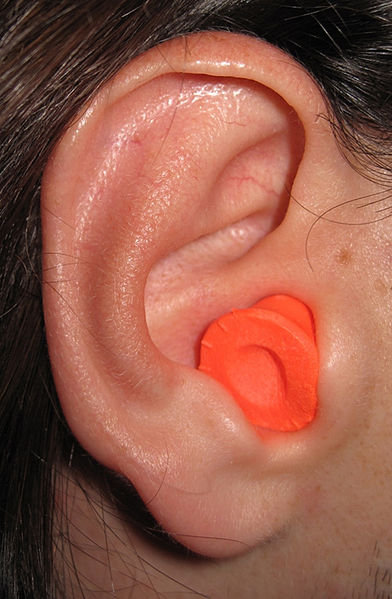
Hearing Protection

Wednesday’s Column: Third’s Words

Gary III

Gary Pollard

Hearing is pretty important. One of the best things about the beach is the sound of the waves crashing against the shore. How many have lost a loved one and, more than anything, just want to hear their voice again? I’ve been told that the sound of birds in the early morning is very peaceful (I wouldn’t know from experience because mornings are for crazy people). We experience and enjoy so much of the world through hearing! 

We usually take precautions while doing something that could potentially damage our hearing. When using some kind of implement like a mower, chainsaw, tractor, leaf blower, etc., we might use hearing protection. If you like to go shooting, you’ll definitely use earplugs or a suppressor (if you don’t mind the paperwork) to mitigate some of the sound. If you work in an industrial environment, chances are you’ll spend most of the day with earplugs in. We take these precautions because we’d like to keep our hearing for as long as we can. 

There’s a lot of noise in our world right now. People are screaming out their political viewpoints and world-views. Hatred on both sides of the political aisle is being shared with as much volume as their respective constituents can muster. Media has given us information overload and we’re very aware of everything going wrong with the world. It’s no surprise to me that so many people in our time are experiencing daily, sometimes-crippling anxiety. The noise we’re experiencing is deafening. 

Our world needs a refresher course on hearing safety, so what follows is merely the essentials. 

First, unnecessary exposure to noise may cause irreparable damage. The greatest hazards are social and news media as they produce the most volume. Many of us are exposing ourselves to the negativity found in these platforms at dangerous levels. Cutting way back on our exposure to these sources of division, anxiety, violence, and hatred is sure to help us avoid damage. 

Second, it’s called “volume” for a reason: lots of voices are involved. We can do our part to prevent damage by simply not contributing to the decibel level. Imagine how much more peaceful our world would be if most people refrained from publicly sharing their opinions! By not contributing to the noise level, we can help ourselves and others stay spiritually and emotionally sound. 

Finally, use hearing protection! It may not be a bad idea to put away any conduits to information for a while. Spend some time with friends and family, spend some time in nature, spend some time being productive around the house, spend some time in a hobby, spend some time in the Word. 

If we follow these three things – avoiding or limiting exposure, not contributing to the noise level, and using hearing protection – we will find ourselves happier, healthier, more unified, stronger, more spiritual, and less anxious. For the next few weeks (months?), let’s use hearing protection and see if our outlook doesn’t improve drastically. 

Proverbs 1:5; 17:4

392px-earplug-foam-in-ear

Rebuke Requires Relationship

Neal Pollard

  • A child scolded by an austere stranger may get frightened or bullied, but not persuaded or “reached.” A parent, grandparent, a sibling, or good friend will be much more effective.
  • A church member reprimanded by an aloof elder with none of the skill and instincts of a shepherd will get offended, hurt, and angered, but will likely ignore the admonition. A caring, involved elder, even if what he says is difficult and narrow, will prove much more effective. Jesus makes this clear in John 10:5.
  • A preacher who isolates himself from the members, though golden-tongued and 100% right, will cause rankling and roiling rather than remorse and repentance when dealing with sensitive, “hard” subjects. Yet, a man people know cares about them will be given a hearing on even “hot button” matters delivered in loving conviction. 2 Timothy 2:24-26 makes this clear.
  • A brother or sister bringing a criticism or dispensing blunt advice, who has done nothing to establish rapport and relationship with the object of their censure, will have zero impact for good and most likely widen the distance already existent between them. Galatians 6:1-2 implies one who has worn the yoke with the one approached about the trespass.
  • A “Facebook friend” or social media connection, who does a drive-by, verbal “shooting,” devoid of real life connection and bond, is seen as an obnoxious oaf at best and more likely as an impertinent intruder. That forum is not typically going to work for effective exhortation, especially if the dressing-down comes from one who has established no meaningful link. Remember, “Faithful are the wounds of a friend” (Prov. 27:6). That’s a real friend; not a virtual one.
  • A neighbor who has taken no time to be a friend or neighborly delivers hollow requests, suggestions, or demands. Without benefit of time and shared experience, this is received as bad manners and bad form. One who takes the time to demonstrate care will be much better heard (cf. Prov. 11:12).
  • A co-worker or schoolmate will be unpersuaded by someone who makes no time for them or takes no time to get to know them but who gets in their business is wasting their time. But, one who proves genuine concern will much more likely get a thoughtful hearing.

It’s just the way we are. We bristle at cold, heartless interference from the seemingly disinterested party. But we are open and receptive to people who take the time to get to know, understand, and care about us. The same thing said the same way will make a big difference, depending on the presence or absence of a relationship. We would do well to strive to build more and better relationships, especially if we desire to help people grow closer to Christ and go to heaven. May we first work on the connection before we attempt the correction.

argument-conflict-controversy-dispute-60884