The Quiet Sin That Still Shouts on Black Friday

Brent Pollard

For years, Black Friday earned its reputation not from ledgers but from battlegrounds—retail floors where human dignity took a backseat to door-buster deals. News cameras captured the spectacle: grown men and women trampling one another, wrestling over discounted electronics, shouting with voices hoarse from camping overnight in cold parking lots. The scenes were shocking precisely because they revealed something uncomfortable about ourselves.

Those chaotic stampedes have largely faded, replaced by the quieter click of online carts and the convenience of sales that stretch across entire weeks. Yet we would be naive to assume the spirit behind those frenzies has disappeared. Covetousness has not been conquered; it has merely changed costumes. It still prowls, perhaps more dangerously now because it moves in the shadows of normalcy.

Understanding Covetousness in a Consumer Culture

The Scriptures speak with clarity and force about covetousness. God inscribed it among the Ten Commandments—”You shall not covet” (Exodus 20.17)—placing it alongside murder and adultery as a fundamental breach of divine order. The apostle Paul equates it with idolatry (Colossians 3.5), and Jesus Himself warned that a person’s life does not consist in the abundance of possessions (Luke 12.15). These are not casual observations. They are urgent warnings about a sin that destroys souls.

Yet covetousness may well be the most overlooked sin among professing Christians today. We have learned to identify sins that announce themselves—drunkenness carries an odor, anger has volume, and sexual immorality brings scandal. But covetousness? It wears the mask of prudence. It masquerades as ambition, self-care, or simply “keeping up.” In a world built on consumption, covetousness looks like Tuesday afternoon.

This is precisely what makes it lethal. When sin begins to look like normal living, we cease to call it sin at all. If the enemy of our souls seeks to neutralize the church without triggering alarms, covetousness serves as his preferred weapon—quiet, respectable, and devastatingly effective.

The Warning of Jesus: “Take Heed and Beware”

In Luke 12.15, our Lord issues a double warning with deliberate urgency: “Take heed, and beware of covetousness.” Two imperatives, one breath. Why such emphasis? Because Jesus understood what we often forget—that the human heart is perpetually vulnerable to the lie that more will satisfy.

Notice that Christ does not merely say “avoid” covetousness. He says take heed, which means to pay careful, sustained attention, and beware, which calls for active vigilance. This is not passive resistance but intentional, disciplined watchfulness. The implication is sobering: covetousness will not announce itself. It will arrive disguised as legitimate need, reasonable desire, or innocent comparison.

Let us be clear: Black Friday itself is not inherently sinful. Wisdom in stewardship often means seeking good value, and thoughtful purchasing can serve both family and generosity. The issue is not the calendar date or the transaction but the condition of the heart engaging in it. When we participate in the marketplace, do we do so with contentment and purpose, or with the restless craving that can never be filled?

The frenzy that once defined Black Friday—and the subtler compulsions that still drive much of our economic behavior—expose three spiritual dangers we dare not ignore.

Three Spiritual Dangers of Covetousness

Covetousness Normalizes Discontent

God calls His children to contentment (1 Timothy 6.6-8; Hebrews 13.5). Yet covetousness whispers constantly that what we have is insufficient. It trains us to focus not on what we possess but on what we lack. This is not mere pragmatic planning for the future; it is a spiritual disease that robs us of peace and gratitude in the present.

As has been observed, the man who has God and everything else has no more than the man who has God alone. Covetousness blinds us to this truth. It convinces us that one more purchase, one more upgrade, one more experience will finally deliver the satisfaction we seek. But the nature of covetousness is that it never delivers. It only promises.

Consider how advertising works: it manufactures dissatisfaction. Before the ad, you were content. After the ad, you feel incomplete without the product. This is spiritual warfare dressed in marketing language, and it works because our hearts are already fertile ground for discontent.

Covetousness Trains Us to Measure Worth by Possessions

Jesus teaches that life does not consist in the abundance of things (Luke 12.15). Yet covetousness reverses this wisdom, teaching us to evaluate ourselves and others based on what can be seen, touched, and posted online.

Someone seeking material possessions only creates for themselves a gilded prison. When our identity becomes intertwined with our acquisitions, we trap ourselves in an exhausting cycle of comparison and competition. We measure our worth not by God’s declaration of value through Christ but by fluctuating market standards.

This is practical idolatry. The accumulation of things becomes not merely a means to life but the meaning of life itself. And when this happens, we have exchanged the Creator for created things—precisely what Paul condemns in Romans 1.25.

Covetousness Weakens Our Gratitude

Perhaps nothing reveals the corrosive effect of covetousness more clearly than its assault on thanksgiving. The covetous heart cannot truly give thanks because it is perpetually focused on what it does not yet have. Gratitude looks backward and upward, recognizing God’s provision. Covetousness looks forward and laterally, cataloging deficiencies and envying neighbors.

This is why the day after Thanksgiving can be so spiritually jarring. One day we gather to express thanks for God’s blessings; the next, we rush to acquire more as if what we have is inadequate. The irony should not escape us. Covetousness turns thanksgiving into hypocrisy.

Fighting Covetousness With Eternal Treasure

How then do we fight? Not by suppressing desire—God created us with the capacity to want, to long, to pursue. The battle against covetousness is not won by desiring less but by desiring better things.

Jesus provides the antidote in Matthew 6.19-21: “Do not lay up for yourselves treasures on earth, where moth and rust destroy and where thieves break in and steal; but lay up for yourselves treasures in heaven, where neither moth nor rust destroys and where thieves do not break in and steal. For where your treasure is, there your heart will be also.”

This is not poetry; it is economics. Jesus is telling us to invest wisely. Earth’s treasures decay, disappoint, and ultimately disintegrate. Heaven’s treasures endure. The question is not whether we will treasure something—we cannot avoid doing so—but what we will treasure and where.

God is most glorified in us when we are most satisfied in Him. Covetousness is defeated not when we grit our teeth and endure deprivation but when we discover a satisfaction so profound that lesser things lose their grip. When Christ becomes our treasure, sales and upgrades and status symbols fade into their proper insignificance.

If we covet trivialities, it is because we have not yet tasted the goodness of God. We chase shadows because we have not yet stood in the light.

Practical Steps to Guard Against Covetousness

All truth must become actionable or it remains mere information. What then shall we do?

First, practice intentional gratitude. Before making any significant purchase, pause to list what God has already provided. This simple discipline reorients the heart from scarcity to abundance.

Second, examine your motives. Ask: Am I buying this because I need it, or because I want what someone else has? Am I seeking to fill a legitimate need, or am I trying to fill a spiritual void with material things?

Third, give generously. Nothing breaks the power of covetousness faster than open-handed generosity. When we give, we declare that God—not possessions—is our source and security.

Fourth, fast from consumption. Consider seasons of deliberate simplicity. Skip sales. Avoid browsing. Create space to discover that you already have enough.

Fifth, redirect your desires. Cultivate hunger for spiritual realities—Scripture, prayer, fellowship, service. Feed your soul the bread of life so that the world’s junk food loses its appeal.

The Greatest Bargain Ever Offered

Black Friday will come and go with its sales, advertisements, and temptations. The receipts will fade, the products will break, and the cycle will repeat. But the danger of covetousness remains, not just on one day but every day we draw breath in this consumer culture.

Yet hear the good news: The greatest bargain ever offered is still available, and it requires no credit card. A life emptied of covetousness and filled with Christ is a life money cannot buy. This treasure is free to all who will receive it, paid for not by our purchasing power but by the precious blood of Jesus Christ.

God offers us satisfaction that lasts, joy that endures, and treasure that neither moth nor rust can destroy. The transaction is complete. The price is paid. The only question is whether we will stop chasing shadows long enough to embrace the substance.

May we be a people who treasure Christ above all things, who find in Him a satisfaction so complete that the world’s bargains become irrelevant. For in Him we have already received everything—and what we have cannot be improved by any sale, upgraded by any purchase, or diminished by any economy.

Where your treasure is, there your heart will be also. Choose wisely.

A Kingdom Opportunist

October hits, and life kicks into overdrive. Halloween, Thanksgiving, Christmas, New Year’s, it’s a relentless lineup! Family visits, work parties, and the creeping numbers on the scale keep you on your toes and in a food coma. In all this, it’s easy to let Bible study and prayer slip. But if you’re too busy for God, you’re too busy. So how do you balance life with spiritual growth?

Carl Pollard

October hits, and life kicks into overdrive. Halloween, Thanksgiving, Christmas, New Year’s, it’s a relentless lineup! Family visits, work parties, and the creeping numbers on the scale keep you on your toes and in a food coma. In all this, it’s easy to let Bible study and prayer slip. But if you’re too busy for God, you’re too busy. So how do you balance life with spiritual growth? Be a Kingdom Opportunist,  someone who spots and acts on God-given moments to advance His work, not for personal gain, but for His glory.

A Kingdom Opportunist sees openings in daily life and responds with faith and courage. Scripture shows us people who lived this way, always ready to act when God opened a door. 

Paul didn’t let circumstances stop him. In Acts 16:25-34, he and Silas are beaten and chained in a Philippian jail. Instead of giving up, they’re praying and singing hymns at midnight. When an earthquake opens the prison doors, they don’t run; they stay and share the gospel with the jailer, leading him to Christ. In Acts 17, Paul’s in Athens, surrounded by idols. He spots an altar to an “unknown God” and uses it to preach the gospel. Synagogue, marketplace, or jail cell, Paul turned every moment toward Christ. He teaches us to see opportunities in tough spots: a coworker’s question, a neighbor’s grief, a delayed schedule. These aren’t interruptions, they’re opportunities! 

In Acts 16:13-15, Lydia, a businesswoman in Philippi, hears Paul’s message by the river. God opens her heart, and she responds immediately, following Jesus and opening her home to Paul’s team. Her hospitality makes her house a base for the early church. Lydia didn’t need a stage or a title, she used her home, influence, and resources to serve God. What do you have? A spare hour? A skill? A kitchen table? Like Lydia, you can use what’s in your hand. 

Barnabas, the “son of encouragement,” saw what others missed. In Acts 9:26-27, when the disciples feared Saul (later Paul) because of his past, Barnabas took a chance, vouching for him and bringing him into the church. In Acts 11:25-26, he tracked down Paul in Tarsus, kickstarting his ministry. He also gave John Mark a second shot after a failure (Acts 15:36-39), helping him grow into a key servant. Barnabas invested in people, seeing God’s work where others saw problems. Who needs your encouragement? A struggling teen, a new Christian, a friend who messed up? A kind word or second chance can shift someone’s path for God’s glory.

Scripture is filled with examples. Esther risked her life to save her people, seeing her role as queen as God’s timing (Esther 4:16). The Shunammite woman gave Elisha a room, creating space for God’s work (2 Kings 4:8-10). Andrew brought his brother Peter to Jesus in a simple act that changed everything (John 1:40-42). Each saw God’s hand and acted, not for themselves, but for His purpose.

Unlike worldly opportunists chasing self-interest, Kingdom Opportunists are driven by God’s glory. They’re prayerful, discerning, and bold, ready to move when God opens a door. To live this way, pray daily for eyes to see opportunities. Study Scripture to be ready to share your faith. Use what you have: time, talents, or a listening ear. Step into hard situations with trust, like Paul. Encourage others, like Barnabas. And stay humble, pointing to Jesus.

God’s still opening doors every day, at work, home, or in your community. My prayer is that we’ll see these moments, respond with faith, and act with courage. As we do, God’s Kingdom grows, one opportunity at a time. You’re equipped for this moment. 

Be a Kingdom Opportunist!

Personal Responsibility Meets Divine Grace:

A Deep Dive into the Parables of the Talents and the Hired Laborers

Brent Pollard

The Parable of the Talents (Matthew 25.14-30) and the Parable of the Hired Laborers (Matthew 20.1-16) delve into profound themes of stewardship and reward, each shedding a unique light on these concepts.

The Parable of the Talents reminds us of our duty to employ the gifts and resources entrusted to our care. It teaches that those who cultivate their talents can expect more significant rewards, revealing a structure where the fruits of one’s labor align with diligent stewardship.

In contrast, the Parable of the Hired Laborers reveals a profound truth about divine grace. It shows that laborers receive equal rewards regardless of when they begin their work. This parable demonstrates that God’s kingdom operates through grace rather than human metrics of effort or worthiness. The equal compensation given to all workers testifies to the Creator’s boundless generosity rather than merely accounting for their toil.

These parables weave together a profound narrative illustrating the delicate balance between human accountability and divine grace. Each carries a distinct truth that neither diminishes our responsibilities nor the grace bestowed upon us. One emphasizes our sacred duty to steward our blessings, while the other reveals God’s boundless generosity, which transcends our human understanding of merit.

Scholars and theologians have grappled with these parables’ apparent contradictions throughout Christian history. Augustine emphasized the call to earnest service in the Parable of the Talents, while Martin Luther highlighted the concept of grace alone, as illustrated in the Parable of the Hired Laborers. Today, these timeless stories continue to shape our understanding of merit, justice, and the nature of grace.

In our contemporary world, where productivity and performance often dominate the discourse, the Parable of the Talents highlights the importance of faithful effort and wise stewardship of our gifts. Meanwhile, the Parable of the Hired Laborers reminds us that human measures of worth pale compared to divine grace. In modern congregations, these teachings offer wisdom for stewarding our communities and nurturing relationships.

They guide us in developing our talents while grounding our communities in the grace that sustains us all. These parables encourage a delicate balance: striving for excellence in service while embracing the inclusive nature of God’s kingdom, which welcomes all regardless of when they join the work. This inclusiveness offers comfort and reassurance, affirming that God values all.

Rather than conflicting, these parables present a harmonious view of the Christian journey. They reveal a sacred balance where personal responsibility and unmerited grace work as partners in spiritual growth. The Parable of the Talents affirms that our efforts and choices matter—that careful stewardship of our gifts has genuine significance in God’s kingdom. The Parable of the Hired Laborers reminds us that grace forms the foundation of our relationship with God, surpassing human attempts to measure worth.

Together, they paint a vivid picture of discipleship, calling us to excellence while grounding us in humility. They encourage us to invest ourselves entirely in kingdom work while remembering that our worth stems not from our achievements but from God’s boundless love. This perspective offers enduring wisdom for navigating the interplay between human effort and divine grace, speaking as powerfully to modern truth-seekers as it did to its original audience.

BIBLICAL BUDGETING

Dale Pollard

How much should you save?

“Let Pharaoh appoint commissioners over the land to save a fifth of the harvest of Egypt during the seven years of abundance” (Genesis 41.34). 

*Joseph implements a similar budgeting strategy used today, the 50/20/30 model

“Dishonest money dwindles away, but whoever gathers money little by little makes it grow” (Proverbs 13.11) 

Consistency and being smart with your money is the key to growth no matter how much you make. 

Example

Monthly Savings – $200

12 Month Total – $2,400

Don’t Buy What You Don’t Need 

“Why spend your money on what is not bread and your labor on what does not satisfy? Listen, listen to me, and eat what is good, and you will delight in the richest of fare” (Isaiah 55.2) 

Investing Principle 

“The man who received five bags of money went and put the money to work and gained five bags more” 

(Matthew 25.16) 

Monitor What Comes In And What Goes Out 

“Suppose one of you wants to build a tower. Won’t you first sit down and estimate the cost to see if you have enough money to complete it?”(Luke 14.28) 

Good People Aren’t Selfish 

“A good person leaves an inheritance for their children’s children…” (Proverbs 13.22). 

The Relationships Of Generosity

Neal Pollard

     I never cease to be amazed at the generosity of some people. Their capacity and faith for giving seems endless, yet their cheerfulness under such circumstances defies the understanding of man. While I have known so many generous people, I am humbled by my parents. Living on a very limited income for most of their adult lives, starting the life in preaching back in the mid-1960s, they have constantly poured out from that limited reserve abundantly upon others. I cannot count the number of poor families for whom they have bought a week’s worth of groceries. They often spent whatever Christmas bonus they received plus so much more, buying gifts for members. They have lent assistance to needy family and church members. They refused raises, asking instead that the increase go to support a missionary. That continues in their modest retirement years.

     This is on top of their regular contribution. I could write pages of material, giving specific examples of extraordinary good they have done with relatively little. The question that dominates my thinking is, “How have they developed such a giving spirit?” The answer that recently hit me is “relationship.”

     They have a proper relationship with people. It takes a servant’s heart, a heart which acts in love and concern for one’s fellowman, to so generously give. When we see our task as helping people however we can, we will give. We will give each Sunday, and we will find ways to give in our private opportunities.

     They have a proper relationship with money. What grace it requires to see money as a tool and a servant, a commodity used to live but also to give. Hoarders hurt, but sharers shine. Frivolity is sinful. Generosity is a grace. They, like Paul, have known abundance, though more often they have suffered want (Phil. 4:10ff). Whichever lot was theirs at the time, they seemed just as joyful and full of peace. They are savers, but they are also givers. They live well within their means, but they give well beyond their ability (2 Cor. 8:1ff).

     They have a proper relationship with God. Their sentiment is like one I once heard expressed by a gospel preacher. He said, “God will always give us the exact amount of money we need.” If we trust that the God who made us and remade us through Christ is control of it all, we know He will supply all our needs (Phil. 4:19). If we see ourselves as His stewards (managers, 1 Cor. 4:2), we will happily serve as a conduit of generosity.

     God has not caused their generosity to impoverish them. To the contrary, they live as close to debt-free as people can in our society. God has blessed them with things that man would find impossible to believe they could own in the wake of such bountiful benevolence and generous giving. What a lesson they serve to all of us to understand the relationships of generosity. 

Thanks, Dad and Mom.

Gary and Brenda Pollard will celebrate their 60th Anniversary this Friday (6/21/24)

“Do Over”

Saturday’s Column: Learning From Lehman

I like to ask questions; these are rhetorical. Have you ever lost something and been frustrated or sad that it’s no longer here? What about someone ? I know I have. I think we can all relate. 

And what about this. Have you ever given away something, whether a donation or to a friend, and regretted it because you needed it later? 

These people and or things that came to your mind, would you like to have them back? Some may be less important than others, but regardless the point remains. 

I can’t tell you how often I’ve thought about something or someone I’d like to have back. 

Beyond people and things, what about time? I’m sure a decent portion of us are happy with where our life is now, I know I am blessed beyond measure. 

This doesn’t mean there aren’t certain events or decisions we wouldn’t mind to have a do over on. I mean, after all, hindsight is 20/20, right? 

If hindsight is 20/20, What about foresight? Think about this, it’s impossible to change your past. You can try all you want. You can’t do it. But you can change your future. 

You can make a decision here and now that you’re going to stop, start, or continue down any number of paths. So, which path are you going to take?

To help reflect on this, let’s take a look at a passage from 1st John 1 – Verses 6 and 7: If we say that we have fellowship with Him and yet walk in the darkness, we lie and do not practice the truth; 7 but if we walk in the Light as He Himself is in the Light, we have fellowship with one another, and the blood of Jesus His Son cleanses us from all sin. 

With this in mind, I want us to fast forward from the here and now. We are going all the way to judgment day. We are standing there awaiting our final judgment. Suddenly, you find yourself amongst those doomed souls that are told to depart. It’s no small matter, being eternally separated from God and his grace. 

Now, what would you do if you were given a second chance? You’re told, you can have that “do over”. All you have to do is follow the plan laid out in the Bible and you’ll be given that opportunity to go back with that ever elusive do over. Scripture like John 14 – Verse 15 tells us.  “If you love Me, you will keep My commandments. 

I don’t know about you, but when I explore this idea, I’d like to imagine that I would move mountains with this second chance. So what stops me from having this level of commitment now? 

Why do so many of us squander the first chance, knowing we can’t have a second when this life ends. It sounds trivial to compare this to anything earthly, and in a way it is, but the idea that we would attempt to prepare for anything of an earthly matter, but not expend a tremendous amount of our time and energy on spiritual preparation is really something to reflect on. 

I think it’s amazing we have the gift of free will, but it’s important we understand there is an enormous responsibility that comes with that free will.

Our Lord has given us the roadmap. We must follow it. We said earlier hindsight is 20/20. But foresight….. is 66 books long. We just have to pick up the good book and apply it to our lives. We won’t be perfect. We just need to aim our feet and hearts down the road laid out before us. 

Landon Bryant

It Is What You Do With What You Have

Friday’s Column: Brent’s Bent

Brent Pollard

“Ah! vous dirai-je, maman” is a French children’s song born from an anonymous pastoral tune in 1740. However, this melody is so well known to us that we use it to sing three English songs: 1) “Twinkle, Twinkle Little Star,” 2) “Baa Baa Black Sheep,” and 3) “The Alphabet Song.” From a musical perspective, one might think that being a “children’s song” would make the tune simple enough for a child to plunk out on the piano with a single finger. And, indeed, in the hands of a beginner, that is true. However, one might be surprised to hear what a few renowned composers did with “Ah! Vous dirai-je, maman.” 

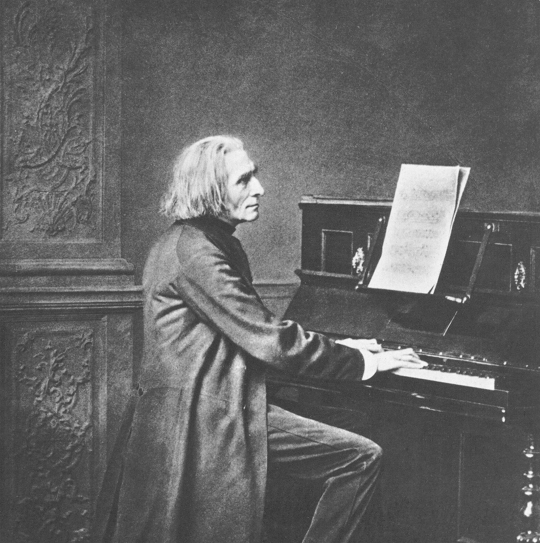
Wolfgang Amadeus Mozart wrote twelve variations on this piece. Mozart’s composition has Köchel listing number 265 and is called “Twelve Variations in C on ‘Ah! vous dirai-je Maman.’” The melody has a length of about fourteen minutes! And no one listening to it would consider it “child’s play.” Not to be outdone, harpsichordist and composer Johann Christoph Friedrich Bach created eighteen variations on the tune for the keyboard. It takes about ten minutes to play “Bückeburg Bach’s” piece, “Variations on “Ah! vous dirai-je maman” in G major.” Even romantic pianist Franz Liszt had a crack at “Ah! vous dirai-je, maman.” Liszt’s version was short and sweet, taking only twenty-two seconds to play. But Liszt still managed to embellish the song with his flourishment despite its brevity. 

So, though it is the same song, its complexity and appeal derive from the musicians’ abilities. This truth reminds me of a parable of Jesus. A master departing for a journey entrusts his valuables to three of his servants (Matthew 25.14-30). One servant received five units of currency, another received two, while the last servant, later called “lazy” and “fearful,” was given but one. When the master returned, the servant given five talents gave to his master five more which he had earned. The two-talent servant likewise doubled his share. But that lazy and fearful servant hid the money given to him in the ground. This servant claimed fear of loss caused him to hoard what the master entrusted to him. 

We cannot ignore the original context of this parable which is money. A talent began its life as a measurement of weight. By the New Testament, the talent equaled the buying power of that weight in gold or silver. Most scholars believe that the talent to which Jesus referred was equal to 6,000 denarii. If you recall, from Matthew 20.2, employers paid workers a denarius for a day’s wage. So, one talent equaled the salary earned from 6,000 days of work! Thus, the master entrusted the “one-talent servant” with about 16 years’ wages. So then, how much more impressive that the five-talent servant increased his master’s investment by an amount that would have required the ordinary worker roughly 82 years of labor? (If my math is correct, that is.)  

Today, we tend to remove our Lord’s parable from its fiscal context to refer to our stewardship over the abilities and skills we can muster in God’s service. Or we might use talent to refer to all the resources at our disposal as we worship and serve. That it is about money is seen in the master’s scolding of the lazy servant that the least he could have done was put his talent in the bank to allow it to draw interest (Matthew 25.27). The master’s rebuke implies that the lazy and fearful servant could have still been productive despite his character flaws. All he had to do was make a safe investment of his master’s funds with the bank. See how Jesus knew about compounding interest! Compounding interest is so incredible that even Albert Einstein’s genius esteemed it as man’s greatest invention. (Granted, interest rates must be more than they are now to grow wealth. I know one fellow who only earns about fifteen cents a quarter with the current rate.) 

Elsewhere, the apostle Paul reminds us that a bountiful return follows when we sow bountifully (2 Corinthians 9.6). This Scripture is also about money. So, wealth reflects what we do with what we have. Returning to Jesus’ parable, one notes that the Lord specifies that the master knew the abilities of his servants and used that knowledge to determine how much he would entrust to each man. For this reason, Jesus could also say that God expects more of the one to whom He has given more (Luke 12.48). Please understand I am not promoting the prosperity gospel of such charlatans who play preachers on the TeeVee. If you aren’t a wealthy person, it is unlikely that God will shower you with money from Heaven simply because you prayed the prayer of Jabez or sent in “seed money” to someone’s ministry. 

No, the Lord has already given you something. Using what God gives you may be like the previously mentioned child striking single keys with his fingers. But that is okay since it is what you can do with the tune. However, your brother or sister may be capable of making twelve or eighteen variations on that tune, making your jaw drop. Worry not; their talents are not an indictment of your own. You are still capable of playing a lovely song. Therefore, it is a matter of ensuring you play it your best. Don’t do like the lazy and fearful servant and hoard your talent. Such people rob God (cf. Malachi 3.8). In these difficult economic times and times of future prosperity, God will judge us for what we do with those talents with which He has entrusted us.      


Franz Liszt at the piano (public domain)

Jesus Has All Authority

Monday’s Column: Neal At The Cross

Neal Pollard

Jesus has come to Jerusalem and taken the gloves off. By His unparalleled authority, He is directly challenging the religious establishment whose shallow righteousness has been rejected by His Father. He has come to take the Old Law out of the way and establish His church. It’s teaching like this parable in Luke 20:9-18 that will provoke those leaders to the point that they will trump up charges and bribe false witnesses to arrest, try, and have Him crucified. This parable is stark and shocking, and the moral as heavy as an anvil. Notice.

THESE LEADERS WERE GUILTY OF IMPROPER STEWARDSHIP (9). The “man” in the parable represents God, the Father. He made Israel a nation and gave the Jews a Law to follow and keep. The Jews, particularly the religious leadership, were entrusted with faithfully carrying it out, but they did not. 

THEY WERE GUILTY OF TAKING WHAT DIDN’T BELONG TO THEM (10). In fact, these leaders–dubbed “the vine-growers” by Jesus in this parable–thought that they were in charge. They sought to make people subject to them, to follow their rules (cf. Rom. 10:3-4). The end result was vain religion (Mat. 15:8-9).

THEY WERE GUILTY OF ABUSING THOSE SENT TO THEM (11-15). The “slaves” sent to them were presumably prophets and teachers, no doubt inclusive of John the Baptist. These were the Father’s spokesmen, come to teach and correct them. Each one sent was treated the same, sad way: they “beat him and sent him away empty-handed.” Last of all, the son was sent (13-14). The “owner” (the Father) sent Him, saying, “I will send my beloved son; perhaps they will respect him” (13). Instead, seeing Him as the heir, they plotted to kill Him (14). Obviously, Jesus is referring to Himself and the very thoughts these religious leaders were thinking as He told the parable! 

THEY WERE GUILTY OF LOSING WHAT WAS ENTRUSTED TO THEM (16-18). Instead of being convicted by this parable, these religious leaders recoil at the moral of the parable: “What, then, will the owner of the vineyard do to them? He will come and destroy these vine-growers and will give the vineyard to others” (15-16). Their emotion boils over and they audibly reply to Jesus’ parable, “May it never be!” They missed the travesty of the behavior they and their forefathers had shown to God’s messengers and the sin they were about to perpetrate on His Son. They didn’t want to lose their grip on the power and influence they had taken. But Jesus doubles down, changing the imagery from a vineyard to building construction. They were going to reject Jesus, the stone, but He would be made the chief corner stone. He would judge and destroy them, if they did not abandon their rebellion.

Jesus is full of love, kindness, and peace. But, that’s an incomplete picture of Him. He came to establish His rule and reign. He must be King and Lord of our lives. We must submit to His way and truth to enjoy His life. 

Open Bible on a black table with book marker and pink highlighting
Jesus Has All Authority

Narcissus and Echo 

Friday’s Column: Supplemental Strength

81121814_2462862270639428_5746232403106463744_n

Brent Pollard

Greek mythology is fascinating. So much so, in fact, that the Romans co-opted it as their own. As such, the Roman poet, Ovid, tells us the story of Narcissus and Echo within Metamorphoses. You likely recognize Narcissus’ name because of the mental disorder named for him. Narcissism. You may not have known that the phenomenon called an “echo” also derives its name from a mythic figure. Echo was a beautiful, but talkative, forest nymph. She cut off the goddess Juno so much during conversations that the peeved goddess cursed her with the capacity only to repeat the last words spoken by others. 

Without delving too deeply into the mythology, suffice it to say Echo fell in love with the picky Narcissus, whose standard for a consort was so high that none could meet his expectations, including poor Echo. Already cursed, Echo was not able to convey her feelings to Narcissus. On one fateful day, however, Narcissus had sensed Echo’s presence and called out, “Is anyone there?” After she replied in the same, he said, “Come here!” Echo ran to Narcissus as she repeated his command. Echo’s actions repulsed Narcissus. He told her he would sooner die than allow her to enjoy his company. Echo was humiliated and ran away. Yet, she continued to love Narcissus. The vengeful goddess, Nemesis, saw Narcissus’ actions. She cursed him by making him fall deeply in love with his reflection. 

There was no redemption for Narcissus and Echo. Narcissus lingered by the pool of water, looking longingly at his reflection. Echo persisted in her love for Narcissus. As the years passed, Echo’s beauty faded, and her body wasted away, leaving only her voice. Narcissus committed suicide, realizing his impossible love would remain unrequited. A flower bloomed where he killed himself. Yes, the narcissus.  

It is easy to use Narcissus as an object lesson for us, spiritually.  Both James and Peter quote Proverbs 3.34 from the Septuagint to remind us that God resists the proud (James 4.6; 1 Peter 5.5). A haughty look is something we know God hates (Proverbs 6.17). Our Lord went about doing good (Acts 10.38). Since He is our example (1 Peter 2.21), Paul tells us: “do not merely look out for your own personal interests, but also for the interests of others.” (Philippians 2.4 NASB) 

But what lessons do we derive from Echo? Her tongue is what initially got her into trouble. Just because the tongue is an unruly member, per James 3, doesn’t mean that we should not seek to control it. There is the talk we must avoid (Ephesians 4.29; 5.4; Philippians 2.14). Besides this prohibited speech, there remains gossip and lying, which both Testaments condemn (Exodus 20.16; Psalm 15.1-3; Proverbs 6.19; 2 Corinthians 12.20; 1 Timothy 5.11-13; Titus 2.3). 

Echo also squandered a precious commodity in her quixotic pursuit of Narcissus, time. We are supposed to take advantage of the time given to us (Ephesians 5.15-17). There comes the point where even preaching the Gospel to the hard-hearted equivalent of a brick wall is like casting “what is holy to dogs” and throwing “pearls before swine” (Matthew 7.6). 

Lastly, Echo loved someone incapable of justifying the precious investment of her heart. The world is like Narcissus in that regard. John reminds us that the world with its lusts will one day pass away (1 John 2.15-17). Even so, how many have laid up treasure on the earth? (Matthew 6.19-21; Luke 12.33-34). We cannot pursue both God and mammon (“wealth” NASB— Matthew 6.24).  

May it be that as you search your heart that you find no kindred spirit with Narcissus and Echo. Focus outwardly upon others’ needs, be mindful of the precious commodity of time, and give your heart—and tongue—to the One Who will best use and appreciate it (cf. Matthew 22.36-38). 


A Simple Way To Simply Live Better

 Tuesday’s Column: Dale Mail

DaleandJanelledirectorypic

Dale Pollard

We would all like to improve in many ways, but many of us are also well aware of the flaws we feel are holding us back. Those shortcomings tend to get in the way, slow us down, or even prevent us from achieving the quality of life that we desire. While there is plenty of room for improvement in my life, I have found that there is a simple way to clearly envision where I am currently, and also plan for where I would like to be in the future. 

It’s true that our burdens often come from our blessings. For example, the blessing of having a car may result in the burden of expensive bills that follow a mechanical issue. 

I believe that there are five major buckets of blessings that we all must give our time and attention to. They are the five categories that if purposefully tended to, our lives can be wonderful. On the other hand, if neglected, we find ourselves in a head spinning spiral of worry and anxiety. 

These buckets are: 

  1. Faith 
  2. Mental maturity 
  3. Physical health 
  4. Relationships 
  5. Work 

If one of those buckets isn’t filled with the proper content, I’m sure you’re aware of the negative effects. If these crucial categories are filled correctly, our quality of life will only improve. 

God is the Creator of life itself which makes Him the leading authority on the subject. Consider how He can help you in each of the five areas listed above.

Faith 

By denying self, our focus is diverted away from our negative self- absorption. Putting God and others first can give you a better, fresh, and positive perspective. 

Acts 20:35

Mental maturity 

When we seek to understand our own minds and what makes us tick, we’ll be able to identify where these negative thoughts and reactions originate. 

Philippians 4:8

Physical health 

Poor health habits like fast-food diets, lack of physical exercise, and sleep deprivation only make dealing with stress all the more difficult. God designed your body to function properly when properly taken care of. 

Luke 1:37 

Relationships 

Every kind of relationship, whether marriages, friendships, family, co-workers, or the church, has one thing in common—they were made by God. Thankfully, God wrote a book to help us understand who we are to be to each individual that make up those groups. 

Romans 12:16

Work 

God built us to work— He expects us to. Some choose to be lazy and suffer. Others choose to constantly work to the neglect of the four other areas mentioned. There must be a balance, and God knows that. 

Psalm 128:2 

While there’s a lot more to be said concerning these five categories, I hope this simplified things and helped you refocus on what really matters. 

Hopefully, looking at life through His divine lens has reminded you of Who you should turn to for everything. He has given you the ultimate assurance— and He is willing to give you the ultimate assistance. 

When Adversity Makes You Feel Unproductive

Friday’s Column: Supplemental Strength

brent 2020

Brent Pollard

If there’s one thing disappointing me most, it’s the lack of productivity I often feel. There are many things I want to do. I don’t think I get even a quarter done. For many facing a similar predicament, it’s a matter of poor time management. Time is precious. We’re told to make the most of it since the days are evil (Ephesians 5.16). Contextually, this pertains to the efforts made by first-century Christians in their daily walk. Persecution was coming. Indeed, for some, their lives would soon be at an end. Did they want to depart for eternity’s shore feeling as if more could have done but had not been? That message remains prescient today. We enjoy civil liberties now including religious freedom. However, a tempest has been growing for half a century which seeks to strip away the vestiges of religion and morality from the body politic. In but a short time we may face the same uncertain prospects as they. Hence, our struggle to be productive is as important as ever.

This exhortation may be limited in scope, but I wish to address those who might have certain mitigating factors making Paul’s inspired admonition more difficult to keep. It’s one thing to be a timewaster when one is able-bodied. It’s another matter entirely when you’re limited from accomplishing as much by the limitations of the flesh. There are those accustomed to doing much. One day they young, full of vigor. In the blinking of an eye, though, they no longer recognize the person staring back at them in the mirror. The snow of many winters covers what hair is left on their heads. For such, it hurts getting out of bed. Something as simple as buttons on garments becomes a time-consuming challenge. They may be asking, “Why can’t I get as much done as I used to?” This can be especially vexing, spiritually.

Perhaps, you have an illness of the body or mind. Maybe you don’t have old age to blame for your aches and pains but an autoimmune disease that others dismiss because, from appearances, you look fine. Not only are you in pain but you feel alone because some have unfairly surmised you’re just lazy. It could be that you’ve had chemotherapy and experience what has been termed “chemo brain.” You find yourself struggling to remember simple details. If you don’t write something down, you’ll forget about it. Truly, I could share a plethora of other scenarios in which some malady besets the body or mind and causes one to feel unproductive or a timewaster. These should suffice.

Fortunately, we serve a gracious God. Not only is His grace sufficient for coping with our lot in life (2 Corinthians 12.9), but it takes into consideration our current estate. One can debate whether there are degrees of punishment from Luke 12.48. That’s not my purpose. A principle is established here, however, stating that we’re held accountable according to the responsibility entrusted to us. Why would God hold the enfeebled or impaired to the same standard as the able-bodied? This must be true of redeeming one’s time as well. Note, one cannot forsake his or her Christian duty. Yet, rather than beat up on yourself because of what you left unaccomplished, trust that God knows your situation intimately. The main thing is to show up and do the work of which you are capable (Matthew 20.1-16; 21.28-32). This is how you remain productive even while facing adversity in these evil days.

20190621_113147


LESSONS FROM ADVERSITY: LIVING WITH ONGOING ADVERSITY

Friday’s Column: Supplemental Strength

brent 2020

Brent Pollard 

While in the exceptional care of the physicians of the University of North Carolina Healthcare System, I met Dr. Alan Siqueiros as he was completing his Fellowship. He could tell I was depressed. My lung function was at 25% from my history of three pulmonary emboli. I had no prospects for a “normal” future. Yet, Dr. Siqueiros left me with some words of exhortation, since he was about to depart for Yale’s Danbury Hospital to do his Residency. “You’re a bright young man. You may not have the health you wanted, but you have a sharp mind. You’re still young. If I were you, I would focus on developing my mind and see where that leads.”


There’s something to be said about doing what you can with what you have at your disposal, isn’t there? The woman with the costly oil of spikenard did what she could when she took her costly oil and anointed Jesus’ head. When people complained she wasted something precious, Jesus told them to leave her alone since she had done what she could for Him (Mark 14.1-9).  A woman in the first century had limited options for service and this was a risky step. Even so, she was motivated to do what she could with what was available to her. Jesus understood and appreciate her effort.


We all expect our trials to be swift, don’t we? We don’t anticipate the possibility that we may find ourselves in a situation where adversity persists and may not go away. If you have an illness, others may see your adversity and help. Even so, there are also those forms of adversities people face on their own since no one else notices it (e.g. unequally yoked to an unbelieving spouse). So, if you are living with ongoing adversity, what can you do?


First, accept God’s sufficient grace (2 Corinthians 12.1-10). You don’t have to enjoy adversity, but trust God’s grace to give you a reason to rejoice, even if only in His strength. His strength shines through your weakness, when you’re living faithfully.


Second, go ahead and do what you can, even if it’s just with a box of “costly oil of spikenard.” As we’ve seen, even a simple act has its place when used to God’s glory. Christ has entrusted us with the gifts we may use (Ephesians 4.7-8).


Third, don’t compare yourself to others. We each have our own cross to carry (Luke 14.27). And the execution of our duties produce the results God intends (1 Corinthians 3.5-7).


Lastly, keep going (Hebrews 12.1-4). We know that we will only receive the crown of life if death finds us faithful (Revelation 2:10).


The nature of your adversity may be ongoing. It may be something you feel you face alone. However, the sufficient grace of God, coupled with the tools with which He has entrusted all of us, permits even those living amidst adversity to live a fulfilling life leading to our eternal home.

alabaster-flask-with-stopper-073c10-1024

Be Fearlessly Fervent 

Tuesday’s Column: Dale Mail

83538761_557569434843824_1603081807199207424_n

It takes a special individual of both breed and brand to truly impact the world. The fact is, many will live their lives comfortable and content to never break any molds or “step outside the box,” as they say. Most believers understand that God has called us out of this world to be lights and to be different, but that means being uncomfortable (James 1:2-4). We don’t like that aspect of faithful walking and at times the fire inside us and the will to go on is at the verge of being snuffed out. On every side we are surrounded by a raging current of mainstream ideologies and beliefs that drown the masses sweeping them closer towards eternity—unprepared. That familiar and depressing reality can discourage and frustrate us to the point of tears. Preachers, elders, and leaders are constantly fighting these feelings as they huff and puff under the weight of it all.
Christian fathers and mothers anxiously worry about that painfully uncertain future their children will battle. Young people are plagued with convincing thoughts that a faithful life is all but impossible today. How can we make an impact? You may wonder what difference you could possibly make as you observe such a powerful and evil force.
Here is the bad news, it’s hard. But here is the wonderful new, it’s worth it! God has given us an instruction manual on how to become mighty misfits in a culture that rejects righteousness. There are permanent footprints left by the feet of godly men throughout history, and their tracks lead to victory for those that choose to follow them.
For example, there is the trail blazer and zealous disciple, Paul. He serves as an inspiring nonconformist when he abandons his previous life of riches, respect, and comfort. His courage, faith, and determination can produce a powerful stirring in our spirits. If that man with the thorn can overcome fear and defeat the devil’s endeavors, despite his own weakness, then by the grace of God we can too. Our lives can leave an impact and they can serve as beacon of light for generations to come.
Notice how Jabez demonstrates this point in 1 Chronicles 4:9-10. Within a lengthy list of family lines that make up the sons of Judah, Jabez breaks the mold. While numerous names are given, there is something more to be said of Jabez. He stands out as one who was “more honorable” than those who were before him in verse nine. Though his name means “son of my sorrow,” a label associated with affliction, he refuses to let this name define his future. The key to his success is given in the following verse which says, “Jabez called upon the Lord saying, ‘oh that you would bless me, your hand be with me, and that you would keep me from harm so that it might not give me pain!’ And God granted what he asked.” That verse is loaded with valuable lessons for this age and every age to follow.
Lesson one, don’t interpret your future by looking at your past. It doesn’t matter what family you were born into or how you were raised. We all have been given at least three common blessings. If you are made in the image of God, and you are, then that means you have talent, opportunity, and a life. The amount of talent, number of opportunities, and quality of that life is irrelevant. You have everything you need to succeed which is precisely what our Father desires.
Lesson number two, only God can grant you gainful glory. Jabez established his lasting legacy and was victorious because he understood one thing. God is the God of impartiality. He offers a heavenly hand to help the stereotypically weak and sinful human break the stereotype. The cards of life you hold in your hand mean little to the God who owns the deck. Jabez, Paul, and many faithful others understood the weakness of humanity. Their lives are a statement and a confession— God can help anyone rise above the crowd. He can help you achieve the only recognition that counts and give you the precious gift of a future with certainty.
The path to victory is a narrow one according to Matthew 7:14. Few have found it and few have finished it, but with the right Guide it can definitely be done. Are you unsure of your current location? Look down at the tracks you are following, and the guide walking with you. If you are holding the hand of the Savior— you can be sure you’re going in the right direction. Allow that comfort to strengthen you and break out of whatever mold you are in. Let God use your weakness and failures to leave an eternal mark on a world that needs it. There is no congregation that can’t grow, no Christian that can’t improve, and no unsaved person that doesn’t deserve the chance to hear that life changing message of the cross. There’s a great day coming, and that should provoke some excitement as well as motivate us all to diligently and fearlessly work until then.
69867656_10156590049995922_5862977611440848896_n

THE DAILY PLANNER

MONDAY COLUMN: “NEAL AT THE CROSS”

16174665_10154303308455922_2453812807432667966_n

Neal Pollard

It’s the time of year when so many are buying or receiving calendars and planners or using an electronic version of the same. These can be key to organizing our lives, maximizing our time management, and strategizing ways to grow and improve in the future. Good stewardship really demands that you are “making the most of your time, because the days are evil” (Eph. 5:16).

In this task of planning life each day, please consider planning to do the following each and every day of 2020:

  • Tell someone about what Jesus has done for you every day.
  • Tell God how great He is and grateful you are for Him as you pray every day.
  • Let God speak to You through His Word every day.
  • Tell your spouse, children, and family you love them every day.
  • Show someone the servant heart of Jesus in your deeds every day.
  • Do something that will help you look more like Jesus every day.
  • Help people see the joy and satisfaction of living the Christian life every day.
  • Encourage someone (via card, social media, phone, etc.) every day.
  • Compliment someone every day.
  • Examine yourself every day.
  • Provide an example of leadership to someone every day.
  • Invest in someone every day. 
  • Count your blessings every day.

That’s enough to keep idleness from plaguing us, isn’t it? Consider how helpful this will be, not just on January 1, but also March 19, June 6, September 25, and December 30. This life is about overcoming (1 John 5:4), but perseverance is as much about the daily grind as it is the dramatic and grand. Zig Ziglar wrote that “people often say that motivation doesn’t last. Well, neither does bathing – that’s why we recommend it daily.” How profound! Plan on being a better you and on doing what that requires, day by day. 

Selling Children

Neal Pollard

In March of 2007, in Owensboro, Kentucky, a couple tried to sell the woman’s 15-month-old daughter for $3000 and an SUV. The noble purpose behind this attempted transaction was “money to pay off [the boyfriend’s] fines for previous criminal charges.” Surprisingly, they denied the allegations and maintained their innocence, an effort that would eventually be unsuccessful.

How heartbreaking that anyone could act so heinously. Truly, “Children are a gift of the Lord…a reward” (Psa. 127:3). Yet, while they are a gift from the Lord to us, in another sense they still belong to Him (cf. Ezek. 18:4). We cannot sell what ultimately does not belong to us.

What Charles Hope, Jr., and Amber Revlett did in Kentucky was certainly criminal, but they are far from salon among those trying to “sell” their children for one reason or another. In order to give their children popularity, gratification, or material success, some parents are encouraging their children to live a life of sin, worldliness, and selfishness. Secular courts would never convict them, but what they are doing is even more heinous than that attempted by those lowbrow schemers from the Bluegrass State. As Christian parents, we have an obligation to recognize this tendency and not “sell our children” out to anything that could replace their undivided loyalty to serve Christ. We want their hearts centered around Christ and His will (Mat. 6:33).

Let us both teach our children and realize ourselves their intrinsic value as ones made in the very image of God (Gen. 1:27). Within each of our children is a soul, every one of which is more valuable and important than the whole world (Mat. 16:26). May we never do anything that would lead them to exchange their souls. Whatever they gain, they will lose everything! To the extent we, as parents, can influence this, let us do with diligence. God has placed their training and spiritual wellbeing into our hands (cf. Deu. 6:4-9; Eph. 6:1-4).

Stack Of Cash

If Today Was My Last Day On Earth (Poem)

Neal Pollard

[NEAL’S NOTE: This poem was from the conclusion to the sermon I preached on this subject from Psalm 90]

If today was my last day and tomorrow found me gone
How would life be different, if that unknown somehow was known

Would I be a better person, would I live a better life
How much would I feed resentment, envy, bitterness and strife?

How would I choose to live, and what would be my emphasis
Being a blessing or a burden, full of service or selfishness?

Where would God be in my life, what place would He occupy,
If today was my last day, and before tomorrow I would die.

If today was my last day, and second chances all were through
And I stood before my judge and my eternal fate I knew

I would mourn and fall before Him, if I had not done what’s right
If I had chosen self and sin, if I had chosen eternal night.

But there’s no reason for apprehension, I can die w/head held high
If I die to self & live to Him, it won’t matter when I die.

WHAT YOU DO WITH WHAT YOU HAVE

Neal Pollard

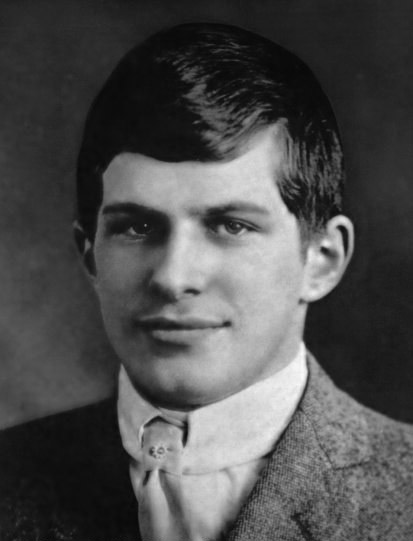
In discussions about the smartest person who ever lived, William James Sidis’ name will come up as being in the mix. Though measuring IQs with a specific number is not an exact science, he is reputed to have had an IQ of 200 or more. He was reading the New York Times at 18 months old. He taught himself eight languages and made up another one. He enrolled at Harvard University at the record young age of 11. He was a professor at what’s now Rice University by the age of 17. He was a renowned mathematician. But, adjusting to mainstream society proved an ongoing problem for Sidis, whose extreme, socialistic politics and eccentric behaviors dogged him for the rest of his life. He died of a brain aneurysm in 1944 at the age of 46. With such a brilliant mind, his contributions to the world were relatively small. In fact, most of us have never heard of Bill Sidis (much information from Amy Wallace’s sometimes disputed biography, The Prodigy, Dutton: New York, 1986).

We all know people who rose from poverty, dysfunction, and perceived disadvantage who have risen to great heights in their profession and their personal lives. Those abused as children, those who grew up in homes afflicted with drug use or alcoholism, and those whose parents went through failed relationship after failed relationship, have grown up to break such patterns by becoming loving, effective parents and spouses. Some who were given little have done much with it.

Jesus teaches the parable of the talents in Matthew 25, which demonstrates the good and bad stewardship of three particular individuals. Two faithfully used what they were given, but another was unfaithful. The Lord shows us God’s dim view toward one who fails to use what he or she has been given.

Most of us are somewhere on the continuum between the one talent man and the world’s smartest man. Scripture shows us that we must be faithful stewards (1 Cor. 4:2) and that we will give an account for our stewardship (Mat. 25:14-30), whether money, abilities, opportunities, time, or whatever our relative resources. May we be encouraged to do as much as we can with what we have been given. How great to be acknowledged by Christ before all nations as one who did the most with what we had!

william_james_sidis_1914

Tools In God’s Toolbox

Neal Pollard

Romans 6:13 tells us our body is an instrument, and we choose to use it for righteousness or unrighteousness. The Greek word translated “instrument” there means “tool or weapon.” What kind of tool or weapon are you? Are you an instrument God holds in His hand to do His will?

  • Are you a battering ram? The ancients would use a log or some other hard object to break down a wall or door. Have we filled our hearts with the Word to the degree that we can, speaking the truth in love (Eph. 4:15), break down barriers keeping the honest-hearted from God?
  • Are you a crowbar? Crowbars pry objects apart. There are things we should separate from our thinking and lifestyle. Are we trying to pull away from worldliness (Js. 4:4)?
  • Are you a chisel? This is a tool that does meticulous, detailed work. Its blade carves or cuts hard materials. Do we have the tenacity and trust needed to use God’s Word and benefit from His providence to remake our lives into the image of Christ (cf. 2 Co. 3:18)?
  • Are you a level? We live in not only a dishonest world but also a corrupt world. So many call good evil and evil good (Isa. 5:20). Can people find in us a reliable standard of right and wrong, as we reflect the principles of God’s Word? Levels are used to determine whether something is true and as it ought to be.
  • Are you a plane? The plane smooths rough surfaces by repetitiously moving back and forth across the surface. All four Gospels (Mat. 3:3; Mk. 1:3; Lk. 3:4; Jn. 1:23) speak of John the immerser’s work as making ready the path of the Lord, making His paths straight. We are not forerunners of Jesus; we follow in His steps (1 Pe. 2:21). As we do follow Him, we are going to forge a path safe for others to follow (1 Co. 11:1).
  • Are you a magnet? A magnet is an object that draws and holds another object disposed toward such attraction. Magnets can be used as tools themselves, but they are often made a part of other tools, such as hammers and screwdrivers. By living like Jesus, you will draw people to Him.

Paul also referred to “tools” or “weapons” when talking to the Corinthians. He mentions “armor of righteousness” and “weapons of our warfare” (same word). In both cases, the tools or weapons are spiritual and figurative, yet with them we can help shape and build up those around us. Be a tool in God’s toolbox!

toolbox_226362564


Take Not The Day For Granted (POEM)

Neal Pollard
Take not the day for granted,
Who knows what the morrow brings,
What present joy be recanted,
What shut the mouth that now sings.
Too often we long for tomorrow,
Assuring ourselves it will be perfect,
Dissatisfied with present perceived sorrow
Viewing only today’s every defect.
But right now, this moment, is precious
It holds a bright and unique treasure
For the one with wisdom who confesses
Trust in Him who blesses without measure
Yes, God gave us this day in His kindness
To use for His glory and pleasure
How tragic to be struck with a blindness
To how rare and how useful that treasure.
So many have not been gifted these hours
They’ve ceased their ability to live them
Who long for what now exceeds their powers
Whose light is put out, not just dim.
What are we doing with the present
To build a spectacular time ahead
To make others’ lives blessed, not just pleasant
To bring life to the spiritually dead
Take not the day for granted,
It was given to be managed astutely
Embrace it, don’t be disenchanted
Do your best with it, strive resolutely!

“Please Let My Mom Stop Smoking”


Neal Pollard

It was written on the back of a recent attendance card by one who seems to be pretty young–less than ten years old.  I did not recognize the child’s name, so I would guess it to be a visitor.  Yet, the plaintive cry pulls at my heartstrings.

Ironically, another visitor (a grown man) several weeks ago took great issue with the idea that smoking is sinful.  Apparently, I had talked about how harmful the use of tobacco is to the body and he did not appreciate it.  We discussed the matter, and using some other substances which the Bible does not specifically condemn as comparisons–methamphetamines, heroine, and cocaine–agreed that lacking a specific “thou shalt not” statement does not make the use of a substance okay. With the body of evidence regarding the carcinogenic properties of tobacco and the known associated health problems connected to its use, one would stand on thin ice and shaky ground to defend the use of tobacco.

But, where does the Bible say that smoking cigarettes is a sin?  How does one come to that conclusion?  What principles are there to consider?

  • What about stewardship?  1 in 13 people in the U.S. will develop lung cancer in their lifetime, but a 2006 European study revealed that 0.2% of men and 0.4% of women who never smoked will develop it. That same, latter study shows that 24.4% of men and 18.5% of women who smoke 5 or more cigarettes per day will develop it (for more info, see http://jnci.oxfordjournals.org and http://aje.oxfordjournals.org). That is an extremely elevated risk.  Additionally, few, if any, have argued that cigarettes or smokeless tobacco are essential (like, say, food) to the body.  Thus, to spend money–often money one does not have–on a substance that actually elevates the risk of harm to oneself is reckless, poor stewardship.
  • What about selfishness?  Given studies like the one above, and there are multiplied many more, a tobacco user does so selfishly.  To knowingly engage in something that could shorten or impair one’s life is to puts self above others.  It also often places others in harm’s way who have to endure “second-hand smoke.” Jesus’ “Golden Rule” seems apt consideration in this regard (Lk. 6:31; cf. Ph. 2:3-4).
  • What about sway? What Paul says about meat could equally apply to smoking (cf. 1 Co. 8:13). Why make my brother stumble? Especially when such stumbling brings ramifications to us, too (Mat. 18:7). Our lives should exemplify Christ, leading people to a better way of living on this earth.

Who knows exactly why this young child wanted us praying for mom to quit smoking? But this little one’s concern was palpable.  May we share concern over any habit, substance, or practice so potentially damaging to ourselves and those close to us.