Wednesday’s Column: Third’s Words

Gary Pollard


Neal Pollard
We need to know the Bible, to study and apply,
And teach and share with others, their faith to solidify.
But often, before they’ll listen to a consonant or vowel,
They need to see us on our knees, with our basin and our towel.
For fine speech can lose its luster, and argument its shine
When its power in our own lives, is unseen and unapplied.
“I’d rather see a sermon than hear one any day,”
Is the common man’s mantra, as he’s searching for the way.
And a teacher whose compassion and listening ear is offered,
Will open up a heart before one single verse is proffered.
For the adage, often spouted, is a proverb we need to share,
People do not care how much you know til they know how much you care
The way to reach an eternal soul involves more than the mind,
And every servant of Jesus knows it takes service pure and kind.
Loving care that costs us in terms of money, effort, and time,
Will soften hearts made hard by worldly greed and grist and grime.
Dear Christian as you pray to God, “Lead me to some soul today,”
Keep your eyes peeled for a struggling, straggling soul astray,
Then be a neighbor, show him mercy, you just might be surprised,
When he listens to the truth of God you have actively exercised.

Neal Pollard
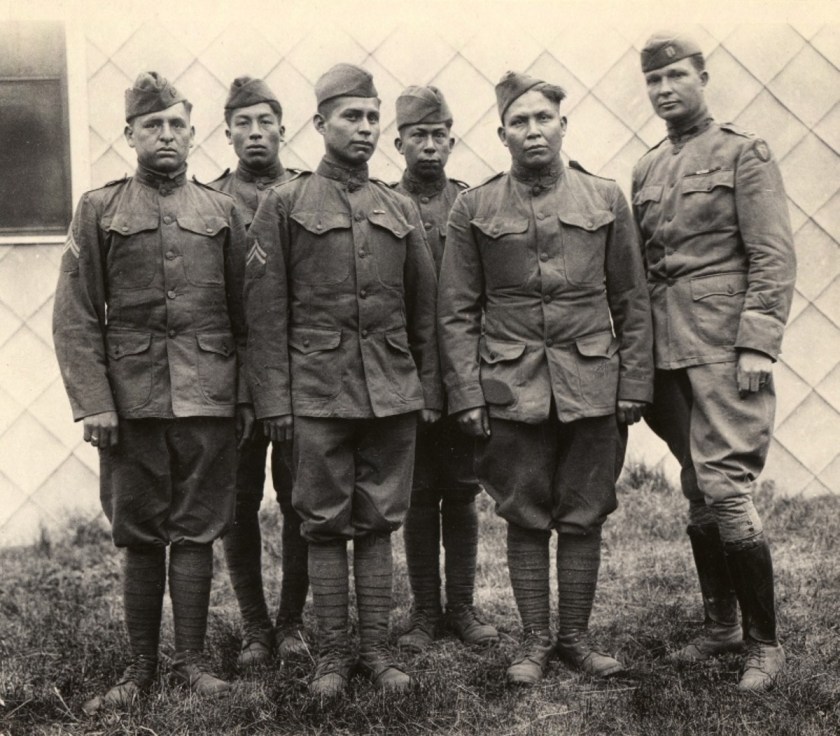
In World War I, German intelligence was able to steal American plans at will. Tapping enemy lines was extremely easy, especially at night. Faced with such a dilemma, a regiment full of Choctaw Indians thought of a potential solution. The commander inquired into how many Choctaws knew their mother tongue. The men hesitated. The first English word some of them had learned was “soap.” In basic training, they were threatened with having their mouths washed out if caught speaking their native language. Now, their regimental leaders wanted them to speak it. The Choctaws were dispersed among the various divisions and attached to communications. From that point to the end of the war, all important orders were passed along in Choctaw. The Germans were stymied and finally caught off guard by the Americans’ war plans (from PBS’ American Experience: The Great War, Episode 3).
Today, our society does not want to hear us speak the message of Christ. Many find it offensive and restricting. They may even put great pressure on us to keep quiet. But, we cannot. These have been taken captive by the devil to do his will (2 Tim. 2:26). Especially when someone sees the spiritual crisis in his or her life, there will be a desperate desire for an answer. Where will they turn? If they have heard us speak of Christ and His way, they may need us to communicate the most important message ever spoken. Don’t keep quiet about Jesus, especially given the dire danger in this spiritual warfare (2 Cor. 10:3-5). God is counting on us to speak for Him, and so is a lost and dying world! Keep sharing Him.

Neal Pollard
None of these are overly time-consuming. Pick as many as you can. If you cannot get to them all today, then pick up where you left off tomorrow. Grow your list. Use your imagination and creativity. Find yourself looking and acting more like Jesus! See yourself in Matthew 5:13-16.

Neal Pollard
The early church grew (Acts 2:41; 5:14; 6:1,7; 9:31; 11:24). As we read of this growth explosion, we see the key role member involvement played. Christians were spreading the word (8:4), involved in each other’s lives and in the lives of the lost around them. This is such a simple concept, but churches not practicing it are not growing. What is involved in involvement?
To become adequately involved, let’s ask three questions.
“What needs doing in this church?”
“Who needs help in doing it?”
“What can I do?”
Be an Isaiah, a child of God who enthusiastically says, “Here am I, send me” (Isa. 6:8)!

Neal Pollard
Several years ago, a fourteen-year-old girl named Shannon Smith was shot to death in her own back yard. A bullet lodged in her brain. Though already tragic and horrific, the story was made more tragic by the inexplicable nature of the shooting. Police, judging from the trajectory made by the entry would, concluded that the bullet fell from the sky. Somewhere nearby, some unknown person had fired a gun for no known reason. The bullet completed its path of travel inside an unsuspecting teenager. Tragic, indeed!
Who fired the gun and why? The action pales next to the consequence. Someone aimlessly fired a weapon. A child died and parents were left to mourn her loss. It was all so unnecessary and avoidable!
Christians are a special people, a God-possessed, holy group (1 Pet. 2:9). The world sees Christians (Matt. 5:16). They react to children of God, either “glorifying” (Matt. 5:16) or “blaspeming” (2 Sam. 12:14) Him. Christians are either transformed from worldliness or conformed to it (Rom. 12:2). Conformity carries tragic consequences.
Influence is an inevitable burden carried by every Christian. Others watch what we do, hear what we say, and evaluate our judgments. What we wear, how we talk, where we go, and with what we entertain ourselves may seem harmless or at least harmful only to us. Yet, we can aimlessly fire and eternally wound another’s soul by our influence.
The man or woman who fired that gun may not realize even now what they did with one “harmless” squeeze of a trigger. Maybe they will not know on this side of time. Just so, we may be shocked on that day to realize how many or exactly whom we influenced. We’re on a spiritual battlefield (Eph. 6). Let’s be careful not to shoot at the wrong side! We may wind up doing harm to the very people we’re commissioned to save. Let’s watch our aim!

Neal Pollard
A lonely soul was crying out
For someone to direct
Their mind to know the will of God
But I chose to deflect.
An edgy soul was acting out
Intimidating and coarse
Yet they were searching for the truth
I recoiled with too little remorse.
A hopeful soul was reaching out
And attended our worship service
But I was busy, too much to do
To connect, plus I was nervous.
A hurting soul, in time of loss
Crossed my path today
I felt so bad that he was grieved
But still I hurried on my way.
A lost soul was needing Christ
She is destined for eternity
I was busy, nervous, no zeal for her
Guess I was too caught up in me
The next soul that I come upon
Lord, may I try with zeal
To share your grace and teach your Word
And your matchless love reveal.

Neal Pollard
There are several sound, simple methods of teaching the gospel to the lost. As the teacher grows in ability to utilize these methods, his results will improve to God’s glory. The teacher also has as his or her textbook one fo the simplest to comprehend, though only the rare and exceptional student will fail to attain unto “the meat” of God’s Word after consistent, in-depth Bible study (Heb. 5:12-14).
The effort put forth by the student to understand may be great for some. The soul-winner must be aware of this and address it accordingly. Observe a few suggestions that might prove helpful.
Making sure the prospective Christian understands and is in the flow of the study couldn’t be more important. Each student has a never dying soul that will be somewhere for eternity. As gently and compassionately as possible (2 Tim. 2:24026), be ready to explain and discuss words or questions from the Bible or study which may be giving them problems. Realize that each person comes from a different background and aptitude, not only religiously but also educationally. No doubt, the hearer has a great responsibility and accountability. Often, Jesus admonished, “Be careful how your hear” or “Be careful that you are not deceived” (Luke 8:18; 21:8; etc.). He was warning them to be keen listeners and discerners of biblical truth. Hearing itself is vital (Rom. 10:17), as without it faith can’t be produced. Yet, let us who would teach the lost work to present the simplicity of God’s saving plan and eliminate as many barriers to understanding as we can.

Neal Pollard
About nine months ago, a man walked into our building a day after being immersed into Christ. He had been searching diligently for the truth, a man whose hunger for the Bible caused him to study his Bible for hours every day (including on audio at his job as a metal fabricator). He continues those habits today.
A man whose life is as interesting as his name–Roberto Yrey–has been a blessing to us at Bear Valley. One of the reasons I’ve grown to love him so much was on full display last night. Each Wednesday, a different man delivers a 90-second devotional talk. Last night, Roberto spoke. Don’t misunderstand. He writes devotions, short sermons, and articles all the time in order to articulate his understanding of a Bible chapter or topic he has been studying. He changed his mind multiple times before settling on the one he delivered last night. If you were there, you know that Roberto was nervous. He has told several of us how difficult public speaking is for him. His only previous public speaking opportunity was a Scripture reading during a devotional back during the holidays.
What he chose to speak about last night so aptly reveals a mindset that makes him so endearing. His message was that you don’t have to know everything to study with someone. Don’t be afraid to tell someone, “I don’t know.” It’s OK if you don’t know or understand everything. He encouraged us, “Say, I don’t know but let me ask someone who might know. Or let’s fellowship and find the answer.” But his message was to not let the fear of not knowing keep you from talking to someone about the Bible.
I admire the fact that Roberto had the courage, as a babe in Christ, to speak to a room full of people some of whom have been preachers and teachers for decades, teachers in our Bible school for many years, and are mature, seasoned Christians. But I admire him even more for practicing what he was preaching. In our midst last night were two visitors–Estevan (there for the first time) and Sean (who’s become a regular attender with Roberto for several months). He had the courage to invite them. Today, we baptized Sean into Christ for the forgiveness of his sins. A young Christian has already brought a friend to Jesus. All it took was the courage to try, to do what anyone can do who is moved by simple, trusting faith to just do what God has told us to do. I don’t know about you, but Roberto’s example helps me have the courage to try harder!

By: A blessed fish
Let me tell you about the greatest fisherman I have ever known.
He has always found success at his favorite fishing hole. A special place where the inlet was fruitful, and many fish loved to be caught. His technique is simple. A welcoming lure. A handshake, a hug and a smile. Just to let you know you’re wanted.
He will always catch-n-release and the fish always feel better for the experience. Many wide eyed and spiritually young fish will enter the inlet, hoping that someone would catch them and show them the kind of love this great fisherman offers. He never judges a fish – their size, beauty, wealth or position. He only lets them know how glad he is to see them at the inlet.
His success is solely based on persistence, perseverance and patience. Three times a week you can always count on him being right there at the inlet. Waiting for the opportunity to hook’em and hold’em. He always makes every fish feel welcome and wanted.
He knows every fish by name. If he thinks a fish has drifted off down steam, he will go in search, armed with a tackle box full of Christian love and do his best to bring them back to the inlet. Not for him, but for their sake and for God’s sake.
He hooked this fish over 11 years ago. My wife led me to the inlet. But, he hooked me and let me know that I was welcome here. He helped save this soul for eternity.
I think he is getting tired now, but few may notice. So many years of fishing, but he is still there almost every Sunday morning, Sunday night, and Wednesday night. I think he wants to share his favorite inlet with others who share his passion. Man, woman, or child, he wants us to join him. We don’t have to wait. We don’t have to be assigned the duty. We just need to step into the water and follow his lead. There is plenty of room at the inlet. Let’s all join this fisherman at the Bear Valley inlet and make sure every fish that enters knows they are wanted and welcome.
The great fisherman’s name is Clint and this fish will always love him.
Mathew 4:19-20
And He said to them, “Follow Me, and I will make you fishers of men.” Immediately they left their nets and followed Him.
———————————————
NEAL’S NOTE: This was submitted to me by someone who wants to remain anonymous. Truer, more fitting words could not be spoken about one of the most special people any of us have ever known. We’re very blessed to have Clint Stephens as a member at Bear Valley, one of the men who was at the time a shepherd when I was hired. Enjoy!

Scott Phillips
My girls recently modified the game of Slug Bug in order to make it more exciting and faster-paced. A couple of months ago, with the whole family in the car, we were introduced to it when we heard the words “gocery bag in a bush” shouted three times in rapid succession followed by “wow! three in a row” from one of the other girls.
The modification was simple. Instead of calling out VW Beetles, we all began to call out grocery bags that were snagged up in a bush alongside the road. We would also accept “tree.” A grocery bag caught in a tree was also acceptable. Turns out, “Grocery Bag In A Bush” is much more exciting and fun than Slug Bug. Tons more action! I’ve never seen so many grocery bags in my life! And you should hear the squeals and laughter when one was spotted so far up in a tree that we all knew that it wasn’t coming down until the tree did.
Good times.
I’ve thought about Grocery Bag In A Bush many times since that day, and have made many observations about it. I’d like to share three of them.
Observation #1
The grocery bags have always been, and will always be, there. I just never “saw” them before. I don’t recall seeing a single slug bug while playing Grocery Bag In A Bush, even though they were probably there.
Conclusion #1
I will see that which I look for. Matthew 7:7-8 says, “Ask, and it will be given to you; seek, and you will find; knock and it will be opened to you. For everyone who asks receives, and he who seeks finds, and to him who knocks it will be opened.”
Observation #2
Grocery Bags don’t belong in a bush or a tree. It’s not what they were created for, but somehow they have found themselves hopelessly ensnared. They will most likely remain ensnared until someone cares enough to pick them up, or a violent storm rips them away from the unreachable limb where they are trapped. And if no one stops and picks them up, they will most likely drift away until they find themselves ensnared in another bush.
Conclusion #2
While we may excel at “stopping to say hello” when a brother is in the way, we should not let the business of “rolling our gospel chariots along” keep us from our responsibility to the lost to “stop and pick them up”.
Observation #3
We all financially support a vast army of sanitation workers through taxes and fees. We even personally pay for these services out of pocket so that they will come by our house each week to take our trash, and grocery bags, to where they belong. And yet, the grocery bags are everywhere.
Conclusion #3
Christianity cannot be outsoursed. It’s not enough to pay for, or support others, to do the work for us. This world is not our home, but it becomes a more beautiful place when each of us can see those around us who are ensnared in sin, and gently help them get to where they belong.
Feel free to make your own observations from this parable. It’s not perfect, and I’m certainly not equating those trapped in sin with trash. But before we start asking God to provide us with more opportunities, we might first ask ourselves if we are really in the game. Because once you know what to look for, the opportunities are everywhere.

[Scott Phillips serves as a deacon at the Bear Valley church of Christ. He and Tammi have a son and 7 daughters!]
Neal Pollard
Ray Wallace, a great preacher friend of mine in Bayfield, Colorado, sent me an article about an incredible, heartwarming rescue. It happened late at night in Fresno, California, in 1971. Rick Freund was driving home when he saw a house going up in flames. Outside the house were three little girls and their mother, who was desperately crying for her baby trapped inside his bedroom. Firefighters had not arrived, so the slender, 24-year-old Freund was hoisted into the window, where he found the infant smiling in his crib. He rescued the baby, then simply walked away. Just minutes after the rescue, fire collapsed the ceiling and destroyed the bedroom. Little did he know that the family he helped would track him down 46 years later. The baby boy he saved, Bobby Magee, grew up hearing about this daring rescue and because of that has devoted his life to saving others. Now 47 and the father of three, Bobby has saved hundreds of lives by organizing a large blood drive over the last 18 years. Freund and Magee kindled a friendship built upon an incredible bond. Incidentally, Freund has also rescued a choking stranger by performing the Heimlich maneuver. On yet another occasion, he administered CPR on an elderly woman who had a heart attack at a funeral (Carmen George, The Fresno Bee, 2/5/18).
In the early 1990s, one of my elders in Mechanicsville, Virginia, Russell Young, studied with and baptized a man named Tom. Tom would influence his ex-wife, ex-daughter-in-law, future wife, and daughter, Debbie, to obey the gospel. Debbie would help convert several of her co-workers, including Shannon. Shannon and her husband, Michael, obeyed the gospel the same night. Shannon and Michael have gone on to go on several mission trips. Only eternity will tell how many souls have been saved through those. Who knows how many of those converted in these mission fields have reached others and how many have been reached? That is just one case I personally know about. Many people can share similar stories of dramatic rescue! It is a modern demonstration of 2 Timothy 2:2.
As we go about our daily business, God has us here on a rescue mission. We can never know, when we care enough to share Christ with a lost soul, where it will end. The person may seem humble and ordinary, but they may influence many more to be saved. And those saved ones may save many more. It’s truly exciting to think about this wonderful chain of rescued souls standing on the Lord’s right side at the Judgment! Let’s be heroes of the highest kind! A saved life may save hundreds more!

Neal Pollard
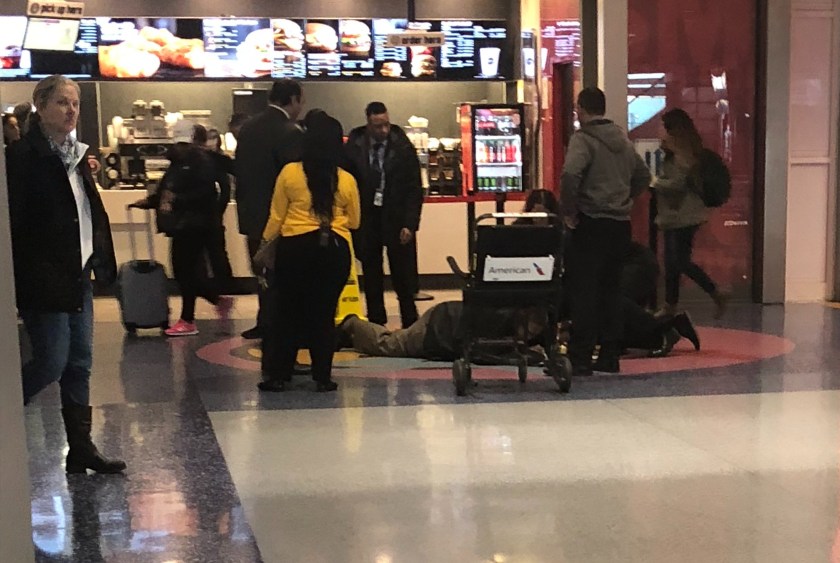
I was connecting in Dallas for my flight back to Denver and had just come down the escalator from the SkyLink. Around the corner from me, I heard an agonizing cry. At first, I didn’t recognize it for what it was. Then, I heard it again. And again. It was chilling. Walking just a few steps, I saw the source. A very large man was laying face down in the middle of the concourse. He was immobile. Several people were gathering around him, but no one seemed to know what to do. Most had no idea what had happened to him. I feared it was a heart attack and wondered if this was going to be a fatal event. EMTs soon arrived with a gurney to administer aid to this traveler. While I have no idea how this will turn out, what struck me was the looks on everyone’s faces. He was trying to maintain his dignity, but people everywhere around this scene were visibly distraught and felt for this man. They looked fearful or at least concerned. Things like this do not happen every day, to say the least.
Seeing this unforgettable scene made me appreciate the sober picture God has painted for us in His Word about those who are separated from Him. Galatians 5:4 terms it “fallen from grace.” Hebrews 6:6 speaks of some who have “fallen away.” Revelation 2:5 reveals that the Ephesus church had “fallen.” Jesus speaks of some who “fall away” (Luke 8:13). Romans 11:11 speaks of one stumbling so as to fall. The rich can fall (1 Tim. 6:9), but so can any child of God (Heb. 4:11; 2 Pet. 3:17). Repeatedly, this imagery is used of those who enter spiritual peril. It’s a dangerous position!
How often do I look at the people I encounter every day, who may seem physically fit and strong, but whose sins are not covered by Christ’s blood? Do I realize how dire their situation is? Too often, I’m afraid I don’t. As I looked at this poor, fallen man in Dallas, I thought about his soul. But in those moments, I did not think as soberly about the souls of the concerned onlookers. Statistically speaking (cf. Mat. 7:13-14), nearly all of them had to be traveling the broad rather than the narrow way. Would you help me to see the souls of men in this way, to feel a concern and sense of urgency for them? I know the Great Physician and know that He can help every case! May God grant us the courage to step through the open doors that may spell the eternal difference between life and death!

Neal Pollard
Paul writes two letters of instruction to Timothy, the preacher at Ephesus. As his father in the faith (cf. 1 Tim. 1:18), Paul wanted the younger man endowed with the wisdom and courage to be God’s man. Timothy would face pressures and temptations from many different directions. The apostle’s words also provide some common sense to help him do the sometimes difficult task of preaching and ministry.
In a letter full of the theme of godliness, 1 Timothy, Paul gives him some intriguing encouragement in the sixth chapter. He says, “If anyone advocates a different doctrine and does not agree with sound words, those of our Lord Jesus Christ, and with the doctrine conforming to godliness, he is conceited and understands nothing; but he has a morbid interest in controversial questions and disputes about words, out of which arise envy, strife, abusive language, evil suspicions, and constant friction between men of depraved mind and deprived of the truth, who suppose that godliness is a means of gain” (6:3-5). In this brief admonition, he gives Timothy several tips to help him be a useful communicator of God’s truth. He urges Timothy to avoid:
Paul was so bold that he would die for preaching the truth (cf. 2 Tim. 4:1-8). Yet, he urged Timothy to be peaceable, kind, adept, patient, and gentle when communicating it (2 Tim. 2:24-25). Is it possible to courageously stand with the Christ but do so using the precise scalpel of Scripture (Heb. 4:12) rather than the reckless explosives of excess? Yes, and each of us must predetermine that we will do so no matter how others act and react.

Neal Pollard
Friday night, Carl and I flew to Bismarck, North Dakota. Why? Well, of course, we wanted to attend the “Melita Banana Days” in Melita (pronounced Meh LIT Uh), Manitoba. That, and stay in a Bed and Breakfast in Carnduff, Saskatchewan, that doubles as an ice cream shop. Saturday night, we were back in our own beds sleeping. While we were registering at the festival on Saturday morning and talking with some of the organizers, we told them we had flown up from Colorado to check them out. From what we could tell, we were the only attendees from America. They were mildly intrigued by that fact, but basically brushed us off. Which was fine. We also wanted to check out Oak Lake beach about 60 miles north of there. But it was ironic to read on their website that this event is about promoting tourism. Perhaps our tepid reception was an exception to how they welcomed outsiders checking them out.
On a family vacation not too long ago, our family visited a small congregation on a Wednesday night. We drew a few stares from the local members as we took our seat right as Bible class began. Afterward, we were briefly greeted by one member who explained that their little group was going to have a meeting to discuss strategies for being more evangelistic. We were a family of strangers to them, and we might have been newcomers or non-Christians. They would not know. None of them tried to connect with us. We were essentially shown the door. We found this ironic.
It is ironic to sing, pray, preach, teach, and otherwise emphasize about the church’s mission and then to practically ignore it. Our assemblies are foremost about worshipping God and building up the body, but even first-century gatherings were attended by those other than the local Christians (cf. 1 Cor. 14:22-25). In our zeal to deepen and build our relationships with one another, we must not ignore or be cold toward those who “enter” our assemblies. Instead, we should seek opportunities to start conversations and create opportunities to open doors which lead them to Christ. Certainly, they should leave our assemblies aware of our intense interest in them. To do otherwise is to undermine our very purpose and mission. That would be the ultimate irony!

Neal Pollard
Incredibly, nine people in one family were in serious danger of drowning as they were swept into a riptide in Panama City Beach, Florida. It started with some little boys, but soon included would-be rescuers that included their mother and some other relatives. All of them were floundering in about 15 feet of water. The USA Today story seems to indicate that Jessica Simmons and her family thought of the idea of creating a human chain out to the imperiled family and towing them back to shore. About 80 people “started a football field-sized human chain to help bring them back to shore” (Mary Bowerman, 7/11/17, online ed.). The mother, Roberta Ursrey, summed it up well when she said, “I owe my life and my family’s life to them. Without them, we wouldn’t be here” (ibid.).
What a great story! It reveals the possibility of unity for profound purpose. It shows the power of working together. It says something about the best part of the human heart. It also illustrates the power of rescue and salvation.
The Bible makes it clear that God is the one who saves (Titus 2:11). His Word is His power to save (Romans 1:16). His divine plan is the means of salvation (Acts 16:30-31; Romans 10:9-10,13; Ephesians 2:8; 1 Peter 3:21). But, the Bible makes it just as clear that He does His saving through the preaching, teaching, influence, and efforts of His people, sharing the good news with those who are languishing in the waters of iniquity. That’s suggested in “The Great Commission” (Matthew 28:18-20; Mark 16:15-16; Luke 24:46-47). It’s demonstrated in the constant efforts of New Testament Christians, taking the message of Christ with them throughout the world to those lost in sin (cf. Acts).
Think of the church as the God-given human chain, reaching out to the struggling, needy soul. They are drowning in sin and in desperate need of help. Unreached, they will drown (see the imagery of 1 Timothy 6:9). God wants you and me, as those who ourselves have been saved, to join hands and help others who need to be helped onto the shores of safety! We cannot delay! We must act while there’s time. Lives—souls!—depend on it.

Neal Pollard
I was asked by a preacher from Texas to go and provide emotional support to a family of brand new Christians he reached with the gospel. In a tragic circumstance, the matriarch of this family was in the hospital Sunday morning to have a gallstone removed and doctors accidentally severed the hepatic portal vein going into her liver. This led to multi-organ shutdown that ultimately ended her life. In this atmosphere of unanticipated emotional pain and suffering, family had gathered from all over the country to see her before doctors removed the lines keeping her alive. I was unable to communicate very much comfort or support because most of them spoke no English and I speak virtually no Spanish. I sat in the waiting room with them throughout the afternoon, watching their anguish but having little more than smiles and sympathetic looks to offer. The matriarch’s granddaughter spoke good English, but it was hard to expect her to continually provide translation as she struggled with her own grief. Hopefully, they knew I cared and will allow the church to provide further encouragement. Thankfully, we have several members who do speak Spanish fluently who could help in ways I cannot.
As I was driving home and thinking about the best way to quickly learn Spanish, I had another humbling thought. How many opportunities do I pass up with people with whom my communication barrier is not language? There are some other, more sinister barriers that can keep us from speaking up for Christ in situations He is counting on us to take advantage of. There is fear—fear of rejection, opposition, or being ostracized. There is apathy—failure to consider or care about the eternal destination of the souls of those we encounter. There is selfishness—as we are so absorbed in our own pursuits that we do not open our hearts to the lost in our lives. There is sin—the presence of personal lifestyle issues for us that render us ineffective as sharers of the gospel message. These and other matters are much more frequently the roadblocks that keep us from reaching out to the people we encounter.
It will help us, I believe, to remind ourselves daily that this world is not our home and that every person is heading to an eternity that swiftly comes. We must have the courage to share with people how to prepare for that, to understand the great love God has for them and His desire to save them. We must keep the conviction strong that Jesus is the only way to salvation and that His applied blood is their only hope for such. We must care about people, enough to pray for boldness and wisdom, enough to walk through our open doors, and enough to share the good news with them. People are at the heart of our purpose as Christians. Let’s serve them by sharing the good news whenever, wherever, and however we can.

[Disclaimer: I mention specific names, knowing that I cannot possibly know every story and detail. These are included to encourage. God saw it all and will reward accordingly!]
Neal Pollard
I loved the Bear Valley church of Christ before yesterday, but I love her even more this morning! Thank you for loving the Lord and souls enough to do what you did. Now, let’s keep doing it.

Doug McNary
Allow me to take you back to the early 1930’s, when the U.S. economy was in the throws of the Great Depression. It was a time of record setting negative economic growth. Many Americans lost their means to sustain basic life functions. Many Americans lost all Hope.
At the time, President Herbert Hoover believed in the importance of the role of individuals in society and the economy.
He said, “Economic depression cannot be cured by legislative action or executive pronouncement. Economic wounds must be healed by the action of the cells of the economic body – the producers and consumers themselves.”
Now, let us fast forward to the church today. We find the church in a time of record setting negative growth. And according to a 2014 Pew Research Study, less than 27% of Millennials (defined as ages 18 to 35) regularly attend religious services. Yet, 67% say they believe in a heaven and 84% think there is a God. So, what does the mean?
I think deep down inside, millennials believe there is a God, but worldly distractions and alternate priorities keep them from contemplating what that really means. A lack of understanding or knowledge of the truth translates into a lack of action. Their ignorance may lead to eternal demise.
So, let’s rewrite Hoover’s insight:
“Church growth cannot be cured by the action or pronouncement of church leaders. Church wounds must be healed by the actions of the members of the church body – the producers and consumers themselves.”
Church growth will not be achieved by elders, deacons or preachers alone. It must be cured by each of us also doing our part.
So I ask myself, “Am I a producer, or a consumer?”
In Matthew 5, Jesus said,
“You are the light of the world. A city set on a hill cannot be hidden; nor does anyone light a lamp and put it under a basket, but on the lampstand, and it gives light to all who are in the house. Let your light shine before men in such a way that they may see your good works, and glorify your Father who is in heaven.”
Honestly, I have been a consumer long enough. I sit in my pew every worship service, I do my daily bible reading, and dwell on God’s word… I have been a faithful Christian, with a proverbial basket over my head.
I want to be a producer…
–Sharing, Caring, and Acting to make a difference for the Lord’s church.
I want to be a producer…
–Proclaiming to others the Truth found in the Bible.
I want to be a producer…
–Openly Praising the Lord, each and every day, in my words and actions.
I want to be a producer…
–Participating in the building up of the body of our church by being involved in the work of the church.
I can no longer be just a consumer, I want to be a producer… Finding creative ways to prick the heart of a lost soul, for the sake of Christ!
Now here is the challenge:
I want to do these things… But, will I?… And how about you?
My brothers and sisters, I pray that each one of us can get up out of our “consumer” pew and DO Something Each Day to help our Lord’s church grow! I pray that we can all become “producers” for Christ.
I leave you with this thought…
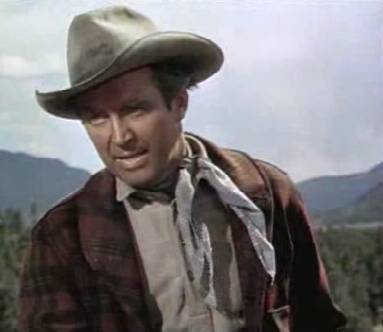
In one of my favorite movies, Shenandoah, Jimmy Stewart played the role of the father, Charlie Anderson. He sat at a campfire with his family as they were searching for his lost son. They were all about to give up hope when Charlie said: “If we don’t try, we don’t do. And if we don’t do, why are we here on this earth?”
Brothers and Sisters, if we truly love the Lord’s church, we must try, we must do!

Neal Pollard
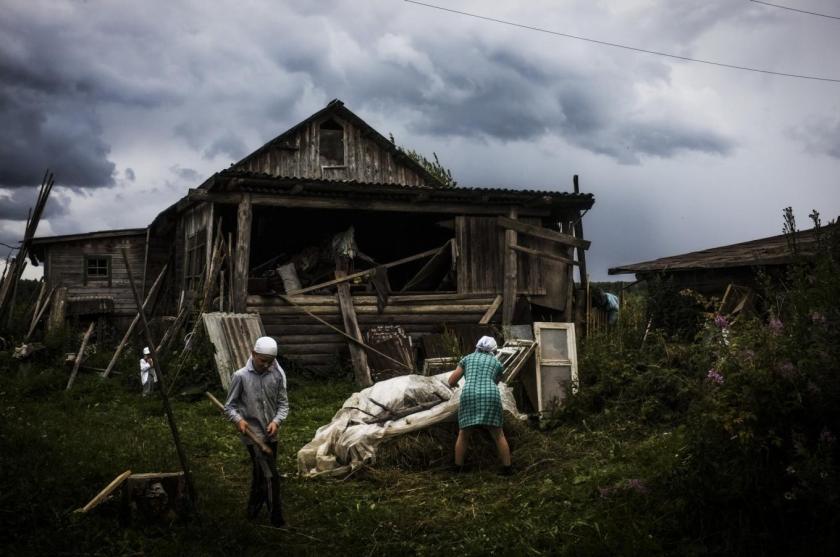
Liza Zhakova and Dima Zharov have written an extensive expose of a phenomenon I was totally unaware of—the depopulation of villages throughout the Kostroma region northeast of Moscow, Russia. 200 villages have been abandoned and 20,000 villages have faded away, a remarkable, mystifying fact for a vast region—it counts merely “660,000 residents for its 23,000 square miles” (source). Factors contributing to this include “low living standards, high unemployment, and a lack of housing and public services” (ibid.). The ones who have remained are an odd assortment who either prefer isolation or cannot see another way.
Appreciation for salvation, the power of the gospel and the beautiful simplicity of the restoration plea, the exalted mission of the church, and much more should cause the church to spread and grow across the nation and throughout the world despite the opposition of the darkest forces against it. But, especially in America, the statistics show a decline in total number of members even as the nation’s population rises. Last Spring, Christian Chronicle reported that over 100,000 fewer souls were members of the church in 2015 than in 1990 (source). The United States’ net population increase over that period was 70 million (source). My experience in visiting churches in various parts of the country and in visiting with brethren from all over is that most churches are not experiencing growth. Some have seen an increase in attendance, almost always as the result of transfer from other congregations (over doctrinal issues, lack of resources and activities, or even churches that have to close their doors). But instances of churches that are taking the gospel into their communities and winning souls should, per the factors cited above, have us growing like wildfire. In especially “mission fields” and rural areas, the church is often fighting for survival. My parents and brother, for example, work in a ministry called Carolina Outreach. Through their exposure to churches in the Carolinas, they witness and work with tiny congregations fighting to keep their doors open. They lack funds and workers to get the gospel to the souls in need of the truth in that part of this nation. I have spent over 20 years as a local preacher in states that are typically considered a mission field, outside of the traditional “Bible Belt” (i.e., Virginia and Colorado). In these and surrounding states, I have been saddened to hear about churches closing their doors or simply fighting just to “keep their doors open.”
As the Lord looks down at these shrinking parts of His glorious body, His heart must be breaking. Yet, He gave us the blueprint to address this problem and to reverse this trend when He gave us the New Testament. It is not more vibrant youth programs. These are wonderful and beneficial, but many of us faithful to Christ today grew up in small churches with virtually non-existent youth programs (including Kathy and me). It is not big, beautiful buildings. These can at times cause more problems than not. It is not extremism, whether to the right or the left. Building on the foundation of man is sand (Mat. 7:24-27). It is a resource available to everyone, in rural and urban areas, in depressed or booming economies, in north, south, east or west. In a word, it is “commitment.” The first commentary on the first church begins, “They were continually devoting themselves…” (Acts 2:42). Christianity meant everything to them in their daily lives. They were dedicated to seeking the lost, dedicated to helping each other, dedicated to following their Lord and Savior. They were dedicated in prosperous and perilous times. Their living hope was so strong (1 Pet. 1:3), they persisted even in dire persecution (see the rest of 1 Peter).
What a challenge this is to me. My dedication and commitment has room to grow. My complacency and apathy must decrease and His importance in my life must increase. If the church all over catches hold of this, the familiar phenomenon of “dying churches” will be a bad memory. May God grant us the strength and courage to reverse this tragic trend. May it begin with me!