Not So Common Courtesy 

Friday’s Column: Brent’s Biblical Bytes

81121814_2462862270639428_5746232403106463744_n

Brent Pollard

The folks at Merriam-Webster define “common courtesy” as “politeness that people can usually be expected to show.” 1 One notes that courtesy doesn’t seem as ordinary as it once was, at least in the West. In the more collectivist societies of the East, people prize social harmony more than individualism. When you have millions of people packed into a metropolis, I suppose such a mindset is essential for survival. However, it translates into an attitude that suggests that I take great care not to upset or inconvenience the people around me. 

I got to thinking about common courtesy as I was driving along a stretch of U.S. 129/U.S. 19 in the northeast Georgia mountains. Since slower traffic is expected, especially during tourist season, planners provided periodic passing lanes to allow for those conducting everyday business to pass the leaf-gawkers. For the spaces in between, these planners likewise added pull-offs for slower vehicles to pull off and let the faster traffic get by. Most of the time, this traffic arrangement works out nicely. However, you do encounter the occasional driver who lacks the aforementioned common courtesy, as I did when recently getting stuck behind a truck pulling a horse trailer hauling several horses.   

As Christians, we are to extend courtesy as a matter of faith. Paul tells us that we are to esteem others before self and be as mindful of them as ourselves (Philippians 2.3-4). As lovely as that is when taking an earthly journey, we see how the mindset also benefits the heavenly journey. No, I am not saying that the act of utilizing a pull-off will win a lost soul to Christ. What I am suggesting, though, is that people take notice of how we conduct ourselves. As Edgar Guest famously stated, people desire sermons they can see. Since a courteous person is already mindful of others, it is but an extra step for him or her to adopt a servant’s heart. Note that following his admonition to esteem others first, Paul transitions to telling us about needing the servant-mind of Christ (Philippians 2.5-8). 

With whom are you more likely to strike up a conversation? A rude person or a courteous one? Through the extension of common courtesy, you make yourself more amiable to others. And since common courtesy is no longer so common, you stand a better chance of making yourself stand out in a crowd. So, go the extra mile (cf. Matthew 5.38-42). Develop habits contributing to becoming more courteous and foster the heart of a servant within you.  

WORKS CITED 

1 “Common courtesy.” Merriam-Webster.com Dictionary, Merriam-Webster, https://www.merriam-webster.com/dictionary/common%20courtesy. Accessed 1 Oct. 2020. 

Encouragement

Wednesday’s Column: Third’s Words

Gary III

Gary Pollard

How important is encouragement? Winston Churchill understood its importance. It kept the morale of Great Britain high enough to not only survive the Blitzkrieg, but also link together as a country to defeat the Axis Powers. Hitler understood its importance – with it (by way of propaganda) he brought his country out of a decade or so long depression. Even the world’s worst people understood the value of encouragement. 

In the church, it is no different. Only, instead of facing a corrupt and violent world power, we face the Father of Lies and his army. This is a much more daunting enemy – but that is not all. We face discouragement in the church, we face rivalries, bitter jealousy, division over doctrinal matters, personality clashes, etc. 

Sometimes we find ourselves overwhelmed when we face these things – and for good reason! But this is why encouragement is so vital. England faced incendiary bombs and widespread death of their fellow countrymen. Germany faced severe poverty. What did it take to help these countries succeed? Encouragement. What will it take for us to overcome the challenges of being a Christian? Encouragement. 

In all of these cases, boosting morale did not magically happen. A respected individual got in front of the people and commended and encouraged them – this made all of the difference. Notice how Britain did during Churchill’s time as Prime Minister: they rallied themselves and helped defeat the Axis Powers in a short period of time. 

As Christians, we have to be the voice of encouragement for our brothers and sisters. When the church is unified toward a single cause and stands together for truth, she is far more successful than one bogged down in discouragement and strife. 

As we go about our lives, let us employ the mindset of encouragement, while seeking to create unity and high morale among our family. It may just make the difference in the eternal state of many people. 

“Therefore encourage one another and build up one another, just as you also are doing” (1 These. 5:11).

805px-sir_winston_churchill_-_19086236948
The motivational Winston Churchill

Trail Magic

Friday’s Column: Supplemental Strength

81121814_2462862270639428_5746232403106463744_n

Brent Pollard

My dad has discovered YouTube. He had been using the service to watch streaming worship services during the height of the coronavirus lockdown; he has since noted its potential entertainment value. One of his favorite channels is one that plays classic country music from the 1950s and 1960s. Recently, however, he has been watching the videos of hikers along the Appalachian, Pacific Crest, and Continental Divide Trails. I use to enjoy hiking in my healthier days, so I have sat down to watch more than one of these videos with him. I have never even contemplated doing a thru-hike of one of the previously mentioned 1,000 mile plus trails, but have admired those who have completed them. As I watched one video of a hiker who undertook the Appalachian Trail to conquer his depression, I heard him use an unfamiliar term: “trail magic.” In another video, a young woman from Opelika, Alabama, used the words in regards to her trek along the Pacific Crest Trail. Curiosity compelled me to look that phrase up. The phenomenon originated on the Appalachian Trail but has since popped up along the other lengthy trails as well.

 The Appalachian Trail Conservancy defines trail magic as follows:

“1) Finding what you need most when you least expect it. 2) Experiencing something rare, extraordinary, or inspiring in nature. 3) Encountering unexpected acts of generosity, that restore one’s faith in humanity.” 1

As the videos demonstrated, trail magic presented itself in a cooler of cold drinks left at a taxing point in the trail. Or maybe a veteran thru-hiker set up a tent at a spot along the pathway to feed the hikers who came through. It could also be a person volunteering to provide a wearied hiker a ride to his or her nightly lodging when the trail came close to a town offering a hostel or hotel serving hikers. Thru-hikers have no reason to expect that any of these things will happen to them as they make their journey even though it happens enough to warrant a name (i.e., trail magic). That is why it is so appreciated.

 When I read that, my mind immediately associated aspects of this phenomenon to what those of us who are Christians call “providence.” How often have we found something unexpected in our life, typically at the most opportune time, that screams “God” to us? In other words, a sudden something that points to God’s hand at work in our lives. No, providence is not a miracle, since it does not circumvent the laws of nature to occur. It works within the established framework around us, making it even more amazing since it can require God’s forethought rather than just a momentary expression of His unlimited power. Yet, it is as appreciated by us as any miracle would be since it satisfies our momentary need, whether remission from cancer or unexpected inflow of funds when presented with a financial crisis.

 This characteristic of God has earned Him a unique name first applied by father Abraham, Jehovah-Jireh. Do you recall the reason Abraham called God by that name? God had asked him to offer his only son as a sacrifice. This son was the promised one for whom he had long waited. Yet, Abraham complied. When his son, Isaac, noticing a missing sacrifice, asked his father about it, he replied, “God will provide for Himself the lamb for the burnt offering, my son” (Genesis 22.8 NASB). After nearly sacrificing his son, an angel stopped Abraham, and Abraham noted a ram with its head stuck in a nearby thicket. Abraham offered the ram as a sacrifice in place of his son and called the location “Jehovah-Jireh,” meaning “The Lord will provide.”

 Our path to Heaven is strait and narrow (Matthew 7.13-14). It is, therefore, most welcome that as we make our way through this life that we encounter this celestial trail magic. Let us never fail to thank our God since He is also Jehovah-Jireh.

 REFERENCES

1 Bruffey, Daniel. “Trail Magic.” Appalachian Trail Conservancy, The Appalachian Trail Conservancy, appalachiantrail.org/explore/hike-the-a-t/thru-hiking/trail-magic/.

Screen Shot 2020-07-03 at 7.09.01 AM

Making Sense Of Grace

Wednesday’s Column: “Third’s Words”

10423661_10207901451272315_9069631728203375436_n

Gary Pollard III

Grace is a touchy subject. As with many other words commonly used in religious circles, it has potential to be misused or misunderstood. My hope is that this brief study on grace will shed some light on a confusing subject.

First, grace is possible for all men to have (Titus 2.11). It has been clearly displayed and advertised to everyone. The word “appeared” in that passage is epiphane, which means “to make an appearance.” No one is exempt from grace if they follow the right steps to receive it!

Second, grace keeps us in good standing with God if we are walking in the light (I John 1.7,8). In Acts 2.47, chairo (pronounced ky-roe) is translated “favor.” In Luke 6.32-34 Jesus uses it in a very interesting way. He says, “If you only love those who love you back, what credit is that to you?” Credit is charis, the word for grace.

So what is grace? What does it mean to you and me? If we are walking in the Light – trying our very best to follow God’s commands and allowing our faith to be the driving force of our lives – God takes care of our sin problem. When we slip up and make a mistake, God removes it from our record. This does NOT mean that we can sin all we want and God will just overlook it (see Romans 6.1,2). It does, however, mean that God is not waiting to strike us out of the book of life the moment we make a mistake.

Grace is what happens when God wants to do good for mankind. Luke 6.35 says, “Love your enemies, and do good, loan to others without expecting anything back; and your reward will be great, and you will be sons of the Most High; for He Himself is kind to ungrateful and evil men.” The word kind in the bolded phrase is charis: grace. It does not mean the same thing for evil men that it does for the Christian, but it does help us to get a better sense of what this word means.

God is rooting for His children (Christians). He WANTS us to get through this life and die in Him (Psalm 116;15). He isn’t our accuser waiting for us to slip up so He can condemn us. He helps us along the way, He shows good will to us, and He gives us His grace so that we can spend an eternity with Him as long as we are walking in the Light.

Cure Them With Kindness!

Neal Pollard

A comedienne draws attention for being mean-spirited and cutting when roasting a White House press secretary recently. While cringe-worthy, it’s hardly an isolated incident. Nor is it confined to Washington politics, being seen across the spectrum of society. Civility has taken a beating in the current culture. Social media may be a breeding ground for insults, attacks, hostility, and animosity, but it’s hardly confined to just that forum.

Make no mistake, a lack of kindness is a hallmark of worldliness and unrighteousness. It is the antithesis of a quality God demands of the Christian. Ephesians 4:32 commands, “Be kind to one another….” The original word translated “kind” here is found seven times in the New Testament, and it is a divine quality. In fact, in six of the seven references, God demonstrates it. In Ephesians 4:32, it is to be exhibited by us in view of God’s having shown it to us through Christ. It means “pertaining to that which is pleasant or easy, with the implication of suitability” (Louw 246). It causes no discomfort, meets a high standard of value, is morally good and benevolent, and is beneficent (BDAG 1090). In common usage in New Testament times, the word, when referring to people, was synonymous with being decent, of good disposition, gentle, good-hearted, and morally upright (Kittel 1320). In other words, people in society could and did recognize its presence in people. Its absence is also, sadly, noteworthy. 

The old adage “kill them with kindness” might imply utilizing kindness to get an advantage or revenge on someone unkind, making us look good and them look bad. God calls for something more out of those of us striving to hold up the Light to a dark world. The world is sin-sick, and rude, coarse, hateful attitudes, words and actions are but a symptom of this. We have the medicine the world needs, even if it fails to see its need. Some will be drawn to it when they see it in us. 

Paul counsels Rome with inspired advice that will help us cure the rude, ugly, spiteful, and vicious behavior we often encounter. He says, “Never pay back evil for evil to anyone. Respect what is right in the sight of all men. If possible, so far as it depends on you, be at peace with all men. Never take your own revenge, beloved, but leave room for the wrath of God, for it is written, ‘Vengeance is Mine, I will repay,’ says the Lord. ‘But if your enemy is hungry, feed him, and if he is thirsty, give him a drink; for in so doing you will heap burning coals on his head.’ Do not be overcome by evil, but overcome evil with good” (Rom. 12:17-21). Look closely at what he says. Avoid the payback mentality. Go to great lengths to preserve peace. Leave revenge to God. Don’t stoop to the world’s level. 

This imitation of God with revolutionize the places where we practice this. The moral malignancy plaguing our world cries out for medicine, and we as Christians know where to access it. Let’s discipline ourselves to use it, even in the face of those spreading the spiritual sickness of spite. 

8717079909_141f57a7de

A GREAT FISHERMAN

By: A blessed fish

Let me tell you about the greatest fisherman I have ever known.

He has always found success at his favorite fishing hole. A special place where the inlet was fruitful, and many fish loved to be caught. His technique is simple. A welcoming lure. A handshake, a hug and a smile. Just to let you know you’re wanted.

He will always catch-n-release and the fish always feel better for the experience. Many wide eyed and spiritually young fish will enter the inlet, hoping that someone would catch them and show them the kind of love this great fisherman offers. He never judges a fish – their size, beauty, wealth or position. He only lets them know how glad he is to see them at the inlet.

His success is solely based on persistence, perseverance and patience. Three times a week you can always count on him being right there at the inlet. Waiting for the opportunity to hook’em and hold’em. He always makes every fish feel welcome and wanted.

He knows every fish by name. If he thinks a fish has drifted off down steam, he will go in search, armed with a tackle box full of Christian love and do his best to bring them back to the inlet. Not for him, but for their sake and for God’s sake.

He hooked this fish over 11 years ago. My wife led me to the inlet. But, he hooked me and let me know that I was welcome here. He helped save this soul for eternity.

I think he is getting tired now, but few may notice.  So many years of fishing, but he is still there almost every Sunday morning, Sunday night, and Wednesday night. I think he wants to share his favorite inlet with others who share his passion. Man, woman, or child, he wants us to join him. We don’t have to wait. We don’t have to be assigned the duty. We just need to step into the water and follow his lead. There is plenty of room at the inlet. Let’s all join this fisherman at the Bear Valley inlet and make sure every fish that enters knows they are wanted and welcome.

The great fisherman’s name is Clint and this fish will always love him.

Mathew 4:19-20

And He said to them, “Follow Me, and I will make you fishers of men.” Immediately they left their nets and followed Him.

———————————————

 NEAL’S NOTE: This was submitted to me by someone who wants to remain anonymous. Truer, more fitting words could not be spoken about one of the most special people any of us have ever known. We’re very blessed to have Clint Stephens as a member at Bear Valley, one of the men who was at the time a shepherd when I was hired. Enjoy!

1919171_1242785955488_6164179_n
Clint “fishing” on a mission trip in Cambodia a few years ago. 

A Tangled Mess!

Neal Pollard

Late in 2010, Jason Good was surveying timber in Meigs County, Ohio, when he came upon a bizarre sight. Three huge whitetail deer were dead, floating in a creek with their antlers locked. It was an 11-pointer, a 10-pointer, and an 8-pointer. The landowner, Brien Burke, figured that two of them were fighting when the third came in on the opposite side. Then all three were so tightly locked together that they could not pull loose (Field & Stream, Steven Hill, 12/5/10, online ed.). How sad that three beautiful, majestic creatures got themselves tangled up so much in a fight that they fell into a creek and drowned. Fighting brought these deer to a tragic end.

The same thing can happen in our human relationships. James writes, “Who among you is wise and understanding? Let him show by his good behavior his deeds in the gentleness of wisdom. But if you have bitter jealousy and selfish ambition in your heart, do not be arrogant and so lie against the truth. This wisdom is not that which comes down from above, but is earthly, natural, demonic. For where jealousy and selfish ambition exist, there is disorder and every evil thing. But the wisdom from above is first pure, then peaceable, gentle, reasonable, full of mercy and good fruits, unwavering, without hypocrisy. And the seed whose fruit is righteousness is sown in peace by those who make peace” (3:13-18).

Wise, understanding people prove such through gentle wisdom. The opposite have bitter jealousy and selfish ambition in their hearts. James says that where this is, there is disorder and every evil thing. How often do we forfeit peace and gentleness due to a large dose of selfish ambition? We tangle with others and hurt them and often hurt ourselves. At its worst, we can inflict spiritual death. When that happens, we are in just as much trouble. What we need in our relationships with others is the wisdom from above, described in James 3:17. But we must sow peace to reap the fruit of it. Let’s be at peace with men and God!

lock2

“Act Like You Like One Another”

Neal Pollard

Someone tasked with taking a picture of a couple or small group will coach them to stand closer together, maybe adding, “Act like you like one another.” They will typically chuckle and comply. How many moms have exhorted their squabbling children with a similar phrase?

A quick perusal of social media, with its all-too-often divisive rhetoric and pejorative comments, must frequently draw the same desire from the God of heaven. Whenever He sees His children at each other’s throats, complete with nasty put-downs, sarcasm, and venomous invectives, can we envision Him pleased? Regardless of whether one is motivated by defending the faith or some dearly-cherished viewpoint, he or she does not have to drown responses in hateful, provocative words. But, it happens many times over on a daily basis. For those of us who have non-Christian or new-Christian friends with privy to such comments from professed, mature Christians, we have to wonder if, contemptuously, they chide, “Act like you like one another.” More than that, Scripture convicts us on such a count.

  • “Since you have in obedience to the truth purified your souls for a sincere love of the brethren, fervently love one another from the heart” (1 Pet. 1:22; cf. 4:8).
  •  “To sum up, all of you be harmonious, sympathetic, brotherly, kindhearted, and humble in spirit; not returning evil for evil or insult for insult, but giving a blessing instead; for you were called for the very purpose that you might inherit a blessing” (1 Pet. 3:8-9).
  • “So, as those who have been chosen of God, holy and beloved, put on a heart of compassion, kindness, humility, gentleness and patience; bearing with one another, and forgiving each other, whoever has a complaint against anyone; just as the Lord forgave you, so also should you. Beyond all these things put on love, which is the perfect bond of unity” (Col. 3:12-14).
  • “Let love be without hypocrisy. Abhor what is evil; cling to what is good. Be devoted to one another in brotherly love; give preference to one another in honor” (Rom. 12:9-10).
  • “But no one can tame the tongue; it is a restless evil and full of deadly poison. With it we bless our Lord and Father, and with it we curse men, who have been made in the likeness of God; from the same mouth come both blessing and cursing. My brethren, these things ought not to be this way” (Jas. 3:8-10).
  • “If someone says, ‘I love God,’ and hates his brother, he is a liar; for the one who does not love his brother whom he has seen, cannot love God whom he has not seen. And this commandment we have from Him, that the one who loves God should love his brother also” (1 John 4:20-21).
  • “A new commandment I give to you, that you love one another, even as I have loved you, that you also love one another. By this all men will know that you are My disciples, if you have love for one another” (John 13:34-35).

The noble pursuit of defending the faith and protecting the purity of doctrine can get lost or totally nullified when the most casual observer of our words cannot find the love or detect the genuine concern in the midst of the biting, devouring, caustic quips and one-liners. How we need to pause and be introspective. “Every man’s way is right in his own eyes” (Prov. 21:2a; cf. 16:2). I can easily rationalize and convince myself of my own unrighteousness, as easily as the adulterer, the one in religious error, the drunkard, and the like can do with their iniquity. Why not, as we sift through the complicated maze of “interpersonal dynamics,” deal with each other patiently, giving the benefit of the doubt wherever possible, letting lovingkindness lead the way? We are not compromising divine truth, relinquishing a scriptural position, or shying away from sharing God’s Word when we make the effort to act like we like one another. We are submitting to the ethical blueprint commanded in Scripture (see above). “Let all that you do be done in love” (1 Cor. 16:4).

squabbling-brothers

Meeting The Needs Of Newcomers

Neal Pollard

It has been said that visitors make up their mind about a church in the first ten minutes of their visit. Before they’ll even discern the doctrine we teach or form an impression about the distinctiveness of our worship, they’ve already decided. If you will walk through the first ten minutes of each time you come to services, you can discern the needs visitors have when they “enter” (cf. 1 Cor. 14:23-24) our midst. Consider these needs.

  • Where to park. Designating visitor parking and having members park as far from the main entrance is thoughtfulness. Having a greeter or greeters in the parking lot who can make contact quickly and facilitate with friendliness makes a positive impression.
  • Where the restrooms are. Good hospitality ought to drive us to be thoughtful and even proactive (i.e., when greeting, point out the nearest facilities). Along with this is showing them where the nursery is. If they have infants, toddlers, or small children, they are likely to have needs during their time in attendance.
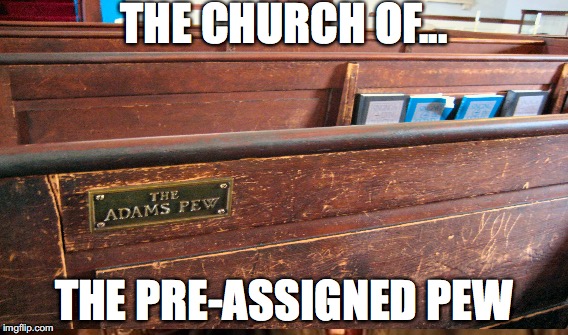
  • Where to sit. An obvious practical help here is not to crowd the seats at the rear of the auditorium. It’s less awkward to be seated without parading past rows and rows of people. If there’s a full crowd, have designated personnel, pleasant, friendly, and considerate, to help them find a seat. Never, ever, never have a designated pew! “Pew-itis” is a disease that should be eradicated from every congregation.
  • What to expect. This is something worship leaders can do, explaining periodically why we do what we do in a “user-friendly” (as opposed to browbeating) way. Door greeters and those at a welcome center can help, as can visitor packets that cogently explain things. Such packets can include not just activities we do, but a map of where we do them.
  • How to find out more. Have a “new member orientation class” or a “Church 101” class available for those who are “seeking.” It can include an annual church calendar of events, ministries, church leadership (complete with pictures and bios), ways to be involved, and the like to orient newcomers.

At first, it may seem hard to identify book, chapter, and verse for the foregoing suggestions. But consider these principles. There’s the Golden Rule (Mat. 7:12; Luke 6:31). There’s the principle of the Law of Moses, which says, “The stranger who resides with you shall be to you as the native among you, and you shall love him as yourself, for you were aliens in the land of Egypt; I am the Lord your God” (Lev. 19:34). Colossians 4:5 urges wisdom with outsiders, making the most of the opportunity. Being Christians, we should be ever increasing in the mentality that puts others before self (Phil. 2:3-4). How do we best serve Jesus? By serving others, including our visitors and newcomers.

Singing Hymns in Church

Service With A Smile

Neal Pollard

Jesus showed the greatness of service by washing the disciples’ feet (John 13:12-17). As they fought over who was the greatest, Jesus revealed that He came to serve and not to be served (Mat. 20:25-28). God refers to Him in the great prophesy about His suffering as “My Servant” (Isa. 52:13; 53:11). Why, then, are we more apt to jockey for prominence, position, power, and prestige? Is it not that, in such times, we’ve lost our focus and stopped “looking unto Jesus” (cf. Heb. 12:2)? What are some practical ways we can reflect Jesus through service? Consider the following as a pump-primer:

  • Write a note of encouragement
  • Pleasantly let a merging driver merge in front of you
  • Fervently pray for the good of someone who has been hurtful to you
  • Meet a widow(er) for lunch or coffee
  • Volunteer to babysit so a young couple can go on a date
  • Anonymously send a small amount of money or gift card to a college student, preacher student, or missionary
  • Visit a shut-in
  • Participate in a feeding the homeless event
  • Tell an elder you love and appreciate him
  • Pay for the meal of a young family who looks like they could use the help
  • Ask a neighbor if there is something you can be praying about on their behalf (and, if they’re willing, pray for that on the spot)
  • Text or email someone you know is in a stressful circumstance and express confidence in them
  • Take a small group to go sing for someone confined to a hospital or nursing home
  • Volunteer to work with small children to make a craft or baked good for the elderly
  • Police the bathrooms and pews at church and tidy up little messes you see
  • Make visitors to our assemblies feel welcome and help them find a class or a seat (with a pleasant smile)

There may be profound ways we can serve, but realize that any act of service may be far more profound than we think. We may not know in this life how a simple act opens a heart and opens a door of opportunity for Christ. Think like a servant and seek ways to serve! The greater others think you are, the greater your need to serve. But however much or little you think of yourself, think of others. Then, serve them!

2159516316_763603c0c9_z

The Holiday Blues

Neal Pollard

It is amazing how many people lose loved ones around the holidays. If you consider that there are about six weeks between Thanksgiving and New Year’s Day, you realize the statistical probability. But, for one who loses a mate, child, or parent, the situation is not remotely clinical. It is deeply personal. It hurts more because a season of great memories and happiness is upended by grief and loss. An ominous anniversary now wedges itself into “the most wonderful time of the year.” Our congregations are filled with people who are struggling with such dark days, and they find coping particularly hard. They don’t begrudge the festive mood of their friends and brethren, but they may often feel on the outside looking in at such mirth. Scripture urges us to “weep with those who weep” (Rom. 12:15) and to “bear one another’s burdens” (Gal. 6:2). What can we do to help despondent brothers and sisters?

  • Take note. Whenever someone’s loved one, especially a spouse, passes away, keep a record of that and send a card or otherwise let them know you know the significance of the day. What an overt expression of love and concern!
  • Go out of our way. Seek them out and actively console them. You’re not trying to dredge up emotion, but you are desiring to acknowledge it.
  • Go to God for them. Whether or not you tell them, include them and their grief specifically in your prayers. Or, better yet, take a moment and pray with them on the spot.
  • Lend an ear and shed a tear. They may want to talk about their memories, the funeral, the songs that they sang at the funeral, their traditions, or the like. Open your heart and feel for them. It is such good emotional medicine for them and you will be a good servant of Christ.
  • Bring them in. Invite them for a meal, visit them, or ask them to come along on an outing. Take them out to see Christmas lights. They may refuse your invitation, but they’ll know you wanted to help.
  • Put yourself in their shoes. Peter urged the Christians to be, among other things, “sympathetic, brotherly, kindhearted…” (1 Pet. 3:8). Part of our own personal spiritual growth should be to grow more aware of and concerned about the feelings of others. It is an active mental exercise, but seeking to think about how such a grieving one must feel helps us help them but also helps us.
  • Rope in others. We don’t usually encourage talking about people behind their backs, but this is a significant exception. Inform the potentially unsuspecting of such a difficult anniversary so others can join you in this ministry of consolation. This is a triumphant take on “misery loves company.” Their misery is mitigated by more caring family reaching out to comfort them.

We love our Christian family. We should be quick to express it in ways that can make such a difference. Look out into the congregation and find those hurting hearts. Of course, this is needful even if their loss was in May or August, too. But, minister to minds with these mental millstones. Help them carry their load. Such is an active imitation of our soothing Savior!

holiday-grief

Are We A Friendly Congregation?

Neal Pollard

While we must be concerned with doing what we do in worship according to Christ’s expressed will, we must also be sure to reflect His love to strangers, newcomers, outsiders, and otherwise unfamiliar faces. It offends my sensitivities anytime I hear anyone complain that a church I love so much seems cold and unfriendly to them. However, when I see so many focused on one another or on no one or hear accounts of our visitors complaining that we are neither warm nor welcoming, that love motivates me to say something.  Please consider the following principles:

  • We must stop expecting that others will represent us in friendliness. Maybe we look at those seven or eight members of the congregation that “go after” our visitors and conclude that they are covering the bases for the rest of us. In a congregation our size, that is woefully inadequate. They cannot reach everybody, but even if they can their friendliness does not let us off the hook. Dear reader, the chances are great that I am challenging you!
  • We must not use our introverted nature as an excuse. It would be hard to get an accurate estimate, but it is probably fair to say that more of our members are introverted than extroverted. Yet, the introverts may mistakenly conclude that extroverts are merely doing what comes easy and natural to them. As a representative of the extrovert clan, may I suggest that reaching out and connecting with strangers and visitors requires effort. Everyone must make an effort!
  • We must avoid the thinking that the visitor bears responsibility to be friendly. Some visitors may be extroverted and resilient to connect with us, but we’re the hosts and they’re the guests. Think about how hard it is to come into an unfamiliar place where you know no one and reach out to them. This is our “home turf,” and we must always take the initiative!
  • We must practice the Golden Rule (Matthew 7:12). Again, put yourself in their shoes. Treat them how you’d want to be treated if in their place.
  • We must see ourselves as direct representatives of Jesus. 2 Corinthians 5:20 calls us just that. Treat visitors exactly like Jesus would. Seek them out and do everything within your power to let them know how glad you are they are here.
  • We must understand the eternal implications of being friendly to visitors. Wouldn’t it be awful if we contributed to seekers, new Christians, and the like being discouraged, even to the point of walking away from Christ and His truth? We cannot minimize the eternal impact, for good or ill, we make by how we do in this matter.
  • We must break out of our ruts and routines. What creatures of comfort we are! What I am talking about requires us getting uncomfortable and changing our current habits. Avoiding eye contact, walking past unfamiliar faces, withdrawing into ourselves, talking only to those who talk to us or those we feel comfortable with may be the niche we’ve carved for ourselves over a long period of time. Confront those well-established patterns and insist on breaking them.

I want our congregation to be known for preaching and teaching the truth, but I want far more for us. Another thing I want is for us to be the church that doesn’t just embrace and accept “our own,” but who is always making room for one more. I’d far rather risk creeping someone out by bombarding them with extreme warmth than to turn a cold shoulder to one who was trying to connect with God. Wouldn’t you?

animosity-clipart-shake_tnb


A Strategy The World Never Sees Coming (Poem)

Neal Pollard

How I treat you says much about me
My demeanor and my disposition
It’s my calling card but your memory
Of who I am and my primary mission.

For I treat you as I would treat Jesus
As if He were standing before me
That He came not for ease but to ease us
He was driven by the needs He would see.

If we all were an advocate for each other
More concerned with the good of our neighbor
Moved deeply by each sister and brother
A faithful worker in that needed labor

The world preaches, “Me, mine, and my!”
“For me you must give, serve, and do!”
The world is dead, but we must die
To self and the self-centered view.

Imagine a world where everyone tried
To defer to the people around them
Just walk in love, by the Savior’s side
When they look at you, they will see Him!

500906697_2bf2ba28c9_b

Everyone Can “Do” Evangelism

Neal Pollard

  • Pray, specifically, about having opportunities to share your faith. Think about the people in the various places you spend your time and ask God for inroads with these individuals specifically. Pray for courage, wisdom, and your words (cf. Col. 4:2-6). Pray for their hearts. Pray to pick opportune times to approach them.
  • Cultivate your fields. Spend time thinking about who you have or can build a relationship with. That will be your area of greatest success. Be involved in their lives (see below). Work at growing the number of people you could share Christ with.
  • Develop genuine interest in the lives of the people in your life. Learn spouse’s and children’s names, occupation, interests, hobbies, and passions in their lives. Ask about those things. File away and remember those facts, as your specific recall with them will impress them with your sincerity and concern. How is trust won? Time and transparency.
  • Be able to speak openly and wisely about religion with them. That means picking your battles wisely. You will hear people spout misinformation and false ideas when religion is being discussed. Always maintain control and calm, being gentle in discussing religious matters (cf. 2 Tim. 2:24-26). If asked (and you eventually will be) about some specific, like salvation or church organization or what “denomination” you are a member of, be winsome and kind but courageous enough to give a biblical answer.
  • Work at working in your faith and the church into your conversations naturally. This may require prayer and thought, but practice turning your conversations with people toward the spiritual. Like anything, if you’ve not had practice, it may seem clunky and awkward initially but not ultimately. If something is going on at church that relates some way to what your friend is saying, bring it up matter of factly. If their issue or struggle concerns something you have come across in your recent Bible study, share the verse with them.
  • Be prepared to serve and help. So many of our co-workers, associates, neighbors, and other friends have messy lives. They are struggling and, without Christ, have no bearings on how to address their problems. As human beings, they inevitably struggle with the same things all people struggle with—relationships, family, finance, uncertainty, health, fear, etc.  Remind yourself that you are here, on earth, to serve (cf. Mat. 20:28; Gal. 5:13).
  • Watch yourself. Your example, especially under the pressures and fires of life, can make or break your evangelistic opportunities. Your temperament, reaction, attitude, and the like are a display case for the Lord or the world. Regularly remind yourself of this (Ti. 2:8; 1 Tim. 4:12; 1 Pet. 2:12).
  • Remember the mantra, “It’s not a matter of ‘who’ is right, but ‘what’ is right.” I received this counsel decades ago, as a young preacher, from David Sain. I have used it countless times in soul-winning circumstances. Truly, ultimately, all religious questions must be settled upon the foundation of Scripture. Feelings, opinions, what churches teach and practice, what religious leaders say, and such must be subjugated to what the Bible says. Those other standards may fail us. Scripture won’t!

Evangelism will always be intimidating because it ultimately calls for courage and conviction. Not every specific situation will be a success story, but if we can remind ourselves of our purpose on this earth and how much people need what we have learned we will act! And there will be success!

20939720692_87c24e71f4_b

What Would Our Slogan Be?

Neal Pollard

A Bear Valley member gave me a mailer she received from a new, area denomination.  The oversized postcard, in attractive colors (the background of which looks to be a paint palette), leads with the header, “Messy Grace.” The subtitle reads, “It’s okay to not be okay.” The brief message beneath says, “God loves you. God cares for you. God wants a relationship with you. NO MATTER WHAT!”  Now, there is a lot of truth in that message, if we don’t necessarily care for some of the jargon. Could it leave a wrong impression? Yes, if the message does not include the response we need to make to His amazing grace. We cannot stay messy, if that means willful sin. But we will all continue to have our messes, even after coming to Him.

But, the mailer itself, with the self-appointed slogan, is what got me to thinking. If our visitors got to write our slogan, what would it be? For some places I’ve visited, it could be the following: “Don’t Sit On My Pew!”, “Race You To The Restaurants!”, “Visitors? What Visitors?”, “Joy Is For Liberals”, or “Are You Ready To Rumble?”  If the Lord wrote our slogan, what would it be?  For some congregations He diagnosed, it was also less than flattering: “We’ve Left Our First Love” (Rev. 2:5), “We’re Following False Teachers” (Rev. 2:14-16), “We Tolerate Immorality” (Rev. 2:20ff), “We Look Alive, But We’re Really Dead” (Rev. 3:1), and “We Think We’re Something Great, But We’re In Really Bad Shape” (Rev. 3:15ff).

Here at Bear Valley, there are several potential slogans I would hope represent who we are and what we are trying to convey by the way we act when we’re together on Sunday and Wednesday as well as our interaction at other times. Here are some good options:

  • “We Love One Another” (John 13:35).
  • “We Walk In Truth” (3 John 4).
  • “We Continue In His Word” (John 8:31).
  • “We Bear One Another’s Burdens” (Gal. 6:2).
  • “We Like Being Together” (Acts 2:42ff).
  • “We Look For Our Lost Sheep” (Luke 15:4).
  • “We Know Who The Enemy Is” (Eph. 6:11).
  • “We’re Not Conformed But Transformed” (Rom. 12:2).
  • “We Put Others Before Self” (Phil. 2:3-4).
  • “We Act Toward Others As If Doing For Christ” (Mat. 25:40).

The thing is, we are going to have a general character and emphasis as a congregation. Whatever we prioritize and do, that’s what it is. It’s not what we say, sing, or “sloganize.” To see it in print is sobering. May we collectively strive to earn a reputation that reveres our Master, reflects our mission, and renews our minds.

1akxyz

Mercy Personified

Neal Pollard

Anita Geurink relates the incredible story of locals finding and rescuing a little baby boy who was abandoned in a forest outside Maseru, Lesotho. Hours later, a freak hailstorm pounded the area, damaging windows and roof, causing flooding, and striking the very spot where the baby had just been laying. The little boy already had a name, but it took on great significance in light of these events. His name, translated, means “Mercy” (Anita’s blog post).

When we look over our lives, how many times have we experienced the generous mercy of our God? We do not know what all He has spared us from, how He has protected us, or how He has delivered us. For every instance where we have seen His generous, providential hand, how many times has it been at work behind the scenes unbeknownst to us?

The apostle Paul deals with a difficult subject in Romans 11. God’s sovereign choice, summarized at the end of this discussion, can be hard for us to understand or accept. Paul concludes, “Oh, the depth of the riches both of the wisdom and knowledge of God! How unsearchable are His judgments and unfathomable His ways! For who has known the mind of the Lord, or who became His counselor? Or who has first given to Him that it might be paid back to him again? For from Him and through Him and to Him are all things. To Him be the glory forever. Amen” (33-36). But God is neither cruel nor capricious. Paul characterizes Him as one who desires to show mercy to the obedient. The Gentiles received mercy through the rejection and disobedience of the Jews (30). But God still longed to show mercy to the Jews (31). He withholds His mercy only to those who persist in disobedience (32).

If only we can see ourselves as the little orphaned Lesothoan boy, vulnerable and helpless and in need of rescue, we will not harden our hearts against the kindness and mercy of God. Hosea seems to speak of a literal orphan who finds mercy in God (14:3), but the New Testament repeatedly speaks of us as spiritual orphans who received greater mercy, shown by His love, grace, and forgiveness (Eph. 2:4; 1 Pet. 1:3; 2:10; Jude 21).

By no means does God’s mercy exempt us from obedience. On the other hand, we should humble ourselves by remembering, “He saved us, not on the basis of deeds which we have done in righteousness, but according to His mercy, by the washing of regeneration and renewing by the Holy Spirit” (Ti. 3:5). You and I were more helpless than that abandoned baby in that forest in South Africa. He can enable us to overcome and do great things to His glory, but we must never forget that He does that! Have you thanked God for His “great mercy” today?

lesothoboys

Tychicus: Trustworthy Transporter

Neal Pollard

Have you ever paid close attention to the ends of especially the epistles? There are a variety of otherwise obscure Bible characters who make their cameos as if in passing. Tychicus is one such early Christian. You find him referenced five times in Holy Writ. He is numbered among the missionaries in Asia (Acts 20:4). Whether or not he preached or taught, he was acting on Kingdom business. In Ephesians 6:21, Paul sends him to Ephesus to make Paul’s conditions and circumstances known to them. He did the same thing for the Colossians (4:7). Paul tells Timothy, very simply, that he sent Tychicus to Ephesus (2 Tim. 4:7). Paul contemplated sending Tychicus to Titus on Crete (Tit. 3:12). Paul obviously considered Tychicus a reliable resource for help.

Have you considered the fact that all of us are carriers of something? What are you carrying?

  • Bitterness and resentment?
  • Gossip and talebearing?
  • Negativity and pessimism?
  • Filthy, foul, and offensive speech?
  • Dishonest, deceptive words?
  • A different gospel?
  • Harsh, railing verbiage?

Or…?

  • Gentle, kind words?
  • Faithful counsel?
  • Positive, joyful speech?
  • Encouragement?
  • Thoughtful, considerate messages?
  • Meek efforts to restore a fallen soul?
  • Courageous, lovingly spoken truth?

What would others entrust you with? Would they trust you? That should convict us, shouldn’t it? What traits are we developing?  Let’s be concerned about that, recognizing that God needs trustworthy transporters today!

el_greco_-_apostle_st_paul_-_wga10603

Are We Trampling Upon Romans 14:19?

Neal Pollard

Paul’s words in Romans 14:19 seem to have fallen upon hard times, often among those who are in a position of greater trust and influence. In that particular verse, the apostle is drawing a conclusion about his instructions to Christians, saying, “So then we pursue the things which make for peace and the building up of one another.” We are living at a time where not only is peace not pursued, but strife and division are what are being chased.  We can expect the godless world to be inflammatory, provocative, and disrespectful. We should not expect the precious children of God to interact with each other in this way. Especially through this written medium, here in the information age, we often feel free to make statements we should reasonably expect will upset and divide one another and other onlookers. We may feign shock when the inevitable, virtual fist-fight breaks out, but a few moments of deliberation about the matter would have easily anticipated (and, prayerfully, avoided) it. These words of Paul’s are to presumably mature Christians, sensitive to one who may be “weak” (1) but one who is certainly a “brother” (10). Often, we fixate on the subject matter—“eating meat” or “observing a day”—and on which brother (strong or weak) we are. Those are the illustrations. Beneath the issues, there are timeless principles we must strive to follow.

  • None of us lives for himself, and not one dies for himself (7).  This is the principle of INFLUENCE.
  • We will all stand before the judgment seat of God (10,12). This is the principle of ACCOUNTABILITY.
  • Do not destroy… him for whom Christ died (15b). This is the principle of BROTHERLY LOVE.
  • The kingdom of God is…righteousness and joy and peace in the Holy Spirit (17). This is the principle of SPIRITUALITY.
  • He who in this way serves Christ is acceptable to God and approved by men (18). This is the principle of RIGHTEOUSNESS.
  • Do not tear down the work of God (20). This is the principle of WISDOM.

There are further observations we could make from this context, but these are enough to give us pause to consider (a) what we choose to say which might inflame the sensitivities of others and (b) how we interact with each other in discussing any matter.  What do we hope to gain that we would risk something so precious and valuable to God as a brother or sister in Christ? Do we wish to bring out the best or worst in others.  Let us take care not to slaughter kindness, consideration, gentleness, and brotherly love on the altar of things “which give rise to speculation rather than furthering the administration of God which is by faith” (1 Tim. 1:4) or “worldly and empty chatter” (1 Tim. 6:20).

kindness-boys-on-path

FORGOTTEN FRUIT

Neal Pollard

Paul especially urges a particular quality that seems rarer these days. However, this is not a trait disappearing only with those in the world, but one that seems harder for us who claim to be disciples of Christ. He uses a word in Galatians 5:23, Ephesians 4:2, Colossians 3:12, and 1 Timothy 6:11, among others—James does, too (1:21; 3:13). The word, πραΰτης, means “gentleness of attitude and behavior, in contrast with harshness in one’s dealings with others” (Louw-Nida, Greek-English Lexicon, 1996, n. pag.). They suggest the word includes “always speaking softly to or not raising one’s voice” (ibid.). Another Lexicon, in defining the word, speaks to what may prevent one demonstrating gentleness, namely “…being overly impressed by a sense of one’s self-importance” (Arndt, Danker, et al, 2000, n. pag.). Yet, surely there are other impediments to our bearing the fruit of gentleness.

We struggle to be gentle, don’t we?

  • With our children’s weaknesses and mistakes.
  • When responding to our spouse, whether in impatience or aggravation.
  • With rude fellow-shoppers, incompetent cashiers, or pokey or inattentive drivers.
  • Being at odds with a brother or sister in Christ in a clash of personalities or purposes.
  • Having thoughtless or rude neighbors.
  • Engaging in a disagreement with a faceless, nominal acquaintance on social media.
  • Dealing with customer service, especially if we get an ESL representative.

This is just a sampling of situations which tempt us to abandon a gentle spirit. Aristotle called this quality “the middle standing between two extremes, getting angry without reason…and not getting angry at all” (Zhodiates, Dictionary, 2000, n. pag.). The New Testament does not tell the Christian that we cannot defend ourselves, protect our rights, or get what we pay for, for example. But, in addressing concerns, needs, and problems, how we do this makes all the difference.

For many of us, gentleness needs to be intentional. It doesn’t come naturally.  We need to pray about it, prepare ourselves for it, and practice it. Our passion needs to be harnessed. Our speech needs to be tempered. Just making the need for gentleness a conscious priority in our lives will greatly improve our performance, with family, friends, brethren, and strangers. It is a powerful tool to win hearts and shape lives, beginning with our own.

fruit-basket-396622_960_720

A SWEET OLD PERSON

Neal Pollard

Today, I talked with some godly, sweet, and loving elderly people.  They are people I respect and admire.  They are full of rich memories, have vast experience, and profound wisdom.  You are drawn to them.  The people I’m referring to are neither superhuman nor necessarily those whose lives have been easier. Their sweetness is a product of their good attitudes.  Not every elderly person I talk to are those I’d consider godly, sweet, or loving.  They are bitter, rude, mean-spirited, selfish, and even, at times, belligerent. While dementia might transform the occasional person’s personality, there is a simpler explanation for how some old people get to be unpleasant. They were that way when they were younger.

Life is about the sum total of the choices we make, the way we bend our will, and our reaction to the adversities of our lives.  We are building character, one day at a time, one reaction at a time.  As I think about it, I know some godly, sweet, and loving children, teens, young adults, and middle-agers. I also know too many who are none of these things. If they live long enough, they’ll grow into more hardened, exaggerated forms of themselves.  Gossips can become worse gossips in the golden years because they may have more time and have had more practice. Grouches seem to grow worse with time and opportunity.  The impure of heart, after years of harboring filth, allow it to spill over far more often in words and deeds (how many of us have encountered a “dirty old man”—a more elderly form of the “dirty young man”).  Worriers in youth make fretful worriers in the twilight time of life. So many traits of character and attitude in the old have been in the making in the young.

In Psalm 119:9, David asks, “How can a young man keep his way pure? By keeping it according to Your word.” Solomon saw among the youths a young man lacking sense (Prov. 7:7). He also counseled one to remember his creator in days of youth (Ecc. 12:1). God can be our confidence from our youth (Psa. 71:5). These and so many other admonitions aimed at those in days of youth will also protect and preserve those who reach old age.  What can I do to make sure I am a sweet old person?

  • Be intentional.  Take steps to be sweet.  It’s not many people’s natural mode of operational.  Spending much time with God and learning to imitate Him helps with this.
  • Be introspective. Take time and effort to examine yourself. Are you ill-tempered, impatient, easily irritated, easily put out, and the like?  Warning!  You’re well on your way to being a crotchety curmudgeonly coot!
  • Be interested. Selfishness is behind those traits that lead one to be unpleasant in the winter of life. Be genuinely, actively interested in the welfare, needs, and interests of others.  Taking the focus off self will aim you toward sweetness.

We could probably think of more suggestions, but here’s a good start.  Surely, we’d all like to be sweet old people when the day comes.  But, don’t wait! Start now!