I-N-V-O-L-V-E-M-E-N-T Equals Church Growth

Neal Pollard

The early church grew (Acts 2:41; 5:14; 6:1,7; 9:31; 11:24). As we read of this growth explosion, we see the key role member involvement played. Christians were spreading the word (8:4), involved in each other’s lives and in the lives of the lost around them. This is such a simple concept, but churches not practicing it are not growing. What is involved in involvement?

  • I–“I” am the heart of involvement. I must resolve to be involved. I must do my part, for I will give an account for my level or lack of involvement (1 Cor. 3:8).
  • N–“Negativity” is the enemy of involvement. “I can’t help.” “It won’t do any good.” “I don’t like working with that person.” Listen closely. Involved Christians rather say “I can do” (Phil. 4:13) and “we are well able” (Num. 13:30).
  • V– “Visitation” is a part of involvement. Matthew 25:34-46 confirms it. Non-Christian visitors, sick, imprisoned, and needy folks need it. Those who do it are richly rewarded, and those who are recipients of it profoundly appreciate it.
  • O– “Obedience” is the cause of involvement. Faithful Christians believe the commands to make disciples (Mat. 28:19), build up brethren (Rom. 14:19), and meet needs (Js. 1:27).
  • L– “Love” is the motive of involvement. Paul says good deeds, without love, are profitless (1 Cor. 13:1-3). The counsel of Scripture is “by love serve one another” (Gal. 5:13).
  • V– “Victory” is the goal of involvement. By being involved, we help others win the victory (Js. 5:19-20), we help the cause of Christ advance, and we aid our own walk in the light that leads to eternal reward (1 Jn. 1:7).
  • E– “Everybody” is the scope of involvement. What able-bodied Christian is excluded from the work God has given the church? Once, a man did nothing and gave every excuse imaginable. We remember how that turned out (Mat. 25:28-30).
  • M– “More” is the adjective of involvement. That is, “more involved” and “more people involved.” Has there ever been a church with too many involved? God is able to do more than we ask or imagine (Eph. 3:20), and He wants to see us always trying to do more for Him!
  • E– “Evangelism” is the fruit of involvement. Active churches attract the curiosity of the community. Those involved in the church’s work naturally grow more spiritual-minded, and by this grow more bold in sharing the gospel.
  • N– “Now” is the time for involvement. What in our lives do we definitely know will change between now and the never-seen tomorrow (Prov. 27:1)? Let’s kill the excuses! Resurrect the enthusiasm! Start today!
  • T–“Teamwork” is the mindset of involvement. We’re to work together. No one man, no staff, no eldership, no group of deacons or others can or should do the work of an entire congregation. The local church is a team.

To become adequately involved, let’s ask three questions.

“What needs doing in this church?”
“Who needs help in doing it?”
“What can I do?”

Be an Isaiah, a child of God who enthusiastically says, “Here am I, send me” (Isa. 6:8)!

41824748_10216815660249540_2034412809957146624_n

Resolutions Reinforcements–#4

Neal Pollard

Well, it has been nearly a week. Can you remember what your resolutions were? The holidays are over and you’re back in your routine. Life happens and it can eclipse our view of the better self we intended to be. Hopefully, this can be a reminder to regroup and maybe rededicate yourself to those well-thought-out resolutions. One thing that can help is “hope.”

Hope in the Bible is “the looking forward to something with some reason for confidence respecting fulfillment” (BDAG 319).  Now, with resolutions, we can have a hope that the goals we’ve established can be reached. But in harmony with an earlier reinforcement, we can have a hope grounded in God’s ability to strengthen us and providentially provide for every legitimate goal we have. If our resolutions will make us better Christians and servants in the kingdom, there’s great reason to have hope.

Make sure your goals are reasonable. Otherwise, you cannot have much hope of achieving them. If you have $100,000 in debt and your goal is to be debt-free next month, you won’t have hope to help you. Have intermediate goals that will get you from where you are now toward where you want to be.

You read about hope not only in both Testaments, but in all the different time periods of Bible history. Job longed for it during the early days of earth (Job 7:6). So did Naomi in the period of the Judges (Ruth 1:13). David spoke of it (1 Chronicles 29:15). Hundreds of years later, near the end of recorded Old Testament history, Ezra (10:2) and Esther (9:1) did, too. It features prominently in Israel’s song book (cf. Psa. 42:11). The New Testament frequently talks about it–some 73 times! It is a central driver in people’s lives.  Lean on it to keep you on track and moving toward your goals. Don’t lose hope!

anchor2

Putting A Price Tag On The Value Of Our Youth

Neal Pollard

Perhaps you’ve seen the news story about the six year old boy who made $11 million dollars this year on YouTube reviewing toys. Ryan, of Ryan ToysReview, has been reviewing toys since he was three years old. He has over 10 million subscribers to his channel, which had a 40-week streak of most viewed YouTube channel this year. He even had NBA star Kevin Durant appear in one of his video reviews in September. His videos are described as simple, innocent, and personable (Samantha Schmidt, Washington Post, 12/11/17 via www.washingtonpost.com/news/morning-mix).

That’s incredible! Such savvy, drive, and entrepreneurship. One of the traps we need to avoid is selling the intelligence and abilities of young people short. That’s even truer in the church than in the world.

When I look at our youth, I see perhaps the most evangelistic demographic in our congregation. Teens invite classmates to church just to “see what it’s about.” Then, our other teens reaching out and welcoming them into the group. They have a fearlessness about them that can drive the rest of us to greater effectiveness in this arena.

When I look at our youth, I see tenderheartedness. It doesn’t just drive them to be baptized or to publicly respond to the invitation. It moves them to be compassionate, to help the unfortunate or to be concerned for those who others may overlook. They are shamed by their sins and moved by praising the greatness of God.

When I look at our youth, I see a boundless resource of energy. They are active and alive, and when they channel that to serve–whether our elderly, the homeless, or each other–it’s exciting to see. You see it when they get together, talking and laughing. So many of us feed off of their vitality.

When I look at our youth, I see hope and idealism. Life too often depletes them of these priceless commodities. We need to do more to build them. Hope is about confident expectation, and isn’t the Christian life to be founded upon that (Romans 8:24)? Idealism may be seen as having higher expectations than are realistic, but it’s this mountain-moving faith that causes churches to grow and do what only can be done when God is factored into the equation. He is perfect and able (Ephesians 3:20-21).

Through their evangelism, example, energy, and expectation, our youth are of inestimable value to the church as a whole. Let’s nurture them and help them grow. Let’s give them opportunities to make an impact right now. All of us will reap infinite value from these infinitely valuable ones (cf. Matthew 18:1-6).

17523151_10212884844293080_7163968835894994377_n


A Lonely, Lonely Man

Neal Pollard

My sons and I often say that we don’t really want to know much about our favorite singers. It seems that there’s always immorality and stories of their ungodliness. That’s as true of many of the rock, country, and easy listening singers from decades ago as those making music today. Despite my having grown up in the south, today I was able to do something I’ve never gotten the opportunity to do. Kathy and I toured Graceland with our gracious hosts, Barry and Celicia Grider. We enjoyed ourselves. This tour tended to glamorize and sanitize his life and career. Elvis Presley enjoyed a meteoric rise to stardom, and he was a global icon. He made more money than he could spend, though his lavish collections of furniture, cars, instruments, clothes, and the like shows that he tried. Despite his love of gospel music and religious roots, there were the affairs, drugs, and fast living that likely contributed to his premature death at age 42. His daughter, Lisa Marie Presley, who remembers him reading often, “He had stacks next to his bed. He read all the time…Always of a spiritual nature. Always looking. Always searching for something” (from a placard in the mansion). Gospel preacher, C.W. Bradley, preached his funeral thanks to the connection of Elvis’ stepmother. But there is no evidence that his search led him to obey and live the truth, and there’s evidence to the contrary.  He once sang a song where he said, “It’s a lonely man who wanders all around, It’s a lonely man who roams from town to town.  Searching, always searching

for something he can’t find, hoping, always hoping that someday fate will be kind.”

Billions never achieve the fame or wealth of Elvis, but live their lives on a similar quest. They live, always searching for something they can’t find. Solomon spends so much time, with access to wisdom, wealth, wine, and women. He found, in his grand experiment, that these did not fill the void. Instead, the answer was to “fear God and keep His commandments” (Ecc. 12:13). This beautiful hope is shared by Jesus in the greatest sermon ever preached. He teaches, “Ask, and it will be given to you; seek, and you will find; knock, and it will be opened to you. For everyone who asks receives, and he who seeks finds, and to him who knocks it will be opened” (Mat. 7:7-8).  These things are written to keep mankind from duplicating the future search for purpose and meaning. It has been revealed. Let’s look in the only place where loneliness is vanquished—in the presence of God!

23519311_10214099401337193_6063397463412721560_n

SEARCHING FOR THAT SLIPPERY SERENITY

Neal Pollard

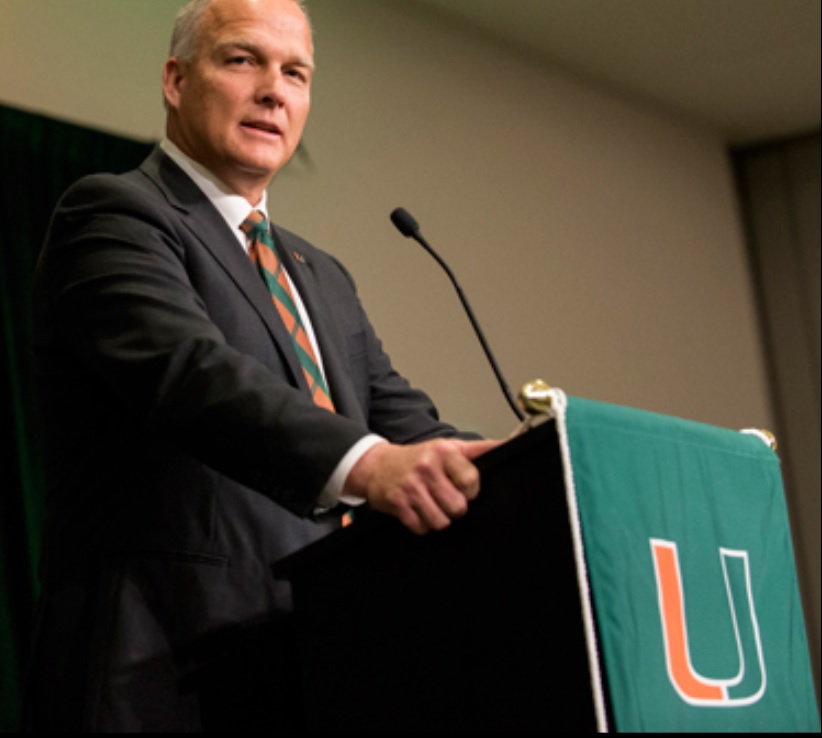
It was painful to watch my Georgia Bulldogs pulverized by the Auburn Tigers (my fellow Bronco fans can easily relate this year). Yet, later that Saturday evening, I found myself smiling and even cheering for a familiar face who was calmly embracing a signature win against college football’s number three team, Notre Dame. Level-headed. Even-keel. Happy. None of those words quite captured the way I wanted to describe Miami’s head coach, Mark Richt (former general of my beloved Dawgs). It was Dan Walken (USA Today, 11/13/17, 1C,6C) who found the one I was searching my mind for: “serene.” He is peaceful, placid, poised, and phlegmatic. But, as Walken points out, it’s not because the Hurricanes have ascended to number two in the Coaches and Press polls. He has been that all along, even the day he was fired at Georgia (his .740 winning percentage, 145-51, is the highest in college history for any coach ever to be fired). He was criticized for not being able to win the big game—which he still hasn’t. Second to that, the fan base was agitated that he was too concerned about his off-season mission work. There’s such an interesting story about how Richt came to faith, and how deeply his faith drives his life. Walken’s article mentions nothing of that, but few people who know about Richt fail to know how profoundly religion effects his life. It is, unquestionably, what drives his come-what-may serenity.

What characteristic best describes me? I know several I’d like for it to be, but, ultimately, I don’t get to describe myself. The people who know me or know about me get to do that. While the word “serene” is not found in most English translations, it is a biblical concept. 91 times, the New Testament uses a word (εἰρήνη—eirene) that is usually translated “peace.” Luke 11:21 has “undisturbed” (NASB). It can describe harmony between governments or in personal relationships, but it also describes a state of well-being within. In fact, that’s usually the way New Testament writers use it. Jesus says He offers a peace superior to what the world can give (John 14:27). A mind set on the Spirit is life and peace (Rom. 8:6). The God of hope can fill you with peace in believing (Rom. 15:13). This peace passes all comprehension and guards your heart and mind (Phil. 4:7). It can rule your heart (Col. 3:15). It can be yours in every circumstance (2 Thes. 3:16). Repeatedly, Scripture promises peace to the disciple of Christ.

But our world continually scrambles to find it, much less maintain it. It seeks to achieve peace through alcohol and drugs, firearms, money and things, achievement and success, and other earthly things to plug that void. If at our core we do not fill ourselves with the peace of God, we will find ourselves futilely searching and never finding tranquility and undisturbed calm. Richt was able to smile and be joyful at the press conference that centered around his dismissal. You and I can embrace joy and steadiness in the darkest, most painful, moments of life. We never want false hope or empty peace. But a life directed and submissive to the pure, unadulterated Word and will of God leads to unshakable peace. No matter what comes our way!

Would people say I am serene? What about you?

mark_richt_university_of_miami

Why Is The World Asking “Why?”

Neal Pollard

Today, everyone is hurting. Whether because of gun or knife violence or vehicular homicide, groups of people in our nation and other parts of the world are being torn from time and prematurely vaulted into eternity. We weep and mourn for the loss. We consider the enormous grief and heartache multiplied many families face from California to Florida, Connecticut to Texas, Colorado to Tennessee, Virginia to Nevada (and many other places).  Those whose voices we hear the most through all of this, like the national and local media, seem fixated on learning the perpetrator’s motive each time it occurs. Experts and analysts look at religious ideology or mental health issues. It seems as if they believe that if they can determine the motive, that will solve the violent epidemic that has disturbed the peace of so many people in our society. The danger of oversimplifying any specific tragedy notwithstanding, there are some right answers the world will have a difficult time embracing but that get us so much closer to resolving this plaguing problem. Why are these horrific crimes occurring?

  • The world has rejected God. Romans 1:28 says, “ And just as they did not see fit to acknowledge God any longer, God gave them over to a depraved mind, to do those things which are not proper….” “Not proper” seems benign to us in the way we use the phrase in English (bad table manners, having your shirt untucked, etc.). Kittel says, “Paul has in mind what is offensive even to natural human judgment. The decision against God leads to a complete loss of moral sensitivity, the unleashing of unnatural vices, and hence the type of conduct that even healthy pagans regard as improper” (386). Paul tells us this improper conduct includes “all unrighteousness, wickedness, greed, evil; full of envy, murder, strife” and other things we see in these current tragedies (29, cf. 30-31). Read the context to appreciate the rotten fruit of such thinking.
  • The world has redefined sin. A worldview or value system is built bit by bit, choice by choice. Paul writes, “Do not be deceived, God is not mocked; for whatever a man sows, this he will also reap. For the one who sows to his own flesh will from the flesh reap corruption, but the one who sows to the Spirit will from the Spirit reap eternal life” (Gal. 6:7-8). If we devalue human life through sinful practices like abortion or euthanasia, we plant destructive seed. If we glorify violence or imbibe in sins like pornography that objectify human beings, we plant desensitizing seed. Long ago, Isaiah warned, “Woe to those who call evil good, and good evil; Who substitute darkness for light and light for darkness; Who substitute bitter for sweet and sweet for bitter!” (5:20). Such leads to weeds which choke out spiritual fruit.
  • The world has rebelled against biblical counsel. The absolute truth of Scripture is lost in the shuffle of worldly values. Jesus says, “Treat others the same way you want them to treat you” (Luke 6:31). He says, “Love your enemies and pray for those who persecute you” (Mat. 5:44). Paul echoes, “Do not be overcome by evil, but overcome evil with good” (Rom. 12:21). He also writes, “Do nothing from selfishness or empty conceit, but with humility of mind regard one another as more important than yourselves; do not merely look out for your own personal interests, but also for the interests of others” (Phil. 2:3-4). The Bible urges us to be kind, unselfish, compassionate, and helpful through precepts and examples. The world has ignored the ethics of Scripture in preference of humanistic philosophy.
  • The world has replaced God with self as lord. What is the ultimate consequence of denying God the place that rightfully belongs only to Him? Isaiah referred to a worldly nation, saying, “I have spread out My hands all day long to a rebellious people, Who walk in the way which is not good, following their own thoughts” (65:2). Repeatedly, Scripture decries the folly of crowning ourselves king and dethroning God (Jer. 10:23; Prov. 14:12; 16:25).  When a society writes its own rules or tries to live life on its own terms, it charts a path for heartache and disaster. How concisely Solomon says this, that “Righteousness exalts a nation, but sin is a disgrace (shame, reproach) to any people” (Prov. 14:34). When whatever a person says, wants, or believes is what goes, ultimately nothing is out of bounds for him or her.

Brethren, in this frightening, dark, and uncertain atmosphere, a world which “lies in the power of the evil one” (1 John 5:19), we must share what we know! John says, “We know that we are of God…and we know that the Son of God has come, and has given us understanding so that we may know Him who is true; and we are in Him who is true, in His Son Jesus Christ. This is the true God and eternal life” (5:19a, 20). We have security, confidence, understanding, and hope, all because of God and His Son. Take courage and share that with everyone you can! It’s the only hope the world has!

kcmkjjb5i

Processing…

Neal Pollard

I woke up just before 5 AM to an ominous notification from my Jerusalem Post app. Downstairs, turning on the news, the horrific truth was confirmed. The worst mass shooting in modern American history. Not long after, I was in my gym locker room. A gym buddy, Mike, a self-described C&E (i.e., “Christmas And Easter”) Catholic, greeted me. Usually, I am not tempted to ask this, but I found myself asking him, “How does something like this happen?” His 5-word, profound answer was, “No love, no Jesus, man.”

Some random thoughts occurred to me, in processing the events in Las Vegas late on Sunday night, October 1st.

  • Luke 13:1-5. This did not happen because the people in Las Vegas, Nevada, are more wicked and evil than people in other parts of this country or the world. The need among the over 20,000 accountable adults at that country music festival is the same need that all of us have, to be penitent believers in Christ.
  • Second Amendment And Gun Control. Investigations are still ongoing, but there is preliminary reason to believe that at least one or some of the guns used by the shooter would have been obtained illegally. Gun control laws would not prevent illegal weapons. At the same time, there were several fire arms on those in attendance. They proved useless against a shooter from 1000 feet away and 32 stories high. Guns are not inherently evil nor the all-encompassing answer.
  • Man. Man was both perpetrator and victim. Yet, man is so limited. We are not all-knowing or all-powerful. Highly trained law enforcement officers and first responders, who doubtless saved many lives, did not prevent this. How humbled these events make us!
  • Atheism. Nearly every news interview ended with the reporter or anchor with a pledge of prayers or similar reference to God. The president’s brief statement continuously referred to God and even quoted Scripture. Nobody invokes “survival of the fittest,” “big bang,” or “there is no God” to provide help, comfort, or strength to anyone. A Godless worldview is a hopeless one.

Big questions emerge from this fog of suffering. Christians, we not only have the answer, but as God works through us, we are the answer! I read a social media post from Sheila Butt, challenging us to take Christianity off the pew and into our daily lives. The soul we reach and life we help change might change the course of the world for good (or the prevention of evil). Mike nailed it. “No love, no Jesus, man.” Amen!

297901_10150264597445922_585245921_7806090_7777855_n-1

“Being A Christian Is Hard”

Neal Pollard

The church office receives a monthly publication called Faith Connect. In the latest edition, they include some data from Barna Group on faith in America. In a sidebar of statistics to an interview with Barna’s Vice President, Bill Denzel, writer Kelly Russell reveals what the research organization found in interviewing those who identify themselves as Christians. They report feeling:

  • “Misunderstood” (54%)
  • “Persecuted” (52%)
  • “Marginalized” (44%)
  • “Sidelined” (40%)
  • “Silenced” (38%)
  • “Afraid To Speak Up” (31%)
  • “Afraid Of Looking Stupid” (23%)

These findings accompany the assertion that America is a “Post-Christian nation,” having forgotten or rejected its roots, history, and former culture and practices (Summer 2017, 49-51). The thing that strikes me is how “Christians” report feeling. Barna did not exist in the first-century, and as such there is no record of any polling of the original Christians. But if there was, can you imagine the New Testament church answering the way these respondents did? I’m sure they felt misunderstood and persecuted. How could they not? Reading New Testament books like Acts, Hebrews, 1 Peter, and Revelation, along with early church fathers, we’re sure the Jews and Romans sought to marginalize, sideline, and silence them from the marketplace to the temples and synagogues. Our ancient spiritual family members were arrested, murdered, driven from their homes and cities, ostracized, stolen from, ridiculed, and more.

How they responded to such treatment is instructional for us today.  Peter reports their feeling:

  • “Living hope” (1:3)
  • “Great rejoicing” (1:6; 1:8)
  • “Love” and “believing” (1:8)
  • “Joy inexpressible” (1:8)

There are a lot of imperatives and exhortations throughout the rest of this epistle, written to encourage them to hold onto their faith however poorly they were treated by the people around them. Peter wants them living holy lives, but he also wants them to appreciate how great living the Christian life is. That’s a message we need to take to heart.

I hope we never put the focus in our spiritual lives on how hard it is to be a Christian. It can be! But, what will make the greatest adversity bearable is keeping our focus on our purpose, our promise, our privileges, and our peace. There is no better life than the Christian life. May we focus on our opportunities rather than our obstacles!

carry-cross-600x350

My Hope For Youth

Neal Pollard
This week has reaffirmed a fundamental view I have about youth. It has been affirmed by what I see in  our youth group, but it is bolstered by what I have seen in so many young people this week. Hearing youthful voices singing whenever they found an opportunity, I thought about how hopeful I felt for the church’s future as these beautiful voices blended in heartfelt song. Our world is growing more vile and wicked each day, but I have bathed in a spiritual oasis this week. It led me to think about how much hope we rest on the future of the church, but how much we should.
My hope for our youth is that they will develop their own faith. Some of those youth I speak of were converted, but many more are the product of Christian homes and heritages that go back for generations. Apathy and indifference can infect our youth who go through motions they have been taught but which have not been internalized. As one in that latter category myself, I found that a challenge I faced as a youth. I want our youth to grow a conviction and belief system founded upon the rock solid nature of God and His Word.
My hope for our youth is that they will maintain their purity. The aforementioned world is bombarding all of us with insidious messages. On every hand, the devil tempts us to let go of holiness. With so many ways to “get in,” I pray our youth will lock the door of their heart when evil is on the stoop.
My hope for our youth is that they will have proper examples in us. How heavily this point hits home! So much of what we hope for our youth begins, continues and ends with our impact upon them. They will be, in large part, the product of our training, what we emphasize, value and show to be important, and what our passions and priorities are. They will have great difficulty rising above what we model before them!
I certainly hope so much more for them, but in all of this my hope is that whatever peril or persecution they must face in the years to come they will be faithful even to the point of physical death. But I believe in them! They have showed me so much now, and faith is built before the storms of life come.

19224994_10154730412325922_1050303890532924516_n
2017 edition of the Denver Future Preachers Training Camp in a more serious moment

Focus, Not Complacency 

Neal Pollard

Whether you are elated or despondent today, you face a serious danger as you absorb the reality of the election results. Prayer meetings for our nation transpired all around our country, even from brethren and friends in other nations. Individuals prayed fervently for God’s will to be done. What that will look like and what that will mean only time will reveal.  For many, relief replaces fear at the prospect of the “other side” winning. For others, disbelief and embarrassment, not to mention shock, have begun to roost.

One thing that has been emphasized in the days and weeks leading up to this historic election is that, no matter what, the church must step up and increase its militancy and evangelism. We must work and serve in bigger and greater ways. That has not changed. The kind of change and improvement this (and every) country needs most can only come from Christ. People of both (or neither) political parties still live in view of the Second Coming, the Judgment, and an eternal destination in either heaven or hell.

After warning about the futility of trusting in earthly governments, militaries, and the like, the Psalmist instructs, “Behold, the eye of the Lord is on those who fear Him, on those who hope for His lovingkindness, to deliver their soul from death and to keep them alive in famine. Our soul waits for the Lord; He is our help and our shield. For our heart rejoices in Him, because we trust in His holy name. Let Your lovingkindness, O Lord, be upon us, according as we have hoped in You” (Psa. 33:18-22). May that forever be the anthem of the people of God!

The only thing that is over is a political election. The church’s mission is as daunting, daring, and divinely-directed as it has ever been. However you view the national decision, please continue to see the heavenly vision. We are not here to make America great again, though most of us would desire that. We are here to help reconcile the world to Christ (2 Cor. 5:20; Mat. 28:18-20). I love the way my son, Dale, said it yesterday: “After the election, after the selection, I’m still thankful there was a resurrection that gives us direction.” That is the focus that must keep us oriented to our reason for being on this earth.

2000px-ballot_box_silhouette-svg

WHY TODAY IS AN EXCITING DAY (poem)


Neal Pollard

From sea to sea, He is the same
No man can change His essence
From year to year, His eternal flame
Show His power and effervescence.

Whoever sits upon a throne
Or reigns a group or nation
We must that One make fully known
Through tireless proclamation

For all mankind must know that One
Who is changeless and transcendent
They must to Him yield before life’s done
And acknowledge on Him they’re dependent

Fickle, transient trends and times
Can’t blind us on this matter
The church’s mission in fair or foul climes
Is to take the Kingdom seed and it scatter.

And, so, we shall live and by such find peace
No matter the climate of our homeland
Leaning on God, who doesn’t change or cease
The trustworthy Rock upon which we stand!

Sunrise, Kauai

Characteristics of Hope

Neal Pollard

An epistle centering around the superiority of Christi as our all-sufficient One would certainly be expected to contain a message of hope. While some had apparently given up Jesus as their hope (6:4-6), the writer of Hebrews had a higher estimation of those to whom he writes. for one thing, they had a legacy of good works and brotherly love and benevolence (6:10). His desire was that they would continue to stay strong. In expressing this, the writer suggests hope as an integral tool to keep them hanging onto their faith in Christ. In these final ten verses of Hebrews six, he mentions three qualities of hope that would help them–and will help us–hang onto our hope in Christ no matter what.

This hope is durable (11). Look at the language he uses. This hope was tied to an assurance that would endure “until the end.” It was a hope that would lead them to “inherit the promises” (12), just as Abraham’s hope in God led him to his inheritance (13-17). God desires to show us, as heirs of the promise through Christ, His unchanging purpose (17), so He guarantees that promise through an oath build upon the foundation of Himself. Hope which is guaranteed by the very nature and character of God is hope that will outlast anything! Nations rise and fall. Presidents serve only one or two terms. Supreme court justices, at most, can serve only a lifetime. Our hope transcends time.

This hope is tangible (18). These Christians needed to count on a refuge in difficult times (see 12:4), and we desire the same thing in our lives! Knowing that God is so trustworthy, we are encouraged to “take hold of hope” that is found only in Christ. To say that we can take hold of hope and that it is set before us means that it has substance. In a world where nothing seems certain, evidence from scripture, nature, order and design of the universe, and so much more allows us, by faith, to grab this hope. He had already told them to hold onto that hope in Christ earlier in the letter (3:6) and to encourage this response he points them to scripture (cf. 3:7-11; Psa. 95:7-11). Scripture helps us see the solid hope we have in Jesus.

This hope is stable (19). It is an anchor. Anchors keep a vessel from drifting, an appropriate illustration since the Christians were tempted to drift from Christ (2:1). By maintaining their hope, they could anticipate three blessings: (1) sureness, (2) steadfastness, and (3) the service of the sacrificial Savior (19-20). All three of these descriptions of this Almighty anchor underline the security found in keeping ourselves anchored in Christ. Those who keep Jesus as their hope are able to weather the most horrific storms of life!

As Christians, we may find ourselves ready to abandon Jesus as our hope. So many things attempt to pull us from Him. Let us draw encouragement from this inspired writer, as surely these first Christians did, and rejoice in these changeless characteristics of hope!

anchor_england_-_scan01

In Awe Of The Greatest Freedom


Neal Pollard

I once was without representation,
Not a citizen of that chosen nation,
Enslaved and oppressed,
Deprived of the best,
And discouraged by my lowly station,

But my freedom was bought at a price,
With the one ransom that would suffice,
Sweet liberty was bought,
And my freedom I sought,
When I opted for virtue instead of vice.

Independence is becoming and sweet,
It is found when I fall at His feet,
And make Him my Master,
I avoid pain and disaster,
He offers me victory for my defeat.

I celebrate privileged position,
Embrace His heavenly mission,
Knowing the blessings He gives,
Is because He still lives,
He hears the faithful disciple’s petition.

As we celebrate the blessings in this land,
Bestowed by a Providential hand,
Let us never forget,
That He paid our great debt,
He’s preparing what’s infinitely more grand.

Whatever may become of our dear country,
I pray that our eyes will always see,
That no earthly place is home,
We are strangers who will roam,
’Til we reach the Great City across the sea.

flag-468345_640

Five Facts About A Faithless People

Neal Pollard

The percentage of Americans who identify as atheists doubled from 2007 to 2014 (Michael Lipka, Pew Research Center). But that hardly tells the whole story. Our culture is drowning in a political correctness that stigmatizes Christian Values and that makes nearly any public stand or statement regarding what Scripture says about such things as homosexuality, objective truth, the sanctity of life, and creation a point of fierce contention and object of greatest scorn. A moral erosion and slippery slope has been in motion for several generations that has brought us to our current position. The Bible foresaw such decline as comes when a people turn their backs on God (cf. Prov. 14:34). In discussing the universal problem of sin, Paul points out five facts about a faithless people (Rom. 1:18-32):

  • Faithlessness ignites God’s fury (18). Wrathfulness is as much a part of God’s nature as graciousness. In fact, we appreciate grace so much because God gives it when we deserve His wrath. Paul says the object of His wrath is all ungodliness and unrighteousness. The unrighteous behavior Paul specifies is “men who suppress the truth in unrighteousness.” They don’t live the truth and they don’t want the truth to be told. Paul ends the section by pointing these out as those who practice ungodliness and heartily approve of those who do the same (32). It is clear that those who remain faithless are “sinners in the hands of an angry God.”
  • Faithlessness ignores the facts (19-20). Paul says that faithlessness is not due to an absence of facts, but a willful ignorance of them. He says that even the faithless can see God as they look inside themselves and outside themselves at the creation. It takes a deliberate effort to arrive at a position of unbelief. So much has to be continuously ignored.
  • Faithlessness includes futility (21). Faithlessness is built upon a flimsy foundation. It’s the slab of speculation. The faithless spend their lives running from the facts in favor of a worldview that makes no sense, gives no purpose, and instills no hope.
  • Faithlessness involves folly (22-23). It’s not just empty, it’s foolish. Paul’s words here are akin to David’s words in Psalm 14:1 and 53:1, that “the fool has said in his heart, ‘There is no God.’” Paul describes intelligent people who have made the most fundamentally foolish decision of all. They exchange faith in an infallible God for faith in fallible man.
  • Faithlessness instigates a fall (24-32). Paul pictures how a person arrives at wholesale immorality. One must first turn from God and run the other way. Then, God lets them go to find out what lies at the end of that broad way. He gives them over in the lusts of their hearts to impurity (24), He gives them over to degrading passions (26), and He gives them over to a depraved mind (28). The lusts led to the wrong object of worship and submission. The passions led to unnatural desires. The depraved minds led to every imaginable behavior, a long list of actions that have in common the fact that they lead to spiritual death. It encompasses both the perpetrators and those who validate them and tell them it’s OK to do them.

Why does Paul mention these faithless ones? It is proof of divine inspiration, because although this was written 2000 years ago it perfectly describes the current culture. But, there is a more important reason for Paul to write this. This horrible condition has a remedy. The theme of Romans is contained in the four verses prior to this section. The gospel has the power to save us from this. The solution is faith. Faith saves (1:16) and it gives life (1:17). The world is being swallowed by spiritual darkness, but God’s light is brighter. We who have faith have the light. We must share it. When we do, we help people have the most important possible commodity: faith!

birth_of_all_hope_by_mr_morph-d62i5un

A Literal Appeal For “Help”

Neal Pollard

In an interview given at her home, Ann Rodgers appears a bit eccentric but a wonder to behold. The 72-year-old woman survived 9 days in an Arizona desert by eating plants and drinking pond water. She was driving to Phoenix via a remote stretch of back country road on the White River Indian Reservation when she got lost and subsequently ran out of gas. Thus began a series of efforts, building signal fires to draw the attention of rescuers or the forest service. She got lost while climbing a series of ridges trying to get cell signal. She and her dog faced gloomy odds, but she kept trying. She went missing on March 31st. On April 3rd, she used sticks and rocks to spell out “help.” To further draw attention to it, she found an antelope skull nearby and placed it with her message (via nbcnews.com). Since moving out west, I have learned that people frequently get lost in the vast stretches of deserts and mountains. I cannot find statistics for how many people get lost or how many are found alive or dead in the United States, but each incident is obviously traumatic for those involved. Can’t you imagine how desperately and completely those who realize their lostness long to be saved?

Wherever you go today, the vast majority of the people you encounter are going to be wandering through this world lost in the most profound way. Without rescue, they are heading for a fate infinitely worse than physical death. “Lost” is the way Jesus, the Good Shepherd, describes those not right with God. While He uses the word that way in three of the four gospels (Mat. 10:6; 18:11; Luke 19:10; John 18:9), it is the parables of Luke 15 that most vividly speak in these terms. The first parable, that of the lost sheep, draws on the search and rescue metaphor (Luke 15:4). That’s how Jesus likens the situation with one outside of God’s redemption.

Be watching for signs from the lost. They often send signals, if we are looking in the right places. Whether personal problems, major life changes (like marriage or having children), those new to the area, or those demonstrating an open mind, they may be just like the Ethiopian Eunuch and hoping for someone to guide them (Acts 8:30-31). Jesus has us here to conduct search and rescue missions. May we have our eyes peeled and keep ourselves equipped to rescue the lost. They are out there everywhere.

331de06200000578-0-image-a-37_1460507569810

Not All Peace Is The Same!

Neal Pollard

“Peace” is a geopolitical term associated with such terms as talks, treaties, accords, and the like. It’s the political antithesis of war. Of course, the term is co-opted by a wide variety of people in society, but so often peace is a misunderstood concept.  Or, people turn to the wrong source for peace.

The primary New Testament word for peace means “a set of favorable circumstances involving tranquility” or “to be without trouble, to have no worries, or to sit down in one’s heart” (Louw-Nida). BDAG defines it as harmony in relationships, a state of concord, and state of well-being. But, what is sometimes asserted as peace is not necessarily peace as God defines it.

There is false peace (1 Th. 5:3).  Paul addresses the words of those characterized as “in darkness” (4-6), lacking sobriety (7-9), as offerers of peace and safety in the face of destruction. These people are not after the right kind of peace and Paul implies they are “destined for wrath” and condemnation (9).  People who want peace on their own terms, living sinful lifestyles in rebellion against the will of God, advocate false peace. Whether or not they achieve some measure of that in this life, they are not destined to enjoy it eternally.

There is forged peace (1 Th. 5:13). Paul teaches that peace and harmony between people is something that must be worked toward. He tells the Christians to “live in peace with one another,” and then he proceeds to tell them how this is done. It includes submitting to the church’s leadership (12-13), and it calls for church leadership to give the church family whatever is needed from admonition to encouragement (14) and to lead the congregation to pursue peace and follow their example (cf. 15-22).  The kind of harmony and unity God wants is not accidental or incidental. It is the product of diligence and determination.

There is the Father’s peace (1 Th. 5:23).  Paul begins both epistles to the Thessalonians by tying together true peace and the Heavenly Father. Here he writes, “Now may the God of peace Himself sanctify you entirely; and may your spirit and soul and body be preserved complete, without blame at the coming of our Lord Jesus Christ.”  God’s peace is comprehensive, complete, and conquering. It strengthens one now and saves one at Christ’s second coming. Contrast this peace with the peace offers. Jesus does. He tells His disciples, “Peace I leave with you; My peace I give to you; not as the world gives do I give to you. Do not let your heart be troubled, nor let it be fearful” (John 14:27).

Right now, people have a growing desire for peace. There are turning in many directions for it. Ultimately, it won’t be found in the White House, the military, on Wall Street, or from within our own resources apart from the Father. Let us strive to forge peace between ourselves as His people, and model and offer it to a lost world desperately desiring it.

17855697235_165fcec995_o_d

“Truly In Vain Is Salvation Hoped For From…”


  • A politician or political party.
  • Wall Street.
  • Military might.
  • Our net worth or economic savvy.
  • Government programs.
  • The second amendment.
  • Popularity and fame.
  • The worship of nature.
  • Exercise and fitness.
  • The appeal of our good looks.
  • Walls.
  • The importance of our occupation or position.
  • Our national identity.
  • The Supreme Court.
  • Ethnicity and race.
  • Science and technology.
  • Any religious figure besides Jesus Christ (even those claiming to represent Him).
  • Family members and friends.

In Jeremiah 3:23, the prophet writes, “Truly in vain is salvation hoped for from the hills, and from the multitude of mountains: truly in the Lord our God is the salvation of Israel.” Jeremiah’s brethren put all their eggs in the wrong baskets. They neglected to see where true hope was found and where saving faith was to be put. Their misguided trust led to their downfall. It cannot be otherwise in any generation, including our own.

We may never say we put our trust in anything besides God, but “the proof is in the pudding.” We demonstrate what’s first and foremost to us every day, in word and deed. Ultimate deliverance from our greatest trials, struggles, and challenges comes from only one source. Jeremiah succinctly identifies it.  Is that what you are trusting? If so, let’s make sure everyone who knows us knows that!

—Neal Pollard

11800435_10153091791310922_2631856048550949852_n

THE PRISON OF “NOT”

Neal Pollard

Strayer University shared their video from the day they ran an ingenious experiment in New York City.  They put up a chalkboard on a busy street with this caption written at the top: “Write Your Biggest Regret.”  Scores of people wrote on the chalkboard.  Nearly every answer visible in the video included the word “not.” Interestingly, it was not confessions of sins of commission. Instead, it was about opportunities missed, dreams not pursued, and things they failed to do.

That exercise made me wonder how many are inmates in the prison of “not.”  While Strayer seemed more interested in highlighting regrets that were tied to career, that impacted quality of physical life, and the like, regret reigns in people’s hearts and has dominion over their spiritual and eternal lives, too.  Scripture shows us those challenged with the gospel message who ultimately refused to follow Christ. The rich young ruler was not willing to choose Christ over his stuff (Mat. 19:22). Many of the rulers believed in Him, but they put their stock in the approval of men rather than God (John 12:42-43). Felix trembled at truth, but ultimately turned away (Acts 24:25). His cohort, Agrippa, was nearly there but not quite (Acts 26:28).  Other examples can be found of those who came so far but would go no further.

How many people have been shown the way to eternal life and have acknowledged, to a point, that it is the way they should go? Yet, when push comes to shove, they refuse to leave the cell of self and confine themselves to the chains of a condemning choice. Before Christ, they will see their regrets realized in a rejection that cannot be remedied.

The incredible news is that they keys are in reach of this prison.  It was a running gag in the Andy Griffith show that particularly Barney would leave the keys on the peg of the Mayberry jail where the prisoners could reach the keys and let themselves out. Would you picture our spiritual circumstances this way? The Psalmist praises God for many reasons, including the fact that “the Lord sets the prisoners free” (146:7). In a Messianic passage, Isaiah writes of His mission to “proclaim liberty to captives and freedom to prisoners” (61:1; cf. Luke 4:18; 7:22; Mat. 11:5). He can emancipate lifelong slaves to sin (Heb. 2:15). He has left the keys where we can grab them, but we must want to be free and choose to be free.

This video ends with the participants taking an eraser and removing all the regrets from the board. One of them writes just two words in their place: “Clean slate.”  What an optimistic, hopeful, empowering difference that contrasting concept is. Regret can be replaced with resolve. Do you believe that is possible for your spiritual life? Don’t you think God wants you to experience that exhilarating hope? The proof is there at Golgotha and the sepulcher that could not keep His Son entombed. What He did there can provide you with a clean slate! Take possession of the freedom He came to give you!

Strayer video link: http://aplus.com/s/83d4dc91dee

paxp-deijewhat-is-your-biggest-regret-strayer-university-chalkboard-video-new-york-city-960x420

Can You Imagine Being $53 Million In Personal Debt?

Neal Pollard

USA Today’s Maria Puente is reporting music star Kanye West’s tweet where he writes, “I write this to you my brothers while still 53 million dollars in personal debt…Please pray we overcome…This is my true heart….” (USAToday.com).  Hearing that Facebook creator Mark Zuckerberg and wife Priscilla were going to give away some of their billions to philanthropic causes, West tweeted that he wanted to be a recipient of some of that charity.  Since most of us will probably not make a total of $53 million in our lifetimes, we have a hard time imagining how someone could accrue that amount in personal debt! Perhaps horrible investing, profligate lifestyle decisions, and the like might explain it, but the lack of restraint and wisdom seems appalling. How could one person be so foolish and wasteful? We wring our hands and shake our heads, maybe condescendingly.
Until we consider something.

In a spiritual sense, we all faced a debt infinitely greater. Jesus illustrates this in a parable regarding a slave who owed his master 10,000 talents (Mat. 18:23ff). Biola University business professor Philip Massey did some modern-day math equivalency with that figure and estimates in 21st Century dollars that debt would be $7.04 billion dollars, and according to the 2010 Forbes list of billionaires would need to be at least the 102nd most wealthy person on the entire planet just to be able to pay such a debt (chimes.biola.edu).  Jesus’ point in the parable is to show how utterly audacious it is not to forgive the relatively minuscule transgressions others commit against us in light of how great our spiritual debt is to God.  All the combined wealth of the world is not enough to pay for one sin (cf. Mic. 6:6-8; Mat. 16:26). Colossians 2:14 uses the term “debt” to describe our sin problem, but the same verse tells us that we had someone more powerful and capable than any earthly magnate or mogul to help us pay off our debt.  In fact, “having nailed it [the certificate of debt consisting of decrees against us] to the cross,” He provided payment sufficient for the sin debt of every single person in this world.

Can you imagine anyone refusing help who faced such an insurmountable obligation? Yet, the majority of this world has done and will continue to do so. By refusing to submit to the Lordship of Jesus, they continue to pile up their debt. When the Day of Accounting comes, they’ll stand bankrupt and unable to pay. The consequences will be eternal!

Without Christ, we all face a debt that cannot be sufficiently estimated.  We need His blood applied to our sins or our situations are hopeless! How Zuckerberg will respond is unclear. How Jesus will respond is ironclad! Reach out to Him.

kanye_west_at_the_2009_tribeca_film_festival-2_cropped

Reflections At Middle Age

Neal Pollard

The first few decades we rush ahead
Wanting time to fly, but it creeps instead
Impatient to be older, sure that it’s our way
To freedom and happiness, where we’ll leisurely play.
Sure enough time goes rapidly by
Flashing so speedily, we watch it fly
Moments of grandeur, days that are grueling
Ordinary stretches our quick lives fueling
Soon the road in our rearview stretches much longer
Our foot on the brakes, though the pace is much stronger
The road out before us is sloped and quick,
We savor the present, future curves might make us sick.
But we know that this journey, so speedily taken
Will reach its destination, there’s no mistaking.
There’s still plenty of grand views on the side of this road
But we encounter new impediments and a heavier load
How could we go faster, as there are higher hills to climb?
Yet this road is so short and is hemmed in by time.
I praise God this journey is not a dead end,
I’m traveling to see my dear Savior and friend,
Who’s waiting my coming, however many more miles,
Where days are not counted, and tears become smiles.
That’s free of all calendars and increases in age,
And length of existence stretches one eternal page.
The law of averages says I’m about halfway through,
Or perhaps a bit farther, so here’s what I’ll do,
Make the most of each moment, helping others prepare
For a happy destination, showing how to get there.

180778_494356300921_2048026_n
Me on the right with my sister, Mendy, and friend, Zack Carter. About 1973.