BEWARE OF SPIRITUAL ATTRITION

Monday’s Column: Neal At The Cross

25586779_10155207977480922_6214117991468108390_o

Neal Pollard

Life has dramatically changed for us on a daily basis. Whether it be liberties that have been restricted or routines that have been disrupted, we have experienced significant upheaval. Some of it has been dramatically better, as for many we have been given a slower pace that has produced much more time with family and projects done together that we will always treasure. There is vast potential for much better marriage and family habits to come from this experience, as well as a reshuffling of priorities on the other side of this quarantine.

Of course, for many this will be remembered as a season of trial. We are hearing of members of the church who have contracted and even died with this deadly virus. Church families around the nation have members who are part of the at least ten percent of those who have lost their jobs or been laid off. How many parents, grandparents, and other loved ones are in nursing homes, assisted living facilities, hospitals, and residences where we cannot have physical contact with them for their safety’s sake? As devastating as anything, though, is the dreadful disruption to “church life” because we cannot assemble together for church services, fellowship activities, devotionals, seminars and workshops, and the like. There will be permanent, far-reaching impacts physically, economically, and socially, but what about spiritually?

Guard Against Social Disconnection

For the time being, we are more or less forced into social distancing. Hopefully, this can be modified soon and ultimately return to pre-virus levels. It will be important to return to the physical dimension of contact with each other provided uniquely through our assemblies. My prayer is that we will treasure fellowship like never before. We will zealously obey the command to consider how to stimulate one another to love and good deeds through our assemblies (Heb. 10:24-25), being “devoted to one another in brotherly love” and to “give preference to one another in honor” (Rom. 12:10) between our scheduled services (Acts 2:46). Don’t let the devil use this to form a permanent social wedge between you and the church.

Guard Against Stress And Anxiety

There are no psychological studies to measure the effects of mass isolation and sheltering in place on a scale like this has caused. No doubt, the more functional and stable the home environment and the more emotional support available to a person, the better he or she will fare. How many cut off from their normal routines are also constantly feeding themselves a steady diet of the news, which none can rightly classify as edifying? Conspiracy theories aside, there are the stressors like the ones mentioned above. Fears can eclipse faith and worry can lead to weakness. This trial is an excellent opportunity to build trust (Psa. 37:3-6), endurance (Jas. 1:3), righteousness (Heb. 12:11), hope (Job 13:15), and more. 

Guard Against Spiritual Doldrums And Self-Absorption

This has tested our time management skills. Having more time on our hands does not automatically translate into “making the most of the opportunity” (Col. 4:5). Will we have done more binge-watching or Bible reading through this? Will we have tended more to self-care or finding ways to serve (phone calls, texts, emails, cards, etc., to spiritual family and others we might influence and encourage)? Will we have focused more on how this has impacted us or how we can impact others?

The good news is that, for all of us, this is a story whose last chapters have not been written. Each day is an opportunity for spiritual growth and improvement. None of us would have wished something like this to happen, but each of us chooses what we will make of it. Let’s remain vigilant. Certainly, Satan would like to take advantage of us (2 Cor. 2:11), and he could use our current circumstances to dislodge us from faithfulness. Yet, Scripture promises something that we can count on: “Submit therefore to God. Resist the devil and he will flee from you. Draw near to God and He will draw near to you” (Jas. 4:7-8a). May that be the end result for us all! 

social-distancing-4981230_960_720

DAFFODILS THAT DON’T BLOOM

Friday’s Column: Supplemental Strength

brent 2020

Brent Pollard

Like the robin, daffodils are a harbinger of spring. They begin blooming in late winter and create anticipation for the pretty spring flowers following. We planted our place in Appalachia with daffodils nearly 30 years ago. Today, we get few flowers in places where we planted them. We do have healthy-looking, green blades but no blooms. By their nature, a single daffodil bulb becomes an entire colony of bulbs within a few years because it reproduces by dividing at the bulb. Once so many bulbs are packed into a small space, the plant cannot receive enough moisture or nutrients to produce the desired flower. So, on the one hand, it’s great because just a few daffodil bulbs can yield an entire daffodil garden in a few years. On the other hand, to keep daffodils flowering one must periodically dig up these new bulbs and space them out so conditions remain conducive to their overall health.

When we think about Jesus’ parable of the sower, we likely think of the various soils presented therein. We pray we find the good soil as we go to plant the seed but realize since few are finding the strait gate and narrow way (Matthew 7.13-14), most of our seed falls on the other three poor soils. Of those poor soils, Jesus highlighted a group in whom the seed never produces fruit since they become choked by thorns (Luke 8.14). These thorny-soiled hearts didn’t recognize how detrimental their thorns were since they took the form of the cares and riches of the world. In like manner, we don’t see the problems posed by a bunch of healthy-looking, green blades where our daffodils ought to be. We keep hoping they will put on blooms, bringing us the testimony of God’s wondrous creation. Yet, conditions underground won’t allow for that.

Might I suggest those possessing thorny-soiled hearts can have a similar problem as the daffodil? It may be they don’t just wither and die (i.e. fall away). It may be they are sitting on the pew, where we planted them, looking as if they hold promise, but never producing blooms. Why? It may be their fruit is being crowded out by conditions at their root. We see no prickly thorns gathered around them. Yet, there are cares and concerns on the inside choking out God’s Word all the same. It is confounding since they may even greet us with a smile on their faces while being inwardly consumed by such things as anxiety.  If we do nothing, though, the results will be the same as if it were thorns.

It may be we need to lift these unproductive Christians to help them settle in a better environment conducive to their growth. We need to help them remove all the things choking their heart. We need to nurture them. Though we’re more considerate of the newborn in Christ, the overcrowding of the heart is a challenge potentially taking place even in the one who obeyed the Gospel years ago. Be your brother and sister’s keeper (Galatians 6.1; James 5.19-20). If you see a pretty green blade that never flowers, dig a little deeper. If one’s heart is being crowded out, help him find the space to bloom (Hebrews 3.13).

5262209_c01205ab

Your Favorite Pair Of Shoes?

Monday’s Column: Neal At The Cross

pollard

Neal Pollard

Growing up, I heard my dad preach a sermon comparing different type of shoes to various people’s religious attitudes. You can imagine the application of such shoe types as the slipper, the loafer, the work boot, the Sunday shoe, the combat boot, etc. It was a clever illustration to encourage everyone to live a faithful Christian life and avoid a mentality that hurts the church.

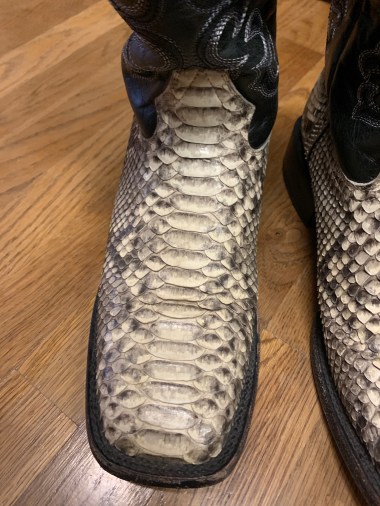
Do you have a favorite kind of shoe? I’d venture to guess that you even have a favorite pair or couple of pairs of shoes. Usually, you’ll find me either in a pair of cowboy boots or in a pair of running shoes. What goes into why you favor a pair of shoes? Quality? Style? Comfort? 

To make a spiritual point by referring to footwear is more ancient than my dad’s efforts to do so. No less than the apostle Paul referred to “having shod your feet with the preparation of the gospel of peace” (Eph. 6:15). Indirectly, Isaiah and Paul give attention to this very idea by complimenting the “beautiful feet” of those who bring good news of good things (Isa. 52:7; Rom. 10:15). 

You would think, to borrow dad’s analogy, that some “shoes,” figuratively, shouldn’t be adorned as part of our Christian armor. Flip-flops aren’t good (Jas. 1:8). Neither are skate shoes (Rom. 12:11; Col. 3:23). Camouflage boots can be a liability (Rom. 12:2). It would seem counterproductive for a preacher or teacher to favor tap dancing shoes (2 Tim. 4:3), since our responsibility is to stand firm (Eph. 6:11,13,14). 

Staying with the analogy, some shoes are excellent if used according to their design. Running shoes are essential to running the Christian race (1 Cor. 9:24,26; Heb. 12:1), but not to run in vain (Gal. 2:2; Phil. 2:16), run with sinners to sin (1 Pet. 4:4), or run after false teachers (Luke 17:23). Work boots can be misused in prioritizing occupation and career over the kingdom, but when used in the exercise of our talents and resources to grow the kingdom they are worn well (Mat. 5:16; 9:37-38). 

You get the idea, and you can no doubt add to the analogy with your own ideas. But, spiritually, what is your favorite pair of shoes? John the Baptist suggests that Jesus, like most all others of His day, wore sandals (Mark 1:7). John felt unworthy to even untie them. Yet, Peter, later on, would say “follow in His steps” (1 Pet. 2:21). Jesus’ shoes carried Him to Samaria to minister to the woman at the well. They presumably walked on water. They took Him to Lazarus’ tomb. He doubtless wore them as He ascended the mountain to preach the greatest sermon ever delivered. Was He permitted to wear them as He carried His cross to Calvary? 

We aren’t qualified and worthy to be in His shoes, but, as the song suggests, we must be “trying to walk in the steps of the Savior.” Another hymn avers, “Where He leads me, I will follow.” Our favorite shoes should be the ones revealing the footsteps of Jesus. We follow Him and anyone can follow us (1 Cor. 11:1). They will help us walk in good works (Eph. 2:10), in a worthy manner (Eph. 4:1), in love (Eph. 5:2), and carefully (Eph. 5:15). 

pythonboots

HOW I SHOULD WEAR OUT MY KNEES

Neal Pollard

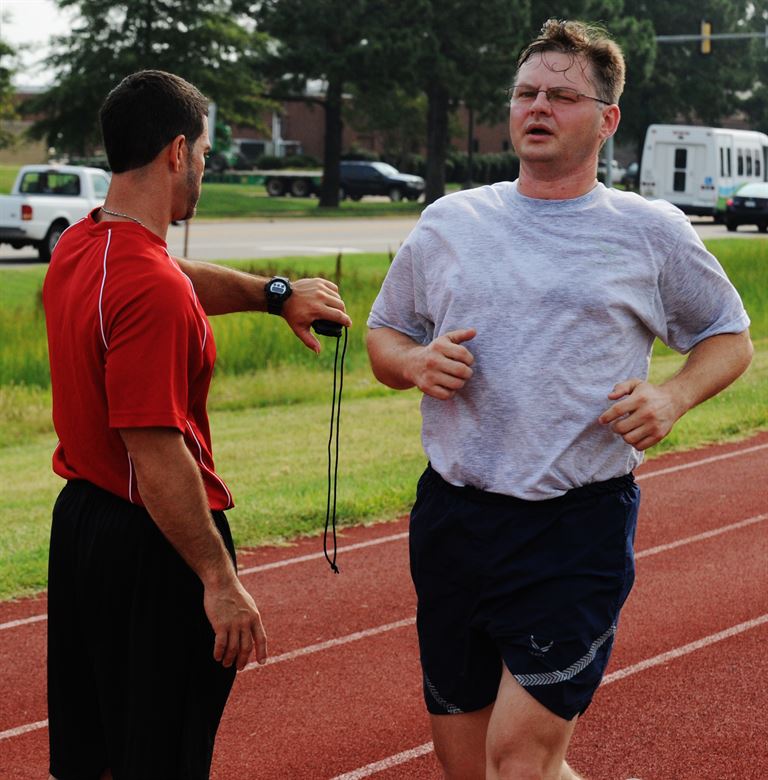
This past May, I began my twenty-second year of running. In that time, I’ve logged thousands of miles. At 49, I am happy to say that my knees are doing fine but time may change that. One of the risks of running, to listen to some, is wearing out places like knees and hips. But, I’m hoping I’m prolonging my life and helping vital organs through exercise.

Spiritually, I put my “knees” to the test, too. The challenge to protect my knees is a daily struggle that I confess I am still working on. I do not want to wear those knees out through:

  • “Knee-Jerk Reactions.” This one is hard for me. I’m prone to these when I’m subjected to frivolous or petty criticisms. I’m equally prone when I’m undisciplined enough to act impulsively through impatience or my own misunderstanding. When I fail to think through things, prayerfully and deliberately, I can unleash something that can be hard to unsay or undo. Usually, it means I have not studied, prayed, and reflected enough before spouting off. I can really wear my knees out that way. I benefit from principles like those found in Proverbs 15:2, 25:28, 26:4-5, and a multitude of similar passages. 
  • “Feeble Knees.” As a child of God whom He loves, I will undergo discipline at His omnipotent, but omni-benevolent hands. It can be unpleasant, but it is always beneficial (Heb. 12:11). But, when I’m in the midst of it, it can cause my knees to buckle. The writer of Hebrews follows up this discussion about divine discipline, saying, “Therefore, strengthen the hands that are weak and the knees that are feeble…” (12:12). When I’m tempted to give up, discouraged, worried, afraid, or lonely, I need to double up on my spiritual conditioning to strengthen those tested knees. I must trust God’s guidance and love, especially in adverse conditions.

So, then, how should I wear out those knees?

  • In prayer (Dan. 6:10; Acts 7:60; 21:5; Eph. 3:14). It’s not about the posture of the body, but of the heart. I can always be praying more (1 Th. 5:17). I can never pray enough. 
  • In worship (Psalm 95:6). Again, it’s not that I need to show off that posture in the assemblies or in my private devotions, but even the very definition of worship includes the idea, at least figuratively, of falling down before and prostrating oneself. It’s a big reason I try to never miss a single service of the church. I owe Him my all, and I love Him for all He is and has done. He wants me in the assembly, and I want to do what He wants. 
  • In submission to God’s will (Luke 22:42). When Jesus knelt to pray, He was also actively submitting to the Father’s will. He faced something dreadful and that He did not want to do, but His attitude was of total surrender to what God wanted. Oh, what a challenge to me! How often do I put my knees to the test by giving up what I want for what He wants. But, I must!

Paul says we’re running a race that we must win (1 Cor. 9:24-27). I’m going to need healthy knees to do that. That may mean wearing them out in ways like those just mentioned while avoiding behaviors like those mentioned before them. At times, spiritually, I’ve needed not knee replacement but a replacement of what I do with those knees. May I never forget to brace those knees with the resources God has given to me!

120709-f-xd389-042

Where Is Your Faith?

Neal Pollard.

How many household conversations begin, “Where is my?” Women leave purses in restaurants, men leave their wallets in the other pants pocket, and kids are apt to leave just about anything anywhere. How many vacations begin with the family wondering where some vital item is, fearing that it is sitting at home and not packed in the suitcases?

The disciples had just heard Jesus deliver some powerful lessons (Luke 8:10- 21) and now they were heading across the lake from Galilee to the country of the Gerasenes. En route, while Jesus slept, a fierce windstorm descends and rocks their little boat. In a panic, they awaken Jesus, pleading, “Master, Master, we are perishing!” (Luke 8:24). Jesus calms the storm and subsequently their fears, but He admonishes them, “Where is your faith?” (Luke 8:26).

That is a fair question. They had just heard the Master teacher doing His usual, masterful job (Luke 7:22-28, 31-36; etc.) and seen Him do some incredible miracles (Luke 7:1-10; 11-15; etc.). Between disembarking and the present distress, where did their faith go? The question Jesus asked His disciples is a fair question for each of us today. “Where is your faith?”

IS IT LOST (Luke 18:1ff)? Jesus positively teaches a parable about this in His story about the widow and the unjust judge. The woman was persistent and the judge, who feared neither God nor man, granted her petition due to her tenacious pursuit. Jesus makes application by asking, “When the Son of Man comes, will He really find faith on the earth?” (Luke 18:8). It is possible for any one of us to lose our faith. The parable of the sower and the soils shows that people can lose their faith as a consequence of both good times and bad times (cf. Luke 8:11ff). It is equally tragic to see people lose their faith just a few steps into their spiritual journey, several miles down the road, or especially near the end of the road!

 IS IT HIDDEN (Luke 8:16)? Jesus demonstrates how ludicrous a view hidden faith is from heaven’s vantage point by illustrating it this way: “No one, when he has lit a lamp, covers it with a vessel or puts it under a bed” (Luke 8:16a). His point is that light is not doing its job when it is covered, and our faith is not doing its job when it is covered. There will be many settings throughout life when being a Christian and standing up for the Lord will not be popular, admired, or congratulated. What will we do with our faith in such circumstances?

IS IT MISPLACED (Luke 18:9ff)? Everybody puts their trust in someone or some thing. The Bible says that people trust in their own power and might (Psalm 44:6), their wealth and riches (Psalm 49:6), their national leaders (Psalm 146:3), their own hearts (Proverbs 28:26), their idols (Isaiah 42:17), mankind (Jeremiah 17:5), their own achievements (Jeremiah 48:7), or their physical beauty (Ezekiel 16:15). Many of these attributes can serve us in properly placing our faith in God, but far too many are resting all they are or hope to be on those rather than God. In Luke 18:9, Jesus speaks a parable in warning against those who “trust in themselves.” Despite a culture that preaches the preeminent idea of “believing in yourself,” God makes that subservient to trusting in Him.

IS IT VISIBLE (Luke 7:9)? A centurion whose servant was dying was humble, devoted and perceptive in his approach to Jesus, pleading with Him to heal that dear one for him. Jesus marveled aloud, “I have not found such great faith, even in Israel!” The Centurion did not have to wear a badge or button that said, “I believe in the Lord.” People are watching us every day, our speech, decisions, attitudes, actions, and reactions. While it is nice when someone asks, “Are you a Christian?,” how much better for them not to have to ask?

So, “Where is your faith?”

60602590_10157475706779824_6496018119713095680_o
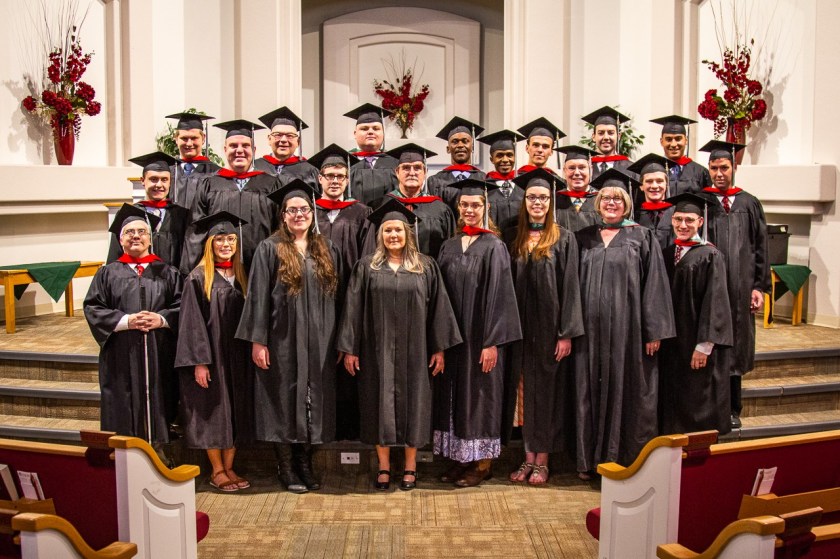
The 2019 Bear Valley Bible Institute graduating class

The Problems Of A Two-Headed Snake

Neal Pollard

A woman in Woodbridge, Virginia, saw a rarity in her front yard: a two-headed copperhead snake. The snake only has one heart and one set of lungs, but each head has its own brain. This produces multiple problems. Both heads want to eat, and since eating takes time the snake is vulnerable to predators for twice as long. Second, each snake wants to go its own way. That means they can’t respond very quickly when under attack. Even getting water can be precarious, as one head can drag the other down when drinking. An expert at the Wildlife Center of Virginia said, “Based on the anatomy, it would be better for the right head to eat, but it may be a challenge since the left head appears more dominant” (Dana Hedgpeth, The Washington Post, 9/24/18). Experts also say that these internal conflicts prevent these rare “dual-cephalic” creatures from living very long.

James tells us that the double-minded man is unstable in all his ways (1:7) and implies that double-mindedness reflects impurity of heart (4:8). The first instance of the word relates trusting God or doubting in times of trials, and the second relates to following a spiritual leader, whether the devil and the world or God. It is hard to run with the devil and walk with God. So often, there’s the temptation to try to do both. But, this conflict is so basic and so contradictory that it will contribute to our spiritual death. It makes us vulnerable to attack. 

What this requires is decisiveness. Jesus taught, “No one can serve two masters; for either he will hate the one and love the other, or he will be devoted to one and despise the other. You cannot serve God and wealth” (Mat. 6:24). We must choose who we will listen to (Josh. 24:15). Otherwise, we will remain in peril and we will ultimately, spiritually die. Paul put it this way, that “they that are after the flesh do mind the things of the flesh; but they that are after the Spirit the things of the Spirit. For to be carnally minded is death; but to be spiritually minded is life and peace” (Rom. 8:5-6). The struggle is real, but the problem must be overcome. We must strive to be singleminded in our dedication and devotion. That means we can’t live for the world and the Lord. It is an either/or proposition. Jesus says, “He who is not with Me is against Me; and he who does not gather with Me, scatters” (Luke 11:23). Let’s make the right choice and simplify everything. Let’s honor one head and make it the right one (cf. Eph. 1:22). 

two-headed-snake_759_fb

Spiritual Olympics

Neal Pollard

Well, as the Olympics pervade our attention and national and individual stories of overcoming odds and working hard to achieve greatness make the news over the coming weeks, I want to remind you that Scripture, in many places, encourages us as we are writing our stories which will someday be known by all. Paul, especially, draws on imagery that would have described the Greek Games that were popular in his time. They had been played for hundreds of years by the time of the first century.

  • We run a race that’s winnable, competitive, won by discipline, meaningful, purposeful, but also losable (1 Cor. 9:24-27).
  • We vie for that which requires forgetting the past, pressing in the present, and reaching for the prospective prize (Phil. 3:12-14).
  • We flex our discipline for godliness by exercising our godliness to help us here and hereafter (1 Tim. 4:7-8).
  • We must compete according to the rules (2 Tim. 2:5).
  • We can fight a good fight, finish the course, and keep the faith, and if we do we will be honored by the greatest giver of all (2 Tim. 4:7-8).

Your race may not be run in a huge stadium, be billed as an international event, be recorded in the history books of this life, or be seen all over TV and the internet, but the All-Seeing-Eye is watching. More people than you know are watching you run, both Christians and non-Christians. The stakes exceed that of these or any other earthly games and the reward is immeasurable! Best of all, whatever your physical shape, you can win this race! God is rooting for you!

gr-olympia-palaestra
The Palaestra 

ATTACKING THOSE WHO SAVE OTHERS

Neal Pollard

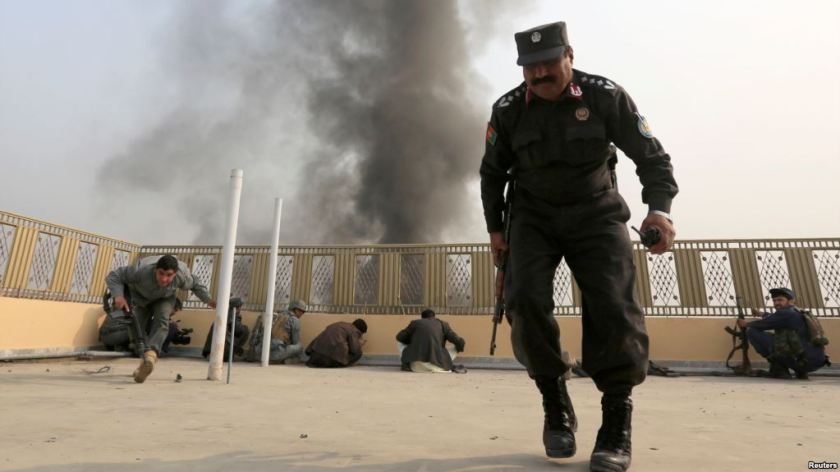
It’s an unconscionable thought! Who would try to hurt and oppose those dedicated to saving lives? Places like Afghanistan seem more than a world away from us, where this week a yet-to-be-identified terrorist group conducted a suicide attack in Jalalabad that killed two and injured 14. While that sadly is a relatively small and minor attack in this war-torn region, it was the target that was so outrageously newsworthy. It was perpetrated against the international Save The Children organization. Volunteers and workers were there to provide aid and assistance to that society’s most vulnerable members, and they were attacked. How does this happen?

In Matthew 23:35 (cf. Luke 11:51), Jesus condemns the Pharisees as the murderers of God’s godly men from Abel to Zechariah. Essentially, Jesus was presenting a roll call of the righteous who were attacked because of their faithfulness. In one of Stephen’s final moments, he preached, “Which one of the prophets did your fathers not persecute? They killed those who had previously announced the coming of the Righteous One, whose betrayers and murderers you have now become” (Acts 7:52). Both Old and New Testaments reveal the Maker’s messengers who were attacked while trying to save others. The proverbial response of the hearers was to “shoot the messenger” (cf. Heb. 11:36-38).

Growing up a preacher’s kid, I saw my dad encounter some who attacked the messenger. Dad has always been a model of courage for me, willing to teach and preach even unpopular, but needed, subjects. Consequently, he endured both frontal and sneak attacks. Everyone who has sought to declare “the whole purpose of God” (Acts 20:27) has some appreciation for Paul’s warning that some “will not endure sound doctrine; but wanting to have their ears tickled, they will accumulate for themselves teachers in accordance to their own desires, and will turn away their ears from the truth and will turn aside to myths” (2 Tim. 4:3-4).

How one responds to such attacks is crucial! In the words to Timothy, Paul contrasts the attacker with the faithful proclaimer. He says, “But you, be sober in all things, endure hardship, do the work of an evangelist, fulfill your ministry” (2 Tim. 4:5). We’re taught “patient enduring” (2 Cor. 1:6; 2 Tim. 2:24), “not returning evil for evil or insult for insult” (1 Pet. 3:9), “bless those who persecute you; bless and do not curse” (Rom. 12:14; cf. 12:17-21), and “do not resist an evil person; but whoever slaps you on your right cheek, turn the other to him also” (Mat. 5:39).

As eternal aid workers, we operate by a different, higher set of rules (2 Cor. 10:4). We entrust ourselves to the One who will give us ultimate victory. Meanwhile, we cannot give up our cause—no matter what the threat or danger. Like Jesus, let us keep entrusting ourselves to Him who judges righteously (1 Pet. 2:23)!

8ad7fee4-9d99-4e89-b63f-286645809597_cx0_cy12_cw0_w1023_r1_s

Almost And Armistice Day

Neal Pollard

War historians have given notice to it. It is a tragic subplot to a war tragic beyond most all comparison. World War I was a senseless, repeated exercise in the mass killing of young men from around the globe. This went on from August, 1914, up to the cease fire ordered for the eleventh month, the eleventh day, and the eleventh hour of 1918. Offensives on especially the western front meant men from several nations either were ordered to attack or were put in the position to defend against them. Men from many nations woke up on 11/11/18, but as casualties of war never saw the end of that day. People were celebrating the end of the war in Paris, Berlin, London, Washington, and elsewhere while men, most having heard the rumor about the armistice, fought on and died. George Edwin Allison died at 9:30 AM, the last official British casualty. Augustin Trebuchon, a message runner, was killed by a single shot at 10:50 AM, the last French casualty. George Lawrence Price was the last official Canadian casualty, dying at 10:58 AM. The last American to die was Henry Gunter, who if he understood German would have heard the machine gunners of that nation plead for his division to stop their offensive. His time of death was 10:59, and divisional records indicate, “Almost as he (Gunter) fell, the gunfire fell away and an appalling silence prevailed.” If possible, one story is even more tragic. While historians cannot be absolutely certain, they believe the last casualty of this tragic war was a German officer named Tomas. Allegedly, he told Americans approaching a house that he and his men occupied that they could have the house since the war was over. No one had told the Americans who, not trusting the officer, shot him as he walked toward them right after 11:00 AM. Official records indicate over 10,000 dead, wounded, and missing men on the last day of World War I. Historians have found letters, interviewed fellow soldiers of these unfortunate men, and through such correspondence give chilling insights. These men were optimistic. Many felt charmed to have cheated death, some of them veterans whose service had spanned the entire length of a war that exacted staggering, daily death tolls. Others had a strong sense of foreboding, a fatalistic resignation that somehow, despite the cheerful optimism of comrades, they would not survive the day (much historical information gleaned from www.historylearningsite.co.uk).


It is extremely difficult to read this legacy from World War I of men doing their duty to the end, to come so close to escaping the clutches of death, only to be felled in the final hours. Armistice Day and the ending of World War I are the roots of one of our greatest National Holidays and observances, Veterans Day. We honor those living and dead who fought to keep us free from tyranny and evil. Even in that first world war, where war prosecution is much questioned and debated, mothers, fathers, family and friends are beholden to the men and women who risked everything to defend our beloved country.
With that in mind, please allow me to draw this spiritual parallel. How tragic for a child of God to follow for so much of the way only to fall away later in life (2 Peter 2:20-22). How tragic for one to come so close to the cross of Calvary and salvation, only to die short of that goal (cf. Mark 10:22). Jesus spoke of one not far from the Kingdom (Mark 12:34). Agrippa was “almost persuaded” (Acts 26:28). Only eternity and the Judgment Day will reveal the stories of those battling with themselves on the battlefield of Ephesians six, maybe close to obedience, who died outside of Christ. What a tragedy for anyone to die lost. Especially tragic are the examples of those who knew the truth, were convicted about it, but who died without having resolved the greatest problem known to man.
We honor the soldiers who fought and died, even in the “11th hour.” We pray for the souls who are living but will die, who have yet to come to the Captain of the Lord of hosts.

http3a2f2fa-amz-mshcdn-com2fwp-content2fuploads2f20142f112farmistice-14

THE DIFFERENCE BETWEEN MARTYRDOM AND A MARTYR COMPLEX

Neal Pollard

Will the day come when government attempts to shut down our Bible study and worship services? Looking back at history, particularly the books of Acts and Revelation, we know this can occur. Certainly, the current environment in our society reveals a trend toward greater intolerance of the biblical worldview. We are growing more secular and more sensual as a nation. Public symbols of Christian religion are disappearing from the public square, while public expressions of Christian religion have long since disappeared from public education. That said, we do not do service to Christ by manufacturing problems where they do not exist.

Isn’t it interesting that back when Christians were experiencing mistreatment, the Holy Spirit guided men and women to have a different attitude than that of a victim. From a prison cell he would never leave alive simply because he was preaching Christ, Paul sought to bolster a young preacher’s faith by saying, “God has not given us a spirit of fear, but of power and of love and of a sound mind. Therefore do not be ashamed of the testimony of the Lord, nor of me His prisoner, but share with me in the sufferings for the gospel according tot he power of God” (2 Tim. 1:7-8). When Peter and John were beaten for their faith, “They departed from the presence of the council, rejoicing that they were counted worthy to suffer shame for His name” (Acts 5:41). When they were mistreated and released earlier in this episode, the church gathered to worship and pray (Acts 4:24ff). Peter urged readiness (1 Pet. 3:15). John urged faithfulness (Rev. 2:10). Stephen showed endurance, boldness, and compassion as he became the first Christian martyr (Acts 6-7).

It is an incongruous idea to imagine the early Christians wasting precious time organizing email campaigns, seeking to draw sympathy from the media, picketing, and playing the victim. Instead, driven by their living hope (1 Pet. 1:3), they committed their lives to Jesus while they spent their days trying to spread the good news of Christ (Acts 8:4; Col. 1:23). Even as Christians were martyred (Stephen, James, those assaulted by Saul of Tarsus’ efforts, and those during the time of the book of Revelation and shortly thereafter), there is no hint of any of them roaming around with a martyr complex. Let us emulate their great example!

work-martyr

Pilgrims And Strangers

Neal Pollard

The two Sundays Kathy and I spent in Israel were with the church in Nazareth, about two hours north of where we are staying near Jerusalem. An interesting fact in a nation where an overwhelming majority of citizens are either Jews, the largest group, or Muslims, still a significant, but smaller group, is that there is a fairly small number of those professing to be Christians. The congregation in Nazareth, which has around 40 members, is comprised almost entirely of Arab people. As I spoke with one of the men yesterday, he said something that will stay with me a long time. He talked about how Arab Christians are viewed by their fellow-citizens. If Jews sees him standing beside a Muslim, they think he’s a Muslim. As most Arabs in Israel are Muslim, that seems logical. They see him as a potential threat and enemy. But, Arabs who find out he’s a Christian, and there are so many ways to readily see he’s not a Muslim–clothing, customs, etc.–see him as infidel or even a traitor. His remarks were in response to the sermon I preached from 1 Peter 2:21-25 on how Jesus handled persecution. He says that the Arabic Christians can tend to feel like people without a country.

Now, while you and I do not share the unique circumstance of Arab Christians in Israel, there is a similarity we see from earlier in 1 Peter 2. Peter tells Christians, “ Beloved, I urge you as aliens and strangers to abstain from fleshly lusts which wage war against the soul. Keep your behavior excellent among the Gentiles, so that in the thing in which they slander you as evildoers, they may because of your good deeds, as they observe them, glorify God in the day of visitation” (11-12). We’re going to “look” different, abstaining from fleshly lusts. We’re going to “act” different, keeping our behavior excellent doing good deeds. Whether we physically look like the people who observe us or we look different from them, our Christianity will be noticeable and observable. That’s not the same as doing your works in order to be seen of men (Mat. 23:5). Instead, living the Christian life–no matter what–will inevitably catch the attention of the people around us. 

I’m grateful for the object lesson I received. Pray for our Arab brethren, men and women in a spiritual sense who are “without a country.” Pray for our brethren in places where their faith in Christ is scorned and more overtly persecuted. Pray for us, that we will be salt and light which stands out and stands up for Jesus in our daily places where darkness persists.

19990219_10154823106870922_5613897177568887225_n
John and Carla learning a few Arabic words and phrases from the local Christians.

No Time For Worship!

Neal Pollard

According to Stephen Eckstein, Davy Crockett was among those who began a journey from north Alabama bound for the “promised land” of Texas in 1835. This group, who wanted to settle in that locale despite the drum beats of revolution and ongoing fighting with Mexico, was comprised mostly of members of the church of Christ. Crockett traveled with them as far as Memphis, Tennessee, but grew impatient of the delays. The group stopped to rest and worship each Sunday, and they became known as the “church on horseback and wheels.” So, on the other side of the Mississippi River, Crockett and 60 other volunteers rushed ahead of the group shouting “hurrah for Texas!” (History of the churches of Christ in Texas, 9). That group, sans Crockett and his cohorts, established the first Texas congregation of the Lord’s church on January, 17, 1836, at Ft. Clark, Texas, known today as Clarksville (ibid.).

48 days after the group’s arrival at Ft. Clark, Crockett was among 188 who died defending the Alamo in San Antonio, 412 miles south of Ft. Clark. While this is probably something lost to history, I wonder if Crockett’s personal history would have been different if he had stayed with the “church on horseback and wheels.” There is no indication that he was a part of the services or influenced by them or the members. Already a man of renown in politics and frontier settlement, he was also renowned for being full of himself. He and the rest of the Tennesseans who left the church members volunteered for six months of duty with the provisional government of Texas on January 14, 1836. He arrived at the Alamo on February 8th (Hardin, Stephen L., Texian Iliad, 117).

Crockett’s interests seemed mostly political and economic, which made him no different from most of his contemporaries. Yet, life might have been different for Crockett had he stayed with the group of Christians. He would not likely be the legend his death at the Alamo made him, but might His name have been in the Lamb’s book of life?

We find ourselves rushing headlong toward our life’s goals. In that rush, what time and place are we giving to our Lord and to His people? The world bestows no honor and glory on faithful service to Christ, but the Christ will bestow honor and glory beyond what the world can give or comprehend to all who take the time to honor Him. May our greatest desire be to win His recognition through lives of faithful obedience.

1916541_174815860921_4621141_n
Mansil Matthews, doctor, teacher and and preacher, who established the first church of Christ in Texas in 1836 at Ft. Clark, TX (with the group known as the “church on horseback and wheels.”

A Proverb To Ponder

Neal Pollard

Now, not all our attenders are members,
And not all our members are attenders,
But if all our attenders were members,
And all our members were attenders

THEN…

We’d have more trouble menders,
More gospel defenders,
And more true soul-winners!

BUT…

We’d have fewer people offenders,
Fewer spiritual hinderers,
And fewer religious pretenders!

SO…

Let us all render a more tender surrender
To the Commander of a love full of splendor!
As we meander on this earth full of sinners,
Let us engender a life with the Lord at the center.

THE KIND OF LIFE WE SHOULD LIVE

Neal Pollard

Most of us are familiar with the intimate words spoken by Jesus to His followers in John 14:1-6. They were words of active comfort for a man who was imminently facing the worst suffering humanity could ever know. Yet, from those gentle words of guidance, we find a beacon to show us what kind of life it is possible for us to live—no matter what!

We can live a fearless life (John 14:1). Our hearts don’t have to be troubled. That doesn’t mean we won’t face fears and uncertainties. How can we avoid it? But we can let our fears be subjugated to our Father. We can trust the Bible’s promises and follow its guidance on this (cf. John 14:27; Phil. 4:7).

We can live a faith-filled life (John 14:1b). A “theocentric” (God-centered) point of view will influence our decision-making and daily living. We can have assurance and conviction (Heb. 11:1), but we must have a faith accompanied by works of obedience (Js. 2:20). All of us have lives centered around something that we make most important of all. There are many noble things that could fill in that blank—profession, family, friends, or the like. These may be part of our identity, but they should not define us. Our faith should define us.

We can live a focused life (John 14:2-4). Jesus urges His disciples to focus on at least three things:

  • Focus on the Father’s house (2). Long for heaven.
  • Focus on the Son’s coming (3). Anticipate His return. We know death is an appointment followed by the Judgment (Heb. 9:27).
  • Focus on God’s fellowship (4). Long to be where God is and to follow where He leads. Let that desire lead you to fellowship with Him and His saints publicly and privately in your personal devotional life.

We live in a world full of distractions—technology, appointments, hobbies, politics, and sports. Never let any of those things get your life out of focus.

We can live a follower’s life (John 14:6). We must believe that Jesus is the only way. We must shun the politically-correct notion that says there are many ways. We must live the exclusive way that Scripture teaches. We cannot serve God on our own terms. We must submit to His way and His truth, and we can enjoy the eternal life He offers.

Fame, fortune, fun, friendship, and such may draw and lure us. But none of those things will last. Jesus points to the kind of life we should live. May we be wise enough to listen.

blaine_mansion_during_renovation

Examining Our Positions

Neal Pollard

Hans Kaltenborn was an ardent admirer and defender of Adolf Hitler and the “new Germany” ushered in with the Nazi regime. Despite diplomatic warnings of assaults upon Americans, Kaltenborn, an influential American commentator for CBS and NBC and of German descent, dismissed it as flawed and skewed information gathering by biased personnel. About to return home to the states to speak against such reports and warnings, his family went to downtown Berlin to do some last minute shopping. While out, the family found themselves in the middle of one of the endless S.A. parades. When his family refused to offer the Nazi salute, his son was physically assaulted and injured. Finally, someone intervened and the incident ended with no further harm. However, the transformed Kaltenborn was apoplectic. He made a report with the American Consulate in Berlin, but no charges were filed. As Eric Larsen writes, “the senior Kaltenborn ‘could remember neither the name nor the number of the Party identification card of the culprit, and as no other clues which might be useful in the investigation could be found’” (In The Garden of Beasts, 164). Despite this, Kaltenborn was now of a different mind!

There are many ways in which life can do the same thing to us.  We may be dead certain about marriage when we are single, about childrearing “pre-kids,” about our career when still in the classroom, about home ownership when in our parents’ home, dorm room, or apartment, and so on. But, life so often has a way of rudely awakening us from some well-meaning beliefs.

Sometimes, this can happen to us in the all-important area of religion. As we stay in our Bibles and gain wisdom and experience life, we may reaffirm but also clarify and even change certain positions we have long held. This can certainly be a dangerous affair, and some have allowed life to change their positions from what is true to what is false (what Jesus says about marriage, divorce, and remarriage because of a family situation, unscriptural changes in worship because of children attending church who have adopted such, etc.). But few of us will go all the way through life without reconsidering especially some conscience or judgment matters.

There are also a great many of our friends who have been taught religious error on God’s plan of salvation, the singular, undenominational nature of the church, what God wants in worship, women’s role in church and worship leadership, and the list goes on. This can be such a difficult challenge for anyone, to revisit long-held and deeply-believed positions in light of what the Bible says.

For all of us, there must be an abiding humility that approaches scripture without the blinders of prejudices, preconceived notions, and influences like family, friends, church, and so on. That is uncomfortable, but essential—for all of us!  We may come to find that something we’ve clung to so tenaciously must be rejected or that something we rejected must be embraced. If we ever get to that place, may we have the kind of heart that puts the will of God above our own will. Without such, we cannot hope to make heaven our home.

7256698_134185460141
Hans Kaltenborn

Zadok The Priest

Neal Pollard

Zadok the priest was neither an Anglican Church member or even British. Many associate his name with Handel’s 18th century coronation hymn, written first for King George II. But, he was a significant, if minor, Old Testament character. We learn at least four great lessons from his character, as revealed in Scripture.

  • He was a versatile servant of God. He is introduced as “a young man mighty of valor” (1 Chron. 12:28), but also as a priest of God (1 Chron. 15:11). Thus, he was handy in a fight while also helpful in reconciling men to God. What an example of a five or two talent man, able to serve God in more than one way. God has blessed most of us with the ability to do many things well. We should be motivated to use those skills for Him.
  • He was a respecter of God’s Word. His predecessor, Uzzah, disregarded God’s instructions for transporting the ark and paid for that with his life. Zadok was at the head of the list of priests tapped to do it the right way, according to God’s word (1 Chron. 15:11ff). Nothing we see after this does anything except strengthen the view that Zadok submitted to the divine will. What a legacy to leave, known as one who simply takes God at His word and strives to be obedient to it.
  • He was a loyal friend. When Absalom rebelled against King David, many in Israel aligned themselves with this usurping son. However, Zadok remained true to David (2 Sam. 15). David relied on him, with Abiathar, to keep tabs on the insurrection while ministering in Jerusalem. David knew he could count on Zadok. In the same way, Scripture praises such loyalty. David’s son penned that “A friend loves at all times, And a brother is born for adversity” (Prov. 17:17). We should be a friend others can count on at all times.
  • He was a good judge of character. Whether choosing to serve David over Absalom or Solomon over Adonijah, Zadok was an excellent discerner of the right choice. In both cases, these were the righteous and God-approved choices. Even Abiathar, who stood with David over Absalom, got it wrong when Adonijah tried to supplant God’s will concerning David’s rightful successor. For this reason, Zadok took his place alongside Samuel as the only priests to anoint a king during the United Kingdom period of Israel’s history (1 Kings 1:39). It was this event Handel coopted to write his coronation hymn. God had bright hopes for those who feared Him, that they would be able to “distinguish between the righteous and the wicked, between one who serves God and one who does not serve Him” (Mal. 3:18). That was Zadok, and it should be us–regarding preachers, elders, teachers, as well as every child of God we have dealings with. We must grow in our ability to be capable fruit inspectors (cf. Mat. 7:15-20; John 7:24).

Thank God for Bible characters who show us, with their lives, the way to please Him with ours. The times may, in some ways, be drastically different from when Zadok walked the earth. But, with the time God gives us, we would do well to imitate these traits of this priest of God remembering that God desires us to be faithful priests for Him today (cf. 1 Pet. 2:1-9).

flickr_-_government_press_office_gpo_-_samaritan_priest_zadok_ben-avisha_hacohen

Focus, Not Complacency 

Neal Pollard

Whether you are elated or despondent today, you face a serious danger as you absorb the reality of the election results. Prayer meetings for our nation transpired all around our country, even from brethren and friends in other nations. Individuals prayed fervently for God’s will to be done. What that will look like and what that will mean only time will reveal.  For many, relief replaces fear at the prospect of the “other side” winning. For others, disbelief and embarrassment, not to mention shock, have begun to roost.

One thing that has been emphasized in the days and weeks leading up to this historic election is that, no matter what, the church must step up and increase its militancy and evangelism. We must work and serve in bigger and greater ways. That has not changed. The kind of change and improvement this (and every) country needs most can only come from Christ. People of both (or neither) political parties still live in view of the Second Coming, the Judgment, and an eternal destination in either heaven or hell.

After warning about the futility of trusting in earthly governments, militaries, and the like, the Psalmist instructs, “Behold, the eye of the Lord is on those who fear Him, on those who hope for His lovingkindness, to deliver their soul from death and to keep them alive in famine. Our soul waits for the Lord; He is our help and our shield. For our heart rejoices in Him, because we trust in His holy name. Let Your lovingkindness, O Lord, be upon us, according as we have hoped in You” (Psa. 33:18-22). May that forever be the anthem of the people of God!

The only thing that is over is a political election. The church’s mission is as daunting, daring, and divinely-directed as it has ever been. However you view the national decision, please continue to see the heavenly vision. We are not here to make America great again, though most of us would desire that. We are here to help reconcile the world to Christ (2 Cor. 5:20; Mat. 28:18-20). I love the way my son, Dale, said it yesterday: “After the election, after the selection, I’m still thankful there was a resurrection that gives us direction.” That is the focus that must keep us oriented to our reason for being on this earth.

2000px-ballot_box_silhouette-svg

THE LITTLE GRAVES THAT HAVE NO NAME

Neal Pollard

Lance Corporal Francis Ledwidge, a 26-year-old Irish soldier, was one of 10 million people killed in World War I.He died July 31, 1917, in Belgium. He was a poet, and he wrote the following before the war:

And now I’m drinking wine in France, the helpless child of circumstance.
Tomorrow will be loud for war, how will I be accounted for?
It is too late now to retrieve a fallen dream, too late to grieve
A name unmade, but not too late to thank the gods for what is great;
A keen-edged sword,a soldier’s heart, is greater than a poet’s art.
And greater than a poet’s fame a little grave that has no name.
(Gilbert, Martin. The First World War, Holt & Co., NY, 1994, 353).

Ledwidge sounds neither devout nor decent, but his last stanza rings loudly. This poor, fallen man glorifies the soldier, prolific even in anonymity. Glory rather than shame is to be memorialized in an unnamed grave.

Greater far than those whose spirits departed on plains and beaches of Europe or Asia or even Canaan during Joshua’s days are those who lost their lives in service to God. In the great memorial of Scripture they are mentioned, but without their names. One day, in heaven, their identities will be known as the Lord reads the names of those written in His Book of Life.

The writer of Hebrews speaks about many such unnamed heroes of the spiritual war that endures generation after generation. Among those are unnamed prophets of valor (Heb. 10:32-34). Unidentified women are remembered for their faith (35).

Following them, the writer holds up the generic others–children of God persecuted and even killed (10:36-38). Together they form that multitudinous throng of witnesses in Hebrews 12:1. Under centuries of dust, sand and silt lie their unmarked graves. God does not even reveal their names to the reader. But they sacrificed and persevered in hope of eternal life. They gained approval through their active faith (11:39). They stand as an example and a motivation for Christians today (12:1).

Throughout the world there are scores of Christians toiling in obscurity. For every big-name preacher and high-profile teacher and widely known missionary, thousands of godly mothers are training their children to follow Christ and running their homes with grace and virtue (Ti. 2:5; Pr. 31). Without recognition, elders are praying for, shepherding, defending and feeding lambs in places as far away as India and Africa and as close as Indiana and Alabama. Hidden from the watchful pens of our sharp-sighted editors and authors are saints, as soldiers, fighting Satan without ceremony or earthly commendation. One day their bodies will fail and fall into graves, known only to family and friends, but unmarked in the graveyard of brotherhood greats.

Too, in the church, day by day great things are done by saints that never make the bulletin, announcements, or bulletin boards. Masked by their modesty, they brighten many lives by walking in the light. The elders, preachers, or deacons may never know so much of what they do, but God sees and will reward them. When they lay their armor down, they may sleep in an unmarked plot in the cemetery of church history, but with God they will have greater fame than those who etched their mark in the annals of the world.

So, fight (1 Cor. 9:26)!

german_military_cemetery_normandy_1

Tychicus: Trustworthy Transporter

Neal Pollard

Have you ever paid close attention to the ends of especially the epistles? There are a variety of otherwise obscure Bible characters who make their cameos as if in passing. Tychicus is one such early Christian. You find him referenced five times in Holy Writ. He is numbered among the missionaries in Asia (Acts 20:4). Whether or not he preached or taught, he was acting on Kingdom business. In Ephesians 6:21, Paul sends him to Ephesus to make Paul’s conditions and circumstances known to them. He did the same thing for the Colossians (4:7). Paul tells Timothy, very simply, that he sent Tychicus to Ephesus (2 Tim. 4:7). Paul contemplated sending Tychicus to Titus on Crete (Tit. 3:12). Paul obviously considered Tychicus a reliable resource for help.

Have you considered the fact that all of us are carriers of something? What are you carrying?

  • Bitterness and resentment?
  • Gossip and talebearing?
  • Negativity and pessimism?
  • Filthy, foul, and offensive speech?
  • Dishonest, deceptive words?
  • A different gospel?
  • Harsh, railing verbiage?

Or…?

  • Gentle, kind words?
  • Faithful counsel?
  • Positive, joyful speech?
  • Encouragement?
  • Thoughtful, considerate messages?
  • Meek efforts to restore a fallen soul?
  • Courageous, lovingly spoken truth?

What would others entrust you with? Would they trust you? That should convict us, shouldn’t it? What traits are we developing?  Let’s be concerned about that, recognizing that God needs trustworthy transporters today!

el_greco_-_apostle_st_paul_-_wga10603

Five Facts About A Faithless People

Neal Pollard

The percentage of Americans who identify as atheists doubled from 2007 to 2014 (Michael Lipka, Pew Research Center). But that hardly tells the whole story. Our culture is drowning in a political correctness that stigmatizes Christian Values and that makes nearly any public stand or statement regarding what Scripture says about such things as homosexuality, objective truth, the sanctity of life, and creation a point of fierce contention and object of greatest scorn. A moral erosion and slippery slope has been in motion for several generations that has brought us to our current position. The Bible foresaw such decline as comes when a people turn their backs on God (cf. Prov. 14:34). In discussing the universal problem of sin, Paul points out five facts about a faithless people (Rom. 1:18-32):

  • Faithlessness ignites God’s fury (18). Wrathfulness is as much a part of God’s nature as graciousness. In fact, we appreciate grace so much because God gives it when we deserve His wrath. Paul says the object of His wrath is all ungodliness and unrighteousness. The unrighteous behavior Paul specifies is “men who suppress the truth in unrighteousness.” They don’t live the truth and they don’t want the truth to be told. Paul ends the section by pointing these out as those who practice ungodliness and heartily approve of those who do the same (32). It is clear that those who remain faithless are “sinners in the hands of an angry God.”
  • Faithlessness ignores the facts (19-20). Paul says that faithlessness is not due to an absence of facts, but a willful ignorance of them. He says that even the faithless can see God as they look inside themselves and outside themselves at the creation. It takes a deliberate effort to arrive at a position of unbelief. So much has to be continuously ignored.
  • Faithlessness includes futility (21). Faithlessness is built upon a flimsy foundation. It’s the slab of speculation. The faithless spend their lives running from the facts in favor of a worldview that makes no sense, gives no purpose, and instills no hope.
  • Faithlessness involves folly (22-23). It’s not just empty, it’s foolish. Paul’s words here are akin to David’s words in Psalm 14:1 and 53:1, that “the fool has said in his heart, ‘There is no God.’” Paul describes intelligent people who have made the most fundamentally foolish decision of all. They exchange faith in an infallible God for faith in fallible man.
  • Faithlessness instigates a fall (24-32). Paul pictures how a person arrives at wholesale immorality. One must first turn from God and run the other way. Then, God lets them go to find out what lies at the end of that broad way. He gives them over in the lusts of their hearts to impurity (24), He gives them over to degrading passions (26), and He gives them over to a depraved mind (28). The lusts led to the wrong object of worship and submission. The passions led to unnatural desires. The depraved minds led to every imaginable behavior, a long list of actions that have in common the fact that they lead to spiritual death. It encompasses both the perpetrators and those who validate them and tell them it’s OK to do them.

Why does Paul mention these faithless ones? It is proof of divine inspiration, because although this was written 2000 years ago it perfectly describes the current culture. But, there is a more important reason for Paul to write this. This horrible condition has a remedy. The theme of Romans is contained in the four verses prior to this section. The gospel has the power to save us from this. The solution is faith. Faith saves (1:16) and it gives life (1:17). The world is being swallowed by spiritual darkness, but God’s light is brighter. We who have faith have the light. We must share it. When we do, we help people have the most important possible commodity: faith!

birth_of_all_hope_by_mr_morph-d62i5un