
Did Giants Build the Great Stone Cities of Canaan? 

Dale Pollard

Across the ancient Levant you’d find some of the largest stone structures ever assembled. It boggles the mind to think these were built at a time before cranes or diesel engines. Even with their help, some of the stones used in and around Baalbek— still couldn’t be moved. 

If the ancient builders quarried, transported, and precisely positioned stones weighing hundreds of tons, the only logical conclusion is that giants must have done it. Or at least, some of these places. 

The Bible mentions that parts of Canaan were inhabited by some big boys. 

“The Emim… were a people great, and many, and tall, as the Anakim” (Deuteronomy 2:10). 

 “For only Og king of Bashan remained of the remnant of the Rephaim… his bedstead was of iron… nine cubits was its length” (Deuteronomy 3:11).

 The spies sent by Moses also reported seeing the Anakim: 

“We saw the Nephilim… and we seemed to ourselves like grasshoppers” (Numbers 13:33). 

 Baalbek 

At Baalbek, the famous Trilithon consists of three limestone blocks weighing roughly 800 tons each. Nearby lie even larger stones, including one estimated to exceed 1,000 tons. These remain among the largest stones ever quarried by any ancient civilization— ever. 

Big stones in an area known for big people? Well— mystery solved! 

The Jewish historian Josephus referred to the descendants of the Anakim as a race of giants whose bones could still be seen in his day (Antiquities 5.2.3). 

The Phoenician historian Philo of Byblos, whose writings survive through Eusebius, preserved traditions about beings of extraordinary size and strength building the very earliest monuments. 

In fact, it was the Greeks who even coined the term “Cyclopean masonry” because they believed that only the giant Cyclopes could have constructed walls made from enormous, tightly fitted stones, like those found at Mycenae and Tiryns. 

 Can we say for certain which Canaanite fortifications were built by giants? Not entirely. But based on the evidence one could make some pretty good guesses.  Giants probably built the biggest ones. 

 Sources 

 • Antiquities of the Jews 5.2.3.

 • Fragments of Philo of Byblos in Eusebius, Praeparatio Evangelica. 

 • UNESCO documentation on Baalbek. 

 • Pausanias, Description of Greece (on Cyclopean masonry traditions)
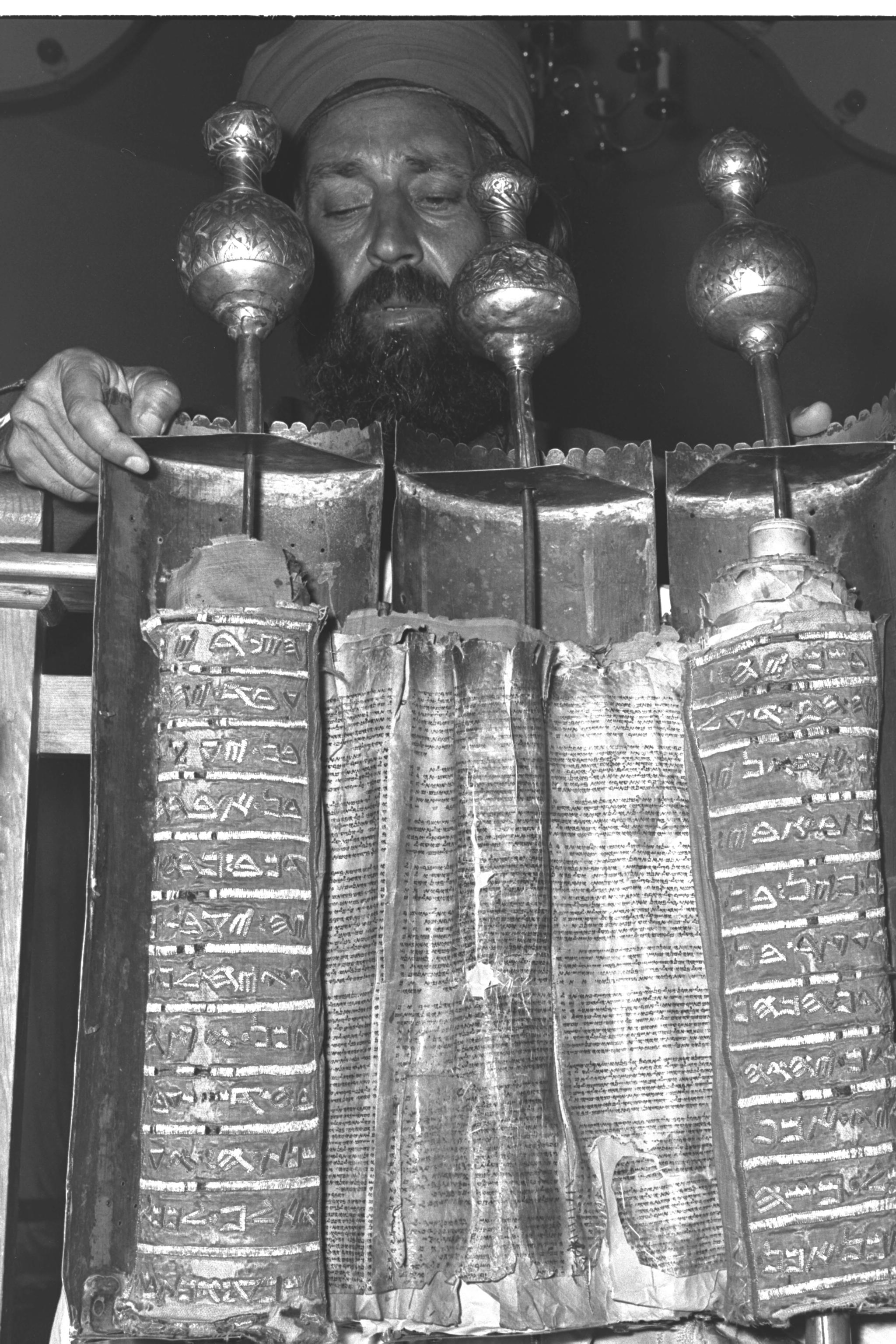
Zadok The Priest

Neal Pollard

Zadok the priest was neither an Anglican Church member or even British. Many associate his name with Handel’s 18th century coronation hymn, written first for King George II. But, he was a significant, if minor, Old Testament character. We learn at least four great lessons from his character, as revealed in Scripture.

  • He was a versatile servant of God. He is introduced as “a young man mighty of valor” (1 Chron. 12:28), but also as a priest of God (1 Chron. 15:11). Thus, he was handy in a fight while also helpful in reconciling men to God. What an example of a five or two talent man, able to serve God in more than one way. God has blessed most of us with the ability to do many things well. We should be motivated to use those skills for Him.
  • He was a respecter of God’s Word. His predecessor, Uzzah, disregarded God’s instructions for transporting the ark and paid for that with his life. Zadok was at the head of the list of priests tapped to do it the right way, according to God’s word (1 Chron. 15:11ff). Nothing we see after this does anything except strengthen the view that Zadok submitted to the divine will. What a legacy to leave, known as one who simply takes God at His word and strives to be obedient to it.
  • He was a loyal friend. When Absalom rebelled against King David, many in Israel aligned themselves with this usurping son. However, Zadok remained true to David (2 Sam. 15). David relied on him, with Abiathar, to keep tabs on the insurrection while ministering in Jerusalem. David knew he could count on Zadok. In the same way, Scripture praises such loyalty. David’s son penned that “A friend loves at all times, And a brother is born for adversity” (Prov. 17:17). We should be a friend others can count on at all times.
  • He was a good judge of character. Whether choosing to serve David over Absalom or Solomon over Adonijah, Zadok was an excellent discerner of the right choice. In both cases, these were the righteous and God-approved choices. Even Abiathar, who stood with David over Absalom, got it wrong when Adonijah tried to supplant God’s will concerning David’s rightful successor. For this reason, Zadok took his place alongside Samuel as the only priests to anoint a king during the United Kingdom period of Israel’s history (1 Kings 1:39). It was this event Handel coopted to write his coronation hymn. God had bright hopes for those who feared Him, that they would be able to “distinguish between the righteous and the wicked, between one who serves God and one who does not serve Him” (Mal. 3:18). That was Zadok, and it should be us–regarding preachers, elders, teachers, as well as every child of God we have dealings with. We must grow in our ability to be capable fruit inspectors (cf. Mat. 7:15-20; John 7:24).

Thank God for Bible characters who show us, with their lives, the way to please Him with ours. The times may, in some ways, be drastically different from when Zadok walked the earth. But, with the time God gives us, we would do well to imitate these traits of this priest of God remembering that God desires us to be faithful priests for Him today (cf. 1 Pet. 2:1-9).

flickr_-_government_press_office_gpo_-_samaritan_priest_zadok_ben-avisha_hacohen