WHY DO YOU BELIEVE?

Wednesday’s Column: Third’s Words

10423661_10207901451272315_9069631728203375436_n

Gary Pollard III

I believe that God exists. I believe that He communicated with His creation by direct contact, messengers, and a series of ancient texts. I believe that He wants His human creation to be with Him after they die. I believe that He expects those who claim to be His to act within the guidelines He set in those ancient texts. I believe that there is life after death and that where we go depends on whether or not we follow this God.

Why do I believe this, though? What reason do I have to believe in something I cannot experience with my senses? I was not there thousands of years ago when the prophets and Hebrews talked to God. I was not there when God came among men and taught. I was not there when the Spirit-inspired authors of the original texts delivered their writings to the early church. The ancient texts translated into English sometimes do not effectively communicate the emotion of the words and concepts in the original language. So why do I believe these things? Why do you believe these things?

Think about this carefully.  From Genesis to Revelation the message is clear; God wants His people to exist with Him after time is destroyed. This message was communicated to an impossible variety of people, sometimes separated by hundreds of years, thousands of miles, culture, kingdom, race, and language. There are tens of thousands of manuscripts of these ancient texts in many, many different languages. There are some 25,000 New Testament manuscripts or fragments that are separated by about a thousand years, at least 8 different languages, hundreds (if not thousands) of miles of geography, and many different cultures. Yet, they are at least 95% accurate to each other. The remaining 5% do not contain a single contradiction; rather, they are spelling errors, slips of the pen, writing on the wrong line, or minor variances (“God said” vs. “He said” or “and” vs. “but”).

Of the rich libraries we have of ancient literature, none can hold even the dimmest candle to the profound accuracy and unity of the scriptures. They could not have been produced by man alone. There had to be Someone not confined by time supervising each person as they wrote. Keep in mind, these ancient cultures did not have the advantage of modern communication. They were almost totally isolated from each other and would have known little of the others’ existence, much less what they experienced or wrote from God. Our Bible has supernatural origins and its contents reveal the nature of our Creator. What I believe comes from this book because I know it is God’s message to mankind. I encourage those who have not already done so to do an in-depth study of the origin of scripture. It is one of the most faith-building studies anyone could undertake. When you know with certainty that what you are reading contains the actual thoughts and desires of God, it bolsters your faith in ways I could not begin to adequately describe.

764px-uncial_0220_rom-4.23-5.3
Uncial 220 (fragment of Romans 4:23-5:3)

Why Is A Generation Leaving Religion?

Neal Pollard

Pew Research Center recently revealed that “Four in ten millennials (those, according to this source, currently between 23 and 38) now say they are religiously unaffiliated”(fivethirtyeight.com). The data seems to indicate that “today’s younger generations may be leaving religion for good” (ibid.). A contemporary study put out by the American Enterprise Institute reveals at least three reasons why: (1) They didn’t have strong religious ties growing up, (2) Their spouses are more likely to be nonreligious, and (3) They feel religious institutions are not relevant for shaping the morality and religion (or nonreligion) of their children. Parental example, dating choices, and biblical literacy and faith, then, are major drivers in this discussion. 

Those polled revealed their thinking. A majority felt that religious people are less tolerant of others, less informed or even intelligent than their secular counterparts, and less necessary for shaping their family’s moral viewpoints. At least, reading this one study and the authors’ interpretation, it seems that leaving church is a deliberate lifestyle choice of people who at least sometimes are encouraged out the door by poor examples of faith. 

Notice the startling closing paragraph of the article, which states,

Of course, millennials’ religious trajectory isn’t set in stone — they may yet become more religious as they age. But it’s easier to return to something familiar later in life than to try something completely new. And if millennials don’t return to religion and instead begin raising a new generation with no religious background, the gulf between religious and secular America may grow even deeper (“Millennials Are Leaving Religion And Not Coming Back,” 12/12/19, Cox, Daniel, and Amelia Thompson-DeVeaux). 

I found it important to share those findings for these reasons:

  • It is a matter of crisis. People abandoning God’s Word and will is foreboding (Judges 2:10ff; 2 Timothy 3:1ff; 4:3-4; 2 Peter 3:3ff). It is happening, and it must matter to us. It does to God. 
  • It is a matter of correction. The home can change course if it is on the broad way. Individual Christians can improve their ethics and morality in public (Ephesians 4:25ff). Soul-conscious Christians can make the most of our opportunities to share Jesus in Christlike fashion (2 Timothy 2:24-26). We must change what we can change. 
  • It is a matter of consequence. A culture does not get where ours currently is as the result of sincere devotion to Christ and His Word. Hosea 4:6 is incredibly relevant. The law of sowing and reaping is immutable, for good and bad (Galatians 6:7-8). Whatever we exalt as guide is leading us somewhere.
  • It is a matter of courage. The only way I can see for this to change is for you and me to not just believe something or hold a conviction. The early Christians didn’t confine their faith to the holy huddles of the assemblies. They stood up for Jesus every day and every way. 

Two of my three sons are millennials and the third is only a couple of years too young to qualify. This is, largely, their generation. They and their faithful Christian peers are faced with reaching them, and they need our help. Talk to them and have honest conversation about how to raise your effectiveness together in stopping and reversing this exodus. This is not about preserving a comfortable lifestyle, which is threatened by sin (Proverbs 14:34). This is about preserving souls, which will face Jesus some day (Matthew 25:31ff). 

Walking Away

Where Is Your Faith?

Neal Pollard.

How many household conversations begin, “Where is my?” Women leave purses in restaurants, men leave their wallets in the other pants pocket, and kids are apt to leave just about anything anywhere. How many vacations begin with the family wondering where some vital item is, fearing that it is sitting at home and not packed in the suitcases?

The disciples had just heard Jesus deliver some powerful lessons (Luke 8:10- 21) and now they were heading across the lake from Galilee to the country of the Gerasenes. En route, while Jesus slept, a fierce windstorm descends and rocks their little boat. In a panic, they awaken Jesus, pleading, “Master, Master, we are perishing!” (Luke 8:24). Jesus calms the storm and subsequently their fears, but He admonishes them, “Where is your faith?” (Luke 8:26).

That is a fair question. They had just heard the Master teacher doing His usual, masterful job (Luke 7:22-28, 31-36; etc.) and seen Him do some incredible miracles (Luke 7:1-10; 11-15; etc.). Between disembarking and the present distress, where did their faith go? The question Jesus asked His disciples is a fair question for each of us today. “Where is your faith?”

IS IT LOST (Luke 18:1ff)? Jesus positively teaches a parable about this in His story about the widow and the unjust judge. The woman was persistent and the judge, who feared neither God nor man, granted her petition due to her tenacious pursuit. Jesus makes application by asking, “When the Son of Man comes, will He really find faith on the earth?” (Luke 18:8). It is possible for any one of us to lose our faith. The parable of the sower and the soils shows that people can lose their faith as a consequence of both good times and bad times (cf. Luke 8:11ff). It is equally tragic to see people lose their faith just a few steps into their spiritual journey, several miles down the road, or especially near the end of the road!

 IS IT HIDDEN (Luke 8:16)? Jesus demonstrates how ludicrous a view hidden faith is from heaven’s vantage point by illustrating it this way: “No one, when he has lit a lamp, covers it with a vessel or puts it under a bed” (Luke 8:16a). His point is that light is not doing its job when it is covered, and our faith is not doing its job when it is covered. There will be many settings throughout life when being a Christian and standing up for the Lord will not be popular, admired, or congratulated. What will we do with our faith in such circumstances?

IS IT MISPLACED (Luke 18:9ff)? Everybody puts their trust in someone or some thing. The Bible says that people trust in their own power and might (Psalm 44:6), their wealth and riches (Psalm 49:6), their national leaders (Psalm 146:3), their own hearts (Proverbs 28:26), their idols (Isaiah 42:17), mankind (Jeremiah 17:5), their own achievements (Jeremiah 48:7), or their physical beauty (Ezekiel 16:15). Many of these attributes can serve us in properly placing our faith in God, but far too many are resting all they are or hope to be on those rather than God. In Luke 18:9, Jesus speaks a parable in warning against those who “trust in themselves.” Despite a culture that preaches the preeminent idea of “believing in yourself,” God makes that subservient to trusting in Him.

IS IT VISIBLE (Luke 7:9)? A centurion whose servant was dying was humble, devoted and perceptive in his approach to Jesus, pleading with Him to heal that dear one for him. Jesus marveled aloud, “I have not found such great faith, even in Israel!” The Centurion did not have to wear a badge or button that said, “I believe in the Lord.” People are watching us every day, our speech, decisions, attitudes, actions, and reactions. While it is nice when someone asks, “Are you a Christian?,” how much better for them not to have to ask?

So, “Where is your faith?”

60602590_10157475706779824_6496018119713095680_o
The 2019 Bear Valley Bible Institute graduating class

Accept Jesus As Your Personal Savior

Neal Pollard

The phrase is abused by those in denominations. With it, they suggest that such is the totality of one’s responsibility in order to receive salvation. It is synonymous with the idea of the “faith only” doctrine of Christendom. Yet, it is biblical to the core. Observe.

   “Accept.” Jesus says, “He who rejects Me…has one who judges him” (John 12:48). We accept Jesus when we humbly receive the implanted word (James 1:21). 1 Timothy 1:15 says, “It is a trustworthy statement, deserving full acceptance, that Christ Jesus came into the world to save sinners, among whom I am foremost of all.” We must accept Jesus’ will as well as the assertions He makes. The question is, “Have we fully accepted Jesus at the point of our belief in Him?” No! He commands us to repent (Luke 13:3-5) and be baptized (Mark 16:16). Refuse those commands and you have not accepted Jesus. Can we take only part of Him and be whole?

     “Accept Jesus as your…Savior.”  He came to this world for that purpose. Before Jesus’ birth, Joseph was told, “You shall call His name Jesus, for it is He who will save His people from their sins” (Matt. 1:21). Jesus is identified as the Savior throughout the epistles. 2 Timothy 1:5 and Titus 3:5 both say, “He saved us” by His mercy, purpose and grace. Salvation is the common need (Rom. 3:10,23) and there is no other way but Jesus to meet it (Acts 4:12). We cannot stop at accepting who Jesus is, but must further accept what Jesus has done.

“Accept Jesus as your Personal Savior.” The Bible teaches that Jesus’ redemptive work at Calvary was for the whole world (John 3:16; 1 John 2:2). Yet, will the whole world be saved? No! In fact, most will not be saved (Matt. 7:13-14). Even some religious folks will be lost (Matt. 7:21-23). Therefore, accepting Jesus must be done at the personal level! must act upon the saving knowledge of Jesus. As I will be held personally accountable for my life (2 Cor. 5:10), I cannot blame my parents, children, friends, people at church, people in the world, or even my mate for my disobedience. In my own mind, I must accept what the Bible says about Jesus and do what Jesus says do. Nobody can do that for me (Rom. 10:9).

The baggage surrounding the phrase is most unfortunate. The facts, as presented here,  must be understood. It is not as our religious friends teach, who share that as the totality of our responsibility, and yet it is true that each of us–while we have breath in the body and the hope of heaven–must accept Jesus as our personal Savior!

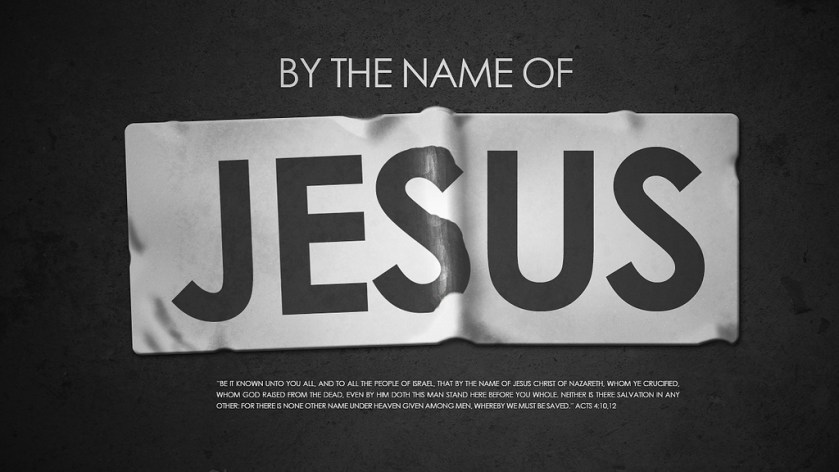
By The Name of Jesus


THE DIFFERENCE BETWEEN MARTYRDOM AND A MARTYR COMPLEX

Neal Pollard

Will the day come when government attempts to shut down our Bible study and worship services? Looking back at history, particularly the books of Acts and Revelation, we know this can occur. Certainly, the current environment in our society reveals a trend toward greater intolerance of the biblical worldview. We are growing more secular and more sensual as a nation. Public symbols of Christian religion are disappearing from the public square, while public expressions of Christian religion have long since disappeared from public education. That said, we do not do service to Christ by manufacturing problems where they do not exist.

Isn’t it interesting that back when Christians were experiencing mistreatment, the Holy Spirit guided men and women to have a different attitude than that of a victim. From a prison cell he would never leave alive simply because he was preaching Christ, Paul sought to bolster a young preacher’s faith by saying, “God has not given us a spirit of fear, but of power and of love and of a sound mind. Therefore do not be ashamed of the testimony of the Lord, nor of me His prisoner, but share with me in the sufferings for the gospel according tot he power of God” (2 Tim. 1:7-8). When Peter and John were beaten for their faith, “They departed from the presence of the council, rejoicing that they were counted worthy to suffer shame for His name” (Acts 5:41). When they were mistreated and released earlier in this episode, the church gathered to worship and pray (Acts 4:24ff). Peter urged readiness (1 Pet. 3:15). John urged faithfulness (Rev. 2:10). Stephen showed endurance, boldness, and compassion as he became the first Christian martyr (Acts 6-7).

It is an incongruous idea to imagine the early Christians wasting precious time organizing email campaigns, seeking to draw sympathy from the media, picketing, and playing the victim. Instead, driven by their living hope (1 Pet. 1:3), they committed their lives to Jesus while they spent their days trying to spread the good news of Christ (Acts 8:4; Col. 1:23). Even as Christians were martyred (Stephen, James, those assaulted by Saul of Tarsus’ efforts, and those during the time of the book of Revelation and shortly thereafter), there is no hint of any of them roaming around with a martyr complex. Let us emulate their great example!

work-martyr

LOOKING IN THE WRONG PLACE FOR JESUS

Neal Pollard
Periodically, we read or hear of “sightings” that unbelievers have a field day with. I refer to “Jesus sightings,” people are claiming in such things as clouds, Cheetos, dental X-rays, cooking utensils, windows, walls, and trees. Wikipedia even has an entry for it (“Perceptions of religious imagery in natural phenomena”). People vehemently defend the idea that these are intentional, divinely sent images. Meanwhile, secular and agnostic witnesses to such claims gather up baby and bathwater together, using such superstitiousness to show how deluded those in Christendom really are. Yet, while responding to superstition in religion would be a fitting use of time, another thing comes to mind when hearing these sad stories. It is a reminder that people are looking for Jesus in all the wrong places.
They want some heavenly sign, some overwhelming feeling, some sensory sensation, and some sort of religious fireworks to create or validate their faith. While God has embedded plenty of these in the marvels of nature and creation, through the product of answered prayer that defies logic or explanation, and by the amazing process of transformation that occurs when people follow Christ, He calls on us to seek for Him in a much less electrifying and cataclysmic place.
When we pick up God’s Word and regularly, intently read, meditate, and study (cf. Psalm 1) it, we see Jesus come alive in powerful, sustaining ways! When we walk with the Lord each day, the resulting relationship built on His character and our trust in Him is powerful! When we actively serve Him and others and put into practice what He teaches us through the Bible, we see Jesus in a vivid way. Daily Christian living, the longer we practice it, brings Jesus into unmistakeable, clear focus. Maybe that is what these “seers” truly desire, and what they need is our help to truly find Him. Let us take that as a challenge and help people really “see Jesus” (cf. John 12:21; Heb. 2:9).

10391950_190406240921_3760525_n

“He sends forth springs in the valleys; They flow between the mountains”

Neal Pollard

This statement in Psalm 104:10 is spoken literally of God’s physical provision for His creatures. But, have you ever thought about how that is true for you and me when we find ourselves in the valleys of life? In between the mountaintops of successes and happy days, we can find ourselves seemingly down in the valley of the shadow of death (cf. 23:4). I am so thankful that in those moments that might seem dry and thirsty, God sends forth springs in the valleys of life. Whatever creates the valley for us, it can seem like a deep place hard to climb out of. How does God send forth spiritual and emotional springs for us, even in the valleys of life?

  • The church is a spring in the valleys of life. Other Christians lifting and encouraging us can be the medicine we need to take the next step through the valley. No wonder the church is such an expression of God’s wisdom (Eph. 3:10-11).
  • Prayer is a spring in the valleys of life. Pouring out our hearts to a God who understands us and knows our situation perfectly strengthens us.
  • Our family can be a spring in the valleys of life. Those of us who have Christian parents, siblings, children, and other relatives have a double blessing, family twice over. They can be the support and encouragement we need to keep moving.
  • Spiritual blessings are a spring in the valleys of life. Ephesians 1:3 says in a general way what the rest of the New Testament enumerates in a specific way. God is blessing us in so many ways because we are in His Son. Never do we appreciate that more than when we struggle.
  • The Bible is a spring in the valleys of life. There is wisdom and insight on every page, guidance for our journey. God has revealed the road map to help us traverse the narrow way to heaven. The narrow way will not keep us from traveling through valleys, and often it has valleys the broad way does not.
  • Faith or trust is a spring in the valleys of life. Like Paul, who often camped in the valleys of life, “I know whom I have believed and I am convinced that He is able to guard what I have entrusted to Him until that day” (2 Tim. 1:12). My eyes may be wet with tears in the valley, but my eyes of faith see with crystal clarity.
  • Hope is a spring in the valleys of life. It anchors the soul (Heb. 6:18-19), but it also helps lift us up. Because I face the future with confidence, no setback will keep me discouraged but so long. Tomorrow will be a brighter day!
  • Christian service is a spring in the valleys of life. Maybe nothing leads me through the valley any more than finding a fellow sojourner to help out of their valleys. When I focus outside of myself on other strugglers, I soon forget my unpleasant experience.

Many years ago, I heard Franklin Camp talk about the valleys of his life and how he overcame. His young daughter accidentally burned to death in a brush fire. He faced other huge losses in life, but brother Camp through it all was a man who had his eyes fixed on the ultimate mountaintop experience. In the valleys of life, let us look for the springs God sends. They will refresh, renew, and relieve us until our journey is complete.

valley-springs-lodging

THE KIND OF LIFE WE SHOULD LIVE

Neal Pollard

Most of us are familiar with the intimate words spoken by Jesus to His followers in John 14:1-6. They were words of active comfort for a man who was imminently facing the worst suffering humanity could ever know. Yet, from those gentle words of guidance, we find a beacon to show us what kind of life it is possible for us to live—no matter what!

We can live a fearless life (John 14:1). Our hearts don’t have to be troubled. That doesn’t mean we won’t face fears and uncertainties. How can we avoid it? But we can let our fears be subjugated to our Father. We can trust the Bible’s promises and follow its guidance on this (cf. John 14:27; Phil. 4:7).

We can live a faith-filled life (John 14:1b). A “theocentric” (God-centered) point of view will influence our decision-making and daily living. We can have assurance and conviction (Heb. 11:1), but we must have a faith accompanied by works of obedience (Js. 2:20). All of us have lives centered around something that we make most important of all. There are many noble things that could fill in that blank—profession, family, friends, or the like. These may be part of our identity, but they should not define us. Our faith should define us.

We can live a focused life (John 14:2-4). Jesus urges His disciples to focus on at least three things:

  • Focus on the Father’s house (2). Long for heaven.
  • Focus on the Son’s coming (3). Anticipate His return. We know death is an appointment followed by the Judgment (Heb. 9:27).
  • Focus on God’s fellowship (4). Long to be where God is and to follow where He leads. Let that desire lead you to fellowship with Him and His saints publicly and privately in your personal devotional life.

We live in a world full of distractions—technology, appointments, hobbies, politics, and sports. Never let any of those things get your life out of focus.

We can live a follower’s life (John 14:6). We must believe that Jesus is the only way. We must shun the politically-correct notion that says there are many ways. We must live the exclusive way that Scripture teaches. We cannot serve God on our own terms. We must submit to His way and His truth, and we can enjoy the eternal life He offers.

Fame, fortune, fun, friendship, and such may draw and lure us. But none of those things will last. Jesus points to the kind of life we should live. May we be wise enough to listen.

blaine_mansion_during_renovation

Happiness Guaranteed!

Neal Pollard

Who wouldn’t find that appealing? Many years ago, Hugo McCord wrote a book entitled, “Happiness Guaranteed.” In it, he wrote, “Is happiness difficult? Yes, to those on the wrong road. Is it elusive? Yes, to those who want it without a price. But to the simple, plain folk of the earth, willing to walk God’s road, willing to pay God’s price, happiness is, like God, not far from every one of us.”  Many spend a lifetime in a desperate, elusive attempt to be happy. What if there was a formula for true happiness? I believe we find it in Psalm 37:23-26. This text tells us what we need to be happy.

We need a direction mapped by God (23). If we make life a self-guided tour, we can guarantee ourselves a life of misery. Even a Christian’s heartaches often stem from our trying to “go it alone” without His guidance. He guides us through the Word (Psa. 119:105,133). He knows everything at the deepest level of comprehension. He understands what kind of life will make us happy and miserable. David says life without God’s guidance is chaotic and disorderly. I read about an optometrist who examined an elderly patient and asked, “Can you read the fifth line of the chart?” “No.” “How about the fourth line?” “No.” “Hmm. Try the second line.” “No.” “Surely you can read the first line.” The old man said, “Truth is I’ve never learned to read.” Have we learned to read? Have we gotten into the regular habit of consulting God’s divine roadmap?

We need a delight in His way (23). In a matter of minutes, you can find out what a person enjoys in life. It could be sports, politics, travel, shopping, mechanic-ing, nature, reading, fishing, horseback riding, or stamp-collecting. Kept in proper place and priority, these can be good, healthy, and legitimate. But way too many people get their thrills in illegitimate ways. They enjoy the unwholesome, filthy, perverted and vulgar. To many, “The word of the Lord is unto them a reproach; they have no delight in it” (Jer. 6:10). Solomon adds, “A fool does not delight in understanding…” (Prov. 18:2a). God’s outline for living, when followed, leads to delight. Other ways are paved with the heartache of others who foolishly paved those same paths previously.

We need a dependence on God’s providential care (24-25). Seven times in the Psalms, the writer tells God, “The righteous trust in You” (5:11; 9:10; 17:7; 25:22; 31:19; 55:23; 56:3). Your faith can be built if you trust that God, even when things seem doubtful, will provide what is needed and what is best. Not just materially, but in times when spiritual decisions must be made (cf. Gen. 22:8; Rom. 4:18-21). When we place our future, fears and fortunes in God’s almighty hands, we find true happiness (1 Pet. 5:7). David challenges us to find a case of a true follower forsaken by God. Satan wants us to think God doesn’t care about us. That’s what he wanted Job’s problems to do to Job—make him turn against God. If you are suffering right now, be assured that God hasn’t left you.

We need a duty to others (26). Norman Vincent Peale said, “The way to happiness: Keep your heart free from hate, your mind from worry. Live simply, expect little, give much. Scatter sunshine, forget self, think of others. Try this for a week and you will be surprised” (The Power of Positive Thinking, 54). Psalm 37:26 mentions two responsibilities we, being richly blessed by God, have to others. The  first, mercy, should express itself through acts of kindness. The second, lending, shows generosity. God ties generosity to true conversion. We give our money, our time, our talents, our heart, and ourselves. Listen to the joyful words from those spend themselves serving others. They say, “We are unworthy slaves; we have done only that which we ought to have done” (Lk. 17:10).

We overcomplicate life with needless worry, harmful actions, and heavy burdens. So many people, from a financial, social, and physical perspective, have every reason to be happy but are miserable! The opposite of that is true, too. One may be drained of every resource but faith, but no one can rob them of their joy (Ps. 128:2; Pr. 3:18; 14:21; 29:18)!

91yglo5s5dl

Examining Our Positions

Neal Pollard

Hans Kaltenborn was an ardent admirer and defender of Adolf Hitler and the “new Germany” ushered in with the Nazi regime. Despite diplomatic warnings of assaults upon Americans, Kaltenborn, an influential American commentator for CBS and NBC and of German descent, dismissed it as flawed and skewed information gathering by biased personnel. About to return home to the states to speak against such reports and warnings, his family went to downtown Berlin to do some last minute shopping. While out, the family found themselves in the middle of one of the endless S.A. parades. When his family refused to offer the Nazi salute, his son was physically assaulted and injured. Finally, someone intervened and the incident ended with no further harm. However, the transformed Kaltenborn was apoplectic. He made a report with the American Consulate in Berlin, but no charges were filed. As Eric Larsen writes, “the senior Kaltenborn ‘could remember neither the name nor the number of the Party identification card of the culprit, and as no other clues which might be useful in the investigation could be found’” (In The Garden of Beasts, 164). Despite this, Kaltenborn was now of a different mind!

There are many ways in which life can do the same thing to us.  We may be dead certain about marriage when we are single, about childrearing “pre-kids,” about our career when still in the classroom, about home ownership when in our parents’ home, dorm room, or apartment, and so on. But, life so often has a way of rudely awakening us from some well-meaning beliefs.

Sometimes, this can happen to us in the all-important area of religion. As we stay in our Bibles and gain wisdom and experience life, we may reaffirm but also clarify and even change certain positions we have long held. This can certainly be a dangerous affair, and some have allowed life to change their positions from what is true to what is false (what Jesus says about marriage, divorce, and remarriage because of a family situation, unscriptural changes in worship because of children attending church who have adopted such, etc.). But few of us will go all the way through life without reconsidering especially some conscience or judgment matters.

There are also a great many of our friends who have been taught religious error on God’s plan of salvation, the singular, undenominational nature of the church, what God wants in worship, women’s role in church and worship leadership, and the list goes on. This can be such a difficult challenge for anyone, to revisit long-held and deeply-believed positions in light of what the Bible says.

For all of us, there must be an abiding humility that approaches scripture without the blinders of prejudices, preconceived notions, and influences like family, friends, church, and so on. That is uncomfortable, but essential—for all of us!  We may come to find that something we’ve clung to so tenaciously must be rejected or that something we rejected must be embraced. If we ever get to that place, may we have the kind of heart that puts the will of God above our own will. Without such, we cannot hope to make heaven our home.

7256698_134185460141
Hans Kaltenborn

What Vision Is

Neal Pollard

It is the ability to see what a thing could be. A carpenter, looking at a tree, sees with a trained eye much more than others can see. With his expert shaping, appropriate tools, and seasoned patience, he can make out of that tree what was once only in his mind. The Lord needs people, from the leadership down, who look at the community, each other, their income, and their abilities and see what could be done. It takes no effort, emotion, or education to say, “It can’t be done!” That’s what is expected. Vision sees what could be.

It is the ability to not obsess over what a thing has been. Due respect is owed to the labors of the past, and due recognition is owed both its successes and failures. The past, however glorious, will have ample samples of both. Yet, the people, plans, and programs of today and tomorrow should not be shackled and chained exclusively to was has been. Vision is not always settling for being “has beens.” “Will be” is what Paul seemed more focused in pursuing (cf. Phil. 3:10-12). Biblical vision recognizes that doctrine cannot change, but methods, technology, tools, and people invariably do. Vision asks how people living in the present time can best reach people living in the present time and prepare them for an endless eternity.
It is the ability to trust in what God can make it be. No plan would succeed without God’s hand in it. I love the prayers where brethren plead, “Help us in the things that are right and defeat us in the things that are wrong.” Among the Bible’s heroes are those who factor God into the plans and say, “We are well able” (Caleb, Num. 13:30). “I can do all things” (Paul, Phil. 4:13), “There is nothing too hard…” (Jeremiah, Jer. 32:17), and “No good thing does He withhold” (the sons of Korah, Psa. 84:11). Our vision can be bold when “our” is God and us! Since God made the sky, the limit exceeds even that! Our giving, our ambitions, our goals, and our sights should be set to reflect our belief in that fact.
Where will we be this time next year? In five or ten years? Vision plays a role in that. Vision attempts to see the unseen, forget the past, and trust the One who holds past, present, and future in His all-powerful hand. With those truths factored in, let us dream big dreams!

glasses-928465_960_720

Focus, Not Complacency 

Neal Pollard

Whether you are elated or despondent today, you face a serious danger as you absorb the reality of the election results. Prayer meetings for our nation transpired all around our country, even from brethren and friends in other nations. Individuals prayed fervently for God’s will to be done. What that will look like and what that will mean only time will reveal.  For many, relief replaces fear at the prospect of the “other side” winning. For others, disbelief and embarrassment, not to mention shock, have begun to roost.

One thing that has been emphasized in the days and weeks leading up to this historic election is that, no matter what, the church must step up and increase its militancy and evangelism. We must work and serve in bigger and greater ways. That has not changed. The kind of change and improvement this (and every) country needs most can only come from Christ. People of both (or neither) political parties still live in view of the Second Coming, the Judgment, and an eternal destination in either heaven or hell.

After warning about the futility of trusting in earthly governments, militaries, and the like, the Psalmist instructs, “Behold, the eye of the Lord is on those who fear Him, on those who hope for His lovingkindness, to deliver their soul from death and to keep them alive in famine. Our soul waits for the Lord; He is our help and our shield. For our heart rejoices in Him, because we trust in His holy name. Let Your lovingkindness, O Lord, be upon us, according as we have hoped in You” (Psa. 33:18-22). May that forever be the anthem of the people of God!

The only thing that is over is a political election. The church’s mission is as daunting, daring, and divinely-directed as it has ever been. However you view the national decision, please continue to see the heavenly vision. We are not here to make America great again, though most of us would desire that. We are here to help reconcile the world to Christ (2 Cor. 5:20; Mat. 28:18-20). I love the way my son, Dale, said it yesterday: “After the election, after the selection, I’m still thankful there was a resurrection that gives us direction.” That is the focus that must keep us oriented to our reason for being on this earth.

2000px-ballot_box_silhouette-svg

The Worst Way For Total Blindness To Occur

Neal Pollard

While visiting Ray and Lupida Lewis yesterday, I got to hear the story behind her current situation. This upbeat, sweet-spirited Christian woman was minutes from undergoing the first of at least three extensive back and neck surgeries necessitated by injuries suffered as she was walking and was struck by a driver going 35 miles per hour.

Lupida has had a degenerative eye condition since childhood. It had gotten to the point that she could barely see more than shapes, but, given her educational background, she had been recruited to serve as a teacher in the Colorado School for the Blind. By last year, despite corrective eye surgery, Lupida could only see light and nothing more. That fateful September day last year, she was struck in the crosswalk by the inattentive driver and suffered brain, neck and back injuries. Some of that may be remedied, and other issues will never be resolved. One that appears permanent is that her head injuries caused her to wake up without even the ability to see light. She says, “I see only darkness now. The light has gone away.” She observed that one cannot really imagine the huge difference between being able to see light and being in total darkness.

We did not discuss it together, but I believe Lupida would agree with me that, as tragic as her circumstances are, there is a blindness worse than her own.  Lupida lives with a faith and hope which assures her that her situation is, at worst, temporary. The song says, “Faith will be lost in heavenly sight.” She embraces that promise.

Today, you will constantly encounter people who may have the eyesight of an eagle when they submit to a physical test but who suffer a far greater blindness. Scripture often makes reference to wickedness as “walking in darkness” (Ps. 82:5; Prov. 2:13; Ecc. 2:14; Isa. 9:2; John 12:35; Eph. 5:8; 1 Jn. 1:6; 2:11). Tragically, it’s not the result of an accident–though it could be ignorance. Millions reject the light and pursue the darkness. They have every opportunity to see, but they don’t want to see. Ultimately, their voluntary journey through darkness leads to the outer darkness of condemnation (Mat. 8:12; 22:13; 25:30). Fortunately, their condition is reversible thanks to the Great Physician, but time is growing shorter by the moment. Ask God to lead you to those who are spiritually blind, and may we all endeavor to avoid such a condition ourselves (cf. Mat. 15:14; Rev. 3:17)!

julie-dan-1-1024x768


Five Facts About A Faithless People

Neal Pollard

The percentage of Americans who identify as atheists doubled from 2007 to 2014 (Michael Lipka, Pew Research Center). But that hardly tells the whole story. Our culture is drowning in a political correctness that stigmatizes Christian Values and that makes nearly any public stand or statement regarding what Scripture says about such things as homosexuality, objective truth, the sanctity of life, and creation a point of fierce contention and object of greatest scorn. A moral erosion and slippery slope has been in motion for several generations that has brought us to our current position. The Bible foresaw such decline as comes when a people turn their backs on God (cf. Prov. 14:34). In discussing the universal problem of sin, Paul points out five facts about a faithless people (Rom. 1:18-32):

  • Faithlessness ignites God’s fury (18). Wrathfulness is as much a part of God’s nature as graciousness. In fact, we appreciate grace so much because God gives it when we deserve His wrath. Paul says the object of His wrath is all ungodliness and unrighteousness. The unrighteous behavior Paul specifies is “men who suppress the truth in unrighteousness.” They don’t live the truth and they don’t want the truth to be told. Paul ends the section by pointing these out as those who practice ungodliness and heartily approve of those who do the same (32). It is clear that those who remain faithless are “sinners in the hands of an angry God.”
  • Faithlessness ignores the facts (19-20). Paul says that faithlessness is not due to an absence of facts, but a willful ignorance of them. He says that even the faithless can see God as they look inside themselves and outside themselves at the creation. It takes a deliberate effort to arrive at a position of unbelief. So much has to be continuously ignored.
  • Faithlessness includes futility (21). Faithlessness is built upon a flimsy foundation. It’s the slab of speculation. The faithless spend their lives running from the facts in favor of a worldview that makes no sense, gives no purpose, and instills no hope.
  • Faithlessness involves folly (22-23). It’s not just empty, it’s foolish. Paul’s words here are akin to David’s words in Psalm 14:1 and 53:1, that “the fool has said in his heart, ‘There is no God.’” Paul describes intelligent people who have made the most fundamentally foolish decision of all. They exchange faith in an infallible God for faith in fallible man.
  • Faithlessness instigates a fall (24-32). Paul pictures how a person arrives at wholesale immorality. One must first turn from God and run the other way. Then, God lets them go to find out what lies at the end of that broad way. He gives them over in the lusts of their hearts to impurity (24), He gives them over to degrading passions (26), and He gives them over to a depraved mind (28). The lusts led to the wrong object of worship and submission. The passions led to unnatural desires. The depraved minds led to every imaginable behavior, a long list of actions that have in common the fact that they lead to spiritual death. It encompasses both the perpetrators and those who validate them and tell them it’s OK to do them.

Why does Paul mention these faithless ones? It is proof of divine inspiration, because although this was written 2000 years ago it perfectly describes the current culture. But, there is a more important reason for Paul to write this. This horrible condition has a remedy. The theme of Romans is contained in the four verses prior to this section. The gospel has the power to save us from this. The solution is faith. Faith saves (1:16) and it gives life (1:17). The world is being swallowed by spiritual darkness, but God’s light is brighter. We who have faith have the light. We must share it. When we do, we help people have the most important possible commodity: faith!

birth_of_all_hope_by_mr_morph-d62i5un

The Difference Between Unity And Union

Neal Pollard

When I was a little boy, I heard my dad contrast these two ideas, union and unity, with an interesting illustration.  He said, “You can tie two cats’ tails together and hang them over a clothes line. You may have union, but you do not have unity.”  Recently, political pundits have been making a somewhat similar contrast concerning the European Union. They are bound together economically, socially, and geographically, but there is at times a lack of unity.  These ties have not led to effective communication and information sharing in dealing with terrorist threats. Distrust, the ambitions of individual EU countries, and autonomous business dealings with nations outside its union all contribute to an uneasy synthesis between themselves.

There is great misunderstanding in the religious world and, at times, in the Lord’s church about what biblical unity is.  While there are those who believe that unity demands agreement on matters that ultimately are not established and determined in Scripture (how/if Bible classes are divided, whether to extend an invitation after a sermon, whether or not to meet on Sunday night, order of worship services—i.e., Lord’s Supper or sermon first, etc.), there are many others who believe that unity is possible where union is really what is attempted.

Scripture is the basis of unity! Jesus defined the oneness He wanted His followers to have as reflective of the unity He shares with the Father (John 17:20-21). Through His inspired writer, Paul, He emphasizes the importance of unity, saying that we are to “be diligent to preserve the unity of the Spirit in the bond of peace” (Eph. 4:3). Unity is clearly defined as existing within a diligence to preserve the truth of “one body…one spirit…one hope…one Lord, one faith, one baptism…one God and Father of all…” (Eph. 4:4-6). The New Testament tells us in specific terms what’s involved in each of these. Attempting to be tied and bound to those who reject or attempt to change what Scripture says about these is not biblical unity. It amounts to tying together what’s incompatible and incongruous. That’s just inconceivable!

2000px-eu_member_states_and_candidate_countries_map-svg

“Truly In Vain Is Salvation Hoped For From…”


  • A politician or political party.
  • Wall Street.
  • Military might.
  • Our net worth or economic savvy.
  • Government programs.
  • The second amendment.
  • Popularity and fame.
  • The worship of nature.
  • Exercise and fitness.
  • The appeal of our good looks.
  • Walls.
  • The importance of our occupation or position.
  • Our national identity.
  • The Supreme Court.
  • Ethnicity and race.
  • Science and technology.
  • Any religious figure besides Jesus Christ (even those claiming to represent Him).
  • Family members and friends.

In Jeremiah 3:23, the prophet writes, “Truly in vain is salvation hoped for from the hills, and from the multitude of mountains: truly in the Lord our God is the salvation of Israel.” Jeremiah’s brethren put all their eggs in the wrong baskets. They neglected to see where true hope was found and where saving faith was to be put. Their misguided trust led to their downfall. It cannot be otherwise in any generation, including our own.

We may never say we put our trust in anything besides God, but “the proof is in the pudding.” We demonstrate what’s first and foremost to us every day, in word and deed. Ultimate deliverance from our greatest trials, struggles, and challenges comes from only one source. Jeremiah succinctly identifies it.  Is that what you are trusting? If so, let’s make sure everyone who knows us knows that!

—Neal Pollard

11800435_10153091791310922_2631856048550949852_n

What The Israelites Lost Besides Canaan

Neal Pollard

If you were to ask the typical Bible student what the consequences of Israel’s following the foolish counsel of the ten negative spies, you might hear talk of the wilderness wandering or the fact that God denied them the Promised Land. This was truly, from a physical standpoint, the most visible result of their faithlessness. Yet, looking closer, the Israel of that generation lost much more. They teach us today what not to do in doing the Lord’s work.

–They lost proper perspective. Who did Israel send to Canaan? Every tribe sent a “leader among them” (Num. 13:2; lit., “An exalted one; a king of sheik; captain; chief”). Also, who was Israel? They were not a people chosen of God because they were the biggest, strongest, or fiercest nation, but because God loved them (Deu. 7:7)! But, when Israel goes into Canaan, they walk by sight (Num. 13:28,32) rather than faith. They saw the giants, not the God who made them. They saw themselves as grasshoppers (Num. 13:33), not God’s people! They saw by fear and not by faith.

So often, today, we set our aim too low because our perspective is skewed. We launch out as far as we can see and go no farther. This hamstrings our budgets, our goals for evangelism, and the extent of our involvement in needed works. If we focus solely on ourselves, we become latter day followers of the Israel described in Numbers 13.

They lost sight of their purpose. Why had they left Egypt? At the bush, God told Moses (Exo. 3:8,17), and Moses, between the Red Sea and Mount Sinai, told Israel (Exo. 13:5). From the days right after their exodus from Egypt, Israel knew she was journeying toward Canaan. Certainly, she was prone to get sidetracked, as when Aaron led the calf-building project (Exo. 32) and when the people periodically, bitterly complained (Exo. 15-17). But, they ultimately plodded up to the precipice of the Promised Land. They camped at the corner of Canaan. This was where they were going. What happened? A few challenges, formidable as they might have seemed, derailed them. Rather than occupy the land God promised them, “They said to one another, ‘Let us appoint a leader and return to Egypt'” (Num. 14:4). How exasperated with them God must have been!

Do we get like that today? Our purpose for being on this earth, to win souls (Mat. 28:19), help our brethren get to heaven (Jas. 5:19-20), help people in need of it (Jas. 1:27), and save ourselves (Acts 2:40), can get lost in the shuffle of career success, material gain, worldly acceptance, and even the material rather than the spiritual concerns within the local work of the church. Why are we here?! That determines where we go from here!

They lost the sense of their identity. They were God’s special people. He had covenant with them and they with Him (Exo. 24). They were God’s children. Exodus 6:7 captures succinctly God’s sentiment toward Israel, where God says, “And I will take you to me for a people, and I will be to you a God.” Nobody could defeat them. Nobody stood a chance before them. They were the hands and feet of God on the earth. No army stood a chance against them. They could have recalled Egypt as “Exhibit A” of this (Exo.. 15:4; Heb. 11:20). Instead, when they looked in the mirror of fear, they saw themselves as grasshoppers.

Christians are God’s people. We are the Lord’s army (Eph. 6). Can you think of fighting for a more powerful ruler? We are the body of Christ (1 Cor. 12; Col. 1:18). Can you think of a healthier, stronger organism? We are branches of His vine, and the Father’s the farmer (John 15). No drought, pest, or conditions can keep us from being weighed down with fruit for Him! Yet, we have got to conquer the cricket concept if we want God to be pleased with us!

We are able to do more for the Lord, and we are able to do it better. But, this requires our enthusiastic, wholehearted participation in the work of the church. Don’t let the giants of time, apathy, inaction, and distraction turn you back. Through Christ we can do all the things He’s already commanded us to do! On to the milk and honey!

elah_valley_below_adullam

We Walk By Sight And Not By Faith

Neal Pollard

Yes, Paul does say it the other way in 2 Corinthians 5:7, and this isn’t an attempt to contradict the Holy Spirit there. His message, in that context, is trust in a Lord you can’t physically see rather than place your faith in what might be set up as an alternative to Him.  Evolutionists reject the idea of God because He cannot be quantified, measured, sampled, or empirically experienced. They walk by sight. Some give up the Christian life because they have a preference for the things of the flesh, things they can experience through their senses.

Some are putting their faith in the wrong things while failing to look in the right direction. Consider what God says in His Word about this.

Some things do not deserve our faith and trust:

  • Military might or weapons (Ps. 44:6)
  • Brute force or robbery (Ps. 62:10)
  • Government or nobility (Ps. 146:3)
  • Self-delusion (Jer. 7:4)
  • Sinful associates (Jer. 9:4)
  • Men and women who aren’t loyal to the Lord (Mic. 7:5)
  • Ourselves as opposed to God (2 Co. 1:9)
  • The uncertainty of riches (1 Ti. 6:17)

But, sometimes God urged us to “see”:

  • “Behold the Lamb of God” (Jn. 1:29)
  • We “look” for Jesus to come from Heaven some day (Ph. 3:20)
  • We are to be found “looking for the blessed hope and His glorious appearing” (Ti. 2:13)
  • We “see Jesus,” One who by God’s grace died for everyone (He. 2:9)
  • We “look” unto Jesus, the author and finisher of our faith (He. 12:2)
  • We are to “see to it” that we do not come short of God’s grace (He. 12:15)
  • We are to be found “looking for the coming of the day of God” (2 Pe. 3:12).

Obviously, this is a play on words. The only way to “see” the things God urges is “by faith.” And, as Paul writes, “Hope that is seen is not hope; for why does one also hope for what he sees?” (Ro. 8:24b).

The exhortation of the Bible is to “wake up” and think about what it is you put your trust in. Is it a good job? Is it a “perfect” relationship? Is it money? Is it pleasure? Is it things? Is it power and control? Is it family? Is it recreation? What is it? Is it the Bible? Is it Christ? Is it heaven? We should walk by spiritual sight, never by misguided faith!

eye-321961_960_720

We Need Strong “D”

Neal Pollard

Defenses win championships. The best offense is a good defense. You’ve heard these cliches. While it is insufficient to rely only on defense, you cannot succeed in sports without it. Defending one’s product is key in the business world, defending one’s nation is vital in the global sense, and defending one’s faith is essential for Christians in the spiritual realm. Paul said, “I’m set for the defense of the gospel” (Phil. 1:17). Several times, he had to defend his decision to preach Christ (Acts 22, 24, 25-26, etc.), his work for Christ (1 Cor. 9:2-3), and even his life because of his faith (2 Tim. 4:16). Peter says we are to be ready to defend our faith against the onslaught of unbelievers (2 Pet. 3:15).

We need strong “D” as a part of our Christian ethic. How do we cultivate it?

Study. You cannot defend what you do not know and understand yourself. Delight in the law of the Lord (Psa. 1:2). “Take pains with these things; be absorbed in them, so that your progress may be evident to all” (2 Tim. 4:15). Study is required to better know and understand God, Satan, the world, your neighbor, your brother and yourself.

Be sturdy. If you are on the battlefield, you’ve got to be able to endure the offensive onslaught of the enemy. Satan is hurling darts at you (Eph. 6:16). He’s stalking you (1 Pet. 5:8). He’s using his intelligence capabilities to infiltrate your defenses (2 Cor. 2:11). Since the Christian race is a long-distance event, there will be many occasions where you’ll want to quit and quite a few excuses you may give for quitting (cf. Heb. 12:1-2). Be durable and steadfast.

Be steady. Sports has its “streak players.” Some are professionally characterized as “on again, off again,” a euphemistic way of saying “unreliable.” You cannot be a successful defender of Christ by being inconsistent and sporadic. As a part of the local church, you are a member of the body and the other “body parts” rely on you working as you should (Rom. 12:5). It may be harder facing life as an amputee, but it surely must be aggravating to have a body part present that you can never count on to function.

Be ready. Have a ready mind (2 Cor. 8:13). Be ready to share (1 Tim. 6:18). Always be ready to be offered (2 Tim. 4:6). Be ready to every good work (Tit. 3:1). Be ready to answer for your faith (1 Pet. 3:15). Above all, be ready for Christ’s coming at any time (Mat. 25:10). That means being ready at every moment to live for Christ or die in Christ (Phi. 1:20-21). this is the ultimate defense of the soul, a readiness to suffer, sacrifice, and serve (Acts 17:11; 2 Cor. 8:5,11).

Good “D” necessitates that we study, be sturdy, be steady, and be ready. All of these attributes not only help to defend the cause of Christ, they are essential to the progress of the church and New Testament Christianity. How’s your “D”?

steelers_defense

Launch Out Into The Deep

Neal Pollard

When Jesus met Peter, it may have seemed like an ordinary day to the Galilean fisherman. Simon Peter and his partners had just spent a long night fishing with no results.  You can imagine they were irritated and frustrated, maybe even feeling sorry for themselves. Then, Jesus commandeered Simon’s boat and used it to teach. This presumably would have been Peter’s first impression of Christ, though we do not know how closely he was paying attention to the Lord.  In Luke 5:4, Jesus stops preaching to the crowd and addresses Peter. He says, “Launch out into the deep and let down your nets for a catch.” Jesus has ulterior motives, but the command is for Peter to literally cast his nets to try to make a literal catch of fish. Immediately, though, Peter is exposed to something far greater than anything earthly or material. Notice how this account illustrates the call of scripture in which Christ tells us, like Peter to launch out into the deep in faith to do great things for Him.

Launch out into the deep…even if, despite great effort, you have failed in the past (Luke 5:5). Simon explained that he and his associates had struck out overnight. Jesus was telling him not to worry about the past. He tells us the same things today. If you have failed in trying to do right or have succeeded in doing wrong, don’t give up hope. Launch out again!

Launch out into the deep…at the prompting of God’s Word (Luke 5:5). Simon was willing. What a great character trait. He tells Jesus, “Nevertheless at Your word I will let down the net.” Simon says, “I value and respect your word enough to try again where I failed in the past.” Do we trust God’s promises and revere God’s commands enough to keep trying and biting off big things for the Lord?

Launch out into the deep…and involve others with you (Luke 5:7). Of course, with the Lord’s help, Simon became a success. In fact, the disciple knew immediately that he was not big enough to tackle his opportunities alone. He got his partners involved. In the Lord’s church today, each of us as Christians are partners and associates together with Christ (2 Cor. 5:18-6:1). Launching out into the deep requires involving as many as possible, for the task is so great and too much for one alone.

Launch out into the deep…and astonishing things can happen (Luke 5:9-11). First, the catch of fish is astonishing to them. Then, Jesus’ commissioning of them is astonishing (to turn from fish to men). Finally, their response is astonishing. They get to land, leave their boats and all they have, and follow Jesus. Eventually, they change the entire world! Launch out into the deep.  Who knows what you can do through Christ (cf. Phil. 4:13), but it will be astonishingly amazing.

Obviously, this was about men and not about fish.  Jesus was not interested in making them rich fishermen in Galilee.  He was looking to enrich the people of Galilee and far beyond through these fishermen. All it took was for some men who believed in God’s power to launch out into the deep.