Boldness, Generosity, And Commitment

Carl Pollard

Humanity faces its greatest challenge: sin, which creates a chasm between us and God. Yet, the church stands at the very heart of God’s divine solution to bridge this separation. In 2 Corinthians 5:17-21, we are reminded that in Christ, we are made anew, and through His church, the possibility of reconciliation with God is made real. The church is not just a body; it is where the ministry of reconciliation is both exercised and experienced.

The church plays an integral role in our ultimate salvation. Here, we are nurtured in our faith, guided by the teachings of Christ, and supported as we navigate the path toward eternal life. However, it’s disheartening to acknowledge that we often hesitate to share the remarkable gift of salvation. Now is the time for boldness!

We are God’s plan to bring the gift of life to the world! People need the church, and they need what you and I possess. Be strong and courageous as we face the unknown together as a family in Christ. Acts 4:29 encourages us, “And now, Lord, look upon their threats and grant to your servants to continue to speak your word with all boldness.” In the preceding verses, we see Peter and John standing before the council, threatened and commanded not to speak of the gospel. But instead of cowering, the church prayed for boldness to be the light they were called to be.

As we read in Acts 4:13, “Now when they saw the boldness of Peter and John, and perceived that they were uneducated, common men, they were astonished. And they recognized that they had been with Jesus.” The boldness of Peter and John was evident, and despite their lack of formal education, God was using them in significant ways. This is a powerful reminder for us today; it doesn’t matter if you stumble over words or if you think “sanguine” refers to a type of bird—God can still use you in incredible ways! Let’s pray that, as members of His church, we will be bold and share the marvelous news of salvation, ensuring that the legacy of the early church continues in our future.

The early church was bold, but it was also known for its generosity. The church holds a distinct position as the manifestation of God’s eternal purpose, unlike any other human institution. God calls us to embody generosity in every aspect of our lives. Being part of the church means fostering a culture of generosity, where we care for one another’s needs and create an environment filled with Christ’s love. We become each other’s safety net—not just financially, but spiritually and emotionally as well. We are generous with our time, our love, our resources, and our forgiveness.

Acts 4:34-35 describes a beautiful picture: “There was not a needy person among them, for as many as were owners of lands or houses sold them and brought the proceeds of what was sold and laid it at the apostles’ feet, and it was distributed to each as any had need.” God designed us to be a family that leans on one another, ensuring that any need is met here in our community. You’d be amazed at how powerful generosity can be as a tool for evangelism. There’s a reason God designed us this way—it draws people in.

Lastly, the early church exemplified commitment. We should strive to become a group of believers who are committed in every aspect of church life. Let us be dedicated to fellowship, encouragement, and love. We must commit ourselves to the Gospel, to our elders, and to the work of the church. It begins with each individual—no one can fulfill your role for you!

Acts 4:33 states, “And with great power the apostles were giving their testimony to the resurrection of the Lord Jesus, and great grace was upon them all.” Reflect on this: “This is my church. It is composed of people just like me. It will be friendly if I am. It will do a great work if I work. It will make generous gifts to many causes if I am generous. It will bring others into its fellowship if I bring them. Its seats will be filled if I fill them. It will be a church of loyalty and love, of faith and service. If I who make it what it is, am filled with these, Therefore, with God’s help, I dedicate myself to the task of being all these things I want my church to be.”

What do you envision for the body of believers where you attend? Be the change you wish to see. Commit personally, regardless of what others may say or do. You are part of the body of Christ, and He desires for you to be actively involved in His work. Embrace the boldness, generosity, and commitment that defined the early church, allowing us to fulfill our calling in today’s world.
Firefighters And Word-Spreaders

Dave Steeves (photo credit: Holly Steeves)

Grant Wilson and I were in the Navy back in 1992, some 32 years ago. As Grant will tell you, it was a culture shock for both of us. A little more for Grant seeing as how it was his first time out of Smiths Grove. It would be an understatement to say we didn’t know what to expect when checking on board the ship; we were sure, however, that we would experience things that were new to us. I came on board the ship as an undesignated sailor, meaning that I didn’t have a particular job, I was just a member of the department that cared for the outside areas of the ship. The jobs were many but the most disliked was chipping paint, sanding, and painting. Standing the midnight watch in the pilothouse was a close second. It was also tasked to each sailor to be part of the ship’s firefighting team. This is a fact that I was aware of from the training we received in bootcamp, but didn’t fully understand what that would be like on board. You see, when we are out to sea there is no fire department to call, it’s just us in the middle of the ocean, often times hundreds of miles from shore or another ship for that matter. It’s up to us whether we sink or swim (quite literally).

  When we become Christians, we also have “jobs” that we may or may not like or be totally comfortable in doing. I for one, am uncomfortable getting up and speaking. But I know this helps me grow as a person and in my walk with Christ, I also am hopeful that it will be helpful for those that read this. We’ll never know the good we do until we get to the end of this life. But that doesn’t stop us from striving to have a closer walk with our Heavenly Father.

   In the parable of the sower we see that there are four different types of soil.

     Mark 4:3-9 it reads…….

”“Listen! Behold, a sower went out to sow. And as he sowed, some seed fell along the path, and the birds came and devoured it. Other seed fell on rocky ground, where it did not have much soil, and immediately it sprang up, since it had no depth of soil. And when the sun rose, it was scorched, and since it had no root, it withered away. Other seed fell among thorns, and the thorns grew up and choked it, and it yielded no grain. And other seeds fell into good soil and produced grain, growing up and increasing and yielding thirtyfold and sixtyfold and a hundredfold.” And he said, “He who has ears to hear, let him hear.”“

   We know that the different types of soil are indicators of the condition of the heart. It’s important to see here that the Bible is telling us that although we may not be aware of the condition of the hearers heart, we are still to share Gods word with those we come in contact with.

Mark 16:15 “Go into all the world and proclaim the gospel to the whole creation.“

  That verse does not tell us to be sure the people you’re speaking to are ready to hear the good news; it simply says to go and proclaim the word of God. The power of the good news does not lose its value or have its value diminished because the person listening isn’t ready to hear it. That is a very important lesson for us to learn in this passage. But that’s not all we can glean from this parable. The sower is mentioned in Mark 4:3, but is not mentioned again. You see the emphasis is on the condition of the soil/heart, NOT ON THE SOWER. This is a very important point that I think is missed far too often. You see those who have obeyed the gospel and have been added to the Lord’s family have an obligation. Much like on board the ship when I realized that I WOULD IN FACT BE A FIREFIGHTER. It was expected of me when I was sworn in .

I didn’t have a choice anymore. I didn’t sign up for part of the Navy. I signed up for all of it. I wrote a check to the United States Navy with no clear amount noted. Meaning, that I would give everything I had.

   If we are members of the Lords family, we ARE EXPECTED TO SPREAD HIS WORD. We can’t be half-in when it comes to God’s family. Those of us that have been baptized into God’s family are all the way in. We shouldn’t be fearful of that fact–that should give us comfort. Just like on board the ship, there is work to be done but we will never be doing that work alone. We have our Heavenly Father beside us. We have His word to guide us and we also have each of our brothers and sisters in Christ to support us.

   The sower was mentioned almost in passing. Let’s not lose that important point. You see the sower isn’t responsible for the increase. That is on God’s capable shoulders. That fact should free us to not worry as much about the response or lack thereof from those we study with because that’s not what we are called to do. We are called to spread the good news. It is GOD and GOD alone that gives the increase. Our job is to proclaim the word of God to all, not to shoulder guilt if the person we study with doesn’t obey the gospel. This should be a freeing realization to us all, allowing us to continue to spread the word and plant seeds in hopes that those seeds may grow and add another soul to the book of life.

YOU LOVE SOMEBODY WHO’S LOST

Dale Pollard

Recently I had the privilege to attend the funeral of a godly man. Since he lived faithfully—  it was a celebration. Funerals have a negative connotation with them but they’re really only all bad when the one who’s passed on did so outside of Christ. 

You and I may wish for a longer life for ourselves and those we love but the ironic truth for the faithful Christian is this— the first to accept God’s decision of death is the one who died.

The faithful go to heaven and the lost do not. While we enjoy talking about  and thinking about those who will and have been eternally saved, it’s just as important to remind ourselves of those who find themselves in the other camp.

 It’s easy to forget that people are lost and maybe it’s because they’re easier to push to the back of our minds. It’s not a pleasant thought by any means and doing something about it tends to make us uncomfortable. 

It hurts and it’s hard to become attached to anyone who isn’t living faithfully because they’re lost. That means they’re not going to heaven. Sometimes the lost pretend as if that’s not their reality by distracting themselves with the things that make them feel as if they’re not lost (Ecc. 2.24-25). 

There’s a good chance that you know people who aren’t going to heaven and it’s even likely that you love people who aren’t. We’ve got to convince them to hear Jesus out— no matter what it takes. 

What can we do? 

  1. We can simplify spiritual concepts so that people can understand a message that they desperately need to hear. Try to teach Jesus differently. Approach His will for their lives from different angles. How can Jesus help their marriage? Their children? Their addiction? 
  2. Please don’t let anything get in your way of going home. Don’t let friends and loved ones who aren’t living faithfully bring you down. Not only do you ultimately lose, but your loved ones outside of Christ have lost their greatest chance of coming into the Light. 
  3. Don’t ever lose hope. There may be unique and seemingly impossible odds stacked against you and your mission to convert the lost, but don’t put God in a human-sized box. Pray often and live in hopeful expectation. 

“For those who live according to the flesh set their minds on the things of the flesh, but those who live according to the Spirit set their minds on the things of the Spirit.”Romans 8.5 

The Soil Is Stressful

Dale Pollard

The farmer threw seed and some fell on the pathway and was eaten by birds. Some seeds fell on shallow soil, sprouted quickly, but were scorched by the sun. The sower continued to throw out the seed but it fell among thorns and the young plants were choked out before maturity. 

In Matthew, Mark, and Luke, each inspired author writes the same story. Their accounts provide additional insights and details but all of them provide the key to every parable Jesus told. Three of the four soils are deadly while only one is capable of producing healthy plants. 

The sower is the Savior, the seed is salvation, and the soil are the souls. This particular story is well known by most of the religious world but its implications can’t be overstated or overstudied. Throughout the gospels we read of the multitudes that followed Jesus everywhere He went and the crowd largely consisted of societal castaways. The demon possessed, the terminally ill, the crippled, and the spiritually challenged were more than just a handful.

Jesus Dealt With The Dirtiest Dirt 

They were dangerous. On occasion the crowds threatened the life of Jesus and His disciples (Mk. 3.7-10). 

The were demanding. Jesus would seek solitude after receiving news of John the Baptists’ death. When the needy crowd learned of His location they swarmed Him (Matt. 14.14). 

They were disloyal. In spite of the evidence they heard and saw, many disciples would walk away from the Savior (Jn. 6.59-71). 

The ministry of Jesus was a labor of love and it reminds us how undeserving we are to be the recipients of it. Let’s not forget that we’re soil surrounded by soil. People (souls) are not to be seen as an inconvenience, source of frustration, or the cause of our recoil. Let’s sow with our Savior and like our Savior because that’s part of what being good soil is all about. 

“Something Must Be Wrong”

Monday’s Column: Neal At The Cross

Not long ago, I was in another state for a few days. On those rare occasions when I travel without Kathy, our routine is pretty fixed. I will call her at the end of the day to say good night. The next morning, I will wait for her to text me to say good morning (she doesn’t set an alarm clock when I’m away, so I don’t want to wake her up).

During the recent aforementioned separation, we talked during the middle of the evening. She assumed that was our good night call. She came home after going to a Bible study and the grocery store, and I got a Ring notification showing her enter our house. About 90 minutes later, I called to say good night. The call went to voice mail. I texted. Nothing. I tried communicating through Alexa. Nothing. I checked Life360. Her phone had died. So, I went to sleep.

The next morning, I tried reaching her again. Ring showed no motion, not even letting our dog Ollie out. Her phone was still dead. My concern grew! This was unprecedented! Something was wrong! Had she hit her head? Had there been a home invasion?

I texted a good friend who lives nearby, asking him if they could check on her. At 6:15, he stopped by with his daughters on his way to taking them to school. He rang the doorbell several times and even knocked hard on both the side and front doors. Finally, Kathy emerged–she thought it was our youngest son’s truck since our friend’s truck looks very similar. She was unharmed, though embarrassed and unprepared for early morning company!

We found out that morning that there was a minor gas leak in our fireplace which might have coaxed her into a deeper state of sleep. The rest was just coincidence. She thought we’d already said good night. She read for a while, then went to sleep. The next thing she remembered was Jeremy banging on our door. There was plenty of embarrassment to go around.

I thought about this situation and how it illustrates several things.

  • It can take some persistent knocking before some will answer (Rev. 3:20)!
  • It is notable when one who usually can be counted on to respond a certain way does not; it is often a sign that something is wrong. If you missed a church service, would people wonder where you are since it was so unusual–or would they expect it (Heb. 10:24-25)? If you lost your temper or sinned with your tongue, would people think that it was uncharacteristic or par for the course?
  • When we truly love and care about someone, we will persistently try and reach them if we think they’re in trouble (Jas. 5:19-20)!
  • Checking on someone we think is in trouble is to risk embarrassment and an uncertain response.
  • Sometimes, it takes another person to do what we tried but could not do (1 Cor. 3:6-9)!

Fortunately, this is something that Kathy and I can laugh about now. We’ve fixed the leak in our fireplace. Hopefully, this will never happen again. But it is an indelible memory for both of us. It also illustrates that there are circumstances that call for urgency and action! As it concerns the soul, the stakes are eternally higher than the physical. May we take Paul’s words to heart as it concerns our spiritual work: “For this reason it says, ‘Awake, sleeper, and arise from the dead, and Christ will shine on you.’ Therefore be careful how you walk, not as unwise men but as wise, making the most of your time, because the days are evil” (Eph. 5:14-16).

Neal Pollard

How The Church Can Use Technology To Reach A Changing World

Friday’s Column: Brent’s Bent

You’ve probably seen the results of the recent WSJ-NORC poll showing how much Americans’ views on patriotism, religion, and community involvement have changed in the past 25 years. It is disheartening. On a lark, I decided to query ChatGPT about this issue, asking:

How should the Christian community respond to generate interest in religion while remaining ambivalent about ideas of patriotism?

Here is ChatGPT’s response:

Firstly, the Christian community could focus on promoting the core values and teachings of their faith that resonate with people on a personal level, such as compassion, forgiveness, and unconditional love. This can be done through various means, such as community outreach programs, social media campaigns, and interfaith dialogues.

Additionally, the Christian community could leverage modern technologies to make their religious teachings more accessible to younger generations who are more inclined towards digital media. This could involve creating engaging and informative content, such as podcasts, videos, and blog posts, that can be shared on various online platforms.

It is also essential for the Christian community to remain open-minded and inclusive towards people of all backgrounds and beliefs. By fostering an environment of respect and understanding, the Christian community can demonstrate that religion is not about exclusion or superiority, but rather about embracing diversity and promoting universal values.

Lastly, the Christian community could work towards building meaningful connections with other faith-based communities and organizations to promote interfaith collaboration and mutual respect. By coming together with other groups and working towards common goals, the Christian community can demonstrate that religion is a unifying force that can transcend political ideologies and nationalistic sentiments.

You’ve probably noticed ChatGPT’s and all AI’s known leftist bias. But, again, this is something that the media has covered. These new technological marvels are known as LLMs (Learning Language Models). In other words, reading what humans have written makes them more intelligent. And many of these AIs got their samples from the internet. 

The internet is not exactly a haven for right-wing or Christian ideas. Values-oriented internet monitors have estimated that at least 80% of the non-dark web was pornography. Others argue that it is more likely to be around 30% pornography. Whatever the exact figures are, it should be evident that the ratio of non-Christian to Christian content on the internet is higher. Thus, we don’t expect AI to present God’s plan of salvation. That is why preachers exist (Romans 10.13–17).

That said, the insight of ChatGPT is fantastic, with a few caveats. Unfortunately, open-mindedness and inclusivity are typically buzzwords for turning a blind eye to sin, which we cannot do (Isaiah 5.20). Likewise, societal acceptance of abortion and sexual immorality doesn’t mean such things are acceptable to God (Acts 5.29). We also cannot fellowship with those who do not teach the truth, even if they call themselves “Christians” or are part of a monotheistic, Abrahamic faith (2 Corinthians 6.13–15; 1 Corinthians 10.21). Otherwise, this advice is surprisingly sound. 

As the gospel changes lives like nothing else can, why shouldn’t we preach God’s word to make it as accessible to others as possible? We should help people see how to apply the good news to their lives (Acts 8.30ff). To that end, we should go back to more expository-style preaching. 

There are so many broken homes that providing people with a sense of community and family is inviting. Who would not want to experience compassion, forgiveness, and unconditional love? But this requires getting out of our buildings and going where the people are. 

And, while we should not change the “old Jerusalem Gospel,” there is no reason why we cannot use modern methods to reach out to a lost and dying world (Matthew 10.16, emphasis mine). Unfortunately, more conservative mindsets are slow to adopt the latest technology. By the time more conservative minds feel comfortable venturing into new areas, those with whom they disagree ideologically will have dominated them. 

That said, the number of podcasts and videos our brothers and sisters are beginning to make available inspires me, and I hope this pattern continues. Political pundits, gamers, and true crime fans bury our offerings with their content. So you have to know what you are looking for to find it. It requires advertising and sharing our content with others. 

Even though we don’t want to waste our Lord’s money by following trends, it is prudent to keep up with new technology and figure out how to use it to spread God’s message worldwide. It’s important to remember that technology is constantly evolving, and we must adapt to it and use it in ways that reflect our values. By doing so, we can reach a larger audience and share God’s message with those who might not have heard it otherwise. 

How would you have answered this question I put to ChatGPT? 

Brent Pollard

Sailors, Subs, Shipwrecks, Sharks, Sinners, And Salvation

Monday’s Column: Neal At The Cross

Neal Pollard

Only 11 survivors outlived him, as he died on November 4, 2019, at the age of 95. When the USS Indianapolis went down in late July, 1945, Art Leenerman was a 21-year-old radarman. After five nights and four days in the Pacific Ocean, where many initial survivors of a catastrophic torpedo attack were eaten by sharks or succumbed to the elements, rescuers arrived. A Dumbo Catalina patrol bomber rescue plane snatched 56 survivors out of the water, thanks to a heroic pilot, Lt. Adrian Marks. Marks’ aircrew saw Leenerman’s “lifeless body in the raft and attached it by a line to the plane. At least they could return his body to his family” (Indianapolis, Vincent and Vladic, 266). They did not want to take up precious space inside the plane and on the wings of the plane, but they did not want to leave him behind. The USS Doyle ultimately raced to the area to pick up survivors, and one by one the survivors were lifted topside from Marks’ plane to the ship.

“The last Indy sailor to be pulled up was Art Leenerman, whose corpse Marks had been towing behind the Dumbo in a raft. Just as the canvas sling crossed Doyle‘s rails, Leenerman sputtered awake, shocking his rescuers. No one was more shocked than Leenerman, who had passed out lost at sea and woke up wrapped in canvas and flying across the fantail of an unknown ship” (270-271).

Sadly, the dead were left behind in many cases, but this choice to bring back Leenerman’s body was life-altering for many. He was awarded the Purple Heart for wounds inflicted during the sinking and his ordeal in the sea. He married in his 40s, had a son, four grandchildren, and three great grandchildren. But it only happened because someone took interest in him even when he appeared beyond hope.

Every day, we encounter those whom Scripture describes as “dead in trespasses and sins” (Eph. 2:1) and “dead in transgressions” (Eph. 2:5; Col. 2:13). Struggling in a sea of sin, they need to be rescued–from this present evil age (Gal. 1:4), from the domain of darkness (Col. 1:13), and from the wrath to come (1 Th. 1:10). The idea is of pulling from danger and delivering from peril. Soul-winning depicts such a dramatic mission.

When we take the time and interest to share the gospel, we do something more improbable than Marks and his crew did for Leenerman. We “save a soul from death and hide a multitude of sins” (Jas. 5:20). One of the most beautiful things to behold is the transforming power of the gospel. Many of those who went from “death to life” not only survived, but they brought others to safety themselves. Heaven’s shore will be filled with those whom God’s people helped deliver from the deep! 

The USS Indianapolis before its sinking.

Rescue The Perishing

Monday’s Column: Neal At The Cross

Neal Pollard

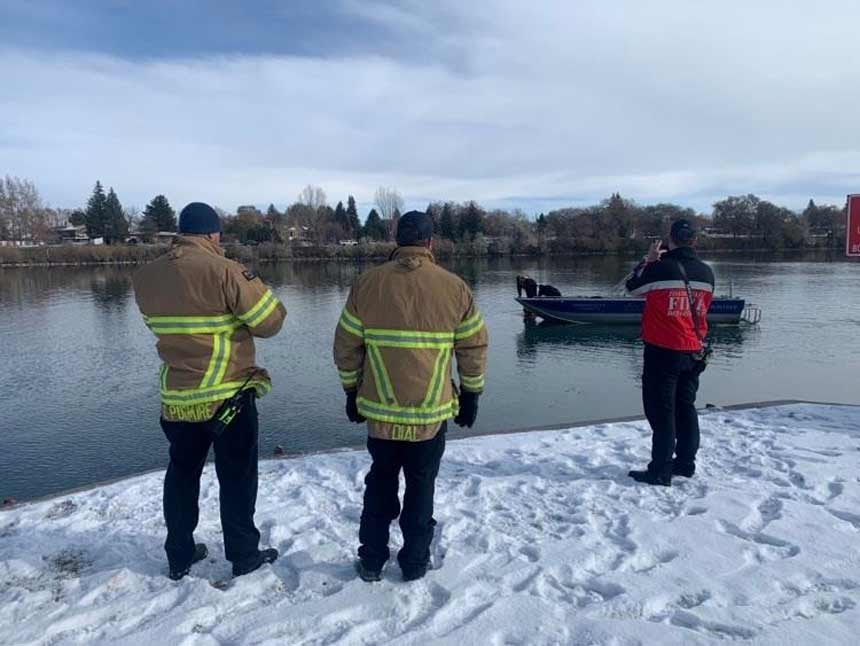
Dane Entze and his wife were coming back from an anniversary getaway and decided to indulge in a bit of romantic nostalgia. They crossed Johns Hole Bridge in Idaho Falls, Idaho, spanning the Snake River. It was the site where they met for their first date, but on the morning of November 12 it was another sight that caught their attention. Dane’s wife noticed someone was driving their car into the river. They stopped their vehicle, and Dane crossed onto a ramp and began talking to a woman who was in the water, informing him that she was committing suicide. He told her, “I don’t know who you are, but I’m here and I love you and I’m going to help you.” As they talked, she began moving toward shore. But she got to the point where she stopped, saying she did not have the will to live. The air temperature was 19 degrees when Entze jumped into the icy water and brought the distraught woman to shore. He helped her dry off and warm up until first responders arrived. When interviewed, Entze said it was a matter of being at the right place at the right time. He drew on some military training and knowledge of the area, but he gave this advice. “Doing something kind is all it takes. You don’t have to do something dramatic or dangerous to help somebody else. Be vigilant” (Mythil Gubbi, Fox 13 News, Salt Lake City, UT).

Certainly, there is something to be said about suicide prevention. According to the CDC, suicide is the 12th leading cause of death in our nation, and over a million people attempted suicide in 2020. While mental illness can play a role, most often it is driven by despair and hopelessness. Love and support can be vital to encouraging those with such tendencies to find the help they need.

But, I would like us to consider another application. You and I, in traveling down life’s road, encounter so many who are in spiritual danger. They may or may not know it, but they need to be rescued. We benefit greatly from biblical training, but it takes even more than that. It requires us to do something, to be vigilant. They need to know we’re here, we love them, and we want to help them. If there is anything more lasting and impactful than saving a life, it is helping to save a soul.

One who “turns a sinner from the error of his way will save a soul from death and will cover a multitude of sins” (Jas. 5:20). God has given us the life preserver to save them (1 Cor. 1:21; Jas. 1:21). The word of the cross can save the perishing (1 Cor. 1:18), and the Bible makes it clear that God wants no one to perish (2 Pet. 3:9). He saves those drowning in sin through you and me. We need to have our eyes open. We need to appreciate how valuable and necessary that rescue work is. We need to care and be kind. It may require a sacrifice of time, effort, and energy, but nothing is more crucial than rescuing one whom Jesus died to save.

What Motivates Us To Share Christ

Monday’s Column: Neal At The Cross

Neal Pollard

If we will ever share Christ with anyone, it will be the product of some motivator. It may be romantic love, if we are trying to win a potential mate. It could be a sense of Christian duty. It might be a profound sense of love and gratitude for our own salvation. Bible writers are often trying to guide us to appreciate the value of being motivated to share the good news. That is what Paul does in 2 Corinthians 5. Paul, who has been defending the work he and his fellow-laborers have been doing as servants of Christ, moves to the broader consideration of what should move us to share Him with others. Motivation is key to involvement. Often, when I see the importance of my personal involvement in spreading Christ to others, it will touch my heart and open my lips.  What motives should move us?

THE TERROR OF THE LORD (11)

This actually connects back to verse 10. There’s a great day coming, and all of us will be judged. If one is unprepared for that day, he or she should rightfully feel terrified. Knowing the terror facing those not ready to face Jesus, we persuade men. 

PERSONAL INTEGRITY (12-13)

Paul saw his involvement in reaching souls as a matter of personal integrity and honor. These spiritual servants shared Christ for God and for them (13). Soul-winning is our responsibility, and we should realize our character is at stake. 

THE LOVE OF CHRIST (14-16)

One of the most important and transforming truths is that Christ loves everyone. In fact, Paul says “the love of Christ controls us” (14). He proved that love by dying for all so that all could be reconciled (see 17-19). All are dead outside of Christ, but He can make men spiritually alive. That love for us and them should move us. 

THE TRANSFORMING POWER OF RECONCILIATION (17-19)

Anyone in Christ is a new creation (17). He reconciled us to Himself, and then gave us the ministry of reconciliation (18). He entrusted us with the message of reconciliation (19). We are offering people the ability to restore their relationship with God. Think of the peace, relief, and joy we can bring into people’s lives by offering them the hope of Christ!

OUR RESPONSIBILITY AS AMBASSADORS OF CHRIST (20)

God has given us the job of representing Him to men. He makes His appeal through us. We implore others on behalf of Christ to be reconciled. That doesn’t make us important, but it does mean our job could not be more important!

THE FACT THAT WE ARE MADE RIGHTEOUS IN HIM (21)

Christ is our substitute sacrifice, as He is for the people we need to reach. He makes us righteous through Himself. Knowing that God looks at a saved soul and sees purity and righteousness is powerful! That’s what He sees when He looks at us, covered in Christ. It’s what He sees when He looks at everyone covered in Christ. I want for others what I myself have been given!

This isn’t the totality of our motivation, but if this was an exhaustive list it would be enough! Suffice it to say that I don’t lack reasons for sharing my faith. The reasons are diverse, but each is significant by itself. Let’s pray for wisdom, courage, and tenderness of heart to be God’s voice and hands in reconciling the world to Him. 

The Volunteer Fire Department

Monday’s Column: Neal At The Cross

Neal Pollard

According to the National Fire Protection Association (NFPA), fire departments received 36,416,000 calls to respond in 2020. That included over 23 million for medical aid, 1,388,500 for fires, 750,000 for hazardous materials, and 5,938,500 for other hazardous conditions (NFPA Study). While a relatively small percentage of calls are actually to fires, firefighters leave with a mindset to save a life every time they respond to a call. A study by Hylton Haynes finished in November 2017 for NFPA research, there are 29,067 fire departments in the United States (NFPA Study II). With the total U.S. population above 330,000,000, that’s over 11,000 people for every fire department. But, no community would feel safe without trained firefighters living there. If we could pick the way we died, I can’t imagine any of us would choose death by fire. 

Jude paints a dramatic picture in verse 24 of his short epistle, calling on Christians to “save others, snatching them out of the fire.” That fire is “the punishment of eternal fire” (7). We are talking about a fire which God prepared for the devil and his angels (Mat. 25:41), but will use to punish the spiritually ignorant and the disobedient (2 Th. 1:7-8). It is unquenchable (Mark 9:43). It is a lake of fire (Rev. 20:14-15) that burns (Rev. 21:8). While it is hard to imagine that any would choose that fate, Scripture says the majority will (cf. Mat. 7:13-14; 25:46). So, God enlists you and me as volunteer firefighters. The thing with this fire is that people do not experience tangible warnings of it through their skin or lungs, telling them that this fire is encroaching. The only way to perceive this is with the heart, mind, and the eyes of faith. God is counting on us to appeal to those in danger through these means. God has given us the firefighting equipment we need through His Word and our lives as living examples of that Word. Though many incredibly do not want to be rescued, others do! The exhortation is to “snatch” those in danger of fire, to “grab or seize suddenly so as to remove or gain control; to snatch or take away” (BDAG 134). We cannot forcibly rescue anyone, but we must remain vigilant to pull out of the fire all who would welcome our intervention. 

Society still holds firefighters in high regard and few if any argue against the need for their existence. It is good for us to remember how God regards His children who are firefighters and how much He is relying on us to stay at that job (Dan. 12:3; 1 Cor. 1:21; Jas. 5:19-20)! Let’s keep working on our skills and improving our abilities to “save others, snatching them out of the fire.” Those rescued will be eternally grateful! 

via PxHere (Creative Common)

The Fisherman’s Trip To The Sea

(Acts 9:32-43)

Monday’s Column: Neal At The Cross

Neal Pollard

Studying a map, Peter travels the road from Jerusalem northwest through Emmaus until he reaches the village of Lydda. This is the Lod of the Old Testament, part of the southern kingdom mentioned in 1 Chronicles 8:12, Ezra 2:33, and a few times in Nehemiah. The only time it occurs in the New Testament is in this paragraph. We can assume that the church was established by those present to hear Peter and the apostles preach on Pentecost. Or, perhaps, it was the efforts of those who were scattered from Jerusalem who went everywhere preaching the word (8:4). The route Peter takes to Joppa crisscrosses the road Philip took from Gaza to Caesarea Maritime (Azotus is a couple of towns south of Lydda). Whichever the case, there were already saints when Peter reaches Lydda. This includes a paralytic man named Aeneas, who Peter heals. This causes all who lived at Lydda and Sharon (Song of Sol. 2:1) to turn to the Lord (35). Faith is flourishing and the church is growing.

Peter continues his travels northwest until he reaches the seacoast city of Joppa (today, it is one of the most important cities in Israel, known today as Haifa). When Peter arrives, he’s also there to visit the church (36ff). About the time of his visit, one of the Christian women “fell sick and died” (37). We learn several things about her:

  • She was a disciple (36). This means she is a learner associated with Jesus’ views (BDAG 609).
  • She “was abounding with deeds of kindness and charity which she continually did” (36). This should not surprise us, as it seems to further define and defend the fact that she is a disciple. Jesus went “about doing good and healing all who were oppressed by the devil” (10:38). She was simply doing as He had done.
  • She was loved and missed by the local church (38-39). Her death was an urgent matter. They plead with Peter to come quickly. When he arrives at the upper room where she’s laid, the Christian widows are “weeping and showing all the tunics and garments that Dorcas used to make while she was with them” (39). 
  • She was raised (40-42). Peter brings her back and presents her alive to the church. We can only imagine what joy this brought the church, but we know that this act caused many to believe in the Lord (42).

The miracles and signs performed in the early church all served the same purpose. They were to create faith in Jesus, the Man, His message, and His mission. Peter remains in Joppa many days, staying with a tanner named Simon (43). It is here that he will be a part of a dramatic turn of events that takes him north along the seacoast (Acts 10). 

When Peter was invited to follow Jesus, he was told, “…I will make you fishers of men” (Mat. 4:19). Did he take any opportunities to go down to the seacoast and fish the Mediterranean while at Simon’s house? I don’t know. I do know that his primary focus now was on fishing for men. God used him mightily in that effort, both to encourage the saints and reach the lost. Likewise, whatever we were and whatever we did before becoming a disciple of Jesus, He can use us in those ways (as He did Dorcas) and leverage our experience to bring about great results to His glory! 

Haifa (biblical Joppa) at sunset

Ignorance And Inoculation

Neal Pollard

Stephen Coss, author of The Fever of 1721: The Epidemic That Revolutionized Medicine and American Politics, relates the fascinating story of the first widespread inoculation effort in the fight against the deadly plague of smallpox. At a time when medical practice was steeped in vast misunderstanding and wrongheaded medical treatments (more than half a century later, George Washington’s doctors would facilitate his death by treating his cold and fever through bloodletting!), two unlikely men were able to withstand the withering criticism of the local medical community and superstitious Boston residents who adamantly vilified them both. One was a physician, Zabdiel Boylston, ostracized, threatened, and condemned by his peers and the town’s council. The other was Cotton Mather, forever infamous for his superstitious influence in the Salem witch hunt and trials that led to the execution of over 20 innocent people a quarter-century earlier. Both believed that by infecting a person with a small amount of smallpox, they could prevent death and even a serious, scarring case of the frightening disease. No less than young Benjamin Franklin piled on with criticism and satire against the two men’s campaign, but both were ultimately vindicated as the inoculations proved far superior in saving lives in Boston’s deadliest smallpox outbreak. It took a lot of courage and conviction for these men to persist in the face of resistance from the highest places of their society.

What if there was a disease that threatened one hundred percent of the global population, one that proved one hundred percent fatal if untreated? What if there was a remedy available that was proven to save every patient from otherwise certain death? What if you knew it worked? Would you have the courage and conviction to offer it to the infected, even in the face of intimidation and threat?

Over 600 years before Christ, a prophet wrote, “Is there no balm in Gilead? Is there no physician there? Why then has the health of the daughter of my people not been restored?” (Jer. 8:22). The balm of Gilead, who was also the Great Physician, came to be the remedy and administer it to the willing (Mat. 9:12; Mk. 2:17; Lk. 4:23; 5:31). He left us in charge of offering this remedy and trying to prevent spiritual death (Jn. 8:21,24) in as many people as possible. Most will reject or at least ignore the offer, unaware of the gravity of their condition. That cannot deter us! Jesus is counting on us to apply His blood to rescue the perishing and care for the dying. A day is coming when there will be no more remedy (cf. 2 Chron. 36:16), but we must be out sharing it until that moment! There are people out there searching for a cure (Mat. 7:7-8). Whatever it costs us, let’s not stop until we’ve helped as many people as we can!

Painting of Zabdiel Boylston

Thee, Thou, Thy, And Thine

Wednesday’s Column: Third’s Words

Gary Pollard

A prominent religious group is pretty well-known for their use of archaic pronouns in prayer. When asked about it, their official response is (paraphrased), “It’s more reverent and respectful,” (ldsliving.com). They believe that prayer is something that requires a special vocabulary, one that demonstrates a deeper respect for God. 

We do it, too, and for the same reasons they cite. I would like to offer some points to consider: 

1. Early Modern English does not demonstrate a greater level of respect. Why not use Middle English? Why not use Greek or Hebrew or Latin or Aramaic? From a purely linguistic standpoint, thee/thou/thine are not more formal in this century, and haven’t been for roughly three centuries (Yaswen, University of Toronto). Reverence comes from the heart. It is not something that can be invoked with a special vocabulary. 

2. It can be detrimental to evanglism. God expects us to emulate our culture as long as it doesn’t violate his law (I Cor 9.19-27). Many non-religious people, when talking about religious things, will switch to archaic, exaggerated English to highlight the oddness of religious people. An example in mainstream culture is the show Supernatural. One of the main characters reads something with archaic wording to another main character. When asked about it, his response was, “…that’s how God talks” (S8, E19). If our goal is to reach the lost, we should try to avoid potential obstacles (that aren’t related to doctrinal issues). When we invite them to worship, hearing, “Well-pleasing in thy sight,” or, “This, thy table,” or, “We thank thee, father,” etc. may reinforce Christianity’s irrelevance/social incompatibility in their minds. 

3. Biblical prayers do not teach a pattern of special language at all. Jesus’ example prayer was very simple (Matthew 6). Paul’s prayers did not differ from his conversational language (Eph 1.18; 3.14ff; Rom 1.8-10; 15.30-33; I Cor 1.4ff; II Cor 1.3ff; 9.12ff; Col 4.2ff; I Thess 3.9ff; 5.23f; II Tim 1.16ff; Philemon 4ff). No New Testament example suggests that using anything other than conversational language is superior. What does matter is our spiritual state when we pray (Jn 9.31; I Pt 3.7; I Tim 2.8). 

To be very clear, this is not a salvation issue at all. This is not even an indictment those who use Early Modern English pronouns in prayer. I strongly believe that Christians who pray or direct worship using old English have pure motives and are simply doing what they think most honors God! Hopefully this will serve as encouragement to evaluate our approach to prayer and worship so we can most effectively lead people to God. 

“To the Jews I became like a Jew so that I could help save them…to those who don’t practice the Law I became like someone who doesn’t practice the Law to help save them (though I am still ruled by Christ’s law). To those who are weak, I became weak so that I could help save them. I did this so that I could save people in any way possible. I do all this to make the Good News known. I do this so I can share in the blessings of the Good News” (I Cor 9.20-23). 

Loving The Lost

Thursday’s Column: Captain’s Blog

Carl Pollard

What if someone were to offer you a thousand dollars for every soul you would earnestly try to lead to Christ? Would you try harder to lead more souls to Him than you are endeavoring to do now? Is it possible that we would attempt to do for money what we sometimes hesitate or shrink from doing now in obedience to God’s command? Is money a stronger motivator than our love for God? 
What hinders us from thinking about other people? Many times we will make excuses and say, “that person won’t listen,” or “they’re too far gone.” We are called to plant the seed of the gospel, not examine the soil and determine if it’ll take the seed. We share the gospel message no matter what soil it lands on. It may be rocky, it may fall among thorns, it may land on the road and never take root, or it may land on good soil. 
We love the lost because it is a command (Phil. 2:3; Rom. 13:8-10), it imitates Christ’s example (1 Jn. 4:16,19), and it is our calling as Christians (Jn. 13:34-35, Eph. 4:32). 
So how can we show our love to the lost? What does it mean for us to love others? It means suffering with those who suffer. Hurting with those who are hurting. Helping those who need a hand. Picking up someone when they are down. Being a friend to the lonely. Writing a card to the grieving. Making a meal for those who are mourning. Bringing the good news of salvation to the lost. 
As God’s children, let’s show Who we belong to by loving the souls that are around us. 

THE WAY AROMAS HIT PEOPLE 

Monday’s Column: Neal At The Cross

pollard

Neal Pollard

I was originally going to call this, “The way we smell to others,” but thought that might be misleading or inaccurate. Paul uses a very unusual illustration to make an important point in 2 Corinthians 2:12-17. The backdrop of the illustration was when he came to Troas to take advantage of an open door to preach the gospel. It was a trying experience, as he couldn’t find Titus there. He left them for Macedonia (12-13). 

In chapter three, he is going to change metaphors. But, first, he describes their work of sharing the gospel as like God sending His fragrance through them which others evaluate or judge (14-15). The same message “smells” differently to the recipients, based on the receptivity and spiritual condition of those hearers (16). But Paul makes clear that their motives and message are not “rotten,” but if it is rejected it is because the listeners are perishing (17). Think about how so many could hear the Son of God Himself teach and preach, and thoroughly reject it to the degree that they even took Him and nailed Him to a cross! 

When you share Jesus and the message of His saving grace with others, there will be those who find that “fragrance of Christ” (15) a “sweet aroma” (14). It will be so appealing to them that they leave their old life and follow Him, much as the men God chose to follow Him during His ministry. It’s attractive and satisfying. There are still so many with good, receptive hearts out there. We see that when we share Him.

However, be prepared for some to find that same message repulsive. It’s not what they want and not what they are after. Have you ever been sick in such a way that even your favorite foods nauseated you to smell them cooking? There is no more savory and appealing message than the Bible’s story of grace, but many will reject it anyway! It can leave us feeling so inadequate (16), but we must remember that it is not our message. It is Christ’s message. Our job is simply to spread it with personal integrity, honesty, and righteous motivation. His word will work its power on those who seek their satisfaction in Him.  

Fresh baked, homemade sour dough bread from Kathy’s kitchen!

Bring ‘Em Back Alive

Tuesday’s Column: Dale Mail

image

Dale Pollard

Frank Buck was a true adventurer. He lived in 1900’s and would travel all over the world bringing back all kinds of exotic animals. What set him apart from others in his profession was that he didn’t shoot the animals and bring back their stuffed skins. In Frank’s mind, anyone  could gun them down, but who would dare bring back a lion or a rhino— alive?

Frank Buck  probably didn’t know it, but he was very scriptural in his approach. Jesus sent us out to seek and to save the lost, not to destroy them. It seems as though some may have forgotten that key element. That infamous Wild West poster we see in movies reading, “WANTED! DEAD OR ALIVE” doesn’t fit the biblical model for evangelism.

 Soul-winning is about leading others to Christ. It’s not about winning the argument or flexing our vast amounts of knowledge. It’s not about proving someone how ignorant and wrong they are. It’s not about showing others how impossible we are to defeat in the match of verbal fisticuffs. It’s about saving their souls. Jesus is looking for those gutsy followers. The ones who are willing to take action and get out there! The Greek word “ZOGREO” only appears twice in the New Testament, as far as I know. The word literally means, “to take alive.” 
 
In Luke 5:10 the word is used to express one being taken alive for God. In 2 Timothy 2:26 Paul would us the word when talking about those who have been taken captive by the devil. These two verses remind us that all will be taken somehow. Some from life to death, others from death to life. Matthew 28 is the Great Commission, our permission to baptize people for the remission of their sins. You can be that gutsy follower since Jesus said He’s going to go out with us, “even to the end of the world.” Let’s get out there and bring ‘em back alive. 

The Bystander Effect

Friday’s Column: Learning From Lehman

chang

David Chang

In the neighborhood of Queens, New York City, 1964, a young 28 year-old woman named Kitty Genovese was stabbed to death right outside of the apartment building where she lived. The reason this criminal incident is so well known is not because of the murder itself—as shocking as it was. The murder of Kitty Genovese is infamous because of the failure of every single one of the thirty-eight or so bystanders to take action to either stop the murder or call for help. Thirty-eight. Thirty-eight people were reported to have either seen or heard the murder happen, and yet not one person stepped in to help—or even called the police. Thirty-eight bystanders watched or listened on as Kitty’s life was taken from her that day.

This incident later became the foundation for the Bystander Effect or the Genovese Syndrome. Social psychologists Bibb Latané and John Darley, who popularized the Bystander Effect, attribute it to two factors: diffusion of responsibility and social influence. Diffusion of responsibility basically means that the more “bystanders” there are, the less personal responsibility an individual will take on. The reason teachers love small-groups is because it is harder for individual students to diffuse responsibility among a smaller group. It’s also the same reason students don’t like small-groups, because they can’t just hide in the crowd. They have to interact, answer questions, etc. Then there is the social influence, which basically means that you will do whatever the other bystanders are doing—or not doing. In the example of Kitty’s murder, those 38 bystanders saw no one else doing anything. Even though a murder was happening right in front of them, they failed to break the conformity of that immediate circle of thirty-eight people.

How many times have we done this in our faith life? How many times have we told ourselves that we can just hide in the crowd and not have to take action? How many times have we been so afraid of stepping out of line or going against the grain that we fail to live the way we are called to live? Let me ask you, how many times did Jesus step out of the social influence, the conformity of his religious peers, and the diffusion of responsibility among the crowd—to reach out and help those who are in need? He saw them as souls having value, rather than just another outcast of society. Jesus healed the sick and the blind. The blind man at Bethsaida (Mk. 8:22-26) and Bartimaeus outside of Jericho (Mk. 10:46-52). He treated women and children as if they were creations of God rather than some property or second class citizens. He healed them and welcomed them (Mk 5:21-43, Mt. 19:13-15, Lk. 7:11-17). He approached lepers, the ultimate example of social outcasts, and treated them with civility and mercy (Mk. 1:40-45, Mt. 8:1-4, Lk. 5:12-16; 17:11-19). He touched them and healed them, something not even the priests would have dared to do. Jesus subverts our expectations at every turn, and he breaks conformity at every opportunity. He is not paralyzed at the sight of someone in need; he springs into action, and continues to work even today. When we are helpless and in need, our cries do not fall on deaf ears—not as long as Jesus is alive. And he is alive and working today.

We are called to be like Christ, and part of that calling is to break free from conformity and social influence (Rom. 12:2). We are not called to hide in the crowd. Never should our personal responsibility of righteousness and good works be diffused among the crowd. We must not have a “someone else will take care of it” mentality…ever. 

I wonder if there were any Christians among the thirty-eight bystanders who watched and listened as Kitty Genovese was killed. May we never just be another bystander. May we never let evil and falsehood prevail in our presence. I pray that we all will work to break free from the paralysis of the bystander effect, and take action, every one of us, for Christ and his Kingdom.

You know, there is a positive aspect of the Bystander Effect. Just as people are negatively affected by the diffusion of responsibility and social influence, even those can be flipped to have a positive effect. All it takes is a few people to break that social influence, and spring into action. Then the other bystanders will be pulled to spring into action themselves. It is contagious. When those few break out, it breaks the spell of the bystander effect. 

Christ calls all of us to be those few who will break the paralysis. However, we cannot break the conformity while still being a part of the world. We must first break away from the world and become one with Christ through repentance and baptism. Even after that initial step, the job is not done. As a Christian, we cannot just return to standing in the crowd as a bystander. Do not be a bystander; an onlooker; just another body in the endless sea of spectators. Remember that Jesus never froze up at the sight of suffering or need. As Jesus first broke through to reach us while we were still in sin, let us also break free from the paralysis of the bystander, and spring once more into action. 

PLEASE LOOK BEHIND THE CANVAS!

Monday’s Column: Neal At The Cross

Safari 2017

Neal Pollard

I sat next to a man at dinner the other night, a retired Marine officer named Anthony who was now a successful businessman. Though he was in his sixties and had six grandchildren, he could have passed, even with a smattering of gray hair, for an elite athlete. He was incredibly intelligent, articulate, a war hero, wealthy, and, by anyone’s estimation, a true Renaissance man. He was also a brand new Christian.

Despite his apparent success, he confessed to having experienced decades of emptiness inside. He described it as I have often heard people describe it, that there was a hole inside and nothing he tried would fill it. He pictured it as painting a facade. He held out the canvas for others to see what he projected, but the man behind the painting was hollow, depressed, and ever searching. 

That changed when his neighbor, a man named David Grimes, took an interest in his life. They began walking together in their neighborhood, discussing life. David would always refer Anthony to the Bible and what God’s Word had to say. At some time later, when Anthony faced a crisis, he found himself reaching out to David for help. Ultimately, through David’s friendship and his efforts to teach him, Anthony obeyed the gospel!

Anthony said, “There are a lot of people like me out there! They seem secure, confident, in control, and without need. But they are searching to fill a void in their lives. I know. I was one of them.” We can convince ourselves in these troubling, ungodly times that nobody is interested in God and His Word. Anthony would encourage you to get involved in the lives of your coworkers, neighbors, classmates, and the people you connect with through your children’s activities. No matter what they are projecting, invest in them. At some point, they will let you in. They will allow you to look behind the canvas and the pretty picture they have painted, and you will see a soul searching for something only God can satisfy! God is counting on us to see past the pretense and help that person He loved enough to give His Son for. The picture of success in the world’s eyes was secretly aching for something deeper and better. He found it in the only place it can be found–in Christ! 

Please look behind the canvas!

We Can All Use Some Help

Friday’s Column: Learning From Lehman

candela

Steve Candela

Fun fact about myself…  I would be a whole lot more comfortable running into a burning building than I am standing up here speaking.  But just like any situation on a fire ground, the job will get done. 

James 5:19 says,  “My Brethren, if any among you strays from the truth and one turns him back, let him know that he who turns a sinner from the error of his way will save his soul from death and will cover a multitude of sins.”

There have been countless times in my life where help was not only desired or needed, but necessary.  As a Fireman I’d like to tell you that I’m made of iron, nothing can hurt me and I don’t need help from anyone, “I got this”. Problem is, this would be the furthest thing from the truth. In order to get the job done it takes a team. We have guys that fight fire, guys that search for victims, guys that drive the trucks, pump the water, we have guys in charge of the operational strategy, and so on.  We even have guys that their only job on a fireground is to go in and save a fellow firefighter in trouble if they get stuck, disoriented or hurt. This is called a RIT team.  We as Christians work in a similar fashion. Ok, so we don’t have the ranking system, but we all have duties. We all have jobs and responsibilities, right? 

Robert Muszynski was a fire chief in Chicago Ridge, Illinois. He had worked at multiple fire departments throughout his career but this is where he finally decided to retire in 2014 at the age of 58. I do not know specifically if he was a follower of Christ. I do, however, know of his dedication to his work and his firefighters. He was recognized several times in magazines and various fire department-related web articles for his encouraging quotes and respectable works in the fire service. I’d like to share with you a couple of his quotes and how I’ve related it not only to my job but my spiritual life as well. 

 Bob said, “Always stay hungry for the job, and you will never get full.” Complacency causes you to become bored, disengaged, and think that you know it all.  Keeping interest and staying engaged is very important.  You could say for us as Christians to always stay hungry for the word of God, read as often as you can and you’ll never get full. There is always more to learn from scripture. Create discussion among your friends or host a Bible study. Always Stay Hungry for the word. 

He also said, “Good firefighters will know their job. Great Firefighters will also know the job of the person above them as well as teach their job to the people below them.”  As an Engineer I am in between the ranks of firefighter and captain. I have a great relationship with my captain. He’s been a fantastic guide, teacher, mentor, and leader of our crew. I know his job and what it entails, and I strive to be in that position someday. As with the firefighters below me I try to be that role model that teaches them everything it takes to become an engineer and give them ample opportunities to come to me for guidance. A good Christian will know what it takes to be a good Christian, but is that where it stops? No. To be great Christians we need to be aware of what our elders and deacons have in the works. They do so much for us already; maybe there’s something you can help with? Take a task off their plate so they can work on the next important project. What about the people who need saving? You might not see yourself as a great teacher, but there is something inside every one of us that we have to offer to someone else. By creating conversation with our visitors you might reveal their needs. You could be the one to lead them to where they need to be and teach them something along the way. 

As hard as it is to admit, sometimes a Fireman can use a little help.  Christians can too.  Leading up to the scripture reading above, James has been talking to fellow believers in Christ, encouraging them to never give up faith. It’s so easy today for us to stumble and fall. We have people and priorities tugging and pulling us in every direction away from God. James knew this. He makes it clear that we are to help our fellow Christians who may wander from the truth and become worldly. It’s our job to help them get reconnected with God. Like addressing and correcting poor behavior in the firehouse this can be a difficult assignment. We need to be careful in how we complete this task so we don’t fall into the same sin or come across as too “high and mighty” (Galatians 6:1 says, “Brethren, even if anyone is caught in any trespass, you who are spiritual, restore such a one in a spirit of gentleness; each one looking to yourself, so that you too will not be tempted.”) This means be tactful not attacking. Genuine love and care must be the tactic. 

Steve interviewed last year by NBC about the walk to honor firefighters who died on 9/11.

We Are Not Doing Right” (2 Kings 7)

Monday Column: Neal At The Cross

pollard

Neal Pollard 

There was a famine in Samaria and everyone was desperate. The need for food was more pressing than the danger they faced in looking for it. Elisha predicted the end of the famine but Jehoram’s right hand man refused to believe it could happen so quickly. The prophet tells him he’d see it happen but that he would not eat of it (2).

Four lepers decided to throw themselves on the mercy of the Arameans, but God caused the besieging army to hear the sound of enemy armies. They imagine the worst and leave their camp in pursuit. So, when the lepers arrived at the camp, it was abandoned. They found food and riches beyond their wildest imagination. They start to hoard and gorge themselves, then had second thoughts. They say to each other, “We are not doing right. This day is a day of good news, but we are keeping silent; if we wait until morning light, punishment will overtake us. Now therefore come, let us go and tell the king’s household” (9). Several things stand out here.

THESE MEN HAD GOOD NEWS.

IT WAS WRONG FOR THEM TO KEEP SILENT ABOUT IT.

THEY EXPECTED PUNISHMENT IF THEY DIDN’T URGENTLY SHARE IT.

THEY ADMONISHED EACH OTHER TO TELL IT.

They did and they helped save the nation. God caused it to happen but He worked through these four lepers. The famine ended (and the royal officer was trampled at the gate—he saw the famine end but died before it could benefit him).

I am reminded of my task as a Christian, one spiritually sick with sin but in a similar situation. I have found good news. It is wrong for me to keep silent. I must not just share it but do so urgently! I also need to admonish you to realize you are in the same predicament as me. You cannot afford to keep silent! A feast awaits!