The Beauty Of Community

Neal Pollard

God created us knowing our need for socialization (Gen. 2:18). Since the making of man and woman, humanity has been in or sought community. All of us are in the global community of humanity, since “He made from one man every nation of mankind to live on all the face of the earth” (Acts 17:26). Wherever or whenever you live, you share basic needs, fears, drives, and desires no matter how different your social, economic, and political circumstances are.

But think about your more immediate community. Over the last few days, Kathy and I have been reminded of this. Last Friday morning, we received a ring notification. It was a teen girl telling us our milk cow, Peaches, was in her yard! This neighbor lived far enough away that I didn’t know who she was! I immediately followed her (without my phone) while Kathy went to grab the halter. But she didn’t know where this girl lived.

In the three hour fiasco of getting her back in our pasture, it was a cooperative effort between us and multiple neighbors. Kathy went door to door talking to our neighbors, trying to find either the girl or the cow. She and our next door neighbor, Tracy Harrell, exchanged several texts through the morning trying to find our “girl.” She walked next door to our sweet neighbor, Brenda Willoughby (whose sister is Lehman’s Gracie Norton’s dear friend), in search of Peaches. It took the help of community to resolve our “crisis.”

Later that same day, coming back from Columbia, Kentucky, Kathy and I were driving back on a back road near our house. A freak storm downed two trees on Iron Bridge Road, standing between us and returning before Kathy had to leave for our Friday night singing and my speaking at a congregation’s family retreat. Vehicles began to pile up and several of us got out of our vehicles as a couple of guys with chainsaws began cutting through branches and sectioning the trees. The rest of us drug them out of the road. We moved one, then the other. Working right next to me at both trees, ironically, was Tracy’s husband, David. We were neighbors not only in a literal sense, but in the sense of cooperating to resolve a “crisis.”

God has created the church as the ultimate community. He conceived it from eternity (Eph. 3:9-11). He knew not only that He would be glorified in it (Eph. 3:21), but that we would benefit from the support, help, and strength found in it. This community is also described as a family (1 Tim. 3:15; 5:1-2). Think about how we lean on our physical families as a community, where we share, lift loads, intervene, and more. In the church, there are times when I am strong and you are weak. God tells me to bear your burdens (Gal. 6:2). Other times, I may be the one who is weak and needs your strength (Gal. 6:1). Many crises, physically, economically, socially, and spiritually, plague our wonderful spiritual community. The proper response is to rally around each other, showing our love and care by pitching in to help resolve whatever crisis arises.

Thank God that He gave us the best social network we could have to survive the challenges of this world. Tragically, some turn to politics, sports, and similar communities what God designed to supply through the community of His people. When we trust His plan, we are blessed by experiencing the beauty of the community He thought up to help us make it through this world spiritually alive! May we lean on each other, whatever our “crisis.”

The Tie That Binds

Tuesday Column: Dale Mail

image-e1601983688162

Dale Pollard

When it comes to the families that make up the church, what ties us together is a common bright future. While every family has its differences, one constant remains— the church. All strive to follow those guidelines laid out in scripture. Paul says in Philippians 1:6, “And I’m SURE of this, that He who began a good work in you will bring it to completion at the day of Jesus Christ.” 

The writer speaks with assurance and that confidence is well-placed. From His-story we see that God always completes His projects. He never dreams, He creates. He decided to create the world and here it is. He decided to save the world, and here we are. 

Paul also would write in Romans 7-8 that the flesh tends to get in the way of the spiritual. God is perfect, but we’re not. That’s what makes us a work in progress. Aren’t we thankful that God provides the solutions to “fix” us up? 

We’re involved in a great work because there simply is no better work  than what is being done by His church. That being said, many of us struggle with overcomplicating things. We try to make sense of our individual lives, and when we leave God out it all becomes a discouraging battle. Where’s the peace? Joy? Confidence? Maybe it was left behind when we left God’s path. Thankfully God came down to earth years ago to teach us everything we need to know. We see that in His interactions with people. Even His twelve original followers were an odd group. 

Each had a diverse background. Some were Fishermen and some tax collectors. 

Each one had a unique personality too! They ranged from timid to assertive.

Each one had spiritual battles from greed to crippling doubt.  

Yet each one rallied under His leadership and were united through a common hope. 

What’s changed? Not much. 

The personalities, talents, backgrounds, and flaws mixed together create a unique blend that make up each one of us. Yet, here we are rallied under His leadership, united in common hope. 

Members of the church in the Bowling Green area at an FCA fundraiser.

What I Saw On Sunday

Monday’s Column: Neal At The Cross


Neal Pollard

It was our largest crowd since before the Pandemic. It was a targeted effort to fill the building. The building was full! I asked several how many non-members were present and the most conservative answer was dozens, perhaps fifty. While we know that filling the pews is only one factor in encouraging people to follow Jesus (discipleship), it is a pretty fundamental and important one. Let me share a few exciting things I saw.

I saw the power of an invitation. The elders laid out a challenge to us to invite every non-member we could think of, coworkers, family members, friends, classmates, acquaintances, etc. That’s not revolutionary. Perhaps it was the sheer volume of invitations so many members issued. Such seeds were spread far and wide, and Sunday was an indication that some will come if asked. I am confident that many who were invited will come in the future, if we continue to ask. Philip invited Nathanael to “come and see” (John 1:46), and it changed Nathanael’s life! Andrew told his brother, Peter, “We have found the Christ” (John 1:41)! It changed not just Peter’s life, but the thousands of lives Peter eventually touched. Who knows the eternal impact made by all the invitations issued this weekend, but it shows that there’s still power in a simple invitation!

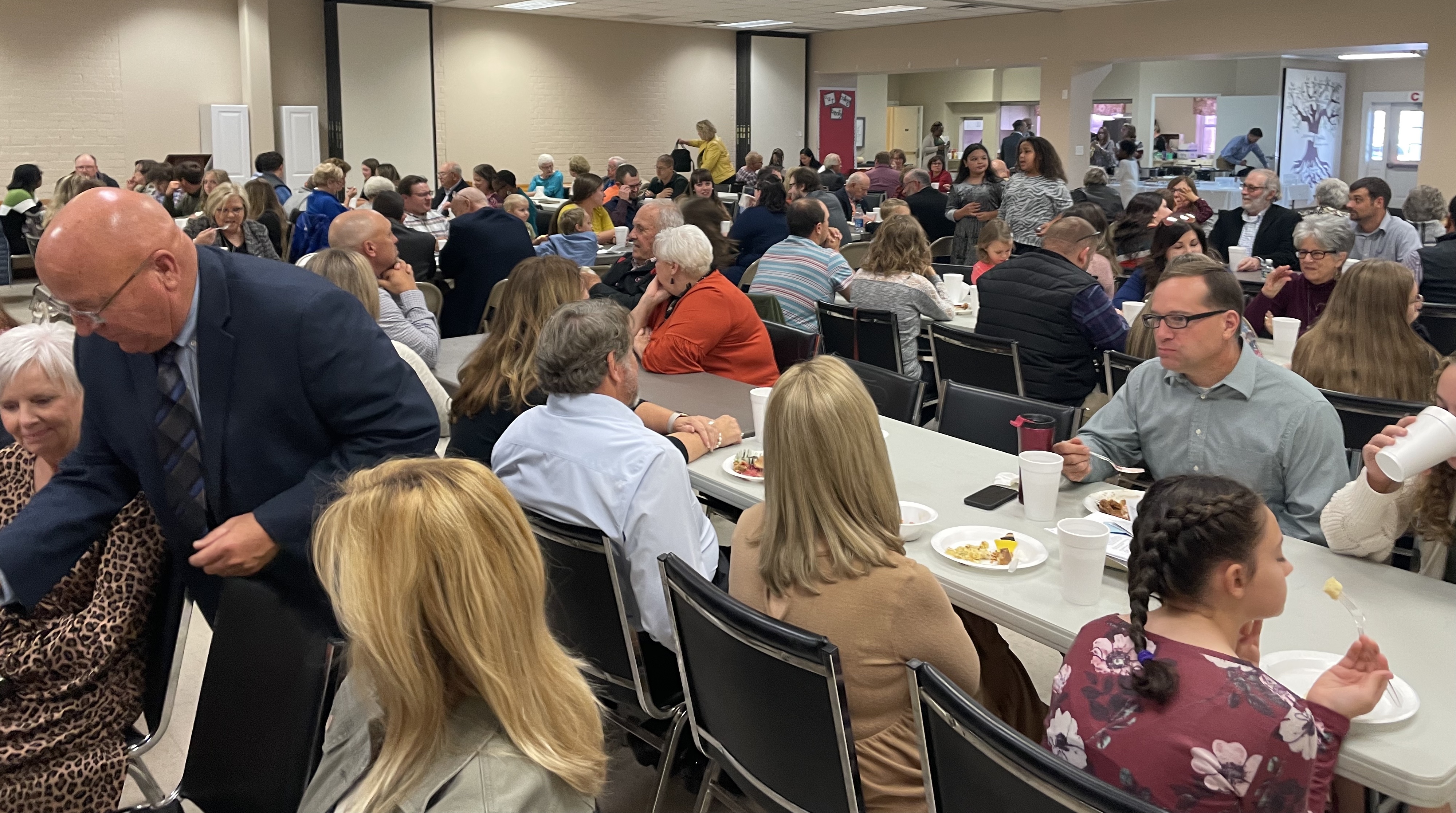
I saw the strength of teamwork. That was on display in so many ways. There was a huge team of people greeting those who entered our doors. Anticipating a lot of visitors, this was organized beyond the ordinary measure. It was exciting to see so many doing this, and it seemed to be infectious. Others joined in. It was evident in the efforts of multiple deacons and vision groups coordinating various works. It extended to members in the auditorium warmly welcoming unfamiliar faces and making our visitors feel at home. It continued on to the potluck after Bible class with the scores of people bringing an abundance of food, serving, assisting, and cleaning up. We were a finely-tuned machine of coordination. I could not help but think of Paul’s words, to Philippi (“make my joy complete by being of the same mind, maintaining the same love, united in spirit, intent on one purpose,” 2:2) and Colosse (“beyond all these things put on love, which is the perfect bond of unity,” 3:14). Sure, he had more in mind that one event on one day, but this is a key way such overall unity is built. 

I saw the example of leadership. This began with the eldership. They not only challenged us to invite, they led the way. It’s not an exaggeration to suggest that the four of them invited hundreds of people by text, phone, and face-to-face. They invited friends, family, acquaintances, and strangers! True leadership shows the way! This included those who led in worship. There was forethought, effort, and coordination from the greeting to the announcements and every act of worship in between them. This involved the membership who enthusiastically engaged in the worship. It also takes in every one that helped people find bathrooms and classrooms. Leadership always breeds more leadership. The writer of Hebrews says, “Remember those who led you, who spoke the word of God to you; and considering the result of their conduct, imitate their faith” (13:7). 

I saw the hope of tomorrow. The effects of the last 18-plus months have been deflating and demoralizing. We have lost members to Covid, physically and spiritually. It has derailed plans. It has distracted us. But Sunday showed that by faith in God and by following His plan, the best is yet to be! As we were reminded at the end of the day yesterday afternoon, we have worship every Sunday so let’s keep inviting. How many Bible studies will result from inviting others to church? How many future preachers, elders, deacons, soul-winners, and Bible class teachers are represented in those who walked through our doors yesterday, some for the first time ever? To some degree, we’ve got to be like Paul and say, “forgetting what lies behind and reaching forward to what lies ahead, I press on toward the goal for the prize of the upward call of God in Christ Jesus” (Phil. 3:13b-14). 

There’s more to do! There’s more inviting to do. There’s more follow up to do. But I see more than a special event in what occurred on Sunday! I see a culture change and a purposed people. Think what God can do with that!

“I Wish The Church…”

Monday’s Column: Neal At The Cross

pollard

Neal Pollard

  • “…Cared More About The Lost!” (But, when did I last invite someone to church or invite someone to study the Bible?)
  • “…Checked On The Sick And Shut In.” (But, when did I last make a call or visit to them?)
  • “…Was Friendly!” (But, do I talk to, welcome, and make feel at home visitors and more than my close circle of friends?)
  • “…Did A Better Job With The Singing.” (But, do I sing out, show enthusiasm, and participate with my whole heart?)
  • “…Invested More In The Youth.” (But, am I doing all I can to help them grow, from my attitude toward the church to my personal investment in them?)
  • “…Was Active!” (But, do I volunteer when help is needed, prioritizing it over the things of the world?)
  • “…Was Growing.” (But, how invested am I in being an ambassador for Christ, 2 Cor. 5:20?)

So often, we talk about “the church” in a passive, third-person way. We are critical of her leaders, her activities (or lack thereof), and her members as if we are detached observers. The picture of the early church was of individuals who were personally invested. We are overcome by the consumer mindset of the culture when we sit back and take shots at the perceived shortcomings of our local congregation. Look at the New Testament Christians. Barnabas didn’t fret about how stingy or discouraging the church was; He was generous and encouraging (Acts 4:36-37). Stephen didn’t express his frustration at the church’s lack of courage and conviction; He literally preached himself to death (Acts 6-7). Dorcas didn’t wring her hands at how uncaring and detached the church was; She continually did deeds of kindness and charity (Acts 9:36). They may have been extraordinary in their actions, but they were just “regular members of the church.” They were the church. They didn’t sit in judgment of her. Why? They were too busy working to build her up. When I am tempted to play armchair analyst, I should begin with my own faithfulness and involvement. There is so much the Lord expects me to do to help the church. My investment may cause others to be grateful and excited to be a part of the church! I can most influence me (2 Cor. 13:5)! 

On January 20, 1961, in John F. Kennedy’s inaugural address, he uttered the famous line, “Ask not what your country can do for you–ask what you can do for your country.” Here is the very ending of the address: “With a good conscience our only sure reward, with history the final judge of our deeds, let us go forth to lead the land we love, asking His blessing and His help, but knowing that here on earth God’s work must truly be our own.” If that is true of a citizen’s mindset of a nation, how much more a Christian’s mindset in that holy nation, the church? 

The Church Is A Family

Thursday’s Column: Learning From Lehman

IMG_3998

Kason Eubanks

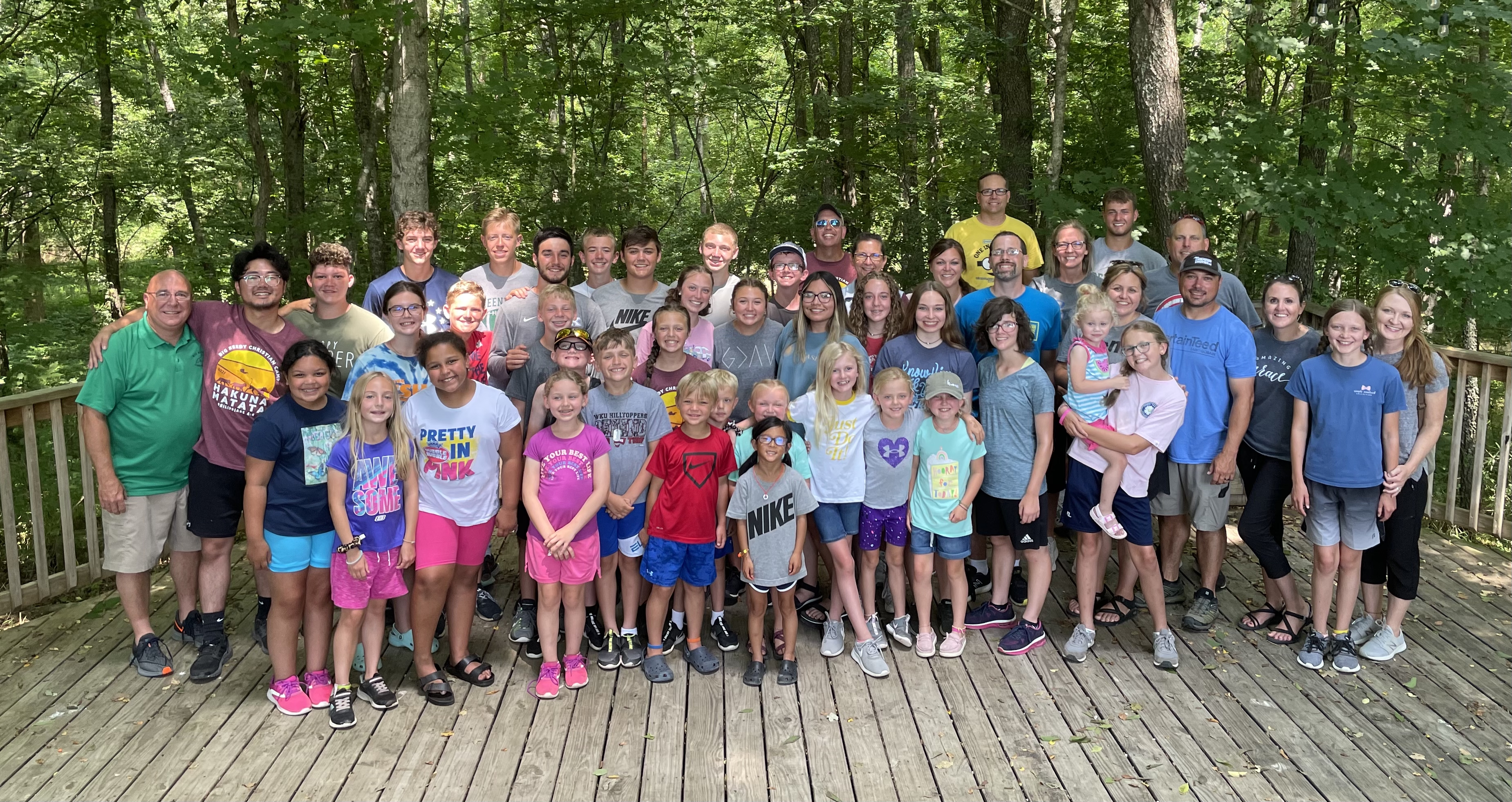
A few months ago, Lehman and a bunch of other churches went to church camp. During that week, I got to think about family. A quote I read once by Lisa Weed said, “Being a part of a family means you are a part of something very wonderful. It means you will love and be loved for the rest of your life.”

Let me start off by defining family. According to Webster’s dictionary, one definition is “the group of one or more parents and their children living together as a unit.” That kind of family can be shown through the illustration of a loving husband giving his wife some facial masks on Christmas Morning. As she opened the gift, her 5-year-old daughter asked what they were. The Mom replied, “It’s a present to make me beautiful.” After the mom applied one of the facial masks, the little girl looked at her mom and replied, “Mom, it didn’t work.”

Another definition Webster’s gave is “all the descendants from a common ancestry.” To me, that sounds like the relationship God has with His church. 2 Corinthians 6:18 says, “And I will be a father to you, and you shall be sons and daughters to Me,” says the Lord Almighty. Ephesians 5:25-27 defines the church family as being without blemish. “Husbands, love your wives, just as Christ also loved the church and gave Himself for her, that He might sanctify and cleanse her with the washing of water by the word, that He might present her to Himself a glorious church, not having spot or wrinkle or any such thing, but that she should be holy and without blemish.” 

Thankfully, God has given us the opportunity to be part of a perfect family. Maybe you’re not a member of the church family, and you would like to put Christ on in baptism or you want us to pray with you and for you so you can get your life on track. Whatever your need, please reach out to God’s perfect family. 

Lehman on last day of camp this year.

Made To Be Functional

Wednesday’s Column: “Third’s Words”

Gary III

Gary N. Pollard, III

Ephesians 4 describes some spiritual gifts. Their purpose is to allow the church to function as it should. A properly functioning church spends eternity with God. 

A functional church is on the same page (one mind), has spiritual depth, and is workable (more on that in a bit). 

Ephesians 4.12ff is about members’ roles. What are they for? Everyone serves to equip saints. Saints are people who have pledged allegiance to God. 

We train for morally good works and become stronger through encouragement (12,16). We work toward a unified mindset, knowing Jesus, spiritual maturity, and we pursue the highest standard (Jesus) (13,14). 

We work to avoid immaturity and gullibility (14). We pursue maturity until our mindset emulates Christ’s (15). He’s described (multiple times) as the standard we have to have. There’s no room for spiritual laziness here. 

Jesus causes growth spiritually, but only if we’ve become soil that can be worked. If our minds aren’t mature, we aren’t workable. Elders are spiritual farmers, our hearts are the soil. If we use Jesus as our standard, we are workable. If not, we’re spiritually dead. 

So, what can we do individually? Make the church strong by pursuing unity, by having spiritual depth, and by being workable. If we work on those things we will spend forever with God. 

God’s “House-Law”

Wednesday’s Column: “Third’s Words”

Gary III

Gary Pollard

Every home has some kind of system in place to keep order. Maybe you were told to take your shoes off at the door, keep your elbows off the table, make your bed in the morning, or brush your teeth more than twice a month. Every home is different and the expectations for conduct and cleanliness vary accordingly. However your home was structured, you were at least bound to a set of rules in some form.

God’s house is no different. I’m not just talking about the building we meet in for worship, but that anytime His family offers up worship to Him we are expected to follow His rules. I Timothy 1.4 talks about God’s “house-law” (often mistranslated “stewardship” or “godly edification”). The word is οικονομία (oikonomia), combining οίκος (house) with νόμος (law). What does this mean in context? In I Timothy Paul publicly berates two members who were teaching “myths and endless genealogies which do not promote the house law of God in faith” (1.3, 4; 20).

If any teaching goes against what God has told us He wants, it’s a violation of His house-law. We understand this when it comes to daily life outside of religious activities. If we break the law we are held accountable to it. We understand that violating the laws our governments put in place to maintain order and promote justice carries consequences. Some, though, do not act as if the same applies to God’s people in a religious context.

God’s house-law is more specifically defined in I Timothy 2.1-8. Anytime and anywhere Christian men and women offer worship together, God expects qualified Christian men to lead. This is made clear with the phrase, “…in every place” (2.8). God’s house, God’s rules.

Not just any man can lead, though! He must be someone who is able to lift holy hands (that is, he is pure in life and can offer worship without the stain of sin), he must be cool-headed, and he can’t be unstable in his faith (2.8). God’s house, God’s rules.

God expects women to avoid drawing undue attention to themselves (2.9, 10) and are to allow godly men to lead them in worship (2.11-14). His house, his rules.

In all of my vast wisdom and experience as a child, I didn’t always agree with or like all of my family’s house rules. Probably every teen and their unfortunate parents experience this. My feelings about a house rule did not alter its validity in any way. It was not my house so I was not in a position to change or violate the rules. Trying to do so was not only futile but often carried consequences.

God’s design for His church is not acceptable to the secular world. In their disagreement or downright hostility toward it they have pushed many churches into changing God’s house-laws. This doesn’t fly in the legal world, the home, or in any setting where rules were set in place by those most qualified to make them. Why would it work with God?

We may not always understand why God made the laws that He did, but this is where the faith aspect of 1 Timothy 1.4 comes into play. We have to ask ourselves, “Do we trust that God knew what He was doing when He made these laws, and do I really want to challenge Him on the rules He made for His own family?” At the end of the day we must remember that in God’s house we follow God’s laws. Many of the problems facing the church in 2020 can be solved simply by accepting this fact! If we do – as in any family – we will not only have harmony in the church, but a permanent, peaceful home with God after this life.

Job 38.4-7

ESSENTIAL

Monday’s Column: Neal At The Cross

Neal Pollard

  • Grocery store–Place where we buy food to sustain our physical bodies
  • Restaurant–Place where we pay someone else to provide food for our physical bodies
  • School–Place where our children receive an education to prepare them to live on earth as adults
  • Hospitals and Doctor’s office–Place where we go to address issues with our physical health
  • Workplace–Place where we go to earn money to take care of our physical needs

There are other places that have remained open or reopened whether to provide what we’d deem essential or places that are more diversionary but which various experts call essential to economic or social survival (malls, bookstores, ballfields and arenas, etc.). In fact, “essential” can be put into a lot of categories–academic, economic, social, emotional, medical, physical, and spiritual.

Pandemic restrictions have impacted and altered public behavior for almost a year. It’s more than mask mandates, hand sanitizer, social distancing, and the severe reduction of handshakes and hugs. It has been the reduction of personal interaction at the assemblies. Many congregations have devised virtual means of meeting for Bible class and worship. Just like virtual doctor visits, online instruction, and telecommuting lack the desired qualities of the in-person alternative, so it is with the virtual gathering. 

The first-century church labored under restrictions, too. The threat was not a virus, but often a virulent government hostile to their faith. Christians in various places faced severe persecution and even the death penalty if this identity was known (Mat. 24:9; Rev. 2:10; 1 Pet. 4:12-16). The assemblies were an easy way for Rome to know a Christian’s identity. Despite the potential cost of discipleship, what do we find the early Christians doing and being commanded to do? As a good preacher friend, Terrence Brownlow-Dindy, recently said, Acts 20:7 not only told the saints when to take the Lord’s Supper (the first day of the week) but also how (come together). Despite governmental interference and opposition to them, Christians were still commanded to assemble (Heb. 10:25). It was essential to be present to stimulate each other to love and good deeds (10:24). It was essential to be present to encourage one another (10:25). It was essential to be present to prepare for Christ’s second coming (10:25). 

What’s the difference between the risks incurred in Cracker Barrel, Wal-Mart, Home Depot, and Hobby Lobby walking aisles, touching items, and standing in line with strangers and coming together and running any risks we might incur by assembling together for worship and Bible class? The commodities and services provided at places like those at the beginning of this article serve us only in this life. The wisdom of God, who designed the church including the importance of coming together, commands assembling to address our most essential need. It is absolutely true that Christianity is not confined to the church building, a great lesson we discovered or remembered at the start of this crisis. Perhaps, though, we inferred from this that actually coming together was less essential than shopping, going to school, and going to work. 

I have seen brothers and sisters in Christ at stores, restaurants, weddings, and funerals who have not come into the church building to give and receive the fellowship and encouragement God made essential both for our own spiritual health and that of our spiritual family. Scripture repeatedly tells us the earth and all its works will be burned up some day (2 Pet. 3:10). Our souls will never die. As we prioritize the essentials, what is more essential than that? The dictionary defines essential as “absolutely necessary; extremely important.” If anything qualifies, our assemblies do. 

How TEN Creative Congregations Are Growing In 2020 

Tuesday’s Column: Dale Mail

DaleandJanelledirectorypic

Dale Pollard

COVID19 may be a serious problem, but the real damage is the affect it has had on congregations who are tempted to just throw in the towel. These congregations are just hoping that next year will be a better one. It’s this mindset that makes some feel like God has somehow lost control over this year— is God smaller or weaker than the virus? Absolutely not. 

Here are TEN creative congregations that have decided to adapt and overcome some of the challenges of 2020— and they’re working! Who’s to say it won’t work for your church family? 

  1. The Hebron church of Christ in Grant, Alabama, despite a smaller building, bought new microphone equipment so that they are able to have drive-in services and members are able to listen through their car radios. An un-intimidating way for visitors to be able to drive up and hear the gospel preached from the comfort of their own vehicles. Many other churches are also doing this, bringing people from the community to hear the gospel preached.
  2. The Chase Park church in Huntsville, Alabama, has implemented the local police force to help people exit in and out of the building in an orderly fashion. This has developed a great relationship with the police officers who have shown interest in the church after meeting some of the loving members. 
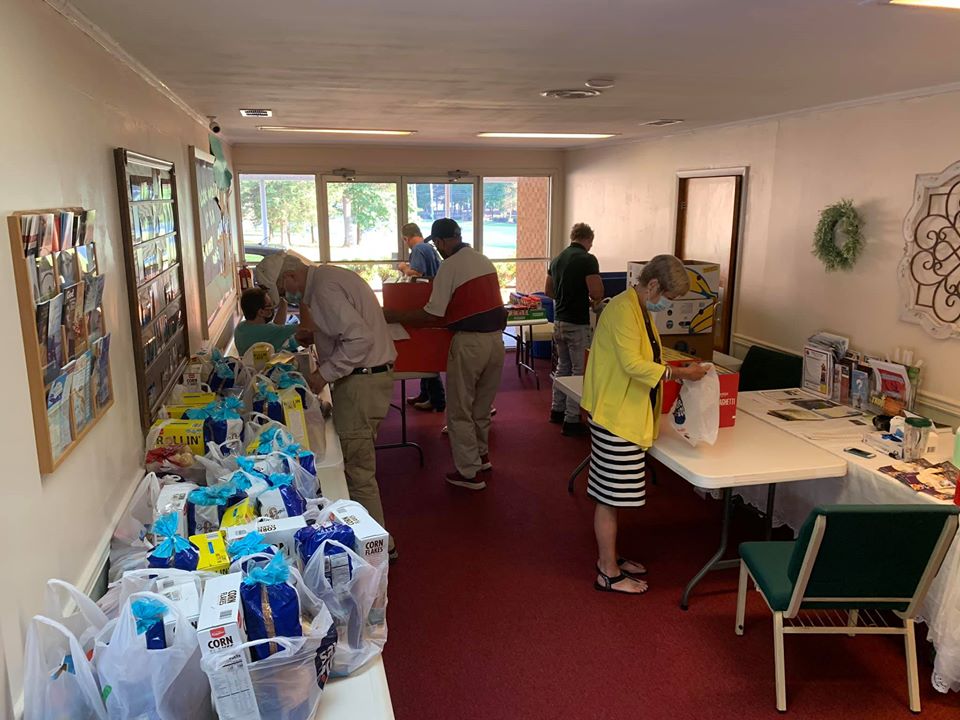
  3. The Farley church in South Huntsville, Alabama, had a food drive for those in the community who have fallen on hard times. Gloves and masks were worn to load the groceries up in people’s cars. Some church pamphlets were given, emails and phone numbers were written down, along with any prayer requests they might have. It has resulted in several local contacts. 
  4. Many of the Lehman Avenue church members in Bowling Green, Kentucky, led by the elders, have been driving around every Sunday afternoon to visit shut-ins. They deliver bread, sing, and pray with them. It has made a great impact on the morale within the body there. 
  5. The Wisconsin Avenue church in Huron, South Dakota, have come up with a creative way to reach out to the community by building what they call a “Blessing Box” in front of the building. In this box the locals have access food and Bible study material. 
  6. The preacher of the LaFollete church, Ben Shafer, in Tennessee, has been producing daily devotional videos to help the members stay connected and in the Word. This is also being done by Bud Woodall, the preacher for the Northeast congregation in Albuquerque, New Mexico, Andy Miller, a minister for the Southern Hills church in Franklin, Tennessee, and in countless other congregations.
  7. The hispanic minister, Chase Turner, at the Jackson Street church in Monroe, Louisiana, has discovered that posting videos/messages in Facebook groups that locals are a part of is a great way to get people interested in spiritual conversations. It has proven to be very effective! 
  8. Colt Mahana, who ministers at the Dahlonega church in Georgia, has started a daily college Bible study over Zoom. This daily study has made the college group there more engaged than they were before the pandemic. 
  9. Dr. Bob Turner had this to say about a church in Mannford Oklahoma: “I visited with several elders from numerous congregations over the last few months…I wanted to share what an eldership in Mannford, Oklahoma, has done over this period of time. While they do their classes over Facebook live, they have done additional things to help the congregation. First, they spend their Wednesday night time for prayer. Instead of teaching a class, they invited people from the community to submit prayer requests and they spend Wednesday evening praying for all the requests they receive. Second, they make special use of each holiday. For example, at Easter, since they could not host an Easter Egg hunt at the park with a potluck, the elders and wives stuffed eggs and the elders went to every home with children in the congregation and hide eggs for all the kids to have their own hunt at home. For Mother’s Day, they made a customized card and personally wrote a note and signed each card for every mother in the congregation. These are a few of the areas they have been creative to do and help members know they are cared for, thought about, and prayed over during this time. They have also emphasized that when they get back together, they want to do it right in order to make a good impression on anyone that might visit. They have constantly communicated with everyone in the congregation each week to make sure they have opportunity to share anything they might be dealing with.”
  10. Chuck Ramseur is working with a congregation in Virginia Beach, Virginia. This church family set up the Marco Polo app and encouraged everyone to share anything and everything going on during the day in their lives. It has helped them stay connected daily. Another area they took up working on is helping with the Crisis Pregnancy Center (alternative for woman thinking about abortion).This ministry has been one of the best outreach programs for the church. They’ve also planned services in the park on Sundays when they could not meet in the building, but could meet with social distancing in an open area.

So, there’s the proof! God is bigger than COVID19.

105950189_3248468518508147_1343333531772853091_o


What Is The Church To Be?

Monday’s Column: Neal At The Cross

pollard

Neal Pollard

Conceived of in God’s mind in the eternity before time (Eph. 3:9-11), purchased by Jesus’ blood (Acts 20:28), spoken of as the body (Eph. 1:22-23) and bride (Rev. 19:7) of Christ, and described as the temple of the Holy Spirit (1 Cor. 3:16), the church is valued and treasured by Him. As members of that church, we might develop a distorted picture of what the church should look, feel, think, and act like in our ever-changing world. What is the church to be?
A Museum? Is the church meant to be a relic of the past, a historical marker where the past is revisited, revered, and enshrined? No doubt, we stand on the shoulder of great workers and warriors of the past, but we are not meant to devote our focus to days gone by. It is but a slight renovation to go from museum to mausoleum.  Our best days should be ahead!

A Marketplace? Some see the church as a direct reflection of the culture. Stands on moral, social, and doctrinal issues are dictated by the views of the moment. “Change” is the key word, and selling the gospel becomes the preeminent goal (John 2:16; 2 Pet. 2:3). A church built foremost on society rests upon sand (Mat. 7:26-27). 

A Monastery? The church–though a haven from the craziness of the world–can become insulated and isolated. It is great to let our closest friendships and relationships to be fellow Christians, but we can become so secluded and shut off that we become a cloister that ceases to be soul-winners. Our worship services and Bible classes can be so full of insider language that the unchurched have no idea what we say much less what we mean. 

A Movement? Sometimes, we speak of the Restoration Movement whose leaders were trying to get people back to the Bible for “rule” and “practice.” But the New Testament church did not begin on the American Frontier during the Great Awakening or even shortly before it. It is not to be a political, national, or even social movement. To think of it on those terms is to degrade and devalue it. 

It is to be a model, safe to follow and imitate by others because she follows Christ (Mat. 5:13-16; 1 Cor. 11:1). It is to be a militant group, whose weapons build and save and defeat the devil (2 Cor. 10:3-5; Eph. 6:10-17). It is to be a mission, on a mission for the Master (Mat. 28:18-20; Eph. 4:11-16). It is to be a medicine dispensary, offering salve and healing from the Great Physician (Luke 5:31-32). It should reflect the Master in thought, in tone, in teaching, and target! May we all think more critically about what we think about the church!

antique-church-pew-1

 The People Project  

Tuesday’s Column: Dale Mail

Daleheadshot

Dale Pollard

This post is for the lady across the street. She works at the gas station. This post is for Charles. That’s the guy we always call when the office printer breaks down or a leaky roof needs repaired. This article is for my family. My family means the world to me and if my life can help ensure an eternal future together (and I mean every one of them) then I have accomplished something truly great. This post is for my wife. My wife will be in heaven with me— she must be! The truth is, this post is for the faithful child of God, the disgruntled member in the pew, the discouraged elder, and frustrated preacher— this post is for people. It’s for the new child of God that is still dripping wet from the waters of baptism, to the battle-hardened Christian with years of faithful service. God drew a line in the sand long ago after humans fell from grace and separated ourselves from Him. On one side of that line you have the lost. Their sheer abundance in our communities and the world has caused many congregations to become numb to their horrific eternal state. Still, on the other side of that line you have the faithful. No, not the uncommitted pew-warmers, but the faithful. Sadly there are those inside the church that are on the wrong side of the Divine line. Often they blend in with the faithful because they look and act like the faithful do. This is nothing new, but elderships still scratch their heads over stunted growth and disappearing members. Preachers lose their voices as they pound evangelism and outreach from the pulpit. The reservoirs are being depleted by years of drought. 

You’ll hear a lot of this kind of talk in some men’s meetings as the guys will sit around the table. After drinking coffee and filling their bellies with biscuits and gravy, it’s common for them to kick back and discuss what’s going on in the church. Obviously there are some big issues! So, who’s to blame? In an attempt to unmask the villain, one middle aged man exclaims, “if the leaders would _______”. A couple of his friends, who have clearly visited this topic a few times, nod their heads in approval. Another gentleman, with a white mustache, grunts as he repositions himself in his tin folding chair. Talk like this is uncomfortable, and it’s exhausting for many of them. The head hog at the trough clears his throat to let the others know he’s about to offer his respected opinion. He squints his eyes, leans back, then makes this statement. “It’s really society, you know. People just don’t go to church like they did when I was growing up!” Following this declaration, most of them will give their affirming “Mmm”’s and “exactly rights.” It’s at this point the tragic generational blame game begins. The wheels spin for a while, then everyone gets up and goes back to their homes to enjoy the rest of their Saturday. Tomorrow morning they dress up in their suits and ties and drive to worship. At worship they sit in the same spot, as the service carries on in it’s usual order. 

In a world full of people intent on destroying and demonizing one another, the church needs to be the church— now more than ever. Our communities, friends, family, and nation need us to be the church. That starts with you and me. Paul said, “Encourage and build one another up…” in 1 Thessalonians 5:11. We can’t do this enough, and we can’t overstate it’s importance. Who have you encouraged and built up this week? How will you do it today? The church is God’s way of improving people, and  the church is God’s perfect project— for people. 

4029650707_94207d006e_c

Defeating The Adversity of Loneliness In The Communication Age

Friday’s Column: Supplemental Strength

brent 2020

Brent Pollard

Human connections are necessary. Though stated in the context of needing a mate comparable unto himself, God nevertheless said of man it wasn’t good for him to be alone (Genesis 2.18). Thus, God provided Adam with Eve. Elsewhere, the wise man of God reminds us of the advantages of having companions:

Two are better than one because they have a good return for their labor. For if either of them falls, the one will lift up his companion. But woe to the one who falls when there is not another to lift him up. Furthermore, if two lie down together they keep warm, but how can one be warm alone? And if one can overpower him who is alone, two can resist him. A cord of three strands is not quickly torn apart. (Ecclesiastes 4.9-12 NASB)

Hence, even if being around many people wearies our soul, we admit it’s a blessing to have those precious few upon whom we can depend to be there for us when we emerge from our solitude.
Jesus had His close companions. We don’t doubt He loved all those men He chose to be His apostles, but He singled out Peter, James, and John to be His “inner circle.” They were His confidants. It was to these three alone He shared His true glory (Matthew 17.1ff). Peter, James, and John also went further into the Garden of Gethsemane with Jesus as He prayed (Mark 14.32-35). In addition, John refers to himself throughout the Gospel he was inspired to pen as “the disciple whom the Lord loved” (John 21.20). This same passage also shows us that John leaned against the Lord during the last Passover (Can you imagine?).

God never intended us to face life alone. As mentioned previously, God provided the foundation for the family in the very beginning. The family has often been called the “bedrock of society.” Aristotle wrote in Politics that humans organized themselves first in families that birthed villages which, in turn, gave rise to the polis (i.e. city-state).  As we live in a world into which sin was welcomed, we understand people bound to us, even by ties of blood, may betray or abandon us. We see, then, the wisdom of God in giving to us the church.
It’s a sad paradox in a world of virtual, perpetual interconnectedness people feel lonelier than ever. The HRSA reveals that loneliness and social isolation is as bad for one’s health as smoking 15 cigarettes a day! 1 Just type in the words “loneliness epidemic” in a search engine and see what pops up. This isn’t a problem just for our seasoned citizens either. 2 There’s no excuse for the child of God to be lonely, however. Christ instituted the church to be God’s Household on earth (Ephesians 2.19). If we assemble as we ought, we will be stirred to love and the performance of good works (Hebrews 10.24-25). Furthermore, we encourage and build up one another in the church (1 Thessalonians 5.11; Ephesians 4.15-16).
Yes, we’re currently facing a global epidemic not physical in nature. It’s a disease of the heart perpetuated by loneliness, which focuses one’s attention inward on troubles and wants. God didn’t create you to be alone. Dismiss the foolish notion that the church is for the weak and embrace the strength it supplies the lonely heart. You’ll never find an app that can do for you what the church can.

References

1 “The ‘Loneliness Epidemic.’” Health Resources & Services Administration, HRSA.gov, 10 Jan. 2019, www.hrsa.gov/enews/past-issues/2019/january-17/loneliness-epidemic.


2 Howe, Neil. “Millennials And The Loneliness Epidemic.” Forbes, Forbes Media LLC, 3 May 2019, 13:21, www.forbes.com/sites/neilhowe/2019/05/03/millennials-and-the-loneliness-epidemic/#77096a8f7676.


66176598_10156443546915922_8223081566729928704_o

A Swinging Beaver Church 

Tuesday’s Column: Dale Mail

83538761_557569434843824_1603081807199207424_n
Dale, with his wife Janelle

Dale Pollard

For a small child, having an open space park just outside your neighborhood was a dream come true. My younger brother and I would spend entire summers exploring, building forts, and fishing in that beautiful place. One day, as we were playing in the creek, we found a beaver laying in the middle of the water— it wasn’t moving. Without getting too graphic, we made several plans for this new prize find. We could make a hat out of the skin, or perhaps stuff it and put it in our room. The only problem was, mom would never allow us to drag this fifty pound beaver into the house. Besides this, the house was almost a mile away. In order to preserve our trophy we decided that the safest option would be to string the beaver up by the tail and hoist it up over the branch of a near by tree. That branch sagged under the weight of the beast while water dripped from it’s wet coat and onto the bike trail directly below. Without thinking about the terrible location we had chosen, Carl and I gave a high-five and began the long walk back to the house. We were beaming with pride and excitement because this was our little secret. A few weeks later, we returned to the spot and were outraged to find that someone had cut our swinging beaver down! Looking back, we still laugh as we think about the many bikers and joggers that ran down that path only to be surprised and confused by this animal carcass hanging over the path.

The church is a wonderful place to be, especially when you find yourself a member of a healthy congregation. When the church is functioning in accordance with scripture, the impact She can make is endless. One aspect of keeping God’s family healthy on the inside is keeping sin on the outside. Sadly, there are some congregations that have blatantly accepted the sinful lifestyles of individuals. It’s as if there were dead beavers hanging in their midst, but instead of cutting it down they choose to turn a blind eye. The longer it stays, the stinkier it becomes. This is a gruesome, but appropriate description of sin. Paul spends two letters rebuking the church at Corinth because they had allowed several horrific sins to divide and erode the Body there. They didn’t sever the hanging carcass, and as a result the stench of sin provoked Paul to write some of the harshest words to be penned in the New Testament.

Paul will give them five commands in chapter sixteen that we would do well to apply to our own lives as well. He says, “Be on the alert, stand firm in the faith, act like men, be strong. Let all you do be done in love” (I Corinthians 16:13-14). With these two short verses you can backpedal through the letter and see how these five imperatives would have saved them from not only a harsh rebuke, but many heartaches that were also consequences of their sins. They were stricken with disease and death in both the physical and spiritual sense. The apostle commands them, through inspiration, to be aware of their surroundings. Be alert. He reminds them to firmly stand on the truth of the gospel. He bluntly tells them to act like men, because they were acting like children. Then he tells them to be strong, but in a different sense. This strength is that inner strength that it takes to conquer temptation and carry on righteously in the midst of evil. These four commands are then to be carried out with love. A sacrificial love for one another means having the willingness to confront sin problems that are damaging the Bride of Christ. Not out of anger, but out love for His church and for the soul of the guilty member. This is the recipe for a healthy congregation through every age. It worked in Corinth, and it works today.

If there’s a beaver hanging in your congregation, the best thing to do is to cut it down! 

american_beaver

Dark Churches

Neal Pollard

I was intrigued by an article written by Janet Thompson of crosswalk.com. The eye-catching title asked, “Why Is The Church Going Dark?” She meant this literally. Her complaint was about the design of many auditoriums having dim lighting and being windowless, almost like a movie theatre or concert venue. She wondered if this was to reach a younger generation or to set a certain mood. 

While I prefer a well-lit room, there is a more significant concern. Jesus taught, “You are the light of the world. A city set on a hill cannot be hidden; nor does anyone light a lamp and put it under a basket, but on the lampstand, and it gives light to all who are in the house. Let your light shine before men in such a way that they may see your good works, and glorify your Father who is in heaven” (Mat. 5:14-16). His words have nothing to do with church building designs, LED lighting, or window sizes. Preaching to His disciples, Jesus wants us to know that those reflecting His light cannot be hidden, but shine in such a way that others will see our good works and glorify God. 

  • Dark churches are situated in neighborhoods that know nothing about them.
  • Dark churches are so indistinct that the world can see no difference between themselves and those churches. 
  • Dark churches have no vision or plan to fulfill God’s purpose for them.
  • Dark churches exist to assemble, but not much more.
  • Dark churches focus inwardly, but neither outwardly nor upwardly. 
  • Dark churches operate from fear and prefer the safe route, taking no risks and attempting only what they can produce.
  • Dark churches are disconnected from the Light of the world.

It is good for us to constantly challenge ourselves, when setting budgets, making plans, gauging our true priorities, or evaluating the leadership or the pulpit. Are we doing what will help us be “Light-Bearers” or what will cause us to be “Dark Churches”? What an important question! Our actions determine the answer. 

dark churches

A Strong Sense Of Family

Neal Pollard

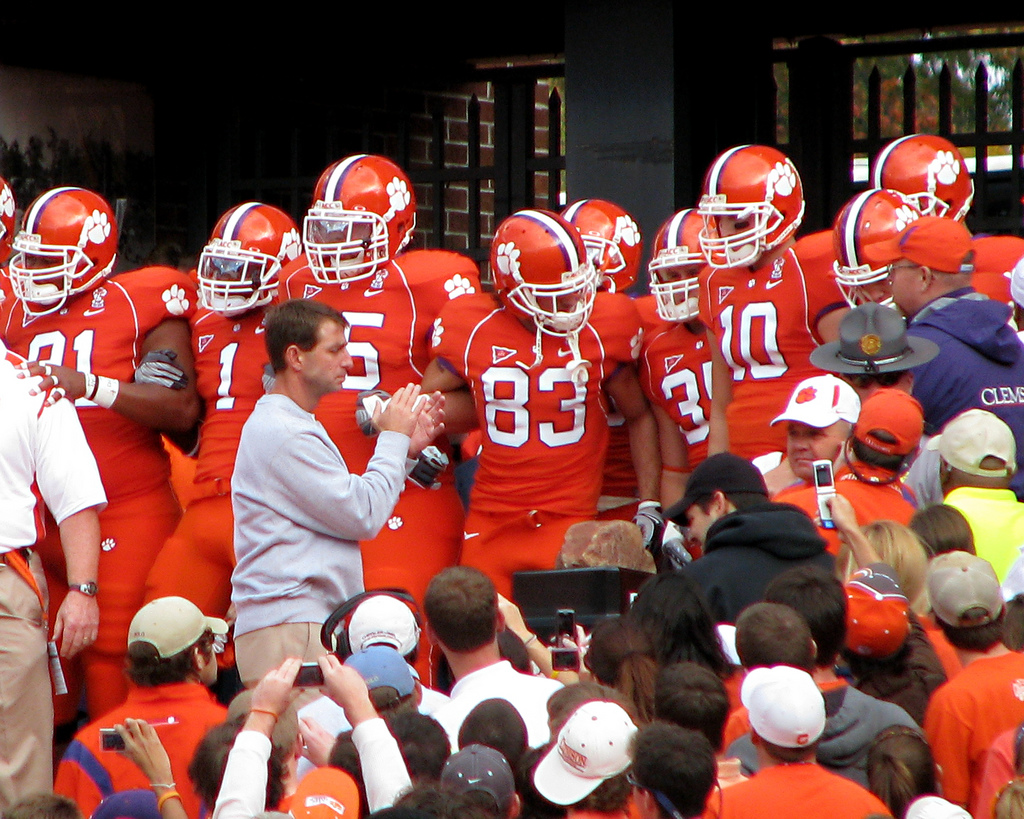
Trevor Matich was being interviewed on ESPN radio, asked about why he thought that Clemson had built such a strong football program in the last few years. His quick response was, “They have built a strong sense of family.” He talked about how Head Coach Dabo Sweeney and his staff wanted players to see their coaches not just as coaches but also as husbands and fathers. Consequently, the coaches’ families spend a lot of time around the athletic facilities or hanging out with the players. They have intentionally built a strong family environment that doesn’t compartmentalize but rather coalesces. Recruits talk about sensing it when they make a visit, but, more importantly, players on the roster speak just as strongly about it. 

How many teams make such an emphasis isn’t clear, but you don’t seem to hear that said often enough. While I find such human interest stories heartwarming, it makes me wonder, “Do people describe our congregation with similar terminology?” Are we creating, developing, and nurturing a strong sense of family?

The early church definitely majored in that priority. From the time the first church of our Savior was established, we find this emphasis (Acts 2:42-47). Often, New Testament writers spoke of the church with family terminology (Eph. 2:19; 3:15; 1 Tim. 3:15; 5:1-2; Ti. 2:1-8; etc.). The church exists as a sub-community within the broader community around them. People from that broader community are looking for greater intimacy and meaningful relationships. One place they often turn is to various churches. Whether through our efforts to evangelize or through their seeking that brings them within our walls, we have an opportunity to expose them to a “strong sense of family.” 

But, by being faithful to New Testament teaching, we offer this in the context of truth rather than error. We cannot settle for simply offering truth, as eternally vital as that is. Along with it, we must love, embrace, and work to incorporate them into our family. God has His church designed to follow His written will in the context of a tight-knit, spiritual family. A true sense of family will draw them into a relationship with us. It will better open their hearts and minds to being drawn into a relationship with Christ. The net effect will be greater than a national championship. It will be many, many souls won to eternal life. We cannot afford to miss the opportunity to be spiritual family!

Dabo_Swinney_2008_01
Dabo in his early days at Clemson

VISITORS—HANDLE WITH CARE!

Neal Pollard

I’m not sure where the phrase, “handle with care,” originated. It’s usually reserved for advice regarding that which is fragile or even volatile. It really is applicable to those who visit our assemblies because of their value and importance. They came through the doors of our church building intentionally and with a purpose. Initially, we cannot know why or how sincere their purpose. That process of discovery could not be more important. Consider some reasons why we should handle every visitor with care:

  • Each has an eternal soul (cf. Mat. 25:46). 
  • God could not love that visitor any more than He does (John 3:16; 1 Tim. 2:6).
  • God loves that visitor as much as He loves you and me (Acts 10:34-35). 
  • That visitor is likely seeking spiritual guidance (cf. Mat. 7:7).
  • Each visitor is subjected to a first impression, being left by you and me.
  • That visitor is going to make judgments about the church, the Bible and Christ based on what he or she sees (or fails to see) from you and me.
  • The smallest gesture of kindness toward such a one could lead to the salvation of a soul.
  • We cannot know what anyone else is doing to make their first visit a good one.
  • Each one is being exposed to the Bible and to New Testament worship, and follow up can lead to further interest.
  • That soul is connected to many others, who might subsequently be reached (2 Tim. 2:2). 
  • You and I are official ambassadors for Christ (2 Cor. 5:20).
  • The Golden Rule should prompt our warmth, helpfulness, and sensitivity (Luke 6:31).
  • We are each part of a team, trying to connect each of them with what only Christ can offer them (1 Cor. 12:18; John 14:6).
  • There is no guarantee that there will be a next time (Prov. 27:1).
  • Statistics tell us that most visitors find the churches they visit to be unfriendly toward “outsiders” (see, for example: Thom Rainer).
  • Loving others is commanded, and visitors are included in “others” (Rom. 13:9; Gal. 5:14; Jas. 2:8; etc.).
  • Visitors constitute perhaps the easiest inroad to developing interest in a Bible study, as such have reached out to us by attending.
  • Our excuses (“I’m shy,” “That’s not my job,” “I’m not good at it,” “I’m busy”) ring hollow when carefully examined. 
  • We love the church and believe in its relevance and importance.
  • Each contact is a valuable way you and I can contribute service for our Servant-Savior (cf. John 13:12ff; Mat. 20:28).

The list is far from exhaustive. I am convinced that none of us neglects a visitor out of contempt or even indifference. Yet, it is good for you and I to encourage each other, to “stimulate one another to love and good deeds” especially as it pertains to assembly-related matters (Heb. 10:24-25). Wouldn’t it be exciting to be the friendliest church around, especially if our message and practice is faithful to God’s Word? What a powerful combination! Let’s help each other earn such a reputation, for reasons such as the above. 

fellowship201

“I Praise, I Participate, I Proclaim”

Neal Pollard

Yesterday afternoon, the Bear Valley eldership stood before us one by one to talk about their priorities both for themselves and for us. They distilled them into five simple words that describe five profound concepts: (1) Worship, (2) Communication, (3) Fellowship, (4) Accountability, and (5) Leadership. They told us that as the religious world is growing more homogenous in their worship style (a la community church model; rock concert-ish), distinctive New Testament worship has a chance to stand out even more. Yet, we need to always be improving our efforts in leadership and participation. They emphasized that communicating news, ideas, and needs is a process that will always need work and priority. No church ever arrives in this regard. They spoke of the importance of building a closer church family, knowing each other through age-related opportunities and entire congregation opportunities. This happens when we’re all together, in the classroom, and away from the building. They stressed the importance of holding one another accountable, for faithfulness, commitment, and support. Otherwise, there is no way to move from ideas to action. They told us that all of us exert leadership in some area. There is formalized leadership positions, as outlined in the New Testament (elders, deacons, preachers, teachers). But, inasmuch as we all have a sphere of influence (cf. Mat. 5:14-16), God expects us to lead. Throughout their entire presentation, they were specific about strategies aimed at helping us be successful. I appreciated the great challenge this was for us to work and grow. There were so many quotable sayings from their collective lesson, but the one that struck me most was made near the end. As we have adopted three planks of emphasis as a church, based on Acts 2:42-47 (praise—worship, participation—fellowship, and proclamation—evangelism), we were challenged to think: “I praise,” “I participate,” and “I proclaim.” It can be so easy for us to approve the church’s need to grow and improve in these areas or to expect the elders to do these things. But, no matter who we are, we can and must ask, “What can I do?” The key to being a great church is the willingness of every member to make personal application. It’s not, “What are they doing?,” “what are you doing?,” or even “what are we doing?” No! It must always primarily be, “What am I doing?” I’m thankful that our elders spoke with confidence and clarity about the fact that there is plenty of opportunity to be involved in making Bear Valley a strong, relevant church, a city set on a hill shining a light in spiritual darkness. Thank God for strong leadership, which encourages me to say, “Here am I, send me!” (cf. Isa. 6:8).

29513166_10155440294575922_8869656347900125980_n

A Warm And Welcoming Church

Neal Pollard

Once, I received a call from a woman who watched our TV program. She shared her religious background with me, including the fact that she was raised in a church of Christ. While she was baptized many years before, she committed fornication, became pregnant, and had a child out of wedlock. She said that she publicly repented, coming forward to ask forgiveness. While some forgave, one prominent member wouldn’t let her forget her past sins. Ultimately, she left that congregation and soon after left the Lord’s church altogether.

She joined a large denomination in the area in 1985. She gave some interesting reasons for joining them. Reflect upon them for a moment.

(1) She received personal visits from church members.

(2) She was warmly welcomed by many who greeted her when she attended the services.

(3) She was quickly put to use in the church’s works.

Very simple formula, wouldn’t you agree? Some fundamental needs were recognized by that religious group: Approach. Accept. Assimilate. While their doctrine was wrong in vital areas, their practical wisdom was on target! While she traded truth for error regarding their teaching, she sought but didn’t find among God’s people the very things many seek today. None of the things she sought were wrong.

In the church, the main emphasis should be serving rather than being served. But look at what she sought. She sought personal contact from concerned people. The denomination responded. She sought acceptance, not of sinful choices, but of herself—the sinner. She received that. She sought ways to be involved, ways to serve. She was given opportunities despite some physical handicaps that restricted her.

There is much to do, much more than is being done, though we are doing much. Some bare essentials that all of us can be doing is visiting our visitors, making visitors feel like honored guests, and finding ways to include those who become members in the work of the church.

We have opportunities every week that walk through our doors. Are we doing our part to make ourselves a warm and welcoming congregation? People will form lasting opinions about the Lord’s church by what we do to make them feel welcome. Each individual Christian is accountable for visiting (Mat. 25:34ff), accepting (Js. 2:1-13), and including (1 Th. 5:11).  Let us glow with the warmth of Christ! Who knows who we will turn onto the narrow path or who we will help stay on it?

1


REDUCING RIOTOUS RACE RHETORIC

Neal Pollard

At various times when I was growing up, I called Hawkinsville, Rockmart, Cairo, Sylvester, Franklin, and Hinesville, Georgia, home. While my dad was once fired from a congregation for converting a black woman, race relations in those rural towns—at least among us children—were excellent. While High School was very cliquish (along a great many lines more significant than racial ones), many of us had close, great relationships across racial lines. Certainly, there were instances of prejudice—from every race toward every race—but it was not characteristic. Perhaps it was because we were not constantly obsessed with it. We just got along.

Are you getting sick of hearing politicians, the media, and even social media (including from some members of the church) fanning the flames of dissension on this topic? I am. From my imperfect observations, I see the following:

Less Productive:

  • Placing blame on any one side
  • Having our minds closed to discussion
  • Stereotyping and pigeon-holing
  • Guilt-tripping and manipulating
  • Living in the past rather than dealing with the present
  • Categorizing everyone on the basis of their skin color
  • Blaming or praising based on geographic or political boundaries
  • Cherry-picking historical incidents to validate one’s point of view or assertion
  • Thinking our personal experience is indicative of everyone else’s

More Productive:

  • Eradicating concepts like “predominantly white” or “predominantly black” congregations
  • Showing Christ-like love and acceptance to people who look and sound different from us
  • Showing hospitality and associating with people of every race and walk of life (publicly and privately)
  • Getting to the point where we don’t associate anyone with their race or ethnicity
  • Teaching our children to choose friends and spouses based on the content of their character rather than color of skin
  • Extending the “Golden Rule” to race relations like we should every other issue
  • Selecting preachers, deacons, elders, and other church leaders with no regard to anything so superficial as skin color

The Bible says that God made every race (ethnos—nation, culture) from one man (Acts 17:26). The Bible says the whole earth was populated from Noah’s three sons (Gen. 9:19). The Bible speaks of the “human race” (Jas. 3:7), and doesn’t emphasize a red, yellow, black, or white race. The Bible says that heaven will be populated by people of “every nation and all tribes and peoples and tongues” (Rev. 7:9). Let us make sure, especially as Christians, that we are not fanning the flames of division, animosity, controversy, and hatred by treating this important subject in a way that takes people’s eyes off of Jesus or the church’s true mission! Surely this will reach more people of every nation, tribe, people, and tongue.

14695543_10154021892615922_311136469182200443_n

Traditions Of Men Versus The Word Of God

Neal Pollard

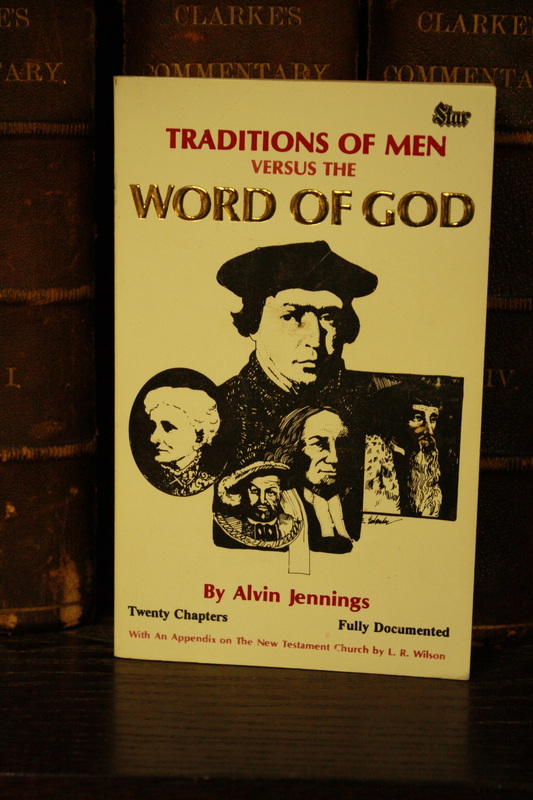
For as long as I have been preaching, I have had at least one copy of the Alvin Jennings’ book bearing the title above. The book was originally printed in 1972, but it has been reprinted several times. Jennings clarifies the way he uses the word “traditions” in his title. Rather than the sense of being a writing handed down from God (2 Th. 2:15; 3:6; 1 Co. 11:2), he used the word to refer to “religious laws and traditions originating from the minds of men and handed down orally and/or in printing from generation to generation” (iv.). He rightly points out that such traditions were condemned by Christ (Mat. 15:2-3,6; Mark 7:3,13; Col. 2:8; 1 Pet. 1:18; Gal. 1:14). Some of the problems with these traditions were that they got in the way of obedience to what God commanded, caused negligence regarding and the setting aside of God’s commands, enslaved one to something or someone other than Christ, and created a zeal that could lead to unhealthy consequences. The traditions Jennings examines substituted  false, human ideas for clearly revealed, divine truth. Anything that binds where God has not bound or gives permission where God doesn’t permit must be rejected. It’s a tradeoff with the gravest consequences (cf. Rev. 22:18-19).

However, I hope that as we strive to follow the pattern for New Testament Christianity we will be careful about elevating any tradition to be on a par with Scripture. There are some traditions we may choose to observe (or not):

  • Offering an invitation after every sermon
  • Having worship leaders, including the preacher, wear suits and/or ties
  • Women wearing dresses to church services
  • Songs or songbooks reflecting a particular time period (whether old or new)
  • Mandating a specific Bible version be utilized in the public assemblies
  • Choosing to have an evening assembly
  • Replicating the format of the morning assembly (in lieu of using the time for class, for example)
  • A particular order of worship (including whether the Lord’s Supper precedes or follows the sermon)
  • Offering the Lord’s Supper on Sunday evening
  • Any practice or tradition that arises from expedience or the realm of judgment, but that is not specifically mandated in Scripture

The church finds itself at a crucial crossroads. Undoubtedly, there is nothing new under the sun, but we do find ourselves at a unique place in cultural history. Since we live in an argumentative, rancorous atmosphere fueled by everything from cable news to social media, we should be careful to maintain a spirit of love and kindness whenever we sort through matters like these. We should never cherish non-binding traditions more than we do people. Those of us who are older and presumably more mature should consider carefully where and when we might compromise regarding matters not tied down in Scripture. More than that, we should foster rather than fear an environment that allows for such discussions to occur—without animosity or distrust. This will mean spending much more time developing our relationships with one another on the local church level (across generations). The better we know each other and the more we grow our love for each other, the better equipped we should be to sort through such things. Coupled with serious Bible study, this will hopefully sharpen our ability to distinguish between traditions and truth. May we have the grace to listen to each other without prejudice or minds already made up. Instead or ridiculing or caricaturizing the church in demeaning ways, let all of us “put on a heart of compassion, kindness, humility, gentleness and patience; bearing with one another, and forgiving each other, whoever has a complaint against anyone…” (Col. 3:12-13a). 

s702601590478870340_p115_i1_w533