WHY WE KEEP FAITHFULLY SERVING AND LEADING

Neal Pollard

It took the Expert House Movers of Sharpstown, Maryland, 17 years and 23 days to complete the move of the Cape Hatteras Lighthouse 2900 feet away from the eroding Atlantic Ocean beach on the North Carolina Outer Banks location where it had been standing. They started in 1982 and finished in 1999. Little things may get done quickly, but big things take time.  Someone once said, “Most people tend to overestimate what they can do in a week and underestimate what they can do in a lifetime.” Paul was in a position to look back over his life and see, if his humility allowed it, a lifetime just since his conversion to Christ that was marked by much fruitful labor.  Luke chronicles some of that work from Acts 11-28. Paul reflects back on some of it in 2 Corinthians 11. But in what is firmly believed to be his last inspired writing, 2 Timothy, he has a brightly lit torch in his condemned hand. He is ready to hand it off to the young preacher, Timothy.

I imagine most of you are blessed to lay claim to someone, either still living or now dead, who was a Paul to you. Having a mentor or mentors to help us grow and develop, spiritually, is priceless. When Paul tells Timothy what he does in 2 Timothy 4:1-8, a passage we typically use to encourage preachers, he is urging a precise attitude and precise teaching. The reasons why he wanted that for Timothy are reasons that should motivate us to live faithfully and to encourage our own Timothys to persevere until the current pressures. Here are three reasons why Paul encouraged Timothy to be faithful:

  • BECAUSE PROBLEMS ARE COMING (3-4). It was a fourfold problem (you’ll notice it by reading these two verses). Paul told Timothy to handle it with great patience and teaching. You cannot always anticipate what the problem is going to be, but as long as you come in contact with people there will be problems. You cannot hope to be an influence on them if you do not cultivate the attitude of patience. When problems arise, be patient and stick to the doctrine of Christ.
  • BECAUSE YOU ARE DIFFERENT (5). No matter how you are treated (or mistreated), you cannot stoop to the level of unethical, immoral, or unscrupulous people. These false teachers Paul references were willing to discard truth, and many wanted that kind of teacher. We will encounter people who don’t play by the Lord’s rules, but we must be different. We must be sober in all things, endure hardships, do the work of an evangelist, and fulfill our ministry. We are to have a better character, and we have a better message. We aim higher because we are the people of God.
  • BECAUSE JUDGMENT IS COMING (6-8). Paul looks ahead to the very end of all things. Because he was faithful, he anticipated the crown of righteousness. Why do you want to serve the Lord? Is it for prominence, popularity, or influence? To successfully endure, do what you do in view of the Judgment. God won’t forget your faithfulness (see Heb. 6:10)!

Your faith will be tested. You may be resisted, rejected, ignored, disbelieved, and debated. The question is, “How are you going to handle it?” Will it make you better or better. It will try your patience, but will you be found guilty or not guilty? If you will be patient and faithful to God’s Word, you will be an example to more than you’ll ever know. Keep your eyes open for your own Timothys to train and members to mentor. The more we have who listen to and follow the advice of this passage, the greater the influence of Christ will be in this dark, sinful world.

3_30_home_pass_the_torch_before_it_goes_out__148950268

Better Living 

Neal Pollard

We find ourselves often bobbing in a sea of religious confusion. Many groups claim to be the best religion and point to their ingredients as reasons for such claims. Several years ago, our boys played basketball in a league hosted by a huge community church in the Denver area.  Their church’s campus includes a K-12 school, two restaurants, a gymnasium half the size of our church building, a coffee shop, and a hundred social program. Other groups would make their claim as “better” or “best” based on their numeric size, the number of programs they have, or how socially active they are.

Our religious attitude ought to be one of humility, which does not boast of our achievements or compare ourselves with others (cf. 2 Cor. 10:12).  Genesis 4 is not just about two kinds of worship, but also about two ways of living life. Cain is mentioned by three Bible writers after Moses introduces him in Genesis. The writer of Hebrews calls Abel’s offering more excellent than his (Heb. 11:4). John calls Cain’s works evil and his allegiance “of the wicked one” (1 Jo. 3:12). Jude implies that the way of Cain is the wrong way to go (11). Let’s make a few brief observations from Genesis four and see if we can find the elements which make for a better way of living today.

  • BETTER LIVING IS NOT DETERMINED BY AGE (1-2).  By birth order, Cain came first. He was the first person to be born in the natural order of childbirth. He was the very first newborn to be held in his mama’s arms. She didn’t realize that her cooing, sweet infant was a future murdering, and she was proud of him. She called him “a man child with the help of the Lord.” This depicts such a bright, optimistic future, and by contrast Scripture says, “Again, she gave birth to his brother, Abel” (2). Abel began in his brother’s shadow, first known to us as “his (Cain’s) brother.”
  • BETTER LIVING IS NOT DETERMINED BY OCCUPATION (2). When we look at these brothers, what they did for a living was not the determiner of the quality of their lives. While what they did had an indirect bearing on the events of this account, the fact of their occupation was spiritually neutral—Cain farmed and Abel tended sheep. One can reap blessings from tilling the ground (Heb. 6:7), but they may have to fight thorns, thistles, and weeds doing it (Gen. 3:18-19). Tending sheep may be done by slaves (Luke 17:17), kings (1 Sam. 17:34), or apostles (John 21:17). God’s pleasure or displeasure was not connected to either’s occupation.
  • BETTER LIVING IS DETERMINED BY WORSHIP (3-4). Moses says both brought an offering to the Lord. He also says God responded to bother offerings, accepting one and rejecting the other. That very notion is foreign to many people in our society today, even those in religion. Many make worship nothing more than taste, preference, and personal inclination. But, Moses shows us (1) Not all worship is equal: God had regard for Abel’s, but not Cain’s. The words “had respect to” signify in Hebrew to look at something with a very serious glance. God tells us how He wants worship done, in attitude and action; (2) The worshipper and the worship rise and fall together: God had regard for Abel AND his offering and did not for Cain AND his offering. That’s a sober reminder for me that my personal relationship with God is hindered or helped based on the way I worship God. Can I offer God vain and ignorant worship, and have God reject it but accept me? We are not earning God’s favor by getting worship right. At the same time, are we tempting God and hoping we stay in His favor while disobeying His commands for worship? People have tried to make this an “either-or” proposition, that Cain and Abel’s offering was either about getting the worship right or was about the nature of the person offering the worship. In other words, is it sincerity or obedience, our both sincerity and obedience? To thoughtfully ask the question is to answer it!
  • BETTER LIVING IS DETERMINED BY ATTITUDE (5-7). Cain reacts to having himself and his worship rejected by God by burning with anger and his face taking on an ugly look. He sounds like a small child in the throes of a tantrum or a teenager huffing and sulking in anger. God warns Cain of the recipe for disaster he was making through his attitude. He told Cain that his tempestuous attitude was an invitation for sin to pounce on him, but He told him he could master it! You can have a positive attitude without prosperity, education, or earthly success, but you cannot have a positive attitude without mastering self.
  • BETTER LIVING IS DETERMINED BY ACTION (8-16). Improper worship and attitude preceded and precipitated improper action. The first time “sin” is used (Gen. 4:7), God was looking ahead with perfect foresight to what Cain would do to his brother. He does the unthinkable, killing his own brother (cf. 1 Jo. 3:11-15). His deeds and ways were a recipe for disaster: He is rebuked by God, punished by God, and separated from God. Sin promises a good time and fulfillment, but it’s not true.

It’s been said that the lineage of Cain gave us murder, cities, polygamy, musicians, metal workers and poetry, but not one who walked with God! Thanks to his legacy, a descendant repeats his violent ways (Gen. 4:23). Abel seems to leave no physical lineage, but he still speaks after death. His was a life of faith, generosity, good works, righteousness, and obedience. We get to choose the kind of life we want to pursue. If we choose well, we will be satisfied, others will be blessed, and God will be pleased.

the_story_of_cain_and_abel_bible_card

Christian, Who Are You?

Neal Pollard

  • You Are An Insurance Agent—Life (Philippians 2:16), Health (cf. 1 Peter 2:24), and Fire (2 Peter 3:9-10).
  • You Are A Tour Guide (1 Peter 2:9; Acts 8:31).
  • You Are A Soldier (Ephesians 6:10ff; 2 Timothy 2:1-3).
  • You Are A Slave (Romans 6:17).
  • You Are A Firefighter (Jude 23).
  • You Are An Ambassador (2 Corinthians 5:20).
  • You Are A Priest (Revelation 1:6).
  • You Are A Conductor (2 Corinthians 2:14; 9:11).
  • You Are A Day Laborer (John 9:4; cf. Matthew 20:1ff).
  • You Are A Farmer (2 Timothy 2:6; Luke 8:5).
  • You Are A Fisherman (Matthew 4:19).
  • You Are A Gem Distributor (Colossians 1:27).
  • You Are A Taste Tester (Colossians 4:6; Hebrews 5:14).
  • You Are Royalty (Revelation 1:5-6).
  • You Are A Student (2 Timothy 2:15).
  • You Are A Body-Builder (Ephesians 4:16).
  • You Are A Restorer (James 5:19-20; Galatians 6:1).
  • You Are A Physician’s Assistant (Hebrews 12:12-13; cf. Mark 2:17).
  • You Are A Standard-Bearer (Philippians 3:16; 2 Timothy 1:13).
  • You Are A Builder (1 Corinthians 3:10).
  • You Are A Judge (John 7:24; 1 Corinthians 6:2).
  • You Are A Nutritionist (1 Timothy 4:6).
  • You Are A Maintenance Worker (Phlippians 2:2; Titus 3:8,14, KJV).
  • You Are A Cleaner (2 Timothy 2:21; James 4:8).
  • You Are A Runner (1 Corinthians 9:24; Galatians 2:2; 5:7; etc.).
  • You Are A Boxer (1 Corinthians 9:26).

I’d be amazed if I did not leave out several of our job titles and descriptions. Suffice it to say that there is plenty of work for all of us to do. The next time we find ourselves figuratively twiddling our spiritual thumbs, wondering how we can be involved, let’s draw from the exhaustive inventory of tasks the Lord has left us!  Remember, “Whatever you do, do your work heartily, as for the Lord rather than for men” (Col. 3:23).

laborer

Unmistaken Identity

Neal Pollard

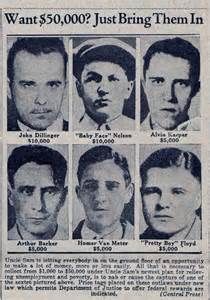
They both had a mole next to one eye and a scar on the left wrist. They lived 54 miles apart, one in Brookville and the other in Mooresville, Indiana. It was said they were practically identical twins. For notorious bank robber John Dillinger, that was no problem. But, for upstanding Ralph Alsman, it was a nightmare. Alsman was arrested 17 times and shot 11 times. When arrested, though he was always released, he had to undergo stressful interrogations in which he had to prove he wasn’t Dillinger. Only when the real Dillinger was gunned down in 1934 did the unbelievable saga end for the hapless Alsman (information taken from The Pittsburgh Press, 6/18/34, p. 11). Can you imagine having to look over your shoulder everywhere you went just because you looked like someone else—a really bad someone else?

The thought occurs to me as I read that harrowing account, based on my attitude, speech, and actions, “Who or what would people mistake me for?” As I live out my life before the world, waiting in lines or in traffic, when under pressure at work, as people mistreat or frustrate me, judging from my relationships, my ethics, and my morality, would people say that I strongly resemble Jesus? He is supposed to be living in me (Gal. 2:20). It has been the case that bystanders have recognized people as having been with Jesus (Acts 4:13). Of course, Scripture does not at all emphasize the physical appearance of Jesus (Isaiah 53:2), but Paul speaks of bearing the marks of Jesus (Gal. 6:17). While his “marks” were literal stripes from a tormentor’s whip, there are unmistakeable traits of Jesus that we, too, can and must bear.

I have so much need and room for improvement in my spiritual life.  Every day, I want to look more like Jesus. I want people to see Him when they look at me. If they do, He will be pleased and they just might be saved. Let’s work on our appearance! It may mean eternal life for somebody in our life.

588ee71ddf6914b974d4e69f24c6b8c8

Why Travel The Road Less Taken?

Neal Pollard

Gunnar Garfors is the youngest “hobby traveler” to have visited every country in the world. He’s written a book about it, entitled 198: How I Ran Out Of Countries. I have not read the book, but his website offers a very interesting article on The 25 Least Visited Countries in the Whole Wide World. Guess which one is least visited. He tells us, statistically, it is Nauru, a Pacific island country with no capital and no armed forces. It is 8.1 square miles in size, having only 10,000 inhabitants. They have the world’s highest level of type 2 diabetes and the highest obesity rate in the world (97% of men and 93% of women are overweight or obese). It has no seaport and no daily news publications. Perhaps some or all of these factors lead this country to be most frequently avoided by travelers, but somebody has to own that distinction (read more here: Independent UK, BBC, and Gunnar Garfors).  Perhaps none of these facts inspire you to work to help Nauru lose its notorious tourism distinction.

Robert Frost wrote his famous poem about the two roads which diverged in a yellow wood. He took the one less traveled by, and that made all the difference.  It appears he may have actually stood before such a fork, but he used the experience to speak metaphorically. We can all appreciate this figurative choice. We must choose a path in life, and the one we choose does make all the difference!

Jesus uses such a metaphor to describe the way of life we choose on this earth. He says, “Enter through the narrow gate; for the gate is wide and the way is broad that leads to destruction, and there are many who enter through it. For the gate is small and the way is narrow that leads to life, and there are few who find it” (Mat. 7:13-14). In this familiar passage, He gives us multiple reasons why we should take His way.

  • Its aim (“leads to life”).
  • Its alternative (“leads to destruction”).
  • Its autonomy (it is a road each one chooses to “enter through”; it is not arbitrarily chosen for us).
  • Its assumption (one must choose between these two, and no other, ways).
  • Its accessibility (it can be “entered” and “found”).
  • Its attainability (Jesus says “few” find it and not “none” find it).
  • Its associability (one is not absolutely alone, for there are “few” rather than “none”).

Jesus compares our brief time on this earth with a road trip. We are not fated to stay on the broad way, but we are not unconditionally guaranteed a spot on the narrow road. As Frost surveyed the two paths and made his choice, so must we. Jesus says we make this decision daily (cf. Lk. 9:23). And our choices determine which path we are traveling. Be deliberate and prepared for this arduous journey that terminates all too quickly. The right choice is the one less taken and most avoided, but take it anyway!

2784284196_2d950420d6_b
That’s the whole country of Nauru

Characteristics of Hope

Neal Pollard

An epistle centering around the superiority of Christi as our all-sufficient One would certainly be expected to contain a message of hope. While some had apparently given up Jesus as their hope (6:4-6), the writer of Hebrews had a higher estimation of those to whom he writes. for one thing, they had a legacy of good works and brotherly love and benevolence (6:10). His desire was that they would continue to stay strong. In expressing this, the writer suggests hope as an integral tool to keep them hanging onto their faith in Christ. In these final ten verses of Hebrews six, he mentions three qualities of hope that would help them–and will help us–hang onto our hope in Christ no matter what.

This hope is durable (11). Look at the language he uses. This hope was tied to an assurance that would endure “until the end.” It was a hope that would lead them to “inherit the promises” (12), just as Abraham’s hope in God led him to his inheritance (13-17). God desires to show us, as heirs of the promise through Christ, His unchanging purpose (17), so He guarantees that promise through an oath build upon the foundation of Himself. Hope which is guaranteed by the very nature and character of God is hope that will outlast anything! Nations rise and fall. Presidents serve only one or two terms. Supreme court justices, at most, can serve only a lifetime. Our hope transcends time.

This hope is tangible (18). These Christians needed to count on a refuge in difficult times (see 12:4), and we desire the same thing in our lives! Knowing that God is so trustworthy, we are encouraged to “take hold of hope” that is found only in Christ. To say that we can take hold of hope and that it is set before us means that it has substance. In a world where nothing seems certain, evidence from scripture, nature, order and design of the universe, and so much more allows us, by faith, to grab this hope. He had already told them to hold onto that hope in Christ earlier in the letter (3:6) and to encourage this response he points them to scripture (cf. 3:7-11; Psa. 95:7-11). Scripture helps us see the solid hope we have in Jesus.

This hope is stable (19). It is an anchor. Anchors keep a vessel from drifting, an appropriate illustration since the Christians were tempted to drift from Christ (2:1). By maintaining their hope, they could anticipate three blessings: (1) sureness, (2) steadfastness, and (3) the service of the sacrificial Savior (19-20). All three of these descriptions of this Almighty anchor underline the security found in keeping ourselves anchored in Christ. Those who keep Jesus as their hope are able to weather the most horrific storms of life!

As Christians, we may find ourselves ready to abandon Jesus as our hope. So many things attempt to pull us from Him. Let us draw encouragement from this inspired writer, as surely these first Christians did, and rejoice in these changeless characteristics of hope!

anchor_england_-_scan01

Tools In God’s Toolbox

Neal Pollard

Romans 6:13 tells us our body is an instrument, and we choose to use it for righteousness or unrighteousness. The Greek word translated “instrument” there means “tool or weapon.” What kind of tool or weapon are you? Are you an instrument God holds in His hand to do His will?

  • Are you a battering ram? The ancients would use a log or some other hard object to break down a wall or door. Have we filled our hearts with the Word to the degree that we can, speaking the truth in love (Eph. 4:15), break down barriers keeping the honest-hearted from God?
  • Are you a crowbar? Crowbars pry objects apart. There are things we should separate from our thinking and lifestyle. Are we trying to pull away from worldliness (Js. 4:4)?
  • Are you a chisel? This is a tool that does meticulous, detailed work. Its blade carves or cuts hard materials. Do we have the tenacity and trust needed to use God’s Word and benefit from His providence to remake our lives into the image of Christ (cf. 2 Co. 3:18)?
  • Are you a level? We live in not only a dishonest world but also a corrupt world. So many call good evil and evil good (Isa. 5:20). Can people find in us a reliable standard of right and wrong, as we reflect the principles of God’s Word? Levels are used to determine whether something is true and as it ought to be.
  • Are you a plane? The plane smooths rough surfaces by repetitiously moving back and forth across the surface. All four Gospels (Mat. 3:3; Mk. 1:3; Lk. 3:4; Jn. 1:23) speak of John the immerser’s work as making ready the path of the Lord, making His paths straight. We are not forerunners of Jesus; we follow in His steps (1 Pe. 2:21). As we do follow Him, we are going to forge a path safe for others to follow (1 Co. 11:1).
  • Are you a magnet? A magnet is an object that draws and holds another object disposed toward such attraction. Magnets can be used as tools themselves, but they are often made a part of other tools, such as hammers and screwdrivers. By living like Jesus, you will draw people to Him.

Paul also referred to “tools” or “weapons” when talking to the Corinthians. He mentions “armor of righteousness” and “weapons of our warfare” (same word). In both cases, the tools or weapons are spiritual and figurative, yet with them we can help shape and build up those around us. Be a tool in God’s toolbox!

toolbox_226362564


The Demeanor Of A Disciple


Neal Pollard

Jesus had taught them about money (Luke 16), causing weak, new Christians to stumble (Luke 17), the coming of the church and the end of the world (Luke 17), and prayer (Luke 18). Now, He continues to teach but shifts His focus to attitude and outlook. In doing so, He leaves a pattern for the kind of perspective we should have if we are truly a follower of Jesus.

  • There is a pride to swallow (Luke 18:9-14). Jesus tells a parable about a Pharisee and a tax collector. Both were in the temple. Both were praying. Both were addressing God. But, the prayer was different, the attitude was different, and the result was different. Jesus’ point in the parable is clear:  Instead of justifying ourselves and looking down on others, we need to keep our eyes open to the fact of our sinfulness. This will keep us from sinful pride and will keep us humble
  • There is a purity to seek (Luke 18:15-17). Jesus presents children as our example. We should receive the kingdom like them or we’ll be rejected. Children are innocent, receptive, trusting, and want to please—that’s got to be us, too!
  • There is a possession to seize (Luke 18:18-22). The rich young ruler seems exemplary. He came to Jesus (18), wanted Jesus to teach him (18), was respectful of Jesus (18), and was a moral person (20-21). But he knew he had a problem. Jesus knew he had a problem. His ultimate reaction was rejection. Do we ever let “stuff” keep us from spiritual health, from taking hold of the only thing that ultimately matters?
  • There is a principle to see (Luke 18:23-27). The Bible gives us a catalog of individuals who maintained deep spirituality while having deep pockets (cf. Abraham, Barzillai, Joseph of Arimathea, Barnabas, etc.). But Jesus makes a strong point that it’s exceedingly difficult for the rich (i.e., Americans) to enter heaven. Can the rich be saved? Yes! How? By having a proper attitude toward riches.
  • There is a prize to share (Luke 18:28-30). Jesus promises you cannot give up more than you will get by following Jesus. He promises reaping now and eternal life in the age to come. He’s saying it pays in the most important ways to follow Jesus.
  • There is a prophesy to satisfy (Luke 18:31-34). Jesus goes from telling His disciples what they stood to gain to talking about what He was going to lose for their sakes and ours. It is a thorough (31), costly (32-33), hopeful (33b), and hidden (34) fulfillment. Fulfilled prophesy is a vital way of proving Jesus as God’s Son. After the resurrection, they get it (Luke 24:44-47). Do we?
  • There is a pauper to serve (Luke 18:35-43). We end the chapter reading about Bartimaeus. He was in physical, financial, and spiritual need. But Jesus takes time to interact with him and gives us an example. Discipleship means ministering to the needy.

They had a strange contest in Deerfield Beach, Florida. The prize was a python worth $850. How did they determine the winner? They had a roach and worm-eating contest. Edward Archibald was among 20 to 30 contestants. He won, but soon after the contest ended, he fell ill and started to regurgitate. Eventually, he fell to the ground and was rushed by ambulance to a nearby hospital where he was pronounced dead. The cause of death was choking from arthropod body parts stuck in his airway. Archibald entered the contest to win the python and sell it for a profit. It was foolish and costly.  What are we trying so hard to get on this earth and what are we doing to get it? Jesus urges a proper outlook, one that is essential for His disciples. May we embrace that and act accordingly.

16418889391_2ce83876cf

I Don’t Want To Know!

Neal Pollard

Too often, it’s a great disappointment to learn about the personal lives of politicians, athletes, musicians, actors and actresses, and other professional entertainers. Their public persona and abilities may attract, inspire, and move us, but the aforementioned details are all too sordid. What might look wholesome on closer examination has a very seedy side.  Perhaps this says as much about any of us who place them on a pedestal, but that doesn’t lessen the chagrin.

Hypocrisy is something that can occur among “normal” people like Christians, too. Sadly, we can appear to be one thing around those of “like, precious faith” but have a different side that we show away from them. This is a spiritual malady that can afflict anyone, preachers, elders, deacons, and their families included. It can have such a devastating effect. To think that our poor example could cause a new, a weak, or any other Christian to stumble and fall should fill us with dread.  The precious influence we build by our talents and positions must never be squandered by defects of character or even bowing to pressures in specific circumstances.

Peter preached the first and second recorded gospel sermons. He was an apostle and one of Jesus’ closest friends on earth. Yet, Paul recalls an occasion where Peter succumbed to his flesh and sinned in a way that hurt his influence. In Galatians 2:11-14, Paul says,

But when Cephas came to Antioch, I opposed him to his face,
because he stood condemned. For prior to the coming of certain
men from James, he used to eat with the Gentiles; but when they
came, he began to withdraw and hold himself aloof, fearing the
party of the circumcision.  The rest of the Jews joined him in hypocrisy,
with the result that even Barnabas was carried away by their hypocrisy.
But when I saw that they were not straightforward about the truth of the
gospel, I said to Cephas in the presence of all, “If you, being a Jew, live
like the Gentiles and not like the Jews, how is it that you compel
the Gentiles to live like Jews?

Peter was driven by fear and favoritism. His action was devastating, dragging even “the son of encouragement” to follow his discouraging behavior. Thankfully, Paul loved Peter (and the Lord) enough to challenge the hypocrisy.

Friends, none of us will ever be perfect. We’re continually susceptible to sinful words and deeds. But let us guard against secret, double, or insincere lives knowing that such can totally destroy the faith of those who look to us to show them what Christlikeness looks like. In other words, let us be what we tell others that we are and that they should be. Consistency and integrity are some of the Lord’s most potent tools in our lives to bring others to Him.  Take care of His tools!

SONY DSC

Ignoring The Symptoms

Neal Pollard

“What is that smell in the kitchen sink?” “Ah, honey, I’ll look at it, uh, soon.” “When?” “Uh…soon.” “It’s been like this for six month now, honey…honey, are you listening to me? Agh! Look, the drain is bubbling…”

“Mr. Smith, when did you first notice the mole discoloring and becoming asymmetrical?” “Well, um, I think it was last fall.” “Why did you wait a year to get this checked out? I’m pretty sure it’s cancer. To be straight with you, Mr. Smith, I don’t know how this will turn out for you.”

“Brother Jones, have you noticed that sister Blue is acting withdrawn?” “Yea, she lost her job last month and her children are grown and gone.” “Brother Jones, I’ve noticed that she’s recently stopped coming on Sunday nights.” “Yea, Brother Jackson, we need to go visit her this week.” “I know. We’ve been saying that…every week.” “Well, we’ll get there.”

May I suggest that none of these three scenarios is likely to turn out pleasantly? Yet, damage and expense to our material things, or even the loss of physical life to a dreaded disease, are not as devastating or frightening as the loss of a soul. The tragedy is that there are normally symptoms that accompany apostasy (i.e., turning away from the Lord). It is not enough to see the symptoms. We must respond in a timely manner.

One symptom is a decrease in faithful attendance. When individuals who would not miss a service choose to do something else, an alarm has been sounded. Something is replacing their dedication and commitment to Christ. When it is odd or noteworthy that someone is missing services, we need to respond with a card, call, or visit. Somehow, let them know they are missed. Do not lay this solely at the doorstep of preachers and elders. These folks need to be inundated with our concern. Run the risk of offending them. Why should they get offended at genuine brotherly love?

Another symptom is a decrease in reliability in doing church work. The tasks they once did and were counted on to do they no longer do with consistency. Maybe they felt unappreciated or overly burdened. Maybe they needed relief or at least a break. Or, maybe spiritual struggles and worldly concerns have overwhelmed them. Whatever explains the cause, respond to the effect. Tell them how important and special they are. Praise their work. Help them. Encourage them.

Yet another symptom is a change in behavior and withdrawal. This is perhaps the most common precursor and symptom in a spiritual struggle. Distancing themselves from the rest of the church family, a loss of enthusiasm for the church, worship, and/or its programs, and a change in personality within the congregation are all telling signs something isn’t right. We are taught that individuals in a marriage are constantly changing. Those same individuals fill our pews and participate in the church’s work. Let us never take each other for granted or ignore this symptom.

Ultimately, it is not the church’s responsibility to stand for an individual in the judgment (2 Cor. 5:10). Yet, we have a mutual responsibility to each other (1 Pet. 3:8). To borrow from the medical analogy above, when one member of the body hurts, we should all respond to help him or her (1 Cor. 12:26). Please do not be blind to the symptoms of those around you. Ask them how you can help. Do not let them spiritually die because of our neglect.

maxresdefault

FORGOTTEN FRUIT

Neal Pollard

Paul especially urges a particular quality that seems rarer these days. However, this is not a trait disappearing only with those in the world, but one that seems harder for us who claim to be disciples of Christ. He uses a word in Galatians 5:23, Ephesians 4:2, Colossians 3:12, and 1 Timothy 6:11, among others—James does, too (1:21; 3:13). The word, πραΰτης, means “gentleness of attitude and behavior, in contrast with harshness in one’s dealings with others” (Louw-Nida, Greek-English Lexicon, 1996, n. pag.). They suggest the word includes “always speaking softly to or not raising one’s voice” (ibid.). Another Lexicon, in defining the word, speaks to what may prevent one demonstrating gentleness, namely “…being overly impressed by a sense of one’s self-importance” (Arndt, Danker, et al, 2000, n. pag.). Yet, surely there are other impediments to our bearing the fruit of gentleness.

We struggle to be gentle, don’t we?

  • With our children’s weaknesses and mistakes.
  • When responding to our spouse, whether in impatience or aggravation.
  • With rude fellow-shoppers, incompetent cashiers, or pokey or inattentive drivers.
  • Being at odds with a brother or sister in Christ in a clash of personalities or purposes.
  • Having thoughtless or rude neighbors.
  • Engaging in a disagreement with a faceless, nominal acquaintance on social media.
  • Dealing with customer service, especially if we get an ESL representative.

This is just a sampling of situations which tempt us to abandon a gentle spirit. Aristotle called this quality “the middle standing between two extremes, getting angry without reason…and not getting angry at all” (Zhodiates, Dictionary, 2000, n. pag.). The New Testament does not tell the Christian that we cannot defend ourselves, protect our rights, or get what we pay for, for example. But, in addressing concerns, needs, and problems, how we do this makes all the difference.

For many of us, gentleness needs to be intentional. It doesn’t come naturally.  We need to pray about it, prepare ourselves for it, and practice it. Our passion needs to be harnessed. Our speech needs to be tempered. Just making the need for gentleness a conscious priority in our lives will greatly improve our performance, with family, friends, brethren, and strangers. It is a powerful tool to win hearts and shape lives, beginning with our own.

fruit-basket-396622_960_720

Driving Heavy Trucks Over Old Roman Bridges

Neal Pollard

Periodically, the Bear Valley Bible Institute shows the student body Francis Schaeffer’s classic video series, “How Should We Then Live?” There is a book of the same title that covers the same essential material. A part that particularly stands out in my mind is this analogy:

“A culture or an individual with a weak base can stand only when the pressure on it is not too great. As an illustration, let us think of a Roman bridge. The Romans built little humpbacked bridges over many of the streams of Europe. People and wagons went over these structures safely for centuries, for two millennia. But if people today drove heavily loaded trucks over these bridges, they would break. It is this way with the lives and value systems of individuals and cultures when they have nothing stronger to build on than their own limitedness, their own finiteness. They can stand when pressures are not too great, but when pressures mount, if then they do not have a sufficient base, they crash—just as a Roman bridge would cave in under the weight of a modern six-wheeled truck. Culture and the freedoms of people are fragile. Without a sufficient base, when such pressures come only time is needed and often not a great deal of time-before there is a collapse” (transcript via thedailyhatch.org, Everette Hatcher III).

His point is clear. When a culture’s base is atheism (there is no God), evolution (we are the product of mindless, aimless chance), materialism and humanism (things are god and man is the supreme authority), and hedonism (pleasure is the highest good), it can survive, at least for a time, in the absence of trial and pressure.  However, when a culture is subjected to tests and challenges, it only has its foundation to stand upon.

It is in times of pressure that passages we may see as simplistic and straightforward take on profound new meaning.  Ending His great sermon teaching about this very principle, Jesus said, “Therefore whoever hears these sayings of Mine, and does them, I will liken him to a wise man who built his house on the rock: and the rain descended, the floods came, and the winds blew and beat on that house; and it did not fall, for it was founded on the rock. But everyone who hears these sayings of Mine, and does not do them, will be like a foolish man who built his house on the sand: and the rain descended, the floods came, and the winds blew and beat on that house; and it fell. And great was its fall” (Matt. 7:24-27). Those word pictures make an ideal children’s song for Bible Class and VBS, but they also contain an imperative message for every society.  We cannot reject God and His Word, replace it with inferior substitutes, and remain in peace, prosperity, and protection. Jesus’ warning has eternal implications regarding everlasting destiny, but how often has Proverbs 14:34 played out in a society that removes its bedrock foundation to build its life on shifting sand?

Our task, as God’s people, is to double down our commitment to take the gospel to our neighbors (Matt. 28:18-20) and spread the message that hope and peace comes through submitting to the authority of Christ and His word and living by this as the pattern of life. What a beautiful transformation the Christian life provides us, no matter what frightening things happen around us. There is no test or pressure weighty enough to make that foundation crumble!

fas-iii-pic-1

19 WAYS TO TANGIBLY IMPROVE YOUR RELATIONSHIP WITH GOD TODAY

Neal Pollard

  • Try to spend 5 minutes of prayer in which you do nothing but praise Him.
  • Do something for Him that requires you to step out of your comfort zone—initiate a conversation with a stranger, give a tract to a co-worker you’ve been talking with, etc.
  • Have a devotional with your family.
  • Call a shut-in or stop by and visit a widow(er).
  • Write a missionary, expressing appreciation and giving encouragement.
  • Anonymously give a sacrificial amount of money for a family in need or someone dependent upon support (school of preaching student or teacher, missionary, etc.).
  • Contact an elder, asking him something you could do to help them in their work.
  • Make a list of at least 20 blessings God has given specifically to you.
  • Speak to someone at church services you have never spoken to before.
  • Invite a family from church you don’t know well over for dinner.
  • Put a packet with bottled water and granola bar, along with a tract, into a Ziplock bag to give to the person at the intersection asking for assistance.
  • Pick out a Bible book you are unfamiliar with and start breaking it down, looking for key words, purpose statement, and other clues to better understanding it. Take copious notes.
  • Pray for someone you are having problems with, an enemy, critic, or one who has offended you.
  • Alone or with your spouse and/or children, sing several songs of praise and admonition.
  • Carry a meal to a young mother who has had a difficult day.
  • Give a big smile and warm greeting to a fellow shopper or employee at a store or restaurant.
  • Ask the secretary for a list of last Sunday’s visitors and send them each a warm, brief note.
  • Think of an area for spiritual improvement in your life and ask God to help you focus on it, being transparent and sincere as you petition Him.
  • Ask the person closest to you (parent, spouse, sibling, etc.) something they need for you to pray for on their behalf.

Can you think of additional ways?

BEING SANCTIFIED WITHOUT BEING SHELTERED

Neal Pollard

Sanctification is one of those words used in more than one sense in the New Testament. It usually means the state of having been made holy (Rom. 6:19,22; 2 Th. 2:13; 1 Pt. 1:2), but it also is used in the sense of moral purity (see especially 1 Th. 4:2ff).  There is no doubt that God calls us to live pure, godly lives in Christ.  Because of this, we must watch the company we keep (cf. 1 Co. 15:33; 2 Co. 6:16ff).

How do we balance this need of keeping ourselves “unspotted from the world” (Js. 1:27) with the ability to reach out to those who are not followers of Christ?  David Kinnaman and Gabe Lyons, in their book UnChristian: What A New Generation Really Thinks About Christianity…And Why It Matters, discuss several factors that lead two generations—they call them “Mosaics” (born between 1984 and 2002) and “Busters” (born between 1965 and 1983)—to be more radically disconnected from and antagonistic toward “Christianity” as they perceive it.  One of the factors is their view that Christians’ lives are too sheltered for them to relate to it or find it desirable as a lifestyle choice.  We’re often thought of as living in our own world, providing too simplistic answers for our complex world, being ignorant and outdated, speaking our own, exclusive language, and our outrage and offense at being putdown and mocked by the world. I don’t know how this hits you, but perhaps it gives us an opportunity to examine ourselves.

The authors make a great point worthy of our consideration: “Christianity begins to shift its sheltered reputation when Christ followers are engaged, informed, and on the leading edge, offering a sophisticated response to the issues people face” (132).  The answer is not to replace congregational singing with rock concerts, recruit women, homosexual, or hard-edged shock-sermonizers who are foul-mouthed and irreverent to replace faithful gospel preachers, or the like. The answer is much more New Testament, more aligned with what the early church was.  The answer is “engagement.”

That means we engage people in the world.  We create opportunities or enter environments where “outsiders” (non-Christians) are to be found and we become salt and light, opening doors for the gospel through relationship-building and our genuine concern for people’s (often messy) lives.

It means we engage ourselves in “active faith.” We let faith have arms and legs. We move from being “believers” to being “doers” (Js. 1:22). We urge, encourage, and enable people to actively serve and live out faith in their daily lives.

It means we engage people like those Jesus and His disciples targeted.  That means the woman caught in adultery, Zaccheus, the lame man, Blind Bartemaeus, the 10 lepers, the Samaritan woman, and others like them.  We cannot forget what Paul said, that God has chosen the foolish, weak, base, nothing, and despised types to be His people (1 Cor. 1:27-28). The people God chose to be heirs are not the pretty, popular, influential, and wealthy (Js. 2:5).  The authors of UnChristian specify groups like “loners,” “self-injurers,” and “fatherless” people (135-137). We can add to that list, but people like these do not often top the “prospect lists” we might make.

Divine Truth must prevail and guide us in matters of salvation, our teaching, our personal morality, our worship, etc.  If it will guide us in reaching the world with the Word, we had better stop sequestering ourselves and our faith from a world in desperate need of the only message with eternal implications. Reflect on how Paul’s words apply to this, when he says, “And do not be conformed to this world, but be transformed by the renewing of your mind, so that you may prove what the will of God is, that which is good and acceptable and perfect” (Rom. 12:2). We’re not just meant to prove that to each other. God wants us proving it to those outside of Christ.

Bear Valley youth feeding the homeless in downtown Denver

What Does 1 Timothy 4:8 Mean?

Neal Pollard

“The Battle of the Bulge.” It was not just a crucial conflict in a world war. It has come to describe America’s battle with its expanding waistline. Obesity is a national problem. Weight gain often seems inevitable.  “Dunlap’s Disease” is many man’s (and woman’s) problem.  Solomon is rebuking many of us when writes, “Put a knife to your throat if you are a man given to appetite (Prov. 23:2)! A Christian’s body belongs to the Lord and must be properly maintained (cf. 1 Cor. 4:2; 6:19). One’s body can be harmed by overeating and being overweight as it can with alcohol and tobacco.

One tried and true way to prevent disease and bodily harm stemming from being overweight is exercise. Doctors say that no diet is complete without it! Proper exercise aids in the prevention and management of heart problems, diabetes, cancer, and several other serious conditions.

Many times, perhaps defending their own inactivity, well-meaning people cite 1 Timothy 4:8: ” For bodily exercise profits a little, but godliness is profitable for all things, having promise of the life that now is and of that which is to come.” Their basic position seems to be that, since exercise “profiteth little” (KJV), they are justified to live out a couch potato’s life. Let us consider Paul’s statement.

THE VERSE IS SPEAKING COMPARATIVELY. The “little” in the first part of the verse is contrasted with the “all things” in the second part of the verse. Compared to godliness (i.e., God-likeness), which impacts one’s earthly and eternal existence, bodily exercise pales in importance. The same can be said of retirement efforts (Matt. 6:19-21), recreation (1 Tim. 5:6), household chores (Luke 10:41-42) and even work (John 6:27).  Yet, all of these are legitimate, even necessary, pursuits. So it is with bodily exercise.

THE VERSE REVEALS THAT EXERCISE DOES PROFIT. What does it do a “little”? It profits. It benefits. It gives advantage. The healthful benefits of exercise are well-documented. Some would contradict Paul and say it does no good at all.

THE VERSE WARNS AGAINST EXTREMISM.  The fitness craze can become fanaticism. Some seem to have made bodily exercise their god! They are obsessed. The Greco-Roman culture, to which both Paul and Timothy were regularly exposed, were extremists on this point. The Greek Games were the original Olympics. The gymnasiums and other venues showed it to be a constant obsession. Paul says such extreme devotion is ludicrous. So it is today!

THE VERSE WARNS AGAINST POOR PRIORITIZING. Anything put before service to the Lord is in the wrong place. It is possible for exercise (and gluttony, TV, video games, etc.) to come between one and putting God first. To this extent, any activity or pursuit is sinful (Matt. 6:33). If you spend several hours per week exercise and only a few minutes studying the Bible, visiting the sick and needy, praying to God, evangelizing, and doing Christian service, your priorities are wrong! If some gave as much devotion to godliness as they did bodily exercise, our churches would be much stronger!

But let us avoid abusing this–and any–passage! Paul is not denouncing exercise. To the contrary, exercise will improve us physically and mentally. It can improve our attitude and performance as a Christian. It must, however, be kept in its proper place. If we are going to be fanatical about anything, let it be our service to God as Christians (Rom. 12:1-2). That is the key to making everything, well, “work out”!

Whoa, Whoa, Whoa Your Boat!

Neal Pollard

Unfortunately for folks in southwestern Colorado and several surrounding states, it’s more than a matter of staying out of the Los Animas River.  Due to a mishap by some federally-supervised workers in which there was a blowout in the Gold King Mine in the mountains above Silverton, millions of gallons of toxins that include mercury and arsenic are in downstream water supplies. It has contaminated domestic wells and endangered fish and livestock. It has negatively impacted tourist industries that rely on customers who raft, canoe, and fish in the river.  It has impacted irrigation and city water intake facilities.  All from a single incident in a mine hundreds of miles away from some of the affected areas.

Who knows how this will ultimately be resolved, but a lot of people and money will be thrown at the matter until it is finally resolved.  A problem that started in a relatively small, remote area has finally become a national story.  As the river continues to flow, the troubles continue to compound.

Have you considered the power of your influence?  A single conversation, an impulsive act in a moment’s time, or a thought unchecked and fed all can lead to outcomes that spill into a lot of lives and potentially do damage that could not be anticipated.  David learned this (2 Sam. 11:1-2).  The young lads from Bethel learned this (2 Ki. 2:23-24).  Judas learned this (Mat. 26:15).  So many others in Scripture, from thoughts to words to deeds, learned of the destructive power of negative spiritual influence.  It can cause spiritual babes to stumble (Mat. 18:6), the offender to stumble (Mat. 18:8), the world to blaspheme (2 Sam. 12:14), and so much more.  No amount of remorse, regret, and retreat can undo the toxic damage it does.

If you find yourself in the “clean up” stage, realize that with time and effort you can work to counteract the impact of poor influence.  There may be lingering consequences, but you can mitigate that through genuine repentance.  It doesn’t have to end catastrophically, as it did for Judas.  It can end triumphantly, as it did for Peter.

Keep in mind, too, that positive influence works the same way (Mat. 13:33).  A kind, righteous thought, word, or deed can trigger a powerful effect that leads the lost to be saved and those on the broad way to turn onto the narrow way.  You may never know it in this life or see the end result of it in your lifetime.  May the great power of our influence drive us to our knees and fill our thoughts with how we may use our lives to bless and help the lives of others, knowing that, for good or bad, our lives touch way more lives than we think.

Even When You’re Alone, You’re Not

Neal Pollard

If I have a favorite chapter of the Bible, it would have to be 2 Timothy 4.  Yes, I love the first eight verses, but that alone is not what cinches this chapter as dearest to me.  It’s Paul’s personal remarks starting in verse nine.  There’s his longing to see his spiritual son, Timothy.  Twice he implores Timothy to come see him (9, 21).  He’s in prison, persecuted for preaching the Prince of Peace. He longs for Christian companionship.  Then, he shares his dejection over the abandonment of certain fellow-workers (10). He wants to see cohorts with whom he has done spiritual battle (11). He has personal needs and wants (13). He warns Timothy of a spiritual troublemaker (14-15).  Then, he shares personal feelings of isolation and loneliness, a time when he needed a Christian brother by his side but had none (16).  Bold, risk-taking Paul, who would stand up to any opposition, the epitome of true manliness, was now in undoubtedly dire, dank conditions, the smell of squalor in the air.  Whatever he saw, heard, and felt as he wrote, Paul scratched out these words: “At my first defense no one supported me, but all deserted me; may it not be counted against them.  But the Lord stood with me and strengthened me, so that through me the proclamation might be fully accomplished, and that all the Gentiles might hear; and I was rescued out of the lion’s mouth. The Lord will rescue me from every evil deed, and will bring me safely to His heavenly kingdom; to Him be the glory forever and ever. Amen” (16-18).  These words aren’t the end of the letter, but they are the end of the matter!

This faithful Christian was deserted by men, but he felt God’s presence and power:

  • The Lord stood with him.
  • The Lord strengthened him.
  • The Lord spoke through him.
  • The Lord saved him.
  • The Lord was steering him.

You and I cannot fathom the price Paul paid for proclaiming Jesus. But even if we were ever to face privation, punishment and pain for our faith, what was true for this apostle will be true of us.  He promised to be with us always (Mat. 28:20) and never forsake us (Heb. 13:5). Even if you ever feel physically alone, you will have the spiritual assistance Paul speaks of in 2 Timothy 4.  Through it all, you can say with Paul, “To Him be the glory forever and ever. Amen!”

paulmosiac

The Lightning March

Neal Pollard

It was unusual for foot soldiers to play a major role in the Middle Ages. Harold II of England’s 7000 infantrymen were an exception. He marched them from London to York, about 216 miles, in a week. The rate of the march was 30 miles per day for an entire week!  “A sustained rate of thirty miles per day for seven days was in most circumstances unheard of. A sustained twenty miles per day would have been considered extraordinary.”  The army moved faster than news of its approach. This helped turn the Battle of Stamford Bride in 1066, known as “Harold’s Lightning March”  (Hackett, Jeremiah.  World Eras, Vol. 4: Medieval Europe, 814-1350, p. 128). What seems lost to history is how Harold motivated such rapid movement.  To build such resolve and determination in so many people, in unified purpose, must speak to Harold’s leadership ability.

All of us are marching with rapid pace toward the end of life and eternity.  Hasn’t it been going by so quickly?  It truly is a “lightning march.”  At the end of the march, will we have won the battle?  The church of every generation, and not just individuals, are making this march.  What impression are we leaving on the world around us, what battles of significance will have been won?  Think of the first-century church.  They “turned the world upside down” (Acts 17:6).  They “preached to every creature under heaven” (Col. 1:23).  They permeated their immediate communities, surrounding communities, and the remotest communities (cf. Acts 1:8-11).  Think of those brave, sacrificial Christians during the 19th Century who rallied together around the principle of restoring New Testament Christianity.  With a great reverence for the pattern of Scripture, they sought to imitate the faith and practice of that first-century church.  In their wake was growth and influence.

In both cases, profound as their influence was, they rapidly left the scenes of time.  Their influence remained, but succeeding generations of the Lord’s Army—for whatever reasons—slowed their pace considerably.  We may glorify the church of the 1950s, at one time known as the fastest growing religious group in our country.  But most of them have gone and those who remain have grown slower in their pace. What about the church of the early 21st Century?  How will we be remembered?  Never forget that, in part, this is influenced by what you and I are doing as soldiers under the Lord’s direction.  We could not want for better guidance and a better Commander.  We should have ample motivation.  It is high time we pick up the pace!  Victory awaits (1 Cor. 15:54-58).

“This Perverse Generation”

Neal Pollard

What was life like in the first century?  One historian writes, “It has been rightly said, that the idea of conscience, as we understand it, was unknown to heathenism. Absolute right did not exist. Might was right. The social relations exhibited, if possible, even deeper corruption. The sanctity of marriage had ceased. Female dissipation and the general dissoluteness led at last to an almost entire cessation of marriage. Abortion, and the exposure and murder of newly-born children, were common and tolerated; unnatural vices, which even the greatest philosophers practiced, if not advocated, attained proportions which defy description” (Edersheim, Book 2, Chapter 11, p. 179).  Thus described the culture of the dominant world power of the day, Rome.

Those descriptions, almost without exception, could be applied to the current culture.  So many specific examples could be, and often are, set forth to depict life in our world today that mirror Edersheim’s chronicle of the world into which Christianity was born.  Not surprisingly, New Testament writers are prone to speak of the world in stark terms and with specific admonitions.  What they said then apply to us today, and they contain counsel that will help us to spiritual success in our slimy setting.

You can save yourself from this perverse generation (Acts 2:40). That was the final recorded appeal of the first recorded gospel sermon.  The message is one of hope and faith.  There is escape from the pollutions of the world (cf. 2 Pet. 2:20).  There is forgiveness of the sins like the ones described above as well as any and all others.  The promise of the gospel message is, “Repent, and each of you be baptized in the name of Jesus Christ for the forgiveness of sins” (Acts 2:38).  Those who gladly received that word did just that (Acts 2:41).

You can shine yourself to this perverse generation (Phil. 2:15).  Paul urges the Philippian Christians to prove themselves blameless and harmless in such an environment. He’s calling for distinctive Christian living, a life that would stand out in such deplorable circumstances.  We’re not trying to be oddball misfits, but faithful Christian living is detectable in the crowds we find ourselves in.  That example is the first step to helping someone else save themselves from this perverse generation.

You can share your Savior with this perverse generation (Mark 8:38). Jesus warns those whom He calls “ashamed of Me and My words in this adulterous and sinful generation.”  He tells us that a true disciple’s life is one of obedience, self-denial, sacrifice, and courage (cf. Mark 8:36-38).  If we never share the saving message of Christ with the people we meet and know each day, why don’t we? Could it be that we are ashamed to share His distinctive message to a world that pressures us to conform to and go along with it.  If we do not tell them about Him, how are they going to find out? What hope will they have to discard the perverse life for the pure one?

It is a scary, sinful world out there!  But God rescues us from its guilt through Christ’s sacrifice, then sends us back out there to tell them they can be rescued, too.  Live it and then share it, no matter what, until your end or the end—which ever comes first!

“Let Them Alone”

Neal Pollard

It is a commendable mixture of righteous indignation, conviction, and affection for the Lord and His church to want to answer all the critics, rebut all the troublemakers, defend all the reputations, and fight all the false teaching out there.  Knowing how best to deal with the pot-stirrers or the novel-doctrine-peddlers can cause quite the consternation.  Do we answer every allegation and oppose every little quibble?  Are there times where the best answer is to simply ignore “one who sows discord among brethren” (Prov. 6:19) or those who attempt to “preach any other gospel” (Gal. 1:9)?  That requires great wisdom and judgment as to the specific situations which arise, but it is clear that the Bible has given disciples the counsel to just let some things lie.

A NEGATIVE EXAMPLE: The Pharisees Of Matthew 15.  These religious leaders elevated human traditions (1-2,6,9), made their own rules they bound others to follow or else (3-6), had heart problems (7-9), and spoke defiling words (11).  They intimidated the disciples, who were concerned that Jesus offended the Pharisees (12). Jesus pointed ahead to the judgment that would determine the nature of their work (13), but counseled His followers to “let them alone; they are blind guides of the blind. And if a blind man guides a blind man, both will fall into a pit” (14).  So often, those who strive and divide, as well as those swayed by them, experience the fruit of their work in this life.  Others, unheeding of cautions and pleadings to the contrary, find out in the end (cf. 1 Tim. 5:24-25).  While the Pharisees ultimately nailed Jesus to the cross, His view of their divisive tactics was to simply “let them alone.”

A POSITIVE EXAMPLE: Peter And John In Acts 5.  Gamaliel, a respected teacher of the Law and member of the Sanhedrin Council, weighed in on the work of Peter and John, two faithful gospel preachers. He looked at past movements of those claiming to be someone, Theudas and Judas, and compared them to these followers of Christ. His advice, “stay away from these men and let them alone, for if this plan or action is of men, it will be overthrown; but if it is of God, you will not be able to overthrow them; or else you may even be found fighting against God” (Acts 5:38b-40).  While we have no indication that Gamaliel’s advice is inspired, as Caiaphas did (John 11:49ff), it is hard to find fault with his logic.  In the case of the apostles in Acts five, their plan and action was of God. In the case of the other two “leaders,” it was of men.  Time typically tells.  Inspect the fruit.  Listen to the words.  Watch the attitudes.  Discern the actions demanded and urged. Examine it all in the light of carefully studied Scripture.

Apathy and indifference can lull us to sleep.  The antagonistic or the agents of unscriptural change can both serve to wake us up, get us to reexamine our stand, get into our Bibles, and work to ensure our message and our methods are “by the book.”  But do we have to accept every challenge and dare?  Jesus once drew in the dirt in the face of those who demanded an answer from Him.  There are some times when the best answer is silence.  As for those who make demands of us? Sometimes, we’re best to just “let them alone.”