The Appointment We Cannot Escape

Neal Pollard

William T. Turner was captain of the Lusitania when it was torpedoed by a german U-boat in May, 1915. He was one of the few officers saved (Montreal Gazette, 6/24/33, obituary). The Atlantic writes in an article that Turner was “relieving captain” of the SS Ivernia when it was torpedoed by a German U-boat on New Year’s Day, 1917, and he once again survived (James Gould, 5/7/15). Turner was a man renowned for heroics and not a coward, which makes a captain surviving the sinking of two ships all the more incredible. But in 1933, after three, bed-ridden months, Turner succumbed to intestinal cancer (Gazette).

A few years ago, I wrote about Roy Sullivan, the park ranger who had survived seven lightning strikes (Preacher Pollard Blog). What an incredible tale of survival, but Sullivan insured his own mortality when he committed suicide in 1983 (ibid.). The man was incredible, but not invincible.

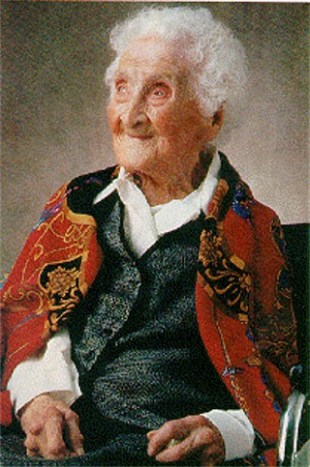
Jeanne Louise Calment is thought to be the world’s longest living person in modern times. She was born in 1875 in France, met Vincent Van Gogh as a young teenager, but eventually died in a nursing home in 1997, 122 years old! She took up fencing at 85, rode a bicycle until she was 100, ate two pounds of chocolate each week and quit smoking at 119 (http://anson.ucdavis.edu/~wang/calment.html). Back in the antediluvian period, in a purer world closer to creation, several lived over 900 years. But in each case, scripture punctuates their earthly existence by saying, “…and he died” (Gen. 5:5).

I have been involved in so many funerals as a preacher, from the first I assisted with Gary Hampton in Gainesville, Alabama, in 1992, until as recently as a couple of weeks ago. What strikes me as much as anything, whether in preparation for it visiting with the family or during slide shows during the service, is watching the progression of life unfolded in photos. Usually they are arranged chronologically, so that the fresh faces of the baby becomes the look of vitality found in children and young adults gives way to the robust strength of early to middle adulthood. Signs of aging subtly appear as the photos fade in and out, the added pounds or gray hairs or the advent of wrinkles. Pictures eventually show frailty and signs of physical deterioration. Then, one in attendance simply needs to gaze at the casket, if present, to see that this once fresh, new physical life does not go on forever.

The writer of Hebrews speaks in hopeful, positive terms to Christians as he proclaims the superiority and potency of Jesus, our great High Priest. At the cross, He offered His own life to “put away sin by the sacrifice of Himself” (9:26). Having a human body, Jesus was destined for death “inasmuch as it appointed for men to die once…” (9:27). Death is unavoidable, but it does not have to be unhinging. Death is followed by judgment, but that day can be the day of salvation realized and eager anticipation (9:28). What happens on the other side of death depends on what we do with Jesus on this side of it.  Whatever we decide, we will make the appointment Turner, Sullivan, Calment, Adam, and billions of others have already made. We must decide if we will meet it prepared.

jeanne_calment_1895

jeanne-calments-quotes-7
Jeanne later in life

DIVIDING OVER POLITICS

Neal Pollard

“Rancor” is synonymous with hostility, bitterness, spite, and vitriol. In Ephesians 4:31, Paul warns the Christian against “bitterness and wrath and anger and clamor and slander [and] malice.” While it didn’t seem possible that this election cycle could produce more heat and saber-rattling than the last couple, it has already exceeded it. It is almost painful to watch the cable news networks, but we should expect the world to behave like the world. Yet, when I see brethren so vehemently defending their candidate and excoriating those who disagree with them, I am truly disheartened. Social media continues to pour gasoline on this already potent fire.

I try to imagine the apostles and early Christians, were they to have such an outlet, tying into one another and beating their chest as they debated each other over the merits of Claudius over Nero, devoting so much time arguing their points about which candidate would better favor the cause of Christianity.  Inspired writers had every opportunity to show such a participation and bias, but they are conspicuously silent. While I do not agree with the extreme that David Lipscomb took in his book On Civil Government, can we not, if we are not careful, veer toward the other extreme through blind allegiance to rulers who, when dispassionately and objectively viewed, honor and demonstrate evil over godliness? Whether it is foul language, deceit and dishonesty, and glorifying sexual immorality (a la Playboy!) or lying, pro-abortion, and criminal behavior, I am baffled as to why a Christian should get so invested in one candidate or exorcised at the other.  May we never prioritize America over our dear brotherhood or our heavenly goal. We gauge that priority by our thoughts, speech, attitude, and actions regardless of what we claim.

As a husband and father for whom the prospect of grandchildren may not be many years hence, I grasp with such personal investment the gravity of this year’s election and the current world situation. Yet, I can let the fear of that eclipse the infinitely bigger picture. What a glorious day it would be if we could steer our consuming passion toward Jesus and the mission He left us!

You may have a decided leaning toward the Republican or Democratic offering in this year’s election. Given this year’s choice, I don’t believe you can cling to either without your hands being very dirty. That being said, may we all be prayerful and imminently restrained in our interchange especially with our brethren and before the eyes of the world. Our unity in truth, our common mission, and our Christian example are eternally more important than politics. Period!

detail-of-american-flag-11279635008nzaN

Misguided Malice

Neal Pollard

I served the Livingston Police Department in Sumter County, Alabama, as a reserve officer for two years. I had a uniform and a badge, though the service I rendered was as chaplain.  The relationship between law enforcement and citizens there was very positive, but I remember talking with officers about the media bias and agenda of liberal politicians they witnessed locally and nationally. This was nearly a quarter century ago, long before the advent of social media and nearly omnipresent camera phones and videos which can be deceptive both for what they show and what they do not. In light of baffling events in Dallas, Texas, and Baton Rouge, Louisiana, in the last few weeks, as well as the inane calls to defund police, it is hard not to think that huge numbers of people have been duped by political rhetoric and a thoughtless mob mentality. While no profession can be completely free of corrupt individuals (who should be found out and prosecuted with full vigor), the existence of law enforcement and peace officers is a vital cog in the wheel of civilization and order in society. Eliminating these agencies is tantamount to removing a fence keeping a pack of bloodthirsty pit bulls from a neighboring playground full of children.

It is a characteristic of worldliness to disdain authority.  The Christian’s attitude and response is to be different. To Christians living in a world with not a fraction of the liberties we enjoy in society today, Paul instructed, “Every person is to be in subjection to the governing authorities. For there is no authority except from God, and those which exist are established by God. Therefore whoever resists authority has opposed the ordinance of God; and they who have opposed will receive condemnation upon themselves. For rulers are not a cause of fear for good behavior, but for evil. Do you want to have no fear of authority? Do what is good and you will have praise from the same; for it is a minister of God to you for good. But if you do what is evil, be afraid; for it does not bear the sword for nothing; for it is a minister of God, an avenger who brings wrath on the one who practices evil. Therefore it is necessary to be in subjection, not only because of wrath, but also for conscience’ sake” (Rom. 13:1-5). There are sobering, inescapable truths here which should be revered by those who are servants of God. God is mentioned five times in these verses, and He is intrinsically tied to earthly authorities. They are from God (1), established by God (1), an ordinance of God (2), and ministers of God (4).

In 2 Timothy 3, Paul tells us the earmarks of difficult times. So many of these traits are evidenced in the growing anarchy of the present day—revilers, unloving, irreconcilable, without self-control, brutal, haters of good, treacherous, and reckless (1-4).  In addition to such attitudes and actions being sinful, they are too often misguided. Police are symbols of law and order, and they are easy targets for those who commit or are effected by lawlessness. It seems that more of our passion and animus should be directed toward criminals and less toward our crime stoppers.

Let us take to heart Peter’s counsel to persecuted Christians and “submit [ourselves] for the Lord’s sake to every human institution, whether to a king as the one in authority, or to governors as sent by him for the punishment of evildoers and the praise of those who do right. For such is the will of God that by doing right [we] may silence the ignorance of foolish men” (1 Pet. 2:13-15). If we can rationalize and argue away this Bible truth, why can we not do the same with any other timeless principle of Scripture? May God help us all to hold tightly to the Light of the Bible, that the world may see how it should respond in this troublesome world.

1185791_10151610389890922_1576500141_n

Peace, Perfect Peace

(Sunday’s church bulletin article)

Neal Pollard

Yesterday, yet another terrorist attack rocked the world. Last week, five uniformed officers sworn to enforce the law and protect citizens, were gunned down by a disturbed individual. Through social media and more traditional media, we have a pipeline to distribute fear and uncertainty as we take it all in. The people we see and talk to daily give growing indication that they don’t know what to think, feel, or do. What a golden opportunity for you and me to give them what they desperately need!

Jesus was telling His disciples that He would soon be leaving them. That was disturbing news for them. So, Jesus gives assurances to them. He tells them the Father was going to send the Holy Spirit to help them. Then, He says, “Peace I leave with you; My peace I give to you; not as the world gives do I give to you. Do not let your heart be troubled, nor let it be fearful” (John 14:27). Let us consider what we possess and are in a position to share.

  • This peace is delivered—“I leave with you”; “I give to you”
  • This peace is divine—“My peace”
  • This peace is distinct—“Not as the world gives”
  • This peace is durable—Prevents us from being “troubled” and “fearful”

These qualities are vital in a world which is ever-changing and increasingly unstable. The world has no anchor or foundation that can adequately address one’s disturbance and distress.  Yet, we have Christ. What He offers the world cannot take away!  Let the vilest do their worst and we can still have peace.

How could Stephen maintain such calm as his killers were literally taking his life? Peace, perfect peace! How could the early Christians relentlessly share Jesus even as they were being scattered from their homes? Peace, perfect peace! How could the New Testament church thrive amidst persecution? Peace, perfect peace!

So, what about us today? It appears that terror and violence are on the rise. Dark clouds seem to be gathering to threaten comfort, calm, and physical and economic security. We would never welcome such a circumstance, but we can certainly weather it! How? Peace, perfect peace!

Consider the lyrics of a few verses of Edward Bickersteth’s beautiful hymn:  “Peace, perfect peace, in this dark world of sin? The blood of Jesus whispers peace within. Peace, perfect peace, our future all unknown? Jesus we know, and He is on the throne. It is enough: earth’s struggles soon shall cease, And Jesus calls us to Heav’n’s perfect peace.” Do you have this peace?

landscape-192985_960_720

Characteristics of Hope

Neal Pollard

An epistle centering around the superiority of Christi as our all-sufficient One would certainly be expected to contain a message of hope. While some had apparently given up Jesus as their hope (6:4-6), the writer of Hebrews had a higher estimation of those to whom he writes. for one thing, they had a legacy of good works and brotherly love and benevolence (6:10). His desire was that they would continue to stay strong. In expressing this, the writer suggests hope as an integral tool to keep them hanging onto their faith in Christ. In these final ten verses of Hebrews six, he mentions three qualities of hope that would help them–and will help us–hang onto our hope in Christ no matter what.

This hope is durable (11). Look at the language he uses. This hope was tied to an assurance that would endure “until the end.” It was a hope that would lead them to “inherit the promises” (12), just as Abraham’s hope in God led him to his inheritance (13-17). God desires to show us, as heirs of the promise through Christ, His unchanging purpose (17), so He guarantees that promise through an oath build upon the foundation of Himself. Hope which is guaranteed by the very nature and character of God is hope that will outlast anything! Nations rise and fall. Presidents serve only one or two terms. Supreme court justices, at most, can serve only a lifetime. Our hope transcends time.

This hope is tangible (18). These Christians needed to count on a refuge in difficult times (see 12:4), and we desire the same thing in our lives! Knowing that God is so trustworthy, we are encouraged to “take hold of hope” that is found only in Christ. To say that we can take hold of hope and that it is set before us means that it has substance. In a world where nothing seems certain, evidence from scripture, nature, order and design of the universe, and so much more allows us, by faith, to grab this hope. He had already told them to hold onto that hope in Christ earlier in the letter (3:6) and to encourage this response he points them to scripture (cf. 3:7-11; Psa. 95:7-11). Scripture helps us see the solid hope we have in Jesus.

This hope is stable (19). It is an anchor. Anchors keep a vessel from drifting, an appropriate illustration since the Christians were tempted to drift from Christ (2:1). By maintaining their hope, they could anticipate three blessings: (1) sureness, (2) steadfastness, and (3) the service of the sacrificial Savior (19-20). All three of these descriptions of this Almighty anchor underline the security found in keeping ourselves anchored in Christ. Those who keep Jesus as their hope are able to weather the most horrific storms of life!

As Christians, we may find ourselves ready to abandon Jesus as our hope. So many things attempt to pull us from Him. Let us draw encouragement from this inspired writer, as surely these first Christians did, and rejoice in these changeless characteristics of hope!

anchor_england_-_scan01

What Keeps People From Salvation?

Neal Pollard

  • Ignorance: They have not learned how to be saved
  • Fear: They know the potential cost of being saved
  • Pride: They do not want to admit they are not saved
  • Loyalty: They fear that they will be tacitly condemning those they care for if they are saved
  • Comfort: They do not want to do what it takes to be saved
  • Emotion: They feel they are saved
  • Guilt: They do not believe they can be saved
  • Prejudice: They cannot see the necessity of following what certain scriptures say they must do to be saved
  • Sin: They enjoy something(s) too much to surrender in order to be saved
  • Self: They want to follow their own terms to be saved
  • Blindness: They cannot see through their religious traditions and doctrines in order to be saved
  • Responsibilities: They are too busy with life to be saved

So many more excuses might be given by someone who refuses to do what God says to do in order to be saved, but whatever excuse is given overlooks the fact that God allowed no excuse to keep Him from sending His Son, that Christ allowed no excuse to keep Him from going to the cross, that the Holy Spirit allowed no excuse to keep Him from revealing to us through the Bible how to be saved, that the apostles and early Christians allowed no excuse to keep them from sharing and doing God’s will for salvation (even at the cost of their lives), and that so many throughout time have not allowed these same excuses to keep them from obeying the gospel to be saved. Salvation is so important, eternity is so long, the soul is so precious, sin is so destructive, the devil is so ravenous, and the world is so wrong that we must remove every barrier that might stand in our way. If we were to write down our reason for not being saved and keep it until the day of judgment, how valid and reasonable would it sound as we conveyed it to Christ? If we would not want to tell Him then, let’s not let it keep us from Him now.  “Behold, now is the acceptable time, behold, now is the day of salvation” (2 Cor. 6:2b).

South Fork Church of Christ baptistry mural looking in from the

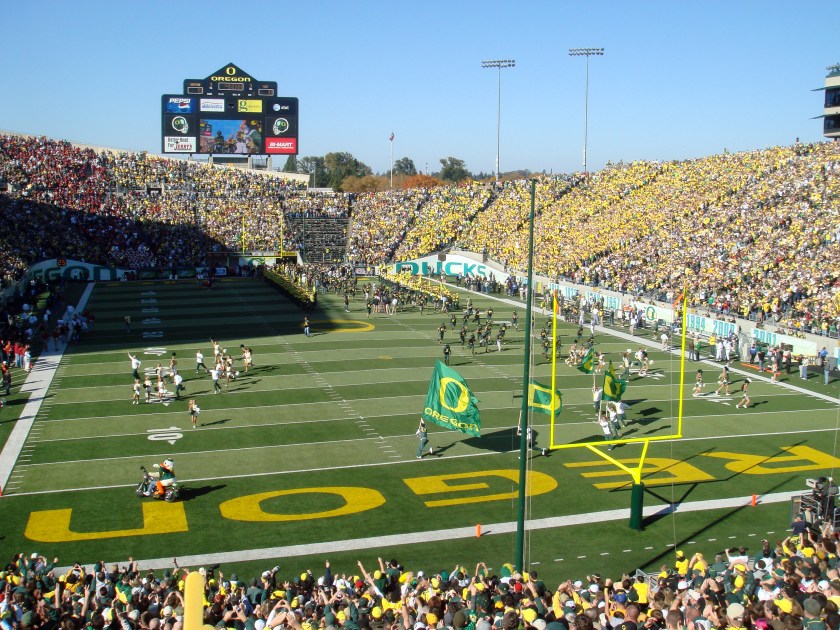
Devon Allen’s Baptism

Neal Pollard

I will preface this by saying I cannot determine anything specific about the religion of Devon Allen, a remarkable college student-athlete at the University of Oregon. He is in the headlines now as a starting football player who qualified for the Olympics in track and field.  It was during his training and competition for the latter that he decided the time was right to be baptized. So he was, in the Willamette River in Eugene last Friday before the watchful gaze of family and teammates from his track and football teams. No less than ESPN reported on his religious quest alongside his impressive athletic achievements. The article ended with the proper sentiment, particularly if Allen was baptized in the right way for the right reason. It reads, “It was the right starting line for two different races” (Chantel Jennings, espn.com).

I am encouraged that Jennings found this newsworthy. I am encouraged that Allen thought baptism to be so important. I am encouraged that his friends and family showed up in impressive numbers to witness this act.

When even so many in Christendom go the extra mile in denying the importance and significance of baptism, Devon troubled himself to do it. We do not know, but he might have said what the Ethiopian said: “Look! Water! What prevents me from being baptized?” (Acts 8:36b). As he studied with Oregon football team chaplain, could he have been taught the New Testament truth that baptism is for the remission of sins (Acts 2:38), baptism washes away sins (Acts 22:16), baptism reenacts Christ’s death, burial, and resurrection (Romans 6:1-4), baptism puts one into Christ (Galatians 3:27), baptism buries one with Christ (Colossians 2:12), and baptism saves one (1 Peter 3:21)? If he was taught baptism from the New Testament, these are the kinds of things he would have heard.

Regardless of Allen’s understanding about baptism’s function in God’s plan to save us, one who is taught in accordance with the several passages above and who has a good and honest heart (cf. Luke 8:15) will want to be baptized without delay (cf. Acts 22:16). Like the jailor at Philippi, they will submit to baptism even if it is the middle of the night (Acts 16:33). Like the 3,000 on Pentecost, they will demonstrate gladly receiving the word by being baptized (Acts 2:41). Thus, they will be saved.

My prayer is that Devon Allen understand these Bible facts and responded the way he did because he humbly accepted their truth. More than that, my prayer is that those who need to make the decision to be baptized will not let anything hinder them from doing what Jesus died to make possible for us all. May we ignore all rationalization that leads us to resist the act which, from a believing, penitent heart, washes our sins away.

102707-oregon-autzen-uoentrance1

DO WE HAVE CONFUSING MENU TERMS?

Neal Pollard

Open Table, a company that facilitates reservations at better restaurants, sent a quiz today to test my familiarity with some of the more sophisticated menu terms one encounters. I made 40%, and at least a few of my right answers were lucky guesses. Truly, I’ve never heard of “okonomiyaki,” “Harissa,” “gochujang,” or “crudo.” These and others were foreign words, in the literal and culinary sense. Certainly, chefs, maitre d’s, refined diners, and the otherwise alimentary literate folks know these terms, but most of us are proud to differentiate between la fork and la spoon. We also do not like to be made to feel less than intelligent by the more informed foodie.

The more we try to be soul-conscious and truly sensitive to the visitors who attend our services, the more thoughtfully we should consider especially the terms we use and even take for granted. We’ve used them so long that maybe we assume everybody knows them.  But, these visitors may be sitting there, despite their intelligence and capability, feeling ignorant or uninitiated as we pepper them with “expediency,” “hermeneutics,” “extend the invitation,” “conversion,” “denominational,” “redemption,” and other terms that require the context of our learned church culture. Other terms, not at all hard to define, are terms that mean something specific to us but that mean something else to those without our “background”: sin, salvation, repentance, worship, born again, holy, works, grace, etc.  On many occasions, I’ve looked at some of the lyrics in our songbook and have found, especially in older songs where words have inevitably changed or fallen into disuse, we press on without defining or explaining these words to our youth, new Christians, or non-Christian attendees. “Could my zeal no respite know?”  “His garment too were in cassia dipped?” “Heavenly portals loud with hosannas ring?” Many, many more examples of such lines could be produced!

My point is not to be critical. There is no way we can define every word a visitor or newcomer may encounter in our worship services, but we do have so many who do not have our grasp of our unique terms. We have a serious obligation to them (cf. 1 Cor. 14:22-25). If we took some time to define the words of our songs, sermons, and even prayers, we would be helping those several groups who may not “get” it otherwise—teens and pre-teens, some of our young adults, a lot of our first-generation Christians, new converts, and those valuable visitors who may be termed “unchurched.” It will help the rest of us, too, to break down our rote and memorized sentences and think about what some of those “ten-cent” theological terms really mean. God desires worship that involves our heart (cf. John 4:24), and clear comprehension is a key to achieving that. May we deliberate on this when we assemble together this Lord’s Day!

OLYMPUS DIGITAL CAMERA
Who knows what this is?

Identifying The Source Of Trouble In The Congregation

Neal Pollard

One of my dad’s most memorable sermons, which he preached in more than one location, was actually a two-parter.  The first part was preached Sunday morning. Dad warned that he was going to identify the source of the problems in the congregation. He used a wipe board or chalkboard, and only put the first initial of each one up there as he preached. He said that everyone should come back that night and he would disclose the full names that went with the initials.  At one congregation, after the morning sermon, a large number of people came forward in response to the invitation.  Sure enough, that evening dad put the full names next to the initials:

  • Accuser of the brethren (Rev. 12:10)
  • Adversary (1 Pet. 5:8)
  • Beelzebub (Mat. 12:24)
  • Belial (2 Cor. 6:15)
  • Devil (Heb. 2:14)
  • Enemy (Mat. 13:39)
  • Father of lies (John 8:44)
  • God of this world (2 Cor. 4:4)
  • Prince… (Eph. 2:2; John 12:31)
  • Roaring Lion (1 Pet. 5:8)
  • Satan (Mat. 4:10)
  • Spirit that works in the sons of disobedience (Eph. 2:2)
  • Tempter (Mat. 4:3)

Now, in no way am I discounting the free will choices people make. James 1:13-15 very clearly places the blame of sin on the individuals choosing to act on their lusts and desires. One is not possessed or overtaken by the devil to do his will any more than a person is overtaken by God and made to do what’s right. But Jesus calls the devil the “father” of sinful behavior (John 8:44). John tells us that the one who practices sin is “of the devil” (1 Jn. 3:8). Those who sin are doing his will (2 Tim. 2:26).

Satan is at the heart of national, congregation, familial, and individual sin.  We’re told to resist him (Jas. 4:7; 1 Pet. 5:9). The hopeful fact is that, with God’s help, we can always successfully do so.  Let’s be aware that the devil does not want God’s children or His work to succeed. If he can thwart our efforts as a church to be united, faithful to God’s Word, evangelistic, and productive, he will do so. Knowing this, we should be more determined not to let him win!

lion-692219_960_720

In Awe Of The Greatest Freedom


Neal Pollard

I once was without representation,
Not a citizen of that chosen nation,
Enslaved and oppressed,
Deprived of the best,
And discouraged by my lowly station,

But my freedom was bought at a price,
With the one ransom that would suffice,
Sweet liberty was bought,
And my freedom I sought,
When I opted for virtue instead of vice.

Independence is becoming and sweet,
It is found when I fall at His feet,
And make Him my Master,
I avoid pain and disaster,
He offers me victory for my defeat.

I celebrate privileged position,
Embrace His heavenly mission,
Knowing the blessings He gives,
Is because He still lives,
He hears the faithful disciple’s petition.

As we celebrate the blessings in this land,
Bestowed by a Providential hand,
Let us never forget,
That He paid our great debt,
He’s preparing what’s infinitely more grand.

Whatever may become of our dear country,
I pray that our eyes will always see,
That no earthly place is home,
We are strangers who will roam,
’Til we reach the Great City across the sea.

flag-468345_640

Who Can Be Against Us?

Neal Pollard

Have you ever had someone that seemed to have it out for you? Not only did they not like you, but they actively undermined you. They may have slandered you or even lied about you. You may have even felt that they were trying to ruin your life!

Have you ever had something that seemed to overwhelm and overshadow you? It could be something from your past, present, or future, worry, guilt, regret, fear, trouble, pain, problem, or other stress. Maybe it was something that was nearly impossible to shake or something of which you were constantly reminded.

In a beautiful context writing about assurance, Paul asks, “If God be for us, who can be against us?” (Romans 8:31). That is an eminently fair question to ask. Here are some potential foes that could undo us: tribulation, distress, persecution, famine, nakedness, sword, death, life, angels, principalities, powers, the present, the future, height, depth, or any other created thing (35, 38-39). Examine that list closely. Doesn’t it include just about every potential threat and trial? Do we believe the assertion of Romans 8:31, this rhetorical question firmly implying that God is bigger and stronger than any potential problem or person?

When it comes to our righteous plans, isn’t this same principle vital to our process? What can we do and be as a church? The only limitation is that which goes against God’s will or that which can dominate God’s will. We must give great care to the first part, but we need not worry for a second about the second part. There will be factors that strain or intimidate. There will be reverses and failures. But, if we will persist and persevere, what can defeat us?

How exciting, in our personal and congregational lives, to serve a God more powerful than any foe or fear! We can succeed by His help and to His glory, come what may! Let us trust this timeless truth and live our lives as though we believe it!

24587741766_468160c634_b

THE RESCUER AND THE ONE IN TROUBLE

Neal Pollard

In Romans 8:26, speaking of the work of the Holy Spirit, Paul writes, “ In the same way the Spirit also helps our weakness; for we do not know how to pray as we should, but the Spirit Himself intercedes for us with groanings too deep for words.” The Holy Spirit “helps,” lending “a hand together with, at the same time with one” (AT Robertson) and coming to the aid of one (Bauer). This is said in connection with the Christian’s prayer life. It is an acknowledgement that sometimes we need the help of God’s Spirit in particularly agonizing times, times where words like “weakness” and “groanings” describe the struggles in prayer.

In the same passage, Paul says the Spirit “intercedes,” a picturesque word of rescue by one who ‘happens’ on one who is in trouble and ‘in his behalf’ pleads with ‘unuttered groanings’ or with ‘sighs that baffle words’” (Reinecker 367). What graphic imagery! When I am in real trouble, no one can help me like God can. Sometimes, only God can help me when I am in trouble. Paul teaches that there is no depth of struggle or trial in prayer too complex or incomprehensible for the omniscient God. As the Psalmist once wrote, “Out of the depths I have cried to You, O Lord. Lord, hear my voice! Let Your ears be attentive to the voice of my supplications” (Ps. 130:1). Paul is saying, “The Lord does hear and is attentive not only to my voice, but even to the unspoken, unutterable fears, desires, and longings in my heart that cannot be formed into words on my lips when I pray.

Our God is a God of rescue (Ps. 18:19; 116:8; 136:24). He has rescued man in dramatic ways, from the Red Sea crossing to Jericho to Gideon’s tiny army to Calvary’s cross. He has demonstrated that He wants to help us and will freely extend Himself to do so. But, He wants us to reach out to Him and appeal for help. Even when the words will not exactly come to us, He knows the intent and desire and He looks with an eye toward aiding His children (1 Pet. 3:12). Do not only come to Him when in trouble, but do come to Him when in trouble. You do not have trouble too big for Him to come along and rescue you from it.

Trust that!

maxresdefault

Tony Robbins And Proverbs Six

Neal Pollard

Perhaps you heard about the 30 “followers of motivational speaker Tony Robbins” who “were burned while walking on hot coals” in Dallas, Texas, over the weekend (nbcnews.com). Now, nearly 7,000 others were not injured, but when nearly three dozen were it became a national news story. The firewalk is “a symbolic experience that proves if you can make it through the fire, you can make it through anything” (ibid.).  But, there is a catch. Don’t run, have wet feet, or try to go across a firebed that is too long (the Guiness Book of World Records says the longest firewalk was just shy of 600 feet in Calgary in 2007).  No one seems to disagree that one cannot indefinitely walk on hot coals. God, who created fire and feet, moved Solomon to say, “Or can a man walk on hot coals and his feet not be scorched?” (Prov. 6:28).

This statement comes as part of Solomon’s warning about “the evil woman” and the “adulteress” (cf. 6:24).  He warns about her alluring beauty and ways (25), showing the consequences that one may miss when driven by lust rather than law: one is reduced (26), destroyed (32), wounded and disgraced (33), reproached (33), and repaid with revenge (34). One of Solomon’s two metaphors to depict adultery’s repercussions is feet being burned by walking on hot coals (the other is taking fire in his bosom and his clothes being burned).

Countless men and women have been deceived by the seemingly harmless effects of allowing attraction for someone other than their mate to grow in their hearts and minds. One may let admiration and attraction for this other person to take root in their hearts. Defenses are lowered and lines begin to be crossed. The thrill and excitement of the prospective relationship can come to eclipse rational thoughts, negative consequences, and the fallout in the lives of all the people affected. When David gazed at Bathsheba from his rooftop, he saw a beautiful, naked woman rather than murder, death, humiliation, dysfunction, loss of influence, and agonizing heartbreak. His unlawful desire for her prevented him from seeing past what he wanted in the moment.

God’s laws are immutable. One cannot flout them without the fruit that follows. So many who have crossed that line have desperately wished they could go back to the other side of that firebed and taken the righteous path. May each of us have the wisdom to see these kinds of things from God’s eyes, which are pure, right, and perfect. Realize that pursuing a person who is not your lawful mate is like playing with fire! Don’t get burned.

shoe-582851_960_720

God Revealed (poem)

Neal Pollard

The mighty arm of creation, brooding or building
The hand that tipped the canopy, drowning sinners
The finger that stirred the languages, babblers yielding
The heart that made the heirs of Abram winners

The Majesty presented in a bush, resilient though burning
The Master who through plagues made Pharaoh submit
The Merciful One who longed for Israel’s returning
The Measuring Rod whose justice sin did not acquit.

The everlasting to everlasting, whose word’s a holy knife
Inhabitant of the heavens, swaddling Incarnate babe
Kindling Spirit, Father, Son, the way, truth and life
Perfect in character, with power the obedient to save.

Gatekeeper of heaven, consigner of the wicked to hell
Served by angels, ruler of the living and the dead
Spirit, love and light, divinest nature not one part frail
Eyes all-seeing, mind all-knowing, power unlimited.

Hope of the hopeless, joy for the tearful mourner
Source of strength for the heavy-laden soul
Lifter of the penitent fallen, all-glory adorner
Author of salvation who one day will call the judgment roll.

Since He is and is rewarder, let not one refuse His order!
If Satan’s power you’d have repealed, obey the God the word’s revealed!

IMG_1199

Do We Need Permission?

Neal Pollard

For several years while in Virginia, I enjoyed going out with a couple of dear Christian brothers to hunt for Civil War relics.  Of course, hunting on federal property was a serious crime and was unthinkable. However, so many of the personal properties owned by residents in the Richmond area were treasure troves of those artifacts. Their woods and fields held bullets, shells, buckles, buttons, and the like. Dave Young, Jr., always followed the same procedure before our hunts. He would go see the homeowners where we wanted to hunt, people he had known, built friendships and done business with for years. If we got their permission—sometimes the thoughtless or unethical practices of other hunters made them inclined to refuse us—then we would go on their property and hunt for relics. It was their land and their right to permit or deny. If we had ever chosen to hunt one of those places without permission and got caught, it would have been a silly argument to say, “They did not tell us we couldn’t hunt here.”

This example is crude and imperfect, but I think it illustrates a principle most can understand. It is not natural to construe someone’s silence as permission. Yet, when it comes to matters of faith and practice in religion, we attempt that very approach.

When it comes to how we live and serve in this life, we have to have God’s approval for whatever we do (Col. 3:17). When He tells us what His will is on any matter, our response to that should be thoughtful, careful, and submissive.  To be otherwise would be thoughtless, careless, and rebellious—with God’s stated desires.  To think that God would give us physical life, generous physical blessings, incredible spiritual blessings, spiritual life, and powerful promises on a continuous basis and we could ever be callous or cavalier about what He wants reveals an unfathomable audacity. Frank Chesser once depicted such an attitude this way, saying, “It has no respect for either the sound or the silence of God’s voice. It only does what the Bible says in a given area because it happens to agree with the Bible on that point. At the first sign of conflict, it will have its own way ever time” (The Spirit of Liberalism 18).

Church music in worship often gets isolated from the larger principle.  How we worship God in song, whether with or without mechanical instruments, is just one specific of a much broader principle. God has told us what He wants for church music (Eph. 5:19; Col. 3:16). Whatever we do must meet His expressed will. Projecting songs, using songbooks or shape notes, having a song leader, or singing in parts or four-part harmony still falls within the category of His command that we sing. But this same principle covers everything we do in worship as well as the specific commands He has for us regarding our work as a church, our response to His grace in order to have His salvation, and the like.

Our culture teaches us to ask, “Why can’t I?” It encourages us to say, “You didn’t say I couldn’t.” But, “the whole world lies in the power of the evil one” (1 John 5:19). The humble spirit of a grateful, grace-receiving child of God, when viewing the will of God, should always be, “Do I have permission for that?”  Such is neither cowering fear or abject slavery.  It is adoration and reverence for a Lord who gave everything that we “may know Him and the power of His resurrection and the fellowship of His sufferings, being conformed to His death” (Phil. 3:10).

FullSizeRender 2
Some of my relics from back in the day

THE BOY WHO STAYED HOME

Neal Pollard

When we think of the parable in Luke 15, we inevitably think of the younger son who left home for the far country of sin. We appreciate God giving us the prodigal (reckless; wastefully extravagant) son in this parable to illustrate hope, love, and forgiveness, no matter what we may have done. Then we think of our favorite character in this story, the father. He represents God and reveals God’s eagerness to embrace and restore a sinner who repents. He gives the undeserved, unexpected, and unanticipated (cf. Eph. 2:4-8).

Then, there’s that other main character in the story. How does he strike you? After all, his brother has been reckless and irresponsible and his dad lets him off scot-free and even throws him a party. He robbed his father blind, and he isn’t even punished one bit. How do you see the brother who stayed home? Let at the text more closely and see how God sees him.

  • He was guilty of self-righteousness. He complains to the father about the reception his brother received (29). With self-righteousness, there’s an exaggerated view of our own goodness. There’s an exaggerated view of the other guy’s badness. There’s a comparison where we come out on top of the other guy. There are often judgmental assumptions made about the other guy. Let’s not forget that Jesus condemns self-righteousness (cf. Luke 18:10-14). If the Father walked up on some of our condescending conversations, He would spoil our fun since the spirit of self-righteousness is so far removed from the spirit of a loving Father who longs for His wayward children to come home.
  • He lacked self-control (28). He appears quick-tempered, not waiting for an explanation. We have the conversation between the younger son and the father, and the older son and the father. Where is the conversation between the two brothers. Didn’t he claim to be the good, righteous one? There was no self-control in the way he talked to his father or about his brother. “If anyone thinks himself to be religious, and yet does not bridle his tongue but deceives his own heart, this man’s religion is vain” (Js. 1:26).
  • He was selfish. Why did he wring his hands about the younger brother’s wasteful spending? The father, who knew this son, answered, “All that I have is yours.” There is no evidence that the older brother was concerned about his formerly depraved brother or his once-grieving father. He seems more interested in how these things impacted him. He appears faithful to his father, but for the wrong purpose. What difference would it have made if the older brother saw the prodigal as someone to serve rather than slam?
  • He had an unforgiving spirit. His brother has sinned against him, but he was unwilling to forgive him. One of the servants called him “your brother” (27), the father calls him “this brother of yours” (32), but the only time he directly refers to him he calls him “this son of yours” (30). Behind these parables, the Pharisees and scribes grumble at Jesus receiving sinners. In the first two parables, people sought the lost. In this last parable, the older brother made no effort to go after his brother. God implies as early as Cain and Abel that we are our brother’s keeper (cf. Gal. 6:2; Js. 5:19-20). Not only did he not search for his brother, but now he won’t forgive him.
  • He was jealous. He thought the father was better to his erring brother (29-30). You can almost hear him saying, “You love him more than you love me.” He couldn’t stand to see his brother honored. How contrary to the way God wants His children treating each other (Rom. 12:10; Eph. 4:31-32). The older brother was making accusations and he hadn’t even spoken to him. He thinks the worst of him and is utterly lacking in brotherly affection.
  • He was not humble, but rebellious against his father’s will.  He wanted to tell the father how to run his house. Do you notice the younger son respectfully addressing his father (21)? There’s little if any respect from the older son (29-30). The Bible condemns self-will. Peter condemned those despising authority and the self-willed (2 Pe. 2:10). Some people are loyal to the church as long as they can have their own way.

Some of us may find ourselves in the position of the prodigal. None of us will ever be in the position of the father. May we never find ourselves in the position of the boy who stayed home. If we do, we may lose our place in the father’s house!

hqdefault

Embracing The Struggler

Neal Pollard

So much is said about the deficiencies of youth and young adults in our current culture. While every generation has its shortcomings, I have observed a hopeful trend. Perhaps it rests on the faulty foundations of political correctness and relativism, but young people today seem much more prone to accept and nurture those who have discernible difficulties like handicaps, mental or physical challenges, or social limitations.

Another way it shows up, specifically in the church, is the way they rally around those who are spiritually broken or in need. When a teenager or young adult responds to the invitation, watch how their peers flock to their side to show their support. This beautiful, tangible act is reflective of the father in the parable of the Prodigal Son, and it is a trait that the father so wanted from the older brother (cf. Luke 15:20,31-32). It looks a lot like the tender goodbye between Paul and the elders in Acts 20:37.

This willingness to reach out and comfort one another is a supremely biblical way of interacting within the family of God. 1 Thessalonians 5:11 says, “Therefore encourage one another and build up one another, just as you are also doing.”  God calls His people to have that kind of nurturing spirit. When we see those who are physically hurting, we should respond (Mat. 25:35-36; 1 Jn. 3:17). When we see those who are emotionally hurting, we should respond (Rom. 12:15). When we see those who are spiritually hurting, we should respond (Gal. 6:1-2; Jas. 5:19-20). The response should be more than token and certainly should not be heartless and surface. It should not be shown with favoritism, but to everyone who is in need of it.

This warm and loving response may not come as naturally to some of us who are older, but oh how crucial it is that we stretch ourselves to do it. Embracing a sinner does not mean embracing a sin. Let us discipline ourselves to see the difference. Hear the words of the Hebrews 12:12-13: “Therefore, strengthen the hands that are weak and the knees that are feeble, and make straight paths for your feet, so that the limb which is lame may not be put out of joint, but rather be healed.”

13407188_10209411714315519_8514604783791013955_n

The Worst Way For Total Blindness To Occur

Neal Pollard

While visiting Ray and Lupida Lewis yesterday, I got to hear the story behind her current situation. This upbeat, sweet-spirited Christian woman was minutes from undergoing the first of at least three extensive back and neck surgeries necessitated by injuries suffered as she was walking and was struck by a driver going 35 miles per hour.

Lupida has had a degenerative eye condition since childhood. It had gotten to the point that she could barely see more than shapes, but, given her educational background, she had been recruited to serve as a teacher in the Colorado School for the Blind. By last year, despite corrective eye surgery, Lupida could only see light and nothing more. That fateful September day last year, she was struck in the crosswalk by the inattentive driver and suffered brain, neck and back injuries. Some of that may be remedied, and other issues will never be resolved. One that appears permanent is that her head injuries caused her to wake up without even the ability to see light. She says, “I see only darkness now. The light has gone away.” She observed that one cannot really imagine the huge difference between being able to see light and being in total darkness.

We did not discuss it together, but I believe Lupida would agree with me that, as tragic as her circumstances are, there is a blindness worse than her own.  Lupida lives with a faith and hope which assures her that her situation is, at worst, temporary. The song says, “Faith will be lost in heavenly sight.” She embraces that promise.

Today, you will constantly encounter people who may have the eyesight of an eagle when they submit to a physical test but who suffer a far greater blindness. Scripture often makes reference to wickedness as “walking in darkness” (Ps. 82:5; Prov. 2:13; Ecc. 2:14; Isa. 9:2; John 12:35; Eph. 5:8; 1 Jn. 1:6; 2:11). Tragically, it’s not the result of an accident–though it could be ignorance. Millions reject the light and pursue the darkness. They have every opportunity to see, but they don’t want to see. Ultimately, their voluntary journey through darkness leads to the outer darkness of condemnation (Mat. 8:12; 22:13; 25:30). Fortunately, their condition is reversible thanks to the Great Physician, but time is growing shorter by the moment. Ask God to lead you to those who are spiritually blind, and may we all endeavor to avoid such a condition ourselves (cf. Mat. 15:14; Rev. 3:17)!

julie-dan-1-1024x768


“GM”

Neal Pollard

I make a notation “GM” along with the date and place on the paper copy of my sermons to indicate that I preached that sermon in a gospel meeting. It is one of my homemade preacher shorthand notations. Growing up a “PK” (“preacher’s kid,” of course), I’ve got a lot of GM memories. I would not trade anything for them, especially the indelible imprint they made on me in shaping the adult I have become. Let me encourage you to bring your children and yourselves to our gospel meetings for what they will mean to your faith and for the part of you they will forever become. To me, the GM of gospel meeting stands for a few other things, too.

Great Memories. When James Watkins held a meeting for us in 1984 in Franklin, Ga., I led singing that Sunday night. I was 14, and this participation was a big deal to me. I led, “Hallelujah, Praise Jehovah” and in verse three mistakenly bellowed out, “All ye fruitless trees and cedars.” Once when the air conditioner was out, we opened the side doors on either side of the pulpit for relief in that muggy July, west Georgia heat. This was an open invitation for the horse fly that landed on the calf of my leg during the chorus of “the song before our opening prayer,” which bit mercilessly until I could swat it during said prayer (which was by no means a quiet slap).

I remember attending a meeting in Carrollton, Georgia, and being jolted by Bobby Duncan’s dramatic cries of “the boy is home!” in his powerful telling of the story of the prodigal son. I remember, though, I was no more than 5 or 6, the smell of hay and watching members set up a portable baptistery for a tent meeting my dad preached in Aragon, Ga. I remember the family car rides when we rode to others’ meetings. I remember the baptisms, restorations, preaching, and fellowship so much a part of these special times.

Giant Men. Through this venue I first became acquainted with men who became my heroes: Frank Chesser, Perry Cotham, Howard Swann, James Watkins, Bobby Duncan, Truman Cobb, Franklin Camp, Winfred Clark, Wendell Winkler, Glen Posey, Ken Thomas, V.P. Black and others. I remember playing basketball with Ken Thomas, who had to play in his socks and still took us all to school (he also demolished me in a game of “punt, pass, and kick”). I recall having me heart stirred and being convicted of sin by the penetrating preaching of Frank Chesser.

I vividly recall being amazed by Perry Cotham, who seemed to me even three decades ago to be a very old preacher (I saw him preach in California when he was in his late 90s). I will never forget being touched by Franklin Camp’s tender heart as he told the story of Christ’s crucifixion. I was wowed by J.J. Turner’s ability to turn a phrase. There was the time when I walked by James Watkins’ hotel room and saw him diligently studying his Bible in the middle of the afternoon. These men were spiritual giants to me.

Gospel Message. Even as a child, I learned so much from the sermons I heard. I saw things in a new way because every preacher has his own unique style, history of study, and method of delivery. I was challenged by the Bible-centered approach these men faithfully took. I got my first glimpse at sermon organization, taking crude notes and main points from sermonic masterpieces. Meeting after meeting, year after year turned my heart and mind more and more to the Bible. Even then, I saw, at least to a juvenile degree, the effectiveness of this method of evangelism and edification.

Give your children, your mate, your non-Christian friends and neighbors, and yourself the pleasure of experiencing these unparalleled joys. The Godhead and the heavenly host pay particular interest to each service of every gospel meeting. Let us join them there and grow from hearing anew the wonderful story of love. It will stay with you for a lifetime.

dad-gallery-042407

THE BEAUTY IN CHRISTIANITY

Neal Pollard

  • I have witnessed many people love, accept, help, and open their homes and lives to people of different races, backgrounds, and income levels.
  • I have watched families, including my parents, who barely had enough to buy their own groceries buy a poorer family a week’s worth of groceries.
  • I have seen love, assistance, and tears profusely given to people who frankly confessed their struggles with a variety of sexual sins, addictions, and the like. A hundred pledged love, help, and support for any one that stood back in harsh judgment of them.
  • I have experienced men, women, and children going into scary neighborhoods to share food, clean homes, and help explain the Bible to those who lived there.
  • I have noticed people who were taken advantage of as thanks for their generosity but who responded only with kindness and positivity.
  • I have observed so many cheeks, slapped with libel, untruths, gossip, and hypercriticism—from faithless unbelievers—humbly turned in benevolent, benign gentleness.
  • I have beheld godly people lose their jobs because of their fidelity to their faith and their conviction in the Christ, who maintained trust and left no room for bitterness and resentment at the unfairness of their treatment.
  • I have regarded families give up the luxuries of this country to go to poor countries and live among the people there, sharing the good news of Christ with those who don’t talk or look like them.
  • I have met more people than I can count who made the difficult choice to obey the gospel in the face of utter rejection and persecution from friends and family who disapproved their decision.
  • I have known countless, from the most aged to the youngest, whose demeanor, speech, and deeds were seasoned with compassion, understanding, sympathy, and patience—not conditioned on the skin color, orientation, political affiliation, educational attainment, or similar surface characteristics of others.

Where? Where has such magnanimous, merciful, and munificent behavior occurred? In the church of Christ! My heart sings the archaic hymn, “I love Thy kingdom, Lord.” In it, I have found the best people in the world, trying their hardest to be like Jesus. May we unite to oppose every instance of unkind, un-Christlike behavior among us, but do so with the same patience and understanding we afford anyone else.

13240772_10153682075820922_280342329215061650_n