Ten Thoughts Your Church Visitors Are Thinking 

Tuesday’s Column: Dale Mail

DaleandJanelledirectorypic

Dale Pollard

We’ve all had opinions and reactions in public that never made it from our brains to our mouths. Not all of these were positive, and perhaps that’s why they were never spoken.

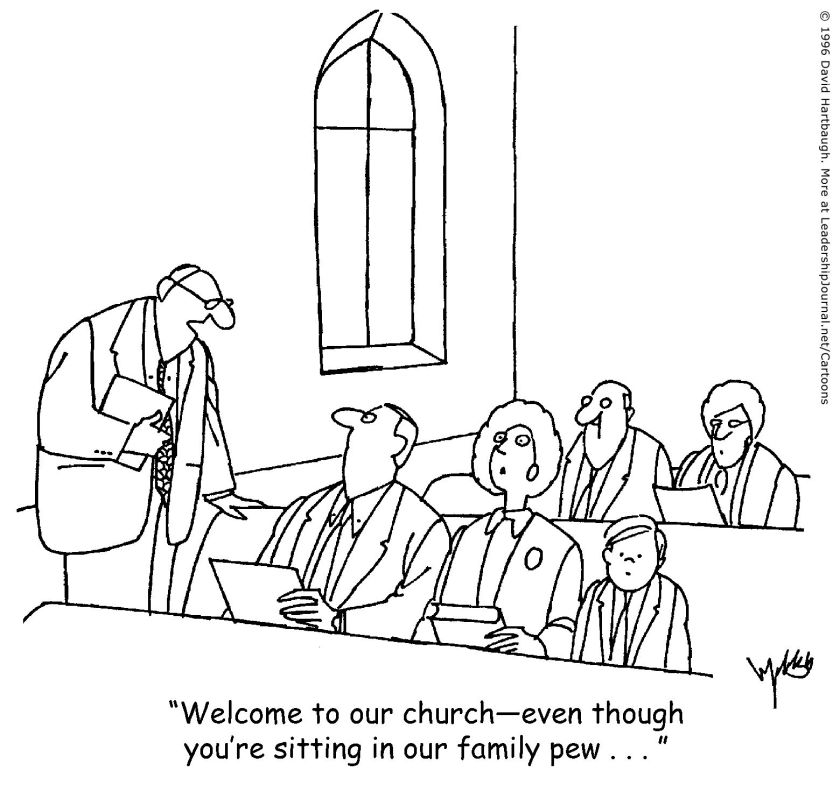
Have you ever wondered what visitors who come into our home congregation are thinking? What do they make of the worship service? How do they see the people who fill the building?

I’d like to dedicate this post to the young people I’ve had the opportunity to talk with and who have privately expressed their first impressions of the Lord’s church. These honest thoughts did not come from people who were trying to be disrespectful.

Here’s a list of TEN thoughts (some rephrased) that most visitors won’t openly say. 

  1. “I guess I came underdressed for this church.”
  2. “Why do you stand for some songs and not the others?”
  3. “Why are the communion plates gold?”
  4. “I didn’t understand the purpose of the invitation.”
  5. “Nobody smiled much until after the service.”
  6. “I’ve got too much baggage for you guys.”
  7. “I didn’t even know this church was here.”
  8. “How much money was I supposed to put inside the plate?”
  9. “It’s a nice congregation, but there’s not a lot of people my age.”
  10. “Sorry for bringing my drink into the sanctuary.”

While these comments and questions may seem negative, I’m thankful that they’ve given us their perspective. As His church, we should be thoughtful about who we are, and what we’re engaged in when we come together.

We’re either involved in offering our Father praise and worship, or we’re enjoying the sweet fellowship that we have in Christ. God is our life, God is the One who gives every blessing, and God is the one who saved us from ourselves. With this in mind—

Here’s a list of FIVE things we can do to let visitors know what we’re all about. 

  1. We should carry ourselves with an attitude that expresses our joy and thankfulness. They may not understand everything about the service or the practical aspects of our traditions, but they see a group of people who have been given the greatest gift ever given.
  2. Let’s not place too much emphasis on the location of worship, but the worship itself. There’s nothing holy about the “sanctuary” but there should be something holy about the acts being done and the people in the pews.
  3. Even though we may have been to worship countless times, we shouldn’t assume that everyone completely understands what’s going on. There should be an effort put into briefly explaining why we’re participating in each act of worship, as well as who it applies to. For example, visitors are not required to give. We shouldn’t assume they already know this.
  4. We’re all in need of Christ’s forgiveness, mercy, and grace. God is the God of second chances…and beyond! Do the visitors know this? We’ve all got varying amounts of baggage, but even a small pocketbook full of sin is enough to eternally condemn us.
  5. No matter how odd things may appear to a first time visitor, if we can show them the love of Christ, what was once strange to them— just might become beautifully familiar.
6899cbb17fb9c3e615b41ed38b068da4

“The Frozen Chosen”

Monday’s Column: Neal At The Cross

pollard
Neal Pollard

Recently, in discussing some extremes on matters like the Holy Spirit, grace, and emotion in our worship services, a brother said that a friend of his referred to churches of Christ as “the frozen chosen.” The man was part of a religious group we’d call “charismatic,” and he had attended the worship of one of our congregations which he apparently found stoic and lifeless. We chuckled at the nickname, but it stuck with me.

It is likely that this man found it strange and lacking to have singing without a band, preaching and worshipping without ecstatic utterances and tongue-speaking, and even members seated and without raised hands. We’d rightly point out that the New Testament specifies singing and that adding mechanical instruments is unauthorized (Eph. 5:19; Col. 3:16), that tongue-speaking belonged to the infancy of the Lord’s church as a means of communicating the gospel to other languages (Acts 2:6-11) and, though a means of proving apostolic truth at that time, was regulated and said to be inferior to other spiritual gifts even in the first-century (1 Cor. 14:1ff). We’d show that it was done away (1 Cor. 13:8-12). We’d talk about the need for decency and orderliness (1 Cor. 14:40). Our comedic observer could be charged with holding to some extreme views.

I don’t know about you, though, but I don’t want to be characterized as being at the other extreme. It hurts to think that I convey a “frozen chosen” persona in worship or in the exercise of my Christian life. Worship that is lifeless, rote and repetitive, that’s so predictable that you can engage in it on auto-pilot, that evidences no emotion–joy, intensity of feeling, enthusiasm, etc.–is not the antidote to our religious friend’s brand of religion. While none of us can read each other’s mind to gauge depth of feeling (or lack thereof), cues like body language, facial expressions, hearty engagement, and the like are noticeable by their absence as much as their presence. Ask song leaders what they see on the faces of those seated before them. Ask preachers the same. Ask members what kind of intensity and interest they perceive in the preacher and song leader. 

We’re not the worship critics or the audience of worship. God is. But as we engage in worship that is according to truth, we need to examine the spirit of it (John 4:24). We do not have to be “Holy Rollers” to avoid the other extreme. As those redeemed from sins which would eternally condemn us, shouldn’t we have melted hearts which overflow with gratitude, praise, and passion? Shouldn’t such be obvious to those who visit our assemblies? Be present, with mind and body. Be involved, from beginning to end. Be engaged, inside and out. I want anyone who is watching my worship (and Christian life away from worship) to at least think of me as the “thawed awed” or, hopefully, the “fervent servant.” I do not want to be part of the “frozen chosen.”

ice-beard

All the Time in the World 

Friday’s Column: Supplemental Strength

81121814_2462862270639428_5746232403106463744_n

Brent Pollard

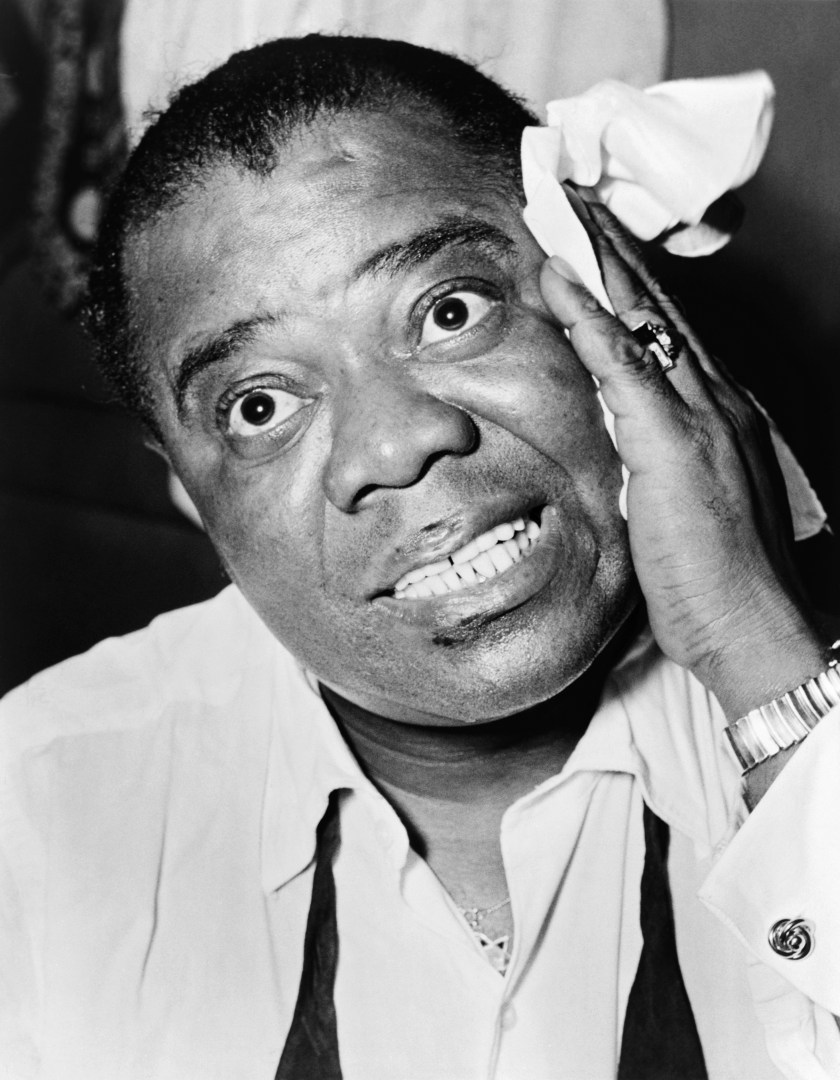
1969 was a landmark year in many respects. Most notably, the year saw a man walk on the moon. Of much lesser note, 1969 witnessed George Lazenby take on his sole (some say, forgettable) performance as the iconic spy, James Bond. I am not a Bond fan, seeing as nothing is entertaining about an unrepentant philanderer. Yet, I do enjoy music. Thus, I am familiar with this Bond movie because of its soundtrack, which featured a Moog synthesizer for the first time in its main theme. Louis Armstrong recorded the love theme for On Her Majesty’s Secret Service. The song was titled, “We Have All the Time in the World.” It was Armstrong’s last studio recording. 1Sadly, he was too weak to play the trumpet during the piece, performing only the vocal. 2

The love theme belies the movie’s sad ending well. Music composer, John Barry, chose Louis Armstrong to do the vocal for the love theme precisely because he felt that Armstrong could deliver the titular line with irony. 3 The song’s title is Bond’s last spoken dialogue in both the Ian Fleming book and the film of the same name. I doubt I am spoiling a movie that is 50 years old by revealing its ending but provide warning that there is spoilage ahead.

With the sixth Bond installment, Bond is finally allowed to fall in love and marry. In the closing moments of the story, however, the antagonist kills Bond’s wife as they are heading out on their honeymoon. The movie’s love theme, as an instrumental, Armstrong’s vocal performance, and several reprises play prominently throughout the film’s score. Hence, this pretty false promise crashes down under the weight of reality in the end. Not even spies saving the world have time promised to them.  The atypical Bond ending makes it more of a cult favorite among fans of the franchise. It didn’t do well at the box office. Of course, that may likewise be attributable to Sean Connery’s absence from the screen. Critically, the movie is well received, with at least one reviewer considering it the third best film of the franchise. 4

I think this subject strikes a chord with me more because of it being Armstrong’s last recorded song than for anything otherwise related to On Her Majesty’s Secret Service. Armstrong is a man of declining health singing about having all the time in the world. I wonder if Armstrong had a sense that he was nearing his departure. In the final years of his life, Armstrong battled poor health but went against the advice of physicians by continuing to tour and perform. 5 I suppose one may chalk that up to dying doing what one loves?

But what of us? Do we ignore the stark reality of James 4.14? We are like the morning fog burned away by the rising noontime sun. And sometimes our lives are such that even if lengthy we may sound as Jacob speaking to the pharaoh: “The years of my sojourning are one hundred and thirty; few and unpleasant have been the years of my life…” (Genesis 47.9 NASB). Even so, we act as if we have all the time in the world. Jesus reminds us that we have but a small window in which to do what we must (John 9.4). Yes, the night is coming. Perhaps, you have been putting off those things you know must be done to save your soul or improve your example as a Christian. Don’t listen to Satan’s sweet melody telling you about the time you do not have. Your only time is now.

“Behold, now is ‘the acceptable time,’ behold, now is ‘the day of salvation’” (2 Corinthians 6.2b NASB).


REFERENCES

1 “On Her Majesty’s Secret Service (Soundtrack).” Wikipedia, Wikimedia Foundation, 24 June 2020, en.wikipedia.org/wiki/On_Her_Majesty%27s_Secret_Service_(soundtrack).

2 “We Have All the Time in the World.” Wikipedia, Wikimedia Foundation, 14 July 2020, en.wikipedia.org/wiki/We_Have_All_the_Time_in_the_World.

3 ibid

4 Hausmannsgate. “All 25 Bond Films, from the Best to the Worst.” IMDb, IMDb.com, 21 Nov. 2015, www.imdb.com/list/ls055107293/.

5 “Louis Armstrong.” Wikipedia, Wikimedia Foundation, 2 Aug. 2020, en.wikipedia.org/wiki/Louis_Armstrong#Death.

louis_armstrong2

I Dare You To Jump Off This Wall

Thursday’s Column: Captain’s Blog

carl pic

Carl Pollard

Peer pressure was a topic that I was taught a lot as a teen. Many have the false assumption that only teens struggle with peer pressure. While it is true that as a young person it is easier to be persuaded, adults and mature Christians can fall for peer pressure just as easily.
While there are many personal illustrations I could use of times that I fell for peer pressure and did something dumb, I’m not going to use them because I like my job at Hebron. But, there is one that I will tell because it’s a great illustration on the power of peer pressure.
Back when I was 12 years old (I was young, perfect and innocent) I fell for peer pressure and I’ll never forget the life lesson that I was taught. At the Bear Valley church there was a wall outside that the teens would sit on and hang out. This wall was about 10 feet tall and at the bottom was a bunch of rocks and bushes. I remember watching all the teen guys jump off the wall and land in the bushes below. I wanted to jump off so bad, but I knew I’d get in huge trouble if I did. All the cool kids would go out after church and see who could do the coolest jump off this wall. I remember one of the guys saying, “This is how you prove you’re a man.” And so of course I had to prove I was a man. I didn’t want them to think that I was a chicken. So one evening after church I went and sat on top of the wall and got ready to jump. Everyone was watching and I knew there was no turning back. I sat on the wall for a good 15 minutes trying to build up the courage to jump off what seemed like a 30 foot drop. I finally took the plunge and jumped…and fell like a sack of rocks onto the drainage pipe below and broke it clean in half. A feeling of dread washed over me when I realized what I had done. One of the deacon’s kids ran and told his dad…who told the elders…who told my parents…who told me that I was grounded from going outside after church for the foreseeable future. Every Sunday and Wednesday I was forced to stay with my parents in the auditorium until we left. I learned a very valuable lesson that day. Peer pressure is dumb. And the only thing that you gain from it is trouble.
Being pressured to jump off a wall probably won’t ever happen to you, but there’s a choice that each one of us will have to make at some point in our lives. That’s the choice of who we will call our friends and companions. This choice will shape who we are, how we live, and where we will go in the next life. The foundation for this subject is built by looking at a comparison between the righteous and the wicked. We can build our character by choosing righteous company, but what does righteousness look like?
In Psalm 1, we are given this comparison. “Blessed is the man who walks not in the counsel of the ungodly, nor stands in the path of sinners, nor sits in the seat of scoffers” (1). There is a progression of temptation laid out here: blessed is the man who…Walks not in the counsel of the ungodly (the one who sees the sin and keeps walking) Nor Stands in the path of sinners (sees the sin and stops to watch out of curiosity) Nor sits in the seat of the scoffers (sees the sin and sits with them to join in).
“But his delight is in the law of the Lord, and on his law he meditates day and night” (2).  Rather than walking next to sin, standing with evil, and sitting with evil company, his delight is in God’s Word and not in the sin of his fellow man. This man is blessed because he chooses to mediate on the Law of the Lord rather than dwelling with those in sin.
“He is like a tree planted by streams of water that yields its fruit in its season, and its leaf does not wither. In all that he does, he prospers” (3). Once the righteous man has chosen God’s Word over sin, we are given the result of this choice. He’s healthy. He produces fruit. He’s well nourished. He’s blessed in what he sets out to accomplish. This happens as a result of choosing godliness over evil company.
“The wicked are not so, but are like chaff that the wind drives away” (4).  Those who choose evil deeds over God’s Word are worthless. They are described as chaff. Chaff is the husk on the outside of a wheat kernel. You can’t eat it, and it basically doesn’t do anything. You have to take it off before you can make anything with the wheat. How they would do this is they would throw it up in the air and it would seperate from the kernel and the wind would blow it away while the wheat would fall back down.
The wicked are useless to God. When it comes to choosing friends, we have just two choices. The righteous (that are blessed in what they do) or the wicked (the ones that are useless to God). The choice should be an easy one for us, and yet Christians will fail to make the right decision.
A piece of advice: Don’t jump off the wall. Choose to hang with those that are concerned for your well being. Choose the righteous friend that will look out for your soul.
jumper

Because He Lives

Wednesday’s Column: Third’s Words (Round 2)

Gary III

Gary Pollard


This song by the Gaithers was written in 1971 at the height of the Vietnam War. Also happening in this country was great civil unrest, school and public arena shootings, civil rights/suffrage/anti-war protests, political unrest, economic downturn, and concerns over the rising influence of communism. It was written during the Cold War when children had to do nuclear attack drills at school.
I never noticed how important the line, “this child can face uncertain days because He lives” was until seeing the year it was published. Those were definitely uncertain days.
Our time isn’t much different. I don’t have to elaborate on the stuff that makes our days uncertain – we’re very aware. We are able to handle what’s going on because He lives. No political unrest, civil disorder, threat of war, disease, or economic downturn can keep shut us down for good because He lives.
“Because He lives, I can face tomorrow. Because He lives, all fear is gone. Because I know He hold the future, and life is worth the living just because He lives.”

Your Impact

Wednesday’s Column: Third’s Words

Gary III

Gary Pollard

On August 6 and 9, 1945, the United States dropped atomic bombs on Hiroshima and Nagasaki. The bomb itself, compared to the city, was quite small; the devastation is still at the front of many minds today.

There is a lot of evidence on earth of multiple meteor impacts. It is chilling to watch re-creations of how those impacts would have affected the earth. A meteor just six miles across has the potential ability to destroy most of this planet, which is 24,901 miles in circumference. So, something just 0.024% of earth’s size can potentially destroy it entirely.

This country has 321,400,000 people. The church makes up about 0.03% of the US Population. We are ahead of meteors in terms of our ability to make an unforgettable impact.

It is far too easy for us to think, “I’m just one person,” or, ”We’re just a couple hundred people in a community of thousands,” but God can do mind-blowing things with just one person. With His Son, He gave all humanity across eons of time the ability to be saved. With just 12 apostles, the church grew into a global fellowship. With just one faithful Christian, an entire community of lost souls can be reached.

When a meteor strikes the earth, it’s not the crater that creates such devastation: it is what happens afterward. Maybe you convert just one soul. That soul turns around and converts his/her family. That family reaches out to their connections and shares their newfound faith. Before you know it, hundreds of lost souls are now in Christ. All because of the effort of one person to convert one soul!

“Let us not lose heart in doing good, for in due time we will reap if we do not grow weary. So then, while we have opportunity, let us do good to all people, and especially to those who are of the household of the faith” (Gal. 6:9-10).

8476682346_b79f19ca87_b

A Simple Way To Identify The Church Jesus Started 

Tuesday’s Column: Dale Mail

image

Dale Pollard


There are just too many voices in the world today muddying the waters when it comes to 21st Century Christianity. In fact, the term “Christianity” doesn’t mean much to the average person. In fact, the average person will most likely have several friends who carry this title and they know based on their morals— they’re not really different. Sadly it’s a description that doesn’t describe much, other than an individual that believes in God. This word has been tragically stripped of what is the most rewarding life you could possibly live. There’s simply no higher calling, there is no greater purpose in life, and you just can’t beat the retirement plan.

Now let’s do something to help the seeking world out.

Let’s make it our priority to understand the church in such a way that we can simplify her mission and her origin.

Here are two terms that will help

  1. The term “restoration” may sound similar to “reformation”, but the two terms could not be more contrary to each other. Restoration is an attempt to restore the church to the pattern we find in the New Testament, while reformation is a reforming of what currently exists. It’s a modification or addition which creates something new entirely. The Old Testament is filled with the pleas of the prophets for the people to restore their relationships with God.

2.  The definition of the word “denomination” is evidence that restoration is not only    possible, but needed. Denomination, in the religious world, describes a branch off of an  original. Any branch coming off of the New Testament church, is simply not it.

Five Facts About The Lord’s Church

  1. The NT church was established by Jesus, not Luther, Henry the 8th, Calvin, Smith, or Wesley
  2. The NT church was established in Jerusalem, not Oxford, London, or Amsterdam
  3. In NT times people were told to believe in Jesus, repent of their sins,  be baptized by a total immersion of water, and to live faithfully (Acts 2:38, 16:30-31, 2:16, Mark 16:15-16)
  4. Christians in the NT met on the first day of the week to partake of the Lord’s Supper, Acts 20:7
  5. The NT church was a united church, while denominationalism is, by it’s very nature, divided.

If the church you are a part of can say the same, you can be confident that it is the church that Jesus established. If this is not what the church you are a part of teaches and practices, then perhaps this will be some information that will help you begin a life changing search to find God’s will for your life.

church

Mysterious Seeds

Monday’s Column: Neal At The Cross

pollard

Neal Pollard

In recent weeks, packets of seeds have been mailed to apparently random homes across the country. Dozens of folks received the seeds, which have Chinese labels but have not been confirmed as originating from China. A few days ago, the USDA confirmed that the seeds were harmless but still cautioned recipients not to plant them. The seed packets included mint, sage, cabbage, roses, and other plants. One working theory is that this was part of a “brushing scam,” where people receive unsolicited items from sellers who then post fake reviews (Joseph Wilkerson, msn.com, “Mysterious China seeds received by Americans identified by USDA”). But, given the current political climate, skepticism–and concern, suspicion, and even fear– abound!

One of the major projects Kathy has begun in our backyard is a “cottage garden.” You can research the origin and history of these gardens, which started in England perhaps as far back as the Medieval period. These gardens have a mix of flowers, herbs, and bushes, and the more elaborate of these gardens have trees, bees, and even livestock. Ours is simpler, with climbing roses on a trellis, boxwoods in the middle, herbs planted throughout, but included among the many packets of seeds planted was a mix called bee feed.  It has been fun to see a variety of mysterious seeds appear, like California poppies, Chinese forget me not, Coreopsis, and Sweet Alyssum. We’re not sure where the tall fringed bluebells came from, but it’s incredible to see such an eclectic mix growing and thriving and demonstrating Genesis 1:11 before our eyes. 

In the New Testament, Jesus teaches several parables involving seeds. In one, a man sows wheat seed in his field, then his enemy sows darnel, a weed resembling wheat. Only after they started growing could the two be differentiated. The landowner instructs his slaves to let them both grow up and separate them at harvest time (Mat. 13:24-30). This parable illustrates the lives of the righteous and unrighteous, whose destiny will be sorted out at the judgment (Jesus explains the parable in Mat. 13:36-43). It certainly can apply to true and false teachers (lawless stumbling blocks), who can seem similar but are also distinguishable to the discerning.

Jesus also teaches the parable of the mustard seed (Mat. 13:31-33), which shows God’s power to do great things through seemingly humble deeds attempted in true faith. Matthew, Mark, and Luke record the parable of the sower, the soils, and the seed. Luke 8:11 identifies the seed as the Word of God. The soils represent the different conditions of heart, three of which are futile and one of which is fertile. The sower is the one who spreads the word to people. 

Then, there is the parable of the seed (Mark 4:26-29). A man casts seed on the soil, and then gets to behold the marvel of how it transforms from seed to sprout, the soil producing it from blade to head to mature grain in the head. Then, he harvests it. The power is not in the sower, who is not around (or, in the parable, awake) when the seed produces. The growth of the seed is a marvel even to the sower. Where is the power? In the seed!

There are certainly some malicious ideas and teaching out there in the world. Sometimes, even truth can be shared from improper motivation. But, God’s Word is a seed which can produce incredible things in a heart and life that is good and fruitful. Have you ever seen someone who seemed like a poor candidate to become a Christian, much less become a force for good in God’s Kingdom? How does that happen? We can talk about planters and waterers, but God causes the growth (1 Cor. 3:6). You may not be an eloquent, sophisticated Bible teacher or soul-winner. You may feel you are unskilled.  But, when you share God’s Word with others, you will see the wonders of this mysterious process. It has been said that persuasion happens in the absence of the persuader, as the Word gets to work on a heart. The power is in the seed! Let’s be about planting it however, wherever, and to whomever we can, then witness the marvel of the seed producing in the recipients’ lives. It’s God’s plan! It works in mysterious ways! 

seeds

Outside Time 

Friday’s Column: Supplemental Strength

81121814_2462862270639428_5746232403106463744_n

Brent Pollard

Our Creator is eternal. Hence, he has and will always exist. Having no beginning, He will never have an end. It hurts our feeble brains to try and comprehend this truth, but we accept it, seeing it with an “eye of faith.” Time is a concept held only by the mortal construct of an immortal God. Time means nothing to Him. Since that is the case, a couple of truth becomes evident.

Since God is outside time, He can work out what is best in our life.  From our perspective, life is a complex picture puzzle with pieces collected over some 70 or 80 years (cf. Psalm 90.10). Since Adam opened “Pandora’s Box” of sin, those pieces of the puzzle handed to us do not always make sense. Sin may cause a single bit even to hurt us. Yet, God’s Providence ensures it works out in accordance to His Divine Will (Romans 8.28). God knows how the completed puzzle picture looks. No piece escapes His observation. So, even if a part was not what He had hoped because sin marred the edges, He still ensures that those pieces fall into the right place. When we leave this world, perhaps, we will see the completed picture too. Like the apostle Paul, we might gain clarity before our departure. Paul had a good grasp of his life as he summed it up for Timothy (2 Timothy 4.6-8). Hopefully, we will speak as confidently as Paul concerning our future when granted the clarity of life’s impending end.

Since God is outside time, He is longsuffering. I do not seek to diminish God’s love in making this case. I merely emphasize what Peter wrote in 2 Peter 3.8-9:

But do not let this one fact escape your notice, beloved, that with the Lord one day is like a thousand years, and a thousand years like one day. The Lord is not slow about His promise, as some count slowness, but is patient toward you, not wishing for any to perish but for all to come to repentance. (NASB)

Contextually, the two ideas are related. God’s lack of concept of time equals longsuffering. Can you see how that makes sense? Would it not be easier to be patient with someone if you had no idea of time? We lose patience with others since we feel we can quantify progress with a predetermined amount of time: “I asked you to do this a week ago, and you still have not completed it?” (Can you not hear the frustration in that question? Maybe you even read it in your mind with a voice of exasperation.) Yet, time does not constrain God. He sees the beginning and end of our life simultaneously. Thus, that one becoming a worker at the eleventh hour is paid the same wage as those laborers working all day (cf. Matthew 20.1-15).

We could give other examples to illustrate the benefits of God’s existence outside time, such as how that quality of God enabled prophets to write with 100% about events that would occur hundreds of years after the seer’s lifetime. Hopefully, though, we have considered enough to enrich our faith. Yes, God’s existence outside time enables His Providence to work flawlessly and suffer each of us long. We serve an amazing God!

1320377

Guard Duty

Thursday’s Column: Captain’s Blog

carl pic

Carl Pollard

What does it mean to “guard our hearts?” The word “guard” means to watch over in order to protect and control. So we’re supposed to protect our hearts…but not the physical heart. This isn’t an article on cholesterol, so what do we mean by heart?

Scripture uses the word “heart” when referring to our inner self. The center of emotion. What we believe in, the things that motivate our actions all come from the heart. We must protect/guard our hearts (center of emotion).

What do we guard it from? Proverbs 4 tells us. But there’s something important that we should understand. You can guard your heart from good as well as evil. People can and will protect their heart from letting God’s word change them. As Christians we can even build a wall that will keep us from making the proper changes in our lives.

Proverbs 4:23 says, “Guard your heart with all vigilance, for from it flow the springs of life.” If we wish to have character we must guard our hearts. But this verse is kind of vague if we read it by itself. The context of Proverbs 4:23 is the key to understanding, So, how do we guard our hearts?

Fill your heart with God’s Word (20-22). Once it is filled, guard your heart that is now full of truth (23). Guard it by paying attention to the way you are living your life (24-27), making sure that you stay in line with the truth that is in your heart.

The writer then goes into detail on what actions we must be guarding:

Our Speech (24). “Put away from you crooked speech, and put devious talk far from you. “ The things that we say are a direct reflection of what’s in our heart. If we lash out in anger, that anger comes from the heart. If we have a habit of speaking evil, the source is the heart.

Our Eyes (25).  “Let your eyes look directly forward, and your gaze be straight before you.” The only way to properly guard the truth in our hearts is by constantly looking to God. Recognize the end goal, with “eyes on the prize” (Matt. 14).

Our Mind (26), “Ponder the path of your feet; then all your ways will be sure.” Think about the direction that you are heading. Is it closer to God, or further away? Our minds must have the knowledge to know what is right, and then the willpower and self control to stay true to the path of salvation.

Our Direction (27), “Do not swerve to the right or to the left; turn your foot away from evil.” As we ponder the path of our feet, we must then turn our feet away from evil so as to keep our direction headed towards an eternity with God.

Heart failure has a variety of different symptoms, including shortness of breath, swelling, coughing, confusion and memory loss, rapid weight gain, and fatigue. Heart failure increases the risk of death and hospitalization, and many times these symptoms go unnoticed. Spiritual heart failure symptoms can also go unnoticed. But these include lack of proper desire, sinful speech, no self control, weak character and a lack of prayer and study.

If we fail to guard our hearts as Christians, we will never be able to experience an eternity with God the Father.

a_jewish_soldier_on_guard_duty_at_the_british_army_base_in_sarafand._d797d799d799d79c_d799d794d795d793d799_d7a9d795d79ed7a8_d791d791d7a1d799d7a1_d794d790d799d79ed795d7a0d799d79d_d7a9d79c

Encouragement

Wednesday’s Column: Third’s Words

Gary III

Gary Pollard

How important is encouragement? Winston Churchill understood its importance. It kept the morale of Great Britain high enough to not only survive the Blitzkrieg, but also link together as a country to defeat the Axis Powers. Hitler understood its importance – with it (by way of propaganda) he brought his country out of a decade or so long depression. Even the world’s worst people understood the value of encouragement. 

In the church, it is no different. Only, instead of facing a corrupt and violent world power, we face the Father of Lies and his army. This is a much more daunting enemy – but that is not all. We face discouragement in the church, we face rivalries, bitter jealousy, division over doctrinal matters, personality clashes, etc. 

Sometimes we find ourselves overwhelmed when we face these things – and for good reason! But this is why encouragement is so vital. England faced incendiary bombs and widespread death of their fellow countrymen. Germany faced severe poverty. What did it take to help these countries succeed? Encouragement. What will it take for us to overcome the challenges of being a Christian? Encouragement. 

In all of these cases, boosting morale did not magically happen. A respected individual got in front of the people and commended and encouraged them – this made all of the difference. Notice how Britain did during Churchill’s time as Prime Minister: they rallied themselves and helped defeat the Axis Powers in a short period of time. 

As Christians, we have to be the voice of encouragement for our brothers and sisters. When the church is unified toward a single cause and stands together for truth, she is far more successful than one bogged down in discouragement and strife. 

As we go about our lives, let us employ the mindset of encouragement, while seeking to create unity and high morale among our family. It may just make the difference in the eternal state of many people. 

“Therefore encourage one another and build up one another, just as you also are doing” (1 These. 5:11).

805px-sir_winston_churchill_-_19086236948
The motivational Winston Churchill

The Tie That Binds 

Tuesday’s Column: Dale Mail

image

Dale Pollard

When it comes to the families that make up the church, what ties us together is a common bright future. While every family has it’s differences, one constant remains— the church. All strive to follow those guidelines laid out in Scripture. Paul says in Philippians 1:6, “And I’m SURE of this, that He who began a good work in you will bring it to completion at the day of Jesus Christ.”

The writer speaks with assurance, and that confidence is well placed. From His-story we see that God always completes His projects. He never dreams, He creates. He decided to create the world and here it is. He decided to save the world, and here we are.

Paul also would write in Romans 7-8 that the flesh tends to get in the way of the spiritual. God is perfect, but we’re not. That’s what makes us a work in progress. Aren’t we thankful that God provides the solutions to “fix” us up?

We’re involved in a great work because there simply is no better work than what is being done by His church. That being said, many of us struggle with overcomplicating things. We try to make sense of our individual lives, and when we leave God out it all becomes a discouraging battle. Where’s the peace? Joy? Confidence? Maybe it was left behind when we left God’s path. Thankfully God came down to earth years ago to teach us everything we need to know. We see that in His interactions with people. Even His twelve original followers were an odd group.

Each had a diverse background. Some were Fishermen and some tax collectors.

Each one had a unique personality too! They ranged from timid to assertive.

Each one had spiritual battles from greed to crippling doubt.

Yet each one rallied under His leadership and were united through a common hope.

What’s changed? Not much.

The personalities, talents, backgrounds, and flaws mixed together create a unique blend that make up each one of us. Yet, here we are rallied under His leadership, united in common hope.

800px_colourbox1580110

JETHRO

via JETHRO

JETHRO

Monday’s Column: Neal At The Cross

pollard

Neal Pollard

Jethro is one of my favorite Old Testament people. His efforts in Exodus 18 seem to be what he’s remembered most for. Yet, he is quite an impressive person from the time we meet him in the beginning of the book of Exodus.

  • Jethro was an appreciative man (Ex. 2:20). Moses met Jethro’s family after fleeing from the Pharaoh’s wrath following Moses’ murder of an Egyptian taskmaster. Moses helps Jethro’s seven daughters by fending off some mischievous shepherds and caring for the man’s sheep and family’s water needs. When Jethro heard of this, he asked his daughters, “Why is it that you have left the man? Call him, that he may eat bread.” Jethro was eager to quickly, tangibly show his thanks for Moses’ kindness.
  • Jethro was a spiritual man (Ex. 2:16; 3:1). One of the first facts we learn about the man is that he is “the priest of Midian.” He likely was the chief representative of the people in religious sacrifice, though it seems that when Moses meets him he has not yet learned who the true and only God is. That realization comes later (Ex. 18:10-11), but his role as spiritual leader is introduced to us from the beginning though with no details of it in the text.
  • Jethro was an accommodating man (Ex. 4:18). When the time came and Moses heeded God’s bidding to confront the Pharaoh, it meant separating himself from his work and living arrangements in Midian. Moses pleaded with his father-in-law, and Jethro made that easy for him, telling him, “Go in peace.” Jacob’s father-in-law had not been so kind. What a contrast in this man who saw the bigger picture and made his son-in-law’s departure that much easier.
  • Jethro was a sensible man (Ex. 18). This is the quality of the man about which we have heard most. Jethro’s appeal to Moses’ common sense, to get help from the people in judging the people, has served as a role model in spiritual leadership for centuries. Jethro could see the effect of the old, broken system on both Moses and the people. He sized it up, saying, “The thing that you are doing is not good” (17). But, a sensible man does more than raise the specter of the problem. He offers a solution (19-23), and it works beautifully (24-26).

One of the marvel’s of the Bible’s inspiration is seeing the supporting cast of men and women whose lives crossed the people we know best in Scripture. Moses was perhaps the most prominent figure of Old Testament history, so those whose lives he touched show up at several points. Jethro is one of the most interesting of them all.

pikiwiki_israel_35745_sheep_grazing

The Virtue of an Investigative Mindset 

Friday’s Column: Supplemental Strength

81121814_2462862270639428_5746232403106463744_n

Brent Pollard

Socrates famously said, “The only true wisdom is in knowing you know nothing.” Obviously, Socrates did not say that one cannot learn since that would sabotage his career as a teacher and philosopher. Instead, Socrates meant one could not take what he believes for granted, understanding that his “knowledge” may be incorrect. Socrates told us always to investigate. There is a certain humility arising from this mindset.

Consider an example of two such people who questioned: Copernicus and Galileo. For how many hundreds of years were people taught that the earth was the center of the universe before Copernicus showed them otherwise? Even so, Catholicism banned Copernicus’ book after his death. Within a few decades, Galileo, who assumed Copernicus’ mantle, stood trial for teaching the same heliocentric model. Galileo was forced by the Catholic Church to recant his life’s work. Yet, we know how the story ends. The Ptolemaic geocentric model of the universe, embraced by Catholicism, would not withstand future scrutiny and would be abandoned, vindicating both Copernicus and Galileo.

This virtue of the investigative mindset should not surprise Christians engaged in a study of God’s Word. We are encouraged to be noble Bereans, checking what we hear by the standard of Scripture (Acts 17.11). Furthermore, we must test the spirits to see whether they are of God (1 John 4.1). There is a warning to us that we should reject even an angel’s message if it is contrary to the revealed Gospel (Galatians 1.8). The father of lies is Satan, who used one lie to murder humanity (John 8.44). Since he works to deceive, and his ministers can take on the appearance of servants of righteousness, Paul encourages us to take our confidence in our weaknesses, which highlight God’s strength (2 Corinthians 11.13-15, 30).

Unfortunately, we seem to live in an era encouraging lockstep conformity in thought. There are those calling this “progress.” Critics rightfully call it “cancel culture,” pointing to a desire of “social justice warriors” to cancel contrarian viewpoints. If beliefs can only persist within an ideological vacuum, how is it any different from Catholicism forcing Galileo to recant? It is not. So, those ironically crying “fascism” in the streets act as the brownshirts of Hitler’s fascism in Nazi Germany. (I apply this truth secularly and politically since it is evident on the news and in the streets.)

In regards to politics, of course, the end is inconsequential for the Christian, since he or she must submit to the governing authority (Romans 13). Note we are not told to waste our time trying the political spirits, but those purporting to be spiritual. It may be that in making a stand against false religious doctrine, though, that we will enter into conflict with a political ideology glorifying what God calls abomination and permitting infanticide. However, that is not our principal task.

Praise God that our struggle for wisdom is much simpler than that of Socrates. After all, we believe in an infallible God who gave us His Truth within the Bible (John 17.17). We can admit our ignorance of what that Word says and test those things we hear from preachers, but we are not left to grope blindly for truth. Indeed, “The fear of the LORD is the beginning of wisdom, And the knowledge of the Holy One is understanding”  (Proverbs 9.10 NASB). Ultimately, it comes down to adopting the mindset of Paul, who determined to know nothing except Jesus Christ and Him crucified (1 Corinthians 2.2).

copernicus_by_thorwaldsen_warsaw_02


One Of The Hardest Disciplines To Master

Bulletin Article For Lehman Avenue (7/26/20)

pollard

Neal Pollard

Friendships, businesses, marriages, organizations, and churches all suffer when this fails. There are many more ways to do it wrong than right. But, it is the lifeline of every important relationship, from God to mankind to the smallest child. Here are some suggestions that can help us all improve in it.

C–orrespond. It is not communication if only one side is doing it. At times, we send the message that a person is not important or valued if their email, text, or phone call is not followed up on. Likewise, a relationship cannot be strong where only one side is talking.

O–penness. We may not know how to disagree, correct, or suggest something to someone without fearing that it will escalate, be taken the wrong way, or just be unpleasant. So, we may mask criticisms, feelings, suggestions, or complaints so effectively that the other person is unaware of how we feel. Each of us need to be approachable and reasonable so that others feel free to be open with us. “Better is open rebuke than love that is concealed” (Prov. 27:5). 

M–anage. Sometimes, we fail to communicate (especially by phone, email, or other electronic means) because a person too frequently reaches out to us or consumes a lot of our time. It is important to maintain balance and keep control of our own resources like time and productivity. Most of us have several people and obligations in our lives and cannot let one or a few take up all of our time (Eph. 5:16). 

M–odel. Take the first step. Show others by example how to effectively communicate. Learn and grow, then turn and show. Read the gospels and see how Jesus communicated. He is the great example (1 Pet. 2:21). 

U–nity. “How can two walk together except they be agreed?” (Amos 3:3). Communication allows us to know what others are thinking, whether they are in agreement or disagreement. Unity is forged through communication. Division thrives in miscommunication or the failure to communicate. How bound together can homes, churches, friendships, and workforces be where communication is lacking?

N–otice. Some of the best communication occurs when we are tuned in to people. In face to face conversation, observing body language and tone of voice. On the phone, listening for verbal cues and clues. In written correspondence (messages and emails), discerning what the main point is. Communication is at least as much about being an effective listener as it is about getting our message across clearly. Great communicators are attuned to others. 

I–mportant. Good communicators make sure that everyone at work, church, school, home, and the like feel valued. Avoid being selective and making only rich, powerful, pretty, or smart people (as we judge it) feel important. God is no respecter of persons (Acts 10:34-35). Should we be?

C–ourtesy. How much does it cost to be kind, yet what dividends can it pay in relationships? Being responsive sends such a powerful message. So does being ignored. The Golden Rule is simple: “Treat others the same way you want them to treat you” (Luke 6:31). 

A–dapt. Everyone has their preferred methods of communication as well as those they dislike. Be guided by how others prefer to communicate and try to accommodate as you are able. It’s not fair to expect everyone to communicate with you only in the way you prefer. This is an example of Paul’s being all things to all men (1 Cor. 9:19-22). 

T–imely. Delay becomes disregarded at some point. Procrastination is the thief of time, but also the robber of relationships. We can actually more efficient if we will respond quickly, if possible. If we are prevented from immediately replying, we should make it a priority or we easily forget. 

E–veryone. These rules of communication really apply to all of us, no matter who we are, what the relationship is, or what we do. Some of the busiest people I know are nonetheless great communicators. They have no more time, intelligence, or ability. They realize how vital it is to the overall well-being of their relationships. Christians are in the relationship business!

Qualities of A Freshwater Drum

Thursday’s Column: Captain’s Blog


IMG_0806
Carl Pollard
I love catfishing. Nothing beats the feeling of getting that tug on your line and reeling up a big fish from the deep. But lately I’ve been running into a problem, a problem that I never really faced while catfishing. The past couple of times that I’ve gone out and thrown my bait in the water, certain fish keep taking my bait away before any catfish even have the chance to get close to it. The culprit? Freshwater drum. Don’t get me wrong. They put up a good fight, but they don’t taste near as good as catfish. I decided to do a little digging so I could learn more about these fish that have been giving me a headache lately. I found out some very interesting facts that (as redneck as this may sound) can be applied to us today.
Freshwater Drum are always active; no matter the season, weather, or water temperature. Unlike most fish that tend to slow down in the winter, or swim to deeper water in the heat of the day, the Freshwater Drum is always active. No matter the circumstances, these fish will almost always bite. Paul in his second letter to Timothy tells us something very similar. “Preach the word; be ready in season and out of season; reprove, rebuke, and exhort, with complete patience and teaching” (4:2). As Christians there is no off season. There should never be a time in our lives where we feel like we can take a break. Freshwater Drum are always active, and New Testament Christians should be given the same description.
Freshwater Drum are unique. It’s the only member of the Drum family that lives it’s entire life in freshwater (hence the name). They stand out from other drum because they thrive in saltless water; a trait that no other Drum has. As Christians we have been called to stand out from the rest of the world. In His sermon on the mount Jesus tells us that we must be unique. He says, “You are the light of the world. A city set on a hill cannot be hidden. Nor do people light a lamp and put it under a basket, but on a stand, and it gives light to all in the house. In the same way, let your light shine before others, so that they may see your good works and give glory to your Father who is in heaven” (Matthew‬ ‭5:14-16‬). Freshwater Drum stand out as being different from all other species of Drum, and as Christians we must stand out as being different from the world by letting our lights shine.
The male Freshwater Drum is known for its unique “grunt” sound that it produces. In fact, its scientific name comes from the Latin word grunniens, which means “grunting.” This fish was named after the noise that it’s known to make. Even to this day when fishermen hear about Freshwater Drum they immediately think of its grunt. It’s a distinctive trait that attributed to how it was named. When others think of who we are as Christians, what trait do they immediately recall? The words that we speak will cause others to form an opinion about us. That’s why it’s important for us to guard the “noises” that come out of our mouths. Colossians 4:6 says, “Let your speech always be gracious, seasoned with salt, so that you may know how you ought to answer each person.” May we never forget the power of our words and the effect that they can have on not only our character, but on others.
As strange as this may sound, Freshwater Drum should be an example for us to follow. They remind us to stay active in our faith, to stand out in this sin filled world, and to choose our words wisely.
P.S. Even though they’re a good reminder for us as Christians, I’m still changing my bait up so they’ll quit taking it…
image0

Get Angry!

Wednesday’s Column: Third’s Words

Gary III

Gary Pollard

Balance is frustratingly difficult to pinpoint and maintain. More often than not we gravitate toward an extreme on either end of balance. 

With anger, most will fall into one of the extremes: either one has no spine or is prone to losing control. 

An example of balance can be found in Ephesians 4.26. It begins with a passive imperative: “be angry.” There is a time and place for this unpleasant emotion – any damage to the bride of Christ warrants this response, for example. 

There are three imperatives to balance out our use of anger: 

  1. Do not sin. 
  2. Do not let the sun go down on your anger. 
  3. Do not give the devil an opportunity. 

Anger is sometimes necessary, but it must be short-lived. 

Unchecked anger gives Satan space in our hearts. The word translated “opportunity” is τόπος (topos), which is a place to live, an inhabited structure, or a favorable circumstance for doing something (BDAG 1011). If we allow our anger to get out of control, we’ve created favorable circumstances for Satan to influence us. 

Since balance is what we’re looking for, we have to get angry to create positive change, but we have to temper (aha) that anger with restraint if we don’t want Satan to have a chance to influence the church through us. 

sturm-blitz-gewitter-himmel

But Why Should I?

Tuesday’s Column: Dale Mail

Dale Pollard

You know what I hate? Running out of paper towels. You spill a drink all over the floor and you run to grab some but there’s nothing but a roll on the dispenser.

You know, God can only use you if you’re wrapped in Him. Without God life has no point. We hear things like “let God use you!” Or “Serve God!” Or “Love God!” But why should you? That sounds like a terrible question to ask, but let’s think about this. Why should you serve God? Let’s take a minute to look at who God really is, and why we should love Him so much.

First of all, God is not cruel. God has had you in mind since the beginning (Ephesians 2:10).

God can turn the ordinary into the extraordinary (2 Cor. 5:17). 

God can give you spiritual sight so you can make sense of this world. 

God can make things a little easier. He can help you lose your load of sin. He can help you worry and stress less.

God can give you family.

God can offer you the best retirement plan. If this sounds good to you, God’s looking for someone to give that to— a special kind of person. 

He’s looking for the seeking 

He’s looking for the struggling 

He’s looking for the simple. 

He’s looking for the sinner.

He’s looking for the sincere. 

The more we come to know God, the more we will fall in love with who He is. No matter what your spiritual state may be, pursue His presence and your life will be more blessed because of it. 

“For the LORD is good; his steadfast love endures forever, and his faithfulness to all generations.“

– Psalm 100:5

Curing The “Yips”

Monday’s Column: Neal At The Cross

65093899_10156405640240922_1795016641457684480_o

Neal Pollard

The term comes up most frequently in golf and baseball. In 1998, L.A. Times writer Thomas Bonk interviewed elderly PGA golfers like Byron Nelson, Gene Sarazen, and Paul Runyan, whose career went back to the 1920s and 1930s, to find out if they knew the origin of the word “yips.” Nelson said, “I first heard it when I was on the tour in the ’30s. It was always just there” (Thomas Bonk, 2/26/98, “‘Yips’ or ‘Twitches,’ Who Knows Origin?”). 

No less than the Mayo Clinic discuss this condition, which they describe as “involuntary wrist spasms that occur most commonly when golfers are trying to putt.” But, as they point out, anxiety makes it worse as the athlete “becomes nervous and self-focused–overthinking to the point of distraction–that their ability to execute a skill, such as putting, is impaired” (Mayo Clinic). 

The American Heritage Dictionary defines it as “Nervousness or tension that causes an athlete to fail to perform effectively, especially in missing short putts in golf.” I am more familiar with this term in baseball. Mackey Sasser was a catcher who, after a home plate collision, began having difficulty accurately throwing the baseball back to the pitcher. Second baseman Chuck Knoblauch started having trouble throwing accurately to first base. Pitcher Rick Ankiel could not keep from throwing wild pitches and Jon Lester, another pitcher, has had trouble for years throwing the ball to first base. 

Just Google “yips” and you can read about how traumatic and life-changing it is for those who once mindlessly, successfully did a task they ultimately found debilitatingly difficult to do. They consulted psychologists and hypnotists, struggling to get back to where they just didn’t think about the fundamental task that now overwhelmed them. But, some have succeeded. Steve Sax, who suffered from the yips in 1983–the second baseman had 26 errors by the All-Star Break–would rebound to be the best defensive second baseman in 1989. He credits a conversation with his ailing father during the 1983 break. His father told him it wasn’t a mental block, but a temporary loss of confidence, that he needed to practice being more confident and it would positively effect his play (Sportscasting.com). 

Have you ever found it difficult to do something that once came easily or naturally? Has fear ever gripped you and become a roadblock to success? Certainly, there are mental health conditions that cause people to panic and wrestle with anxiety. But, what about the person who tried to share the gospel with a friend only to suffer rejection or maybe even embarrassment? What about the one who tried to gently confront someone at spiritual fault or overtaken by sin, who was rebuffed to such a degree that it was traumatic? What about the new Christian who was asked to lead public prayer, whose mind went blank, froze, and nearly couldn’t complete the task? There are several areas of Christian duty that can cause us to “freeze up” or shy away from doing them. An unpleasant experience can get into our heads and talk us out of trying to do them again. 

How can we overcome this? Consider a few tips from Scripture:

  • Forget the past and focus on the future (Phil. 3:10)
  • Pray for boldness and confidence (Acts 4:29,31)
  • Ask others to pray for your ability and boldness (Eph. 6:19)
  • Get others to join you or help, where possible (Ecc. 4:9-12)
  • Look to Christ for your confidence and success (Phil. 4:13)
  • Don’t let a past failure define you; Keep at the task (Acts 15:38 and 2 Tim. 4:11)
  • Elevate your motivation and remember why you do what you do (Col. 3:23)
  • Focus on those who may be taking their lead from you, who look to you as their model (1 Tim. 4:12; Heb. 13:7)
  • Rediscover the joy (Phil. 2:17)

These are just a few of the divine strategies from the mind of God. We have a Father who speaks to us in His Word. His counsel is also for us to practice being more confident, but to look to Him as the source of that confidence. The end result is more than mere professional success. We can impact eternity when we overcome any obstacle to our service. Do you need to “get back in there”? Utilize the tools He has given! You’ll be so glad you did, and so will others.

kishida_mamoru