Not long ago my wife and I went to visit the ark exhibit located in Williamstown, Kentucky. While exploring the decks you get to imagine what it may have been like to walk in Noah’s sandals. Half of one floor was dedicated to ancient legends that told of a worldwide flood as well as the religious beliefs and backgrounds of the various cultures. Two things resonated with me as I read the plaques and took in the artifacts on display. First, the similarities in the flood legends. The second observation was the fact that the further from Mesopotamia you traveled, both in time and distance, the more implausible the story seemed. While the inspired Genesis account gives a great deal of detail other legends lack the realism and plausibility factors. Genesis records construction of the ark giving us the material, water-proofing methods, dimensions, and labor period. It tells us where the flood waters came from and even the general area where the ark came to rest. Interestingly, the seaworthiness of the ark has even been tested in the modern era.
“…naval architects have confirmed that a barge with the Ark’s dimensions would have optimal stability. They concluded that if the wood were only 30 cm thick, it could have navigated sea conditions with waves higher than 30 meters”
(Hong, S.W. et al., Safety Investigation of Noah’s Ark in a Seaway.,Journal of Creation)
Known legends written closer to Noah’s time and neck of the woods like the Sumerian version (Epic of Gilgamesh) describe an ark as being cube shaped. A cube shaped ark would tumble and role in the treacherous deluge. Further evidence for the reliability of the Biblical account can also be seen in the date of writing. Noah’s flood was written earlier than the Sumerian version and the proof is in the religious practices depicted in these competing tales. Even secular scholars confirm that early mankind were monotheistic. In the Epic of Gilgamesh there’s a small pantheon of gods mentioned, and this pantheon grew as time passed. One character in the Sumerian version offers a sacrifice after the flood waters receded, but Christians will pick up on the language used to describe this offering.
‘The gods smelled the savor, the gods smelled the sweet savor, and collected like flies over the sacrifice.’
The gods also bickered amongst each other and showed incredibly human attributes. They were fickle and violent, often contradicting their own alleged virtues.
Two Concluding Thoughts About The Almighty
God is the only form of our imitation. His Holiness and righteousness is set apart from humanity— He supersedes the natural world.
God is the owner of absolute truth: To know Him is to know truth, to know love, to know forgiveness, to know honesty, to know perfection. God wants all of us to come to a knowledge of Him, because a knowledge of Him is to know Truth. This point is emphasized in the Book of John. It’s essential in the development of our relationship with Him. If one doesn’t know Truth, then one doesn’t know God.
Many of us were startled by an automatic alert sent to our phones last Saturday morning, alerting us of potential violence and danger in our usually serene city. The reason was a planned protest and counterprotest, a racially-charged event centering on a horrible incident that happened almost seventy years ago in another state. Predictably, it stirred up some division and exposed extreme and racially-prejudiced views from some.
The world prefers to keep people divided on the basis of race, gender, political affiliation, and the like, and uses such tools as identity politics (Brittanica defines this as “political or social activity by or on behalf of a racial, ethnic, cultural, religious, gender, or other group, usually undertaken with the goal of rectifying injustices suffered by group members because of differences or conflicts between their particular identity or misconceptions of their particular identity and the dominant identity or identities of a larger society”) and tribal alliances. Subject to human biases, emotions, and subjectivism, easy to misjudge and assume others’ motives and intentions, it becomes a massive roadblock to oneness and unity.
But we would expect no less from the world. Who is the prince and ruler of this world? He is a murderer (John 8:44), a devourer (1 Pet. 5:8), a sinner (1 Jn. 3:8), and a deceiver (2 Co. 11:3,14). Chaos, disorder, and division serve his purposes quite effectively.
In the midst of such mayhem, the Lord has the church in this world to be a beacon and light (Mat. 5:13-16). What an opportunity we have in the midst of the world’s divisiveness to show a people united on the foundation of truth, regardless of our race, background, education level, economic strata, or any other way the world wants to divide us. We won’t compromise the eternal truth of God’s Word, but we will stand together on that even however difficult or unpopular. We will live by 1 Corinthians 1:10, “Now I exhort you, brethren, by the name of our Lord Jesus Christ, that you all agree and that there be no divisions among you, but that you be made complete in the same mind and in the same judgment.” We will honor His objective and follow His blueprint to achieve it.
When an onlooking world gets a glimpse of us in action, red, yellow, black, and white, working in love, harmony, and acceptance of one another, they will find an alternative to the world’s hate. When they see the poor esteemed and accepted as much as the well-to-do (Js. 2:1-8), they will see a bright alternative to a cold, status-conscious world. If the church will be the church, we can help the world–one searching person at a time. But the world will always be the world. We should not expect them to show us the way to be one. Their ruler wants chaos. Ours wants peace.
We’re writing this to you so you’ll know you have life forever. This is for those of you who believe the name of God’s son. We can be confident when we talk to God — if we make a request that aligns with his will, he listens to us. We know he listens whenever we ask, and that he’ll give us what we ask for.
If one of you sees a Christian family member sin (not the kind that causes death), ask God to give them life, and he will. This only applies to the kind of sin that doesn’t cause death. There is a kind of sin that leads to death, and I’m not saying you should pray for someone who commits that kind of sin. Every morally wrong act is sin, but there are sins that don’t lead all the way to death.
We know that no one in God’s family continues to sin. God’s son personally protects us, and evil can’t affect him at all. We know that we belong to God, but evil controls the whole world. We know that when God’s son came to earth, he gave us the ability to understand the true one. We live in truth through his son, Jesus Christ. He is the truth, and he is life forever. Children, keep each other away from idols.
For some, it’s their wallets. But, “beware, and be on your guard against every form of greed; for not even when one has an abundance does his life consist of his possessions” (Luke 12:15).
For some, it’s their walls.Whether the one at our national border or the ones around our home. National security is important. Law and order derives from God and Scripture (Rom. 13:1-7; 1 Pet. 2:13-14). But, remember, “Unless the LORD builds the house, they labor in vain who build it; Unless the LORD guards the city, the watchman keeps awake in vain” (Psa. 127:1). There should be higher motivation.
For some, it’s wokeness. Whether to protect hyper-racism or to combat cancel culture, some on either side will be driven by this issue. This certainly has been central to those whose vote is driven by education matters. Yet, it is so easy to let subjective ideas supplant God’s authoritative Word. We must be convicted by the truth of Jesus’ words in John 12:48: “He who rejects Me and does not receive My sayings, has one who judges him; the word I spoke is what will judge him at the last day.”
For some, it’s the womb. How sobering to vote in support of taking the life of the unborn or to be motivated by such. May we remember that one of the things God hates are “hands that shed innocent blood” (Prov. 6:16)!
For some, it’s worry. It may be general unease and anxiety about the “direction” of our country. There’s a fine line between civic duty and sinful worry. God is always on His throne. As ever, “…the Most High is ruler over the realm of mankind and bestows it on whomever He wishes” (Dan. 4:32).
For some, it’s the Word. The continued ability to teach the gospel to the lost, to worship together according to that Word, and to live according to God’s Word should underlie everything we do. That includes informing our votes in elections. But, may we keep in mind what the angel tells Zechariah to tell Zerubbabel: “‘Not by might nor by power, but by My Spirit,’ says the LORD of hosts” (Zech. 4:6). No election, however favorable to our convictions, is a substitute for making disciples (Mat. 28:18-20).
Many say “democracy is on the ballot,” though what that means depends on who says it. Hopefully, we all prayerfully deliberate and do our best to align everything we believe, endorse, and encourage with what the Word says! But when we leave the voting booth, we need to “go into all the world” and give them what they need more than anything–the hope of eternal life!
If we are honest, some days it is easier to worship with focus and enthusiasm than others. We’re human and we struggle. With mental preparation and prayer, we can minimize the frequency of such times, but they happen to the best of us.
Have you ever thought about God getting tired of the worship brought by His people? I don’t mean worship done incorrectly and according to the will of men which violates what He commands. Apparently, He rejects such worship (Mat. 15:9). I don’t mean the idea that He gets bored and had rather skip a Sunday here and there. No such picture is ever painted of God.
But through the prophets, He repeatedly talks about being weary of the worship brought by His people.
“I have had enough…I take no pleasure in…your worthless offerings…an abomination to me…I cannot endure…They have become a burden to Me; I am weary of bearing them” (Isaiah 1:11-14).
“I hate, I reject your festivals, nor do I delight in your solemn assemblies…Take away from Me the noise of your songs; I will not even listen to the sound of your harps” (Amos 5:21,23).
“Oh that there were one among you who would shut the gates, that you might not uselessly kindle fire on my altar! I am not pleased with you,” says the Lord of hosts, “nor will I accept an offering from you” (Malachi 1:10).
Each prophet is dealing with specific circumstances prompting such a response from God, but it should cause us to take notice that just coming into the “meeting house” and going through the motions does not equal acceptable worship. Neither does simply following the New Testament pattern for the acts of worship. You will find in each of the passages above that the people were at the right place offering the right sacrifices on the right day led by the right people. The problem was either one of attitude, hypocrisy, or outright worldly living. Jeremiah documents how the people lived just like the world for the rest of the week, then filed into the temple to sing, “Redeemed, how I love to proclaim it!” (7:4-10).
Worship is a special privilege, to come into the presence of our Maker and Savior. At our best, we worship Him with sin and weakness in our lives. He knows that and the cross proves that He knows it. He is not expected sinless perfection, but He is looking for characteristics in our worship just beyond doctrinal accuracy. He wants:
Feeling (Psalm 95:6; John 4:24).
Engagement (Matthew 15:8).
Effort (Hebrews 13:15).
Gratitude (Ephesians 5:20; Colossians 3:16-17).
Thoughtfulness and Intentionality (Ephesians 5:19; Colossians 3:16).
Devotion (Acts 2:42).
Consideration of one another (Hebrews 10:24).
It is such a blessing that God communicates with us not only about the “what,” “when,” and “who” of worship, but also the “how” and “why” of it. When we are assembled for worship, He tells us what worship should look like. Between the assemblies, He tells us what a life looks like that partners with that worship.
God speaks of the various sacrifices of His children being a “fragrant aroma” to Him (Philippians 4:20; ). He likens the prayers of His faithful people to incense (Revelation 5:8; 8:1ff). Jesus assures us that true worshippers offering true worship are highly sought after by God (John 4:23). That’s the aim, isn’t it? The idea of presenting God with both a worshipper and worship which enthuses Him is the pinnacle of excitement!
Next Sunday, before we come together in worship, we can read Psalm 95, Psalm 96, Isaiah 6, or a similar chapter which reminds us of Who we get to worship. Today and every day, let us strive to build on the most recent worship we have offered by a life of faithful service and sincere devotion. That will set the table for worship God can’t wait to receive!
“But beyond this, my son, be warned: the writing of many books is endless, and excessive devotion to books is wearying to the body.” (Ecclesiastes 12.12 NASB1995)
As Solomon reaches the end of his treatise as “The Preacher,” he expresses his feelings, using his life as an example. During his life, as today, people wrote on many topics. If there is a difference between our two eras, it must be that more people today have access to education and can read all of the books that people write. Otherwise, there is nothing new under the sun (Ecclesiastes 1.9). Yet, with education comes self-reflection. And self-reflection often prompts men to take pen to page and write in poetry and prose. Even so, that self-reflection brings melancholy, as with men like Edgar Allen Poe.
And this is where we find Solomon. But even though cynical at this point, Solomon still sounds as if he could have found a home among the other literary figures of the Romantic era, like Alfred Lord Tennyson or Henry David Thoreau. When it is fashionable for men to be scholarly, one notes more men willing to put thoughts and feelings into words. Whatever the rationale, whether to be praised, make money or achieve catharsis, it spawns one of the hallmarks of culture: literature.
Generally speaking, literature and its study are positive. From those writers in the past, concepts have been communicated through time, influencing future generations. Before the Romantic era, the West went through the Age of Enlightenment. Academics and thinkers drew ideas from the classical thought of ancient Greece. Some thinkers in this epoch penned literature the American Founding Fathers read and sparked a revolution. Others, like Sir Isaac Newton, were inspired to unlock the secrets of the cosmos.
But then there is another class of literature written by men with a deleterious effect on the reader. No, I am not just talking of the smut peddler, though that is terrible. Instead, I am referring to those like Karl Marx or Adolph Hitler, who took to pen to write dangerous, subversive ideas that upset the course of civilization. Although World War 2 effectively destroyed Hitler’s brand of fascism, Marxism still flourishes in the ivy-covered walls of U.S. colleges and universities. And we have not even mentioned those like Friedrich Nietzsche, who was desirous of taking away his reader’s hope in God.
Even so, the written word remains one of man’s greatest inventions. And it is apropos that the first book produced by a printing press was a copy of God’s Word. That book, the Bible, is itself a compilation of 66 books. And think of the diverse and storied men who wrote those books’ words through the Holy Spirit’s influence: shepherds, kings, tax collectors, tent makers, doctors, et al. So the final product is something we can even enjoy as literature, despite being written for our moral guidance.
In this Information Age, as some have dubbed it, we still have our writers. They may write as I do for a blog, a funny-sounding word that didn’t even exist a half-century ago. It is short for “weblog.” Or they may write for journals, newsletters, and books. But men still write. You may have never guessed that it is a tiresome task, especially when dealing with the denizens of the interwebs. These readers crave new content, not unlike the way the ancient Athenians daily gathered on Mars’ Hill to hear some new thing (Acts 17.21). And if you don’t keep your content fresh, you lose readers. So even if you do not monetize your blog, as this is a non-monetized blog, one still wants to have readers to make the endeavor worthwhile. It is not necessarily a numbers thing, but more eyes ensure that more seed-casting and watering can occur so that God brings an increase (1 Corinthians 3.5-7).
Hence, there is wisdom in distributing this chore to five men, each bringing their perspective to the task. As one who has repeatedly tried and failed at blogging because of physical infirmity and ADHD, one article a week is a fantastic achievement. However, I get tired at even the thought of multiplying that effort by five weekdays. But Solomon pointed out that writing is tiring. Yes, this is not a book, per se. But it is still wearisome. Some may mock how something like preaching, teaching, or writing devotional content could be tiring since it is not blue-collar work. The answer lies within physiology since even the brain of a resting person requires about 20% of the body’s energy.1
There are also emotional highs and lows. Sometimes you become sad like Solomon. When you realize, “It is a terrifying thing to fall into the hands of the living God” (Hebrews 10.31 NASB1995), you want to figure out how to convince the most stubborn person of their need to obey God. Sometimes you must surmount cultural, ethnic, socioeconomic, and generational differences to do this. So how do I tailor a message to convince this man or woman I desire to win for Christ?
At other times you encounter a gold nugget, something that had never caught your attention in your prior readings through the Scriptures. So, naturally, you want to drop everything and research it, plumbing its depths. But maybe your search leads nowhere. And you end up tossing it upon that humongous pile of things that are the secret things known only to God (cf. Deuteronomy 29.29). Then again, you might hit the Comstock Lode. In this case, not only do you learn something new, but it may even be something that corrects you from the error you ignorantly embraced and taught. At the end of the day, one realizes that he will never exhaust his capacity to learn something from God’s Word. And that should be something that humbles you.
No wonder Solomon ends his message by saying one should not try to tackle the wisdom that we see residing beyond God’s Word. If it can be wearisome to study the Bible, imagine trying to wrap your head around fields of study that are contingent on theories since no one can prove what they believe. For example, just recently, the James Webb Space Telescope showed no signs that the universe is expanding, something necessary if the big bang occurred. There is also no red shift in those galaxies farthest away, indicating no cosmic expansion. So now cosmologists and physicists will go back and have to come up with a new explanation for the universe’s origin. How frustrating, even panic-inducing.2
Solomon sums everything up after the “wearied Preacher’s” last admonition against too much study and “excessive devotion” to books of no eternal value. Our purpose is to fear God and keep His commandments because He will be judging us (12.13-14). If you know enough to save your soul from hell, you are indeed a wise man or woman.
I’ll be repeating the book of I John in present-day terminology. It’s not a true translation of the book, as I am not qualified to do so. It will be based on an exegetical study of the book and will lean heavily on the SBL and UBS Greek New Testaments, as well as comparisons with other translations (ESV, NASB, NIV, ERV, NLT). My goal is to reflect the text accurately, and to highlight the intent of the author using concepts and vocabulary in common use today.
This is not an “essentially literal” translation, and should be read as something of a commentary.
Advocacy & Standards
My children, I’m writing all of this to you to help you avoid sin. But when we do sin, we have someone who came from God and who advocates for us: Jesus Christ, the morally perfect one who gets rid of every one of our sins. He doesn’t just take care of our sins, he does the same thing for the whole world!
We can know for sure that we know him if we do what he’s told us. Anyone who claims to know God but doesn’t do what he’s told us is a liar. The truth doesn’t exist in them.
If we do what he’s told us to do, the truth is in us and God’s love is, too. That’s how we know we’re with him. If we claim to be with him, we’re obligated to live by the same standard Jesus lived by.
I’ll be repeating the book of I John in present-day terminology. It’s not a true translation of the book, as I am not qualified to do so. It will be based on an exegetical study of the book and will lean heavily on the SBL and UBS Greek New Testaments, as well as comparisons with other translations (ESV, NASB, NIV, ERV, NLT). My goal is to reflect the text accurately, and to highlight the intent of the author using concepts and vocabulary in common use today.
This is not an “essentially literal” translation, and should be read as something of a commentary.
Partnership
It’s existed since the beginning. We’ve heard it ourselves and we’ve seen it with our own eyes. We’ve studied it and touched it with our own hands. This is the word of life, and this life was shown to us. Everything we’ve heard and witnessed and told you about is this eternal life. He came from the father and was revealed to us. We’ve told you everything we’ve seen and heard so you can partner with us. We have this partnership with the father, as well as with his son Jesus Christ. We’re writing this to you to make our joy complete.
The message that we’ve been hearing from him is the same one we’re giving you: God is made of light, and no darkness exists in him whatsoever. If we claim to be partners with him while our lives are defined by walking in darkness, we’re liars and can’t even practice the truth. But if our lives are defined by walking in light, we have partnership with each other. On top of that, the blood of God’s son Jesus gets rid of any and all sins we have!
If someone says they don’t have sin, they’re lying – no truth exists in them. If we admit that we have sin in our lives, he is consistent and morally pure, so he’ll forgive us and get rid of our moral impurity. If someone says they’ve never even sinned, they make God a liar. His word will have nothing to do with them.
In every chapter of Ecclesiastes you can expect at least two kinds of verses. At least one verse will make you wonder what Solomon is talking about and one verse will hit you in a profound way. As it turns out, humans haven’t changed that much over the years and our current experience of life share many similarities. Here are twelve amazing truths found in this book.
1.4-8
Some things never change.
2.24-25
Pleasing God will bring you more joy than chasing the things that bring momentary pleasure.
3.9-11
God has given us a desire to know the future. Because of this, we understand that while we don’t know the future we’re better off serving a God who does.
4.9-12
It’s by design that we can accomplish more with help. God can do more with us when we are team players.
5.19-20
There’s joy to be found in hard work and that too is by design. Satisfaction is a natural feeling produced by the work of our hands.
6.6
If you don’t find joy in life then life will drag on and feel slower.
7.13-15
When life is good, enjoy it. When life is hard— remember that it’s like that for everybody. Ups and downs are part of living.
8.16-18
This world is not just but don’t let that fool you into thinking that God isn’t just. We can’t understand how God’s mind operates in every circumstance.
9.11-12
Not everything happens for a reason! God might have a hand in any event, Satan may have something to do with it— or maybe it’s all a coincidence.
10.8-15
Every job has it’s dangers but wisdom can make a job run smoother just as a sharp knife can make a task easier.
11.7-8
It’s good to be alive! It’s nice to see the light from the sun. You should enjoy the life you live with eternity on your mind.
12.11
You can put your trust in any wisdom and teaching that comes from God.
Each chapter of Ecclesiastes is filled with wisdom and life changing words. Our world needs to spend more time studying this inspired collection of truth.
According to an article written on The Public Discourse in 2018, Dr. Jordan Peterson is said to be “the most influential Biblical interpreter in the world today.” By almost all accounts, his insight and commentary on the Scriptures are held in high regard. On several occasions, Dr. Peterson has been asked about his belief in God to which he responds, “I don’t like that question.” One of his most popular YouTube series covers, “The Psychological Significance of the Biblical Stories.”
There have been millions of people who have spent hours watching these videos, but most of them are still wondering what Dr. Jordan believes concerning the existence of God. He says, “I act as if God exists and I am terrified that He might.” Some in his audience have taken this, and other similar comments made by him, to be deliberately vague. After one particular lecture, Dr. Peterson gave those in attendance the opportunity to ask him questions. One attendee asked Jordan to give his insight on the apostle Paul’s statement, “…and if Christ has not been raised, then all of our preaching is useless” (I Cor. 15.14). To this, Dr. Peterson put his hand to his chin and pondered this for a minute. Afterwards, he looked up and said, “I don’t have a good answer to that. I haven’t gotten to the New Testament yet, but I plan to find out what he meant.”
This response deserves our appreciation. Jordan Peterson is a serious thinker and a great philosopher who takes his quest for truth seriously. He has acknowledged the importance of seeking out the answer to life’s most important question. He has made the realization that a personal discovery of God’s existence would carry with it life-changing implications.
While his current beliefs do not mesh with the teachings found in His Word, he exemplifies the seriousness that we may sometimes lack. If we profess to believe in a supreme and eternal Creator who will one day judge mankind, our lives should reflect this down to our core. Our daily decisions should exhibit the devotion of our lips.
Armando Alvarez was a former gang member that was giving an interview with Jesse Watters. They were talking about crime and what’s driving people to commit crime. Armando said that the biggest reason is they think they have to be better than everyone else. It is like a game in a way, he said.
The gang members think they will be happy with more and more things. They listen to what the world says will cause happiness. They compete with each other to see who can gain the most. They don’t know that there is an eternal place that you get to choose at the end of this life that will lead to eternal happiness. I would like to share just five scriptures about why we should not do our own thing but instead listen to God.
First, in Psalm 32:8 God is telling us that he will instruct us in the way we should go.
Then, Isaiah tells us in chapter 55 and verses 7-8 that our thoughts are not his thoughts and our words are not his words and our ways are not his ways. He is telling us that we need to follow God’s instruction because he knows what we don’t. He also sees all things that we cannot see.
Also in Jeremiah 17:7 we read that there are a lot more benefits of following God instead of leaning on our own understanding. There is a story about a kid in school that never hung up his jacket. The teacher warned him many times that if he left his jacket on the floor she would throw it away. The next time he left it on the floor she threw it away with intentions of getting the jacket out shortly after. That is until a kid got sick and threw up in the same trash can. The kid should have listened to the teacher. When we lean on our own understanding bad things can happen.
Then, Psalm 37:3-4 tells us that we should always have faith in him and all that he says to us.
Finally, Proverbs 3:5-6 ties back to Jeremiah about not leaning on our own understanding but trust in Him with all our heart, soul, and mind.
The question I want to ask you today is, “Do you listen to God’s instruction or do you do everything on your own?” I want to challenge us to go through the week and put God first however hard it may be to do it. We should let our light shine always for Christ and hopefully plant a seed in somebody’s life whether we know the person or not.
God’s instructions give us peace here on earth. We read in Romans that If God is for us, who can be against us. If you realize that you haven’t been following God’s instructions as you should and feel the need to make some changes in your life, know that God will always be with you.
The Bible is filled with so many helpful verses on daily living. Many of us can find it difficult at times to work with people, especially if we’re having a stressful day. Here are eleven practical passages that will help us in our interactions with others this week.
A soft answer turns away wrath, but harsh words stir up anger (Proverbs 15:1)
The wise of heart is called perceptive, and pleasant speech increases persuasiveness (Proverbs 16:21)
Be gentle and show courtesy to all people (Titus 3:2)
Do good to everyone (Gal. 6:10)
Bear one another’s burdens (Gal. 6:2)
As you wish that others would do to you, do so to them (Luke 6:31)
Discern your own thoughts, identify your intentions (Heb. 4:12)
Treat others like you would treat Jesus. How would you interact with Him? (Matthew 25:40)
Season your speech with grace. It’s the Savior’s All-Spice for every relationship-building goal (Col. 4:5-6)
Praise God and be joyful, it attracts people (Psalm 100:1-5)
Be ready for every good work, speak evil of no one, avoid quarreling, be gentle, show courtesy to all people (Titus 3:1-15)
One thing you might notice about these scriptures is how many of them deal with our speech. According to the book of James, the tongue is incredibly difficult to tame. Reading these verses, it becomes clear that there are several advantages of placing the bridle over our lips.
Each Sunday, Christians come together to worship our Creator. But before we can properly worship God, we need to know what He wants from us. We can’t just come together and do what we think God would want. There is no guesswork required because God has plainly told us. This isn’t an article on our singing, taking the Lord’s supper, or reading scripture. But worship requires knowledge, and this knowledge will help us to properly prepare when we come together.
If our knowledge is lacking, what happens? In Leviticus 10, Nadab and Abihu offered God something He did not ask for. “Now Nadab and Abihu, the sons of Aaron, took their respective firepans, and after putting fire in them, placed incense on it and offered strange fire before the Lord, which He had not commanded them. And fire came out from the presence of the Lord and consumed them, and they died before the Lord” (1-2).
“Strange fire?”
Depending on your translation there are several different interpretations of what they offered.
ESV “Unauthorized”
NKJV “Profane”
RSV “unholy”
None of these translations speak well of their actions, and we read the consequences of their actions. They offered God a sacrifice without proper knowledge. Some would say that how God responded was uncalled for, and while His actions may seem extreme, there are several facts we learn about Worship.
We learn that when God tells us how to do something, we better listen. We learn that proper knowledge of how to worship is essential. We learn that God takes worship seriously.
I’m thankful that God doesn’t deal with us today in the same way. The times that I’ve caught my mind wandering in the songs we sing, or when I loose my train of thought during the Lord’s supper, I’m sure that God has had plenty of opportunities to strike me down.
Leviticus 10 is a sobering reminder. And we need to ask ourselves, “Are we offering strange fire to God?”
We can avoid doing this by having the proper knowledge of what God has commanded.
It’s not about what we think sounds good, or what we think God would like.
It’s about our Creator. We don’t need to guess; He has clearly told us. In John 4:23-24, Jesus in speaking with the Samaritan woman says, “You worship what you do not know; we worship what we know, for salvation is from the Jews, But an hour is coming, and now is, when the true worshipers will worship the Father in spirit and truth; for such people the Father seeks to be His worshipers.”
What does God want us to know about worship? The people God seeks to be His are the ones who worship in Spirit and Truth.
The word Spirit literally means, “As the source and seat of insight, feeling, and will.”
Basically what Jesus is trying to convey is that:
When we sing, we sing with feeling
When we pray, we pray with feeling
When we remember Christ, we feel the weight of the sacrifice.
When we read God’s word, we do it with feeling.
God wants our hearts to be in worship.
A knowledge of God helps us accomplish this command. Which is exactly why Jesus says to worship in spirit, but also in Truth. Our emotions and feelings are based on the truth that God has revealed. The truth that comes from divine inspiration. If we worship in spirit and neglect the truth, we are offering strange fire. If we worship in truth alone without emotion, we are offering strange fire to God.
In order to worship, we must have a knowledge of what God wants from us.
(now the pulpit minister of the Tompkinsville church of Christ, Tompkinsville, KY)
With countless opinions and information out there, God is just another “option” and the Bible is just “good advice to follow.” Dave Mustaine summed up how many people feel when he said, “The Bible and several other self help or enlightenment books cite the Seven Deadly Sins. They are: pride, greed, lust, envy, wrath, sloth, and gluttony. That pretty much covers everything that we do, that is sinful… or fun for that matter.”
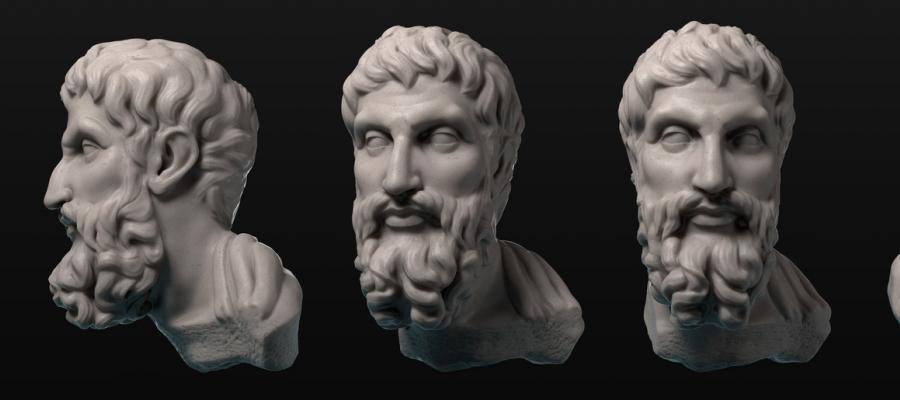
Is the Bible just an ancient “self-help” book that tells us not to do anything fun? Questioning God is not something new. Even Epicurus said, “Is God willing to prevent evil, but not able? Then He is not omnipotent. Is He able, but not willing? Then He is malevolent. Is He both able and willing? Then whence cometh evil? Is He neither able nor willing? Then why call Him God?” I truly believe that you can understand who God is just based on scripture. When He gave that book to man, He gave us a piece of Himself.
God wants a relationship with us (I Peter 5:6-7). This is why He has purposefully informed us about Himself. People need God whether they know it or not. I’d encourage you, as an individual, to put the Bible on trial. Put the accuracy of its pages to the test. It has withstood hundreds of years of accusations and doubt. Often we are able to grow in our faith and belief as a result of seeking and searching. As His church, we have a responsibility to proclaim the excellence of our creator. We do it by our love for others, exposing the evidence of His existence, and introducing Jesus every opportunity we have.
“Speaking your truth means that you stay true to who you are, whether it’s your feelings, opinions, or morals. Don’t hide what you feel for the sake of someone else’s approval of you, it shouldn’t work that way (sic). Rather, you should stay true to your own opinion and voices, no matter what anyone else may think. While it’s easier said than done, you won’t ever regret speaking your truth” (source). Look at website after blog post, philosopher after supposed pundit, and you get further definitions of what people mean to convey by the phrase, “Speak your truth.” How did the phrase originate?
Huffington Post credits Oprah Winfrey in a speech at The Golden Globes in 2018. She advocated creating positive change by “speaking your truth.” The article’s writer, Claire Fallon, seemed shocked and aghast at backlash to the phrase. Like Byron Tau of The Wall Street Journal, who tweeted, “Oprah employed a phrase that I’ve noticed a lot of other celebrity (sic) using these days: ‘your truth’ instead of ‘the truth.’ Why that phrasing? ‘Your truth’ undermines the idea of a shared set of common facts'” (1/8/18). She quoted Joseph A. Wulfsohn, who objected, “When we rely on ‘our truths,’ we get to choose what to believe.” Fallon defended the phrase as an exhortation for the less powerful to find their own voices and credited a 1927 poem as the genesis of the phrase, in a Max Ehrmann poem entitled “Desiderata” (source).
So while there can be great merit and value to one respecting the feelings and opinions of others or advocating for those without power, there is inherent danger in the very idea of individual, subjective truth. In her excellent book, Total Truth, Nancy Pearcey quotes Udo Middelmann, who said we learn about objective truth from the time we are born. She then writes, “When a baby crawls to the edge of the crib and bumps his head against the wooden bars, he learns in a painful way that reality is objective. When a toddler tilts his high chair back until it falls to the floor, he learns that there is an objective structure to the universe. Reality does not bend itself to our subjective desires–a lesson that can be painful to learn even for adults. Thus we can confidently reject any philosophical position that leads to subjectivism. Why? Because it fails to account for what ordinary experience teaches us day by day. It is in tension with the data of experience” (395).
Our calling is much higher than being true to self, following our own feelings, opinions, and morals. So much can distort and deform these things–selfishness, fleshly desires, improper and immoral guides and guidance, etc. (cf. Eph. 2:1-3; 4:17-19). Truth is transcendent (existing apart from and not subject to the material universe) and immutable (unchanging over time or unable to be changed).
It can be practiced (John 3:21)
It can be known and it emancipates (John 8:32)
It is exclusive (John 14:6)
It is something we can be guided into, and it is exhaustive (John 16:13)
Men try to suppress it (Rom. 1:18), exchange it for a lie (Rom. 1:25), and disobey it (Rom. 2:8). But, philosophy defeats the idea of subjective truth (“your truth” and “my truth”) and Scripture makes clear that there is only one truth. You don’t have your truth and neither do I. God reveals the truth to us, and He holds us accountable to follow it.
I believe that God exists. I believe that He communicated with His creation by direct contact, messengers, and a series of ancient texts. I believe that He wants His human creation to be with Him after they die. I believe that He expects those who claim to be His to act within the guidelines He set in those ancient texts. I believe that there is life after death and that where we go depends on whether or not we follow this God.
Why do I believe this, though? What reason do I have to believe in something I cannot experience with my senses? I was not there thousands of years ago when the prophets and Hebrews talked to God. I was not there when God came here to teach. I was not there when the authors of the original texts delivered their writings to the early church. The ancient texts translated into English sometimes do not effectively communicate the emotion of the words and concepts in the original language. So why do I believe these things? Why do you believe these things?
Think about this carefully. From Genesis to Revelation the message is clear: God wants His people to exist with Him after time is destroyed. This message was communicated to an impossible variety of people, sometimes separated by hundreds of years, thousands of miles, culture, kingdom, race, and language. There are tens of thousands of manuscripts of these ancient texts in many, many different languages. There are some 25,000 New Testament manuscripts or fragments that are separated by about a thousand years, at least 8 different languages, thousands of miles of geography, and many different cultures. Yet, they are at least 95% accurate to each other. The remaining 5% do not contain a single contradiction; rather, they are spelling errors, slips of the pen, writing on the wrong line, or minor variances (“God said” vs. “He said” or “and” vs. “but”).
Of the rich libraries we have of ancient literature, none can hold even the dimmest candle to the profound accuracy and unity of the scriptures. They could not have been produced by man alone. There had to be Someone not confined by time supervising each person as they wrote. Keep in mind, these ancient cultures did not have the advantage of modern communication. They were almost totally isolated from each other and would have known little of the others’ existence, much less what they experienced or wrote from God. Our Bible has supernatural origins and its contents reveal the nature of our Creator. What I believe comes from this book because I know it is God’s message to mankind. I encourage those who have not already done so to do an in-depth study of the origin of scripture. It is one of the most faith-building studies anyone could undertake. When you know with certainty that what you are reading contains the actual thoughts and desires of God, it bolsters your faith in ways I could not begin to adequately describe.
I was originally going to call this, “The way we smell to others,” but thought that might be misleading or inaccurate. Paul uses a very unusual illustration to make an important point in 2 Corinthians 2:12-17. The backdrop of the illustration was when he came to Troas to take advantage of an open door to preach the gospel. It was a trying experience, as he couldn’t find Titus there. He left them for Macedonia (12-13).
In chapter three, he is going to change metaphors. But, first, he describes their work of sharing the gospel as like God sending His fragrance through them which others evaluate or judge (14-15). The same message “smells” differently to the recipients, based on the receptivity and spiritual condition of those hearers (16). But Paul makes clear that their motives and message are not “rotten,” but if it is rejected it is because the listeners are perishing (17). Think about how so many could hear the Son of God Himself teach and preach, and thoroughly reject it to the degree that they even took Him and nailed Him to a cross!
When you share Jesus and the message of His saving grace with others, there will be those who find that “fragrance of Christ” (15) a “sweet aroma” (14). It will be so appealing to them that they leave their old life and follow Him, much as the men God chose to follow Him during His ministry. It’s attractive and satisfying. There are still so many with good, receptive hearts out there. We see that when we share Him.
However, be prepared for some to find that same message repulsive. It’s not what they want and not what they are after. Have you ever been sick in such a way that even your favorite foods nauseated you to smell them cooking? There is no more savory and appealing message than the Bible’s story of grace, but many will reject it anyway! It can leave us feeling so inadequate (16), but we must remember that it is not our message. It is Christ’s message. Our job is simply to spread it with personal integrity, honesty, and righteous motivation. His word will work its power on those who seek their satisfaction in Him.
Fresh baked, homemade sour dough bread from Kathy’s kitchen!
Some things just don’t mix. Milk and orange juice, Auburn and Alabama fans, Coca Cola and Mentos. There is one particular mix that can sometimes be fatal. Blood pressure medicine can be a great thing, but when mixed with Advil/Ibuprofen it can harm your body and even give you a brain hemorrhage.If you mix two common household items, rubbing alcohol and bleach, you can create chloroform.
It’s safe to say that some things in life just don’t mix. Twenty to thirty years after the ascension of Jesus, Paul wrote to a group of Christians in Galatia warning them of the dangers of mixing two teachings. In Galatians 1:6, Paul says, “I am amazed that you are so quickly deserting Him who called you in the grace of Christ and are turning to a different gospel.” He goes on to say in verse 7, “not that there is another one, but there are some who trouble you and want to distort the gospel of Christ.”
Paul is writing to the Galatians to answer a simple question: “What is required for a person to be saved?” Forget circumcision (Acts 15:1), forget additional teachings, what does GOD say? His answer can be summed up as this: “We need nothing other than what is found in scripture to walk in the Light.”
Paul addresses the problem in verse six, and he uses the word “amazed” (“thaumazo”) (cf. Acts 4:13; Mark 5:20). He was amazed because these Christians should’ve known better than to listen to these false teachers. Paul’s point is that if there is anything added to that which is necessary for the maintaining of your walk in the light, it is not necessary for salvation.
These Christians should’ve known better, but sadly we are sometimes the same way. We know what’s right and wrong, yet still choose poorly. We know how our speech should be as Christians, we know how we should act and how we should think, but more often than not we make the wrong decision.
The message that these Christians were to accept was that of the death, burial, and resurrection of Jesus and the correct way to be saved. Any requirement outside of the plan of salvation was to be condemned. If that other requirement is the sinner’s prayer, it must be condemned. If that other requirement is a “new wave of salvation,” as some denominations teach, it is to be condemned. If that other requirement is a tradition not necessary for salvation yet enforced as such, it is to be condemned. We are only compelled to follow what is contained in God’s Word.
We do this because there is only one source of truth, as Paul goes on to say in Galatians 1:7-9. No one else (not even an angel) has the authority to add to what God has already completed. Scripture is our objective standard, the one source of truth that we can count on no matter what.
Every year there are new medical breakthroughs that may change how a doctor treats his/her patient. For example, doctors used to bleed their patients because they thought there was such thing as “bleeding out bad blood.” We know this isn’t the case today and that’s because as humans our knowledge is fallible and subject to change. This is not the case for Christians.
Our methods may change as time goes on, but our message and teachings will never change. Their author is our perfect, unchangeable, all-knowing, infallible God.
We need nothing other than what is contained in scripture to walk in the light. Paul tells them what is required for salvation. There is only one Gospel that helps to walk in the light. There is only one source that the gospel has come from. We have to decide which gospel we will listen to. Will we let man ruin what God has deemed perfect? Will we let someone else tell us how to be saved? Man, on his own, doesn’t know how to be saved.
God gave us one gospel through One source, now it is up to us to make the right decision.


























 The Preacher Pollard Blog