Avoiding A Ride On An Ancient Cycle

Neal Pollard

It has been called “The Dark Ages Of The Old Testament.” During the period of the judges, there was moral, economic, social, political and religious decline. We often read that, during this time, the children of Israel did that which was evil in the sight of the Lord.

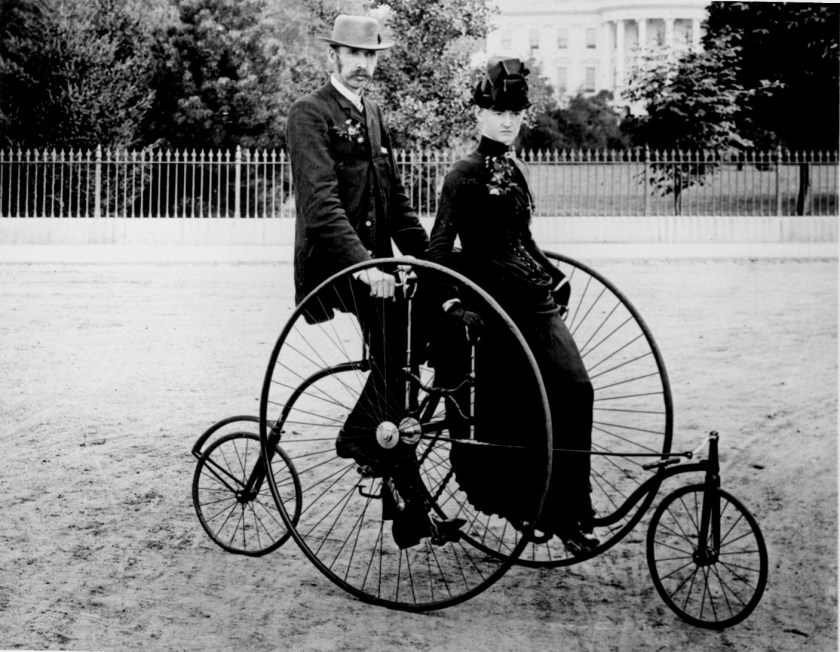
History keeps repeating itself in the book of Judges. The people do evil, God allows and oppressor to persecute them, the people turn back to God and plead for deliverance, and God raises up a deliverer to defeat the oppressor and deliver Israel. Here, we speak of the “cycle” of Judges: sin, servitude, sorrow, supplication, and salvation.

Their enemy invaders came from the East (Mesopotamia), the Southeast (Moab), the North (Canaan), the East (Midian and Ammon), and the Southwest (Philistia). It is interesting that Israel overcame Canaan in the militarily brilliant strategy orchestrated by God (Central Canaan—Josh. 7-8, Southern Canaan—Josh. 9-10, and then Northern Canaan—Josh. 11-12). As a result of Israel’s failure to utterly destroy the inhabitants of Canaan, the six oppressions came from the central, south, and north—each places where God had given them victory. What a reminder that when we don’t defeat the enemy, he will return! The enemy was sin!

Here is my summary of the book of Judges, as seen in Judges 2:16-19:

  • The rulers—“Judges”
  • The role—“Delivered”
  • The rescued—“Them” (Israel)
  • The rivals—“Those” (God’s enemies)
  • The ruination—“Plundered them” (oppression)
  • The refusal—“They did not listen to their judges”
  • The reveling—“Played the harlot after other gods”
  • The retreat—“Turned said quickly”
  • The right road—“In which their fathers had walked”
  • The role models—“Father, obeying the commands of the Lord”
  • The resolution—“They did not so”
  • The raising—“The Lord raised them up judges”
  • The relationship—“The Lord was with the judges”
  • The restoration—“Delivered them from the hand of their enemies”
  • The repentance—“The Lord was moved to pity” (KJV—“It repented the Lord because of their groanings…”)
  • The return—“When their judge died, they would turn back”
  • The retrogression—“Acted more corruptly than their fathers”
  • The resilience—“Didn’t abandon their practice or stubborn ways”

The judge was the savior of the people. Time and time again, the people put themselves in a position to need some serious rescue, and our long-suffering God was willing to soften His heart to their cries. Eventually, His patience ran out and even in this time period there were severe consequences. How often do we need the blood of Christ and the forgiveness of the Father? Often, we need forgiveness for the same sins repeatedly. We wonder how Israel could fall into the same traps, but we do well to identify and avoid them in our own times. We have the benefit of both Old and New Testament Scripture, and they would have only had the writings of Moses and Joshua when they lived. May we learn from these ancient lessons (cf. 1 Cor. 10:11) and stay off that ancient cycle.

bicycle_two_1886

Identifying The Source Of Trouble In The Congregation

Neal Pollard

One of my dad’s most memorable sermons, which he preached in more than one location, was actually a two-parter.  The first part was preached Sunday morning. Dad warned that he was going to identify the source of the problems in the congregation. He used a wipe board or chalkboard, and only put the first initial of each one up there as he preached. He said that everyone should come back that night and he would disclose the full names that went with the initials.  At one congregation, after the morning sermon, a large number of people came forward in response to the invitation.  Sure enough, that evening dad put the full names next to the initials:

  • Accuser of the brethren (Rev. 12:10)
  • Adversary (1 Pet. 5:8)
  • Beelzebub (Mat. 12:24)
  • Belial (2 Cor. 6:15)
  • Devil (Heb. 2:14)
  • Enemy (Mat. 13:39)
  • Father of lies (John 8:44)
  • God of this world (2 Cor. 4:4)
  • Prince… (Eph. 2:2; John 12:31)
  • Roaring Lion (1 Pet. 5:8)
  • Satan (Mat. 4:10)
  • Spirit that works in the sons of disobedience (Eph. 2:2)
  • Tempter (Mat. 4:3)

Now, in no way am I discounting the free will choices people make. James 1:13-15 very clearly places the blame of sin on the individuals choosing to act on their lusts and desires. One is not possessed or overtaken by the devil to do his will any more than a person is overtaken by God and made to do what’s right. But Jesus calls the devil the “father” of sinful behavior (John 8:44). John tells us that the one who practices sin is “of the devil” (1 Jn. 3:8). Those who sin are doing his will (2 Tim. 2:26).

Satan is at the heart of national, congregation, familial, and individual sin.  We’re told to resist him (Jas. 4:7; 1 Pet. 5:9). The hopeful fact is that, with God’s help, we can always successfully do so.  Let’s be aware that the devil does not want God’s children or His work to succeed. If he can thwart our efforts as a church to be united, faithful to God’s Word, evangelistic, and productive, he will do so. Knowing this, we should be more determined not to let him win!

lion-692219_960_720

Tony Robbins And Proverbs Six

Neal Pollard

Perhaps you heard about the 30 “followers of motivational speaker Tony Robbins” who “were burned while walking on hot coals” in Dallas, Texas, over the weekend (nbcnews.com). Now, nearly 7,000 others were not injured, but when nearly three dozen were it became a national news story. The firewalk is “a symbolic experience that proves if you can make it through the fire, you can make it through anything” (ibid.).  But, there is a catch. Don’t run, have wet feet, or try to go across a firebed that is too long (the Guiness Book of World Records says the longest firewalk was just shy of 600 feet in Calgary in 2007).  No one seems to disagree that one cannot indefinitely walk on hot coals. God, who created fire and feet, moved Solomon to say, “Or can a man walk on hot coals and his feet not be scorched?” (Prov. 6:28).

This statement comes as part of Solomon’s warning about “the evil woman” and the “adulteress” (cf. 6:24).  He warns about her alluring beauty and ways (25), showing the consequences that one may miss when driven by lust rather than law: one is reduced (26), destroyed (32), wounded and disgraced (33), reproached (33), and repaid with revenge (34). One of Solomon’s two metaphors to depict adultery’s repercussions is feet being burned by walking on hot coals (the other is taking fire in his bosom and his clothes being burned).

Countless men and women have been deceived by the seemingly harmless effects of allowing attraction for someone other than their mate to grow in their hearts and minds. One may let admiration and attraction for this other person to take root in their hearts. Defenses are lowered and lines begin to be crossed. The thrill and excitement of the prospective relationship can come to eclipse rational thoughts, negative consequences, and the fallout in the lives of all the people affected. When David gazed at Bathsheba from his rooftop, he saw a beautiful, naked woman rather than murder, death, humiliation, dysfunction, loss of influence, and agonizing heartbreak. His unlawful desire for her prevented him from seeing past what he wanted in the moment.

God’s laws are immutable. One cannot flout them without the fruit that follows. So many who have crossed that line have desperately wished they could go back to the other side of that firebed and taken the righteous path. May each of us have the wisdom to see these kinds of things from God’s eyes, which are pure, right, and perfect. Realize that pursuing a person who is not your lawful mate is like playing with fire! Don’t get burned.

shoe-582851_960_720

PREVENTING A POST-ANTIBIOTIC APOCALYPSE

Neal Pollard

Economist Jim O’Neill had readied a report about drug-resistant infections, “bacteria and other microbes that have become impervious to antibiotics” (The Atlantic, Ed Yong, 5/19/16). O’Neill’s prognostication is grim and macabre. On our current trajectory, 10 million will die every year by the year 2050 and that doesn’t include those undergoing procedures only safe because of antibiotics (surgeries, transplants, and chemotherapy, for example). No doubt, this report is no fodder for a bedtime story, but it is not without suggestions of what can be done to prevent such an ominous occurrence. O’Neill gives a nice, round ten suggestions to avert this potential “plague” on humanity.  They include: improve sanitation, a global surveillance network, a public-awareness campaign, better diagnostic tools, avoid unnecessary use of antibiotics in agriculture, promote effective alternatives, improve incentives for workers, rewards those working on the problem, adequately fund those working, and build a global coalition (ibid.). All in all, this seems like a practical, workable solution.

I read this in light of the global epidemic you and I are engaged in to fight together. It is the most dangerous threat any of us will face and it will be with us, if the world continues, in 2050 and beyond. What I find interesting is that many of O’Neill’s suggestions for fighting these microbes are the marching orders God has given us to fight our plaguing antagonist—sin.  Holiness, unity, improved evangelism, Bible study, avoid unnecessary fights, example, focusing more on eternity, better giving, and increased mission efforts all factor in saving more souls! It’s a system that will work locally, nationally, and globally.

Frankly, we don’t know that O’Neill’s prediction will come to pass. But, the Bible tells us in no uncertain terms that “it is appointed unto men once to die, and then the Judgment” (Heb. 9:27). The majority will be lost (cf. Mat. 7:13-14)! God is counting on us, Christians, stemming that tide as much as possible (Mark 16:15-16).  Every individual you and I reach with the gospel is one less who will succumb to this eternally fatal threat!

novamoxin_antibiotic

Can You Imagine Being $53 Million In Personal Debt?

Neal Pollard

USA Today’s Maria Puente is reporting music star Kanye West’s tweet where he writes, “I write this to you my brothers while still 53 million dollars in personal debt…Please pray we overcome…This is my true heart….” (USAToday.com).  Hearing that Facebook creator Mark Zuckerberg and wife Priscilla were going to give away some of their billions to philanthropic causes, West tweeted that he wanted to be a recipient of some of that charity.  Since most of us will probably not make a total of $53 million in our lifetimes, we have a hard time imagining how someone could accrue that amount in personal debt! Perhaps horrible investing, profligate lifestyle decisions, and the like might explain it, but the lack of restraint and wisdom seems appalling. How could one person be so foolish and wasteful? We wring our hands and shake our heads, maybe condescendingly.
Until we consider something.

In a spiritual sense, we all faced a debt infinitely greater. Jesus illustrates this in a parable regarding a slave who owed his master 10,000 talents (Mat. 18:23ff). Biola University business professor Philip Massey did some modern-day math equivalency with that figure and estimates in 21st Century dollars that debt would be $7.04 billion dollars, and according to the 2010 Forbes list of billionaires would need to be at least the 102nd most wealthy person on the entire planet just to be able to pay such a debt (chimes.biola.edu).  Jesus’ point in the parable is to show how utterly audacious it is not to forgive the relatively minuscule transgressions others commit against us in light of how great our spiritual debt is to God.  All the combined wealth of the world is not enough to pay for one sin (cf. Mic. 6:6-8; Mat. 16:26). Colossians 2:14 uses the term “debt” to describe our sin problem, but the same verse tells us that we had someone more powerful and capable than any earthly magnate or mogul to help us pay off our debt.  In fact, “having nailed it [the certificate of debt consisting of decrees against us] to the cross,” He provided payment sufficient for the sin debt of every single person in this world.

Can you imagine anyone refusing help who faced such an insurmountable obligation? Yet, the majority of this world has done and will continue to do so. By refusing to submit to the Lordship of Jesus, they continue to pile up their debt. When the Day of Accounting comes, they’ll stand bankrupt and unable to pay. The consequences will be eternal!

Without Christ, we all face a debt that cannot be sufficiently estimated.  We need His blood applied to our sins or our situations are hopeless! How Zuckerberg will respond is unclear. How Jesus will respond is ironclad! Reach out to Him.

kanye_west_at_the_2009_tribeca_film_festival-2_cropped

CHECK THOSE LOTTERY NUMBERS CLOSELY!

Neal Pollard

Today, we are finding out that three winning lottery tickets were sold in the record-setting Powerball jackpot, one in California, one in Florida, and one in Tennessee. Each ticket is worth $528.8 million dollars. That’s an attention-getting number.  Here are a few more.  $70.1 billion dollars, the amount Americans spend on lottery tickets every year (more than Americans spend on sports tickets, books, video games, movies, and music combined). $755. That’s the average per-capita spend on lottery tickets in South Dakota. $800. That’s the per-capita spend in Rhode Island, who holds the ignominious distinction of leading the nation in this category. $230. That’s the per-capita average spend of every man, woman, and child in the 43 states where the lottery is played. One-third and one-half.  The poorest third of households buy half of all lottery tickets (statistics via theatlantic.com, Derek Thompson, “Lotteries: America’s $70 Billion Shame”).

Newscasters often report on these jackpots and encourage viewers to “check the numbers.” Lottery commercials often vie with beer commercials as some of the more humorous, clever ones to be seen. In the media and public venues, lottery ticket purchasing is usually portrayed as a harmless, even exciting, diversion. Perhaps many have failed to look more closely at what these other numbers mean for a person’s ethics and morality.

John A. Hobson, in the January 1905 edition of International Journal of Ethics, examined “The Ethics Of Gambling.” In an examination of gambling, including lottery contests, Hobson observes:

Gambling involves the denial of all system in the appointment
of property: it plunges the mind in a world of anarchy where
things come upon one, and pass from one miraculously. It does
not so manifestly sin against the canons of justice as do other
bad modes of transfer, theft, fraud, sweating (sic.), for every one
is said to have an equal chance; but it inflicts a graver damage
on the intellect. Based as it is on an organised rejection of all
reason as a factor, it removes its devotees into a positive atmosphere
of miracles, and generates an emotional excitement that inhibits
those checks which reason more or less contrives to place upon
emotional extravagances. The essence of gambling consists in
an abandonment of reason, an inhibition of the factors of human
control (Vol. 15, No. 2, 138).

Hobson was looking at the underlying psyche of those so eager to gain as much as possible while exerting as little effort as possible. But he decries more than laziness. He puts his finger on the most dangerous aspect of things like playing the lottery—the Bible calls it “covetousness.” It is an irrational, often compulsive, attempt to obtain wealth.

The BDAG lexicon defines the covetous person as “one who desires to have more than is due, a greedy person, whose ways are judged to be extremely sinful by Christians and many others. In Hellenic society this was a violation of the basic principle of proportion and contrary to the idea of beneficent concern for the citizenry” (Arndt, William, Frederick W. Danker, and Walter Bauer. A Greek-English lexicon of the New Testament and other early Christian literature 2000 : n. pag. Print.). Greed is not confined to practices like playing the lottery, but it is legitimate for one to ask what motivates their play?

What is clear is what Scripture says about covetousness: it prevents one’s inheriting the kingdom of God (1 Cor. 6:10), it is idolatry which again prevents inheriting this kingdom (Eph. 5:5), it is a failure to love one’s neighbor (Rom. 13:9), and it is a defilement of the heart (Mark 7:22). Let’s make sure that greed and covetousness do not “have our number.”

1st_california_lottery_tickets1

THE PATTERN FOR MARRIAGE

Neal Pollard

Matthew 19:1-12 records an incident where, because the Pharisees are trying to test Jesus (vs. 3), He has occasion to reveal His will about marriage.  As we analyze this text, we find several notable facts about marriage. These verses show us the mind and will of God on an institution that is increasingly under assault. Consider four facts about this great passage of Scripture.

This is from the Christ. One of the more common arguments made even by supposed biblical scholars is that Jesus never condemns homosexuality. But what does He do? He defines marriage (4-5). The law of exclusion says that what God doesn’t authorize in His Word is forbidden in doctrine and practice. The Lord has authorized marriage as an institution between man and woman. He did not have to say, “…but not between a man and two or more women” and “not between a man and an animal” and “not between two people of the same gender.” He makes clear what He sees marriage as being.

This is from the creation. Other passages tell us Christ is actually the Creator (John 1:1-3; Col. 1:16-17; Heb. 1:2). So not only does He, as Deity, designate what marriage is—He designed it in the first place. Jesus reaches behind changes made to God’s marriage law under the Law of Moses and cites how God designed it “from the beginning” (4). Anything that does not conform to His pattern in this text runs counter to God’s original intent. You may not that this excludes more than same-sex marriage. It excludes adulterous marriage (vs. 9) as well as sex outside of marriage (this is implied here: “joined to his wife,” not “girlfriend”; of course, “fornication” or “sexual immorality” is dealt with explicitly in many other New Testament passages). Jesus goes back to the creation to state the pattern for marriage as being one man and one woman for life.

This is a command. It is not a command that you have to be married, but if you do get married you must conform to Christ’s will concerning it. We see this in the force of Jesus’ “but I say unto you.” He is exerting His right of authority, even showing His law trumps the Law of Moses. A person who is looking to be married must make sure their relationship conforms to His command.

This is controversial.  It is not just the homosexual community who balk at Jesus’ words here. I have close family members (and so do you, probably) whose marriages are at odds with what Jesus commands in this context. Jesus Himself forewarns that this is a difficult and narrow teaching (10), a rejected teaching (11), and a teaching that calls for extreme sacrifice (12). I dare say there is as much blowback from the heterosexual community as the homosexual community where this passage is clearly taught. In either case, it comes down to whether we will follow the command of the Christ, the Creator. Our submission or rebellion cannot change the immutable (i.e., unchangeable) nature of Divine truth.

Marriage is a beautiful gift given by a loving God. Though society may corrupt it and seek to redefine it, but the will of God stands forever. May we have the courage, humility, and strength to take Him at His word and conform our lives to it—on this and every subject.

WHEN YOU FEEL WEIGHED DOWN

Neal Pollard

Mark and Derek Noel have an incredible story.  Mark, the dad, thinks he weighed 460 pounds at his heaviest, though he couldn’t find scales that could weigh him. He talks about the depression, the shame, even the claustrophobia of being that size. He learned that he had a food addiction.  Today, he weighs 220 pounds and his son has also lost an incredible amount of weight. There’s still a mental struggle there, but through food journaling, exercise, and, above all, a desire to live, Mark is winning that battle (Megan Messerly, Las Vegas Sun, 10/19/15).

There are a great many people who can relate to the struggle and some who know the success of a story like theirs. A lot of people have eaten themselves into such a state of being, and most people struggle with self-control and wise decisions concerning food especially where it is abundant and easily accessible. I imagine few of those who get themselves into such a state are happy with the results.

There is something weighing on people in a far greater way than this, though.  It can happen in the midst of drought and famine. It is not exclusively a “first-world problem.”  Sin is a universal burden (Rom. 3:23).  The writer of Hebrews even describes it this way. He says, “Let us lay aside every weight, and the sin which so easily ensnares us” (Heb. 12:1). David wrote, “For my iniquities have gone over my head; Like a heavy burden they are too heavy for me” (Psa. 38:4).

Sometimes, when people are discussing the sin struggles they are coping with, they say, “I just feel weighed down.”  They are describing the effects of guilt and unhappiness, a disappointment and self-loathing produced by a conscience all too aware of the persistent reality of sin.  But, instead of addressing the problem, too many try to work it out on their own and never leave the vicious cycle of serving sin. Paul says the ultimate outcome of this approach is death (Rom. 6:23; cf. Jas. 1:15). What can you do when you feel weighed down?

  • Be Determined. One older song begins, “I am resolved no longer to linger.” The Prodigal Son said, “I will arise and go to my father and will say” (Luke 15:18). The journey home begins with making up your mind that you need to go.
  • Be Dependent. The Prodigal Son looked at the conditions at home and saw his need of the father. He says “my father’s” (Luke 15:17), “my father” (18), “Father” (18), “his father” (20), “Father” (21). The father was able to solve the problem and lift the burden.  The son simply had to swallow his pride and go to his father.
  • Be Decisive. The boy took action.  His resolve led to his return. He went from wanting to walking. As the rest of the parable reveals, the boy didn’t regret his decision.  There was celebration and reward in coming home.  Contrast that with the burden of staying in sin.

It’s very possible that you find yourself weighed down.  What good reason can you give for staying in that condition? Wouldn’t you rather lose the weight? I know you’ll feel better if you do!

19 WAYS TO TANGIBLY IMPROVE YOUR RELATIONSHIP WITH GOD TODAY

Neal Pollard

  • Try to spend 5 minutes of prayer in which you do nothing but praise Him.
  • Do something for Him that requires you to step out of your comfort zone—initiate a conversation with a stranger, give a tract to a co-worker you’ve been talking with, etc.
  • Have a devotional with your family.
  • Call a shut-in or stop by and visit a widow(er).
  • Write a missionary, expressing appreciation and giving encouragement.
  • Anonymously give a sacrificial amount of money for a family in need or someone dependent upon support (school of preaching student or teacher, missionary, etc.).
  • Contact an elder, asking him something you could do to help them in their work.
  • Make a list of at least 20 blessings God has given specifically to you.
  • Speak to someone at church services you have never spoken to before.
  • Invite a family from church you don’t know well over for dinner.
  • Put a packet with bottled water and granola bar, along with a tract, into a Ziplock bag to give to the person at the intersection asking for assistance.
  • Pick out a Bible book you are unfamiliar with and start breaking it down, looking for key words, purpose statement, and other clues to better understanding it. Take copious notes.
  • Pray for someone you are having problems with, an enemy, critic, or one who has offended you.
  • Alone or with your spouse and/or children, sing several songs of praise and admonition.
  • Carry a meal to a young mother who has had a difficult day.
  • Give a big smile and warm greeting to a fellow shopper or employee at a store or restaurant.
  • Ask the secretary for a list of last Sunday’s visitors and send them each a warm, brief note.
  • Think of an area for spiritual improvement in your life and ask God to help you focus on it, being transparent and sincere as you petition Him.
  • Ask the person closest to you (parent, spouse, sibling, etc.) something they need for you to pray for on their behalf.

Can you think of additional ways?

AFTER 31 YEARS, MURDER VICTIM IS FOUND ALIVE

Neal Pollard

There was a disappearance and a murder confession.  So, the last thing police expected when they stopped at “Mrs. Schneider’s” apartment in Dusseldorf, Germany, was to find the 1984 murder victim, Petra Pazsitka, talking to them.  Thus began the unraveling of an elaborate plot by Ms. Pazskitka to disappear and reemerge with a new identity.  She was successful for 31 years, living in several West German cities without a passport, driver’s license, and social security card. She supported herself by “living off illicit cash-in-hand work” (via uk.news.yahoo.com). Why did the college student who had just completed her thesis on computer languages leave the grid and go into hiding? So far, there has been no explanation given. Perhaps there will eventually be more details and insight into this bizarre situation, but for now a grief-stricken family can take some measure of comfort in knowing their loved one they thought was dead is alive.

Spiritually, we are surrounded by the living dead.  It is the result of choices they’ve made.  This is even true for some who have abandoned God’s family and reemerged in the world having cast off the privileges and position of that honorable name they took on when they were baptized into Christ.

Paul says, “The mind set on the flesh is death” (Rom. 8:6). He tells Timothy, “But she who gives herself to wanton pleasure is dead even while she lives” (1 Tim. 5:6). God diagnosed an entire church, Sardis, “having a reputation of being alive” as being dead (Rev. 3:1). Of course, nothing illustrates the point better than Jesus’ parable of the Prodigal Son.  The younger son was off in the “far country,” and through that lifestyle he reached the point of desperation and despair. He repented and came home, where his father declared “my son was dead and is alive again” (Luke 15:24).

Sometimes, it makes no sense to us why a brother or sister leaves God’s family, abandoning spiritual life, hope, and heaven for spiritual death, hopelessness, and hell.  Yet, we must continue to search for them.  Let us pray that we can find those long since declared dead and encourage them so that we “save a soul from death and cover a multitude of sins” (Jas. 5:20). Search for them. Appeal to them. Help them reclaim the blessed identity they had when they had “life and peace” (Rom. 8:6).

WHO KILLED CUSTER?

Neal Pollard

There’s quite the controversy over who killed General George Custer at the Battle of Little Big Horn in Montana on June 25, 1876. There is even a book by the title, “Who Killed Custer?,” authored by Bruce Brown. There are so many mysterious and hard-to-document events that made up this notorious battle that symbolizes the “Indian Wars” of the late 1800s.  Brown, analyzing eye witness accounts, gives an interesting top three suspect list:  (1) an Oglala Sioux warrior named White Cow bull, shooting him near the beginning of the battle, (2) Custer himself, committing suicide as he dashed away from the battlefield near the battle’s end on his horse Victory, and (3) Brave Bear, a Southern Cheyenne warrior, given the honorary title of “Custer’s Killer” at an Indian council in 1909 (www.astonisher.com/archives).  About ten years ago, the Helena Independent Record revealed the long-circulated, but secret oral history of the Northern Cheyenne Indian storytellers, crediting a woman, Buffalo Calf Trail Woman, for striking the fatal blow (helenair.com).

It is fitting that a man surrounded by so much controversy and whose reputation and achievements are incredibly enigmatic would have such a mysterious cloud hanging over his death. His killer is upheld by many as a tangible standard-bearer of justice and righteous revenge. For others, it is simply a matter of historical fascination.  There are even those who lamented his death, as the brash and rash Custer was widely viewed as a “war hero” by his U.S. contemporaries in the years immediately following his death. Yet, one thing we know for sure.  Custer was killed.  Two fatal bullet wounds loudly testify.

There is another mystery, one with far weightier and eternal implications.  Who killed Jesus?  He is the most enigmatic figure in human history.  He was viewed contemptuously as a blasphemer and traitor by the religious leaders of His day. He was viewed with depraved indifference by the masses who switched from adoration to execration in a matter of days.  He is viewed even more diversely today, 2000 years after He died on the cross.  The power and proof of the resurrection is a matter to write about another day (see, for example, https://www.christiancourier.com/articles/644-resurrection-literal-or-merely-symbolic).

But, there is another vital question surrounding the death of Jesus.  Who was really responsible?

  • Was it the devil? Yes!
  • Was it the Jewish leaders? Yes!
  • Was it the onlookers that day? Yes!
  • Was it Pilate? Yes!
  • Was it the Roman soldiers? Yes!
  • Was it God? Yes!
  • Was it you and me? Yes!

How could all of these be mutually responsible for the death of Christ? There is no controversy.  The devil desired Jesus’ death, through which he longed to defeat the Lord’s purpose (cf. Gen. 3:15; Rev. 12:4ff). In this, he failed (Heb. 2:14). The people that day were instruments in the hands of God, who accomplished His eternal plan of salvation through Christ’s death, burial, and resurrection (Acts 2:23; 3:18; etc.). We are responsible because we sin (Rom. 4:25) and He had to be made sin for us (2 Co. 5:21). The good news is that the death of Jesus was not the defeat of God’s plan. It accomplished the plan.  However, for the plan to be effective, we must properly respond to it.  The fact of His death does nothing for us, if we do not respond to it the way Scripture tells us to.  Thus, there is a much more important question than, “Who killed Jesus?” It is, “Who will follow Jesus?”

“Snodgrass’s Muff”

Neal Pollard

It happened on October 16, 1912, the eighth (*) and deciding game of the World Series. In the bottom of the 10th, with his New York Giants winning by a run, Clyde Engle sent a lazy pop fly to centerfield.  Fred Snodgrass, an average hitter and dependable fielder, settled under it and ultimately dropped it.  A lot of other things happened. Snodgrass made a spectacular catch on the next play.  Hall of Fame pitcher walked the next batter.  Tris Speaker, before driving in the winning run with a single, hit a pop foul that both Fred Merkle (aka “Bonehead Merkle,” but that’s a story for another day) and Chief Meyers failed to catch.  Snodgrass’ blunder was the scapegoat for the Giants’ series loss to the Boston Red Sox. Fred would go on to be successful in business as a banker, an appliance merchant, and a rancher, was elected mayor of Oxnard, California, and served on the City Council for three terms.  There was so much more to Fred Snodgrass than a single unfortunate moment in time, but even his obituary read: “Fred Snodgrass, 86, Dead; Ball Player Muffed 1912 Fly.” In a 1940 interview, Fred spoke of how that fated fly ball would come up as he met or spoke with people (info via sabr.org and history.com).

Isn’t it interesting how a mistake or sin committed in a moment can have such lasting implications, bringing infamy and an enormous challenge of trying to live it down?  But doesn’t Snodgrass also prove that we do not have to be defined by our failures? Maybe our blunder is not played out with such renown and infamy, but it can still stay with us and dog our continued steps.

Have you dropped the ball with something?  Maybe you let down somebody you loved or somebody that was really counting on you.  Maybe you hurt someone special to you.  It might have been a foolish or ungodly word or deed when someone was watching.  The bigger the blunder, the heavier that burden of guilt might be in your heart.  There’s no excusing it. But what will you do now?  Will you let it keep you down or will you refuse to be defined by it?  The writer of Hebrews urges us, “Let us lay aside every encumbrance and the sin which so easily entangles us, and let us run with patience the race that is set before us” (Heb. 12:1b). The focal point must be what’s before us, not what’s behind us.  So said Paul (Phil. 3:13).

Dust yourself off. Regroup. Get ready for what’s next! Focus on what’s next, not on what’s over and done.

(*) Game 2 was called on account of “impending darkness”

Laying Aside “Every Weight”

Neal Pollard

I try to write very seldom about my favorite hobby, running, which I picked up when our baby, who Pooh Duke has dubbed “Carlnormous,” was still in the womb (This is Carlnormous).  Running produces so many wonderful benefits, physically, psychologically, and mentally.  Yet, as I have heard said, exercise is only about 20% of weight management.  Therefore, until I have recently begun beefing up my “push back” exercises from the dinner table, I have been running at over 200 pounds for much of those 17 years.  I am 15 pounds lighter than I was this time last month, and Strava does not lie.  Today, I logged a 10K at a pace of 8:19/mile (Strava is cool), while listening to a mellow “Fleet Foxes And More” playlist from Amazon Music (Will Fleet Foxes reunite?)—not exactly heart-pumping exercise music.  This time last month, I was about a full minute slower per mile.  Since today I’m inevitably older than I’ve ever been, the difference has to be the fewer pounds I’m dragging around.  Hopefully, I’ll drop more weight, and if I do I anticipate that my pace may quicken and I’ll feel even better doing it.

New Testament writers use the running analogy on several occasions, but consider what the writer of Hebrews says:  “Therefore, since we have so great a cloud of witnesses surrounding us, let us also lay aside every encumbrance and the sin which so easily entangles us, and let us run with endurance the race that is set before us, fixing our eyes on Jesus, the author and perfecter of faith, who for the joy set before Him endured the cross, despising the shame, and has sat down at the right hand of the throne of God. For consider Him who has endured such hostility by sinners against Himself, so that you will not grow weary and lose heart” (12:1-3). The NASB says “encumbrance” (NKJV, “weight”), and the word means “that which serves to hinder or prevent someone from doing something—‘hindrance, impediment’ (Louw-Nida, 13.149). While the implication is “of an athlete stripping himself of clothing which would impede his performance” (Ellingworth, NIGTC, np), how much more does something like 15 pounds “impede”?

This passage encourages endurance with at least three ideas.

Laying Aside The Weight Is Meaningful. It helps one with endurance as it helps eliminate obstacles to a successful run.  It shows up in a better quality of life. It impacts more than just the run you are on that day.  The effects are enduring and they impact such vital areas as blood pressure, cholesterol, blood sugar, etc.  So it is spiritually.  This is about defeating sin, staying faithful, endurance, and overcoming.  In line with the thrust of the whole letter of Hebrews, it is about not falling away and leaving Christ!  We do not want to hang on to anything that interferes with that eternal prospect.

Laying Aside The Weight Is Measurable. I can tell the difference in myself when I have or have not lost that extra weight.  Certainly, the same is true spiritually.  When something is weighing me down, distracting, depressing, deceiving, or drawing me away, I can tell.  I can see it in my devotional life, it shows up in my speech, my attitude, my ethics, and countless similar ways. Other people can see it, too.  I know that God sees every bit of it!

Laying Aside The Weight Is Motivational.  By laying aside the encumbrances and entanglements, I feel better and improve my physical quality of life. The Hebrews’ writer tells us about a transcendent motivation which follows lightening our spiritual loads of sin problems.  Removing the impediments, I am better able to fix my eyes on Jesus and His example while not growing weary or losing heart.

Past experience tells me that weight can be picked up even easier than it can be laid aside.  This is an ongoing discipline.  But it is so worthwhile!  Oh, that I can remember that as I run the course of earth toward eternity.

Burying Your Resentment

Neal Pollard

Linda Sides, wife of one of the preachers at Sixth Avenue church of Christ in Jasper, Alabama, shared a startling picture with me that she took in a West Virginia cemetery.  The backstory, as much as is known, is interesting.  Apparently, a mother did not want to be cremated but her two daughters went against her wishes.  Another child, a son, had a gravestone made with this epitaph:  “IN MEMORY OF MY MOTHER IVA PRITT WHO PASSED AWAY JANUARY 1, 1978, AND TO HER TWO DAUGHTERS WHO WENT AGAINST HER WISHES. MAY THEY BURN IN HELL. ALWAYS THINKING OF YOU. D.”  We don’t know what kind of relationship the siblings had with each other or with their mother prior to the matriarch’s death.  What we know is that the grudge held by the son has been memorialized for at least 37 years through the engraving on that marker.  By this time, perhaps all the children have died, too.  Where they went for eternity is unknown, but it’s quite possible this man went to his own grave carrying the burden of bitterness and resentment.

Perhaps few have carried their vendettas with such graphic vehemence as Iva’s son, but I have known quite a few whose verbal clues reveal as virulent a strain of visceral irritation.  In the Bible, Herodias was said to have “had a grudge against him (John) and wanted to put him to death…” (Mark 6:19).  She was living in sin and righteous John preached against it. Her response was to feel resentment for what he had done.  Sometimes, an accurate message is received with absolute acrimony. A different Greek word is used in James 3:14 “pertaining to feeling resentful” (Louw and Nida, 1996, n/p).  In reading James, this is a feeling that they may have had toward the world but more likely against their own brethren.  How many churches have had works stalled and stopped, have experienced an atmosphere of severe tension, or have even been split because of unresolved bitterness and resentment?

With resentment being so harmful to ourselves and others, how can we bury it?  First, let it go.  This is an intentional exercise and will not occur without conscious mental effort and energy. Read Ephesians 4:31-32.  Second, give it to God. Stop carrying it and hand it to Him.  All cares can be safely transferred to His capable hands (1 Pet. 5:7).  Finally, mend fences.  Remember Paul’s encouragement that “if possible, so far as it depends on you, be at peace with all men” (Rom. 12:18).  You are not accountable for the peace-breaking disposition of others, but you are “so far as it depends on you.”

Do you have any “headstones” to destroy?  Do you have hatchets to bury—including the handles?  Don’t waste any more time. Let it die and bury it!

“Every Way Of A Man Is Right In His Own Eyes”

Neal Pollard

I am sad whenever anyone in a position of power and authority abuses that, worse whenever that abuse turns deadly.  I am sad whenever anyone, of any color, demonstrates prejudice toward any group, race, ethnicity, or similar common denominator.  I am sad whenever anyone tries to commit a crime and get away with it.  I am sad whenever anyone resorts to hatred, profanity, and divisive speech, even if venting anger, hurt, and fear.  I am sad whenever anyone exerts themselves in contentious and divisive rather than understanding and unifying ways.  In essence, I am sad whenever someone does evil and commits sin, but seeks to justify and defend himself or herself in so doing.

Long ago, the Holy Spirit moved Solomon to say, “Every way of a man is right in his own eyes, but the Lord weighs the hearts” (Prov. 21:2).  In nearly identical fashion, he writes, “All the ways of a man are clean in his own sight, but the Lord weighs the motives” (Prov. 16:2).  Sin constantly occurs every moment of every day throughout every community of the world.  At times, individuals will freely confess and without making excuse.  However, the more common course seems to be what Solomon says.  Parents raising children, asking who left something on the floor or who made a mess, hear the all-too-familiar, “Not me!” If one is caught in the act of wrongdoing, he or she may still say, “It’s not my fault,” “I didn’t mean to,” “It’s not what it looks like,” or “you don’t understand.”  Perhaps that’s desperate self-preservation.  Perhaps it’s an attempt to deflect responsibility and consequence.  But, Solomon cuts through the flimsy excuses, realizing God sees with a perfect, unbiased manner and cannot be fooled. We can try to lie to others to try and mitigate or deny our guilt, but He sees all and knows all.

Horrific images out of North Charleston have sickened and scared us!  If all is as it very much seems to be, color-blind, occupation-blind justice needs to be done (cf. Rom. 13:1ff).  May it serve as an even greater object lesson that transcends race, law enforcement, and the like.  When people become their own standard of right and wrong (cf. Jud. 17:6; 21:25), they can tend to justify anything (i.e., abortion, pornography, fornication, etc.) that God deplores.  Let us remember the second part of Proverbs 16:2 and 21:2.  “The Lord weighs the hearts and motives.”  He never gets it wrong!

PINPOINTING THE PROBLEM

Neal Pollard

Terrorist madmen shoot up a school in Pakistan and kill over 100 people, mostly children.  A politically correct society is close to forbidding biblical teaching on matters that violates its bombastic code.  Pluralism (all religious paths are equally valid) and syncretism (blending two or more religious belief systems into a new system) seem to grow more popular in the religious philosophy of a great many.  An erosion of morality and ethics seems to daily redefine acceptable norms and boundaries so that things not long ago thought outrageous are now not just tolerated but celebrated.  The culture of unbelief and agnosticism spreads while the spirit of humble dependency upon God seems to shrink.  When we pause to consider all of this, our head can spin and we can begin to question how this happened and so quickly.

Paul often writes that we are engaged in spiritual warfare (Eph. 6:10-13; 2 Cor. 10:3-5; 1 Tim. 1:18; 1 Tim. 6:12). While we will witness violence, hatred, gross immorality, an anything goes mentality, and the like, lost sinners are not the enemy.  They embrace the thinking and values of the enemy, but Paul says such people are ensnared and held captive by the enemy (1 Tim. 6:9; 2 Tim. 2:26), “caught” (Gal. 6:1), and “subject to slavery” (Heb. 2:15).  New Testament writers pinpoint the source of this enormous problem as:

  • The ruler of this world (John 12:31; 16:11).
  • The god of this world (2 Cor. 4:4).
  • The prince of the power of the air (Eph. 2:2).
  • World forces and spiritual forces (Eph. 6:12).
  • The whole world lies in the power of the evil one (1 Jn. 5:19).

Peter simply calls him our adversary (1 Pet. 5:8).  In the gospel, Jesus often alludes to him as the enemy.  From Christ’s temptations in Matthew 4, we learn that he has been given the power over “all the kingdoms of the world and their glory” (8).  They are his to dispense and disperse (9).  New Testament writers pinpoint this domain with its unrighteous thinking simply as “the world” (Jas. 4:4; 1 John 2:15-17).  All who submit to living according to the thinking and values of this world are submitting to this ruler, god, prince, force, and evil one. They are pledging allegiance to his way and being guided by his leadership.

We can see the devastating effect this is having on the peace and the practice of the masses.  Yet, we must resist it in our individual lives.  Perhaps Paul said it most concisely when he wrote, “Do not be conformed to this world, but be transformed by the renewing of your mind, so that you may prove what the will of God is, that which is good and acceptable and perfect” (Rom. 12:2). Many of the spiritual problems in our lives can be pinpointed to our following the wrong leader.  May God give us the wisdom and discernment to see through his destructive schemes!

What If There WAS An Ebola Outbreak In Your Town?

Neal Pollard

Kathy avoids any of the depressing news stories centered on the Ebola virus. She believes they heighten stress and fear. I admit to moderate fascination and monitoring of the latest developments. There’s no denying that there has been a growing hysteria in our nation since a Liberian man died and two of his nurses contracted it while treating him. Their travel plans and interactions have been chronicled in minute detail. Quarantines have occurred in multiple states, schools have been closed, and fear has escalated. The concern seems connected to what has been reported in villages throughout the west African nations where the outbreak began in the Spring.  The disease is horrific and deadly. It seems easily spread to others. Entire families have been wiped out by it. Yet, calm voices have tried to convince us no epidemic is occurring in our country.

But what if there was an outbreak where you and I live? Beyond the obvious fear, how would that change your life? Would you look differently at your spiritual life and eternal preparedness? How urgently would you reach out to repair broken relationships? Would you be more bold in trying to make disciples? Would you be more focused on leading and influencing your family to serve Christ?

Ebola is tangible and physical. We can see its effects. The damage it inflicts is completely visible. Sin does not present in the same, dramatic way, but its seriousness is infinitely greater. It is a global, daily threat and it’s already here in our communities. Somebody very close to each of us is almost certainly in the process of succumbing to it! May God give us eyes which see and hearts which feel, appreciating the dangers of sin and trusting the Great Physician to protect us.

A Physician Not Afflicted With The Disease He’s Fighting

Neal Pollard

Buried in the headlines today is news that the doctor in charge of fighting an outbreak of Ebola in his country has contracted the disease himself.  The health minister of Sierre Leone said that Dr. Sheik Humarr Khan has a confirmed case of the deadly virus that has killed over 600 of his fellow-countrymen in 2014.  Three of the nurses working alongside Khan recently died trying to treat this disease for which there is no known cure or vaccine. Despite meticulous precautions, Khan could not evade contracting Ebola.

It is an unappealing prospect to consider having a job like Khan’s.  Exposing yourself to something utterly deadly (at times, Ebola has as high as a 90% mortality rate) to try and save your fellow-citizens is about as great a risk as a person can assume on this earth.  Not surprisingly, Khan has been hailed as a hero for using his expertise as a virologist to combat this frightful killer.  Now, his own life hangs in the balance (via news.yahoo.com).

The writer of Hebrews contrasts Jesus with the Levitical priests under the Old Law.  They were “sick” with the very sin they were appointed to “treat” among the nation of Israel (Heb. 7:27).  The writer says that Jesus had no need to do this for Himself because He was “holy, innocent, undefiled, separated from sinners…” (Heb. 7:26).  In other words, though thoroughly exposed to the deadly malady of sin, Jesus never succumbed to it.  Earlier, the epistle says, “For we do not have a high priest who cannot sympathize with our weaknesses, but One who has been tempted in all things as we are, yet without sin” (4:16).

Simply put, the One God sent to provide a cure for the deadliest condition ever known was fully exposed to it but did not fall prey to it.  He did, however, die because of it.  Incredibly, that was God’s intention from eternity. Yet, His ultimate sacrifice makes it possible for us to be cured of this otherwise hopeless and eternally fatal condition!  No wonder we praise Jesus as the “Great Physician.”

A GLOBAL EPIDEMIC

Neal Pollard

MERS is the latest pathogen to seize the world’s attention, and this middle-eastern sprung virus, having a 30% mortality rate, is cause for some concern.  Yet, it is the latest in a long line of alarming diseases that have struck fear in people—AIDs, Asian Flu, Spanish Flu, smallpox, bubonic plague, and leprosy, just to name a few.  Whether the horrific presentation, swift action, or painfulness of these conditions, just the names of these diseases raise the shudders of those informed about how deadly they are.  An ailment that commonly brings about mortality gets our attention.

Sin, however, often does its work on the individual without the dramatic presentation and many times in a way that feels painless to the “sufferer” until it is too late.  But, nothing is deadlier or more serious.  That is why God made it a prominent subject in the only book He ever wrote.  He identifies it in its every form, reveals the symptoms, warns of the potentially deadliness of it, and provides the cure.

The majority do not recognize it for what it is, they incorrectly identify it, offer the wrong cures for it, and a great many just ignore what it is doing to them.  They call it by other names, thinking that by doing that they are eradicating it from themselves.  While that may numb them through this life, it will not serve them well in eternity.

Variously, the Bible says “sin is exceedingly grave” (Gen. 18:20), “sin is unhealthy” (Psa. 38:3), “sin is a disgrace” (Prov. 14:34), “sin brings guilt” (Mark 3:29), “sin brings spiritual death” (Rom. 6:23; Jas. 1:15), “sin enslaves” (Rom. 7:14,23), “sin is deceitful” (Heb. 3:13), “sin entangles” (Heb. 12:1), “sin is lawlessness” (1 John 3:4), “sin is of the devil” (1 John 3:8), and “sin is unrighteousness” (1 John 5:17).  Yet, despite this, we know “fools mock at sin” (Prov. 14:9).  A vicious disease is at work in them and, unresolved and untreated, it will lead them to eternal pain, but because it afflicts the unseen part of a person they cannot see the damage to their souls.  They often see its effects in their own lives and in others’.

That’s where Christians come in, Physician’s assistants for the Great Healer.  We are to get healing to as many as are willing to take the cure.  We may be treated hostilely by some of those eternally ill, but we must risk sharing it for their good.  We face a terrible epidemic but we have a cure that is 100% effective when properly applied!

From Disinherited To Inheritors

Neal Pollard
When Greek politician Andreas Papandreou died in 1996, he left his entire hefty estate to his third wife, Dimitria Liani. His three sons and a daughter, who had married a politician who was Papandreou’s political enemy, were disinherited when she and her siblings’ refused to ostracize this enemy. It was contested in Greek court for years, but so far that will has apparently not been overturned. Certainly, money can bring out the best and worst in people. The children’s point of view is almost certainly that they, as blood relatives, have as much or more right to their father’s inheritance than a woman he married in the last decade of his life (information via Ray Moseley, Chicago Tribune, 9/29/96).


In the New Testament, sin is legitimate grounds for the Heavenly Father to disinherit us. Paul tells the Corinthians this in 1 Corinthians 6:9-11. But his message is one of good news. With God, it is possible to go from disinherited to inheritors. He tells them, “Do you not know that the unrighteous will not inherit the kingdom of God? Do not be deceived. Neither fornicators, nor idolaters, nor adulterers, nor homosexuals, nor sodomites, nor thieves, nor covetous, nor drunkards, nor revilers, nor extortioners will inherit the kingdom of God. And such were some of you. But you were washed, but you were sanctified, but you were justified in the name of the Lord Jesus and by the Spirit of our God.” This passage reveals several important truths.
First, there is a pertinent fact. “The unrighteous will not inherit the kingdom of God.” He repeats the thought in verse 10. That phrase indicates missing heaven and all the reward of it (cf. Mat. 25:34).
Second, there is a potential fraud. “Do not be deceived.” How vital that message is for our current culture! There is so much deception about the consequences of sin that it is impossible to keep up with, document, or catalog it.
Third, there are the particulars framed. Notice the sinful individuals enumerated—”fornicators…idolators…adulterers…homosexuals…sodomites…thieves..covetous…drunkards…revilers…extortioners.” Each of those lifestyles and behaviors merit greater study, but these are the ones who are disinherited by the Father. It is His estate and, as such, His call to make.
Then, there is a past forgotten. Human beings can carry vendettas and grudges to their graves, but the living God is not prone to such weakness. He does require repentance, implicit in the phrase “such were some of you.” Because they changed, God put the guilt of their sins in the rear-view mirror.
Finally, there is a purification forged. Paul concludes, “But you were washed…sanctified…justified in the name of the Lord Jesus and by the Spirit of our God.” God does not just leave us to wallow in our sins. He provides a way of escape. If we take it, He will make those past sins as if they never existed!
In other words, we can go from disinherited to inheritors!